Article

Shallow Groundwater Hydrochemical Facies, Nitrate Sources and Potential Health Risks in Southern Baoding of North China Using Hydrochemistry and Positive Matrix Factorization

1
Hebei Provincial Institute of Geological Environment Monitoring, Shijiazhuang 050021, China
2
Hebei Key Laboratory of Geological Resources and Environment Monitoring and Protection, Shijiazhuang 050021, China
3
Geological Environment Monitoring Institute of Jiangxi Geological Survey and Exploration Institute, Nanchang 330006, China
4
Faculty of Environmental Science and Engineering, Kunming University of Science and Technology, Kunming 650500, China
5
Chinese Academy of Geological Sciences, Beijing 100037, China
*
Author to whom correspondence should be addressed.
Sustainability 2025, 17(23), 10834; https://doi.org/10.3390/su172310834
Submission received: 20 October 2025 / Revised: 24 November 2025 / Accepted: 26 November 2025 / Published: 3 December 2025

Abstract

Nitrate pollution in aquatic ecosystems has garnered growing attention globally, with particular severity in typical agricultural regions of North China. A typical agricultural area of southern Baoding, North China, is selected as the study area. To address key research questions, hydrochemical analysis is used to characterize the shallow groundwater’s hydrochemical properties, Positive Matrix Factorization (PMF) is utilized to delineate the genetic mechanism of high-nitrate groundwater, and Human Health Risk Assessment (HHRA) is conducted to evaluate potential health risks. Groundwater in the study area is predominantly characterized by the HCO3-Ca and HCO3-Mg. Four key factors regulating hydrochemical characteristics are identified via PMF modeling integrated with Pearson correlation analysis. Specifically, Factor 1 (NO3-dominated) and Factor 4 (SO42−-dominated) are associated with agricultural and livestock activities. In contrast, Factor 2 (Na+- and Mg2+-dominated) stems from the dissolution of silicate or carbonate rocks, while Factor 3 (pH- and K+-governed) is affected by silicate rock weathering and dissolution. The NO3 concentrations in groundwater range from 0.2 mg/L to 68.0 mg/L, with 47.54% of samples exceeding 10 mg/L. NO3 in most groundwater samples originates from mixed sources, including agricultural fertilizers, soil organic nitrogen, and manure-sewage. HHRA results demonstrate that via oral ingestion of groundwater, NO3 poses non-carcinogenic health risks to 90%, 83%, and 82% of children, adult females, and adult males, respectively. This study provides a hydrogeochemical perspective on nitrogen pollution in groundwater and offers scientific support for sustainable groundwater management in typical agricultural regions worldwide.

1. Introduction

Groundwater serves as a vital freshwater reservoir globally, with its strategic significance being particularly accentuated in densely populated regions and economic hubs where surface water scarcity or degradation is prevalent. Notably, anthropogenic nitrogen loading—driven by excessive chemical fertilizer application in agricultural production and intensified nitrogen discharge from urbanization processes (e.g., domestic sewage, industrial effluents, and impervious surface expansion)—has triggered pervasive nitrate contamination in subsurface water systems. This phenomenon has emerged as one of the most intractable and widespread challenges in global groundwater pollution, posing substantial threats to water quality security and ecological sustainability [1,2,3]. Accordingly, accurate identification of nitrate pollution sources and in-depth revelation of their formation mechanisms are not only scientifically imperative for deciphering the biogeochemical cycling of nitrogen in aquifer systems but also practically pivotal for guiding the rational development and utilization of land resources, as well as formulating targeted groundwater protection and remediation strategies [4,5,6,7,8].
Groundwater nitrogen pollution is closely linked to agricultural practices and regional economic development [9,10,11,12]. The North China Plain, a vital grain production base and economic development zone in China, relies heavily on groundwater as its primary water supply source. Here, excessive fertilizer uses in agriculture, along with seepage of domestic and industrial wastewater, has resulted in extensive nitrogen leaching into aquifers, causing a continuous rise in groundwater nitrate levels [13,14,15,16]. Nitrogen pollution in groundwater exists in multiple forms, including nitrite (NO2), nitrate (NO3), and ammonium nitrogen (NH4+). These nitrogen pollutants (NO2, NO3, NH4+) could interconvert under varying hydrogeochemical conditions [17,18,19,20,21]. Therefore, identifying the influencing factors and genetic mechanisms of groundwater nitrogen pollution is essential for mitigating or avoiding the adverse impacts of high-nitrate (NO3) groundwater.
Traditional hydrogeochemical methods primarily rely on qualitative analyses based on ion concentrations, ratios, or classification plots. While useful for initial interpretation, these approaches pose limitations in quantifying the contribution ratios of various sources and often struggle to disentangle overlapping effects from multiple hydrogeochemical processes. These constraints hinder a deeper understanding of the genetic mechanisms governing complex hydrogeochemical systems. In contrast, the Positive Matrix Factorization (PMF) model, a multivariate statistical technique, can objectively identify latent “source factors” (e.g., carbonate weathering, silicate dissolution, agricultural non-point pollution) by exploiting the statistical structure of complex hydrochemical datasets. Moreover, the model could also quantitatively estimate the contribution rates of various factors to hydrochemical components, thereby providing quantitative support for identifying the key controlling factors of groundwater nitrate and accurately revealing the genetic mechanisms of groundwater nitrate.
The southern Baoding area is considered as the research area which is a typical agricultural watershed in the North China Plain (NCP). Based on the hydrochemical analysis results of 61 groundwater samples, it aims to investigate the dominant controlling factors, genetic mechanisms, and potential health risks of groundwater nitrate. Specifically, the research objectives are as follows: (1) Identify the hydrogeochemical characteristics and influencing factors of groundwater nitrate-contaminated areas; (2) Quantitatively identify the dominant controlling factors of groundwater hydrochemical characteristics in the study area using ion ratio relationships and Positive Matrix Factorization (PMF), and reveal the genetic mechanisms of groundwater nitrate; (3) Quantitatively assess the potential health risks of groundwater nitrate to human health.

2. Geological Setting

The study area is situated in the piedmont plain of the North China Plain (NCP). The climate is characterized by the warm-temperate continental monsoon climate, with a multi-year average temperature of 13.4 °C and an annual mean precipitation of 498.9 mm. Notably, over 50% of the annual precipitation concentrates in July and August. Within the study area, several rivers are distributed, including the Hutuo River, Ci River, Sha River, Tang River, Xiaoyi River, and Zhulong River. However, due to the construction of reservoirs in the upper reaches of these rivers, most of them in the study area are usually dry. The Fu River is the only river that maintains perennial flow. Consequently, surface water resources in the study area are scarce, and groundwater plays an irreplaceable role in the water supply system for human activities within this region.
The study area is located within the piedmont alluvial fan of the Taihang Mountains, where the surface is covered by Quaternary alluvial–proluvial deposits with a thickness ranging from 180 m to 320 m. These deposits are primarily formed during the Pleistocene and Holocene epochs, with lithologies including pebbles, gravels, coarse sand, medium sand, and fine sand. Lithological characteristics exhibit spatial variations across the study area. Specifically, the piedmont plain is primarily dominated by alluvial–proluvial or glacial-glaciofluvial deposits, predominantly consisting of gravel, pebble, and medium-coarse sand. In contrast, the central plain is characterized by alluvial–lacustrine deposits, predominantly consisting of medium-fine sand and fine sand. Based on geological and hydrogeological features, the aquifers in the study area are vertically divided into four distinct units from top to bottom: the 1st aquifer (phreatic aquifer), the 2nd aquifer (semi-confined aquifer), the 3rd aquifer (confined aquifer), and the 4th aquifer (confined aquifer). Among these, the 1st and 2nd aquifers are classified as shallow aquifers, while the 3rd and 4th aquifers belong to deep aquifers. Groundwater recharge in the study area occurs through multiple pathways, including precipitation infiltration, agricultural irrigation water infiltration, surface water seepage, and lateral runoff recharge. In terms of discharge, artificial pumping serves as the primary pathway. The general groundwater flow direction is from the northwest to the southeast. The hydraulic connection between shallow and deep aquifers is weak, and the research on groundwater nitrate in this study primarily focuses on shallow groundwater.

3. Samples and Method

3.1. Samples

The spatial distribution of all collected groundwater samples is illustrated in Figure 1. A total of 61 groundwater samples were collected for subsequent analysis. Field measurements of physicochemical parameters, including pH and total dissolved solids (TDS), are conducted in situ with a HANNA HI98130 multi-parameter probe. HCO3 are measured via an acid-base titration method in accordance with standard protocols. Prior to sampling, all polyethylene sample containers are thoroughly rinsed with the respective groundwater samples to minimize cross-contamination risks. Collected water samples are filtered by 0.45 μm cellulose acetate membranes for the removal of suspended particulate matter. For the preservation of samples intended for cation analysis, the samples are acidified with ultrapure nitric acid (HNO3) to a pH < 2, which inhibit the precipitation of metallic ions. Upon completion of sample collection, all samples are immediately sealed, refrigerated at 4 °C, and transported under cold chain conditions to preserve sample integrity.
For laboratory analyses, all groundwater samples are subjected to cation and anion analyses, and all of these samples are stored in 500 mL polyethylene bottles. For samples designated for cation analysis, they are acidified by dropwise addition of concentrated nitric acid to adjust the pH < 2. Major cations (Na+, K+, Ca2+, Mg2+) are analyzed using an inductively coupled plasma optical emission spectrometer (ICP-OES; Perkin-Elmer Optima 5300DV, Perkin-Elmer, Shelton, CT, USA). Major anions including Cl, SO42−, and NO3 are determined by ion chromatography (ICS-2500, Dionex, Sunnyvale, CA, USA). HCO3 are measured via acid-base titration using 0.02 mol/L H2SO4.
Laboratory-derived hydrochemical analysis results are validated using the charge balance error (CBE), as defined in Equation (1). CBE values exceeding 10% indicate that the associated measurement results are unacceptable, whereas those below 10% signify that the hydrochemical data are reliable, valid, and suitable for subsequent hydrochemical analysis. Calculations reveal that the CBE values for all analyzed ion samples fall below 10%, confirming the credibility of the experimental data used in this study.
C B E ( % ) = c a t i o n s a n i o n s c a t i o n s + a n i o n s × 100 %

3.2. Positive Matrix Factorization

To identify the dominant sources of each chemical constituent and quantify their respective contribution ratios, Positive Matrix Factorization (PMF) is employed in this research, which is widely applied in environmental geochemical source apportionment studies [6]. The fundamental mathematical expression of the PMF model is as follows:
x i j = k = 1 p g i k f k j + e i g
where Xij denotes the concentration of component j in sample i, with p representing the total number of components. gik represents the contribution of the k-th source to sample i, while fkj denotes the concentration of component j in the k-th source, and eij stands for the residual associated with both sample i and component j. In matrix form, this relational expression can be simplified as X = GF + E, where G is the source contribution matrix, F is the source composition matrix (i.e., factor matrix), and E is the residual matrix. A core constraint of the PMF model is that both G and F must satisfy non-negativity which aligns with the physical meaning that source contributions and component concentrations cannot be negative. Additionally, the objective function Q of the PMF model is defined as follows:
Q = i = 1 n j = 1 m [ x i j k = 1 p g i k f k j u i j ] 2
where uij represents the uncertainty associated with component j in sample i. The model factorization yields an optimal outcome when the value of Q is minimized. This uncertainty can be calculated using the following equations:
u n c = 5 6 × M D L C M D L
u n c = ( E F × C ) 2 + ( 0.5 × M D L ) 2 C M D L
where C is the measured concentration, MDL is the method detection limit, and EF is the relative error fraction.

4. Results

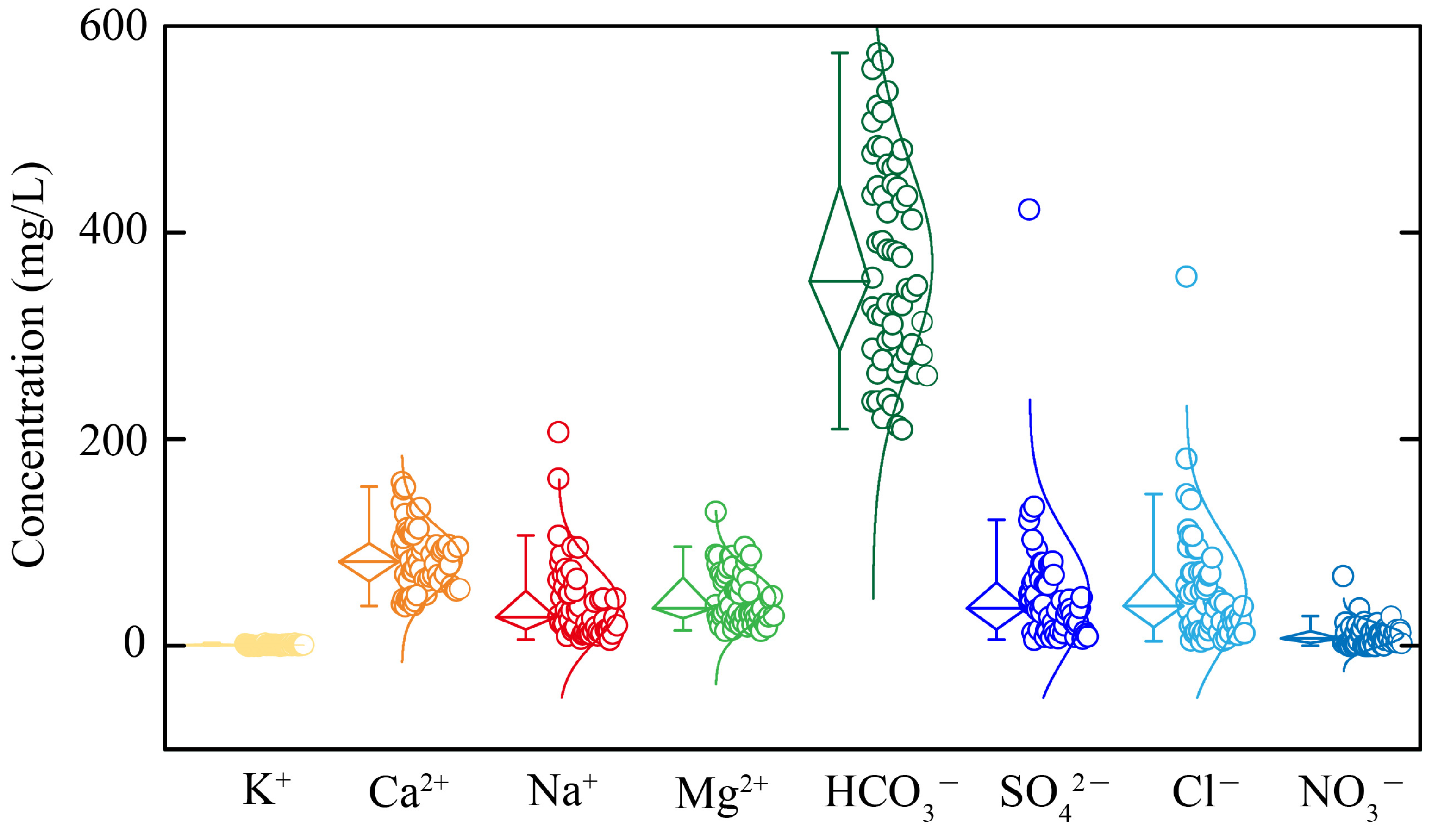
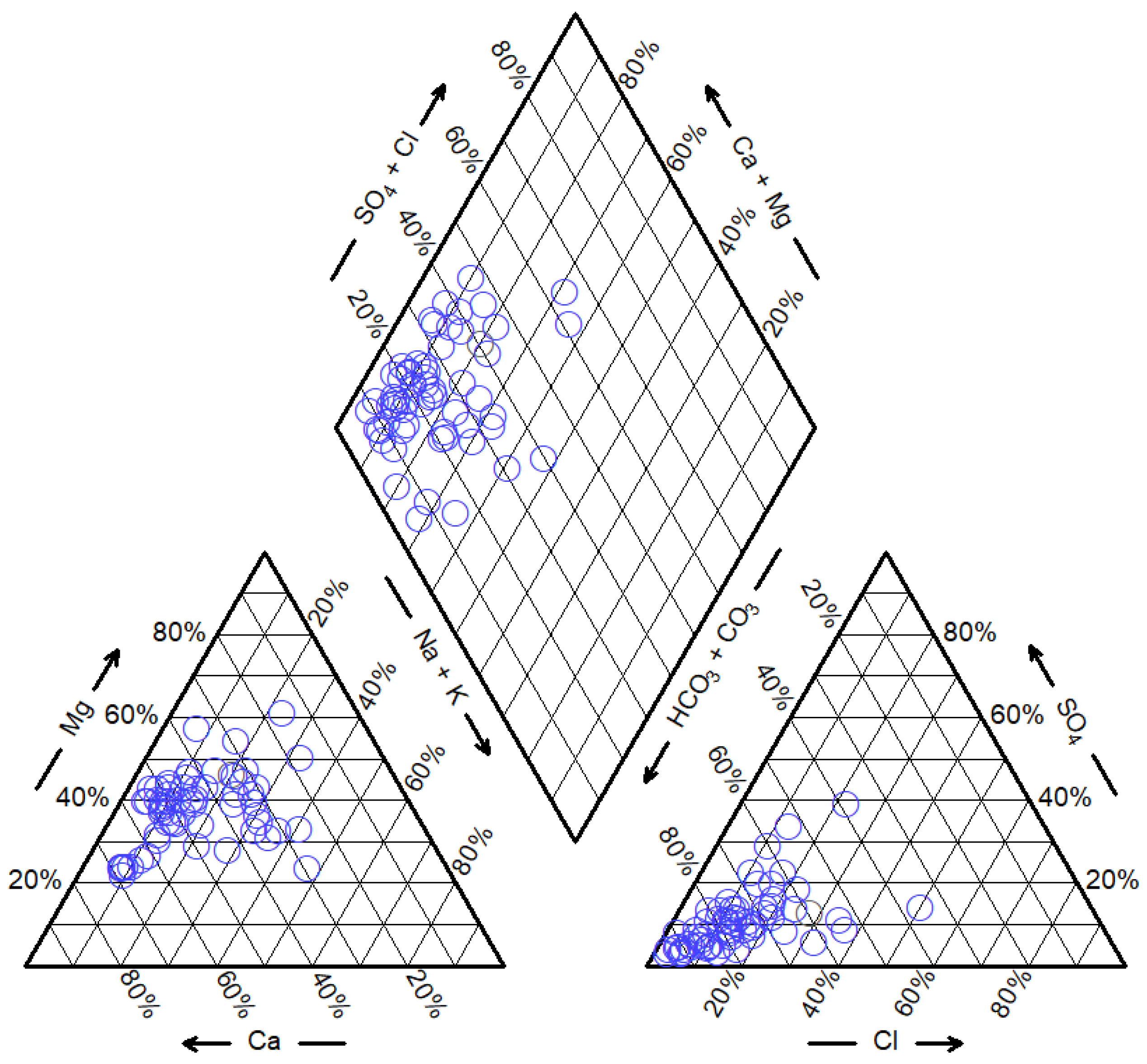
Groundwater physicochemical parameters constitute a fundamental basis for understanding the overall geochemical properties of the sampled groundwater, with their statistical characteristics compiled in Table 1. To provide a holistic characterization of groundwater parameters across the study area, Table 1, Figure 2 and Figure 3 offer integrated statistical and visual summaries. The pH of the groundwater samples ranges from 7.0 to 8.2, with a mean of 7.4, while total dissolved solids (TDS) vary between 215 and 1330 mg/L, averaging 464 mg/L. For cations, Ca2+ concentrations span 38.9~159.0 mg/L (mean: 84.2 mg/L), Mg2+ ranges from 14.9 to 130.0 mg/L (mean: 46.7 mg/L), Na+ is in the range of 6.2~207.0 mg/L (mean: 41.1 mg/L), and K+ exhibits the lowest abundance, with values between 0.2 and 2.9 mg/L (mean: 1.2 mg/L) (Figure 2 and Table 1). Regarding major anions, HCO3, SO42−, NO3, and Cl concentrations are 210.0~789.0 mg/L, 6.1~423.0 mg/L, 0.2~68.0 mg/L, and 4.8~358.0 mg/L, respectively, with corresponding means of 377.5 mg/L, 49.5 mg/L, 10.6 mg/L, and 52.4 mg/L. Cations follow an abundance sequence of Ca2+ > Mg2+ > Na+ > K+, whereas anions show a parallel distribution pattern of HCO3 > Cl > SO42− > NO3. The dominant hydrochemical facies of the collected groundwater samples are identified as HCO3-Ca and HCO3-Mg (Figure 3).
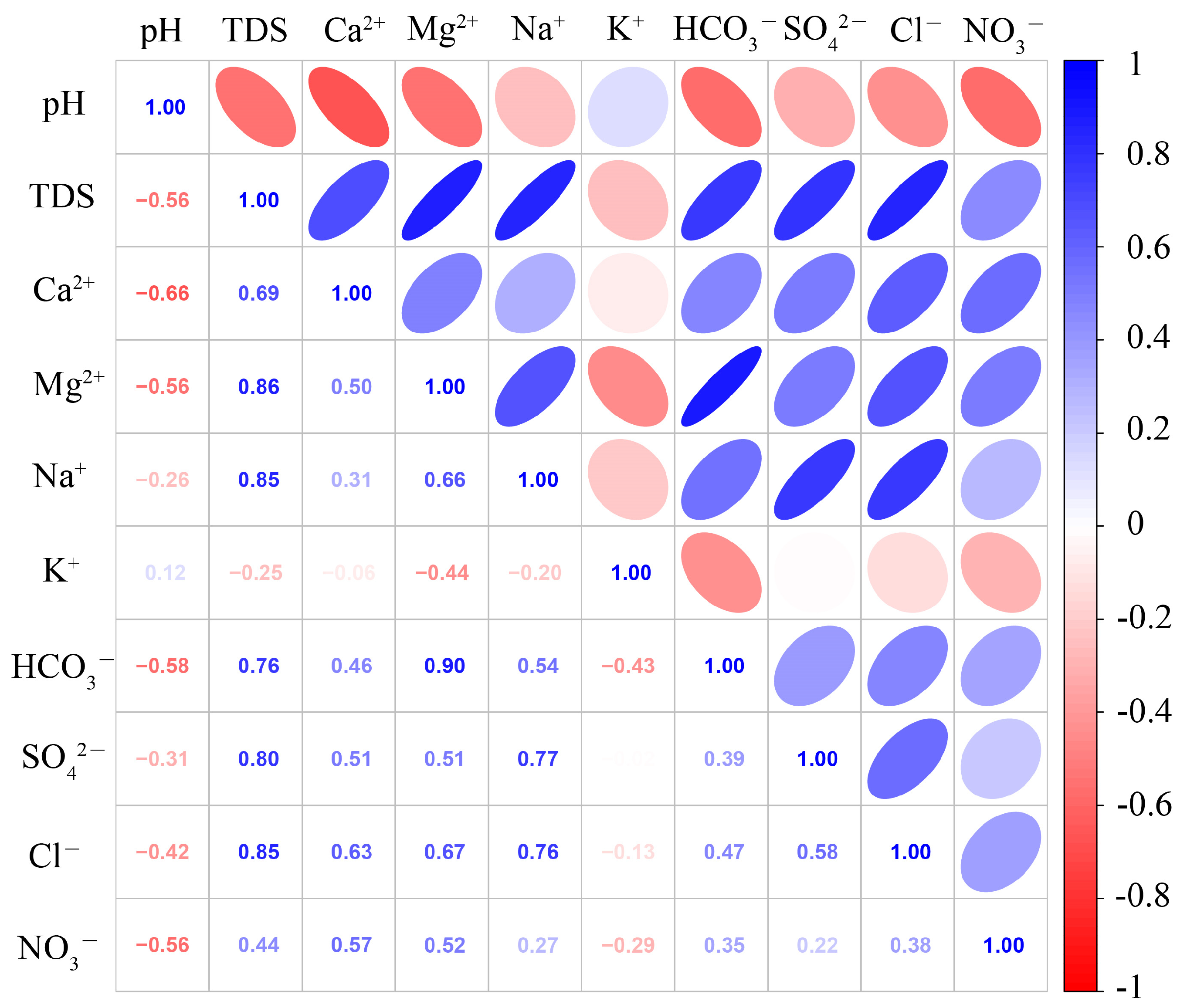
Figure 4 presents the Pearson Correlation Coefficient results for different physicochemical parameters of groundwater samples. Quantitative calculation of Pearson Correlation Coefficient for various groundwater ions aids in identifying hydrogeochemical processes, ion sources, and migration patterns within the groundwater system [22,23]. A strong positive correlation in the concentrations of two ion types indicates they share a common source or exhibit synergistic migration, whereas opposing concentration trends between two ions are typically associated with competitive effects or reverse chemical processes [24,25,26]. Furthermore, Pearson Correlation Coefficient of different ion combinations enable distinguishing whether ions originate from natural geochemical processes or anthropogenic pollution.

5. Discussion

5.1. Hydrochemical Driven Factors

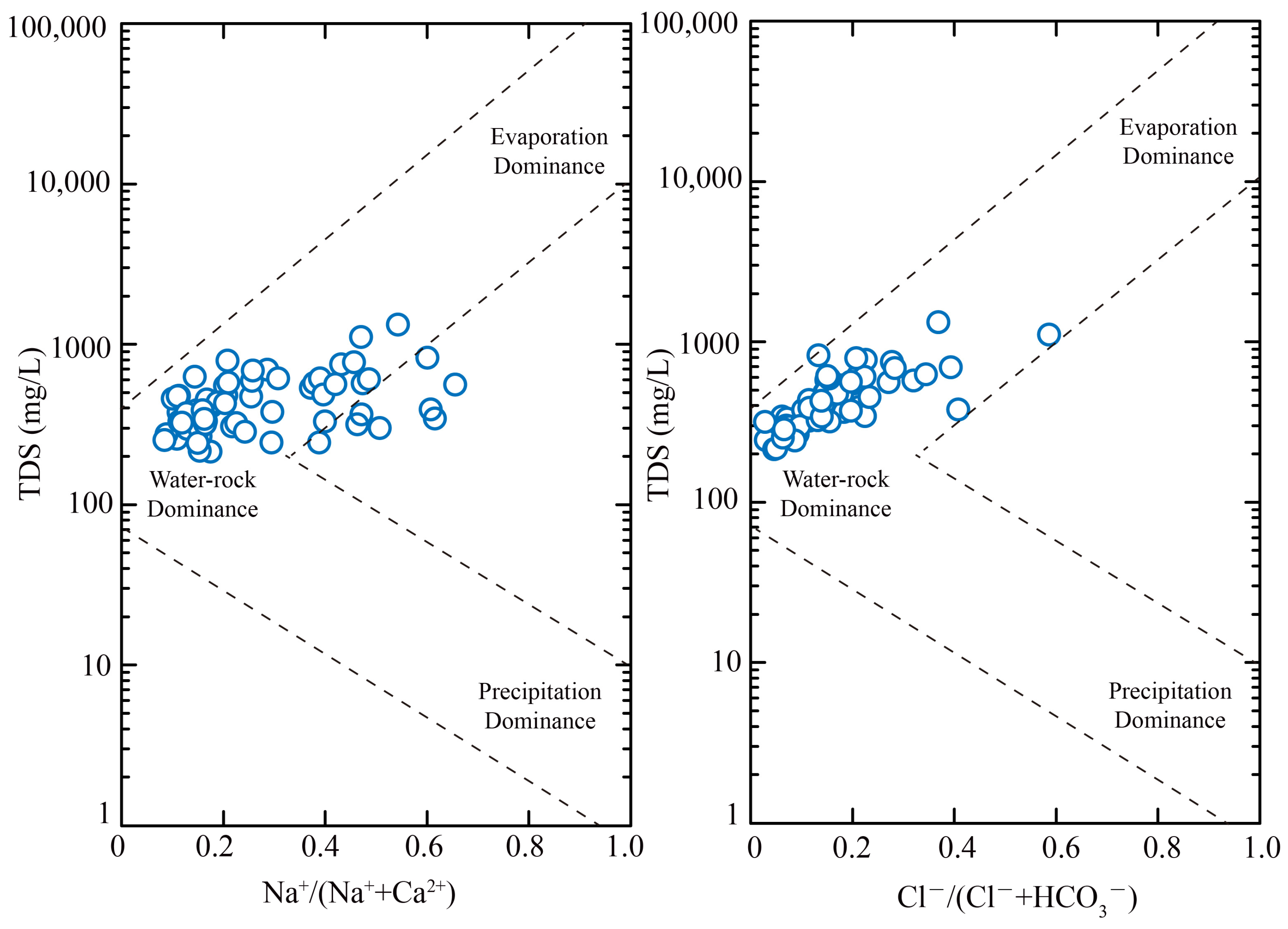
Ionic ratios are widely employed as an effective method for interpreting hydrochemical processes. To distinguish the dominant mechanisms controlling water chemistry, the Gibbs diagram is utilized to assess the influences of evaporation, water-rock interaction, and atmospheric precipitation. As shown in Figure 5, the Na+/(Na+ + Ca2+) ratios in the groundwater samples vary between 0.08 and 0.65, while the Cl/(Cl + HCO3) ratios range from 0.03 to 0.59. The samples are predominantly clustered in the central region of the Gibbs diagram, suggesting that water-rock interaction is the primary process governing the hydrochemical composition of the groundwater.
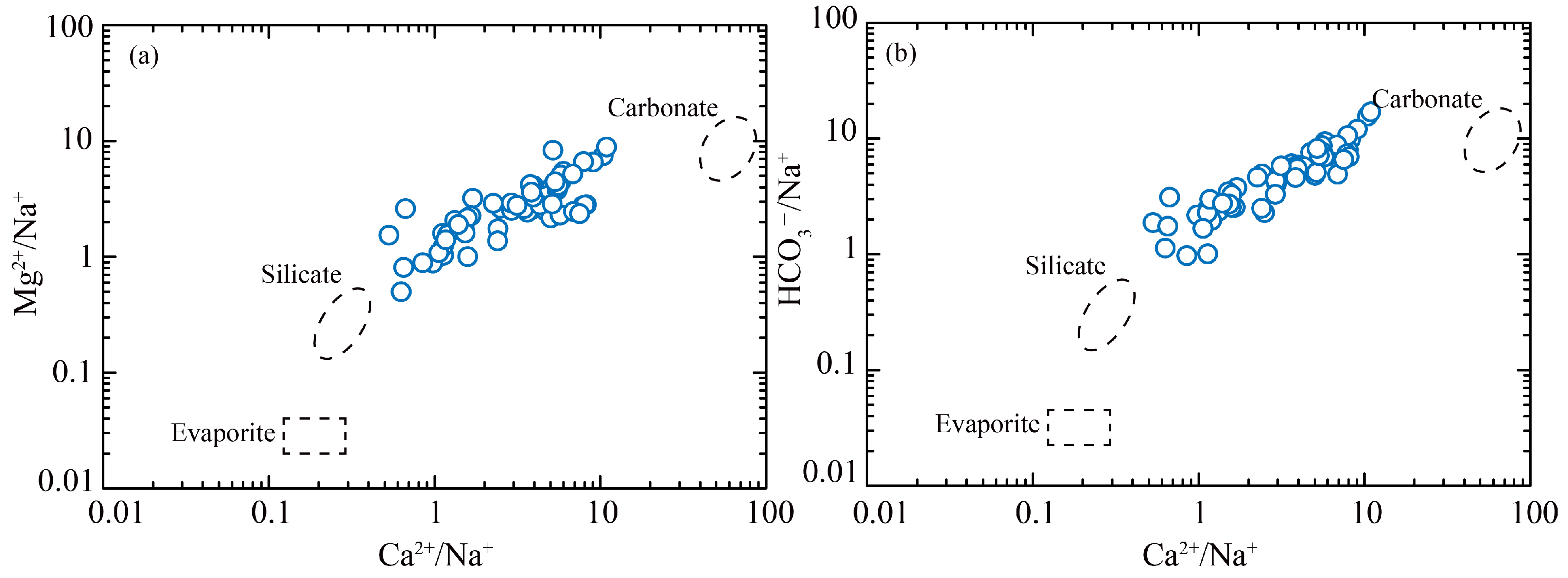
To further clarify the water-rock interaction processes, this study employs end-member plotting to identify the specific rock types involved in these hydrochemical processes, including evaporites, silicate rocks, and carbonate rocks. By constructing binary diagrams of Mg2+/Na+ vs. Ca2+/Na+ and HCO3/Na+ vs. Ca2+/Na+, the dominant rock categories influencing the hydrogeochemical characteristics of groundwater are determined. As illustrated in Figure 6, groundwater samples are primarily distributed in the silicate-dominated zone and the transitional zone between silicate rocks and carbonate rocks. This distribution pattern indicates that silicate weathering and carbonate dissolution serve as the primary sources of ionic components in the groundwater of the study area.
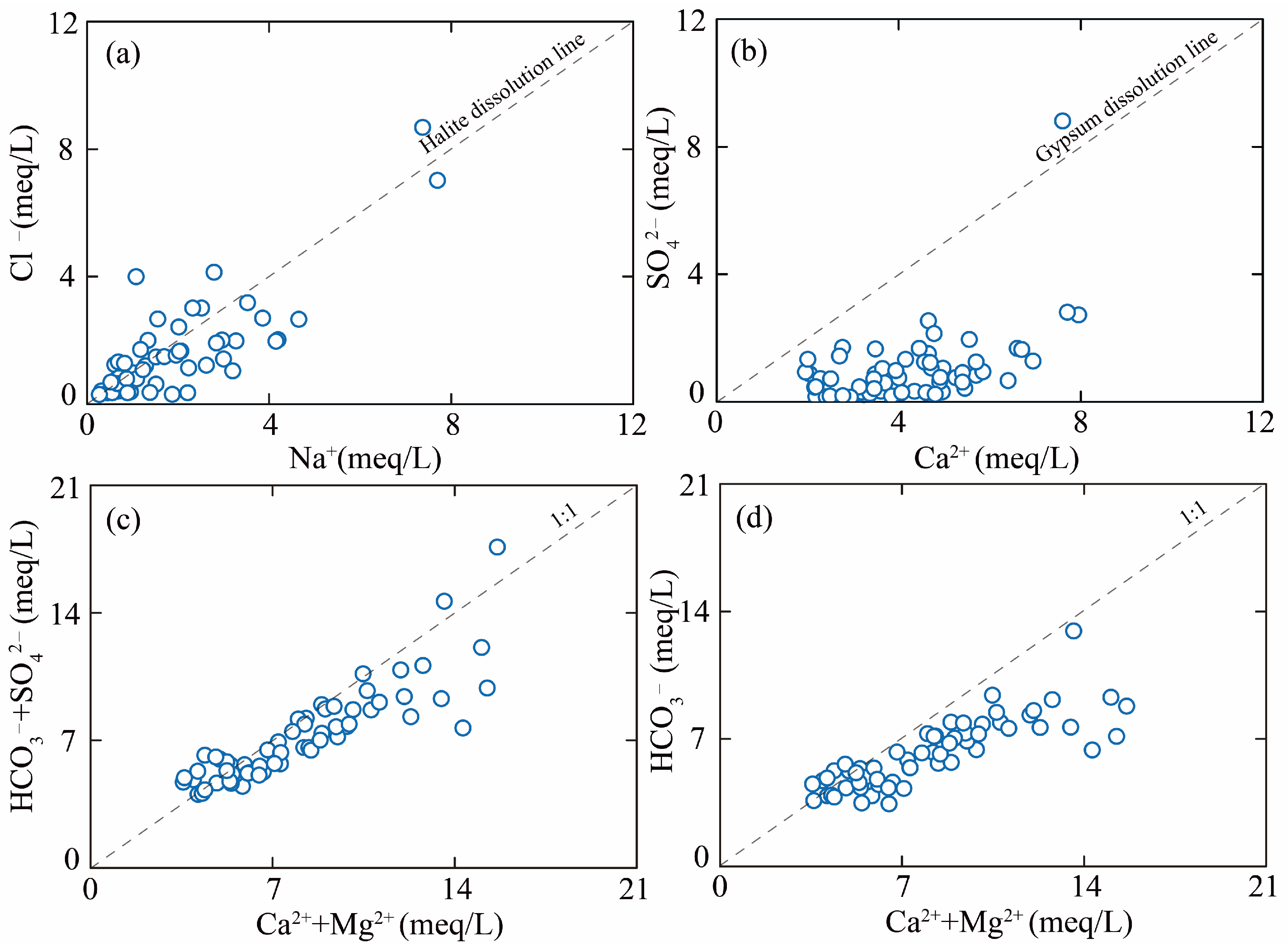
The combination of ionic ratios and Pearson’s Correlation Coefficients is introduced to investigate the effects of hydrogeochemical processes on groundwater hydrochemical characteristics. As is shown in Figure 7a, most samples are distributed along the 1:1 equiline of Na+/Cl, and Na+ exhibits a positive correlation with Cl (r = 0.76). It is indicated that Na+ and Cl are primarily derived from halite weathering. For Ca2+ and SO42−, a moderate positive correlation is identified (r = 0.51), and the Ca2+/SO42− ratio of most samples exceeded 2 (Figure 7b), suggesting that carbonate rock dissolution provides additional Ca2+ to the groundwater system. The relationship between Ca2+ + Mg2+ and HCO3 + SO42− is introduced to identify the occurrence of dolomite, calcite, and gypsum dissolution in the groundwater system. As shown in Figure 7c, most groundwater samples distribute along the 1:1 equiline, which demonstrates that the concentrations of Ca2+ and Mg2+ are mainly controlled by the dissolution of these three minerals. A further analysis of the HCO3 vs. Ca2+ + Mg2+ relationship (Figure 7d) reveals that most groundwater samples fell below the 1:2 equiline. This pattern allows for the reasonable inference that the chemical reactions release HCO3, Ca2+, and Mg2+ into the aquifer system, and gypsum dissolution may lead to Ca2+ excess in groundwater. Additionally, HCO3 shows a moderate positive correlation with Ca2+ (r = 0.46) and a strong positive correlation with Mg2+ (r = 0.90), confirming that carbonate minerals (i.e., calcite and dolomite) are the primary sources of HCO3, Ca2+, and Mg2+ in groundwater.
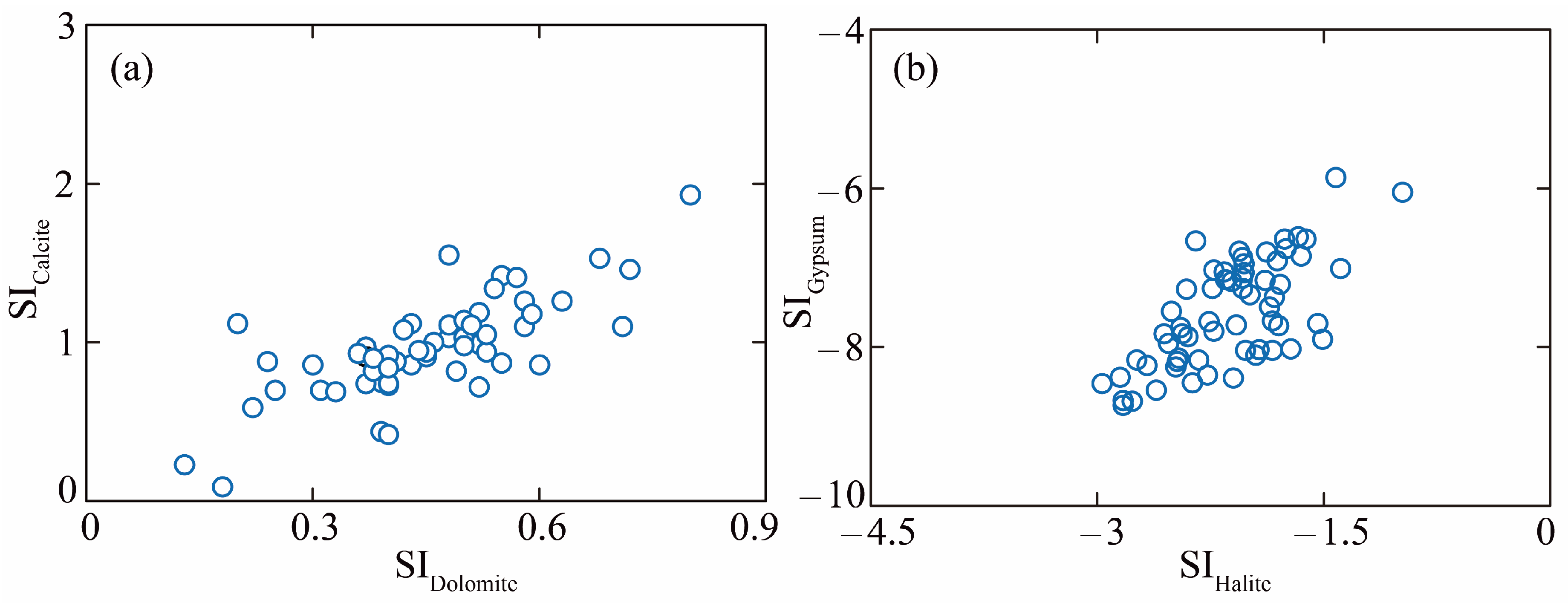
The mineral saturation indices (SI) of calcite, dolomite, gypsum, and halite are calculated by PHREEPC (Figure 8). The mineral saturation indices of dolomite and calcite are greater than 0, indicating that both minerals are in the oversaturated state. In contrast, the mineral saturation indices of halite and gypsum are both less than 0, which suggests that these two minerals are in an unsaturation state and are still undergoing continuous dissolution. During the migration of groundwater, it undergoes dissolution reactions with calcite and dolomite in the aquifer matrix. These reactions rely on the involvement of CO2, which is derived from the atmosphere, soil respiration, or the decomposition of deep organic matter. The specific reaction equation is as follows:
CaCO3 + CO2 + H2O → Ca2+ + 2HCO3
CaMg (CO3)2 + 2CO2 + 2H2O → Ca2+ + Mg2+ + 4HCO3
CO2 dissolves in water to form H+, which then dissolves carbonate minerals and releases Ca2+, Mg2+, and a large amount of HCO3. As CO2 continues to participate in the reactions, calcite and dolomite dissolve continuously, leading to a gradual increase in the concentrations of Ca2+, Mg2+, and HCO3 in groundwater. When the “ion product” of these three ions exceeds the “solubility product” of the minerals, the mineral saturation indices transition from an unsaturation state to an oversaturation state.
The saturation indices of gypsum and halite are less than 0, indicating that both minerals undergo continuous dissolution. Gypsum dissolution releases SO42−, while halite dissolution releases Cl. However, due to the extremely low content of these two minerals in the aquifer, even with sustained dissolution, the concentrations of SO42− and Cl in groundwater remain far lower than that of HCO3, and thus cannot replace the dominant position of HCO3. Meanwhile, the Ca2+ released by gypsum dissolution is consumed by the precipitation process of calcite, which does not significantly alter the proportion of Ca2+ in groundwater. The aforementioned hydrogeochemical processes further confirm that the ionic composition of groundwater is dominated by the dissolution-precipitation of carbonate minerals.
In summary, the hydrochemical characteristics of groundwater in the study area are mainly controlled by silicate weathering and carbonate rock dissolution. Specifically, Na+ and Cl are predominantly derived from halite weathering; HCO3, Ca2+, and Mg2+ primarily originate from the dissolution of carbonate minerals. The concentrations of Ca2+ and Mg2+ are jointly regulated by the dissolution of dolomite, calcite, and gypsum. Carbonate rock dissolution further supplements additional Ca2+ to groundwater; and gypsum dissolution may result in Ca2+ excess.

5.2. Source Apportionment by PMF

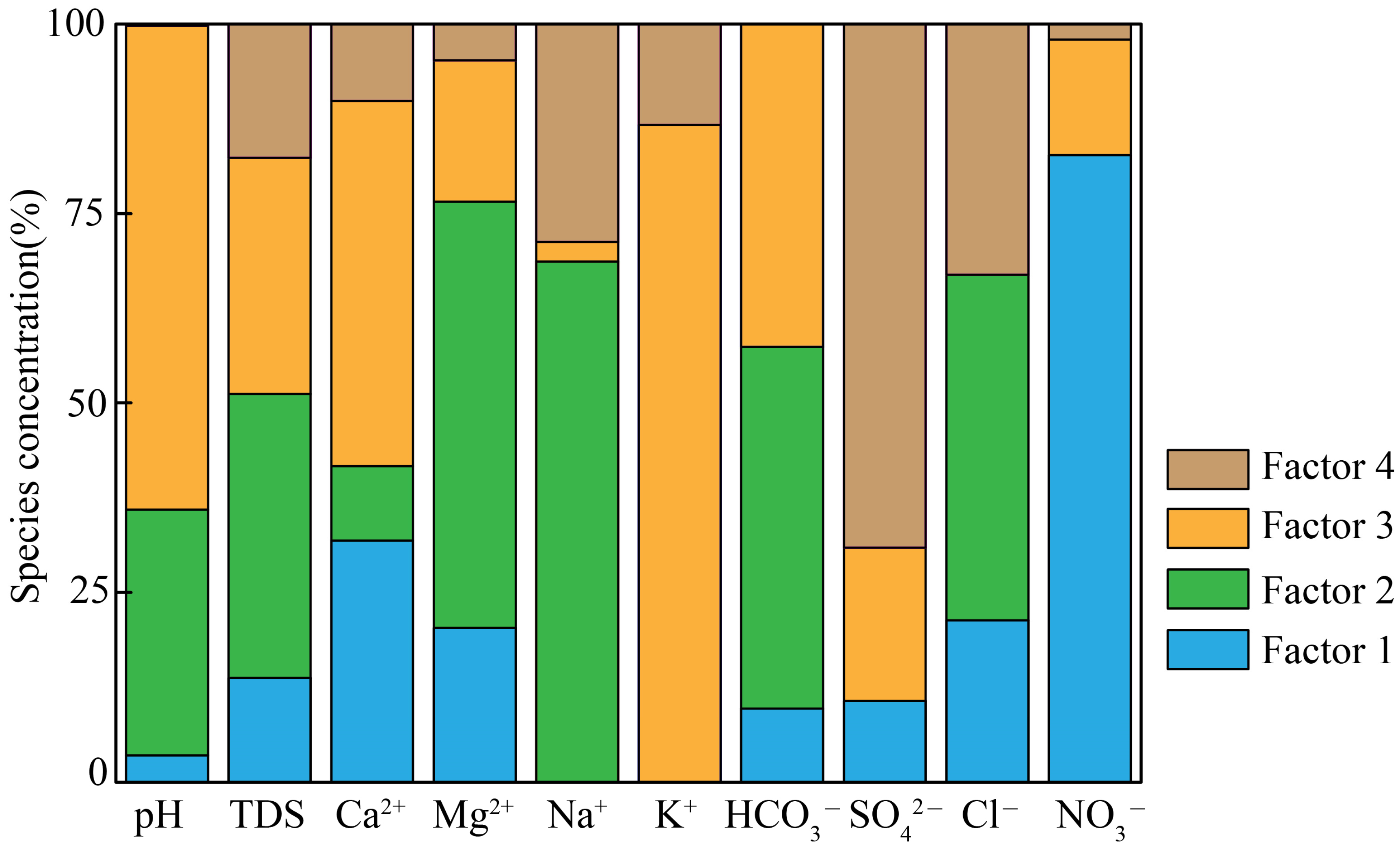
To identify key factors influencing groundwater geochemical composition, the Positive Matrix Factorization (PMF) model is utilized in this study, based on measured hydrochemical parameters. The PMF method was applied to ten variables (pH, TDS, K+, Na+, Ca2+, Mg2+, HCO3, SO42−, Cl, and NO3) obtained from 61 groundwater samples to clarify the dominant processes affecting hydrochemical characteristics. Four interpretable factors (Factors 1–4) are extracted, and their proportional contributions to each hydrochemical parameter are presented in Figure 9. To further investigate ion sources and relationships, Pearson correlation analysis is also carried out on both groundwater and river water samples. This integrated use of multivariate and statistical techniques helped corroborate and enhance the source apportionment derived from PMF, improving the confidence in subsequent geochemical interpretations.
NO3 exhibit the highest loading (82.66%) on Factor 1 (F3), indicating its dominant influence within this factor. As a common inorganic contaminant, NO3 is widely linked to agricultural activities [6]. The study area is densely populated with intensive agricultural practices. The extensive use of nitrogen-based fertilizers introduces nitrate into the environment as a major non-point pollution source. Irrigation further intensifies nitrate mobilization: irrigation water not only transports residual NO3 from fertilized farmlands but also promotes its leaching into surface water and groundwater via preferential flow or through the vadose zone. The region is characterized by a typical wheat-maize rotation system, where frequent irrigation and permeable soils enhance the migration of nitrate from agricultural fields into aquatic systems. Such anthropogenic nitrate may also interact with natural hydrogeochemical processes affecting its spatial distribution and persistence in local water bodies. Thus, Factor 1 is interpreted as being primarily associated with agricultural activity.
Factor 2 is dominated by Na+ (68.67%) and Mg2+ (56.26%). The strong positive correlation between Na+ and Mg2+ (with a correlation coefficient of 0.66) indicates that the sources or migration pathways of these two ions are controlled by the same geochemical process. First, the primary mechanism is the weathering and hydrolysis of silicate minerals, with common minerals including albite and magnesium-bearing silicate minerals. When sodium-rich and magnesium-rich silicate minerals coexist in the aquifer, they undergo simultaneous dissolution under similar hydrochemical conditions (pH, PCO2). This process releases Na+ and Mg2+ into the water in proportional amounts while generating HCO3, which leads to the formation of Ca-Mg-HCO3-type groundwater and causes the concentrations of Na+ and Mg2+ to exhibit a strong positive correlation. Additionally, this factor may also be associated with dolomite dissolution and its subsequent processes. After dolomite dissolution, the produced Ca2+ is more prone to precipitating as calcite (CaCO3), whereas Mg2+ has higher reactivity and remains in the water. However, if this process is combined with the inflow of sodium-containing salts (e.g., NaCl) or Na+ generated from silicate weathering, simultaneous accumulation of Mg2+ and Na+ will occur. Therefore, Factor 2 is interpreted as being associated with the hydrolysis of silicate or carbonate rock minerals.
2 NaAlSi 3 O 8 + 2 CO 2 + 3 H 2 O 2 Na + + 2 HCO 3 + Al 2 Si 2 O 5 ( OH ) 4 + 4 SiO 2
Mg 2 SiO 4 + 4 CO 2 + 4 H 2 O 2 Mg 2 + + 4 HCO 3 + H 4 SiO 4
Based on the results of Factor 3 (F3) analysis, this factor exhibits significant loadings on pH (63.84%) and K+ (86.65%). Although the Pearson correlation coefficient between them is relatively low (r = 0.12), a positive correlation is still observed. This pattern suggests a potential association with the weathering and dissolution of silicate minerals. Specifically, CO2 dissolved in groundwater forms carbonic acid (H2CO3), which promotes the weathering of potassium-bearing silicate minerals, primarily potassium feldspar (KAlSi3O8). This reaction consumes H+ ions (from H2CO3, an acidic species), thereby increasing the pH level of the groundwater. Thus, F3 is interpreted as being primarily associated with the silicate weathering and dissolution process.
2 KAlSi 3 O 8 + 2 H 2 CO 3 + 9 H 2 O 2 K + + 2 HCO 3 + Al 2 Si 2 O 5 ( OH ) 4 + 4 H 4 SiO 4
Factor 4 exhibits significant loadings on SO42− (69.12%). The mineral saturation index of gypsum is less than 0. The continuous dissolution of gypsum will simultaneously release Ca2+. However, the hydrochemical characteristics of groundwater in the study area are mainly dominated by the dissolution of carbonate rocks, so the Ca2+ released by gypsum dissolution will be “diluted” by a large amount of HCO3. In addition, the study area is a typical agricultural watershed, and the leaching of sulfur-containing chemical fertilizers as well as the infiltration of livestock and poultry breeding wastewater are also important sources of SO42−. For commonly used chemical fertilizers in agriculture such as (NH4)2SO4 and K2SO4, under irrigation or rainfall conditions, the SO42− not absorbed by crops will enter groundwater along with the infiltrating water flow. Based on the above analysis, it can be concluded that Factor 4 primarily represents agricultural or livestock husbandry activities.

5.3. Identifying Nitrate Sources

In natural environments, nitrate-nitrogen concentrations generally remain below 10 mg/L, a level widely adopted as a benchmark for detecting anthropogenic pollution [27,28]. In the present study area, NO3 concentrations in groundwater samples varied from 0.2 mg/L to 68.0 mg/L, with an average of 10.6 mg/L. Of concern, approximately 47.54% of the samples exceeded the 10 mg/L threshold, suggesting significant anthropogenic influence on groundwater quality.
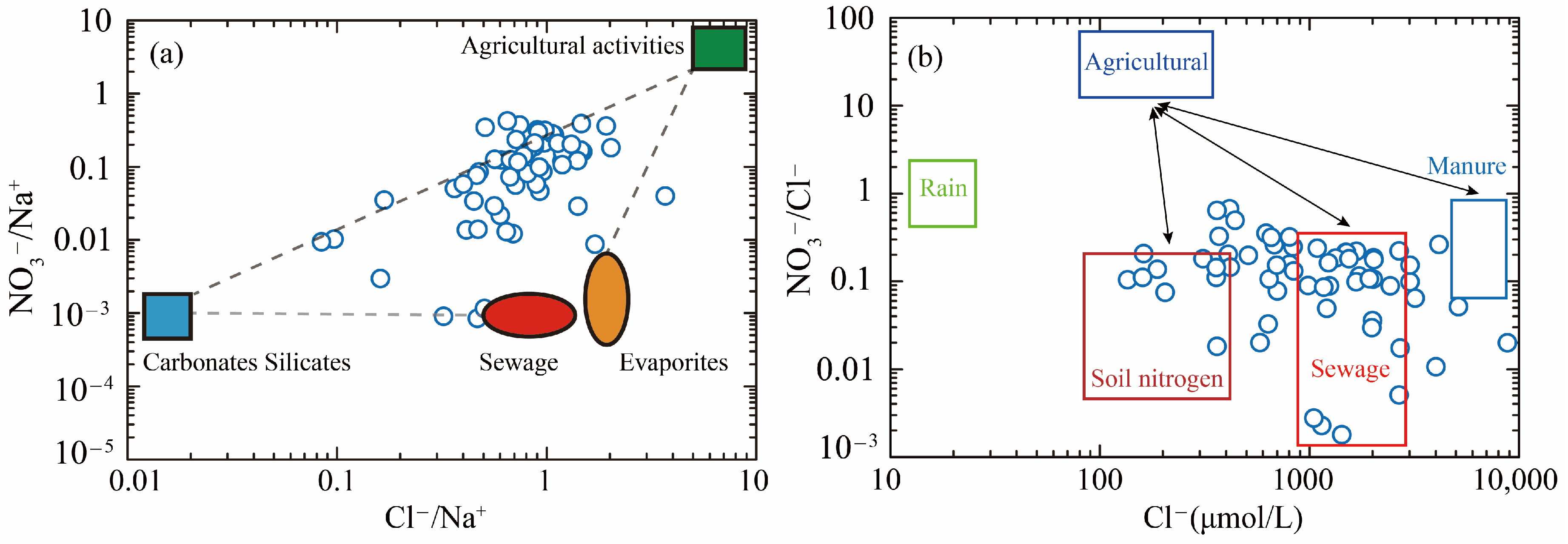
Nitrate (NO3) pollution, originating from agricultural, industrial, and domestic wastewater sources, can be traced using molar ratios, including Cl/Na+ vs. NO3/Na+ and Cl vs. NO3/Cl [29,30,31]. By comparing these ratios against known end-member ranges, nitrate sources can be effectively discriminated. As illustrated in Figure 10a, the majority of samples cluster near the end-member representative of agricultural sources, with a smaller subset falling between the sewage and agricultural end-members. These findings imply that agricultural activities are likely the dominant source of nitrate contamination in the groundwater. In addition, the NO3/Cl ratio serves as a useful tracer for differentiating mixing processes and inputs among various nitrate sources, such as manure, sewage, and soil nitrogen [32,33,34,35]. In general, agricultural-sourced nitrate is associated with high NO3/Cl ratios and low Cl concentrations, whereas manure and sewage sources display contrasting trends. As is shown in Figure 10b, the majority of samples are distributed across the areas spanning agricultural inputs, soil nitrogen inputs, and manure-sewage inputs. It is indicated that the NO3 concentration of groundwater in the study region are additionally affected by soil nitrogen inputs and manure/sewage inputs.

5.4. Human Health Risk Assessment

Quantitative assessment of potential health risks constitutes a prerequisite for the exploitation and utilization of groundwater. Human Health Risk Assessment (HHRA) serves as the conventional evaluation framework for establishing the nonlinear relationship between human health status and the potential health risks posed by groundwater with the high NO3 concentration, and it enables the quantitative evaluation of potential hazards to human health. The oral hazard quotient (HQOral) and dermal hazard quotient (HQDermal) for populations across different age groups and genders were estimated using the following equations,
HQ Oral = I Oral RfD Oral ,   I Oral = c i × IR × EF × ED BW × AT
HQ Dermal = I Dermal RfD Oral × ABS gi ,   I Dermal = c i × K × S a × T × EV × CF × EF × ED BW × AT
The empirical parameters employed in HHRA, as referenced in Equations (11) and (12), are provided in Table 2. Groundwater containing high NO3 concentrations may pose potential risks to human health, and these risks can be quantified using the following equation:
HI Total = i = 1 n HI i ,   HI i = HQ Oral + HQ Dermal
The aforementioned equation serves to quantitatively assess the health risks posed by NO3 to children, adult females, and adult males. HITotal denotes the potential human health risk. Generally, human health risks can be categorized into three classes based on the Hazard Quotient (HQ) value, specifically: negligible health risk when HQ < 1, medium health risk when HQ ranges from 1 to 4, and high health risk when HQ > 4.
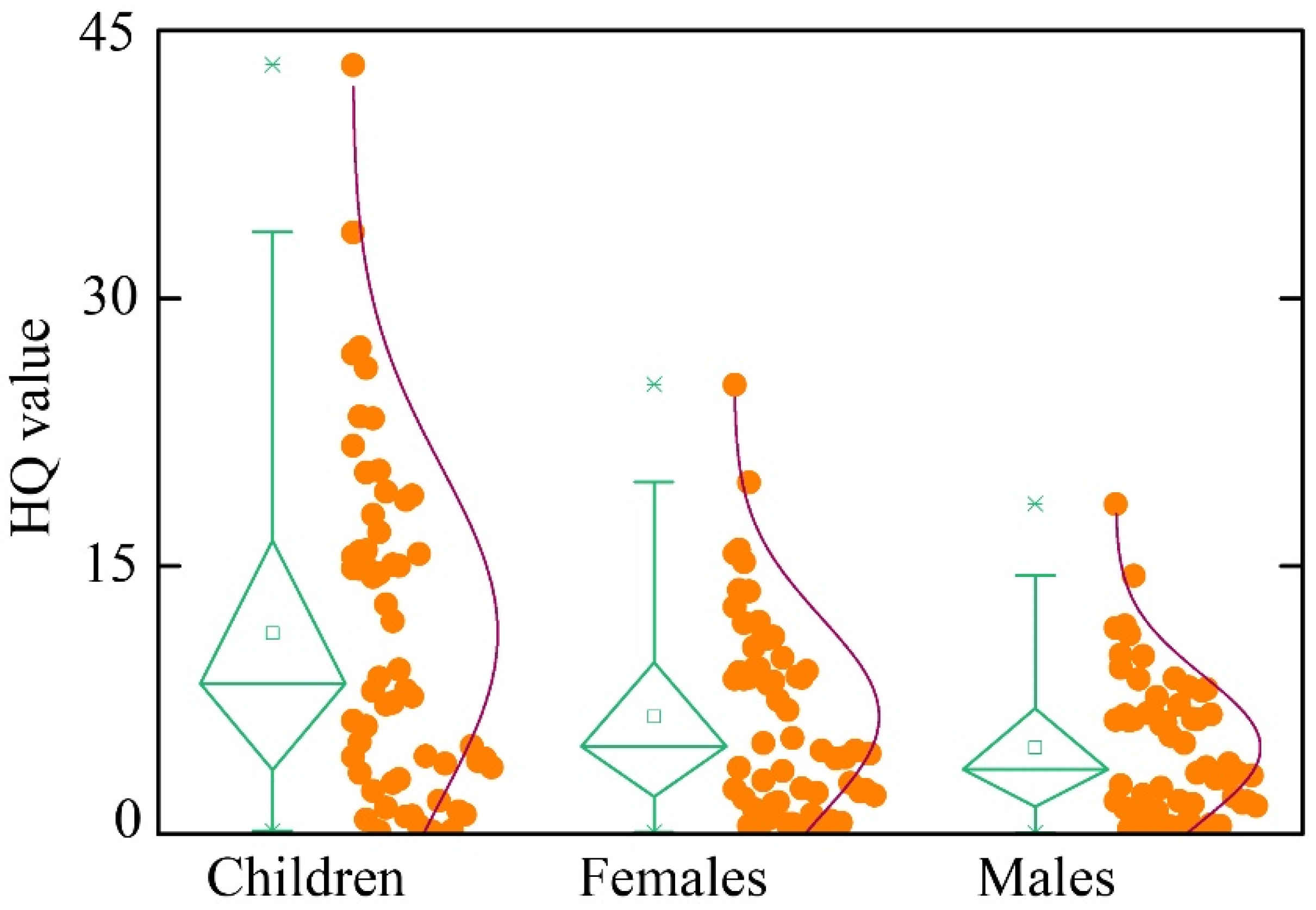
The HITotal values of children, adult females, and adult males are presented in Figure 11. For children, the HITotal value ranges from 0.19 to 43.10, with an average of 11.26. Among the groundwater samples, 90% pose potential health risks to child users: the proportions of high health risk, medium health risk, and negligible health risk are 70%, 20%, and 10%, respectively. For adult females, the HITotal value varies from 0.11 to 25.19, with an average of 6.58. Eighty-three percent of the groundwater samples exhibit potential health risks to female users, where high health risk accounts for 57%, medium health risk for 26%, and negligible health risk for 16%, respectively. In addition, 82% of the groundwater samples have HITotal values exceeding the upper limit for adult males; these values range from 0.08 to 18.49, with a mean of 4.83. The proportions of negligible health risk, medium health risk, and high health risk for adult males are 18%, 36%, and 46%, respectively.
Based on the HHRA findings, the overall non-carcinogenic health risks associated with high NO3 concentration groundwater follow a descending order: children > adult females > adult males. Children exhibit heightened susceptibility compared to adults, which aligns with existing literature. This increased vulnerability is likely due to their lower body weight and still-developing metabolic processes.

6. Conclusions

To facilitate the improved utilization and protection of groundwater resources, this study examined the hydrogeochemical characteristics, nitrate sources, and nitrate-related human health risks associated with 61 shallow groundwater samples collected from Southern Baoding, North China. The key findings of the research are as follows.
First and foremost, the groundwater samples are predominantly of the HCO3-Ca and HCO3-Mg types. In terms of ion concentrations, the average levels of cations follow the sequence of Ca2+ > Mg2+ > Na+ > K+, while anions present in the order of HCO3 > Cl > SO42− > NO3. Meanwhile, Pearson’s correlation analysis, ionic ratio analysis, and mineral saturation index assessments revealed that geogenic sources—primarily regulated by silicate weathering and carbonate dissolution—serve as the main controlling factors. Specifically, HCO3, Ca2+, and Mg2+ in the groundwater are mainly derived from the dissolution of carbonate minerals. For anthropogenic nitrate contamination, agricultural activities are identified as the most probable source, with soil nitrogen input and manure/sewage discharge also recognized as potential contributors.
Furthermore, Positive Matrix Factorization combined with Pearson correlation analysis was employed to identify the key factors shaping groundwater geochemistry, which led to the extraction of four interpretable factors. Factor 1, dominated by NO3, and Factor 4, dominated by SO42−, are closely associated with agricultural or livestock activities, while Factor 2, characterized by high Na+ and Mg2+ levels, is linked to the hydrolysis of silicate or carbonate rocks. Factor 3, which centers on pH and K+, correlates with silicate weathering and dissolution processes.
Additionally, the nitrate concentration in the groundwater varies between 0.2 mg/L and 68.0 mg/L, with 47.54% of the samples exceeding the 10 mg/L anthropogenic pollution threshold—confirming significant human impacts on the groundwater system. Molar ratio analyses further verified that agriculture acts as the dominant source of nitrate, with supplementary contributions from soil nitrogen and manure/sewage. From the perspective of health risks, non-carcinogenic risks exhibit the order of children > adult females > adult males; this heightened susceptibility among children can be attributed to their lower body weight and still-developing metabolic systems.

Author Contributions

Methodology, Y.Z.; Software, Y.Z. and C.F.; Validation, Y.Z. and Y.Y.; Formal analysis, C.F. and Y.Y.; Investigation, C.F., F.Y. and S.L.; Data curation, Y.Y. and F.Y.; Writing—original draft, Y.Z.; Writing—review & editing, S.Z.; Project administration, S.Z.; Funding acquisition, S.Z. All authors have read and agreed to the published version of the manuscript.

Funding

This research is supported by Deep Earth Probe and Mineral Resources Exploration National Science and Technology Major Project (2024ZD1004103), Chinese Academy of Geological Sciences Basal Research Fund (No. JKY202406, No. JKYZD202401), and the Open Research Fund Project of Hebei Key Laboratory of Geological Resources and Environment Monitoring and Protection (JCYKT202404).

Data Availability Statement

Dataset available on request from the authors.

Acknowledgments

We are grateful to the editorial team for their guidance throughout the review process. We deeply appreciate the anonymous reviewers for their insightful comments and valuable feedback, which significantly improved the quality of this work.

Conflicts of Interest

The authors declare no conflict of interest.

References

  1. Sridhar, C.N.; Subramani, T.; Kumar, G.R.S.; Soundaranayaki, K. Nitrate pollution index and age wise health risk appraisal for the Pambar River basin in south India. Environ. Geochem. Health 2025, 47, 198. [Google Scholar] [CrossRef]
  2. Taloor, A.K.; Sharma, S.; Pir, R.A.; Kumar, K. Appraisal of health risks associated with exposure of fluoride and nitrate contaminated springs in the Doda Kishtwar Ramban (DKR) region of Jammu and Kashmir India. J. Geochem. Explor. 2024, 257, 107380. [Google Scholar] [CrossRef]
  3. Zhang, Z.; Zhang, Y.; Liu, Z.; Zhu, Y.; Ai, C.; Xu, X.; Zhai, B.; Wang, Z. Coupling dynamics of soil moisture-nitrate in deep profiles and their relations to groundwater nitrate pollution in irrigated apple production systems. J. Hydrol. 2025, 662, 133892. [Google Scholar] [CrossRef]
  4. He, S.; Li, P.; Su, F.; Wang, D.; Ren, X. Identification and apportionment of shallow groundwater nitrate pollution in Weining Plain northwest China, using hydrochemical indices, nitrate stable isotopes, and the new Bayesian stable isotope mixing model (MixSIAR). Environ. Pollut. 2022, 298, 118852. [Google Scholar] [CrossRef]
  5. Khebudkar, A.; Sohoni, M. Estimation of Nitrate Concentration in Groundwater Source Using Zonal Nitrate Balance Method in Male Village of Western Maharashtra. In Geoenvironmental Engineering; Agnihotri, A.K., Reddy, K.R., Bansal, A., Eds.; Springer Nature: Singapore, 2024; pp. 281–298. [Google Scholar]
  6. Mao, H.; Wang, G.; Liao, F.; Shi, Z.; Rao, Z.; Zhang, H.; Qiao, Z.; Bai, Y.; Cheng, X.; Yan, X.; et al. Spatiotemporal Variation of Groundwater Nitrate Concentration Controlled by Groundwater Flow in a Large Basin: Evidence from Multi-Isotopes (15N, 11B, 18O, and 2H). Water Resour. Res. 2024, 60, e2023WR035299. [Google Scholar] [CrossRef]
  7. Riedel, T.; Kübeck, C.; Quirin, M. Legacy nitrate and trace metal (Mn, Ni, As, Cd, U) pollution in anaerobic groundwater: Quantifying potential health risk from “the other nitrate problem”. Appl. Geochem. 2022, 139, 105254. [Google Scholar] [CrossRef]
  8. Soula, R.; Chebil, A.; Cetin, M.; Majdoub, R. Spatial analysis and geostatistical characterization of nitrate pollution in Mahdia’s shallow aquifers. Environ. Sci. Pollut. Res. 2025, 32, 16380–16394. [Google Scholar] [CrossRef]
  9. Boschetti, T.; Hamed, Y.; Hadji, R.; Barbieri, M.; Gentilucci, M.; Rossi, M.; Khalil, R.; Khan, S.D.; Asghar, B.; Al-Omran, A.; et al. Using principal component analysis to distinguish sources of radioactivity and nitrates contamination in Southern Tunisian groundwater samples. J. Geochem. Explor. 2025, 271, 107670. [Google Scholar] [CrossRef]
  10. Huang, X.-Y.; Zhang, D.; Zhao, Z.-Q.; Liu, Y.-T.; Meng, H.-Q.; Zou, S.; Ma, B.-J.; Feng, Q.-Y. Determining hydrogeological and anthropogenic controls on N pollution in groundwater beneath piedmont alluvial fans using multi-isotope data. J. Geochem. Explor. 2021, 229, 106844. [Google Scholar] [CrossRef]
  11. Jin, L.; Ye, H.; Shi, Y.; Li, L.; Liu, R.; Cai, Y.; Li, J.; Li, F.; Jin, Z. Using PCA-APCS-MLR model and SIAR model combined with multiple isotopes to quantify the nitrate sources in groundwater of Zhuji, East China. Appl. Geochem. 2022, 143, 105354. [Google Scholar] [CrossRef]
  12. Rotiroti, M.; Sacchi, E.; Caschetto, M.; Zanotti, C.; Fumagalli, L.; Biasibetti, M.; Bonomi, T.; Leoni, B. Groundwater and surface water nitrate pollution in an intensively irrigated system: Sources, dynamics and adaptation to climate change. J. Hydrol. 2023, 623, 129868. [Google Scholar] [CrossRef]
  13. Jang, C.-S.; Chen, S.-K.; Chang, L.-F. Evaluation of groundwater vulnerability to nitrate-nitrogen by using probability-based modified DRASTIC models with source and attenuation factors. J. Hydrol. 2025, 655, 132951. [Google Scholar] [CrossRef]
  14. Nakagawa, K.; Amano, H.; Shinkai, F.; Wakasa, A.; Berndtsson, R. Integrated approach to investigate groundwater nitrate nitrogen pollution and remediation simulation in Shimabara Peninsula, Nagasaki, Japan. Environ. Earth Sci. 2025, 84, 256. [Google Scholar] [CrossRef]
  15. Stewart, M.K.; Aitchison-Earl, P.L. Irrigation return flow causing a nitrate hotspot and denitrification imprints in groundwater at Tinwald, New Zealand. Hydrol. Earth Syst. Sci. 2020, 24, 3583–3601. [Google Scholar] [CrossRef]
  16. Zhang, Y.; Chen, Z.; Huang, G.; Yang, M. Origins of groundwater nitrate in a typical alluvial-pluvial plain of North China plain: New insights from groundwater age-dating and isotopic fingerprinting. Environ. Pollut. 2023, 316, 120592. [Google Scholar] [CrossRef]
  17. Chaudhary, I.J.; Chauhan, R.; Kale, S.S.; Gosavi, S.; Rathore, D.; Dwivedi, V.; Singh, S.; Yadav, V.K. Groundwater Nitrate Contamination and its Effect on Human Health: A Review. Water Conserv. Sci. Eng. 2025, 10, 33. [Google Scholar] [CrossRef]
  18. Ding, H.; Gao, H.; Zhu, M.; Yu, M.; Sun, Y.; Zheng, M.; Su, J.; Xi, B. Spectral and molecular insights into the characteristics of dissolved organic matter in nitrate-contaminated groundwater. Environ. Pollut. 2024, 355, 124202. [Google Scholar] [CrossRef]
  19. Jia, H.; Howard, K.; Qian, H. Use of multiple isotopic and chemical tracers to identify sources of nitrate in shallow groundwaters along the northern slope of the Qinling Mountains, China. Appl. Geochem. 2020, 113, 104512. [Google Scholar] [CrossRef]
  20. Li, S.; Chow, R.; Su, H.; Han, F.; Li, Z. Multiple isotopes and GIS analyses reveal sources and drivers of nitrate in the Loess Plateau’s groundwater. Environ. Pollut. 2025, 384, 127022. [Google Scholar] [CrossRef]
  21. Seidenfaden, I.K.; Sonnenborg, T.O.; Refsgaard, J.C.; Børgesen, C.D.; Olesen, J.E.; Trolle, D. Are maps of nitrate reduction in groundwater altered by climate and land use changes? Hydrol. Earth Syst. Sci. 2022, 26, 955–973. [Google Scholar] [CrossRef]
  22. Hermawan, O.R.; Hosono, T.; Yasumoto, J.; Yasumoto, K.; Song, K.-H.; Maruyama, R.; Iijima, M.; Yasumoto-Hirose, M.; Takada, R.; Hijikawa, K.; et al. Effective use of farmland soil samples for N and O isotopic source fingerprinting of groundwater nitrate contamination in the subsurface dammed limestone aquifer, Southern Okinawa Island, Japan. J. Hydrol. 2023, 619, 129364. [Google Scholar] [CrossRef]
  23. Turkeltaub, T.; Jia, X.; Zhu, Y.; Shao, M.-A.; Binley, A. A Comparative Study of Conceptual Model Complexity to Describe Water Flow and Nitrate Transport in Deep Unsaturated Loess. Water Resour. Res. 2021, 57, e2020WR029250. [Google Scholar] [CrossRef]
  24. Kaandorp, V.P.; Broers, H.P.; van der Velde, Y.; Rozemeijer, J.; de Louw, P.G.B. Time lags of nitrate, chloride, and tritium in streams assessed by dynamic groundwater flow tracking in a lowland landscape. Hydrol. Earth Syst. Sci. 2021, 25, 3691–3711. [Google Scholar] [CrossRef]
  25. Nawaz, A.; Alfio, M.R.; Fiorese, G.D.; Balacco, G. Identification of potential causes of nitrate pollution in three apulian aquifers (Southern Italy). Sustain. Water Resour. Manag. 2025, 11, 41. [Google Scholar] [CrossRef]
  26. Wu, Z.; Jiang, X.; Chen, J.; Wang, S. Diffusive gradients in thin films for transfer of phosphorus, nitrate and ammonium in lake sediments. J. Geochem. Explor. 2023, 247, 107175. [Google Scholar] [CrossRef]
  27. Deng, Y.; Ye, X.; Du, X. Predictive modeling and analysis of key drivers of groundwater nitrate pollution based on machine learning. J. Hydrol. 2023, 624, 129934. [Google Scholar] [CrossRef]
  28. Ge, D.; Gao, X.; Jiang, P.; Li, B.; He, N.; Wu, Y.; He, Q.; Cai, Y.; Li, C.; Zhao, X. Deep soil desiccation hinders nitrate leaching to groundwater in the global largest apple cultivation area. J. Hydrol. 2024, 637, 131334. [Google Scholar] [CrossRef]
  29. Jia, H.; Qian, H. Groundwater nitrate response to hydrogeological conditions and socioeconomic load in an agriculture dominated area. Sci. Rep. 2025, 15, 1315. [Google Scholar] [CrossRef]
  30. Machiwal, D.; Jha, M.K.; Singh, V.P.; Mohan, C. Assessment and mapping of groundwater vulnerability to pollution: Current status and challenges. Earth-Sci. Rev. 2018, 185, 901–927. [Google Scholar] [CrossRef]
  31. Wells, M.J.; Gilmore, T.E.; Nelson, N.; Mittelstet, A.; Böhlke, J.K. Determination of vadose zone and saturated zone nitrate lag times using long-term groundwater monitoring data and statistical machine learning. Hydrol. Earth Syst. Sci. 2021, 25, 811–829. [Google Scholar] [CrossRef]
  32. Chen, A.; Du, Y.; Wang, Z.; Sun, X.; Xu, R.; Xiong, Y.; Yang, L.; Liu, J.; Gan, Y. Source identification of nitrate in groundwater of an agro-pastoral ecotone in a semi-arid zone, northern China: Coupled evidences from MixSIAR model and DOM fluorescence. Appl. Geochem. 2024, 175, 106197. [Google Scholar] [CrossRef]
  33. Páez-Osuna, F.; Álvarez-Borrego, S.; Ruiz-Fernández, A.C.; García-Hernández, J.; Jara-Marini, M.E.; Bergés-Tiznado, M.E.; Piñón-Gimate, A.; Alonso-Rodríguez, R.; Soto-Jiménez, M.F.; Frías-Espericueta, M.G.; et al. Environmental status of the Gulf of California: A pollution review. Earth-Sci. Rev. 2017, 166, 181–205. [Google Scholar] [CrossRef]
  34. Xia, C.; Cheng, W.; Ren, M.; Zhu, Y. Chromium(VI) and nitrate removal from groundwater using biochar-assisted zero valent iron autotrophic bioreduction: Enhancing electron transfer efficiency and reducing EPS accumulation. Environ. Pollut. 2025, 364, 125313. [Google Scholar] [CrossRef] [PubMed]
  35. Wang, L.Y.; Liu, K.; Wan, L. Hydrochemical characteristics and genetic mechanisms of mid-low temperature geothermal fluids in the eastern segment of the Xinquan—Wentang Fault Zone, Jiangxi Province (In Chinese). Acta Geosci. Sin. 2025, 45, 1–17. [Google Scholar]
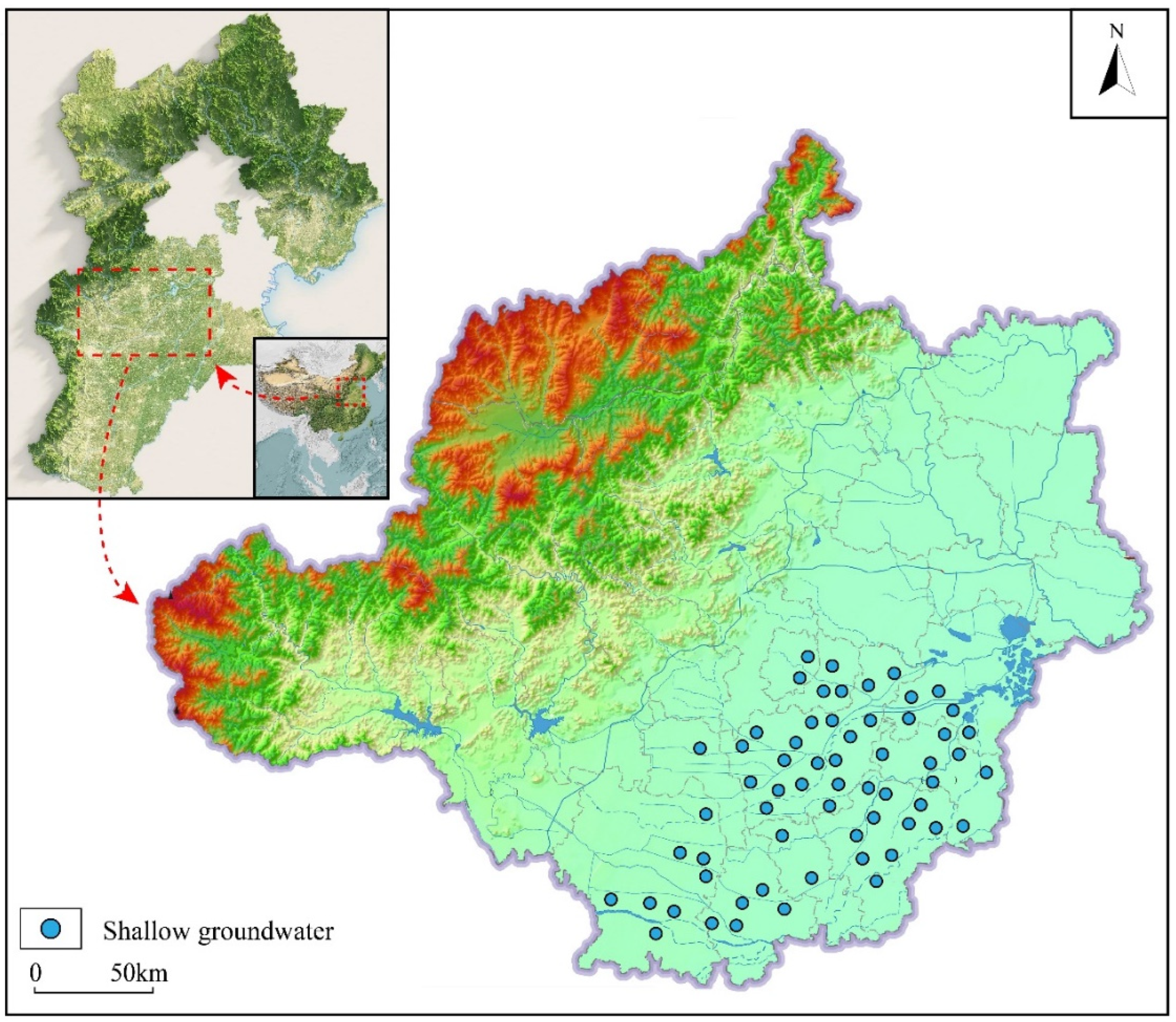
Figure 1. The location of the study area and sampling sites.
Sustainability 17 10834 g001
Figure 2. The box Plot of ion Concentration.
Sustainability 17 10834 g002
Figure 3. The Piper diagram of groundwater samples.
Sustainability 17 10834 g003
Figure 4. Pearson correlation coefficient diagram of hydrochemical parameters.
Sustainability 17 10834 g004
Figure 5. The Gibbs diagram.
Sustainability 17 10834 g005
Figure 6. The bivariate plots of molar ratios. (a) Ca2+/Na+ vs. Mg2+/Na+, (b) Ca2+/Na+ vs. HCO3/Na+.
Sustainability 17 10834 g006
Figure 7. The ionic ratio of (a) Na+ vs. Cl, (b) Ca2+ vs. SO42−, (c) Ca2+ + Mg2+ vs. HCO3, (d) Ca2+ + Mg2+ vs. HCO3 + SO42−.
Sustainability 17 10834 g007
Figure 8. Mineral saturation index. (a) SIDolomite vs. SICalcite (b) SIHalite vs. SIGypsum.
Sustainability 17 10834 g008
Figure 9. PMF-based source apportionment of hydrochemical constituents.
Sustainability 17 10834 g009
Figure 10. Nitrate source identification by (a) Cl/Na+ vs. NO3/Na+ (b) Cl vs. NO3/Cl.
Sustainability 17 10834 g010
Figure 11. Box plot of HQ value of high NO3 concentration groundwater.
Sustainability 17 10834 g011
Table 1. The hydrochemistry and isotope results of collected samples.
pHTDSK+Ca2+Na+Mg2+HCO3SO42−ClNO3
Unit mg/Lmg/Lmg/Lmg/Lmg/Lmg/Lmg/Lmg/Lmg/L
groundwaterMax8.213302.9159.0207.0130.0789.0423.0358.068.0
Min7.02150.238.96.214.9210.06.14.80.2
Ave7.44641.284.241.146.7377.549.552.410.6
SD0.22090.630.436.725.6111.757.554.810.8
CV0.030.50.50.40.90.50.31.21.01.0
Table 2. The empirical parameters of HHRA.
ParameterUnitChildrenFemaleMale
Oral reference dose for NO3 (RfDoral)mg/(kg×day)0.040.040.04
Gastrointestinal absorption factor (ABSgi)-111
Drinking rate (IR)L/day0.71.51.5
Exposure frequency (EF)days/year365365365
Exposure duration (ED)years63030
Average body weight (BW)kg155575
Average time (AT)days219010,95010,950
Skin permeability (K)cm/h0.0010.0010.001
Contact duration (T)h/d0.40.40.4
Exposure frequency of daily dermal contact (EV)-111
Unit conversion factor (CF) L/cm30.0010.0010.001
Skin surface area (Sa)-6597.0115,475.8518,742.36
Average body height (H)cm99.4153.4165.3
Disclaimer/Publisher’s Note: The statements, opinions and data contained in all publications are solely those of the individual author(s) and contributor(s) and not of MDPI and/or the editor(s). MDPI and/or the editor(s) disclaim responsibility for any injury to people or property resulting from any ideas, methods, instructions or products referred to in the content.