Article

Spatial Distribution Characteristics and Driving Factors of Traditional Villages in Henan Province: A Multi-Method Comprehensive Analysis

1
Department of Spatial Culture Design, Graduate School of Techno Design, Kookmin University, Seoul 02707, Republic of Korea
2
School of Computer and Data Science, Henan University of Urban Construction, Pingdingshan 467000, China
*
Author to whom correspondence should be addressed.
Sustainability 2025, 17(23), 10825; https://doi.org/10.3390/su172310825
Submission received: 28 October 2025 / Revised: 25 November 2025 / Accepted: 28 November 2025 / Published: 3 December 2025
(This article belongs to the Section Tourism, Culture, and Heritage)

Abstract

This study supports the preservation and sustainable development of traditional villages by examining their spatial distribution patterns and mechanisms underlying those patterns in Henan Province. The study utilizes data from six batches of Chinese traditional villages in the province, which are studied using kernel density estimation (KDE), spatial autocorrelation, optimal GeoDetector, and the geographically weighted regression (GWR) model, to explore the spatial differentiation pattern in depth and its mechanisms of influencing traditional villages in Henan Province. This study reveals that traditional villages in the province exhibit a “multi-core” clustering pattern, influenced by the natural environment, historical culture, location and transportation, and economic development. The Optimal Parameter GeoDetector indicates that 15 factors, including the average altitude, academy density, road density, and annual GDP, vary significantly in their impact. Furthermore, these factors exhibit a notable interactive, synergistic effect. Meanwhile, the GWR model indicates spatial heterogeneity in the influences of factors like the average rainfall, river density, road density, academy density, and GDP on the distribution of traditional villages. This study suggests developing tailored protection and development strategies for different clusters, enhancing inter-administrative joint protection, and building a radiation network centered on core areas to promote sustainable preservation and coordinated rural revitalization of traditional villages.

1. Introduction

Traditional villages, a vital part of China’s rich historical culture, reflect the interaction between human activities and nature over time. They are also a critical area for research in rural revitalization. In 2000, China had 3.65 million natural villages, but by 2010, this number had dropped to 2.71 million, a loss of over 900,000 villages (26%) in a decade, many of which were traditional [1]. This decline poses significant challenges for the preservation and sustainable development of these types of villages, as some regionally unique architecture has been damaged, and intangible cultural heritage skills are at risk of disappearing. In 2012, China’s Ministry of Housing and Urban-Rural Development, in collaboration with several other departments, issued the first list of traditional villages, comprising 646 entries. This event signaled a shift toward systematic and institutionalized protection of these cultural treasures. The initiative has offered policy backing for cultural heritage conservation and fostered rural sustainability through resource pooling and innovative mechanisms. By March 2023, six batches of lists had been released, encompassing 8115 traditional villages. This expanding registry not only underscores the intensified commitment to cultural heritage protection in China but also fuels rural revitalization with cultural energy through ongoing adjustments and innovative approaches. Henan Province, one of the cradles of Chinese civilization, now has 275 traditional villages on the National Traditional Village List. These villages’ spatial distribution shows pronounced geographical clustering and complexity, shaped by factors like natural geography, socio-economy, and historical culture.
With the continuous deepening of relevant research, academic achievements related to traditional villages have become increasingly rich and diverse. As research progresses, the academic literature on traditional villages is growing increasingly comprehensive. In terms of research focus, international scholars began their work earlier, with origins dating back to the late 19th to early 20th centuries. Their research primarily covers the renovation of traditional villages, tourism and sustainable development, and the assessment of regulatory impacts [2,3,4,5]. Now, as the Chinese government increases its attention to traditional villages, Chinese scholars are increasingly concerned with their preservation and growth. Among these scholars, Li et al. utilized the nuclear density method to reveal a “core–periphery” structure in the spatial distribution of Chinese traditional villages, with the majority located to the east of the Hu Huanyong Line and density cores found at the junctions of certain provinces and prefectural-level cities [6]. On this basis, Bian et al. employed ArcGIS 10.8 software spatial analysis combined with mathematical statistical techniques to further verify the agglomerative distribution pattern, while emphasizing the imbalance of inter-provincial distribution and providing valuable methodological references for regional-scale research [7]. Subsequently, Ma et al. further concentrated on traditional villages in Fujian Province, and pointed out that their distribution is uneven, with terrain, rivers, transportation and economy as the key influencing factors [8]. Regarding the exploration of influencing factors, Su et al. explicitly identified the significant effects of factors such as annual average temperature, river density, road density, and economic development, and established a basic analytical framework for influencing factor research [9].
Regional-scale studies have increasingly centered on the uniqueness of specific regions, thereby offering a comparative perspective for the study of Henan. For instance, Chen et al. identified the spatial distribution characteristics and driving mechanisms of traditional villages on Hainan Island by integrating methods such as geographical detectors, highlighting the significance of the region’s natural and cultural contexts [10]. Focusing on minority gathering areas, Zheng et al. explored the hollowing characteristics and formation mechanisms of traditional villages, pointing out the differential impacts of cultural factors [11]. In addition to the above studies, many other studies have also provided valuable methodological support and theoretical perspectives for this study in terms of influencing factor identification and research method application [12,13]. Meanwhile, in a study of traditional villages in Henan, Dai et al. explores their spatial distribution by utilizing GIS and GeoDa technologies. The findings reveal a clustered pattern, predominantly concentrated in central areas and sparse around the periphery [14]. Specifically focusing on Henan Province, Liu and Mao analyzed the influencing factors of traditional villages’ distribution by constructing indicators from natural, social and other dimensions using GeoDetector. This study has broadened the research horizon for the study of traditional villages in Henan. However, it failed to conduct systematic testing on the influencing factors, which may lead to biases in variable selection [15,16].
Based on existing literature, substantial research achievements have been accumulated in the field of traditional villages, yet there remains significant scope for further expansion. The marginal contributions of this study are mainly reflected in the following three aspects: First, addressing the limitation that most existing studies rely on a single research method, this study constructs a multi-method collaborative research framework by integrating quantitative approaches such as the Optimal Parameter GeoDetector, GWR, and KDE. This framework systematically analyzes the spatial evolution characteristics and influencing mechanisms of all batches of traditional villages. Second, in response to the research gap wherein existing studies neglect cultural factors, this study incorporates cultural variables into the research framework and explores the interaction intensity and co-evolutionary relationships among different influencing factors from multiple dimensions. Third, with the full release of the 6th Batch of the List of Traditional Chinese Villages, comprehensive research based on the entire dataset of all batches has become a key focus in academic circles. This study conducts analysis using the latest and most complete dataset, thereby providing important extensions and supplements to existing research achievements in related fields.
To address those gaps, this study analyzes the spatial patterns of traditional villages in Henan Province and the mechanisms influencing those patterns, providing a scientific basis for their protection and development. To that end, this study utilizes GWR, Optimal GeoDetector, kernel density estimation, and spatial autocorrelation to examine 275 traditional villages across all six batches. The study begins by cataloging the number of traditional villages and explores their distribution using kernel density estimation. It then analyzes the factors influencing traditional villages by quantifying four dimensions: the natural environment, history and culture, location and transportation, and economic development. Finally, the GWR model reveals the distribution’s underlying mechanisms. This research enriches the theoretical tools and technical pathways in traditional village studies, uncovers spatial heterogeneity mechanisms behind multiple factors, and promotes a shift from single to cluster protection approaches, enhancing the scientificity and effectiveness of protection and development policies.

2. Research Data and Methods

2.1. Study Area

Henan Province, situated in central–eastern China and the middle–lower reaches of the Yellow River, spans from 31°23′ N to 36°22′ N and 110°21′ E to 116°39′ E. It shares borders with Anhui and Shandong to the east, Hebei and Shanxi to the north, Shaanxi to the west, and Hubei to the south (Figure 1). The province covers a total area of 167,000 square kilometers, administering 17 prefecture-level cities, 21 county-level cities, and 1 county under direct provincial jurisdiction, with Zhengzhou as its capital. The province’s location at the convergence of the Huanghuaihai Plain, Funiu Mountains, and Dabie Mountain System creates a varied environmental foundation for traditional villages. The topography is higher in the west and lower in the east, with the northern, western, and southern parts dominated by the semi-circular mountain ranges of Taihang, Funiu, Tongbai, and Dabie Mountains, the central and eastern parts by the Huanghuaihai Alluvial Plain, and the southwestern part by the Nanyang Basin. Mountains and hills occupy 44.3% of the province, while plains and basins cover 55.7%. The climate is warm temperate–subtropical transitional continental monsoon, with average annual temperatures ranging from 12 °C to 16 °C and annual precipitation between 500 and 900 mm. Henan Province, the heartland of Chinese civilization, is home to prehistoric sites like the 7000-year-old Peiligang culture, 6000-year-old Yangshao culture, and 5000-year-old Longshan culture, along with a 3000-year history of capitals from the Xia, Shang, and Zhou dynasties to the Northern Song Dynasty. The province boasts the second-largest number of surface relics and the largest number of underground relics in China, including six World Cultural Heritage sites (e.g., Longmen Grottoes in Luoyang, Yinxu Ruins in Anyang). These historical treasures imbue traditional villages with the distinct essence of Central Plains culture. (Data source: Henan Provincial People’s Government website https://www.henan.gov.cn/2021/05-26/2152151.html, accessed on 16 March 2025.)

2.2. Data Sources

The list of traditional villages in Henan Province is derived from the six batches of the Chinese Traditional Village Lists published by the Ministry of Housing and Urban-Rural Development, totaling 8115 villages, including 275 in Henan. In this study, national 30 m resolution digital elevation data were sourced from the Geospatial Data Cloud (www.gscloud.cn). Data on GDP, population, temperature, precipitation, and sunshine were obtained from the Henan Statistical Yearbook. Road and water system vector data are from the 1:250,000 National Basic Geographic Database via the National Geographic Information Resource Directory Service System. Academy density was calculated by dividing the historical total number of academies in each prefecture-level city by the local administrative area (unit: academies per square kilometer), using data from the Chinese Academy Dictionary (1996 edition). Academies, significant educational institutions in traditional Chinese society, served to educate in Confucian classics, cultivate local talent, and preserve culture, with their numbers and development reflecting regional cultural and educational progress [17]. The count of protected units is from the eight batches of National Key Cultural Protection Units announced by the State Council. Backbone distance data were determined by calculating the average spherical distance to Beijing, Hangzhou, and Shenzhen.
GeoDetector requires input data to have a regular spatial unit structure. However, administrative boundaries such as prefecture-level cities exhibit significant differences in area and shape. Direct use of such boundaries will introduce scale effect bias, affecting the accuracy of statistical inference. In this study, the fishnet tool in ArcGIS 10.8 software was used to split the areal data of prefecture-level cities into 10 km × 10 km grids. For grids in the overlapping areas of multiple prefecture-level cities, the indicator values were calculated by weighting the area proportion of each prefecture-level city within the grid.

2.3. Research Methods

2.3.1. Kernel Density Estimation

KDE is a commonly employed non-parametric statistical technique in probability theory and statistics for estimating the probability density function (PDF) of a random variable. KDE utilizes data sample points and calculates the PDF estimate by applying a kernel function and bandwidth parameter to weight and sum these points. Unlike traditional parametric statistical methods, KDE does not assume a specific data distribution, offering strong applicability and flexibility. In spatial research, it helps reveal the distribution characteristics of traditional villages and identify high-density areas, and it provides a quantitative basis for analyzing their spatial structure, distribution patterns, and influencing factors [18]. The formula is as follows:
D x i , y i = 1 u r i = 1 u k d r
In this formula, ( x i , y i ) represents the spatial location of a traditional village, D is the kernel density at that location, r is the bandwidth (or smoothing parameter), u counts the number of points within a radius r of the point ( x i , y i ) , k is the spatial weight function, and d is the distance from the current feature point to ( x i , y i ) .

2.3.2. Optimal Parameter GeoDetector

The Optimal Parameter GeoDetector is a robust tool for geospatial data analysis, improving the accuracy and efficiency of the GeoDetector in identifying spatial differentiation and uncovering driving factors through optimal parameter selection. When an independent variable significantly influences a dependent variable, their spatial distributions should exhibit similarity. Based on this concept, the Optimal Parameter GeoDetector calculates q-values under various classification methods and breakpoint numbers, selecting the parameter combination with the highest q-value for spatial discretization. This approach detects spatial stratified heterogeneity and the explanatory power of influencing factors on spatial differentiation [17]. Applying the Optimal Parameter GeoDetector method to analyze traditional villages in Henan Province allowed us to effectively identify and quantify the dominant factors affecting their spatial distribution differences, along with the spatial explanatory power of those factors.

2.3.3. Spatial Autocorrelation Analysis

In spatial econometric analysis, constructing a spatial geographic weight matrix is a crucial step. Generally, when two regions are spatially close, their interactions in economic activities, resource flows, and information dissemination are frequent and significant, showing strong spatial autocorrelation. This autocorrelation is essential for understanding how traditional villages spread and diffuse across regions. The specific expression for the spatial weight matrix is as follows:
S i j = 1 / d i j 2   , i j 0   , i = j              
where i and j denote two regions, and d i j 2 is the square of the distance between them.
To analyze the spatial correlation of traditional villages in Henan Province between regions, we use the Global Moran’s I and Local Moran’s I to quantify spatial autocorrelation. The specific calculation formula for Moran’s I is as follows:
M o r a n s   I = v i = 1 v j = 1 v S i j ( x i X ¯ ) ( x j X ¯ ) S 3 i = 1 v j = 1 v S i j
L o c a l   M o r a n s   I = ( x i X ¯ ) i = 1 v S i j ( x i X ¯ ) S 2
where v is the number of regions, x i is the observed value for region i , S i j is the spatial weight matrix, and S 2 is the sample variance. If I > 0 in the significance test, this suggests that the attribute values exhibit a positive spatial correlation, indicating “high–high” or “low–low” clustering. Conversely, if I < 0 in the significance test, this indicates a negative spatial correlation, showing a “high–low” or “low-and-through” dispersion.

2.3.4. Geographically Weighted Regression

In traditional regression analysis, it is assumed that the relationship between independent and dependent variables remains constant across the region. However, in spatial analysis, data are sampled based on specific geographic locations, and this relationship or structure may change with the location. To address this, the GWR model was developed. It allows model parameters to vary spatially, better capturing the spatial heterogeneity of geographic data [19]. When analyzing traditional villages in Henan Province, the GWR method can effectively reveal the spatial heterogeneity patterns influencing their distribution and characteristics. The formula for this method is as follows:
y i = j = 1 k β k ( v i , v j ) X i j + β 0 ( v i , v j ) + ε i
In this formula, y i represents the observed value of the dependent variable at location i , X i j is the value of the j independent variable at location i , β k ( v i , v j ) is the coefficient for the j independent variable at location i , β 0 ( v i , v j ) is the intercept of the regression, and i is the random error term.

3. Spatial Distribution Characteristics of Traditional Villages

3.1. Distribution by Administrative Region

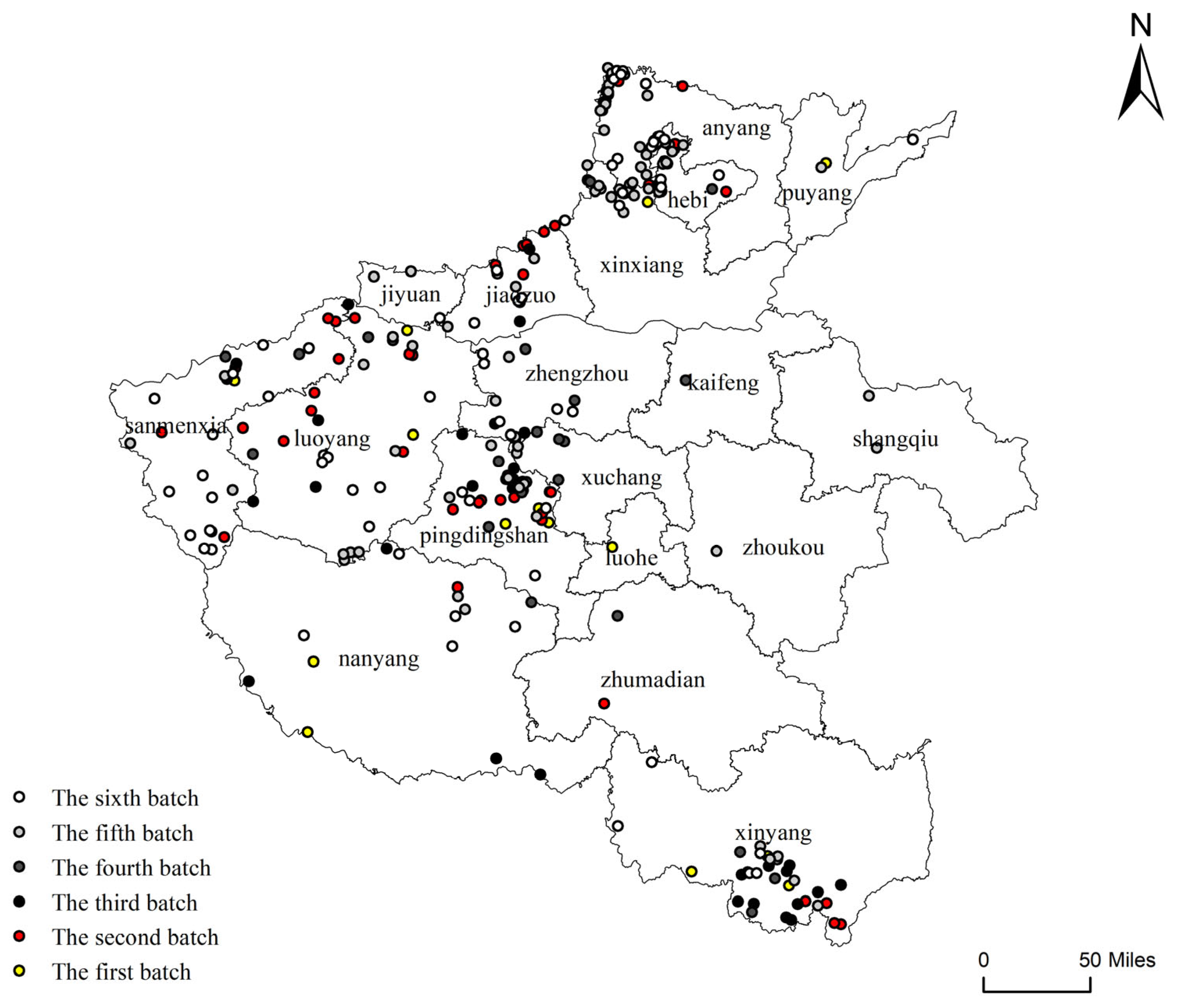
Since the first batch of traditional village lists was released in 2012, a total of 8115 villages in China have been recognized as traditional villages, with 275 in Henan Province. To gain a more in-depth understanding of the spatial distribution within Henan, we further categorized these villages by municipal administrative units (including one directly administered county), as presented in Table 1. Pingdingshan has the most traditional villages in Henan, with 37, accounting for 13.45% of the total. The cities with the next highest numbers are Xinyang (34 villages), Luoyang (24 villages), Anyang (33 villages), Sanmenxia (30 villages), and Hebi (29 villages), which together account for 71.6% of the province’s total. Meanwhile, Zhoukou, Luohe, and Kaifeng have the fewest traditional villages, with only one village in each city. The distribution of traditional villages in Henan Province across different batches is shown in Figure 2.

3.2. Kernel Density Distribution Characteristics

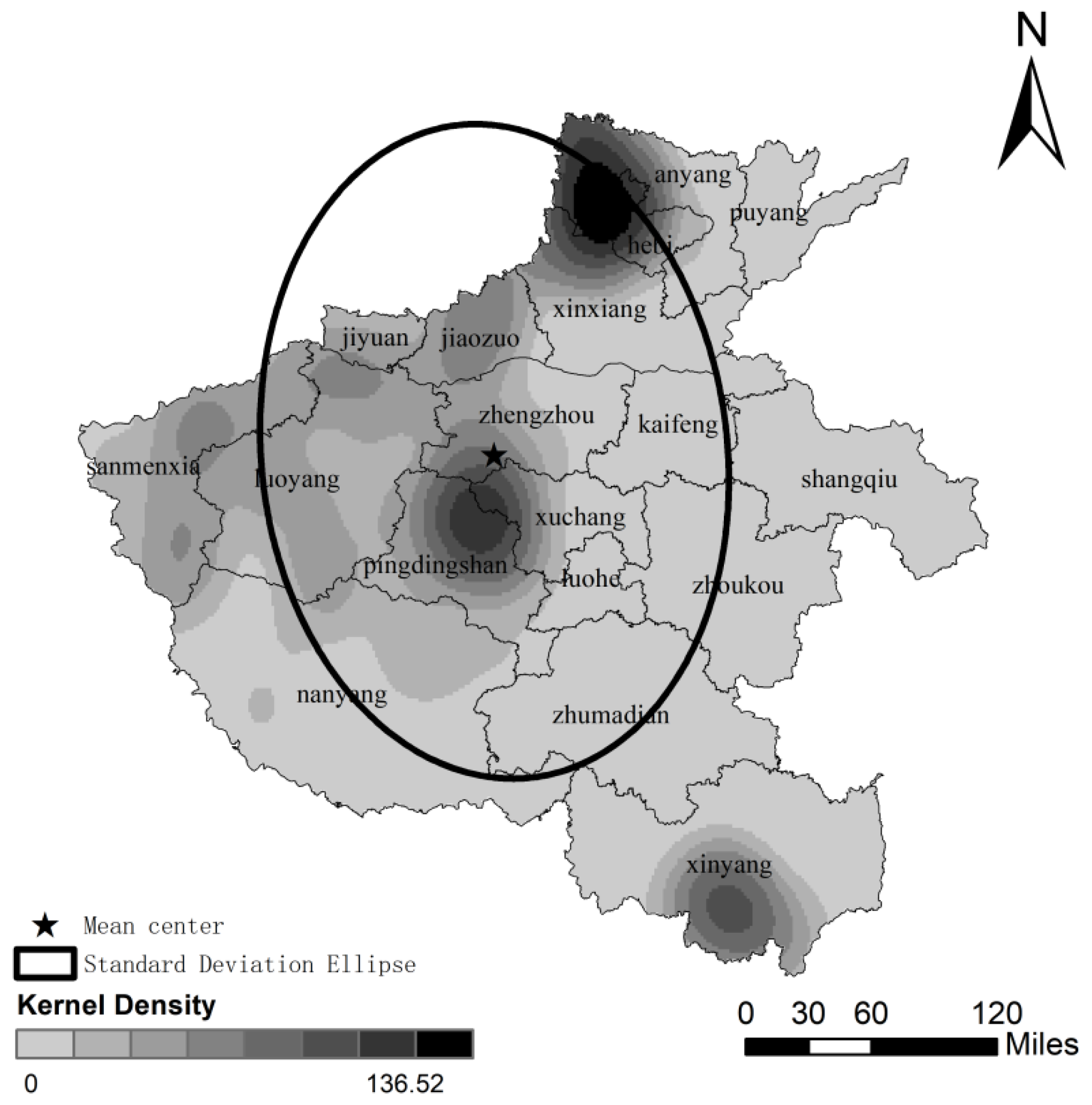
Figure 3 illustrates the kernel density distribution of the six batches of traditional villages in Henan Province. The results show a “multi-core” spatial distribution pattern, aligned in a north–south direction. The first high-density area is the northern Henan agglomeration, primarily located in Xinxiang City, Hebi City, and Anyang City. The flourishing of traditional villages in this region is due to its unique geographical and historical conditions. Specifically, the Xinxiang region’s abundant mountains and rivers provided rich natural resources for the villages and shaped a unique village landscape. As an important thoroughfare for ancient merchants, Hebi facilitated economic exchanges and cultural integration. Anyang, an ancient city with a deep cultural heritage, provided fertile ground for the formation and development of traditional villages. These factors, combined, have contributed to the prosperity and development of traditional villages in the northern Henan region. The second high-density area is located in the central Henan agglomeration, primarily in Pingdingshan City, Zhengzhou City, and Xuchang City. This region, situated between the Funiu Mountains and the Huanghuaihai Plain, features a varied topography with mountains, hills, and plains. This complex environment influenced village layouts and encouraged people to obtain raw materials locally like stone and wood, creating a unique architectural style. The third high-density area is the southern Henan agglomeration, mainly Xinyang City, which is mountainous with many rivers, providing an ideal setting for traditional villages. Xinyang also has a rich cultural heritage, blending with its natural beauty to form the unique charm of its traditional villages.
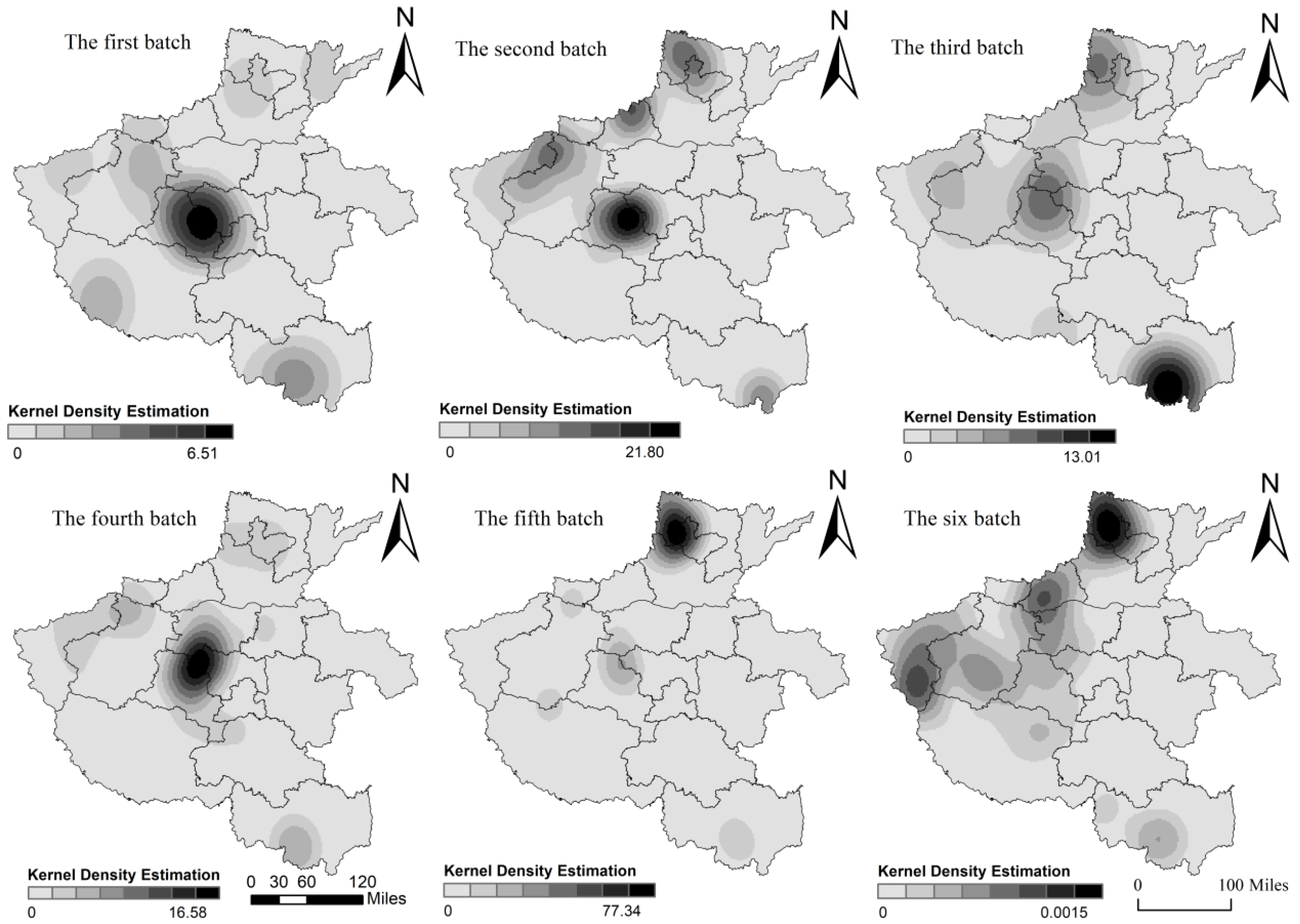
The standard deviation ellipse analysis shows that the spatial centroid of the traditional village distribution is in the southern part of Zhengzhou City. The ellipse’s major axis runs northwest–southeast, aligning with the distribution of traditional villages along the Taihang, Funiu, Tongbai, and Dabie Mountains, suggesting that geographical barriers protect these villages. The kernel density analysis maps of traditional villages from batches 1 to 6 (Figure 4) clearly show the evolution of their spatial distribution in Henan Province. Overall, recently added traditional villages are concentrated in three cores, from which they gradually spread outward.

4. Analysis of Influencing Factors

4.1. Variable Selection

The spatial distribution pattern of traditional villages mainly results from the synergy of natural geography, historical culture, and socio-economic factors. Previous studies have explored these aspects from various angles [20,21]. This study, building on prior research and considering Henan Province’s unique characteristics, quantifies variables across four dimensions: the natural environment, historical culture, location and transportation, and economic development, further broken down into 15 secondary indicators (Table 2). It should be noted that the selection of the average spherical distance to three core cities (Beijing, Hangzhou, and Shenzhen) for the secondary indicator “Distance to Key Cities (X11)” is based on these cities’ policy authority, cultural activation capacity, and innovation empowerment level. The distribution and protection of traditional villages exhibit significant spatial correlation. Spherical distance can accurately avoid errors caused by the Earth’s curvature, more truly reflect the geographical barriers between traditional villages and core cities, and is particularly suitable for depicting the impact of national-level policies and cross-regional cultural radiation on the distribution of traditional villages.

4.2. Factor Measurement

By combining different discretization methods and classification intervals for the independent variables, significant differences are detected in the explanatory power (q-value) for spatial differentiation. This aspect is often overlooked in traditional geographical detector analysis. Overcoming that limitation, this study employs the Optimal Parameter GeoDetector to calculate factors like natural breakpoints, geometric intervals, equal intervals, and quantiles, while analyzing and comparing classification intervals ranging from three to seven categories. The combination of discrete classification intervals with the highest q-value is determined as the optimal parameter. The detection results (Figure 4) indicate that the average slope (X2), urbanization rate (X15), and average rainfall (X6) have the strongest influence, with values of 0.58, 0.52, and 0.5, respectively. The ranking of the influence of single-factor indicators’ q-values is as follows: natural environment > socio-economics > location and transportation > historical culture.
The natural environment is crucial for the formation and development of villages, fundamentally influencing their distribution. Topographically, the eastern Huanghuaihai Plain is flat, with villages densely and uniformly distributed, often in clustered patterns. In contrast, the western and southern mountainous areas, such as the Taihang, Funiu, and Dabie Mountains, have complex terrain, with a relatively sparse village distribution. Many villages are built along the mountains, forming unique village forms. Considering the climatic conditions, Henan Province’s climate is favorable for agriculture, aiding village formation and development. The temperate and subtropical climate, with ample rainfall, provides ideal conditions for farming, fostering village prosperity. Water resources also impact the village distribution. The areas along riverbanks are endowed with abundant water resources, facilitating easy access to water for irrigation and drinking, which leads to dense village clustering. For instance, villages in the Yellow and Huai River Basins are often riverside, forming numerous riverside communities. Elsewhere, in the northern Henan agglomeration, traditional villages are built along mountains, as well as near valley bottoms, taking the form of distinctive stone villages. Meanwhile, the traditional villages within the agglomeration core zone of central Henan are situated in the circum-Songshan region, which has long been a densely populated area for village formation. In the opposite case, the southern Henan agglomeration’s traditional villages are mostly found in the remote Dabie Mountains, where modern transportation is limited.

4.3. Interacting Factor Detection

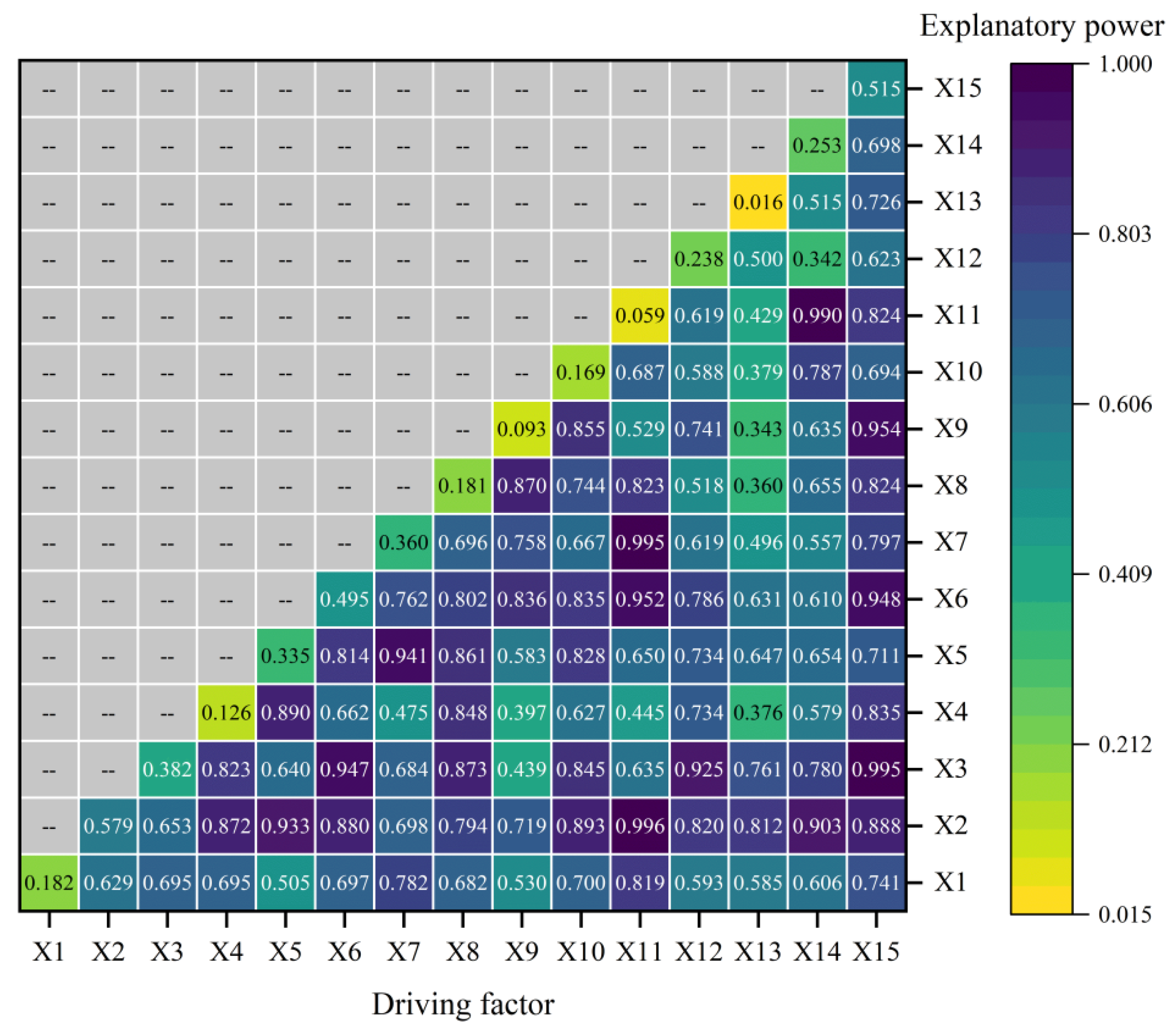
To explore the potential synergistic effects among the influencing factors, 15 factors affecting the distribution of traditional villages were subjected to interaction detection, with the results illustrated in Figure 5. This study finds that most of the 15 driving factors exhibit either dual-factor enhancement or non-linear enhancement for the distribution characteristics of traditional villages in Henan Province, indicating a mutually reinforcing relationship among the factors. From the perspective of influencing factor types, in the natural environment dimension, the average slope (X2) has the most frequent interactions and the greatest driving force. We find that the results of the interactions with X2 are mostly non-linear enhancements. Meanwhile, in the economic development dimension, the urbanization rate (X15) has the most frequent interactions and the greatest driving force.

5. Influence Mechanism of Traditional Village Distribution in Henan Province Based on the GWR Model

5.1. Spatial Autocorrelation

The study area was gridded using a fishnet analysis tool, and further spatial autocorrelation research was conducted. As shown in Table 2, the Global Moran’s I of the six batches of traditional villages in Henan Province is significant at the 1% level for five batches, indicating a significant positive spatial autocorrelation in the spatial layout of traditional villages, with clear clustering characteristics, providing support for the applicability of the GWR model. Overall, Moran’s I shows a fluctuating increase, reflecting the enhanced spatial clustering of traditional villages in Henan Province and the uneven distribution of the spatial pattern.

5.2. Optimal Model Selection

Before regression, all independent variables were subjected to a collinearity test, and the results showed that the variance inflation factor (VIF) for X1, X2, X3, X9, X14, and X15 was greater than 5, indicating the presence of multicollinearity among these factors. After removing these independent variables, the VIF for all remaining variables in the model was less than 5, indicating that there was no serious multicollinearity among the independent variables in the model. Through regression using the ordinary least squares (OLS) model, it was found that the regression coefficients for X4, X5, X11, and X13 did not pass the significance test, so these independent variables were also removed. Finally, X6, X7, X8, X10, and X12 were selected as factor indicators for model selection.
As shown in Table 3, the goodness of fit (R2), Akaike information criterion (AICc), and residual squares were selected as evaluation indicators to further test the accuracy and applicability of the MGWR model. A larger R2 value indicates a stronger explanatory power of the model; a smaller AICc value indicates a better fit of the model to the observed data; and a smaller residual squares value is also preferred. Table 3 provides the relevant parameters of the OLS model, GWR model, and MGWR model for comparison. As shown in Table 4, from the R2 value, it can be surmised that the goodness of fit of the OLS model is 0.574, while the GWR and MGWR models show significant improvement, with the GWR model having a better fit. The AICc value of the OLS model is 188.818, while the GWR model has a smaller value, indicating a better effect. From the residual squares value, we find that the GWR model yields a smaller result. Therefore, based on the comparison of the parameters between the models, it is indicated that the GWR model can better analyze the impact of factors driving traditional villages.

5.3. GWR Model Regression Results

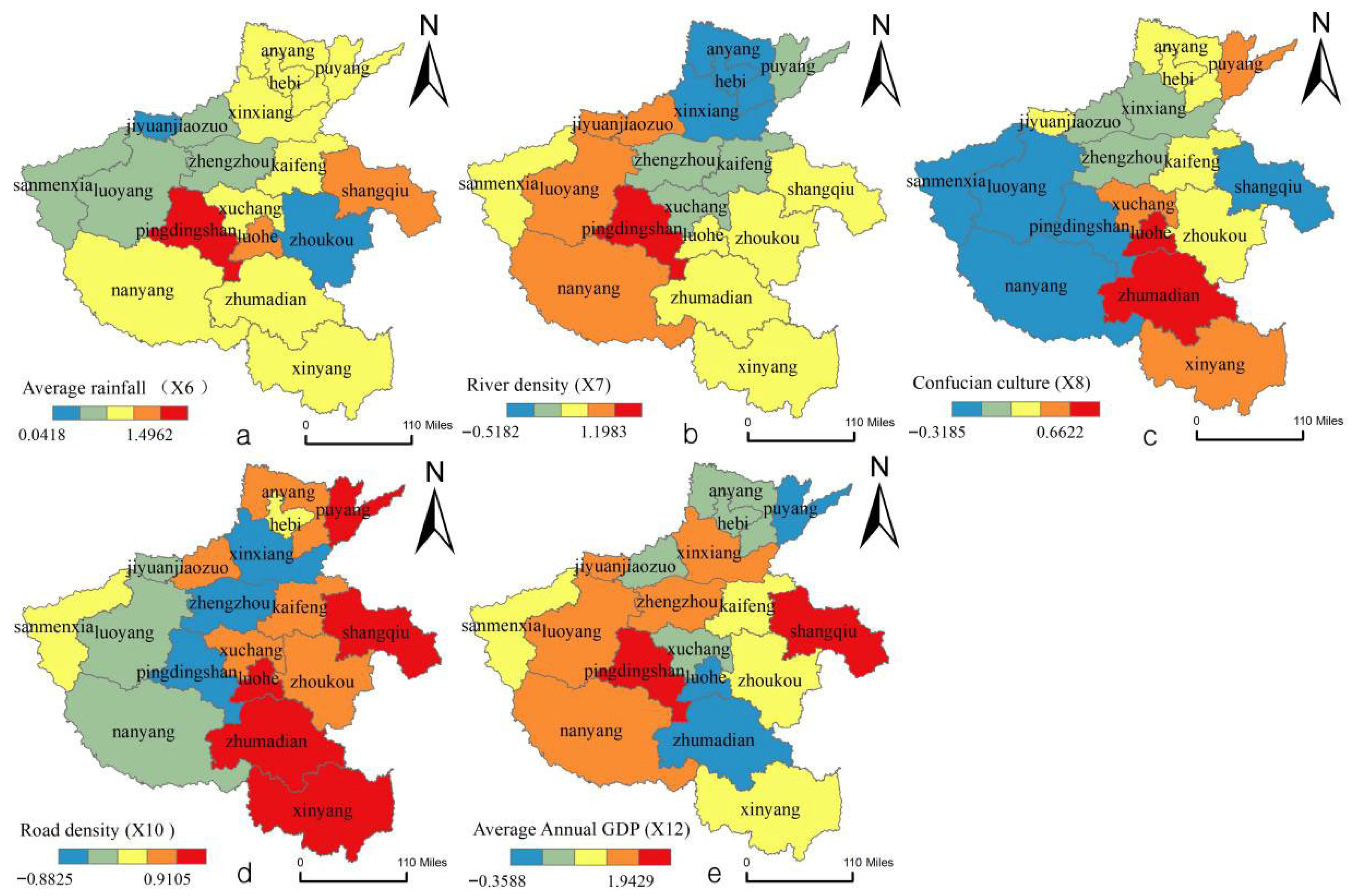
Based on the analysis, this study conducted GWR model regression using X6, X7, X8, X10, and X12 as factor indicators. The AICc minimization is adopted as the bandwidth optimization selection criterion, and we visualized their spatial distribution (Figure 6), intuitively reflecting the spatial heterogeneity of the impact of each factor on the spatial differentiation of traditional villages.

5.3.1. Natural Factors

Natural factors, particularly average rainfall and river density, significantly impact the distribution of traditional villages in Henan Province (as shown in Figure 6a,b). The average rainfall factor positively affects traditional villages in all 18 regions of Henan, with the highest impact in Pingdingshan. From a spatial perspective, the distribution of traditional villages aligns with the Taihang Mountains’ eastern slope, with Anyang–Xinxiang as the central axis. On the left side (west of the Taihang Mountains), the terrain is mountainous, with traditional villages built along the mountainous terrain. These villages primarily depend on spring water or seasonal rivers for their water supply, which results in a weaker influence of rainfall on village distribution. On the right side, there is a plain with flat terrain, where village expansion relies on river and rainfall irrigation, with precipitation directly affecting arable land and settlement density. Overall, the eastern Henan plain, with its high river density, benefits from a “rainfall–runoff–agriculture” cycle. In contrast to the eastern plain, the regions of western Henan are traversed by numerous short rivers, resulting in limited surface water availability. Consequently, villages in these areas exhibit a stronger dependence on localized precipitation.
In terms of river density, there are significant differences among the 18 cities in Henan Province. The river density in eastern Henan has a significant positive impact on the distribution of traditional villages, while that in central Henan has a negative impact, and that in eastern Henan has a smaller positive impact. The analysis suggests that eastern Henan, as part of the Huanghuaihai Alluvial Plain, has a high river density, and stable runoff provides the basis for irrigation agriculture, supporting village agglomeration. However, the history of Yellow River flooding may have forced villagers to choose micro-topographic highlands, leading to a non-linear relationship between river density and village distribution. Central Henan (around Zhengzhou–Xuchang) is part of the transition area between Mount Song and Jishan, with many seasonal mountain streams, but a high risk of drought-induced seasonal stream flow interruption. To avoid water source fluctuations, villages may actively choose areas with abundant groundwater away from rivers, build embankments, or move to terraces, leading to the “avoiding rivers” feature of existing traditional villages. The southern foothills of the Qinling Mountains in western Henan exhibit a low river density but high relief, resulting in a unique “microclimate–terrace–spring” coupled system. For example, the Pingdingshan area uses mountain streams for irrigation to compensate for the low river density.

5.3.2. Cultural Factors

Cultural factors, particularly academy density, have caused significant differences in the distribution of traditional villages in Henan Province (as shown in Figure 6c). In the eastern and western fringes of Henan, academy density negatively impacts the traditional village distribution, while in central Henan, it has a positive effect. Meanwhile, as the core area of the Central Plains, central Henan’s traditional villages generally follow the philosophical thought of “harmony between heaven and man,” forming a three-part ritual spatial structure consisting of “clan ancestral halls, Confucian temples, and academies.” Since the Northern Song Dynasty, central Henan, as a capital’s radiation area, has implemented the “village agreement system” via the government, institutionalizing Confucian ethics. Villages have gained political recognition by constructing material cultural landscapes such as archways and filial piety tablets, and this symbolic capital has been further transformed into resource advantages for village development. Elsewhere, eastern Henan, located in the Huai River Basin, historically belonged to the Huaiyi cultural area, and it has preserved more shamanic–sorcerer culture. Moreover, the commercial tradition of the eastern Henan plain has fostered the value of “profit-seeking and light relocation,” leading to a “mixed commercial and residential” layout, such as the intertwining of woodblock New Year painting workshops and residential houses in Zhuxian Town. Finally, western Henan, located on the Xiaohan ancient road, is geographically enclosed, a factor that delayed cultural dissemination and produced a dissolving mechanism.

5.3.3. Location and Transportation

From a transportation perspective, the impact of the road density on the distribution of traditional villages in Henan Province also shows a “low on the left, high on the right” differentiation pattern (see Figure 6d). In western Henan, the road density has a negative impact on the distribution of traditional villages, while in eastern Henan, it has a positive impact, with the lowest road densities in Zhengzhou, Xinxiang, and Pingdingshan. In detail, in central and western Henan, especially in Zhengzhou and Luoyang, the pressure of urbanization and industrialization brought by transportation hubs has led to the demolition or modernization of traditional villages, acting as a catalyst for their disappearance. Meanwhile, in the eastern Henan region, the construction of roads has been significantly strengthened under the impetus of agricultural intensification to better serve agricultural production, allowing many villages to be preserved. In this case, the increase in road density is actually beneficial to the preservation and development of traditional villages.

5.3.4. Economic Factors

From an economic perspective, the impact of the annual average GDP can be differentiated among traditional villages in Henan Province (as shown in Figure 6e). In northern Puyang, southern Luohe, and Zhumadian, there is a negative impact, while in the central region, there is a positive impact. In detail, the central economy is dominated by services and tourism, and traditional villages are often developed as cultural heritage or tourist attractions, forming a virtuous cycle of “protection–benefit.” The growth of GDP and the preservation of traditional villages complement each other, with economic gains feeding back into conservation efforts. Meanwhile, Puyang relies on its petrochemical industry, Luohe focuses on food processing, and Zhumadian emphasizes agricultural industrialization. The expansion of these industries requires land resources, leading to the demolition or natural disappearance of traditional villages, with GDP growth coming at the expense of village preservation. In contrast, the central region has many mountains, and these geographical conditions limit large-scale development, objectively protecting traditional villages; at the same time, population return helps rural tourism. In the opposite cases, the southern and northern plains are conducive to industrial and agricultural development, and population outflow exacerbates village hollowing, with traditional buildings decaying due to a lack of maintenance.

5.3.5. Differentiation Impact Mechanism

Through the analysis of the four major categories and five influencing factors mentioned above, the phenomenon of spatial differentiation of traditional villages is underpinned by a complete and complex set of impact mechanisms. Overall, traditional villages in Henan Province are the result of a system of man–land relationships that evolve through the interaction and synergistic driving of multiple factors, such as the natural environment, human history, location and transportation, and socio-economics. The core mechanism of spatial differentiation in this system is the feedback mapping of the evolution of man–land relationships in Henan Province in the urban–rural space. Among these factors, natural ecological factors shape the regional characteristics of traditional villages in the province, with significant differences in preferences for average rainfall and river density among traditional villages in different parts of the region. In areas with high average rainfall and a high river density, village layouts reflect the ancient ecological wisdom of “living by the water,” while villages in arid areas rely on terraces and groundwater resources, which led them to form unique settlement patterns. Location-specific traffic factors also show different impacts. On the one hand, in relatively inaccessible areas (such as Zhoukou and Shangqiu), the traditional farming model is preserved, and the village landscape is well-preserved. On the other hand, in the central and western economic zones, the rapid urbanization around transportation hubs like Zhengzhou and Luoyang squeezes the space for traditional villages. There are also cultural elements to consider. Human history factors maintain the spiritual bond of traditional villages in Henan Province. At the heart of these is the academy density, as academies are deeply embedded in the fabric of villages through their ethical order, spatial symbols, and social organizations, forming a cultural resilience system of “spirit–space–society.” Additionally, socioeconomic factors have become key to the transformation of traditional villages in Henan Province. In this regard, the positive and negative effects of economic development on traditional villages in this region show significant differences. Zhengzhou and Luoyang have transformed villages into cultural IPs through the integration of culture and tourism, achieving a win–win situation of GDP growth and protection. However, villages around the Luohe Food Industrial Park and Puyang Petrochemical Base have disintegrated due to land expropriation. Resolving the conflict between short-term economic gains and long-term cultural values is now key to driving the positive transformation of traditional villages.

6. Discussion

This study, using a geographically weighted regression (GWR) model and GeoDetector analysis, reveals the multi-dimensional driving mechanisms of the spatial differentiation of traditional villages in Henan Province. By combining the findings presented on the differentiation patterns of various factors, the research outcomes will be further elucidated in the following discussion section.

6.1. Critical Interpretation of Results and Comparison with International Research

The “multi-core” structural feature and the overall north–south distribution of traditional villages in Henan Province reflect the profound influence of the region’s natural geographical environment and human historical factors. We propose that the multi-core agglomeration pattern formed in the border area across administrative divisions within Henan Province may stem from the relatively independent geographical attributes of these regions in historical periods and the unique cultural ecology formed as a result. This finding echoes the conclusion in similar studies that cultural diversity in peripheral regions promotes the agglomeration of traditional villages [22,23]. Compared with the research conclusion on the decentralized distribution of rural settlements in the United States, the agglomeration characteristics of traditional villages in Henan Province further highlight the role of cultural centripetal force. As the birthplace of Chinese civilization, the Central Plains region has been profoundly influenced by surname culture and clan systems on the site selection and survival of villages. The uniqueness of this humanistic factor supplements the explanatory framework of the cultural dimension in international research on rural spatial differentiation [24,25]. In the research on the protection of traditional villages in countries such as Germany and Italy, greater emphasis is placed on the coordination between heritage activation and ecological sustainability. By adopting a model of community leadership and market participation to balance protection and development, these countries can provide references for China’s cross-administrative regional joint protection mechanism [26,27,28]. Accordingly, for the north–south “multi-core” agglomeration areas, differentiated protection and development plans should be formulated, clarifying the core functional positioning of each agglomeration area. At the same time, a joint protection mechanism should be established in the fringe region across administrative divisions to break down administrative barriers and promote resource sharing and route connection among traditional villages. Moreover, with the southern part of Zhengzhou City as the core, a radiation network for the protection of traditional villages and rural revitalization should be constructed, connecting surrounding traditional villages through transportation corridors and cultural routes, to form a development pattern of “core leadership and multi-point support.”

6.2. Practical Implications from the Perspective of Sustainability

From the perspective of practical value, the core implications of this study’s conclusions for the protection of traditional villages and rural sustainable development lie in differentiated strategies and systematic coordination. According to the spatial heterogeneity revealed by the GWR model, when formulating protection and development plans, it is necessary to fully consider the actual conditions and differences in various regions, and use GIS, remote sensing, and other technologies to construct a dynamic database of the spatial distribution of traditional villages. Moreover, it is essential to regularly evaluate the effectiveness of influencing factors and promptly adjust policy tools accordingly.
For nature-dominated traditional villages, the intensity of development should be strictly restricted, with priority given to developing ecological tourism and study tours. This aligns with the European protection concept of ecological restoration first. Meanwhile, by integrating China’s ecological compensation policies, village protection can be incorporated into the watershed ecological protection system, achieving the coordinated enhancement of ecological and cultural values. For other regions driven by transportation, tourism service facilities should be improved, and a “fast in, slow out” transportation network should be created. Meanwhile, for regions relying on culture, efforts should be made to promote the cultivation of intangible cultural heritage bearers and to establish cultural display venues. Finally, for regions driven by the economy, social capital should be introduced, and characteristic homestays and cultural and creative industries should be developed. In addition, the establishment of a cross-administrative regional joint protection mechanism needs to break through the governance dilemma of fragmented administration driven by local interests. Through overall planning at the provincial level, traditional village resources should be incorporated into the layout of regional cultural and tourism integration, to realize a sustainable development pattern of core leadership and multi-point support. This has universal reference value for regions in China with abundant similar cultural resources but obvious administrative division barriers.

6.3. Research Limitations

This study has some limitations that we must acknowledge. First, the fineness of data acquisition could be improved; this study is only based on data from 18 cities in Henan Province and does not further refine those data into grids for in-depth analysis. Future scholars can refine this field of research through the use of gridded data. Second, in the study of influencing factors, some factors were not included, such as traditional history. Future research can be expanded from two aspects: data and method optimization, and deepening from the perspective of traditional history, to explore the spatial coupling relationship between traditional villages and historical and cultural resources.

7. Conclusions

This study has focused on the traditional villages in 18 prefecture-level cities of Henan Province, finely identified the spatial differentiation pattern and heterogeneity of those villages, and derived the mechanisms influencing those factors through the GWR model. Based on the findings of this study, we draw the following conclusions.
The spatial distribution pattern of traditional villages in Henan Province shows a “multi-core” structure in the north–south direction and forms a multi-core agglomeration pattern in the border areas across administrative divisions. This characteristic confirms the conservation effect of relatively independent geographical units on the cultural ecology during historical periods. As borderland areas possess both the geographical barrier effect and the advantage of cultural integration, they have become natural protected areas for the survival of traditional villages.
From the standard deviation ellipse results, we found that the spatial centroid of the traditional village distribution is in the southern part of Zhengzhou City. Meanwhile, the major axis of the ellipse runs in a northwest–southeast direction, consistent with the distribution trend of traditional villages along the Taihang, Funiu, Tongbai, and Dabie Mountain ranges. This result intuitively reflects the site selection wisdom of traditional villages situated by mountains and rivers and also explains the rigid constraint effect of the physical geographical base on the spatial distribution of villages.
The Optimal Parameter GeoDetector showed significant differences in the intensity of the effects of the 15 influencing factors in the four major categories, and there were significant interactive synergies among multiple factors. Average rainfall, river density, road density, academy density, and GDP are five factors that exhibited generally strong explanatory power, while the regression coefficients of X4, X5, X11, and X13 did not pass the significance test. At the level of multi-factor interaction, most core driving factors exhibit a synergistic enhancement effect. This indicates that the survival of traditional villages is a comprehensive result: natural endowments provide the foundational support, cultural genes shape the core characteristics, and transportation and economic conditions guarantee developmental vitality.
The GWR model shows that the average rainfall, river density, road density, academy density, and GDP exhibit spatial heterogeneity as factors influencing the distribution of traditional villages. Overall, the results indicate that traditional villages in Henan Province are a result of human–land relationship evolution driven by the interaction and synergy of multiple factors such as the natural environment, location and transportation, historical culture, and economic development.
The theoretical contributions of this study lie in constructing a spatial research framework for traditional villages. It deepens the application of the human–environment relationship theory in regional village research through multi-method integration, clarifies the particularity of the driving mechanism characterized by mountains and rivers as the foundation and culture as the core for traditional villages in the Central Plains region, and supplements empirical cases for village spatial research in the agricultural civilization areas of Northern China. At the practical level, the conclusions provide precise support for the differentiated protection of traditional villages and rural revitalization in Henan Province.

Author Contributions

Conceptualization, M.S.; methodology, M.S.; software, M.S.; validation, M.S. and J.-E.K.; formal analysis, J.-E.K.; investigation, M.S.; resources, J.-E.K.; data curation, J.-E.K.; writing—original draft preparation, M.S.; writing—review and editing, M.S.; visualization, J.-E.K.; supervision, J.-E.K.; project administration, J.-E.K.; funding acquisition, J.-E.K. All authors have read and agreed to the published version of the manuscript.

Funding

This work was supported by the Ministry of Education of the Republic of Korea and the National Research Foundation of Korea (NRF-2024S1A5C3A01042885).

Institutional Review Board Statement

Not applicable.

Informed Consent Statement

Not applicable.

Data Availability Statement

The data used to support the findings of this study are available from the corresponding author upon request.

Conflicts of Interest

The authors declare no conflicts of interest.

References

  1. Feng, J. The predicament and solution of traditional villages—Also discussing traditional villages as another type of cultural heritage. Folk Cult. Forum 2013, 1, 7–12. [Google Scholar]
  2. Michon, G.; Mary, F. Conversion of traditional village gardens and new economic strategies of rural households in the area of Bogor, Indonesia. Agrofor. Syst. 1994, 25, 31–58. [Google Scholar] [CrossRef]
  3. Sumadi, K. Tourism development basis in traditional village of Kuta. Int. J. Linguist. Lit. Cult. 2016, 2, 124–132. [Google Scholar] [CrossRef]
  4. Dewi, L. Modeling the relationships between tourism sustainable factor in the traditional village of Pancasari. Procedia—Soc. Behav. Sci. 2014, 135, 57–63. [Google Scholar] [CrossRef]
  5. Sara, I.; Saputra, K.; Jayawarsa, A. Regulatory impact assessment analysis in traditional village regulations as strengthening culture in Bali. Int. J. Environ. Sustain. Soc. Sci. 2020, 1, 16–23. [Google Scholar]
  6. Li, J.; Wang, X.; Li, X. Spatial distribution characteristics and influencing factors of Chinese traditional villages. Econ. Geogr. 2020, 40, 143–153. [Google Scholar]
  7. Bian, J.; Chen, W.; Zeng, J. Spatial distribution characteristics and influencing factors of traditional villages in China. Int. J. Environ. Res. Public Health 2022, 19, 4627. [Google Scholar] [CrossRef]
  8. Ma, Y.; Zhang, Q.; Huang, L. Spatial distribution characteristics and influencing factors of traditional villages in Fujian Province, China. Humanit. Soc. Sci. Commun. 2023, 10, 883. [Google Scholar] [CrossRef]
  9. Su, H.; Wang, Y.; Zhang, Z.; Dong, W. Characteristics and influencing factors of traditional village distribution in China. Land 2022, 11, 1631. [Google Scholar] [CrossRef]
  10. Chen, Z.; Meng, Y.; Yang, D.; Xiao, Y.; Yuan, Y. Study on spatial distribution characteristics and driving mechanisms of traditional villages in Hainan Island. Areal Res. Dev. 2025, 44, 114–121. [Google Scholar]
  11. Zheng, G.; Jiang, D.; Luan, Y.; Yao, Y. GIS-based spatial differentiation of ethnic minority villages in Guizhou Province, China. J. Mt. Sci. 2022, 19, 987–1000. [Google Scholar] [CrossRef]
  12. Wang, D.; Zhu, Y.; Zhao, M.; Lv, Q. Multi-dimensional hollowing characteristics of traditional villages and its influence mechanism based on the micro-scale: A case study of Dongcun Village in Suzhou, China. Land Use Policy 2021, 101, 105146. [Google Scholar] [CrossRef]
  13. Wang, X.; Zhu, Q. Influencing factors of traditional village protection and development from the perspective of resilience theory. Land 2022, 11, 2314. [Google Scholar] [CrossRef]
  14. Dai, Y.; Chen, Q.; Gao, H.; Ma, Y. Spatial distribution features and controlling factors of traditional villages in Henan Province. Areal Res. Dev. 2020, 39, 122–126. [Google Scholar]
  15. Liu, W.; Xue, Y.; Shang, C. Spatial distribution analysis and driving factors of traditional villages in Henan province: A comprehensive approach via geospatial techniques and statistical models. Herit. Sci. 2023, 11, 185. [Google Scholar] [CrossRef]
  16. Mao, Y.; Xi, X.; Bi, X.; Zhuang, Z.; Wang, Y. Spatial distribution characteristics and influencing factors of traditional villages in Henan Province. J. Asian Archit. Build. Eng. 2025, 1–23. [Google Scholar] [CrossRef]
  17. Wang, J.; Xu, C. Geodetector: Principle and prospective. Acta Geogr. Sin. 2017, 72, 116–134. [Google Scholar]
  18. Zambom, A.Z.; Dias, R. A review of kernel density estimation with applications to econometrics. Int. Econom. Rev. 2013, 5, 20–42. [Google Scholar]
  19. Brunsdont, C.; Fotheringham, S.; Charlton, M. Geographically weighted regression: Modelling spatial non-stationarity. J. R. Stat. Soc. Ser. D Stat. 1998, 47, 431–443. [Google Scholar] [CrossRef]
  20. Chen, W.; Yang, Z.; Yang, L.; Wu, J.; Bian, J.; Zeng, J.; Liu, Z. Identifying the spatial differentiation factors of traditional villages in China. Herit. Sci. 2023, 11, 149. [Google Scholar] [CrossRef]
  21. Chen, W.; Yang, L.; Wu, J.; Wu, J.; Wang, G.; Bian, J.; Zeng, J.; Liu, Z. Spatio-temporal characteristics and influencing factors of traditional villages in the Yangtze River Basin: A Geodetector model. Herit. Sci. 2023, 11, 111. [Google Scholar] [CrossRef]
  22. Li, G.; Jiang, G.; Jiang, C.; Bai, J. Differentiation of spatial morphology of rural settlements from an ethnic cultural perspective on the Northeast Tibetan Plateau, China. Habitat Int. 2018, 79, 1–9. [Google Scholar] [CrossRef]
  23. Qiao, J.; Lee, J.; Ye, X. Spatiotemporal evolution of specialized villages and rural development: A case study of Henan province, China. Ann. Am. Assoc. Geogr. 2016, 106, 57–75. [Google Scholar] [CrossRef]
  24. Clark, J.K.; McChesney, R.; Munroe, D.K.; Irwin, E.G. Spatial characteristics of exurban settlement pattern in the United States. Landsc. Urban Plan. 2009, 90, 178–188. [Google Scholar] [CrossRef]
  25. Xin, M. Early Chinese Village Patterns in Terms of the Origin of Civilization in China. Soc. Sci. China 2021, 42, 44–60. [Google Scholar] [CrossRef]
  26. Mu, Q.; Aimar, F. How are historical villages changed? A systematic literature review on European and Chinese cultural heritage preservation practices in rural areas. Land 2022, 11, 982. [Google Scholar] [CrossRef]
  27. Knippschild, R.; Zöllter, C. Urban regeneration between cultural heritage preservation and revitalization: Experiences with a decision support tool in eastern Germany. Land 2021, 10, 547. [Google Scholar] [CrossRef]
  28. Al-Alawi, S.; Knippschild, R.; Battis-Schinker, E.; Knoop, B. Linking Cultural Built Heritage and Sustainable Urban Development: Insights into Strategic Development Recommendations for the German-Polish Border Region. disP-Plan. Rev. 2022, 58, 4–15. [Google Scholar] [CrossRef]
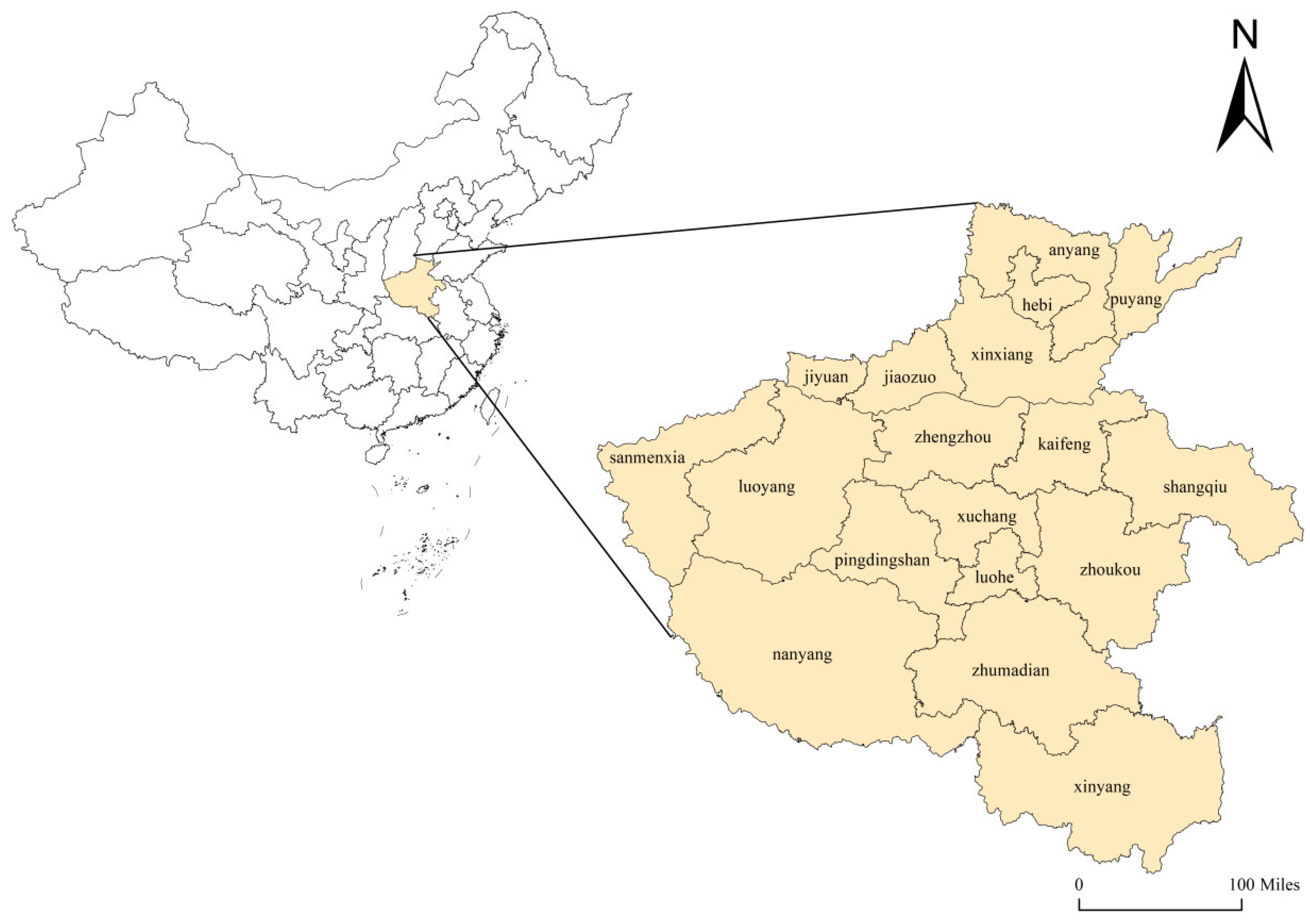
Figure 1. Overview of the Henan Province study area. (Note: This map is cropped and produced based on the map review number GS (2024) 0650, with no modifications to the boundary of the base map.)
Sustainability 17 10825 g001
Figure 2. Distribution of traditional villages in Henan Province across various batches. (Note: This map is cropped and produced based on the map review number GS (2024) 0650, with no modifications to the boundary of the base map.)
Sustainability 17 10825 g002
Figure 3. Spatial distribution of traditional villages in Henan Province based on kernel density analysis. (Note: This map is cropped and produced based on the map review number GS (2024) 0650, with no modifications to the boundary of the base map.)
Sustainability 17 10825 g003
Figure 4. Evolution of kernel density distribution of traditional villages in Henan Province by batch. (Note: This map is cropped and produced based on the map review number GS (2024) 0650, with no modifications to the boundary of the base map.)
Sustainability 17 10825 g004
Figure 5. Interaction detection results of driving factors for the distribution characteristics of traditional villages in Henan Province.
Sustainability 17 10825 g005
Figure 6. Distribution map of regression coefficients for factors influencing the spatial differentiation of traditional villages in Henan Province. (Note: This map is cropped and produced based on the map review number GS (2024) 0650, with no modifications to the boundary of the base map.)
Sustainability 17 10825 g006
Table 1. Distribution of traditional villages across cities in Henan Province.
CityCountProportionRanking
Pingdingshan3713.45%1
Xinyang3412.36%2
Luoyang3412.36%2
Anyang3312.00%4
Sanmenxia3010.91%5
Hebi2910.55%6
Jiaozuo186.55%7
Xinxiang165.82%8
Nanyang145.10%9
Zhengzhou124.36%10
Xuchang62.18%11
Puyang31.09%12
Shangqiu20.73%13
Jiyuan20.73%13
Zhumadian20.73%13
Zhoukou10.36%16
Luohe10.36%16
Kaifeng10.36%16
Data Source: The list of traditional villages is sourced from the Ministry of Housing and Urban-Rural Development of China.
Table 2. Factors influencing the spatial differentiation of traditional villages in Henan Province.
IndicatorPrimary IndicatorSecondary Indicator
Dependent Variable Traditional Village Concentration (Y)
Independent VariableNatural Environment Average Altitude (X1)
Average Slope (X2)
Average Elevation (X3)
Average Temperature (X4)
Average Sunshine (X5)
Average Rainfall (X6)
River Density (X7)
Historical CultureAcademy Density (X8)
Number of Protected Units (X9)
Location and TransportationRoad Density (X10)
Distance to Major Cities (X11)
Socio-EconomicAnnual Average GDP (X12)
Population Density (X13)
Fiscal Revenue (X14)
Urbanization Rate (X15)
Table 3. Global Moran’s I results for traditional villages in Henan Province.
BatchMoran’s Iz-Valuep-Value
First Batch−0.007−0.4560.648
Second Batch0.0735.3670.000
Third Batch0.0946.4840.002
Fourth Batch0.0735.3500.000
Fifth Batch0.30722.3490.000
Sixth Batch0.1047.5200.000
Table 4. Comparison of model parameters.
Evaluation IndicatorsOLSGWRMGWR
R20.5980.9240.912
Adjust R20.5740.9090.896
AICc188.81863.39172.818
Residual Squares36.2046.8237.884
Log-likelihood185.452−11.624−18.129
Disclaimer/Publisher’s Note: The statements, opinions and data contained in all publications are solely those of the individual author(s) and contributor(s) and not of MDPI and/or the editor(s). MDPI and/or the editor(s) disclaim responsibility for any injury to people or property resulting from any ideas, methods, instructions or products referred to in the content.