Article

Integration of Digital Twin Technologies in Urban Regeneration of a Small Historic Town in Europe

by
Boris Blagonić
1,*,
Danko Markovinović
2,
Hrvoje Matijević
2 and
Loris Redovniković
3
1
Geogrupa Ltd., 52100 Pula, Croatia
2
Department of Geodesy and Geomatics, University North, 42000 Varaždin, Croatia
3
Institute of Applied Geodesy Faculty of Geodesy, 10000 Zagreb, Croatia
*
Author to whom correspondence should be addressed.
Sustainability 2025, 17(23), 10740; https://doi.org/10.3390/su172310740
Submission received: 11 October 2025 / Revised: 18 November 2025 / Accepted: 24 November 2025 / Published: 1 December 2025

Abstract

Digital twin technologies integrate data, models, and physical entities. The paper explores technologies applied in the Urban Digital Twin (UDT) to support Urban regeneration (UR), with a case study of the small historic town of Draguć in Istria, Croatia, Europe. The subject of this research is to investigate and develop a digital twin model and to assess its usefulness in multidisciplinary applications for urban regeneration. The particularity of this scientific project lies in the application of multiple tools for 3D urban data collection and the modeling of this spatial information for its presentation and use, all aimed at spatial planning and sustainable urban development. The applied methods address a common challenge in projects aimed at establishing UDT. These methods encompass the integration of various technologies and tools (geodetic surveying, UAV photogrammetry, 3D laser scanning) for urban data collection, complemented by additional datasets from multiple sources. The results present an established UDT platform (environment) built upon the analyzed datasets relevant to urban regeneration. The urban matrix is displayed, together with buildings and their characteristics, cadastral data with ownership structure are analyzed, and a 3D city model has been generated. The proposed Urban Digital Twin model for the study area aims to facilitate, accelerate, and optimize urban regeneration, while also initiating integrated sustainable regeneration efforts for small historic towns.

1. Introduction

With industrial urbanization the function and role of cities underwent significant changes, leading to transformations in the spatial and structural forms of numerous European cities. However, certain small historic towns, remaining outside the flows of modern urbanization, preserved their urban morphology and historic building structures, and have been recognized as cultural heritage and an integral part of the European urban tradition [1].
Traditional methods of conservation practice and the protection of historic ensembles are not sufficient to adequately assess the impact of contemporary interventions in the urban fabric. The best-recognized approach to safeguarding the architectural, urban, and landscape heritage of a historic town is the model of integrated management [2]. Within this context, an urban regeneration project should be comprehensive—implemented and realized through the collaboration of experts from relevant fields such as architecture, spatial planning and urbanism, nature protection/ecology, heritage conservation, civil engineering, geodesy and geoinformatics, history, economics, energy, transport, and tourism.
Supporting technical studies is a prerequisite for the processes of urban regeneration. For this purpose, it is essential to have a well-prepared geospatial database that includes data on urban morphology, buildings, ownership, land use, construction condition, damages, and the need for rehabilitation [3].
The application of modern digital technologies contributes to this regard, as highlighted in study [4]. The Digital Twin concept has been gaining increasing attention across various disciplines as a result of technological advancements, accelerated geospatial data acquisition, and availability of large amounts of data.
The purpose of this research is to examine and demonstrate how integrated digital twin (DT) methods can be applied in the urban regeneration of small historic towns, and to what extent such integration can optimize existing procedures, shorten planning and decision-making cycles, and contribute to more efficient and sustainable development outcomes.
Digital Twin (DT) technology applied in many urban development and management use cases, such as:
  • spatial/urban planning [5,6,7]
  • urban regeneration [4,8,9]
  • 3D city model (and BIM) [10,11]
  • asset management [12]
  • historical/cultural [13,14,15].
This research investigates and applies advanced technologies within the Urban Digital Twin (UDT) framework to support urban regeneration (UR). Accordingly, the research is structured around two main segments whose integration leads to the intended objective: the digital twin and urban regeneration. In the following, we examine the technologies highlighted in related studies and those to be applied in this research.
In [16], listed six key technologies in urban digital twin (UDT) are as follows: (1) Surveying and Mapping technology, (2) Building Information Modeling (BIM) technology, (3) Internet of Things, (4) 5G, (5) Collaborative computing, and (6) Blockchain and Simulation. The first two technologies outlined above are implemented in this research.
Study [4] groups nine applied digital technologies to improve urban regeneration (UR) as follows: (1) GIS, (2) BIM, (3) DT, (4) Artificial Intelligence and Machine Learning (AI/ML), (5) Virtual Reality and Augmented Reality (VR and AR), (6) ICT, (7) 3D modeling, (8) web platforms, and (9) social media.
The following research questions guided this work: How can a UDT be effectively modeled to support the regeneration of a small historic town, by integrating existing and newly collected data, applying advanced methods, and utilizing appropriate tools (software, standards, services)?
To the best of our knowledge, no previous studies have addressed the application of a UDT to urban regeneration. This positions our research as an original contribution, introducing a novel approach to modeling a UDT for a small historic town.
Therefore, the scientific novelty of this study lies in the development of an integrated digital twin (DT) approach specifically tailored to small historic towns—an area largely unexamined in the existing literature—and in demonstrating how the combination of UAV, TLS, and GIS technologies can form a practical and scalable model to support urban regeneration.
Based on practical experience and a review of the relevant literature, the first step was to identify the required spatial datasets. The digital twin model will be developed through the integration of various technologies and spatial datasets obtained from multiple sources. Data collected by different survey methods—field measurement, laser scanning, terrestrial and aerial photogrammetry, GNSS systems—will be combined with data from other sources, including official registries (Cadastre, Spatial plans, Utilities database) and additional cartographic sources. The methodology includes validation through qualitative field surveys conducted in the study area.
The following section reviews the current state of research in the fields of small historic towns, urban regeneration, and urban digital twin.
Small historic towns
A small historic town is defined as a homogeneous spatial and functional urban, architectural, and social entity formed during historical periods. It is characterized by recognizable spatial patterns, public facilities, and sometimes administrative status, with a population of up to 7000 inhabitants [1,17]. Closely related to this concept is the notion of a cultural-historical ensemble, which refers to a settlement or part of a settlement, as well as an area that is protected as a cultural property.
Recent studies related to small historic towns in Europe highlight several examples as follows: research conducted in 44 Croatian towns [17], Mamak in Turkey [8], 20 Italian towns [6], Sabbioneta in Italy [14], Viseu in Portugal [18], and Parma in Italy [19]. A frequent focus of these studies is on exploring possibilities and solutions for the regeneration of historic urban cores [18,20].
The aim of the research in [17] was also to systematize criteria for urban renewal planning based on the assessment of the condition of identity features. This research established the criteria for defining a small historic town and identified a list of forty-four small historic towns in Croatia (Europe). The small historic town of Draguć, which is our study area, is one of them.
The problem of the degradation of small historic towns in Europe—caused by the decline of production, falling birth rates, and the growing proportion of elderly inhabitants—requires new approaches to their renewal and revitalization.
Previous research [6] identifies a paradox observed in twenty historic centers of small and medium-sized cities in Northern Italy. Despite substantial public investment in infrastructure and urban beautification over the centuries, these areas have become increasingly underutilized and abandoned. The study emphasizes that the challenge extends beyond the preservation of physical heritage to sustaining socio-economic vitality. According to the authors, this decline results from both global urban transformations and outdated planning tools that fail to reflect current economic and cultural realities, leading to difficulties in adapting city plans to rapid and unpredictable urban changes.
The reviewed studies reveal that many small historic towns in Europe are facing a decline in economic activities, the loss of former functions, demographic challenges, as well as social and physical deterioration. Due to broader social and economic changes, many of these towns are losing their role as former social, cultural, and economic centers for their surroundings, making urban regeneration indispensable.
Urban regeneration
Urban regeneration encompasses integrated actions designed to improve deteriorated urban areas across multiple dimensions. Despite extensive research on major cities, small and medium-sized cities constitute a vital yet often overlooked part of Europe’s urban landscape [19].
The aim of urban regeneration is to enhance the quality of life through the construction of new facilities or the transformation and repurpose of existing ones, supported by public and/or private investments. This process requires the availability of supporting technical studies and urban plans.
Urban regeneration should adhere to criteria for preserving cultural-historical heritage, urban-architectural structures, and spatial-landscape values of a small historic town, while simultaneously ensuring economic and environmental sustainability and maintaining the quality of life for inhabitants [17].
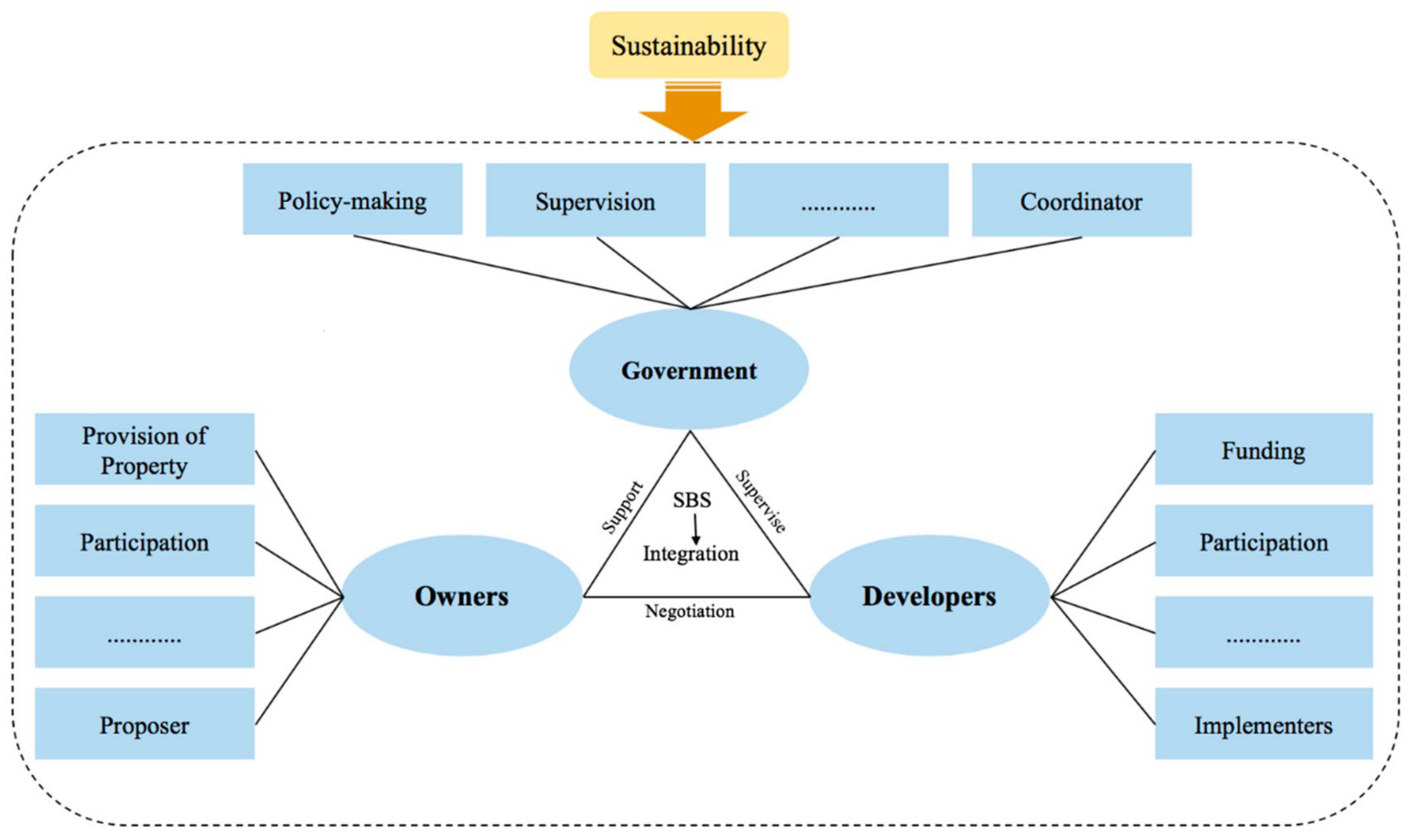
The research [21] highlights that in China’s urban regeneration, growing public awareness of rights and desire for participation complicate project implementation due to increased stakeholder conflicts. As housing expropriation expands in urban land stock areas, social tensions linked to land and demolition issues also intensify, challenging the sustainability of regeneration efforts (Figure 1).
The concept and practice of revitalizing historic urban environments emerged in the early 1990s. Since then, urban regeneration has become the dominant design practice in the renewal of historic urban cores, as seen in cities such as Barcelona and Genoa. Earlier models of urban policy focused primarily on urban reconstruction, revitalization, and transformation; however, urban regeneration implies a comprehensive and integrated approach to the renewal of the urban areas.
Urban regeneration is a comprehensive process, and therefore it goes beyond the restoration of individual buildings to include wider urban areas or entire small towns. This requires supporting technical and spatial studies of broader scope, multidimensional and at multiple scales. Hence, a comprehensive method for design across different scales is necessary, or, as advocated and termed in [2], “from the city to the spoon”.
Urban regeneration most often begins with the repurpose or construction of new facilities for public use. Examples of this can be found in larger cities such as Genoa, Barcelona, Zagreb (Upper and Lower Town), Vienna (city center), Rotterdam (eleven urban districts), and Ljubljana [3,22].
In [20], the authors investigate urban regeneration effects analysis in urban cores. This analysis revealed that by thoroughly examining architectural, typological, and morphological characteristics, it was possible to define an intervention strategy that both supports the enhancement of historical heritage and aligns with the objectives of the local administration.
Urban Digital Twins
The OGC discussion paper [23] identifies the benefits of UDT and elaborates on the role of geospatial information (GI) in contributing to the development of a UDT. Urban Digital Twins encompass data and functionalities from multiple domains (transport, infrastructure, environment, energy management, GIS, sensor data, etc.), making it necessary to integrate these systems to obtain a comprehensive picture. Different information systems must cooperate, since isolated solutions cannot fully address complex urban challenges (e.g., traffic optimization cannot be considered separately from urban planning).
Our research is focused on a multidisciplinary approach and a variety of data, methods, and tools. Such an approach is proposed in [23], where a UDT is conceived as a persistent data platform that tools like GIS, CAD, BIM, Simulation and Modeling tools, Data Analysis, and Dashboarding software can connect to as needed.
Most of the literature on UDT describes systems that use physical models to assist authorities in urban planning [24], which is recognized as main beneficiaries of DT [5].
In the literature, 3D city models are considered a key component of the Urban Digital Twin. According to [25], UDT should be based on detailed semantic 3D city models, provide near real-time data, support diverse procedures such as the analysis, modeling, and forecasting of different scenarios.
Use cases/Case studies
Zagreb, Croatia [5]
The City of Zagreb (Croatia) has initiated the development of an integrated Urban Digital Twin (UDT) as part of its ongoing efforts toward digital transformation. This initiative follows the earlier adoption of GIS and 3D city modeling within municipal administration and is further inspired by the broader Smart City framework and recent project applications. The plan foresees the establishment of a unified digital twin platform composed of thematic modules tailored to various administrative and professional domains. Among these, the urban planning module is expected to be developed first, building upon the city’s extensive experience with GIS databases and 3D spatial models in planning practice.
Munich, Germany [26]
An innovative framework for managing Urban Digital Twins (UDTs) through an extended catalog service designed to handle distributed and heterogeneous urban data is presented in the study [26].
Focusing on the City of Munich, the research introduces a metadata model built on the CKAN open-source platform, enabling integration, linkage, and semantic description of diverse digital resources such as datasets, IoT sensor streams, simulations, and 3D city models.
The proposed system enhances coordination among multiple stakeholders by supporting interoperability, ownership management, and the creation of thematic Urban Digital Twin instances for specific planning tasks.
A pilot implementation for Munich’s Boulevard Sonnenstrasse redevelopment project demonstrates how catalog-based UDT management facilitates visualization, data sharing, and collaborative urban analysis.
The authors also outline future directions toward Digital Triplets, which would extend existing UDTs by enabling scenario-based simulations and what-if analyses for sustainable city planning.
Kaunas, Lithuania [27,28]
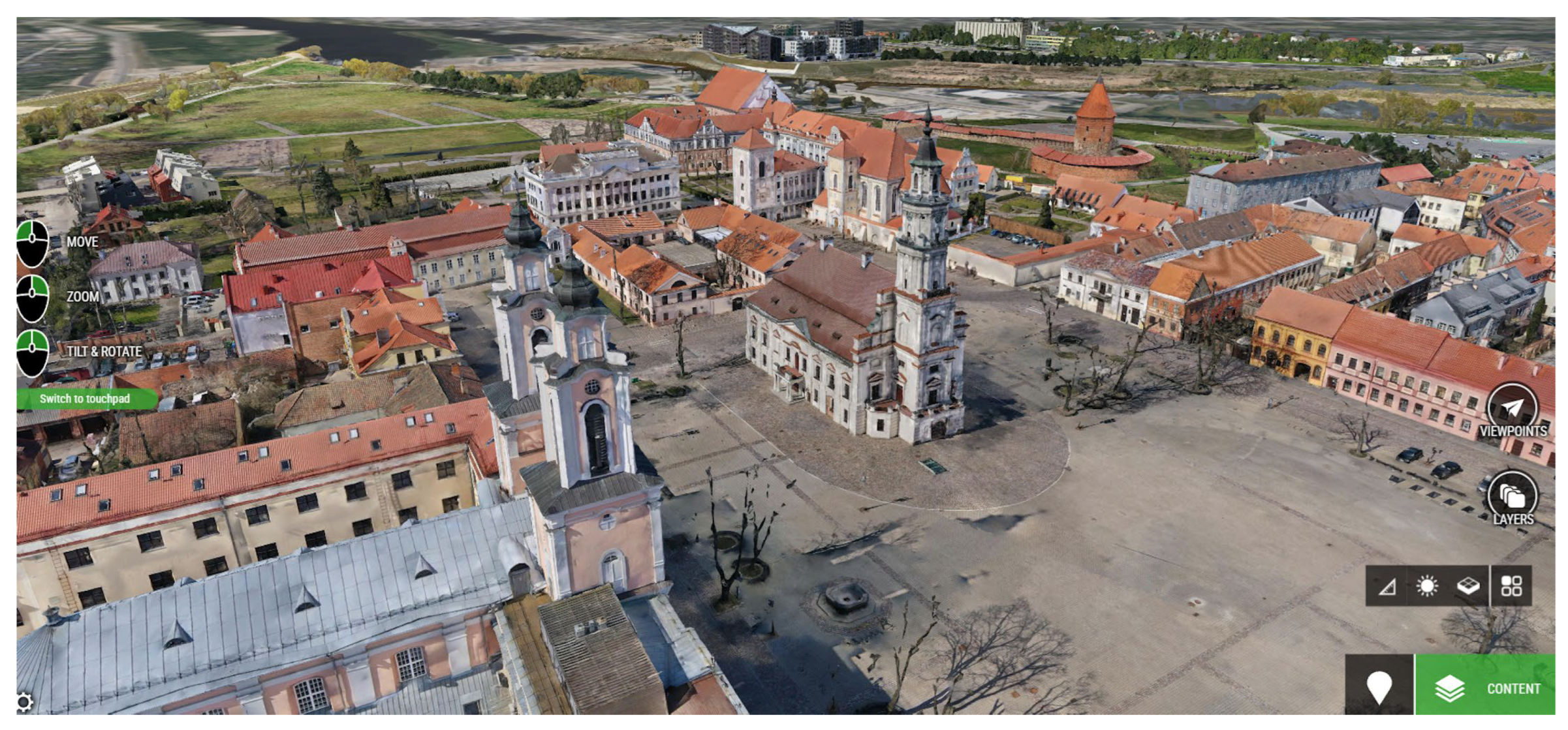
City of Kaunas focuses on advancing sustainable redevelopment of Lithuania’s aging built environment, using a digital twin. It offers a 3D visualization of Old Town Kaunas, and a digital twin model helps with city planning (Figure 2).
Serving as a case study, the Kaunas Digital Twin illustrates strategies for enhancing the energy efficiency of aging buildings while simultaneously developing 3D digital models of abandoned heritage assets. The proposed framework leverages the DT platform to test renovation scenarios powered by renewable energy sources, offering an accessible and integrated visualization of data to support holistic urban transformation.
Zurich, Switzerland [7]
According to [7], the digital twin of the City of Zurich enhances decision-making processes in urban planning by making them more transparent and data driven. The Zurich Digital Twin integrates multiple thematic layers, extending the existing spatial data infrastructure through the inclusion of detailed 3D spatial datasets and models. Its primary focus is on three-dimensional spatial information, which serves as a central framework for interlinking spatial and non-spatial data. These datasets encompass building and vegetation models, 3D street space, underground utilities, bridges, and historical 3D records. At present, the system hosts over 200 geospatial datasets in both raster and vector formats, all of which can be systematically accessed and visualized via the city’s geoportal.
Matera, Italy [29]
In the city of Matera (Italy), a UDT was developed as part of the “House of Emerging Technologies” project, with the goal of supporting urban governance, spatial planning, and citizen engagement. The digital twin integrates a 3D semantic city model, data from a sensor network (traffic, air quality, weather), predictive models for point-of-interest occupancy, and participatory data collected from citizens.
All data from various sources are stored in a Data Lake, which ensures standardized data integration and exchange. The system also includes an Urban Sensing Engine, an advanced AI module that supports real-time decision-making. The UDT enables services such as route optimization, shadow analysis, street slope assessment, and emergency evacuation planning.
The Matera digital twin is used to improve the accessibility of public services, enhance safety, reduce traffic congestion, and incorporate community input—especially from young people—into spatial planning processes based on real needs. The system is particularly focused on the historical center of the city and its surrounding areas.

2. Materials and Methods

2.1. Study Area

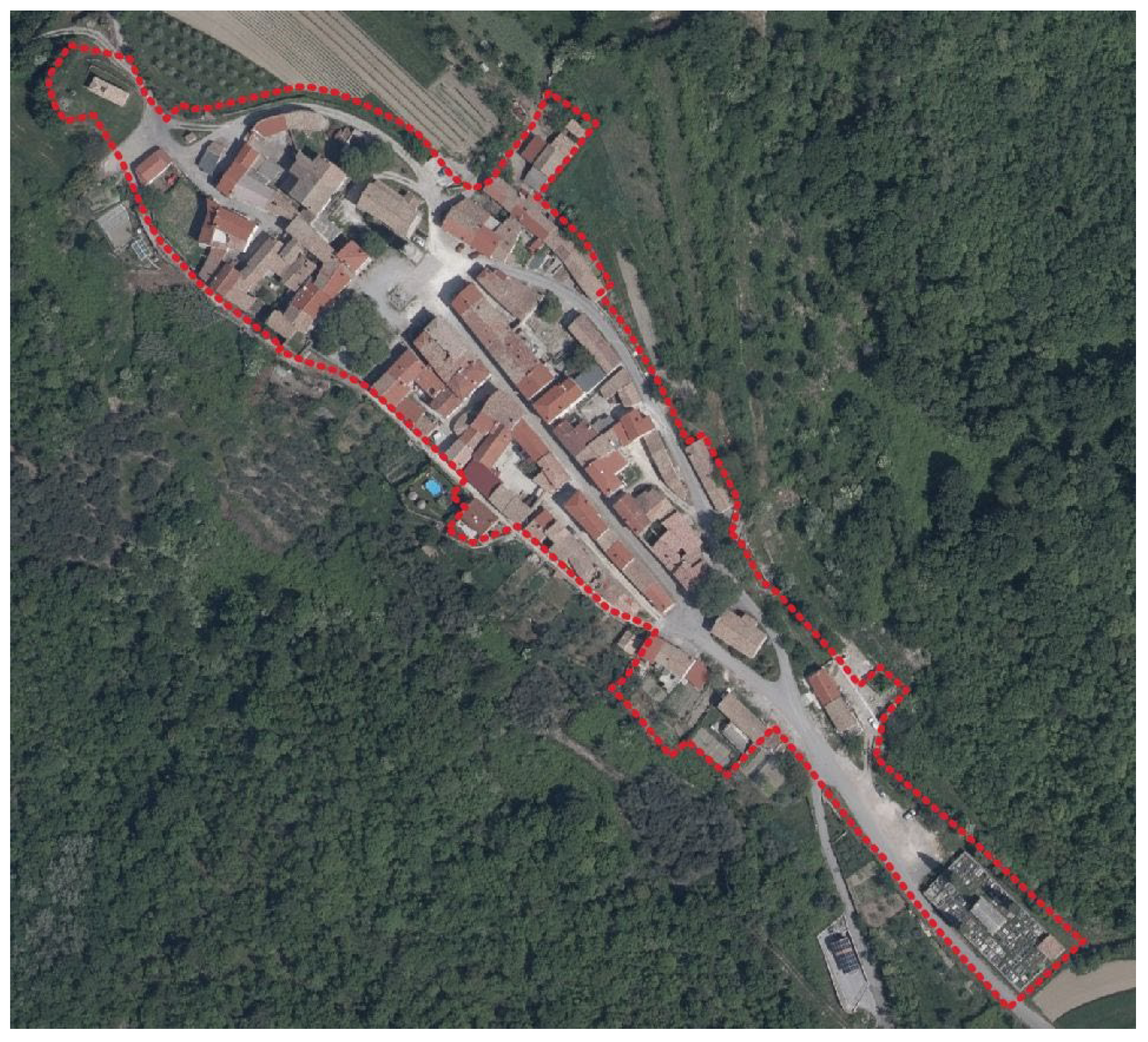
The geographic study area is the entire urban area of Draguć in Istria, Croatia (Europe). Draguć represents an interesting example of a small historic town that developed around a castle in the early 14th century, historically located on the border of the territories of the Venetian Republic. The only remaining part of the castle today is a section of the southern defensive wall, which is partially visible.
The study area encompasses the settlement of Draguć, focusing on its protected historic core as designated by the Spatial Development Plan of the Municipality of Cerovlje [30]. The town exhibits an elongated form in the southeast–northwest direction, with an average length of 448 m and a width of 455 m, situated at an absolute elevation of 358 m above sea level. It comprises approximately 150 buildings and other structures, three streets, the main square, and the remains of the medieval defensive wall. The tallest structure within the settlement is the bell tower, reaching a height of 28 m.
Draguć reflects the defensive system of the settlement and has developed an organic urban morphology so distinctive that this Istrian example has become a synonym for medieval urbanism. A more systematic study of this historic small town has only been conducted in study [31], which presents new research findings on its urban development. That research, within the historical context and architectural heritage, focused on the inventory of buildings (their condition, urban value, and period of origin), but only at the level of individual structures or blocks.
In study [32], the historical-urban development of Draguć was examined as an example of characteristic development pattern of towns formed around castles and small towns under the castle. From this research Draguć is defined as an example of a place formed from castles, and small fortified parts of town under the castle represent an interesting and insufficiently researched typological group of medieval Istrian towns. Their regular space organization (parallel house rows directed towards the castle) witnesses the planning construction as a quality departure from older, spontaneously” built “korta” (round fortified residential and economic complexes around a shared courtyard).
The “korta”, according to its construction method, could have been built between the 11th and the 12th century, but only a small part of the fortification wall has been preserved. The castle (13th to 14th century) had a usual form of a simple rectangular building with a defense tower. The small town under the castle has been substantially ruralized and devastated but preserved a legible layout disposition (Figure 3). The remains of the castle should be defined by archeological research.
A supporting technical study has never been systematically carried out for Draguć. There is no detailed urban (architectural) or comprehensive geodetic survey of the settlement, nor has any photogrammetric recording been conducted. Only individual projects have been implemented for a single sacral building and one public structure: the Church of St. Roch from the 16th century (3D scanning, photogrammetry) and the Captain’s House, today the House of Frescoes (geodetic survey and report), for the purpose of their research, restoration, and conservation protection.
According to [1], by definition and professional urban planning criteria, Draguć belongs to the category of small historic towns. It is also listed in the Register of Cultural Property, together with 541 other cultural-historical ensembles (Act on the Protection and Preservation of Cultural Property of the Republic of Croatia).
According to the criteria provided in [17], Draguć has lost its urban characteristics, but like some neighboring small towns in Istria, it retains the typical features of medieval fortified compact settlements, whose morphological and urban-architectural characteristics were conditioned by the configuration of the site. Draguć therefore clearly belongs to the group of former medieval towns that have lost the continuity of functions once provided to their surroundings.
Owing to its picturesque character, since the second half of the 20th century Draguć has often served as a backdrop for the filming of domestic and international movies and television series, which has led the media to refer to it as the ‘Istrian Hollywood’ [33].

2.2. Data

Access to and provision of spatial data is the starting point for creating an urban digital twin. The data sources in this research include public databases and their web services, field measurements (UAV, LiDAR, 3D point clouds), data from external GIS databases (PostGIS database), and spatial plans (Geotiff). The following dataset groups have been identified as input for the Urban Digital Twin: Basemaps, Imagery, Cadastre, Geodetic surveys, Population data, Utilities, Spatial (urban) planning, Historical data, Register of municipal infrastructures, 3D data.
Methods and surveying procedures are detailed in Section 2.3.
Population
Today, Draguć has the status of a settlement but with a very small number of permanent residents (56 inhabitants according to the most recent Croatian population census from 2021). According to the 2011 census, it had 67 inhabitants, while in 2001 it had 79 inhabitants [34].
Spatial/Urban planning
In the Spatial Development Plan of the Municipality of Cerovlje, the rules for spatial development and land use regulation for the area of Draguć are defined [30]. For the historic settlement of Draguć, only the existing built-up construction areas are designated, within which new construction is not permitted, except for essential infrastructure facilities. Revitalization, reconstruction, rehabilitation, restitution, and maintenance of existing buildings are permitted under specific conditions and subject to prior approval by the competent Conservation Department.
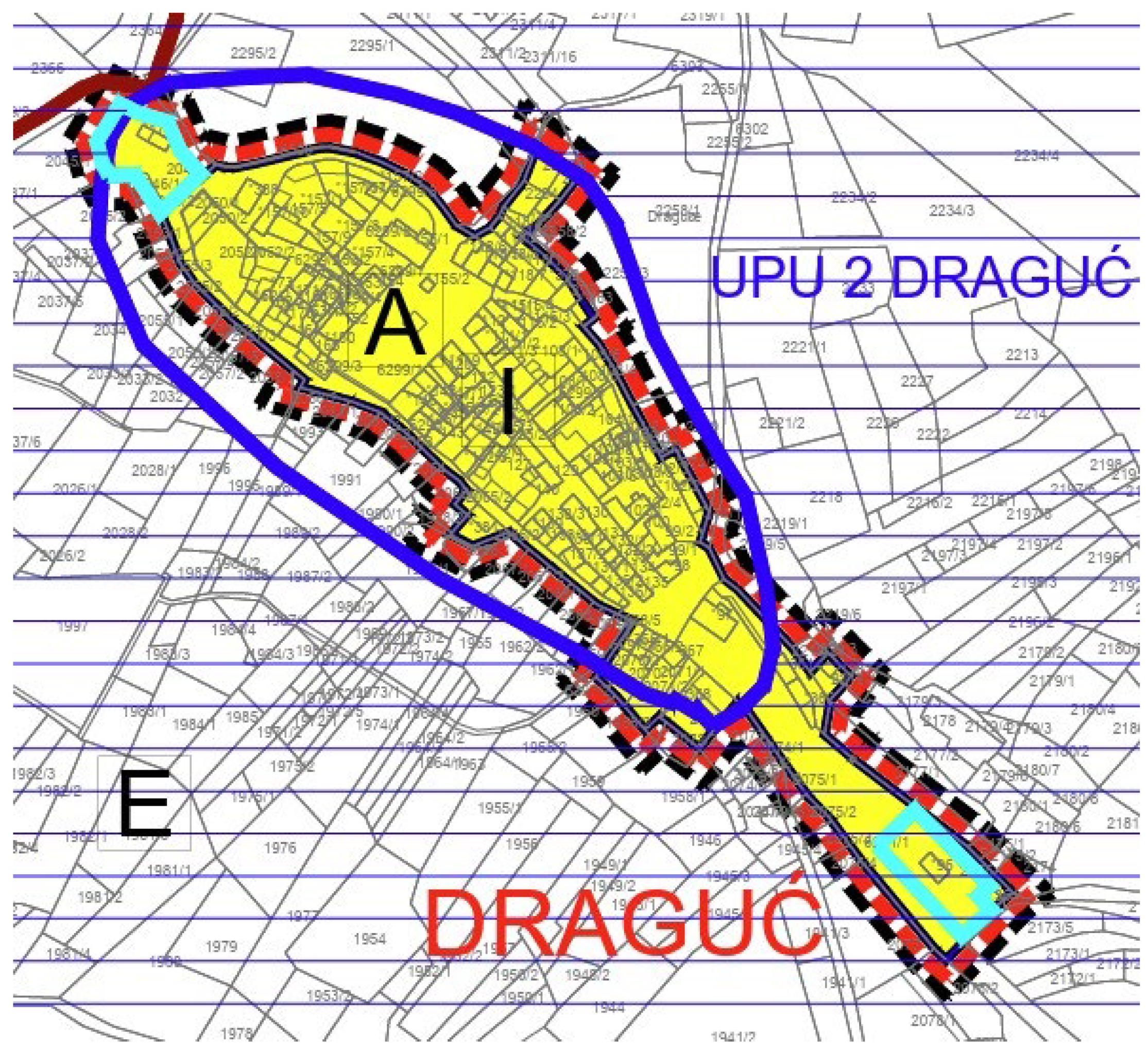
The reconstruction of existing buildings, remains, and ruins within the built-up area of the settlement of Draguć, designated as Zone A in the cartographic representation of the Spatial Development Plan of the Municipality (Figure 4), is permitted in accordance with their original form. Reconstruction aimed at repurposing parts of these buildings is also possible, subject to the acquisition of special conditions and prior approval.
In the graphical part of the spatial plan, Zone A is marked as the protection zone of the well-preserved historic structure of the settlement, subject to the strictest protection (protection level 1). This implies strict preservation of the historic urban matrix, spatial relations within the settlement, and the old building structure, without interpolations or settlement expansion. The plan calls for the preparation of a more detailed urban planning scheme for the historic core of Draguć.
Zone E is designated as the protection zone of the visual exposure (views) of the historic settlement (Figure 4). The strictest protection of this zone is prescribed, prohibiting new construction, the opening of new construction areas on the slopes and approaches to the settlement, as well as any increase in the footprint of existing. The preparation of the detailed urban planning for the settlement of Draguć must be preceded by the preparation of a conservation study for the entire planning area.
Historical data/maps
We took this dataset into account, as historical data and maps are often the only information available about the pre-satellite and digital era. As in the study [13], which investigates how historical maps can be enriched by integrating object height as a representation of the third dimension so buildings also have volumes and roof shapes. Other information for our study is taken from this dataset.
Since many buildings in historic urban areas are in ruins or have collapsed, reconstruction is required [17]. The importance of historical data/maps is reflected in the possibility of applying the method of conservation reconstruction, provided that appropriate graphic documentation of the building has been preserved, or in the construction of a new building on the site of a demolished one, designed to correspond to the historical layout and height. Such determinations can be made on the basis of historical documentation (building plans, cadastral maps, old photographs). Through this research, documentation of archival cadastral plans, as well as old photographs and postcards of the settlement, some over a hundred years old, have been uncovered.

2.3. Methods and Surveying Procedures

From a geospatial perspective, as well as in terms of urban data collection and modeling, small towns share common characteristics of narrow streets, which refers to difficulties affecting GNSS observations.
For our research, the method from study [24] was also considered and tested. It proposes a UDT composed of a 3D city model and optional modules that expand the functionality of the urban digital twin.
For model development, there are applicable approaches that include the possibility of surveying by merging data from various instruments with different resolutions [14,35].
The geodetic survey acts as a foundation for creating 3D digital models and a UDT.
Geodetic Survey
The data collection for the base maps of urban planning documents and for the development of 3D models is carried out through geodetic surveying. These base maps and models must provide the most complete and high-quality information possible about the area being planned, which relates to topography, environment, buildings, and other spatial structures.
The survey of Draguć was planned based on the urban layout characteristic of this small city. For collecting base geospatial data, we used the following advanced geomatic technologies:
  • UAV photogrammetry
  • 3D laser scanning
  • GNSS
UAV Photogrammetry
Recent advances in surveying technologies have made UAV-based methods widely adopted and operational across multiple fields. Compared with conventional topographic surveying, aerial photogrammetry enables faster data collection and processing, delivers highly detailed and accurate outputs, and produces several high-quality products at a lower overall cost [16,36].
The application of photogrammetry through aerial surveying and UAV mapping represents an effective fundamental method for spatial mapping and 3D modeling of urban areas [11].
UAV imaging was carried out with a DJI Phantom unmanned aerial vehicle, and GCPs (Ground Control Points) were established across the entire study area, measured with the GNSS RTK method in the reference projection system ETRS89/TM, or its national datum for the Republic of Croatia, HTRS96/TM.
The point coordinates were measured with GNSS receiver Topcon in RTK mode, connected to the CROatian POsitionig System (CROPOS). This system enables real-time postion determination with an accuracy of ±2 cm horizontally and ±4cm vertically [37].
3D laser scanning
Laser scanning offers significant advantages compared to conventional surveying techniques, as it enables the rapid and efficient acquisition of large volumes of data within a short timeframe.
Terrestrial 3D laser scanning has become a commonly applied method in current surveying practice. It is particularly valuable for documenting older structures that lack complete or reliable geospatial records [38], like in our study area.
The terrestrial laser scanning method (whether static or mobile) is not sufficient for a comprehensive survey of buildings, as emphasized in the [14] study results. Namely, it represents an effective technique for surveying historic urban areas, providing accurate and comprehensive mapping of ground surfaces. However, its limitations include reduced coverage of building facades and the inability to capture roof structures, both of which are essential for heritage management and conservation purposes.
For measurement of hard-to-reach places (such as facades and narrow passages between buildings), UAV observations need to be supplemented. For this purpose, we used the mobile laser scanning method, carried out with the GeoSLAM system and the LiDAR-based handheld scanner Lixel K1.
The static laser scanning method was applied for indoor observations at certain public buildings (the church and the House of Frescoes). For this method, a Leica BLK360 3D terrestrial laser scanner was used.
Data collection and processing was carried out by company Geogrupa ltd Pula (Croatia).

2.4. Technologies and Tools

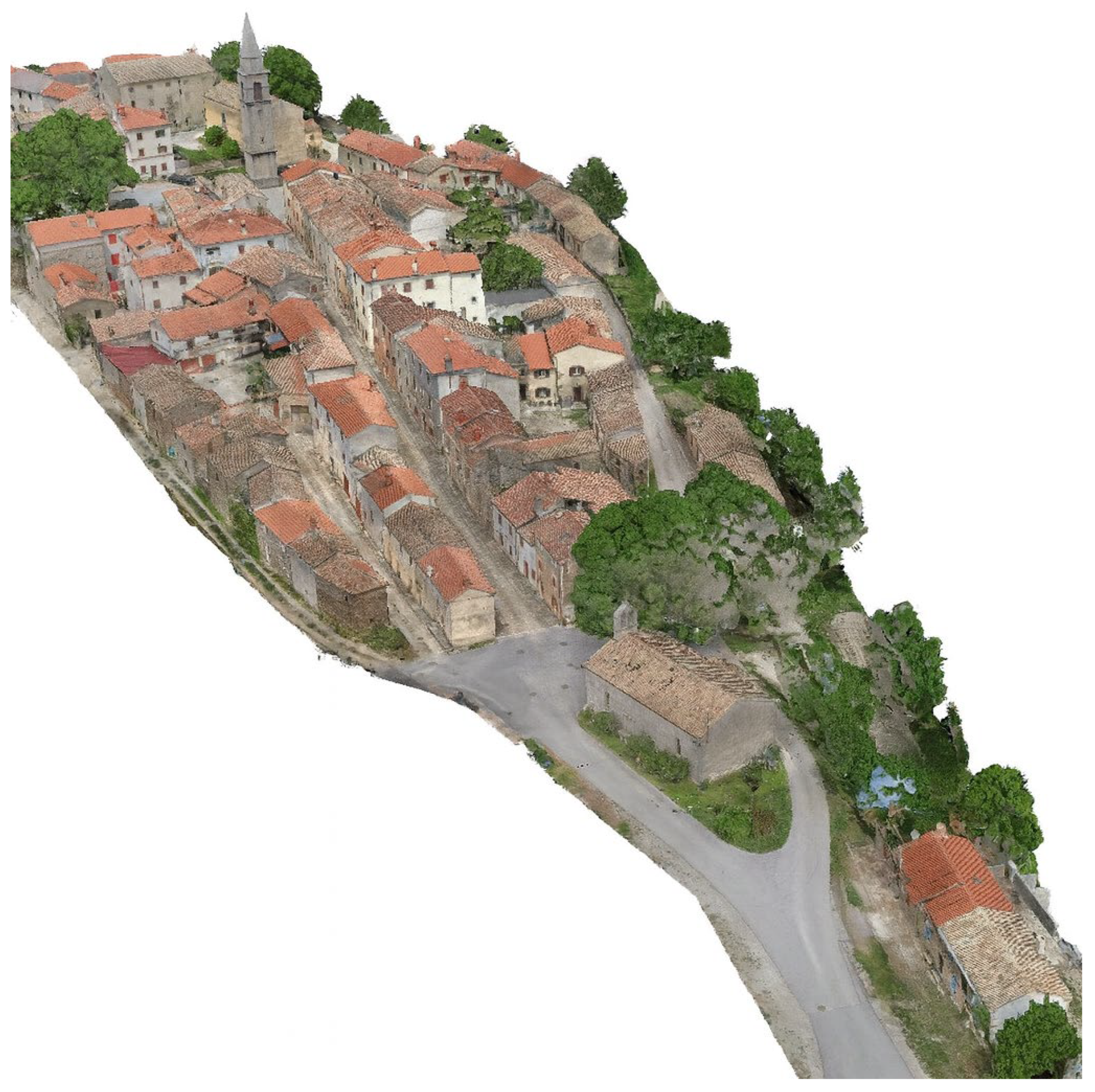
Based on the conducted survey, a georeferenced 3D model of the town was created, which constitutes the foundation for the development of the Urban Digital Twin.
The 3D model is very important in defining urban form and is used for multiple use cases [39]. Those use cases are calculating the volume of individual buildings or building blocks, as well as visual detection of roof or façade conditions. Building and other structure heights, as the third dimension in the model, are used to define both existing and planned insertions of new constructions through 3D simulations.
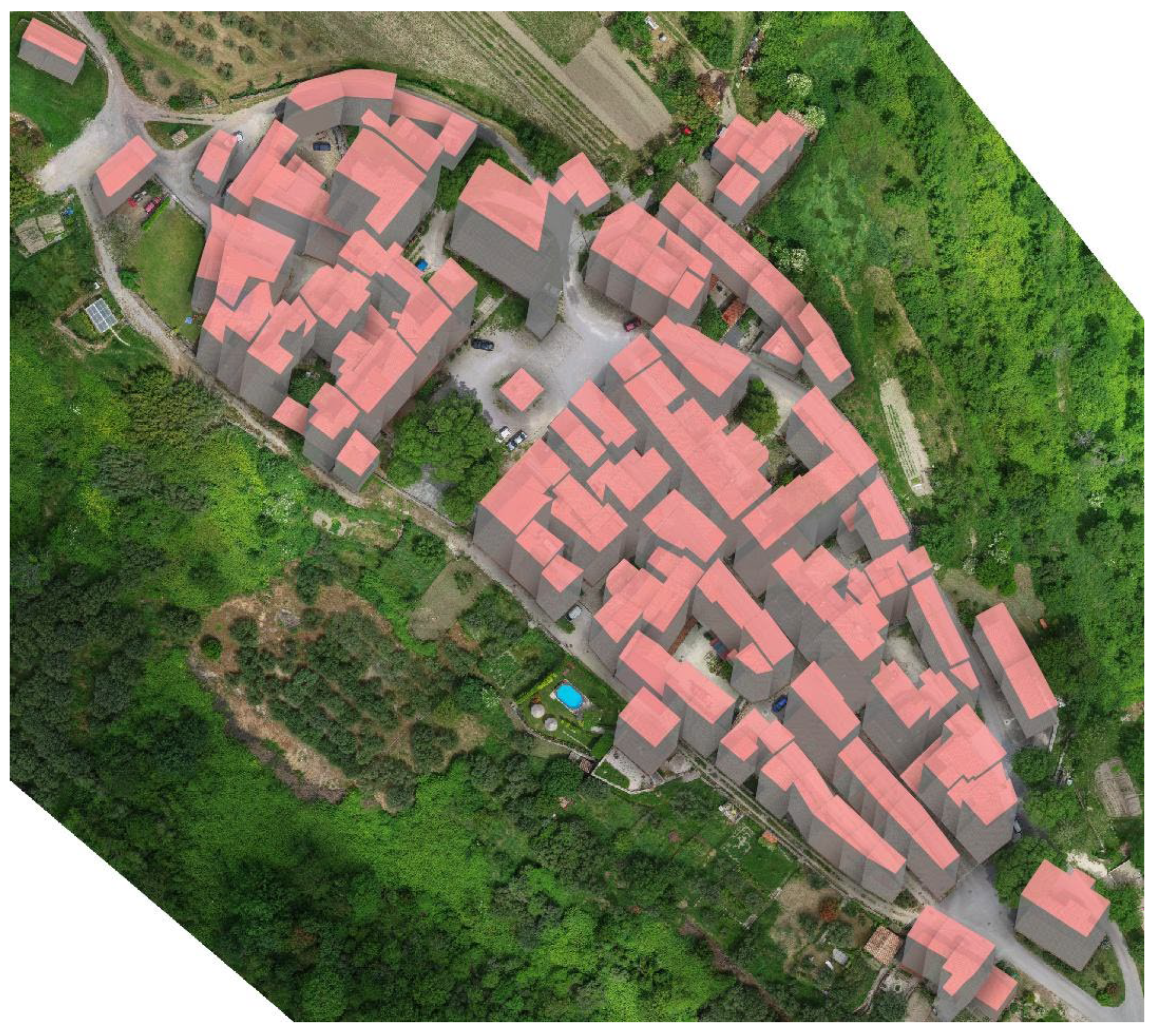
This model has been incorporated into the Draguć DT platform (environment) (Figure 5), accessible via a direct link in an online browser: https://cloud.agisoft.com/shared/projects/cc4f33c8-e59f-427d-b654-f0d8349a7f03 (accessed on 15 September 2025).
One of the base tasks for the urban regeneration process is the analysis of urban morphology. This is performed with GIS tools, like shown in [40]. GIS tools are used for management and fusion of multi-sources and heterogeneous datasets and for geospatial analysis.
Processing data from surveying and other ways collected data, data analysis, and management were made in GIS (Geographic Information System) environment. Software and tools used are free and open-source software QGIS 3.40 and PostgreSQL/PostGIS database 18.

3. Results

The results of this research provide a practical demonstration and a use-case model for application in urban regeneration processes, using the example of the digital twin of the town of Draguć. The total area surveyed of the study site amounts to 2.45 hectares.

3.1. Evaluation of the Model

From all the surveys carried out and the data collected, the analysis produced information essential for multiple uses in different phases and tasks of urban regeneration. It is important for preparation of conservation studies, identification and presentation of the urban matrix, representation of existing and planned future infrastructure, the depiction of the property ownership structure (private, public).
Drawing on the identified dataset groups in Section 2.2, the datasets were specified for each category, including their corresponding data type, the responsible organization, and the data source. These datasets are summarized in (Table 1).
For each dataset, specific attributes are defined, structured, and stored within the spatial database. Depending on the required level of detail, these attribute data enrich the datasets and establish links between multiple datasets in order to derive information relevant for urban planning. For example, the attribute building age from the Buildings dataset can be associated with an old building on historical map; the attribute pavement type taken from geodetic survey or orthophoto can be linked to the road layer in spatial planning.

3.1.1. Urban Matrix

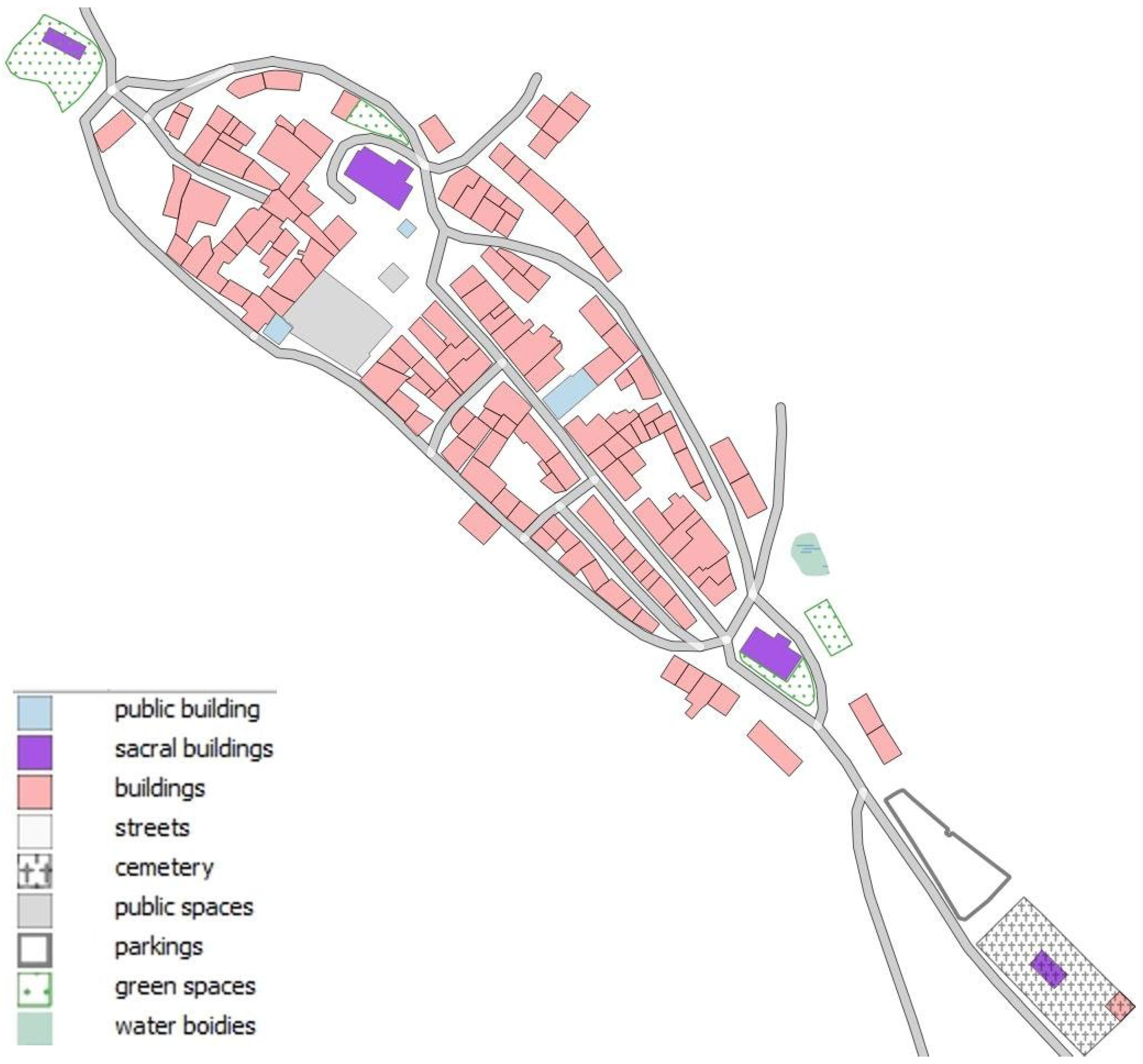
The urban matrix is the permanent morphological structure of a town—the network of streets, blocks, plots, and buildings with their associated open spaces—that organize the urban fabric and conveys its historical layers. It is therefore a concrete element of urban-morphological analysis and represents the result of describing the network of streets, building blocks, and plots, with all of their details.
The urban matrix of Draguć has been developed (Figure 6), highlighting the following main features: buildings (public and private), sacral buildings, squares, street network, parking areas, public and green spaces, cemetery, and water bodies.

3.1.2. Buildings

Buildings and other structures, as the most important part of the urban landscape, represent a distinct dataset due to the inclusion of detailed information on each building. In the Republic of Croatia, there is no official unified building register; instead, building data are recorded in the cadastral map as a separate layer. The attributes of this layer contain only basic information on the building footprint, without data on height, number of floors, use, or condition. Such data are particularly specific and necessary for historic urban cores. For this reason, all detailed information on buildings—especially 3D data—had to be collected and represented in the model.
For all buildings, footprint polygons were digitized based on field surveys. A total of 144 existing buildings and 10 completely demolished buildings were identified (the latter determined on the basis of cadastral data and field traces). The total footprint area under buildings amounts to 8075 m2 (0.81 ha). The largest building by footprint is the main church (cathedral), covering 202 m2, while the median building footprint is 47 m2. From these results, it can be concluded that the buildings are very small in size and highly fragmented, which is characteristic of compact parts of historic settlements.

3.1.3. Cadastre and Ownership

The study area of the town covers 2.45 hectares, comprising a total of 276 cadastral parcels and 144 buildings. The analysis of the collected data reveals high ownership fragmentation. Only one building is condominium-divided, while 57 properties (21%) have three or more co-owners, and 3% of the properties have ten or more co-owners.
In addition to high ownership fragmentation, the findings indicate another issue: unsettled property rights and legal relations. Such a land ownership structure—with its diverse interests and financial capacities of owners—significantly complicates the process of urban regeneration. The ratio of private to public ownership of real estate amounts to 78% private versus 22% public (municipal and state property).
Such a condition of fragmented ownership is also found in other small towns in the region, as demonstrated by the study [19], in the test area of Parma (Italy).
The cadastral data were obtained from the State Geodetic Administration and represent official vector layers at a scale of 1:1000. The positional accuracy is approximately ±0.3 m, based on GNSS control verification, and their reliability is considered high, as the data originate from the official Digital Cadastral Map (accessed via web service).

3.1.4. Historical Data

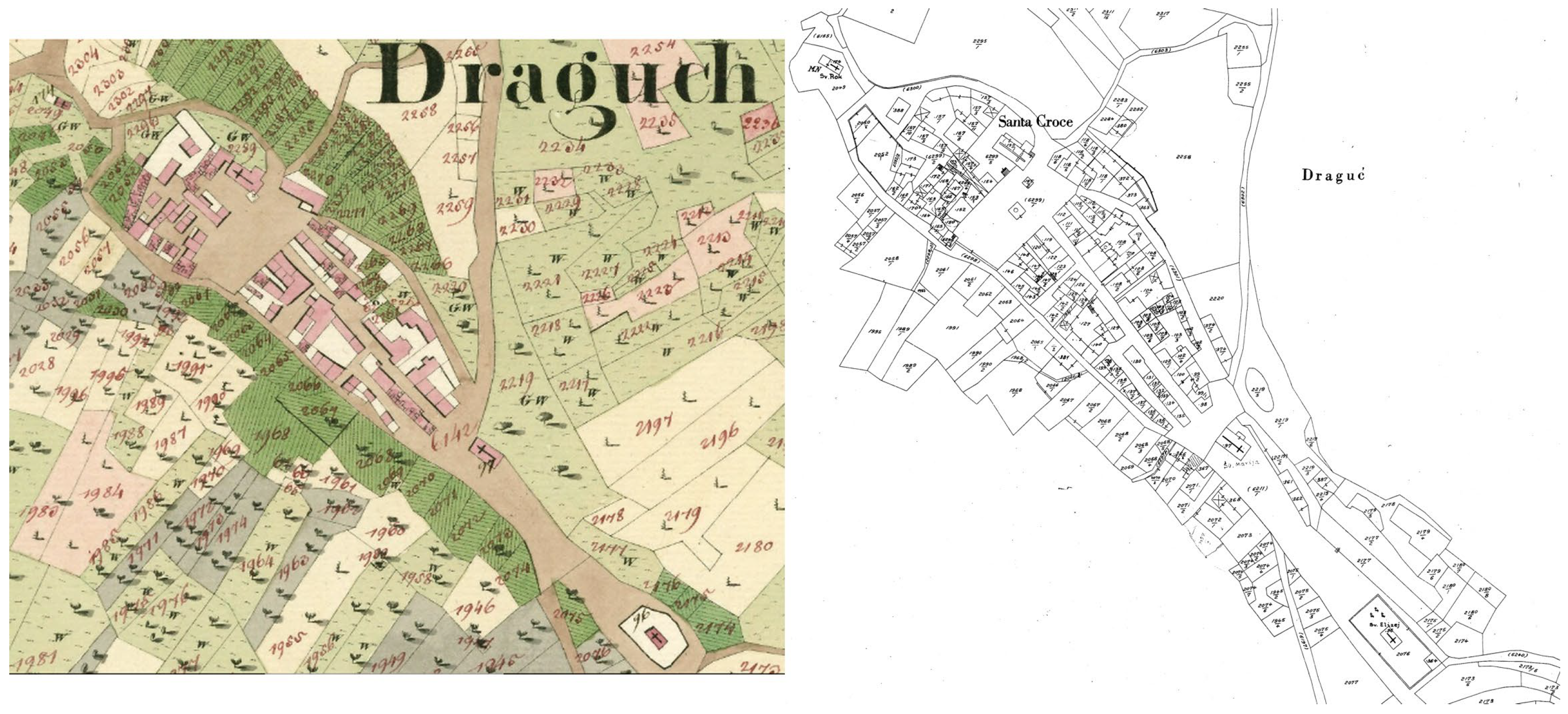
Over an extended period of time, documentation from historical sources reveals the spatio-temporal changes in buildings. These data provide evidence of the urban development of the settlement through time, representing an essential input for conservation studies. For our study area, the oldest historical source is the archival cadastral map from the 19th century, the so-called Franciscan Cadaster. This map depicts all buildings, land use patterns, and cadastral parcels of the existing situation of that time (produced in 1865) (Figure 7 left) (source: State Archives in Trieste) [41].
The second historical source is the old cadastral map from the 20th century, reflecting the situation in 1990 (Figure 7, right). This represents the last cadastral map before the transition to the current digital cadaster at the beginning of the 21st century.
The reliability, topological quality, and spatial accuracy of the historical map data are relatively lower due to the surveying methods used at the time. However, these datasets were adjusted to the current geodetic reference system (HTRS96/TM) to ensure consistency with modern geospatial datasets. Residual distortions were minimized through polynomial transformation and manual verification against recent orthophoto imagery.
Historical data on buildings from these periods can now be compared with existing structures and analyzed for various purposes (age, demolished buildings, protected buildings, original structure vs. current condition, and similar aspects).

3.1.5. 3D Model

By applying the survey methods and procedures described in Section 2.3 (UAV photogrammetry, 3D laser scanning, GNSS), a 3D city model and 3D texture mesh were generated using the professional software Agisoft Metashape 2.0. The physical city model of Draguć includes a 3D view of the city with the textures of buildings facades, roofs, and streets.
The 3D model as part of digital twin of Draguć provides a measurable and interactive model that supports spatial analyses and urban regeneration tasks. It is also accessible online, allows perspective changes and measurements, and offers realistic visualization of all objects with textures. Beyond visualization, it establishes a foundation for advanced simulations and participatory planning, in line with the role of 3D city models in urban development.
This generated 3D model proves useful in practice, as certain spatial analyses can only be carried out in a three-dimensional environment. The 3D model enabled the extraction of building height data, which subsequently served as the basis for constructing a comprehensive height model of all buildings and other structures in the town using QGIS. The result is visualized in the GIS environment (Figure 8).

3.2. DT Platform (Environment)

The development of the digital twin has been effectively operationalized through its implementation within a dedicated Digital Twin platform (environment), thus moving beyond a conceptual model into a functional, applied environment.
The platform (environment) is used for integration of maps and related data to spatially identify the results of the research. On the web interface there are tools and services for viewing and sharing data.
The established platform is designed to be comprehensive with the aim of empowering the entire process of urban planning, namely urban regeneration. It is modeled to be:
  • full-space (for the whole area of coverage)
  • three-dimensional
  • of adequate data quality (cm accuracy)
  • user-accessible.
With the increasing reliance on mobile data, a key challenge lies in developing multifunctional, scalable, and adaptable platforms capable of addressing emerging issues [16].
The Urban DT platform (environment) contains data and online services accessible through several user interfaces, namely:
  • Dashboards
  • Web GIS (maps)
  • 3D model
  • Virtual reality.
Analysis of 22 identified urban digital twins worldwide, in research [24], shows that these are among the most common digital user interfaces.
While citizens favor simple interfaces that avoid overwhelming amounts of information, public administrations and professionals tend to rely on more sophisticated user interfaces for UDT. These interfaces have to offer detailed datasets. Interactive digital maps remain the primary interface, complemented nowadays by 3D models. Both formats are intuitive to interpret for different user levels.
The developed UDT prototype was designed with future interoperability and scalability in mind. The spatial datasets generated during the research are already structured in a way that enables straightforward conversion to the CityGML standard. This is ensured by the completeness and semantic richness of the data, which include building footprints, height attributes, roof forms, year of construction and usage categories, allowing for integration into CityGML Level of Detail (LoD) 1 or 2 models.
The platform is accessible online at www.gisportal.hr/draguc [42].

4. Discussion

Urban regeneration must be carried out through spatial planning tools; therefore, conservators, urban planners, researchers/scientists, historians, local authorities, and citizens demonstrate the need for innovative solutions to keep up sustainable urban development of small historic towns.
Urban digital twin technologies release innovative technologies for creation of detailed digital replica of an entire town. Those technologies allow virtual representation and measurable models, powered by updated data and advanced analytics offer an integral work process.
This supports informed decision-making towards a sustainable future of small towns and for designing mitigation and adaptation strategies for its urban requalification.
We see in this research that different surveying and mapping technologies play a crucial role in UDT to ensure necessary data and integrate them in:
  • 2D/3D models
  • urban matrix
  • aboveground/on the ground
  • conservation studies
  • spatial planning.
Urban studies have embraced the digital twin approach for its ability to foster inclusive planning processes and promote agreement among actors with different professional backgrounds [15,43]. Such an approach has also been applied in this specific field of sustainable urban development.
The topic of revitalization and enhancement, that is, the urban regeneration of small historic towns, requires innovative approaches that preserve their inherited spatial, urban, and architectural characteristics and values [17]. The preservation and improvement of the condition of historic towns are not short-term but rather long-term or even permanent processes; therefore, they require a model that can adapt to changes over time, which is precisely what a UDT enables. In the case of Draguć, such a prototype has been developed, fully functional and ready to support urban regeneration procedures that demand accurately structured data and analyses.
The spatial datasets proposed in [19], i.e., the set of criteria and conditions for urban regeneration, such as land use, dating of buildings, obsolete and/or degraded buildings, population density, empty dwellings, etc., are also included in our UDT Draguć model. The data integration analysis demonstrated that the datasets possess sufficient data quality and resolution (scale), for application in urban regeneration, and can be integrated into a shared UDT platform.
The assessment of urban regeneration needs can also be supported by criteria such as building age and defining deteriorated areas (as represented in the model).
Such experiences have proven useful in research [19], though previously applied at the block scale, while in our case it was implemented for the town as a whole.
Since the data have been assessed as fit for use through research, the advantage of developing such a model is that it can be immediately applied to specific urban regeneration (UR) procedures, as well as to the management of the small historic towns.
Furthermore, the identification and prioritization of projects for underused or deteriorated urban areas is a complex task that requires decision-making based on the existing condition. High-quality decision-making for all stakeholders—public and private sector actors, as well as the local community—is enabled by such a model, particularly when implemented through a public web platform.
The UDT offers significant potential for open data and information on the management of various assets, serving professionals, scholars, and researchers from different fields, and administrative and political structures at both ministerial and local government levels.
We have noted, in line with previous research, that high ownership fragmentation is a frequent occurrence in small historic towns or historic cores. Since the results have demonstrated that our historic town shares this heritage, potential challenges may arise in a pluralist situation, and urban redevelopment projects may encounter resistance from locally based groups.
For urban areas such as Draguć, which are economically underdeveloped and urbanistically degraded, systematic renewal has been largely absent in the contemporary period. Consequently, regeneration efforts begin “from scratch”, often leading to unrealistic public expectations regarding outcomes, timelines, or return on investment. These risks can be mitigated through proactively prepared expert studies and the continuous provision of regularly updated spatial data.
The decision-making of citizens or other stakeholders must not be excluded or restricted; therefore, the platform must be structured in a collaborative manner, as demonstrated by experiences from EU projects [15], and other international practices in this domain [25]. They argue that collaboration plays a crucial role in the development of UDT, particularly in data sharing and standardization.
It is very important to ensure the regular updating of data. For example, changes in the built environment for 3D models are not carried out as frequently as cadastral data updates. Such a situation may result in a 3D data model with omitted buildings [39].
Regarding the technical challenges from the perspective of geospatial technologies and data, the results indicate that data structured and prepared in this way are suitable for use within a digital twin platform. The interoperability of data and services in this system is achieved through standardized web service interfaces, enabling users to access and retrieve data without prior conversion.
With this, we have addressed the original research contribution by demonstrating that existing methods of urban regeneration can be operationalized through a novel approach to modeling an Urban Digital Twin (UDT) for a small historic town. The scientific novelty of this study further lies in the development of an integrated DT framework specifically adapted to the context of small historic settlements—an area that remains largely overlooked in the current body of research. Unlike most existing studies, which focus on large urban systems and standardized 3D city models, our approach integrates multisensor data acquisition methods (UAV photogrammetry, TLS, orthophoto, and GIS–BIM workflows) into a unified, cost-efficient, and operational DT model. This methodological synthesis enables more rapid spatial assessments, enhances decision-making processes, and improves the efficiency of urban regeneration workflows in small historic environments, a domain that has received limited scientific attention to date.
The proposed UDT model provides a robust data foundation from which basic economic indicators essential for urban regeneration can be derived through further expert analysis, including preliminary estimates of renovation costs and maintenance expenditures. These estimations can be informed by the model’s detailed spatial and semantic datasets, such as building condition information, infrastructure status, tourism-related mobility patterns, and identified opportunities for green and public-space improvements.
These outputs enhance the practical applicability of the model by supporting more informed decision-making and resource planning, while simultaneously demonstrating the broader social benefits associated with financial investment—such as the revitalization of public spaces for cultural events, increased tourist activity (visitors and overnight stays), and the resulting stimulation of the local economy of this currently “dormant” historic town.

5. Conclusions

This research has demonstrated the development of a fully operational Urban Digital Twin (UDT) model of the small historic town of Draguć, which integrates geodetic surveying, UAV photogrammetry, 3D laser scanning, and historical as well as cadastral datasets into a unified digital environment. The model provides a structured way of organizing and linking spatial information, enabling the visualization of the urban matrix, the systematic documentation of building characteristics, and the representation of a highly fragmented ownership structure. By combining these diverse datasets, the UDT facilitates a more comprehensive understanding of the settlement’s morphological, functional, and historical dimensions. This approach addresses the limited availability of reliable 3D spatial data and building data in small historic towns, offering a replicable solution for other contexts facing similar challenges.
Beyond the technical integration of datasets, the established platform contributes to urban regeneration by operationalizing the UDT into a functional, interactive environment. The inclusion of 3D textured models, online maps, imagery, dashboards, and virtual reality interfaces provides multiple access points for professionals, local authorities, and citizens alike. These tools not only enhance accessibility and transparency of spatial information but also enable evidence-based planning, conservation studies, and participatory decision-making. The research demonstrates that UDTs are not only a technological innovation but also a methodological advancement that bridges historical heritage management with modern requirements of sustainable urban development.
Future research should extend this prototype by establishing regional networks of small towns that can share resources, expertise, and best practices, thereby overcoming structural and financial limitations faced by individual settlements. Comparative analyses between different European case studies could provide valuable insights into the adaptability and transferability of the proposed approach.
Moreover, the integration of emerging digital technologies, including Artificial Intelligence (AI), Machine Learning (ML), Augmented Reality (AR), and social media, represents a promising direction for further enhancing UDTs. These technologies could significantly improve data processing and analysis, expand opportunities for participatory planning, and strengthen the role of UDTs as sustainable and adaptive frameworks for the long-term regeneration of historic urban environments.
This study contributes to the scientific field by introducing an integrated Urban Digital Twin model specifically designed for small historic environments, addressing a missing dimension in current DT research, which is predominantly focused on medium-large and large cities.

Author Contributions

Conceptualization, B.B.; methodology, B.B.; software, L.R.; validation, H.M.; formal analysis, H.M. and L.R.; investigation, B.B.; resources, B.B.; data curation, B.B.; writing—original draft preparation, B.B.; writing—review and editing, H.M. and L.R.; visualization, D.M. and L.R.; supervision, L.R. All authors have read and agreed to the published version of the manuscript.

Funding

This research received no external funding.

Institutional Review Board Statement

Not applicable.

Informed Consent Statement

Not applicable.

Data Availability Statement

The data presented in this study are openly available in “Draguc-Urban Digital Twin” at https://gisportal.hr/draguc (accessed on 5 October 2025). The raw data supporting the conclusions of this article will be made available by the authors on request.

Acknowledgments

The authors would like to acknowledge Geogrupa Ltd. (Pula, Croatia) for providing technical support, access to equipment, and the time and effort of its staff during the course of this research.

Conflicts of Interest

Boris Blagonić has been involved as a member of Geogrupa Ltd. The authors declare no conflicts of interest.

References

  1. Bilušić, M.; Obad Šćitaroci, M.; Karač, Z. Značenje pojma mali povijesni gradovi u Hrvatskoj. Prostor 2020, 28, 378–389. (In Croatian) [Google Scholar] [CrossRef]
  2. Kostešić, I.; Vukić, F. Od grada do žlica—Model urbane regeneracije kao sveobuhvatni pristup oživljavanju povijesne gradske jezgre. In Proceedings of the HERitage Urbanism: Modeli Revitalizacije i Unaprjeđenja Kulturnog Naslijeđa, Zagreb, Croatia, 24 May 2017. (In Croatian). [Google Scholar]
  3. Jukić, T.; Mrđa, A.; Perkov, K. Urbana Obnova: Urbana Regeneracija Donjega Grada, Gornjega Grada i Kaptola-Povijesne Urbane Cjeline Grada Zagreba; Arhitektonski fakultet Sveučilišta u Zagrebu: Zagreb, Croatia, 2020. (In Croatian) [Google Scholar]
  4. Moufid, O.; Praharaj, S.; Oulidi, H.J. Digital technologies in urban regeneration: A systematic review of literature. J. Urban Manag. 2025, 14, 264–278. [Google Scholar] [CrossRef]
  5. Šiško, D.; Cetl, V.; Matijević, H. Developing of a Digital Twin for Urban Planning in an International Context. Teh. Glas. 2024, 18, 23–28. [Google Scholar] [CrossRef]
  6. Pellegrini, P.; Micelli, E. Paradoxes of the Italian Historic Centres between Underutilisation and Planning Policies for Sustainability. Sustainability 2019, 11, 2614. [Google Scholar] [CrossRef]
  7. Schrotter, G.; Hürzeler, C. The Digital Twin of the City of Zurich for Urban Planning. PFG 2020, 88, 99–112. [Google Scholar] [CrossRef]
  8. Durdurana, S.S.; Temiza, F. Creating 3D Modelling in Urban Regeneration Projects: The Case of Mamak, Ankara. Procedia Earth Planet. Sci. 2015, 15, 442–447. [Google Scholar] [CrossRef]
  9. Allan, M.; Rajabifard, A.; Foliente, G. Urban regeneration and placemaking: A Digital Twin enhanced performance-based framework for Melbourne’s Greenline Project? Aust. Plan. 2023, 59, 247–257. [Google Scholar] [CrossRef]
  10. Al-Sehrawy, R.; Kumar, B.; Watson, R. A digital twin uses classification system for urban planning & city infrastructure management. Special issue: ‘Construction 4.0: Established and Emerging Digital Technologies within the Construction Industry (ConVR 2020)’. J. Inf. Technol. Constr. 2021, 26, 832–862. [Google Scholar] [CrossRef]
  11. Skondras, A.; Karachaliou, E.; Tavantzis, I.; Tokas, N.; Valari, E.; Skalidi, I.; Bouvet, G.A.; Stylianidis, E. UAV Mapping and 3D Modeling as a Tool for Promotion and Management of the Urban Space. Drones 2022, 6, 115. [Google Scholar] [CrossRef]
  12. Lu, Q.; Parlikad, A.K.; Woodall, P.; Don Ranasinghe, G.; Xie, X.; Liang, Z.; Eirini Konstantinou, P.W.; James Heaton, J. Developing a Digital Twin at Building and City Levels: Case Study of West Cambridge Campus. J. Manag. Eng. 2020, 36, 05020004. [Google Scholar] [CrossRef]
  13. Morlighem, C.; Labetski, A.; Ledoux, H. Reconstructing historical 3D city models. Urban Inform. 2022, 1, 11. [Google Scholar] [CrossRef]
  14. Treccani, D.; Adami, A.; Brunelli, V.; Fregonese, L. Mobile mapping system for historic built heritage and GIS integration: A challenging case study. Appl. Geomat. 2024, 16, 293–312. [Google Scholar] [CrossRef]
  15. Turillazzi, B.; Leoni, G.; Gaspari, J.; Massari, M.; Boulanger, S.O.M. Cultural Heritage and Digital Tools: The Rock Interoperable Platform. Int. J. Environ. Impacts 2021, 4, 276–288. [Google Scholar] [CrossRef]
  16. Deng, T.; Zhang, K.; Shen, Z.J.M. A systematic review of a digital twin city: A new pattern of urban governance toward smart cities. J. Manag. Sci. Eng. 2021, 6, 125–134. [Google Scholar] [CrossRef]
  17. Bilušić, M. Urban Renewal Planning Criteria for Small Historic Towns in Croatia. Ph.D. Dissertation, Faculty of Architecture-University of Zagreb, Zagreb, Croatia, 29 November 2024. [Google Scholar]
  18. Peres Almeida, C.; Ferreira Ramos, A.; Mendes Silva, J. Sustainability assessment of building rehabilitation actions in old urban centres. Sustain. Cities Soc. 2018, 36, 378–385. [Google Scholar] [CrossRef]
  19. Carra, M.; Caselli, B.; Rossetti, S.; Zazzi, M. Widespread Urban Regeneration of Existing Residential Areas in European Medium-Sized Cities—A Framework to Locate Redevelopment Interventions. Sustainability 2023, 15, 13162. [Google Scholar] [CrossRef]
  20. Tiboni, M.; Botticini, F.; Sousa, S.; Jesus-Silva, N. A Systematic Review for Urban Regeneration Effects Analysis in Urban Cores. Sustainability 2020, 12, 9296. [Google Scholar] [CrossRef]
  21. Wang, Y.; Xiang, P. Investigate the Conduction Path of Stakeholder Conflict of Urban Regeneration Sustainability in China: The Application of Social-Based Solutions. Sustainability 2019, 11, 5271. [Google Scholar] [CrossRef]
  22. Zandbelt, D.; Van den Berg, R. Big and Beautiful: Comparing Stadshavens in Europe; Zandbelt & Van den Berg: Rotterdam, The Netherlands, 2005. [Google Scholar]
  23. Open Geospatial Consortium OGC. Urban Digital Twins: Integrating Infrastructure, Natural Environment and People. 2024. Available online: https://docs.ogc.org/dp/24-025.html (accessed on 5 February 2025).
  24. Ferré-Bigorra, J.; Casals, M.; Gangolells, M. The adoption of urban digital twins. Cities 2022, 131, 103905. [Google Scholar] [CrossRef]
  25. Lei, B.; Janssen, P.; Stoter, J.; Biljecki, F. Challenges of Urban Digital Twins: A Systematic Review and a Delphi Expert Survey. Autom. Constr. 2023, 147, 104716. [Google Scholar] [CrossRef]
  26. Knezevic, M.A.; Donaubauer, A.; Moshrefzadeh, M.; Kolbe, T.H. Managing urban digital twins with an extended catalog service. ISPRS Ann. Photogramm. Remote Sens. Spat. Inf. Sci. 2022, X-4/W3-2022, 119–126. [Google Scholar] [CrossRef]
  27. Bocullo, V.; Martišauskas, L.; Gatautis, R.; Vonžudaitė, O.; Bakas, R.; Milčius, D.; Venčaitis, R.; Pupeikis, D. A Digital Twin Approach to City Block Renovation Using RES Technologies. Sustainability 2023, 15, 9307. [Google Scholar] [CrossRef]
  28. The Kaunas City Digital Twin. Available online: https://eu.opencitiesplanner.bentley.com/www_ktu_edu/kaunasdigitalcity-stage1 (accessed on 8 May 2025).
  29. De Benedictis, R.; Cesta, A.; Pellegrini, R.; Diez, M.; Pinto, D.M.; Ventura, P.; Stecca, G.; Felici, G.; Scalas, A.; Mortara, M.; et al. Digital twins for intelligent cities: The case study of Matera. J. Reliab. Intell. Environ. 2025, 11, 6. [Google Scholar] [CrossRef]
  30. APE Ltd. Spatial Development Plan of the Municipality of Cerovlje—Report on the Consolidated Text of Implementation Provisions and the Graphical Part of the Plan; Municipality of Cerovlje; APE Ltd.: Singapore, 2021. [Google Scholar]
  31. Huić, I.; Obad Šćitaroci, M. Draguć u Istri—Nove spoznaje o prostornom razvoju naselja (eng. New research findings on the urban development of Draguć settlement in Istria). Prostor 2012, 20, 328–339. (In Croatian) [Google Scholar]
  32. Horvat-Levaj, K. Draguć as an example of characteristic development forms of places built by castles. In Proceedings of the Scientific Symposium: Cerovlje and Its Surroundings from Prehistory to the Present, Cerovlje, Croatia, 20 June 1998. (In Croatian). [Google Scholar]
  33. Istrapedia-Istrian Internet Encyclopedia. Available online: https://www.istrapedia.hr/hr/natuknice/661/draguc (accessed on 7 May 2025).
  34. Croatian Bureau of Statistics. Available online: https://www.dzs.gov.hr (accessed on 12 August 2025).
  35. Murtiyoso, A.; Grussenmeyer, P.; Suwardhi, D.; Awalludin, R. Multi-Scale and Multi-Sensor 3D Documentation of Heritage Complexes in Urban Areas. ISPRS Int. J. Geo-Inf. 2018, 7, 483. [Google Scholar] [CrossRef]
  36. Beretta, F.; Shibata, H.; Cordova, R.; de Lemos Peroni, R.; Azambuja, J.; Costa, J.F. Topographic modelling using UAVs compared with traditional survey methods in mining. REM Int. Eng. J. 2018, 71, 463–470. [Google Scholar] [CrossRef]
  37. State Geodetic Administration of Croatia—CROPOS GNSS Reference Station Website. Available online: www.cropos.hr (accessed on 31 August 2025).
  38. Markovinović, D.; Lovrenčić, D.; Šamanović, S.; Cetl, V. 3D Laser scanning for reconstruction and renovation of buildings. In Proceedings of the STEPGRAD 2022 International Conference on Contemporary Theory and Practice in Construction XV, Banja Luka, Republika Srpsk, 16–17 June 2022; Maksimović, S., Kosić-Jeremić, S., Eds.; University of Banja Luka Faculty of Architecture, Civil Engineering and Geodesy: Banja Luka, Republika Srpsk, 2022; pp. 511–520. [Google Scholar] [CrossRef]
  39. Biljecki, F.; Ledoux, H.; Stoter, J. Generating 3D city models without elevation data. Comput. Environ. Urban Syst. 2017, 64, 1–18. [Google Scholar] [CrossRef]
  40. Jiménez-Espada, M.; García, F.M.M.; González-Escobar, R. Urban Equity as a Challenge for the Southern Europe Historic Cities: Sustainability-Urban Morphology Interrelation through GIS Tools. Land 2022, 11, 1929. [Google Scholar] [CrossRef]
  41. Archivio di Stato di Trieste-Catasto Franceschino (Archive Maps of Cadastre of Francis I). Available online: https://a4view.archiviodistatotrieste.it/patrimonio/ea593f33-8716-4b82-b64a-b4f8450f7892/sotto-sottoserie-comune-di-draguccio (accessed on 22 August 2025).
  42. Urban Digital Twin of Draguć. Available online: www.gisportal.hr/draguc (accessed on 1 September 2025).
  43. Dembski, F.; Wossner, U.; Letzgus, M.; Ruddat, M.; Yamu, C. Urban digital twins for Smart Cities and Citizens: The case study of Herrenberg, Germany. Sustainability 2020, 12, 2307. [Google Scholar] [CrossRef]
Figure 1. Sustainability in urban regeneration [21].
Sustainability 17 10740 g001
Figure 2. Screenshot of the Kaunas City Digital Twin [28].
Sustainability 17 10740 g002
Figure 3. Draguć—geographic study area.
Sustainability 17 10740 g003
Figure 4. Excerpt from the cartographic representation of the Spatial Development Plan [30].
Sustainability 17 10740 g004
Figure 5. Visualization of the generated 3D model of Draguć.
Sustainability 17 10740 g005
Figure 6. Urban matrix.
Sustainability 17 10740 g006
Figure 7. Excerpts from archival cadastral maps: 19th century (left) and 20th century (right).
Sustainability 17 10740 g007
Figure 8. Building height model.
Sustainability 17 10740 g008
Table 1. Table of datasets.
Dataset GroupDatasetData TypeResponsible Authority or Dataset ManagerData Source
BasemapsTopographic mapWMSState Geodetic AdministrationOnline, Web service
BasemapsOpen Street MapWMSOpen dataOnline, Web service
ImageryOrthophotorasterMunicipalityField data collection, UAV
ImageryOrthophotoWMSState Geodetic AdministrationOnline, Web service
ImageryStreet view imageryGeoreferenced 360° photosMunicipalityCloud storage
CadastreHouse numbersvectorState Geodetic AdministrationOnline, Web service
CadastreLand parcelvectorState Geodetic AdministrationDigital cadastral map (Web service)
CadastreOwnershiptable dataLand registryOnline, Web service
CadastreBuilding (registered)vectorState Geodetic AdministrationDigital cadastral map, Web service
Geodetic surveyBuildingsvectorLicensed surveying companyField measurement
Geodetic surveyPavementvectorLicensed surveying companyField measurement
Geodetic surveyGeodetic topographic basemapvectorLicensed surveying companyField measurement
Geodetic surveyDEMvectorLicensed surveying companyField measurement
PopulationPopulationtable dataBureau of StatisticOnline
UtilitiesWater supply UtilitiesvectorPublic water UtilityGIS database
UtilitiesElectric utilitiesvectorNational Electricity CompanyGIS database
UtilitiesPublic lighting infrastructurevectorMunicipalityMunicipal GIS database
UtilitiesSewer utilitiesvectorMunicipal wastewater UtilityGIS database
Spatial Planning (Urban planning)Land usevector/rasterMunicipalityMunicipal Spatial Plan
Spatial Planning (Urban planning)Construction areasvector/rasterMunicipalityMunicipal Spatial Plan
Spatial Planning (Urban planning)Protection areasvector/rasterMunicipalityMunicipal Spatial Plan
Historical dataArchive cadastral map 19th centuryrasterState Museum/State Archivescanned maps
Historical dataOld cadastral map 20th centuryrasterState Geodetic Administrationscanned maps
Register of Municipal InfrastructureMunicipal roadsvectorMunicipalityMunicipal GIS database
Register of Municipal InfrastructurePublic spacesvectorMunicipalityMunicipal GIS database
Register of Municipal InfrastructureGreen areasvectorMunicipalityMunicipal GIS database
Register of Municipal InfrastructurePlaygroundsvectorMunicipalityMunicipal GIS database
Register of Municipal InfrastructureCemeteriesvectorMunicipalityMunicipal GIS database
3D data3D data modelvector (point cloud)Licensed surveying companyProcessed field data survey
Disclaimer/Publisher’s Note: The statements, opinions and data contained in all publications are solely those of the individual author(s) and contributor(s) and not of MDPI and/or the editor(s). MDPI and/or the editor(s) disclaim responsibility for any injury to people or property resulting from any ideas, methods, instructions or products referred to in the content.