A New Method for Determining the Ecological Flow Regime to Support Sustainable Restoration of Target Fish Habitats in Impaired Rivers



Abstract
1. Introduction
2. Study Content and Methods
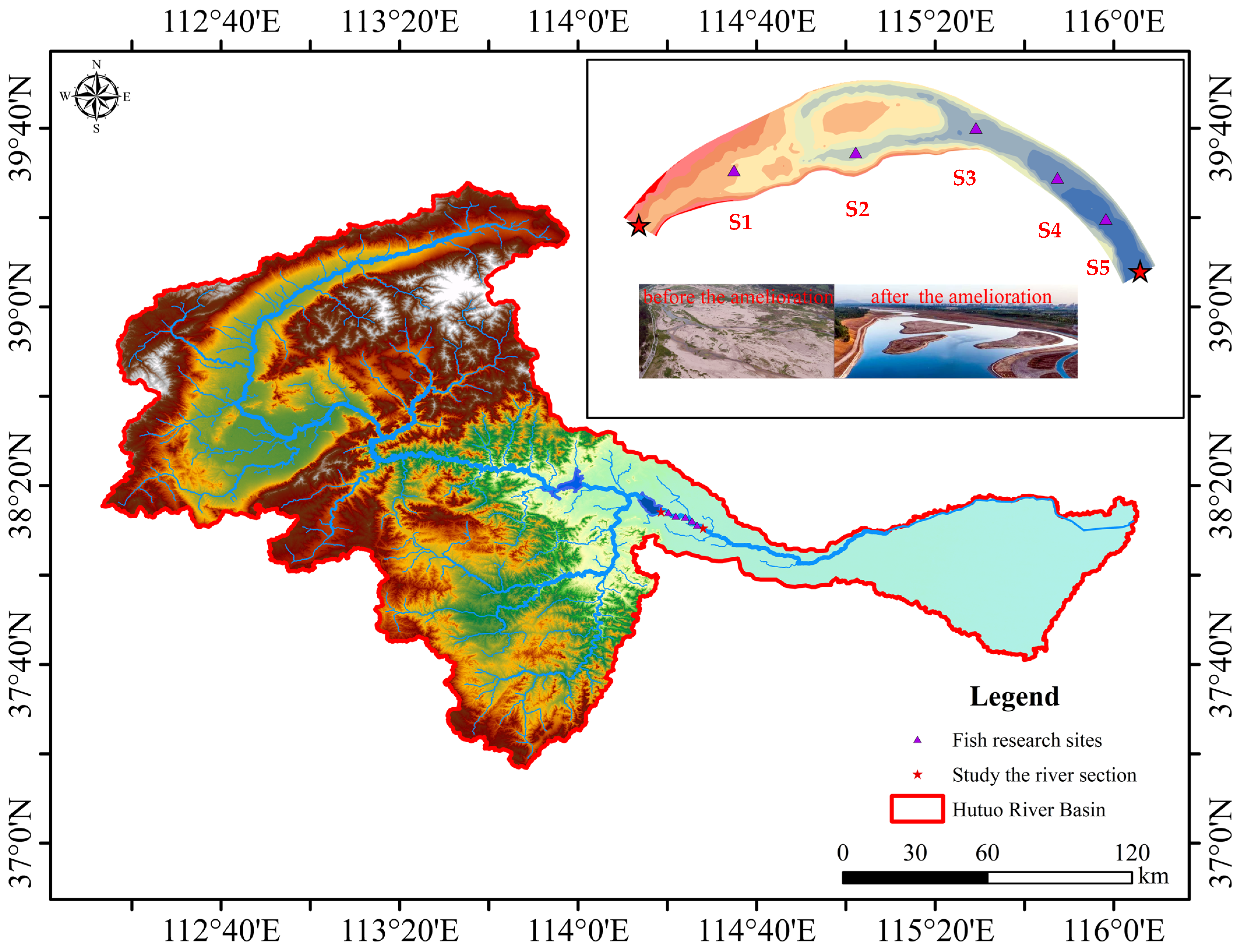
2.1. Study Area
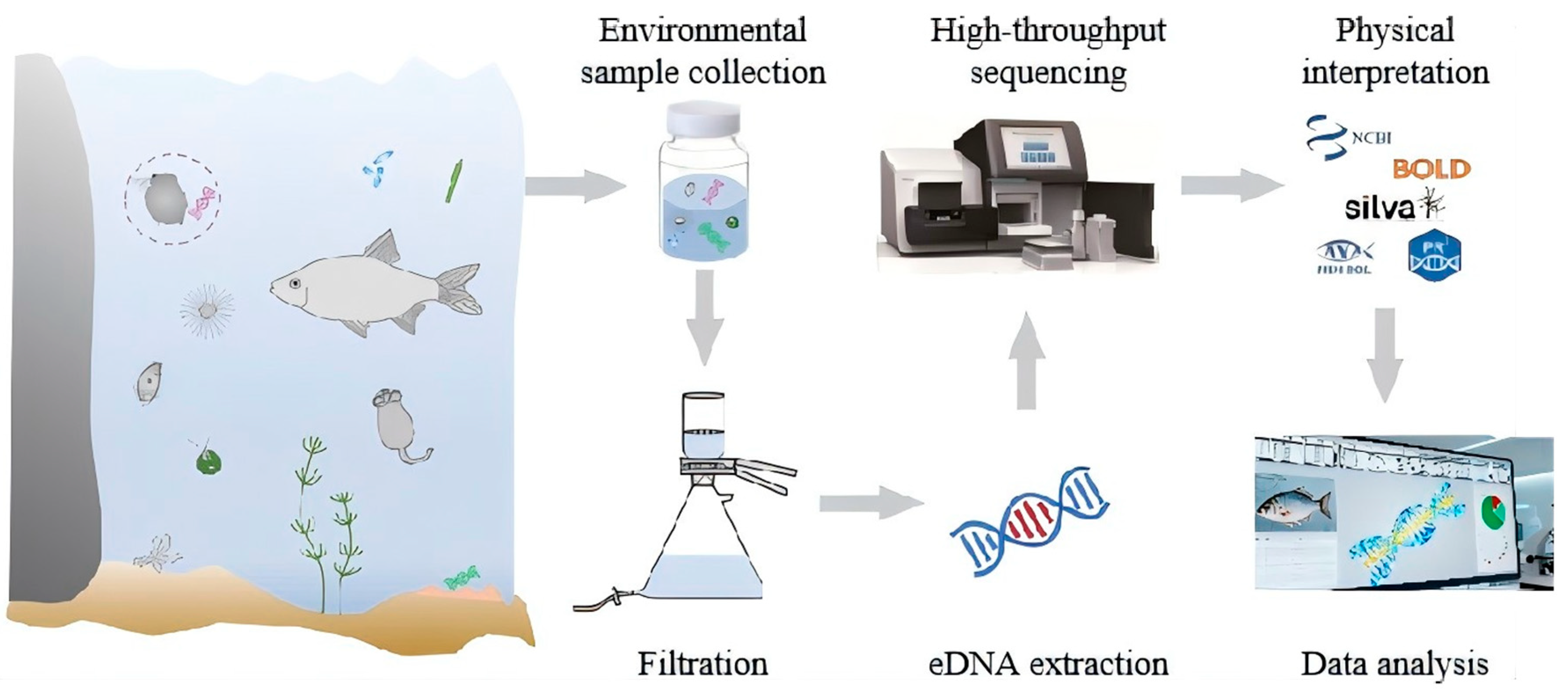
2.2. Environmental DNA Technology
2.3. Target Fish Selection
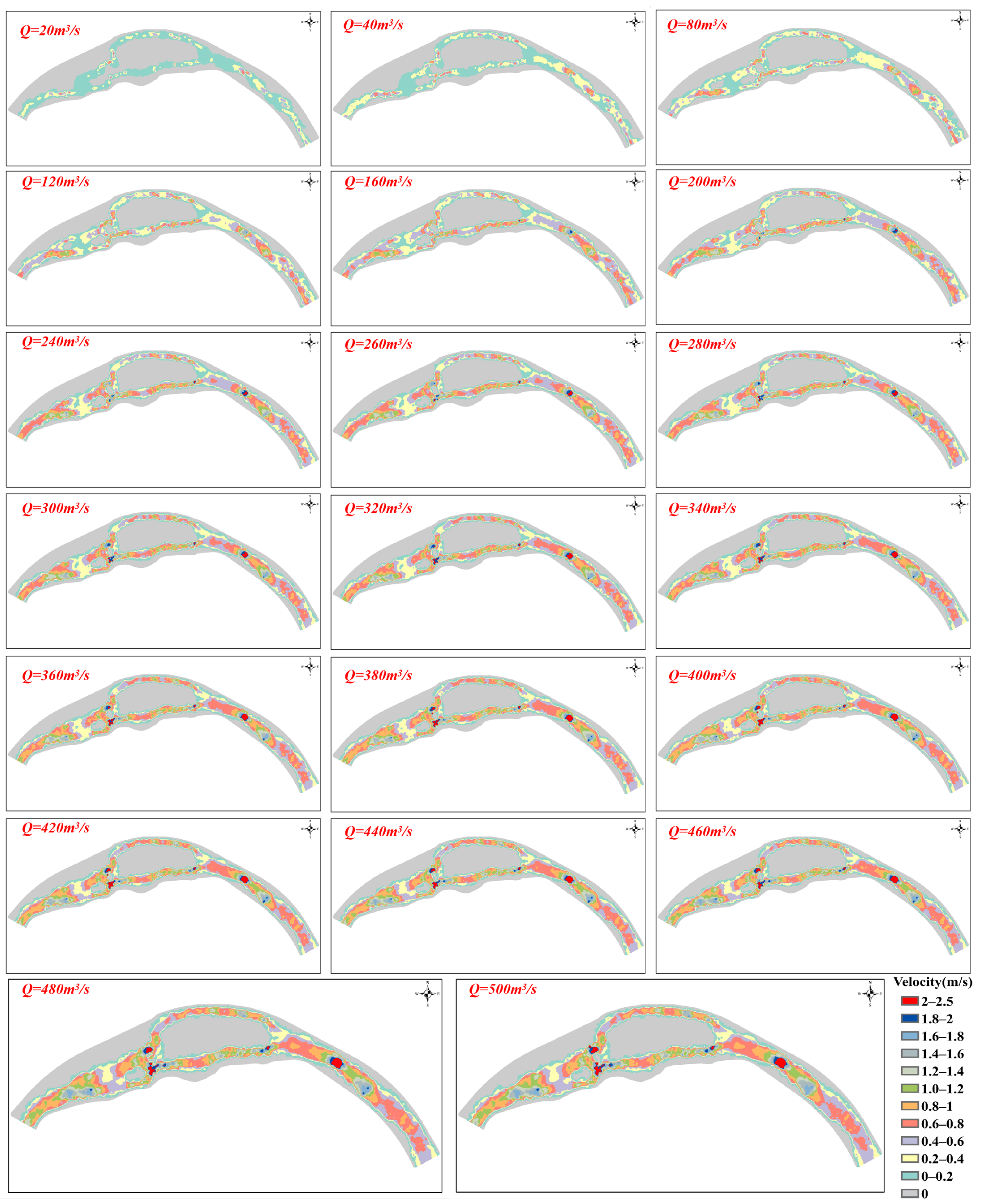
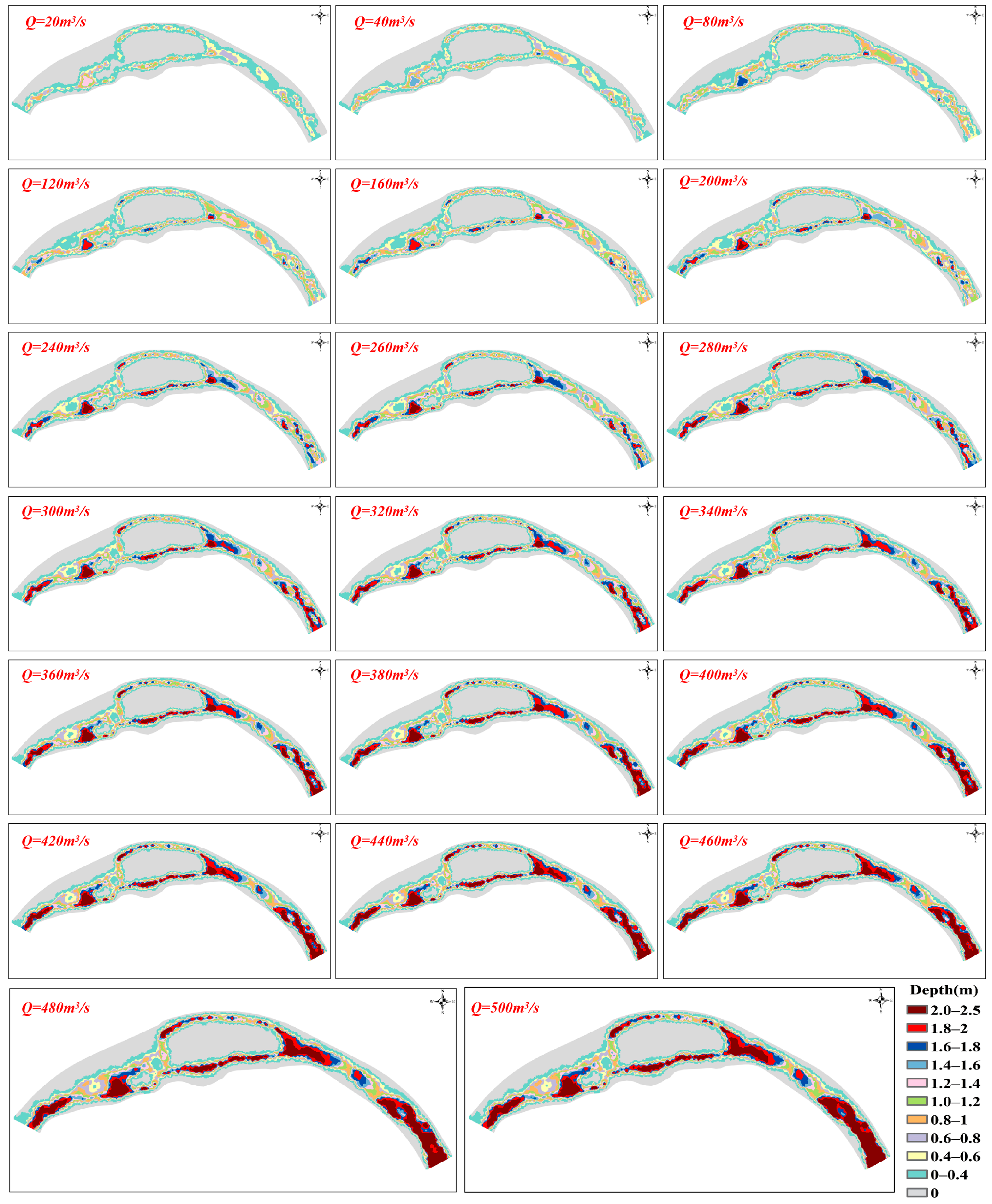
2.4. Hydrodynamic Model Validation
2.5. Indicator Calculation Method
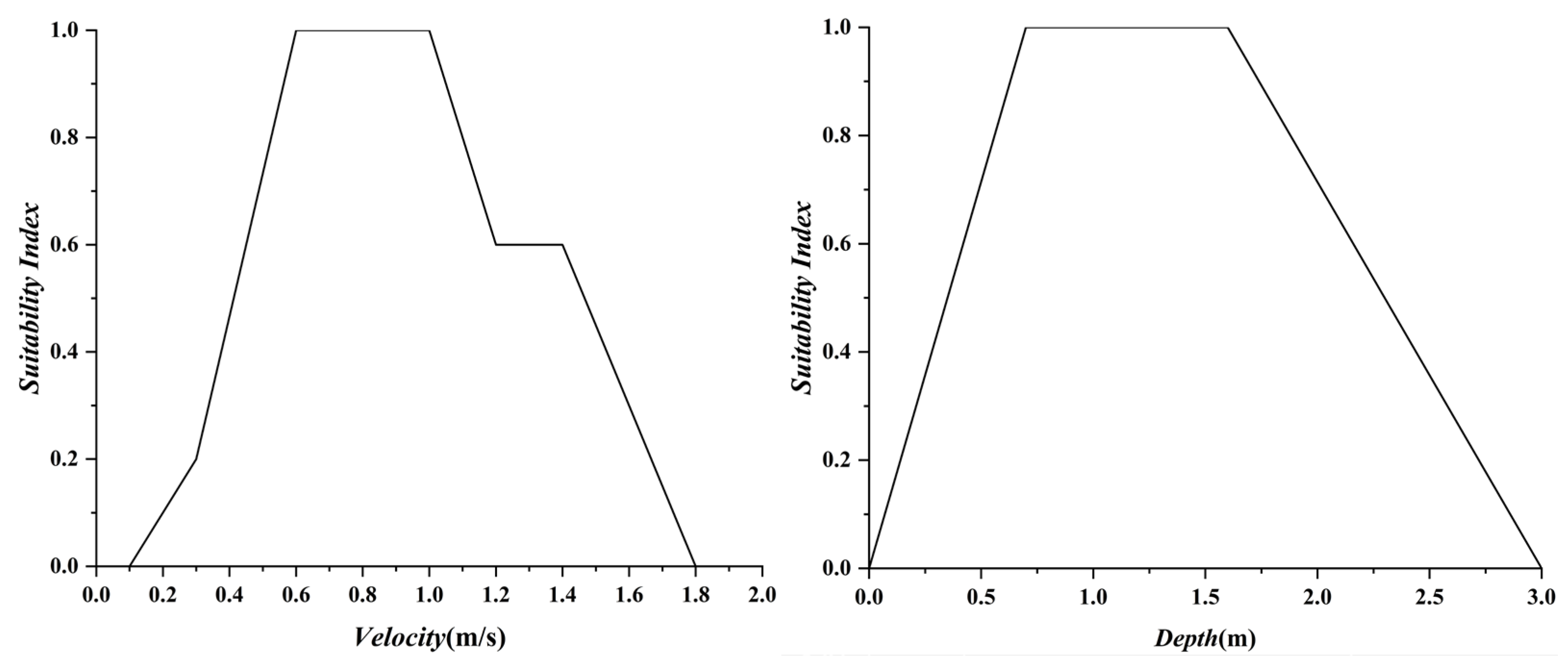
2.5.1. Weighted Usable Area (WUA) Calculation
2.5.2. Habitat Connectivity (HCI)
2.6. Microhabitat Heterogeneity (RMH) Index
3. Interpretation of Results
3.1. Fish Species Composition
3.2. Target Fish Determined
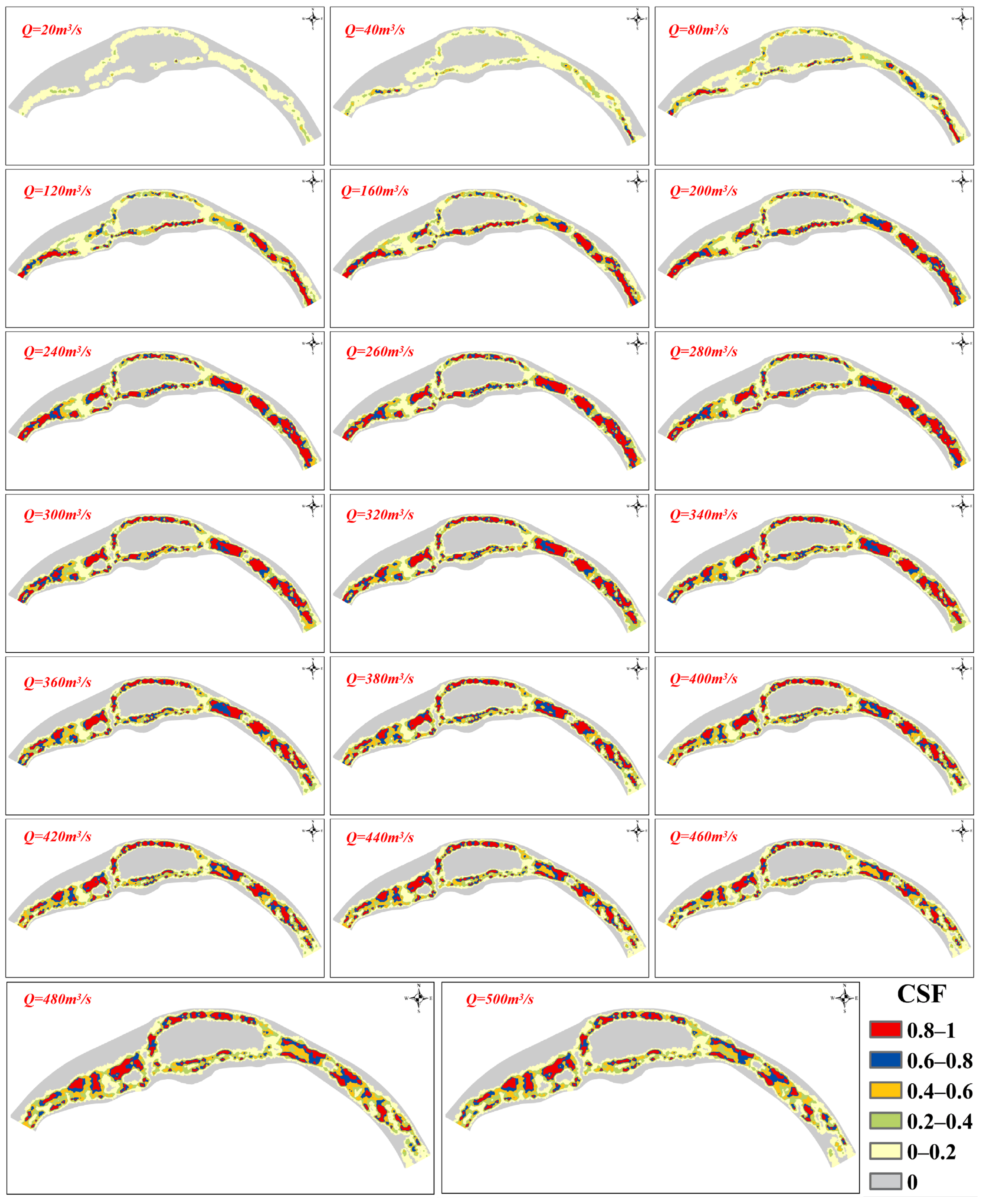
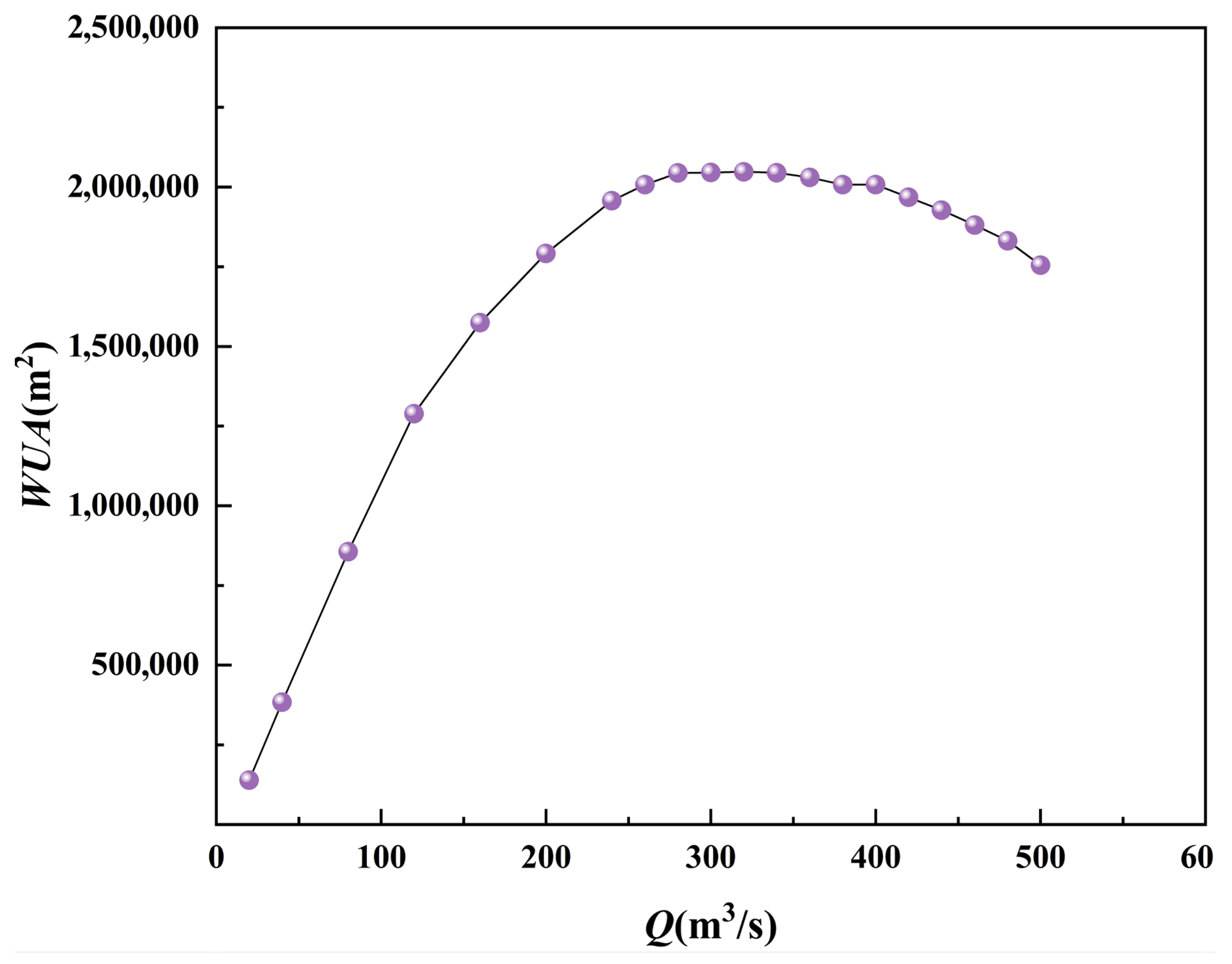
3.3. Weighted Usable Area (WUA)
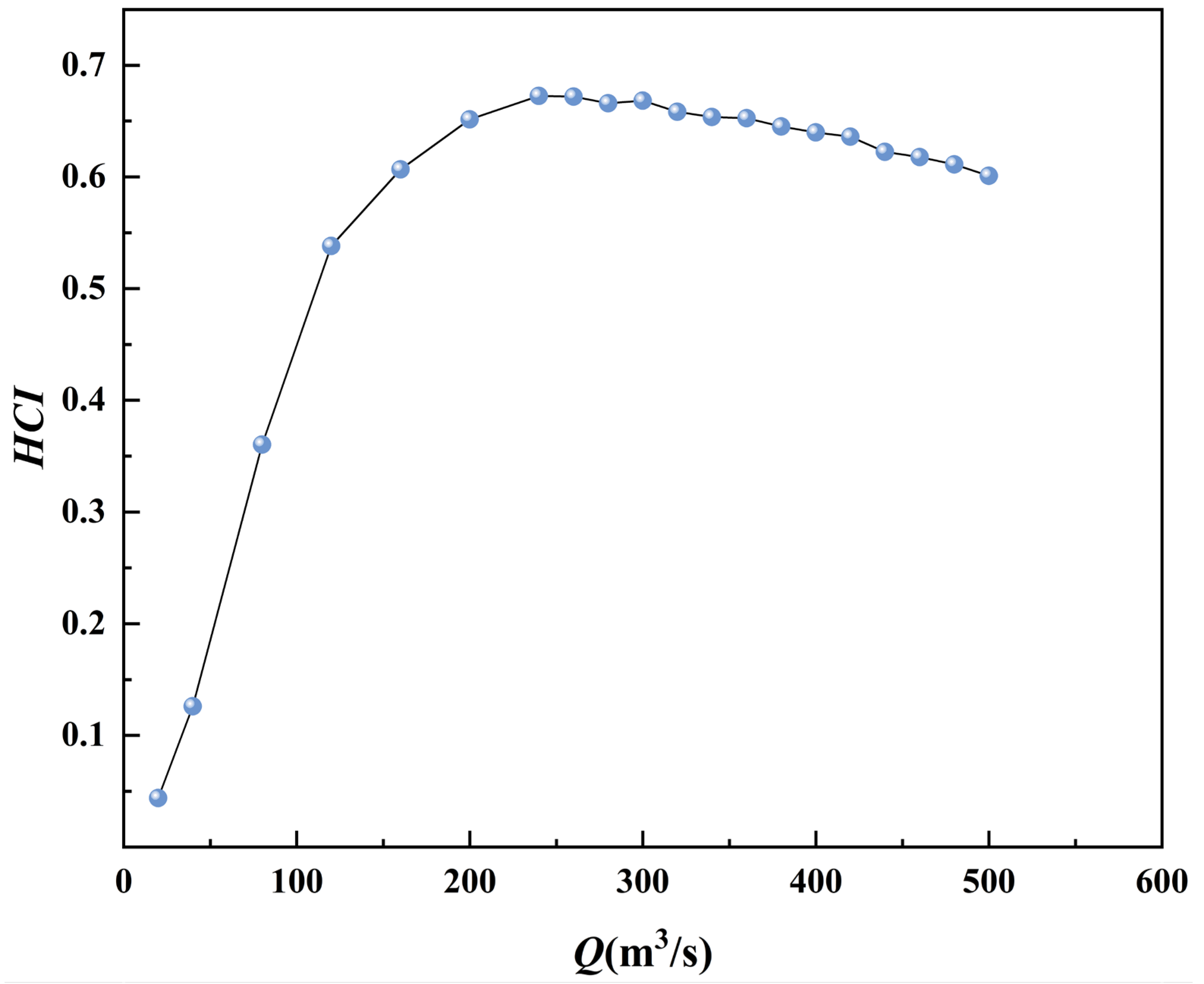
3.4. Habitat Connectivity (HCI)
3.5. RMH Diversity Indices
4. Discussion
4.1. Determination of the Ecological Flow Rate
4.2. Habitat Assessment Models Based on Improved Ecological Restoration of Damaged Rivers
4.3. Ecological Recovery Process of Damaged Rivers
4.4. Comparative Analysis of Traditional Biological Monitoring and DNA Monitoring
5. Conclusions
- This study used environmental DNA (eDNA) technology to analyze and identify fish species in the Lingxiu section of the Hutuo River. Based on the principles for screening fish species diversity in degraded rivers, and using the Analytic Hierarchy Process (AHP) combined with expert ratings, the weight values for each fish species were calculated. The results indicated that Hypophthalmichthys molitrix had the highest weight value in this river section. Therefore, Hypophthalmichthys molitrix is an ideal target species for ecological flow in this river segment.
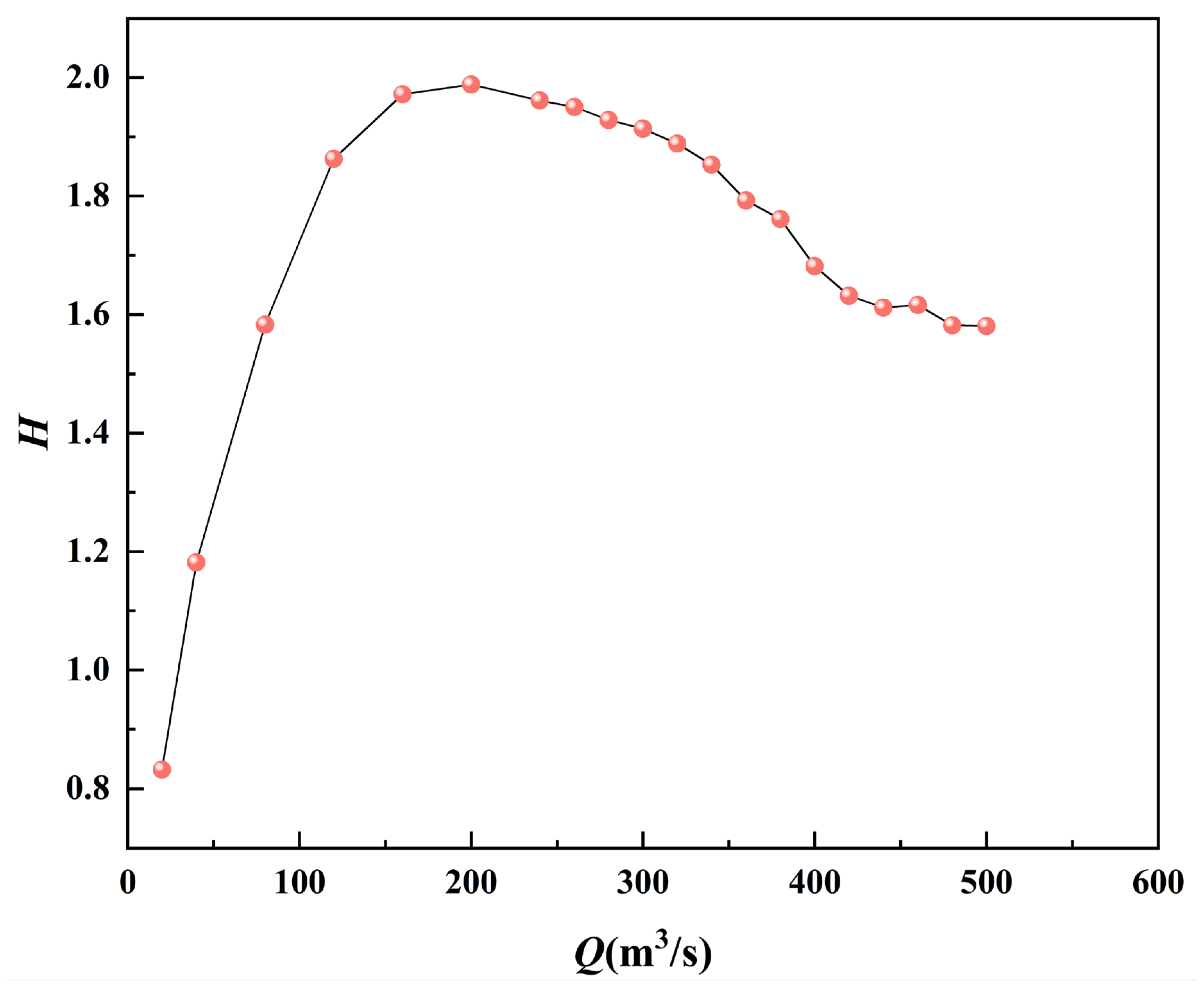
- Habitat indicators were calculated using ArcGIS. When the flow rate was 160 m3/s, the RMH diversity index showed an inflection point at 1.618. When the flow is 240 m3/s, the HCI reaches a significant inflection point at 0.652. When the flow is 260 m3/s, the WUA reaches an inflection point at 2,007,928 m2.
- Considering the ecological needs of key fish species at different life cycle stages, we explored the ecological effects of various flow combinations on the recovery of target fish populations. The suitable ecological flow range for the breeding period (March to June) is set between 160 and 240 m3/s. For the feeding period (July to October), the suitable flow range is between 240 and 260 m3/s. The suitable flow rate for the overwintering period was set at 120 m3/s. The aim of this study was to provide theoretical support for the recovery of target fish populations from similarly degraded rivers.
Author Contributions
Funding
Institutional Review Board Statement
Informed Consent Statement
Data Availability Statement
Conflicts of Interest
References
- Ahn, H.; Miller, J.M. Environmental DNA Characterization of the Fish Species Composition in the Mukawa River and Adjacent Habitats. Fishes 2024, 9, 147. [Google Scholar] [CrossRef]
- Belletti, B.; Rinaldi, M.; Bussettini, M.; Comiti, F.; Angela, M.; Mao, L.; Nardi, L. Characterising physical habitats and fluvial hydromorphology: A new system for the survey and classification of river geomorphic units. Geomorphology 2017, 283, 143–157. [Google Scholar] [CrossRef]
- Bernhard, W.; Tommi, L.; Mouhamed, N.; Katy, H.; Andre, H.; Matthias, S. Fish habitat modelling in large rivers: Combining expert opinion and hydrodynamic modelling to inform river management. J. Ecohydraul. 2024, 9, 68–86. [Google Scholar]
- Bice, M.C.; Gehrig, L.S.; Zampatti, P.B.; Nicol, J.M.; Wilson, P.; Leigh, S.L.; Marsland, K. Flow-induced alterations to fish assemblages, habitat and fish–habitat associations in a regulated lowland river. Hydrobiologia 2014, 722, 205–222. [Google Scholar] [CrossRef]
- Bradford, A. An Ecological Flow Assessment Framework: Building a Bridge to Implementation in Canada. Can. Water Resour. J. 2008, 33, 215–232. [Google Scholar] [CrossRef]
- Calkins, A.H.; Tripp, J.S.; Garvey, E.J. Linking silver carp habitat selection to flow and phytoplankton in the Mississippi River. Biol. Invasions 2012, 14, 949–958. [Google Scholar] [CrossRef]
- Chen, Q.; Li, Q.; Lin, Y.; Zhang, J.; Xia, J.; Ni, J.; Cooke, S.J.; Best, J.; He, S.; Feng, T. River Damming Impacts on Fish Habitat and Associated Conservation Measures. Rev. Geophys. 2023, 61, e2023RG000819. [Google Scholar] [CrossRef]
- Conallin, J.; Boegh, E.; Jensen, K.J. Instream physical habitat modelling types: An analysis as stream hydromorphological modelling tools for EU water resource managers. Int. J. River Basin Manag. 2010, 8, 93–107. [Google Scholar] [CrossRef]
- Phillips, J.P. Geomorphic and hydraulic unit richness and complexity in a coastal plain river. Earth Surf. Process. Landf. 2017, 42, 2623–2639. [Google Scholar] [CrossRef]
- David, F.; Katharina, B.; Paolo, V.; Zolezzi, G. Sensitivity of fish habitat suitability to multi-resolution hydraulic modeling and field-based description of meso-scale river habitats. J. Hydrol. X 2023, 21, 100160. [Google Scholar]
- Dong, Z.; Sun, D.; Zhao, J. A conceptual model of the functional integrity of the river ecosystem structure. Adv. Water Sci. 2010, 21, 550–559. [Google Scholar]
- Wang, D.; Yu, J.; Lin, Z.; Chen, P. Spatial-Temporal Distribution of Fish Larvae in the Pearl River Estuary Based on Habitat Suitability Index Model. Biology 2023, 12, 603. [Google Scholar] [CrossRef] [PubMed]
- Driessche, V.C.; Everts, T.; Neyrinck, S.; Deflem, I.; Bonte, D.; Brys, R. Reduced sampling intensity through key sampling site selection for optimal characterization of riverine fish communities by eDNA metabarcoding. Ecol. Indic. 2024, 169, 112807. [Google Scholar] [CrossRef]
- Gibson, I.T.; Baillie, C.; Collins, A.R.; Wangensteen, O.S.; Corrigan, L.; Ellison, A.; Cowie, M.H.; Westoby, H.; Byatt, B.; Handley, L.L. Environmental DNA reveals ecologically relevant spatial and temporal variation in fish assemblages between estuaries and seasons. Ecol. Indic. 2024, 165, 112215. [Google Scholar] [CrossRef]
- Hahlbeck, N.; Anlauf Dunn, J.K.; Piotrowski, J.S.; Ortega, J.D.; Tinniswood, W.R.; Eliason, E.J.; O’Malley, K.G.; Sloat, M.R.; Wyatt, M.A.; Hereford, M.E.; et al. Habitat fragmentation drives divergent survival strategies of a cold-water fish in a warm landscape. Ecosphere 2023, 14, e4622. [Google Scholar] [CrossRef]
- Hao, L.; Gu, K.; Zhou, Y.; An, J.; Hu, W.; Wu, Z.; Shao, J.; Pan, J.; He, G.; Liu, Q.; et al. Comparing diversity and structure of freshwater fish assemblages using environmental DNA and gillnetting methods: A case study of a large deep reservoir in East China. Ecol. Indic. 2024, 166, 112538. [Google Scholar] [CrossRef]
- He, Y.; Zhao, X.; Shi, C.; Peng, K.; Wang, Z.; Jiang, Z. Fish community monitoring in floodplain lakes: eDNA metabarcoding and traditional sampling revealed inconsistent fish community composition. Ecol. Indic. 2024, 166, 112467. [Google Scholar] [CrossRef]
- Uchida, N.; Iwasaki, Y.; Kuranishi, R.; Kondo, N.I. Application of Environmental DNA-Based Assessment for Upstream–Downstream Comparison of River Macroinvertebrates in a Metal-Contaminated River. Environ. DNA 2025, 7, e70200. [Google Scholar] [CrossRef]
- Huang, Y.; Wang, X.; Li, H.; Chen, F.; Chen, K.; Wang, Z.; Wang, B. Research on a Multi-Species Combined Habitat Suitability Assessment Method for Various Fish Species. Sustainability 2023, 15, 14801. [Google Scholar] [CrossRef]
- Anlauf-Dunn Kara, J.; Strickland Matt, W. Habitat connectivity, complexity, and quality: Predicting adult coho salmon occupancy and abundance. Can. J. Fish. Aquat. Sci. 2014, 71, 1864–1876. [Google Scholar] [CrossRef]
- Radinger, J.; Matern, S.; Klefoth, T.; Wolter, C.; Feldhege, F.; Monk, C.T.; Arlinghaus, R. Ecosystem-based management outperforms species-focused stocking for enhancing fish populations. Science 2023, 379, 946–951. [Google Scholar] [CrossRef]
- Knaepkens, G.; Bruyndoncx, L.; Coeck, J.; Eens, M. Spawning habitat enhancement in the European bullhead (Cottus gobio), an endangered freshwater fish in degraded lowland rivers. Biodivers. Conserv. 2004, 13, 2443–2452. [Google Scholar] [CrossRef]
- Piczak, M.L.; Anderton, R.; Cartwright, L.A.; Little, D.; MacPherson, G.; Matos, L.; McDonald, K.; Portiss, R.; Riehl, M.; Sciscione, T.; et al. Towards effective ecological restoration: Investigating knowledge co-production on fish–habitat relationships with Aquatic Habitat Toronto. Ecol. Solut. Evid. 2022, 3, e12187. [Google Scholar] [CrossRef]
- Dennis, M.; Huck, J.J.; Holt, C.D.; McHenry, E. A mechanistic approach to weighting edge-effects in landscape connectivity assessments. Landsc. Ecol. 2024, 39, 68. [Google Scholar] [CrossRef]
- Ma, B.; Zhou, R.; Zhang, F.; Ru, H.; Li, Y.; Xu, B.; Lin, P. Relative influence of local habitat and land use/cover on the taxonomic and functional organizations of fish assemblages in the Anning River, Southwest China. Ecol. Indic. 2024, 159, 111673. [Google Scholar] [CrossRef]
- Moir, J.H.; Pasternack, B.G. Relationships between mesoscale morphological units, stream hydraulics and Chinook salmon (Oncorhynchus tshawytscha) spawning habitat on the Lower Yuba River, California. Geomorphology 2008, 100, 527–548. [Google Scholar] [CrossRef]
- Mykrä, H.; Heino, J.; Oksanen, J.; Muotka, T. The stability-diversity relationship in stream macroinvertebrates: Influences of sampling effects and habitat complexity. Freshw. Biol. 2011, 56, 1122–1132. [Google Scholar] [CrossRef]
- Osório, C.N.; Cunha, R.E.; Tramonte, P.R.; Mormul, R.P.; Rodrigues, L. Habitat complexity drives the turnover and nestedness patterns in a periphytic algae community. Limnology 2019, 20, 297–307. [Google Scholar] [CrossRef]
- Zhang, Y.; Wang, W.; Yu, S. Linking the life stages of fish into a habitat-ecological flow assessment scheme under climate change and human activities. Ecol. Indic. 2025, 171, 113178. [Google Scholar] [CrossRef]
- Xu, Q.; Wang, C.; Guo, S.; Yin, Y.; Liu, H.; Zhai, L. Water resource management measures by co-regulating water quality and water quantity for plateau watersheds in Southwestern China. J. Clean. Prod. 2025, 486, 144519. [Google Scholar] [CrossRef]
- Qi, X.; Lin, Z.; Gao, H.; Li, M.; Duan, Y.; Liu, G.; Khan, S.; Mu, H.; Messyasz, B.; Wu, N. Small hydropower plants affect aquatic community diversity: A longitudinal study under ecological flow. J. Environ. Manag. 2024, 370, 122987. [Google Scholar] [CrossRef] [PubMed]
- Angeles, R.; Croce, D.P.; Ferrario, F.; Cesare, G.D. Ecological Flow Assessment: Balancing Trout and Grayling Habitat Ecology and Hydroelectric Production. Sustainability 2024, 16, 9473. [Google Scholar] [CrossRef]
- Palmer, M.; Ruhi, A. Linkages between flow regime, biota, and ecosystem processes: Implications for river restoration. Science 2019, 365, eaaw2087. [Google Scholar] [CrossRef]
- Piczak, L.M.; Theis, S.; Portiss, R.; Midwood, J.D.; Cooke, S.J. Evaluating the efficacy of ecological restoration of fish habitat in coastal waters of Lake Ontario. Sci. Total Environ. 2024, 953, 176088. [Google Scholar] [CrossRef]
- Polansky, L.; Mitchell, L.; Nobriga, L.M. Identifying minimum freshwater habitat conditions for an endangered fish using life cycle analysis. Conserv. Sci. Pract. 2024, 6, e13124. [Google Scholar] [CrossRef]
- Roblet, S.; Priouzeau, F.; Gambini, G.; Cottalorda, J.M.; Gastaldi, J.M.; Pey, A.; Raybaud, V.; Suarez, G.R.; Serre, C.; Sabourault, C.; et al. From sight to sequence: Underwater visual census vs environmental DNA metabarcoding for the monitoring of taxonomic and functional fish diversity. Sci. Total Environ. 2024, 956, 177250. [Google Scholar] [CrossRef]
- Ruli, C.; Yang, L.; Yufeng, Z.; Li, Q.; Li, Y.; Shen, Y. eDNA metabarcoding reveals differences in fish diversity and community structure in heterogeneous habitat areas shaped by cascade hydropower. Ecol. Evol. 2023, 13, e10275. [Google Scholar] [CrossRef]
- Schneider, E.A.; Esbaugh, J.A.; Cupp, R.A.; Suski, C.D. Silver carp experience metabolic and behavioral changes when exposed to water from the Chicago Area Waterway. Sci. Rep. 2024, 14, 24689. [Google Scholar] [CrossRef]
- Seo, J.; Kim, D.; Lee, J.; Kim, K.; Kim, S.; Kim, H.S. Comparative analysis of assessment models for rehabilitation potential of fish habitat. Ecol. Indic. 2024, 161, 112003. [Google Scholar] [CrossRef]
- Shen, Y.; Wang, P.; Wang, C.; Yu, Y.; Kong, N. Potential causes of habitat degradation and spawning time delay of the Chinese sturgeon (Acipenser sinensis). Ecol. Inform. 2018, 43, 96–105. [Google Scholar] [CrossRef]
- Yang, S.; Zhang, Z.; Wang, Y.; Liang, R.; Wan, Y.; Li, K. An improved 3D fish habitat assessment model based on the graph theory algorithm. Ecol. Indic. 2023, 148, 110022. [Google Scholar] [CrossRef]
- Tan, J.; Zhu, X.; Sun, J.; Wang, Y.; Zhang, H.; Ke, S.; Kattel, G.R.; Shi, X. Study on the Swimming Behavior of Black Carp (Mylopharyngodon piceus) and Silver Carp (Hypophthalmichthys molitrix) in Early Developmental Stage. Animal 2024, 14, 3221. [Google Scholar] [CrossRef]
- Tharme, E.R. A global perspective on environmental flow assessment: Emerging trends in the development and application of environmental flow methodologies for rivers. River Res. Appl. 2003, 19, 397–441. [Google Scholar] [CrossRef]
- Tibor, E.; Andrea, F.; Didier, P.; Thomas, H.; Paul, M.; Bálint, P.; Alice, V.; István, C. eDNA metabarcoding reveals the role of habitat specialization and spatial and environmental variability in shaping diversity patterns of fish metacommunities. PLoS ONE 2024, 19, e0296310. [Google Scholar]
- Ulaş, A.; Karayalı, O.; Veryeri, O.N.; Tosunoğlu, Z.; Demirel, N. Fish assemblages in the Kaş-Kekova MPA: A comparative study of Posidonia oceanica meadows, sandy-rocky and rocky habitats. J. Nat. Conserv. 2025, 84, 126825. [Google Scholar] [CrossRef]
- Urabe, H.; Mizumoto, H.; Yamaguchi, T.F.; Araki, H. Spatial heterogeneity of eDNA concentration as a predictor of small biomass of fish in a mountain stream. Limnology 2024, 26, 223–233. [Google Scholar] [CrossRef]
- Wang, L.; Chen, Q.; Zhang, J.; Xia, J.; Mo, K.; Wang, J. Incorporating fish habitat requirements of the complete life cycle into ecological flow regime estimation of rivers. Ecohydrology 2020, 13, e2204. [Google Scholar] [CrossRef]
- Wang, P.; Zhang, H.; Li, J.; Tian, Y. Numerical Simulation of Habitat Restoration for Floating Fish Eggs in the Upper Yangtze River Tributaries. Sustainability 2024, 16, 1799. [Google Scholar] [CrossRef]
- Wang, P.; Zhang, W.; Zhu, Y.; Liu, Y.; Cao, S.; Hao, Q.; Liu, S.; Kong, X.; Ha, Z.; Li, B. Evolution of groundwater hydrochemical characteristics and formation mechanism during groundwater recharge: A case study in the Hutuo River alluvial–pluvial fan, North China Plain. Sci. Total Environ. 2024, 915, 170159. [Google Scholar] [CrossRef]
- Wang, Z.; Feng, J.; He, T.; Yang, J.; Wan, H.; Yuan, Y.; Li, R. Study on the habitat evolution after dam removal in a habitat-alternative tributary of large hydropower station. J. Environ. Manag. 2024, 360, 121155. [Google Scholar] [CrossRef]
- Yan, Z.; Zhou, Z.; Sang, X.; Wang, H. Water replenishment for ecological flow with an improved water resources allocation model. Sci. Total Environ. 2018, 643, 1152–1165. [Google Scholar] [CrossRef] [PubMed]
- Yang, S.; Liang, R.; Wang, Y.; Li, K. Fish habitat assessment model considering the spatial pattern and connectivity of habitat patches. Ecol. Indic. 2024, 160, 111840. [Google Scholar] [CrossRef]
- Yan, S.; Qin, T.; Zhang, X.; Lei, H. Assessment of Fish Habitats and Suitable Ecological Flow under Hydropower Operation. Water 2024, 16, 569. [Google Scholar] [CrossRef]
- Yarnell, M.S.; Mount, F.J.; Larsen, W.E. The influence of relative sediment supply on riverine habitat heterogeneity. Geomorphology 2006, 80, 310–324. [Google Scholar] [CrossRef]
- Lu, Y.; Yang, Y.; Sun, B.; Yuan, J.J.; Yu, M.; Stenseth, N.C.; James, B.M.; Michael, O. Spatial variation in biodiversity loss across China under multiple environmental stressors. Sci. Adv. 2020, 6, eabd0952. [Google Scholar] [CrossRef]
- Yu, M.; Wenjing, X.; Xinjian, G.; Ming, G.; Xinrui, W.; Denghua, Y. Ecology-habitat-flow modular simulation model for the recommendation of river ecological flow combination. Environ. Model. Softw. 2023, 169, 105823. [Google Scholar]
- Zhang, R.; Wang, L.; Yang, J.; Xu, G.; Yang, W. Study on Determination Method of Target Fishes for Ecological Flow in the main Stream of Huaihe River. J. Phys. Conf. Ser. 2020, 1637, 012073. [Google Scholar] [CrossRef]
- Kuznietsov, M.P.; Biedunkova, O.O.; Yaroschuk, V.O.; Pryshchepa, A.M.; Antonyuk, O.O. Analysis of the impact of water use and consumption for a nuclear power plant on alterations in the hydrological and temperature regimes of a river: A case study. IOP Conf. Ser. Earth Environ. Sci. 2024, 1415, 012100. [Google Scholar] [CrossRef]
- Dercksen, A.J.; Foppen, W.J.; Blom, A.; Trimbos, K.B.; Gebert, J.; Thom, A.B.; Stancanelli, L.M. The Impact of Flow Velocity on Environmental DNA Detectability for the Application in River Systems. Environ. DNA 2025, 7, e70111. [Google Scholar] [CrossRef]



| Screening Conditions | Illustration |
|---|---|
| reproductive age | The preferred age for selective maturation is 1–2 years |
| Egg-laying site requirements | Priority should be given to fish with flow requirements at spawning grounds |
| feeding habits | Omnivorous is superior to herbivorous and carnivorous |
| Lifestyle characteristics | Fish that live in the upper and middle layers of water are preferred over those that live in the bottom and silt |
| distribution | Fish with wide distribution are preferred over those with narrow distribution |
| commercial value | Priority should be given to fish with high regional and economic value |
| Family | Section | Genus | Species | Sequences | ||||
|---|---|---|---|---|---|---|---|---|
| S1 | S2 | S3 | S4 | S5 | ||||
| CypriniformeS | Cyprinida | Acheilognathus | Acheilognathus macropterus | 13,979 | 1 | 0 | 0 | 0 |
| Muntiacus | Hemiculter leucisculus | 16,765 | 7999 | 999 | 1 | 1 | ||
| Pseudorasbora | Pseudorasbora parva | 1512 | 51 | 1108 | 56,397 | 16,426 | ||
| Hypophthalmichthys | Hypophthalmichthys molitrix | 1233 | 4011 | 16 | 8 | 25 | ||
| Abbottina | Abbottina rivularis | 0 | 3718 | 432 | 1 | 1 | ||
| Carassius | Carassius auratus | 20,270 | 160,543 | 96,118 | 42,878 | 34,874 | ||
| Cyprinus | Cyprinus carpio | 8 | 3352 | 1 | 2 | 7 | ||
| Opsariichthys bidens | Opsariichthys uncirostris bidens | 3056 | 16,944 | 2 | 17 | 22,895 | ||
| Ctenopharyngodon | Ctenopharyngodon idella | 15 | 5626 | 1 | 0 | 4 | ||
| Sarcocheilichthys | Sarcocheilichthys nigripinnis | 56,777 | 4 | 1 | 0 | 1 | ||
| Squalidus chankaensis | Squalidus chankaensis chankaensis | 1072 | 4 | 0 | 1 | 0 | ||
| Hemibarbus | Hemibarbus maculatus | 912 | 4 | 2 | 3584 | 3878 | ||
| Tetraodontiformes | Gobiidae | Rhinogobius | Rhinogobius Brunneus | 46,901 | 0 | 0 | 0 | 0 |
| Gobiidae | Rhinogobius | Rhinogobius giurinus | 4147 | 13,542 | 0 | 5 | 29,882 | |
| Scombrida | Channa | Channa argus | 4402 | 9 | 0 | 2 | 0 | |
| Siluriformes | Bagridae | Pelteobagrus | Pelteobagrus fulvidraco | 1 | 1 | 0 | 8649 | 0 |
| Siluridae | Silurus | Silurus asotus | 48,234 | 6 | 3942 | 35,584 | 18 | |
| Class | Hemiculter leucisculus | Acheilognathus macropterus | Sarcocheilichthys nigripinnis | Pseudorasbora parva | Carassius auratus subsp | Cyprinus carpio | Hypophthalmichthys molitrix | Ctenopharyngodon idella | Opsariichthys bidens | Mylopharyngodon piceus | Pelteobagrus fulvidraco | Silurus asotus | Channa argus |
|---|---|---|---|---|---|---|---|---|---|---|---|---|---|
| Hemiculter leucisculus | 1.00 | 3.00 | 1.00 | 1.00 | 0.33 | 0.25 | 0.33 | 0.25 | 0.50 | 0.20 | 0.50 | 0.25 | 0.33 |
| Acheilognathus macropterus | 0.33 | 1.00 | 0.33 | 0.33 | 0.25 | 0.25 | 0.25 | 0.25 | 0.33 | 0.25 | 0.25 | 0.20 | 0.20 |
| Sarcocheilichthys nigripinnis | 1.00 | 3.00 | 1.00 | 1.00 | 0.33 | 0.25 | 0.33 | 0.25 | 0.50 | 0.20 | 0.50 | 0.25 | 0.33 |
| Pseudorasbora parva | 1.00 | 3.00 | 1.00 | 1.00 | 0.33 | 0.25 | 0.33 | 0.25 | 0.50 | 0.20 | 0.50 | 0.25 | 0.33 |
| Carassius auratus subsp | 3.00 | 4.00 | 3.00 | 3.00 | 1.00 | 1.00 | 0.50 | 0.50 | 3.00 | 1.00 | 2.00 | 2.00 | 2.00 |
| Cyprinus carpio | 4.00 | 4.00 | 4.00 | 4.00 | 0.50 | 1.00 | 0.50 | 1.00 | 1.00 | 2.00 | 1.00 | 0.25 | 0.33 |
| Hypophthalmichthys molitrix | 3.00 | 4.00 | 3.00 | 3.00 | 2.00 | 2.00 | 1.00 | 3.00 | 4.00 | 5.00 | 3.00 | 2.00 | 2.00 |
| Ctenopharyngodon idella | 4.00 | 4.00 | 4.00 | 4.00 | 0.50 | 1.00 | 0.33 | 1.00 | 4.00 | 2.00 | 3.00 | 0.50 | 0.50 |
| Opsariichthys bidens | 2.00 | 3.00 | 2.00 | 2.00 | 0.33 | 1.00 | 0.25 | 0.25 | 1.00 | 1.00 | 0.50 | 0.25 | 0.33 |
| Mylopharyngodon piceus | 5.00 | 4.00 | 5.00 | 5.00 | 1.00 | 0.50 | 0.20 | 0.50 | 1.00 | 1.00 | 0.50 | 0.33 | 0.33 |
| Pelteobagrus fulvidraco | 2.00 | 4.00 | 2.00 | 2.00 | 0.50 | 1.00 | 0.33 | 0.33 | 2.00 | 2.00 | 1.00 | 0.33 | 0.33 |
| Silurus asotus | 4.00 | 5.00 | 4.00 | 4.00 | 0.50 | 4.00 | 0.50 | 2.00 | 4.00 | 3.00 | 3.00 | 1.00 | 1.00 |
| Channa argus | 3.00 | 5.00 | 3.00 | 3.00 | 0.50 | 3.00 | 0.50 | 2.00 | 3.00 | 3.00 | 3.00 | 1.00 | 1.00 |
| Sampling Point | Species | Overall Length/cm | Body Length/cm | Weight/g |
|---|---|---|---|---|
| Huang Zhuang (114.7168, 38.0843) | Carassius auratus | 19.4 | 15.4 | 108.3 |
| 11.2 | 9 | 18.8 | ||
| 10.5 | 8.2 | 17.3 | ||
| 8 | 6.2 | 6.1 | ||
| 5.1 | 4.2 | 1.4 | ||
| 10.8 | 8.8 | 18.2 | ||
| 5 | 4 | 1.1 | ||
| 4.3 | 3.5 | 0.8 | ||
| 5 | 3.8 | 1 | ||
| 3.6 | 2.5 | 0.5 | ||
| 8.5 | 6.8 | 8.3 | ||
| 4.8 | 3.8 | 1.4 | ||
| 5.5 | 4.3 | 1.8 | ||
| 4.6 | 3.6 | 0.9 | ||
| Cultrichthys erythropterus | 17.3 | 14.2 | 32.9 | |
| 17.6 | 14 | 33.8 | ||
| 16.3 | 13 | 30 | ||
| 17 | 13.8 | 34.1 | ||
| 15.4 | 12.4 | 21.5 | ||
| 16.6 | 13.5 | 27.3 | ||
| 13.3 | 11 | 14.9 | ||
| 14 | 11.3 | 16.8 | ||
| 15.3 | 12.6 | 23.4 | ||
| 13.4 | 11 | 13.3 | ||
| 16.4 | 13.5 | 27.6 | ||
| 16.4 | 13.5 | 29.5 | ||
| 16 | 13 | 26.8 | ||
| Hypophthalmichthys molitrix | 13 | 10.5 | 12.6 | |
| Pseudorasbora parva | 8.6 | 7 | 5.9 | |
| 7.8 | 6.5 | 3.6 | ||
| Abbottina rivularis | 7.3 | 5.9 | 3.4 | |
| Rhinogobius giurinus | 6.8 | 5.8 | 2.8 | |
| 5.4 | 4.5 | 1.3 | ||
| 5.2 | 4.3 | 1.1 | ||
| 5.7 | 4.8 | 1.9 | ||
| 5.6 | 4.6 | 2 | ||
| 5.4 | 4.5 | 1.5 | ||
| 5.5 | 4.5 | 1.5 | ||
| 5.5 | 4.5 | 1.5 | ||
| 4.7 | 3.8 | 0.9 | ||
| Misgurnus anguillicaudatus | 9.4 | 8.2 | 2.8 |
Disclaimer/Publisher’s Note: The statements, opinions and data contained in all publications are solely those of the individual author(s) and contributor(s) and not of MDPI and/or the editor(s). MDPI and/or the editor(s) disclaim responsibility for any injury to people or property resulting from any ideas, methods, instructions or products referred to in the content. |
© 2025 by the authors. Licensee MDPI, Basel, Switzerland. This article is an open access article distributed under the terms and conditions of the Creative Commons Attribution (CC BY) license (https://creativecommons.org/licenses/by/4.0/).
Share and Cite
Zhou, Z.; Ding, Y.; Yu, Z.; Zhao, J.; Zhang, J.; Liu, Z. A New Method for Determining the Ecological Flow Regime to Support Sustainable Restoration of Target Fish Habitats in Impaired Rivers. Sustainability 2025, 17, 10703. https://doi.org/10.3390/su172310703
Zhou Z, Ding Y, Yu Z, Zhao J, Zhang J, Liu Z. A New Method for Determining the Ecological Flow Regime to Support Sustainable Restoration of Target Fish Habitats in Impaired Rivers. Sustainability. 2025; 17(23):10703. https://doi.org/10.3390/su172310703
Chicago/Turabian StyleZhou, Zheng, Yang Ding, Zicheng Yu, Jinyong Zhao, Jingzhou Zhang, and Zhe Liu. 2025. "A New Method for Determining the Ecological Flow Regime to Support Sustainable Restoration of Target Fish Habitats in Impaired Rivers" Sustainability 17, no. 23: 10703. https://doi.org/10.3390/su172310703
APA StyleZhou, Z., Ding, Y., Yu, Z., Zhao, J., Zhang, J., & Liu, Z. (2025). A New Method for Determining the Ecological Flow Regime to Support Sustainable Restoration of Target Fish Habitats in Impaired Rivers. Sustainability, 17(23), 10703. https://doi.org/10.3390/su172310703