


Abstract
Against the backdrop of great power strategic games, countries around the world have been continuously intensifying their control over the trade of critical metals, including tungsten, in order to seize the commanding heights of scientific, technological, and economic development, which has led to increasingly fierce competition in the global tungsten industry chain and supply chain. Although China is endowed with abundant tungsten ore reserves, its tungsten industry chain remains dominated by mid-to-low-end products, with low added value and limited pricing power in the international market. Therefore, it is of great significance to clarify the export competitiveness level of China in each link of the tungsten industry chain and to identify the influencing factors for improving the overall competitiveness of the industrial chain, which will enhance China’s international status and assist in formulating sustainable tungsten resource management strategies. Based on the industrial chain perspective and the trade data of typical products at various stages of the tungsten industry chain from 2008 to 2022, this study first selects the World Market Share Index, Trade Competitive Advantage Index, and Revealed Comparative Advantage Index to quantitatively depict the export competitiveness of the overall, upstream, midstream, and downstream sectors of China’s tungsten industry chain, and a horizontal comparison is conducted with major global tungsten resource trading countries. Secondly, the entropy weight method is adopted to further comprehensively evaluate the competitiveness level of various countries. Finally, the potential influencing factors of the overall export competitiveness of the tungsten industry chain are explored in accordance with Porter’s Diamond Model, and a fixed-effect model is used to perform regression analysis on the panel data. The research findings show that China has strong export competitiveness in the midstream and downstream sectors of the tungsten industry chain, while its export competitiveness in the upstream tungsten ore sector is relatively weak. The level of education, human capital, educational expenditure, gross national product, and trade openness all have a significant positive impact on the export competitiveness of tungsten resources. Greater efforts should be made in China to cultivate high-end talents in the tungsten industry. Moreover, innovation in green technologies and products should be encouraged, and international cooperation should be deepened, to improve the efficiency of the entire industrial chain so that stable and green long-term competitiveness in the tungsten industry can be achieved.
1. Introduction
The current international situation is full of uncertainties and challenges. The global economy is becoming increasingly competitive, countries are trying to strengthen their economies, and the rapid development of science and technology, as well as the demand for high-performance materials, continues to grow [1]. Tungsten and its compounds have an extremely high hardness, melting point, and strength, and these properties allow it to play a vital role in many key areas of the national economy, defense construction, and high-tech industries [2,3,4]. China, the United States, the United Kingdom, and other major global economies attach great importance to tungsten’s strategic value and have successively included it on their lists of key minerals. According to the United Nations Comtrade database, the export value of typical products of the global tungsten industry chain (tungsten ore and concentrate, ammonium paratungstate, tungsten alloy, and tungsten products) was USD 15.131 trillion in 2008, growing to USD 18.026 trillion in 2022, with a compound annual growth rate of 1.29%, which indicates that the scale of the global tungsten resource export trade is constantly increasing, but the trade growth rate is relatively slow.
The tungsten industry chain mainly comprises upstream mining and processing of tungsten ore, midstream smelting, and downstream consumption of cemented carbide and tungsten products [5]. From the distribution of upstream tungsten ore reserves, the world tungsten ore reserves are unevenly distributed. According to USGS (United States Geological Survey) statistics, global tungsten ore is mainly distributed across a few countries and regions, including China, Russia, Vietnam, Spain, and South Korea. China is the largest tungsten ore reserve country in the world, and the global share of tungsten ore reserves held by China, Russia, and Vietnam is about 60.53%. In the context of global tungsten mining, production capacity is mainly concentrated in Asia, Europe, and North America. In the global trade context of tungsten ore, export is dominated by Europe and Africa, while Asia and North America are the main import continents of global tungsten ore. Among them, Rwanda, Spain, North Korea, and Russia are the main exporters of tungsten ore, while China, Vietnam, the United States, and Austria are the main importers. It is worth noting that although China is a major country in terms of global tungsten ore reserves and output, its tungsten ore mining is subject to regulation. The demand for imported tungsten ore remains relatively high. Moreover, the pricing power of China in the tungsten industry chain presents a pattern characterized by “extremely strong in the upstream, stable in the midstream, and catching up in the downstream”. However, the overall pricing power has not yet fully matched its resource-dominant position [6]. Trade in the middle and lower reaches of the industrial chain is concentrated in Asia, Europe, and North America.
Due to the uneven distribution of tungsten ore reserves, the trade behavior of a few countries will affect the pattern of global tungsten trade [7,8]. In order to meet the demand for tungsten resources, developed countries, such as China, the United States, Japan, and South Korea, have started recycling tungsten resources earlier, but the recycling of tungsten resources is still facing a lot of challenges, and tungsten mining and tungsten deep-processing product import trade are still the main ways to obtain tungsten [9,10,11]. Some countries have gradually developed into a “small group” to ensure domestic tungsten ore supply, which will be unfavorable to the development of global tungsten resource trading. Therefore, comprehensively evaluating the export competitiveness of each link in the tungsten industry chain and identifying and grasping the key factors affecting competitiveness have become important research topics for advancing the transformation, upgrading, and sustainable development of China’s tungsten industry. Based on this, this study takes the tungsten resource industry chain as the research perspective. Firstly, using the trade data of typical products at various stages of the tungsten industry chain from 2008 to 2022, the World Market Share Index, Trade Competitive Advantage Index, and Revealed Comparative Advantage Index are selected to quantitatively depict the export competitiveness of the overall, upstream, midstream, and downstream sectors of China’s tungsten industry chain, and a horizontal comparison is conducted with major global tungsten resource trading countries. Secondly, the entropy weight method is adopted to objectively assign weights to the three competitiveness indicators, thereby obtaining the comprehensive competitiveness index for the tungsten industry chains of various countries, and the international status and the evolution of China’s tungsten export competitiveness are further analyzed. Finally, in accordance with Porter’s Diamond Model, potential influencing factor indicators of the overall export competitiveness of the tungsten industry in various countries from 2008 to 2022 are selected. A multiple linear regression analysis of these potential influencing factor indicators is conducted using a fixed-effect model, and the important factors affecting the competitiveness of the tungsten industry are thoroughly analyzed, thereby providing a strong basis for China to improve the export competitiveness of its tungsten industry.
Compared with the studies conducted by previous scholars, the marginal contributions of this study are as follows: Firstly, from the perspective of the industrial chain, the entropy weight method is used to obtain a comprehensive indicator for measuring competitiveness, with which the export competitiveness of the upstream, midstream, and downstream sectors of China’s tungsten industry chain is evaluated. This addresses deficiencies in existing research on the export competitiveness of various links in China’s tungsten industry chain and enriches current research outcomes. Secondly, based on Porter’s Diamond Model, potential influencing factors affecting the export competitiveness of the tungsten resource industry are selected from four core elements and two supporting elements, and a panel regression model is constructed. An empirical analysis of the influencing factors of the export competitiveness of the tungsten industry is conducted, providing a theoretical reference for China to better formulate tungsten industry strategies and strive for a higher trade status. Thirdly, although Porter’s Diamond Model provides a classic paradigm for industrial competitiveness analysis, its applicability and the coupling mechanisms among its elements in the specific field of critical metal resources have not been fully tested. Through an empirical case study on China’s tungsten industry, this study verifies and extends the applicability of Porter’s Diamond Model in the field of critical resource industries.
2. Literature Review
2.1. Competitiveness Measurement Methodology
Common single measures of competitiveness mainly include world market share (WMS), constant market share (CMS), the trade complementarity index (TCI), the export similarity index (ESI), and the Revealed Comparative Advantage Index (RCA) [12,13,14,15,16], among others. Considering that the focus of each single-factor indicator is different and the measurement of competitiveness is not comprehensive enough, some scholars have constructed a comprehensive evaluation indicator system [17], assessing competitiveness from different perspectives using multi-factor indicators. This includes the use of projective tracing [18], the improved TOPSIS model [19], the Global Competitiveness Index with 12 dimensions, and the GCI [20], among others. Additionally, some scholars have refined the index to achieve more accurate results. The international competitiveness measured by the RCA index based on total trade does not exclude the impact of the share of imports, and the value added of a country’s trade is measured by using the world input–output table, which is then substituted into the RCA index to obtain a more accurate international competitiveness of industries [21]. Some scholars have also used the projection-seeking model to establish a new dominant comparative advantage, NRCA [22]. Alemka Šegota (2017) used a combination of the data envelopment analysis method, DEA, and the Global Competitiveness Index, GCI, for a more accurate macroeconomic competitiveness evaluation [23]. With the introduction of the complex network approach in academia, an increasing number of scholars have measured a country’s trade position in an industry within the international arena by constructing trade complex networks [24,25,26]. In this study, the entropy power method is used to objectively assign selected single-measurement indices of competitiveness, thereby constructing a comprehensive evaluation index to assess China’s international competitiveness at each link of the tungsten industry chain.
2.2. Factors Affecting Competitiveness
In terms of research methodology, common methods include econometric panel-data models [27], Exponential Random Graph Models (ERGMs) [28], and the Delphi method [29], among others. In terms of research objects, scholars’ studies on competitiveness cover a variety of aspects, including the study of factors affecting competitiveness among countries, such as Central and Eastern European countries [30], “Belt and Road” co-construction countries [31], and the ASEAN Economic Community [32], among others. Factors affecting inter-industry competitiveness include manufacturing [33], the gas industry [34], the agro-food [35], and cobalt non-ferrous metals [36], among others. Some scholars have also studied the factors affecting enterprise competitiveness at both the macro- and micro-level [37,38]. Regarding influencing factors, previous scholars based their selection more on the theory of factor endowment and the theory of dynamic comparative advantage. Other scholars based their selection on the 12 pillars included in the Global Competitiveness Index, GCI, as potential competitiveness influencing factors to be explored [39]. The current Porter’s Diamond Model, as a theoretical framework for the influence of competitiveness factors, is becoming increasingly prevalent in academia [40]. Based on comprehensive research results, most of the factors affecting competitiveness are gross domestic product (GDP), foreign direct investment (FDI), inflation rate, labor productivity, infrastructure level, government system, innovation capacity, exchange rate, and export price. This study relies on Porter’s Diamond Model as the theoretical basis for studying the factors affecting competitiveness and proposes relevant research hypotheses.
3. Data Sources and Target Definition
3.1. Data Sources
In this study, while examining the export competitiveness of the tungsten resource industry chain at each stage, trade data from UN Comtrade are used, with tungsten product trade data at each stage from 2008 to 2022 selected. Among them, tungsten ores and concentrates (UN Comtrade Commodity Code: 261100; the same hereinafter) are selected in the upstream, ammonium paratungstate (284180) in the midstream, and tungsten alloy (720280) and tungsten products (8101) in the downstream. In addition, data on total world merchandise exports and a country’s total merchandise exports are obtained from the WTO Stats website. Regarding the influencing factors of tungsten resource competitiveness, this study selects panel data from 2008 to 2022 to begin the research. Among them, the enrollment rate of higher education, government expenditure on education, gross domestic product (GDP), railroad freight transport per unit of land area of the host country, net inflow of foreign investment as a percentage of GDP, and tungsten resources import and export trade volume as a percentage of GDP are calculated from the World Bank database (World Bank). The index of human capital production capacity is from the UNCTAD database, and the degree of economic freedom is from the Fraser Institute. For missing data within individual years, linear interpolation is used to fill gaps.
3.2. Definition of Objects
A side-by-side comparison of the countries selected for this study is shown in Table 1. Firstly, according to the data in 2022, the total export trade volume of typical products of tungsten resources in the 16 countries listed in the table accounts for about 76.36% of the total export trade volume of tungsten resources in the world, and these countries are the main suppliers and trade participants of tungsten resources in the world. Secondly, the economic volume of the 16 countries accounts for about 69.95% of the world, reflecting the important position of these countries in the global economy. The market demand and trade relations of these countries have far-reaching impacts on the global tungsten market, so the selection of these countries is more meaningful for international comparison and reference.
Table 1.
Major global tungsten resource trading countries.
4. Empirical Analysis
4.1. Measurement and Comparison of a Single Indicator of Tungsten Industry Chain Competitiveness
For the measurement and analysis of the export competitiveness of the tungsten industry chain, three classic indicators are adopted in this study to measure the export competitiveness of the tungsten industry from different dimensions: the World Market Share Index (WMS) reflects the share scale of a country’s products in the global market; the Trade Competitive Advantage Index (TC) measures the balance of import and export trade; and the Revealed Comparative Advantage Index (RCA) evaluates a country’s relative export advantage in specific products. Although all three are related to competitiveness, they each have different focuses: WMS emphasizes market scale, TC focuses on trade structure, and RCA reflects comparative advantage.
4.1.1. World Market Share Index (WMS)
Changes in the World Market Share Index (WMS) can reflect changes in the market share of a country or region in international trade, and its calculation formula is as follows:
where denotes the value of a country’s exports in industry i and refers to the total world exports of industry i. This index is usually used to measure a country’s or region’s status in international trade. Generally speaking, if a country or region has a relatively high World Market Share Index (WMS), it indicates that the country or region occupies a large share in the global market and possesses strong export competitiveness; on the contrary, if the WMS is relatively low, it suggests that the competitiveness of the country or region in the global market is relatively weak.
From the perspective of the overall trade of the tungsten resource industry chain (Figure 1a), the WMS indices of China, the United States, Germany, and Japan rank high, consistently greater than 5%. Russia, the United Kingdom, the Netherlands, South Korea, and Canada have moderate WMS index rankings, with scores ranging mainly from 2% to 5%. China is the world’s largest exporter of tungsten resources; China’s tungsten resource world market share steadily ranked first in the world from 2008 to 2022. However, China’s tungsten resource world market share fluctuates greatly. Among the typical countries other than China, the WMS indices of Japan, Canada, and Israel, as a whole, show a downward trend, while those of Germany and Vietnam show a clear upward trend.
Figure 1.
Evolution of the Global Market Share Index for the tungsten resource industry chain: (a) industry chain as a whole, (b) industry chain upstream, (c) industry chain midstream, and (d) industry chain downstream.
From the perspective of trade in the upstream tungsten resource industry chain (Figure 1b), Russia, Portugal, Spain, the United States, and Canada are the major global exporters of tungsten ores and concentrates, ranking among the top exporters worldwide. China’s tungsten ore and concentrate reserves ranked first in the world, but the average age of China’s tungsten ore that can be mined is far lower than the world’s average level, and the market share of foreign exports is low. The international tungsten ore and concentrate export share of Japan and Finland has been in the low range for a long time, the WMS indices of France, Israel, South Korea and the Netherlands show a growing trend, the WMS indices of Germany, the UK, and India show a growing and then declining trend, and the market share of the rest of the countries fluctuates more obviously.
From the perspective of trade in the middle reaches of the tungsten resource industry chain (Figure 1c), China’s trade position is prominent, and China’s tungstate export trade occupies an absolute leadership position. Except that China’s tungstate WMS index was slightly lower than Vietnam’s in 2015, China has steadily ranked first globally in the tungstate WMS index from 2013 to 2022. China’s tungstate WMS index fluctuates widely, falling to a low of 38.45% in 2020. Vietnam has shared most of the international market share of tungstate exports with China since its tungstate foreign trade surpassed that of the United States in 2014. The United States ranked in the top three of the global tungstate WMS indices before 2014, but after that, its WMS index showed a downward trend. In Russia, except for 2008 and 2009, when its WMS index ranked high, it declined continuously in the following years.
From the perspective of the downstream trade of the tungsten resource industry chain (Figure 1d), the overall pattern of world trade is “one super (China)” and “many strong (Germany, the United States, Japan)”. Regarding China’s downstream tungsten resource trade in 2008–2022, the world market share has consistently ranked first, with an initial decline followed by a rising trend; the overall development trend is positive. Germany’s world market share has remained second and increased since 2019. The world market share of the United States and Japan, on the other hand, has gradually decreased in recent years. Among countries with a World Market Share Index below 6%, competition is even more intense, with the Netherlands, the United Kingdom, France, and South Korea demonstrating relatively strong market competitiveness.
4.1.2. Trade Competitive Advantage Index (TC)
The Trade Competitiveness Index (TC) is a metric that measures a country’s or region’s market competitiveness in international trade. Its calculation formula is as follows:
where denotes the value of a country’s exports in industry i and denotes the value of a country’s industry i imports. TC denotes the ratio of the difference between a country’s imports and exports of a product to the total trade in imports and exports of that product. The closer the ratio is to 1, the more pronounced the country’s competitive advantage in that trade. When the ratio is equal to 1, it means that the trade of tungsten resources is only exported and not imported; the closer the ratio is to −1, the weaker the trade competitiveness. When the ratio is equal to −1, it means that the trade of tungsten commodities is only imported and not exported.
From the perspective of the overall trade in the tungsten resource industry chain (Figure 2a), the TC indices of China, the Netherlands, Portugal, and Spain have always been greater than 0. This indicates that during the period from 2008 to 2022, these countries all demonstrated clear trade competitiveness, with Portugal’s TC index consistently ranking among the top. The TC indices of developed countries, such as the United States, Japan, South Korea, Germany, and France, have consistently been negative, indicating that their foreign trade competitive efficiency is relatively weak. Canada’s TC index was relatively large and positive before and including 2015, but it turned negative thereafter. This shows that Canada once had clear export competitive advantages, but its competitiveness has been continuously declining since 2016.
Figure 2.
Evolution of the Competitive Advantage Index of the tungsten resource industry chain trade: (a) industry chain as a whole, (b) industry chain upstream, (c) industry chain midstream, and (d) industry chain downstream.
From the perspective of trade in the upstream tungsten resource industry chain (Figure 2b), the TC indices for Russia, Spain, and Portugal have consistently been positive, indicating that these three countries possess strong competitive advantages in upstream trade in the tungsten industry chain. Among them, the TC indices of Russia and Portugal have generally shown a downward trend, while that of Spain has generally shown an upward trend. Portugal’s TC index reached 1 in 2014 and 2015, indicating that the country was in a net import position in upstream tungsten foreign trade during those two years. Although China has abundant global tungsten ore reserves, it is also a major global consumer of tungsten. Therefore, China’s tungsten industry has always maintained a net import position for upstream products, and its competitive efficiency in foreign trade is relatively weak. The TC index of the United Kingdom in the upstream tungsten industry chain has undergone the most obvious changes: it remained positive from 2008 to 2016, reflecting strong competitive advantages; however, it stayed at −1 from 2017 to 2022, indicating that the United Kingdom only imported and did not export tungsten upstream products during this period, with relatively low foreign trade competitive efficiency.
From the perspective of trade in the middle reaches of the tungsten resource industry chain (Figure 2c), the changes in the TC index of various countries can be mainly divided into the following cases: countries where the TC index is always positive and decreasing, such as China; countries where the TC index is always positive and constantly fluctuating up and down, such as the Netherlands; countries where the TC index is always negative and constantly floating, such as the United States and Japan; and countries where the TC index is always −1 except for some years, such as Portugal, Finland, and Israel. South Korea had an early TC index of −1; since then, it has experienced floating growth, but always negative. Germany’s 2008–2022 TC index is always −1, which indicates that in the middle of the trade status, Germany’s tungsten has always been only imported and not exported. The TC indices of India and Russia fluctuate between positive and negative values.
From the perspective of trade in the downstream tungsten resource industry chain (Figure 2d), the changes in the TC index of various countries can be mainly divided into the following situations: the TC index has always been positive and increasing, such as that of China; the TC index fluctuates between positive and negative countries, such as that of Canada, the Netherlands, the United Kingdom, Russia, India, Vietnam, Finland, and Israel; the TC index changes from positive to negative and is decreasing, such as that of Japan; the TC index is always negative and decreasing, such as that of the United States and South Korea; the TC index is always negative and decreases first and then increases, such as that of Portugal and Spain; and the TC index is always negative and increases. Countries whose TC index is always negative and decreasing include the United States and South Korea; countries whose TC index is always negative and decreases first and then increases include Portugal and Spain; and countries whose TC index is always negative and increasing include Germany and France.
4.1.3. Revealed Comparative Advantage Index (RCA)
The Revealed Comparative Advantage Index (RCA) represents the ratio of a country’s export value of a specific product to its total export value of all products, compared to the ratio of that product’s global export value to the total global export value of that product. It reflects the relative export comparative advantage and is calculated as follows:
where denotes the value of a country’s exports in industry i, refers to total world exports of industry i, refers to a country’s total merchandise exports, and refers to total world merchandise exports. The Revealed Comparative Advantage (RCA) Index can reflect the competitive position of a country’s services in the world of services. If RCA > 2.5, it indicates that the country’s services possess a significant comparative advantage in trade; if 1.25 ≤ RCA ≤ 2.5, it indicates that the country’s services possess a strong comparative advantage in trade; if 0.8 ≤ RCA ≤ 1.25, it indicates that the country’s services possess a moderate comparative advantage in trade; and if RCA < 0.8, it indicates that the country has a weaker comparative advantage in trade.
From the perspective of the overall trade in the tungsten resource industry chain (Figure 3a), the RCA indices for Portugal and Vietnam have long been above 2.5, indicating that these two countries possess extremely strong comparative advantages in tungsten resource trade. The RCA indices for China, Japan, and Russia are mainly between 1.25 and 2.5, indicating that these countries all have strong comparative advantages. The RCA indices of the United States, Germany, and the United Kingdom are mainly in the range of 0.8 to 1.25, reflecting moderate trade competitiveness. For Spain and France, their RCA indices are below 0.8 in most years, indicating relatively weak comparative advantages in tungsten trade. Canada and Finland initially had strong trade comparative advantages, which then gradually declined. Vietnam and Israel have experienced the most obvious fluctuations in their RCA indices.
Figure 3.
Evolution of the tungsten resource industry chain, displaying the Comparative Advantage Index: (a) industry chain as a whole, (b) industry chain upstream, (c) industry chain midstream, (d) industry chain downstream.
From the perspective of trade in the upstream of the tungsten resource industry chain (Figure 3b), Portugal, Canada, Russia, and Spain have demonstrated extremely strong trade competitiveness. Among them, Portugal’s comparative advantage is the most prominent, with its RCA index far exceeding that of other countries. Canada’s RCA index remained high in the early stage, indicating extremely strong comparative advantages; however, since 2016, it has dropped sharply, and its competitiveness has declined significantly. The RCA indices of the remaining countries, including China, are very small and relatively stable.
From the perspective of trade in the midstream tungsten resource industry chain (Figure 3c), Vietnam possesses extremely strong trade comparative advantages with the largest fluctuation range. Except for individual years, China’s RCA index has consistently ranked second and remained above 2.5, indicating that China also enjoys extremely strong comparative advantages in midstream tungsten trade. The RCA index of Russia has shown an overall downward trend, while that of India has shown an overall upward trend.
From the perspective of trade in the downstream tungsten resource industry chain (Figure 3d), the RCA indices of China, the United States, Japan, Germany, the United Kingdom, and Israel are mainly between 1.25 and 2.5, indicating that these countries all possess strong revealed comparative advantages in the downstream of the tungsten industry. The RCA indices for France, South Korea, and India are mainly in the range of 0.8 to 1.25, reflecting the moderate competitiveness for these countries. The comparative advantages of Portugal and Spain are relatively weak. China’s RCA index has shown an obvious downward trend. The comparative advantage of the Netherlands in the downstream tungsten industry has gradually decreased from an initial moderate comparative advantage to a weak one, while that of Russia has gradually increased from an initial weak comparative advantage to a strong one.
4.2. Measurement and Comparison of Comprehensive Indicators of Industrial Chain Competitiveness
4.2.1. Construction of a Comprehensive Index Based on the Entropy Weight Method
This study aims to construct a more comprehensive and integrated index that reflects the export competitiveness of a country’s tungsten industry, based on which the export competitiveness of the entire tungsten resource industry chain and its respective links is evaluated. Given that the World Market Share (WMS) index, Trade Competitiveness (TC) index, and Revealed Comparative Advantage (RCA) index are all derived from overlapping trade data and may be highly correlated, principal component analysis (PCA) was conducted on the three indicators. The results show that the pairwise correlation coefficients among the indicators range from 0.5565 (between TC and RCA) to 0.1561 (between WMS and RCA), all of which are well below the threshold for high correlation (0.8). This initially shows that each indicator is relatively independent. Meanwhile, 61.18% of the variance is explained by the first principal component, and 28.15% by the second, with a cumulative explanatory power of 89.33%. This indicates that two principal components are required to capture most of the variance, verifying that export competitiveness is captured by WMS, TC, and RCA from three perspectives: market scale, trade structure, and comparative advantage. Despite the overlapping data sources of the three indicators, they are complementary both conceptually and statistically. Therefore, the entropy-weighted method is deemed suitable for constructing a comprehensive competitiveness index.
The entropy weight method integrates information theory and multi-attribute decision-making theory, providing a scientific methodology for evaluating complex systems [41]. Weights of each indicator are objectively determined by calculating their information entropy: the smaller the information entropy of an indicator, the greater its degree of variation, the more effective information it contains, and, thus, the higher the weight assigned to it [42]. This process effectively avoids subjective biases and systematically synthesizes multiple indicators across different dimensions (such as WMS, TC, and RCA) into a single, more representative competitiveness index, thereby simulating the complex mechanism by which multiple factors jointly shape the final competitive outcome. Therefore, the entropy weight method is adopted to construct a comprehensive evaluation indicator of competitiveness.
In the first step, a matrix with evaluation objects and competitiveness evaluation indicators is constructed by collecting raw data from evaluation objects .
In the second step, the polar deviation standardization method is used to eliminate the effects of the different scales of the original data. The three indicators selected to measure competitiveness are all positive indicators, so only the forward process is needed for normalization:
where refers to the value of the jth indicator after normalization of the ith object.
In the third step, the weight of the ith object of the jth indicator is calculated, .
In the fourth step, the information entropy of the jth evaluation indicator is calculated, .
where , K > 0, such that ≥ 0.
In the fifth step, the redundancy of the jth evaluation indicator is calculated, .
In the sixth step, the weight of the jth evaluation indicator is calculated, .
where 0 ≤ ≤ 1.
In the seventh step, the composite competitiveness index is calculated, CI.
4.2.2. Evaluation of Comprehensive Indicators of Overall Industry Chain Competitiveness
According to the overall competitiveness index ranking of the tungsten resource industry chain (Figure 4a), China, Canada, Japan, Portugal, and Russia ranked in the top five and are relatively stable, with China’s competitiveness standing out and demonstrating clear competitive advantages. According to the evolution of the comprehensive competitiveness index of the tungsten resource industry chain of each country (Figure 4b), the comprehensive competitiveness indices of Germany, France, the United States, the United Kingdom, and India show an upward trend; the comprehensive competitiveness indices of Canada and Finland show a downward trend; the comprehensive competitiveness indices of China, Japan, Russia, Portugal, Israel, and South Korea show a downward and then an upward trend; and the comprehensive competitiveness index of Vietnam shows a downward and then an upward trend in the period of 2009–2017. Vietnam’s comprehensive competitiveness index ranked high worldwide in 2009–2017 and first in 2012–2015, before falling sharply in 2018. The United States’ and The Netherlands’ indices fluctuated more steadily.
Figure 4.
Ranking and evolution of the overall comprehensive competitiveness index of the tungsten resource industry chain: (a) ranking of the comprehensive competitiveness index and (b) evolution of the comprehensive competitiveness index.
4.2.3. Evaluation of Comprehensive Indicators of Competitiveness in the Upstream Industrial Chain
According to the ranking of the comprehensive competitiveness index for the upstream tungsten resource industry chain (Figure 5a), Canada, the Netherlands, Portugal, Russia, and Spain rank highly and are stable. Portugal has strong competitiveness in the upstream trade of tungsten resources, ranking first in the world in the competitiveness index in the remaining years, except for 2014 and 2015, when the index was slightly lower than Canada’s. According to the evolution of the comprehensive competitiveness index of the upstream tungsten resource industry chain in each country (Figure 5b), China’s comprehensive competitiveness in the upstream is weaker, and the index shows a trend of decreasing and then increasing and decreasing. India and the United Kingdom show a decreasing trend. The competitiveness indices of Japan, France, and Germany are located in a low position and show a rising trend. The competitiveness index of Spain is moderate and shows a rising trend, which indicates that Spain has a certain competitive advantage. Vietnam’s competitiveness is weak, with its index growing in 2014–2016 and then returning to a low level. Canada’s index rose slowly in 2008–2015 and then declined rapidly. Portugal’s index is at a high level and shows a small increase followed by a decline. The indices of the Netherlands, the United States, South Korea, and Israel are similar, all fluctuating within a small range. Finland’s index fluctuates slightly at a low level, and Russia’s index sits at a high level and fluctuates.
Figure 5.
Ranking and evolution of the comprehensive competitiveness index for the upstream tungsten resource industry chain: (a) ranking of the comprehensive competitiveness index and (b) evolution of the comprehensive competitiveness index.
4.2.4. Evaluation of Comprehensive Indicators of Competitiveness in the Midstream Industrial Chain
According to the comprehensive competitiveness index ranking of the midstream tungsten resource industry chain (Figure 6a), China, the Netherlands, Russia, India, and Vietnam rank high and relatively stable. Among them, both China and Vietnam show strong competitiveness, with China ranking first in the comprehensive competitiveness index in 2013 and earlier, and Vietnam ranking first in 2014 and later. According to the evolution of the comprehensive competitiveness index of the middle reaches of the tungsten resource industry chain in each country (Figure 6b), the United States and Japan show a trend of rising and then falling. Spain’s comprehensive competitiveness index shows a trend of rising and then falling and then rising. The Netherlands is generally competitive, with its index fluctuating slightly. The comprehensive competitiveness indices of Russia and the United Kingdom show a downward trend. The comprehensive competitiveness indices of India and France show a trend of falling and then rising. South Korea’s comprehensive competitiveness index shows a trend of falling and then rising. China and Vietnam show strong competitiveness; Russia and the United Kingdom show a downward trend; and India and France show a downward trend and then an upward trend. Korea’s comprehensive competitiveness index shows an overall upward trend. Canada, Portugal, the Netherlands, and Israel, with the exception of a few years, have lower comprehensive competitiveness indices and are less competitive. Germany’s comprehensive competitiveness index is always at a low level.
Figure 6.
Ranking and evolution of the comprehensive competitiveness index in the midstream tungsten resource industry chain: (a) ranking of the comprehensive competitiveness index and (b) evolution of the comprehensive competitiveness index.
4.2.5. Evaluation of Comprehensive Indicators of Competitiveness Downstream of the Industrial Chain
According to the rankings of the comprehensive competitiveness index of the downstream tungsten resource industry chain (Figure 7a), China, the United States, Germany, the United Kingdom, and Israel rank high and relatively stable. China, as a large consumer of tungsten resources in the world, has a strong advantage in the trade of downstream tungsten consumer goods. According to the evolution of the comprehensive competitiveness index of the tungsten resource industry chain in various countries (Figure 7b), the comprehensive competitiveness indices of Canada and France rise in fluctuation; the comprehensive competitiveness indices of Japan and Germany show a decreasing and then rising trend; the competitiveness indices of the United Kingdom, Russia, South Korea, and Finland show a rising and then declining trend; the competitiveness index of the United States decreases, rises, and then declines; and the competitiveness index of Israel first rises, then declines, and then rises. The overall competitiveness indices of the Netherlands, Portugal, India, and Spain fluctuated within a narrow range.
Figure 7.
Ranking and evolution of the comprehensive competitiveness index of the downstream tungsten resource industry chain: (a) ranking of the comprehensive competitiveness index and (b) evolution of the comprehensive competitiveness index.
4.3. Regression Analysis of Factors Affecting the Overall Export Competitiveness of the Tungsten Industry Chain
4.3.1. Theoretical Analysis
Regarding research on a country’s or region’s industrial competitiveness, the Diamond Model proposed by American strategic management scholar Michael Porter in the 1990s is important, and numerous scholars have used it to conduct analyses [43,44]. The model holds that four core factors determine the international competitiveness of a specific industry in a country or region: production factors, demand conditions, related and supporting industries, and firm strategy, structure, and rivalry. In addition, there are two non-negligible supporting factors, namely, government and chance [45]. Specifically speaking, the factors are described as follows:
- (1)
- Factors of production: Production factors can be divided into two categories: primary and advanced. Primary production factors are reflected primarily in global tungsten resource reserves, which provide a solid raw material foundation for the development of a country’s tungsten industry. However, there may also be risks of over-reliance on the export of primary products while neglecting the development of high-value-added links midstream and downstream of the industrial chain. In contrast, advanced production factors have a more profound impact on enhancing industrial competitiveness. The smelting of ammonium paratungstate (APT) in the midstream, as well as the manufacturing of end products, such as high-performance cemented carbides, precision cutting tools, high-end drills, and military and aerospace materials in the downstream, all rely on profound technological accumulation and professional talents. In these links, the quality and structure of human resources have become key determinants of a country’s competitive position in the global tungsten industry chain [46]. The gross enrollment ratio in higher education, as a proxy variable for educational attainment, directly affects the supply of high-quality talent in relevant fields, such as tungsten materials science, metallurgical engineering, and advanced manufacturing [40]. The greater the popularization of higher education, the better it can provide high-quality human support for technological R&D and process innovation in the midstream and downstream tungsten industry chains. The human capital production capacity index comprehensively reflects the labor force’s knowledge, skills, and innovation capabilities [47]. The higher this index is, the stronger a country’s process optimization capability is throughout the entire cycle from tungsten product development to manufacturing, thereby driving its products up the high end of the value chain. The proportion of government education expenditure in GDP reflects a country’s long-term investment and strategic orientation in human capital accumulation [48]. A higher proportion usually indicates a more advanced scientific research infrastructure, a more dynamic industry–university–research cooperation ecosystem, and a more systematic professional and technical talent training system, laying an institutional and resource foundation for technological breakthroughs and enhanced competitiveness in the tungsten industry.
Hypothesis 1 (H1).
Human resource quality (such as higher education enrollment rates, human capital productivity indices, and government education expenditure as a percentage of GDP) positively influences the overall export competitiveness of the tungsten industry chain.
- (2)
- Demand conditions: In the tungsten industry chain, high-end manufacturing sectors, such as aerospace, precision instruments, semiconductors, and the automotive industry, are important sources of demand for tungsten products, continuously driving technological iteration and upgrading across production processes, product research and development, and quality control. The level of domestic economic development is a key factor in determining the scale and level of market demand. A relatively high level of economic development usually means a stronger resident consumption capacity and greater willingness to invest in industry [49,50], which, in turn, is translated into substantial demand for tungsten-related end products, such as automobiles, equipment manufacturing, and consumer electronics. Therefore, gross domestic product (GDP), as a comprehensive indicator of a country’s economic aggregate and activity level, can effectively reflect a country’s market capacity and development potential in the midstream and downstream tungsten industry chains. An increase in GDP is often accompanied by industrial upgrading and the optimization of the consumption structure, which, in turn, stimulates demand for mid- to high-end tungsten products and enhances the competitiveness of the tungsten industry.
Hypothesis 2 (H2).
The size of the domestic market, as measured by gross domestic product (GDP), positively affects the overall export competitiveness of the tungsten industry chain.
- (3)
- Related and supporting industries: According to Porter’s Diamond Model, the development level of related and supporting industries has a significant impact on the competitiveness of the main industry. A robust infrastructure system is a key enabler of the efficient operation of the tungsten industry chain and of reducing overall costs. In particular, transportation and logistics facilities directly affect the efficiency of the entire chain, from tungsten ore mining and intermediate product smelting to the distribution of end products. Land transportation networks represented by railways can effectively guarantee the stable and low-cost circulation of bulk raw materials and finished products, reducing time delays and cost losses during transportation and thereby enhancing the price competitiveness and supply reliability of a country’s tungsten products in international trade [51]. “Railway freight volume per unit of land area”, as a core evaluation indicator, not only reflects the coverage density of a country’s railway network but also embodies the actual bearing efficiency and utilization intensity of its logistics system. A relatively high railway freight volume per unit area usually means a more developed domestic logistics network, lower factor circulation costs, and smoother industrial chain collaboration, thus laying a solid physical foundation for the domestic layout and international competition of the tungsten resource industry.
Hypothesis 3 (H3).
The level of infrastructure (such as rail freight volume per unit of land area) has a positive impact on the overall export competitiveness of the tungsten industry chain.
- (4)
- Enterprise strategy, structure, and rivalry: Foreign direct investment (FDI) is a crucial driver of evolution in the “enterprise strategy, structure, and rivalry” within the host country’s tungsten industry. The entry of foreign capital not only alleviates capital constraints for domestic enterprises but also, through the competitive effects, technological spillovers, talent mobility, and industrial chain collaboration it introduces, collectively pressures local enterprises to improve production efficiency and accelerate product upgrading. This process ultimately enhances the overall competitiveness of the host country’s tungsten industry [52,53]. The ratio of FDI to GDP can well depict the international competitive environment of enterprises. A higher ratio usually reflects the openness and attractiveness of a country’s economic environment and also indicates that domestic tungsten enterprises face greater direct international competitive pressure.
Hypothesis 4 (H4).
Foreign direct investment (FDI as a percentage of GDP) has a positive impact on the overall export competitiveness of the tungsten industry chain.
- (5)
- Government: An efficient and transparent government can significantly reduce the uncertainty in and transaction costs of enterprises in all links of the tungsten industry chain by establishing a clear property rights system, a stable legal environment, and a fair market competition mechanism. When the government reduces unnecessary administrative intervention and maintains the market’s decisive role in resource allocation, a predictable business environment is created for enterprises [54,55]. This institutional advantage is particularly important for the capital- and technology-intensive midstream and downstream links of the tungsten industry (such as the manufacturing of high-end alloys and finished products) and serves as a key prerequisite for encouraging enterprises to undertake high-risk, innovative activities and to improve total factor productivity. The Economic Freedom Index, released by the Fraser Institute, serves as a core proxy variable and comprehensively considers multiple dimensions, including the rule of law and property rights, regulatory efficiency, government size, and market openness, and can systematically reflect the quality of a country’s or region’s institutional framework. A higher level of economic freedom means fewer policy distortions, lower transaction costs, and smoother factor mobility. This will effectively guide the agglomeration of capital and talents into the high-value-added fields of the tungsten industry, thereby promoting the overall transformation of the industrial chain from resource dependence to innovation-driven development, ultimately achieving a substantial improvement in international competitiveness.
Hypothesis 5 (H5).
The quality of institutions, as reflected in economic freedom, positively affects the overall export competitiveness of the tungsten industry chain.
- (6)
- Opportunities: An increase in trade levels means that domestic tungsten enterprises can overcome constraints in the domestic market, enter a broader global supply-and-demand network, and, more importantly, be forced to improve their technical standards and management efficiency through fierce international competition [56]. Meanwhile, an open international economic and trade environment also creates conditions for local enterprises to introduce advanced production technologies and learn international management experience, thereby promoting the cross-border flow and accumulation of advanced production factors, such as knowledge, technology, and talent, thereby accelerating the modernization and high-endization of the entire tungsten industry chain. The “ratio of total import and export trade of tungsten resources to GDP” (to ensure consistency with the accounting methodology for tungsten resource import and export trade volumes and accurately reflect current economic relationships, nominal GDP is adopted) is adopted as a quantitative indicator of the level of trade openness. It not only reflects the depth of a country’s tungsten industry’s participation in the international division of labor, but it also embodies the dependence and integration of the national economy on the global tungsten market. A higher ratio indicates that a country’s tungsten industry is more deeply embedded in the global supply chain and innovation network and is better able to drive local technological upgrading and efficiency improvements through international competition and cooperation, thereby converting external market opportunities into an inherent leap in its own competitiveness.
Hypothesis 6 (H6).
Trade openness (the ratio of total tungsten resource import and export trade to GDP) has a positive impact on the overall export competitiveness of the tungsten industry chain.
4.3.2. Variable Selection
The explanatory variables, i.e., WMS, TC, and RCA, measure a country’s export competitiveness from different perspectives, but each has certain limitations when used alone as an explanatory variable to evaluate export competitiveness. To more comprehensively assess the export competitiveness of the tungsten industry across countries, the overall comprehensive competitiveness index of the tungsten resource industry chain, obtained using the entropy weight method, is adopted as the explained variable, representing the overall export competitiveness of the tungsten resource industry chain in each country.
Based on data availability and the relevant literature, eight variables are selected from the four core factors and two supporting factors of Porter’s Diamond Model as explanatory variables that affect the international competitiveness of the tungsten resource industry. The variable explanations and data sources are shown in Table 2.
Table 2.
Variable selection and interpretation.
4.3.3. Model Building
Regression and model testing were conducted using Stata 18. To eliminate the effects of heteroskedasticity, the variables GDP, OPEN, investing, edu, and Infrastructure were taken as logarithms. When data were missing for individual countries, interpolation was used to supplement the data. The model constructed in this study is as follows:
where i is the country, j is the year, is a constant term, ~ are the regression coefficients of the respective variables, and is a randomized perturbation term.
4.3.4. Multivariate Regression Analysis
- (1)
- Descriptive Statistics. The descriptive statistics for each variable are shown in Table 3.Table 3. Descriptive statistics for each variable.
- (2)
- Multicollinearity test. To avoid the existence of multicollinearity in the model and its impact on the test results, a multicollinearity test was conducted. Based on the test results, the average variance inflation factor (VIF) is 3.71, and the value of the variance inflation factor (VIF) of all variables is less than 10. Therefore, it is concluded that there is no multicollinearity in the model.
- (3)
- Unit root test and cointegration test. To avoid pseudo-regression, this study conducted a smoothness test on the data before proceeding to model estimation. The LLC test was conducted for each variable using stata18, and the original series can be considered as smooth at the 10% significance level. Furthermore, the Kao method was used to test whether a long-run cointegration relationship existed between the variables, and the result was that the original hypothesis was rejected at the 1% significance level, i.e., there exists a long-run equilibrium relationship between the variables, and regression analysis can be carried out on the model.
- (4)
- Model Selection. Before analyzing the panel regression, the model must be selected. This study sequentially conducted the F test, BP-LM test, and Hausman test. The results show that the F test rejects the original hypothesis at the 1% significance level; that is, the fixed effect model is better than the mixed effect model. The BP-LM test rejects the original hypothesis at the 1% significance level; that is, the random effect model is better than the mixed effect model. The Hausman test rejects the original hypothesis at the 1% significance level; that is, the fixed-effect model is superior to the random effect model. Therefore, the fixed-effect model was chosen for this study. On this basis, the year dummy variable was introduced into the fixed-effect model to examine whether there is a time effect, and the result is a p-value of 0.0000, i.e., the original hypothesis that there is no time effect is rejected at the 1% significance level, which further indicates that the choice of the double fixed effect model is more reasonable.
- (5)
- Regression results. A fixed effects model was used to regress the balanced panel data for the 16 countries and compared with fixed individual effects (model 1), fixed time effects (model 2), and double-fixed individual and time effects (model 3), respectively (see Table 4). From the regression results, it can be seen that the double-fixed effects (model 3) regression was chosen for the best fit, and this was used to obtain the final regression equation:Table 4. Regression results.
Among the variables, gross domestic product (lnGDP), tungsten resource trade openness (lnOPEN), human capital (human), education cost (lnedu), and education level (schooling) are significant at the 1% level, which indicates that all of these variables have a significant contributing effect on the competitiveness of the tungsten resource industry. Further, in order to investigate the existence of heteroskedasticity in this regression equation, White’s method was used for testing. The test result has a p-value of 0.2079, which does not reject the original hypothesis of homoskedasticity, and it is considered that there is no heteroskedasticity in the regression equation.
- (6)
- Robustness Test. This study conducted a robustness analysis by using the method of replacing the sample space. At the beginning of 2020, the global outbreak of COVID-19 triggered an economic recession, leading to a contraction in international trade, and the scale of the tungsten trade also declined. To avoid the potential impact of the above events on the empirical results, the sample time range was narrowed to exclude data from the years affected by the epidemic, and the test was repeated using data from 2008 to 2019. The results show (Model 4) that, except for the slight difference in the variables’ degrees of influence, GDP, openness of tungsten resource trade, human capital, education cost, and education level all have a significant influence on the international competitiveness of the tungsten resource industry, thus proving that the model is robust.
- (7)
- Further discussion. The research hypotheses H1, H2, and H6 hold, indicating that the production factor, the demand factor, and the opportunity factor contribute positively to the competitiveness of tungsten resources. First, among the factors of production, the three factors of human capital (human), education cost (lnedu), and education level (schooling) all have a positive impact on the comprehensive international competitiveness of tungsten resources. Human capital is significant at the 1% level, and for every unit of human capital, the comprehensive international competitiveness of tungsten resources increases by 0.006 units. Education cost is significant at the 10% level, and for every 1 percentage point of education cost, the comprehensive international competitiveness of tungsten resources increases by 0.00326 percentage points. Education level is significant at the 1% level, and for every unit of education, the comprehensive international competitiveness of tungsten resources increases by 0.00326 percentage points; for every education level unit, the comprehensive international competitiveness of tungsten resources increases by 0.00326 percentage points. The comprehensive international competitiveness of tungsten resources increases by 0.002 units. Professionals with rich specialized knowledge and skills can help enterprises improve production efficiency, thereby having a far-reaching impact on the international competitiveness of the tungsten industry. Countries with high human capital and widespread education are mainly developed countries, such as the United States, Japan, Germany, South Korea, Finland, and the Netherlands. Among the less developed countries, China, Russia, India, and Vietnam have lower human resource indices. With the continuous expansion of domestic colleges and universities, China’s higher education has transitioned from elite education to mass education and is gradually transforming into universal education. China’s gross enrollment rate in higher education climbed from 21.85% in 2008 to 71.98% in 2022, which indicates that China’s per capita educational attainment is increasing, but there is still a large gap compared with developed countries, such as Europe and the United States.Secondly, among the demand factors, the influence of gross domestic product (lnGDP) on the comprehensive international competitiveness of tungsten resources is positive and passes the test at a significance level of 5%, which indicates that for every 1 percentage point increase in GDP, the comprehensive international competitiveness of tungsten resources will increase by 0.00152 percentage points. Demand is the core of industrial development, and changes in demand affect resource allocation, which, in turn, drives technological progress and innovation. Antaike data shows that China’s tungsten consumption rose from 58.0 million tons in 2018 to 63.3 million tons in 2022, an increase of 9.14%. On the demand side of tungsten, China’s tungsten demand is mainly concentrated in the four major fields of cemented carbide, tungsten material, tungsten special rigid, and tungsten chemical, with the demand for cemented carbide always ranking first (accounting for about 58%), followed by tungsten material (accounting for about 21%) and tungsten special rigid (accounting for about 17%), and tungsten chemical accounting for the least (accounting for about 4%). At the same time, thanks to the rapid development of the downstream photovoltaic industry, tungsten wire, instead of high-carbon steel wire as the busbar, can better meet the requirements of the silicon wafer processing link, the gradual reduction in crystalline silicon depletion, and the thinning of the wafer thickness. Therefore, the demand for tungsten will usher in a new growth point in the future.Thirdly, among the opportunities of foreign trade, the degree of openness of tungsten resource trade (lnOPEN) has a positive impact on the comprehensive international competitiveness of tungsten resources and passes the significance level test at 1%. This indicates that for every 1 percentage point increase in the degree of openness of tungsten resource trade, the comprehensive international competitiveness of tungsten resources will be increased by 0.00212 percentage points. The increase in the degree of foreign trade not only facilitates the aggregation of tungsten industry-related enterprises and promotes upstream–downstream industrial chain cooperation, but it also facilitates technical exchanges and enhances enterprises’ technological levels and development capabilities. From the perspective of the global tungsten trade, new energy is expected to become a new windfall for the tungsten product industry. The International Energy Agency released the “2020 Energy Technology Outlook Report”, which pointed out that in 2050, the global power consumption will be 2.5 times the current level. The problem of global power shortage is getting more and more serious, urgently requiring a breakthrough in the field of new energy. The new energy sources currently under development include solar, wind, tidal, geothermal, and hydrogen. However, these new energy sources are not sufficiently stable to provide electricity and are susceptible to interference from external factors, such as weather and climate. Tungsten, due to its properties, can be made into electrode materials that enhance battery performance, which is crucial for the development of electric vehicles, semiconductors, and other industries.
5. Conclusions and Recommendations
5.1. Conclusions
Based on the perspective of the tungsten resource industry chain, this study compares and measures the international competitiveness of the tungsten resource industry of major tungsten resource trading countries in the world from the perspective of the tungsten resource industry chain as a whole, and from the four levels of the industry chain, upstream, midstream, and downstream, utilizing three indices: World Market Share Index, Trade Competitive Advantage Index, and Revealed Comparative Advantage Index. It adopts entropy weighting to assess the comprehensive competitiveness of the tungsten resources of each country in the industry chain. Finally, based on Porter’s diamond theory, the fixed effect model is used to explore the influencing factors of the international competitiveness of the tungsten resource industry, and the following main conclusions are drawn:
- (1)
- From the perspective of the industry chain as a whole, the competitive landscape of the tungsten industry has become increasingly pronounced, and the more competitive countries are mainly located in Asia and Europe. Meanwhile, among the developed countries, the more competitive ones are the United States, Germany, Japan, and Portugal. Among the less developed countries, the more competitive ones are China, Russia, and Vietnam. Among them, the comprehensive competitiveness of China’s tungsten industry ranked second in the world from 2012 to 2015 and first in the remaining years.
- (2)
- From the perspective of each link of the industry chain, Portugal, Spain, Russia, and Canada have strong competitiveness in the upstream tungsten industry chain, and the tungsten ore reserves and mining capacity of these countries have certain advantages. The trade competitiveness of China’s tungsten resources is mainly concentrated in the middle and lower reaches, and the global export trade of tungstate, tungsten alloy, and tungsten products is dominated by China. Regarding the upstream tungsten ore trade, although China is a large country in terms of tungsten ore reserves and production, it is also a large country in terms of tungsten ore consumption. Under the relatively tight environment of tungsten ore resources, China needs to import tungsten ore from abroad, and its trade competitiveness is relatively weak.
- (3)
- In the analysis of factors affecting competitiveness, education level, human capital, and education cost, among the factors of production, have a significant positive impact on the improvement in the international competitiveness of tungsten resources, and increased cultivation of professional talents guarantees an improvement in competitiveness. Gross domestic product has a positive effect on international competitiveness, indicating that domestic demand remains an important factor in improving the industry’s international competitiveness. The openness of trade in tungsten resources has the greatest effect on improving the industry’s international competitiveness, and this effect becomes increasingly evident as openness increases.
5.2. Recommendations
Based on the results of this study, the following recommendations are provided for the development of China’s tungsten industry:
- (1)
- Increase the cultivation of professional talents to enhance the international competitiveness of the tungsten industry. Mass education in China is highly popularized, but the cultivation of professional talent in the tungsten industry needs further improvement. For this reason, the Chinese government, enterprises, colleges, and universities should actively play a leading role in promoting the construction of exchange platforms for government, industry, academia, research, and utilization, thus increasing the cultivation of new quality productivity. Moreover, China can send excellent students and professionals to the United States, Russia, Portugal, Vietnam, and other countries with developed tungsten industries to conduct in-depth study and exchange, and to absorb international advanced technology and management experience.
- (2)
- Further expand domestic demand and promote the industry to high-quality development. China’s tungsten consumption market still has significant potential, and the government should further stimulate domestic consumption. For example, the Chinese government can encourage enterprises in tungsten mining, smelting, and end-product manufacturing to vertically integrate and form a complete industrial chain from resources to products, thereby improving the market supply capacity of tungsten products. Moreover, the government can stimulate consumption in the end market by encouraging enterprises to increase their investment in technological innovation and product research and development, thereby producing higher-quality products.
- (3)
- Expand international trade in all links of the tungsten industry chain and enhance the international status of the tungsten industry. China’s tungsten ore reserves are rich, but its static storage ratio and mining ratio are lower than the world average. China needs to strengthen cooperation with Russia, Portugal, Spain, and other tungsten-ore-exporting countries to ensure the security of its tungsten ore supply. For the middle and lower reaches of the industrial chain, China should continue to maintain cooperation with Russia, the United States, Britain, Germany, Canada, etc., and at the same time, take advantage of the “One Belt, One Road” initiative and other opportunities to actively explore emerging markets, reduce dependence on trade with Europe and the United States, and enhance the international status of tungsten resource trade.
5.3. Research Prospects
This study develops a robust analytical framework to evaluate the competitiveness of the tungsten industry chain. Future research can be further advanced on this basis. Methodologically, competitiveness indicators standardized by GDP or population could be introduced to accurately distinguish between specialization advantages and scale effects; strategies such as instrumental variable methods can be adopted to strengthen causal inference; and various data imputation approaches (e.g., multiple imputation) can be applied to test the robustness of conclusions regarding missing data handling. Substantively, firm-level microdata and dimensions, such as research and development intensity, can be integrated to provide more micro-level insights. These explorations will collectively promote the theoretical deepening and policy application of research in this field.
Author Contributions
Conceptualization, L.X.; methodology, L.X.; formal analysis, L.X.; resources, L.X.; software, Y.Z.; validation, Y.Z.; investigation, Y.Z.; data curation, Y.Z.; writing—original draft preparation, Y.Z.; writing—review and editing, N.W.; visualization, N.W. and Y.J.; supervision, Y.J. All authors have read and agreed to the published version of the manuscript.
Funding
This study was supported by the National Social Science Foundation of China under Grant No. 23XGL013. This study was supported by the Postgraduate Innovation Special Fund Project of Jiangxi University of Science and Technology under Grant No. XY2024-S060.
Institutional Review Board Statement
Not applicable.
Informed Consent Statement
Not applicable.
Data Availability Statement
The original data presented in this study are openly available in the UN Comtrade Database, at https://comtradeplus.un.org/ (accessed on 15 September 2024), the WTO Stats Database, at https://stats.wto.org/ (accessed on 16 September 2024), the World Bank Database, at https://databank.worldbank.org/source/world-development-indicators (accessed on 20 September 2024), the UNCTAD Database, at https://unctad.org/statistics (accessed on 20 September 2024), and Fraser Institute, at https://www.fraserinstitute.org/ (accessed on 20 September 2024). The data presented in this study are available on request from the corresponding author.
Conflicts of Interest
The authors declare no conflicts of interest.
References
- Liu, S.; Lin, M. Trade Dynamics of Ferrous Metals in Emerging and Developing Countries. Resour. Policy 2024, 90, 104742. [Google Scholar] [CrossRef] [Scilit]
- Li, H.; An, H.; Qi, Y.; Liu, H. Trade and Competitiveness Structure of China’s Advantageous Mineral Resources Based on the International Trade Network of Industrial Chain: A Case Study of Tungsten. Available online: https://www.resci.cn/EN/abstract/abstract48100.shtml (accessed on 9 January 2025).
- Tang, L.; Wang, P.; Ma, Z.; Pauliuk, S.; Chen, W.-Q.; Dai, T.; Lin, Z. Exploring the Global Trade Networks of the Tungsten Supply Chain: Insights into the Physical and Monetary Mismatch among Countries. J. Ind. Ecol. 2023, 27, 323–335. [Google Scholar] [CrossRef] [Scilit]
- Huang, J.; Ding, Q.; Wang, Y.; Hong, H.; Zhang, H. The Evolution and Influencing Factors of International Tungsten Competition from the Industrial Chain Perspective. Resour. Policy 2021, 73, 102185. [Google Scholar] [CrossRef] [Scilit]
- Londono, J.A.B.; Sepulveda, G.F.; De la Barra Olivares, E. Strategic Minerals for Climate Change and the Energy Transition: The Mining Contribution of Colombia. Sustainability 2024, 16, 83. [Google Scholar] [CrossRef] [Scilit]
- Saqib, Z.A.; Zhang, Q. Impact of Sustainable Practices on Sustainable Performance: The Moderating Role of Supply Chain Visibility. J. Manuf. Technol. Manag. 2021, 32, 1421–1443. [Google Scholar] [CrossRef] [Scilit]
- Tang, L.; Wang, P.; Graedel, T.E.; Pauliuk, S.; Xiang, K.; Ren, Y.; Chen, W.Q. Refining the Understanding of China’s Tungsten Dominance with Dynamic Material Cycle Analysis. Resour. Conserv. Recycl. 2020, 158, 104829. [Google Scholar] [CrossRef] [Scilit]
- Tang, Q.; Li, H.; Qi, Y.; Li, Y.; Liu, H.; Wang, X. The Reliability of the Trade Dependence Network in the Tungsten Industry Chain Based on Percolation. Resour. Policy 2023, 82, 103421. [Google Scholar] [CrossRef] [Scilit]
- Katiyar, P.K.; Randhawa, N.S.; Hait, J.; Jana, R.K.; Singh, K.K.; Mankhand, T.R. An Overview on Different Processes for Recovery of Valuable Metals from Tungsten Carbide Scrap—Eprints@NML. Available online: https://eprints.nmlindia.org/7133/ (accessed on 9 January 2025).
- Mishra, D.; Sinha, S.; Sahu, K.K.; Agrawal, A.; Kumar, R. Recycling of Secondary Tungsten Resources. Trans. Indian Inst. Met. 2017, 70, 479–485. [Google Scholar] [CrossRef] [Scilit]
- Shemi, A.; Magumise, A.; Ndlovu, S.; Sacks, N. Recycling of Tungsten Carbide Scrap Metal: A Review of Recycling Methods and Future Prospects. Miner. Eng. 2018, 122, 195–205. [Google Scholar] [CrossRef] [Scilit]
- de las Mercedes Capobianco-Uriarte, M.; del Pilar Casado-Belmonte, M.; Marin-Carrillo, G.M.; Teran-Yepez, E. A Bibliometric Analysis of International Competitiveness (1983–2017). Sustainability 2019, 11, 1877. [Google Scholar] [CrossRef] [Scilit]
- Guo, Q.; Mai, Z. A Comparative Study on the Export Competitiveness of Rare Earth Products from China, the United States, Russia and India. Sustainability 2022, 14, 12358. [Google Scholar] [CrossRef] [Scilit]
- Ahn, S.-K.; Jingu, S. A Study on the International Competitiveness of Korea and China in Service Trade. J. Int. Trade Stud. 2021, 17, 127–144. [Google Scholar] [CrossRef] [Scilit]
- Dai, S.; Tan, D. China and the United States Hierarchical International Competitiveness Analysis. Sustainability 2022, 14, 10347. [Google Scholar] [CrossRef] [Scilit]
- Siggel, E. International Competitiveness and Comparative Advantage: A Survey and a Proposal for Measurement. J. Ind. Compet. Trade 2006, 6, 137–159. [Google Scholar] [CrossRef] [Scilit]
- Jiang, B.; Dai, Y. A Comparison of the International Competitiveness of Forest Products in Top Exporting Countries Using the Deviation Maximization Method with Increasing Uncertainty in Trading. Forests 2023, 14, 812. [Google Scholar] [CrossRef] [Scilit]
- Guo, Q.; You, W. A Comprehensive Evaluation of the International Competitiveness of Strategic Minerals in China, Australia, Russia and India: The Case of Rare Earths. Resour. Policy 2023, 85, 103821. [Google Scholar] [CrossRef] [Scilit]
- Zhu, W.; Hu, T.; Xiao, W.; Liao, J.; Xu, Y. The Product Space and Evolution of International Competitiveness-Evidence from China’s Strategic and Critical Mineral Articles. Front. Environ. Sci. 2023, 11, 1042436. [Google Scholar] [CrossRef] [Scilit]
- Melara-Galvez, C.; Morales-Fernandez, E.J. A Comparative Analysis of the Competitiveness of Central American Countries Based on the Global Competitiveness Index before the COVID-19 Pandemic. Sustainability 2022, 14, 8854. [Google Scholar] [CrossRef] [Scilit]
- Jin, Z.; Wang, H.; Luo, C.; Guo, C.-Y. The Impact of Digital Transformation on International Carbon Competitiveness: Empirical Evidence from Manufacturing Decomposition. J. Clean. Prod. 2024, 443, 141184. [Google Scholar] [CrossRef] [Scilit]
- Shuai, J.; Peng, X.; Zhao, Y.; Wang, Y.; Xu, W.; Cheng, J.; Lu, Y.; Wang, J. A Dynamic Evaluation on the International Competitiveness of China’s Rare Earth Products: An Industrial Chain and Tech-Innovation Perspective. Resour. Policy 2022, 75, 102444. [Google Scholar] [CrossRef] [Scilit]
- Šegota, A.; Tomljanović, M.; Huđek, I. Contemporary Approaches to Measuring Competitiveness–the Case of EU Mem-ber States. Zb. Rad. Ekon. Fak. Rij. 2017, 35, 123–150. [Google Scholar] [CrossRef] [Scilit]
- Lin, C.; Xu, X.; Du, S. Analysis and Evaluation of International Competitiveness of China’s State-Owned Technology Enterprises in Marine Industry. J. Coast. Res. 2019, 94, 687–691. [Google Scholar] [CrossRef] [Scilit]
- Wilkinson, I.F.; Mattsson, L.-G.; Easton, G. International Competitiveness and Trade Promotion Policy from a Network Perspective. J. World Bus. 2000, 35, 275–299. [Google Scholar] [CrossRef] [Scilit]
- Qu, J.; Jung, K. A Comparative Study on International Competitiveness of Automobile Industry Using Diamond Model: Targeting China, USA, Japan, Germany and Korea. J. China Stud. 2021, 24, 51–80. [Google Scholar] [CrossRef] [Scilit]
- Hwan-Joo, S.; Lee, Y.S. The Role of Technological Competence in International Competitiveness of Service industry. J. EU Stud. 2011, 16, 29–52. [Google Scholar]
- Feng, L.; Xu, H.; Wu, G.; Zhao, Y.; Xu, J. Exploring the Structure and Influence Factors of Trade Competitive Advantage Network along the Belt and Road. Phys. A 2020, 559, 125057. [Google Scholar] [CrossRef] [Scilit]
- Vrontis, D.; Tardivo, G.; Bresciani, S.; Viassone, M. The Competitiveness of the Italian Manufacturing Industry: An Attempt of Measurement. J. Knowl. Economy 2016, 9, 1087–1103. Available online: https://link.springer.com/article/10.1007/s13132-016-0397-1 (accessed on 9 January 2025). [CrossRef] [Scilit]
- Rusu, V.D.; Roman, A. An Empirical Analysis of Factors Affecting Competitiveness of C.E.E. Countries. Econ. Res.-Ekon. Istraživanja 2018, 31, 2044–2059. [Google Scholar] [CrossRef] [Scilit]
- Yu, G.; Li, W.; Zhou, X. An Realistic Study on the Assessment System of International Competitiveness of Service Trade Using Fuzzy-Analytic Network Process. J. Intell. Fuzzy Syst. 2021, 40, 8197–8206. [Google Scholar] [CrossRef] [Scilit]
- Na, H. The Effects of Intra-industry Trade on the Export Comparative Advantage and Its Implications: Focusing on the Case between ASEAN and 5 Major Trading Partners. J. Int. Area Stud. 2014, 18, 117–142. [Google Scholar]
- Yu, C.; Tang, D.; Tenkorang, A.P.; Bethel, B.J. The Impact of the Opening of Producer Services on the International Competitiveness of Manufacturing Industry. Sustainability 2021, 13, 11224. [Google Scholar] [CrossRef] [Scilit]
- Soltani, M.; Hajipour, B.; Tayebinia, J. Identifying the Factors Affecting Competitiveness: A Case Study of Iranian Natural Gas Industry. Energy Strateg. Rev. 2021, 36, 100674. [Google Scholar] [CrossRef] [Scilit]
- Maslova, V.; Zaruk, N.; Fuchs, C.; Avdeev, M. Competitiveness of Agricultural Products in the Eurasian Economic Union. Agriculture 2019, 9, 61. [Google Scholar] [CrossRef] [Scilit]
- Xu, L.; Guo, X.; Xu, M.; Jia, Y.; Zhong, Z. Evaluation and Impact Factors of International Competitiveness of China’s Cobalt Industry from the Perspective of Trade Networks. Sci. Rep. 2024, 14, 12165. [Google Scholar] [CrossRef] [Scilit]
- Aydogan, M. Internal Factors Affecting Competitiveness in Agribusinesses: A Case Study in the Hazelnut Sector in Ordu and Giresun Provinces of Turkey. Erwerbs-Obstbau 2023, 65, 795–805. [Google Scholar] [CrossRef] [Scilit]
- An Analysis of Factors to Determine the Market Competitiveness of SaaS Enterprises-All Databases. Available online: https://webofscience.clarivate.cn/wos/alldb/full-record/KJD:ART001411671 (accessed on 9 January 2025).
- Kiselakova, D.; Sofrankova, B.; Gombar, M.; Cabinova, V.; Onuferova, E. Competitiveness and Its Impact on Sustainability, Business Environment, and Human Development of EU (28) Countries in Terms of Global Multi-Criteria Indices. Sustainability 2019, 11, 3365. [Google Scholar] [CrossRef] [Scilit]
- Li, J.; Wang, F. A Study on the Competitiveness and Influencing Factors of the Digital Service Trade. Sustainability 2024, 16, 3116. [Google Scholar] [CrossRef] [Scilit]
- Chen, P. Effects of the Entropy Weight on TOPSIS. Expert Syst. Appl. 2021, 168, 114186. [Google Scholar] [CrossRef] [Scilit]
- Biswas, A.; Sarkar, B. Pythagorean Fuzzy TOPSIS for Multicriteria Group Decision-Making with Unknown Weight Information through Entropy Measure. Int. J. Intell. Syst. 2019, 34, 1108–1128. [Google Scholar] [CrossRef] [Scilit]
- Chung, T. A Study on Logistics Cluster Competitiveness among Asia Main Countries Using the Porter’s Diamond Model. Asian J. Shipp. Logist. 2016, 32, 257–264. [Google Scholar] [CrossRef] [Scilit]
- Ha-Neui, K. Analysis of the Development Status of the Chinese Cultural Industry: Focusing on Michael Porter‘s Diamond Model. J. Chin. Stud. 2021, 74, 145–177. [Google Scholar] [CrossRef]
- Fang, K.; Zhou, Y.; Wang, S.; Ye, R.; Guo, S. Assessing National Renewable Energy Competitiveness of the G20: A Revised Porter’s Diamond Model. Renew. Sust. Energ. Rev. 2018, 93, 719–731. [Google Scholar] [CrossRef] [Scilit]
- Vo, D.H.; Tran, N.P. Measuring National Intellectual Capital and Its Effect on Country’s Competitiveness. Compet. Rev. Int. Bus. J. 2023, 33, 820–839. [Google Scholar] [CrossRef] [Scilit]
- Zhao, K.; Wu, Y.; Kuang, Z. Dynamic Evolution and Impact Mechanism of Human Capital Mismatch in Strategic Emerging Industries: Evidence from the Yangtze River Delta Region of China. Heliyon 2023, 9, e21684. [Google Scholar] [CrossRef] [Scilit]
- Liu, F.; Xu, H. Effects of Educational Efficiency on National Competitiveness Based on Cross-National Data. Educ. Sci. 2017, 7, 81. [Google Scholar] [CrossRef] [Scilit]
- Hong, R.; Liu, M.; Yang, H.; Zhang, Q. What Drives China’s Exports: Evidence from a Domestic Consumption Expansion Policy. Sustainability 2023, 15, 3142. [Google Scholar] [CrossRef] [Scilit]
- Liu, X. Structural Changes and Economic Growth in China over the Past 40 Years of Reform and Opening-Up. China Political Econ. 2020, 3, 19–38. [Google Scholar] [CrossRef] [Scilit]
- Liu, Z.; Zeng, S.; Sun, D.; Tam, C.-M. How Does Transport Infrastructure Shape Industrial Competitiveness? A Perspective From Industry Dynamics. IEEE Trans. Eng. Manag. 2022, 69, 1378–1393. [Google Scholar] [CrossRef] [Scilit]
- Yue, L.; Huang, C.; Cao, Y. The Impact of FDI Technology Spillover on the Innovation Quality of Chinese Enterprises: A Microperspective Based on Geographic Proximity. Eur. J. Innov. Manag. 2024, 27, 981–1000. [Google Scholar] [CrossRef] [Scilit]
- Zhou, Y.; Lei, C.; Jimenez, A. Foreign Shareholders’ Social Responsibility, R&D Innovation, and International Competitiveness of Chinese SOEs. Sustainability 2022, 14, 1746. [Google Scholar] [CrossRef] [Scilit]
- Maulana, N.; Desky, H.; Arif, M. The Effects of Economic Competitiveness, Economic Freedom, Financial Development and Gender Equality on International Trade in ASEAN Countries. J. Magister Ekon. Syariah 2023, 2, 79–93. [Google Scholar] [CrossRef] [Scilit]
- Donges, A.; Meier, J.M.; Silva, R.C. The Impact of Institutions on Innovation. Manag. Sci. 2023, 69, 1951–1974. [Google Scholar] [CrossRef] [Scilit]
- Trade Openness and Economic Growth: The Role of Total Factor Productivity-All Databases. Available online: https://webofscience.clarivate.cn/wos/alldb/full-record/PQDT:82137283 (accessed on 9 January 2025).
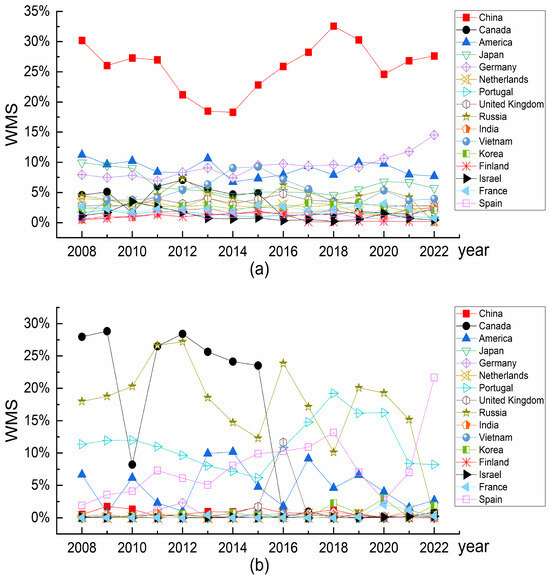
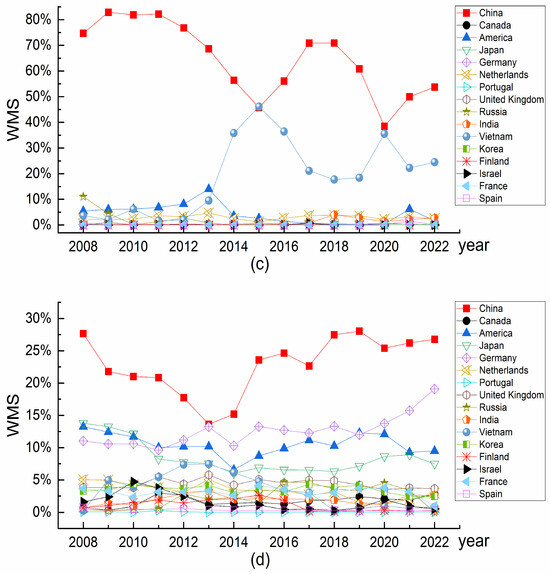
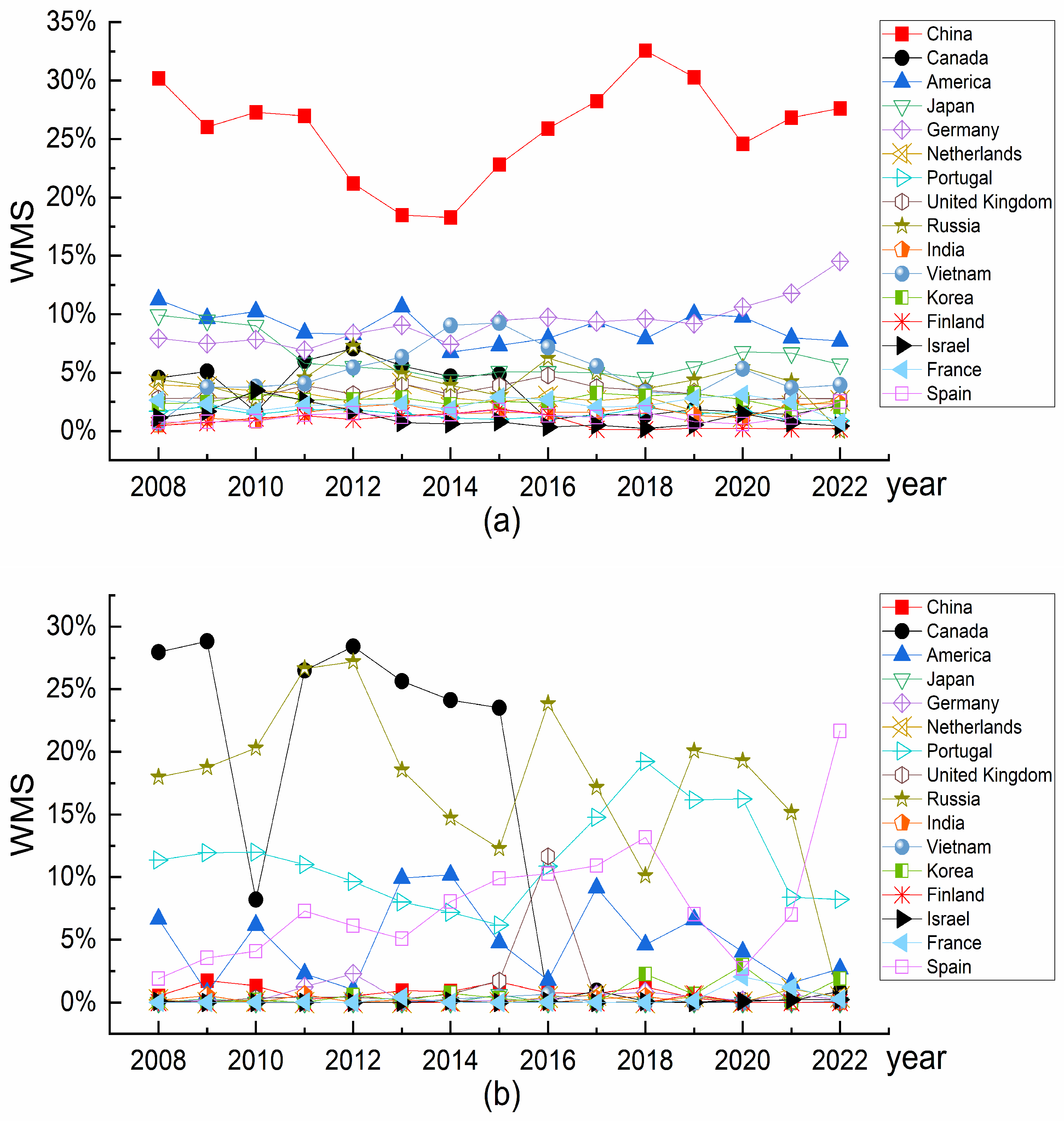
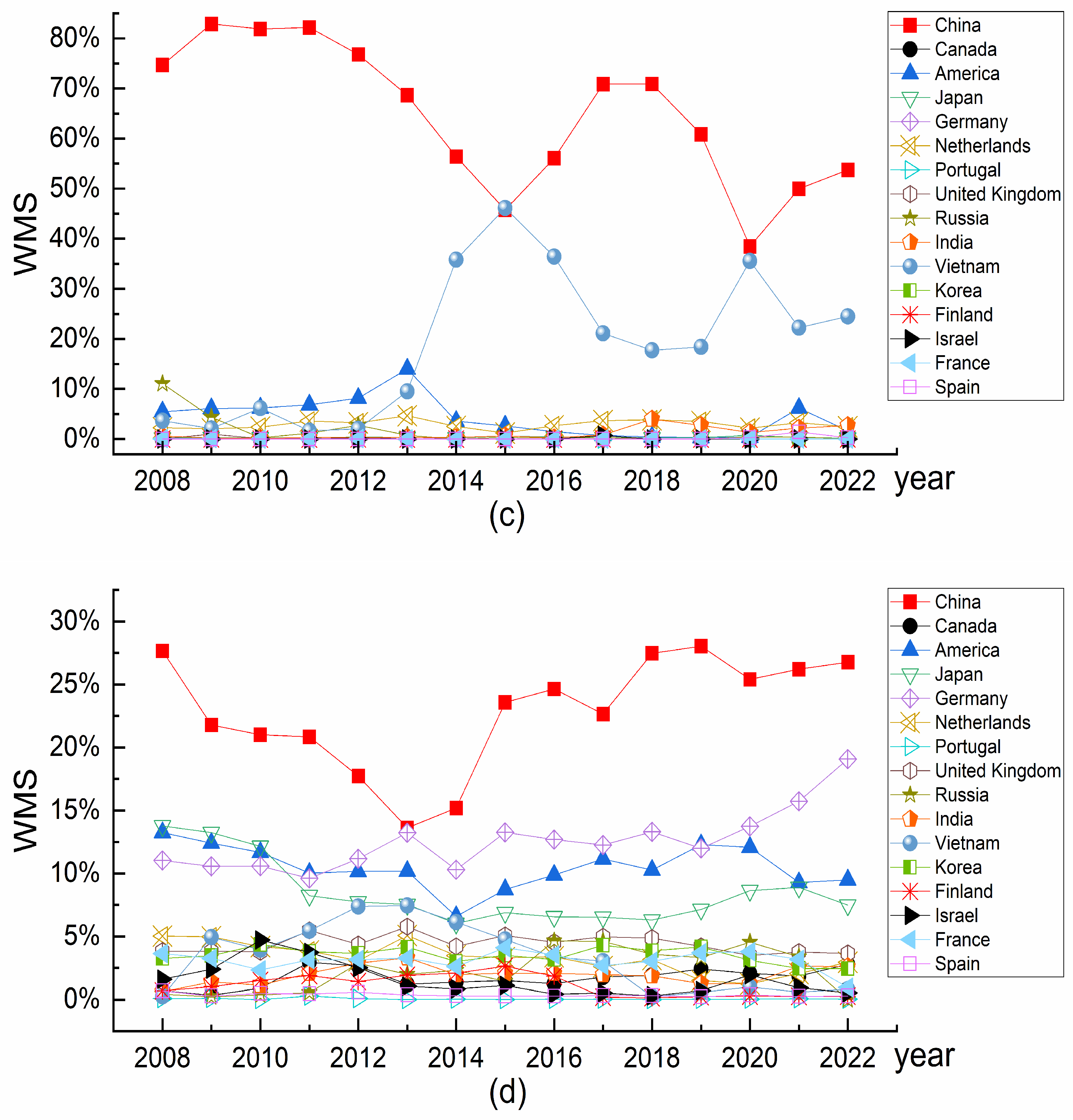
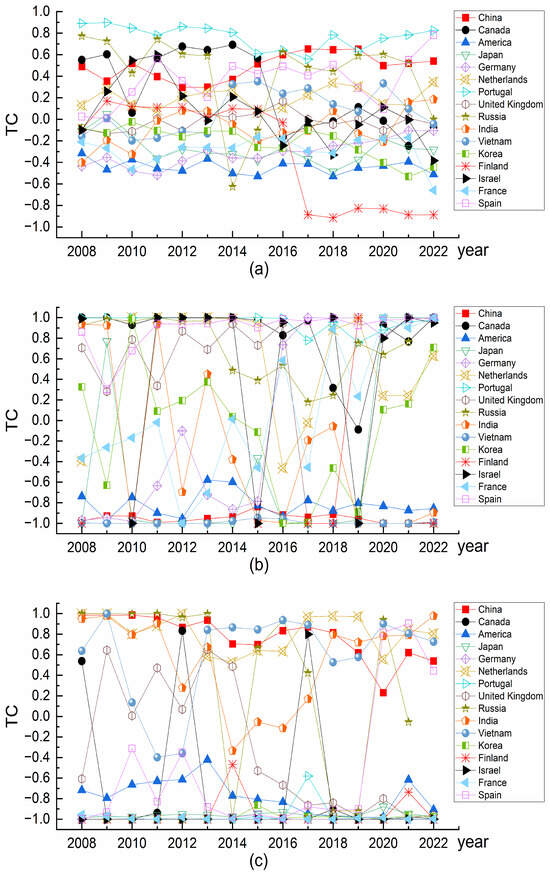
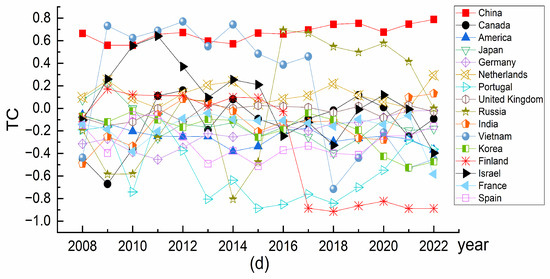
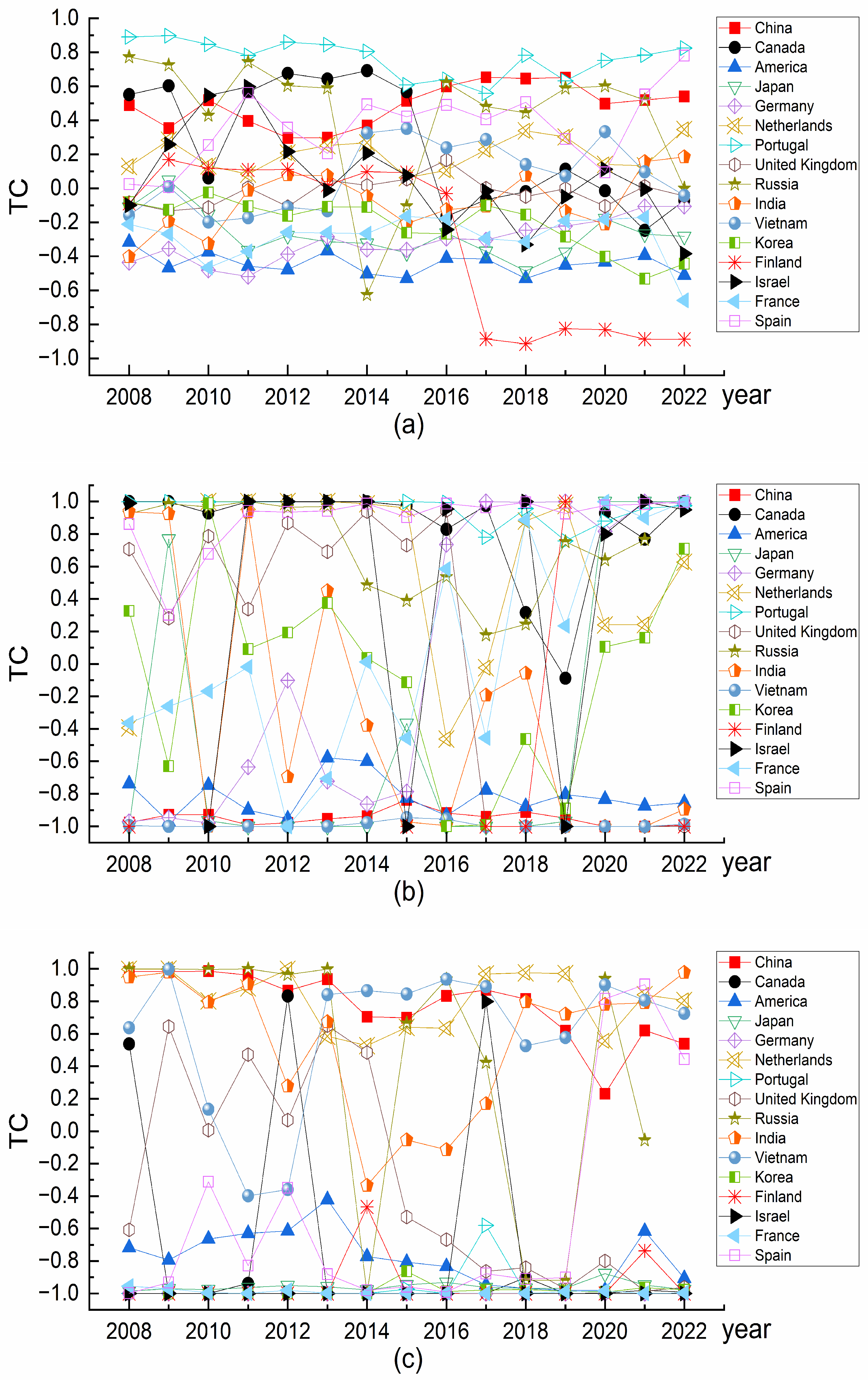
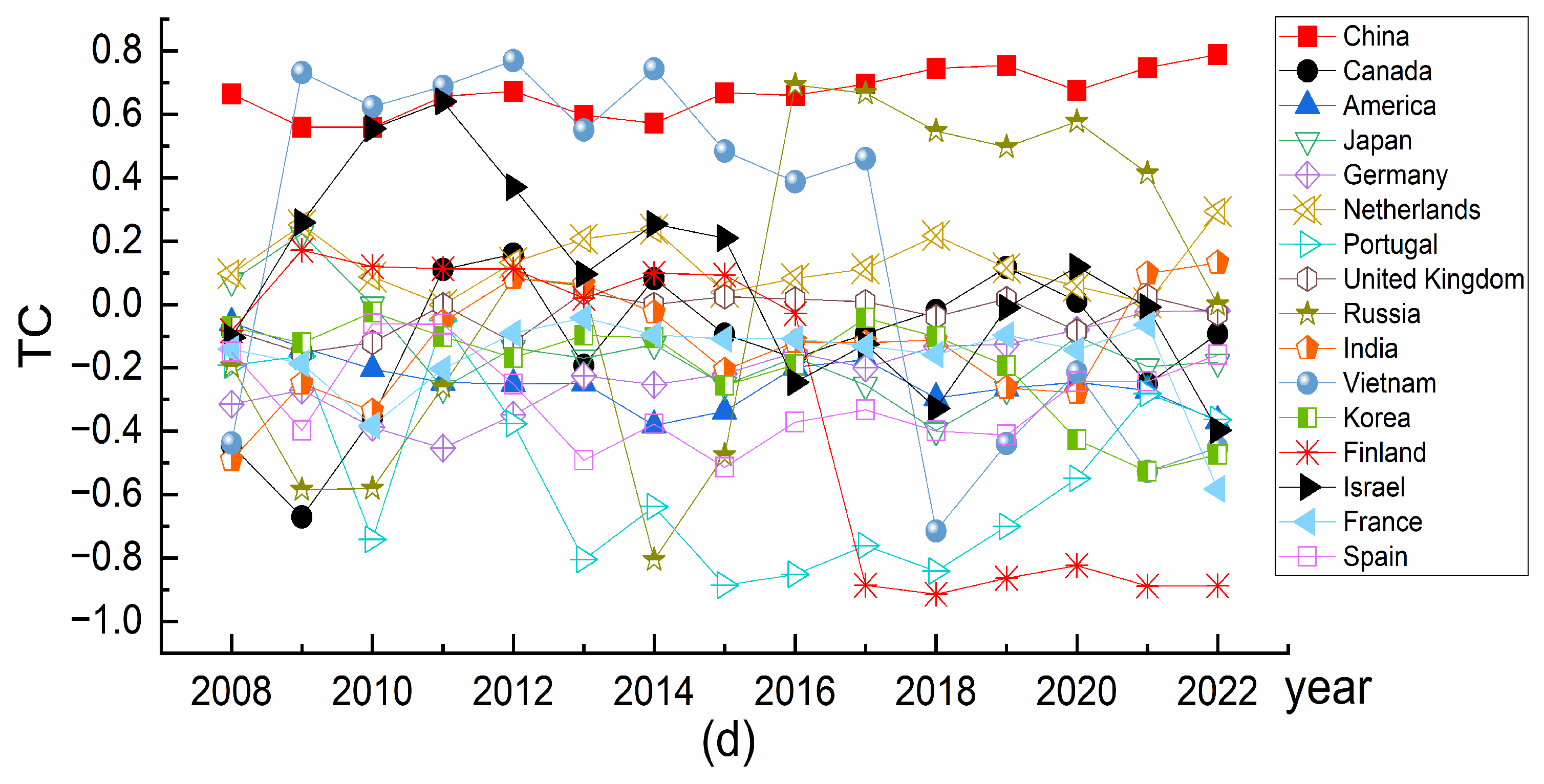
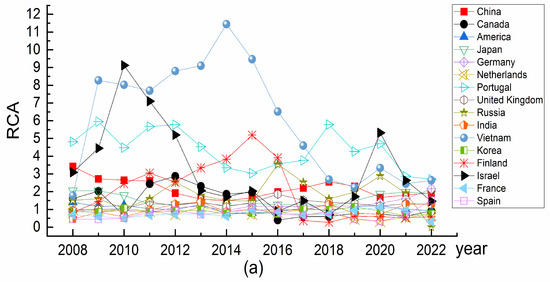
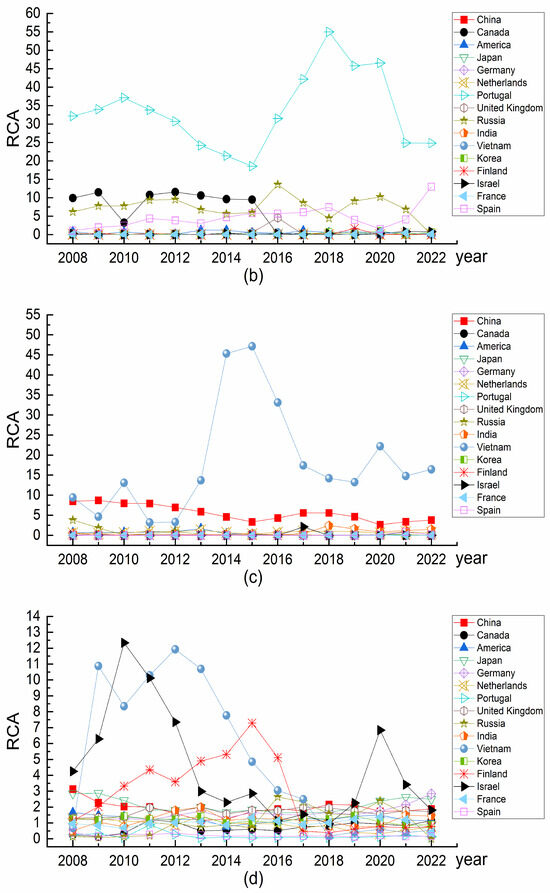
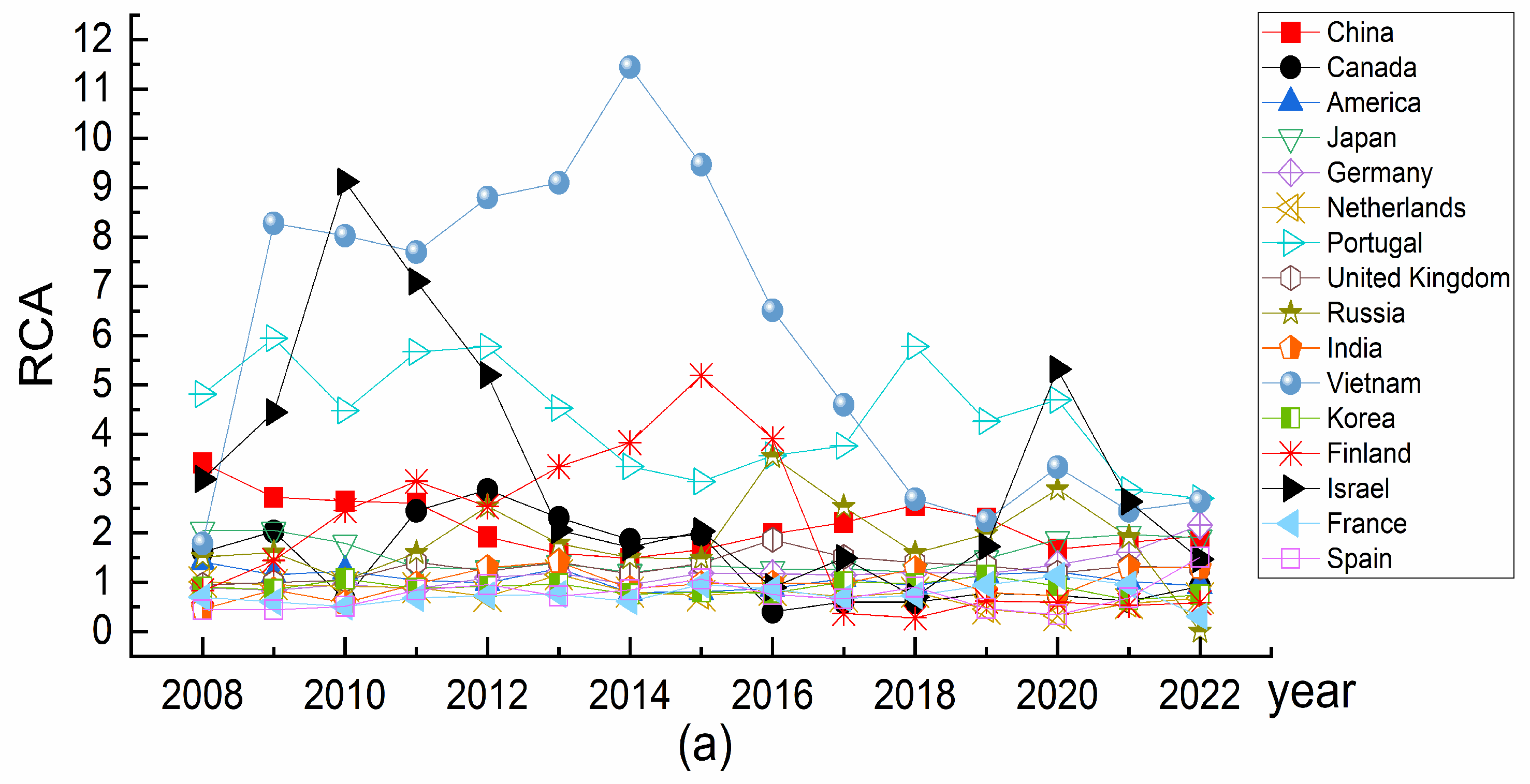
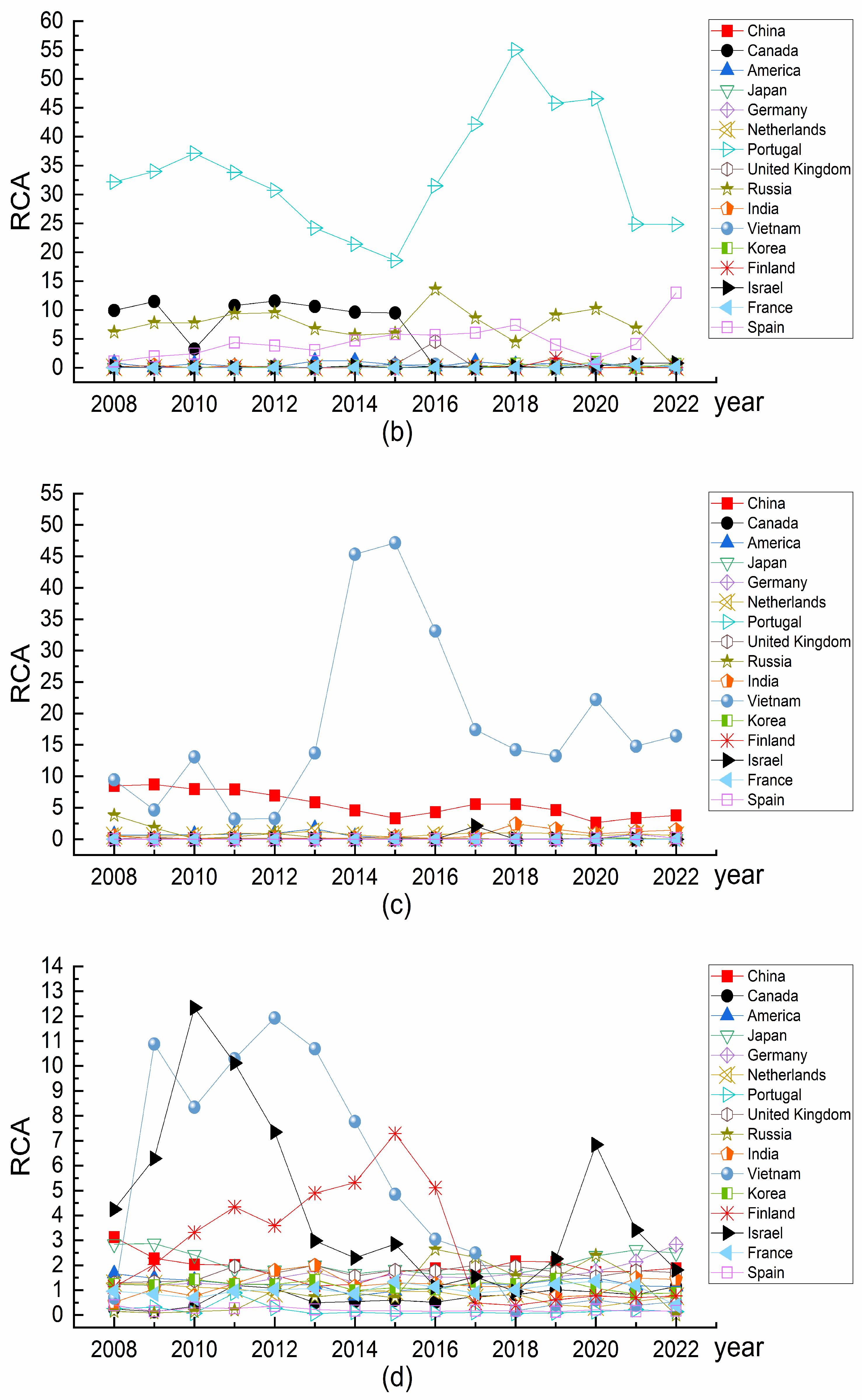
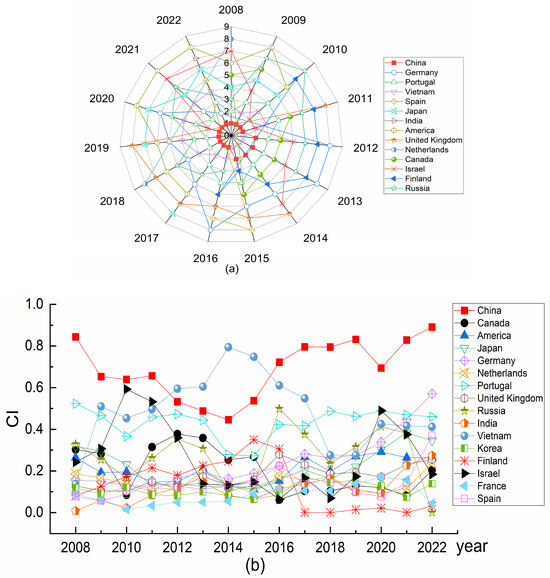
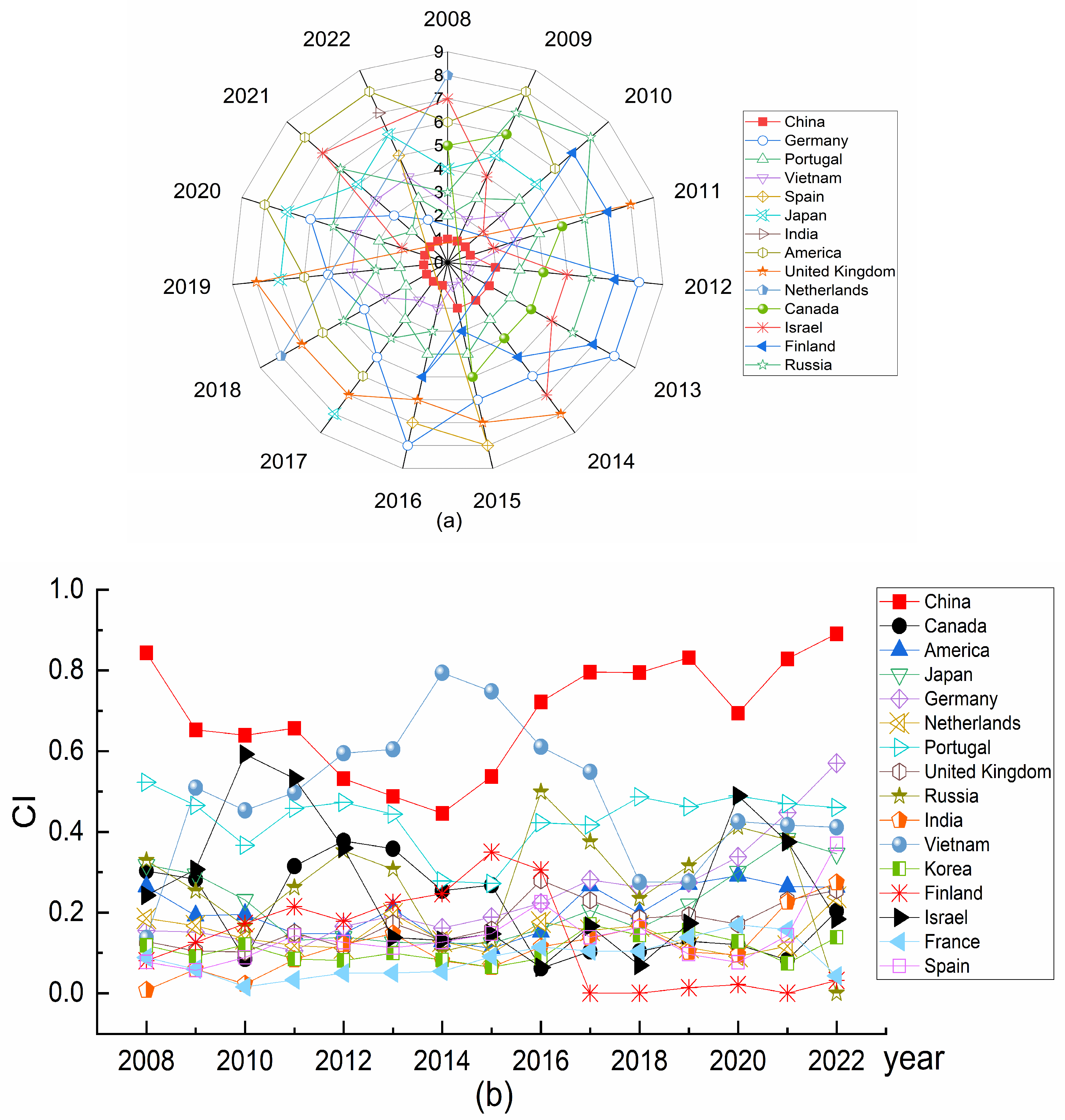
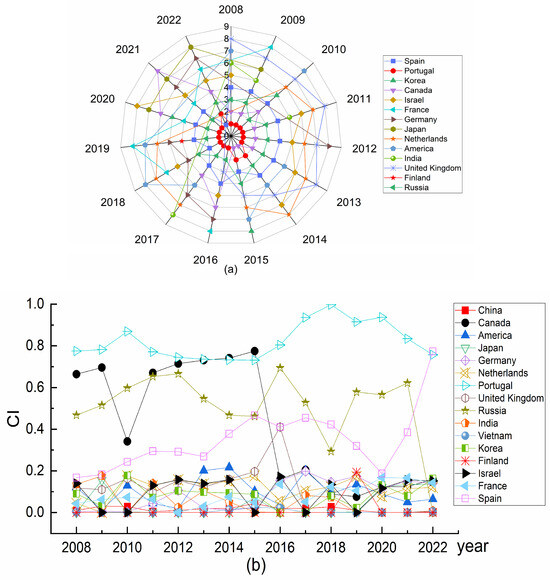
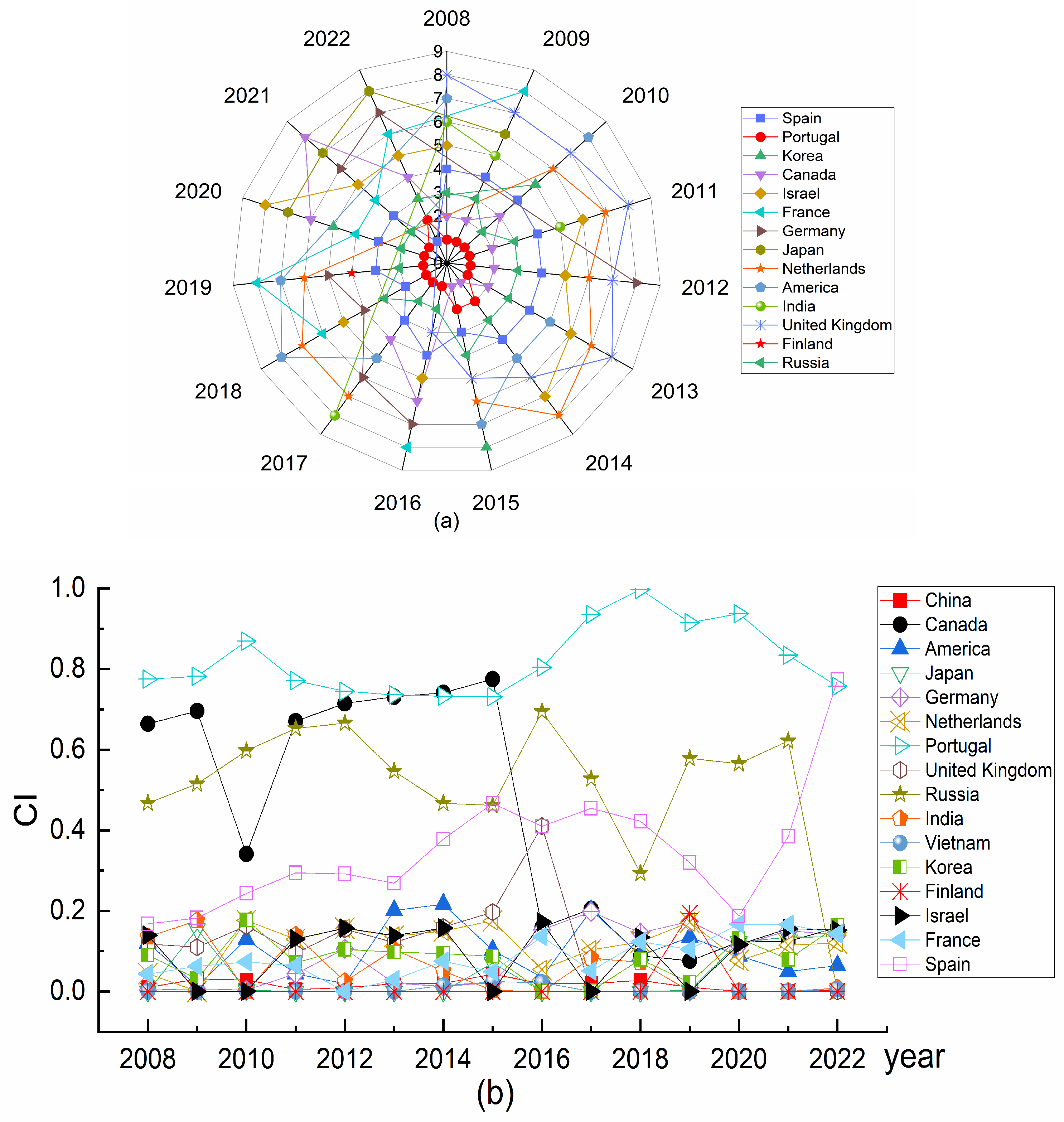
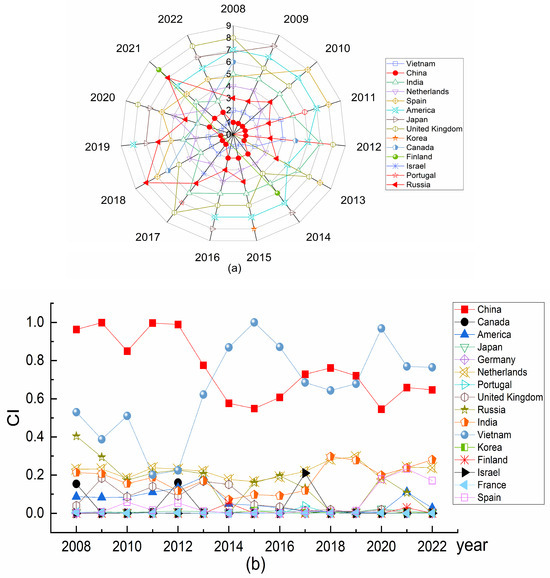
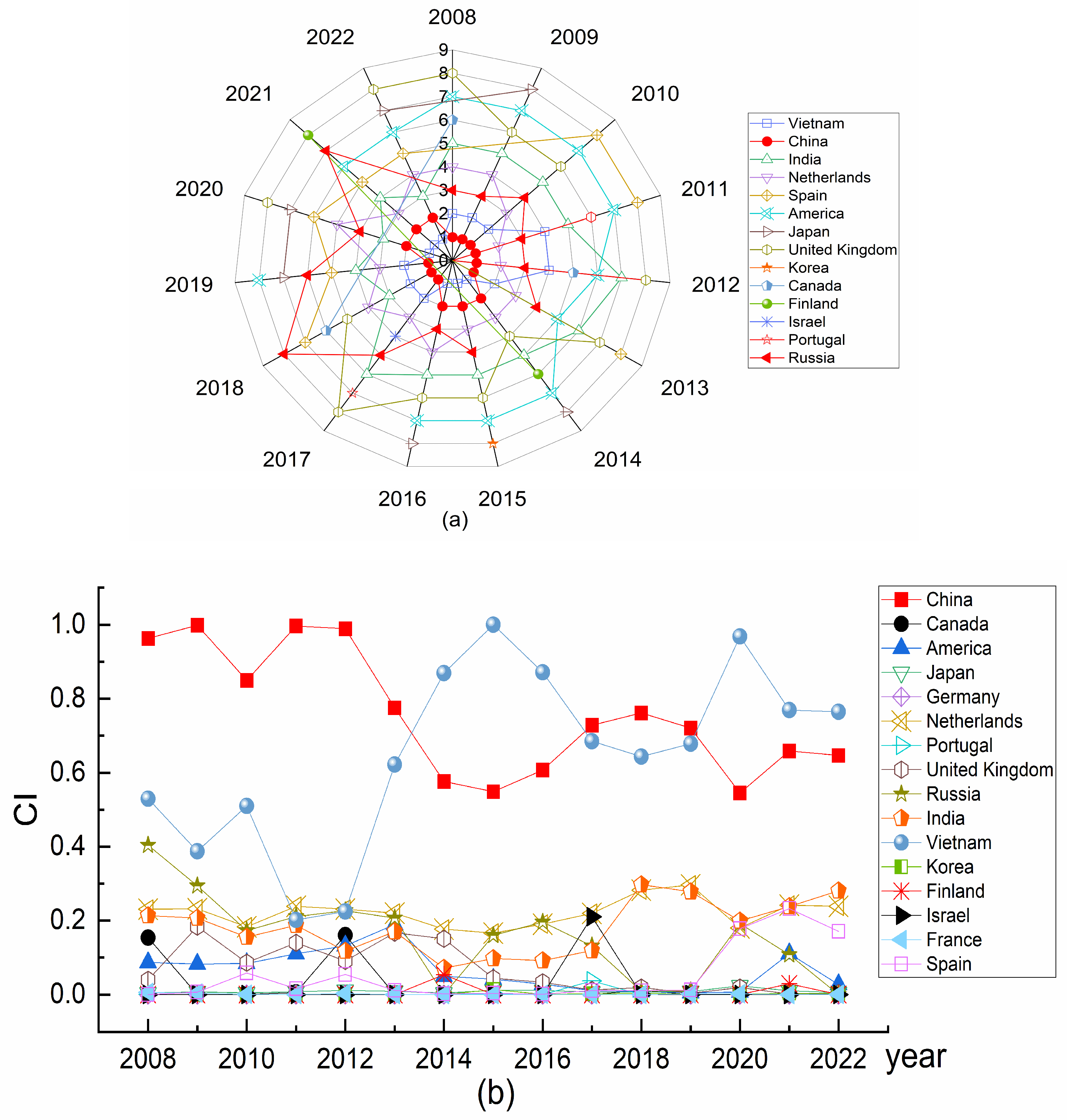
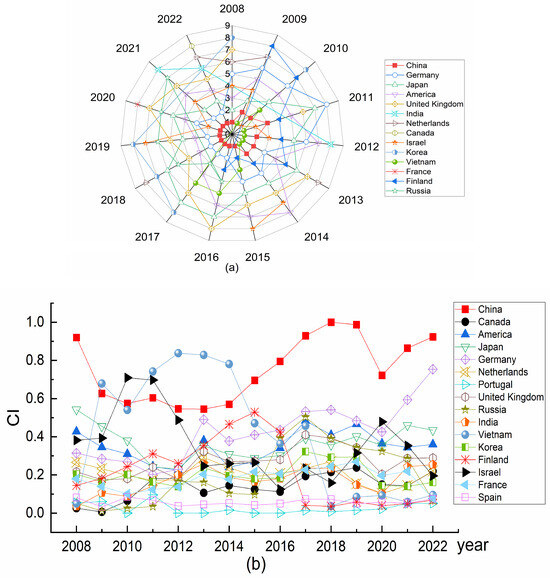
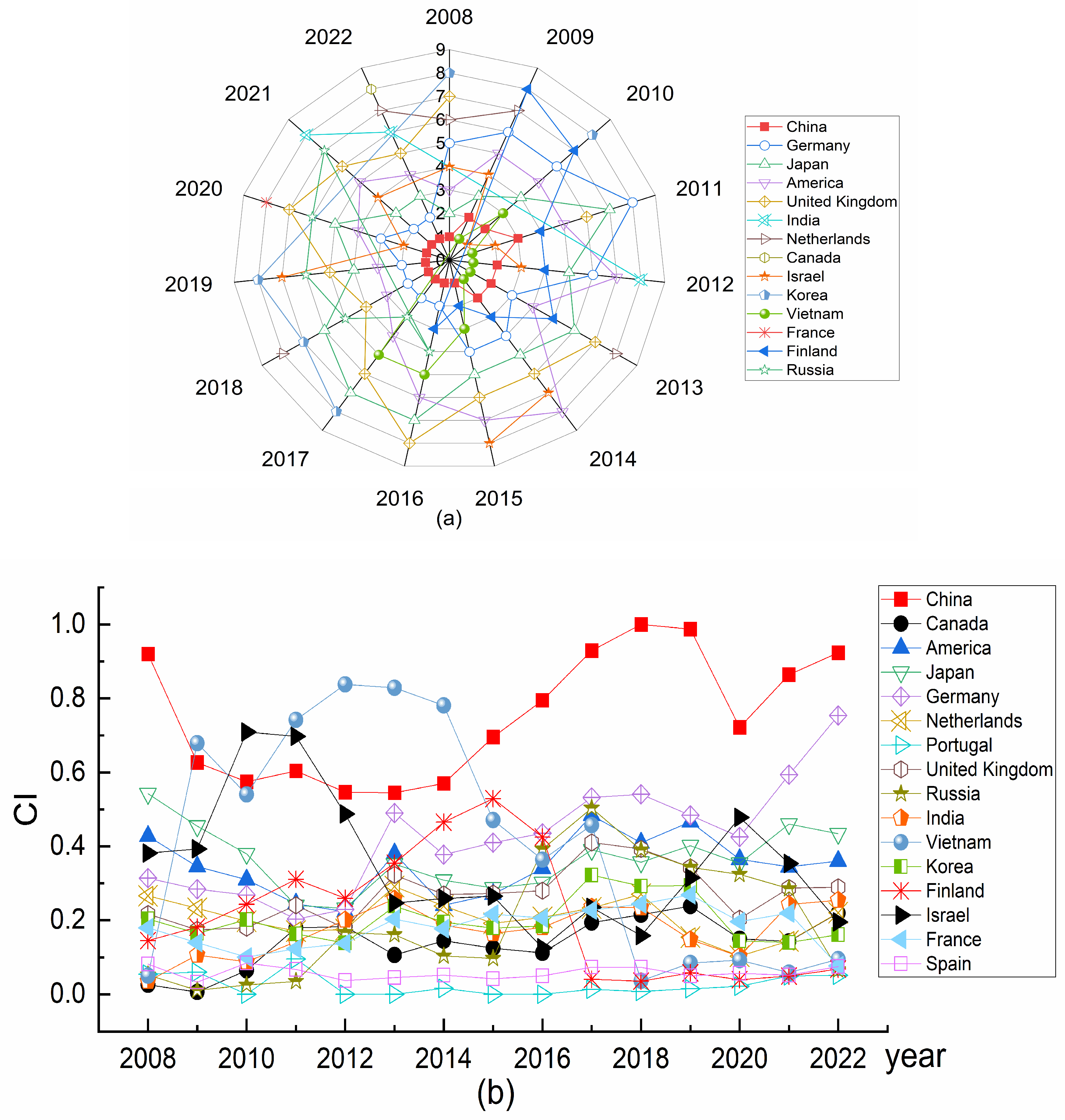

Disclaimer/Publisher’s Note: The statements, opinions and data contained in all publications are solely those of the individual author(s) and contributor(s) and not of MDPI and/or the editor(s). MDPI and/or the editor(s) disclaim responsibility for any injury to people or property resulting from any ideas, methods, instructions or products referred to in the content. |
© 2025 by the authors. Licensee MDPI, Basel, Switzerland. This article is an open access article distributed under the terms and conditions of the Creative Commons Attribution (CC BY) license (https://creativecommons.org/licenses/by/4.0/).