Article

Assessing Agricultural Vulnerability to Climate Change in High-Altitude Himalayan Regions: A Composite Index Approach in Lahaul and Spiti, India


by
Ashwani
1,
Pankaj Kumar
1,*,
Mansi Janmaijaya
2,
Barbaros Gönençgil
3 and
Zhihui Li
4
1
Department of Geography, Delhi School of Economics, University of Delhi, Delhi 110007, India
2
Department of Geography, K.G.K. College, Moradabad 244001, India
3
Department of Geography, University of Istanbul, İstanbul 34116, Türkiye
4
Research Laboratory on Environmental Management, Institute of Geographic Sciences and Natural Resources Research, CAS, Beijing 100101, China
*
Author to whom correspondence should be addressed.
Sustainability 2025, 17(23), 10682; https://doi.org/10.3390/su172310682
Submission received: 28 June 2025 / Revised: 23 July 2025 / Accepted: 20 November 2025 / Published: 28 November 2025
(This article belongs to the Section Environmental Sustainability and Applications)

Abstract

High-elevation agricultural systems face increased risks due to climate change, thus livelihood, food security, and rural areas are threatened. In this study, a region-specific Agricultural Vulnerability Index is constructed to assess the climate vulnerability of 41 panchayats in the Lahaul and Spiti district of Himachal Pradesh, India. Using a multi-dimensional framework incorporating exposure, sensitivity, and adaptive capacity across 57 indicators, the AVI scores and spatial analyses normalised agricultural vulnerability conditions. The AVI scores ranged from 0.471 to 0.553, with Langza (0.553), Sagnam (0.551), and Lalung (0.550) being considered as the most vulnerable panchayats due to climatic extremes, seasonal instability, and limited adaptive mechanisms, while the areas of Goshal (0.471) and Khangsar (0.474) showed lower vulnerability. The agricultural vulnerability shows aspects of the multidimensional framework under ecological fragility and socio-economic constraints. Identifying spatial risk patterns makes this research instrumental in evidence-based planning for climate-resilience agriculture. Such analyses accentuate the need for an integrated approach encompassing infrastructure development, policy changes, a confluence of technologies, and community participation in building adaptive capacity for mountain farming systems.

1. Introduction

Climate change is one of the critical global issues of the 21st century that endangers food security and rural livelihoods [1]. Agricultural systems, especially in ecologically fragile regions such as the Himalayas, become increasingly vulnerable to climate variability and extreme weather events [2]. Adverse climatic impacts through irregular precipitation, temperature increases, and more frequent extremes disrupt the fragile balance of agricultural ecosystems, resulting in fluctuating yields, soil degradation, and reduced water availability [3]. Such transformations increase the vulnerability of subsistence and small farmers, who rely on climate-sensitive agriculture and are thus disproportionately impacted by environmental stresses [4].
Therefore, assessing agricultural vulnerability is becoming increasingly important to allow for the formulation of successful adaptation strategies. The Agricultural Vulnerability Index (AVI) becomes an important measure for assessing vulnerability by combining exposure, sensitivity, and adaptive capacity [5]. As explained by the Intergovernmental Panel on Climate Change (IPCC), vulnerability comprises three interlinked elements: exposure to climate hazards, the sensitivity of agricultural systems to these hazards, and the adaptive capacity of farmers to minimize their effects [6]. This multidimensional approach allows our understanding of the varying levels of vulnerability among different agricultural landscapes to inform targeted interventions [7,8]. An organized assessment framework like the AVI becomes more critical in regions where geographical isolation, extreme climate, and restricted livelihood diversification increase the vulnerability of agriculture [9]. Recent studies have highlighted the role of composite index methodologies in capturing the complex interactions among socio-economic, ecological, and climate factors defining agricultural vulnerability [10]. Despite an upsurge of interest in climate adaptation research, the literature lacks region-specific vulnerability assessment studies that consider the distinct agroecological and socio-economic environments inherent to high-altitude farming systems [11,12]. Developing and operationalizing contextually appropriate AVI will ensure sustainable agricultural development and climate resilience in these sensitive zones [13].
The study, therefore, goes with the broader realm of sustainable development, more specifically with the SDGs as laid down by the United Nations: SDG 2 (Zero Hunger), SDG 6 (Water), SDG 13 (Climate Action), and SDG 15 (Life on-Land) [14]. Agriculture in high-altitude, climatologically sensitive zones such as Lahaul and Spiti dictates food security for the local people while tying into the area’s vulnerable ecosystems and indigenous livelihoods [7]. The development of a regionally adapted AVI gives away the study’s concrete implications concerning risk-prone areas and thereby informs climate-resilient interventions in particular. The research, more so, complements the National Mission on Sustainable Agriculture (NMSA) under India and Himachal Pradesh State Action Plan on Climate Change (SAPCC), where both are focusing on local climate adaptation strategies based on data and information [15,16]. The study intends to fill the science-policy-practice gap and support resilient mountain agriculture through this integrative approach.
This study will provide the conceptual foundations, methodology, and empirical applications of the AVI, particularly its application for high-altitude agriculture in Lahaul and Spiti. By linking insights from global, national, and regional case studies, the overarching goal would be to construct a sound framework through which vulnerability in agriculture in climate-sensitive mountain ecosystems could be assessed and mitigated.

Background of Agricultural Vulnerability Index

The AVI has become an increasingly favored analytical tool for assessing the degree of vulnerability of agricultural systems to climate-induced stressors. The AVI stems from the larger climate vulnerability assessment literature body. For example, the AVI draws from an ancient composite index tradition developed to combine biophysical and socio-economic indicators into a single measure [5]. The early frameworks for vulnerability assessments were primarily derived from disaster risk reduction (DRR) and sustainable development paradigms, which were in pursuit of assessing the exposure to environmental shocks and the capacity of the affected communities to cope with their aftermath [17,18]. Such assessments began evolving into multidimensional vulnerability indices, weaving in many indicators ranging from climate variability, agricultural productivity trends, physical infrastructure development, or governance efficiency [2]. The vulnerability framework of the Intergovernmental Panel on Climate Change still constitutes the main conceptual underflow to the vulnerability index, with the interaction of exposure, sensitivity, and adaptive capacity being its central tenets [6]. Exposure refers to the degree of climatic stress on a given agricultural system, such as changes in temperature regimes, precipitation variability, or extreme weather events [4]. Sensitivity, conversely, pertains to the extent to which agricultural productivity is adversely impacted by these climatic stressors, often moderated by factors such as soil characteristic parameters, crop diversification, or dependence on rain-fed farming [19]. Finally, adaptive capacity characterizes how successfully farming communities can buffer against climate shocks [20]. This includes dimensions such as the adoption of technologies, access to financial capital, institutional support, and dissemination of knowledge [13].
One of the most commonly adopted approaches used in constructing the AVI is the equal-weighted average method, whereby each selected indicator is assigned an equal weight, and the overall vulnerability score is computed as the mean of all normalized indicator values [5,21]. While this approach assures transparency and avoids any biases in weighting individual indicators subjectively, it has been criticized for its over-simplification of vulnerability dynamics, which might be complex given that some indicators would carry far greater weight than others in measuring total vulnerability [7]. Several methods, including Principal Component Analysis (PCA) and expert-weighted scoring, attempt to counterbalance these limitations by assigning different weightings correlating with either statistical analysis or expert judgments [10]. Despite differing methods, the equal-weighted approach is a significant choice for comparative vulnerability assessments due to its ease of use and replicability across various agroecological contexts [2].
Recent geospatial analysis and remote sensing developments have emphasized AVI’s spatial resolution and predictive accuracy. The complementary GIS-based vulnerability mapping has enabled highly fine-grained, district-level assessments that reveal localized climate risk differentials [10]. Such studies have been carried out in Kashmir, Vietnam, and Afghanistan successfully to delineate high-risk agricultural zones and duly offer climate adaptation interventions [11,13,19]. While improving earlier methodologies, the Adverse Events Vulnerability Index bears limitations and uncertainties stemming from its conceptual underpinnings. Data availability and reliability remain crucial hurdles in remote and data-scarce areas, such as Lahaul and Spiti [9]. In addition, the lack of standardization concerning the selection of indicators and weighting schemes hampers attempts for cross-regional comparisons and establishing universal policy suggestions [4].
Furthermore, while these quantitative indices provide insights into macro-level vulnerability trends, they often miss out on the micro-level, context-specific adaptations crucial in shaping agricultural resilience in a complex socio-ecological landscape [2]. Given all these difficulties, there is an increasing call for mixed-method, integrated approaches that would carry index-based quantitative assessments with qualitative participatory methods. Thus, incorporating local knowledge, farmers’ perceptions, and native adaptation strategies would enhance the contextual validity and policy relevance of AVI assessments [7]. In addition, including dynamic time-series assessments that monitor the longitudinal changes in vulnerability would increase the accuracy of future projections of climate risks and adaptation needs [19].

2. Materials and Methods

2.1. Agricultural Vulnerability Indicators

The Agricultural vulnerability owing to climate change, therefore, encompasses a variety of issues affecting rural livelihoods, food security, and ecosystem stability in ecologically fragile areas such as Lahaul and Spiti. The significant climate change related impacts felt in this still region occur because of high-altitude topography, erratic weather conditions, and dependency on snowmelt for irrigation, affecting crop productivity, soil health, and water availability [16,22]. In the IPCC 2007 framework, the vulnerability of agriculture can be categorized into three core characteristics:
Exposure—The extent of experience by an agricultural system for any climate-induced phenomenon such as a rise in temperature, alteration in precipitation pattern, and extremes of weather.
Sensitivity—The degree of effect on agriculture by the stressors above; site-specific variables also affect sensitivity, for example, soil fertility, crop diversity, pest invasion, and dependence on irrigation.
Adaptive Capacity—The ability of farmers, institutions, and governments to manage and adapt to climate-induced risks through intervention in response to technological, financial, and policy aspects.

2.1.1. Exposure

The IPCC (2022) [22] describes exposure as the degree to which agricultural systems suffer from climatic stressors such as changes in temperature, precipitation patterns, and extreme weather events. In high-altitude areas, climate change has altered summers by creating warm temperatures, changing snowfall patterns, and increasing rainfall variability, all accounting for adverse impacts on agricultural sustainability [16,23]. Farmers react to early snowmelt, less winter snowfall, and unforeseen occurrences of frost that hinder irrigation trails, causing crop viability to be affected [24]. The exposure indicators are categorized according to established climate vulnerability frameworks, including IPCC (2007) [6], Gbetibouo et al. (2010) [25], O’Brien et al. (2004) [26], and Ravindranath et al. (2011) [27]. Exposure refers to external climate-driven factors that influence agricultural vulnerability, making it essential to include indicators related to climatic extremes, natural disasters, and seasonal variations.
Climatic extremes are a significant exposure component as they measure the variability and unpredictability of key climate parameters. The mean and standard deviation of rainfall, temperature, snowfall, and humidity over different periods provide insights into agricultural systems’ fluctuations. Rainfall variability influences drought and flood risks, while temperature fluctuations can lead to heat stress or frost, which impacts crop health. Snowfall variability is particularly relevant in mountainous or cold regions, determining water availability and seasonal shifts. Humidity fluctuations can exacerbate pest infestations, and soil wetness variability affects moisture retention and crop sustainability. Unfortunately, with glacier retreat and changing precipitation trends, the streamflow has been severely curtailed, resulting in seasonal water shortages affecting river-fed irrigation systems [3,11]. It has also been observed that decreasing snowfall and increased summer rainfall have triggered soil erosion, waterlogging, and changes in cropping season [5,28]. Extreme weather events, therefore, seem to widen the agricultural exposure. Farmers in Lahaul and Spiti are affected by landslides, floods, frost damage, and prolonged periods of erratic rainfall that disrupt agriculture irretrievably [7].
Natural disasters also constitute a fundamental exposure component as they directly impact agricultural regions, leading to economic and environmental losses. Receiving warnings about floods, landslides, avalanches, frost, cloudbursts, and earthquakes highlights the frequency of hazard exposure. Changes in flood patterns, droughts during agricultural seasons, shifts in landslide activity, and instances of frost affecting crops further emphasize the extent to which agricultural areas are exposed to natural hazards. These events directly affect productivity, food security, and rural livelihoods, making them the major factors for critical exposure. Seasonal variation also plays a vital role in defining agricultural exposure, as any shift in seasonal patterns affects planting and harvesting cycles. Indicators such as noticed changes in agricultural seasons, earlier onset, and delayed onset of the season measure the extent to which climate change disrupts standard agricultural timelines. These variations introduce uncertainty into the growing season, affecting crop yields, irrigation schedules, and farm management strategies (Table 1) [29,30,31].

2.1.2. Sensitivity

Sensitivity denotes the degree of climatic stressor response in agricultural systems depending on soil health, irrigation dependency, infestation by pests, and diversity of crops [22,32]. Lahaul and Spiti are at risk with fragile high-altitude soil ecosystems undergoing erosion and nutrient-depleting processes and losing organic matter, hence being sensitive to climate variability [13,23]. Sensitivity in assessments regarding climate vulnerability is that dimension of the agriculture system influenced by climate variability and change [6]. Agricultural practices and effects of factors like availability of water resources, soil quality, fertilizer use, seed varieties, and labor availability influence the sensitivity of farming systems. Changes in varieties, planting and harvesting time, and temperature impact yields indicate the degree of external climates that affect agricultural systems [25]. The proportion of irrigated land and dry land and the diversity index of crops reflect the system’s dependency on specific climatic conditions, making it more or less vulnerable to extreme weather conditions [26].
The soil quality and availability of water resources are also sensitivity factors because increasing water demands for irrigation, soil erosion, and declining soil fertility make agricultural systems vulnerable to climate change degradation [27,32]. Other patterns, such as using fertilizers, pests and disease outbreaks, and reliance on traditional or hybrid seeds, measure the level at which climate change modifies the stability of agronomy [33]. Dependency on chemical fertilizers can lead to increased soil degradation, while recurrent infestations and crop diseases show the sensitivity of plant health to fluctuating climatic conditions [5]. Labor availability is another contributing factor of agricultural sensitivity since climate change can qualify this supply by changing migratory patterns, the nature of employment available, and the availability of the peak-season workforce [34]. Dependence on migrated laborer’s and the seasonality of hiring patterns further show how rural employment stability is affected by changing climate patterns [35]. Therefore, sensitivity indicators show inherent weaknesses of an agricultural system that increase its vulnerability concerning climate stress as they are different from exposure (external climate conditions) and adaptive capacity (measures to cope with climate change) [6].
Crop pattern changes and diversity also increase agricultural sensitivity. Many farmers have adopted short-duration crops and drought-resistant varieties in response to unpredictable growing conditions. However, this has led to reduced cultivation of traditional crop varieties and subsequent weakening of the agricultural system against pest outbreaks [36]. Thus, it is said that monocropping systems respond more sensitively to climatic shifts than diversified cropping systems because agro-biodiversity plays a vital role in climate resilience [7]. The pest infestation and epidemic outbreak scenario is an important concern as increasing temperature and humidity create ever-newer conditions for entering various invasive species [37].
Furthermore, livestock farming largely contributes to high-altitude agriculture, which remains particularly vulnerable to climate change. Farmers have reported a decline in pasture availability, increased dependence on imported fodder, and reports of disease outbreaks [23]. It is shown that temperature fluctuation affects livestock metabolism, milk production, and health in general; therefore, pastoral farming is impacted mainly by climate (Table 1) [16,22].
Table 1. Major determinants and their indicators of Exposure, Sensitivity and Adaptive Capacity for AVI.
Contributing Factors of AVIMajor DeterminantsIndicators
Exposure Climatic extremesMean Standard deviation of average annual rainfall (1951–2023); Mean Standard deviation of average annual mean temperature (1951–2023); Mean Standard deviation of average annual Snowfall (1951–2023); Mean Standard deviation of average annual Humidity (1981–2023) [38]
Natural DisastersReceive warnings about floods/landslides/avalanches/frost/cloudbursts/earthquakes, Increase in Floods, Droughts during the agricultural season, Increase in Landslides, and Frost during the agricultural season.
Seasonal VariationNoticed changes in Agricultural Season, the Earlier onset of the season, Prolonged duration of the season
SensitivityAgricultural Practices and Climate ChangesClimate Change affected farmers’ agricultural practices in the past 30 years; Shift in planting/harvesting time; Changes in Crop varieties; Per cent Irrigated Land; Temperature affected Crop yields; Per cent un-irrigated Land; Crop diversity index.
Water resource and Soil qualityClimate Change affected the water availability resources for irrigation, increased the need for water for irrigation, increased soil erosion, and caused loss of soil fertility.
Fertilisers and SeedsUses of NPK fertilisers; Uses of organic fertilisers/manures; Times of fertilisers per crop per season; Increasing severity of pest and disease outbreak; Save Seeds/crops; Uses of hybrid/GM seeds; Practice Crop rotation
Labour AvailabilityDemand for Labour; Hire labourers for farming activities; Availability of labour during peak season
Adaptive CapacitySocial-cohesivenessFemale farmers; Participation in Community Activities; Perception of trust within communities; Marginal farmers; Average no. of Migrants
Financial Resources and SupportSupport received from the community during a crisis; Support from Govt./NGOs; Training Programmes/Weather forecasts; Banking assistance in crop failure; Crop Insurance
Traditional KnowledgeUses of traditional seeds; Uses of traditional methods of farming/storage
Market and StorageCondition of Road Network; Accessibility to the local market; Distance to nearest market/mandis; Accessibility To storage facility
Technology AdoptionAdopted new initiatives for farming, such as piped irrigation, precision farming tools, and weather forecasting apps; income increases through the adoption of farming technology.
InfrastructurePolyhouse farming; Sprinkler irrigation; Mechanised equipment

2.1.3. Adaptive Capacity

Adaptive capacity refers to the ability of farmers, institutions, and communities to mitigate and adapt to climate-induced stressors based on their access to technology, finances, and infrastructure, as well as policy support [39]. It is the most important determinant of agricultural resilience as it denotes a system’s ability to adjust, cope, and recover from climate-change-induced impacts [6]. Several social, financial, technological, and infrastructural factors combine to affect the adaptive capacity of farming communities. The more one’s socio-cohesiveness or per cent of female-headed households, community participation, level of trust, landholdings, and trends in migration strengthen collective resilience and resource-sharing [25]. In the same way, finances such as government support, community assistance, banking help during crop failure, and crop insurance enhance farmers’ chances to mitigate the financial implications of climate variability on their production enterprises [26]. Traditional agricultural knowledge is yet another factor that contributes to adaptive capacity. Traditional seeds and indigenous farming methods can conserve soil health, increase drought tolerance, and optimize resource use, making agriculture more sustainable in a changing climate [27]. The market and storage infrastructure access to roads and storage facilities helps farmers to lessen post-harvest losses and stabilize income [33].
Technological innovations provide additional resources for enhancing adaptive capacity by improving efficiency, conserving water, and reducing vulnerability to extreme weather events. With the invention of drip irrigation, precision farming, and weather forecasting applications, farmers can make informed decisions and improve agricultural productivity [5]. In addition, infrastructural advancements in polyhouse farming and sprinkler irrigation systems ensure controlled agricultural environments, thus increasing resilience to unpredictable weather patterns [34]. Institutional support significantly enhances adaptive capacity. Schemes initiated by the governments, such as PM-KISAN, PMFBY (crop insurance), and the Soil Health Card Scheme, are established to promote climate-resilient farming [10]. Water resource management remains a key determinant in assessing climate resilience. Adaptive capacity is higher for farmers with more efficient irrigation techniques, such as Kuhl systems and drip irrigation [13]. Another important factor affecting their adaptive capacity is market accessibility. Farmers who diversify their income sources through agro-tourism, value-added processing, and marketing networks demonstrate greater resilience to climate-induced shocks [24].

2.2. Study Area

Lahaul and Spiti comes under the High Hills Temperate Dry Zone of Himachal Pradesh, being situated between 76°46′29″ and 78°41′34″ E longitude and 31°44′57″ to 32°59′57″ N latitude (Figure 1). The snow covers this zone from November to the March, with annual rainfall hardly ever crossing the level of 250 mm. Soils are sandy loam, having poor fertility, thereby requiring an external source of nitrogen and phosphorus for crop productivity. Irrigation becomes a must in a dry climate, where agriculture is carried out on sloping beds. Soil erosion and water conservation come to the fore mainly because glacial action contributes to the removal of topsoil annually. Among the major crops grown are peas, potato, barley, hops, buckwheat, oats, kuth, and other cool-season vegetables, whereas the cultivation of apples has seen a rapid growth in recent years [40].
Administratively, the district gets divided into two separate developmental blocks: Lahaul and Spiti. The Lahaul block has 28 g panchayats, and the Spiti block has 13 g panchayats; thus, the total gram panchayats in the district are 41.
This district also has three agro-ecological situations (AESs). AES-1 lies between 2501 and 3250 m in elevation and includes parts of Udaipur and Keylong with sloping mid- to low-hill terrain characterized by shallow sandy loam soils. This is a zone for peas, potato, cauliflower, barley, and temperate fruits. AES-2 lies between 3251 and 4250 m, covering parts of Udaipur, Keylong, and Kaza, having one growing period from May to September for the production of quality seed potatoes, peas, and barley. AES-3 lies above 4250 m, having unconsolidated sandy and pebbly soils and is adapted to hardy crops like peas, potatoes, and barley [41].

2.3. Data Source

The stratified random sampling technique was used in this study to enable a representative selection of farmers concerning all panchayats within the Lahaul and Spiti districts. A total of 295 farmers’ households were surveyed, sampling respondents who owned agricultural land and were actively engaged in farming and accessibility to the research. The research methodology used data collection techniques, such as field visits, structured interviews, participatory assessments, focus group discussions, direct observations, and questionnaire-based surveys, to capture broad and credible primary data. 41 panchayats were covered during the district field survey (Figure 1). To improve the responses from the farmers, a local guide acted as an interpreter between them and the researcher. The primary respondents of the household questionnaire were those with active participation in agricultural activities and the oldest farmer. Each interview was approximately 30–40 min per session, keeping various agricultural and climatic factors in scope. Critical research descriptors have been identified according to peer-reviewed literature, expert consultations, farmer experiences, and lessons from local communities to make the agricultural vulnerability assessment robust. Also, a pilot study was conducted for questionnaire finalisation, with the elimination of non-relevant or redundant questions ensuring improvement in the quality and precision of data (Table 2).
This research aims to study the effects of changing rainfall and temperature trends on agriculture in Lahaul and Spiti. In pursuit of this goal, secondary climate data were obtained from credible meteorological databases. Rainfall and temperature gridded data from 1951 to 2023 were extracted from the Indian Meteorological Department (IMD), while snowfall data were acquired from ERA5 reanalysis datasets and Humidity data from 1981 to 2023 were also retrieved from NASA’s POWER database [42,43].

2.4. Methodology

The AVI, which assesses agricultural vulnerability to Lahaul and Spiti, was derived through a four-step structured approach. Normalisation of indicators across various parameters for compatibility was the first step. Application of a very widely used minimum and maximum normalisation procedure, analogous to techniques used for existing vulnerability studies, was applied [5,25,27,33] and the United Nations Development Programme (UNDP) for computing the Human Development Index (HDI). This transformation results in all indicator values lying in the continuum from 0 to 1, thus removing the inconsistencies stemming from differences in the unit of measurement. The formula of normalisation for this purpose was:
  I n d e x L S p = L S p L S m i n L S m a x L S m i n
LSp is the original sub-component for panchayat p, and LSmin and LSmax are the minimum and maximum values for each sub-indicator determined using data from Lahaul and Spiti. This normalisation ensures that the lowest observed indicator value corresponds to an index value of 0, while the highest goes to 1.
This logic was also applied to the maximum and lowest values, with Equation (1) being used to standardize these sub-indicators. After each was standardized, the sub-indicators were averaged by using Equation (2) to find the value of each major indicator:
M p = i = 1 n i n d e x L S p i 1 n
where Mp = one of the thirteen major indicators for panchayat p (Table 1), index LSpi represents the sub-indicators, indexed by i, that make up each major component, and n is the number of sub-components in each major component [32].
Functional relationships between the indicators and agricultural vulnerability were established to ensure that these computed AVI values reflected the absolute vulnerability situation. Indicators that lessened vulnerability, such as literacy rate, irrigation, and mechanisation, were inverted by subtracting the normalised value from 1 to ensure conformity with the index construction. Similarly, indicators that worsened vulnerability were retained, including land fragmentation, dependency on rain-fed agriculture, and increasing climate variability. In addition, exposure indicators were assessed for their contribution to a vulnerability that they measured. For instance, as dry spells and extreme temperature events increase, the vulnerability score increases; however, longer wet spells or moderate amounts of rainfall reduce vulnerability. This classification was based on earlier research and expert consultations to ensure that the agricultural risk factors represented reality.
Then, indicators were assigned equal weights such that the relative importance of each indicator in causing vulnerability was quantified. Three standard methods were considered: equal weighting, Principal Component Analysis, and expert judgment. Equal weighting was selected because of its extensive application in previous studies [27,33] and due to practical reasons, such as a lack of access to subject-matter experts and difficulties such as data heterogeneity in applying PCA methods in a mountainous, data-challenged region. Equal weighting created transparency in methods and replicated in creating a policy-relevant index at the local scale. However, weights in different ways would impact the AVI scores. Therefore, the future studies can undertake a comparative sensitivity analysis among PCA and expert-informed weights.
The number of sub-indicators that make up each major component determines the weights of each major component, Wmi, which are included to guarantee that all sub-indicators contribute equally to the AVI.
C F p = i = 1 n W m i M p i i = 1 n W m i
where CFp is an IPCC-defined contributing factor (exposure, sensitivity, and adaptive capacity) for panchayat p, Mpi is a list of panchayat p’s major components indexed by i, Wmi is the weight of each major component, and n is the number of major components in each contributing factor.
Following the calculation of exposure, sensitivity, and adaptive capacity, the AVI gives the composite vulnerability score of each panchayat. The Index was computed with the following formula [44]:
A V I = 1 3 { E x p o s u r e + S e n s i t i v i t y + ( 1 A d a p t i v e   C a p a c i t y ) }
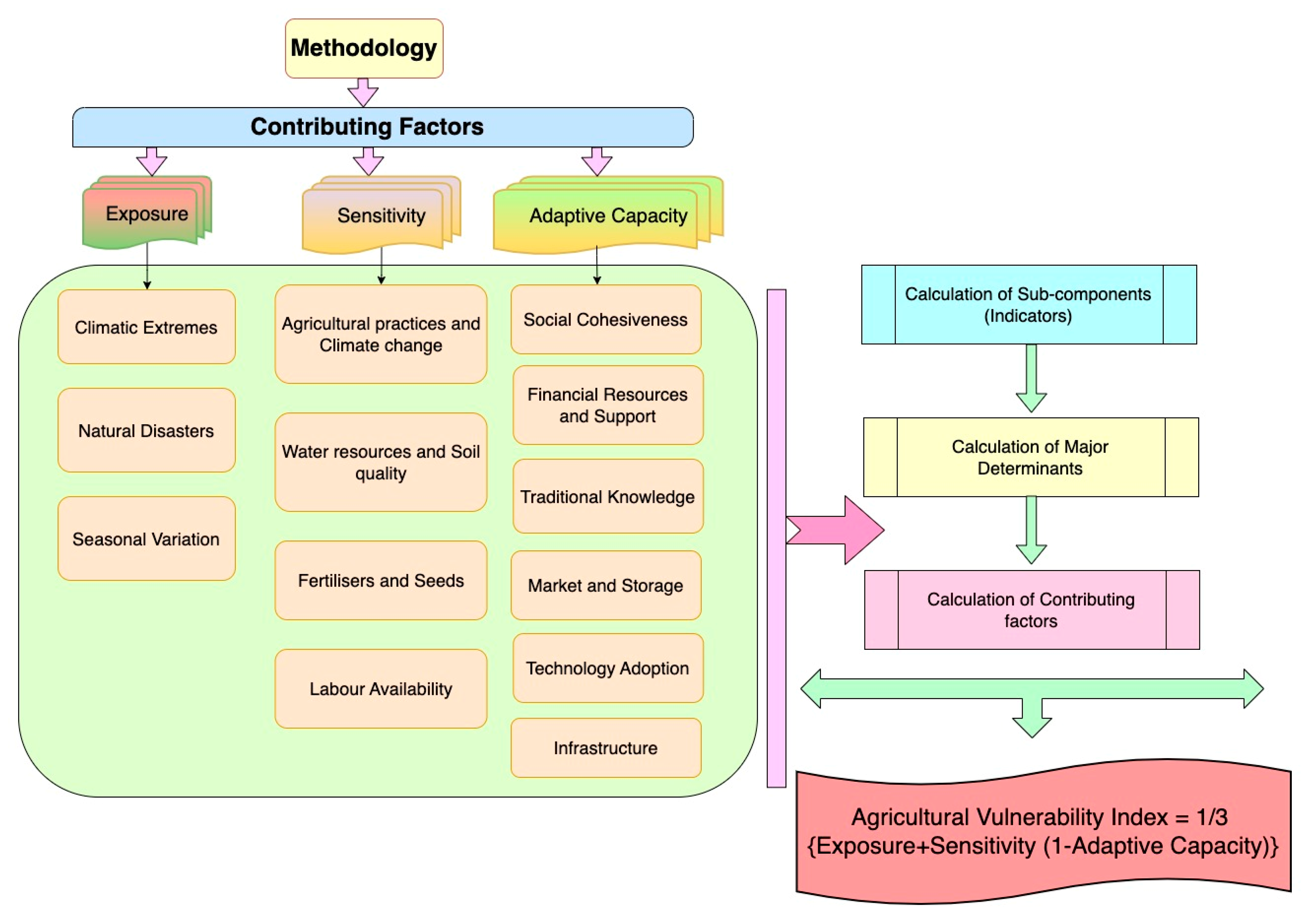
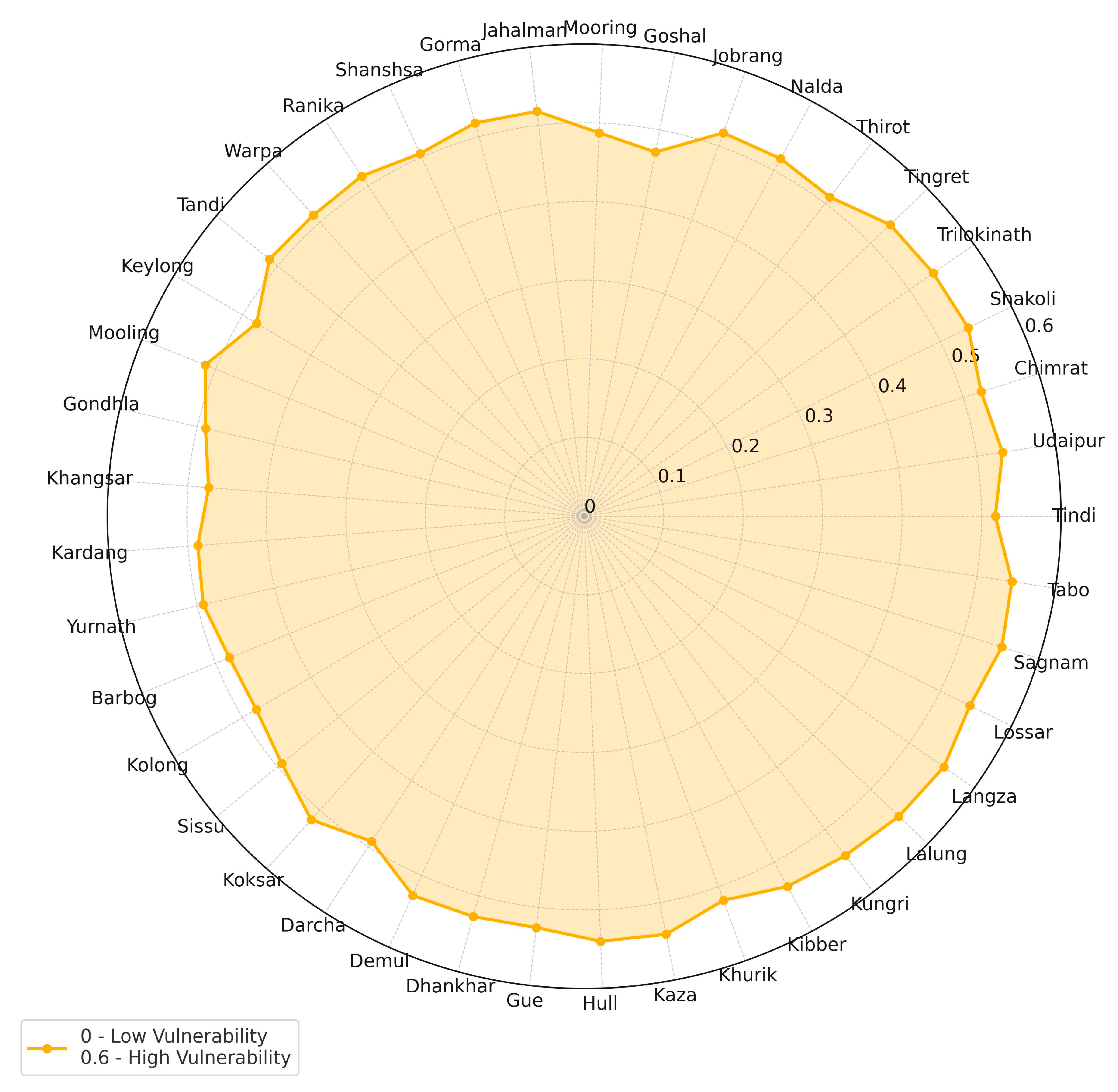
This formulation ensured an increase in vulnerability with an increase in AVI as exposure (climate-related risks), sensitivity (agricultural and socio-economic fragility), and adaptive capacity (ability to cope with climate stressors) were worked into the equation as an interaction. Such an encompassing definition allows for a spatial and temporal vulnerability assessment, making it possible to spotlight panchayats requiring targeted interventions. In this study, the AVI is scaled from 0 (least vulnerable) to 1 (most vulnerable) (Figure 2).
Apart from this, data analysis and computing were done through SPSS AMOS for descriptive and normalization statistics. At the same time, ArcGIS (ArcMap 10.8) was used to map the spatial distribution of the vulnerability indices of the panchayats. Thus, the tools gave perfect quantitative processing as well as a high geospatial resolution visualization.

Indicator Redundancy and Multicollinearity Check

The aim of data quality analysis is to ensure the analytical robustness of the 57 indicators used for the construction of the AVI. To identify the presence of collinearity among the variables, a 57-by-57 Pearson’s correlation matrix was computed. The overall results reveal that the average correlation coefficient was less than 0.5, with just a few exceeding 0.7 for variable pairs, which means acceptable independence of the indicators. Besides that, to judge the strength of the multicollinearity, a Variance Inflation Factor (VIF) analysis was performed, showing that all indicators had values under the arbitrariness limit of 5, thereby confirming that there is no true multicollinearity. Hence, it can be inferred that these tests underpin each indicator as giving unique non-redundant information to a composite index, thus supporting the multidimensional theory of vulnerability as presented by this study.

3. Results

The AVI is an important indicator of how susceptible a region is to climate-related agricultural risks [45]. The AVI is derived from the combination of Exposure, Sensitivity, and Adaptive Capacity, all calculated from normalized data. The final index represents overall vulnerability; the higher the score, the more vulnerable the area is to climate change impacts. AVI considered 13 major determinants, of which 57 indicators were taken from all 41 Panchayats.

3.1. Various Indicators of Exposure, Sensitivity and Adaptive Capacity

It combines climatic extremes, natural disasters, seasonal variations, and socio-economic dependencies to portray agricultural vulnerability as a multidimensional construct. The readings of major indicators in different Panchayats indicate the agricultural resilience and susceptibility to climate-induced stressors. Assessing the climatic risks of agronomic practices, resource availability, and socio-economic conditions could lead to structural weaknesses and strengths in the agricultural pursuits of these rural communities.
Extremities of climate and natural disasters are important factors governing agricultural production. Of all the study areas, Shakoli (0.502), Jobrang and Trilokinath (0.502) are highly prone to climatic extremes, indicating that erratic rainfall, temperature anomalies, and unexpected frost volumes are frequently observed. These environmental instabilities pose enormous threats to agriculture and food security in the region. Conversely, Langza (0.359) and Gue (0.365) exhibit lower climatic extreme measures but with a significant risk concavity. As for natural disasters, Langza (0.687) and Sagnam (0.626) have increased incidences, predominantly in landslides and soil erosion. Disruption of agricultural cycles, damage to crops, and lowering soil fertility are some ill effects of these disasters, which, as time passes, become more serious long-term sustainability problems. Goshal (0.285) marks the lowest vulnerability to disasters since this implies a much more stable agro-environment. However, moderate disaster risks seem apparent in Warpa (0.441), Ranika (0.440) and Shansha (0.443), requiring infrastructural developments that will be adaptive to such conditions. The agricultural productivity of the areas is highly dependent on seasonal steadiness. Therefore, hull (0.845) and Lossar (0.840) would be exposed and have experienced the most considerable variation, influencing their sowing and harvested cycles, irrigation needs, and pest problems. Shakoli (0.561) is another site characterized by a difference in these seasons, necessitating precision farming to cater for variability. Tindi (0.363) and Udaipur (0.364) have low indices of seasonal variation, thereby inferring a higher consistency of agricultural seasons on comparison (Supplementary Materials).
The link of agricultural practices to climate change is an essential determinant of long-term sustainability. This is most felt in Shakoli (0.704) and Trilokinath (0.692), indicating that much change is taking place in the cropping system, irrigation schedule, and input use patterns of farmers because of climate variability. Some of these areas are Tandi (0.666) and Tabo (0.684), which also show intensive shifts in their agronomy, familiarizing themselves with changing practices. Soil fertility and irrigation water provision play an important part in the resilience of agricultural systems. Langza (0.882) and Tandi (0.816) are highly dependent on soil and water resources and, hence, would likely be the most affected whenever there is a water shortage or degradation of soils. On the contrary, analysis concerning Chimrat (0.665) suggests lower-an-even-below-average dependence on soil, thereby indicating some beneficial water management strategies or resource availability. In Gorma (0.688) and Ranika (0.687), the fertilizer and seed use index are high, implying intensive use of chemicals and hybrid seeds. Khurik (0.431) also registers a below-average index, implying moderate use of improved agronomic inputs. The adoption pattern of fertilizers and hybrid seeds is moderately high in Shakoli (0.610) and Trilokinath (0.608), denoting the adaptive intensification of agronomy for keeping soil fertility and crop yields intact. Agriculture in these Panchayats is labor-intensive, such as Ranika (0.739) and Kaza (0.729). Seasonality and availability of labor would have a significant impact on output levels of agriculture. Shakoli (0.617) and Tindi (0.599) are considerably dependent on manual labor, while Chimrat (0.489) would be the lowest labor-depending area, probably due to mechanization or less involvement in agricultural activity (Supplementary Materials).
The maximum social cohesiveness, which integrates resilience at the community level and cooperative farming actions, is reported for Sagnam (0.679) and Yurnath (0.643), where such close-knit social networks are coupled through collective problem-solving mechanisms. Chimrat (0.536) and Tindi (0.5672) are also examples of considerable community agriculture support; Udaipur (0.461), however, noted the least among them and indicated a weaker communal support structure. Financial security is critical for agricultural sustainability and investment in adaptive mechanisms. Moderate financial stability is shown by Chimrat (0.511) and Udaipur (0.503), whereas lower than that are Trilokinath (0.498) and Tindi (0.495), indicating economic constraints towards the adoption of advanced technologies in agriculture. Shakoli, with an index of 0.477, reflects the least financial resilience, making external funding and government support very important for improving livelihood in agriculture. The accessibility of markets and storage facilities has been recognized as a crucial factor in post-harvest loss reduction and price stabilization. Keylong (0.599) and Yurnath (0.573) indicate better market linkages, thus signifying improved economic integration and commercialization. Tindi (0.192), Gue (0.191), and Chimrat (0.129) have poor market access, limiting their agricultural trade and income diversification. Udaipur (0.8020) and Tindi (0.7980) have the highest technology adoption, which correlates with integrating mechanized farming activities, digital tools, and climate-resilient technologies. Substantial use of technology also exists in Keylong (0.929) and Yurnath (0.894), indicating an active willingness towards agricultural modernization. There is moderate technology integration in Chimrat (0.665), although relatively on the lower side. Infrastructure development is a significant enabler of agricultural productivity and climate resilience. From infrastructural development indices, it is inferred that transportation, irrigation, and/or storage facilities are comparatively better in Yurnath (0.970) and Keylong (0.958). Khurik (0.827) ranks below these two, indicating a reasonably well-connected agricultural economy. Tindi (0.791) has moderate infrastructure support, while Darcha (0.453) has comparatively weaker infrastructural availability, showing a necessity for investment through rural development projects (Supplementary Materials).
The interpretation of significant indicators highlights the complex interrelationship between climatic exposure, agronomic practices, resource allocation, and socio-economic dynamics in influencing agricultural vulnerability. Strategic interventions to enhance irrigation infrastructure, financial incentives to farmers, climate-smart agronomic practices, and rural connectivity enhancement should all be prioritized to address these vulnerabilities. Strengthening social cohesion and supporting agricultural cooperatives can build resilience and sustainability against climatic uncertainties.

3.2. Constituent Factors of Agricultural Vulnerability Index: Exposure, Sensitivity and Adaptive Capacity

Agricultural vulnerability owes its formation to three interdependent factors: exposure, sensitivity, and adaptive capacity. Exposure refers to the climatic and environmental risks affecting agricultural systems and the extent of these risks on any given system. Sensitivity indicates how strongly the stressors within a system impair agricultural productivity, while adaptive capacity is the ability of a region to respond and recover from environmental challenges [32]. Studying these dimensions across the Panchayats gives meaningful insights into the agricultural resilience and risks various communities face.
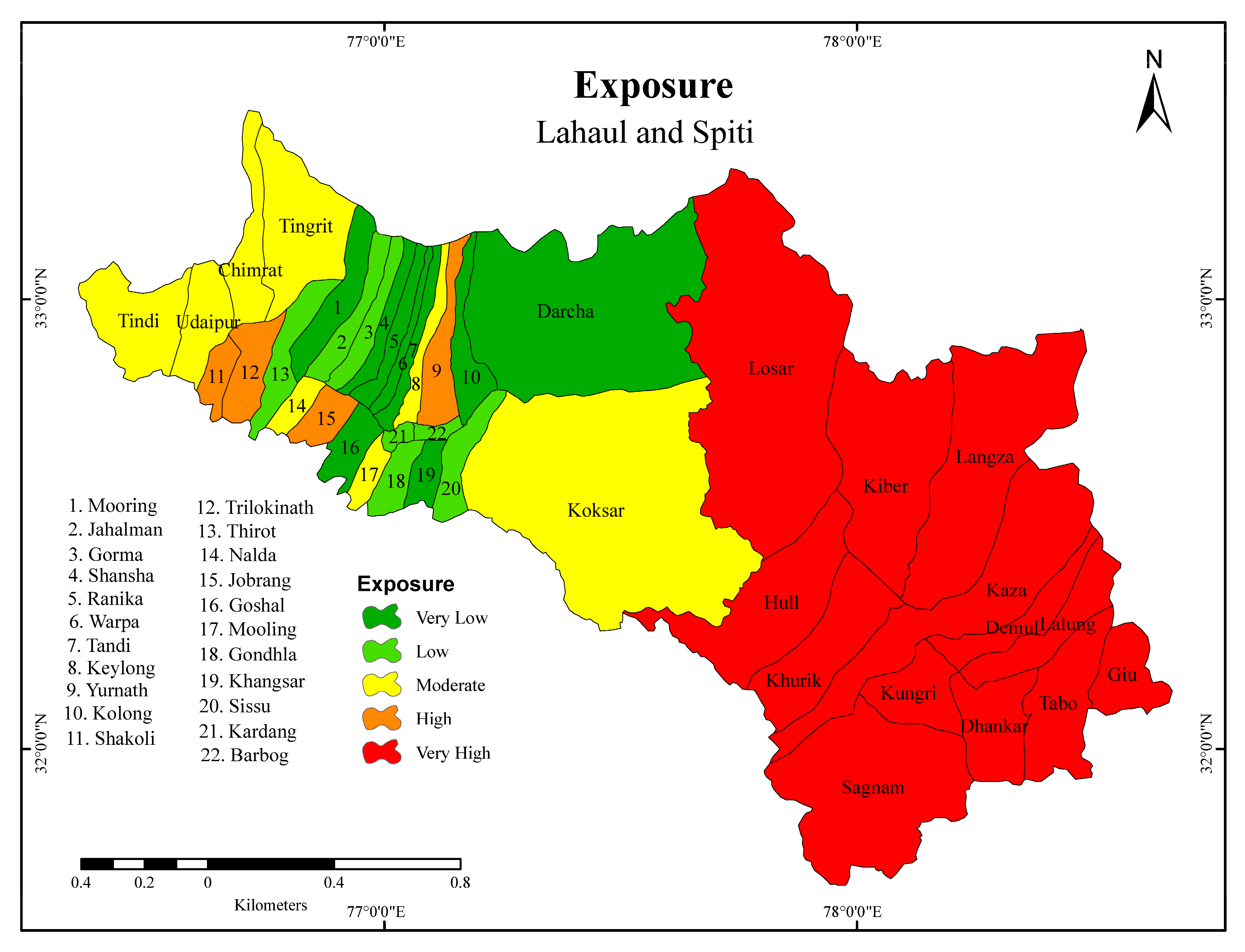
Exposure means the extent of agricultural activities’ influence on an extreme climate event, such as a shift in temperature, change in rain pattern, or increasing frequency of natural calamity. The recorded data indicate the maximum exposure in the eastern panchayats of Lahaul and Spiti (Figure 3). These panchayats are Lossar (0.585), Khurik (0.578) and Sagnam (0.572), which is an indicator that these areas are often faced with climatic shocks like floods, droughts, or frosts. Such climatic conditions have considerable bearing on crop production, soil fertility, and water availability, necessitating considerable climate adaptation interventions. Conversely, Goshal (0.360) and Kolong (0.369) have lower exposure rates, indicating that climatic conditions in these regions are comparatively stable, although they still face risks from changes in weather patterns (Table 3).
Udaipur has a moderate exposure of 0.437, indicating that climatic shocks take place, but most are somewhat predictable and can allow some level of strategic planning. This would indicate that areas with high exposure levels need an immediate range of interventions for climate adaptation, such as varieties of crops that withstand drought, improved water management mechanisms, and early warning systems for extreme weather events.
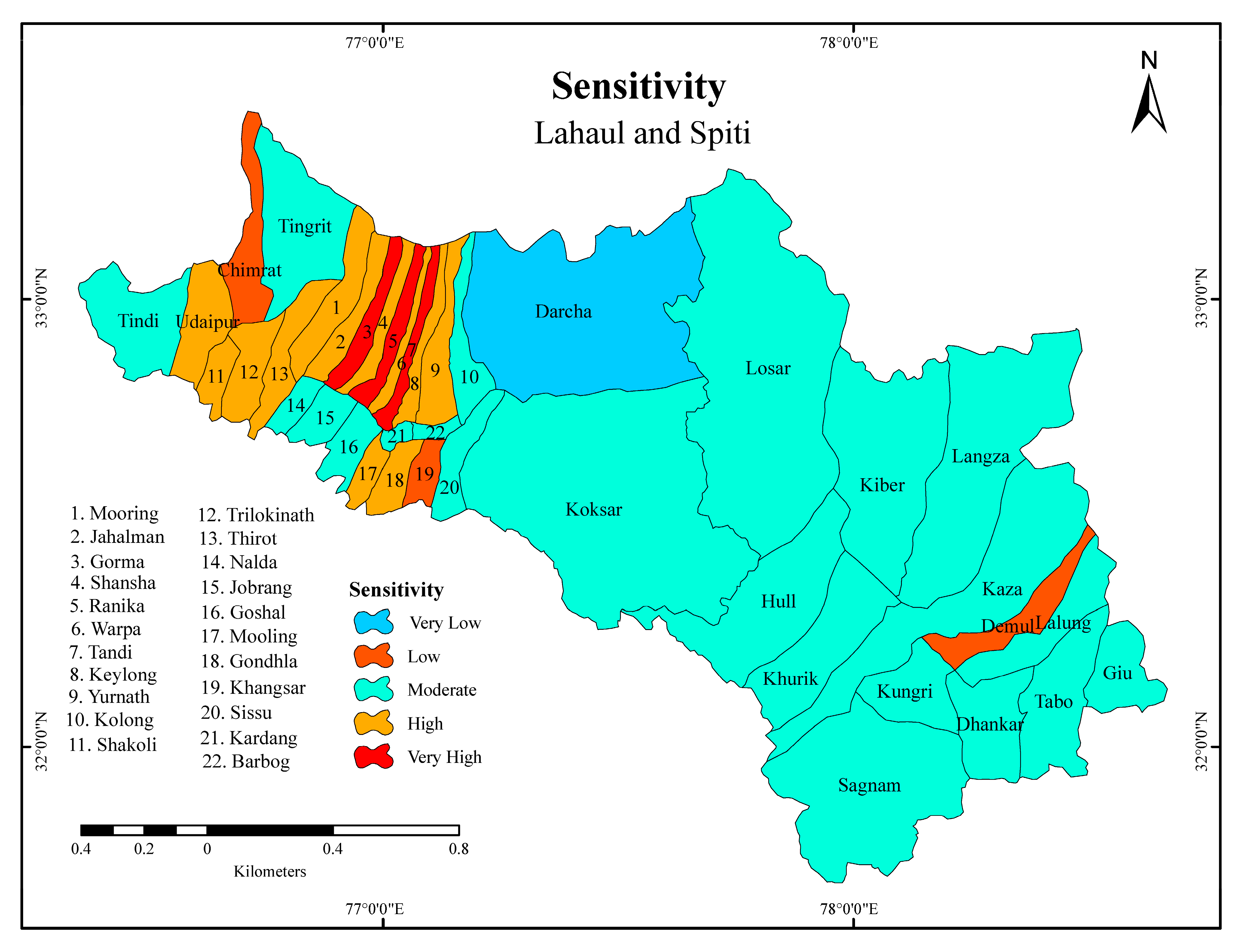
Sensitivity refers to the maximum dependence of the agricultural sector on stable climatic conditions and the measure by which external stressors impact the production systems. In simple terms, the higher sensitivity scores achieve a more significant agricultural loss from climatic variability. The data indicate that Ranika (0.714), Gorma (0.713) and Udaipur (0.684) are the most sensitive concerning climatic conditions, and even minor climatic disturbances will significantly impact crop productivity. Such high sensitivity could be due to a high dependence on rain-fed agriculture or outbreaks of pests. Similarly, Demul (0.601) and Chimrat (0.613) also demonstrated high sensitivity, meaning these regions would lose agricultural productive capacity under stressful climatic conditions. With such high sensitivity, Darcha and Khangsar have low sensitivity values, 0.557 and 0.589, respectively (Table 3; Figure 4).
Thus, they are resilient for better soil moisture retention, diversification in cropping patterns, and controlled farming techniques. However, the scores are high enough to indicate that climate variations pose serious risks to their agricultural production. High sensitivity can easily be curtailed with policy interventions that promote climate-resilient farming, diversification of crops, integration of pest management approaches, and improved irrigation infrastructure.
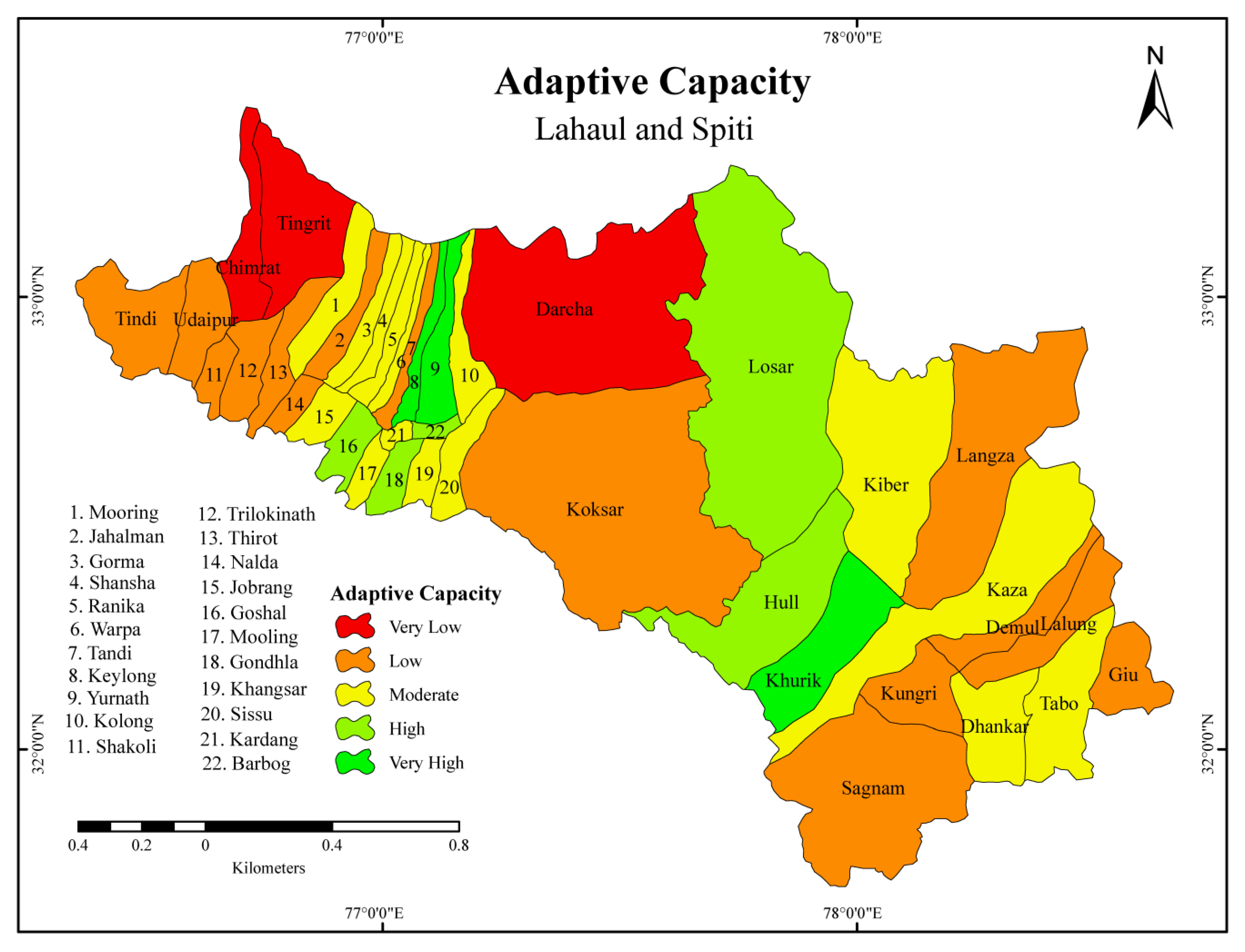
Adaptive capacity to cope with and recover from agricultural risks and climate changes of farmers and communities is represented through technology uptake, financial resources, and institutional support [46,47]. High adaptive capacity scores indicate high resilience, whereas low scores indicate a lack of a supportive infrastructure and systems to cope with agricultural stressors. The bottom line from the analysis is that Keylong (0.694) and Khurik (0.645) are on the adaptive capacity ladder, meaning that farmers here have better access to modern agricultural technologies, government support, and financial resources. Kaza (0.574) and Shansha (0.564) have also been classified as having moderate adaptive capacity, which implies that these regions have high exposure and sensitivity but have some coping mechanisms to withstand agricultural shocks. In contrast, Darcha (0.451) and Chimrat (0.474) fetched the lowest scores from all the networks in adaptive capacity and thus, resource and facility limitations in financial aid, irrigation facilities, and climate-resilient farming techniques were major hindrances in their adaptive capacity (Table 3; Figure 5 and Figure 6).
These panchayats need to invest in the immediate construction of necessary infrastructures, access to credit, and development of community-based resilience programs—panchayats, with Darcha and Chimrat being the most vulnerable due to low adaptive capacity. Keylong and Khurik have reported the highest resilience among the panchayats due to better financial and technological support systems. To combat agricultural vulnerability, priority should be given to improving irrigation systems, augmenting financial support, strengthening strategies for climate adaptation, and improving technological accessibility. However, a comprehensive approach incorporating exposure reduction, sensitivity reduction, and adaptive capacity improvement will strengthen long-term agricultural resilience to climate change.

3.3. Agricultural Vulnerability Index

Agricultural vulnerability and resilience are critical in regions dependent on climate-sensitive agricultural practices. The AVI is a relevant measure that quantifies agricultural systems’ vulnerability to climate change and socio-economic stressors. This Index encompasses exposure (the extent to which a region suffers climate hazards), sensitivity (the extent to which agricultural activities are being affected), and adaptive capacity (the ability of a region to prevail upon friendly conditions or change in coping with these challenges).
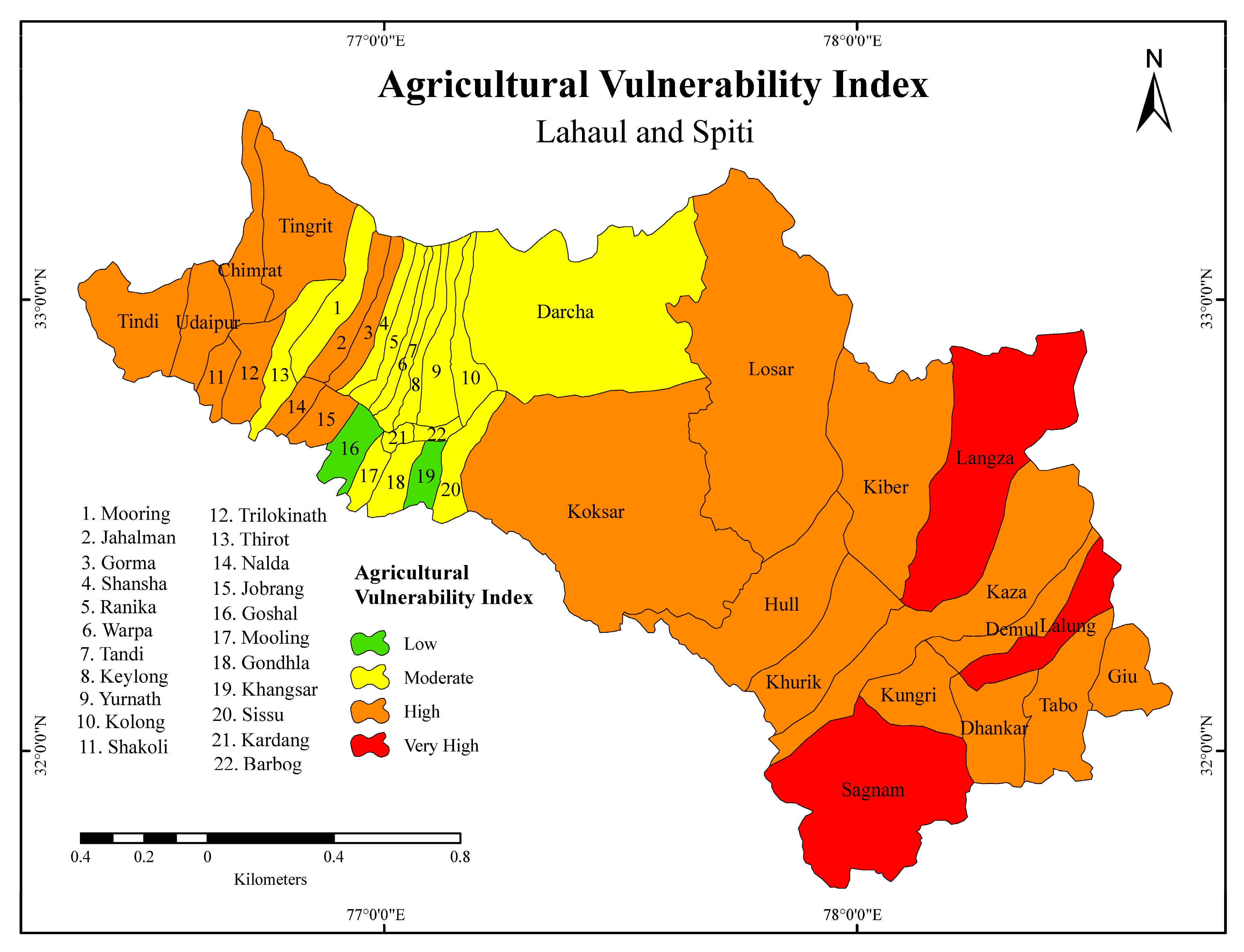
The villages with the most significant AVI scores-Langza, Sagnam, and Lalung-share a handful of foundational mechanisms that, coupled, heighten their vulnerability. These include higher climatic exposure due to glacial retreat and erratic precipitation, fragile soils prone to erosion, and much reliance upon snowmelt-based irrigation. Simultaneously, their regions have displayed limited uptake of climate-resilient infrastructure, enhanced market connectivity, or institutional backing to farmers. These systemic weaknesses lead to increased sensitiveness and lower adaptation capacity, further solidifying their vulnerability to climatic risks. Therefore, this points toward the need for policy actions focusing on water security, soil health restoration, and local institution-building in these critical areas.
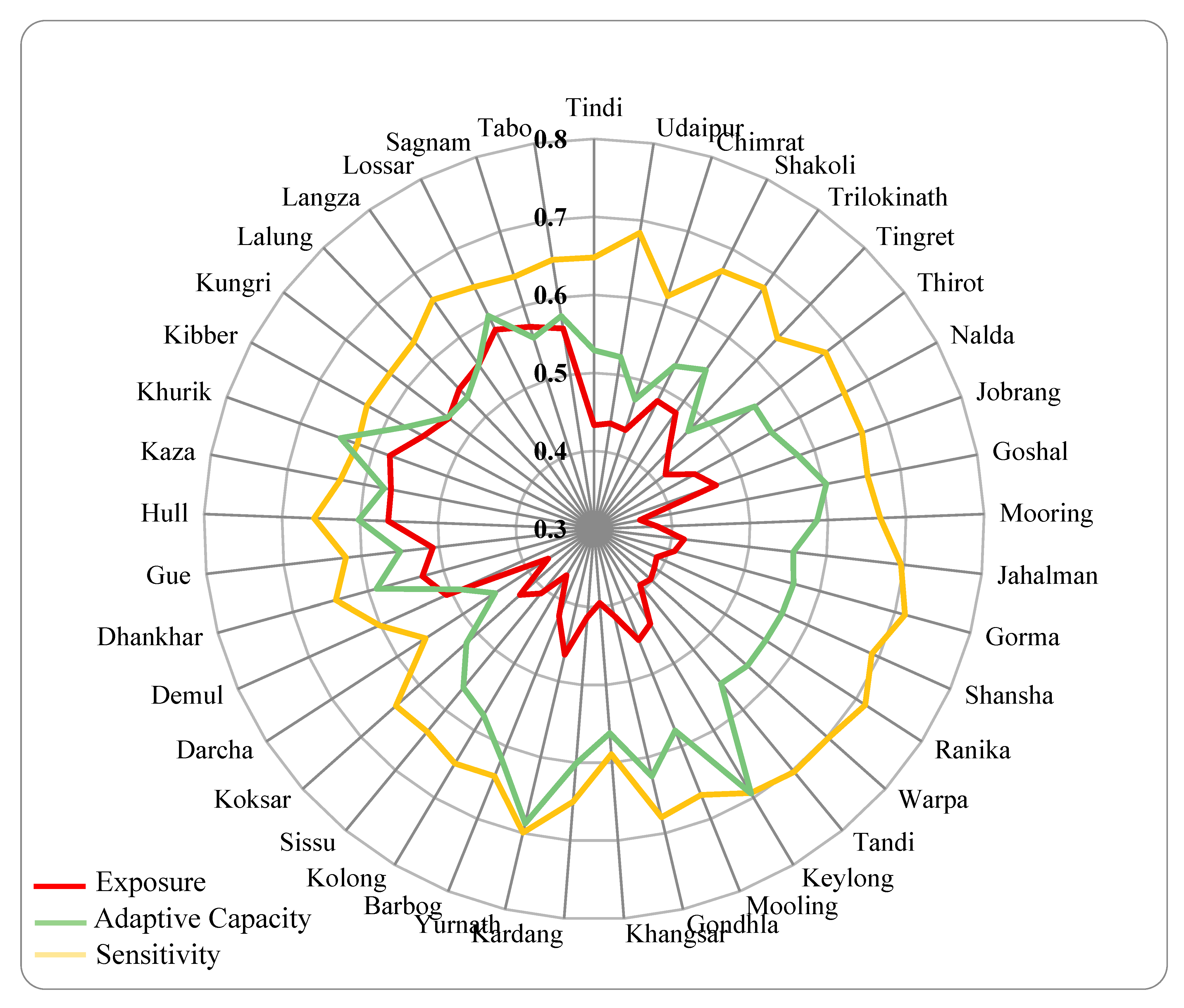
The AVI values for 41 Panchayats give insight into agricultural resilience and risk, contrasting horizontally regarding climate adaptation and resource accessibility. The highest agricultural vulnerability in Langza (0.553), Sagnam (0.551), and Lalung (0.550) is because of fewer coping factors in agriculture. Maximum panchayats come under moderate vulnerability. Goshal (0.471) and Khangsar (0.474) panchayats have the lowest agricultural vulnerability in Lahaul and Spiti (Table 3; Figure 7 and Figure 8).

4. Discussion

The evolution and application of the AVI in this study have given us a refined and provides a spatially comparative assessment of climate-induced risks across the high-altitude agricultural systems of Lahaul and Spiti. Thus, the study finds that vulnerability is the outcome of not only climatic exposure but also ecological, social, and infrastructural contexts within which farming exists. Panchayats like Langza, Lalung, and Sagnam, who record very high scores on the AVI, are ecologically very fragile and have infrastructural limits and resource constraints, making them highly sensitive to environmental changes and less able to adapt responsively. These findings are in total accordance with previous findings from other mountain areas like Kashmir Valley and Ha Tinh Province, whereby climatic vulnerabilities are enhanced by socio-economic and topographic marginalization [11,19].
The very composite nature of the AVI—consisting of exposure, sensitivity, and adaptive capacity or coping mechanism—has been recognized as a practical measure describing multidimensional vulnerability that is consistent with the IPCC definition and the generally accepted approaches used in worldwide assessments [5,6]. The spatial difference in sensitivity establishes that dependence on irrigation, accessibility to markets, pests, and social capital mix together to produce vulnerability outcomes. By way of an example, Keylong and Khurik come out at the opposite end of the scale in adaptive capacity with better technological and institutional support; hence, these two areas record lower AVI scores despite having moderate exposure. This lends credence to the findings showing that adaptation capacity remains a significant mitigating factor for climate hazards [13]. Equal weighting ensures methodological transparency and comparability but may limit more precision for the AVI and treat the indicators as having similar levels of importance. This criticism has been raised in the literature, where alternatives like Principal Component Analysis (PCA) and expert-driven weighting are considered more effective methods for reflecting indicator relevance [7,10]. However, equally weighted composite indices offer an efficient solution for policy applications and local-level planning in data-poor regions. Further robustness evidence for the composite index is provided by correlation and multicollinearity diagnostics, which ensure that 57 indicators are sufficiently independent and non-redundant in their contributions to the AVI framework.
Furthermore, the study supports all global evidence that vulnerability is dynamic and that adaptation planning must ideally be location-based. Using something like the composite index approach offered by AVI identifies high-risk locations for targeted interventions; in this manner, it directly supports the achievement of SDG 2 (Zero Hunger)-food security, SDG 6 (Water)- for irrigation, SDG 13 (Climate Action)-local-level resilience, and SDG 15 (Life on Land)-highland agroecosystem conservation. From a data-driven spatial planning perspective, this study can also be viewed as building climate-smart agriculture in mountain regions, which is a core focus of the national climate adaptation plans and international frameworks.
Also, emerging findings contemplate gender and youth participation in building agricultural adaptive capacities. Women and young farmers, quite often neglected in policy realms, play a pivotal role in resilient agriculture vis-à-vis sharing of skills and diversifying livelihoods [48,49]. Furthermore, changes in migration processes induced by climate variations are gradually impacting vulnerability by shifting labor dynamics and by reducing the availability of on-farm workforce [50]. Incorporating such social constructs within vulnerability analyses will enrich the AVI framework toward a just and inclusive climate adaptation pathway apt for Himalayan agroecosystems.
An indexed-based assessment alone will not fully capture behavioral and cultural adaptation. Integrating AVI with participatory methods based on farmers’ real-life experiences and localized coping strategies, such as indigenous knowledge, would enhance its explanatory and predictive powers. This resonates with recent literature calling for mixed-method approaches to climate vulnerability that combine quantitative indicators with qualitative insights [2,28].
Importantly, Climate-smart agriculture is a set of approaches aimed at helping farming systems respond to the challenges of climate change in an effective way. They aim to reduce greenhouse gas emissions, provide resilience to farmers, and sustain agricultural productivity in a way that improves rural livelihoods [51,52]. Furthermore, it is instrumental for solving the problem of food insecurity caused by climate variability. Despite all these, the practice of CSA has remained limited, especially in developing countries. This slow pace of adoption clearly signals the immediate need for necessary interventions through policy support, awareness creation, and capacity-building initiatives so that climate-smart agricultural interventions can gain momentum [53,54].

4.1. Policy and Recommendations

As highlighted in this study, addressing agricultural vulnerability requires intervention based on multiple levels and integrated approaches. The suggestions are:

4.1.1. Development of Climate-Resilient Infrastructure

Immediate investments for managing water resources through infrastructure such as gravity irrigation, drip irrigation, or polyhouse farming in the high-priority panchayats with a high AVI score (e.g., Langza and Sagnam) would help in stabilizing production, thereby mitigating adverse climatic conditions occasioned by irregular rainfall and temperature variability [23].

4.1.2. Encourage Diversification and Climate-Smart Agriculture

Crop diversification, agroforestry, and cultivation of traditional drought-resistant seed varieties can decrease climate sensitivity. Organic and regenerative agriculture, on the other hand, provide further advantages for building soil health and avoiding long-term degradation potential [27,37].

4.1.3. Expand Financial and Institutional Support

Besides extending access to government schemes such as PMFBY (crop insurance), PM-KISAN, and Soil Health Card to more panchayats feeling a greater exposure, an emphasis should be placed on enabling farmers through self-help groups, farmer producer organizations, and avenues for microcredit for the implementation of adaptive measures [10,35].

4.1.4. Formalizing Local Knowledge in Adaptation Planning

Indigenous practices, traditional ecological knowledge systems, and local weather observation techniques should all receive formal recognition and be incorporated into regional adaptation frameworks. Participatory research leads to more contextual applicability of AVI-like indices [7,28].

4.1.5. Implement Early Warning and Extension Service Facilities

Scaling up localized early warning systems for frost, floods, and drought and disseminating real-time weather forecasts on mobile apps must be done. Earlier extension services need to be bolstered for better awareness and adoption of technologies in communities lagging [4].

4.2. Limitation

Using the equal weighting method to determine the composite AVI from 57 indicators, the authors are aware that all indicators may be equally relevant for agricultural vulnerability. The choice for equal weights was offered due to criteria of simplicity, objectivity, and the largest twin directly placed in the source, especially with respect to vulnerability studies in data-constrained and heterogeneous contexts like that of the Himalayas. Yet, we do realize this approach may tend to under influence or overinfluence certain indicators. Due to restrictions in obtaining reliable expert judgment on the weighting of indicators or in finding statistical homogeneity for PCA, no alternative methods of weighting were used in this study. It is suggested that future studies carry out sensitivity analyses, for example by PCA or based on expert weighting, to check the robustness of the results for AVI and allow more confidence in the methodologies as well as more refined response strategies for climate-resilient agriculture.

5. Conclusions

The introduction of the AVI is essential as it provides a framework for how agricultural systems are affected by climate-related stressors. AVI encapsulates exposure, sensitivity, and adaptive capacity to understand better all those aspects that could lead to the construction of a targeted adaptation strategy. Results showed that Langza, Sagnam and Lalung score high on vulnerability indexes due to excessive climatic changes, seasonal instability, and resource dependency. On the contrary, Goshal and Khangsar are less exposed but face some limitations; hence, the low adaptive capacity limits them from being able to withstand climate shocks.
The result indicates that agricultural vulnerability also depends on socio-economic as well as technological and infrastructural issues rather than solely on climatic parameters. That means some regions can be financially stable, mechanized, and have irrigation infrastructures. In contrast, other regions suffer less due to market accessibility, scarcity of labor, and poor institutional support. High-altitude regions like Lahaul and Spiti will, therefore, require climate-smart interventions such as efficient water management, crop diversification, and better access to improved technologies. Multi-faceted solutions would address agricultural vulnerability, including policy reforms, local knowledge capitalization, and community resilience building. Future research would need real-time monitoring, participatory vulnerability assessments, and long-term adaptation frameworks for sustainable agricultural development in climate-sensitive regions. Alignment of these efforts with Sustainable Development Goals—specifically SDG 2 (Zero Hunger), SDG 6 (Water), SDG 13 (Climate Action), and SDG 15 (Life on Land)—will nourish climate-resilient, inclusive development. Synergizing policy with technology and indigenous knowledge will erect sustainable Agri-ecosystems in fragile mountain terrains.

Supplementary Materials

The following supporting information can be downloaded at: https://www.mdpi.com/article/10.3390/su172310682/s1, Table S1: The calculated values of Major determinants of Agricultural Vulnerability Index.

Author Contributions

Conceptualization, A. and P.K.; methodology, A.; software, A.; validation, A., P.K. and B.G.; formal analysis, A.; investigation, A.; resources, P.K., M.J., B.G. and Z.L.; data curation, A.; writing—original draft preparation, A. and P.K.; writing—review and editing, A., P.K., M.J., B.G. and Z.L.; visualization, A. and P.K.; supervision, P.K. All authors have read and agreed to the published version of the manuscript.

Funding

This research received no external funding.

Institutional Review Board Statement

Ethical review and approval were waived for this study due to according to the Indian Council of Medical Research (ICMR), National Ethical Guidelines for Biomedical and Health Research Involving Human Participants (2017), Chapter 2: Review Procedures (https://ethics.ncdirindia.org/asset/pdf/ICMR_National_Ethical_Guidelines.pdf, accessed on 1 June 2025), minimal-risk social or behavioural research, such as non-intrusive surveys and interviews that do not collect sensitive data. It is exempt from IRB review. Based on these national guidelines, this study qualified for exemption.

Informed Consent Statement

Informed consent was obtained from all subjects involved in the study.

Data Availability Statement

The raw data supporting the conclusions of this article will be made available by the authors on request.

Acknowledgments

The author is thankful to the University of Delhi and University Grant Com-mission Fellowship (3268/(NET-JULY 2018) for the academic and research facilities support, which were vital in the completion of this study conducted as part of the Ph.D. program.

Conflicts of Interest

The authors declare no conflicts of interest.

Abbreviations

The following abbreviations are used in this manuscript:
AVIAgricultural Vulnerability Index
IPCCIntergovernmental Panel on Climate Change
SDGSustainable Development Goals
NMSANational Mission on Sustainable Agriculture
DRRDisaster Risk Reduction
UNDPUnited Nations Development Programme
HDIHuman Development Index

References

  1. IPCC. Climate Change 2014: Impacts, Adaptation, and Vulnerability—Summaries, FAQs and Cross-Chapter Boxes; Contribution of Working Group II to the Fifth Assessment Report; Cambridge University Press: Cambridge, UK, 2014; Available online: https://www.ipcc.ch/report/ar5/wg2/ (accessed on 23 January 2025).
  2. Parker, L.; Bourgoin, C.; Martinez-Valle, A.; Läderach, P. Vulnerability of the Agricultural Sector to Climate Change: Development of a Pan-Tropical Climate Risk Vulnerability Assessment. PLoS ONE 2019, 14, e0213641. [Google Scholar] [CrossRef]
  3. Tao, S.; Xu, Y.; Liu, K.; Pan, J.; Gou, S. Research Progress in Agricultural Vulnerability to Climate Change. Adv. Clim. Change Res. 2011, 2, 203–210. [Google Scholar] [CrossRef]
  4. Tanir, T.; Yildirim, E.; Ferreira, C.M.; Demir, I. Social Vulnerability and Climate Risk Assessment for Agricultural Communities in the United States. Sci. Total Environ. 2024, 908, 168346. [Google Scholar] [CrossRef] [PubMed]
  5. Wiréhn, L.; Danielsson, Å.; Neset, T.S. Assessment of composite index methods for agricultural vulnerability to climate change. J. Environ. Manag. 2015, 156, 70–80. [Google Scholar] [CrossRef]
  6. IPCC. Climate Change 2007: Impacts, Adaptation and Vulnerability; Contribution of Working Group II to the Fourth Assessment Report of the IPCC; Cambridge University Press: Cambridge, UK, 2007; Available online: https://www.ipcc.ch/site/assets/uploads/2018/03/ar4_wg2_full_report.pdf (accessed on 19 November 2025).
  7. Neset, T.S.; Wiréhn, L.; Opach, T.; Glaas, E. Evaluation of Indicators for Agricultural Vulnerability to Climate Change: The Case of Swedish Agriculture. Ecol. Indic. 2019, 105, 571–580. [Google Scholar] [CrossRef]
  8. Sahoo, D.; Moharaj, P. Assessing Agricultural Vulnerability to Climate Change through Dynamic Indexing Approach. Environ. Sci. Pollut. Res. 2024, 31, 55000–55021. [Google Scholar] [CrossRef]
  9. Kuniyal, J.C.; Vishvakarma, S.C.R.; Singh, G.S. Changing Crop Biodiversity and Resource Use Efficiency of Traditional Versus Introduced Crops in the Cold Desert of the Northwestern Indian Himalaya: A Case of the Lahaul Valley. Biodivers. Conserv. 2004, 13, 1271–1304. Available online: https://link.springer.com/article/10.1023/B:BIOC.0000019404.48445.27 (accessed on 23 January 2025). [CrossRef]
  10. Choudhary, B.B.; Sirohi, S. Understanding the Vulnerability of Agricultural Production Systems to Climatic Stressors in North India. Environ. Dev. Sustain. 2021, 23, 5671–5689. [Google Scholar]
  11. Farooq, M.; Singh, S.K.; Kanga, S.; Meraj, G.; Mushtaq, F.; Đurin, B.; Pham, Q.B.; Hunt, J. Assessing Future Agricultural Vulnerability in Kashmir Valley: Mid- and Late-Century Projections Using SSP Scenarios. Sustainability 2024, 16, 7691. [Google Scholar] [CrossRef]
  12. Kumar, S.; Kumar, P.; Singh, A.; Ashwani; Kumar, M. Socio-Economic Livelihood Vulnerability to Mountain Hazards: A Case of Uttarakhand Himalaya, India. In Remote Sensing and Geographic Information Systems for Policy Decision Support; Advances in Geographical and Environmental Sciences; Singh, R.B., Kumar, M., Tripathi, D.K., Eds.; Springer: Singapore, 2022. [Google Scholar] [CrossRef]
  13. Omerkhil, N.; Chand, T.; Valente, D.; Alatalo, J.M.; Pandey, R. Climate Change Vulnerability and Adaptation Strategies for Smallholder Farmers in Yangi Qala District, Takhar, Afghanistan. Ecol. Indic. 2020, 110, 105863. [Google Scholar] [CrossRef]
  14. United Nations. Transforming Our World: The 2030 Agenda for Sustainable Development; UN Publications: New York, NY, USA, 2015. [Google Scholar]
  15. Ministry of Environment, Forest and Climate Change (MoEFCC). State Action Plan on Climate Change: Himachal Pradesh; Government of India: New Delhi, India, 2021. [Google Scholar]
  16. International Centre for Integrated Mountain Development (ICIMOD). Climate and Environmental Change Impacts the Hindu Kush Himalaya: Concerns and Policy Responses; ICIMOD Reports: Kathmandu, Nepal, 2019. [Google Scholar]
  17. Adger, W.N. Vulnerability. Glob. Environ. Change 2006, 16, 268–281. [Google Scholar] [CrossRef]
  18. Pinto, L.J.L.B.; Da Silva, F.R.; De Souza Lessa, B.; Câmara, S.F.; De Sousa-Filho, J.M. Marine Pollution and Socioeconomic Vulnerability in Brazilian Coastal Cities. SSRN 2024. [Google Scholar] [CrossRef]
  19. Loi, D.T.; Huong, L.V.; Tuan, P.A.; Nhung, N.T.H.; Huong, T.T.Q.; Man, B.T.H. An Assessment of Agricultural Vulnerability in Global Climate Change: A Case Study in Ha Tinh Province, Vietnam. Sustainability 2022, 14, 1282. [Google Scholar] [CrossRef]
  20. Hinkel, J. Indicators of vulnerability and adaptive capacity: Towards a clarification of the science–policy interface. Glob. Environ. Chang. 2011, 21, 198–208. [Google Scholar] [CrossRef]
  21. Kumar, P.; Ashwani; Mishra, S.; Thakur, S.; Kumar, D.; Raman, V.A.V. Vulnerability of tribal communities to climate variability in Lahaul and Spiti, Himachal Pradesh, India. J. Geogr. 2023, 47, 29–43. [Google Scholar] [CrossRef]
  22. IPCC. Climate Change 2022: Impacts, Adaptation, and Vulnerability; Contribution of Working Group II to the Sixth Assessment Report; Cambridge University Press: Cambridge, UK, 2022. [Google Scholar]
  23. FAO. Climate Change and Agriculture: Impacts, Adaptation, and Mitigation Strategies; FAO Publications: Rome, Italy, 2021. [Google Scholar]
  24. Barnett, T.P.; Adam, J.C.; Lettenmaier, D.P. The Effects of Climate Change on Water Resources. Nature 2005, 438, 303–309. [Google Scholar] [CrossRef] [PubMed]
  25. Gbetibouo, G.A.; Ringler, C.; Hassan, R. Vulnerability of the South African Farming Sector to Climate Change and Variability: An Indicator Approach. Nat. Resour. Forum 2010, 34, 175–187. [Google Scholar] [CrossRef]
  26. O’Brien, K.; Leichenko, R.; Kelkar, U.; Venema, H.; Aandahl, G.; Tompkins, H.; West, J. Mapping Vulnerability to Multiple Stressors: Climate Change and Globalisation in India. Glob. Environ. Change 2004, 14, 303–313. [Google Scholar] [CrossRef]
  27. Ravindranath, N.H.; Rao, S.; Sharma, N.; Nair, M.; Gopalakrishnan, R.; Rao, A.S.; Malaviya, S.; Tiwari, R.; Sagadevan, A.; Munsi, M.; et al. Climate Change Vulnerability Profiles for North East India. SSRN Electron. J. 2011. [Google Scholar] [CrossRef]
  28. Eriksen, S.H.; Kelly, P.M. Developing Credible Vulnerability Indicators for Climate Adaptation Policies. Mitig. Adapt. Strateg. Glob. Environ. Change 2007, 12, 495–524. [Google Scholar] [CrossRef]
  29. Rockström, J.; Barron, J.; Fox, P. Water productivity in rain-fed agriculture: Challenges and opportunities for smallholder farmers in drought-prone tropical agroecosystems. Limits Oppor. Improv. 2003, 85, 145–162. [Google Scholar] [CrossRef]
  30. Wani, S.P.; Rockström, J.; Oweis, T. Rainfed Agriculture: Unlocking the Potential; CABI: Wallingford, UK, 2009; Available online: https://www.fao.org/4/w5183e/w5183e08.htm (accessed on 23 January 2025).
  31. Abrol, Y.P.; Ingram, K.T. Effects of Higher Day and Night Temperatures on Growth and Yields of Some Crop Plants. In Food and Agricultural Organization of the United Nations; John Wiley & Sons Ltd: Chichester, UK, 1996. [Google Scholar]
  32. Filho, W.L.; Belay, S.; Kalangu, J.; Menas, W.; Munishi, P.; Musiyiwa, K. Climate Change Adaptation in Africa; Climate Change Management; Springer: Cham, Switzerland, 2017. [Google Scholar] [CrossRef]
  33. Patnaik, U.; Narayanan, K. Vulnerability and Climate Change: An Analysis of the Eastern Coastal Districts of India; MPRA Paper No. 22062; University Library of Munich: Munich, Germany, 2009. [Google Scholar]
  34. Swami, D.; Parthasarathy, D. A Multidimensional Perspective to Farmers’ Decision Making Determines the Adaptation of the Farming Community. J. Environ. Manag. 2020, 264, 110487. [Google Scholar] [CrossRef]
  35. Ghosh, S.; Mujumdar, P.P. Climate Change Impact Assessment: Uncertainty Modeling with Imprecise Probability. J. Geophys. Res. Atmos. 2009, 114, D14113. [Google Scholar] [CrossRef]
  36. Dong, Z.; Hu, G.; Qian, G.; Lu, J.; Zhang, Z.; Luo, W.; Lyu, P. High-Altitude Aeolian Research on the Tibetan Plateau. Rev. Geophys. 2017, 55, 864–901. [Google Scholar] [CrossRef]
  37. Skendžić, S.; Zovko, M.; Živković, I.P.; Lešić, V.; Lemić, D. The Impa ct of Climate Change on Agricultural Insect Pests. Insects 2021, 12, 240. [Google Scholar] [CrossRef]
  38. Bhandari, A.; Magar, N.T.; Thapa, B.J.; Shahi, P.; Sharma, T.P.P. Measuring Climate Vulnerability of Tourism-Dependent Livelihoods: The Case of Langtang National Park. J. Tour. Himal. Adv. 2024, 6, 16–44. [Google Scholar] [CrossRef]
  39. United Nations Development Programme (UNDP). Building Resilience: Adaptive Capacity Strategies for Climate-Vulnerable Regions; UNDP Publications: New York, NY, USA, 2020. [Google Scholar]
  40. Kumar, P.; Ashwani. Assessment of Livelihood Vulnerability and Climate Change Perception in Lahaul and Spiti District, Himachal Pradesh, India. In Livelihoods and Well-Being in the Era of Climate Change; Banu, N., Fazal, S., Eds.; Springer: Cham, Switzerland, 2025. [Google Scholar] [CrossRef]
  41. Directorate of Extension Education; CSK Himachal Pradesh Krishi Vishavavidyalaya. Annual Progress Report 2020–21: Krishi Vigyan Kendra, Lahaul & Spiti-1 at Kukumseri–175142 (H.P.); CSK Himachal Pradesh Krishi Vishavavidyalaya: Palampur, India, 2021. [Google Scholar]
  42. Pai, D.S.; Sridhar, L.; Rajeevan, M.; Sreejith, O.P.; Satbhai, N.S.; Mukhopadhyay, B. Development of a New High Spatial Resolution (0.25° × 0.25°) Long Period (1901–2010) Daily Gridded Rainfall Data Set over India and Its Comparison with Existing Data Sets over the Region. Mausam 2014, 65, 1–18. [Google Scholar] [CrossRef]
  43. Muñoz-Sabater, J.; Dutra, E.; Agustí-Panareda, A.; Albergel, C.; Arduini, G.; Balsamo, G. ERA5-Land: A State-of-the-Art Global Reanalysis Dataset for Land Applications. Earth Syst. Sci. Data 2021, 13, 4349–4383. [Google Scholar] [CrossRef]
  44. Janani, H.K.; Karunanayake, C.; Gunathilake, M.B.; Rathnayake, U. Integrating Indicators in Agricultural Vulnerability Assessment to Climate Change. Agric. Res. 2024, 13, 741–754. [Google Scholar] [CrossRef]
  45. Jayadas, A.; Ambujam, N.K.A. Quantitative Assessment of Vulnerability of Farming Communities to Extreme Precipitation Events in Lower Vellar River Sub-Basin, India. Environ. Dev. Sustain. 2022, 25, 13541–13563. [Google Scholar] [CrossRef]
  46. Nazari, S.; Rad, G.P.; Sedighi, H.; Azadi, H. Vulnerability of Wheat Farmers: Toward a Conceptual Framework. Ecol. Indic. 2015, 52, 517–532. [Google Scholar] [CrossRef]
  47. Kumar, P.; Sarda, R.; Yadav, A.; Ashwani; Gonencgil, B.; Rai, A. Farmer’s Perception of Climate Change and Factors Determining the Adaptation Strategies to Ensure Sustainable Agriculture in the Cold Desert Region of Himachal Himalayas, India. Sustainability 2025, 17, 2548. [Google Scholar] [CrossRef]
  48. Djoudi, H.; Locatelli, B.; Vaast, C.; Asher, K.; Brockhaus, M.; Sijapati Basnett, B. Beyond dichotomies: Gender and intersecting inequalities in climate change studies. Ambio 2016, 45, 248–262. [Google Scholar] [CrossRef]
  49. Geza, W.; Ngidi, M.; Ojo, T.; Adetoro, A.A.; Slotow, R.; Mabhaudhi, T. Youth Participation in Agriculture: A Scoping Review. Sustainability 2021, 13, 9120. [Google Scholar] [CrossRef]
  50. Rasul, G.; Sharma, B. The nexus approach to water–energy–food security: An option for adaptation to climate change. Clim. Policy 2016, 16, 682–702. [Google Scholar] [CrossRef]
  51. FAO. Climate-Smart Agriculture Sourcebook: Summary; FAO: Rome, Italy, 2017. [Google Scholar]
  52. Autio, A.; Johansson, T.; Motaroki, L.; Minoia, P.; Pellikka, P. Constraints for adopting climate-smart agricultural practices among smallholder farmers in Southeast Kenya. Agric. Syst. 2021, 194, 103284. [Google Scholar] [CrossRef]
  53. Pagliacci, F.; Defrancesco, E.; Mozzato, D.; Bortolini, L.; Pezzuolo, A.; Pirotti, F.; Pisani, E.; Gatto, P. Drivers of farmers’ adoption and continuation of climate-smart agricultural practices. A study from northeastern Italy. Sci. Total Environ. 2020, 710, 136345. [Google Scholar] [CrossRef]
  54. Wakweya, R.B. Challenges and prospects of adopting climate-smart agricultural practices and technologies: Implications for food security. J. Agric. Food Res. 2023, 14, 100698. [Google Scholar] [CrossRef]
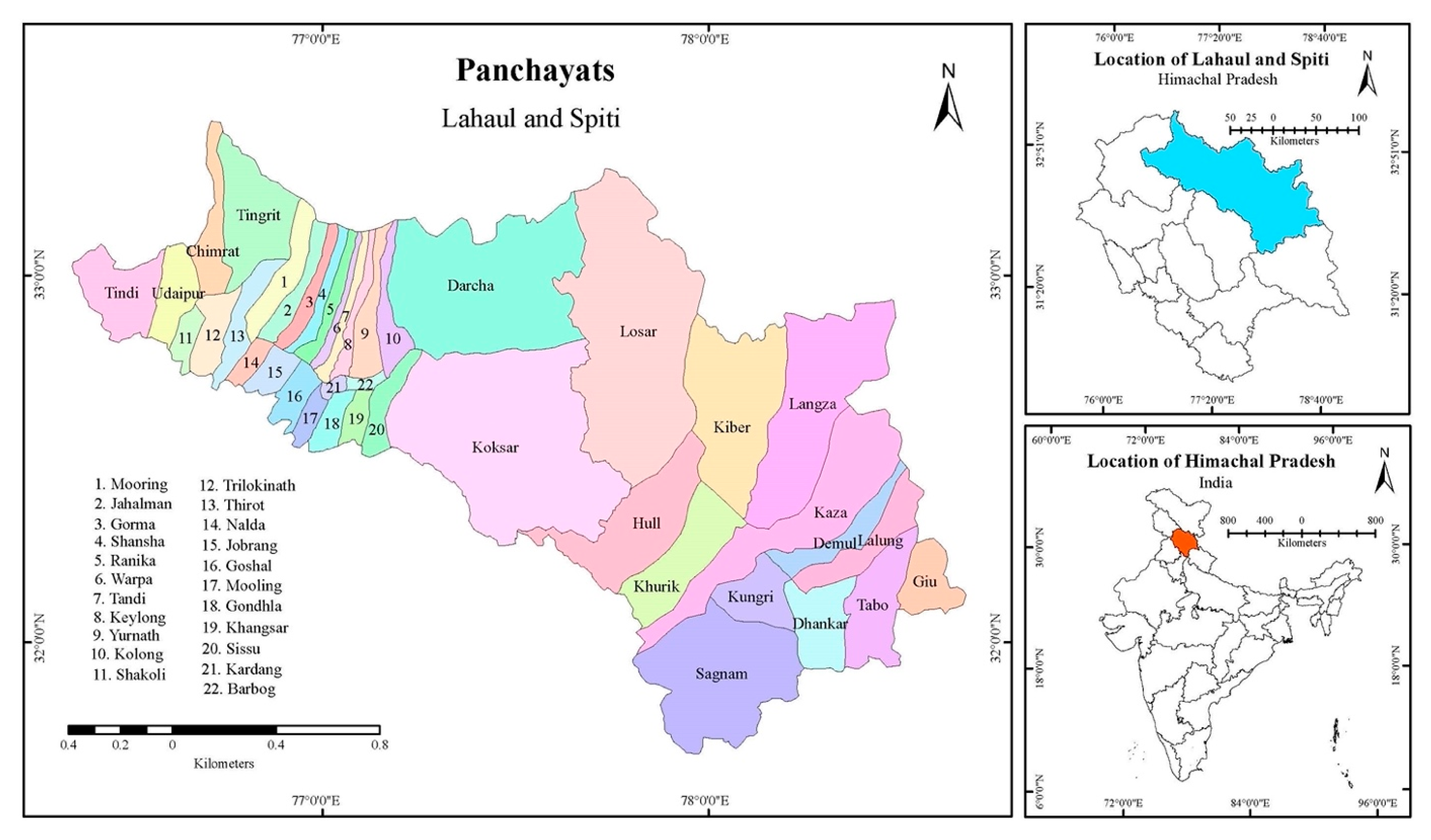
Figure 1. Location of Study area and the Distribution of Panchayats in Lahaul and Spiti district.
Sustainability 17 10682 g001
Figure 2. Methodological framework of the Study.
Sustainability 17 10682 g002
Figure 3. Spatial distribution of Exposure of 41 panchayats.
Sustainability 17 10682 g003
Figure 4. Spatial distribution of Sensitivity of 41 panchayats.
Sustainability 17 10682 g004
Figure 5. Major determinants of AVI of various Panchayats.
Sustainability 17 10682 g005
Figure 6. Spatial distribution of Adaptive Capacity of 41 panchayats.
Sustainability 17 10682 g006
Figure 7. Spatial distribution of AVI of 41 panchayats.
Sustainability 17 10682 g007
Figure 8. Polar diagram of the result of AVI of 41 Panchayats.
Sustainability 17 10682 g008
Table 2. Number of Households Surveyed in Lahaul and Spiti.
S.No.PanchayatsNo. of HouseholdsS.No.PanchayatsNo. of Households
1Tindi522Kardang 6
2Udaipur1023Yurnath 10
3Chimrat524Barbog 7
4Shakoli725Kolong 10
5Trilokinath 826Sissu 10
6Tingret 527Koksar 6
7Thirot 728Darcha 10
8Nalda 529Demul 5
9Jobrang 630Dhankhar 6
10Goshal 731Gue 5
11Mooring 732Hull 6
12Jahalman 933Kaza 7
13Gorma634Khurik 9
14Shanshsa 835Kibber 7
15Ranika 636Kungri 6
16Warpa737Lalung 7
17Tandi 738Langza 5
18Keylong 1039Lossar 10
19Mooling 540Sagnam 5
20Gondhla 641Tabo 10
21Khangsar 8
Table 3. Agricultural Vulnerability and its factors and affected Sustainable Development Goals.
PanchayatsExposureSensitivityAdaptive CapacityAVIMajor Affected SDGs
Tindi0.4330.6480.5290.517SDG 13
Udaipur0.4370.6840.5230.533SDG 13
Chimrat0.4330.6130.4740.524SDG 6 and 13
Shakoli0.4830.6690.5330.539SDG 13
Trilokinath0.4820.6780.5490.537SDG 13
Tingret0.4380.6390.4740.534SDG 6 and 13
Thirot0.4150.6730.5590.510SDG 13
Nalda0.4470.6650.5590.517SDG 13
Jobrang0.4660.6650.5780.518SDG 13
Goshal0.3600.6570.6030.471SDG 13
Mooring0.3820.6670.5860.488SDG 13
Jahalman0.4160.6960.5570.518SDG 13
Gorma0.4070.7130.5650.518SDG 13
Shansha0.3880.6900.5640.505SDG 13
Ranika0.3920.7140.5620.515SDG 13
Warpa0.3970.7020.5630.512SDG 13
Tandi0.3930.7030.5560.513SDG 13
Keylong0.4410.6930.6940.480SDG 13
Mooling0.4530.6670.5780.514SDG 13
Gondhla0.4140.6790.6250.489SDG 13
Khangsar0.3950.5890.5620.474SDG 13
Kardang0.4130.6500.6010.488SDG 13
Yurnath0.4650.6990.6870.492SDG 13
Barbog0.4200.6410.6170.481SDG 13
Kolong0.3690.6490.5770.480SDG 13
Sissu0.4070.6360.5630.493SDG 13
Koksar0.4270.6400.5190.516SDG 13
Darcha0.3700.5570.4510.492SDG 6 and 13
Demul0.5070.6010.4890.540SDG 2, 6 and 13
Dhankhar0.5280.6430.5890.527SDG 2, 6 and 13
Gue0.5080.6200.5500.526SDG 6, 13
Hull0.5640.6590.6020.540SDG 6, 13
Kaza0.5650.6310.5740.541SDG 6, 13
Khurik0.5780.6220.6450.518SDG 6, 13
Kibber0.5490.6310.5740.535SDG 2, 6 and 13
Kungri0.5340.6290.5360.542SDG 6, 13
Lalung0.5490.6330.5340.550SDG 6, 13
Langza0.5570.6590.5570.553SDG 6, 13
Lossar0.5850.6460.6050.542SDG 6, 13
Sagnam0.5720.6390.5570.551SDG 2, 6 and 13
Tabo0.5600.6490.5760.545SDG 6, 13
Disclaimer/Publisher’s Note: The statements, opinions and data contained in all publications are solely those of the individual author(s) and contributor(s) and not of MDPI and/or the editor(s). MDPI and/or the editor(s) disclaim responsibility for any injury to people or property resulting from any ideas, methods, instructions or products referred to in the content.