Article

Can Rural Entrepreneurship Promote the Development of New-Quality Productive Forces in Agriculture?—Evidence from China


1
School of Economics and Management, Beihua University, Jilin 132013, China
2
School of Business Administration, Nanjing University of Finance and Economics, Nanjing 210023, China
*
Author to whom correspondence should be addressed.
Sustainability 2025, 17(23), 10676; https://doi.org/10.3390/su172310676
Submission received: 11 November 2025 / Revised: 24 November 2025 / Accepted: 25 November 2025 / Published: 28 November 2025
(This article belongs to the Special Issue Agricultural Economics and Rural Development)

Abstract

Accelerating the development of new-quality productive forces in agriculture represents an intrinsic requirement for achieving high-quality agricultural development and serves as a new driver and engine for advancing rural revitalization. This study utilized panel data from 30 Chinese provinces to construct and validate a mechanistic model examining the interactive relationship between rural entrepreneurship and new-quality productive forces in agriculture, exploring whether rural entrepreneurship can promote the development of new-quality productive forces in agriculture. The findings reveal the following: First, rural entrepreneurship can provide strong support for the development of new-quality productive forces in agriculture. Second, rural entrepreneurship facilitates the improvement of new-quality productive forces in agriculture by promoting agricultural technological innovation. However, this process requires surpassing a single threshold of agricultural technological innovation. Third, rural entrepreneurship contributes to the elevation of new-quality productive forces in agriculture by fostering rural industrial integration; nevertheless, this process encounters dual thresholds in rural industrial integration. Finally, rural entrepreneurial activities exhibit spatial spillover effects on the development of new-quality productive forces in agriculture in neighboring regions. This study explores novel approaches to fostering new-quality productive forces in agriculture and unlocks the “black box” linking rural entrepreneurship with these forces.

1. Introduction

With the acceleration of the global agricultural modernization process, factors of agricultural production have gradually transitioned from traditional to high-quality factors. Their growth pattern has also shifted from the traditional additive mode to a multiplicative mode. Agricultural productivity is now in a phase of transformation from “quantity” to “quality.” The connotation and factors of agricultural productivity have significantly changed. Its scope has transcended the mere focus on the efficiency of factor allocation; instead, it now encompasses a broader array of novel aspects, including digitally propelled advancement, environmentally friendly innovation, and ecological longevity [1,2], namely, new-quality productive forces in agriculture. On 23 February 2025, the Chinese government’s No. 1 Central Document proposed the concept of “new-quality productive forces in agriculture.” This represents an advanced form of productive forces that relies on modern technology to enhance the efficiency and rationality in the distribution of agricultural production resources; fundamentally transforms agricultural production methods; catalyzes the advent of innovative paradigms, novel growth engines, and emerging business modalities within the agricultural domain; and, thereby, comprehensively enhances agricultural output efficiency and benefits [3]. With digital and intelligent transformation as its main theme, the new-quality productive forces in agriculture leverage advanced resources, such as technological innovation, talent aggregation, and data elements, to drive innovations in the assignment of agricultural productive assets and leapfrog improvements in resource utilization efficiency, becoming the principal impetus propelling the advancement of contemporary agricultural practices. However, in the last twenty years, the pace of increase in worldwide agricultural output efficiency has decelerated, posing new challenges to the transformation and advancement of high-quality agricultural productive capacities. Against this backdrop, it is imperative to explore new ideas and measures to reconstruct and boost the leapfrog advancement of emerging agricultural productive forces with novel attributes.
The cornerstone for fostering high-caliber productive capabilities within the agricultural sector resides in the emergence of novel business formats, innovative operational models, burgeoning industries, and cutting-edge services [4]. Rural entrepreneurial activities, in turn, provide sustained impetus for the cultivation of novel business entities, innovative operational paradigms, emerging industrial sectors, and pioneering service offerings pertinent to agriculture [5]. Rural entrepreneurial endeavors are commonly structured around familial frameworks and are distinguished by the ability to discern entrepreneurial opportunities, redistribute assets, devise innovative business frameworks, and delve into nascent industrial sectors [6]. Effective rural entrepreneurial activities contribute to propelling the economic metamorphosis in rural regions and unleashing the latent economic developmental potential inherent within these areas [7]. Over several years, the governmental authorities of China have enacted numerous rural entrepreneurship policies to promote rural entrepreneurial activities, with many entrepreneurs taking root in rural areas to launch their ventures. Such endeavors are conducive to optimizing rural industrial configurations and fostering the advent of innovative agricultural industry frameworks [8]. Consequently, they equip laborers with enhanced skills, introduce superior labor objects, and implement advanced production tools, thereby offering robust backing for augmenting high-caliber productive capabilities within the agricultural sector. Rural entrepreneurial activities open up space for qualitative improvement in the enhancement of agricultural productive forces with new-quality and provide room for quantitative growth. Compared with traditional productive forces, the “newness” of agricultural productive forces with new-quality primarily lies in business forms, models, and services [9]. Rural entrepreneurial activities often involve multiple novel fields, such as precision agriculture and intelligent circulation of agricultural products, gradually becoming an important avenue for invigorating rural industries and bolstering emerging agricultural productive forces with novel attributes.
However, academic research on agricultural productive forces with new-quality remains limited. The existing literature on this topic is still in its infancy, primarily focusing on the connotation [10], characteristics [11], theoretical logic [12] of productive forces with new-quality, and high-quality agriculture [13]. Most of these studies are qualitative in nature and have yet to achieve complete amalgamation of advanced productive capabilities into the agricultural domain. Some studies have attempted to construct indicator systems for high-quality agriculture, and others have explored “environmentally friendly” characteristics [14]. Nonetheless, a consolidated benchmark for assessing new-quality productive forces within the agricultural sector remains to be formulated, while the variances in the development levels of these forces across diverse agricultural regions necessitate additional scrutiny [15]. Research exploring the driving mechanisms of new-quality productive forces in agriculture from an entrepreneurial perspective is scarce, and even fewer scholars have investigated the fundamental operational dynamics involved. The relationship between rural entrepreneurship and agricultural productive forces with new-quality remains a black box and needs to be revealed. How can we leverage the power of “rural entrepreneurship” to drive the development of agricultural productive forces with new-quality? What mediating roles do rural industrial integration and agricultural technological innovation play in this relationship? Furthermore, can the impacts of rural entrepreneurial activities spill over to neighboring regions? These questions urgently require further exploration.
Based on these gaps, this investigation develops a framework to delineate the functional mechanism by which rural entrepreneurial endeavors impact the evolution of emerging agricultural productive forces with novel attributes, utilizing provincial-level panel data collected over the decade from 2012 to 2022. This framework aims to unlock the “black box” connecting rural entrepreneurship with these forces and explores innovative approaches to fostering new-quality productive forces in agriculture, thereby providing guidance for China’s rural revitalization and global sustainable agricultural development. It incorporates agricultural technological innovation and rural industrial integration into the research framework to analyze the action mechanism and spillover effects between rural entrepreneurship and emerging agricultural productive forces with novel attributes. This study explores new pathways for fostering the advancement of emerging agricultural productive forces with novel attributes, offering a fresh perspective for dissecting the driving mechanisms behind them and providing guidance for their development. In Section 2, an in-depth theoretical examination is carried out to dissect the nexus between rural entrepreneurial initiatives and the advent of superior, innovative productive capabilities in agriculture while analyzing the core motivational factors at play. Subsequently, pertinent research hypotheses are formulated. Section 3 outlines a detailed discussion on variable selection and sets up baseline regression models and spatial econometric models. Section 4 examines the empirical findings derived from this research, encompassing an analysis of baseline regression outcomes, mediation mechanisms, threshold phenomena, spatial spillover dynamics, and robustness evaluations. Section 5 juxtaposes the insights from this study against those in the prevailing scholarly corpus and subsequently advances tailored policy recommendations.

2. Literature Review and Hypothesis

2.1. Rural Entrepreneurial Activities and New-Quality Productive Forces in Agriculture

The new-quality productive forces within agriculture center around the concept of “novelty.” Their foremost intention is to elevate the overall efficiency of labor, technological applications, capital investment, and other essential factors. They facilitate the modernization and enhancement of agricultural production techniques, rural industrial structures, and the operational approaches of agricultural enterprises, thereby achieving a leap from quantitative to qualitative improvement in agricultural productivity [16]. Within the agricultural sector, the novel-quality productive forces demonstrate unique and discernible features, setting them apart from the endeavors aimed at achieving high-standard agricultural advancement. The latter is characterized primarily by the upgrading of agricultural products, continuous improvement in industrial development quality, enhanced quality and efficiency of supply, and large-scale production, among other features. In contrast, the fostering of agricultural productive forces with new-quality emphasizes the emergence of novel business formats, pioneering operational models, emerging industries, and innovative service offerings [17]. Rural entrepreneurial activities provide sustained impetus for cultivating agriculture-related novel entrepreneurial formats, pioneering operational paradigms, emerging industrial sectors, and new services [18]. In particular, rural entrepreneurial activities can promote the adjustment of rural industrial structures [19], catalyze the advent of innovative agricultural sector paradigms, and foster enhancement through the integration of superior labor forces, refined labor objects, and advanced production tools, thereby providing robust backing for augmenting advanced and efficient productive powers in the agricultural field.
First, new-quality laborers are the prerequisite for developing new-quality productive forces in agriculture. While engaging in entrepreneurial endeavors, entrepreneurs introduce new concepts and technologies into agriculture, prompting agricultural operators or farmers to improve their knowledge and skills through “learning by doing.” This enhances farmers’ knowledge and capabilities, thereby elevating the caliber of human resources in rural settings [20]. Consequently, this scenario generates a substantial influx of high-caliber workforce, thereby bolstering the agricultural productive forces with new-quality. Second, innovative labor objects serve as the cornerstone for fostering advanced productive capabilities within the agricultural domain. Rural entrepreneurs can leverage local resource advantages to direct financial resources, technological advancements, and diverse production elements toward rural regions. They are committed to developing new agricultural products and exploring new markets, cultivating new economic growth points for rural development. In particular, many rural entrepreneurial activities are centered around projects such as new types of agricultural products, high-end agricultural equipment, intelligent agricultural facilities, intelligent circulation of agricultural products, agricultural production services, and agriculture-related tourism. Such endeavors enhance the agri-value chain and foster the establishment of a novel agricultural ecological framework [21], increasing farmers’ well-being and expanding the objects of labor with novel characteristics that support new-quality productive forces in agriculture. Lastly, advanced production tools and techniques are the pivotal element in promoting cutting-edge and productive capacities within the agricultural sector. In recent years, with the forward movement of the digital agriculture sector, many rural entrepreneurs have integrated digital technology into their entrepreneurial activities, thus reducing the cost of entrepreneurial resources, improving digital agricultural infrastructure, enhancing the rural digital inclusive finance index and technological innovation levels, and achieving intelligent iteration of agricultural production means with novel attributes. In the agricultural domain, entrepreneurial initiatives undertaken in rural areas significantly contribute to the elevation of high-end productive capabilities. This contribution is particularly evident in three pivotal dimensions: the fostering of high-skilled labor forces, the incorporation of cutting-edge labor objects, and the employment of sophisticated production implements. Drawing upon this analysis, the current study proposes the subsequent hypothesis:
Hypothesis 1.
Rural entrepreneurial activities can positively drive the development of new-quality productive forces in agriculture.

2.2. The Role of Agricultural Technological Innovation

The term “quality” within the background of novel-quality productive forces denotes those forces distinguished by elevated degrees of scientific and technological ingenuity, coupled with superior developmental standards. Technological advancements in the agricultural field are the primary impetus for fostering the advent of sophisticated agricultural production capacities in the farming sector. Agricultural technological innovation possesses a “multiplier effect,” capable of amplifying the efficacy of production-enabling factors, promoting the profound convergence of agricultural innovation networks and industrial supply chains, and accelerating the process of productivity development [22]. Advanced agricultural productive capabilities in the agricultural sphere stand for an sophisticated version of contemporary productive forces, propelled by scientific and technological breakthroughs. Thus, to develop new-quality agricultural production capabilities, notable breakthroughs are required in transforming agricultural scientific and technological achievements, modernizing production factors, and upgrading farming techniques and tools. Technological innovation in the agricultural sector can expedite the renewal, innovative combination, and revolutionary breakthroughs of factors of production, thereby facilitating the advancement of agricultural modernization [23] and contributing to the formation of cutting-edge agricultural productive capacity. Given the distinct periods within the evolution of agricultural development, such as “energy agriculture–bioagriculture–green agriculture–smart agriculture,” each wave of agricultural technological innovation has generated significant transformations in the agricultural economy and updates and advancements in agricultural productivity. This hastens the developmental course of agricultural productivity based on strengthening rural industries [24].
Rural entrepreneurial activities can drive agricultural technological innovation. During the last several years, the progression of rural entrepreneurial endeavors has given rise to numerous innovative entities, driven the decentralization of agricultural innovation elements, and facilitated a smooth circulation of agricultural technological innovation, thereby providing an effective pathway for improving the agricultural technological innovation system [25]. First, the market orientation of rural entrepreneurial activities can effectively guide the exploration, advancement, and utilization of technologies within the agricultural sphere. Traditional agricultural technology research and development may overlook market demands. In comparison, rural start-up initiatives can encourage the combination of technological progress and market necessities by setting profit-seeking targets. For instance, the optimization of technological applications in the agricultural product supply chain (such as blockchain traceability systems or digital warehouse management) is driven by entrepreneurs responding to market demands. Furthermore, rural entrepreneurs can connect precision agriculture technologies with the specific needs of farmers, thereby promoting localized improvements and sustained adoption of these technologies. Second, rural entrepreneurship helps to establish a self-sustaining cycle in agricultural practical technological innovation production, facilitating the application and dissemination of technological upgrading in the farming industry and rural settings. Many university-educated graduates and experts in science and technology, going back to their native places to launch entrepreneurial ventures, apply the accomplishments in scientific and technological innovation from their laboratories and theses to agriculture through entrepreneurial endeavors. This curtails the span of the agricultural technological innovation chain and augments the effectiveness of the conversion process of agricultural technological accomplishments. Moreover, it combines agricultural technological innovation production with achievement application and thereby realizes a self-sustaining cycle in the production of agricultural technological innovation. Lastly, rural entrepreneurship can facilitate the conversion, application, and promotion of agricultural tech-related attainment, driving the decentralization of tech-driven creation elements in agriculture-related fields to agricultural areas. Rural entrepreneurship is an important means of promoting the conversion of agricultural technological innovation achievements. In particular, high-quality rural entrepreneurial activities can interface with different links in the innovation system, facilitate a beneficial loop of innovation components, and provide innovative momentum for advanced agricultural productive forces. Based on the aforementioned analysis, the present study puts forward the following hypothesis:
Hypothesis 2.
Rural entrepreneurship promotes the development of new-quality productive forces in agriculture by driving agricultural technological innovation.
With the vigorous development of rural entrepreneurial activities, investment in agricultural science and technology R&D has gradually increased, allowing the dividends of rural entrepreneurial activities to be unlocked continuously. However, the stage and extent of agricultural, scientific, and technological advancement show significant regional disparities [26]. In regions where agricultural technological innovation levels were initially low, issues such as a shortage of innovative entities may prevent the full realization of the dividends that rural entrepreneurial activities can bring to cutting-edge productive capabilities in the agricultural sector. These regions face limited investment in agricultural technological innovation and insufficient agricultural technological innovation capabilities, resulting in a slow promotion of agricultural productive forces with new-quality via rural entrepreneurial activities and inefficient integration of the driving factors for productive forces with new-quality. In contrast, in regions with strong and high-level agricultural technological innovation capabilities, conducting rural entrepreneurial activities may further facilitate the conversion of cutting-edge scientific and technological achievements, thereby helping these regions to continuously break through agricultural technological innovation bottlenecks and accelerate the advancement of cutting-edge productive capacities within the agricultural realm. Drawing upon this foundation, this investigation puts forward the subsequent hypothesis:
Hypothesis 3.
Agricultural technological innovation exhibits a threshold effect in the process by which rural entrepreneurship drives the development of new-quality productive forces in agriculture.

2.3. The Roles of Rural Industrial Integration

Rural industrial integration is a procedure of cross-reorganization and mutual penetration of the three major industries (agriculture, industry, and services) in rural areas. During this process, new business forms and models are continuously stimulated, prompting traditional rural industries to unleash new functions [27]. Rural industrial integration has opened up new spaces for the enhancement of legacy agricultural industries and the emergence of innovative agricultural business models and service spectrums. It has successfully integrated production elements, including skilled personnel, financial resources, advanced technology, and comprehensive information into the agricultural industrial chain, gradually evolving into a novel driving force for the advancement of high-caliber productive capacities within the agricultural domain. With the advancement of rural entrepreneurship, the direction, pathways, and priorities of rural tertiary industry integration have been reshaped, giving rise to numerous new business forms and models [28]. This has substantially improved the performance of conventional agricultural production processes and benefited the formation and progression of upgraded agricultural productive capacity.
Agricultural industrial integration stimulates advanced productive forces with innovative qualities in agriculture through innovations in products, technologies, and values, empowering agricultural modernization [29]. The advancement process of advanced and transformative agricultural productive capabilities is also a process of continuously expanding the boundaries of agriculture. This process can further integrate agricultural resources, promote farmers’ income growth, facilitate the aggregation of rural elements, and catalyze industrial linkages [30]. It removes obstacles and bottlenecks that hinder the progression of cutting-edge agricultural productive forces with new qualities and stimulates growth points for agricultural productive forces with new-quality. Meanwhile, rural industrial integration can prompt the closer linking of internal structural elements of agriculture, thereby reducing agricultural production costs [31] and laying the foundation for the formation of innovative-driven advanced productive capabilities in agriculture. Additionally, the integration of rural industries facilitates the circulation and equitable distribution of resources and information, thereby fostering a more efficient and coordinated development environment within the rural economic system. Furthermore, it enables knowledge related to agriculture, reducing the cost of agricultural technological innovation while improving technological innovation efficiency. It also promotes the dissemination, diffusion, and deepening of new agricultural technologies, thereby augmenting the operational efficacy of rural industries [32]. This achieves a positive external effect of “1 + 1 + 1 > 3” and offers enduring driving forces to propel the quantum leap in the development of high-caliber agricultural productive capacities.
Rural entrepreneurship is a significant propelling factor for promoting rural industrial integration. On the one hand, conducting entrepreneurial activities in rural areas fosters the appearance of innovative business types and industrial sectors within the agricultural sector. In the era of artificial intelligence, more entrepreneurs bring capital and information to rural areas, leveraging the unique advantages of rural natural resources to develop e-commerce in rural areas and recreational agriculture, thereby expanding the scope of rural industrial fusion [33]. On the other hand, rural entrepreneurial activities can effectively extend the agricultural industrial chain [34]. Returning entrepreneurs endow rural entrepreneurial entities with higher levels of human capital, embedding entrepreneurial activities into various links of the industrial chain of agricultural produce and providing opportunities for rural industrial integration [35]. Building on this foundation, rural entrepreneurial activities often enhance the added value of agricultural commodities through diverse approaches, such as shaping brand images and cultures, imbuing agricultural products with new connotations, and exploring new cultural and brand values. Simultaneously, some entrepreneurs, based on rural renewable resources, develop new functions for rural ecology and tourism, integrating agriculture and fields such as culture and tourism, thereby promoting the advancement of innovation-driven advanced agricultural productive capabilities. According to this analysis, this research puts forward the subsequent hypothesis:
Hypothesis 4.
Rural entrepreneurship can drive the enhancement of new-quality productive forces in agriculture by promoting rural industrial integration.
Industrial integration is a vital conduit for enhancing farmers’ income and promoting high-quality agricultural development [32]. Considering that rural industrial convergence could be impacted by multiple elements, including digital financial inclusion and the establishment of contemporary agricultural parks, regional disparities in the extent of convergence among the three rural sectors are likely [36]. In regions characterized by low initial degrees of rural industrial amalgamation, entrepreneurial activities in rural areas can elevate the degree of integration; however, the improved level may still lag behind that of other regions, resulting in limited contributions to the advancement of modern agricultural production capacity. Therefore, rural industrial integration may also act as a threshold. Conversely, in areas with high integration levels (i.e., those that have surpassed the threshold), entrepreneurial activities in rural areas will further enhance the degree of integration, providing more robust support for the evolution of cutting-edge agricultural productive vitality. Given this content, this research puts forward the subsequent hypothesis:
Hypothesis 5.
Rural industrial integration exhibits a threshold effect in the process by which rural entrepreneurship drives the development of new-quality productive forces in agriculture.

2.4. Spatial Spillover Effects of Rural Entrepreneurship on New-Quality Productive Forces in Agriculture

Entrepreneurial activities are characterized by cross-temporal, cross-spatial, shared, and open attributes. In particular, the development of the internet has broken down geographical constraints on entrepreneurial elements, facilitating the cross-regional spillover of entrepreneurial effects, enabling the complementary use of entrepreneurial resources and shared services, and promoting coordinated development among neighboring regions [37]. Therefore, entrepreneurial activities inherently possess spatial spillover effects [38]. Rural entrepreneurial activities facilitate cross-regional information transmission, enabling cross-regional collaboration between entrepreneurial entities and contributing to the improvement of the rural entrepreneurial ecosystem, which, in turn, drives the advancement of tech-propelled advanced agricultural productive capacities within adjoining geographical areas. Consequently, from the perspective of geographical location, the significance of rural business innovation in stimulating novel-quality agricultural productive strength may show spatial spillover. According to spatial economic theory, the clustering effect in space largely stems from knowledge spillovers [39]. The knowledge diffusion and spillover effects generated by entrepreneurial activities cannot be overlooked. These spillover outcomes can expand the scope and intensity of regional interactions, diminish the spatial and temporal lags in agricultural industry information flow, and spur the advancement of cutting-edge agricultural productive capabilities in adjacent areas. Hence, this research posits the subsequent hypothesis:
Hypothesis 6.
Rural entrepreneurship exhibits spatial spillover effects on the development of new-quality productive forces in agriculture in surrounding regions.

3. Research Design

3.1. Model Specification

This study constructed a model of the driving mechanism, which is implemented as follows.

3.1.1. Benchmark Regression Model

This study constructed a fixed-effects model based on panel data to verify whether rural entrepreneurship can drive agricultural productive forces with new-quality. The model is set up as follows:
Yit = (α0 + αi + λt) + β1Xit + β2Zit + εit
where Y represents agricultural productive forces with new-quality; X refers to rural entrepreneurship; i denotes the region; t denotes the time period; α0 represents the intercept term; αi indicates entity-specific fixed effects; λt denotes temporal fixed effects; β is the parameter to be estimated; ε is the stochastic error term; and Z represents the control variables, which comprise three factors: rural human capital, rural urbanization, and rural infrastructure.

3.1.2. Panel Threshold Model

This study constructed a panel threshold regression model to verify the threshold effects of agricultural technological innovation and rural industrial integration, as detailed below:
lnYit = β0 + β1lnXit × I(lnMit ≤ γ1) + β2lnMit × I(γ1 < lnMit ≤ γ2) + β3lnMit × I(lnMit > γ2) + θXit + μi + εit
where lnMit represents the threshold variable (agricultural technological innovation or rural industrial integration in this study); lnXit is the regime-dependent dependent variable, namely, the explanatory variable influenced by the threshold variable (rural entrepreneurship); X is rural entrepreneurship; Y is agricultural productive forces with new-quality; γ is the threshold value; and I(·) is the characteristic function.

3.1.3. Spatial Durbin Model

This study constructed a spatial Durbin model to examine whether rural entrepreneurship exhibits spillover effects. The given model is set up as follows:
WYit = Yit = α0 + ρWYit + β1WXit + α1 Xit + β2WZit + α2Zit + εit
where WYit represents the spatially lagged term of agricultural productive forces with new-quality, WXit is the spatially lagged term of rural entrepreneurship, WZit denotes the spatially lagged term of control variables, ρ is the spatial autoregressive coefficient, β1 accounts for regional fixed effects, β2 is the spatial autocorrelation coefficient of exogenous variables, Z represents the control variables, and ε is the stochastic error term.

3.2. Sample Selection and Data Sources

This study selects the balanced panel data of 30 provinces (autonomous regions and municipalities directly under the central government) in China for the period 2012–2022, excluding Hong Kong, Macao, Taiwan, and Tibet. The data employed were sourced from statistical yearbooks and official statistical releases regarding national economic and social development.

3.2.1. Rural Entrepreneurship

Referring to the research conducted by Huang and Yin (2023) [40], rural entrepreneurship is gauged by calculating the proportion of the combined quantity of employed personnel in rural private enterprises and self-employed individuals in rural areas relative to the overall rural populace. A higher proportion signifies a greater degree of rural entrepreneurial activity.

3.2.2. New-Quality Productive Forces in Agriculture

The measurement of the new-quality productive forces in agriculture refers to the evaluation index system developed by Zhu and Ye (2024) [41]. Covering three dimensions—new-quality agricultural laborers, new-quality agricultural objects of labor, and new-quality agricultural means of labor, this index system utilizes the entropy-value method to assess the development degree of China’s new-quality productive forces in the agricultural sector. First, new-quality agricultural laborers are measured using indicators such as the mean educational attainment of each rural laborer, the proportion of graduates from rural adult cultural and technical training institutions relative to the rural populace, the ratio of the output value of the primary industry to the employment in the primary industry, the per capita disposable income of rural inhabitants, and the proportion of migrant workers in rural employment. Second, new-quality agricultural objects of labor are evaluated using indicators including the proportion of agricultural pollution emissions to the first-industry production value, the ratio of agricultural ammonia nitrogen emissions to the first-industry output value, rural forest coverage, and the ratio of environmental protection fiscal expenditures to total government public fiscal expenditures. Third, new-quality agricultural means of labor are measured using indicators such as the ratio of rural broadband internet subscribers to rural households, per capita rural electricity consumption, the investment indicator for rural digital inclusive finance, and the mobile-payment indicator for rural digital inclusive finance.

3.2.3. Agricultural Technological Innovation

Referring to the research by Zhang and Wang (2020) [42], agricultural technological innovation is gauged by aggregating the quantities of three distinct categories of patents within the agricultural sphere, which encompasses agricultural cultivation, forestry operations, livestock rearing, and aquaculture. For ease of regression testing in the benchmark model, all agricultural technological innovation data are divided by 100 during the regression process.

3.2.4. Rural Industrial Integration

Referring to the research findings of Ge et al. (2022) [43] and Wang and Bai (2023) [44], rural industry integration is assessed by considering multiple dimensions, including the extension of agricultural supply chains, the enhancement of agricultural multi-functionality, the progress of innovative agricultural business models, and economic and social benefits. The indicators encompass the ratio of the output value of the agricultural product processing sector, the quantity of rural specialized cooperatives per 10,000 rural inhabitants, the ratio of first-industry added value to GDP, income derived from recreational agriculture, and the share of output value of the rural service sector

3.2.5. Control Variables

Drawing on prior academic studies, this study selected the following control variables: rural human capital development (measured by the mean number of years of schooling per rural inhabitant), urbanization level (measured by the urbanization rate), and rural infrastructural development (measured by the road hardening rate). The descriptive statistical information of each variable under investigation is presented in Table 1.

4. Empirical Analysis

4.1. Hypothesis Testing on the Impact of Rural Entrepreneurship on New-Quality Productive Forces in Agriculture

The regression results on the impact of rural entrepreneurship on innovative productive capacities in the agricultural sector are presented in Table 2. The findings indicate that regardless of whether control variables (rural human capital level, urbanization level, and rural infrastructure development level) are included, rural entrepreneurship exerts a significant positive effect on regional agricultural new-quality productivity. Before incorporating control variables, the regression coefficient was 0.129 (p < 0.01); after adding them, the coefficient became 0.081 (p < 0.01). This demonstrates that rural entrepreneurship drives the development of agricultural new-quality productivity, thereby supporting Hypothesis H1. The results also reveal that both the rural human capital level (β = 0.043; p < 0.01) and urbanization development level (β = 0.043; p < 0.01) exhibit positive impacts on agricultural new-quality productivity. Consequently, to achieve advancements in agricultural new-quality productivity, it is essential to prioritize the enhancement of rural human resources with high-quality attributes, focusing not only on cultivating high-quality laborers but also on accelerating new-type urbanization.

4.2. Testing the Mediating Effects of Agricultural Technological Innovation and Rural Industrial Integration

The findings from the regression analysis of the mediating effects are presented in Table 3. The findings indicate that after incorporating the mediating variable, agricultural technological innovation, into the model, the primary effect remained statistically significant (β = 0.0643; p < 0.01), while its regression coefficient notably decreased. Thus, Hypothesis H2 is supported. Similarly, when the mediating variable, rural industrial integration, was added to the model, the primary effect also remained significant (β = 0.0644; p < 0.01), with a marked decline in its regression coefficient, thereby validating Hypothesis H4. These results suggest that local governments should actively promote agricultural technological innovation and emphasize advancing rural industrial integration when developing new-quality productive forces in agriculture within their regions.

4.3. Hypothesis Testing of Threshold Effects in Agricultural Technological Innovation and Rural Industrial Integration

This study employed agricultural technological innovation as the threshold variable, conducting sequential tests for unitary, dual, and ternary thresholds. The results indicate that only the single-threshold test was statistically significant. Consequently, a single-threshold model was chosen as a candidate for analysis. The single-threshold test results for agricultural technological innovation are presented in Table 4. The regression revealed a threshold value of 30.75 (95% CI: [28.945, 35.035]), with an F-statistic of 46.170 (p = 0.000). The data from the research imply that surpassing the threshold of agricultural technological innovation is critical for Boosting new-standard productive forces in agri-sector, thereby supporting Hypothesis H3.
Figure 1 displays the threshold effect of technological breakthroughs in the agricultural domain. When the value of technological breakthroughs in the agricultural domain was less than 30.75, the regression coefficient was 0.108; when the value exceeded 30.75, the regression coefficient was 0.081. This indicates that a single threshold of agricultural technological innovation exists in the impact of rural entrepreneurial activities on agricultural new-quality productive forces.
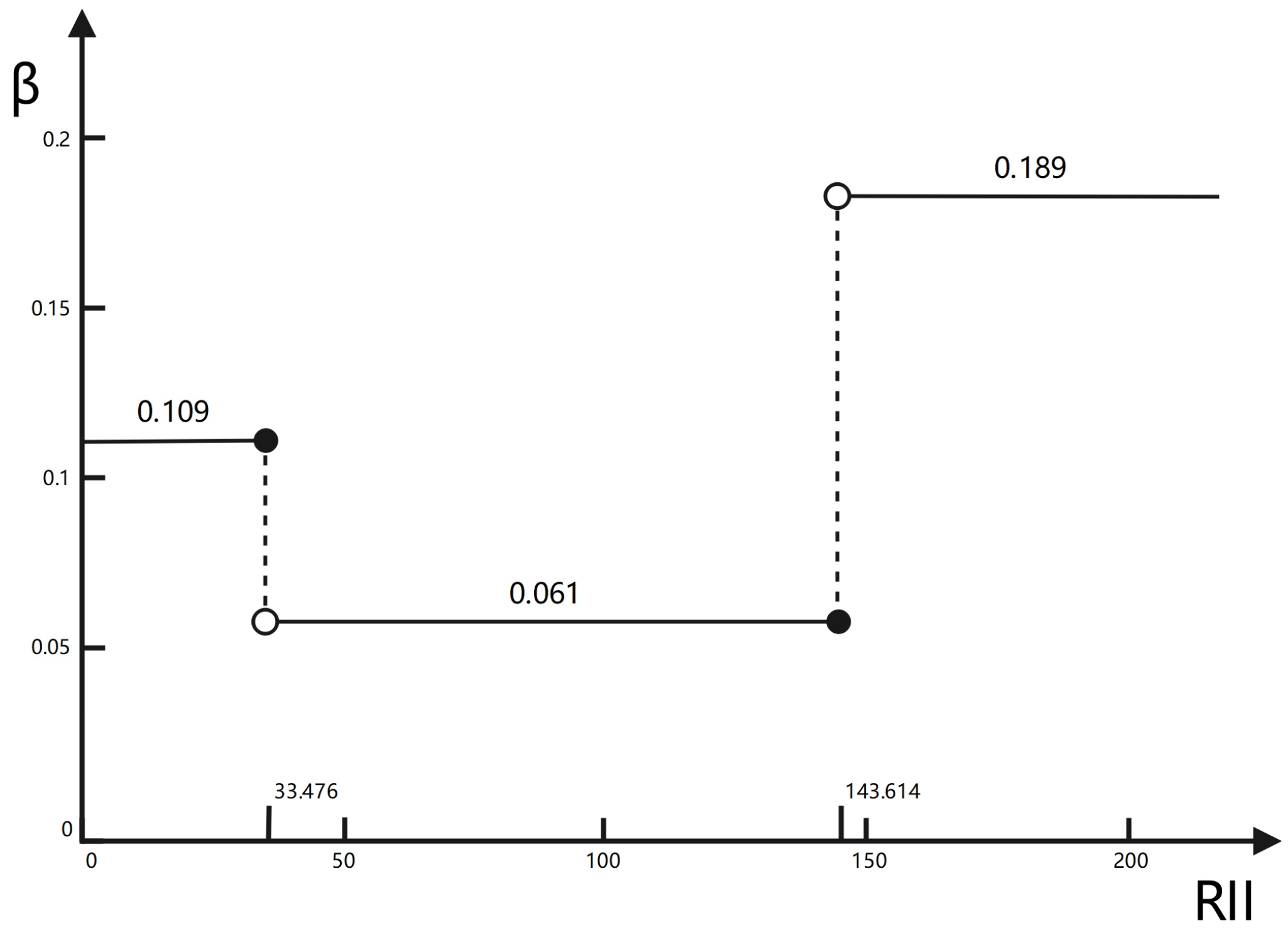
This research designated rural industrial integration as the pivotal threshold variable and subsequently carried out sequential tests for unitary, dual, and ternary thresholds. The results indicate that convergence of rural industries passed both single- and double-threshold tests. Consequently, a double-threshold model was chosen as the candidate for analysis. The double-threshold test results for rural industrial integration are presented in Table 5. The regression revealed a first threshold of 33.476 (95% CI: [32.668, 33.891]) and a second threshold of 143.614 (95% CI: [139.695, 148.548]), with an F-statistic of 251.49 (p < 0.01). These findings suggest a double-threshold effect of convergence of rural industries in the relationship between rural entrepreneurship and regional advanced productive forces in the agricultural sector, thereby supporting Hypothesis H5.
Figure 2 illustrates the threshold effect of rural industrial integration, showing that when the value of convergence of rural industries was less than 33.476, the regression coefficient was 0.109; when the value ranged between 33.476 and 143.614, the regression coefficient was 0.061; and when the value exceeded 143.614, the parameter estimate in the regression model was 0.189. This indicates that there are dual thresholds of convergence of rural industries affecting the impact of rural entrepreneurial activities on agricultural new-quality productive forces.

4.4. Test of Spatial Spillover Effects of Rural Entrepreneurship on New-Quality Productive Forces in Agriculture

This research utilized a spatial Durbin model (SDM) within the framework of spatial econometric regression to further substantiate the spatial spillover impacts of rural entrepreneurship. This study selected the geographic adjacency matrix (W1) as the core analytical tool, as it can effectively capture the spatial spillover effects driven by geographic proximity in rural entrepreneurial activities and conforms to the “Rook” adjacency criterion. The results (detailed in Table 6) indicate a statistically significant spatial externality effect of rural entrepreneurship on new-quality productive forces in agriculture (WX = 0.659; p < 0.01), with a 95% confidence interval of [0.175, 1.142]. These findings suggest that the impact of rural entrepreneurial activities extends beyond local boundaries, fostering improvements in advanced productive forces with innovative qualities in agriculture in adjacent areas. Hypothesis H6 is thus supported.

4.5. Robustness Test

This study employed the following strategies to test the robustness of the constructed model.
First, core explanatory variables were replaced. The rural entrepreneurship level was assessed via the number of individual employees in rural areas, replacing the original rural entrepreneurship activity index. This measurement approach drew on Feng’s research (2024) [45]. Second, core dependent variables were replaced. The new-quality productive forces in agriculture were measured regarding agricultural digital productivity, agricultural eco-efficient productivity, and agricultural inclusive productivity, replacing the original evaluation indicators for advanced agricultural productive forces with new qualities. This measurement standard drew on Xiong and He’s research (2025) [46]. Third, temporal lag effects were tested. We further lagged rural entrepreneurship by one and two periods, respectively, and incorporated these lagged terms into the regression model, examining their impact on advanced agricultural productive forces with new qualities. Fourth, the threshold variables were replaced. Drawing on Qi et al.’s research (2025) [47], agricultural technological innovation was measured across four dimensions: the environment for agricultural technological innovation, achievements in agricultural technological innovation, support for agricultural technological breakthrough, and the economic benefits of agricultural technological breakthrough, replacing the original evaluation indicators for agricultural technological innovation level. Regarding rural industrial integration, referring to Chen et al.’s research (2025) [48], the degree of rural sectoral convergence was measured regarding the overall industrial coordination degree and the industrial coupling degree, replacing the original evaluation indicators for rural industrial integration. Fifth, we conducted a comparative analysis based on a geographic distance matrix (W2) to examine the stability of the outcomes. The findings indicate that both the orientation and statistical importance of the coefficients for the core variable (rural entrepreneurship) remained consistent. Moreover, the Wald test revealed no structural differences in the model coefficients. The research results mostly conform to those of the benchmark regression analysis, threshold effect analysis, and spatial spillover effect analysis, additionally substantiating the reliability of the findings of this research

5. Conclusions and Implications

5.1. Discussion and Conclusions

This study experimentally examined the influence of rural entrepreneurship on new-quality productive forces in agriculture, as well as the mediating roles of rural industrial integration and agricultural technological innovation. The results demonstrate the following: First, rural entrepreneurial activities drive the formation and development of new-quality productive forces in agriculture. Second, rural entrepreneurship enhances new-quality productive forces in agriculture by advancing agricultural technological innovation, though this process requires overcoming a single threshold in agricultural technological innovation. Third, the process by which rural entrepreneurship drives agricultural productivity with new-quality can be achieved through promoting rural industrial integration, though this involves dual thresholds in rural industrial integration. Additionally, this study highlights the spatial spillover effects of rural entrepreneurial activities on new-quality productive forces in agriculture in surrounding regions.
This study offers three prominent contributions to the existing academic literature repository. First, it conducted a systematic empirical investigation into the effect of rural entrepreneurship on agricultural productivity with new-quality, expanding the research scope on drivers of agricultural productivity with new-quality. Second, it addressed the question of how rural entrepreneurial activities drive agricultural productivity with new-quality, providing empirical validation that this occurs through the promotion of rural industrial integration and agricultural technological innovation, thereby enhancing agricultural productivity with new-quality. Based on this, it analyzed the threshold effects of rural industrial integration and agricultural technological innovation. Finally, it explored the spatial diffusion impacts of rural entrepreneurship, revealing its interregional diffusion mechanisms in driving agricultural productivity with new-quality. This extends the geographical dimension of the existing research, offering valuable insights for studies on regional disparities and policy formulation.

5.2. Policy Implications

Rural entrepreneurial activities have provided momentum for the enhancement of agricultural productivity with new-quality. Drawing upon this analysis, this study puts forward the subsequent suggestions:
First, stimulate rural entrepreneurial vitality and provide rural entrepreneurs with a favorable entrepreneurial environment. Intensify policy support for rural entrepreneurship. The government should introduce supportive policies in areas such as entrepreneurial loans, tax reductions and exemptions for entrepreneurial ventures, and land use guarantees to lower the barriers to entrepreneurship and alleviate entrepreneurial burdens. Furthermore, improve the rural entrepreneurial environment. It is crucial to give precedence to the elevation of the standard of rural public services to create a convenient production and living environment for rural entrepreneurs. Additionally, an entrepreneurial atmosphere that encourages innovation and tolerates failure should be actively fostered to stimulate farmers’ entrepreneurial enthusiasm. Farmers’ entrepreneurial awareness and capabilities can be enhanced through activities such as entrepreneurial training programs and entrepreneurial competitions, guiding them to tap into local resources and develop industries such as characteristic agriculture and rural tourism. Finally, optimize the supply of entrepreneurial resources. Develop digital service platforms that integrate functions such as policy inquiries and technology supply–demand matching, and establish shared facilities (e.g., cold chain warehouses and processing workshops) and services (e.g., logistics and distribution) to reduce the financial investment pressure during the initial stages of industrial integration. These measures can provide favorable entrepreneurial conditions and broad development spaces for rural entrepreneurs, facilitating a leap in new-quality agricultural productivity.
Second, improve local government guidance mechanisms to construct an industrial integration ecosystem and a collaborative technological innovation environment. On the one hand, optimize spatial planning and infrastructure. Designate industrial integration functional areas (e.g., ecological agricultural zones and agricultural product processing clusters) based on regional characteristics; increase investment in rural roads, communications, water, and electricity infrastructure; and prioritize support for the construction of key nodes, such as cold chain logistics centers and e-commerce service stations, to reduce entrepreneurial operational costs. On the other hand, promote collaborative technological innovation. Establish a “government–enterprise–research” cooperation platform to organize entrepreneurs to jointly tackle key technologies with leading enterprises and research institutions, sharing research and development outcomes. Provide subsidies for entrepreneurs adopting new technologies, and implement pilot policies for “agricultural technological innovation,” allowing them to break through existing regulatory frameworks within controllable limits to accelerate technological iteration. Additionally, enhancing the market recognition of entrepreneurial products by building regional public brands and setting industrial criteria are vital actions for regional industrial development (e.g., grading of agricultural product quality).
Third, improve the supply mechanisms of agricultural enterprises and research institutions to strengthen technological supply and collaborative industrial chain incubation. As technology providers, agricultural enterprises and research institutions need to offer continuous support to entrepreneurs through open resource sharing and demand-oriented research and development. Agricultural enterprises should open up their technological ecosystems by licensing non-core patented technologies (e.g., small-scale agricultural product processing equipment and planting management software) to entrepreneurs at low costs or sharing them for free, reducing their technology acquisition costs. They should also establish entrepreneurial incubators along the industrial chain to provide entrepreneurs with order support, raw material supply, and sales channels, helping them quickly integrate into the industrial ecosystem. Furthermore, explore a joint entrepreneurial model of “enterprise + farmers + entrepreneurs” to share profit distributions and establish a community with common interests. Additionally, increase investment in agricultural technology research and development, support industry–university–research cooperation, and encourage joint research and promotion of new varieties, technologies, and equipment.

5.3. Limitations and Future Research

First, the data scope of the present research was confined to mainland China (excluding the Tibet Autonomous Region), which may restrict the transferability of our discoveries to other regions. Subsequent investigations should incorporate data from additional countries to expand the geographical scope of the theoretical framework, thereby validating and extending this study’s conclusions. Second, limited by data availability, this research utilized provincial-level panel datasets to conduct analyses. However, data aggregation at the provincial level may obscure intra-provincial heterogeneity, such as variations in agricultural resource endowments, policy support intensity, or infrastructure levels across different cities within a province. This could result in measurement errors in the estimation of spatial spillover effects. Future research could incorporate city-level or county-level data or further validate the findings via spatial subsample analyses (e.g., by economic zones). Finally, this study primarily explored the mediating and threshold effects of rural industrial integration and agricultural technological innovation while neglecting the influence of other factors. In rural entrepreneurship activities, factors such as the competencies of farmer entrepreneurs and agricultural policies may also affect outcomes. However, these factors were not analyzed in this study. Subsequent investigations should delve deeper into the effects of these factors, aiming to elucidate the mechanisms through which entrepreneurial initiatives in rural areas drive the evolution of agricultural productive forces with new-quality.

Author Contributions

Conceptualization, X.X.; methodology, X.X.; software, K.Z.; validation, X.X.; formal analysis, K.Z.; investigation, X.X.; resources, K.Z.; data curation, K.Z.; writing—original draft preparation, X.X.; writing—review and editing, K.Z.; project administration, X.X.; funding acquisition, X.X. All authors have read and agreed to the published version of the manuscript.

Funding

This research was funded by the Youth Project of the Humanities and Social Sciences Research Program, the Ministry of Education (“Inclusive Innovation in Digital Platforms: Sources of Motivation, Implementation Pathways, and Dynamic Evolution”) (24YJC630293); the Youth Project of the Humanities and Social Sciences Research Program, the Ministry of Education (“Research on the Iterative Innovation of Business Models in Digital Entrepreneurial Enterprises Empowered by Generative AI: Dynamic Mechanisms, Transmission Pathways, and Evolutionary Processes”); the Research Project on Teaching Reform in Career and Technical Education (CTE) & Lifelong Learning, Jilin Province (“Investigations and Implementations of AI-Driven Pedagogical Innovations for Entrepreneurship Education in Jilin’s Higher Vocational Institutions”) (2025ZCY306); Jilin Provincial Key Research Initiative for Higher Education Pedagogical Transformation (“Research and Practice Pathways for AI-Empowered Entrepreneurial Education Paradigm Shift in Higher Education Institutions of Jilin Province”) (SJZD20260001); the 2025 Jilin Provincial Vocational Education Research Project (“An Empirical Study on the Transformation and Implementation of High-Quality Talent Cultivation Systems for Innovation-Oriented Entrepreneurship in Jilin’s Vocational Higher Education Institutions Driven by Advanced Productive Forces With New-Quality”) (2025XHY180); the 2025 Jilin Provincial Research Project on Youth Development (“Research on the Pathways to Enhance College Students’ Innovative and Entrepreneurial Capabilities in Jilin Province Empowered by Artificial Intelligence”) (2025jqy-064); Beihua University’s Flagship Research Initiative on Postgraduate Curriculum Innovation and Pedagogical Transformation (“Research and Practice Pathways for Reforming the Cultivation Model of Innovation and Entrepreneurship Competencies among Economics and Management Graduate Students under the Drivers of Advanced Productive Forces With High-Quality”) (JG[2025]004); and Beihua University’s Flagship Research Initiative on Pedagogical Innovation and Curriculum Transformation in Higher Education (“Research and Practice on Reforming the Cultivation Model of Innovation and Entrepreneurship Talents in Applied Research Universities under AI Empowerment”) (SJZD20260001).

Institutional Review Board Statement

Not applicable.

Informed Consent Statement

Not applicable.

Data Availability Statement

The original contributions presented in this study are included in the article. Further inquiries can be directed to the corresponding author(s).

Acknowledgments

We are grateful to the anonymous reviewers for their thorough and insightful comments.

Conflicts of Interest

The authors declare no conflicts of interest.

References

  1. Long, S.B.; Zhang, M.X. Re-measurement and influencing factors of China’s agricultural total factor productivity—Moving from traditional to high-quality development. Res. Financ. Issues 2021, 10, 40–51. [Google Scholar]
  2. Luo, Q.F.; Zhao, Q.F.; Zhang, L.Y. Theoretical framework, efficiency enhancement mechanism and realization path of high-quality development of agriculture empowered by digital technology. Contemp. Econ. Manag. 2022, 44, 49–56. [Google Scholar]
  3. Gao, D.; Lyu, X. Agricultural total factor productivity, digital economy and agricultural high-quality development. PLoS ONE 2023, 18, e0292001. [Google Scholar] [CrossRef]
  4. Zhang, J.W.; Zeng, Z.Q.; Li, G.D. Measuring the level of high-quality development of China’s agricultural economy and its spatial variation analysis. World Agric. 2022, 4, 98–110. [Google Scholar]
  5. Wei, Y. Regional Governments and Opportunity Entrepreneurship in Underdeveloped Institutional Environments: An Entrepreneurial Ecosystem Perspective. Res. Policy 2022, 51, 104380. [Google Scholar] [CrossRef]
  6. Fitz-Koch, S.; Nordqvist, M.; Carter, S.; Hunter, E. Entrepreneurship in the Agricultural Sector: A Literature Review and Future Research Opportunities. Entrep. Theory Pract. 2018, 42, 129–166. [Google Scholar] [CrossRef]
  7. Kademani, S.B.; Nain, M.S.; Mishra, J.R.; Singh, R. Policy and Institutional Support for Agri- Entrepreneurship Development in India: A Review. J. Ext. Syst. 2020, 36, 15–22. [Google Scholar] [CrossRef]
  8. Sohns, F.; Revilla, D.J. Explaining micro entrepreneurship in rural Vietnam—A multilevel analysis. Small Bus. Econ. 2017, 50, 219–237. [Google Scholar] [CrossRef]
  9. Lin, L.; Gu, T.; Shi, Y. The Influence of New Quality Productive Forces on High-Quality Agricultural Development in China: Mechanisms and Empirical Testing. Agriculture 2024, 14, 1022. [Google Scholar] [CrossRef]
  10. Zhang, S.; Xie, F. Can new quality productivity promote high-quality agricultural development?—An empirical study based on provincial panel data in China. Front. Sustain. Food Syst. 2025, 9, 1601227. [Google Scholar] [CrossRef]
  11. Yu, Y.; He, Y.; Zou, Y. A Study on the Impact of New Quality Productivity on the High-quality Development of Manufacturing Enterprises. Environ. Soc. Gov. 2025, 2, 22–43. [Google Scholar] [CrossRef]
  12. Zhao, L.; Zhou, Z. Research on the Theoretical Connotation and Realization Path of New Quality Productivity. Front. Humanit. Soc. Sci. 2025, 5, 8–15. [Google Scholar] [CrossRef]
  13. Wang, Y.; Kuang, Y. Evaluation, Regional Disparities and Driving Mechanisms of High-Quality Agricultural Development in China. Sustainability 2023, 15, 6328. [Google Scholar] [CrossRef]
  14. Dimitriadis, K.A.; Koursaros, D.; Savva, C.S. The influence of the “environmental-friendly” character through asymmetries on market crash price of risk in major stock sectors. J. Clim. Financ. 2024, 9, 100052. [Google Scholar] [CrossRef]
  15. Cui, X.; Cai, T.; Deng, W.; Zheng, R.; Jiang, Y.; Bao, H. Indicators for Evaluating High-Quality Agricultural Development: Empirical Study from Yangtze River Economic Belt, China. Soc. Indic. Res. 2022, 164, 1101–1127. [Google Scholar] [CrossRef] [PubMed]
  16. Zhang, J.; Zha, H. On the Measurement and Improvement Strategies of New Quality Productivity in Chinese Rural Areas. Front. Sustain. Dev. 2025, 5, 147–162. [Google Scholar] [CrossRef]
  17. Ye, X.; Cao, K.; Shen, Y. Construction, Index Measurement, and Promotion Strategies of Agricultural New-Quality Productivity Development System under the Perspective of Urban-Rural Integrated Development. Front. Chin. Soc. Sci. 2025, 2, 41–58. [Google Scholar] [CrossRef]
  18. Yar, F.G.M.; Nejad, A.H. Opportunities and Challenges of Rural Entrepreneurship in Afghanistan. J. Entrep. Bus. Divers. 2023, 1, 113–119. [Google Scholar] [CrossRef]
  19. Nipo, D.T.; Lily, J.; Fabeil, N.F.; Jamil, I.A.A. Transforming Rural Entrepreneurship Through Digital Innovation: A Review on Opportunities, Barriers and Challenges. J. Manag. Sustain. 2024, 14, 114. [Google Scholar] [CrossRef]
  20. Shrivastava, U.; Kumar Dwivedi, A. Manifestations of rural entrepreneurship: The journey so far and future pathways. Manag. Rev. Q. 2020, 71, 753–781. [Google Scholar] [CrossRef]
  21. Korsgaard, S.; Müller, S.; Tanvig, H.W. Rural entrepreneurship or entrepreneurship in the rural—Between place and space. Int. J. Entrep. Behav. Res. 2015, 21, 5–26. [Google Scholar] [CrossRef]
  22. Zhang, F.; Wang, F.; Hao, R.; Wu, L. Agricultural Science and Technology Innovation, Spatial Spillover and Agricultural Green Development—Taking 30 Provinces in China as the Research Object. Appl. Sci. 2022, 12, 845. [Google Scholar] [CrossRef]
  23. Chen, M.; Zhao, J.; Zhao, S. Measurement and evaluation of agricultural technological innovation efficiency in the Yellow River Basin of China under water resource constraints. Heliyon 2024, 10, e32521. [Google Scholar] [CrossRef] [PubMed]
  24. Modjo, A.S.; Tapi, T.; Safruddin, S.; Ansar, M.u.h.; Fitriani, D. Harnessing Technology for Agricultural Sustainability: Case Studies and Future Directions. Join: J. Soc. Sci. 2024, 1, 270–280. [Google Scholar] [CrossRef]
  25. Nguyen, T.-T.; Shahreki, J.; Hong, P.V.; Tung, N.V. Rural entrepreneurship in Vietnam: Identification of facilitators and barriers. Rural. Entrep. Innov. Digit. Era 2021, 1, 159–178. [Google Scholar] [CrossRef]
  26. Huang, W.; Wang, X. The Impact of Technological Innovations on Agricultural Productivity and Environmental Sustainability in China. Sustainability 2024, 16, 8480. [Google Scholar] [CrossRef]
  27. Guo, D.; Jiang, K.; Xu, C.; Yang, X. Industrial clustering, income and inequality in rural China. World Dev. 2022, 154, 105878. [Google Scholar] [CrossRef]
  28. Gao, S.; Yang, X.; Long, H.; Zhang, F.; Xin, Q. The Sustainable Rural Industrial Development under Entrepreneurship and Deep Learning from Digital Empowerment. Sustainability 2023, 15, 7062. [Google Scholar] [CrossRef]
  29. Zhou, J.; Chen, H.; Bai, Q.; Liu, L.; Li, G.; Shen, Q. Can the Integration of Rural Industries Help Strengthen China’s Agricultural Economic Resilience? Agriculture 2023, 13, 1813. [Google Scholar] [CrossRef]
  30. Wang, J.; Peng, L.; Chen, J.; Deng, X. Impact of rural industrial integration on farmers’ income: Evidence from agricultural counties in China. J. Asian Econ. 2024, 93, 101761. [Google Scholar] [CrossRef]
  31. Wu, Y.; Tang, Y.; Sun, X. Rural Industrial Integration and New Urbanization in China: Coupling Coordination, Spatial–Temporal Differentiation, and Driving Factors. Sustainability 2024, 16, 3235. [Google Scholar] [CrossRef]
  32. Ye, F.; Qin, S.; Nisar, N.; Zhang, Q.; Tong, T.; Wang, L. Does rural industrial integration improve agricultural productivity? Implications for sustainable food production. Front. Sustain. Food Syst. 2023, 7, 1–14. [Google Scholar] [CrossRef]
  33. Deng, J.; Chi, H.; Zhang, T. Effects of Entrepreneurial Activities on Rural Revitalization: Based on Dissipative Structure Theory. Agriculture 2024, 14, 1474. [Google Scholar] [CrossRef]
  34. Jia, X.; Zhu, T. Digital factors spur rural industrial integration: Mediating roles of rural entrepreneurship and agricultural innovation in China. Front. Sustain. Food Syst. 2025, 9, 1649953. [Google Scholar] [CrossRef]
  35. Wang, Y.; Jiang, Y.; Geng, B.; Wu, B.; Liao, L. Determinants of returnees’ entrepreneurship in rural marginal China. J. Rural Stud. 2022, 94, 429–438. [Google Scholar] [CrossRef]
  36. Zhang, M.D.; Hui, L.W. Spatial differences in the resilience of China’s agricultural economy and identification of influencing factors. World Agric. 2022, 1, 36–50. [Google Scholar]
  37. Qian, H. Knowledge-Based Regional Economic Development: A Synthetic Review of Knowledge Spillovers, Entrepreneurship, and Entrepreneurial Ecosystems. Econ. Dev. Q. 2018, 32, 163–176. [Google Scholar] [CrossRef]
  38. Acs, Z.J.; Audretsch, D.B.; Lehmann, E.E. The knowledge spillover theory of entrepreneurship. Small Bus. Econ. 2013, 41, 757–774. [Google Scholar] [CrossRef]
  39. Tavassoli, S.; Bengtsson, L.; Karlsson, C. Strategic entrepreneurship and knowledge spillovers: Spatial and aspatial perspectives. Int. Entrep. Manag. J. 2016, 13, 233–249. [Google Scholar] [CrossRef]
  40. Huang, D.P.; Yin, K. Can the Development of Digital Inclusive Finance Enhance Rural Entrepreneurship Activity? Financ. Econ. 2023, 8, 43–53. [Google Scholar]
  41. Zhu, D.; Ye, L.X. New-Quality Productive Forces in Chinese Agriculture: Measurement and Dynamic Evolution. Stat. Decis. 2024, 40, 24–30. [Google Scholar]
  42. Zhang, J.X.; Wang, H.L. Environmental Regulation, Agricultural Technological Innovation, and Agricultural Carbon Emissions. J. Hubei Univ. (Philos. Soc. Sci. Ed.) 2020, 47, 147–156. [Google Scholar]
  43. Ge, J.H.; Wang, M.; Tang, Y.M. Rural Tertiary Industry Integration, Consumption of Urban and Rural Residents, and Income Disparity—Can Efficiency and Equity Be Achieved Simultaneously? Chin. Rural. Econ. 2022, 3, 50–66. [Google Scholar]
  44. Wang, G.Y.; Bai, L.X. Research on the Impact of Rural Tertiary Industry Integration on Farmers’ Income in China—From the Perspective of Mediating Effects. Agric. Econ. Manag. 2023, 4, 48–64. [Google Scholar]
  45. Feng, M.L. Digital Inclusive Finance, Rural Entrepreneurship, and Farmers’ Income Growth. Stat. Decis. 2024, 40, 138–143. [Google Scholar]
  46. Xiong, C.L.; He, X.R. Construction of an Evaluation Index System, Measurement, and Regional Disparities of New-Quality Productive Forces in Chinese Agriculture. Sci. Technol. Manag. Res. 2025, 45, 53–62. [Google Scholar]
  47. Qi, Z.; Sun, B.J.; Sun, G.B. The Impact and Pathways of the Digital Economy on Agricultural Technological Innovation in China. Sci. Technol. Manag. Res. 2025, 45, 123–135. [Google Scholar]
  48. Chen, X.Y.; Cheng, C.M. The Path of Tertiary Industry Integration in the Rural Revitalization Strategy: Logical Necessity and Empirical Determination. Issues Agric. Econ. 2018, 11, 91–100. [Google Scholar]
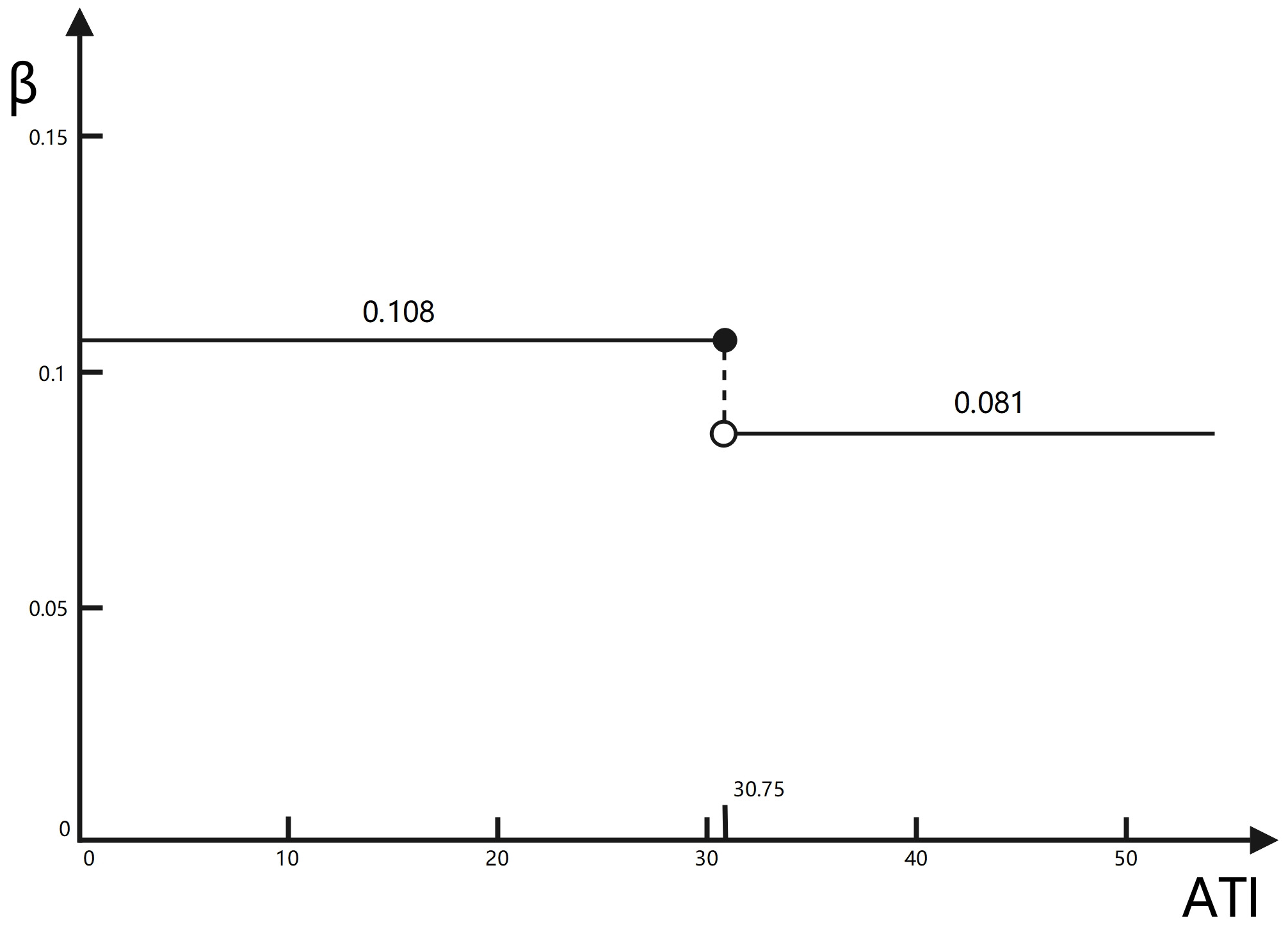
Figure 1. Threshold effect of agricultural technological innovation.
Sustainability 17 10676 g001
Figure 2. Threshold effect of rural industrial integration.
Sustainability 17 10676 g002
Table 1. Descriptive statistical analysis of variables.
Sample SizeMinimumMaximumMeanStandard DeviationMedian
RHCL3306.6009.9108.1250.5648.105
UL33036.30089.60061.18712.06259.680
RID3302.085337.77341.35824.84338.366
RE3300.0222.8460.2880.4540.159
ATI3300.520166.51031.89831.56720.990
RII3309.572347.68290.81670.37164.282
NQPFA3300.0620.4330.1620.0650.151
Notes: RHCL refers to rural human capital level; UL refers to urbanization level; RID refers to rural infrastructure development; RE refers to rural entrepreneurship; ATI refers to agricultural technological innovation; RII refers to rural industrial integration; NQPFA refers to new-quality productive forces in agriculture. The same applies to the following tables.
Table 2. Regression results for direct effects.
VariableModel 1Model 2
RE0.129 ***
(0.012)
0.081 ***
(0.011)
RHCL——0.043 ***
(0.007)
UL——0.003 ***
(0.000)
RI——0.000
(0.000)
CT0.125 ***
(0.004)
−0.391 ***
(0.054)
R-squared (within)0.2680.533
R-squared (between)0.3460.386
R-squared (overall)0.3040.383
F-value18.96 ***29.91 ***
Notes: *** indicates significance at the 0.001 level.
Table 3. Regression results of mediating effects.
VariableModel 3Model 4
RE0.064 ***
(0.010)
0.064 ***
(0.008)
ATI0.001 ***
(0.000)
——
RII——0.005 ***
(0.000)
RHCL0.036 ***
(0.007)
0.022 ***
(0.019)
EL0.002 ***
(0.004)
−0.006 **
(0.011)
RI−0.000
(0.000)
−0.000
(0.000)
CT−0.298 ***
(0.053)
−0.142 **
(0.047)
R-squared (within)0. 5940.712
R-squared (between)0. 5540.692
R-squared (overall)0.5440.696
F-value15.71 ***19.45 ***
Notes: *** indicates significance at the 0.001 level, ** indicates significance at the 0.01 level.
Table 4. Results of double-threshold test for agricultural technological innovation.
VariableRegression Coefficient
RE 00.108 ***
(0.016)
RE 10.081 **
(0.016)
RHCL0.045 *
(0.021)
UL0.003
(0.001)
RI0.000
(0.000)
CT−0.403 **
(0.125)
Notes: *** indicates significance at the 0.001 level, ** indicates significance at the 0.01 level, and * indicates significance at the 0.05 level.
Table 5. Results of double-threshold test for rural industrial integration.
VariableRegression Coefficient
RE 00.109 ***
(0.010)
RE 10.061 ***
(0.012)
RE 20.189 **
(0.052)
RHCL0.043 *
(0.019)
UL0.002
(0.001)
RI−0.000
(0.000)
CT−0.361 **
(0.117)
Notes: *** indicates significance at the 0.001 level, ** indicates significance at the 0.01 level, and * indicates significance at the 0.05 level.
Table 6. Results of the spatial Durbin regression model.
Regression CoefficientSEz-Scorep-ValueCI
WX Rural Entrepreneurship0.659 **0.2472.6700.008[0.175, 1.142]
Direct effect0.022 *0.0092.5400.011[0.005, 0.039]
Indirect effect0.153 *0.0622.4600.014[0.031, 0.275]
Total effect0.175 **0.0632.7700.006[0.051, 0.299]
Notes: *** indicates significance at the 0.001 level, ** indicates significance at the 0.01 level, and * indicates significance at the 0.05 level.
Disclaimer/Publisher’s Note: The statements, opinions and data contained in all publications are solely those of the individual author(s) and contributor(s) and not of MDPI and/or the editor(s). MDPI and/or the editor(s) disclaim responsibility for any injury to people or property resulting from any ideas, methods, instructions or products referred to in the content.