Article

Exploring Psychosocial Determinants of Young Adults E-Scooter Speeding: A TPB-Aligned SEM Study

1
Department of Transportation Studies, Texas Southern University, Houston, TX 77004, USA
2
Department of Civil and Environmental Engineering, Florida Polytechnic University, Lakeland, FL 33805, USA
*
Author to whom correspondence should be addressed.
Sustainability 2025, 17(23), 10645; https://doi.org/10.3390/su172310645
Submission received: 15 September 2025 / Revised: 2 November 2025 / Accepted: 24 November 2025 / Published: 27 November 2025
(This article belongs to the Special Issue Sustainable Transportation Strategies for Urban and Regional Mobility)

Abstract

This study explores the psychosocial factors that predispose young e-scooter users (18 to 24 years) to engage in illegal speeding by adopting a theory-driven approach across the Theory of Planned Behavior (TPB). The study, based on survey data of 474 participants, and analyzed with Structural Equation Modeling (SEM), found that emotional regulation and internal locus of control predict speeding intention and behavior and are significantly negative (β = +0.66 and β = −0.52, respectively). Satisfactory robustness was assured by model fit indices (0.93 CFI, 0.91 TLI, 0.045 RMSEA, and 0.071 SRMR). Findings indicate that the effect of emotional regulation is more on attitude and perception of behavioral control, but the connection between self-regulation and speeding intention is mediated by internal control. The inclusion of psychosocial variables in the TPB contributes to the behavioral theory of micro-mobility contexts and the behavioral study of sustainable-mobility research to emotional and cognitive aspects of risk behavior. The policy suggestions include incorporating short emotion-management courses into rider-training applications, collaborating with scooter-sharing institutions on incentive-based safety interventions, and developing interventions that promote responsibility, self-control, and emotional sensitivity among young people. These results reiterate the fact that psychological antecedents of risky riding require attention to achieve socially and environmentally sustainable urban mobility.

1. Introduction

E-scooters are quickly becoming the go-to mode of city transportation because of convenience, but they have very serious legal and safety concerns [1,2]. The existing literature has delved into various social and psychological factors that lead to risky e-scooter rider behavior [3,4,5,6]. To construct interventions successful in preventing risky behavior and promoting safer city travel, it is essential to identify these factors. Emotional regulation refers to an individual’s ability to identify, interpret, and manage affective states to ensure adaptive responses [7,8]. Riders who lack emotional clarity or control often respond impulsively under stress or excitement, increasing the likelihood of over-speeding. Young adults who put themselves into high-pressure city driving conditions on a daily basis are most unlikely to have the ability to manage their emotions, as studies show, and it can lead to reckless choices such as speeding indiscriminately [8,9,10]. Emotional unawareness, or inability to identify and understand one’s own emotions, is the result of this problem. It is more difficult for riders since it is more difficult for riders to respond appropriately when riding dynamically [10]. These findings highlight the importance of self-control strategies and emotional intelligence in preventing risky behavior. In this behavioral framework, emotional competence represents a core predictor of safe riding decisions.
While e-scooters offer a sustainable and low-emission transport option, the psychosocial dimensions of their safety outcomes remain poorly understood. Understanding how cognitive and emotional processes drive risky behavior is essential to achieving both road safety and sustainable mobility goals.
The second essential dimension is the internal locus of control, which evaluates to what extent individuals consider that they can control their lives [11]. Internal locus of control reflects the belief that outcomes are primarily determined by one’s own actions rather than external forces [11]. In transport psychology, individuals with a stronger internal control orientation perceive safety as a personal responsibility and are less likely to engage in violations such as speeding. Together, emotional regulation and internal control form a psychological foundation for self-regulated, sustainable riding behavior.
To mitigate these problems, educational interventions for emotional control and situational awareness have been shown to be efficacious [12,13,14]. Interventions that enhance individuals’ self-awareness of their feelings and equip them with effective coping strategies for managing them have been linked to better adherence to traffic laws and decreased speeding. Similarly, individual difference treatments like assertiveness or leadership training have been found to encourage more adult decision-making in younger motorcyclists [15,16].
This study adopts the Theory of Planned Behavior (TPB) as its conceptual framework. Within TPB, attitude, subjective norm, and perceived behavioral control jointly shape behavioral intention. Emotional regulation is expected to influence both attitude and perceived control, while internal locus of control operationalizes perceived control and mediates intention to speed. A (Figure 1) was added to illustrate these relationships.
Although prior research has examined emotion and control among car and motorcycle drivers, few studies have tested these mechanisms in the micromobility context. Existing evidence has not integrated emotional regulation and internal locus of control within a unified TPB-based structural model. The present study addresses this gap by empirically evaluating how these constructs predict illegal speeding among young riders (aged 18–24) in Babol, Iran. Accordingly, two hypotheses were formulated: (H1) Emotional dysregulation negatively affects perceived behavioral control, thereby increasing intention to speed; and (H2) Internal locus of control moderates this relationship by reducing speeding propensity.
Its contribution is to move beyond merely identifying risk factors to empirically testing the predictive power of emotional regulation and the mediating role of internal locus of control. By doing so, it provides a more nuanced, theory-driven understanding of the motivational and cognitive processes that lead to speeding, thereby offering a targeted foundation for developing more effective educational and behavioral interventions for this growing population.
Furthermore, the existing literature fails to account for the interaction of psychological predictors in generating risky e-scooter driving among novice, young, and limited diverse riding scenario-exposed riders. The current research seeks to identify some psychological risk factors of illegal speeding by using locus of control and emotional regulation. By extending the TPB to include emotional regulation and control beliefs, this research contributes a novel behavioral perspective to e-scooter safety and offers evidence-based guidance for embedding psychological interventions into sustainable urban mobility policy.

2. Methods

2.1. Sample and Target Population

Babol city, Iran, is located on the green Caspian Sea coast, where the ancient settlement exists alongside the current urban problems. As a big city in the region, it saw unprecedented population growth over the last decade, subjecting its transport system to unprecedented pressure and adding to the complexity of traffic movement patterns. With the updated estimated population, the city has over 550,000 citizens with 15% population growth over the previous decade via natural increase and urban–rural migration. The migration once again put the city’s transport infrastructure in urban areas, public facilities, and the use of resources under stress. The urban transport system features a diverse range of travel modes, comprising approximately 48% private cars, 32% motorcycles, 14% walking/cycling, and 4–6% e-scooters, based on 2023 municipal data. This positions e-scooter use as a rapidly growing yet still developing aspect of mobility in the city. The city’s demographic expansion has imposed significant stress on its road network, public-transport capacity, and overall mobility resources. Based on current statistical data and regional studies, a target of 35–40% non-motorized trips (walking, cycling, and e-scooters) has been considered, though this is subject to local constraints such as infrastructure and cultural preferences.
The city suffers from mobility problems of fast-developing towns. Road congestion, absence of public transport facilities, and excessive reliance on private motorized travel are common features of the town scene. The majority of roads, characteristic of the town terrain, are struggling to cope with the rising number of automobiles, motorbikes, and trucks. The city was selected as the research location due to the fact that it is a standard city area and enables informative data on the psychosocial determinants and mobility behavior among youth e-scooter users.
Data were collected in March 2023 using an online questionnaire disseminated via LinkedIn, Instagram, Telegram, and other social networks (friends, relatives, and colleagues). The survey specifically targeted residents aged 18–24 years, defined as young riders in transport-psychology research [17]. A total of 474 respondents fully completed the questionnaire, forming the final research sample. Descriptive characteristics, including gender, education level, riding experience, prior accidents, and traffic-fine history, are summarized in Table 1.
Because no official registry of e-scooter users exists, a non-probability snowball sampling approach was adopted. Although this method does not ensure equal probability of selection, it was appropriate for the exploratory nature of this study. Potential demographic bias toward digitally active, educated youth is acknowledged as a limitation. To assess robustness, subgroup analyses by gender and age confirmed consistent structural-equation results across groups.
To ensure sufficient statistical power, G*Power 3.1 [18] was used to calculate the minimum required sample size. With parameters of α = 0.05, power = 0.95, and medium effect size (f2 = 0.15), the minimum sample was estimated at approximately 100 participants. The actual sample of 474 respondents exceeds this requirement, providing adequate statistical power to examine psychosocial and behavioral relationships in Babol’s dynamic mobility environment.

2.2. Questionnaire Design

Questionnaires employed in the study employed standardized scales for the assessment of general psychological factors that are relevant to young e-scooter riders’ behavior. The survey instrument was structured in alignment with the extended Theory of Planned Behavior (TPB), linking emotional regulation, internal locus of control, and self-deception/impression-management constructs to riders’ attitudes, perceived behavioral control, and subjective norms toward speeding. The indicators were selected to provide a quality representation in terms of factors for speeding behavior in an urban context.
The Difficulties in Emotion Regulation Scale (DERS) was employed to assess emotional dysregulation on several dimensions like awareness and knowledge of emotion, acceptance of emotional experience, capacity to utilize goal-corrected action on feeling unpleasant emotion, and the extent of effective strategies for managing emotion. Differential assessment of participants’ capacity to identify, accept, and functionally manage emotions, the site of emphasis for accounting for impulsivity in dynamic riding scenarios, was made using the scale. The DERS items were adapted for Persian language and micromobility context following a forward–backward translation protocol. Each item was rated on a five-point Likert scale (1 = strongly disagree to 5 = strongly agree), where higher scores denoted greater emotional self-control.
To offset the possibility of self-report biases, the Paulhus Deception Scales (PDS) were used as a tool to measure socially desirable responding [19]. The PDS measure two things: self-deception, whereby participants are unaware of maintaining overly positive concepts of themselves as a way of protecting their self-esteem, and impression management, whereby there are conscious or unconscious efforts to change others’ impressions. The tool was used to identify bias in respondents’ responses, and hence, results from the study were more valid [20]. To minimize social-desirability bias, the survey was administered anonymously online, and the order of items was randomized across pages. This construct operationalized perceived behavioral control within the TPB model and was hypothesized to mediate the relationship between emotional regulation and speeding intention. The Internal Control Index from [11] was employed to assess participants’ personal control over their lives. The scale gives a measure of beliefs about personal control, chance, and powerful others’ influence on the outcomes of life. Perceived control is a predictor of coping behavior, well-being, and mental health [21,22,23]. Use of the scale assisted in understanding riders’ sense of agency and how this could influence behavior regarding e-scooters. All psychological scales demonstrated high internal consistency (Cronbach’s α > 0.80) and composite reliability > 0.85, confirming robust measurement quality.
To check the measurement model, convergent validity was analyzed by means of average variance extracted (AVE). AVE describes the variance between a factor and its respective indicators [24]. The higher these values are for AVE, the more coherent the indicators for a factor will be. When the AVE is higher than 0.5, this means that the factors explain more than half of the observed variance in their indicators, and therefore, a model would be regarded as sufficiently robust. The results showed that all the variables in the existing model had AVE of more than 0.67, higher than the critical value of 0.5. This implies that convergent validity is strong, and the measurement instruments are indicative of the underlying constructs under study. Discriminant validity was confirmed through the Fornell–Larcker criterion, ensuring that the square roots of AVE values exceeded inter-construct correlations.
In regard to the assessment of the structural model, t-values were considered in testing the factor relationships at the level of significance. A critical t-value higher than 1.96 indicates that the result is significant at the 95% level of confidence [24]. In the test, all path coefficients had t-values above this critical value, hence confirming the validity of the relationships proposed in the structural model. For any structural equation model, the R-squared shows the proportion of variance in endogenous variables explained by exogenous variables. For this, benchmark values of 0.19, 0.33, and 0.67 are interpreted to mean a weak, moderate, and substantial effect, respectively. The R2 in this study was found to be 0.754, reflecting a substantial effect [24]. This, therefore, implies that there is effective reflection of variance in the dependent factor by the model and supports the appropriateness and predictive power of the structural model. Predictive relevance of the model was lastly evaluated with the Q-squared measure. Whereas the Q2 value at or below zero indicates poor explanation of latent factors, values of 0.02, 0.15, and 0.35 relate to weak, moderate, and substantial predictive powers, respectively [24]. In the case of the model at hand, the Q2 equaled 0.37, which represents a substantial predictive power; thus, it further reinforces the overall structural fit of the model. These statistics collectively demonstrate the substantial explanatory and predictive power of the proposed TPB-based structural model.
Moreover, model fit indices were further guarantees of the strength of this model. There is, first of all, the Standardized Root Mean Square Residual, being the average of the discrepancy between observed and predicted correlations in the model. The lower the SRMR value, the more the model fit, but generally a threshold of below 0.08 is the general standard [24]. In the present study, SRMR was calculated as 0.071, and it falls within the acceptable limit and shows that the model fits well. RMSEA is an indication of how close to population reality the fitted model is. RMSEA measures of less than 0.05 indicate close fit, measures between 0.05 and 0.08 indicate reasonable fit, and measures above 0.10 indicate poor fit [24]. For this model, the estimated RMSEA was 0.045, which falls in the close-fitting range, and indicates that the model is truly a good reflection of true relations. Lastly, Normed Fit Index measures relative fit of the specified model to the null model fit assuming that all the variables are not correlated. On average, an NFI greater than 0.79 is considered acceptable fit [24]. For the current study, the NFI estimated was 0.83, once more higher than the suggested threshold value and once more demonstrating the fit of the proposed model. Prior to full deployment, the questionnaire was pilot-tested with 30 young e-scooter users to ensure clarity, relevance, and cultural appropriateness. Feedback resulted in minor wording refinements.

3. Data Analysis and Statistical Modelling

3.1. Survey Data Analysis

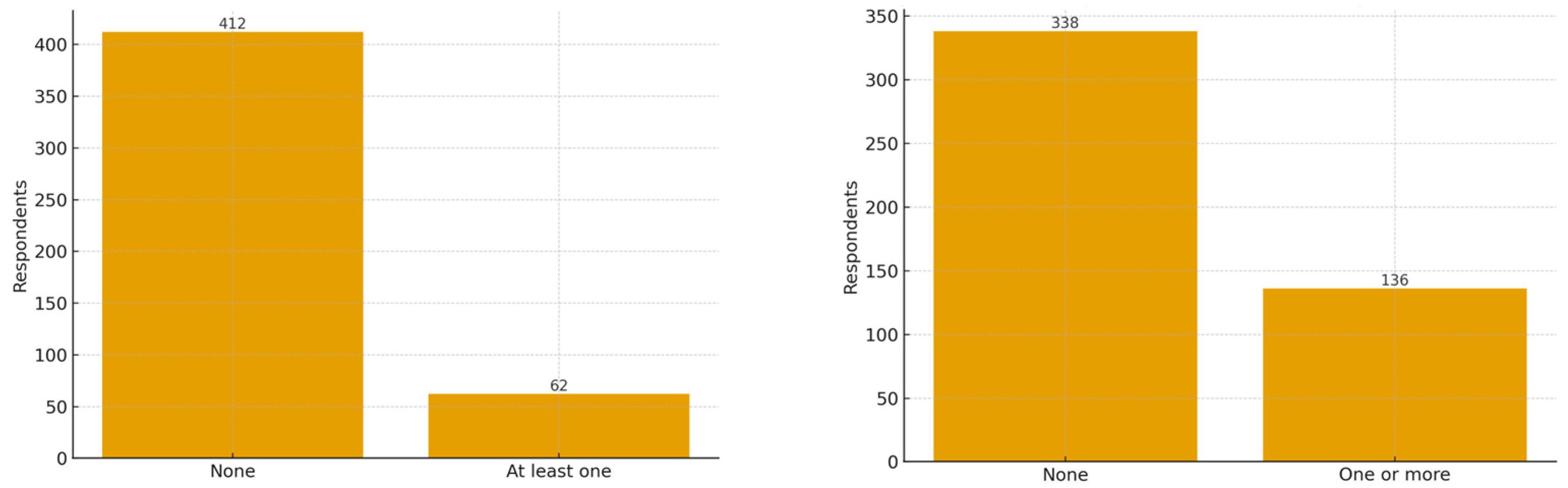
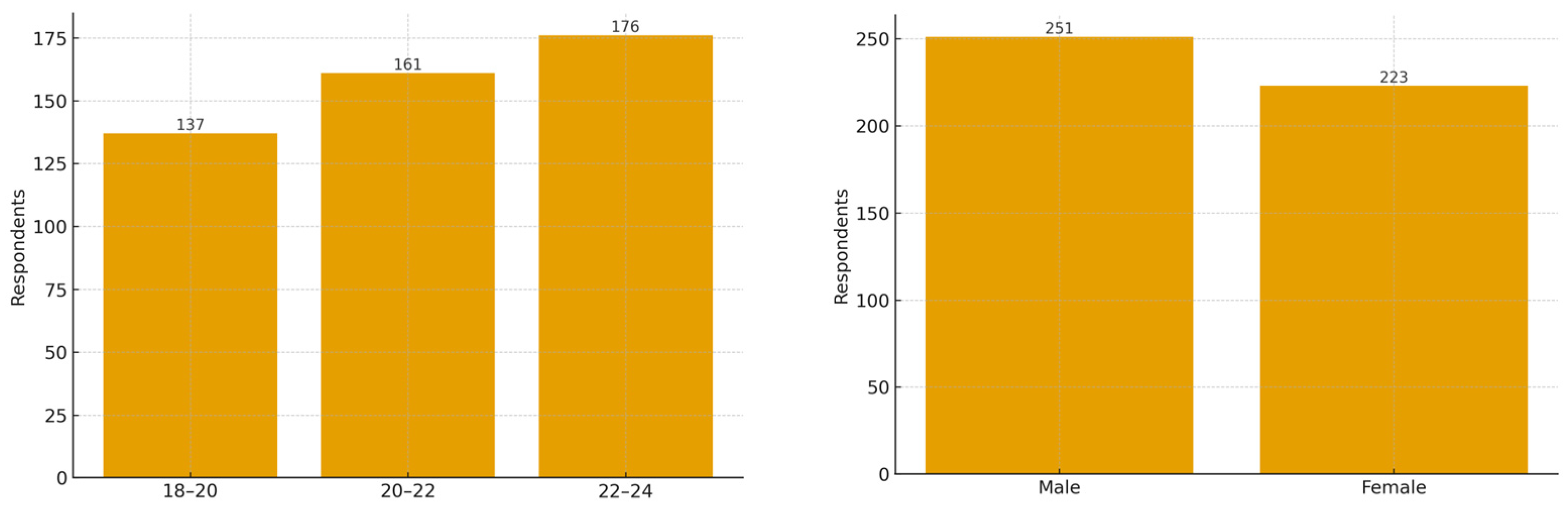
SPSS 26 and SmartPLS 4 were used for data preparation and modeling. The final sample comprised 474 young e-scooter riders (aged 18–24 years). Gender was 251 male (52.9%) and 223 female (47.1%); age groups were 18–20 (n = 137, 28.9%), 20–22 (n = 161, 34.0%), and 22–24 (n = 176, 37.1%). Accident involvement in the past 12 months was 62 (13.1%) vs. 412 (86.9%) none; traffic fines (any vehicle) were 136 (28.7%) vs. 338 (71.3%) none. Figure 2 and Figure 3 visualize age/gender and safety–history distributions. For interpretability, illegal overspeeding was defined as riding >25 km/h in urban areas (municipal limit), and perceived speeding intention was measured with a 10-item Likert scale. In total, then, it might be argued that the statistics indicate a majority of young drivers in this sample, something that would have potential implications for riding habits as much as for insurance policies. The almost equal distribution suggests that riding is common in both genders of the population being studied. It would also mean that a balance in perspective will be available to explore riding experiences and behaviors. On the riding experience concerning road safety, 62 drivers have admitted to having had an accident with their scooter, while a very convincing majority of 412 had no such experience. Additionally, 136 drivers had received riding fines with their cars (not scooters), which is over half of the study group, demonstrating that riding violations are not uncommon. Conversely, 338 drivers escaped being fined, which may be due to obedience to traffic rules or less driving.

3.2. Structural Equation Modeling

SmartPLS software was utilized for structural equation modeling in this part of the study. We estimated a PLS-SEM model in the software (path weighting scheme; 5000 bootstrap resamples) to evaluate relationships among latent constructs and speeding intention. Reflective measurement models used standardized indicators; no item dichotomization was applied. In the EFA stage, varimax rotation was used to obtain orthogonal factor solutions and minimize cross-loadings, thereby clarifying latent structure prior to SEM. Structural paths are reported in Table 2 (β, SE, t, p, 95% CI) with hypothesis outcomes. Overall model adequacy is summarized in Table 3 (CFI, TLI, RMSEA, SRMR) alongside recommended thresholds.

3.2.1. Difficulties in Emotion Regulation Scale (DERS)

EFA confirmed the six-factor DERS structure (Non-acceptance, Goals, Impulse, Awareness, Strategies, and Clarity) with salient loadings and acceptable psychometrics (all α > 0.80, CR > 0.85, AVE > 0.50). In SEM, higher emotional dysregulation was positively associated with speeding intention (see Table 2). Detailed item loadings and t-tests are provided in Appendix A, Table A1.
Nonacceptance of Emotional Responses component captured items that reflect the tendency to have negative secondary emotional reactions to one’s own emotions. For example, teenagers showed resistance to acknowledging feeling ashamed (item 25, factor loading = 0.58), embarrassed (item 15, factor loading = 0.61), angry (item 14, factor loading = 0.52), irritated (item 33, factor loading = 0.42), and weak (item 27, factor loading = 0.44) when distressed. They even experienced guilt because of the fact of having felt negative emotions in the first place (item 29, factor loading = 0.73). This kind of result shows that most of the youth riders have low levels of tolerance and acceptance of their own emotions, which again can give rise to further distress and maladaptive coping.
Items loading on Difficulties Engaging in Goal-Directed Behavior component listed difficulty in concentrating when upset and paying attention to tasks. Younger riders indicated that they were having difficulty focusing on something else, item 22, factor loading = 0.69; completing the work, item 16, factor loading = 0.72; and focusing on anything else, item 18, factor loading = 0.75 when they were angry. However, other riders stated that they felt that despite everything, they could still continue to do things, item 24, factor loading = 0.53, showing that they did experience some inconsistency between holding goal-directed behavior despite emotional outbursts. Overall, the findings of the current study have shown that negative emotions did disrupt cognitive functioning and task performance of most of the youth riders.
Impulse Control Difficulty reported problems holding self-control of acting on impulse when in an emotional state. Youth drivers endorsed factors that represented loss of control over their behaviors, item 13, factor loading = 0.69; failing to control their behaviors, item 31, factor loading = 0.65; not having a feeling of being in control, items 17, factor loading = 0.56, item 23, factor loading = 0.57 and item 2, factor loading = 0.43. However, some riders had indicated that they thought they were still able to control their behaviors when angry-item 28, factor loading = 0.45-impulse regulation individual differences. Being unable to control impulses when feeling is going to have serious implications for safe riding practices among this group.
Items loading on Lack of Emotional Awareness facet reflected overall unawareness of and disconnection from one’s own emotions, for example, inattentiveness, not acknowledging, and getting confused about emotions. The teenage drivers reported to be unaware of their feelings, item 7, factor loading = 0.55; not noticing that they feel, item 3, factor loading = 0.57; and having trouble acknowledging that they have feelings, item 12, factor loading = 0.63. They also struggled to accept that their feelings were real and important, item 21, factor loading = 0.52, and sometimes did not know what was happening to them, items 9, factor loading = 0.46; item 36, factor loading = 0.50. These are results that have implications for many young riders who have inadequately developed emotional competencies which can further affect their ability to successfully regulate their emotions.
Items that assessed the Lack of Emotional Clarity factor reflected issues in clearly distinguishing, separating, and making sense of one’s emotions. Young riders reported being unable to make much sense of their feelings, knowing nothing about what they felt, and getting mixed up regarding their feelings. On the other hand, some riders reported that they did not feel as though they really knew how they felt, item 8, factor loading = 0.69, also had clarity of feeling, item 1, factor loading = 0.44. These findings would suggest that this lack of emotional clarity for many young riders is an issue and could harm their ability to work with their emotional experiences effectively.
Restricted Access to Emotion Regulation Strategies did not capture beliefs and attitudes that one cannot overcome negative emotional states or make them better, e.g., expecting long-term depression, indulging in wallowing, or lack of confidence to improve. Youth riders endorsed items that pertained to an idea that they would end up getting very angry when annoyed (item 20, factor loading = 0.72), would remain annoyed for an extended period of time (item 19, factor loading = 0.65), and that they could merely wallow (item 4, factor loading = 0.64). They also responded that it would be a while before they would get better, item 11, factor loading = 0.52, and that they believed that they could not do anything to improve how they were feeling, item 32, factor loading = 0.50. However, some riders indicated that they were able to discover some means of feeling better in the end, item 26, factor loading = 0.50. These findings indicate that a majority of young riders feel they do not have appropriate strategies to control their emotions effectively.
More importantly, however, are the findings of the factor analysis in providing meaningful information regarding specific emotion regulation challenges being faced by the youth scooter rider sample. That these six quite disparate facets are in evidence suggests that emotion regulation is a multi-faceted construct, and riders are struggling in diverse manners with distinct arenas of emotional processing and regulation. That the vast majority of riders reported at least a bit of shame, embarrassment, and negative attitude toward their own individual emotional experience indicates a malignant movement toward non-acceptance. This can unintentionally result in the repression or evasion of feelings, for which there is also a variety of negative consequences found through scientific investigation. Techniques facilitating self-compassion and acceptance of affect might also be helpful for this group. Particular attention would be on the difficulties with engaging goal-directed behavior and maintaining impulse control in affectively intensified states, as these deficits might significantly influence hazard-free riding behaviors. Thus, riders would learn to profit from emotion regulation mechanisms that provide improvement in cognitive control and the capacity to override automatic reactions. Lack of emotional awareness and clarity indicates poorly developed emotional skills in most riders. Improved recognition, naming, and understanding emotional processes through intervention may help riders regulate their emotions and reactions better. In addition, the limited access to effective emotion regulation methods creates a training need in adaptive coping skills and self-efficacy in managing aversive emotions. Being given an expanded skill set for regulations can help the youth efficiently handle emotional adversity.

3.2.2. Paulhus Deception Scales

The BIDR yielded two factors (Self-Deception and Impression Management) consistent with prior research. Both exhibited satisfactory reliability (α/CR), and served as proxies for Subjective Norm within the TPB-aligned framework. Select high loadings suggested self-enhancement and law-abiding image management; full loadings are in Appendix A, Table A2.
Impression management in the use of the Paulhus Deception Scales indicates the degree to which a particular individual manages or manipulates his/her image to create a positive good impression. It is the tendency of an individual to impress other people through actions and words. While self-deception is the tendency of an individual to deceive or mislead himself or distorting perceptions, assumptions, and behavior not to be viewed negatively. It can be defined as the degree to which one might use denial, rationalization, or other defense mechanisms in an effort not to know about unpleasant facts regarding the self, for instance.
The results of factor analysis provide valuable information about patterns of youth scooter rider self-deception. The considerable factor loadings on items that involve confidence in decisions and control over oneself make it a huge inclination towards the self-enhancement bias among the subject population. The finding is quite important in the context, i.e., risky riding behavior among young riders. The highest factor loading was 0.75 for the item “I never regret my decisions”. This reflects a potentially concerning level of overconfidence that may influence riding behavior. A bias of this sort is a result of earlier research that has shown young drivers to overestimate their ability to ride and/or underestimate risk. Confirmatory evidence was further provided by the moderate loading, 0.45, on the speed-limit item, which indicates that higher scorers on self-deception might be able to rationalize dangerous riding behavior. The comparatively high loading, 0.70, on the item “I am fully in charge of my own destiny” assumes special importance in the context of road safety. Unrestricted personal control can lead riders to be even less aware of, and attuned to, such as the condition of roads, other drivers’ behavior, or the weather when evaluating the safety of one’s self. This would mean that education programs on road safety for young scooter riders would be more effective if these target such illusions of control specifically. Lower loading for the item with voting-related was 0.30, meaning that within this group self-deception is domain-specific, more effective for the directly relevant domains of personal ability and decision-making than for the broader judgments of social impact. In other words, interventions based on personal responsibility and risk will be far more effective than overall educative approaches. Some of the scale items relating to self-criticism and honesty were also represented in a similar vein, i.e., “I seldom like criticism” and “I do not always practice self-honesty“, with moderate loadings operating at around 0.50; this would make us conclude that people who were high on self-deception would thus be less receptive to safety feedback or corrective advice. Indeed, a factor analysis of the Impression Management subscale can be quite insightful in terms of identifying the interesting patterns with which the youth scooter users do their social image maintenance according to their riding conduct.
On this issue, the loading pattern does confirm that the relationship between social desirability and risk-taking on the road is complex. Out of these measures, the highest factor loading, 0.71, was for the measure “I never take things that do not belong to me”, indicating that participants are most interested in appearing honest and law-abiding in property issues. In contrast, and interestingly, the factor loading for the speed limit offense item was relatively moderate, 0.42, and this suggests riders may perceive traffic offenses as less socially disapproved than rate-breaking or rule-violation in general. This differential can perhaps suggest an abhorrent normalization of traffic violations among young riders. The heavy loading, avoiding gossip (0.63), and the positive loading, never swearing (0.59), attest to the participants being more sensitive to maintaining a socially acceptable image within an interpersonal context. This finding suggests road safety campaigns could be more successful by using anxiety about social image, perhaps by showing the way irresponsible riding puts one’s reputation at risk in the eyes of one’s peers. The relatively low loadings for items related to personal disclosure (“I have done things that I don’t tell other people about”) and personal habits (0.30) indicate that participants are not particularly interested in impression management in domestic pursuits. This pattern might indicate that younger riders perceive their riding behavior as a personal issue rather than a social duty and might be contributing to the riding behavior of risk-taking. Of particular interest to understanding riding behavior, there were high loadings on “I always obey laws, even if I’m unlikely to get caught” with a relatively moderate loading of 0.50. This would imply that approximately half of the effort at impression management is aimed in an attempt to be viewed as law-abiding, and this directly would go towards inferring obedience to traffic law.

3.2.3. Internal Control Index

The Internal Control Index showed a stable three-factor solution (Autonomy, Leadership, Steadfastness/Decisiveness), with acceptable reliability (α > 0.80, CR > 0.85, AVE > 0.50). In SEM, internal locus of control was negatively related to speeding intention and retained significance after demographic controls (Table 2). Detailed loadings appear in Appendix A, Table A3.
Resoluteness/Steadfastness is a component in the Internal Control Index that gauges the ability of an organization to make timely and consistent decisions whenever there is adversity or uncertainty. It evaluates the ability of the organization to prioritize, allocate resources, and remain committed to its strategic objectives in spite of obstacles. Strong resoluteness and steadfastness in decision-making are crucial in guaranteeing good internal controls and organizational achievement.
The Leadership component of the Internal Control Index is concerned with how the tone for the implementation of internal control in the organization is set by the top management. It evaluates the extent to which leadership has been successful in promoting a culture of accountability, integrity, and ethical conduct. Strong leadership is essential to ensure that the internal control systems are always implemented and that the employees are held accountable for their actions.
The Autonomy element of the Internal Control Index is conceptualized as the degree to which employees can exercise their autonomy in fulfilling their roles within the organization. It is an indicator of whether employees have the freedom and capability to make decisions and undertake actions without undue interference from management. Autonomy enables employees to effectively execute internal control procedures and mitigate emerging risks at an early stage. It promotes a culture of trust and accountability within the organization.
The Internal Control Index assesses to what degree a person experiences events as a function of their reinforcement by themselves (internal control) and not the result of forces external to their own control (external control). Moving into the loadings analysis reveals the pattern to which various autonomy-related behaviors and attitudes cluster in the young riders. The question regarding one key issue-most significantly, external judgment or self-assessment; accordingly, dependence on others’ approval in assessing levels of autonomy-was revealed to have the biggest loading: 0.73. This is likewise high loading for question 2 (0.59) on having to be encouraged by others in order to keep trying hard at difficult tasks. This would then place this question in the center of the relationship with outside validation in autonomy among this population. Items related to self-validation and external commendation yielded moderately high loadings, question 14 with 0.60, and question 22 with 0.57, related to persevering with long-term tasks, and question 5 and 18, 0.56 related to work ethic and goal attainment. These moderate loadings reflect that personal persistence and achievement orientation are indeed important factors of the autonomy construct in young riders. Lower loadings were on items with a high number of issues related to independent behavior and decision-making. These were allowing other people’s needs to interfere with one’s own goals, 0.49; sales assertiveness, 0.46; dependence on other people’s ability, 0.40; independent study, 0.40; avoidance of issues, 0.42; information search behavior, 0.40; and decision-making procedures, 0.33.
The relatively low factor loadings of these items would suggest that independence in everyday decision-making might perhaps be less central to the autonomy construct in the population at hand than had originally been anticipated. Within the pattern of factor loadings, it can be shown that autonomy in young scooter riders is more strongly characterized by their adherence to external approbation than by self-generated processes of decision-making. The implication of this finding for intervention strategies is strongly relevant: this means that programs, designed to increase rider safety via greater autonomy, should at least work to reduce riders’ dependence on external validation and enhance self-reliance. In light of the results shown here, intervention programs must develop self-validation and self-motivation processes with no single focus on independent decision-making skills. Training systems could be supplemented with components facilitating confidence in independent judgment and less dependence on external validation. Specific attention must be devoted to assisting young riders in establishing internal standards by which they can judge themselves and make decisions, as opposed to relying solely on others’ validation and praise.
The factor analysis of the Leadership factor constituting the Internal Control Index among young scooter riders ranged from 0.38 to 0.73. Highest loading was reported for question 13 (0.73) on enjoyment of jobs that involve leading, and question 7 (0.68) on supervising others. These loadings indicate that direct roles and responsibilities, or themes, of leadership are of the highest importance in this leadership factor of the youth rider sample, suggesting that individuals scoring high on this factor feel comfortable and desire to take leadership. Items 3 and 15, which asked decision responsibility and confidence in being able to exert influence over others, respectively, had moderate to high loadings of 0.63 and 0.64. These loadings imply that autonomous decision-making and assurance of having the courage to make one’s thoughts known are important aspects of youth leadership among riders.
Question 9 and 25 (0.55 and 0.59), however, were moderate loadings, implying that involvement in decision-making and also liking for tasks that were thought to be difficult were important. Lower loadings are found for question 17 (0.46) on spontaneous decision-making and question 12 (0.38), which questioned success attribution to effort. Lower loadings reveal that spontaneous decision-making and success attribution have smaller contributions to the factor of leadership dimension of internal control among youth riders. The factors loading profile is such that leadership, thus defined, is a function more of direct activation of leadership and supervision comfort rather than a function of emergent decision-making or success ascription. This finding perhaps suggests that young riders who also exhibit strong leadership styles are likely to go out and demand and volunteer for official leadership roles actively rather than exhibiting independent decision-making tendencies reactively. These findings have strong implications for intervention programs directed at the riding behavior of our youth. Rather than intervening on general leadership skill, interventions are now challenged to address more formal leadership skill and supervisory capability, as these were found to be the most predictive of leadership for this sample. Additionally, greater confidence in decision-making and ease with influencing groups may also prove useful because it had relatively moderate but significant loadings.
The internal control factor analysis of the Steadfastness/decisiveness component of the Internal Control Index in young scooter riders yielded helpful information regarding how firmness manifests in opinion change decisional actions in this sample. The greatest loadings were for question 4 (0.68) of opinion change as a response to idealized individuals, and question 20 (0.64) of standing up for opinions when others oppose. These high loadings mean that consistency with personal opinions, particularly when faced with external influence, is at the heart of tenacity among teen riders. This means that those who are highly scored in this factor are more resistant to change of opinion in response to people’s opinions. Moderate loadings on question 21 (0.61) between conformity to one’s desires and the opinion of others, question 23 (0.57) between preference for sole decision-making when in the presence of others, and question 11 (0.49) between conformity to other’s opinions as a basis for action indicate independence of decision and strength of resistance against peer influence are significant parts of firmness, though somewhat less central than consistency of belief.
Lower loadings were observed on items 24 (0.45) for compliance with guidance from friends or relatives, and item 28 (0.41) for information-seeking behavior when in others’ guidance. Lower loadings suggest that seeking guidance from others and information seeking play a smaller role in the firmness aspect of internal control among young riders. The loading pattern shows that steadfastness here is most strongly characterized by being able to stand up for personal opinions and decisions against other people’s pressure, rather than necessarily by complete independence from other people’s views or by over-savviness with information. This finding shows that adolescent riders with high steadfastness will be likely to adhere to their opinion on matters but be quite receptive to others’ inputs. These findings have strong implications for programs of behavior intervention of youth riders. Programs must focus on building balanced decision-making skills that combine sound personal conviction with due respect for other people’s contributions. Additionally, efforts to enhance resistance to destructive peer pressure while maintaining openness to constructive criticism can be helpful in the context of the identified pattern of loadings.

3.3. Latent Variables and Speeding Behavior

Speeding intention was measured as the mean of 10 Likert items. For comparability with intervention thresholds, we report (i) the continuous score and (ii) a binary indicator (1 = willing to speed if mean ≥2.5; 0 = unwilling otherwise). As a robustness check, all SEM paths were re-estimated using the continuous intention score; results were substantively unchanged (Table 2).
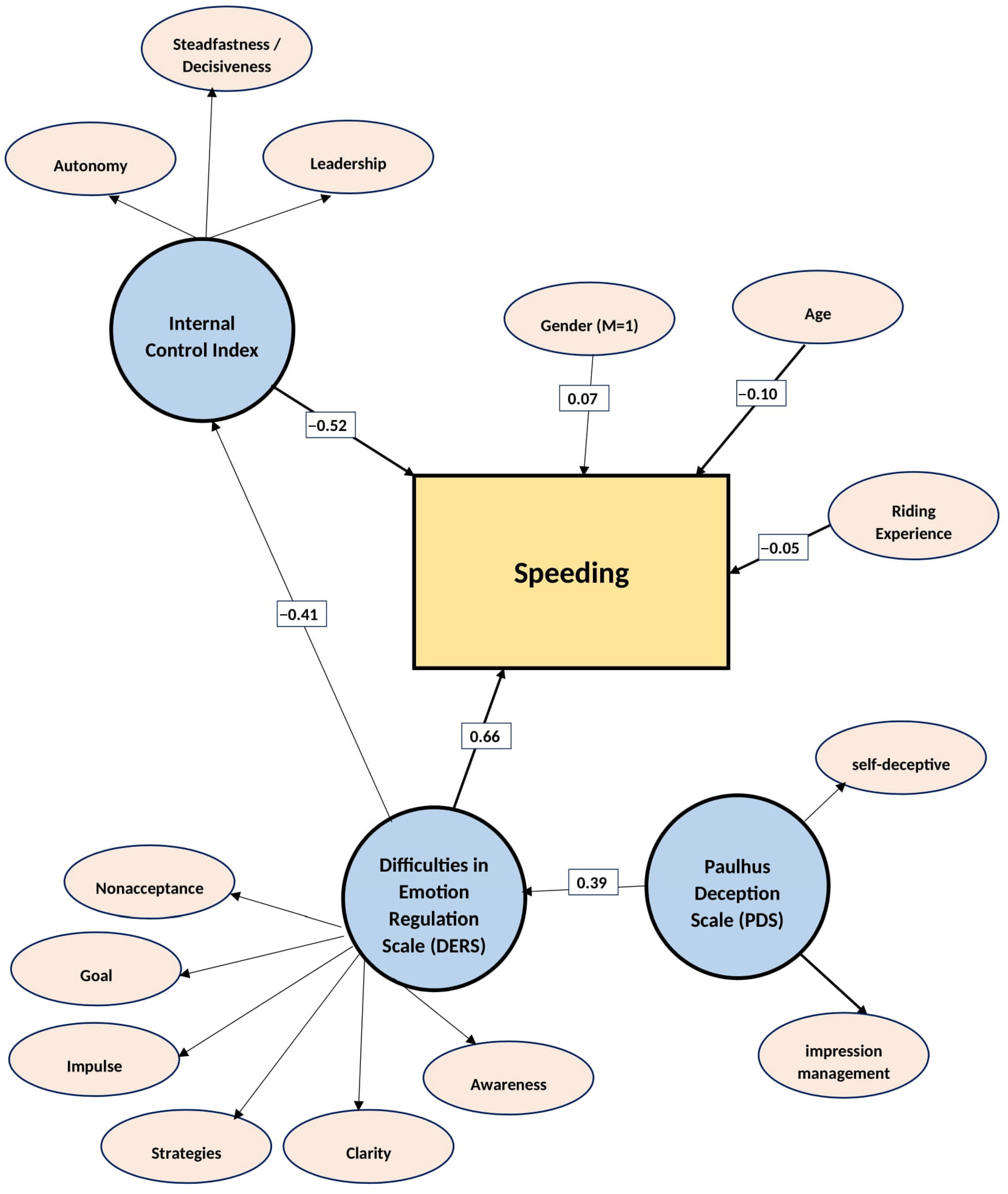
SEM results supported both hypotheses (Table 2). Emotional dysregulation positively predicted speeding intention (β = +0.66, SE = 0.09, t = 7.33, p < 0.001, 95% CI: [0.49, 0.83]), whereas internal locus of control negatively predicted intention (β = −0.52, SE = 0.08, t = −6.50, p < 0.001, 95% CI: [−0.68, −0.36]). Adding age, gender, and riding experience as controls did not alter the direction or significance of psychological predictors. Model fit indices indicated acceptable fit (CFI = 0.93, TLI = 0.91, RMSEA = 0.045, SRMR = 0.071. The TPB-aligned conceptual mapping is shown in Figure 4. Internal control index and speeding likelihood were moderately negatively correlated (−0.52), with greater internal control being associated with reduced speeding intentions. This may be explained based on three components-resoluteness/steadfastness, leadership, and autonomy. With this autonomy aspect of self-determination and intrinsic motivation, it would be expected that the young drivers who scored high on this scale will be less prone to pressure from friends’ or social norms’ influence to speed. This result is in line with the existing literature, wherein the internal locus of control is associated with less risk-taking behavior in the earlier research by [10,26].
But the Leadership facet, which also comprises dimensions of assertiveness and readiness to assume responsibility while riding, indicated that high scorers on this facet may be associated with overconfident or aggressive riding styles, and thus increased vulnerability in the form of high speed or risk while riding. This result is also supported by research linking leadership qualities to various types of risk-taking inclination in various fields, e.g., [27,28]. The resoluteness/steadiness facet would, therefore, imply that riders with high scores on this facet should be less prone to peer pressure to speed or ride dangerously and thus counter the influence of social pressures on their behavior. This finding is supported by research taking self-regulation and peer resistance into account as a protective factor in adolescent risk-taking behavior [21,29,30]. Emotion regulation problems had a moderate positive relationship of 0.66 with willingness to speed, and this means that people who have problems regulating their emotions are more willing to speed. People who are unable to control their feelings are more prone to submitting to impulsive decisions and risky behavior, such as speeding. These findings build a complex picture of the psychosocial determinants of speeding behavior in young scooter riders. The protective role of internal control would support the suggestion that the encouragement of personal responsibility and self-determined decision-making would be effective in promoting safer riding behavior. Such understandings of these relationships provide an important basis for devising interventions that can target several such factors simultaneously for possibly more effective road safety programs directed at young scooter riders.
Collectively, these findings indicate that emotional regulation and internal control beliefs are the primary psychosocial determinants of speeding intention among young riders; policy implications are elaborated in the Discussion.

4. Discussion

The findings suggest policymakers should encourage the formation of youth riding councils that are committed to making suggestions on safety initiatives and helping to design age-specific interventions. The extended model combining emotional dysregulation (DERS), self-deceptive bias (Paulhus Deception Scales), and internal control provides a more comprehensive understanding of the psychosocial determinants of risky riding. The positive path between DERS and Paulhus indicators highlights that emotional instability can foster self-justifying beliefs and impression management, leading individuals to rationalize unsafe behaviors. In contrast, internal locus of control exerts a protective effect, tempering impulsive and socially reinforced risk tendencies. These interrelations confirm that emotional and cognitive biases jointly shape speeding decisions rather than operating independently. These can act as bridging mechanisms between the authorities and the young riders so that the relevant interventions are also acceptable to the target group. Another positive effect of such participation is that one can develop responsible young riders, strengthening the protective effect of internal control demonstrated in this study. Improvement strategies need to be directed at the establishment of long-term sustainable programs rather than short-term campaigns. This includes the establishment of ongoing training centers that address the psychological aspects of riding safety, developing standardized measuring instruments that will determine whether a rider is psychologically ready to ride, and instituting long-term support for young riders. Private industry partnerships could augment these programs, whereby insurance companies begin to offer preferred rates to riders who undergo psychological safety programs. Scooter manufacturers can incorporate smart features into their scooters that allow riders to examine and manage their feelings while riding more efficiently.
This investigation uncovers some intuitively complex psychological processes underlying speeding behavior in scooter drivers, emphasizing findings of paramount importance to policy-making and intervention development. The driver risk measure proved a central determinant, showing how emotional state, hazardous situations, and judgmental errors can all interact to lead to speeding behavior. Such a multifaceted nature of risk would suggest that traditional approaches, in effect targeted at rules and enforcement, can be at least incomplete. Quantitatively, the structural model demonstrated that emotional dysregulation had the strongest direct effect on speeding intention (β = 0.66), while internal locus of control reduced it substantially (β = −0.52). Moreover, emotional dysregulation indirectly influenced speeding through its negative association with internal control (β = −0.41). The significant positive association between DERS and Paulhus Deception (β = 0.39) further supports the notion that difficulties in emotional regulation can amplify self-deceptive biases and diminish self-monitoring on the road. Together, these results underline that interventions need to address both affective regulation and cognitive self-awareness to mitigate risk. Specifically, the strong association of emotional regulation issues with speeding behavior reveals that the ability to manage emotions is involved in making choices for young riders.
The powerful influence of attitudes on speeding behavior, along with the buffering influence of internal control, demands a fundamental shift in how we approach rider safety education and licensing. Licensing programs need to be revised to include assessment and training of psychological competencies. Mandatory courses on emotional control, for example, could be required for the licensure of novice motorcycle riders. Indeed, some Scandinavian countries have implemented this. These workshops would cover how to identify emotional triggers and develop coping mechanisms specific to riding situations. Addressing impression-management tendencies identified in the Paulhus construct can enhance the realism and honesty of rider training. Incorporating reflective components (such as self-assessment diaries, peer feedback, and simulator-based behavioral tracking) may counteract socially desirable responding and encourage genuine acknowledgment of risky behavior patterns. Instructors should be trained to detect and manage these self-deceptive defense mechanisms to ensure lasting behavioral change.
Normalization of rule-breaking and risk underestimation among young riders mirror the disturbing trend change in safety culture-justifying community-level interventions and reform in education by any means. These new elements of the curriculum corresponding to the psychological elements of riding must be incorporated into schools and riding schools, virtual reality simulations of the effect of emotional state on riding decisions, peer discussion groups facilitated by equals on the perception of risk, and experiential exercises in judgment and decision-making under different conditions. Local authorities introduce mentor programs-linking novice riders with veteran riders-focus on decision-making and positive attitudes toward safety. Enforcement agencies need to be balanced between traditional enforcement and psychological intervention. Police could give first-time speed offenders the option of attending workshops on emotional management and decision-making in lieu of fines. They would address the underlying psychological reasons for their speeding rather than the punishment of the outcome. This approach recognizes that it takes effort and time to alter long-held beliefs but can achieve long-term changes in behavior.
In incorporating e-scooters into sustainable urban mobility initiatives, there is also a set of key challenges concerning what might be called the psychological motivations for speeding among young riders. In fact, the psychological dynamics uncovered in our research constitute a fundamental challenge to sustainable mobility initiatives. Problems of emotional control and a risk-taking inclination in youth are likely to clash with the task of lowered speeds required for blended urban traffic. There is thus a conflict between the urge for fast, efficient transportation, the need for lowered speeds in integration with traffic, the psychological satisfaction possibly attainable through risk and speed, and the requirements of sustainable urban mobility systems. The psychosocial elements of speeding behavior greatly complicate the incorporation of e-scooters into traditional transportation systems. Complications occur in the form of spatial conflicts among heterogeneous road users caused by speed differentials, difficulties in the design of infrastructure that meets both safety and the psychosocial needs of users, issues in the establishment of speed-controlled zones that young riders will actually follow, and, finally, achieving a balance between personal freedom of mobility and public safety.
Normalization of rule breaking emerging from the research results means intensified social problems such as peer pressure and social norms favoring risky riding, cultural resistance to speed limits and their enforcement, intergenerational disparities in comprehending mobility risks and responsibilities, and the challenge of passing sustainable mobility values within youth culture. The control measures also present some psychological barriers that will need to be overcome in order to have effective integration into sustainable mobility. The challenges also include resistance to the installation of technological speed-limiting devices, a trade-off between user freedom and the need for safety, the development of intervention systems that will be acceptable to young riders, and the need for control systems not to eliminate the attractive nature of e-scooter riding. Similarly, the process of developing effective education programs has to overcome a number of challenges: the gap between traditional safety training and psychological needs, resistance to compulsory psychological screening and training, insufficient resources to implement large-scale training programs, and consideration for maintaining receptiveness in dealing with extreme safety problems.
These psychological mechanisms resonate with broader frameworks of sustainability psychology, where self-regulation, self-concept maintenance, and social norm internalization are key predictors of pro-social mobility behavior. Strengthening self-control and reducing cognitive dissonance between personal identity and safe mobility practices can therefore support not only safety outcomes but also long-term adherence to sustainable transport goals. Implementation of psychologically informed sustainable mobility policy is associated with a number of obstacles, including resource constraints for large-scale psychological interventions; stakeholders’ opposition to the more advanced types of licensing; measurement and evaluation difficulties of effectiveness stemming from psychological interventions; and coordination issues between different government departments and agencies. To this is added the economic aspect of the interventions: the cost of implementing programs of psychological screening and training, the cost of more economy-friendly alternatives to safe e-scooters, economic constraints on developments in safety features and tracking systems, and the problem of balancing affordability with the need for safety. Some of the most significant approaches argue the case for inclusion in future policies with a view to meeting these challenges. The latter range from adaptive intervention programs that are designed to treat individual psychological profiles, use of smart technology in support of positive riding behavior, development of incentives that reward safe and sustainable riding practice, to community-based support networks for novice riders. Some of these include challenges to be weighed and balanced against sustainable mobility options, safety, social responsibility, psychological needs of young riders, and maintaining appeal as a means of transportation. The comprehensive understanding of these challenges is bound to provide better strategies for the propagation of sustainable mobility, considering the psychology underlying the behavioral choice of the youth using them. Overall, this study extends prior behavioral models by integrating emotional regulation, self-deception, and internal control within a unified SEM framework. This multidimensional approach advances the theoretical understanding of youth micro-mobility behavior and provides empirical evidence for tailoring interventions that simultaneously target emotional, cognitive, and social domains of risk.

5. Conclusions, Limitations, and Future Research Directions

This research gave significant insights into the psychological underpinnings of speeding behavior among young scooter riders in explaining the complicated interplay between emotional regulation and internal control mechanisms. Specifically, the extended structural model integrated emotional dysregulation (DERS), self-deceptive bias (Paulhus Deception Scales), and internal locus of control into a unified framework explaining young riders’ speeding intention. This multi-construct approach goes beyond conventional TPB-based models by capturing both affective instability and self-cognitive bias as drivers of risky mobility behavior. Our results were able to show that speeding behavior is not only a question of compliance with rules but, rather, a complex behavioral outcome influenced by several aspects of psychology. These findings provide clear directions for future intervention strategies, given the strong relationships established between these psychological variables and willingness to speed. The inclusion of the Paulhus Deception construct revealed an additional layer of cognitive distortion (self-enhancing and impression-management tendencies) that partially mediates the link between emotional dysregulation and risky behavioral intentions. This finding broadens the understanding of why self-report data often underestimate true speeding behavior among youth populations. For instance, the emphasis of the study’s results on emotion regulation as a critical determinant in riding behavior implies that problems in managing emotions greatly contribute to speeding tendencies. This places the current research well away from the traditional view on road safety, which generally adopts enforcement and basic skills training as its operations. As confirmed by our research, such deeper psychological aspects have to be addressed by intervention programs if behavioral change is to occur and be sustained. These insights emphasize that preventive strategies should combine emotional self-regulation training with cognitive bias correction. Programs such as reflective journaling, simulator-based behavioral feedback, and guided self-assessment could help riders recognize and counteract self-deceptive rationalizations that promote risky conduct.
The negative relationship of internal control with speeding behavior points gingerly to encouraging proof that the development of personal responsibility and decision-making skills may act as protective factors against risky riding behaviors. The strong influence exerted by the psychological factors in this study argues that future road safety measures should be more holistic and integrate the traditional safety measures with the psychological intervention strategies. Henceforth, this research provides a foundation through which better effective interventions are developed that are evidence-based and target the young scooter riders. Predictions are that effective programs are embedding elements that address emotional regulation and the development of internal control. In addition, results indicate that interventions should consider individual differences in psychological factors related to riding behavior.
While the current study represents an important contribution to our understanding of the role of psychological factors in speeding amongst young scooter riders, there are several limitations that need to be considered. While the extended SEM framework incorporating DERS, Paulhus Deception, and Internal Control yielded robust explanatory power (R2 = 0.75), it remains a correlational snapshot of psychological mechanisms rather than a longitudinal account of causal development. Given the reliance on self-report data for both the scores on the psychological measures and the reporting of speeding behavior, there are likely to be problems related to social desirability bias and recall errors that could impact the accuracy of our findings. Even though the structural equation modeling shows evidence of such associations among the psychological factors and speeding behavior, these cannot be established as causal due to the cross-sectional nature of the study. While the focus on willingness to speed has provided critical insights in this area, it may also not fully capture the full complexity of real-world riding decisions and behaviors that occur in dynamic environments.
Further limitations to our findings are provided by sample characteristics. While the focus on young scooter riders provides more specific insights into this group, generalizability may be reduced to other age groups and/or vehicle types. The potential for cultural or regional influences to shape riding behavior was not fully examined and may further limit the general applicability of findings across cultures. Furthermore, general scales of emotional regulation lack context-specific measures for riding situations that are tailored to capture subtle variations in emotional experiences peculiar to riding scenarios. These limitations point to several promising avenues for future research in the area of psychosocial factors. First, there is a need for longitudinal studies since this will follow the psychological factors and riding behavior over time into clearer causal relations and further in how interventions may affect processes of behavioral change. Introduction of technology-enhanced methods of data collection, as telematics devices or even smartphone applications, will provide the opportunity for real-time data collection about actual speeding. Thus, estimates of the relation of psychological states to riding decisions become more valid. Construction of riding-oriented psychological measuring instruments, in particular for emotional regulation in riding contexts, enhances validity in assessing risks and warrants the effective targeting of interventions.
Future research should extend into more cultural differences and environmental contexts of how the psychological factors influence riding behavior. This may mean undertaking cross-cultural research, which allows the identification of universal psychological factors but also underlines culture-specific influences that should be taken into consideration at the time of intervention design. Experimental research to test the effectiveness of interventions targeting the identified psychological factors is essential, such as randomized controlled trials of different intervention approaches to establish evidence-based best practices for reducing speeding behavior. Further research on the specific roles of peer influence and social networks in developing these psychological factors would be useful. Such an understanding could lead to further refinement in program design, particularly in group-based interventions and community programs. Moreover, physiological measures could be included in further studies to try to unravel the biological mechanisms underlying emotional regulation while riding, which might offer other avenues for intervention. Further economic comparisons about the cost-effectiveness of psychological interventions compared to traditional enforcement approaches would also inform policymakers and planners. Future research directions concerning the aforementioned would address the great limitations of the present study while taking a step further in advancing our understanding of the psychological factors influencing riding behavior. By continuing to work on such a wide-ranging research agenda, we would be continuing with efforts stemming from the conceptual basis established by the present study, not only to gain more effective ways of improving road safety among young scooter riders but also coming up with effective interventions that should provide for more effective coping with complex psychological factors that trigger risky riding behaviors and at the same time supporting sustainable improvements in road safety outcomes. Finally, integrating psychological determinants such as emotion regulation, cognitive self-deception, and internal control into sustainable mobility policies represents a promising interdisciplinary direction. Future empirical models may combine behavioral data from telematics with psychometric profiles to develop adaptive, context-aware safety feedback systems for micro-mobility users.

Author Contributions

Conceptualization, T.L. and K.S.; Methodology, T.L. and K.S.; Software, T.L.; Formal analysis, T.L.; Writing—original draft, T.L. and K.S.; Writing—review & editing, T.L. and K.S. All authors have read and agreed to the published version of the manuscript.

Funding

This research received no external funding.

Institutional Review Board Statement

Ethical review and approval were waived for this study. This study utilized secondary, publicly available, and fully de-identified datasets obtained from open data sources in Iran. No personal or individual-level information was collected or analyzed. According to the Ethical Guidelines, Regulations, and Instructions for Biomedical Research in Iran, published by the Secretariat of the Ministry of Health and Medical Education (MOHME), Deputy for Research and Technology, and the National Committee for Ethics in Biomedical Research (2022), studies that use open, anonymized, and secondary data are exempt from ethics committee review. Therefore, no separate institutional ethics approval was required for this analysis.

Informed Consent Statement

Informed consent was obtained from all subjects involved in the study.

Data Availability Statement

The data presented in this study are available on request from the corresponding author. The data are not publicly available due to privacy or ethical restrictions.

Acknowledgments

This research was made possible through the use of survey data provided by Abbas Sheykhfard.

Conflicts of Interest

The authors declare no conflict of interest.

Appendix

Table A1. DERS Factor Loadings.
QuestionComponentFactor Loadingt-Test
25. When I’m upset, I feel ashamed of myself for feeling that way.Nonacceptance of emotional responses0.582.75
15. When I’m upset, I become embarrassed for feeling that way.0.615.62
14. When I’m upset, I become angry with myself for feeling that way.0.524.21
33. When I’m upset, I become irritated with myself for feeling that way.0.426.25
27. When I’m upset, I feel like I am weak.0.444.19
29. When I’m upset, I feel guilty for feeling that way.0.733.40
22. When I’m upset, I have difficulty focusing on other things.Difficulties engaging in goal-directed behavior0.693.65
16. When I’m upset, I have difficulty getting work done.0.724.12
18. When I’m upset, I have difficulty thinking about anything else.0.753.25
24. When I’m upset, I can still get things done.0.532.78
30. When I’m upset, I have difficulty concentrating.0.785.45
13. When I’m upset, I lose control over my behaviors.Impulse control difficulties0.697.42
31. When I’m upset, I have difficulty controlling my behaviors.0.654.16
17. When I’m upset, I become out of control.0.565.29
23. When I’m upset, I feel out of control.0.574.28
2. I experience my emotions as overwhelming and out of control.0.433.75
28. When I’m upset, I feel like I can remain in control of my behaviors.0.454.45
7. I am attentive to my feelings.Lack of emotional awareness0.553.16
3. I pay attention to how I feel.0.572.99
12. When I’m upset, I acknowledge my emotions.0.634.06
21. When I’m upset, I believe that my feelings are valid and important.0.523.28
9. I care about what I am feeling.0.464.16
36. When I’m upset, I take time to figure out what I’m really feeling.0.505.12
20. When I’m upset, I believe that I’ll end up feeling very depressed.Limited access to emotion regulation strategies0.724.10
19. When I’m upset, I believe that I will remain that way for a long time.0.652.10
4. When I’m upset, I believe that wallowing in it is all I can do.0.643.10
11. When I’m upset, it takes me a long time to feel better.0.524.54
32. When I’m upset, I believe that there is nothing I can do to make myself feel better.0.503.41
26. When I’m upset, I know that I can find a way to eventually feel better.0.504.42
35. When I’m upset, my emotions feel overwhelming.0.465.53
34. When I’m upset, I start to feel very bad about myself.0.433.32
6. I have difficulty making sense out of my feelings.Lack of emotional clarity0.553.13
5. I have no idea how I am feeling.0.595.46
10. I am confused about how I feel.0.524.26
8. I know exactly how I am feeling.0.693.22
1. I am clear about my feelings.0.442.18
Table A2. Paulhus Deception Scales.
QuestionComponentFactor Loadingt-Test
1. My first impressions of people usually turn out to be right.self-deception0.552.51
2. It would be hard for me to break my bad habits. (R)0.543.24
3. I don’t care to know what other people really think of me.0.693.54
4. I have not always been honest with myself. (R)0.495.54
5. I always know why I like things.0.503.25
6. When my emotions are aroused, it biases my thinking. (R)0.512.21
7. Once I’ve made up my mind, other people cannot change my opinion.0.433.12
8. I am not a safe driver when I exceed the speed limit. (R)0.422.52
9. I am fully in control of my own fate.0.703.13
10. It’s hard for me to shut off a disturbing thought. (R)0.602.53
11. I never regret my decisions.0.772.52
12. I sometimes lose out on things because I can’t make up my mind soon enough. (R)0.503.14
13. The reason I vote is that my vote can make a difference0.365.25
14. People don’t seem to notice me and my abilities. (R)0.524.10
15. I am a completely rational person.0.612.31
16. I rarely appreciate criticism. (R)0.496.12
17. I am very confident of my judgments.0.532.12
18. I have sometimes doubted my ability as a lover. (R)0.524.10
19. It’s all right with me if some people happen to dislike me.0.523.45
20. I’m just an average person. (R)0.423.26
21. I sometimes tell lies if I have to. (R)Impression Management0.443.54
22. I never cover up my mistakes.0.492.19
23. There have been occasions when I have taken advantage of someone. (R)0.472.28
24. I never swear.0.593.41
25. I sometimes try to get even rather than forgive or forget. (R)0.383.18
26. I always obey laws, even if I’m unlikely to get caught.0.513.02
27. I have said something bad about a friend behind his/her back. (R)0.554.15
28. When I hear people talking privately, I avoid listening.0.593.49
29. I have received too much change from a salesperson without telling him or her. 0.453.39
30. I always declare everything at customs.0.384.05
31. When I was young, I sometimes stole things. (R)0.362.02
32. I have never dropped litter on the street.0.553.25
33. I sometimes drive faster than the speed limit. (R)0.425.05
34. I never read sexy books or magazines.0.403.45
35. I have done things that I don’t tell other people about. (R)0.292.19
36. I never take things that don’t belong to me0.712.12
37. I have taken sick-leave from work or school even though I wasn’t really sick. (R)0.543.77
38. I have never damaged a library book or store merchandise without reporting it.0.493.21
39. I have some pretty awful habits. (R)0.303.36
40. I don’t gossip about other people’s business.0.632.21
Table A3. Internal Control Index.
QuestionComponentFactor Loadingt-Test
1. When faced with a problem, I try to forget it.Autonomy0.423.12
2. I need frequent encouragement from others for me to keep working at a difficult task.0.593.12
5. If I want something, I work hard to get it.0.564.19
6. I prefer to learn the facts about something from someone else rather than have to dig them out for myself.0.402.15
8. I have a hard time saying “no” when someone tries to sell something I don’t want.0.464.12
10. I consider the different sides of an issue before making any decisions.0.334.04
14. I need someone else to praise my work before I am satisfied with what I’ve done.0.603.37
16. When something is going to affect me, I learn as much about it as I can.0.404.46
18. For me, knowing I’ve done something well is more important than being praised by someone else.0.563.72
19. I let other people’s demands keep me from doing things I want to do.0.495.52
22. I get discouraged when doing something that takes a long time to achieve results.0.573.45
26. I prefer situations where I can depend on someone else’s ability rather than just my own.0.406.15
27. Having someone important tell me I did a good job is more important to me than feeling I’ve done a good job.0.733.11
3. I like jobs where I can make decisions and be responsible for my own work.Leadership0.635.12
7. I will accept jobs that require me to supervise others0.683.49
9. I like to have a say in any decisions made by any group I’m in.0.567.82
12. Whenever something good happens to me, I feel it is because I’ve earned it.0.382.56
13. I enjoy being in a position of leadership.0.733.41
15. I am sure enough of my opinions to try and influence others.0.643.49
17. I decide to do things on the spur of the moment. 0.462.52
25. I enjoy trying to do difficult tasks more than I enjoy trying to do easy tasks.0.593.14
4. I change my opinion when someone I admire disagrees with me.Steadfastness/decisiveness0.685.25
11. What other people think has a great influence on my behavior.0.494.10
20. I stick to my opinions when someone disagrees with me. 0.642.31
21. I do what I feel like doing, not what other people think I ought to do.0.612.24
23. When part of a group, I prefer to let other people make all the decisions.0.573.96
24. When I have a problem, I follow the advice of friends or relatives.0.453.46
28. When I’m involved in something, I try to find out all I can about what is going on, even when someone else is in charge.0.412.72

References

  1. Anke, J.; Ringhand, M.; Petzoldt, T.; Gehlert, T. Micro-mobility and road safety: Why do e-scooter riders use the sidewalk? Evidence from a German field study. Eur. Transp. Res. Rev. 2023, 15, 29. [Google Scholar] [CrossRef]
  2. Das, S.; Hossain, A.; Rahman, M.A.; Sheykhfard, A.; Kutela, B. Case Study on the Traffic Collision Patterns of E-Scooter Riders. Transp. Res. Rec. 2024, 2678, 575–589. [Google Scholar] [CrossRef]
  3. Cicchino, J.B.; Chaudhary, N.K.; Solomon, M.G. How Are E-Scooter Speed-Limiter Settings Associated with User Behavior? Observed Speeds and Road, Sidewalk, and Bike Lane Use in Austin, TX, and Washington, D.C. Transp. Res. Rec. 2023, 2678, 03611981231214518. [Google Scholar] [CrossRef]
  4. Hanna, G.; Mehra, S.; Haider, S.F.; Tsui, G.O.; Chernock, B.; Glass, N.E.; Livingston, D.; Sheikh, F. Electric scooter sharing systems: An analysis of injury patterns associated with their introduction. Injury 2023, 54, 110781. [Google Scholar] [CrossRef]
  5. Kim, Y.W.; Lee, S.C.; Yoon, S.H. Exploring e-scooter riders’ risky behaviour: Survey, observation, and interview study. Ergonomics 2024, 68, 1–17. [Google Scholar] [CrossRef] [PubMed]
  6. Kopplin, C.S.; Brand, B.M.; Reichenberger, Y. Consumer acceptance of shared e-scooters for urban and short-distance mobility. Transp. Res. Part D Transp. Environ. 2021, 91, 102680. [Google Scholar] [CrossRef]
  7. Bautista, R.; Sitges, E.; Tirado, S. Psychosocial Predictors of Compliance with Speed Limits and Alcohol Limits by Spanish Drivers: Modeling Compliance of Traffic Rules. Laws 2015, 4, 602–616. [Google Scholar] [CrossRef]
  8. Ding, Y.; Zhao, X.; Wu, Y.; Zhang, X.; He, C.; Liu, S. How psychological factors affect speeding behavior: Analysis based on an extended theory of planned behavior in a Chinese sample. Transp. Res. Part F Traffic Psychol. Behav. 2023, 93, 143–158. [Google Scholar] [CrossRef]
  9. Huemer, A.K.; Banach, E.; Bolten, N.; Helweg, S.; Koch, A.; Martin, T. Secondary task engagement risk-taking safety-related equipment use in German bicycle e-scooter riders—An observation. Accid. Anal. Prev. 2022, 172, 106685. [Google Scholar] [CrossRef]
  10. Elliott, M.A.; Thomson, J.A. The social cognitive determinants of offending drivers’ speeding behaviour. Accid. Anal. Prev. 2010, 42, 1595–1605. [Google Scholar] [CrossRef]
  11. Duttweiler, P.C. The Internal Control Index: A Newly Developed Measure of Locus of Control. Educ. Psychol. Meas. 1984, 44, 209–221. [Google Scholar] [CrossRef]
  12. Almannaa, M.H.; Alsahhaf, F.A.; Ashqar, H.I.; Elhenawy, M.; Masoud, M.; Rakotonirainy, A. Perception Analysis of E-Scooter Riders and Non-Riders in Riyadh, Saudi Arabia: Survey Outputs. Sustainability 2021, 13, 863. [Google Scholar] [CrossRef]
  13. Engström, I.; Gregersen, N.P.; Hernetkoski, K.; Keskinen, E.; Nyberg, A. Young Novice Drivers, Driver Education and Training; Lit. Rev.; Statens väg- och transportforskningsinstitut: Linköping, Sweden, 2003; Available online: https://urn.kb.se/resolve?urn=urn:nbn:se:vti:diva-6358 (accessed on 2 July 2024).
  14. Barić, D.; Havârneanu, G.M.; Măirean, C. Attitudes of learner drivers toward safety at level crossings: Do they change after a 360° video-based educational intervention? Transp. Res. Part F Traffic Psychol. Behav. 2020, 69, 335–348. [Google Scholar] [CrossRef]
  15. Šeibokaitė, L.; Endriulaitienė, A.; Sullman, M.J.M.; Markšaitytė, R.; Žardeckaitė-Matulaitienė, K. Difficulties in emotion regulation and risky driving among Lithuanian drivers. Traffic Inj. Prev. 2017, 18, 688–693. [Google Scholar] [CrossRef]
  16. Useche, S.A.; Gonzalez-Marin, A.; Faus, M.; Alonso, F. Environmentally friendly, but behaviorally complex? A systematic review of e-scooter riders’ psychosocial risk features. PLoS ONE 2022, 17, e0268960. [Google Scholar] [CrossRef]
  17. Cestac, J.; Paran, F.; Delhomme, P. Young drivers’ sensation seeking, subjective norms, and perceived behavioral control and their roles in predicting speeding intention: How risk-taking motivations evolve with gender and driving experience. Saf. Sci. 2011, 49, 424–432. [Google Scholar] [CrossRef]
  18. Ozkan, T.; Lajunen, T.; Chliaoutakis, J.E.; Parker, D.; Summala, H. Cross-cultural differences in driving skills: A comparison of six countries. Accid. Anal. Prev. 2006, 38, 1011–1018. [Google Scholar] [CrossRef]
  19. Bener, A.; Jadaan, K.; Crundall, D.; Calvi, A. The effect of aggressive driver behaviour, violation and error on vehicle crashes involvement in Jordan. Int. J. Crashworthiness 2020, 25, 276–283. [Google Scholar] [CrossRef]
  20. Weldon, P.; Morrissey, P.; O’Mahony, M. Long-term cost of ownership comparative analysis between electric vehicles and internal combustion engine vehicles. Sustain. Cities Soc. 2018, 39, 578–591. [Google Scholar] [CrossRef]
  21. Henseler, J.; Chin, W.W. A Comparison of Approaches for the Analysis of Interaction Effects Between Latent Variables Using Partial Least Squares Path Modeling. Struct. Equ. Model. A Multidiscip. J. 2010, 17, 82–109. [Google Scholar] [CrossRef]
  22. Gratz, K.L.; Roemer, L. Multidimensional Assessment of Emotion Regulation and Dysregulation: Development, Factor Structure, and Initial Validation of the Difficulties in Emotion Regulation Scale. J. Psychopathol. Behav. Assess. 2004, 26, 41–54. [Google Scholar] [CrossRef]
  23. Iversen, H. Risk-taking attitudes and risky driving behaviour. Transp. Res. Part. F Traffic Psychol. Behav. 2004, 7, 135–150. [Google Scholar] [CrossRef]
  24. Lazuras, L.; Rowe, R.; Poulter, D.R.; Powell, P.A.; Ypsilanti, A. Impulsive and Self-Regulatory Processes in Risky Driving Among Young People: A Dual Process Model. Front. Psychol. 2019, 10, 1170. [Google Scholar] [CrossRef]
  25. Lee, J.-Y.; Chung, J.-H.; Son, B. Analysis of traffic accident size for Korean highway using structural equation models. Accid. Anal. Prev. 2008, 40, 1955–1963. [Google Scholar] [CrossRef]
  26. Faul, F.; Erdfelder, E.; Lang, A.G.; Buchner, A. G*Power 3: A flexible statistical power analysis program for the social, behavioral, and biomedical sciences. Behav. Res. Methods 2007, 39, 175–191. [Google Scholar] [CrossRef] [PubMed]
  27. Paulhus, D.L. Paulhus Deception Scales (PDS): The Balanced Inventory of Desirable Responding-7; User’s Manual; Multi-Health Systems: North Tonawanda, NY, USA, 1998. [Google Scholar]
  28. Tully, R.J.; Bailey, T. Validation of the Paulhus Deception Scales (PDS) in the UK and examination of the links between PDS and personality. J. Criminol. Res. Policy Pract. 2017, 3, 38–50. [Google Scholar] [CrossRef]
  29. Cheng, W.; Zhang, N.; Li, W.; Xi, J. Modeling and Application of Pedestrian Safety Conflict Index at Signalized Intersections. Discret. Dyn. Nat. Soc. 2014, 2014, 314207. [Google Scholar] [CrossRef]
  30. Zebb, B.J.; Beck, J.G. Worry Versus Anxiety: Is There Really a Difference? Behav. Modif. 1998, 22, 45–61. [Google Scholar] [CrossRef] [PubMed]
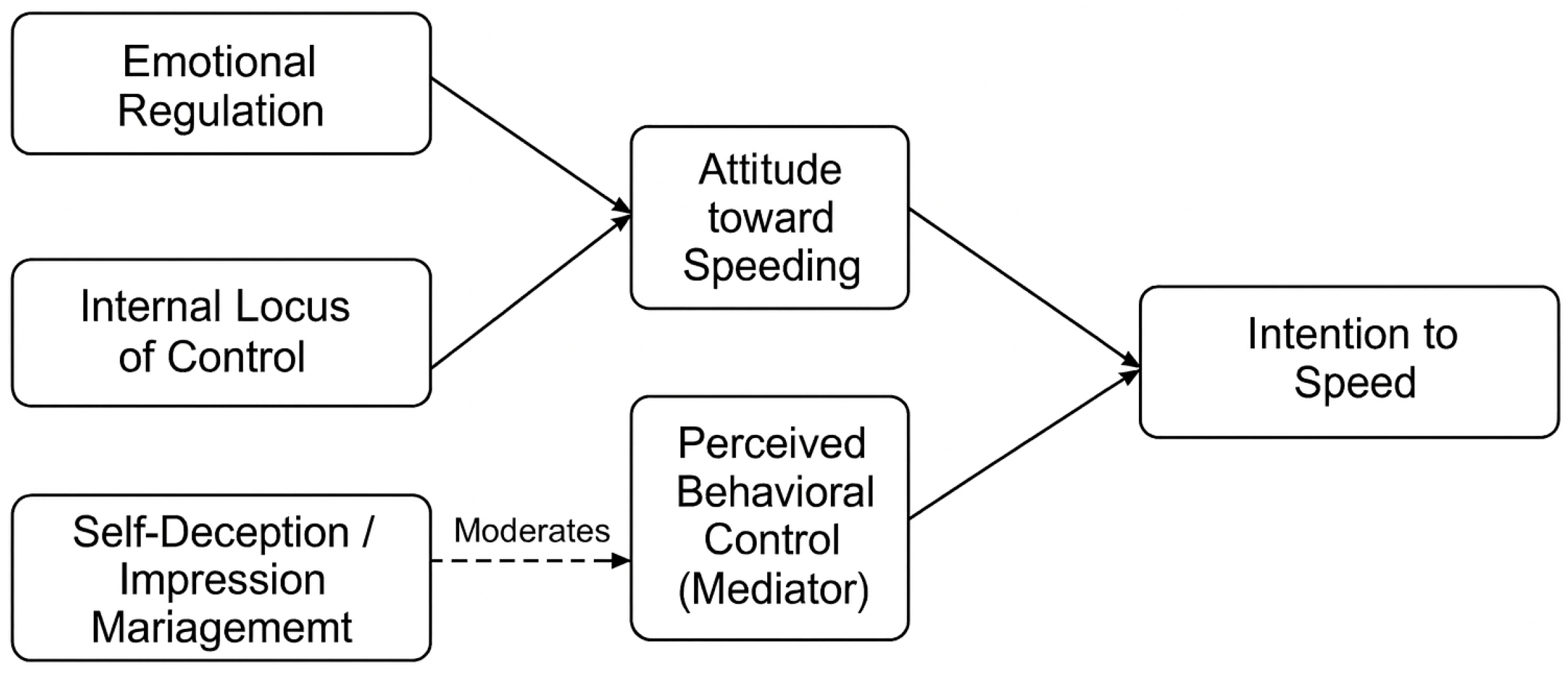
Figure 1. The conceptual model.
Sustainability 17 10645 g001
Figure 2. Demographic profile of young e-scooter riders ((left) Age distribution and (right) Gender distribution).
Sustainability 17 10645 g002
Figure 3. Safety-related history among respondents ((left) Accident involvement in the past 12 months and (right) Self-reported traffic fines).
Sustainability 17 10645 g003
Figure 4. Factors influencing young e-scooter speeding behavior.
Sustainability 17 10645 g004
Table 1. Demographic characteristics of respondents (n = 474).
VariableCategoryFrequency (n)Percentage (%)
GenderMale25152.9
Female22347.1
Age group (years)18–2013728.9
20–2216134.0
22–2417637.1
Accident experience (with e-scooter)None41286.9
At least one6213.1
Traffic fines (car or other vehicle)None33871.3
One or more13628.7
Table 2. Structural equation modeling results with standardized path coefficients (β), standard errors (SE), t-values, significance levels (p), and bootstrapped 95% confidence intervals (CI). All primary hypotheses were supported, indicating that emotional dysregulation increases, while internal locus of control decreases, the likelihood of speeding among young e-scooter riders (n = 474).
PathβSEtp95% CI (LL, UL)Hypothesis Supported?Interpretation
Emotional Dysregulation → Speeding Intention+0.660.097.33<0.001[0.49, 0.83]H1 ✔Higher dysregulation increases speeding propensity
Internal Locus of Control → Speeding Intention−0.520.08−6.50<0.001[−0.68, −0.36]H2 ✔Greater internal control reduces speeding intention
Gender → Speeding Intention (M = 1)+0.070.051.400.162[−0.03, 0.17]No Sustainability 17 10645 i001Non-significant
Age → Speeding Intention−0.100.06−1.670.096[−0.22, 0.02]No Sustainability 17 10645 i001Slight negative trend (ns)
Riding Experience → Speeding Intention−0.050.05−1.020.308[−0.15, 0.05]No Sustainability 17 10645 i001Experience effect non-significant
Table 3. Model fit indices for the structural equation model.
IndexAbbreviationObtained ValueRecommended Threshold (Lee et al., 2008 [25])Interpretation
Comparative Fit IndexCFI0.93≥0.90Acceptable fit
Tucker–Lewis IndexTLI0.91≥0.90Acceptable fit
Root Mean Square Error of ApproximationRMSEA0.045≤0.08 (≤0.05 = close fit)Close fit
Standardized Root Mean Square ResidualSRMR0.071≤0.08Good fit
Coefficient of Determination (for Endogenous Construct)R20.754≥0.33 = moderate ≥0.67 = substantialSubstantial explanatory power
Cross-validated Redundancy IndexQ20.37>0.35 = substantial predictive relevanceHigh predictive relevance
Disclaimer/Publisher’s Note: The statements, opinions and data contained in all publications are solely those of the individual author(s) and contributor(s) and not of MDPI and/or the editor(s). MDPI and/or the editor(s) disclaim responsibility for any injury to people or property resulting from any ideas, methods, instructions or products referred to in the content.