Systematic Review

Determinants of Household Food Insecurity Among Urban Small-Scale Crop Farmers in Sub-Saharan Africa Region: A Systematic Literature Review

by
Bonguyise Mzwandile Dumisa
*,
Melusi Sibanda
and
Nolwazi Zanele Khumalo
Department of Agriculture, University of Zululand, Private Bag X1001, KwaDlangezwa 3886, South Africa
*
Author to whom correspondence should be addressed.
Sustainability 2025, 17(22), 9999; https://doi.org/10.3390/su17229999
Submission received: 3 September 2025 / Revised: 26 September 2025 / Accepted: 29 September 2025 / Published: 8 November 2025
(This article belongs to the Special Issue Sustainable Agriculture and Food Security)

Abstract

Agriculture has been widely practiced for food production, yet food insecurity remains a critical issue, especially in Africa. Due to the significant role played by small-scale farmers, urban agriculture has been acknowledged as a viable strategy for reducing food insecurity in urban areas of Sub-Saharan Africa. This review analyzes urban household food insecurity factors through a systematic literature approach, retrieving data from various online databases. These databases include ScienceDirect, Wiley Online Library, Web of Science, UNIZULU online library, and PubAg. The search process involved the use of keywords to obtain relevant information along with the application of filters such as geographic location, publication period, language, article type, and accessibility. A total of 37 articles was included in this review after the application of the review eligibility criteria. This was achieved following PRISMA guidelines. Findings reveal a growing trend in the publication of articles on urban farming and an increasing acknowledgment of its importance by high-impact journals. It also shows various factors that determine household food insecurity, categorized as socioeconomic (11), institutional (5), and environmental factors (2). This led to the recommendation that urban government structures including policy makers and stakeholders should support food production and ensure an efficient urban food supply system.

1. Introduction

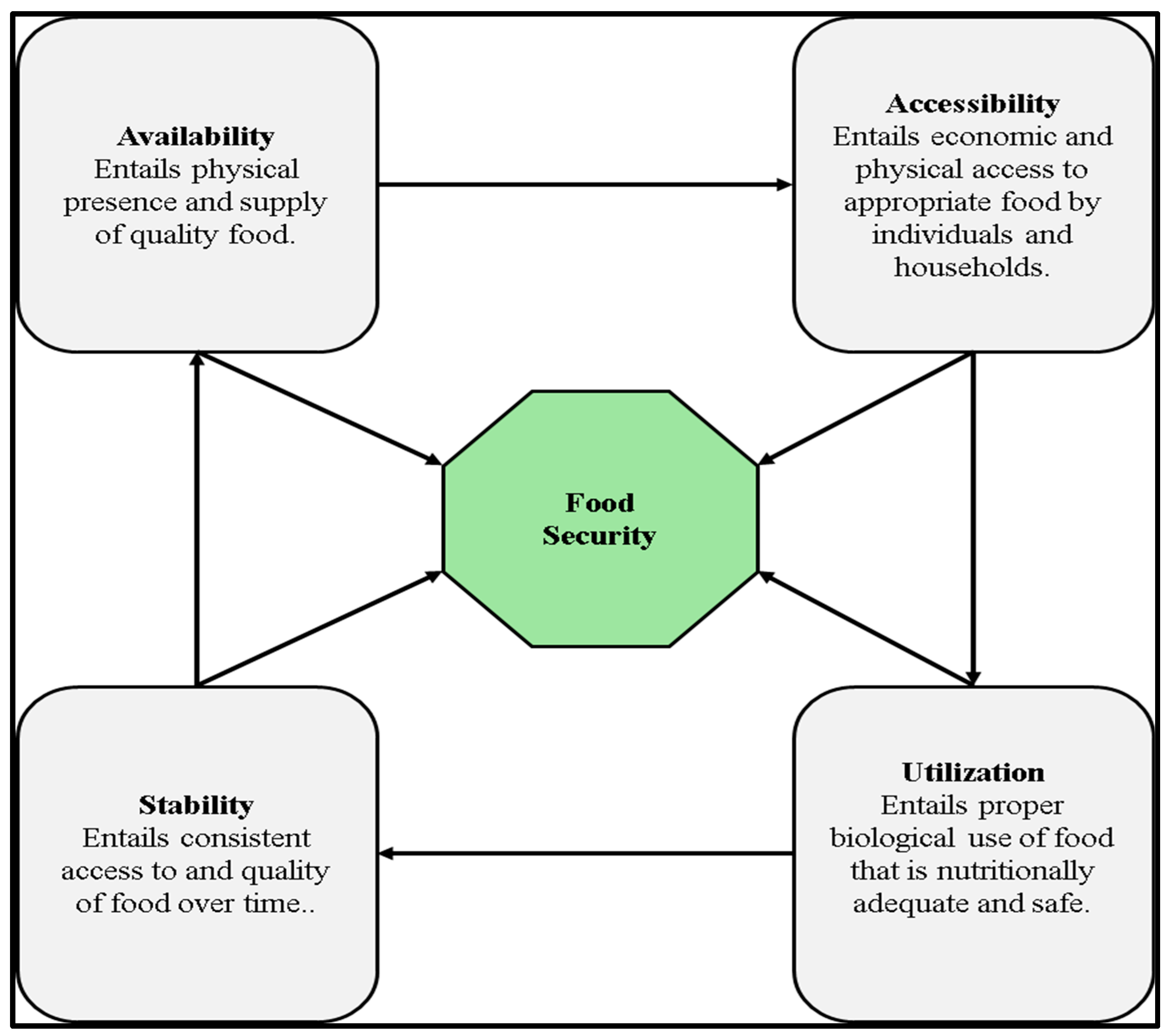
Agriculture has been globally practiced to produce food; however, food insecurity remains a critical issue, especially in Africa. According to Mathinya et al. [1], the largest home of poor and hungry people in the world is Sub-Saharan Africa (SSA) followed by Asia. Food security refers to a situation where people have the physical and financial access to safe, adequate, and nutritious food that meets their dietary needs and preferences for a healthy lifestyle [2]. Moreover, this concept consists of four main pillars, namely, food availability, food accessibility, food utilization, and stability of food supply. Therefore, failure to meet any of these pillars is regarded as food insecurity.
Of Africa’s population of about 256 million food-insecure people, 239 million people are situated in Sub-Saharan Africa [3]. In general, nearly every one in three people in SSA is estimated to experience severe food insecurity [4]. This highlights the severity of food insecurity as an issue of every citizen in SSA. Inadequate infrastructure, outdated tools, low production, lack of finance, corruption, as well as government policies have been noted as interconnected causes that contribute to food insecurity in SSA [5]. These causes have means to reduce the farmers’ ability to produce sufficient and nutritious food for household consumption and to meet community demand. For instance, farmers’ production may be reduced due to lack of finance while the distribution of food may be delayed by poor infrastructure.
Sub-Saharan Africa is subjected to high urbanization, evident from past trends, rising from 32 million to 458 million people in the past 60 years starting from the year 1960 to 2020 [6]. This fosters a need for urban production and provision of nutritious food, which is in line with the United Nations Agenda 2030 Sustainable Development Goals, including SDG 1 (no poverty) and SDG 2 (zero hunger). For these goals to be met, small-scale farmers can be considered as key players. Estimations indicate that small-scale farms account for the most food produced in SSA [7] and generate more than 80% of the world’s food [8]. However, these small-scale farmers face various difficulties such as lack of income, labor scarcity, lack of technology, poor access to information, market constraints, and certification barriers [9]. These contradictions reveal the vital role played by these farmers and the issues they face regardless of their contribution. Moreover, they operate in informal settlements where there is a shortage of land and inadequate infrastructure, which further intensifies their food production challenges.
Looking at the significant role played by small-scale farmers, urban agriculture (UA) is then acknowledged as a viable strategy for reducing food insecurity in urban areas. It is defined as a process of raising animals and cultivating crops within urban settings for domestic use and selling on urban markets [10]. According to Khumalo et al. [11], UA offers fresh produce, nutritious agricultural products, balanced biodiversity, and efficient management of waste (composting). This highlights the potential of UA as a tool to assist farmers in sustaining their livelihoods. The role of UA is to reinforce Sustainable Development Goals (SDGs) by enhancing poverty alleviation (SDG 1), ending hunger (SDG 2), combating climate change (SDG 13), and improving life on land (SDG 15) [12].
Urban agriculture is an alternative for promoting sustainable development. In fostering these mentioned SDGs, UA promotes household food security by availing fresh produce and income generation from market sales [13]. It also creates job opportunities and the development of local trade [14]. UA promotes the cultivation of different crops such as fruits, vegetables, cereals, and root tubers [15]. This cultivation promotes efficient vegetation cover that helps to combat climate change through reductions in greenhouse gas emission, the effects of urban heat islands, as well as the management of storm water surfaces. UA encourages the use of recycled materials and organic wastes, which promote soil fertility while reducing landfill contributions [16]. In addition, urban agriculture fosters other advantages such as community development, promoting health as well as education [17].
Even though the significance of UA is widely recognized, little is known about the determinants of household food insecurity among urban small-scale farmers in SSA. This is linked with the fact that the majority of previous studies on food security and efforts to evaluate and improve food systems in SSA have mostly concentrated on rural areas [18]. Generally, urban small-scale farming is determined by various factors such as environmental, socioeconomic, and institutional factors [12]. However, large body of existing knowledge is based on metropolitan areas [10], and it focuses on urban agriculture challenges and contribution in individual cities, for example, studies conducted in Malawi by Mkwambisi et al. [19], Nigeria by Adedayo [20], and South Africa by Menyuka et al. [21]. This indicates a need for comparable analysis and improved knowledge about factors that determine food security in urban settings by small-scale farmers.
This review fills this gap through examining the existing research to pinpoint the main factors affecting food security in small-scale urban crop farming households. By evaluating findings from various studies, this review identifies and organizes the key influences on food insecurity, with a particular focus in the relationship between urban small-scale farming households and the factors (socioeconomic, environmental, and institutional) influencing participation and contribution to food insecurity. Understanding these determinants is crucial for generating information that is useful in crafting effective strategies to improve food security in the region. This will also contribute to ongoing debates about urban food security dynamics, which will spark researchers’ interest in further exploring this concept. Moreover, it disseminates knowledge for agricultural stakeholders, including small-scale farmers and researchers, as well as government policy makers.
Therefore, this literature review systematically synthesizes various studies conducted across the sub-Saharan Africa region based on the determinants of food insecurity in urban small-scale farming households. However, there is limited information demonstrating urban small-scale farming and the determinants of food insecurity in the SSA region. Therefore, the key objectives of this review are to identify the key determinants of food insecurity among urban small-scale crop farmers in SSA and furthermore to evaluate their influence on the household food insecurity of urban small-scale crop farmers. This review follows a Preferred Reporting Items for Systematic Reviews and Meta-analysis (PRISMA) format. This literature review is structured to include background, methodology, results, discussion, and conclusion.

Conceptual Framework

This review integrates the conceptual food security framework adopted from the Food and Agriculture Organization [22] to explore the factors contributing to food insecurity. This framework entails four key pillars used to define food security: availability, accessibility, utilization, and stability. The combination of these pillars ensures the production of adequate, safe, and nutritious food to be consistently obtained and properly used while sustaining for future times. Small-scale crop farmers are challenged by several factors such as socioeconomic, environmental, and institutional factors that further exacerbate food insecurity in urban areas of the SSA region [2]. This includes vulnerability to poverty and a high unemployment rate, climate change problems, and inadequate policies and infrastructure supporting agricultural production and food distribution. As a result, UA comes as an initiative to combat the issue of food insecurity among small-scale crop farmers. This is achieved through improving households’ food production for household consumption and income generation, which promotes adequate access to diverse nutritional food. Having access to adequate food promotes proper utilization and consistency, availability, and accessibility even for future times. Therefore, this results in improved urban household food security and sustainable livelihoods for urban citizens. Below is a diagram (Figure 1) showing the food security conceptual framework.

2. Materials and Methods

This review extracted relevant research conducted in the Sub-Saharan Africa region from the past 20 years, from 2005 to 2024. Inclusion and exclusion criteria were applied to filter information and ensure the accuracy of retrieved data. After a systematic selection comprising accredited journals, book chapters, reports, and peer-reviewed articles, relevant information was carefully reviewed and used for this literature review. This was aided by considering only high-quality information that was not sourced from conference proceedings, unpublished studies, or papers that were not peer-reviewed. Furthermore, the words “determinants” AND “food insecurity” OR “food security” AND “urban agriculture” AND “small-scale farmers” AND “crop production” were used as keywords. These keywords were selected due to their relevance to the study aim and objectives as well as to retrieve the appropriate existing literature in the field of urban agriculture, food security and vocabulary of selected search engines. The inclusion of “determinants” captured insights on factors affecting food insecurity, “food insecurity or food security” targeted studies based on these concepts, “urban agriculture” specified the setting of farming activities, “small-scale farmers” targeted studies that include smallholder practices, and “crop production” specified the production from the expected studies. This study also used Boolean operators (AND, OR) to strategically combine keywords. Using these keywords enhanced retrieval of the literature while ensuring the omission of irrelevant information.
This study employed five databases, including ScienceDirect, Wiley Online Library, Web of Science, UNUZULU online library, and PubAg, to search for the relevant information. These databases were chosen based on their reliability, coverage, and relevance of published research based on agriculture and food security. Moreover, they were prioritized due to their ability to provide open access and interdisciplinary literature that is relevant to small-scale crop farming in SSA. Each database offered unique resources that significantly improved the depth and quality of findings relevant to the aim and objectives of this study. ScienceDirect specializes in the literature from multiple journals of agriculture and environmental sciences, while Web of Science offers access to high-impact journals that are widely cited [23]. Wiley Online Library provides the literature from interdisciplinary studies relevant to this review, whereas UNIZULU online library captures both the local and global literature [24]. Lastly, PubAg specializes in the food- and agriculture-related literature [25]. Therefore, combining these databases ensured a strong search and collection of relevant evidence for this systematic review.

2.1. Search Strategy

This study developed a search strategy to ensure comprehensive search and identification of relevant information across all five employed databases. The search was conducted as follows:
A search through ScienceDirect database was conducted using the following terms, “determinants” AND “food insecurity” OR “food security” AND “urban agriculture” AND “small-scale farmers” AND “crop production”, which resulted in 26,149 reports. The search was narrowed down by applying the following filters: geography: “Sub-Saharan African countries”; search period: “2005 to 2024”; language: “English”; article type: “Research articles”; subject area: “Agriculture and biological sciences”, “Economics, Econometrics and Finance”, and “Social sciences”; publication title: “Journal of Agriculture and food research”, “Agricultural systems”, “Agriculture ecosystems and environment”, and “Food policy”; and availability: “Open access and open archive”. This resulted in 223 reports.
A search through Wiley Online Library was conducted using the following terms, “determinants” AND “food insecurity” OR “food security” AND “urban agriculture” AND “small-scale farmers” AND “crop production”, resulting in 18 394 reports. The search was then filtered using the following terms: geography: “Sub-Saharan African countries”; search period: “2005 to 2024”; publication type: “Journals”; and availability: “Open access content”. This resulted in 455 articles.
A search through Web of Science resulted in 2 924 reports. The following key terms were used: “determinants” AND “food insecurity” OR “food security” AND “urban agriculture” AND “small-scale crop farmers”. The search was refined using the following key terms: geography: “Sub-Saharan Africa”; search period: “2005 to 2024”; language: “English”; document type: “articles”; publication type: “food security”, “sustainability”, “frontiers in sustainable food system”, “frontiers in nutrition”, “agriculture food security”, “cogent food agriculture”, “food policy”, “agricultural economics”, as well as “agricultural and resource economics review”; and availability: “Open access”. This resulted in 107 articles.
A search through UNIZULU online library (beyond Zululand) was conducted using the following terms, “determinants” AND “food insecurity” OR “food security” AND “urban agriculture” AND “small-scale farmers” AND “crop production”, resulting in 6554 reports. The search was then tweaked using the following terms: geography: “Sub-Saharan African countries”; publication period: “2005 to 2024”; language: English; resource type: “articles”; journal title: “Nutrients”, “Food security”, “Frontiers in Public health”, and “PLOS one”; and availability: “open access and peer reviewed journals”. This resulted in 179 articles.
A search through PubAg was conducted using the following terms, “determinants” AND “food insecurity” OR “food security” AND “urban agriculture” AND “small-scale farmers” AND “crop production”, resulting in 40 266 reports. The search was then filtered using the following terms: geography: “Sub-Saharan African countries”; publication period: “2005 to 2024”; language: English; resource type: “articles”; journal title: “nutrients” and “sustainability”; and subject: “food security”. This resulted in 201 articles.
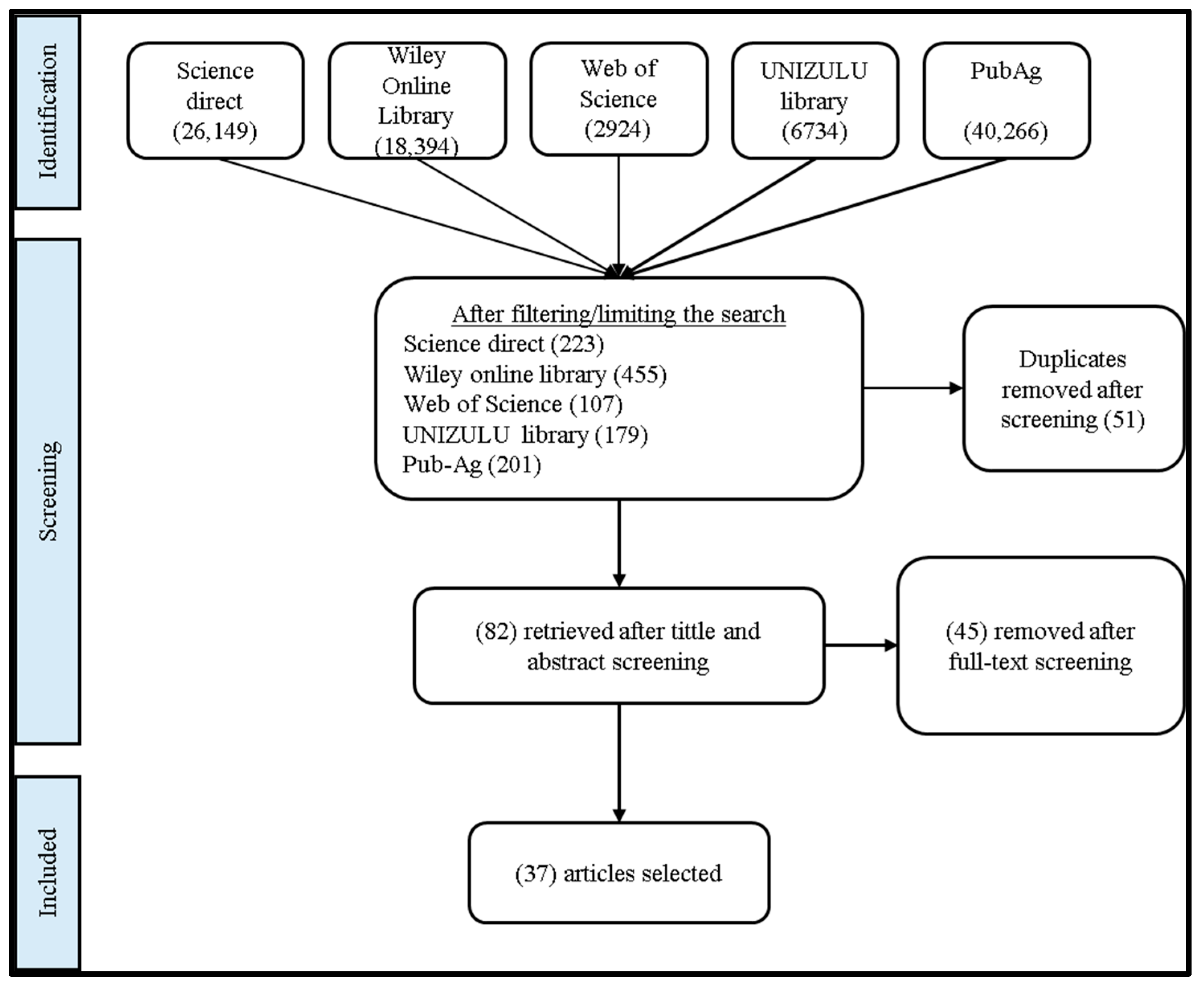
After filtering, the five databases used in this review resulted in the retrieval of 1165 articles that were evaluated. Below (Table 1) is a table showing the links and results obtained during the search strategy for this review.
In conducting this systematic review, the PRISMA framework was employed to ensure consistency and transparency in the selection of articles. Figure 2 below is a PRISMA diagram that depicts the entire process from identification of information (main search) to screening (filtering, duplicate removal, title and abstract screening, as well as full-text screening) and the final inclusion of studies used in this review. For Supplementary Information regarding this review, the PRISMA checklist was completed, adopted from Page et al. [26].

2.2. Inclusion and Exclusion Criteria

Inclusion and exclusion criteria is defined as a technique used to specify research traits and filter unreliable data to match study goals [27]. The focus on inclusion criteria for the systematic review was based on articles written in the English language, as it is known as a medium of instruction around the world [28]. This study selected a publication period of 20 years from 2005 to 2024 to capture as much possible of the existing literature of the most two recent decades, thus ensuring the inclusion of earlier and recent insights. The focus was on determinants of food insecurity among small-scale urban crop farmers in areas of the Sub-Saharan Africa region due to its vulnerability to food insecurity issues. This is supported by Kohnert [29], who indicated that Sub-Saharan Africa is the region facing the most food insecurity-related issues in the continent and the world. Additionally, this study selected peer-reviewed studies that are open access to ensure credibility and quality while promoting equal access of information without subscription barriers. The exclusion criteria included articles written in languages other than English; published before 2005 and after 2024; not focusing on factors influencing food insecurity; not focusing on urban small-scale urban crop farmers, for instance, livestock farmers and commercial farmers; and studies focusing on parts of the world other than Sub-Saharan Africa. These exclusions were made due to limited resources and feasibility challenges such as resource translation and access to journals that are not open access. Therefore, these criteria maintained the quality, validity, and relevancy of this study. Moreover, all duplicates’ articles were removed to ensure the accuracy and relevancy of the systematic review results. Table 2 is a summary of the inclusion and exclusion criteria employed in this review.
The eligibility criteria were applied to carefully review articles, focusing on the full text to perfectly meet the inclusion criteria for this review. Moreover, articles were tested for quality using an eight-point checklist adopted from Monteiro et al. [30]. The aim was to promote high-quality input for systematic review through selecting articles with acceptable standards. Moreover, this enhanced the synthesis of the study results through the support of high-quality studies while strengthening credibility of the methodology. The quality assessment was evaluated using eight questions from the checklist shown in Table 3. Articles were scored based on the quality of information relating to each question. Scores were categorized as follows: 0 = No; 0.5 = Hard to tell; 1 = Yes. This produced a total score of 8 points for each article, as shown in Appendix A (Table A1). All articles that failed to meet 50% (4 out of 8) of the criteria were removed; however, none scored less than 4 from the tested articles. In addition, articles that met the criteria were kept and included for the final synthesis of this review. Therefore, (37) articles were deemed eligible for this systematic literature review. This is mainly due to the large number of initial reports that were duplicates, were focused on rural settings and conducted outside the SSA region, and did not directly address determinants of food insecurity among urban small-scale crop farmers. The final included articles, therefore, present only the most relevant and appropriate evidence for the study objectives.
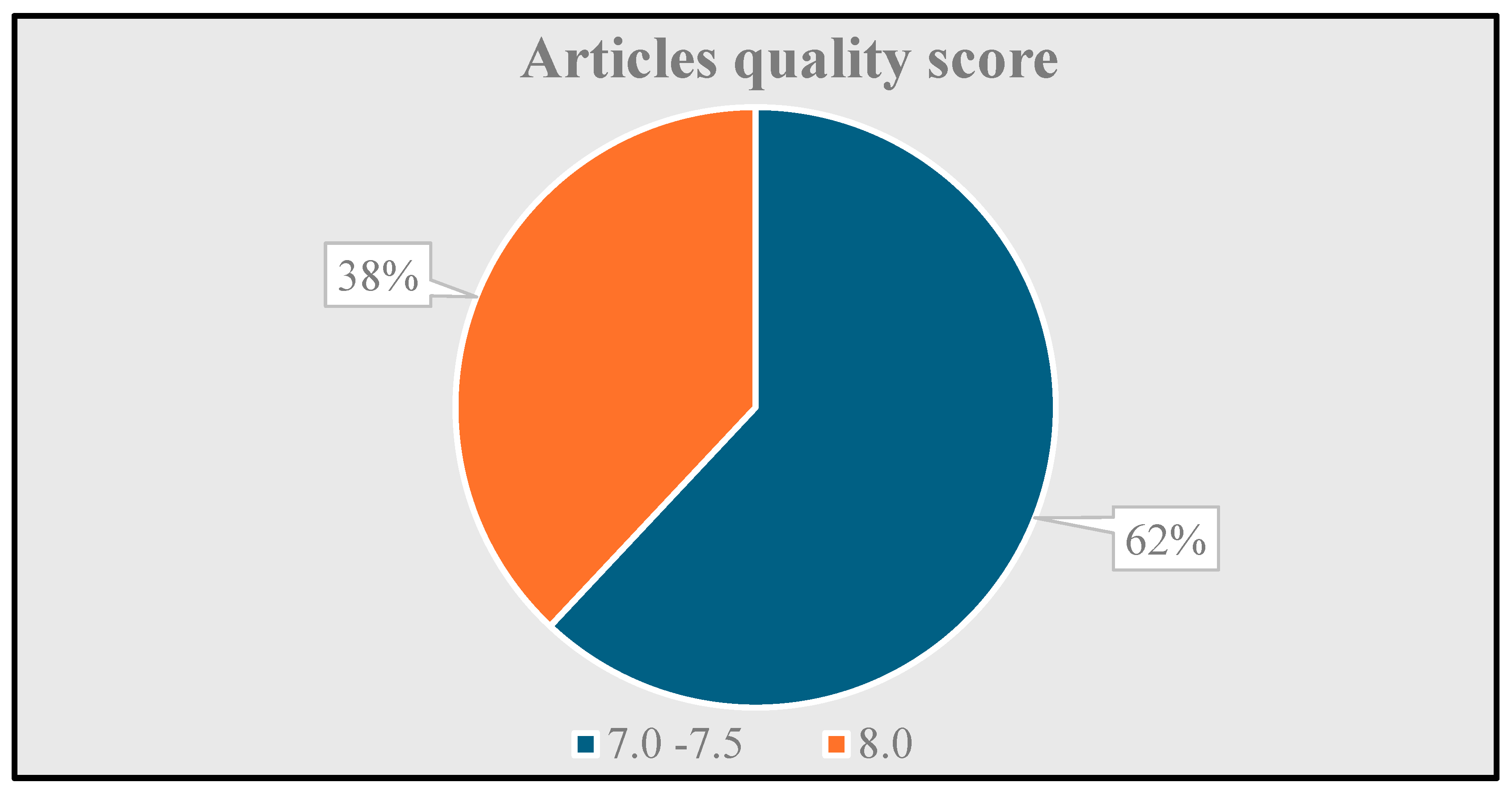
After quality testing, out of 37 articles included for this review, 23 articles scored between 7 and 7.5 points, which accounts for 62%. On the other hand, the remaining 14 articles scored 8 points, equivalent to 38%. This presents the appropriate quality of articles included in this systematic review, making a significant contribution towards the results drawn. Furthermore, findings from these studies will enrich the context through providing the most robust evidence captured from reliable studies. The application of eight-point quality testing on the selected articles for this systematic review is shown in Figure 3 below.

2.3. Data Extraction and Analysis

Data was imported using Endnote (Version 20.2.1), which assisted in carefully removing all duplicates and the continuation of data screening. The screening of articles focused on the inclusion and exclusion criteria, which specified the language, publication period, and findings based on factors influencing food insecurity, geography of the studies, as well as the type of article. After all irrelevant articles were removed from selection, a sample size of 37 articles was obtained. Findings were systematically summarized to draw conclusions, and some were interpreted using diagrammatic illustrations extracted from Microsoft Excel 365.

3. Results

3.1. Publication Trend of the Selected Articles

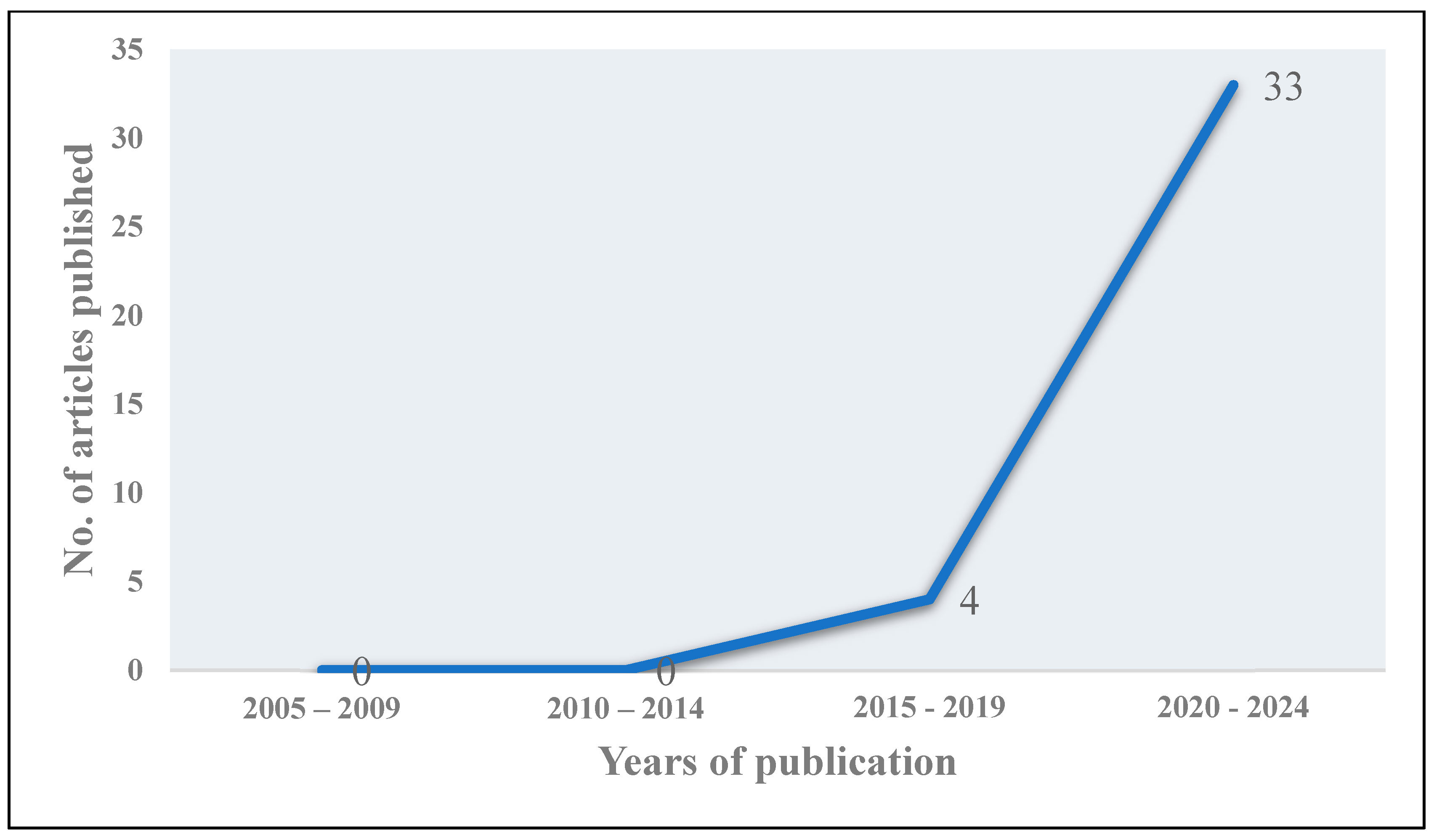
Results in Figure 4 illustrate an increase in the number articles published within the specified range of 20 years (2005 to 2024). This indicates an increase in research interest and a recognition of urban farming significance towards household food insecurity status. The commencement of an increase in research interest was observed between 2015 to 2019, where four (4) articles met the inclusion criteria, accounting for 11% of the selected studies. However, an increase in the number of published articles was observed from 2020 to 2024, accounting for the remaining 33 articles (89%). This implies that this review reflects relevant and recent insights about food insecurity determinants among small-scale urban crop farming households in Sub-Saharan Africa.

3.2. Geographic Distribution of Included Articles

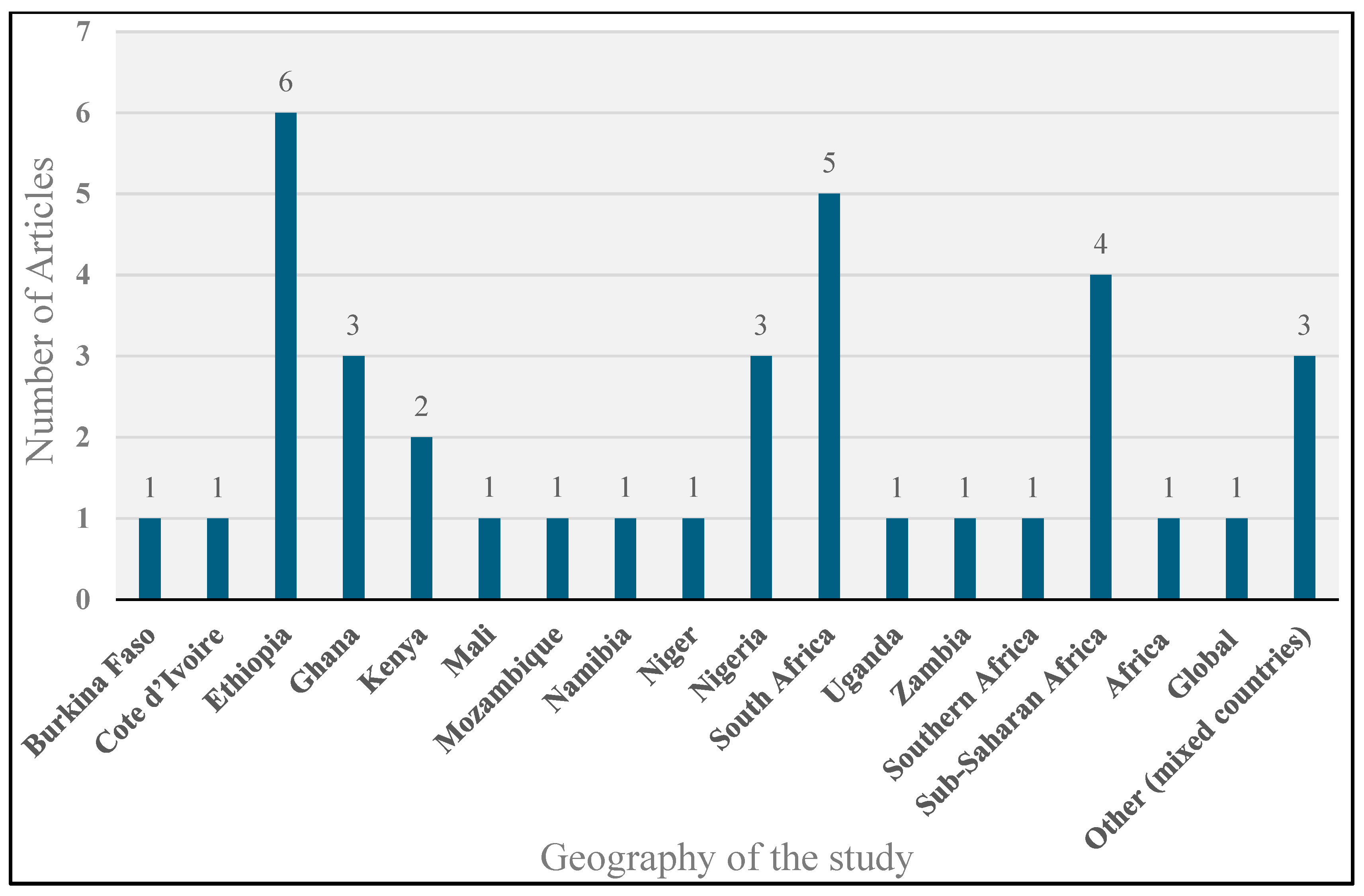
The geographic distribution of articles denotes the areas where the problem was observed and showed relevance or provided insight. Results from the review reflected that articles included were conducted from various parts of SSA, including a few adopting a continental or global scope where one or more areas under the SSA region were part of the study. Figure 5 shows the number of reviewed articles and their geographic distribution. Ethiopia was found to have the most studies conducted, accounting for six (6) articles, followed by South Africa with five (5) articles and Sub-Saharan Africa with four (4) articles. Nigeria, Ghana, and Other (study conducted in more than one country) were found to have a common number of three (3) articles, followed by Kenya accounting for two (2) articles. Burkina Faso, Cote d’Ivoire, Mali, Mozambique, Namibia, Niger, Uganda, Zambia, the Southern Africa region, Africa, as well as Global were found to have a common smaller number of conducted articles, accounting for one (1) each. These results demonstrate the high prevalence of food insecurity within urban areas of SSA. However, the low number of conducted studies among specified countries indicates that urban agriculture still is under-researched or receives low recognition.

3.3. Overview of Journal Types and Citation Metrics of the Selected Articles

Based on the reviewed articles, it was observed that they are published in different journals but all serve the purpose of disseminating agricultural knowledge. These journals include “Journal of Agriculture”, leading with eight (8) articles, followed by “PLOS One” and “MDPI-Sustainability” having four (4) articles each, “Food Security journal” and “MDPI-Nutrients” each having three (3) articles, and “Food Policy journal”, “Frontiers in Sustainable Food Systems”, “Urban Agriculture and Regional Food Systems”, and “Cogent Food and Agriculture” with a common number of two (2) articles each. Other journals such as “Advances in Agriculture”, “Frontiers in Nutrition”, “Agricultural Systems”, “The Geographical Journal”, “Journal of International and Development”, “Earth’s Future”, and “Agriculture and Food Security” stand at one (1) article per journal as depicted in Table 4. The number of citations was obtained from Google Scholar for all reviewed articles and then calculated by totaling them based on the specific journal they belong to. The average number of citations for all reviewed articles was found to be 70.4 with a minimum of 01 citations and maximum of 433 citations. Moreover, the journal “Food Security” was found to have more significant impact compared to other journals due to the high number of citations equaling 433, obtained from three articles.

3.4. Factors Influencing Household Food Insecurity

Synthesis data reveal that urban household food insecurity is influenced by various factors in SSA. According to the reviewed articles, factors influencing food insecurity were found to be age, gender, marital status, level of education, employment status, household size, household income, crop diversity, recipient of social grant, income diversity, food expenditure, land availability, farm size, land ownership, access to credit, membership of a farmers group, access to extension services, as well as access to output markets. Thus, a summary of the findings and their influence on food insecurity is depicted in Table 5.

3.4.1. Age

The number of years a farmer has denotes the amount of experience one has in farming practices. According to the results obtained by Mekonen et al. [31] in Ethiopia, an increase in age of the household head is associated with a decrease in food insecurity (Table 5). This statement is supported by Awoyemi et al. [47], who assert that older household heads are in high chances of falling within an acceptable level of food consumption. Furthermore, Sekabira et al. [45] note that there is availability of knowledge and awareness of urban farming practices (circular bioeconomy) among older households heads. This implies that younger household heads are more likely to be food insecure and are associated with high HFIAS score as discovered among Kenyan households (Table 5). Mkhize et al. [48] noted that in South Africa, the youth experience a high unemployment rate thus promoting their food insecurity status. Alternatively, food insecurity was also found to have a positive association with an increase in age of the household head (Table 5). A study that was conducted in Nigeria by Amao et al. [34] found that older households have a likelihood of having a less dietary diversity (Table 5). This is supported by Ndlovu et al. [49] through observing that a decrease in market participation of older household heads is attributed to the lack of access to information and their illiteracy.

3.4.2. Gender

According to Sekabira et al. [45], men are mostly engaged in agricultural practices with income benefits. This leads households led by men to have reduced food insecurity compared to female-headed households as observed in Ethiopia (Table 5). These results are in line with a study conducted by Borku et al. [50] in Wolaita zone (Southern Ethiopia). Findings discovered that households led by men have a tendency to be involved in farm, non-farm, and other activities to sustain livelihoods. Gender inequality caused by traditional attitudes towards women may be a key factor in this [51]. Dosso [52] on the other hand observed high participation of women in farm gardens and their ability to adopt other agricultural techniques. Moreover, a study about household dietary diversity conducted in Nigeria found male-headed households to have high chances of falling in the low dietary diversity group (Table 5). Therefore, these results suggest that male-headed households are linked with household food insecurity (Table 5).

3.4.3. Marital Status

Households with married household heads are less likely to fall in the poor household food consumption category [47], and less likely to have unmet healthcare needs [53]. This is supported by the study carried out in Mozambique (Maputo city), which observed that unmarried household heads are more food insecure than married households (Table 5). Moreover, Obayelu and Osho [35] discovered a high percentage of low dietary diversity among unmarried household heads. These results imply that the marital status of a household head stimulates high chances of being food secure (Table 5) since both married partners may contribute toward household food.

3.4.4. Educational Level

Table 5 results state that the high level of education among household heads increases chances of being food secure. These results are supported by Hodjo et al. [54] stating that that most households with a high educational level tend to earn more income. Furthermore, these households have high chances of participating in both farm and non-farm activities [50], and are able to adopt sustainable farming strategies [44,51]. Gassara and Chen [23] also note that highly educated household heads have the ability to encounter challenges related to food insecurity, which promotes their household food resilience [55]. Additionally, results in Table 5 indicate that household heads with a low education level are extremely prone to food insecurity and have very low dietary diversity. However, studies by Spieker et al. [39] and Obayelu and Osho [35] note a high prevalence of food insecurity and low dietary diversity among educated household heads compared to those who never attended. This is caused by uneducated households tending to occupy non-farm activities that are not utilized by other educated households and focusing on farming as their main source of income [56].

3.4.5. Employment Status

Employment status of a household head refers to a household occupation of any job activity to receive income. A cross-sectional study conducted by Spieker et al. [39] found a reduction of about 65% in food insecurity among those households with a working household head. These results suggest that for every household with a working household head, there are high chances of being food secure (Table 5). This is because urban households mostly rely on non-farm income to purchase food instead of farming [37]; thus, their food security is determined by household purchasing power (Table 5).

3.4.6. Household Size

Based on the findings, the number of household members determines a household’s ability to produce and consume food. According to Militao et al. [37], food security levels are high in households with more family members compared to those with fewer members. These results are in line with a study conducted in South Africa suggesting that households with more family members are likely to participate in urban and peri-urban practices to keep their food security status secured (Table 5). Moreover, Sawadogo and Ouoba [57] indicated that households with more members do not even need to take out loans to survive due to their ability to sustain their livelihoods. In contrast, some of the results from Table 5 indicate a positive relationship between food insecurity and large household size. Large household size implies that more people will consume food, therefore promoting the risk of food insecurity. Furthermore, results reveal that a household having more members decreases the availability of different food groups, promoting poor dietary diversity (Table 5).

3.4.7. Household Income

Based on the literature, households are usually categorized into low-, medium-, and high-income earners. Therefore, results in Table 5 reveal that most households that belong to the low-income group and medium-income group are likely to experience severe food insecurity compared to those in the high-income group. This is because most low-income earners prefer to purchase staple foods on informal markets, as noted by Semakula et al. [42]. This is supported by Obayelu and Osho [35], who observed low dietary diversity among low-income households living in informal settlements of Nigeria (Table 5). On the other hand, Borku et al. [50] notes that a high income promotes the ability of a household to participate in a combination of activities, including farm and non-farm activities. These results are in line with a study that observed a positive association between high income and the adoption of home garden practices [51].

3.4.8. Recipient of Social Grant

A study by Khumalo and Sibanda [40] was conducted looking at the urban and peri-urban contribution towards household food security in South Africa. Findings revealed that most social grant recipients were likely to have food shortages, indicating the food insecurity challenge (Table 5). These results compliment those of Mkhize et al. [48], who note that a social grant is a main source of income used to consume food for various households receiving it. Therefore, a failure of households to stabilize food insecurity promotes vulnerability to chronic diseases, especially in the older generation and children [58].

3.4.9. Income Diversity

Borku et al. [50] contend that urban households can diversify their income through a combination of activities such as agricultural and non-agricultural activities. These activities incorporate sources of generating income such as farm yield sales, pension, income (employment and self-employment), and remittances. Based on the results shown in Table 5, a household receiving income from diverse activities is less likely to face food insecurity. This is because income promotes the ability to invest in urban farming and improves accessibility to food through the purchase of adequate food for consumption [34].

3.4.10. Food Expenditure

In basic terms, this variable refers to household money allocated to buying food to meet dietary needs. Results illustrate that an increase in household food expenditure stimulates food security through increasing the amount of food and ability to purchase various food groups (Table 5). This ensures the household’s diet is nutritionally secure, creating healthy, stable food consumption.

3.4.11. Crop Diversity

Amao et al. [34] conducted a study in Nigeria looking at the role of crop diversity among 5 000 households in urban and rural areas. Results from the study revealed that crop diversification promotes availability of different food groups, thus enabling households to have more food options (Table 5). These results indicate the high significance of growing various types of crops in promoting dietary diversity as well as nutrition security (Table 5). Therefore, this implies that a household growing different crops is less likely to face food insecurity challenges. This is supported by Muzanima et al. [59], who assert that crop diversity increases household food and income generation, resulting in high household food resilience.

3.4.12. Land Ownership

Ownership of land is a significant factor that influence farmers’ decisions about sustainable agricultural practices and resource management [52]. A study carried out in Ghana revealed that only a small number of farmers actually own the land they work on, highlighting a significant flaw in land ownership policies [47]. According to the results shown in Table 5, households with land ownership rights are less likely to experience food insecurity compared to those with no ownership rights.

3.4.13. Access to Credit

Having access to credit plays a significant role in sustaining households from financial problems, thus enabling them to engage in combined urban activities [50]. This statement is drawn from results in Table 5, where a study conducted in Ethiopia observed a high prevalence of food insecurity among households lacking access to credit. Lacking access to credit disadvantages a household’s ability to adopt urban smart agricultural practices and food expenditure. This implies that households with credit access are expected to have high dietary diversity (Table 5). On the other hand, Ndlovu et al. [49] observed a decrease in output market participation among families with access to credit. This decrease in market participation may be due to urban households preferring to buy food instead of producing it [40].

3.4.14. Membership in Farmers Group

Kanosvamhira et al. [60] indicate that participating in farming groups, especially community gardens, promotes skill improvement, food production, and income generation through crop sales. Moreover, households with a cooperative membership were found to have increased chances of participating in farm and non-farm activities [50], as well as markets [49]. This accounts for why households with no membership in farmers groups were found to have high percentage of low dietary diversity in Nigeria (Table 5). Therefore, this implies that a family with a cooperative membership is likely to have reduced food insecurity compared to those with no membership.

3.4.15. Access to Output Markets

Mkhize et al. [48] indicate that most small-scale farmers were among food contributors who focus on traditional markets, especially in developing countries. However, Dosso et al. [52] note that small-scale farmers prefer to sell their produce at farm gates rather than transporting to markets. Informal markets receive less recognition from government policies and operate within challenging government structures [10]. Thus, non-recognition of informal markets leaves farming households in a condition of food insecurity [61]. This reveals that households with less access to output markets have high chances of being food insecure (Table 5).

3.4.16. Access to Extension Services

Lack of access to agricultural training services and farming knowledge from extension services was highlighted among constraints retarding food production in Namibia [59]. This also affected farmers of Zambia during the COVID-19 pandemic where extension services and farming meetings were cancelled [62]. Furthermore, David and Grobler [63] found very few famers who receive agricultural-related assistance in South Africa. According to findings in Table 5, farming households that lack access to extension services are associated with high food insecurity. Basically, extension services offer farming-based training and solutions on farming constraints such pests [60]. Therefore, a household that receives farming training is more likely participate in a variety of activities to sustain life [50].

3.4.17. Land Availability

Payen et al. [64] noted that urban lands can produce a wide variety of crops compared to rural lands, globally. However, most farmers are constrained by a shortage of land available for farming [59]. This may be the reason why most urban community gardens are located on school premises [60]. Evidence includes Mkhize et al. [48], who received reports indicating that 73% of respondents had an issue with gaining access to farmland in South Africa (eThekwini Metropolitan). Based on results in Table 5, lacking access to land reduces a household’s ability to farm for food, exposing them to a risk of food insecurity. Therefore, this discourages urban households from producing their food, as they cannot cultivate enough food to sustain themselves. This issue of land shortages in urban areas is associated with the high cost of land [65]. This limits the rate of production as well as the yield necessary to maintain the food security of households residing in these areas.

3.4.18. Farm Size

Results in Table 5 state that an increase in the size of a farm is directly proportional to improved food security. This is because more land fosters a household’s ability to produce adequate food for consumption and sale on output markets. This is evidenced by Khumalo and Sibanda [40], who noted that households with large plots of farming land were likely to engage in urban and peri-urban practices. However, some households still cultivate on small plots of land in South Africa, as argued by David and Grobler [63], indicating the issue of inadequate land.

3.4.19. Framework for Understanding Contradicting Results

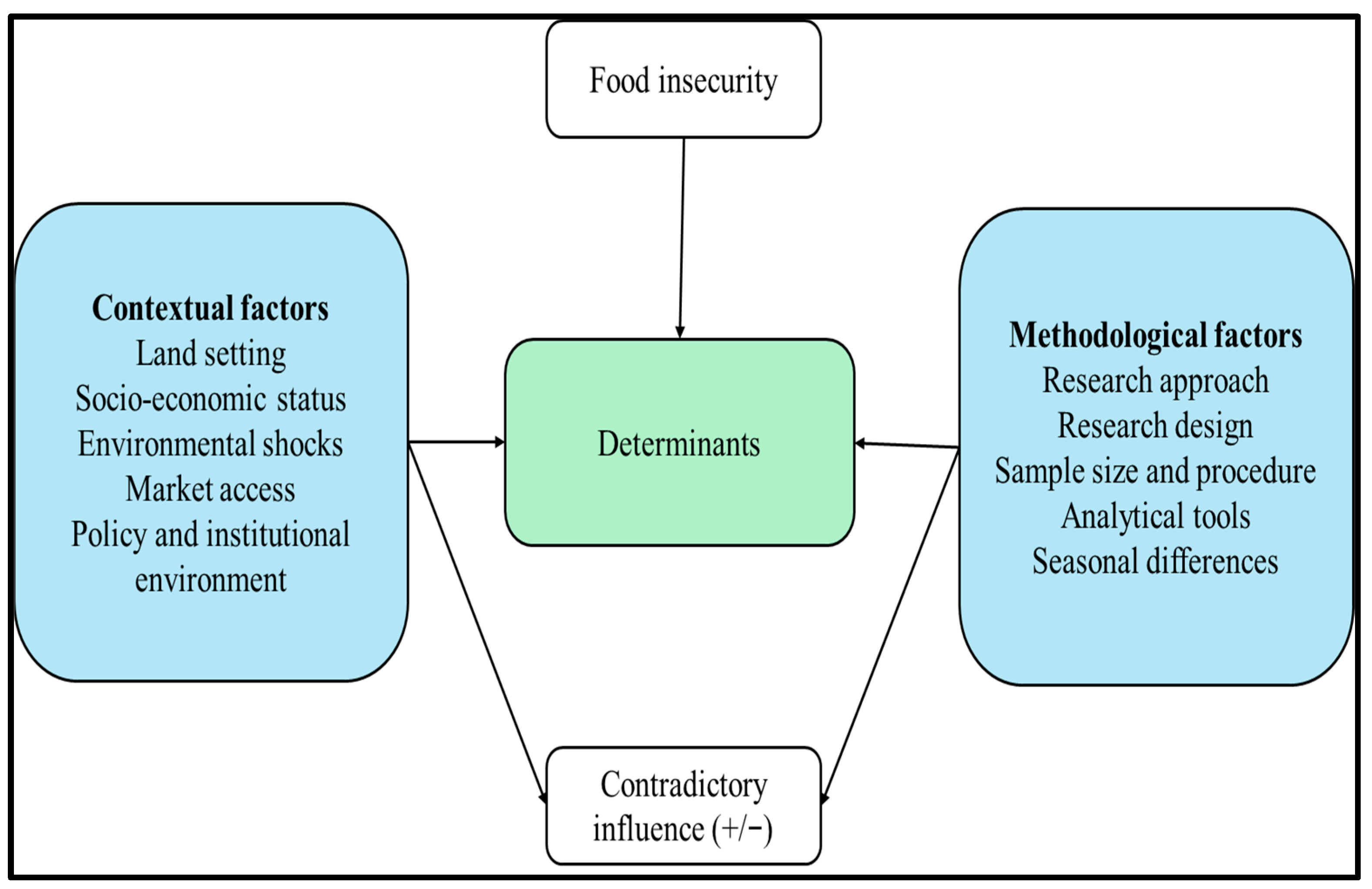
The contradiction in results observed on the determinants of food insecurity are shaped by different conditions, categorized as contextual and methodological. The driving factors linked to contextual factors include land setting, socioeconomic status, environmental shocks, market access, policy and institutional environment. On the other hand, methodological factors include approach used on research conduction, designs, sample size and procedures, analytical tools, and seasonal differences. Therefore, the collaboration of these conditions account for why the same determinant may produce contradictory outcomes. For instance, having access to land with fertile soil and market connections can negatively influence food insecurity whereas in regions with poor soil and market access, it can result in the opposite outcome or even become insignificant. Furthermore, studies employing large sample sizes with a focus on multiple seasons can capture a significant influence on food insecurity in contrast to studies focusing on a single season and using small household samples. Below is a diagram (Figure 6) illustrating how the influence of determinants is shaped by contextual and methodological conditions.

4. Discussion

This systematic review explores insights into food insecurity factors and their influence on food insecurity in SSA, drawing from 37 articles. Results reveal an increase in the number of publications with the progression of time within the specified range. This demonstrates good recognition of the significance of urban food production. However, these results also suggest the urgent need to address food insecurity. Reviewed articles were found to be conducted in different geographic locations, where Ethiopia was found to lead with six articles followed by South Africa with five articles. This may be as a result of the two countries being prone to high urban food insecurity and failing to stabilize poverty through policy implications. This statement agrees with results indicating a high percentage of food insecurity of about 60% in urban areas of South Africa and 74.9% in Addis Ababa of Ethiopia [66]. Again, results observed a maximum of eight articles published under the Journal of Agriculture and Food Research although the high impact is better observed by the journal named Food Security having most citations, accounting for 433.

4.1. Understanding Determinants of Food Insecurity

Regarding urban food insecurity-influencing factors, age is found among the factors with a significant relationship towards food insecurity. However, contradicting results are observed, indicating that an older household head is less likely to be food insecure. This is linked to their ability to have more farming experience, good assets, as well as availability of income savings from previous occupations. However, arguments exist whereby an older household head is observed to have a positive association with increased food insecurity. This is mainly because old household heads cannot actively participate in non-farm activities for extra income compared to young household heads who can do both (farming and non-farming) [67]. Women are usually regarded as mostly engaging in farming, therefore promoting Sub-Saharan African household food production. However, this review indicates a mixed influence of gender towards food insecurity. These differences may stem from social inequalities that limit access to significant resources, including land, education, leadership positions, and opportunities for income generation. This statement is in line with Militao et al. [37], who note that gender inequality is globally identified as a significant factor in determining food insecurity status.
There is also marital status, consisting of several categories. Nonetheless, reviewed results found only married households to have a significant influence in food insecurity. The association between marital status and food insecurity indicates a strong negative relationship since results from Table 5 agree that married households have high chances of being food secure. Married partners spend more time on household duties related to food [68] and share household and financial responsibilities [53]. For instance, Cele and Mudhara [69] state that a male may focus on generating income through non-farm activities while a woman is engaged in food production. Education has been observed to enhance household income and agricultural production, which promotes sustainable livelihoods for people [70]. Findings from this review revealed contradicting results about the educational level of a household and its influence on food security. It was discovered that highly educated families generally experience food security; however, some observations suggest that their dietary diversity is low, which is also an indicator of food insecurity. Educated households tend to prioritize income generation through non-farm activities, whereas those with limited education often rely on producing their own food. Therefore, this brings confusion and imbalances regarding their household food security status.
Employment is an important factor that offers income required to sustain society’s overall livelihood. This review notes a negative relationship with household food insecurity. This is because actively employed household heads tend to increase income generation through food diversification and are able to purchase more food compared to those who are unemployed [71]. Furthermore, employment allows for them to manage and allocate resources efficiently across household expenses, which stimulates their overall food security [72]. The average household size in Sub-Saharan Africa is approximately 6.9 people per household [73], suggesting a significant influence on food security outcomes. Review results revealed that households with more members often face a higher risk of food insecurity, although some findings suggested that larger households may experience reduced food insecurity. This may be a result of their contribution towards household labor for household food production [57]. On the other hand, more people within a household suggests that more resources are needed to meet dietary needs.
Despite that, SSA is dominated by countries with poor job opportunities but people can still generate income from various activities such as employment, casual labor, or any form of business [71]. Looking at the household employment status, food security status relies on whether the household has less or more income, which can come from diverse sources. According to the reviewed articles, families with low income are more likely to face food insecurity and related challenges in contrast to those who receive more income from different sources. Those who receive more income were found to be less food insecure. A high income offers multiple options a household can engage in to achieve food security. These options include participation in commercial farming, entrepreneurship, and other activities to generate income. This means a household with a low income is less prone to those activities due to financial constraints. In some parts of SSA like South Africa, poor households are provided with social grants to enhance equality and welfare and to reduce poverty. For instance, 27.8 million people in South Africa receive social grants [74]. However, this review identified households receiving social grants as poor. This is supported by results of the study conducted in South Africa indicating that households relying on social grants have doubled chances of facing food insecurity risk [75]. Social grants are not sufficient to cover household food security-related expenses [76], such as food and healthcare, leading to vulnerability to food insecurity.
The relationship between households and food insecurity is also determined by food expenditure. In this case, household income plays a significant role towards promoting purchasing power. Based on results in Table 5, the higher the expenditure on household food, the greater the chances of being food secure. However, high expenditure may not address food insecurity challenges if the household focuses on purchasing staple foods only. This review also underpins the role played by crop diversity in households to reduce food insecurity. Food insecurity is found to be lower among households that produce different crops than those producing monocultures. The production of more crops also creates opportunities to sell, which generate income essential to maintaining food security.
For a household to obtain credit, it depends on specific needs and financial circumstances, yet certain criteria must be met to ensure attainment. In developing countries, access to credit may come in various forms such as formal, informal, and semiformal credit [77]. According to Moahid and Maharjan [78], access to credit plays a crucial role in driving forward agricultural progress and modernization in developing countries, helping farmers overcome financial barriers and invest in their futures. This review reveals a positive significant relationship between lacking access to credit and food insecurity. This may be as a result of credit access creating the financial flexibility for a household to be resilient against shocks related to food shortages. However, it is not easy for small-scale farmers to access formal credit in most developing countries of SSA. This is supported by a study conducted in Lesotho that found that small-scale farmers are not prioritized by credit institutions due to their agricultural nature, associating it with high risks and low returns [79]. Urban food production is also accompanied by cooperative farming groups, which share ideas, skills, and solutions relating to the observed farming problems. Having membership in farming groups also increases access to essential resources such as improved farming tools, seeds, and land. Therefore, this review discovered a significant negative relationship between being a member of cooperatives and household food insecurity. This may result from households with group membership having extended relationships with individuals who can share business ideas, market information, and food products, which enhances dietary diversity and nutrition.
The literature points out access to markets as one of the major challenges faced by small-scale farmers in SSA. This discourages farmers’ willingness to produce and supply food commodities, leading to a reduced quantity of nutritious and fresh produce for urban households. This review finds that urban small-scale farmers only have access to informal markets, which depicts a positive relationship with food insecurity. They are subjected to high costs for transporting produce to the market, also generating less revenue since some commodities may perish, resulting in fewer sales. Regardless of poor infrastructure, lacking market access is also reinforced by barriers such as produce grading, lack of certification to participate, and market standards [80]. These factors have a considerable impact on a household’s food insecurity status, determining the likelihood of participation in UA. Extension service is one of the benefits associated with participating in farming groups such as community gardens, although results noted differences in household food insecurity status of families with access to extension services compared to those that lack access. This may be because families with access to agricultural assistance are provided with knowledge that enables them to be aware of economic and environmental shocks. Moreover, it promotes their yield and the ability to exchange in with their commodities to ensure income gains.
Moreover, land is a main resource of farming. For instance, Payen et al. [64] conducted a meta-analysis looking into the ability of urban lands to produce food. Results indicated that urban soils are suitable to produce crops such as fiber crops, orchard fruits, cereals, vegetables, oil crops, and soft fruits. In this case, land has four determinants, namely, land availability, fertility, size, and the right to own the land. Based on the review findings, an increase in land size and a family’s ability to own land have a negative impact on food insecurity. Owning a large size of land for farming is associated with high food production capability. An increase in yield increases the ability to feed and generate income. However, the issue of land availability often retards urban food production, leading to high incidence of food insecurity. Results of this review found land to be a very limited resource, especially in urban areas. This can lead to disrupted urban food supply chains leaving many households struggling to produce for and afford food from markets [81].

4.2. Contradictory Evidence Across Determinants

In addition, it was observed that determinants such as age, gender, educational level, and household size portrayed a contradictory influence on food insecurity. This is highly linked to underlying factors such as methodological and contextual factors, as shown in Figure 6. The negative influence of determinant “age”, towards food insecurity can be explained by conditions such as human and social capital, which enhance older farmers’ ability to secure their household food, as observed by Mekonen et al. [31] and Merchant et al. [32]. For instance, the supporting sources found that older households in the study areas had more farming experience and established networks, such as access to community support. Furthermore, these studies used cross-sectional surveys with large sample sizes ranging from 210 to 370. This allowed for capturing observable trends of correlation between age and food insecurity, which resulted in decreased food insecurity. The positive influence by age was primary linked to limited labor capacity, inability to engage in productive activities, lack of access to resources, and failure to adapt to urban farming constraints, which promoted food insecurity, as noted by Mutisya et al. [33] and Amao et al. [34].
The negative influence of the determinant “gender” towards food insecurity is primary due to household coping and social resilience. In this case, female-headed households portrayed a strong and adaptive capacity towards reducing food insecurity as noted by Mutisya et al. [33], Mekonen et al. [31], and Merchant et al. [32]. This is because female-headed households employ adaptive strategies such as informal trading while prioritizing food allocation to every family member. The retrieval of this information was further boosted by designs employed by the studies, which allowed for capturing detailed data across diverse urban settings. Conversely, other studies reported an opposing influence from female-headed households. Explanations for this change were driven by the lack of policy support and opportunities to generate income in urban areas. Moreover, the collected immediate challenges did not account for long-term strategies. Therefore, this resulted in a positive influence on food insecurity, as noted by Demie and Gessese [36] and Obayelu and Osho [35].
Several studies have noted the contradicting influence by the determinant “educational level”. The contextual explanation behind the negative influence on food insecurity is based on benefits enhanced by education such as improved awareness, increased job opportunities, and proper decision making. For instance, educated household heads in Mozambique used urban safety net programs to enhance their household resilience [37]. Methodologically, these studies employed approaches that allowed them to capture how education enhanced food access in environments through policy systems, providing them with necessary skills. In contrast, education was also observed as a determinant associated with increased food insecurity. This contradiction comes from limitations in job markets and a lack of institutional support. Additionally, methods used by some of the studies allowed for capturing multi-country inequalities that helped to reveal the specific influence of education without policy backing.
“Household size”, also a food insecurity determinant, was found to have negative and positive influences on food insecurity, as noted by several studies. The negative influence stems from families with large households being able to benefit from collective participation on strategies to improve food security in policy-supportive areas. Methodologically, these studies employed community-based or household-level survey designs, ensuring the collection of daily activities and coping strategies employed by these large household families. Therefore, this has led to the reduction in food insecurity as observed by Militao et al. [37], Afriyie et al. [41], and Khumalo and Sibanda [40]. On the other hand, larger households were associated with increased food insecurity. This can be contextually explained by driving factors such as high consumption rate, lack of access to markets, and high food prices, which can lead to increased household expenditure. Overall, these contradictions remind us that food insecurity is a major problem shaped by varying factors, categorized as contextual and methodological, underscoring the need for urgent context-sensitive polices and research in SSA.

5. Conclusions

This review focuses on urban settings of Sub-Saharan Africa, where some people tend to engage in agricultural practices for food consumption and income generation. This tends to encourage the exchange of fresh food, promoting dietary diversity and nutrition, job creation, and a sustainable environment. Findings indicate an increase in the recognition of urban practices, though food insecurity is still a serious challenge. A significant role played by journals in creating an up-to-date and knowledgeable region is also recognized through the impact of articles. This systematic review also points out various factors affecting food insecurity among urban households. These food insecurity factors can be categorized into demographic, economic, social, institutional, and environmental factors. However, findings depicted a contradicting influence on food insecurity, which indicates a lack of and imbalance in government strategies and policy invention. SSA is made up of developing countries that often experience challenges of financial instability, poverty, inequality, climate vulnerability, government policy failure, and those relating to agriculture. Therefore, the identification of determinants influencing food insecurity reveals critical issues such as poor extension support, shortage of land availability and its ownership, and access to credit and markets, which are overlooked in several isolated studies. This review provides evidence and highlights the most significant matters that will guide the crafting of policies and strategies to improve urban agriculture. In light of food insecurity-related issues, government structures should interfere to assist small-scale farmers in addressing urban farming risks and uncertainties. Extension services such as training should be expanded in relation to farmers’ problems and emphasis on the adoption of new technology with sustainable urban agricultural practices (e.g., vertical and rooftop farming). Moreover, provision should be made for essential farming inputs such as subsidies (seeds and fertilizers) and access to land for farming, for instance, community gardens. Development and improvement of market access for farmers is crucial for sustainable urban food supply. Therefore, governments must structure urban markets and ensure trading contracts between farmers and institutional buyers such as hospitals, schools, and prisons. Areas for further study must look to risk mitigation strategies for enhancing urban small-scale farming households’ food security. Additionally, they could assess agricultural policy intervention in urban farming households, since results indicate issues of access to extension services, infrastructural gaps, and access to formal markets.


6. Limitations

This review was limited by several factors, including geographic location, database coverage, language restrictions, and publication year limit. Firstly, this review was limited to studies conducted in SSA region, which restricted findings from African regions such as Northern Africa and other developing regions with the same issue of food insecurity. Secondly, the selection included only five databases, which may have excluded relevant insights elsewhere. Thirdly, this study was specific to English-language sources, which limited the inclusion of other relevant studies published in other languages. Lastly, this review selected studies published within 20 years (2005–2024), which neglected research that may have contributed significantly to this study.

Supplementary Materials

The following supporting information can be downloaded at: https://www.mdpi.com/article/10.3390/su17229999/s1, PRISMA 2020 Checklist. Reference [26] is cited in the Supplementary Materials.

Author Contributions

B.M.D., M.S. and N.Z.K., formulated the review investigation; B.M.D. was responsible for data collection, analysis, and interpretation and original draft preparation; and M.S. and N.Z.K. supervised, reviewed, and edited the final daft. All authors have read and agreed to the published version of the manuscript.

Funding

This research received no external funding.

Institutional Review Board Statement

Not applicable.

Informed Consent Statement

Not applicable.

Data Availability Statement

The authors confirm that the data supporting the findings of this study are available and cited within the article.

Acknowledgments

Authors acknowledge the University of Zululand for offering access to the databases used (ScienceDirect, Wiley Online Library, Web of Science, UNIZULU online library, and PubAg) and all the other sources of information for this study.

Conflicts of Interest

The authors declare no conflicts of interest of any kind.

Abbreviations

The following abbreviations are used in this manuscript:
HFIASHousehold Food Insecurity Access Scale
PRISMAPreferred Reporting Items for Systematic Reviews and Meta-analysis
SDGSustainable Development Goal
SSASub-Saharan Africa
UAUrban Agriculture
UNIZULUUniversity of Zululand
UZRECUniversity of Zululand Research Ethics Committee

Appendix A

Table A1. Quality assessment of articles.
Author (Year)Reference NumberQ1Q2Q3Q4Q5Q6Q7Q8Final Score
Abdi et al. (2024)[46]111110117
Admasu et al. (2024)[43]111110.5117.5
Adedayo et al. (2022)[20]111110.5117.5
Afriyie et al. (2023)[41]111110117
Amao et al. (2023)[34]111110.5117.5
Asante et al. (2024)[51]111110117
Awoyemi et al. (2023)[47]111110117
Borku et al. (2024)[50]111110.5117.5
D’Errico et al. (2018)[55]111111118
David and Grobler (2022)[63]111110.5117.5
Davies et al. (2021)[10]111111118
Demie and Gessese (2023)[36]111111118
Derso et al. (2021)[38]111111118
Dosso et al. (2024)[52]111111118
Douyon et al. (2022)[44]111111118
Frayne and McCordic (2018)[58]111111118
Gassara and Chen (2021)[23]111111118
Giroux et al. (2021)[61]111111118
Hodjo et al. (2024)[54]111110.5117.5
Kanosvamhira et al. (2024)[60]111110.5117.5
Khumalo and Sibanda (2019)[40]111111118
Kiribou et al. (2024)[65]111111118
Manda (2023)[62]111110.5117.5
Mekonen et al. (2023)[31]111110.5117.5
Merchant et al. (2022)[32]111111118
Militao et al. (2023)[37]111110.5117.5
Mkhize et al. (2023)[48]111110.5117.5
Mutisya et al. (2016)[33]111110.5117.5
Muzanima et al. (2024)[59]111110.5117.5
Ndlovu et al. (2024)[49]111110.5117.5
Obayelu and Osho (2024)[35]111110.5117.5
Odunyemi et al. (2024)[53]111110.5117.5
Payen et al. (2022)[64]111110.5117.5
Sawadogo and Ouoba (2023)[57]111110.5117.5
Sekabira et al. (2022)[45]111110.5117.5
Semakula et al. (2024)[42]111111118
Spieker et al. (2022)[39]111111118
Source: Adopted from Monteiro et al. [30].

References

  1. Mathinya, V.; Franke, A.; van de Ven, G.; Giller, K. Can small-scale farming systems serve as an economic engine in the former homelands of South Africa? Front. Sustain. Food Syst. 2023, 7, 1222120. [Google Scholar] [CrossRef]
  2. Aboye, B.H.; Gebre-Egziabher, T.; Kebede, B. Peri-urban food insecurity and coping strategies among farm households in the face of rapid urbanization in Sub-Saharan Africa: Evidence from Ethiopia. Res. Glob. 2024, 8, 100200. [Google Scholar]
  3. Beyene, S.D. The impact of food insecurity on health outcomes: Empirical evidence from sub-Saharan African countries. BMC Public Health 2023, 23, 338. [Google Scholar] [CrossRef] [PubMed]
  4. Wudil, A.H.; Usman, M.; Rosak-Szyrocka, J.; Pilař, L.; Boye, M. Reversing years for global food security: A review of the food security situation in Sub-Saharan Africa (SSA). Int. J. Environ. Res. Public Health 2022, 19, 14836. [Google Scholar] [CrossRef]
  5. Bjornlund, V.; Bjornlund, H.; van Rooyen, A. Why food insecurity persists in sub-Saharan Africa: A review of existing evidence. Food Secur. 2022, 14, 845–864. [Google Scholar] [CrossRef] [PubMed]
  6. Sylla, O. Strengthen UN-Habitat Regional Representation in Sub-Saharan Africa. 2023, pp. 1–10. Available online: https://unhabitat.org/strengthen-un-habitat-regional-representation-in-sub-saharan-africa (accessed on 29 March 2025).
  7. Giller, K.E.; Delaune, T.; Silva, J.V.; van Wijk, M.; Hammond, J.; Descheemaeker, K.; van de Ven, G.; Schut, A.G.; Taulya, G.; Chikowo, R. Small farms and development in sub-Saharan Africa: Farming for food, for income or for lack of better options? Food Secur. 2021, 13, 1431–1454. [Google Scholar] [CrossRef]
  8. Fan, S.; Rue, C. The role of smallholder farms in a changing world. In The role of Smallholder Farms in Food and Nutrition Security; Springer: Berlin/Heidelberg, Germany, 2020; pp. 13–28. [Google Scholar]
  9. Dhillon, R.; Moncur, Q. Small-scale farming: A review of challenges and potential opportunities offered by technological advancements. Sustainability 2023, 15, 15478. [Google Scholar] [CrossRef]
  10. Davies, J.; Hannah, C.; Guido, Z.; Zimmer, A.; McCann, L.; Battersby, J.; Evans, T. Barriers to urban agriculture in Sub-Saharan Africa. Food Policy 2021, 103, 101999. [Google Scholar] [CrossRef]
  11. Khumalo, N.Z.; Sibanda, M.; Mdoda, L. Implications of a Climate-Smart Approach to Food and Income Security for Urban Sub-Saharan Africa: A Systematic Review. Sustainability 2024, 16, 1882. [Google Scholar] [CrossRef]
  12. Nicholls, E.; Ely, A.; Birkin, L.; Basu, P.; Goulson, D. The contribution of small-scale food production in urban areas to the sustainable development goals: A review and case study. Sustain. Sci. 2020, 15, 1585–1599. [Google Scholar] [CrossRef]
  13. Kanosvamhira, T.P. Urban agriculture and the sustainability nexus in South Africa: Past, current, and future trends. In Urban Forum; Springer: Dordrecht, The Netherlands, 2024; pp. 83–100. [Google Scholar] [CrossRef]
  14. Yuan, G.N.; Marquez, G.P.B.; Deng, H.; Iu, A.; Fabella, M.; Salonga, R.B.; Ashardiono, F.; Cartagena, J.A. Corrigendum to “A review on urban agriculture: Technology, socio-economy, and policy” [Heliyon 8 (11),(2022) Article e11583]. Heliyon 2023, 9, e11583. [Google Scholar] [CrossRef]
  15. Naazie, G.K.; Agyemang, I.; Tampah-Naah, A.M. Characterization of urban agriculture and farmers’ climate change adaptation: The case of Urban Wa, Ghana. Discov. Sustain. 2024, 5, 58. [Google Scholar] [CrossRef]
  16. Manea, E.E.; Bumbac, C.; Dinu, L.R.; Bumbac, M.; Nicolescu, C.M. Composting as a Sustainable Solution for Organic Solid Waste Management: Current Practices and Potential Improvements. Sustainability 2024, 16, 6329. [Google Scholar] [CrossRef]
  17. Rao, N.; Patil, S.; Singh, C.; Roy, P.; Pryor, C.; Poonacha, P.; Genes, M. Cultivating sustainable and healthy cities: A systematic literature review of the outcomes of urban and peri-urban agriculture. Sustain. Cities Soc. 2022, 85, 104063. [Google Scholar] [CrossRef]
  18. Blekking, J.; Waldman, K.; Tuholske, C.; Evans, T. Formal/informal employment and urban food security in Sub-Saharan Africa. Appl. Geogr. 2020, 114, 102131. [Google Scholar] [CrossRef]
  19. Mkwambisi, D.D.; Fraser, E.D.; Dougill, A.J. Urban agriculture and poverty reduction: Evaluating how food production in cities contributes to food security, employment and income in Malawi. J. Int. Dev. 2011, 23, 181–203. [Google Scholar] [CrossRef]
  20. Adedayo, V. Potentials and contributions of urban and peri-urban agriculture to the Lagos Megacity Region. J. Agric. Sustain. 2014, 5, 171–187. [Google Scholar]
  21. Menyuka, N.N.; Sibanda, M.; Bob, U. Perceptions of the challenges and opportunities of utilising organic waste through urban agriculture in the durban south basin. Int. J. Environ. Res. Public Health 2020, 17, 1158. [Google Scholar] [CrossRef] [PubMed]
  22. Makombe, G. The food security concept. Afr. Dev. Afr. Développement 2023, 48, 53–80. [Google Scholar]
  23. Gassara, G.; Chen, J. Household food insecurity, dietary diversity, and stunting in sub-Saharan Africa: A systematic review. Nutrients 2021, 13, 4401. [Google Scholar] [CrossRef] [PubMed]
  24. Ocholla, D. Reflections on Trends, Challenges and Opportunities of LIS Research in South Africa. A Contextual Discourse. In Information, Knowledge, and Technology for Teaching and Research in Africa: Information Behavior in Knowledge and Economy; Springer: Cham, Switzerland, 2024; pp. 161–193. [Google Scholar]
  25. Stapleton, S.C.; Dinsmore, C.S.; Van Kleeck, D.; Ma, X. Computer-assisted indexing complements manual selection of subject terms for metadata in specialized collections. Coll. Res. Libr. 2021, 82, 792. [Google Scholar] [CrossRef]
  26. Page, M.J.; McKenzie, J.E.; Bossuyt, P.M.; Boutron, I.; Hoffmann, T.C.; Mulrow, C.D.; Shamseer, L.; Tetzlaff, J.M.; Akl, E.A.; Brennan, S.E.; et al. The PRISMA 2020 statement: An updated guideline for reporting systematic reviews. BMJ 2021, 372, n71. [Google Scholar] [CrossRef]
  27. Patino, C.M.; Ferreira, J.C. Inclusion and exclusion criteria in research studies: Definitions and why they matter. J. Bras. De Pneumol. 2018, 44, 84. [Google Scholar] [CrossRef]
  28. Alhamami, M. A systematic review of English as a medium of instruction policy in the Arab world. Educ. Change. 2024, 28, 1–27. [Google Scholar] [CrossRef]
  29. Kohnert, D. Poverty, Food Insecurity and Malnutrition in Sub-Saharan Africa; Munich Personal RePEc Archive: Munich, Germany, 2025. [Google Scholar]
  30. Monteiro, M.A.; Bahta, Y.T.; Jordaan, H. A systematic review on drivers of water-use behaviour among agricultural water users. Water 2024, 16, 1899. [Google Scholar] [CrossRef]
  31. Mekonen, D.; Berlie, A.B.; Kassie, T. Determinants of Urban food security status at household level: The case of Bahir Dar and Gondar Cities of the Amhara Region, Ethiopia. Cogent Food Agric. 2023, 9, 2186209. [Google Scholar] [CrossRef]
  32. Merchant, E.V.; Fatima, T.; Fatima, A.; Maiyo, N.; Mutuku, V.; Keino, S.; Simon, J.E.; Hoffman, D.J.; Downs, S.M. The influence of food environments on food security resilience during the COVID-19 pandemic: An examination of urban and rural difference in Kenya. Nutrients 2022, 14, 2939. [Google Scholar] [CrossRef] [PubMed]
  33. Mutisya, M.; Ngware, M.W.; Kabiru, C.W.; Kandala, N.-B. The effect of education on household food security in two informal urban settlements in Kenya: A longitudinal analysis. Food Secur. 2016, 8, 743–756. [Google Scholar] [CrossRef]
  34. Amao, I.O.; Ogunniyi, A.I.; Mavrotas, G.; Omotayo, A.O. Factors affecting food security among households in Nigeria: The role of crop diversity. Sustainability 2023, 15, 8534. [Google Scholar] [CrossRef]
  35. Obayelu, O.A.; Osho, F.R. How diverse are the diets of low-income urban households in Nigeria? J. Agric. Food Res. 2020, 2, 100018. [Google Scholar] [CrossRef]
  36. Demie, T.G.; Gessese, G.T. Household food insecurity and hunger status in Debre Berhan town, Central Ethiopia: Community-based cross-sectional study. Front. Nutr. 2023, 10, 1035591. [Google Scholar] [CrossRef]
  37. Militao, E.M.; Uthman, O.A.; Salvador, E.M.; Vinberg, S.; Macassa, G. Food insecurity and associated factors among households in maputo city. Nutrients 2023, 15, 2372. [Google Scholar] [CrossRef]
  38. Derso, A.; Bizuneh, H.; Keleb, A.; Ademas, A.; Adane, M. Food insecurity status and determinants among urban productive safety net program beneficiary households in addis ababa, Ethiopia. PLoS ONE 2021, 16, e0256634. [Google Scholar] [CrossRef] [PubMed]
  39. Spieker, C.; Laverty, A.A.; Oyebode, O.; Improving Health in Slums Collaborative. The prevalence and socio-demographic associations of household food insecurity in seven slum sites across Nigeria, Kenya, Pakistan, and Bangladesh. A cross-sectional study. PLoS ONE 2022, 17, e0278855. [Google Scholar] [CrossRef] [PubMed]
  40. Khumalo, N.Z.; Sibanda, M. Does urban and peri-urban agriculture contribute to household food security? An assessment of the food security status of households in Tongaat, eThekwini Municipality. Sustainability 2019, 11, 1082. [Google Scholar] [CrossRef]
  41. Afriyie, E.; Zurek, M.; Asem, F.E.; Okpattah, B.; Ahiakpa, J.K.; Zhu, Y.-G. Consumer food storage practices and methods at the household-level: A community study in Ghana. Front. Sustain. Food Syst. 2023, 7, 1194321. [Google Scholar] [CrossRef]
  42. Semakula, H.M.; Liang, S.; McKune, S.L.; Mukwaya, P.I.; Mugagga, F.; Nseka, D.; Wasswa, H.; Kayima, P.; Achuu, S.P.; Mwendwa, P. Integrated modelling of the determinants of household food insecurity during the 2020–2021 COVID-19 lockdown in Uganda. Agric. Food Secur. 2024, 13, 10. [Google Scholar] [CrossRef]
  43. Admasu, T.T.; Damtie, Y.A.; Taye, M.A. Determinants of Livelihood Diversification among Households in the Sub-Saharan Town of Merawi, Ethiopia. Adv. Agric. 2022, 2022, 6600178. [Google Scholar] [CrossRef]
  44. Douyon, A.; Worou, O.N.; Diama, A.; Badolo, F.; Denou, R.K.; Touré, S.; Sidibé, A.; Nebie, B.; Tabo, R. Impact of crop diversification on household food and nutrition security in southern and central Mali. Front. Sustain. Food Syst. 2022, 5, 751349. [Google Scholar] [CrossRef]
  45. Sekabira, H.; Nijman, E.; Späth, L.; Krütli, P.; Schut, M.; Vanlauwe, B.; Wilde, B.; Kintche, K.; Kantengwa, S.; Feyso, A. Circular bioeconomy in African food systems: What is the status quo? Insights from Rwanda, DRC, and Ethiopia. PLoS ONE 2022, 17, e0276319. [Google Scholar] [CrossRef]
  46. Abdi, A.H.; Mohamed, A.A.; Mohamed, F.H. Enhancing food security in sub-Saharan Africa: Investigating the role of environmental degradation, food prices, and institutional quality. J. Agric. Food Res. 2024, 17, 101241. [Google Scholar] [CrossRef]
  47. Awoyemi, A.E.; Issahaku, G.; Awuni, J.A. Drivers of household food security: Evidence from the Ghana living standards survey. J. Agric. Food Res. 2023, 13, 100636. [Google Scholar] [CrossRef]
  48. Mkhize, X.; Mthembu, B.E.; Napier, C. Transforming a local food system to address food and nutrition insecurity in an urban informal settlement area: A study in Umlazi Township in Durban, South Africa. J. Agric. Food Res. 2023, 12, 100565. [Google Scholar] [CrossRef]
  49. Ndlovu, P.; Thamaga-Chitja, J.; Ojo, T.O. Drivers of the level of market participation among smallholder urban vegetable farmers in KwaZulu-Natal, South Africa. Cogent Food Agric. 2024, 10, 2437139. [Google Scholar] [CrossRef]
  50. Borku, A.W.; Utallo, A.U.; Tora, T.T. Determinants of urban households in the diversification of livelihood activities: The case of Wolaita zone in southern Ethiopia. J. Agric. Food Res. 2024, 16, 101193. [Google Scholar] [CrossRef]
  51. Asante, I.S.; Aidoo, M.; Prah, S.; Hagan, M.A.S.; Sackey, C.K. Achieving food security: Household perception and adoption of home gardening techniques in Ghana. J. Agric. Food Res. 2024, 18, 101329. [Google Scholar] [CrossRef]
  52. Dosso, M.; Nandjui, J.; Avadí, A. Understanding the Ivorian market vegetables production: Is the agroecological transition the right strategy? Agric. Syst. 2024, 218, 103971. [Google Scholar] [CrossRef]
  53. Odunyemi, A.; Sohrabi, H.; Alam, K. The evolution of household forgone essential care and its determinants during the COVID-19 pandemic in Nigeria: A longitudinal analysis. PLoS ONE 2024, 19, e0296301. [Google Scholar] [CrossRef]
  54. Hodjo, M.; Dalton, T.J.; Nakelse, T. Welfare effects from food price shocks and land constraints in Niger. J. Agric. Food Res. 2024, 15, 100976. [Google Scholar] [CrossRef]
  55. D’errico, M.; Romano, D.; Pietrelli, R. Household resilience to food insecurity: Evidence from Tanzania and Uganda. Food Secur. 2018, 10, 1033–1054. [Google Scholar] [CrossRef]
  56. Aboye, B.H.; Gebre-Egziabher, T.; Kebede, B. Farm factors influencing spatial variations of cropland use and change in the context of urban expansion: The case of Jimma City, Southwest Ethiopia. J. Agric. Food Res. 2024, 16, 101069. [Google Scholar] [CrossRef]
  57. Sawadogo, N.; Ouoba, Y. COVID-19, food coping strategies and households resilience: The case of informal sector in Burkina Faso. Food Secur. 2023, 15, 1041–1056. [Google Scholar] [CrossRef]
  58. Frayne, B.; McCordic, C. Food swamps and poor dietary diversity: Longwave development implications in Southern African cities. Sustainability 2018, 10, 4425. [Google Scholar] [CrossRef]
  59. Muzanima, J.; Shipandeni, M.; Togarepi, C.; Shivolo-Useb, S.; Jona, C.; Petrus, N. Constraints and coping strategies of urban agriculture households in Namibia’s informal settlements during COVID-19. Urban Agric. Reg. Food Syst. 2024, 9, e70006. [Google Scholar] [CrossRef]
  60. Kanosvamhira, T.P.; Follmann, A.; Tevera, D. Experimental urban commons?: Re-examining urban community food gardens in Cape Town, South Africa. Geogr. J. 2024, 190, e12553. [Google Scholar]
  61. Giroux, S.; Blekking, J.; Waldman, K.; Resnick, D.; Fobi, D. Informal vendors and food systems planning in an emerging African city. Food Policy 2021, 103, 101997. [Google Scholar] [CrossRef]
  62. Manda, S. Inside Zambia’s ‘new normal:’COVID-19 policy responses and implications for peri-urban food security and livelihoods. J. Int. Dev. 2023, 35, 1099–1120. [Google Scholar] [CrossRef]
  63. David, O.O.; Grobler, W. Status quo of households’ backyard food gardens in South Africa: The “drivers”. Sustainability 2022, 14, 2674. [Google Scholar] [CrossRef]
  64. Payen, F.T.; Evans, D.L.; Falagán, N.; Hardman, C.A.; Kourmpetli, S.; Liu, L.; Marshall, R.; Mead, B.R.; Davies, J.A. How much food can we grow in urban areas? Food production and crop yields of urban agriculture: A meta-analysis. Earth’s Future 2022, 10, e2022EF002748. [Google Scholar]
  65. Kiribou, R.; Bedadi, B.; Dimobe, K.; Ndemere, J.; Neya, T.; Ouedraogo, V.; Dejene, S.W. Urban farming system and food security in sub-Saharan Africa: Analysis of the current status and challenges. Urban Agric. Reg. Food Syst. 2024, 9, e70007. [Google Scholar]
  66. Nenguda, R.; Scholes, M.C. Appreciating the resilience and stability found in heterogeneity: A South African perspective on urban household food security. Front. Sustain. Food Syst. 2022, 6, 721849. [Google Scholar] [CrossRef]
  67. Drammeh, W.; Hamid, N.A.; Rohana, A. Determinants of household food insecurity and its association with child malnutrition in Sub-Saharan Africa: A review of the literature. Curr. Res. Nutr. Food Sci. J. 2019, 7, 610–623. [Google Scholar] [CrossRef]
  68. Berning, J.; Cleary, R.; Bonanno, A. Food insecurity and time use in elderly vs. non-elderly: An exploratory analysis. Appl. Econ. Perspect. Policy 2023, 45, 280–299. [Google Scholar] [CrossRef]
  69. Cele, T.; Mudhara, M. Impact of market participation on household food security among smallholder irrigators in KwaZulu-Natal, South Africa. Agriculture 2022, 12, 261. [Google Scholar] [CrossRef]
  70. Munyoro, J.K. Strengthening small-scale farmers’ capability to enhance local food access amid disruptions. Front. Sustain. Food Syst. 2025, 8, 1508056. [Google Scholar] [CrossRef]
  71. Mamo, D.N.; Worku, K.M.; Adem, Y.F.; Shibabaw, A.A.; Habte, A.; Haile, Y. Household food security status and its associated factors among pensioners in Arba Minch town, South Ethiopia. Front. Nutr. 2024, 11, 1363434. [Google Scholar] [CrossRef]
  72. Sankar, R.; Coccia, C.; George, F.; Huffman, F. The Impact of Employment Status and Children in Households on Food Security Among Syrian Refugees Residing in Florida. Cureus 2025, 17, e78751. [Google Scholar] [CrossRef]
  73. Kramer, S. With Billions Confined to Their Homes Worldwide, Which Living Arrangements Are Most Common? 2020. Available online: https://www.pewresearch.org/short-reads/2020/03/31/with-billions-confined-to-their-homes-worldwide-which-living-arrangements-are-most-common/ (accessed on 29 March 2025).
  74. Mbhenyane, X.G.; Tambe, A.B. The Influence of Household and Community Food Environments on Food Insecurity in Limpopo Province, South Africa. Int. J. Environ. Res. Public Health 2024, 21, 125. [Google Scholar] [CrossRef] [PubMed]
  75. Mkhize, S.; Libhaber, E.; Sewpaul, R.; Reddy, P.; Baldwin-Ragaven, L. Child and adolescent food insecurity in South Africa: A household-level analysis of hunger. PLoS ONE 2022, 17, e0278191. [Google Scholar] [CrossRef]
  76. Mthethwa, S.; Wale, E. The Impact of the social grants programme on household vulnerability to food insecurity in South Africa: Application of a two-stage least squares and implications. Afr. J. Dev. Stud. 2023, 13, 241–263. [Google Scholar] [CrossRef]
  77. Tuan Anh, N.; Gan, C.; Anh, D.L.T. The interrelationships among the formal, semiformal and informal credit demands of farm households in Vietnam. Int. J. Soc. Econ. 2021, 48, 776–791. [Google Scholar] [CrossRef]
  78. Moahid, M.; Maharjan, K.L. Factors affecting farmers’ access to formal and informal credit: Evidence from rural Afghanistan. Sustainability 2020, 12, 1268. [Google Scholar] [CrossRef]
  79. Rantlo, A. Supply Side Factors Constraining the Credit Advanceto Farmers in the Agricultural Sector in Lesotho. Afr. J. Bus. Econ. Res. 2023, 18, 185. [Google Scholar] [CrossRef]
  80. Mthombeni, S.; Bove, D.; Thibane, T.; Makgabo, B. An Analysis of the Barriers to Entry and Expansion Limiting and Preventing Access to Markets for Emerging Farmers; Working Paper CC2019/03; Competition Commission of South Africa: Pretoria, South Africa, 2019. [Google Scholar]
  81. Djan, M.A. Urban food security: Examining the unique challenges and opportunities associated with ensuring food security in Urban Areas. Eur. J. Nutr. Food Saf. 2023, 15, 42–52. [Google Scholar] [CrossRef]
Figure 1. Food security conceptual framework. Source: Authors’ compilation (2025).
Sustainability 17 09999 g001
Figure 2. Flow chart of systematic literature review search strategy. Source: Authors’ compilation (2025), guided by PRISMA methodology.
Sustainability 17 09999 g002
Figure 3. A pie chart showing articles quality score. Source: Authors’ compilation (2025).
Sustainability 17 09999 g003
Figure 4. Number of articles published from 2005 to 2024. Source: Authors’ compilation (2025).
Sustainability 17 09999 g004
Figure 5. Articles conducted in different geographic locations. Source: Authors’ compilation (2025). Note: “Other” indicates mixed countries in one article (Nigeria, Kenya, and Bangladesh = 1 article; Rwanda, DRC, and Ethiopia = 1 article; Tanzania and Uganda = 1 article).
Sustainability 17 09999 g005
Figure 6. Framework explaining contradictory findings across food insecurity determinants. Source: Authors’ compilation (2025).
Sustainability 17 09999 g006
Table 1. The search results of this review.
Search QueryNumber of Reports/ArticlesHyperlinks A
ScienceDirect
Main search with keywords26,149Main search
Filter application 223Filtered search
Wiley Online Library
Main search with keywords1894Main search
Filter application 455Filtered search
Web of Science
Main search with keywords2924Main search
Filter application 107Filtered search
UNIZULU online library
Main search with keywords6734Main search
Filter application 179Filtered search
PubAg
Main search with keywords40,266Main search
Filter application 201Filtered search
A: This data was collected in February 2025, accessed on 29 March 2025. Source: Authors’ compilation (2025).
Table 2. Inclusion and exclusion criteria.
Inclusion Criteria for ArticlesExclusion Criteria for Articles
English articlesArticles written in other languages
Published from 2005 to 2024Articles published any time except stated study range (2005–2024)
Focusing on food insecurity determinants among urban small-scale crop farmersNot focusing on food insecurity determinants and urban small-scale crop farmers
Focusing on Sub-Saharan African countriesNot focusing on Sub-Saharan African countries
Peer-reviewed articles Not peer-reviewed articles
Open access Not open access
Source: Authors’ compilation (2025).
Table 3. Showing eight-point quality checklist.
Quality CriteriaQuestion
Q1Are the aims of the study clearly stated?
Q2Are the scope, context, and experimental design clearly defined?
Q3Are the variables in the study likely to be valid and reliable?
Q4Is the research process documented adequately?
Q5Are all the study questions answered?
Q6Are the negative findings presented?
Q7Are the main findings regarding creditability, validity, and reliability clearly stated?
Q8Do the conclusions relate to the purpose of the study? Are they reliable?
Source: Adopted from [30].
Table 4. Distribution of articles by journal and their combined number of citations.
Journal NameNumber of ArticlesNumber of Citations
Journal of Agriculture and Food Research8114
PLOS One462
Sustainability (MDPI)493
Food Security3433
Nutrients (MDPI)399
Food Policy2176
Frontiers in Sustainable Food Systems234
Urban Agriculture and Regional Food Systems201
Cogent Food and Agriculture211
Advances in Agriculture116
Frontiers in Nutrition105
Agricultural Systems101
The Geographical Journal105
Journal of International and Development112
Earth’s Future162
Agriculture and Food Security103
Total371127
Average2.3170.4
Note: The number of citations was calculated by adding all citations per article under the specified journal (effective until 16 March 2025). Source: Authors’ compilation (2025).
Table 5. A summary of findings and influence of various factors/determinants towards food insecurity.
DeterminantsNegative InfluenceSourcesPositive InfluenceSources
Socioeconomic factors
Age[31,32][33,34]
Gender[31,32,33][35,36]
Marital status[31,35,37]
Educational level[33,35,36,37,38][39]
Employment status[39,40]
Household size[37,40,41][31,34,35,38]
Household income [35,37,38,41,42]
Recipient of social grant [40]
Income diversity[43]
Food expenditure[34]
Crop diversity[34,44]
Institutional factors
Land ownership[39,40]
Access to credit[34,38]
Farmers group membership [35]
Access to output markets [32]
Access to extension services [45]
Environmental factors
Land availability [40]
Farm size[40,46]
Note: ✓—influence; ○—no influence. Source: Authors’ compilation (2025).
Disclaimer/Publisher’s Note: The statements, opinions and data contained in all publications are solely those of the individual author(s) and contributor(s) and not of MDPI and/or the editor(s). MDPI and/or the editor(s) disclaim responsibility for any injury to people or property resulting from any ideas, methods, instructions or products referred to in the content.