Performance-Based Evaluation of Supplementary Cementitious Material Synthesized with Basic Oxygen Furnace Slag and Ground Granulated Blast Furnace Slag



Abstract
1. Introduction
2. Research Objective and Scope
3. Experimental Program
3.1. Material Preparation
3.2. Mixture Design
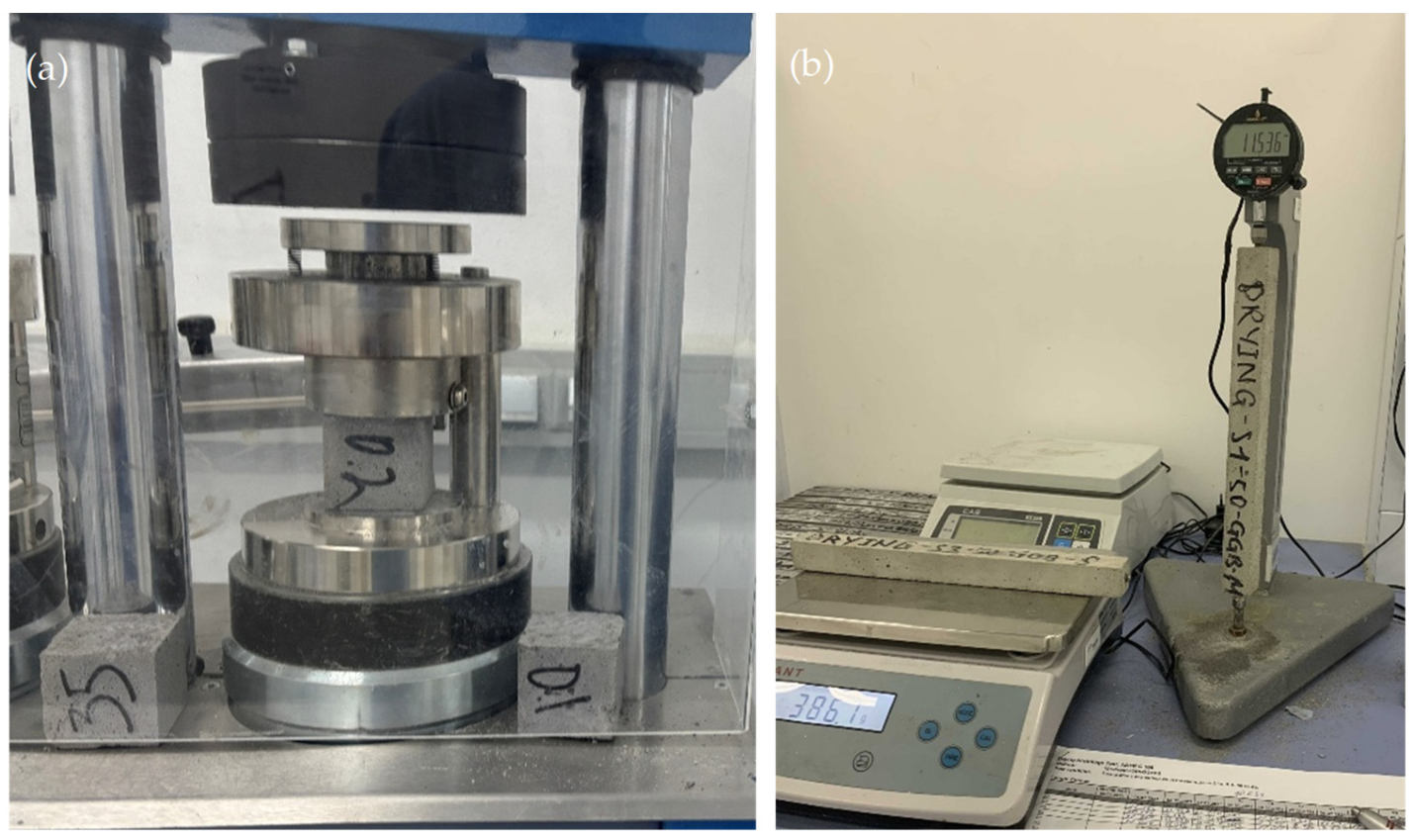
3.3. Test Methods
4. Test Results and Discussion
4.1. Material Characterization
4.1.1. Chemical Composition Analysis
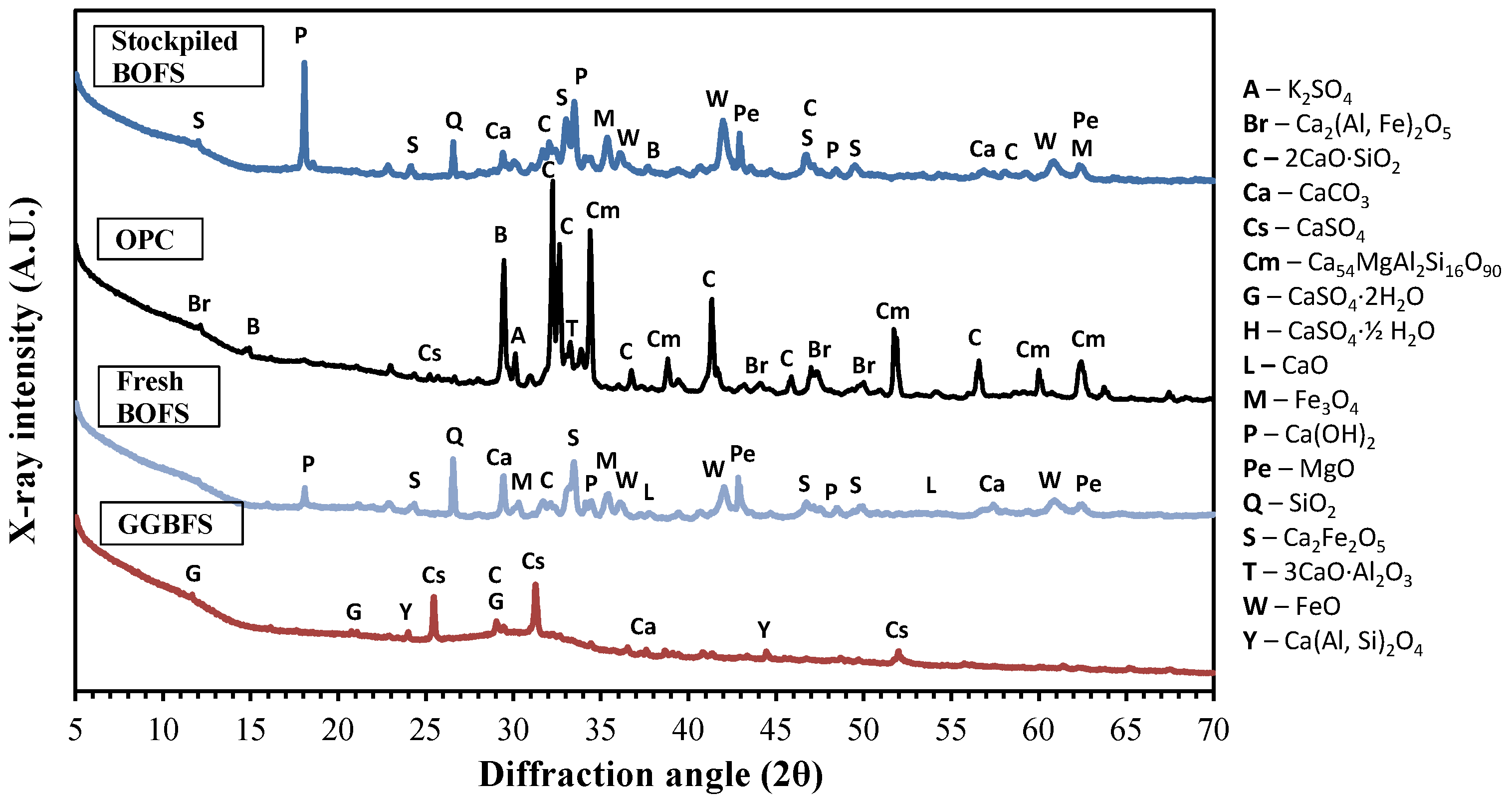
4.1.2. Mineralogical Analysis
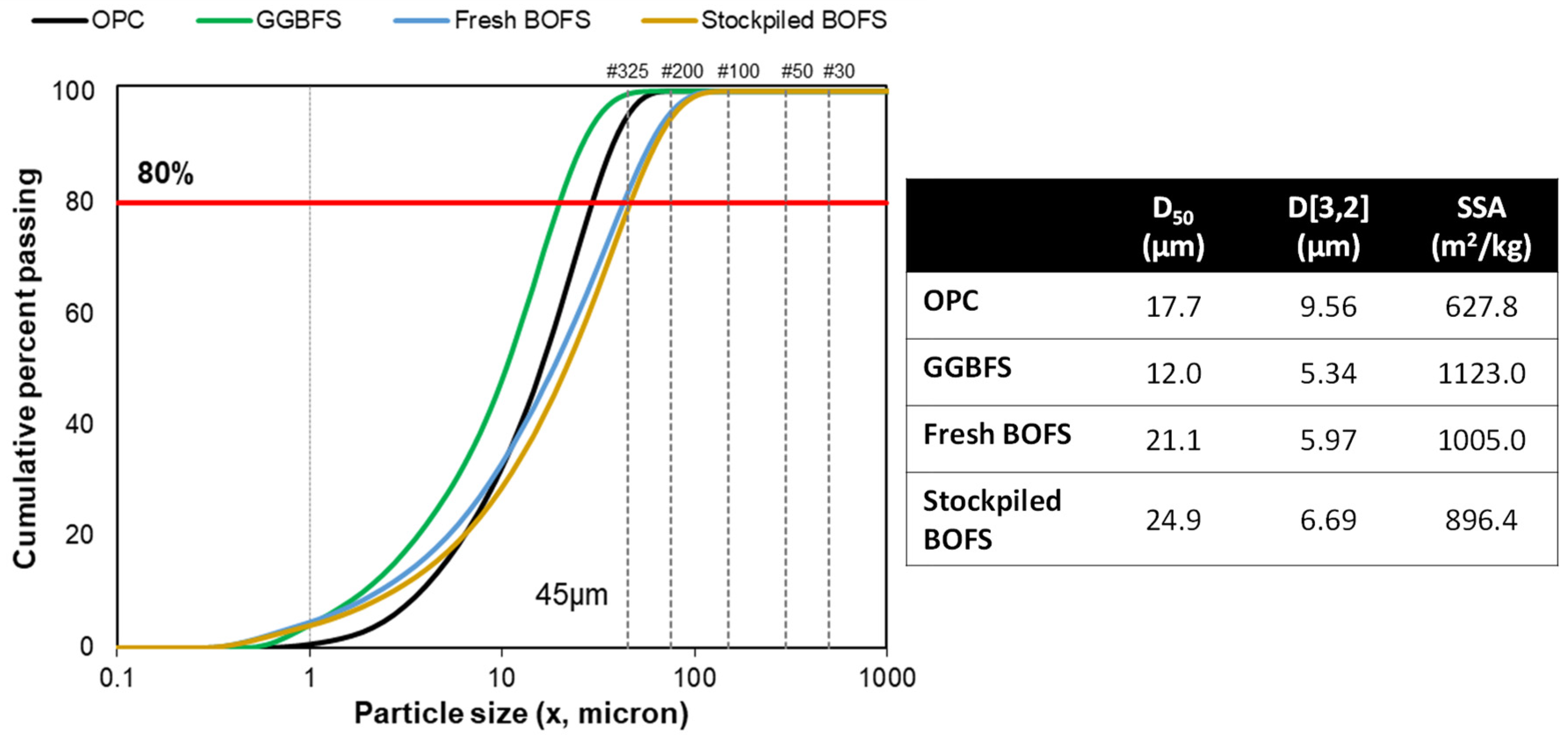
4.1.3. Particle Size Distribution
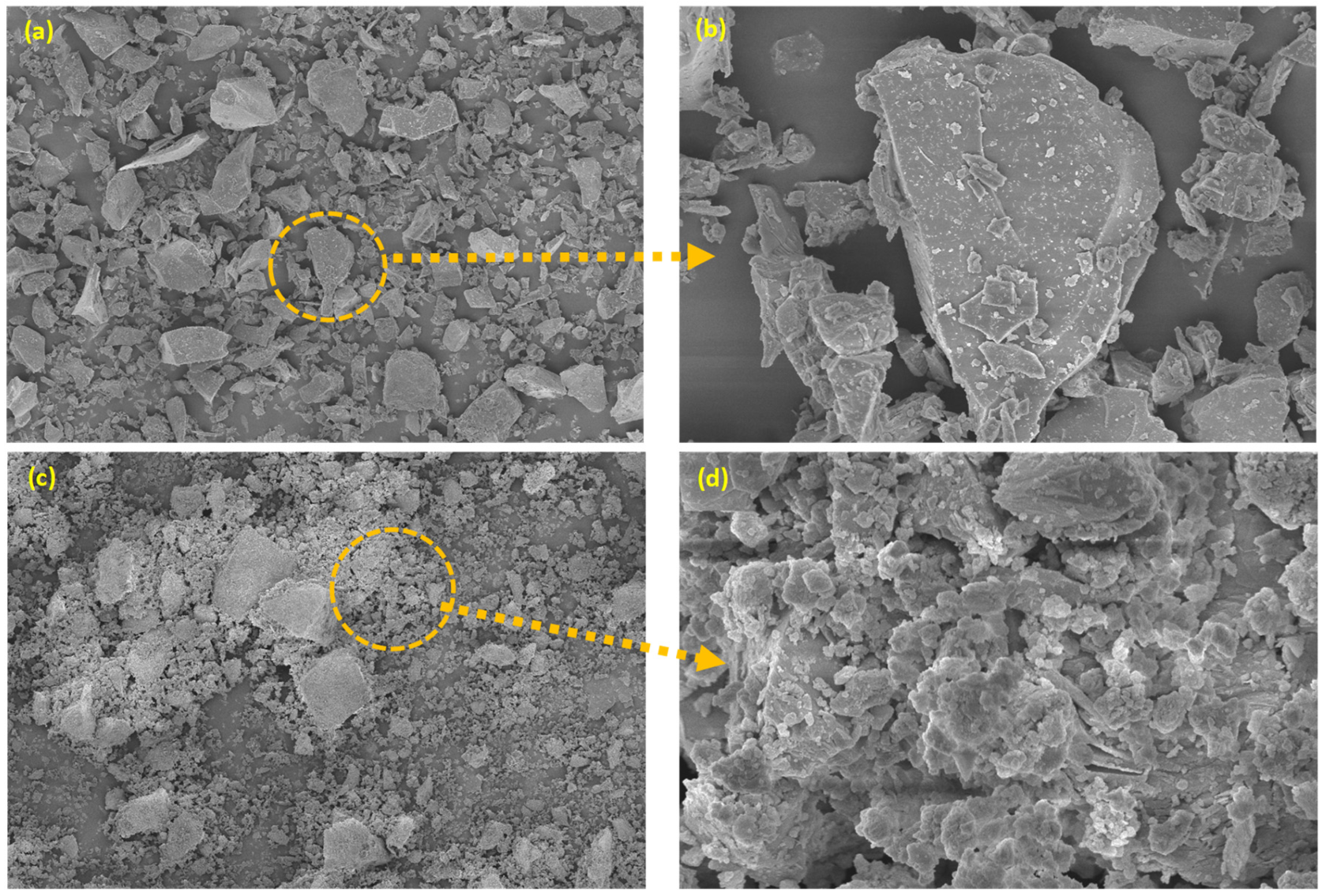
4.1.4. Microstructure Analysis
4.2. Fresh Properties
4.2.1. Flowability
4.2.2. Air-Content
4.2.3. Setting Time
4.2.4. Water Absorption
4.3. Pozzolanic Reactivity
4.3.1. Strength Activity Index and Compressive Strength
4.3.2. Strength Activity Index
4.3.3. Chapelle Test
4.3.4. Thermogravimetric Analysis
4.4. Durability Properties
4.4.1. Alkali-Silica Reaction (ASR) Resistance
4.4.2. Sulfate Attack Resistance
4.4.3. Drying Shrinkage
5. Evaluation of Binary and Ternary Mixtures Using a Performance-Based Ranking System
6. Conclusions
- Chemical composition analysis shows that f-BOFS has a higher f-CaO content than the s-BOFS, which are 1.34% and 0.21%, respectively. While f-BOFS has an abundance of CaO and a small amount of Ca(OH)2, the s-BOFS contains a high amount of Ca(OH)2 and CaCO3 instead of CaO due to weathering in the field.
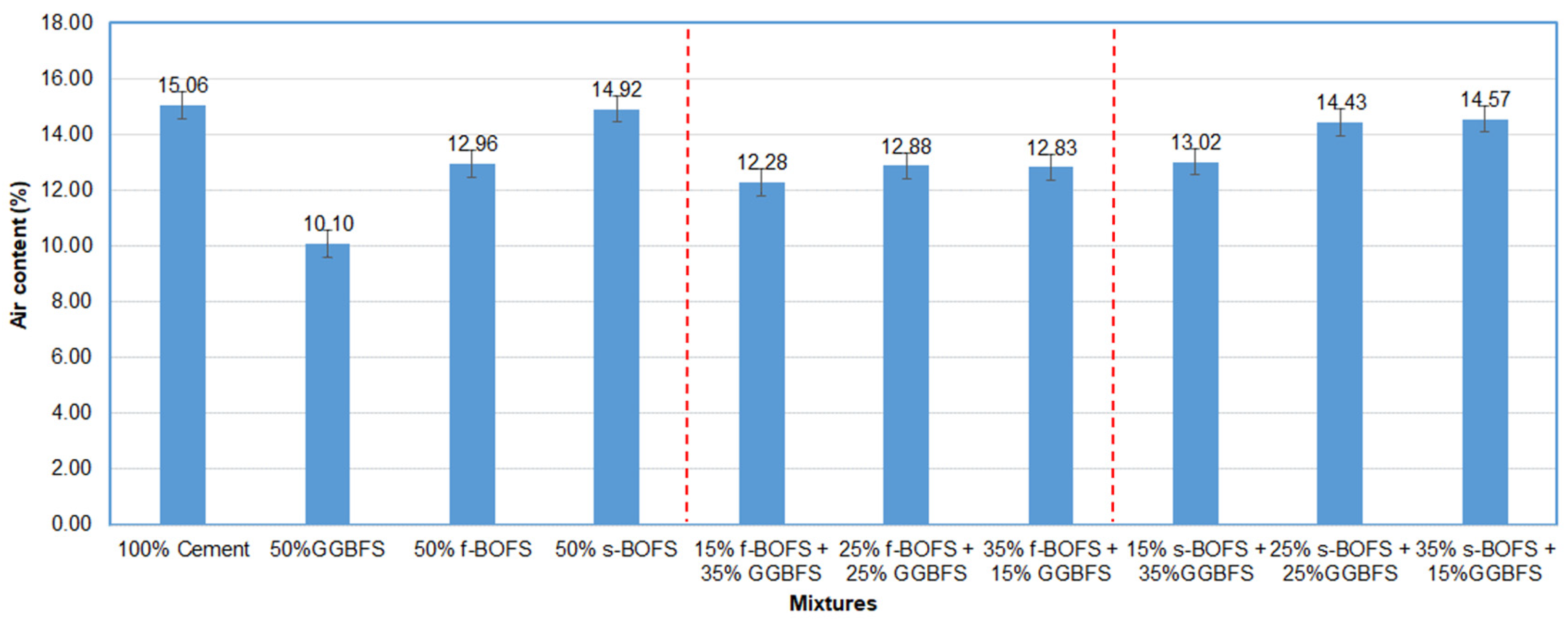
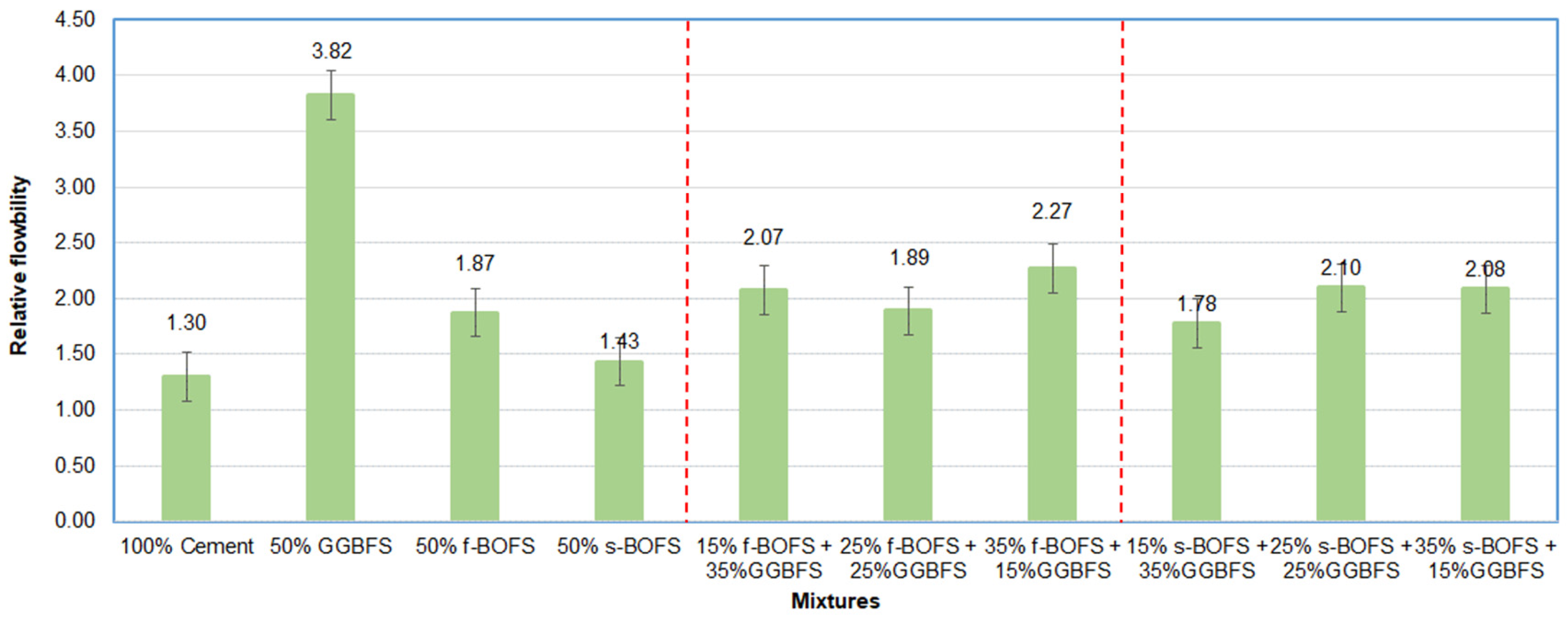
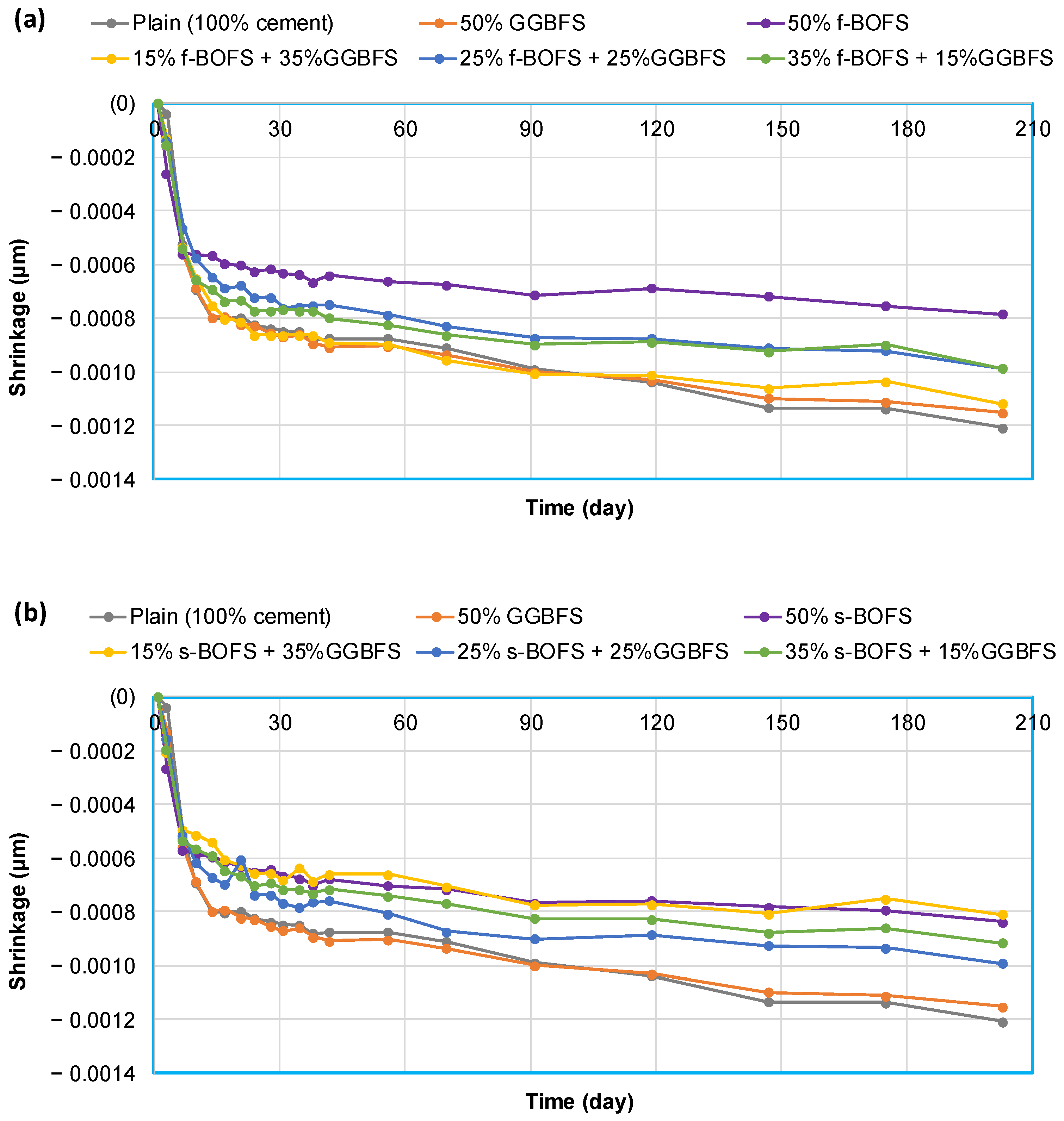
- Incorporating fresh and stockpiled BOFS materials into GGBFS reduced relative flowability but increased air content. Blending both f- and s-BOFS materials with GGBFS reduced drying shrinkage.
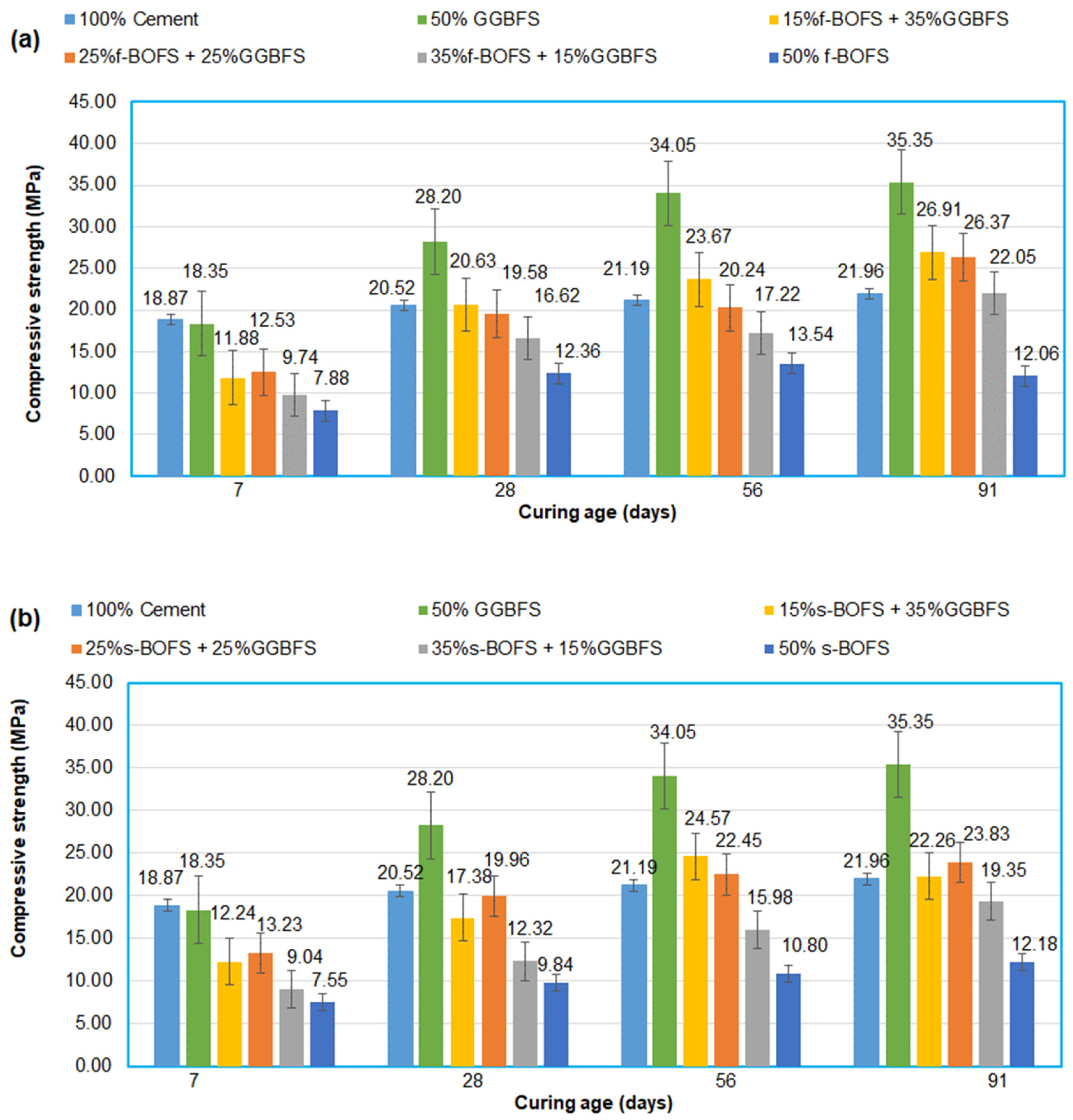
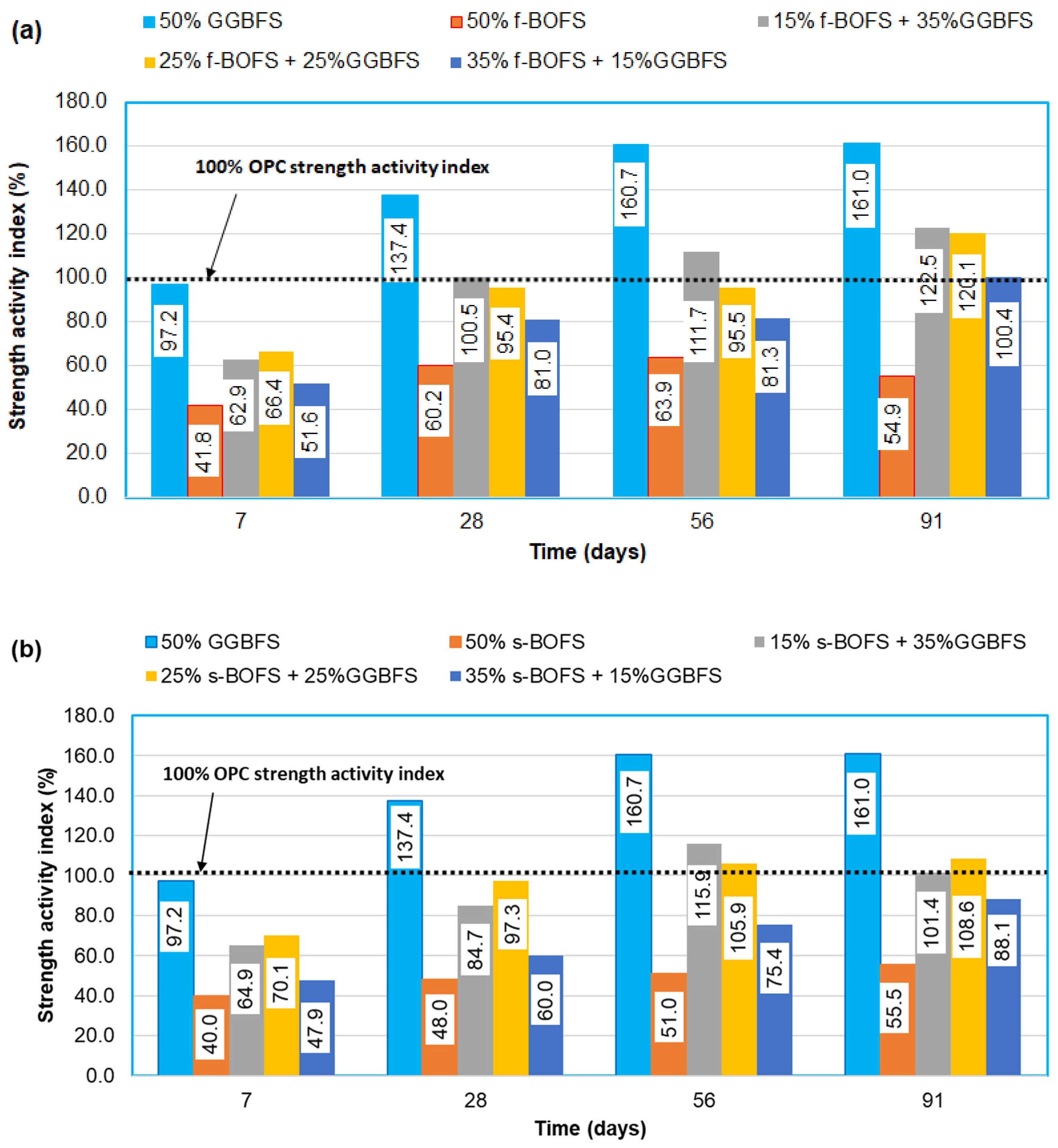
- The sole use of f- or s-BOFS as a 50% replacement for cement did not yield adequate strength development. However, mixtures incorporating f-BOFS exhibited slightly higher strength than stockpiled counterparts. The combined use of BOFS and GGBFS demonstrated enhanced strength development, meeting Grade 80 criteria according to the C989 Slag standards, except for the [35% s-BOFS + 15% GGBFS] mixture.
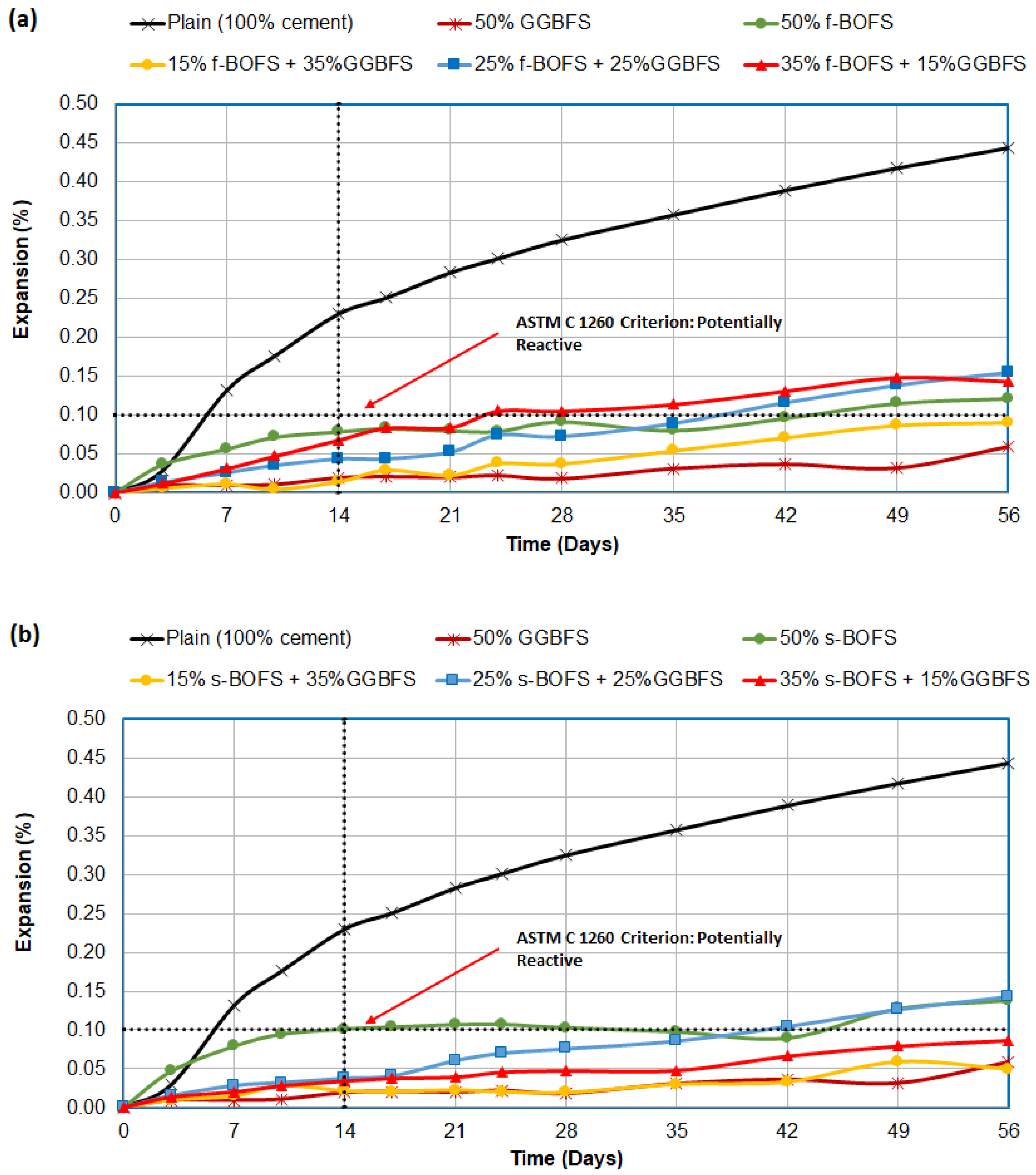
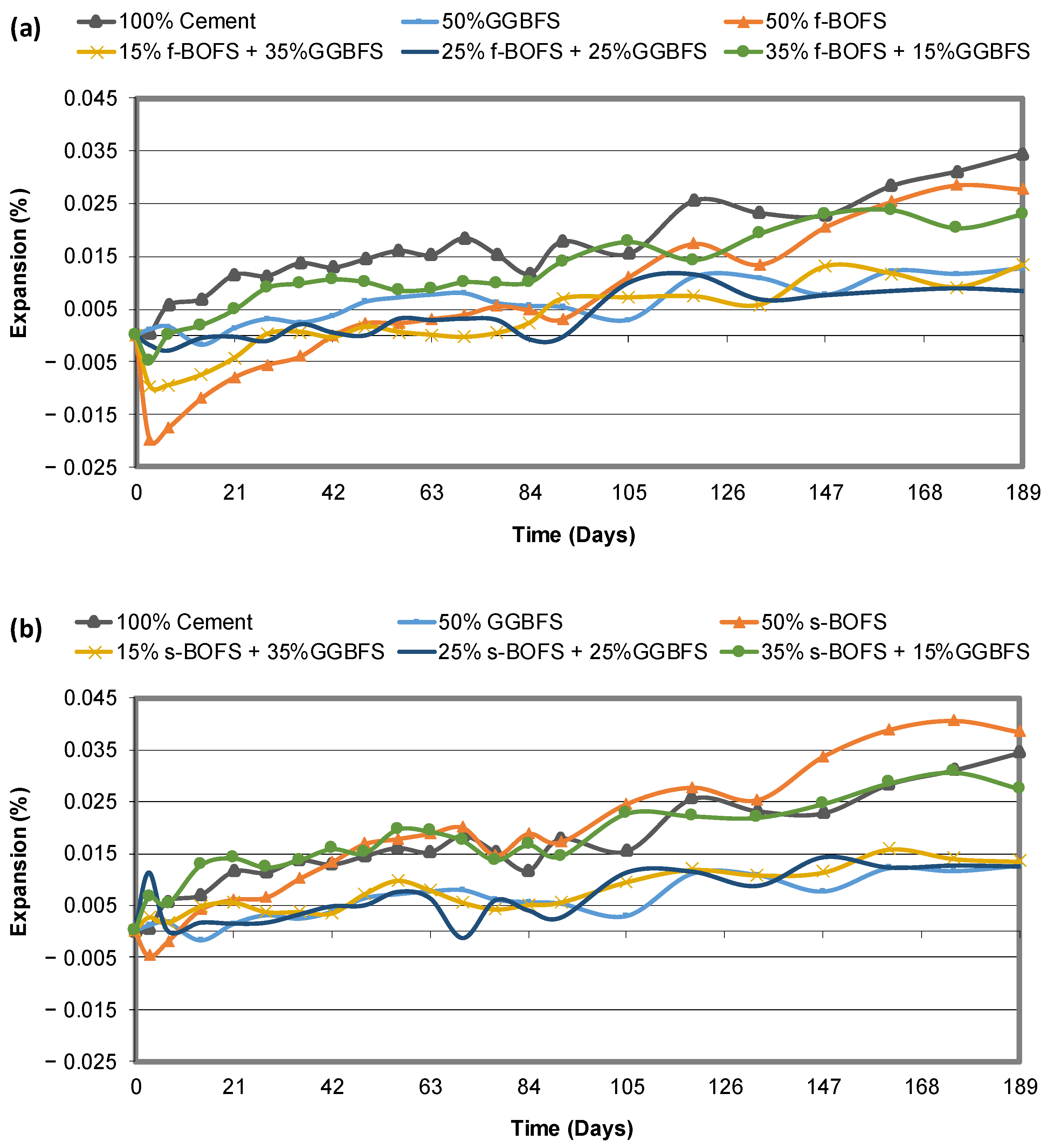
- A binary mixture incorporating s-BOFS alone exceeded the ASR criterion at 28 days, while the binary mixture with 50% GGBFS or f-BOFS mitigated ASR expansion. All ternary mixtures met the ASR and sulfate attack criteria at both 28 days and 6 months.
- The top-performing blends, consisting of fresh/stockpiled BOFS combined with GGBFS, either a combination of [15%BOFS + 35% GGBFS] or [25%BOFS + 25% GGBFS], can be accommodated as an SCM in the mortar and concrete application.
Author Contributions
Funding
Institutional Review Board Statement
Informed Consent Statement
Data Availability Statement
Acknowledgments
Conflicts of Interest
Abbreviations
| OPC | Ordinary Portland Cement |
| SCM | Supplementary Cementitious Material |
| BOFS | Basic Oxygen Furnace Slag |
| GGBFS | Ground Granulated Blast Furnace Slag |
| XRD | X-ray Diffraction |
| XRF | X-ray Fluorescence Spectro |
| SEM | Scanning Electron Microscopy |
| PSD | Particle Size Distribution |
| SSA | Specific Surface Area |
| SG | Specific Gravity |
| SAI | Strength Activity Index |
| TGA | Thermogravimetric Analysis |
| DSC | Differential Scanning Calorimetry |
| ASR | Alkali–Silica Reaction |
| ASTM | American Society for Testing and Materials |
| EASC | Euro-Asian Council for Standardization, Metrology and Certification |
References
- Yoo, D.; Banthia, N.; You, I.; Lee, S. Recent Advances in Cementless Ultra-High-Performance Concrete Using Alkali-Activated Materials and Industrial By-Products: A Review. Cem. Concr. Compos. 2024, 150, 105470. [Google Scholar] [CrossRef]
- Sandybay, S.; Shon, C.-S.; Tukaziban, A.; Syzdykov, D.; Orynbassarov, I.; Zhang, D.; Kim, J.R. Blended Basic Oxygen Furnace (BOF) Slag with Ground Granulated Blast Furnace Slag (GGBFS) as a Pozzolanic Material. Mater. Sci. Forum 2022, 1053, 331–337. [Google Scholar] [CrossRef]
- Jexembayeva, A.; Salem, T.; Jiao, P.; Hou, B.; Niyazbekova, R. Blended Cement Mixed with Basic Oxygen Steelmaking Slag (BOF) as an Alternative Green Building Material. Materials 2020, 13, 3062. [Google Scholar] [CrossRef] [PubMed]
- Crossin, E. The Greenhouse Gas Implications of Using Ground Granulated Blast Furnace Slag as a Cement Substitute. J. Clean. Prod. 2015, 95, 101–108. [Google Scholar] [CrossRef]
- Farfan, J.; Fasihi, M.; Breyer, C. Trends in the Global Cement Industry and Opportunities for Long-Term Sustainable CCU Potential for Power-to-X. J. Clean. Prod. 2019, 217, 821–835. [Google Scholar] [CrossRef]
- Han, F.; Zhang, Z.; Wang, D.; Yan, P. Hydration Heat Evolution and Kinetics of Blended Cement Containing Steel Slag at Different Temperatures. Thermochim. Acta 2015, 605, 43–51. [Google Scholar] [CrossRef]
- Sunkara, Y.; Vinod, J.S.; Kumari, W.G.; Saride, S. Shear Behaviour of Basic Oxygen Furnace Slag–Granulated Blast Furnace Slag Mixtures: A Laboratory Investigation. Constr. Build. Mater. 2025, 416, 152428. [Google Scholar] [CrossRef]
- Wu, H.; Chen, C.; Song, W.; Hou, W. High-Capacity Utilization of Coal Gangue as Supplementary Cementitious Material, Geopolymer, and Aggregate: A Review. Constr. Build. Mater. 2024, 435, 136857. [Google Scholar] [CrossRef]
- Zhang, B.; Peng, Z.; Fahimizadeh, M.; Yu, T.; Faheem, M.; Belaroui, L.S.; Hamada, B.; Yuan, P. Recycling of an Ion-Adsorption Type Rare Earth Tailing in a Low-Carbon Construction Material: Performance Modulation and Life Cycle Assessment. Constr. Build. Mater. 2025, 415, 152312. [Google Scholar] [CrossRef]
- Cahyani, R.A.T.; Rusdianto, Y. An Overview of Behaviour of Concrete with Granulated Blast Furnace Slag as Partial Cement Replacement. In Proceedings of the IOP Conference Series: Earth and Environmental Science, Yogyakarta, Indonesia, 19–20 October 2021; IOP Publishing: Bristol, UK, 2021; Volume 933, p. 012006. [Google Scholar] [CrossRef]
- Singha, P.; Shukla, A.K. Dynamic Basic Oxygen Steelmaking Process and Its Industry Validation. JOM 2023, 75, 3890–3899. [Google Scholar] [CrossRef]
- Madhavan, N.; Brooks, G.; Rhamdhani, M.A.; Bordignon, A. Contribution of CO2 Emissions from Basic Oxygen Steelmaking Process. Metals 2022, 12, 797. [Google Scholar] [CrossRef]
- Cao, H.; Gao, Q.; Zhang, X.; Guo, B. Research Progress and Development Direction of Filling Cementing Materials for Filling Mining in Iron Mines of China. Gels 2022, 8, 192. [Google Scholar] [CrossRef] [PubMed]
- Zhang, T.; Yu, Q.; Wei, J.; Li, J. Investigation on Mechanical Properties, Durability and Micro-Structural Development of Steel Slag Blended Cements. J. Therm. Anal. Calorim. 2012, 110, 633–639. [Google Scholar] [CrossRef]
- Xiang, R.; Chen, P.; Liu, R.; Hu, C.; Wan, D.; Fan, J.; Wei, J. Phases Reconstruction and Foaming Modification of Basic Oxygen Furnace Slag on Its Grindability. Crystals 2021, 11, 1051. [Google Scholar] [CrossRef]
- Trník, A.; Scheinherrová, L.; Medved’, I.; Černý, R. Simultaneous DSC and TG Analysis of High-Performance Concrete Containing Natural Zeolite as a Supplementary Cementitious Material. J. Therm. Anal. Calorim. 2015, 121, 67–73. [Google Scholar] [CrossRef]
- Liu, S.; Li, L. Influence of Fineness on the Cementitious Properties of Steel Slag. J. Therm. Anal. Calorim. 2014, 117, 629–634. [Google Scholar] [CrossRef]
- Wang, Q.; Yan, P.; Yang, J.; Zhang, B. Influence of Steel Slag on Mechanical Properties and Durability of Concrete. Constr. Build. Mater. 2013, 47, 1414–1420. [Google Scholar] [CrossRef]
- Liu, S.; Wang, Z.; Li, X. Long-Term Properties of Concrete Containing Ground Granulated Blast Furnace Slag and Steel Slag. Mag. Concr. Res. 2014, 66, 1095–1103. [Google Scholar] [CrossRef]
- Altun, İ.A.; Yılmaz, İ. Study on Steel Furnace Slags with High MgO as Additive in Portland Cement. Cem. Concr. Res. 2002, 32, 1247–1249. [Google Scholar] [CrossRef]
- Belhadj, E.; Diliberto, C.; Lecomte, A. Characterization and Activation of Basic Oxygen Furnace Slag. Cem. Concr. Compos. 2012, 34, 34–40. [Google Scholar] [CrossRef]
- Mahieux, P.-Y.; Aubert, J.-E.; Escadeillas, G. Utilization of Weathered Basic Oxygen Furnace Slag in the Production of Hydraulic Road Binders. Constr. Build. Mater. 2009, 23, 742–747. [Google Scholar] [CrossRef]
- Yildirim, I.Z.; Prezzi, M. Geotechnical Properties of Fresh and Aged Basic Oxygen Furnace Steel Slag. J. Mater. Civ. Eng. 2015, 27, 04015035. [Google Scholar] [CrossRef]
- Shi, C. Steel Slag—Its Production, Processing, Characteristics, and Cementitious Properties. J. Mater. Civ. Eng. 2004, 16, 230–236. [Google Scholar] [CrossRef]
- Tsai, C.J.; Huang, R.; Lin, W.T.; Wang, H.N. Mechanical and Cementitious Characteristics of Ground Granulated Blast Furnace Slag and Basic Oxygen Furnace Slag Blended Mortar. Mater. Des. 2014, 60, 267–273. [Google Scholar] [CrossRef]
- Lu, T.H.; Chen, Y.L.; Shih, P.H.; Chang, J.E. Use of Basic Oxygen Furnace Slag Fines in the Production of Cementitious Mortars and the Effects on Mortar Expansion. Constr. Build. Mater. 2018, 167, 768–774. [Google Scholar] [CrossRef]
- Kabay, N.; Miyan, N.; Özkan, H. Basic Oxygen Furnace and Ground Granulated Blast Furnace Slag Based Alkali-Activated Pastes: Characterization and Optimization. J. Clean. Prod. 2021, 327, 129483. [Google Scholar] [CrossRef]
- ASTM C1437-20; Standard Test Method for Flow of Hydraulic Cement Mortar. ASTM International: West Conshohocken, PA, USA, 2020.
- ASTM C185-20; Standard Test Method for Air Content of Hydraulic Cement Mortar. ASTM International: West Conshohocken, PA, USA, 2020.
- ASTM C191-21; Standard Test Methods for Time of Setting of Hydraulic Cement by Vicat Needle. ASTM International: West Conshohocken, PA, USA, 2021.
- ASTM C1403-22a; Standard Test Method for Rate of Water Absorption of Masonry Mortars (Capillary Uptake)/Rate of Water Absorption of Masonry Mortars. ASTM International: West Conshohocken, PA, USA, 2022.
- ASTM C109/C109M-20; Standard Test Method for Compressive Strength of Hydraulic Cement Mortars (Using 2-in. or 50-mm Cube Specimens). ASTM International: West Conshohocken, PA, USA, 2020.
- ASTM C596-23; Standard Test Method for Drying Shrinkage of Mortar Containing Hydraulic Cement and Graded Standard Sand. ASTM International: West Conshohocken, PA, USA, 2023.
- ASTM C1012/C1012M-18; Standard Test Method for Length Change of Hydraulic-Cement Mortars Exposed to a Sulfate Solution. ASTM International: West Conshohocken, PA, USA, 2024.
- ASTM C1260-23; Standard Test Method for Potential Alkali Reactivity of Aggregates (Mortar-Bar Method). ASTM International: West Conshohocken, PA, USA, 2023.
- ASTM C188–17; Standard Test Method for Density of Hydraulic Cement. ASTM International: West Conshohocken, PA, USA, 2017.
- ASTM C128–22; Standard Test Method for Relative Density (Specific Gravity) and Absorption of Fine Aggregate. ASTM International: West Conshohocken, PA, USA, 2022.
- ASTM C778–21; Standard Specification for Standard Sand. ASTM International: West Conshohocken, PA, USA, 2021.
- ASTM C989–18; Standard Specification for Slag Cement for Use in Concrete and Mortars. ASTM International: West Conshohocken, PA, USA, 2018.
- ASTM C618–23; Standard Specification for Coal Ash and Raw or Calcined Natural Pozzolan for Use in Concrete. ASTM International: West Conshohocken, PA, USA, 2023.
- ASTM C311–24; Standard Test Methods for Sampling and Testing Coal Ash or Natural Pozzolans for Use in Concrete. ASTM International: West Conshohocken, PA, USA, 2024.
- Yildirim, I.Z.; Prezzi, M. Chemical, Mineralogical, and Morphological Properties of Steel Slag. Adv. Civ. Eng. 2011, 2011, 463638. [Google Scholar] [CrossRef]
- ASTM C114–24; Standard Test Methods for Chemical Analysis of Hydraulic Cement. ASTM International: West Conshohocken, PA, USA, 2024.
- Reddy, A.S.; Pradhan, R.K.; Chandra, S. Utilization of Basic Oxygen Furnace (BOF) Slag in the Production of a Hydraulic Cement Binder. Int. J. Miner. Process. 2006, 79, 98–105. [Google Scholar] [CrossRef]
- Chen, Y.L.; Lin, C.T. Recycling of Basic Oxygen Furnace Slag as a Raw Material for Autoclaved Aerated Concrete Production. Sustainability 2020, 12, 5896. [Google Scholar] [CrossRef]
- Beushausen, H.; Alexander, M.; Ballim, Y. Early-Age Properties, Strength Development and Heat of Hydration of Concrete Containing Various South African Slags at Different Replacement Ratios. Constr. Build. Mater. 2012, 29, 533–540. [Google Scholar] [CrossRef]
- Pinto Junior, L.A.B.; Berger, A.P.L.; Junca, E.; Grillo, F.F.; Sampaio, N.P.; de Oliveira, J.R. Characterization of Basic Oxygen Furnace Slag and Granite Waste Mixtures to Portland Cement Production. REM Int. Eng. J. 2016, 69, 459–464. [Google Scholar] [CrossRef]
- Wilson, M.L.; Kosmatka, S.H. Design and Control of Concrete Mixtures, 15th ed.; Portland Cement Association: Skokie, IL, USA, 2011; ISBN 978-0893122720. [Google Scholar]
- Yurdakul, E.; Taylor, P.C.; Ceylan, H.; Bektas, F. Effect of Water-to-Binder Ratio, Air Content, and Type of Cementitious Materials on Fresh and Hardened Properties of Binary and Ternary Blended Concrete. J. Mater. Civ. Eng. 2014, 26, 04014018. [Google Scholar] [CrossRef]
- Fode, T.A.; Jande, Y.A.C.; Kivevele, T. Effects of Different Supplementary Cementitious Materials on Durability and Mechanical Properties of Cement Composite—Comprehensive Review. Heliyon 2023, 9, e17924. [Google Scholar] [CrossRef]
- Drottner, J.; Havlica, J. Low Lime Binders Based on Fluidized Bed Ash. In Studies in Environmental Science; Elsevier: Amsterdam, The Netherlands, 1997; Volume 71, pp. 401–410. [Google Scholar] [CrossRef]
- Bodor, M.; Santos, R.M.; Cristea, G.; Salman, M.; Cizer, O.; Iacobescu, R.; Chiang, Y.W.; van Balen, K.; Vlad, M.; van Gerven, T. Laboratory Investigation of Carbonated BOF Slag Used as Partial Replacement of Natural Aggregate in Cement Mortars. Cem. Concr. Compos. 2016, 65, 55–66. [Google Scholar] [CrossRef]
- Li, M.; Lu, Y.; Liu, Y.; Chu, J.; Zhang, T.; Wang, W. Influence of the Steel Slag Particle Size on the Mechanical Properties and Microstructure of Concrete. Sustainability 2024, 16, 2083. [Google Scholar] [CrossRef]
- Shi, Y.; Chen, H.; Wang, J.; Feng, Q. Preliminary Investigation on the Pozzolanic Activity of Superfine Steel Slag. Constr. Build. Mater. 2015, 82, 227–234. [Google Scholar] [CrossRef]
- Ahmed, M.J.; Santos, W.F.; Brouwers, H.J.H. Air Granulated Basic Oxygen Furnace (BOF) Slag Application as a Binder: Effect on Strength, Volumetric Stability, Hydration Study, and Environmental Risk. Constr. Build. Mater. 2023, 367, 130342. [Google Scholar] [CrossRef]
- Nunes, V.A.; Suraneni, P.; Bezerra, A.C.S.; Thomas, C.; Borges, P.H.R. Influence of Activation Parameters on the Mechanical and Microstructure Properties of an Alkali-Activated BOF Steel Slag. Appl. Sci. 2022, 12, 12437. [Google Scholar] [CrossRef]
- Kaja, A.M.; Schollbach, K.; Melzer, S.; van der Laan, S.R.; Brouwers, H.J.H.; Yu, Q. Hydration of Potassium Citrate-Activated BOF Slag. Cem. Concr. Res. 2021, 140, 106291. [Google Scholar] [CrossRef]
- Luo, Z.; Wang, Y.; Yang, G.; Ye, J.; Zhang, W.; Liu, Z.; Mu, Y. Effect of Curing Temperature on Carbonation Behavior of Steel Slag Compacts. Constr. Build. Mater. 2021, 291, 123369. [Google Scholar] [CrossRef]
- Shon, C.-S.; Kim, Y.S. Evaluation of West Texas Natural Zeolite as an Alternative of ASTM Class F Fly Ash. Constr. Build. Mater. 2013, 47, 389–396. [Google Scholar] [CrossRef]
- Tukaziban, A.; Shon, C.-S.; Zhang, D.; Kim, J.R.; Kim, J.-H.; Chung, C.-W. Synthesis and Evaluation of Geopolymer Mixtures Containing Chronologically Aged Basic Oxygen Furnace Slags. Sustainability 2023, 15, 16934. [Google Scholar] [CrossRef]
- Yu, T.; Zhang, B.; Yuan, P.; Guo, H.; Liu, D.; Chen, J.; Liu, H.; Belaroui, L.S. Optimization of Mechanical Performance of Limestone Calcined Clay Cement: Effects of Calcination Temperature of Nanosized Tubular Halloysite, Gypsum Content, and Water/Binder Ratio. Constr. Build. Mater. 2023, 403, 132123. [Google Scholar] [CrossRef]
- Yu, T.; Zhang, B.; Guo, H.; Wang, Q.; Liu, D.; Chen, J.; Yuan, P. Calcined Nanosized Tubular Halloysite for the Preparation of Limestone Calcined Clay Cement (LC3). Appl. Clay Sci. 2023, 237, 107714. [Google Scholar] [CrossRef]
- ASTM C1567–21; Standard Test Method for Determining the Potential Alkali-Silica Reactivity of Combinations of Cementitious Materials and Aggregate (Accelerated Mortar-Bar Method). ASTM International: West Conshohocken, PA, USA, 2021.
- Shon, C.-S.; Sarkar, S.L.; Zollinger, D.G. Testing the Effectiveness of Class C and Class F Fly Ash in Controlling Expansion Due to Alkali-Silica Reaction Using Modified ASTM C1260 Test Method. J. Mater. Civ. Eng. 2004, 16, 20–27. [Google Scholar] [CrossRef]
- Özkan, Ö.; Sarıbıyık, M. Alkali Silica Reaction of BOF and BFS Wastes Combination in Cement. J. Civ. Eng. Manag. 2013, 19, 113–120. [Google Scholar] [CrossRef]
- Siddique, R.; Bennacer, R. Use of Iron and Steel Industry By-Product (GGBS) in Cement Paste and Mortar. Resour. Conserv. Recycl. 2012, 69, 29–34. [Google Scholar] [CrossRef]
- Bakhbergen, U.; Shon, C.-S.; Zhang, D.; Kryzhanovskiy, K.; Kim, J.R. Assessment of Reactive Powder Concrete Subjected to Three Different Sodium Sulfate Concentrations: Compressive Strength, Absorption, Porosity, Microstructure, and Durability. Constr. Build. Mater. 2022, 325, 126804. [Google Scholar] [CrossRef]
- Siddique, R.; Cachim, P. Waste and Supplementary Cementitious Materials in Concrete: Characterisation, Properties and Applications; Woodhead Publishing: Cambridge, UK, 2018; ISBN 978-0081021569. [Google Scholar]
- Xu, W.; Tang, Z.; Song, Y.; Xie, Y.; Lei, B.; Yu, H.; Long, G.; Kai, M. Drying Shrinkage of Geopolymeric Recycled Aggregate Concrete. Constr. Build. Mater. 2023, 395, 132220. [Google Scholar] [CrossRef]







| Mix No. | Mixtures | Mix No. | Mixtures |
|---|---|---|---|
| 1 | 100% OPC | 6 | 50% OPC + [35% f-BOFS + 15% GGBFS] |
| 2 | 50% OPC + [50% GGBFS] | 7 | 50% OPC + [50% s-BOFS] |
| 3 | 50% OPC + [50% f-BOFS] | 8 | 50% OPC + [15% s-BOFS + 35% GGBFS] |
| 4 | 50% OPC + [15% f-BOFS + 35% GGBFS] | 9 | 50% OPC + [25% s-BOFS + 25% GGBFS] |
| 5 | 50% OPC + [25% f-BOFS + 25% GGBFS] | 10 | 50% OPC + [35% s-BOFS + 15% GGBFS] |
| Oxide Content (%) | CaO | Fe2O3 | SiO2 | MgO | MnO | P2O5 | Al2O3 | TiO2 | SO3 | Others |
|---|---|---|---|---|---|---|---|---|---|---|
| 1 f-BOFS | 41.64 1 | 23.03 | 14.05 | 8.99 | 3.89 | 3.61 | 2.21 | 0.82 | 0.21 | 1.54 |
| 2 s-BOFS | 43.93 2 | 24.67 | 13.38 | 6.16 | 2.80 | 3.91 | 2.93 | 0.85 | 0.24 | 1.12 |
| GGBFS | 40.51 | 0.34 | 32.25 | 10.46 | 0.31 | - | 11.40 | 1.42 | 2.00 | 1.31 |
| OPC | 69.19 | 2.96 | 17.42 | 2.05 | 0.12 | 0.09 | 4.36 | 0.20 | 2.61 | 0.7 |
| Mixture | Mass Loss at Each Temperature (%) | Total Mass Loss (%) | ||
|---|---|---|---|---|
| 25–350 °C | 350–450 °C | 550–750 °C | ||
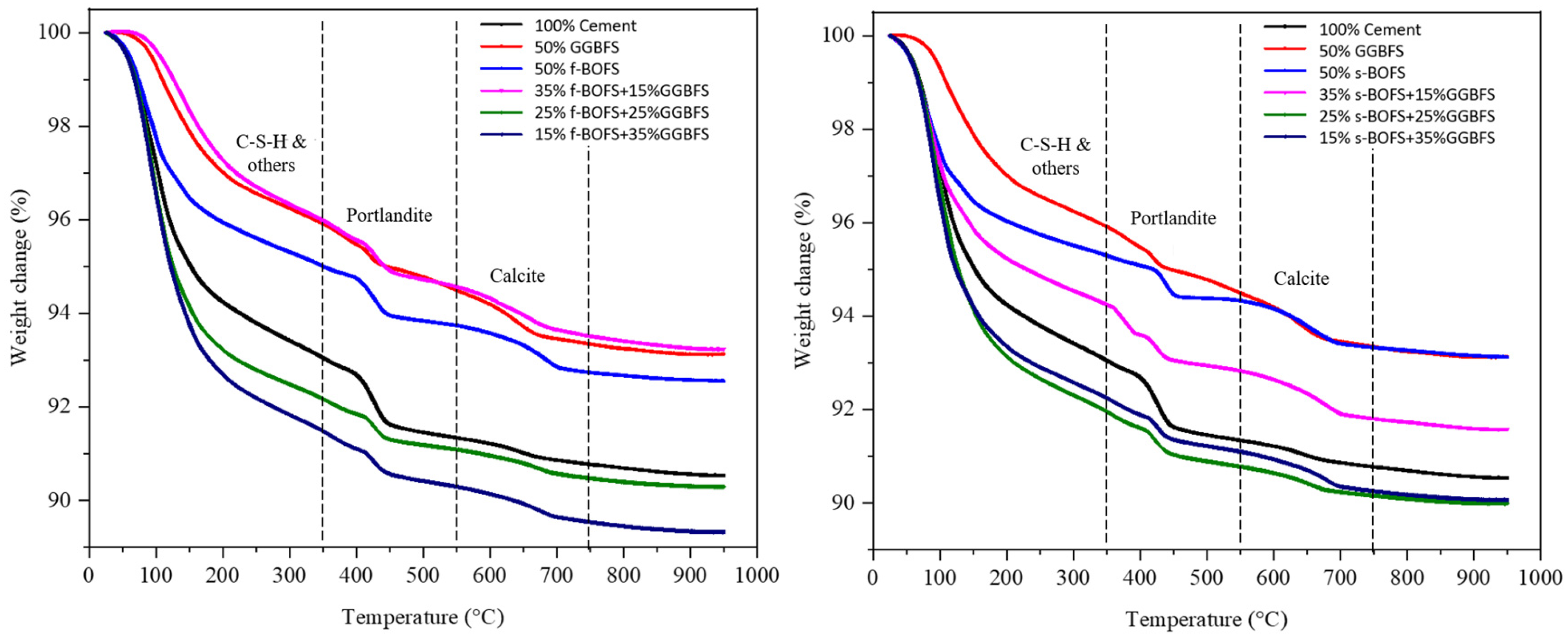
| 100% OPC | 7.27 | 1.13 | 1.1 | 9.50 |
| 50% GGBFS | 4.03 | 1.16 | 1.70 | 6.89 |
| 50% f-BOFS | 5.03 | 1.13 | 1.29 | 7.45 |
| 50% s-BOFS | 4.34 | 1.24 | 1.30 | 6.88 |
| 15% f-BOFS + 35% GGBFS | 8.58 | 1.05 | 1.04 | 10.67 |
| 25% f-BOFS + 25% GGBFS | 7.77 | 1.11 | 0.83 | 9.71 |
| 35% f-BOFS + 15% GGBFS | 4.22 | 1.12 | 1.42 | 6.76 |
| 15% s-BOFS + 35% GGBFS | 8.68 | 0.95 | 1.04 | 10.67 |
| 25% s-BOFS + 25% GGBFS | 8.02 | 1.12 | 0.86 | 10.00 |
| 35% s-BOFS + 15% GGBFS | 5.53 | 1.14 | 1.48 | 8.15 |
| Mixtures | 1 SAI (%) | Rank | 2 ASR (%) | Rank | 3 Sulfate Attack (%) | Rank | Drying Shrinkage (μm) | Rank | Flow-Ability (Γm) | Rank | Air Content (%) | Rank | Counting | Final Ranking (4 pts.) | ||
|---|---|---|---|---|---|---|---|---|---|---|---|---|---|---|---|---|
| No of pts 3 | No of pts 2 | No of pts 1 | ||||||||||||||
| 100% OPC | 100.0 | - | 0.325 | 10 | 0.0345 | 9 | 1.211 | 10 | 1.30 | 10 | 15.06 | 9 | 0 | 0 | 0 | 10 (0) |
| 50% GGBFS | 137.4 | 1 | 0.018 | 1 | 0.0127 | 3 | 1.151 | 9 | 3.82 | 1 | 10.10 | 1 | 4 | 0 | 1 | 1 (13) |
| 50% f-BOFS | 60.2 | 7 | 0.091 | 7 | 0.0278 | 8 | 0.784 | 1 | 1.87 | 7 | 12.96 | 5 | 1 | 0 | 0 | 6 (3) |
| 50% s-BOFS | 48.0 | 9 | 0.103 | 8 | 0.0385 | 10 | 0.837 | 3 | 1.43 | 9 | 15.22 | 10 | 0 | 0 | 1 | 8 (1) |
| 15% f-BOFS + 35% GGBFS | 100.5 | 2 | 0.037 | 3 | 0.0133 | 4 | 1.119 | 8 | 2.07 | 5 | 12.28 | 2 | 0 | 2 | 1 | 2 (5) |
| 25% f-BOFS + 25% GGBFS | 95.4 | 4 | 0.072 | 5 | 0.0085 | 1 | 0.986 | 5 | 1.89 | 6 | 12.88 | 4 | 1 | 0 | 0 | 5 (3) |
| 35% f-BOFS + 15% GGBFS | 81.0 | 6 | 0.105 | 9 | 0.0230 | 6 | 0.986 | 6 | 2.27 | 2 | 12.83 | 3 | 0 | 1 | 1 | 7 (3) |
| 15% s-BOFS + 35% GGBFS | 84.7 | 5 | 0.019 | 2 | 0.0135 | 5 | 0.810 | 2 | 1.78 | 8 | 13.02 | 6 | 0 | 2 | 0 | 3 (4) |
| 25% s-BOFS + 25% GGBFS | 97.3 | 3 | 0.076 | 6 | 0.0125 | 2 | 0.992 | 7 | 2.10 | 3 | 14.43 | 7 | 0 | 1 | 2 | 4 (4) |
| 35% s-BOFS + 15% GGBFS | 60.0 | 8 | 0.047 | 4 | 0.0275 | 7 | 0.917 | 4 | 2.08 | 4 | 14.57 | 8 | 0 | 0 | 0 | 9 (0) |
Disclaimer/Publisher’s Note: The statements, opinions and data contained in all publications are solely those of the individual author(s) and contributor(s) and not of MDPI and/or the editor(s). MDPI and/or the editor(s) disclaim responsibility for any injury to people or property resulting from any ideas, methods, instructions or products referred to in the content. |
© 2025 by the authors. Licensee MDPI, Basel, Switzerland. This article is an open access article distributed under the terms and conditions of the Creative Commons Attribution (CC BY) license (https://creativecommons.org/licenses/by/4.0/).
Share and Cite
Sandybay, S.; Shon, C.-S.; Zhang, D.; Kim, J.R.; Chung, C.-W. Performance-Based Evaluation of Supplementary Cementitious Material Synthesized with Basic Oxygen Furnace Slag and Ground Granulated Blast Furnace Slag. Sustainability 2025, 17, 10326. https://doi.org/10.3390/su172210326
Sandybay S, Shon C-S, Zhang D, Kim JR, Chung C-W. Performance-Based Evaluation of Supplementary Cementitious Material Synthesized with Basic Oxygen Furnace Slag and Ground Granulated Blast Furnace Slag. Sustainability. 2025; 17(22):10326. https://doi.org/10.3390/su172210326
Chicago/Turabian StyleSandybay, Saken, Chang-Seon Shon, Dichuan Zhang, Jong Ryeol Kim, and Chul-Woo Chung. 2025. "Performance-Based Evaluation of Supplementary Cementitious Material Synthesized with Basic Oxygen Furnace Slag and Ground Granulated Blast Furnace Slag" Sustainability 17, no. 22: 10326. https://doi.org/10.3390/su172210326
APA StyleSandybay, S., Shon, C.-S., Zhang, D., Kim, J. R., & Chung, C.-W. (2025). Performance-Based Evaluation of Supplementary Cementitious Material Synthesized with Basic Oxygen Furnace Slag and Ground Granulated Blast Furnace Slag. Sustainability, 17(22), 10326. https://doi.org/10.3390/su172210326