Article

Artificial Intelligence, Energy Consumption Intensity, and Supply Chain Resilience in China’s ICT Manufacturing Industry

1
School of Business, Henan University of Science and Technology, 263 Kaiyuan Blvd, Luolong District, Luoyang 471000, China
2
CUHK Business School, The Chinese University of Hong Kong, Hong Kong SAR, China
*
Author to whom correspondence should be addressed.
Sustainability 2025, 17(22), 10253; https://doi.org/10.3390/su172210253
Submission received: 4 October 2025 / Revised: 10 November 2025 / Accepted: 12 November 2025 / Published: 16 November 2025

Abstract

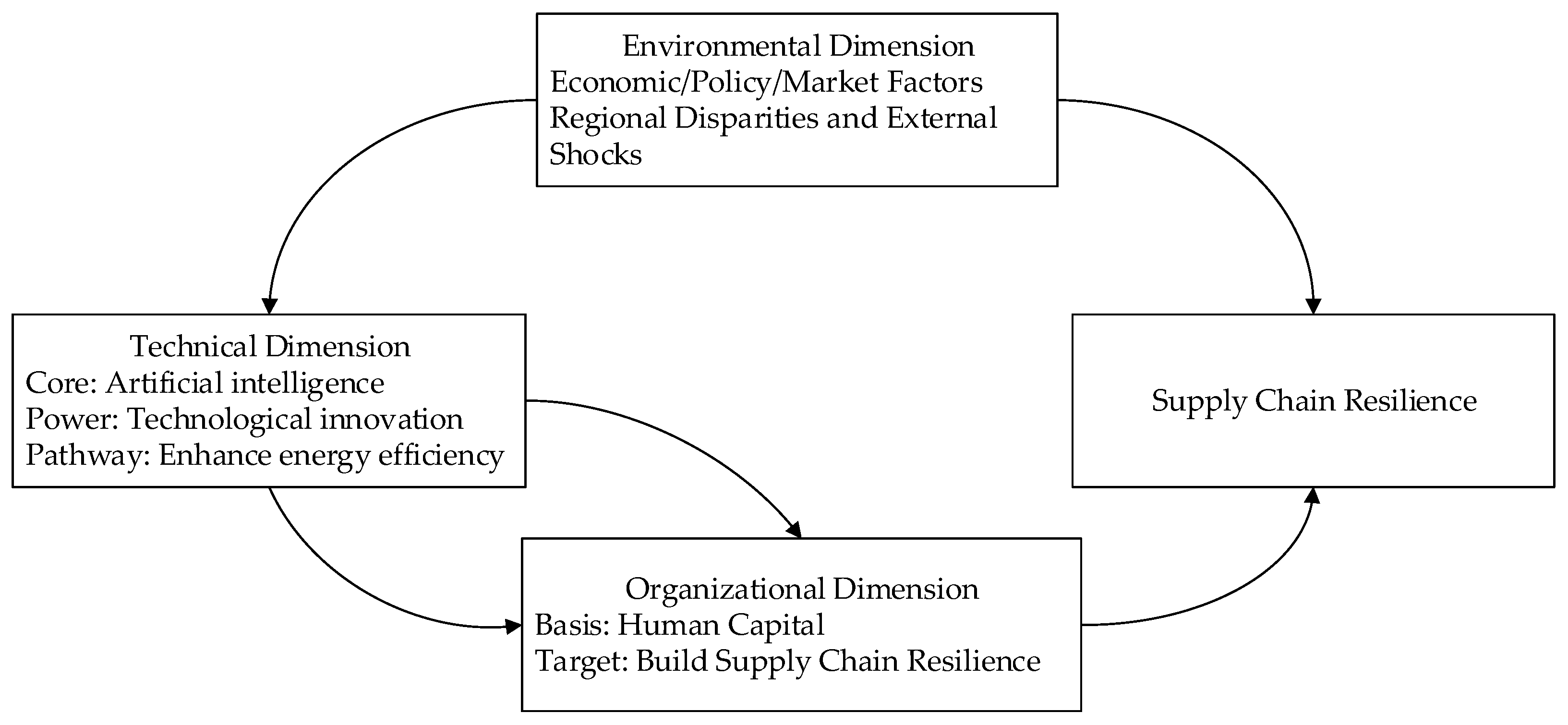
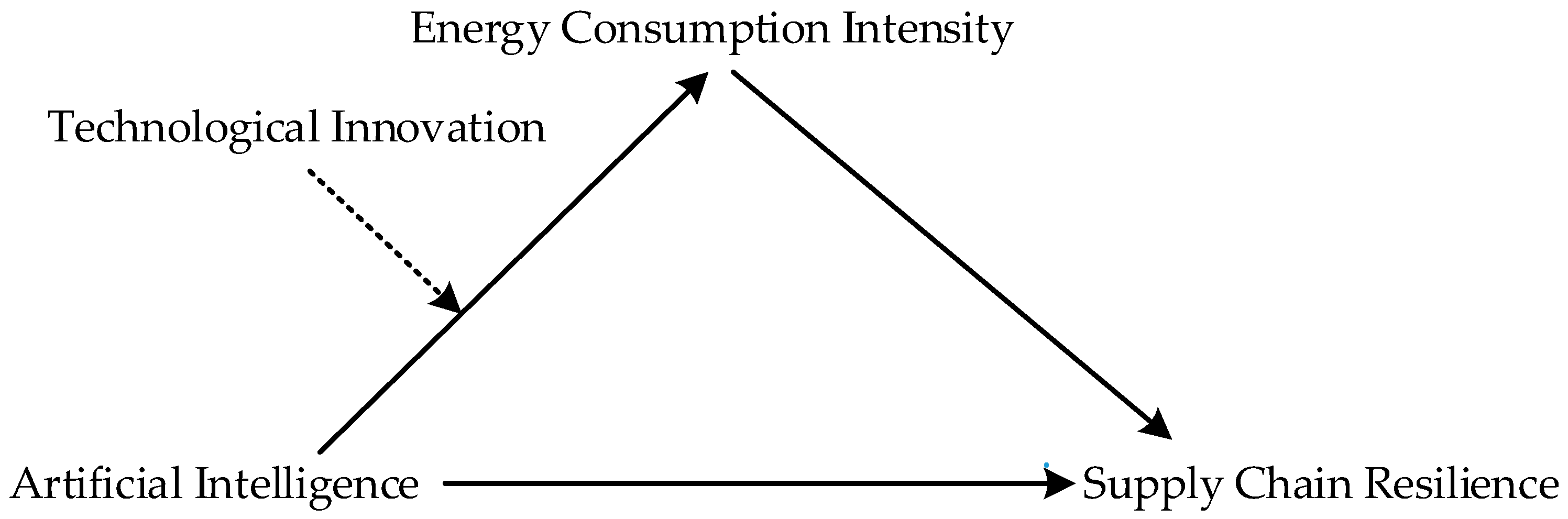
Enhancing the supply chain resilience of the information and communications manufacturing industry is closely related to the competitiveness of enterprises and the security of the national economy, and has attracted widespread attention from all sectors of society. This study develops a multidimensional synergistic resilience framework based on the Technology-Organization-Environment theory. Using panel data from 29 Chinese provinces over the 2011–2022 period, it empirically examines the impact of artificial intelligence technology on supply chain resilience in the information and communication technology manufacturing industry and investigates its underlying mechanisms. Research findings: Artificial intelligence significantly enhances supply chain resilience, and this conclusion holds after a series of endogeneity and robustness tests. Mechanism analysis reveals that artificial intelligence promotes the low-carbon transition by optimizing energy intensity and synergistically enhances resilience effects through technological innovation. Heterogeneity analysis shows that the impact of artificial intelligence on supply chain resilience is stronger in eastern China, significantly outperforming western China, but its effect in central China is not significant. Supply chain disruptions weaken the positive effects generated by artificial intelligence when they occur. The research provides a theoretical foundation and practical basis for improving the resilience of information and communications manufacturing supply chain networks, thereby contributing to the development of intelligent, resilient and sustainable supply chain networks.
Keywords: supply chain resilience; artificial intelligence; ICT manufacturing industry; energy consumption intensity; environmentally sustainable supply chain resilience; artificial intelligence; ICT manufacturing industry; energy consumption intensity; environmentally sustainable