


Abstract
Earthen heritage in desert oases reflects local identity, craftsmanship and traditional knowledge but is facing increasing threat of disappearance from material vulnerabilities, social abandonment and unsuitable interventions. This study develops and validates a novel decision-making tool to guide stakeholders in selecting the most suitable building technology for the adaptive reuse of earthen heritage complexes to ensure their long-term sustainability while maintaining their cultural and social values. The proposed methodology combines the Integrated Value Model for Sustainability Assessment (MIVES) and Delphi technique to evaluate the cultural, economic, environmental and social aspects. Quantitative and qualitative indicators were defined through literature review and weighted by experts in two rounds of Delphi to obtain comparable sustainability index for each building technology. The evaluation of economic and environmental aspects was based on literature data, while cultural and social aspects were assessed through a third round of Delphi with local participants. The tool was applied to the Adrere Amellal Ecolodge in Siwa Oasis, Egypt, comparing three building technologies: Karshif traditional earthen technique, commonly used red bricks and innovative 3D-printed saltblocks. Karshif achieved the highest sustainability index (0.77) due to its cultural values, social acceptance and environmental performance. The findings demonstrate the potential of traditional earthen techniques to ensure sustainable adaptive reuse, providing a replicable method for sustainable adaptive reuse of earthen heritage in desert oases in Egypt and worldwide.
1. Introduction
Earthen architecture is one of the oldest and most common building techniques in the world due to its affordability, simplicity, availability and environmental adaptability [1]. It is particularly prevalent in hot, arid climates because of its capacity to provide indoor thermal comfort and regulate moisture more than industrialized materials [2]. Adaptive reuse has emerged as a key conservation strategy, revitalizing earthen heritage buildings while preserving their authenticity and local identity [3]. It does not only safeguard the buildings’ structures but also their architectural, social, cultural and historical values [4].
In Egypt’s desert oases, earthen architecture is the core of their vernacular architecture, representing their local identity and inherited traditional knowledge. Siwa Oasis, in particular, is known for its traditional Karshif construction technique, dating back to the 12th century. Karshif is made from salt, clay, mud and other minerals and used for its availability, cost-effectiveness and excellent thermal insulation [5]. Earthen architecture has always been the most common building technology in desert oases all over the world due to its adaptability to climate conditions and integration with local context. The locally available material provides excellent thermal mass and regulated humidity, making buildings suitable to extreme high temperatures and dry weather [6,7]. In addition to its environmental performance, the traditional know-how of earthen techniques is an integral part of the culture, linking vernacular architecture to the local identity.
However, in such a fragile environment, earthen architecture, such as Karshif, faces increasing threats. Natural factors like underground water, growth of vegetation and presence of animals, temperature and humidity fluctuations and strong wind erosion cause wall cracking and loss of cohesion [8,9,10]. The socio-cultural pressures from modernizing traditional lifestyle have led to the abandonment of the material and replacing it with industrialized materials. In addition, this decay is further accelerated by interventions unsuitable to the material and original values of the buildings [11,12]. These combined shifts endanger the continuous transmission of local building know-how and the survival of earthen settlements in desert oases. Therefore, addressing these vulnerabilities through context-sensitive conservation strategies becomes essential for ensuring their sustainability.
Consequently, adaptive reuse has reintroduced Karshif as a suitable construction material for the revitalization of deteriorated complexes, such as Adrere Amellal Ecolodge, Albabenshal Ecolodge and Kenooz Shali Lodge [13]. International conservation guidelines emphasize that interventions on heritage buildings should preserve authenticity and significance by minimal and reversible changes. The 1931 Athens Charter encouraged minimizing the changes made to the conserved buildings [14]. This concept was further supported by the 1964 Venice Charter and the International Charter on Archaeological Heritage Management. Venice Charter supported the reuse of heritage buildings while highlighting the necessity of limiting their modification to the minimum and preserving their authenticity represented in their artistic and historic values [15]. Similarly, the 1999 Burra Charter highlights that the emphasis of the cultural significance of the place should be the priority and an essential guide of the amount of the changes that occur and that change should not affect the authentic and historical evidence of the place [16].
The pioneer Riegl (1903) was the first one to identify the cultural heritage values and divided them into memory values (age value, historical value and commemorative value) and current values (use value and art value) [17]. In this sense, adaptive reuse and the authenticity of the buildings cannot be separated. The adaptation of heritage buildings must ensure a balance between the efficiency of its new use, the preservation of its architectural components and the maintenance of its intangible cultural and social values. The most successful processes are the ones that add a new useful layer for the future while having a minimal effect on the asset and preserving its historic authentic qualities [18,19].
However, the adaptive reuse projects face many post-intervention challenges, such as physical degradation and the absence of global conservation strategies [20,21]. With the increasing interest in reuse projects, many multi-criteria decision-making (MCDM) tools have been developed to guide adaptive reuse strategies, prioritize renovation decisions, evaluate alternative solutions for reuse and assess building significance and suitability of function [22]. However, there remains a significant lack of systematic decision-making tools to assess the sustainability and cultural compatibility of building technologies used in adaptive reuse. Table 1 depicts a representative sample of them.
Table 1.
Representative existing multi-criteria decision-making (MCDM) tools for the adaptive reuse of heritage buildings.
As summarized in Table 1, existing MCDM tools for adaptive reuse have addressed the economic, environmental, social and cultural aspects but in various ways. Several researchers, such as Wang & Zeng [23], Haroun et al. [25], Vehbi et al. [27], Giove et al. [31], Piñero et al. [33] and El Borolosy [35], included all four requirements but mainly focused on the evaluation of the new selected reuse rather than the material or the building technology used in the adaptive reuse project. In these studies, environmental criteria focused on the impact of the project on the site and its surroundings, while economic requirements highlighted the return on investment and profitability of the possible uses rather than the project costs. Other research included only selected aspects of the sustainability pillars; Ribera et al. [24], Cucco et al. [26] and Della Spina [29] have not included the environmental indicators, whereas Della Spina & Lanteri [36] have overlooked the cultural and social dimensions. Additional frameworks have used new categories not clearly related to the sustainability pillars, such as on-site/off-site aspects [30] or context quality and building flexibility [32]. Ghobadi & Sepasgozar [34] uniquely addressed the different reuse options for prefabricated timber buildings but excluded the cultural and heritage dimensions since their case studies were not heritage buildings.
To address these gaps, the present decision-making tool builds on these earlier MCDM tools while addressing their limitations by integrating cultural, economic, environmental and social requirements based on detailed literature review. The inclusion of these requirements extends previous MCDM tools and adapts them to the context of earthen heritage in desert oases. Therefore, the aim of this research is to contribute to supporting the long-term sustainability of earthen heritage and its maintenance in good condition for a long period of time. This target is to be achieved through the following specific objectives:
- To develop a sustainability assessment tool that supports stakeholders, municipalities and the government in selecting the most suitable building technology for adaptive reuse of earthen building complexes, based on cultural, environmental, economic and social aspects.
- To validate the tool by applying it to a selected case study, by comparing three building technologies and determining the most suitable option for its reuse.
2. Methodology
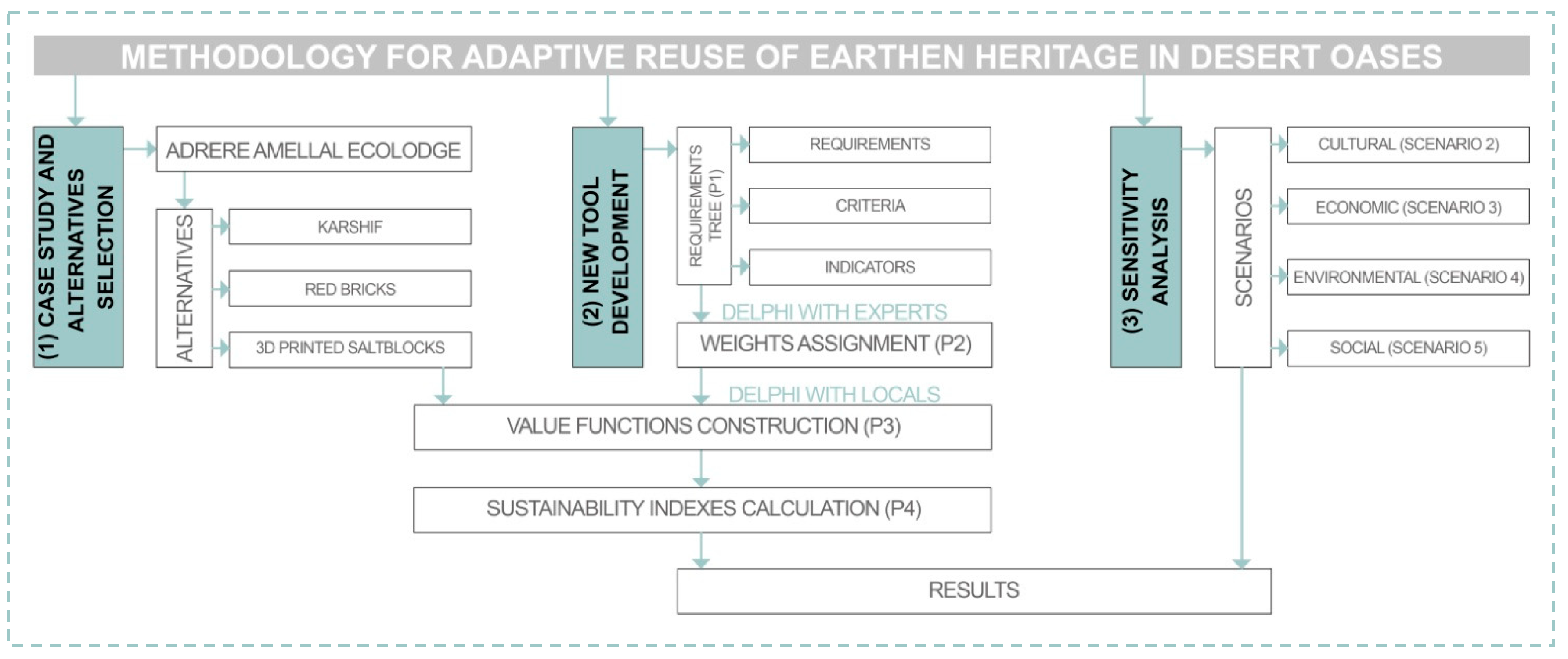
The development process of the proposed tool is structured into three main stages, as presented in Figure 1: (1) the selection of the case study and alternatives, (2) the development of the sustainability assessment tool, and (3) the sensitivity analysis to validate the most suitable building technology.
Figure 1.
Overview of the three-stage process of the developed tool. Source: author.
- Stage 1: Case Study and Alternatives Selection
The first stage involves selecting both a representative case study and three building technology alternatives for testing the tool. The selection is based on the following criteria. The building chosen as a case study must:
- Be a complex—either a large building or a group of small buildings—originally constructed using a traditional earthen technique.
- Be located in an Egyptian desert oasis.
- Have undergone adaptive reuse, particularly a transformation from residential use into an ecolodge.
The selected building technologies are chosen to represent three specific approaches:
- An experimental or futuristic technique.
- A currently common technique.
- A traditional technique.
- Stage 2: New Tool Development
Based on the analysis of existing tools (see Table 1), the second stage involves developing a novel Multi-Criteria Decision-Making (MCDM) tool. The proposed tool integrates the Integrated Value Model Sustainability Assessment (MIVES) and the Delphi structured communication technique, due to their ability to support agile, informed sustainability assessment and generate sustainability indexes [38].
MIVES is composed of four main steps:
P1—Requirements Tree Definition: The tree is a hierarchical structure used to decompose the problems into smaller hierarchical data. It comprises four main requirements—cultural, economic, environmental and social—each composed of criteria and indicators.
P2—Weights Assignment Using Delphi Technique: The Delphi process involves two anonymous rounds with 12 multidisciplinary experts selected based on predefined criteria with different weights (Appendix A). To reduce bias, some measures are taken, such as anonymous participation, alphabetical ordering of tree components and use of median absolute deviation (MAD) to assess consensus (<10%). In the first round, experts assign weights to requirements, criteria and indicators. In the second round, 5 of these 12 experts are invited to revise their weights that do not meet the consensus threshold.
P3—Construction of Value Functions: Value functions are used to convert indicator scores—quantitative or qualitative—into non-dimensional “values” on a scale from 0 to 1. These values normalize the data and allow comparison across different indicators and alternatives. A third Delphi round is established to evaluate social and cultural indicators. This round engaged 29 experts familiar with the Siwan culture, including a majority of local residents. In this round, the experts scored each indicator on a scale from 1 to 10, 1 being the lowest and 10 being the highest.
P4—Calculation of Sustainability Indexes and Selection of Best Alternative: Each alternative is evaluated across all indicators. Indicator value functions are multiplied by their respective weights, resulting in a global sustainability index for each building technology. The alternative with the highest sustainability index is considered the most sustainable.
- Stage 3: Sensitivity analysis
To validate the robustness of the results, a sensitivity analysis is performed. Four extreme scenarios are suggested, where each requirement is given a higher percentage of 70%, while the remaining are given 30%. This helps identify the specific conditions where each alternative performs better than the other ones.
Development of the Proposed Tool
- Stage 1: Case Study and Alternatives Selection
Based on the defined criteria, a general analysis of Egypt’s five main desert oases was conducted. Due to its accessibility and the availability of data, Siwa Oasis was selected as the test site for the developed tool. Out of its 90 ecolodges, Adrere Amelal Ecolodge—the oldest and most famous—was chosen for the first application.
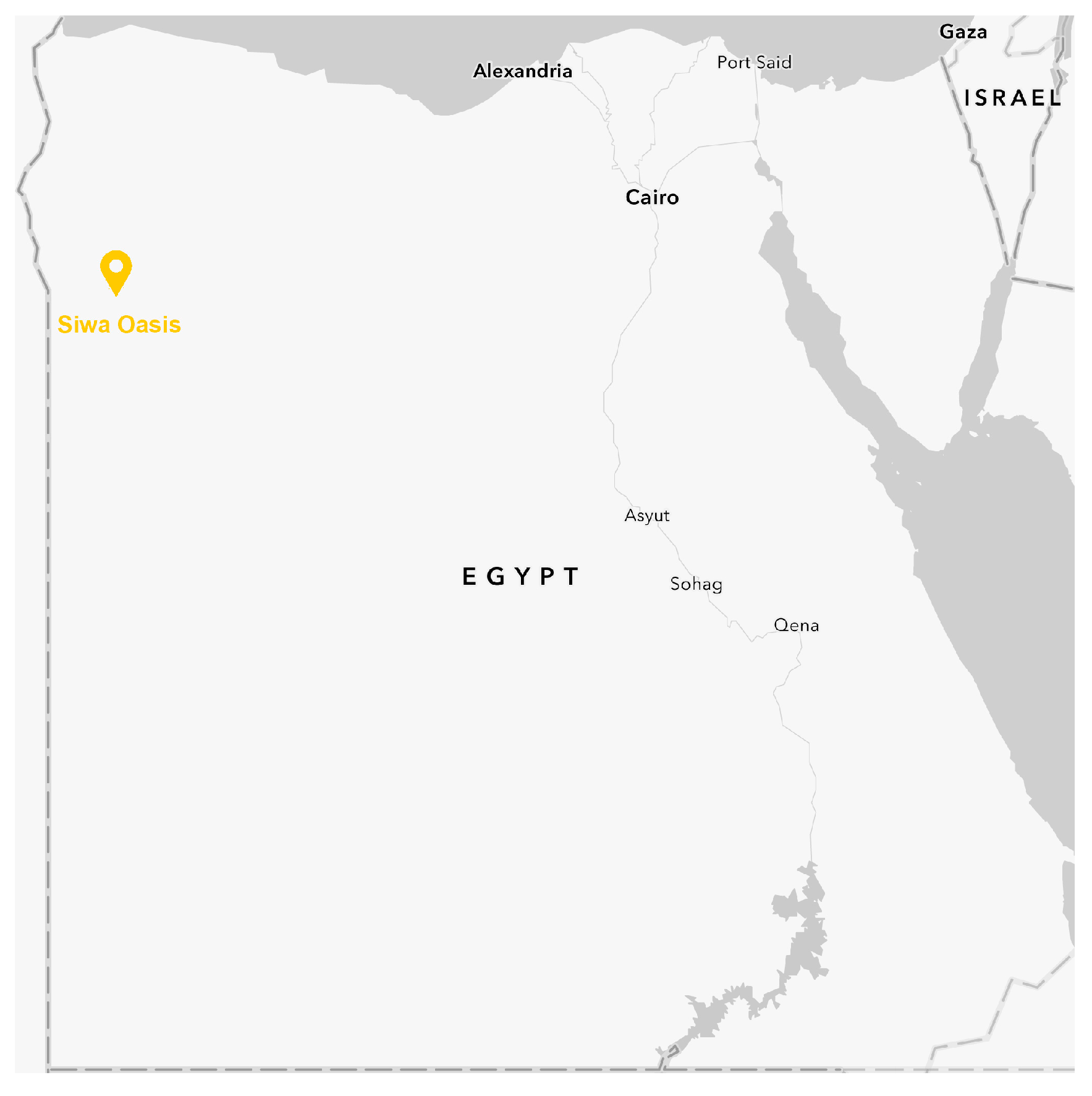
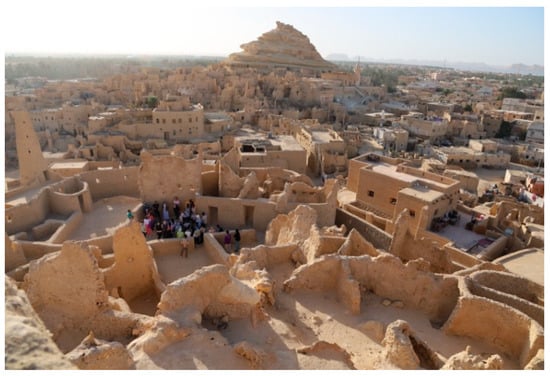
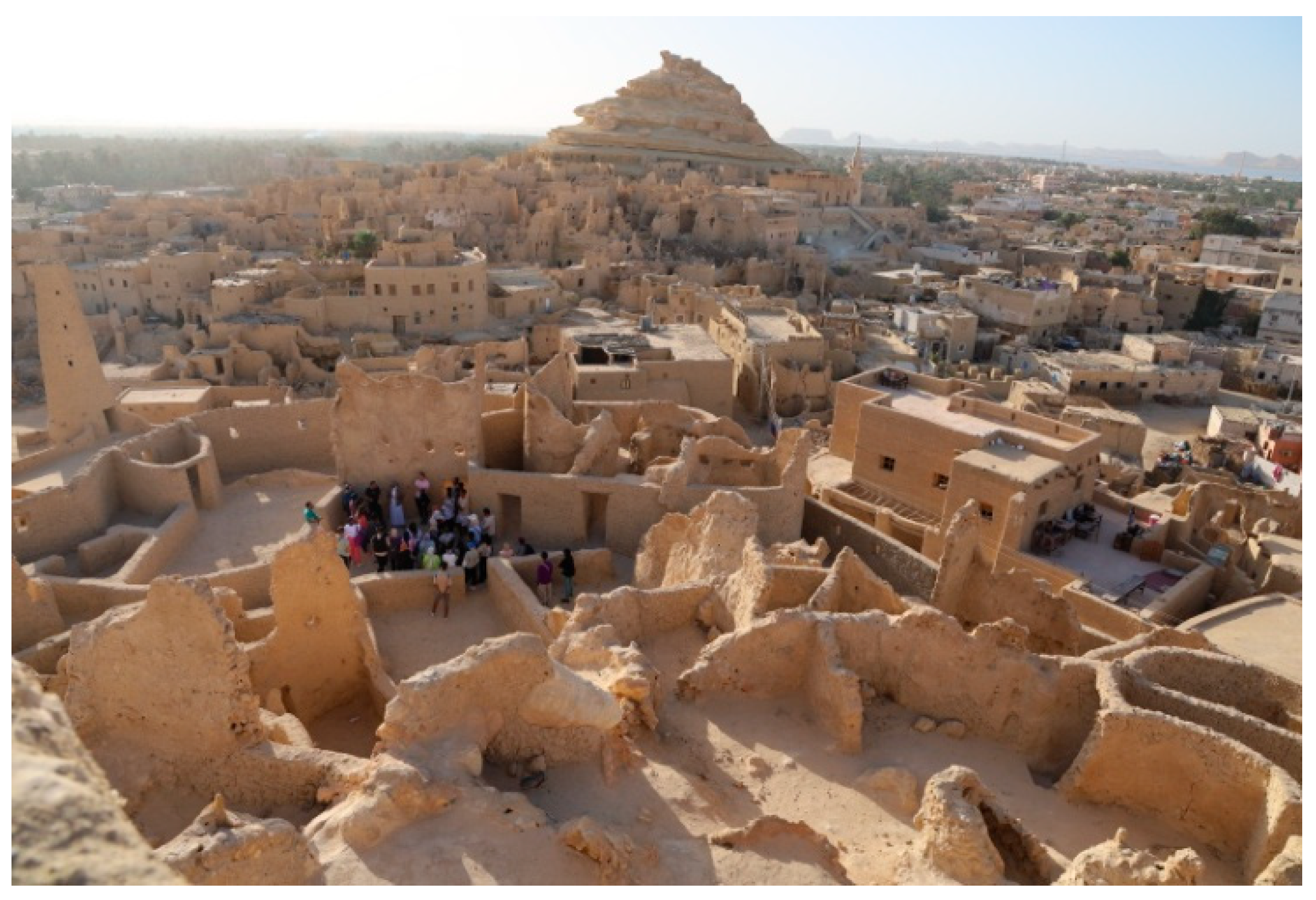
Located in the northern Western Desert of Egypt, Siwa Oasis is renowned for its historical significance, natural beauty and unique cultural heritage [39], as shown in Figure 2. Siwa has preserved its traditional customs despite centuries of being a crossroad and home for many civilizations along desert trade routes [40]. Siwa’s natural landscape includes the Great Sand Sea, surrounding mountains, agricultural lands, palm groves, natural springs and salt lakes [41], as presented in Figure 3. While Karshif remains the traditional construction technique in Siwa, new constructions have witnessed the introduction of red bricks since the mid-20th century, alongside experimental innovations such as 3D-printed salt blocks that explore modern uses of local materials [42].
Figure 2.
Map of Egypt showing location of Siwa Oasis. Source: author based on https://www.ArcGIS.com powered by ESRI.
Figure 3.
Aerial view of general landscape of Siwa Oasis. Photo by Marwa Mohammed, used with permission, 2023.
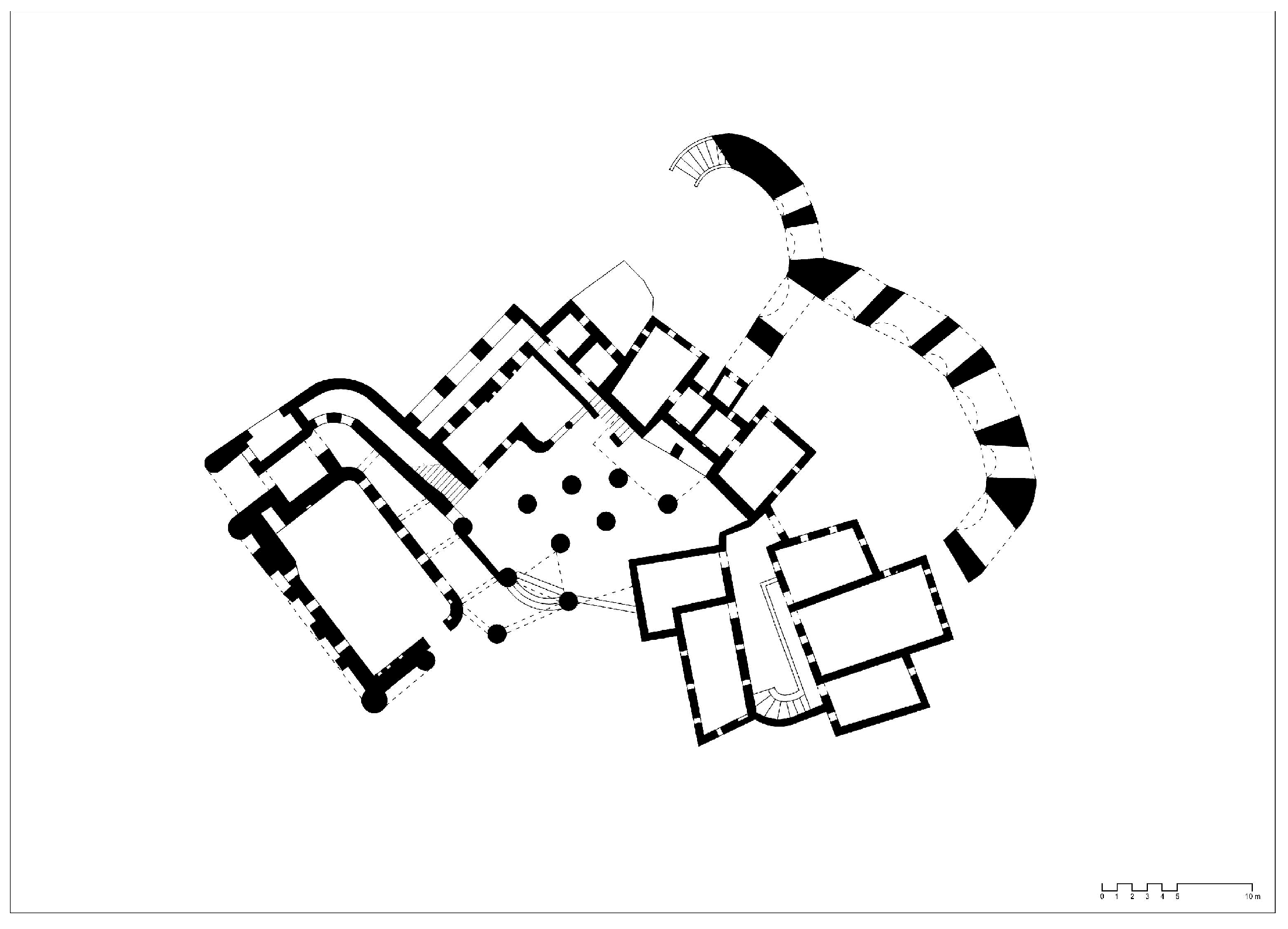
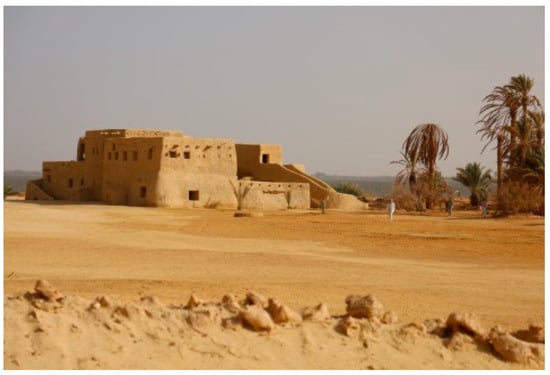
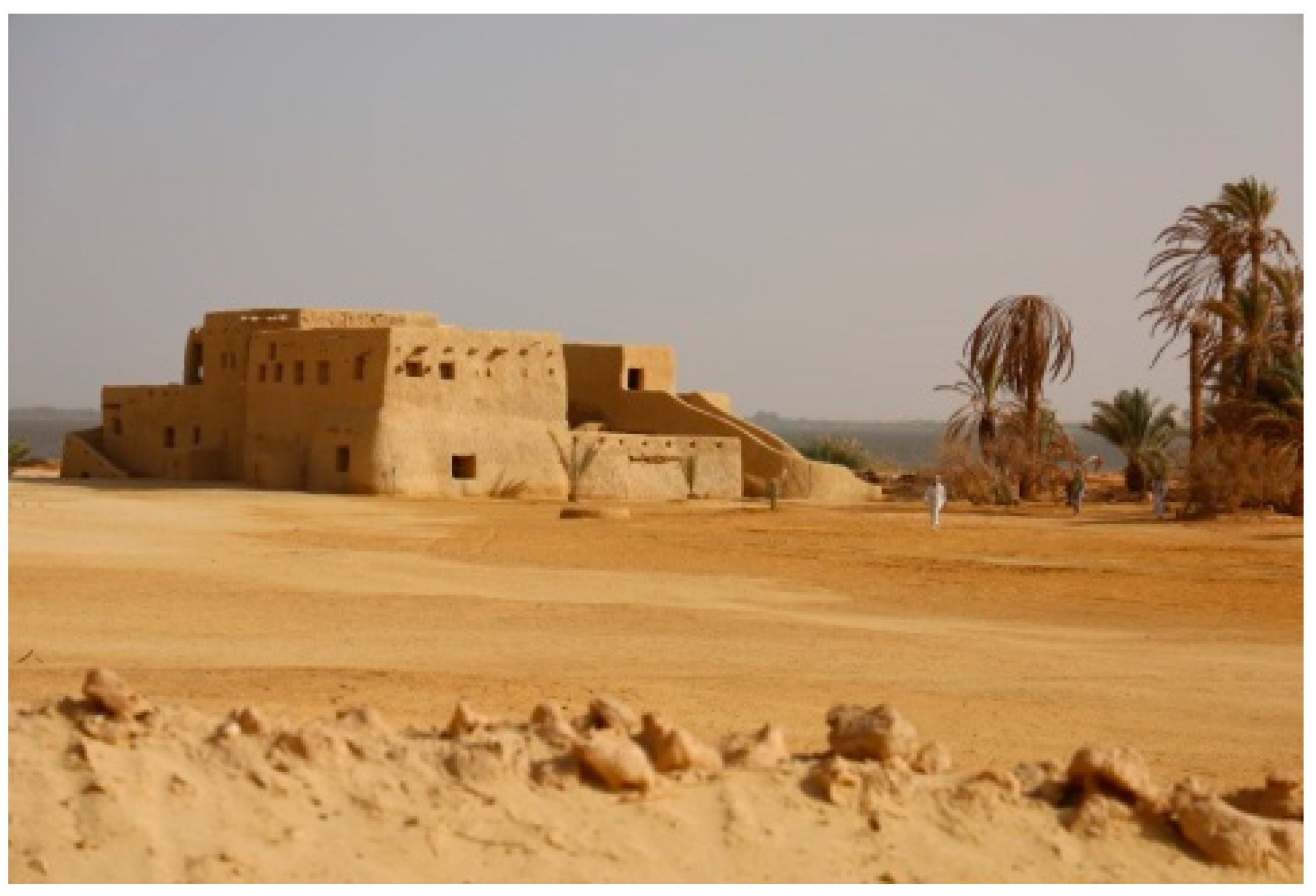
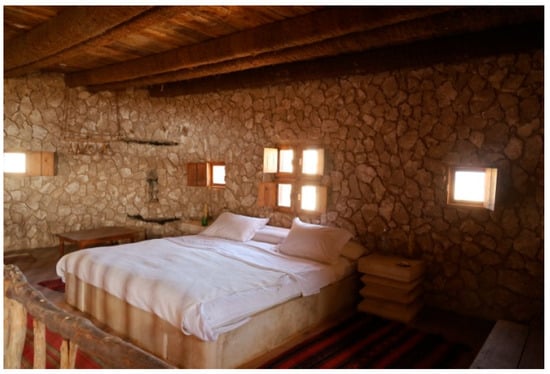
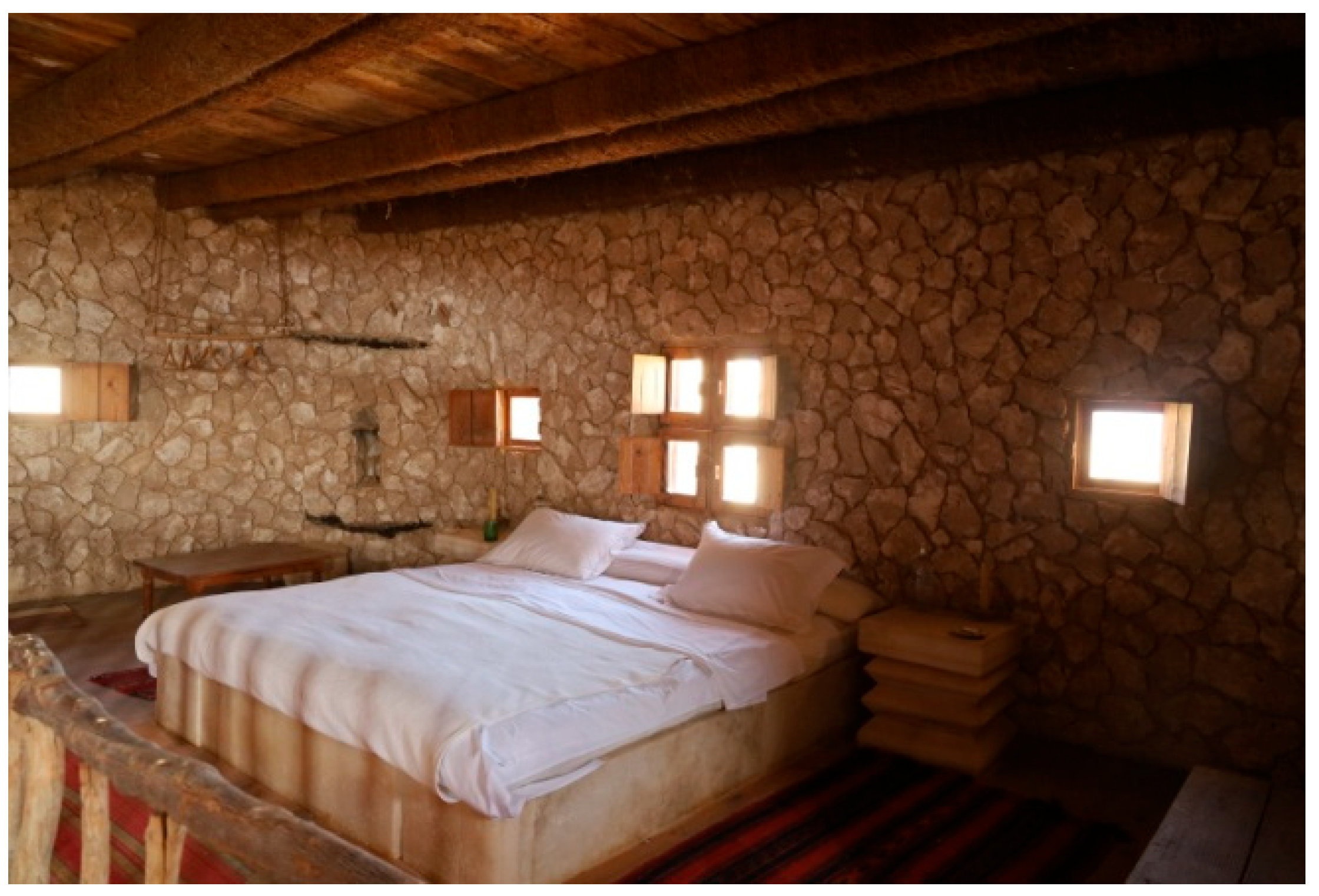
In 1998, a landmark initiative, the “Siwa Sustainable Development Initiative”, was launched by Environmental Quality International (EQI), a consulting company based in Cairo, Egypt [43]. It aimed to empower the local community and safeguard Siwa’s natural and cultural heritage. Three heritage complexes were restored and transformed into ecolodges under this initiative, all using Karshif traditional building technique [44]. Among them, Adrere Amellal Ecolodge became the initiative’s centerpiece, as depicted in Figure 4. Restored in 2000, it is located on the edge of Siwa Lake, at the foot of Gaafar Mountain, surrounded by seven salt lakes and dense groves of palm and olive trees [21]. The ecolodge had previously been a deteriorated residential complex built in Karshif. Without internet or electricity, the ecolodge embraces the philosophy of ecological integration, through location, material and daily operation [44,45]. Its self-sufficiency concept includes the cultivation of food, use of local materials and handmade furniture, natural water sourcing, a non-site waste management station and composting systems [46], as shown in Figure 5. Plans can be found in Appendix B.
Figure 4.
Exterior view of Adrere Amellal Ecolodge. Photo by Marwa Mohammed, used with permission, 2023.
Figure 5.
Interior view of King Charles’s Suite in Adrere Amellal Ecolodge. Photo by Marwa Mohammed, used with permission, 2023.
To test the developed decision-making tool, three building technology alternatives were selected for evaluation, each representing a distinctive approach to construction, as previously explained:
- 3D-printed salt blocks (S1)—an experimental and futuristic technique that combines local material reuse with precision and flexibility.
- Red bricks (S2)—a widely used, currently common material used for new buildings in Siwa oasis.
- Karshif (S3)—the traditional Siwan technique already used in adaptive reuse.
- Stage 2: Sustainability Assessment
P1—Requirements Tree
To evaluate the most sustainable building technology for adaptive reuse, four main aspects were considered: cultural (R1), economic (R2), environmental (R3) and social (R4). The selection of indicators was based on a comprehensive analysis of previous decision-making tools and a detailed review of literature related to these three alternatives. Indicators were chosen based on their relevance to adaptive reuse in heritage contexts, data availability and their ability to differentiate between alternatives. Table 2 shows the final requirements tree consists of 4 requirements, 10 criteria and 15 indicators and the performance of the three alternatives in each indicator.
Table 2.
Decision tree with its requirements, criteria, indicators and their units.
The 15 selected indicators were evaluated through two different approaches based on their nature and data availability. Quantitative indicators (I4–I11), linked to economic and environmental aspects, were evaluated using quantitative data from the literature, international standards and prior case studies. Qualitative indicators (I1–I3 and I12–I15), reflecting cultural and social aspects, were assessed qualitatively using the third Delphi round.
P2—Weight Assignment Using Delphi Technique
The weights shown in Table 2 were assigned through two rounds of Delphi anonymous questionnaires to requirements, criteria and indicators. In the first round, 12 experts assigned weights to all levels of the tree: requirements, criteria and indicators. All weights were examined to ensure the maximum consensus threshold was achieved at 10%. In the second round, weights were revised using percentage scores. In order to meet the required consensus, 5 of these 12 experts were asked to re-evaluate their inputs for two specific indicators: I5—Access to the material and I6—Adaptive reuse time. Experts’ responses on requirements, criteria and indicators are shown in Appendix D.
P3—Construction of Value Functions
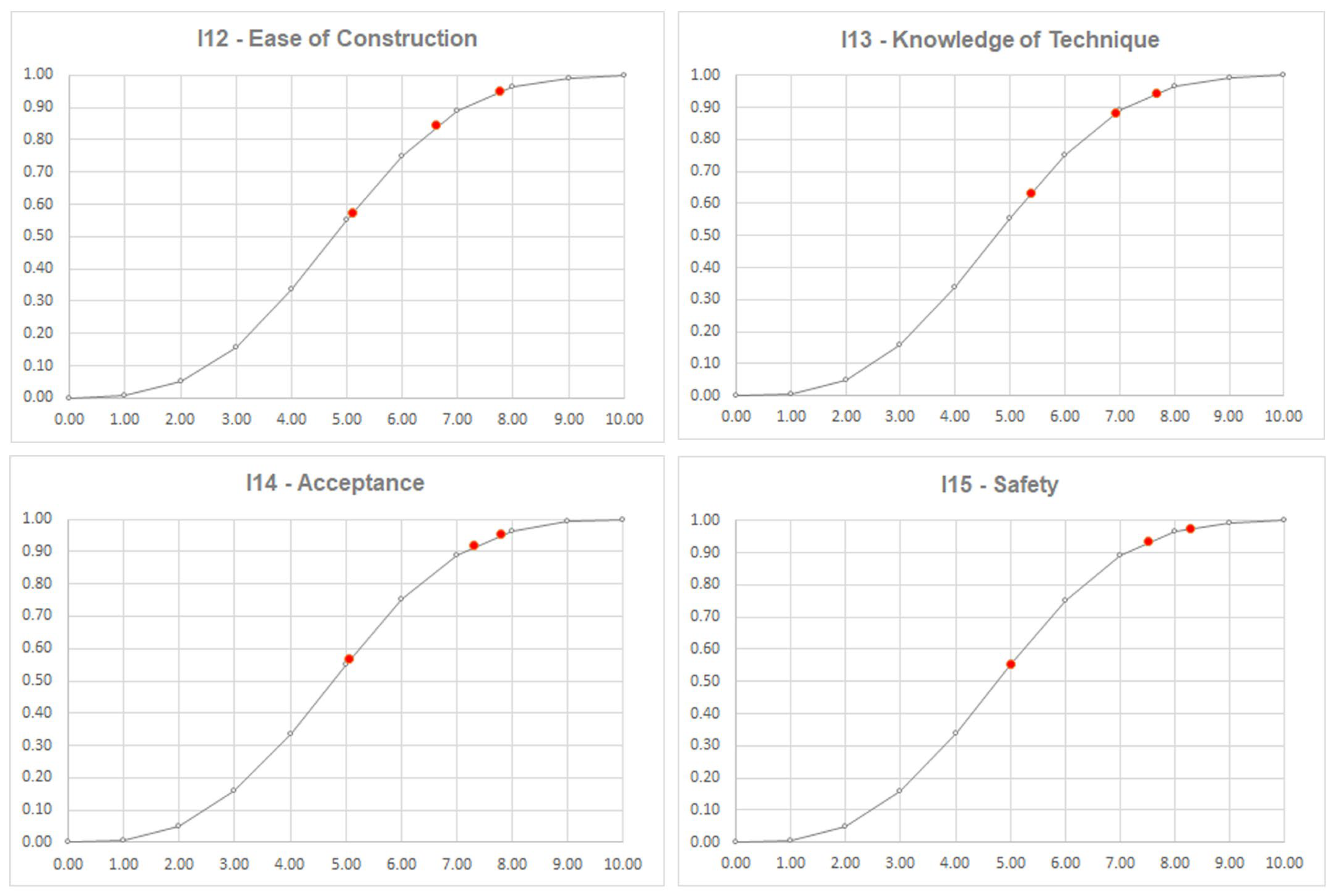
To normalize the different indicators into comparable units, value functions were constructed following MIVES methodology, based on guidelines from [62,63]. As previously mentioned, these functions transform the performance of each indicator into non-dimensional values between 0.00 and 1.00. Depending on the nature of the indicator, the function can be linear, convex, concave or S-shaped. The parameters defining each value function are further elaborated in Appendix E. As shown in Table 3, each indicator was assigned a value function, shape and tendency from the aforementioned. The value function of each indicator is illustrated in Appendix F.
Table 3.
Parameters of the indicators’ value functions.
P4—Calculation of Sustainability Indexes and Selection of Best Alternative
To calculate the sustainability index for each alternative, the process followed four main steps, explained in Appendix G. Some indicators—I5, access to the material; I8, CO2 emissions; I9, % of recyclable waste; and I10, thermal conductivity—show limited variation among the alternatives in this study. By contrast, cultural indicators I1, I2 and I3 show the highest differentiation between alternatives, reflecting the great variability between the given values. While MIVES can be adapted to each case study, the developed model serves as a general framework applicable to future adaptive reuse projects in Siwa and other oases. Indicators that are not discriminative in this context may have different effects in other cases.
Table 4 presents the non-dimensional indicator values for the three building technology alternatives. The original quantified values, prior to applying value functions, are listed in Table 2.
Table 4.
Non-dimensional indicator satisfactions for the three assessed building technologies.
- Stage 3: Sensitivity Analysis
To evaluate the reliability of the decision-making process, a sensitivity analysis was conducted through the simulation of four additional extreme scenarios, complementing the base scenario analyzed in the case study (Scenario 1, see Section 4). In each of the new scenarios, one scenario—cultural, economic, environmental or social—was given the weight of 70%, while the remaining three requirements were each given 10%. This approach allowed for assessing the influence of each requirement on the sustainability ranking of the three building technologies.
3. Results
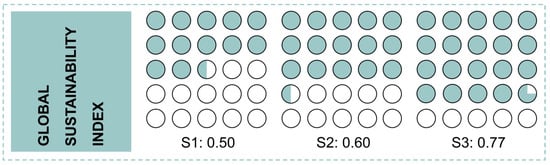
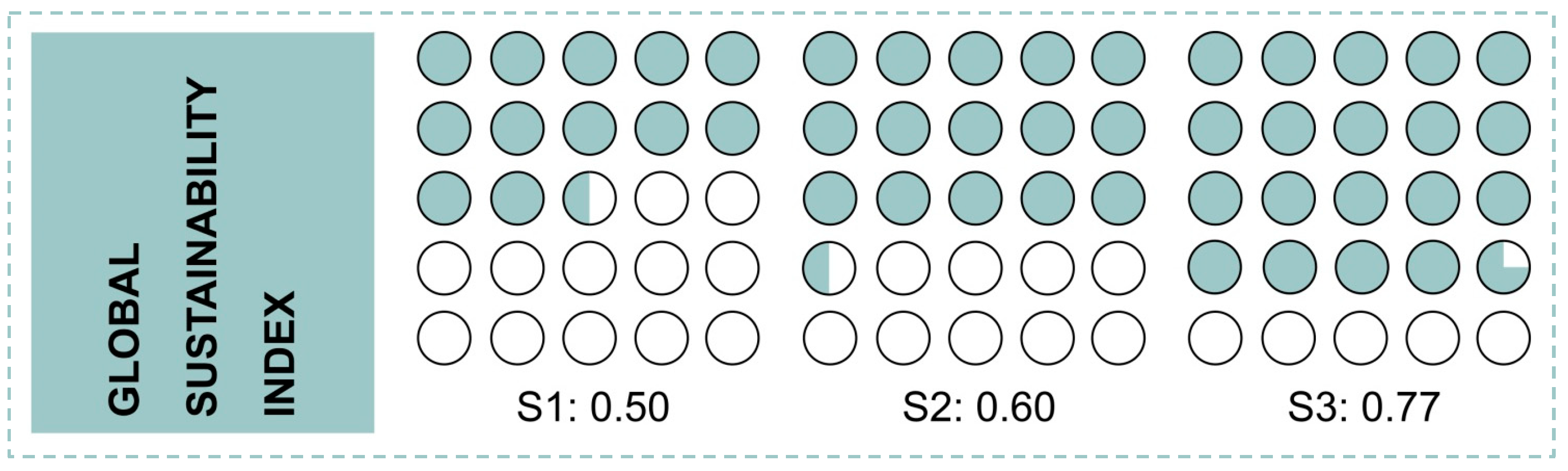
Based on the indicator value functions, Figure 6 depicts the resulting sustainability index for each building technology. According to this proposed model, Karshif achieved the highest sustainability index at 0.77, which makes it the most suitable building technology for the adaptive reuse of earthen complexes in the Siwa Oasis. On the other hand, 3D-printed salt blocks obtained the lowest index at 0.50, making them the weakest candidate for adaptive reuse. The key differentiators between the most and least sustainable options were the cultural (R1) and economic (R2) requirements, which had comparatively higher weights than the other requirements.
Figure 6.
Global sustainability index for each alternative. Legend: S1 is 3D-printed salt blocks, S2 is red bricks, and S3 is Karshif.
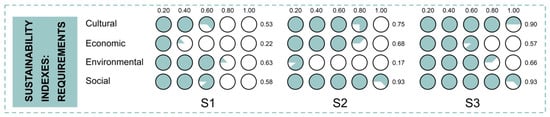
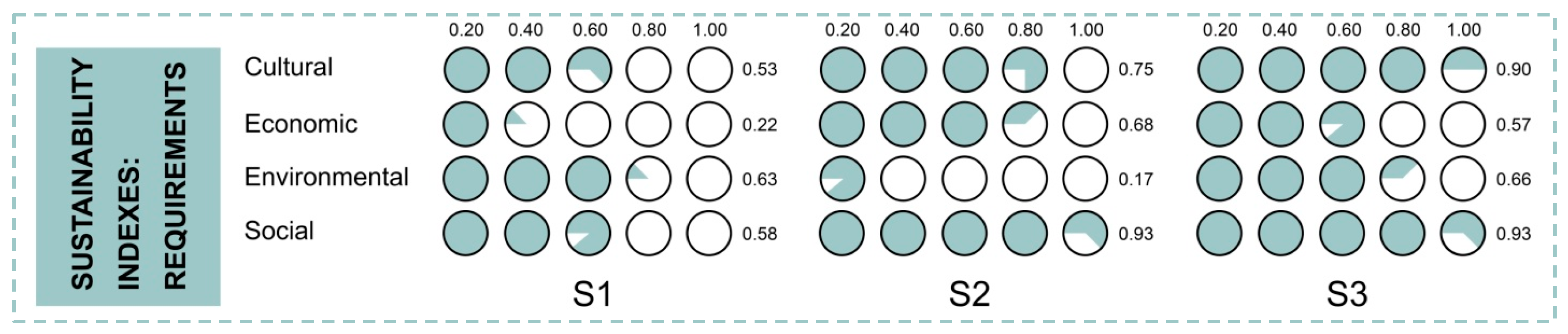
To further understand these results, Figure 7 illustrates the sustainability indexes of the four requirements.
Figure 7.
Sustainability indexes for the different requirements. Legend: S1 is 3D printed salt blocks; S2 is red bricks; and S3 is Karshif.
- Cultural requirement (R1) achieved the second-highest sustainability indexes across all alternatives. This is caused by the dependence of its indicators on Delphi responses from the local Siwan community, which tended to support Karshif.
- Economic requirement (R2) resulted in the lowest values for both 3D-printed salt blocks (S1) and Karshif (S3), situating S1 as the lowest candidate in this aspect. Red bricks (S2), on the other hand, obtained the highest values in this requirement.
- Environmental requirement (R3) produced the most uniform values between S1 and S3 but showed the lowest scores for (S2) due to its higher embodied energy and lower recyclability.
- Social requirement (R4) presented the highest sustainability values for S2 and S3. Similar to R1, it benefited from the third Delphi round, which emphasized the knowledge, acceptance and perceived safety of the community—factors that significantly favored Karshif.
The integration of qualitative cultural and social indicators has significantly affected the final sustainability index. As shown in Table 5, the cultural (R1) and social (R4) requirements have had a larger impact on the sustainability indexes of S2 and S3. While Karshif (S3) performed moderately in quantitative aspects such as adaptive reuse time (I6) and maintenance frequency (I7), it had a strong performance in qualitative indicators—such as cultural identity and historical value (I3) and community acceptance (I14). In contrast, red bricks (S2) and 3D-printed salt blocks (S1) scored higher in quantitative environmental and economic indicators but had lower scores in social and economic aspects, which results in their overall lower index. Although the economic requirements (R2) are expected to have the highest share of the total index, it was the least influential requirement of the four due to the low weight given by the experts in the two DELPHI rounds. This demonstrates that the inclusion of qualitative indicators has enabled a more comprehensive overview of the alternatives, based on not only the measurable data but also the impact on the asset and the perception of the community.
Table 5.
Contribution of each requirement to the final sustainability index.
Sensitivity Analysis
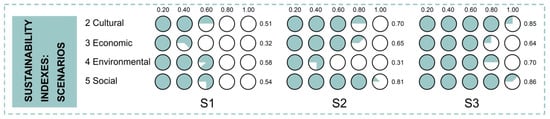
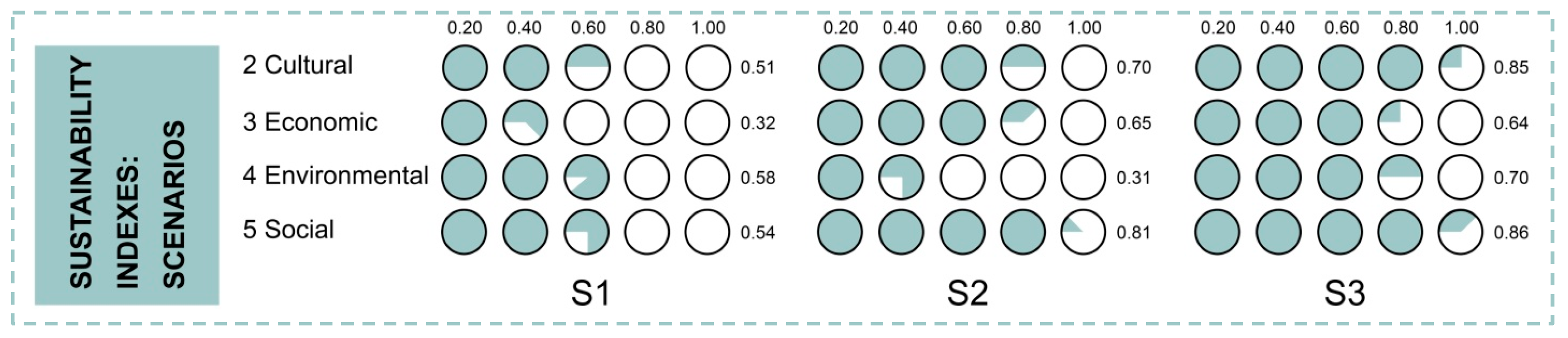
The results of the different scenarios of the sensitivity analysis, presented in Figure 8, are as follows:
Figure 8.
Sustainability indexes obtained for the different considered scenarios in the sensitivity analysis. Legend: S1 is 3D-printed salt blocks, S2 is red bricks, and S3 is Karshif.
- Scenario 1—Base scenario: revealed Karshif as the most sustainable alternative at 0.77, followed by red bricks at 0.60 and finally 3D-printed salt blocks at 0.50.
- Scenario 2—Cultural scenario: Karshif (S3) performed best with a sustainability index at 0.85, showing its agreement with local identity and heritage values. This supports previous findings on the central role of cultural identity and authenticity in guiding sustainable adaptive reuse [39].
- Scenario 3—Economic scenario: red bricks (S2) achieved the highest score (0.65), highlighting their affordability and fast application. This result supports the significance of cost-efficiency and time in making sustainable adaptive reuse decisions [31].
- Scenario 4—Environmental scenario: Karshif (S3) and 3D-printed salt blocks (S1) showed comparable results, with Karshif (S3) slightly outperforming at 0.70. Red bricks (S2) attained low scores due to its lower thermal performance and recyclability and higher embodied energy. Similarly, El-Mahdy et al. [42] reported that Karshif (S3) has the lowest embodied energy, followed by 3D-printed salt blocks (S1), with red bricks having the highest (S2).
- Scenario 5—Social scenario: Karshif (S3) was the highest candidate at 0.86, driven by community acceptance, knowledge of the technique and feasibility for unskilled locals. This underlines the role of community participation in different stages of heritage conservation, from decision-making to implementation, as expressed by Hamada & Hamada [64].
4. Discussion
The application of the proposed methodology not only produced comparative sustainability indexes but also revealed how the assessed building technologies perform through cultural, economic, environmental and social aspects in a sensitive heritage context such as Siwa Oasis.
Karshif (S3) outperformed the other alternatives, primarily due to its strong performance in the cultural and social requirements. It performed well in indicators such as compatibility (I2), cultural identity and historical value (I3), and community acceptance (I14). It also achieved high scores in ease of construction (I12) and knowledge of the technique (I13), which reinforces its role in promoting community participation. These findings are consistent with conclusions by El Haridi et al. [65] and El-Shafie [66] that emphasized the ability of Karshif to preserve cultural identity in the desert environment of Siwa.
On the other hand, Karshif performed weakly in economic indicators, such as adaptive reuse time (I6) and maintenance frequency (I7) (view Table 2), indicating higher time and effort demand observed by Mohamed [44]. Despite the deep historic and social presence of Karshif, Mohamed [44] noted its low structural performance and suggested its integration with industrialized materials to improve its resistance. In the same way, Sameh et al. [67] and Rovero et al. [68] criticized its vulnerability to insects and water, which can lead to users’ discomfort and frequent need for maintenance. These show that, although Karshif performs well in cultural and social aspects, its durability limitations should be addressed to ensure its sustainability in the future.
Red bricks (S2) had high scores in economic and social requirements. They achieved the lowest life cycle cost (I4), shortest adaptive reuse time (I6) and minimal maintenance demand (I7), which makes them a cost-effective and rapid solution. Since they started to be commonly used in Siwa in themid-20thcentury, they had high scores in perceived safety (I15) and ease of construction (I12). However, they had lower scores in cultural and environmental indicators, such as compatibility (I2) and embodied energy (I11) (view Table 2). Many studies similarly criticized that industrial materials diminish heritage identity and have poor insulation and high embodied energy [46]. Moreover, Elalfy & Farrag [43] underlined the need to harmonize adaptive reuse strategies with original heritage materials.
Three-dimensional-printed salt blocks (S1) ranked the lowest of the three technologies, despite their environmental potential. They received average scores in environmental indicators such as CO2 emissions (I8) and recyclability (I9), which was confirmed by El-Mahdy et al. [42], who validated the compressive strength and recyclability of the material. However, their low scores in cultural and social indicators such as community acceptance (I14), knowledge of the technique (I13) and compatibility (I2) indicated the unfamiliarity of the local community with digital fabrication. Many studies, such as Matos et al. [69], highlighted the innovation of salt-based 3D printing but mentioned their possible challenges, such as the limited social acceptance, loss of traditional labor and the need for new skills. In addition, Rückrich et al. [70] mentioned the remaining need to develop earth-based 3D printing in terms of material thermal performance and mechanical performances.
The analyzed results indicate the dominance of cultural indicators (compatibility (I2) and cultural identity and historical value (I3)) and social indicators (ease of construction (I12), knowledge of the technique (I13), acceptance (I14) and safety (I15)) over economic and environmental ones. This dominance reflects the specificity of sustainability assessment in heritage-sensitive contexts like Siwa, where social acceptance and local culture are essential for long-term sustainability. While economic feasibility impacts short-term maintenance of the reused assets, social and cultural factors determine if adaptive reuse interventions are embraced or abandoned by the community.
The results of this study expand the conclusions drawn from the analyzed MCDM frameworks for adaptive reuse. Although some models integrated the three sustainability pillars—economic, environmental and social—along with the cultural aspect, most of these studies focused on selecting new functions for heritage buildings, while overlooking the evaluation of the materials and construction technologies used, as seen in Wang and Zeng [23], Haroun et al. [25], Vehbi et al. [27] and Mohamed and Marzouk [21]. In contrast, this research uses the same criteria for the level of material and building technology level, while showing that cultural and social aspects can decisively impact the global sustainability index. This result supports Mohamed and Marzouk [21], where heritage values weighed 36.1% of total sustainability index, but disagrees with Chen et al. [28], where economic criteria were dominating and historical value had the lowest impacts. Furthermore, this study emphasizes community involvement and compatibility with cultural and heritage values, aligning with Della Spina [29], Ribera et al. [24] and Cucco et al. [26]. In addition, while recent MIVES applications (e.g., Boix Cots et al. [38]; Banirazi Motlagh et al. [59]) proved the capacity of the method to combine qualitative and quantitative indicators in solving complex problems, the current study extends its use in heritage conservation.
4.1. Comparative Position of the Proposed Method
In comparison with other MCDM approaches, the proposed MIVES-Delphi framework offers notable advantages. Early compensatory techniques such as WSM and WPM models [71,72] are simple and transparent but cannot handle complex multi-dimensional problems and can cause unrealistic results due to their extremist approach of prioritization of the alternatives. AHP and ANP [73,74] are commonly used to solve simple and complex problems due to their improved weighing process through pairwise comparisons (hierarchy and network relations), yet they can be sensitive to subjectivity, rank-reversal and lack of consideration of uncertainties in the results. Outranking methods such as ELECTRE and PROMETHEE [75,76] introduced non-compensatory logic in the comparison between alternatives but are time-consuming, require extensive pairwise comparisons and often fail to produce a single optimal solution. Distance-based models such as TOPSIS and VIKOR [77,78] are simple, programable and use clear mathematical methods but can be inconsistent and inadequate to use in real-life problems because it depends on the proportional distance to an ideal solution.
On the other hand, MIVES [62,79] overcomes many of the mentioned limitations through a value-function approach from Multi-Attribute Utility Theory [80], which transforms each indicator with different measurement units into dimensionless comparable values. This reduces compensability, which signifies weak performance of one indicator cannot be fully compensated by strong performance of another one. In addition, it minimizes instability and rank-reversal risks that could happen if something minor changes in the indicator scores. Despite MIVES evaluating each indicator individually using value functions, it uses the requirements tree, which is a clear and transparent hierarchy structure, to show the relationship between requirements, criteria and indicators.
Nevertheless, MIVES presents certain challenges such as time consumption, the high dependence on multidisciplinary expertise and the allowance of a percentage of compensability between indicators. However, these limitations are decreased in this study by the integration of the Delphi technique [81] incorporating experts’ knowledge and local perspectives. The Delphi technique was selected to complement the MIVES methodology for its suitability to complex decision-making problems [82,83]. Anonymous questionnaires allow experts’ opinions to be collected and reach consensus using anonymous questionnaires and without direct communication between participants or physical meeting. This saves time and cost, increases the reliability of the opinions and reduces potential bias and influence of others’ opinions [82,84,85]. However, the feedback between the Delphi rounds allows the experts to reconsider their opinions and to link together the areas of knowledge and the perspectives of other experts [48].
MIVES has proved its efficiency in many fields such as risk assessment, buildings, building elements and regulations [38]. According to Cárdenas-Gómez et al., it represents a guide to choose construction alternatives such as concrete columns [86] and wooden structures [87] and underground installations such as pipe systems. Moreover, it is used in the evaluation of post-disaster [88] and autonomous housing [58,89]. Overall, the proposed MIVES-Delphi framework is more stable and participatory than the other compensatory, outranking and distance-based MCDM methods, making it particularly suitable for evaluating building technologies in heritage-sensitive contexts, like Siwa. Advantages and disadvantages of most common MCDM methods are detailed in Appendix H.
4.2. Reflections from Expert Interviews
In addition to the quantitative results, during the two rounds of Delphi qualitative analysis, the experts provided insights that could add another layer of refinement to the tool. Some experts suggested additional indicators—such as reversibility, water use and initial cost—in the future. These indicators were not included in the model due to the need to choose the most influential and differentiating indicators, ensure the availability of the data for evaluation and avoid overlap among indicators. Nevertheless, this emphasizes the role of participatory process in the development of decision-making tools, which allows for continuous feedback and adaptation to different cases and contexts.
Experts strongly highlighted that public perception plays an essential role in adaptive reuse success. One expert stated, “Public perception is 100% of everything”, underlining the importance of local acceptance in material selection in adaptive reuse processes. According to Barakat [90] and Sarhan [91], community participation and perception are keys for Siwa’s sustainable development. Several experts also mentioned the complexity in quantifying social and cultural requirements, stating that community responses may be shaped by social or political factors. Some also suggested that “community acceptance” may belong more to cultural aspects rather than social values.
Thermal comfort emerged as another point of debate. It was argued that thermal comfort does not only depend on material properties but also on the construction technique (e.g., wall thickness). The importance of including operational energy consumption in future assessments was also highlighted. In the same way, many studies stated that Siwan traditional architecture uses passive cooling techniques to achieve indoor thermal comfort, which cannot be evaluated through thermal conductivity alone [67,92].
These insights show the strength of the proposed tool in assessing the sustainability of adaptive reuse of earthen heritage conservation. While each building technology offers strengths and weaknesses, the tool effectively investigated multi-dimensions of sustainability, including social and cultural aspects overlooked in other decision-making models. By including experts and community perspectives, the tool was proven reliable and applicable to historic oases like Siwa.
4.3. Limitations of the Study
Firstly, the MIVES model applies a weighted-sum aggregation, which allows full compensability among the indicators. That signifies that a low score of one indicator can be compensated by a high score in another, assuming a perfect substitutability between the indicators. Although this direct linear relation is commonly used in sustainability assessment for its simplicity and ease, it may not fully consider the impact of very low scores on the overall sustainability index. Future studies could explore alternative aggregation operators (e.g., geometric mean, OWA and partial compensation) to further verify the robustness of the results and reduce potential bias.
Although the sensitivity analysis method reveals the dominance of Karshif building technology in four of the five scenarios, it still represents a simplified robustness test. Future research can include advanced global techniques—such as Monte Carlo simulation, bootstrapping, or variance-based sensitivity analysis—to explore uncertainty across all the factors simultaneously and validate the model’s stability.
Another limitation of this study is its focus on a single geographical context—Egyptian desert oases—and a specific type of adaptive reuse project—from residential complexes to ecolodges. This narrowing of scope was necessary to ensure consistency of the methodology and comparability between case studies (context and climate conditions, local community, and building technology). The focus on the adaptive reuse of earthen heritage in Egypt is due to its great cultural significance and its long history. In addition, concentrating the analysis within the country allowed the conduction of direct field observations and on-site evaluation of social and cultural indicators, ensuring the reliability of data and contextual appropriateness. As previously mentioned, earthen heritage in Egypt is primarily concentrated in Egypt round the Nile Valley and in eastern and western deserts. Focusing on one of the two major zones was essential to define clear study boundaries. Furthermore, adaptive reuse of earthen heritage in Egypt has been commonly documented in New Gourna Village in Luxor and in Siwa Oasis in Western Desert. Siwa was then selected because it uniquely preserves Karshif heritage, which is largely undocumented in the international literature.
4.4. Implications for Adaptive Reuse Policies and Practices
This study proves that the long-term success of adaptive reuse depends not only on the technical performance of the selected building technologies but also on their social acceptance and cultural impact. In Siwa and other similar oases, factors such as community participation, preservation of heritage values and compatibility with original features of the assets have been the key strategies for sustaining adaptive reuse projects. These findings align with the lessons drawn from other desert oases—AlUla, Al-Turaif, KsarAït Ben Haddou and Old Sana’a—where projects that included the socio-economic development of the reused assets, generated new economic opportunities, involved local participation and respected original values revitalized the heritage buildings and achieved continuity of use by locals and visitors [93].
In the development of heritage management policies, authorities should institutionalize community engagement throughout all project phases, while respecting cultural values in parallel with environmental and economic considerations. Linking adaptive reuse projects to local livelihoods—through construction process, training programs, traditional crafts or guided tourism—ensures that conservation integrates traditional skills and crafts while aiming for the development of the locals and their welfare. In addition, the inclusion of locals results in a better sense of belonging and a greater will to preserve and maintain their heritage after its revitalization. In parallel, preserving traditional construction knowledge through workshops, training of local craftsmen and the promotion of hybrid techniques that include traditional materials with modern solutions can improve the durability and acceptance of heritage assets.
In practice, future adaptive reuse projects should use decision-support tools such as the proposed framework to translate local perception into measurable sustainability criteria and to ensure that the decision-making process is inclusive, transparent and participatory. Design decisions must adapt to cultural values, local identity and social patterns of heritage-sensitive contexts. By combining technical considerations with communities’ values and development, adaptive reuse can develop from being a short-term intervention into a durable strategy to extend the usability and cultural value of earthen heritage in desert oases.
5. Conclusions
This research introduced a novel decision-making tool to evaluate the sustainability of building technologies used in the adaptive reuse of earthen heritage conservation in desert oases. The tool was applied to Adrere Amellal Ecolodge in Siwa Oasis, comparing three alternatives—Karshif, red bricks, and 3D-printed salt blocks. The results demonstrated that traditional building technologies, such as Karshif, have a higher sustainability index than innovative building technologies when cultural and social aspects are considered due to their strong link to heritage values and local identity.
The proposed methodology is fully replicable; each of the three main stages—case study and alternatives selection, new tool development and sensitivity analysis—is clearly defined and can be directly applied in other contexts. Moreover, the five steps of the model development, from requirements tree definition to the calculation of sustainability index, can be reused and adapted in similar studies by modifying indicator weights or performances. While the tool was designed to be used for earthen heritage in desert oases, the structure and indicator choice can be adapted to other building technologies, typologies and climatic conditions.
The tool contributes to the field of heritage conservation and adaptive reuse of earthen heritage by its proven ability to integrate qualitative and quantitative indicators in a single sustainability index. It provides a structured method that reduces ambiguity, improves objectivity and results in balanced outcomes. By including expert knowledge and local perception in the decision-making process, the tool bridges the gap between involved stakeholders such as authorities, investors, architects, researchers and local residents.
Future research could further verify the applicability of the model by applying it to multiple case studies in Siwa and other oases, involving broader expert participation and considering the inclusion of new suggested indicators—such as reversibility, water use and operational energy consumption. In addition, exploration of hybrid building technologies—such as Karshif systems with structural reinforcements—could address durability and vulnerability weaknesses.
In conclusion, this study proposes a novel systematic decision-making tool to guide stakeholders in decision-making process of adaptive reuse projects. By integrating cultural, economic, environmental and social considerations, it supports future heritage conservation policies and adaptive reuse practices in desert oases around the world.
Author Contributions
Conceptualization, M.K., O.P.-V. and M.B.G.; methodology, M.K.; formal analysis, M.K.; resources, M.K., O.P.-V. and M.B.G.; data curation, M.K.; writing—original draft preparation, M.K.; writing—review and editing, O.P.-V. and M.B.G.; visualization, M.K.; supervision, O.P.-V. and M.B.G. All authors have read and agreed to the published version of the manuscript.
Funding
This research received no external funding.
Institutional Review Board Statement
All the authors of this research have ensured compliance with the ethical principles of the institution to which they belong, as set out in the Code of Ethics of the Universitat Politècnica de Catalunya, the Code of Research Integrity of the Universitat Politècnica de Catalunya and the Ethics Education in Science: Statement by the ALLEA Permanent Working Group on Science and Ethics. Given the nature of this study, which analyzes the sustainability of rehabilitation projects in Egypt’s oases and does not involve individuals or personal data as such, it was considered unnecessary to seek the approval of an ethics committee. During the study, only the opinions of experts were collected in order to determine the prioritization of economic, social or environmental issues, and these opinions were treated in aggregate form without indicating the expert who provided them. Furthermore, these opinions do not form part of the main core of the study, only complement part of it.
Informed Consent Statement
Informed consent was obtained from all subjects involved in the study.
Data Availability Statement
The original contributions presented in this study are included in the article. Further inquiries can be directed to the corresponding author.
Acknowledgments
The author would like to express sincere gratitude to the supervisors for their continuous guidance and valuable feedback throughout this research. Special thanks are extended to the experts and local community members who generously agreed to use their time and insights to contribute to the Delphi process and fieldwork. This research was made possible through the cooperation and hospitality of the residents of the Siwa Oasis.
Conflicts of Interest
The authors declare no conflicts of interest.
Abbreviations
The following abbreviations are used in this manuscript:
| AHP | Analytic Hierarchy Process |
| ANP | Analytical Network Process |
| ELECTRE | ÉLimination Et Choix Traduisant la REalité (Elimination and Choice Translating Reality) |
| GPIV | Grey Proximity Indexed Value |
| MAVT | Multi-Attribute Value Theory |
| MCDM | Multi-Criteria Decision-Making |
| MIVES | Integrated Value Model for Sustainability Assessment (From the Spanish Modelo Integrado de Valor para una Evaluación Sostenible) |
| NAIADE | Novel Approach to Imprecise Assessment and Decision Environments |
| PROMETHEE | Preference Ranking Organization Method for Enrichment Evaluation |
| SECA | Simultaneous Evaluation of Criteria and Alternatives |
| TOPSIS | Technique for Order Preference by Similarity to Ideal Solution |
| VIKOR | Vise Kriterijumska Optimizacija I Kompromisno Resenje (Multi criteria Optimization and Compromise Solution) |
| WSM | Weighted Sum Model |
Appendix A. Experts Selection
Table A1.
Expert selection criteria.
Table A2.
Experts’ information of Delphi round 1–2.
Appendix B. Adrere Amellal Plans
Figure A1.
Ground floor plan of building 1.
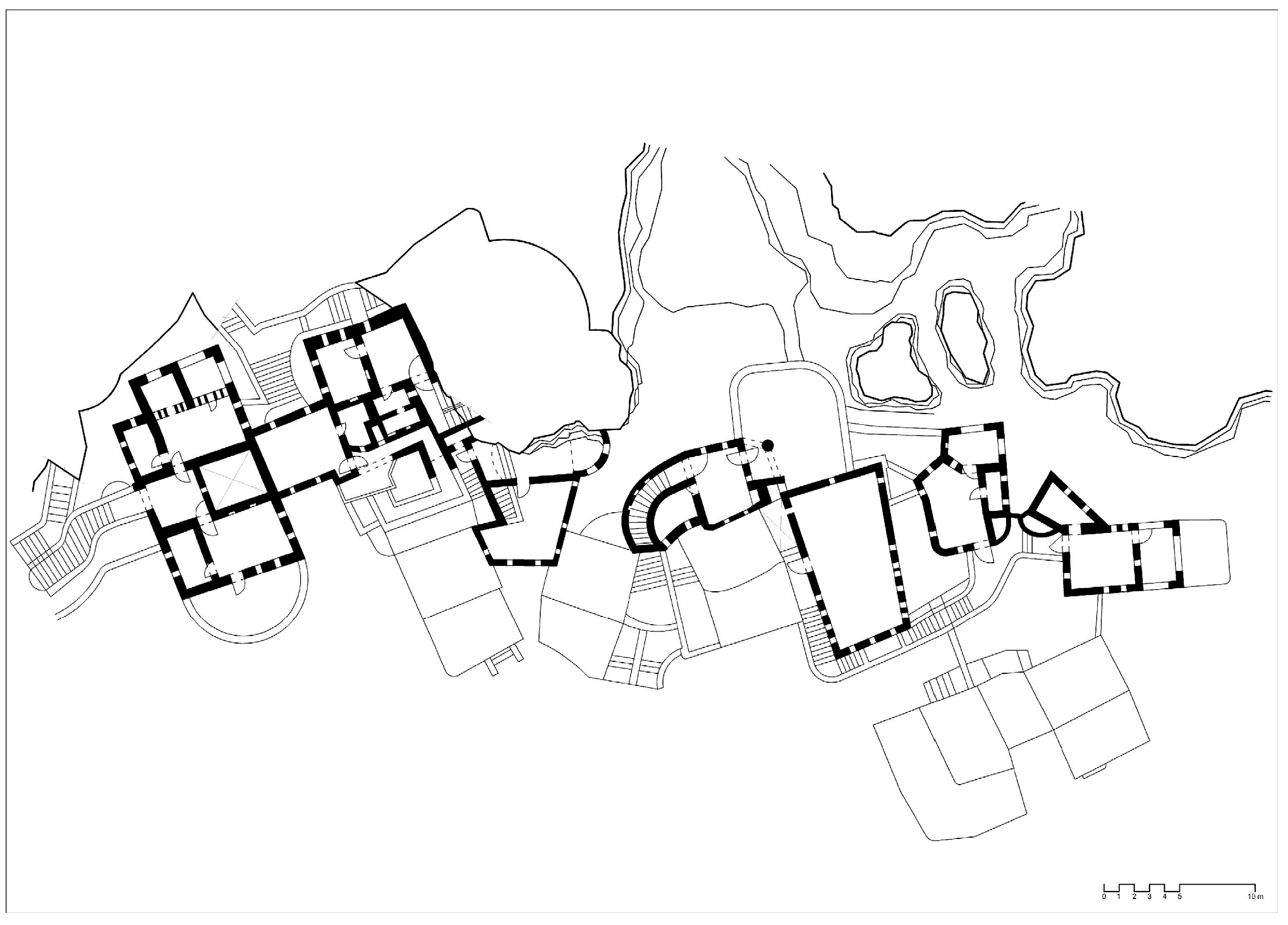
Figure A2.
First floor plan of building 1.
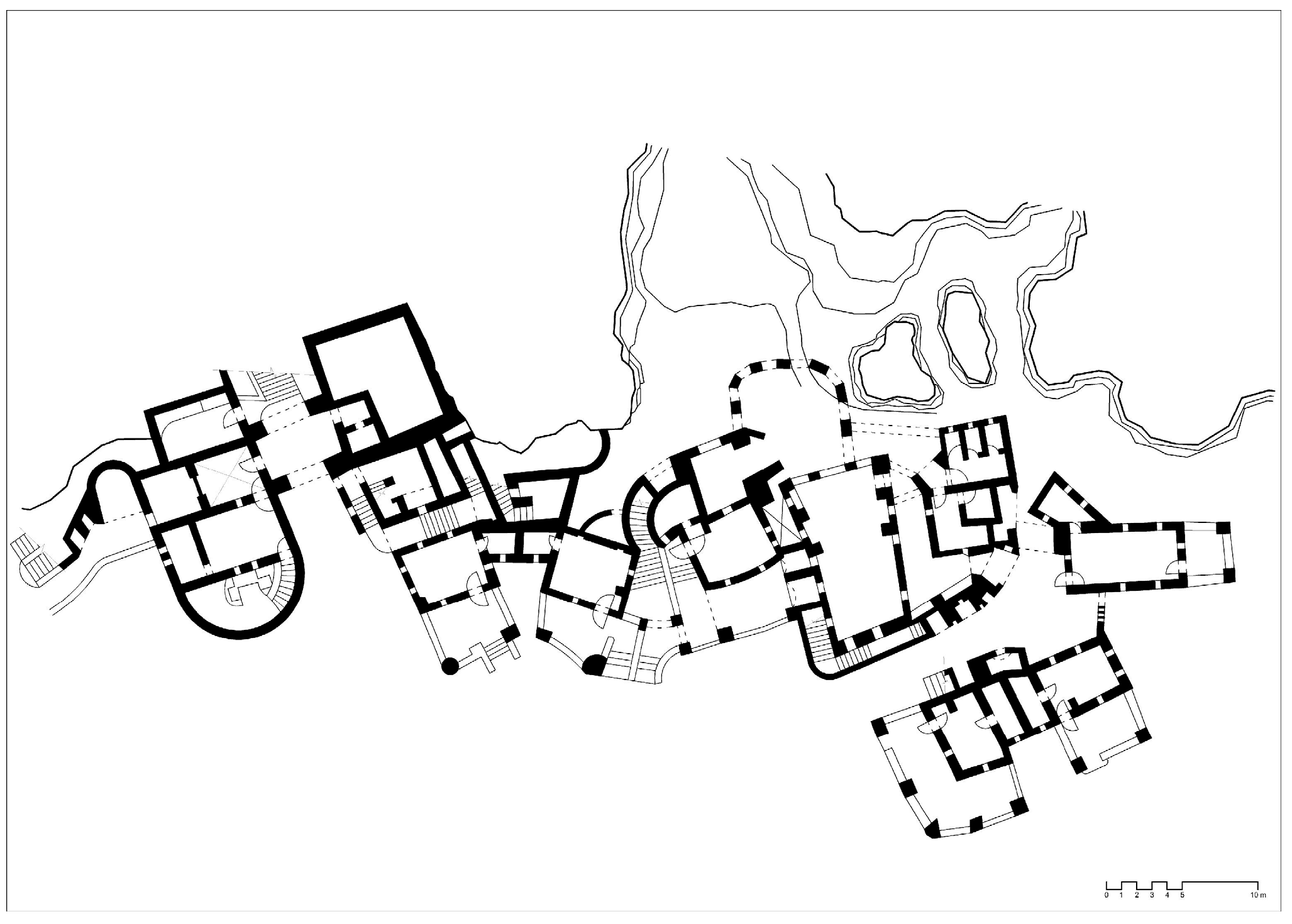
Figure A3.
Ground floor plan of building 2.
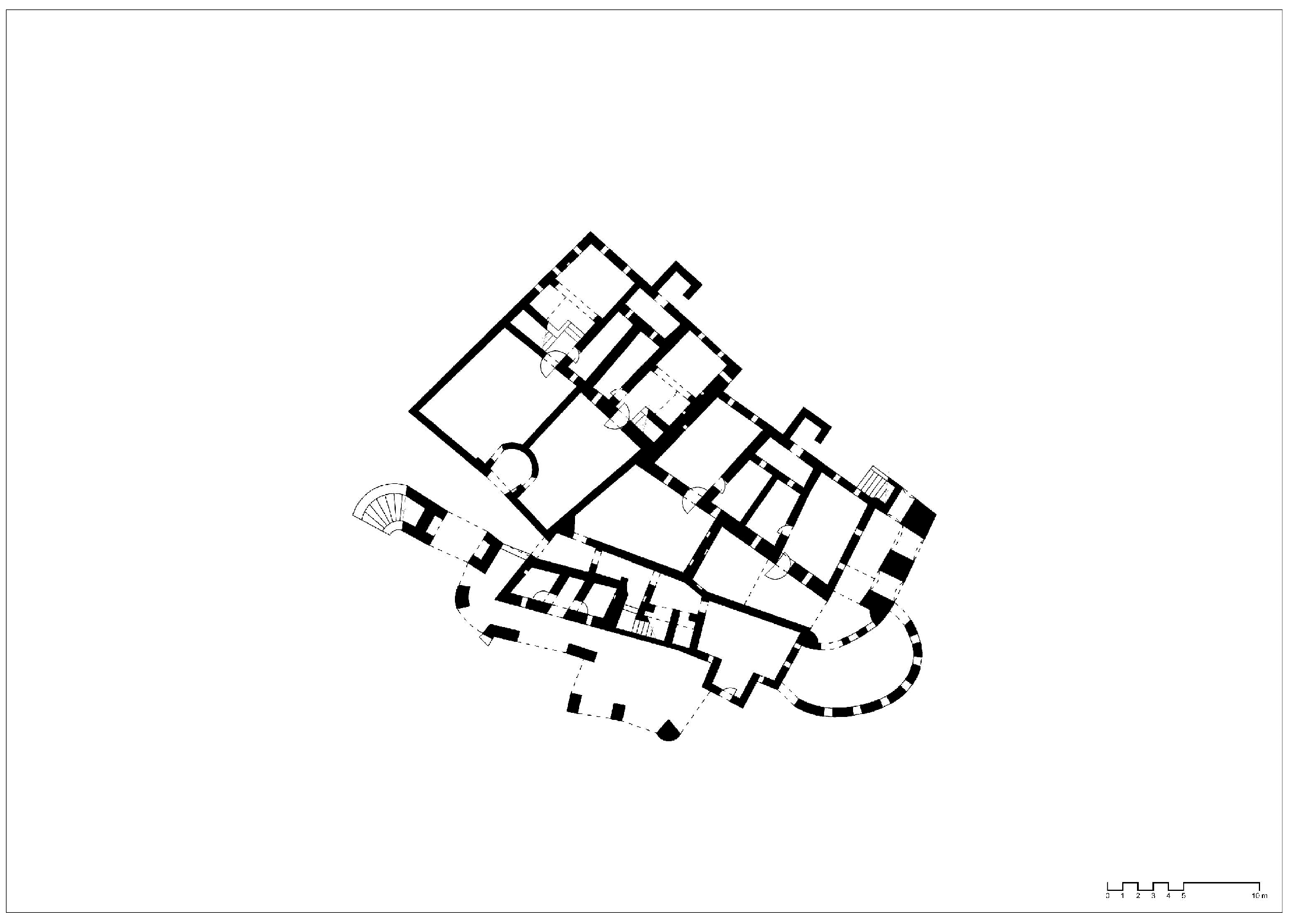
Figure A4.
Ground floor plan of building 3.
Appendix C. Definition of Indicators
Cultural Requirement (R1):
- I1—Public Benefit and Immortality Value: measures the extent to which the reused building serves as a common good for current and future generations.
- I2—Compatibility: assesses the harmony between the intervention and the original identity and features of the building.
- I3—Cultural Identity and Historical Value (I3): evaluates the degree of preservation of authenticity and historical integrity of the building.
Economic Requirement (R2):
- I4—Life Cycle Cost (LCC): calculates total costs throughout the building’s lifespan, including production and construction (A1–A5 building life cycle stages) (view Appendix C, Table 1).
- I5—Access to the Material: measures the distance to the nearest available source of the material.
- I6—Adaptive Reuse Time: captures the duration of the adaptive reuse process using the specified technique.
- I7—Maintenance Time: assesses the time required for periodic yearly maintenance using this technique.
Environmental Requirement (R3):
- I8—CO2 Emissions: quantifies carbon emissions generated during the adaptive reuse process, focusing on stages A1–A5 of the life cycle.
- I9—% of Recyclable Waste: evaluates the proportion of material waste that can be reused after the end of the building’s life cycle.
- I10—Thermal Conductivity: measures the insulation properties of the material, influencing energy efficiency and indoor thermal comfort.
- I11—Embodied Energy Consumption: reflects the total energy required for material extraction, processing, transport and construction.
Social Requirement (R4):
- I12—Ease of Construction: assesses the level of difficulty in applying this building technique by local laborers and unskilled workers.
- I13—Knowledge of the Technique: evaluates the local community’s familiarity with this method.
- I14—Acceptance: measures the extent of community approval of the use of this technique to the building.
- I15—User Safety: reflects local perception of safety and reliability associated with this building technique.
Table A3.
Building life cycle information stages and corresponding modules. Source: author based on [94].
Appendix D. Delphi Responses
Table A4.
Delphi responses on requirements’ weights. Source: author.
Table A5.
Delphi responses on criteria weights. Source: author.
Table A6.
Delphi responses on indicators’ weights. Source: author.
Appendix E. Definition of Value Functions
Each function is defined by five main parameters, as presented in Equation (A1):
- : ordinate of the inflection point.
- : abscissa of the inflection point.
- and : maximum and minimum satisfaction values of indicator’s performance.
- X: performance of evaluated indicator which lies between and .
- : value that indicates the shape of the value function.
- If it is concave, then < 1.
- If it is linear, then 1.
- If it is convex or S-shape, > 1
B is the factor that guarantees that the value function stays between the minimum and maximum values, which are 0.0 and 1.0, respectively. It is expressed by the following Equation (A2):
Shapes of value functions can be:
- Linear: Satisfaction increases proportionally with indicator value.
- Convex: Greater importance is given to approaching maximum satisfaction rather than moving away from minimum satisfaction.
- S-Shape: Used when alternatives cluster around the mid-range between the points of minimum and maximum satisfaction.
Indicators are also classified by tendency:
- Increasing: Increase insatisfaction is directly proportional to increase inindicator value.
- Decreasing: Increase insatisfaction is inversely proportional to increase inindicator value.
Appendix F. Value Functions of Indicators
Figure A5.
Cultural indicators. Legend: Red dots are the three alternatives, White dots are the discrete points defining the function.
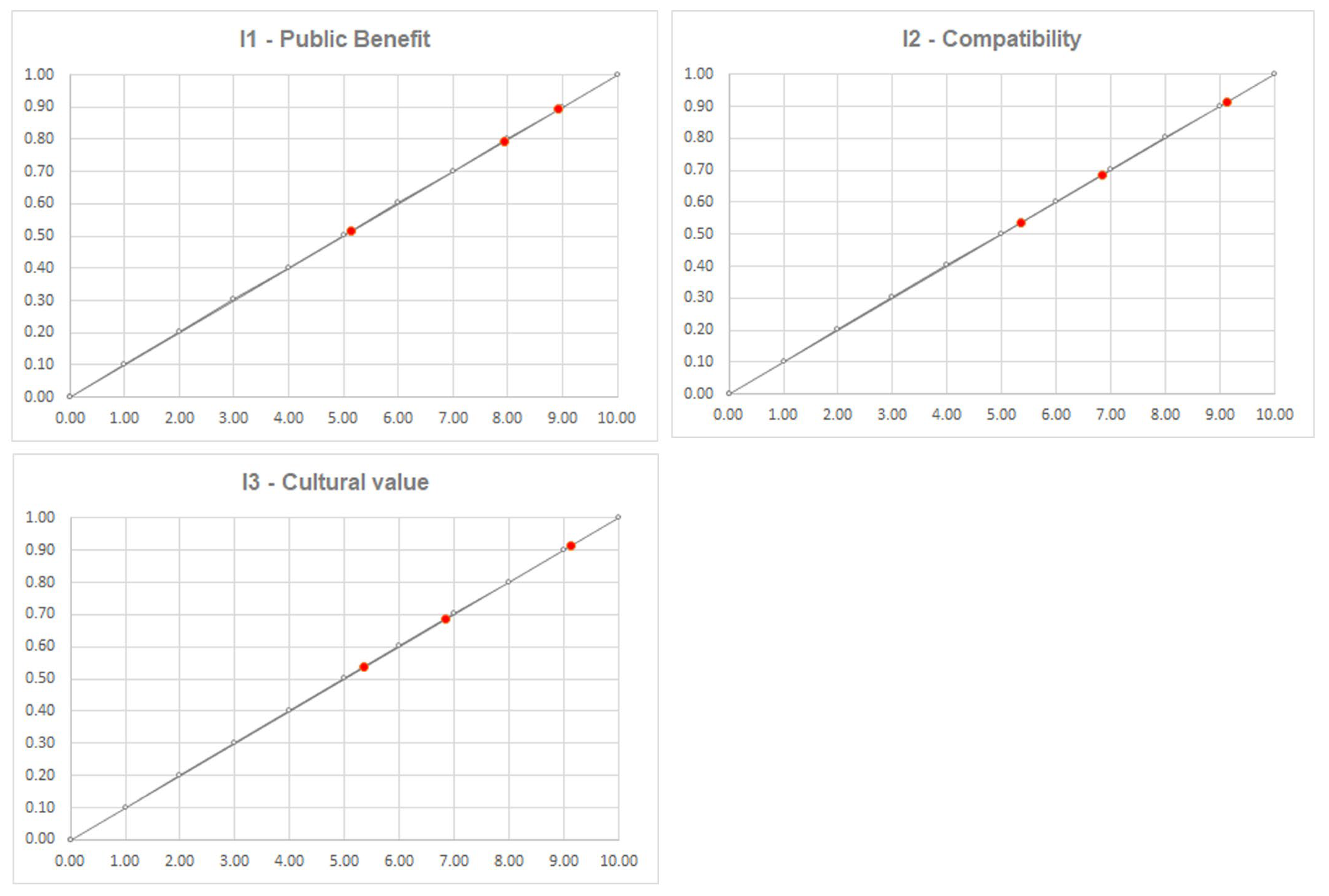
Figure A6.
Economic indicators. Legend: Red dots are the three alternatives, White dots are the discrete points defining the function, Green dots are standard values based on experience of previous projects.
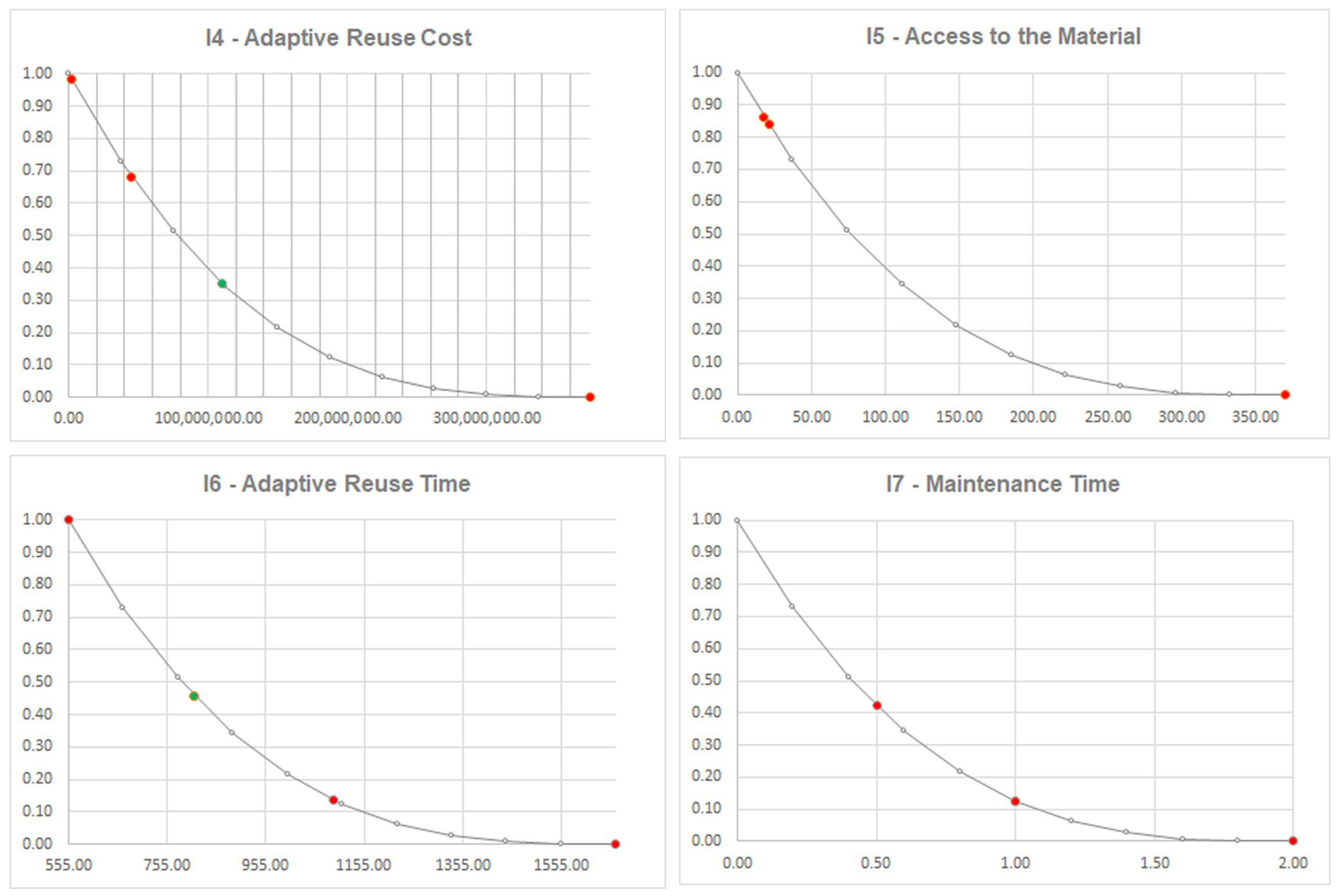
Figure A7.
Environmental indicators. Legend: Red dots are the three alternatives, White dots are the discrete points defining the function, Green dots are standard values based on [95].
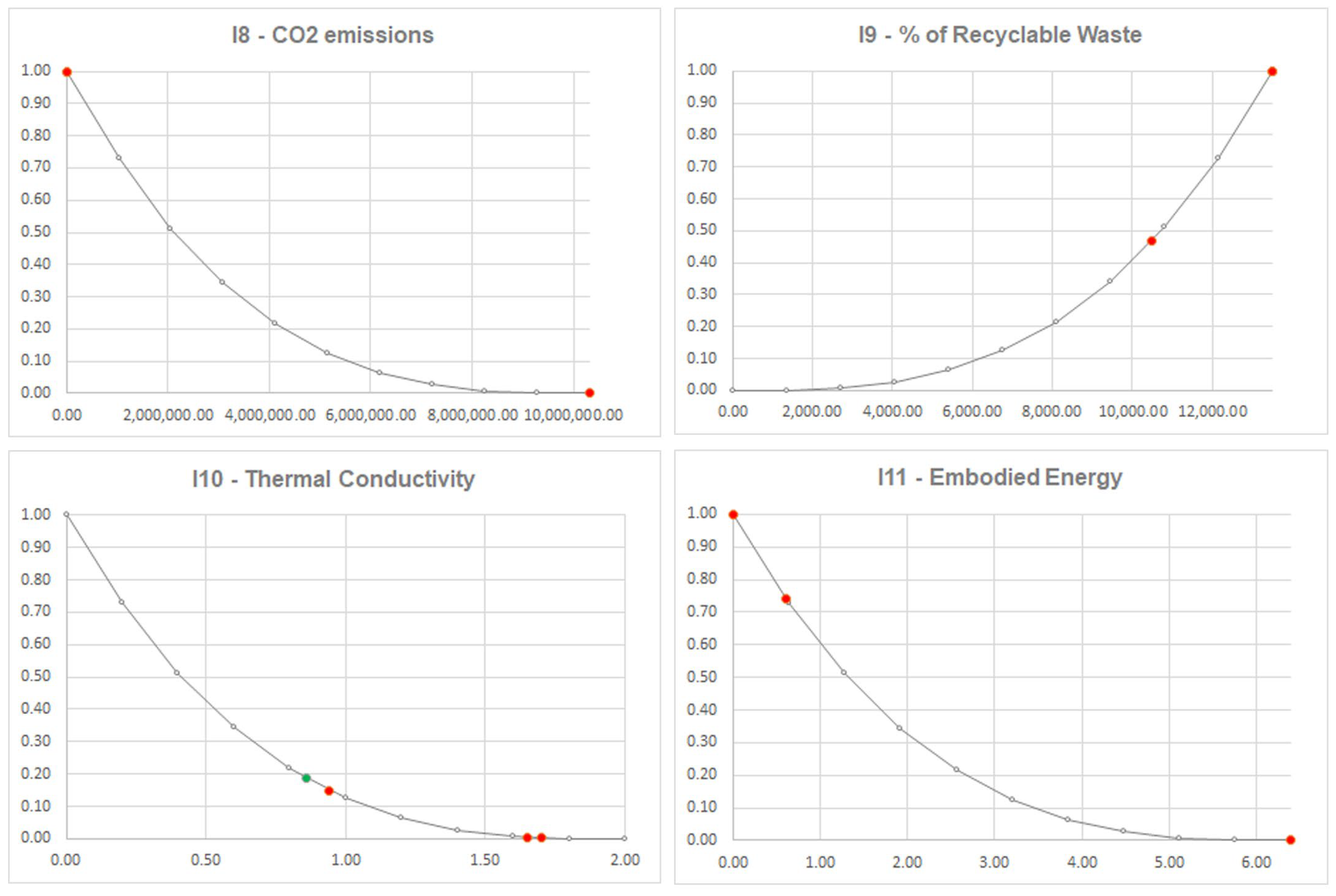
Figure A8.
Social indicators. Legend: Red dots are the three alternatives, White dots are the discrete points defining the function.
Appendix G. Calculation of Sustainability Indexes
To calculate the sustainability index for each alternative, the process followed four main steps as follows:
Step 1—Indicator values were calculated using the value functions. For each indicator, the quantified value of the alternative on the x-axis was converted into a non-dimensional score on the y-axis based on the assigned function.
Step 2—Criteria values were calculated by multiplying the normalized values of the indicators within the same criterion by their given weights, as depicted in Equation (A3):
Step 3—Requirement values were calculated similarly by multiplying the sum of values of criteria within the same requirement by their given weights, as shown in Equation (A4):
Step 4—Finally, the Global Sustainability Index (GSI) for each alternative was calculated by summing the requirements values, multiplied by their given weights, as presented in Equation (A5):
Appendix H. Advantages and Disadvantages of Common MCDM Methods
Table A7.
Most common advantages and disadvantages of each MCDM method. Source: author.
References
- Correia, M. Conservation in Earthen Heritage: Assessment and Significance of Failure, Criteria, Conservation Theory, and Strategies, 1st ed.; Cambridge Scholars Publishing: Newcastle upon Tyne, UK, 2016; ISBN 978-1-4438-8605-5. [Google Scholar]
- Cascione, V.; Maskell, D.; Shea, A.; Walker, P. A review of moisture buffering capacity: From laboratory testing to full-scale measurement. Constr. Build. Mater. 2019, 200, 333–343. [Google Scholar] [CrossRef] [Scilit]
- Yazdani Mehr, S.; Wilkinson, S.A. Model for assessing adaptability in heritage building. Int. J. Conserv. Sci. 2021, 12, 87–104. [Google Scholar]
- Latham, D. Creative Reuse of Buildings; Donhead Publishing: Shaftesbury, UK, 2000. [Google Scholar]
- Makhlouf, N.N.; Maskell, D.; Marsh, A.; Natarajan, S.; Dabaieh, M.; Moemen, M. Hygrothermal performance of vernacular stone in a desert climate. Constr. Build. Mater. 2019, 216, 687–696. [Google Scholar] [CrossRef] [Scilit]
- Morgan, W.N. Earth Architecture from Ancient to Modern; University Press of Florida: Gainesville, FL, USA, 2008. [Google Scholar]
- Vegas, F.; Mileto, C. Aprendiendo a Restaurar. Un Manual de Restauración de la Arquitectura Tradicional de la Comunidad Valenciana; Generalitat Valenciana—Colegio de Arquitectos de la Comunidad Valenciana: Valencia, Spain, 2011. [Google Scholar]
- Mileto, C.; Vegas López-Manzanares, F. Earthen architectural heritage in the international context: Values, threats, conservation principles and strategies. J. Cult. Herit. Manag. Sustain. Dev. 2022, 12, 192–205. [Google Scholar] [CrossRef] [Scilit]
- Mileto, C.; López-Manzanares, F.; Cristini, V.; Soriano, L. Earthen architecture in the Iberian Peninsula: A portrait of vulnerability, sustainability and conservation. Built Herit. 2021, 5, 19. [Google Scholar] [CrossRef] [Scilit]
- Dabaieh, M. A Future for the Past of Desert Vernacular Architecture; Lund University, Media-Tryck: Lund, Sweden, 2011. [Google Scholar]
- Moriset, S.; Rakotomamonjy, B.; Gandreau, D. Can earthen architectural heritage save us? Built Herit. 2021, 5, 19. [Google Scholar] [CrossRef] [Scilit]
- Elhamy, M.; Ibrahim, M. Conservation of Earth Vernacular Settlements: A case study of El-Dakhla Oasis, Egypt. J. Univ. Stud. Inclus. Res. 2022, 3, 7889–7919. [Google Scholar]
- Rashed, E.; Elmansoury, A.; Shehata, A.M. Ecolodges in desert regions: An approach to compatibility and sustainability. J. Univ. Stud. Inclus. Res. 2025, 7, 45519–45555. [Google Scholar]
- International Museums Office. The Athens Charter for the Restoration of Historic Monuments; Adopted at the First International Congress of Architects and Technicians of Historic Monuments, Athens, October 1931; International Museums Office: Paris, France, 1931. [Google Scholar]
- International Council on Monuments and Sites (ICOMOS). International Charter for the Conservation and Restoration of Monuments and Sites (The Venice Charter); Adopted at the Second International Congress of Architects and Technicians of Historic Monuments, Venice, May 1964; ICOMOS: Paris, France, 1964. [Google Scholar]
- Australia ICOMOS. The Burra Charter: The Australia ICOMOS Charter for Places of Cultural Significance; Australia ICOMOS: Burra, Australia, 1999. [Google Scholar]
- Riegl, A. The modern cult of monuments: Its character and its origin. Oppositions 1903, 25, 21–51. [Google Scholar]
- Othmane Hamrouni, I. World Heritage Watch Report 2021; World Heritage Watch: Berlin, Germany, 2021. [Google Scholar]
- Royal Australian Institute of Architects, Department of the Environment and Heritage. Adaptive Reuse: Preserving Our Past, Building Our Future; Department of Environment and Heritage (DEH), Commonwealth of Australia: Canberra, Australia, 2004; pp. 1–18. Available online: https://www.environment.gov.au/system/files/resources/3845f27a-ad2c-4d40-8827-18c643c7adcd/files/adaptive-reuse.pdf (accessed on 13 October 2025).
- Bullen, P.; Love, P. Adaptive reuse of heritage buildings. Struct. Surv. 2011, 29, 411–421. [Google Scholar] [CrossRef] [Scilit]
- Mohamed, B.; Marzouk, M. Post-adaptive reuse evaluation of heritage buildings using multi-criteria decision-making techniques. J. Build. Eng. 2025, 99, 111485. [Google Scholar] [CrossRef] [Scilit]
- Nadkarni, R.R.; Puthuvayi, B. A comprehensive literature review of Multi-Criteria Decision-Making methods in heritage buildings. J. Build. Eng. 2020, 32, 101814. [Google Scholar] [CrossRef] [Scilit]
- Wang, H.; Zeng, Z. A multi-objective decision-making process for reuse selection of historic buildings. Expert Syst. Appl. 2010, 37, 1241–1249. [Google Scholar] [CrossRef] [Scilit]
- Ribera, F.; Nesticò, A.; Cucco, P.; Maselli, G. A multicriteria approach to identify the highest and best use for historical buildings. J. Cult. Herit. 2020, 41, 166–177. [Google Scholar] [CrossRef] [Scilit]
- Haroun, H.; Bakr, A.; Hasan, A. Multi-criteria decision making for adaptive reuse of heritage buildings: Aziza Fahmy Palace, Alexandria. Alex. Eng. J. 2019, 58, 467–478. [Google Scholar] [CrossRef] [Scilit]
- Cucco, P.; Maselli, G.; Nesticò, A.; Ribera, F. An evaluation model for adaptive reuse of cultural heritage in accordance with 2030 SDGs and European Quality Principles. J. Cult. Herit. 2023, 59, 202–216. [Google Scholar] [CrossRef] [Scilit]
- Vehbi, B.O.; Günçe, K.; Iranmanesh, A. Multi-Criteria Assessment for Defining Compatible New Use: Old Administrative Hospital, Kyrenia, Cyprus. Sustainability 2021, 13, 1922. [Google Scholar] [CrossRef] [Scilit]
- Chen, C.-S.; Chiu, Y.-H.; Tsai, L. Evaluating the adaptive reuse of historic buildings through multicriteria decision-making. Habitat Int. 2018, 81, 12–23. [Google Scholar] [CrossRef] [Scilit]
- Della Spina, L. Cultural heritage: A hybrid framework for ranking adaptive reuse strategies. Buildings 2021, 11, 132. [Google Scholar] [CrossRef] [Scilit]
- Dell’Ovo, M.; Dell’Anna, F.; Simonelli, R.; Sdino, L. Enhancing the cultural heritage through adaptive reuse: A multi-criteria approach to evaluate the Castello Visconteo in Cusago (Italy). Sustainability 2021, 13, 4440. [Google Scholar] [CrossRef] [Scilit]
- Giove, S.; Rosato, P.; Breil, M. An application of multi-criteria decision making to built heritage: The redevelopment of Venice Arsenale. J. Multi-Criteria Decis. Anal. 2010, 17, 85–99. [Google Scholar] [CrossRef] [Scilit]
- Ferretti, V.; Bottero, M.; Mondini, G. Decision making and cultural heritage: An application of the multi-attribute value theory for the reuse of historical buildings. J. Cult. Herit. 2014, 15, 644–655. [Google Scholar] [CrossRef] [Scilit]
- Piñero, I.; San-José, J.T.; Rodríguez, P.; Losáñez, M.M. Multi-criteria decision-making for grading the rehabilitation of heritage sites: Application in the historic center of La Habana. J. Cult. Herit. 2017, 26, 144–152. [Google Scholar] [CrossRef] [Scilit]
- Ghobadi, M.; Sepasgozar, S.M.E. Design for reuse in prefabricated timber buildings: Simultaneous evaluation of criteria and alternatives and TOPSIS analyses. J. Build. Eng. 2025, 103, 112174. [Google Scholar] [CrossRef] [Scilit]
- El Borolosy, L.A.E. Using multi-criteria decision-making analysis to determine the most appropriate funding for the adaptive reuse of heritage buildings: Case study of the Champollion Palace. Int. J. Multidiscip. Stud. Archit. Cult. Herit. 2022, 5, 1–29. [Google Scholar]
- Della Spina, L.; Lanteri, C. A collaborative multi-criteria decision-making framework for the adaptive reuse design of disused railways. Land 2024, 13, 851. [Google Scholar] [CrossRef] [Scilit]
- Balta, M.Ö. An AHP-based multi-criteria model for adaptive reuse of heritage buildings. Geogr. Plan. Tour. Stud. 2022, 2, 40–45. [Google Scholar] [CrossRef] [Scilit]
- Boix-Cots, D.; Pardo-Bosch, F.; Blanco, A.; Aguado, A.; Pujadas, P. A systematic review on MIVES: A sustainability-oriented multi-criteria decision-making method. Build. Environ. 2022, 223, 109515. [Google Scholar] [CrossRef] [Scilit]
- Elkaftanguia, M.; Elnokaly, A.; Awad, Y.; Elseragy, A. Demystifying Cultural and Ecotourism in the Vernacular Architecture of Siwa Oasis, Egypt; University of Lincoln: Lincoln, UK, 2015; Available online: https://hdl.handle.net/10779/lincoln.25168748.v2 (accessed on 5 November 2025).
- Vivian, C. The Western Desert of Egypt: An Explorer’s Handbook; The American University in Cairo Press: Cairo, Egypt, 2007. [Google Scholar]
- Nofal, E.M. Towards management and preservation of Egyptian cultural landscape sites—Case study: Siwa Oasis. In Proceedings of the 5th International Congress: Science and Technology for the Safeguard of Cultural Heritage in the Mediterranean Basin, Istanbul, Turkey, 22–25 November 2011. [Google Scholar]
- El-Mahdy, D.; Gabr, H.S.; Abdelmohsen, S. SaltBlock as a 3D printed sustainable construction material in hot arid climates. J. Build. Eng. 2021, 43, 103134. [Google Scholar] [CrossRef] [Scilit]
- Farrag, N.M.-E.; Mahmoud, A. Harmonization between architectural development and heritage in Siwa Oasis, Egypt. ARPN J. Eng. Appl. Sci. 2016, 11, 2005–2015. [Google Scholar]
- Mohamed, A.F. Comparative study of traditional and modern building techniques in Siwa Oasis, Egypt. Case Stud. Constr. Mater. 2020, 12, e00311. [Google Scholar] [CrossRef] [Scilit]
- Varolgüneş, F.K.; Canan, F. Touristic accommodation facilities in the light of ecological approaches. In Proceedings of theICONARCH III: Memory of Place in Arschitecture and Planning, Selçuk University, Konya, Turkey, 11–13 May 2017. [Google Scholar]
- Dabaieh, M.; Maguid, D.; El-Mahdy, D. Circularity in the new gravity—Re-thinking vernacular architecture and circularity. Sustainability 2022, 14, 328. [Google Scholar] [CrossRef] [Scilit]
- ICOMOS. International European Quality Principles for EU-Funded Interventions with Potential Impact upon Cultural Heritage; ICOMOS International: Paris, France, 2020. [Google Scholar]
- Douglas, J. Building Adaptation, 2nd ed.; Elsevier Ltd.: Oxford, UK, 2006. [Google Scholar]
- Osbourne, D. Introduction to Building; Batsford Academic and Educational: London, UK, 1985. [Google Scholar]
- Horvath, T. Necessity of modernization of modern buildings. In Building a Better World: CIB World Congress 2010, Proceedings of the CIB World Congress 2010, The Lowry, Salford Quays, UK, 10–13 May 2010; Barrett, P., Haigh, R., Keraminiyage, K., Pathirage, C., Eds.; Emerald Publishing: Leeds, UK, 2010. [Google Scholar]
- Prowler, D. Whole Building Design Guide; National Institute of Building Sciences: Washington, DC, USA, 2008. [Google Scholar]
- Vakili-Ardebili, A. Complexity of value creation in sustainable building design (SBD). J. Green Build. 2007, 2, 171–181. [Google Scholar] [CrossRef] [Scilit]
- Langston, C. The sustainability implications of building adaptive reuse (keynote address). In Proceedings of the CRIOCM 2008, Beijing, China, 31 October–3 November 2008. [Google Scholar]
- Yildirim, M. Assessment of the decision-making process for re-use of a historical asset: The example of Diyarbakir Hasan Pasha Khan, Turkey. J. Cult. Herit. 2012, 13, 379–388. [Google Scholar] [CrossRef] [Scilit]
- Correia, M.; Juvanec, B.; Mileto, C.; Vegas, F.; Gomes, F.; Alcindor, M.; Lima Pacheco, A.I. Socio-economic sustainability in vernacular architecture. In VERSUS: Heritage for Tomorrow. Vernacular Knowledge for Sustainable Architecture; Correia, M., Di Pasquale, L., Mecca, S., Eds.; Firenze University Press: Florence, Italy, 2014; pp. 216–221. [Google Scholar]
- Yung, E.H.K.; Chan, E.H.W. Implementation challenges to the adaptive reuse of heritage buildings: Towards the goals of sustainable, low carbon cities. Habitat Int. 2012, 36, 352–361. [Google Scholar] [CrossRef] [Scilit]
- Vidovszky, I. Maintenance and Restoration Costs of Historic Buildings. Available online: https://historicengland.org.uk/advice/technical-advice/buildings/maintenance-and-repair-of-older-buildings/ (accessed on 13 October 2025).
- Cárdenas-Gómez, J.; Bosch González, M.; Damiani Lazo, C. Evaluation of reinforced adobe techniques for sustainable reconstruction in Andean seismic zones. Sustainability 2021, 13, 4955. [Google Scholar] [CrossRef] [Scilit]
- Banirazi Motlagh, S.H.; Hosseini, S.M.A.; Pons-Valladares, O. Integrated value model for sustainability assessment of residential solar energy systems towards minimizing urban air pollution in Tehran. Sol. Energy 2023, 249, 40–66. [Google Scholar] [CrossRef] [Scilit]
- Montana-Hoyos, C.A.; Scharoun, L. Adaptive reuse in craft, design, and art in the city. Int. J. Archit. Spatial Environ. Des. 2014, 8, 1–20. [Google Scholar] [CrossRef] [Scilit]
- Ruhonyora, K.; Charles, L. Adaptive reuse of historic buildings to promote social values: The case study of Bagamoyo District in Tanzania. Int. J. Sci. Res. Publ. 2019, 9, 9210. [Google Scholar] [CrossRef] [Scilit]
- Pons, O.; De la Fuente, A.; Aguado, A. The use of MIVES as a sustainability assessment MCDM method for architecture and civil engineering applications. Sustainability 2016, 8, 460. [Google Scholar] [CrossRef] [Scilit]
- Alarcon, B.; Aguado, A.; Manga, R.; Josa, A. A value function for assessing sustainability: Application to industrial buildings. Sustainability 2010, 3, 35–50. [Google Scholar] [CrossRef] [Scilit]
- Hamada, A.M.; Hamada, M.M. The role of popular participation in the process of preserving the urban heritage: A case study of West Suhail village in Egypt. In Proceedings of the 3rd International Architectural Conservation Conference and Exhibition, Dubai, United Arab Emirates, 17–19 December 2012. [Google Scholar]
- El Haridi, N.M.; El Sayad, Z. Comparative analysis of the desert and green vernacular architecture in the oases of Egypt. In Sustainable Vernacular Architecture; Sayigh, A., Ed.; Springer: Cham, Switzerland, 2019; pp. 55–81. [Google Scholar] [CrossRef] [Scilit]
- El-Shafie, M. Lessons from vernacular architecture in Siwa Oasis. In Proceedings of the 31st International Symposium on Automation and Robotics in Construction (ISARC 2014), Sydney, Australia, 9–11 July 2014. [Google Scholar]
- Sameh, H.; El Zafrany, A.; Attiya, D.N. Analysis of thermal comfort enhancement using vernacular architecture in Siwa Oasis, Egypt. J. Eng. Appl. Sci. 2019, 66, 679–701. [Google Scholar]
- Rovero, L.; Tonietti, U.; Fratini, F.; Rescic, S. The salt architecture in Siwa Oasis—Egypt (XII–XX centuries). Constr. Build. Mater. 2009, 23, 2492–2503. [Google Scholar] [CrossRef] [Scilit]
- Matos, F.; Godina, R.; Jacinto, C.; Carvalho, H.; Ribeiro, I.; Peças, P. Additive manufacturing: Exploring the social changes and impacts. Sustainability 2019, 11, 3757. [Google Scholar] [CrossRef] [Scilit]
- Rückrich, S.; Austern, G.; Denay, O.; Seiwert, P.; Sterman, Y.; Selvan, S.; Tarazi, E.; Yezioro, A.; Grobman, Y.J. 3D-printed earth-fiber envelopes: Optimization of thermal performance and industrial applicability. J. Build. Eng. 2025, 109, 113006. [Google Scholar] [CrossRef] [Scilit]
- Fishburn, P.C. Additive Utilities with Incomplete Product Set: Applications to Priorities and Assignments; Operations Research Society of America (ORSA): Baltimore, MD, USA, 1967. [Google Scholar]
- Mulliner, E.; Malys, N.; Maliene, V. Comparative analysis of MCDM methods for the assessment of sustainable housing affordability. Omega 2016, 59, 146–156. [Google Scholar] [CrossRef] [Scilit]
- Saaty, T. Multicriteria Decision Making—The Analytic Hierarchy Process; McGraw-Hill: New York, NY, USA, 1980. [Google Scholar]
- Belton, V.; Gear, T. On a shortcoming of Saaty’s method of analytic hierarchies. Omega 1983, 11, 228–230. [Google Scholar] [CrossRef] [Scilit]
- Benayoun, R.; Roy, B.; Sussman, N. Manual de Référence du Programme Electre; Direction Scientifique SEMA: Paris, France, 1966. [Google Scholar]
- Brans, J.-P.; Mareschal, B. PROMETHEE methods. In Multiple Criteria Decision Analysis: State of the Art Surveys; Springer: New York, NY, USA, 2005; pp. 163–186. [Google Scholar]
- Hwang, C.L.; Yoon, K. Multiple Objective Decision Making: Methods and Applications; Springer: Berlin, Germany, 1981; pp. 58–191. [Google Scholar]
- Opricovic, S. ViseKriterijumskaOptimizacija I Kompromisno Resenje [Multicriteria optimization and compromise solution]. Sci. Watch 1980, 6, 14–20. [Google Scholar]
- Ilangkumaran, M.; Karthikeyan, M.; Ramachandran, T.; Boopathiraja, M.; Kirubakaran, B. Risk analysis and warning rate of hot environment for foundry industry using hybrid MCDM technique. Saf. Sci. 2015, 72, 133–143. [Google Scholar] [CrossRef] [Scilit]
- Keeney, R.L.; Raiffa, H. Decisions with Multiple Objectives: Preferences and Value Tradeoffs; Wiley: New York, NY, USA, 1976. [Google Scholar]
- Linstone, H.A.; Turoff, M. (Eds.) The Delphi Method: Techniques and Applications; Portland State University: Portland, OR, USA; New Jersey Institute of Technology: Newark, NJ, USA, 2002. [Google Scholar]
- Donohoe, H.M.; Needham, R.D. Moving best practice forward: Delphi characteristics, advantages, potential problems, and solutions. Int. J. Tour. Res. 2009, 11, 415–437. [Google Scholar] [CrossRef] [Scilit]
- Skulmoski, G.J.; Hartman, F.T.; Krahn, J. The Delphi method for graduate research. J. Inf. Technol. Educ. 2007, 6, 1–21. [Google Scholar] [CrossRef] [Scilit] [PubMed]
- Dalkey, N.; Helmer, O. An experimental application of the Delphi method to the use of experts. Manag. Sci. 1963, 9, 458–467. [Google Scholar] [CrossRef] [Scilit]
- Bleijenbergh, I.; Korzilius, H.; Verschuren, P. Methodological criteria for the internal validity and utility of practice-oriented research. Qual. Quant. 2011, 45, 145–156. [Google Scholar] [CrossRef] [Scilit]
- Pons, O.; De la Fuente, A. Integrated sustainability assessment method applied to structural concrete columns. Constr. Build. Mater. 2013, 49, 882–893. [Google Scholar] [CrossRef] [Scilit]
- Zubizarreta, M.; Cuadrado, J.; Orbe, A.; García, H. Modeling the environmental sustainability of timber structures: A case study. Environ. Impact Assess. Rev. 2019, 78, 106286. [Google Scholar] [CrossRef] [Scilit]
- Hosseini, S.; Yazdani, R.; de la Fuente, A. Multi-objective interior design optimization method based on sustainability concepts for post-disaster temporary housing units. Build. Environ. 2020, 173, 106742. [Google Scholar] [CrossRef] [Scilit]
- Sánchez-Garrido, A.; Yepes, V. Multi-criteria assessment of alternative sustainable structures for a self-promoted, single-family home. J. Clean. Prod. 2020, 258, 120556. [Google Scholar] [CrossRef] [Scilit]
- Barakat, M.M.M. Siwa community development and environment conservation: A revolution of development in the lost oasis, Siwa. J. Agric. Econ. Soc. Sci. 2011, 2, 861–874. [Google Scholar] [CrossRef] [Scilit]
- Sarhan, M. The Socioeconomic Assessment for Siwa Oasis, Red Sea, Matrouh in Egypt; Technical Report; United Nations Development Programme: New York, NY, USA, 2013. [Google Scholar] [CrossRef]
- Ahmed, R. Lessons learnt from the vernacular architecture of Bedouins in Siwa Oasis, Egypt. In Proceedings of the 31st International Symposium on Automation and Robotics in Construction and Mining (ISARC 2014), Sydney, Australia, 9–11 July 2014. [Google Scholar]
- Khalil, M. Lessons Learnt from Adaptive Reuse of Earthen Heritage in Desert Oases in Hot Arid Climates. In Proceedings of the HERITAGE2025 International Conference on Earthen and Vernacular Heritage: Conservation, Adaptive Reuse and Urban Regeneration, Valencia, Spain, 10–12 September 2025. [Google Scholar] [CrossRef] [Scilit]
- EN 15978:2011; Sustainability of Construction Works—Assessment of Environmental Performance of Buildings—Calculation Method. European Committee for Standardization: Brussels, Belgium, 2011.
- ANSI/ASHRAE/IES 90.1-2022; Energy Standard for Buildings Except Low-Rise Residential Buildings. American Society of Heating, Refrigerating and Air-Conditioning Engineers: Atlanta, GA, USA, 2022.
- Triantaphyllou, E.; Mann, S.H. An examination of the effectiveness of multi-dimensional decision-making methods: A decision-making paradox. Decis. Support Syst. 1989, 5, 303–312. [Google Scholar] [CrossRef] [Scilit]
- Moghtadernejad, S.; Chouinard, L.E.; Mirza, M.S. Multi-criteria decision-making methods for preliminary design of sustainable facades. J. Build. Eng. 2018, 19, 181–190. [Google Scholar] [CrossRef] [Scilit]
- Azhar, N.; Radzi, N.; Ahmad, W. Multi-criteria decision making: A systematic review. Electr. Electron. Eng. 2021, 14, 779–801. [Google Scholar] [CrossRef] [Scilit]
- Pohekar, S.D.; Ramachandran, M. Application of multi-criteria decision making to sustainable energy planning—A review. Renew. Sustain. Energy Rev. 2004, 8, 365–381. [Google Scholar] [CrossRef] [Scilit]
- Hosseini, S.A. Suitability of different decision-making methods applied for analyzing sustainable post-disaster temporary housing. In Resettlement Challenges for Displaced Populations and Refugees; Springer: Cham, Switzerland, 2019; pp. 207–220. [Google Scholar]
- Aruldoss, M.; Lakshmi, T.M.; Venkatesan, V.P. A survey on multi-criteria decision-making methods and their applications. Am. J. Inf. Syst. 2013, 1, 31–43. [Google Scholar]
- Stanujkic, D.; Magdalinovic, N.; Jovanovic, R. A multi-attribute decision making model based on distance from decision maker’s preferences. Informatica 2013, 24, 103–118. [Google Scholar] [CrossRef] [Scilit]
- Velasquez, M.; Hester, P.T. An analysis of multi-criteria decision making methods. Int. J. Oper. Res. 2013, 10, 56–66. [Google Scholar]
- Opricovic, S.; Tzeng, G.H. Extended VIKOR method in comparison with outranking methods. Eur. J. Oper. Res. 2007, 178, 514–529. [Google Scholar] [CrossRef] [Scilit]
- Podvezko, V. The comparative analysis of MCDA methods SAW and COPRAS. Eng. Econ. 2011, 22, 134–146. [Google Scholar] [CrossRef] [Scilit]
- Ayrim, Y.; Atalay, K.D.; Can, G.F. A new stochastic MCDM approach based on COPRAS. Int. J. Inf. Technol. Decis. Mak. 2018, 17, 857–882. [Google Scholar] [CrossRef] [Scilit]

Disclaimer/Publisher’s Note: The statements, opinions and data contained in all publications are solely those of the individual author(s) and contributor(s) and not of MDPI and/or the editor(s). MDPI and/or the editor(s) disclaim responsibility for any injury to people or property resulting from any ideas, methods, instructions or products referred to in the content. |
© 2025 by the authors. Licensee MDPI, Basel, Switzerland. This article is an open access article distributed under the terms and conditions of the Creative Commons Attribution (CC BY) license (https://creativecommons.org/licenses/by/4.0/).