


Abstract
This study aimed to assess whether the fertilizing effects of compost (Com) and vermicompost (VCom) applied to a preceding wheat crop, either alone or in combination with microbial biofertilizers (MBF; arbuscular mycorrhizal fungi and nitrogen-fixing bacteria), could sustain forage maize yield across contrasting soil textures. A split–split plot trial was conducted in 2023 in sandy, loamy, and clay soils. Treatments included Com, VCom, standard mineral nitrogen fertilization, and unfertilized control, each tested with or without MBF inoculation. Maize was harvested at the milk–dough stage and assessed for biomass yield, dry matter partitioning, chemical composition, and in vitro digestibility. Interactions among factors were frequent, particularly with soil texture, but overall, Com and VCom sustained biomass yield and forage quality, especially when combined with MBF. Notably, in loamy soil, VCom coupled with MBF (38.4 t ha−1) outperformed mineral fertilization (32.9 t ha−1). Across soils, loam produced the highest dry matter yield (27.0 t ha−1) and sand the lowest (23.7 t ha−1), while clay showed variable responses depending on the amendment–MBFs combination. All plots treated with the MBFconsistently exhibited higher yields compared to their respective controls, with an average increase of 52.6% across texture and fertilization strategies. Fertilization strategy and soil texture slightly yet significantly affected maize chemical composition, while digestibility remained largely preserved. Crude protein concentration peaked under mineral fertilization in loamy soil (8.3% dry matter). These findings highlight the potential of bio-based fertilizers, especially when integrated with microbial inoculants, to reduce mineral nitrogen dependency and support the sustainable intensification of forage maize.
1. Introduction
Nitrogen (N) is a key nutrient in plant metabolism, playing a pivotal role in sustaining yields and driving agricultural intensification through synthetic fertilization [1]. Indeed, global reactive N production (i.e., biologically and chemically active N compounds) has risen sharply in recent decades, reaching approximately 100 Tg annually since 2000, with nearly 85% allocated to fertilizer manufacturing [2]. In 2024, global N fertilizer production capacity was estimated at 195 Mt and is projected to reach 215 Mt by 2029 [3]. Although these trends have consistently supported yield growth, the N-use efficiency has declined steadily [4]. Currently, only around 47% of applied reactive N is globally recovered in harvested biomass, while the remainder is lost through leaching, volatilization, or denitrification [5]. Moreover, synthetic N fertilizers remain tightly coupled with fossil energy markets, particularly natural gas, exposing food systems to volatility and price shocks [6]. This reliance also has a significant environmental implication, as the Haber–Bosch process, still predominant in the production of synthetic N fertilizers, alone accounts for up to 2% of global energy consumption and contributes substantially to CO2 emissions [7].
The intensive cultivation of cereal crops for both food and feed is a primary driver of the demand for synthetic N fertilizers, as these crops require substantial N inputs to maintain high yields, thereby exacerbating their environmental impact [8]. With the global population projected to reach 9.1 billion by 2050, improving cereal crop nutrient management has become a strategic priority to address environmental constraints and input inefficiencies that threaten both productivity and agroecosystem resilience [9,10].
In response to concerns over the sustainability of mineral N fertilizers, increasing attention is being given to recovering nutrients from organic waste streams through the production of bio-based fertilizers (BBFs) derived from underutilized plant, animal, or microbial materials [11]. In line with this trend, recent updates to EU policy, including Regulation (EU) 2021/1165, have recognized digestate-based products as viable components of EC-marked fertilizers, aligning their regulatory status with that of conventional mineral fertilizers [12]. Specifically, compost (Com) and vermicompost (VCom) are widely studied BBFs obtained from the biological decomposition of organic waste, either via microbial activity (composting) or in synergy with earthworms (vermicomposting) [13]. Composting primarily relies on aerobic activity where bacteria and fungi break down organic residues. This process transforms waste into a valuable soil amendment that enhances soil structure, improves water retention, and increases nutrient availability [14]. Vermicomposting combines microbial decomposition with the digestive activity of earthworms, which fragment and mineralize organic matter through gut-associated microbial and enzymatic activity [15]. The resulting vermicompost is rich in readily bioavailable nutrients and supports a diverse community of beneficial microorganisms [16]. Beyond recycling nutrients, increasing soil organic matter and sustaining plant growth, these products gradually release nutrients, reducing leaching losses [17] and ensuring that subsequent crops benefit from residual fertilizing effects, thereby enhancing the availability of residual nutrients across multiple cropping cycles [18]. However, the magnitude and persistence of their fertilizing effects are significantly influenced by soil texture, which affects nutrient retention and organic matter mineralization dynamics.
Microbial biofertilizers (MBF) are increasingly valued as complementary tools to support plant growth coupled with both BBFs and standard mineral fertilizers [19]. Among these, arbuscular mycorrhizal fungi (AMF) are recognized as key biological enhancers of soil fertility due to their capacity to extend the functional root surface area, thereby improving plant access to nutrients from both soil and residual organic sources [20]. This enhanced nutrient uptake is particularly relevant for N derived from slow-release BBFs, like Com and VCom, potentially amplifying their fertilizing effects [21]. In addition, plant growth-promoting rhizobacteria improve plant nutrition by facilitating biological N fixation, stimulating root growth through phytohormone production, and protecting roots from pathogens [22].
In recent years, Com and VCom have been extensively studied as components of circular and low-input fertilization strategies, with substantial evidence supporting their positive effects on crop performance and soil quality [14,15]. Focusing on maize production, most of the available studies have evaluated their use as partial substitutes for mineral N in single-season trials [23,24,25,26], leaving open the question of their residual fertilizing capacity, namely the ability to sustain crop performance in the absence of renewed fertilization inputs [27]. As far as we know, the persistence of these effects in subsequent cropping cycles and their potential to offset the lack of mineral supplementation remain poorly documented. Microbial biofertilizers could, in principle, amplify fertility benefits by improving nutrient acquisition and plant resilience [28]. However, their ability to interact positively with BBFs remains speculative and may not be generalizable to soils with contrasting textures and structures, which influence nutrient release kinetics, organic matter turnover, and the stability of beneficial microbial communities [28]. These interactions could either enhance efficiency or limit microbial benefits.
Based on this background, the experimental hypothesis is that the residual fertilizing effects of BBFs, possibly enhanced by MBF, could sustain forage maize productivity in the absence of new mineral N inputs, while contributing to sustainable intensification. Therefore, in this preliminary field-based study, we evaluated the maize biomass yield and forage quality relying exclusively on the residual effects of Com and VCom applied to the previous crop, either alone or in combination with MBF, based on a consortium of AMF and N-fixing bacteria. These alternative strategies were compared across three different textures to assess the role of soil properties in influencing agronomic performance.
2. Materials and Methods
2.1. Study Site and Experimental Setup
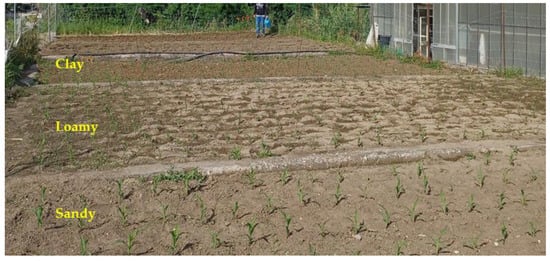
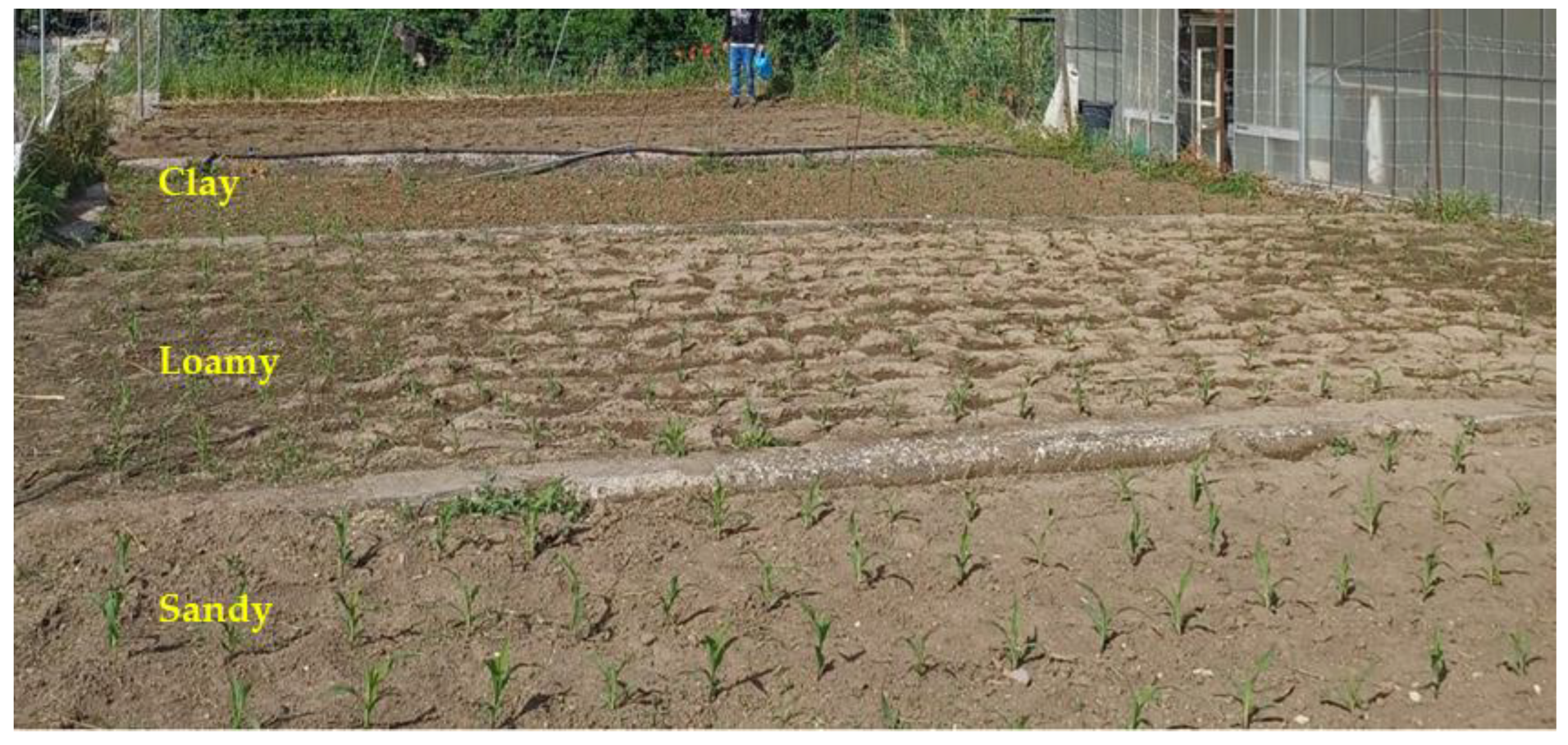
The trial was conducted during 2023 in three large in-ground concrete tanks (10 × 5 m, 3 m deep (Figure 1) located at the open-field experimental site of the Department of Agricultural Sciences of the University of Naples Federico II (Gussone Park, Portici, Italy; 40°49′ N, 14°15′ E; 72 m a.s.l.).
Figure 1.
Field overview at early maize establishment showing the three soil-texture main plots (sandy, loamy, clay) enclosed by concrete walls.
Each tank is filled with a 20 cm layer of gravel at the bottom to ensure drainage, overlaid with soil classified as having a sandy, loamy, or clay texture (Table 1).
Table 1.
Chemical properties of the soils under different fertilization treatments before maize sowing.
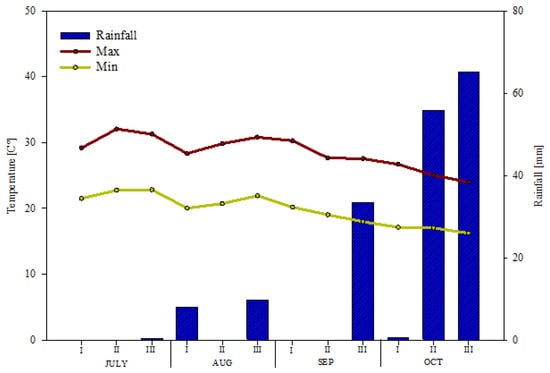
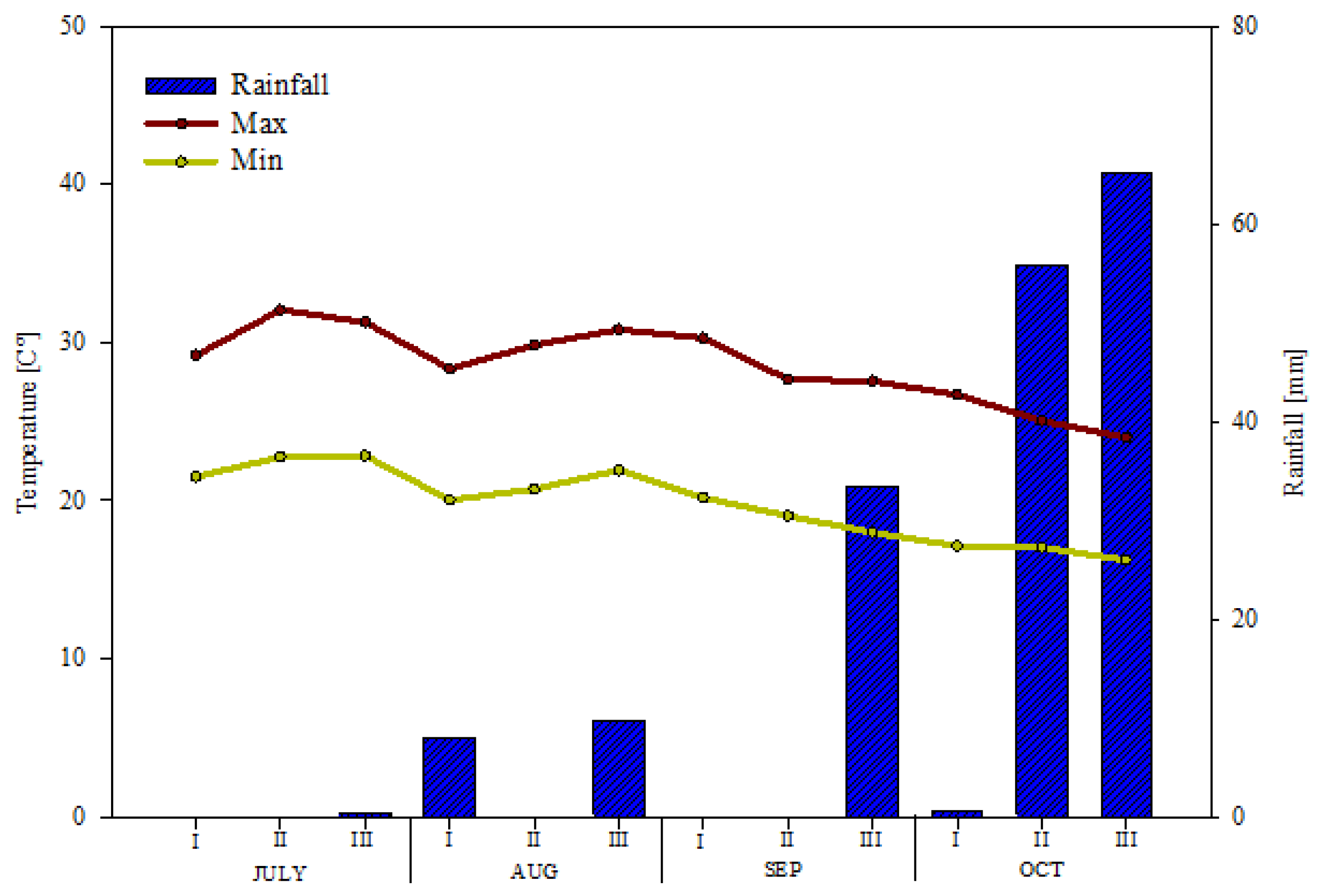
The site falls under a Mediterranean maritime climate (zone Csa, according to Köppen–Geiger classification [29]), with a long-term (1993–2023) mean annual temperature of 15.5 °C and annual precipitation of 908 mm. During the study period (from July to October), meteorological data were continuously monitored by a Vantage Pro weather station (Davis, Hayward, CA, USA), located approximately 50 m from the experimental site. The mean ten-day data for daily maximum and minimum temperatures and total precipitation are reported in Figure 2.
Figure 2.
Trend of the minimum and maximum average air temperatures and rainfall recorded during the maize cycle. I, II, and III indicate the 10-day intervals of each month.
During the crop cycle (14 July–26 October), the total rainfall was 171.6 mm, of which more than 65% occurred in the second and third ten-day periods of October. The maximum temperature ranged between 21.3 and 39.1 °C, with the maximum recorded in the third ten-day period of August, while the minimum temperature ranged between 14.1 and 25.2 °C, with values below 18 °C concentrated in October (Figure 1).
The experiment was arranged in a split–split plot design (Figure S1 in Supplementary Material), with soil texture—sandy, loamy or clay—as the main plot factor (5 × 10 m). The subplots (5 × 2.5 m) consist of the four fertilization treatments, namely, residual fertility from compost (RCom) or vermicompost (RVCom) applied to the previous wheat (Triticum durum Desf.) crop; mineral fertilization control (CMin); and no-fertilization control (Ctr). The sub-sub plots (2.5 × 2.5 m) involved the application (B) or not (NB) of the selected MBF. This design resulted in twenty-four experimental theses with three replicates, each measuring 2.5 × 0.83 m.
This plot arrangement was implemented in the tanks during the preceding wheat crop cycle. Prior to wheat sowing, both Com and VCom were applied at a nitrogen-equivalent rate of 120 kg N ha−1. In the same way, control subplots with no fertilization and mineral fertilized subplots (applied as ammonium nitrate, 26% N) were also established. No M was applied. The compost originated from the organic fraction of urban solid residues (Fertileva s.r.l., Laterza, Italy) and contained 2% N (94.5% organic N) and 28.3% organic carbon. Vermicompost (C&F Energy Società Agricola s.r.l., Angri, Italy) was obtained by composting buffalo manure with earthworms (Eisenia fetida and Eisenia andrei), as detailed by Fusco et al. [30], and was characterized to a pH of around 7.9, 1.8% total N (85% organic N), and 35% total organic carbon.
After wheat harvesting, soil in the three tanks was prepared for maize sowing. Maize was seeded by hand on 14 July 2023, using a medium-late hybrid (LG31.325, FAO class 500; Limagrain, Fidenza, Italy) at a nominal planting density of 10 plants m−2, maintaining the plot-treatment assignment from the previous wheat cycle. Only the CMin treatment plots received N fertilization, at rates of 240, 235, and 225 kg ha−1 for sandy, loamy, or clayey soils, respectively. Nitrogen application rates were determined based on the theoretical dose, calculated based on the crop’s N demand (3.9 kg N t−1 yield) and the target biomass yield for the area (65.0 t ha−1) [31]. This dose was adjusted for the texture-dependent N mineralization, N losses due to leaching and microbial immobilization, and readily available N influenced by the preceding crop and irrigation regime [31]. Nitrogen was applied as ammonium nitrate (26% N; Yara Bela EXTRAN 26, Yara Italia SpA, Milano, Italy) in two equal top-dressing applications, at the four-leaf stage (V4, according to the scale of Ritchie et al. [32]) and the ten-leaf stage (V10). The MBFs, consisting of a commercial formulation (LIFESTRONG VAM, Fertilidea s.r.l., Pompei, Italy) containing AMF (1%) and rhizosphere bacteria from the Bacillus and Azospirillum genera (1 × 10⁸ CFU g−1), was applied as a foliar spray at the V4 growth stage, at a rate of 3 L ha−1.
Standard agronomic practices were used to manage the crops across all plots and treatments.
2.2. Experimental Measures
Before the maize seeding date, soil samples were collected from the tanks using a hand-held probe (38 mm tip diameter) according to standard methods [33]. Homogenized soil samples were dried in an oven at 40 °C until a constant weight was reached and then sieved to 2 mm for physicochemical properties analysis [34] (Table 1). At the early flowering stage (R1), N nutrition status was evaluated by measuring leaf greenness using a SPAD-502 MINOLTA (Soil Plant Analysis Development, Minolta Camera Co. Ltd., Tokyo, Japan) optical chlorophyll meter at 650 and 940 nm. Additionally, chlorophyll, anthocyanin, and flavonoid concentrations were measured at 375 nm using a Dualex3 optical meter (Force-A, Orsay, France). This instrument uses ratio fluorescence to measure anthocyanin and flavanol content (ratios F660nm/F525nm and F660nm/F325nm, respectively) and leaf transmittance in the near and far infrared to measure chlorophyll content (T850/T720). The nitrogen balance index (NBI) was calculated as the ratio between chlorophyll (T850/T720) and flavonoid (F660nm/F325nm) content. The assessments were conducted on three leaves from three individual plants, sampled away from plot borders to minimize edge effects, as detailed elsewhere [35].
Maize was hand-harvested on October 26 at the R4 stage (kernel dough stage) by cutting plants 10 cm above the ground. Biomass production was estimated by using 10 plants from the central row of each experimental sub-sub plot to minimize boundary effects. The sampled plants were separated into cobs, culms, and leaves, and dry matter (DM) was determined in an air forced oven set at 65 °C. Thereafter, the dried samples were pooled by sub-sub plot and replicate and ground by a hammer mill (Brabender rotary mill; Brabender GmbH & Co., Duisburg, Germany) to pass through a 1 mm screen, pending analysis.
2.3. Analyses
2.3.1. Soil
Soil texture was determined using the standard sieving-pipette method, with H2O2 pre-treatment for organic matter oxidation and sodium hexametaphosphate dispersion for particle separation [36]. The soil pH was measured potentiometrically using a GLP 22 pH meter (Crison, Barcelona, Spain) in 1:2.5 (w/v) soil/water suspensions [37]. The nitrate-nitrogen (N-NO3) and ammonia-nitrogen (N-NH4) contents were determined using the cadmium reduction method proposed by Sah [38]. Absorbance of the water extract solutions was measured at wavelengths of 500 nm and 425 nm, respectively, using a Hach DR 2000 spectrophotometer (Hach Co., Loveland, CO, USA). Organic N was determined using the Kjeldahl method [39], while organic matter (OM) was measured using the Walkley and Black method [40]. Available phosphorus (P2O5) was assessed using the Olsen method [41]. Available potassium (K2O) was determined by spectrophotometry at 650 nm after extraction with sodium bicarbonate, followed by the addition of tetraphenyl [42]. All analyses were performed in triplicate.
2.3.2. Maize Biomass
The maize chemical composition was assessed in triplicate for each replicate using an NIRFlex N-500 device (Büchi Instruments Inc., Flawil, Switzerland). The chemical bonds associated with the corn samples’ absorbance supported the evaluation of DM, crude protein (CP), ether extract (EE), starch, neutral detergent fiber (NDF), acid detergent fiber (ADF), and acid detergent lignin (ADL). The analysis and calibration setups were carried out in accordance with the methods outlined by Zicarelli et al. [43].
The in vitro digestibility of DM (IVDMD) and NDF (IVNDFD) was determined using a Daisy II system (Ankom, Tech. Co., Fairport, NY, USA) following the procedure outlined by Robinson et al. [44], as previously described in Serrapica et al. [45]. Briefly, three filter bags per sample (Ankom F57; Ankom Technology Corp., Fairport, NY, USA) were filled with 250 mg of milled sample and incubated for 48 h in three digestion jars at 39 °C, in the presence of buffered rumen fluid collected post-mortem at a local slaughterhouse (RO.C.A. S.R.L., Mercato San Severino, Italy) from four young bulls selected from a local fattening cattle farm prior to slaughter. The buffer solution was prepared according to Robinson et al. [39]. Rumen fluid was collected within 3 min after death, coarsely filtered to remove larger particles, and immediately transferred to 2 L airtight glass bottles pre-heated to 39 °C and filled with carbon dioxide. In the laboratory, the rumen fluids were mixed, further filtered through two layers of cheesecloth under continuous carbon dioxide flushing, and then transferred to the digestion jars. The time from rumen fluid collection to incubation was approximately 50 min. After incubation, the bags were removed, washed with cold tap water until the wash water became clear, and then analyzed for DM and NDF content following the standard procedure described elsewhere [46].
2.4. Statistical Analysis
All data were analyzed in JMP Pro (version 15; SAS Institute Inc., Cary, NC, USA) using a split–split plot ANOVA, with replicate as the experimental unit. Prior to analysis, data were tested for homogeneity of variance using Levene’s test and for normality using the Shapiro–Wilk test. The statistical model included soil texture as a random factor and fertilization type and mycorrhizal treatment as fixed factors. All second- and third-order interactions were included. Treatment means were compared using Tukey’s test at a significance level of p < 0.05. Table S1 summarizes the significance of the random factor “soil texture”, the fixed factors “fertilization strategy” and “microbial inoculation”, and their second- and third-order interactions (see Supplementary Material).
3. Results
3.1. SPAD and Dualex Measurements
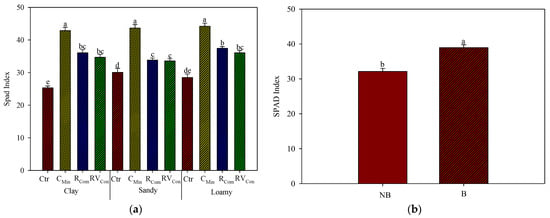
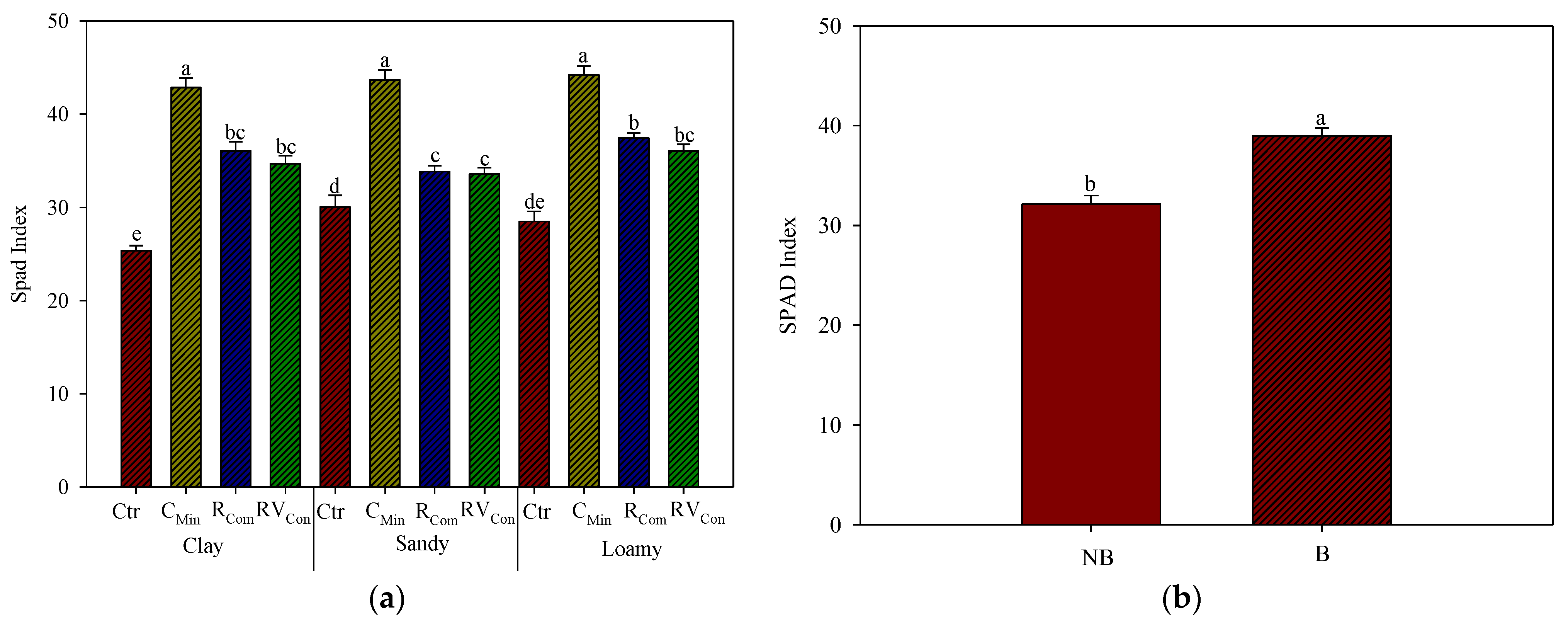
The SPAD index, reported as raw readings obtained by the MINOLTA SPAD-502 m, was significantly affected by the interaction between soil texture × fertilization strategy (Table S1, Figure 3a), as well as by the main effect of MBFs application (Table S1, Figure 3b). A clear decreasing trend in SPAD values was observed across all soil types in response to fertilization strategy, with the highest values under CMin treatment and the lowest in the unfertilized Ctr plots (Figure 3a). Similarly, MBF application elicited a 21.3% increase in SPAD values compared to untreated plants (Figure 3b).
Figure 3.
Leaf SPAD index in maize: (a) interaction between soil texture and fertilization; (b) effect of microbial biofertilizers. Different letters indicate statistically significant differences (p < 0.05). Error bars represent standard error of the mean. Ctr, no-fertilization control; CMin, mineral fertilization control RCom, residual fertility from compost RVCom, residual fertility from vermicompost; NB, no-treatment with microbial biofertilizers; B, treated with biofertilizers.
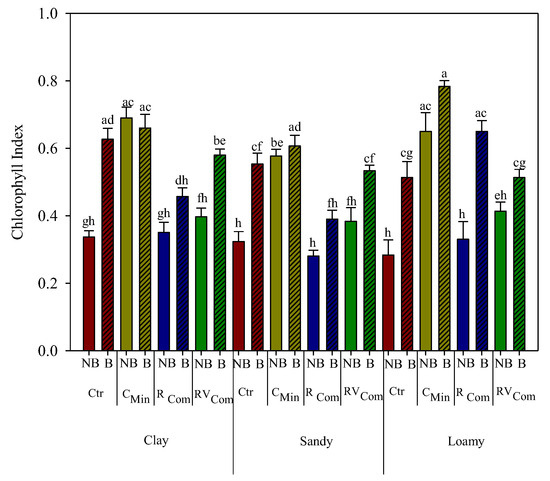
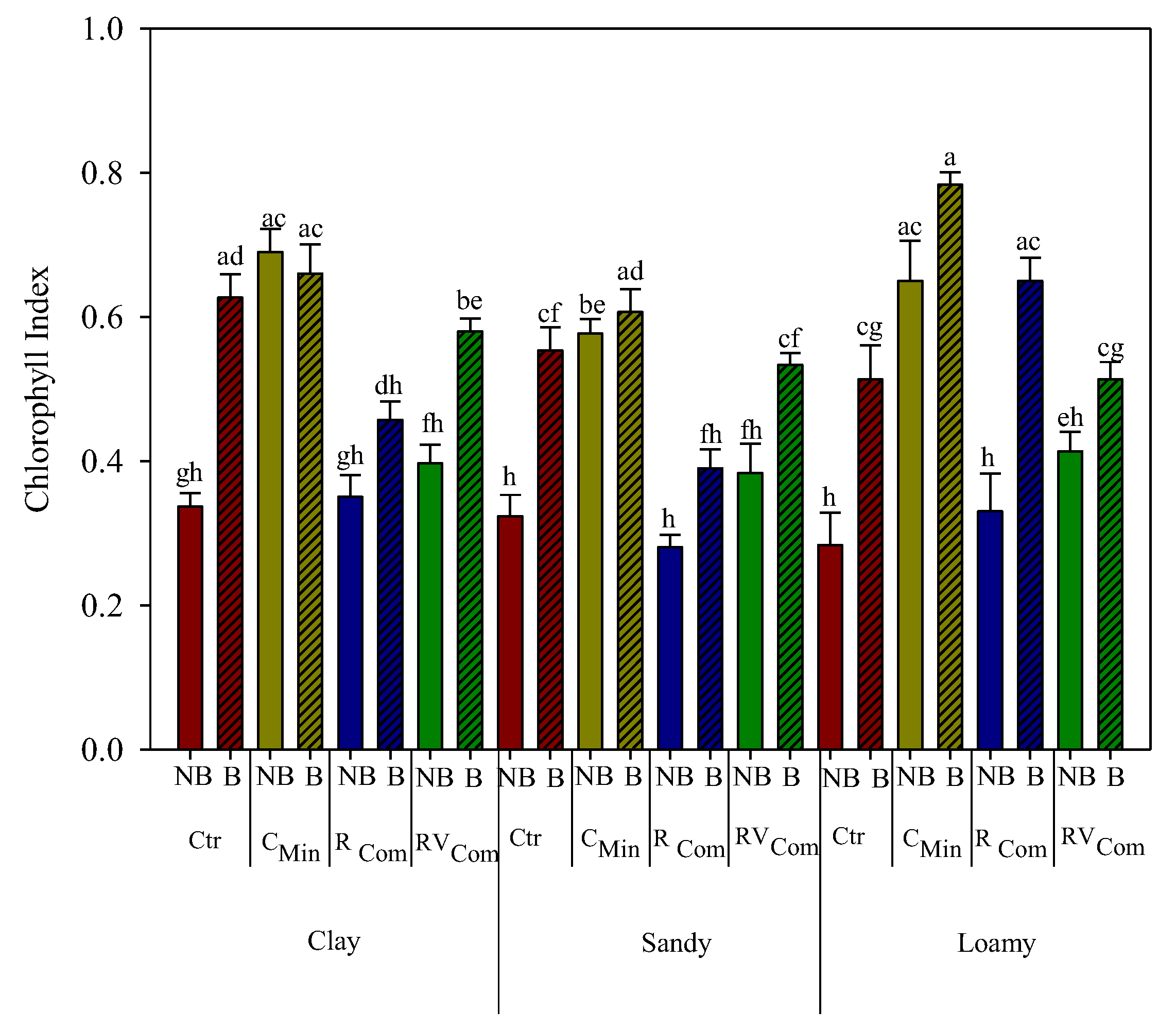
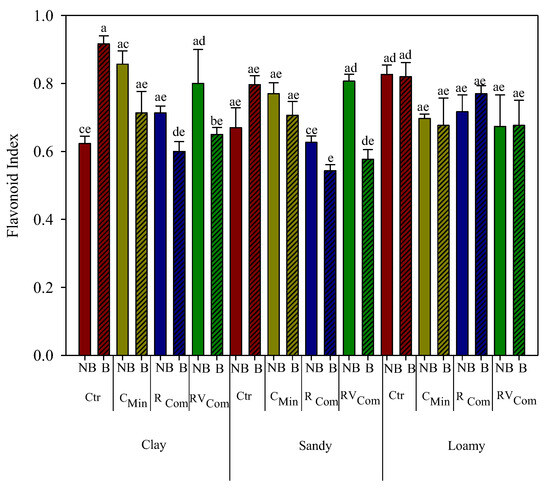
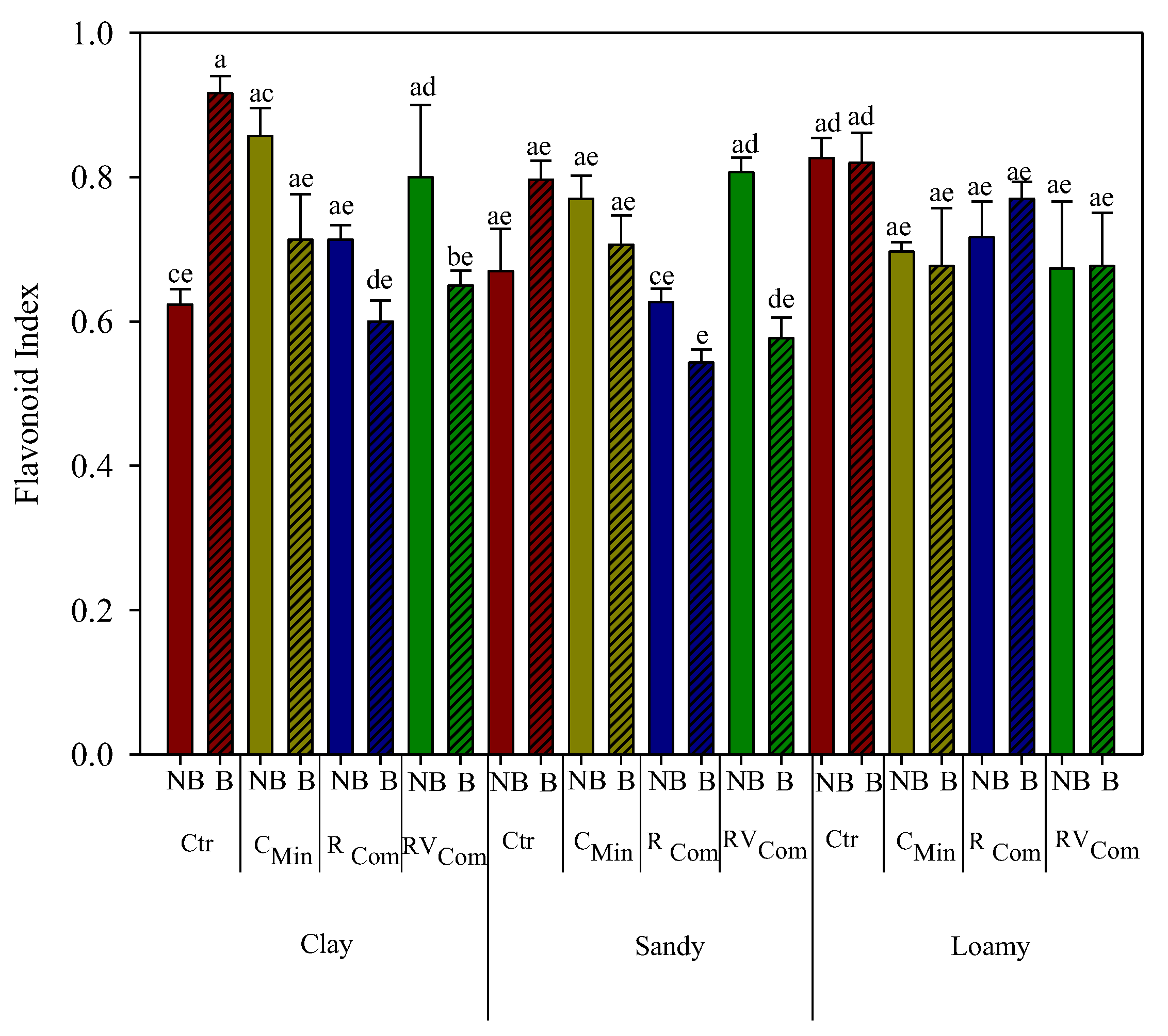
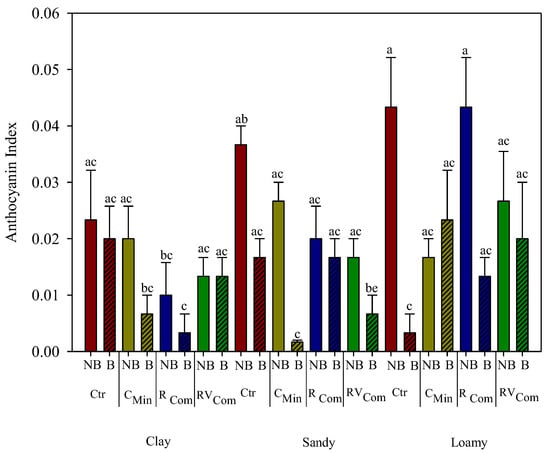
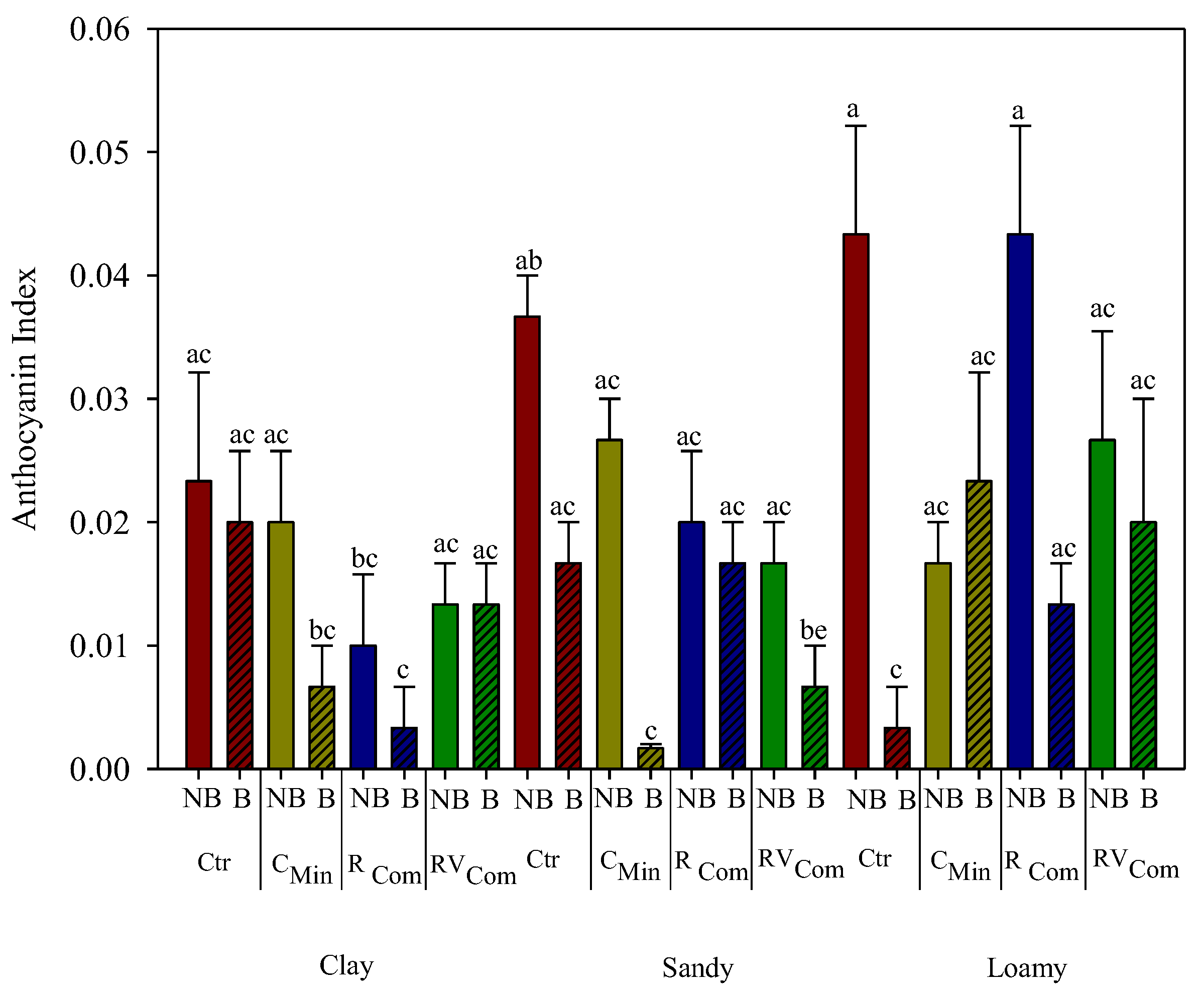
As regards the parameters measured by Dualex instrument statistical analysis highlighted a significant effect of the third-order interaction on chlorophyll, flavanols, and anthocyanins contents (Table S1, Figure 4, Figure 5 and Figure 6).
Figure 4.
Leaf chlorophyll index in maize: interaction between soil texture, fertilization, and microbial biofertilizer application. Different letters indicate statistically significant differences (p < 0.05). Error bars represent standard error of the mean. Ctr, no-fertilization control; CMin, mineral fertilization control; RCom, residual fertility from compost; RVCom, residual fertility from vermicompost; NB−, no-treatment with microbial biofertilizers; B, treated with microbial biofertilizers.
Figure 5.
Leaf flavonoid index in maize: interaction between soil texture, fertilization, and microbial biofertilizer application. Different letters indicate statistically significant differences (p < 0.05). Error bars represent standard error of the mean. Ctr, no-fertilization control; CMin, mineral fertilization control; RCom, residual fertility from compost; RVCom, residual fertility from vermicompost; NB, no-treatment with microbial biofertilizer t; B, treated with microbial biofertilizer t.
Figure 6.
Leaf anthocyanin index in maize: interaction between soil texture, fertilization, and microbial biofertilizer application. Different letters indicate statistically significant differences (p < 0.05). Error bars represent standard error of the mean. Ctr, no-fertilization control; CMin, mineral fertilization control; RCom, residual fertility from compost; RVCom, residual fertility from vermicompost; NB, no-treatment with microbial biofertilizer; B, treated with microbial biofertilizer.
As general trend, the lowest values of chlorophyll content were recorded in maize grown in sandy soil (overall mean 0.46) compared to clay (0.51) and loam (0.52) soils. Irrespective of soil texture, mineral fertilization elicited the highest values of chlorophyll compared to the other three fertilization strategies, while the lowest values were recorded in RCom plants both in clay and sandy soils, and in Ctr plants in loam soils. The application of MBF significantly increased chlorophyll content in Ctr plants across all three soils and in RCom plants grown in clay soils (Figure 4).
Similarly, flavanol content was lowest in sandy soil (overall mean 0.69) compared with clay (0.73) and loam soils (0.75). Unfertilized Ctr plants exhibited the highest flavanol value (0.78), although not significantly different from plants under the other fertilization strategies (0.74 for CMin, 0.66 for RCom, and 0.70 for RVCom) (Figure 5). Finally, MBF application slightly reduces flavanol content compared with untreated MBF plants, but statistically significant differences were observed only in Ctr plants grown in clay soil (Figure 5).
The trend observed for anthocyanin content differed from the previous compounds. The lowest concentration was found in plants grown in clay soil (overall mean 0.014) compared to those in sandy (0.018) and loam soils (0.020). Variations among the fertilization strategies were less pronounced, with the Ctr group exhibiting a higher overall value (0.024) compared to the average of the other three strategies (0.017). Finally, as observed with flavanols, the application of MBF resulted in lower anthocyanin levels compared to untreated plants, although statistically significant differences were only detected in Ctr plants grown in loamy soil (Figure 6).
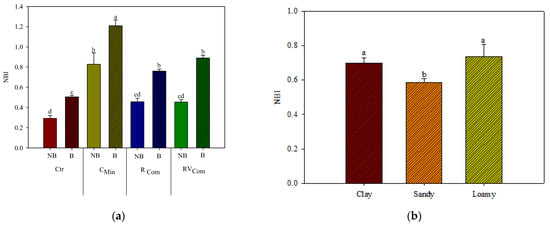
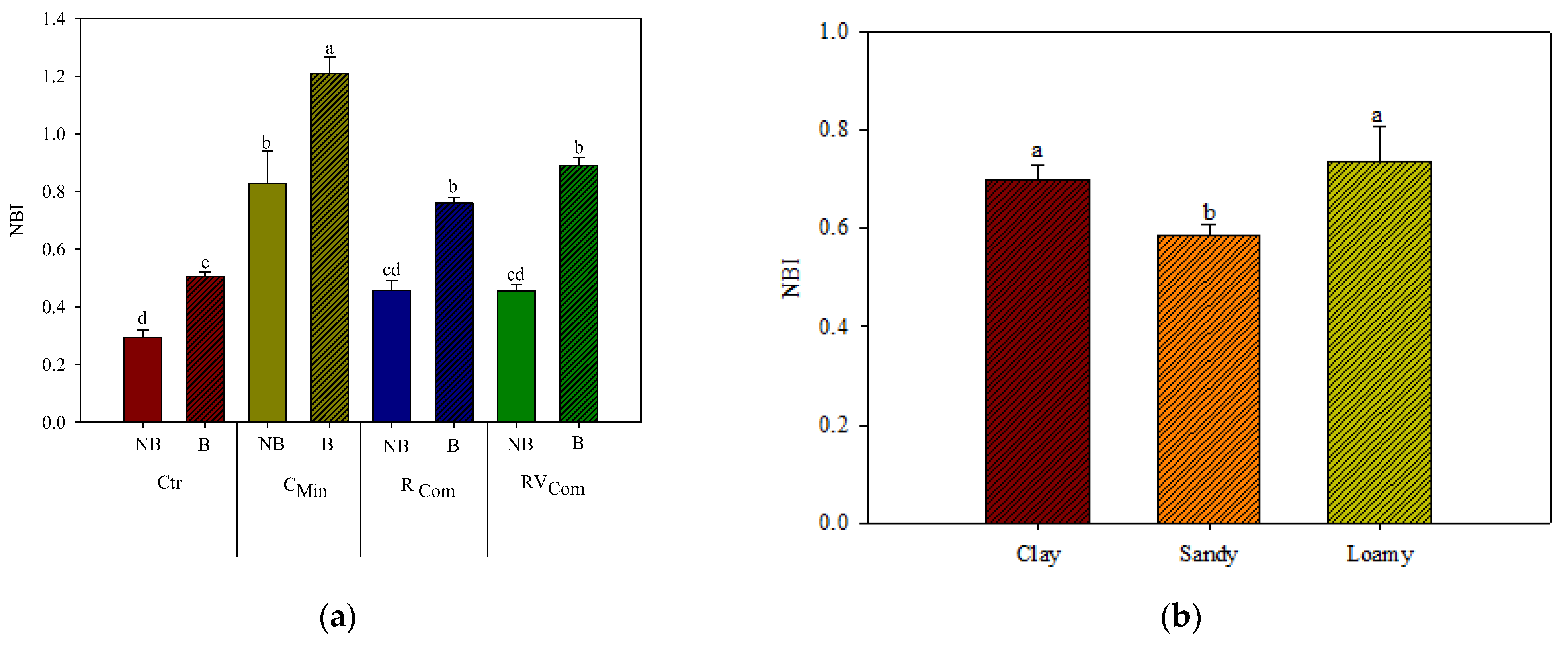
The N balance index (NBI) was affected by the interaction fertilization strategy × microbial biofertilizer application (Table S1, Figure 7a), as well as by the main effect of soil texture (Table S1, Figure 7b).
Figure 7.
Leaf nitrogen balance index (NBI) in maize: (a) interaction between soil texture, fertilization, and microbial- biofertilizer application; (b) interaction between fertilization and microbial biofertilizer application. Different letters indicate statistically significant differences (p < 0.05). Error bars represent standard error of the mean. Ctr, no-fertilization control; CMin, mineral fertilization control; RCom, residual fertility from compost; RVCom, residual fertility from vermicompost; NB, no-treatment with microbial biofertilizer; B, treated with microbial biofertilizer.
The NBI was consistently higher under the mineral fertilization strategy, whereas under the residual effect of RCom and RVCom treatments, there were significantly higher values compared to the unfertilized control only when microbial biofertilizers were applied (B). Although MBF application tended to increase NBI values across treatments, the effect was most pronounced in RVCom plots, where the highest increase (+95%) was recorded (Figure 7a). Finally, the NBI value was significantly lower in sandy soil compared to the other two soils, which did not differ significantly from each other (Figure 7b).
3.2. Maize Yield and Dry Matter Repartition
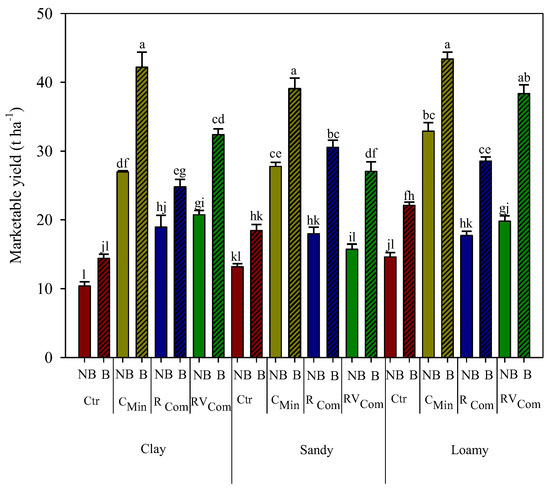
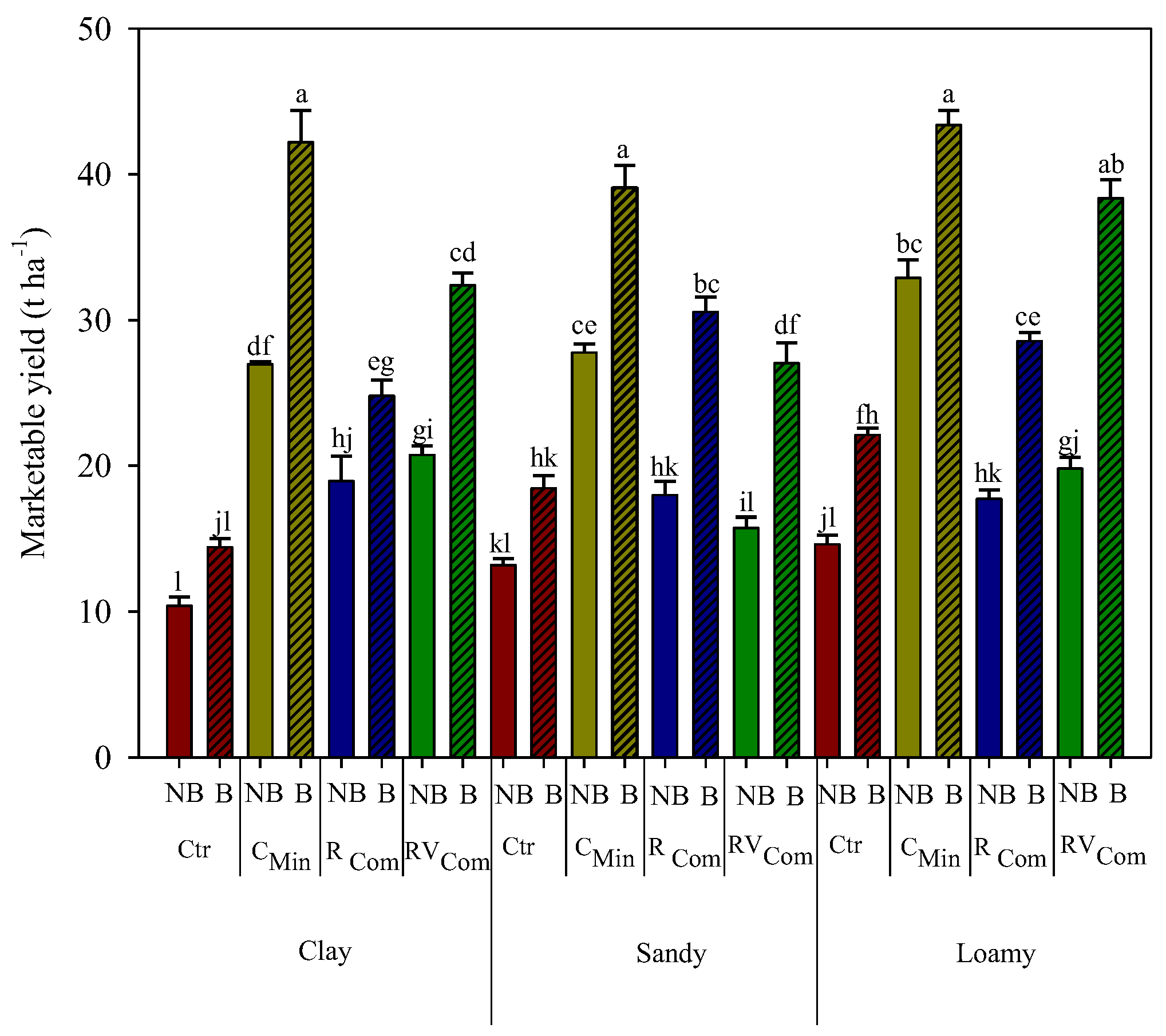
The overall DM yield across all experimental conditions was 24.9 t ha−1, and a significant third-order interaction among soil texture, fertilization strategies and biofertilizer application was detected (Table S1, Figure 8).
Figure 8.
Maize dry matter yield (t DM ha−1), as affected by soil texture, fertilization strategy, and microbial biofertilizer application. Different letters indicate statistically significant differences (p < 0.05). Error bars represent standard error of the mean. Ctr, no-fertilization control; CMin, mineral fertilization control; RCom, residual fertility from compost; RVCom, residual fertility from vermicompost NB, no-treatment with microbial biofertilizer; B, treated with microbial biofertilizer.
The highest average yield was achieved in loamy soil, approximately 27 t ha−1, representing a 14.2% increase compared to the mean yield obtained from the other two soil textures. All plots treated with the microbial biofertilizer (B) consistently exhibited higher yields compared to their respective controls (M−), with an average increase of 52.6%. However, the magnitude of this increase varied depending on the fertilization strategy and soil texture, ranging from a minimum of 30.9% under RCom fertilization in clay soil to a maximum of 93.7% under RVCom fertilization in loamy soil (Figure 8). Interestingly, across all three soils, M application under organic fertilization resulted in maize yields that were not significantly different from those of the corresponding CMin-NB treatments. In unfertilized Ctr plots, Bgenerally did not increase yield compared with the corresponding organic treatments without MBF, except in clay soil. The combination of RVCom–B produced significantly higher yields than untreated mineral plots (CMin-NB) in clay and loam soils. In contrast, MBF application had no effect under the RCom fertilization strategy, as yields did not differ significantly between inoculated and uninoculated plots. As expected, the highest yield was recorded under CMin fertilization (overall mean 35.4 t ha−1) and the plots under RCom and RVCom showed intermediate values (23.1 and 25.7 t ha−1, respectively), while the Ctr unfertilized plots yielded less than half of CMin plants (Figure 8). Overall, the combination of mineral and microbial fertilizers (CMin–B) resulted in the highest yield across all three soil types, significantly higher from all other treatments, except for RVCom–Bin loamy soil (Figure 8).
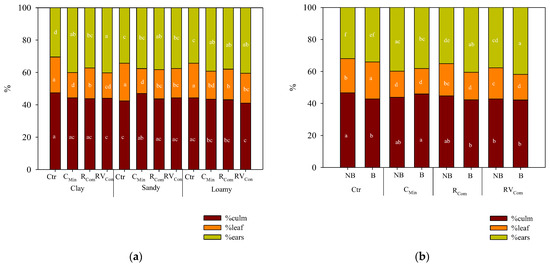
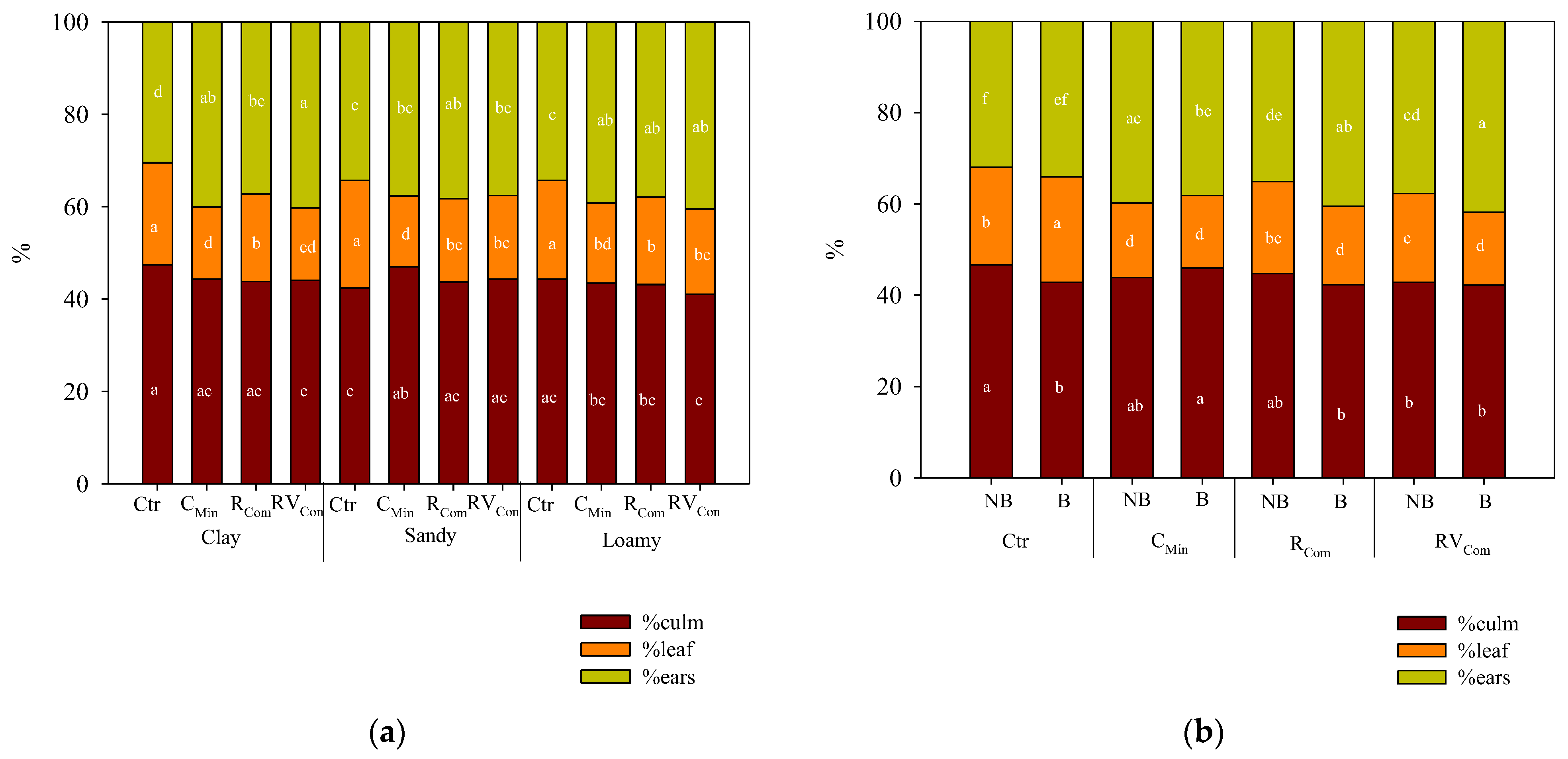
As regards the DM partitioning of aboveground biomass, the average values were 44.0%, 18.6%, and 37.4% for culms, leaves, and ears, respectively, with a significant effect detected for the two second-degree interactions soil texture × fertilization strategies (Table S1, Figure 9a) and fertilization strategies × biofertilizer application (Table S1, Figure 9b) The interaction between soil texture and fertilization strategies had a relatively minor effect on DM distribution, with ear incidence consistently lower in unfertilized plants (Figure 9a). The significance of the interaction between fertilization strategy and microbial fertilizer application was primarily driven by the Beffect, which significantly increased ear incidence under both residual bio-based fertilization strategies (RCom and RVCom), while no effect was observed in the unfertilized control (Ctr) or with mineral fertilization (CMin) (Figure 9b).
Figure 9.
Percentage partitioning of maize dry matter yields among stems, leaves, and ears: (a) interaction between soil texture and fertilization; (b) interaction between fertilization and microbial- biofertilizer application. Different letters indicate statistically significant differences (p < 0.05). Error bars represent standard error of the mean. Ctr, no-fertilization control; CMin, mineral fertilization control; RCom, residual fertility from compost; RVCom, residual fertility from vermicompost; NB, no-treatment with microbial biofertilizer; B, treated with biofertilizer t.
3.3. Maize Chemical Composition and In Vitro Digestibility
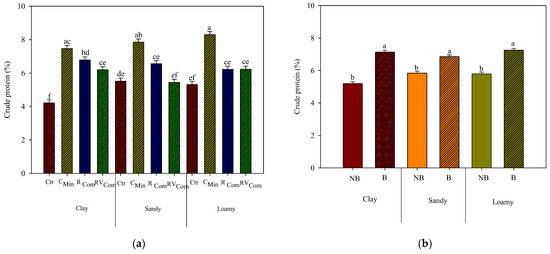
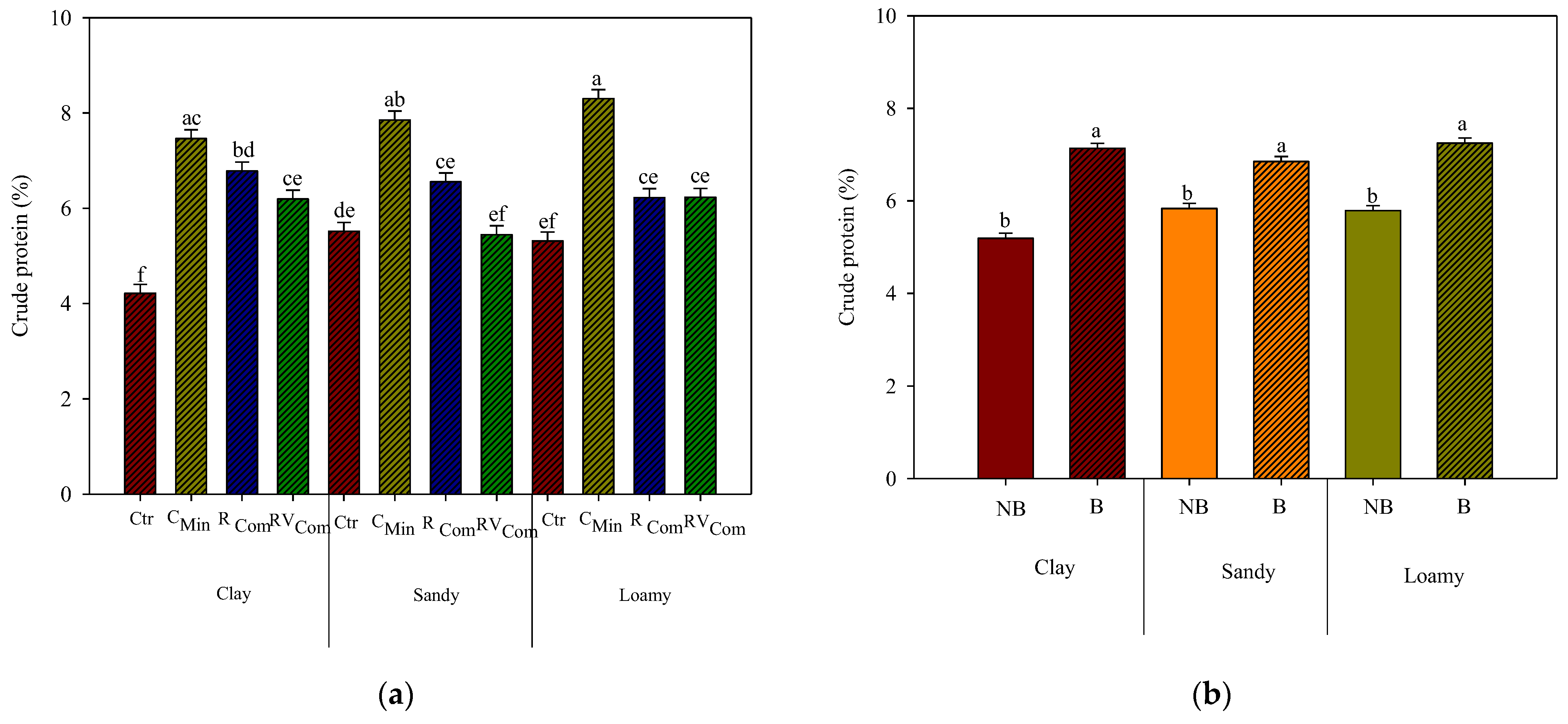
Crude protein content was significantly affected by fertilization strategy, MBF application, and their second-order interactions with soil texture (Table S1). The mineral fertilization produced maize with the highest CP concentration (7.87% on DM basis), followed by the residual fertilization effect from RCom (6.52%) and RVCom (5.96%), with the lowest value in unfertilized Ctr (5.02%). Application of MBF significantly increased maize CP content (on average 7.08% vs. 5.60%, respectively, for B and NB), with the largest increase observed for plants under RCom (7.60% vs. 5.44%) and RVCom (7.60% vs. 6.90%) and treatments. The soil texture × fertilization interaction highlighted significantly higher CP values for maize under the CMin treatment, particularly in loamy soil (8.30%), and the lowest in the unfertilized clay Ctr (4.22%), whereas the residual fertilization effect from Com and VCom yielded intermediate values (6.78–6.19%) across all textures (Figure 10a).
Figure 10.
Crude protein content (% DM) of maize biomass: (a) interaction between soil texture and fertilization; (b) interaction between soil texture and microbial biofertilizer application. Different letters indicate statistically significant differences (p < 0.05). Error bars represent standard error of the mean. Ctr, no-fertilization control; CMin, mineral fertilization control; RCom, residual fertility from compost; RVCom, residual fertility from vermicompost; NB, no-treatment with microbial biofertilizer; B, treated with microbial biofertilizer.
The texture × M interaction was primarily due to the consistent increase in CP across textures following MBF application, in particular in clay soil (+1.94 percentage points), whereas in sandy soil the effect was less marked (+1.01 percentage points) (Figure 10b).
As shown in Table S1, EE was exclusively influenced (p < 0.05) by fertilization strategy, with the value observed under CMin treatment (1.62%) being significantly greater than those recorded under RCom, RVCom, and Ctr (respectively, 1.52%, 152%, 1.50%).
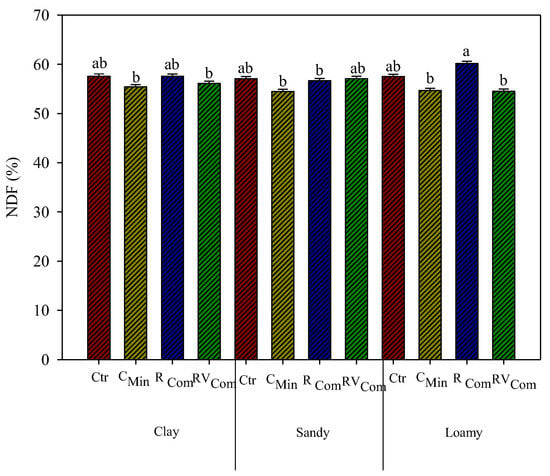
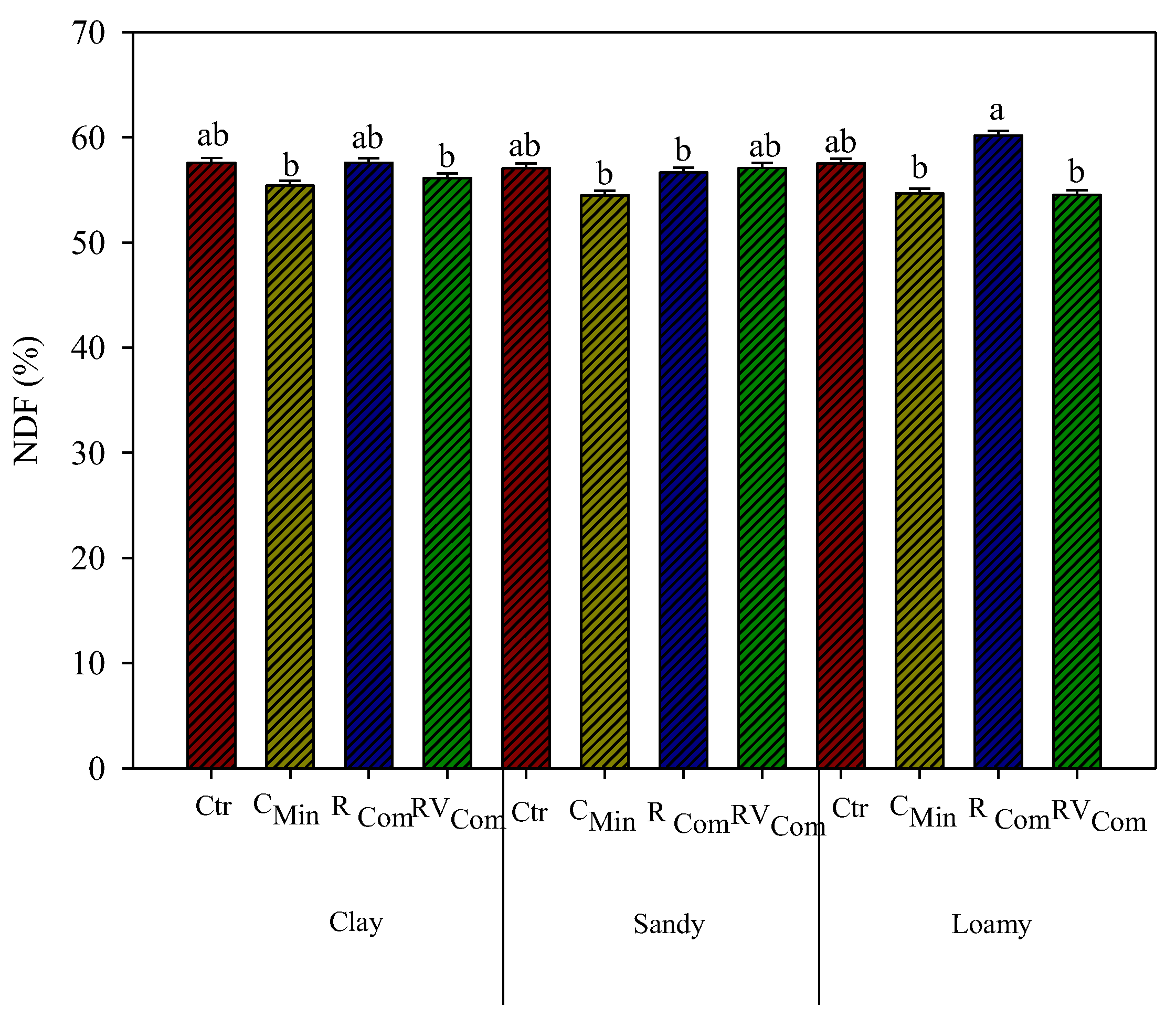
As for fiber components, the NDF content was influenced by a combination of fertilization strategies, MBF application, and their second-order interactions with soil texture (Table S1). As for the main effect of fertilization strategies, plants under RCom and Ctr treatments showed significantly higher percentages of NDF (58.12% and 57.39%) compared to the lower values in RVCom and CMin treatment (55.90% and 54.85%). The MBF treatment reduced NDF content (on average 57.59% vs. 55.54%). Finally, for the soil texture × fertilization interaction (Figure 11), loamy–RCom showed the significantly highest value (60.15%), while the other treatments ranged from 54.48 to 57.58%.
Figure 11.
NDF content (% DM) of maize biomass: interaction between fertilization and soil texture. Different letters indicate statistically significant differences (p < 0.05). Error bars represent standard error of the mean. Ctr, no-fertilization control; CMin, mineral fertilization control; RCom, residual fertility from compost; RVCom, residual fertility from vermicompost;.
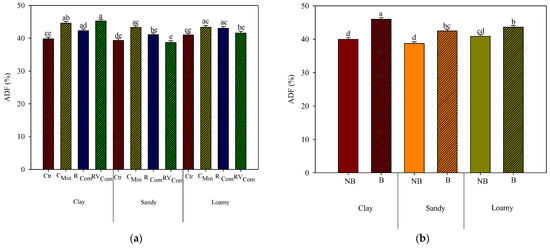
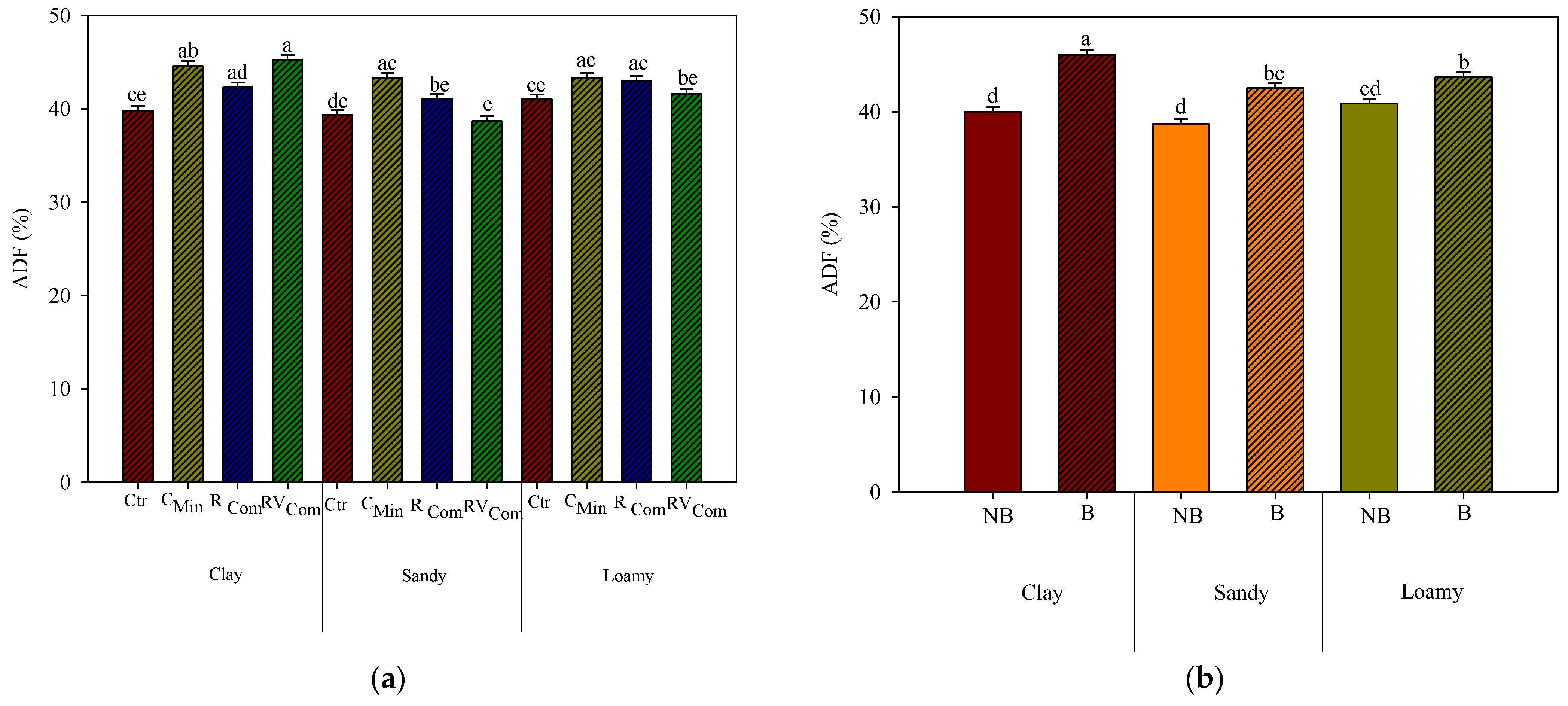
Maize ADF content was affected by soil texture, fertilization strategy, and MBF application (Table S1), with significant soil texture × fertilization (Table S1, Figure 12a) and soil texture × MBF interactions (Table S1, Figure 12b). Maize grown in clay (42.99%) and loam (42.24%) soils had significantly higher ADF values than in sandy soils (40.61%). Among fertilization strategies, CMin produced the highest ADF content (43.74%), followed by RCom (42.14%), RVCom (41.85%), and Ctr (40.05%). Treatments with MBF also resulted in higher ADF content than their untreated counterpart (44.03% vs. 39.86%). In the soil texture × fertilization interaction (Figure 12a), ADF was 6.6 pp higher under clay–RVCom than sandy–RVCom. In the soil texture × MBF interaction (Figure 12b), B raised ADF across all textures, with the strongest effect in clay soils (+6.0 pp).
Figure 12.
ADF content (% DM) of maize biomass: (a) interaction between fertilization and soil texture; (b) interaction between soil texture and microbial biofertilizer application. Different letters indicate statistically significant differences (p < 0.05). Error bars represent standard error of the mean. Ctr, no-fertilization control; CMin, mineral fertilization control; RCom, residual fertility from compost; RVCom, residual fertility from vermicompost NB, no-treatment with microbial biofertilizer; B, treated with microbial biofertilizer.
In contrast to the marked effects observed for NDF and ADF, ADL content in maize was significantly (p < 0.05) influenced only by soil texture and fertilization (Table S1). Plants grown in loamy soil had the highest lignin content (7.70%) and those in sandy soil showed the lowest (6.01%), while clay soils had an intermediate value (6.86%) that did not differ significantly from the other textures. Within fertilization treatments, RVCom and Ctr plants reached 7.72% and 8.11%, respectively, whereas CMin and RCom registered lower values (5.54% and 6.05%).
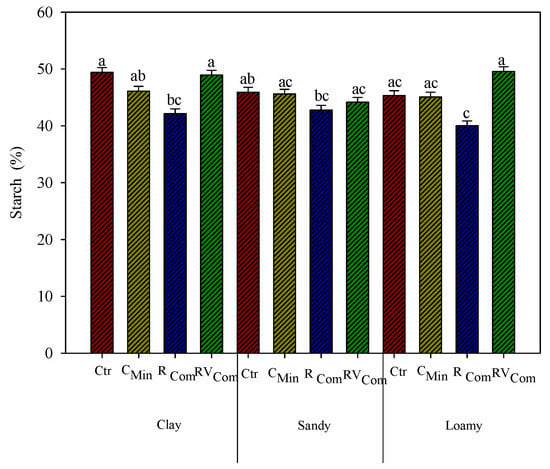
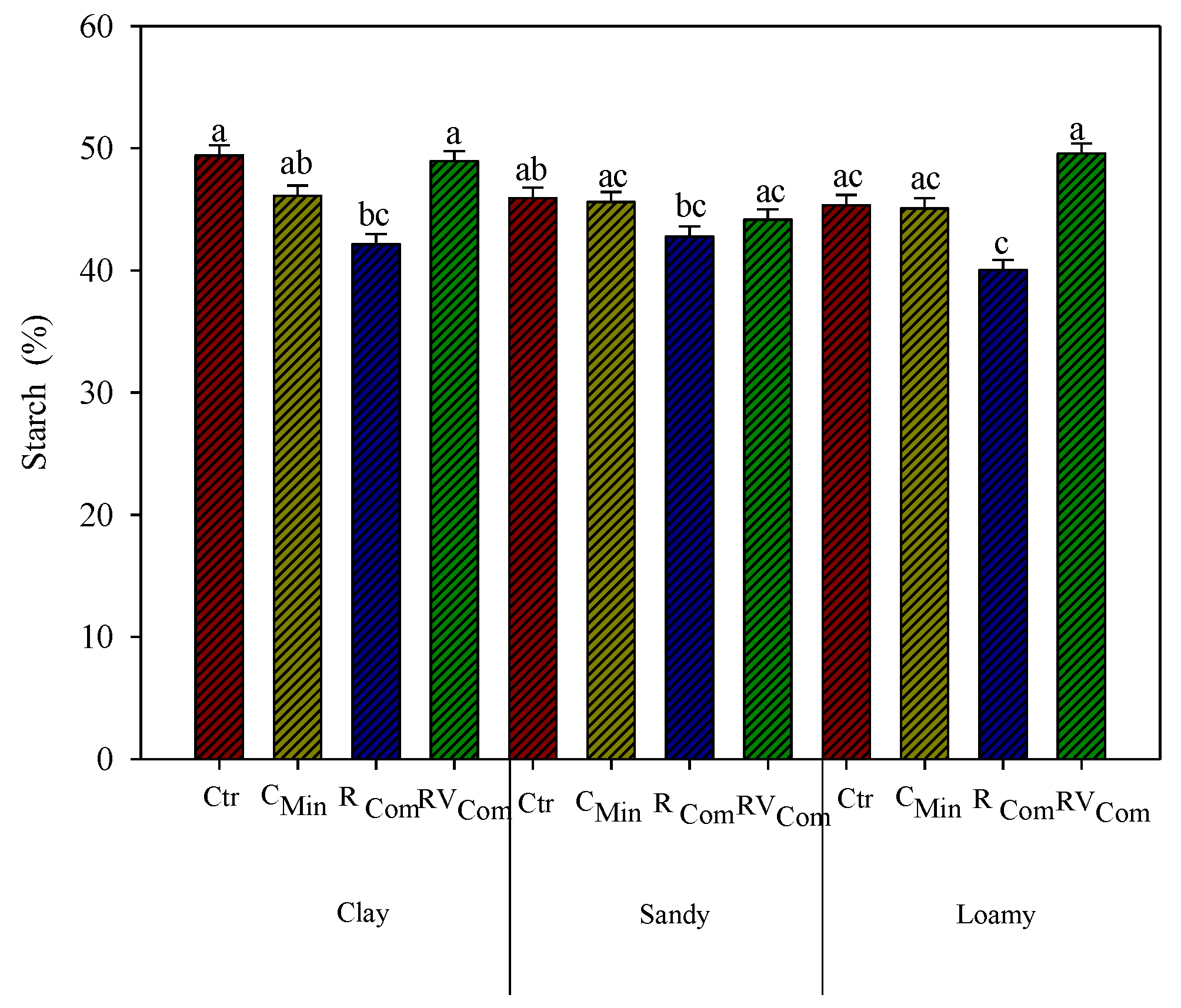
Consistent with trends observed for the energy-related maize components, namely the ears, starch levels were influenced by soil texture, fertilization strategy, and their interaction (Table S1). Clay-derived biomass showed the highest starch concentration (46.65%) compared to loamy (45.01%), whereas biomass of sandy soil did not differ compared to other textures (44.61%). Fertilization effects on starch content grouped RVCom, Ctr, and CMin with comparable values (47.55%, 46.89%, and 45.59%), all significantly higher than RCom (41.65%). The soil texture × fertilization interaction (Figure 13) was driven by the very low starch content in loam–RCom biomass (40.04%) compared with the higher values observed in loam–RVCom, clay–Ctr, and clay–RVCom biomass (49.56%, 49.41%, and 48.93%, respectively).
Figure 13.
Starch content (% DM) of maize biomass: interaction between fertilization and soil texture. Different letters indicate statistically significant differences (p < 0.05). Error bars represent standard error of the mean. Ctr, no-fertilization control; CMin, mineral fertilization control; RCom, residual fertility from compost; RVCom, residual fertility from vermicompost.
In contrast to the strong responses observed for chemical composition, no significant differences were observed in maize IVDMD and IVNDFD across the experimental plots (Table S1). Average values across soil textures ranged from 72.7% to 73.9% for IVDMD and from 53.6% to 55.3% for IVNDFD. Across fertilization strategies, the values were between 70.1 and 77.5% for IVDMD and 50.2–60.6% for IVNDFD. Slightly higher values of IVDMD and IVNDFD were observed for B maize (74.8% and 56.3%) compared to NB (71.6% and 52.4%).
Similarly, ash levels remained broadly consistent across all factors (Table S1). Concentrations varied slightly according to soil texture, ranging from 4.93% in clay to 5.02% in sandy soil. Fertilization strategies exhibited a similar range, with values ranging from 4.87% in RCom to 5.13% in RVCom, while the CMin and Ctr treatments overlapped by approximately 5%. No difference emerged between B and NB applications (5.03% and 4.95%, respectively).
4. Discussion
In intensively managed maize crops, N availability is pivotal for determining both yield and forage quality [47], and environmental impacts associated with the crop’s high N demand [48]. Improving N use efficiency through alternative fertilization strategies is crucial for reconciling intensive production with sustainability goals, especially in Italy’s irrigated lowlands, where maize must achieve high biomass yields on limited arable land [49,50]. Although conducted over a single maize cropping cycle, this study provides preliminary evidence that Com and VCom may exhibit carry-over fertilizing effects, and that co-application with MBF can enhance their performance across different soil textures.
Excluding the unfertilized Ctr plots, the DM yields across treatments were consistent with regional reference values [31,43,51], indirectly confirming that the experimental conditions reflected real agronomic contexts and supporting a reliable interpretation of the residual fertilization effect of Com and VCom. The third-order interaction observed for DM yield underscores that the long-term effectiveness of bio-based fertilization strategies results from complex dynamics linking biofertilizers’ biochemical properties, the activity of microbial inoculants, and soil physical/chemical characteristics. Soil texture was confirmed as a primary regulator, influencing nutrients persistence and release, as well as MBF effectiveness. Loamy soil exhibited a clear expression of this interaction, with RVCom-B treatment nearly doubling DM yield compared with the uninoculated plots and exceeding that of CMin-NB treatment. Indeed, balanced conditions of aeration and water retention may have enabled microbial fertilizers to synchronize nutrient mineralization with crop demand more effectively than chemical inputs [52]. Moreover, the VCom matrix, rich in diverse native microbial communities, may have provided a steady supply of mineral N and growth-promoting compounds [53], while the AMF may have expanded root functionality, improving access to both mobile and less soluble nutrients [54]. As discussed by de Holanda et al. [55], the consistently lower maize yields observed in sandy soils may have resulted not only from the rapid nutrient leaching and poor water retention typical of this soil texture, but also from decreased survival and colonization of the inoculated MBF, limited diffusion of microbial metabolites in the rhizosphere, and accelerated turnover of labile organic matter, all factors that can disrupt the dynamic synchrony between nutrients, microbes, and plants. Yield from clay soil exhibited a more complex pattern. While RVCom–B outperformed mineral fertilization, RCom–B failed to provide any benefit and even reduced yields. This contrast can be explained by the different biochemical nature of the soil amendments. Compost may contain coarser and more recalcitrant fractions that decomposed slowly and were more prone to N adsorption onto clay particles [56], restricting nutrient availability despite inoculation. Vermicompost, richer in labile organic and nitrogenous forms [57], may interact more effectively with the clay’s cation-exchange capacity [58], sustaining a gradual nutrient release that MBF could further enhance. These divergent responses suggest that microbial stimulation alone cannot compensate for unfavorable substrate–soil interactions and may even trigger priming effects that accelerate OM turnover without leading to proportional nutrient uptake by the crop [18].
The influence of residual effects of bio-based fertilizers extended beyond total biomass, affecting how resources were partitioned between vegetative and reproductive structures. The enhanced ear development observed under RCom and RVCom following MBF treatment, and the absence of effects under unfertilized and mineral treatments, suggest that microbial stimulation is most effective when coupled with degradable organic substrates that sustain nutrient release during the transition to reproductive growth, as this process requires both an energy source and favorable nutrient conditions to modulate allocation patterns [59,60]. Physiological indicators reinforced these observations, since SPAD and NBI varied in close association with N availability and assimilation efficiency [61,62]. As expected, mineral N consistently generated the highest SPAD readings, a likely reflection of rapid nitrate assimilation and chlorophyll synthesis [63]. Under residual organic fertilization, MBF improved SPAD only in specific cases, particularly RCom in clay, suggesting that the functional window for microbial inoculants is determined by the interplay between soil properties and amendment quality [64]. In unfertilized plots, MBF can stimulate vegetative growth at the expense of reproductive allocation, which could be explained by competition for N between plant roots and the rhizosphere microbiota under severe N limitation [65]. From a biochemical perspective, these patterns may arise from shifts in metabolic priorities. Adequate N supply stimulates the glutamine synthetase/glutamate synthase cycle [66] and nitrate reductase activity [67], promoting protein biosynthesis and sustained photosynthetic capacity [68]. In contrast, nutrient scarcity can channel carbon towards the phenylpropanoid pathway [69], leading to increased synthesis of phenolic compounds and lignin, which strengthens cell walls but constrains metabolic flexibility [70]. The NBI effectively integrated these signals, with MBF under RVCom showing marked increases, suggesting that microbial inoculation amplified residual fertility and modulated both primary and secondary metabolism [71]. Pigment and phenolic profiles mirrored this dual role, with chlorophyll declining in sandy soils and unfertilized plots but partially restored by MBF in the most compatible combinations, while flavanols and anthocyanins peaked under nutrient limitation and decreased under MBF, where stress mitigation occurred.
The yield patterns were reflected in maize composition, with soil texture and fertilization defining the conditions under which MBF effects were expressed. Biomass CP content reflected N availability during plant development. Mineral fertilization supported the highest CP through rapid nitrate uptake and incorporation into biomass via the glutamine synthetase and glutamate synthase pathway [72]. Despite a slower N release, both RCom and RVCom sustained intermediate CP content through gradual mineralization of organic N, likely supporting a steady nitrate supply in combination with rhizosphere microbial activity [73]. The low CP observed in Ctr was expected, reflecting the inherently limited N availability in the absence of fertilization [47]. These differences mirrored SPAD and NBI, indicating joint control of N assimilation and partitioning by nutrient supply and microbial stimulation. In CMin plots, the faster shift to reproductive growth appears to have favored N concentration in leaves and ears, resulting in higher CP in the harvested biomass. In Ctr, the combination of limited N availability and growth imbalance seems to have promoted endogenous N recycling, with leaf proteolysis and remobilization to the ear constraining net protein accumulation [74,75]. The positive effects of MBF on CP, particularly under CMin and the residual fertilization effect of Com, indicate enhanced N assimilation efficiency when nutrient availability and degradable organic substrates sufficiently support microbial activity, a pattern consistent with findings from diverse agroecosystem studies [76,77,78].
The nutritional gradient influencing CP content also extended to lipids accumulation. The biomass EE content rose significantly only under mineral fertilization, reflecting the stronger drive toward kernel formation supported by abundant N availability [79]. Lipid synthesis, predominantly located in reproductive tissues [80], could be consistent with enhanced activity of acetyl CoA carboxylase and fatty acid synthase, suggesting that when N availability accelerates ear development, carbon may be preferentially diverted to triacylglycerols [81]. Lower EE content in RCom, RVCom, and Ctr biomass likely reflected delayed maturation, reduced grain proportion, and lower allocation to lipid-rich structures [82]. The absence of an MBF effect suggests that lipid metabolism depends more on overall nutrient context than on rhizosphere stimulation.
The carbohydrates profiles reinforced the connection between N availability and carbon allocation, highlighting how shifts in nutrient status can lead to structural changes in harvested biomass. Across treatments, CMin, Ctr, and RVCom showed similarly high starch concentrations, all exceeding RCom, which was the only treatment showing a clear reduction in starch concentration, possibly linked to a longer persistence of vegetative tissues that may have delayed the shift of carbon allocation toward reproductive structures [83]. At the same time, RCom biomass was characterized by higher NDF and ADF values, likely reflecting increased cellulose and hemicellulose deposition, as inferred from the relatively limited increase in lignin. This deduction arises from the observation that lignin concentration increased modestly relative to the overall fiber increase, suggesting a preferential allocation to primary cell wall polysaccharides rather than secondary wall lignification, resulting in a potentially more deformable and degradable fiber matrix [84]. By contrast, RVCom and Ctr accumulated more lignin within their fiber fractions, creating a more rigid structure that is potentially less accessible to ruminal microorganisms [85,86]. The apparently contradictory finding of stable in vitro degradability across treatments, despite differences in fiber content, can be explained by the interplay between fiber composition and lignin concentration. Lower degradability associated with lignin in some treatments may be offset by changes in fiber architecture and particle morphology that enhance microbial colonization [47]. In addition, as cellulose lignification increases, the fiber structure becomes more fragile, with the formation of smaller, more compact, and easily hydratable particles that are more prone to microbial attack and degradation [45].
5. Conclusions
This study assessed whether compost and vermicompost applied to a preceding wheat crop, either alone or in combination with microbial biofertilizers, could sustain forage maize yield across contrasting soil textures. Although limited to a single cropping cycle, this study provides evidence that the amendments may exert a fertilization effect capable of sustaining maize yield after wheat, and this effect was further enhanced when microbial biofertilizers were co-applied. However, the tested fertilization strategies were strongly influenced by soil physical properties and by the biochemical profile of the bio-based fertilizers. Loamy soils provided the most favorable conditions, allowing the combination of vermicompost and microbial inoculation to exceed mineral fertilization in DM yield. Overall, managing bio-based and microbial fertilizers in accordance with soil texture may reduce reliance on mineral N fertilizers while maintaining maize forage yield and quality. Further long-term, multi-site research is required to confirm these results, clarify nutrient release dynamics, and evaluate the stability of inoculated microbial communities across diverse environments. In parallel, the role of emerging technologies, such as nanomaterials for controlled nutrient delivery, should be considered as a potential complement to bio-based fertilization strategies, especially in intensive cropping systems.
Supplementary Materials
The following supporting information can be downloaded at https://www.mdpi.com/article/10.3390/su17219617/s1, Figure S1: Schematic representation of the experimental layout with the spatial distribution of treatments in a split–split plot design. Table S1: Summary of statistical significance for key factors and interactions from ANOVA analysis.
Author Contributions
Conceptualization, M.M., F.S. (Francesco Serrapica), F.M., E.C. and A.D.F.; methodology, I.D.M. and F.S. (Fiorella Sarubbi); software, L.O. and G.P.; validation, M.M., I.D.M. and A.D.F.; formal analysis, L.O. and F.M.; investigation, E.C. and F.S. (Francesco Serrapica); resources, M.M. and A.D.F.; data curation, E.C. and G.P.; writing—original draft preparation, F.S. (Francesco Serrapica) and I.D.M.; writing—review and editing, F.S. (Francesco Serrapica), F.M. and I.D.M.; visualization, E.C., F.S. (Fiorella Sarubbi) and L.O.; supervision, M.M., F.M. and A.D.F.; project administration, M.M., F.M. and A.D.F.; funding acquisition, A.D.F. All authors have read and agreed to the published version of the manuscript.
Funding
The research was supported by the Campania Region PSR 2014–2020 Tipologia 16.1.1 project VALFOCAM (Valorizzazione Foraggi Campani), CUP: B68H1900520008.
Institutional Review Board Statement
Not applicable.
Informed Consent Statement
Not applicable.
Data Availability Statement
The data of this study are available from the corresponding author upon reasonable request.
Acknowledgments
The authors would like to thank Roberto Maiello and Daniele Todisco for their valuable technical assistance with the soil analyses.
Conflicts of Interest
The authors declare no conflicts of interest.
Abbreviations
The following abbreviations are used in this manuscript:
| BBF | Bio-based fertilizers |
| Com | Compost |
| VCom | Vermicompost |
| MBF | Microbial biofertilizers |
| B | Treated with MBF |
| NB | Not treated with MBF |
| AMF | Arbuscular mycorrhizal fungi |
| RCom | Residual fertility from compost |
| RVCom | Residual fertility from vermicompost |
| CMin | Mineral fertilization control |
| Ctr | No-fertilization control |
| DM | Dry matter |
| OM | Organic matter |
| CP | Crude protein |
| EE | Ether extract |
| NDF | Neutral detergent fiber |
| ADF | Acid detergent fiber |
| ADL | Acid detergent lignin |
| IVDMD | In vitro digestibility of dry matter |
| IVNDFD | In vitro digestibility of neutral detergent fiber |
| ANOVA | Analysis of variance |
References
- Tyagi, J.; Ahmad, S.; Malik, M. Nitrogenous Fertilizers: Impact on Environment Sustainability, Mitigation Strategies, and Challenges. Int. J. Environ. Sci. Technol. 2022, 19, 11649–11672. [Google Scholar] [CrossRef] [Scilit]
- Reuland, G.; Van de Sande, T.; Dekker, H.; Sigurnjak, I.; Meers, E. Digestate in Replacement of Synthetic Fertilisers: A Comparative 3–Year Field Study of the Crop Performance and Soil Residual Nitrates in West-Flanders. Eur. J. Agron. 2024, 161, 127380. [Google Scholar] [CrossRef] [Scilit]
- International Fertilizer Association (IFA). Top Fertilizer Calls for 2024. CRU Group 2024. Available online: https://www.bcinsight.crugroup.com/2024/01/31/top-ten-fertilizer-calls-for-2024 (accessed on 30 September 2024).
- Tilman, D.; Cassman, K.G.; Matson, P.A.; Naylor, R.; Polasky, S. Agricultural Sustainability and Intensive Production Practices. Nature 2002, 418, 671–677. [Google Scholar] [CrossRef] [Scilit]
- Tang, G.; Zhang, X.; Qi, L.; Li, L.; Guo, J.; Zhong, H.; Liu, J.; Huang, J. Nitrogen and Phosphorus Fertilizer Increases the Uptake of Soil Heavy Metal Pollutants by Plant Community. Bull. Environ. Contam. Toxicol. 2022, 109, 1059–1066. [Google Scholar] [CrossRef] [Scilit] [PubMed]
- Alexander, P.; Arneth, A.; Henry, R.; Maire, J.; Rabin, S.; Rounsevell, M.D.A. High Energy and Fertilizer Prices Are More Damaging than Food Export Curtailment from Ukraine and Russia for Food Prices, Health and the Environment. Nat. Food 2023, 4, 84–95. [Google Scholar] [CrossRef] [Scilit]
- Kyriakou, V.; Garagounis, I.; Vourros, A.; Vasileiou, E.; Stoukides, M. An Electrochemical Haber-Bosch Process. Joule 2020, 4, 142–158. [Google Scholar] [CrossRef] [Scilit]
- Rodriguez, I.M.; Lacasa, J.; van Versendaal, E.; Lemaire, G.; Belanger, G.; Jégo, G.; Sandaña, P.G.; Soratto, R.P.; Djalovic, I.; Ata-Ul-Karim, S.T.; et al. Revisiting the Relationship between Nitrogen Nutrition Index and Yield across Major Species. Eur. J. Agron. 2024, 154, 127079. [Google Scholar] [CrossRef] [Scilit]
- Goucher, L.; Bruce, R.; Cameron, D.D.; Lenny Koh, S.C.; Horton, P. The Environmental Impact of Fertilizer Embodied in a Wheat-to-Bread Supply Chain. Nat. Plants 2017, 3, 17012. [Google Scholar] [CrossRef] [Scilit] [PubMed]
- Yamini, V.; Singh, K.; Antar, M.; El Sabagh, A. Sustainable Cereal Production through Integrated Crop Management: A Global Review of Current Practices and Future Prospects. Front. Sustain. Food Syst. 2025, 9, 1428687. [Google Scholar] [CrossRef] [Scilit]
- Wester-Larsen, L.; Müller-Stöver, D.S.; Salo, T.; Jensen, L.S. Potential Ammonia Volatilization from 39 Different Novel Biobased Fertilizers on the European Market—A Laboratory Study Using 5 European Soils. J. Environ. Manag. 2022, 323, 116249. [Google Scholar] [CrossRef] [Scilit]
- Tröster, M.F. Assessing the Value of Organic Fertilizers from the Perspective of EU Farmers. Agriculture 2023, 13, 1057. [Google Scholar] [CrossRef] [Scilit]
- Syarifinnur, S.; Nuraini, Y.; Prasetya, B.; Handayanto, E. Comparing Compost and Vermicompost Produced from Market Organic Waste. Int. J. Recycl. Org. Waste Agric. 2023, 12. [Google Scholar] [CrossRef]
- Goldan, E.; Nedeff, V.; Barsan, N.; Culea, M.; Panainte-Lehadus, M.; Mosnegutu, E.; Tomozei, C.; Chitimus, D.; Irimia, O. Assessment of Manure Compost Used as Soil Amendment—A Review. Processes 2023, 11, 1167. [Google Scholar] [CrossRef] [Scilit]
- Enebe, M.C.; Erasmus, M. Vermicomposting Technology—A Perspective on Vermicompost Production Technologies, Limitations and Prospects. J. Environ. Manag. 2023, 345, 118585. [Google Scholar] [CrossRef] [Scilit]
- Cruz, G.S.J.; Hermes, P.H.; Miriam, S.V.; López, A.M. Benefits of Vermicompost in Agriculture and Factors Affecting Its Nutrient Content. J. Soil. Sci. Plant Nutr. 2024, 24, 4898–4917. [Google Scholar] [CrossRef] [Scilit]
- Amaya-Gómez, C.V.; Flórez-Martínez, D.H.; Cayuela, M.L.; Tortosa, G. Compost and Vermicompost Improve Symbiotic Nitrogen Fixation, Physiology and Yield of the Rhizobium-Legume Symbiosis: A Systematic Review. Appl. Soil. Ecol. 2025, 210, 106051. [Google Scholar] [CrossRef] [Scilit]
- Müller, B.; Wester-Larsen, L.; Jensen, L.S.; Salo, T.; Garrido, R.R.; Arkoun, M.; D’Oria, A.; Lewandowski, I.; Müller, T.; Bauerle, A. Agronomic Performance of Novel, Nitrogen-Rich Biobased Fertilizers across European Field Trial Sites. Field Crops Res. 2024, 316, 109486. [Google Scholar] [CrossRef] [Scilit]
- Fadiji, A.E.; Xiong, C.; Egidi, E.; Singh, B.K. Formulation Challenges Associated with Microbial Biofertilizers in Sustainable Agriculture and Paths Forward. J. Sustain. Agric. Environ. 2024, 3, e70006. [Google Scholar] [CrossRef] [Scilit]
- Kafle, A.; Cope, K.R.; Raths, R.; Krishna Yakha, J.; Subramanian, S.; Bücking, H.; Garcia, K. Harnessing Soil Microbes to Improve Plant Phosphate Efficiency in Cropping Systems. Agronomy 2019, 9, 127. [Google Scholar] [CrossRef] [Scilit]
- Kurniawati, A.; Toth, G.; Ylivainio, K.; Toth, Z. Opportunities and Challenges of Bio-Based Fertilizers Utilization for Improving Soil Health. Org. Agric. 2023, 13, 335–350. [Google Scholar] [CrossRef] [Scilit]
- Viscardi, S.; Ventorino, V.; Duran, P.; Maggio, A.; De Pascale, S.; Mora, M.L.; Pepe, O. Assessment of Plant Growth Promoting Activities and Abiotic Stress Tolerance of Azotobacter chroococcum Strains for a Potential Use in Sustainable Agriculture. J. Soil. Sci. Plant Nutr. 2016, 16, 848–863. [Google Scholar] [CrossRef] [Scilit]
- Nevens, F.; Reheul, D. The Application of Vegetable, Fruit and Garden Waste (VFG) Compost in Addition to Cattle Slurry in a Silage Maize Monoculture: Nitrogen Availability and Use. Eur. J. Agron. 2003, 19, 189–203. [Google Scholar] [CrossRef] [Scilit]
- Butler, T.J.; Han, K.J.; Muir, J.P.; Weindorf, D.C.; Lastly, L. Dairy Manure Compost Effects on Corn Silage Production and Soil Properties. Agron. J. 2008, 100, 1541–1545. [Google Scholar] [CrossRef] [Scilit]
- Behrouzi, D.; Diyanat, M.; Majidi, E.; Mirhadi, M.J.; Shirkhani, A. Yield and Quality of Forage Maize as a Function of Diverse Irrigation Regimes and Biofertilizer in the West of Iran. J. Plant Nutr. 2023, 46, 2246–2256. [Google Scholar] [CrossRef] [Scilit]
- Hazbawi, I.; Jahanbakhshi, A.; Sepehr, B. Modeling and Optimization of Yield and Physiological Indices of Fodder Maize (Zea mays L.) under the Influence of Vermicompost and Irrigation Percentage Using Response Surface Methodology (RSM). J. Agric. Food Res. 2025, 22, 102043. [Google Scholar] [CrossRef] [Scilit]
- Borrelli, L.; Pecetti, L. Wheat yield as a measure of the residual fertility after 20 years of forage cropping systems with different manure management in Northern Italy. Ital. J. Agron. 2019, 14, 1359. [Google Scholar] [CrossRef] [Scilit]
- Noceto, P.-A.; Bettenfeld, P.; Boussageon, R.; Hériché, M.; Sportes, A.; van Tuinen, D.; Courty, P.-E.; Wipf, D. Arbuscular Mycorrhizal Fungi, a Key Symbiosis in the Development of Quality Traits in Crop Production, Alone or Combined with Plant Growth-Promoting Bacteria. Mycorrhiza 2021, 31, 655–669. [Google Scholar] [CrossRef] [Scilit]
- Beck, H.E.; Zimmermann, N.E.; McVicar, T.R.; Vergopolan, N.; Berg, A.; Wood, E.F. Present and Future Köppen-Geiger Climate Classification Maps at 1-Km Resolution. Sci. Data 2018, 5, 180214. [Google Scholar] [CrossRef] [Scilit]
- Fusco, G.M.; Di Mola, I.; Mori, M.; Cozzolino, E.; Morrone, B.; Trasacco, F.; Carillo, P. From Water Buffalo (Bubalus bubalis) Manure to Vermicompost: Testing a Sustainable Approach for Agriculture. Sustainability 2025, 17, 4253. [Google Scholar] [CrossRef] [Scilit]
- Mori, M.; Di Mola, I. Guida Alla Concimazione: Metodi, Procedure e Strumenti per un Servizio di Consulenza, 1st ed.; Imago Editrice s.r.l.: Dragoni, Italy, 2012; pp. 196–197. (In Italian) [Google Scholar]
- Ritchie, S.W.; Hanway, J.J.; Benson, G.O. How a Corn Plant Develops; Special Report No. 48; Iowa State University of Science and Technology, Cooperative Extension Service: Ames, IA, USA, 1993; pp. 1–18. [Google Scholar]
- ISO 18400-102; Soil Quality—Sampling—Part 102: Selection and Application of Sampling Techniques. International Organization for Standardization: Geneva, Switzerland, 2017.
- ISO 11464; Soil Quality—Pretreatment of Samples for Physico-Chemical Analysis. International Organization for Standardization: Geneva, Switzerland, 2006.
- Duri, L.G.; Paradiso, R.; Di Mola, I.; Cozzolino, E.; Ottaiano, L.; Marra, R.; Mori, M. Organic Fertilization and Biostimulant Application to Improve Yield and Quality of Eggplant While Reducing the Environmental Impact. Plants 2025, 14, 962. [Google Scholar] [CrossRef] [Scilit]
- ISO 11277; Soil Quality—Determination of Particle Size Distribution in Mineral Soil Material—Method by Sieving and Sedimentation. International Organization for Standardization (ISO): Geneva, Switzerland, 2009.
- Visconti, D.; Carrino, L.; Fiorentino, N.; El-Nakhel, C.; Todisco, D.; Fagnano, M. Phytomanagement of Shooting Range Soils Contaminated by Pb, Sb, and as Using Ricinus communis L.: Effects of Compost and AMF on PTE Stabilization, Growth, and Physiological Responses. Environ. Geochem. Health 2025, 47, 129. [Google Scholar] [CrossRef] [Scilit]
- Sah, R.N. Nitrate-nitrogen Determination—A Critical Review. Commun. Soil. Sci. Plant Anal. 1994, 25, 2841–2869. [Google Scholar] [CrossRef] [Scilit]
- Bremner, J.M. Total Nitrogen. In Methods of Soil Analysis; John Wiley & Sons, Ltd.: Hoboken, NJ, USA, 1965; pp. 1149–1178. ISBN 978-0-89118-204-7. [Google Scholar]
- Walkley, A.; Black, I.A. An examination of the Degtjareff method for determining soil organic matter, and a proposed modification of the chromic acid titration method. Soil Sci. 1934, 37, 29. [Google Scholar] [CrossRef] [Scilit]
- Morari, F.; Lugato, E.; Giardini, L. Olsen Phosphorus, Exchangeable Cations and Salinity in Two Long-Term Experiments of North-Eastern Italy and Assessment of Soil Quality Evolution. Agric. Ecosyst. Environ. 2008, 124, 85–96. [Google Scholar] [CrossRef] [Scilit]
- Sunderman, F.W., Jr.; Sunderman, F.W. Studies in Serum Electrolytes XXII. A Rapid, Reliable Method for Serum Potassium Using Tetraphenylboron. Am. J. Clin. Pathol. 1958, 29, 95–103. [Google Scholar] [CrossRef] [Scilit]
- Zicarelli, F.; Sarubbi, F.; Iommelli, P.; Grossi, M.; Lotito, D.; Tudisco, R.; Infascelli, F.; Musco, N.; Lombardi, P. Nutritional Characteristics of Corn Silage Produced in Campania Region Estimated by Near Infrared Spectroscopy (NIRS). Agronomy 2023, 13, 634. [Google Scholar] [CrossRef] [Scilit]
- Robinson, P.H.; Mathews, M.C.; Fadel, J.G. Influence of Storage Time and Temperature on in Vitro Digestion of Neutral Detergent Fibre at 48h, and Comparison to 48h in Sacco Neutral Detergent Fibre Digestion. Anim. Feed Sci. Technol. 1999, 80, 257–266. [Google Scholar] [CrossRef] [Scilit]
- Serrapica, F.; Masucci, F.; Raffrenato, E.; Sannino, M.; Vastolo, A.; Barone, C.M.A.; Di Francia, A. High Fiber Cakes from Mediterranean Multipurpose Oilseeds as Protein Sources for Ruminants. Animals 2019, 9, 918. [Google Scholar] [CrossRef] [Scilit] [PubMed]
- Masucci, F.; Serrapica, F.; Cutrignelli, M.I.; Sabia, E.; Balivo, A.; Di Francia, A. Replacing Maize Silage with Hydroponic Barley Forage in Lactating Water Buffalo Diet: Impact on Milk Yield and Composition, Water and Energy Footprint, and Economics. J. Dairy Sci. 2024, 107, 9426–9441. [Google Scholar] [CrossRef] [Scilit]
- Masoero, F.; Gallo, A.; Zanfi, C.; Giuberti, G.; Spanghero, M. Effect of Nitrogen Fertilization on Chemical Composition and Rumen Fermentation of Different Parts of Plants of Three Corn Hybrids. Anim. Feed Sci. Technol. 2011, 164, 207–216. [Google Scholar] [CrossRef] [Scilit]
- Boone, L.; Van linden, V.; De Meester, S.; Vandecasteele, B.; Muylle, H.; Roldán-Ruiz, I.; Nemecek, T.; Dewulf, J. Environmental Life Cycle Assessment of Grain Maize Production: An Analysis of Factors Causing Variability. Sci. Total Environ. 2016, 553, 551–564. [Google Scholar] [CrossRef] [Scilit]
- Bellingeri, A.; Cabrera, V.; Gallo, A.; Liang, D.; Masoero, F. A Survey of Dairy Cattle Management, Crop Planning, and Forages Cost of Production in Northern Italy. Ital. J. Anim. Sci. 2019, 18, 786–798. [Google Scholar] [CrossRef] [Scilit]
- Serrapica, F.; Masucci, F.; De Rosa, G.; Braghieri, A.; Sarubbi, F.; Garofalo, F.; Grasso, F.; Di Francia, A. Moving Buffalo Farming beyond Traditional Areas: Performances of Animals, and Quality of Mozzarella and Forages. Agriculture 2022, 12, 1219. [Google Scholar] [CrossRef] [Scilit]
- Uzun, P.; Masucci, F.; Serrapica, F.; Varricchio, M.L.; Pacelli, C.; Claps, S.; Francia, A.D. Use of Mycorrhizal Inoculum under Low Fertilizer Application: Effects on Forage Yield, Milk Production, and Energetic and Economic Efficiency. J. Agric. Sci. 2018, 156, 127–135. [Google Scholar] [CrossRef] [Scilit]
- Ahmed, W.; Ashraf, M.N.; Sanaullah, M.; Maqsood, M.A.; Waqas, M.A.; Rahman, S.U.; Hussain, S.; Ahmad, H.R.; Mustafa, A.; Minggang, X. Soil Organic Carbon and Nitrogen Mineralization Potential of Manures Regulated by Soil Microbial Activities in Contrasting Soil Textures. J. Soil. Sci. Plant Nutr. 2024, 24, 3056–3067. [Google Scholar] [CrossRef] [Scilit]
- Rehman, S.u; De Castro, F.; Aprile, A.; Benedetti, M.; Fanizzi, F.P. Vermicompost: Enhancing Plant Growth and Combating Abiotic and Biotic Stress. Agronomy 2023, 13, 1134. [Google Scholar] [CrossRef] [Scilit]
- Wang, F.; Zhang, L.; Zhou, J.; Rengel, Z.; George, T.S.; Feng, G. Exploring the Secrets of Hyphosphere of Arbuscular Mycorrhizal Fungi: Processes and Ecological Functions. Plant Soil 2022, 481, 1–22. [Google Scholar] [CrossRef] [Scilit]
- de Holanda, S.F.; Vargas, L.K.; Granada, C.E. Challenges for Sustainable Production in Sandy Soils: A Review. Environ. Dev. Sustain. 2025, 27, 53–66. [Google Scholar] [CrossRef] [Scilit]
- Duong, T.T.T.; Verma, S.L.; Penfold, C.; Marschner, P. Nutrient Release from Composts into the Surrounding Soil. Geoderma 2013, 195–196, 42–47. [Google Scholar] [CrossRef] [Scilit]
- Broz, A.P.; Verma, P.O.; Appel, C. Nitrogen Dynamics of Vermicompost Use in Sustainable Agriculture. J. Soil Sci. Environ. Manag. 2016, 7, 173–183. [Google Scholar] [CrossRef] [Scilit]
- Demir, Z. Effects of Vermicompost on Soil Physicochemical Properties and Lettuce (Lactuca sativa var. Crispa) Yield in Greenhouse under Different Soil Water Regimes. Commun. Soil Sci. Plant Anal. 2019, 50, 2151–2168. [Google Scholar] [CrossRef] [Scilit]
- Molina-Romero, D.; Juárez-Sánchez, S.; Venegas, B.; Ortíz-González, C.S.; Baez, A.; Morales-García, Y.E.; Muñoz-Rojas, J. A Bacterial Consortium Interacts with Different Varieties of Maize, Promotes the Plant Growth, and Reduces the Application of Chemical Fertilizer Under Field Conditions. Front. Sustain. Food Syst. 2021, 4, 616757. [Google Scholar] [CrossRef] [Scilit]
- García-Cano, C.; Ferrández-Gómez, B.; Jordá, J.D.; Cerdán, M.; Sánchez-Sánchez, A. Comparative Evaluation of Organic and Conventional Biostimulant Application in Strawberry (Fragaria × Ananassa) Plants: Effects on Flowering, Ripening, and Fruit Quality. J. Agric. Food Res. 2025, 23, 102180. [Google Scholar] [CrossRef] [Scilit]
- Dong, R.; Miao, Y.; Wang, X.; Chen, Z.; Yuan, F. Improving Maize Nitrogen Nutrition Index Prediction Using Leaf Fluorescence Sensor Combined with Environmental and Management Variables. Field Crops Res. 2021, 269, 108180. [Google Scholar] [CrossRef] [Scilit]
- Rhezali, A.; Aissaoui, A.E. Feasibility Study of Using Absolute SPAD Values for Standardized Evaluation of Corn Nitrogen Status. Nitrogen. 2021, 2, 298–307. [Google Scholar] [CrossRef] [Scilit]
- Szulc, P.; Bocianowski, J.; Nowosad, K.; Zielewicz, W.; Kobus-Cisowska, J. SPAD Leaf Greenness Index: Green Mass Yield Indicator of Maize (Zea mays L.), Genetic and Agriculture Practice Relationship. Plants 2021, 10, 830. [Google Scholar] [CrossRef] [Scilit]
- Craig, M.E.; Fraterrigo, J.M. Plant–Microbial Competition for Nitrogen Increases Microbial Activities and Carbon Loss in Invaded Soils. Oecologia 2017, 184, 583–596. [Google Scholar] [CrossRef] [Scilit]
- Adomako, M.O.; Roiloa, S.; Yu, F.-H. Potential Roles of Soil Microorganisms in Regulating the Effect of Soil Nutrient Heterogeneity on Plant Performance. Microorganisms 2022, 10, 2399. [Google Scholar] [CrossRef] [Scilit]
- Loyola-Vargas, V.M.; Sánchez de Jiménez, E. Regulation of Glutamine Synthetase/Glutamate Synthase Cycle in Maize Tissues, Effect of the Nitrogen Source. J. Plant Physiol. 1986, 124, 147–154. [Google Scholar] [CrossRef] [Scilit]
- Garnett, T.; Conn, V.; Plett, D.; Conn, S.; Zanghellini, J.; Mackenzie, N.; Enju, A.; Francis, K.; Holtham, L.; Roessner, U.; et al. The Response of the Maize Nitrate Transport System to Nitrogen Demand and Supply across the Lifecycle. New Phytol. 2013, 198, 82–94. [Google Scholar] [CrossRef] [Scilit]
- Fortunato, S.; Nigro, D.; Lasorella, C.; Marcotuli, I.; Gadaleta, A.; de Pinto, M.C. The Role of Glutamine Synthetase (GS) and Glutamate Synthase (GOGAT) in the Improvement of Nitrogen Use Efficiency in Cereals. Biomolecules 2023, 13, 1771. [Google Scholar] [CrossRef] [Scilit]
- Dong, N.-Q.; Lin, H.-X. Contribution of Phenylpropanoid Metabolism to Plant Development and Plant–Environment Interactions. J. Integr. Plant Biol. 2021, 63, 180–209. [Google Scholar] [CrossRef] [Scilit]
- Yao, T.; Feng, K.; Xie, M.; Barros, J.; Tschaplinski, T.J.; Tuskan, G.A.; Muchero, W.; Chen, J.-G. Phylogenetic Occurrence of the Phenylpropanoid Pathway and Lignin Biosynthesis in Plants. Front. Plant Sci. 2021, 12, 704697. [Google Scholar] [CrossRef] [Scilit] [PubMed]
- Savarese, C.; Cozzolino, V.; Verrillo, M.; Vinci, G.; De Martino, A.; Scopa, A.; Piccolo, A. Combination of Humic Biostimulants with a Microbial Inoculum Improves Lettuce Productivity, Nutrient Uptake, and Primary and Secondary Metabolism. Plant Soil 2022, 481, 285–314. [Google Scholar] [CrossRef] [Scilit]
- Wang, H.; Zhang, X.; Zhang, G.; Fang, Y.; Hou, H.; Lei, K.; Ma, Y. Regulation of Density and Fertilization on Crude Protein Synthesis in Forage Maize in a Semiarid Rain-Fed Area. Agriculture 2023, 13, 715. [Google Scholar] [CrossRef] [Scilit]
- de Morais, E.G.; Silva, C.A.; Maluf, H.J.G.M.; Paiva, I.d.O.; de Paula, L.H.D. Effects of Compost-Based Organomineral Fertilizers on the Kinetics of NPK Release and Maize Growth in Contrasting Oxisols. Waste Biomass Valor. 2023, 14, 2299–2321. [Google Scholar] [CrossRef] [Scilit]
- Wei, S.; Wang, X.; Zhang, J.; Liu, P.; Zhao, B.; Li, G.; Dong, S. The Role of Nitrogen in Leaf Senescence of Summer Maize and Analysis of Underlying Mechanisms Using Comparative Proteomics. Plant Sci. 2015, 233, 72–81. [Google Scholar] [CrossRef] [Scilit]
- Wei, S.; Wang, X.; Shi, D.; Li, Y.; Zhang, J.; Liu, P.; Zhao, B.; Dong, S. The Mechanisms of Low Nitrogen Induced Weakened Photosynthesis in Summer Maize (Zea mays L.) under Field Conditions. Plant Physiol. Biochem. 2016, 105, 118–128. [Google Scholar] [CrossRef] [Scilit] [PubMed]
- Bejbaruah, R.; Sharma, R.C.; Banik, P. Split Application of Vermicompost to Rice (Oryza sativa L.): Its Effect on Productivity, Yield Components, and N Dynamics. Org. Agric. 2013, 3, 123–128. [Google Scholar] [CrossRef] [Scilit]
- Cirillo, V.; Romano, I.; Woo, S.L.; Di Stasio, E.; Lombardi, N.; Comite, E.; Pepe, O.; Ventorino, V.; Maggio, A. Inoculation with a Microbial Consortium Increases Soil Microbial Diversity and Improves Agronomic Traits of Tomato under Water and Nitrogen Deficiency. Front. Plant Sci. 2023, 14, 1304627. [Google Scholar] [CrossRef] [Scilit]
- Figiel, S.; Rusek, P.; Ryszko, U.; Brodowska, M.S. Microbially Enhanced Biofertilizers: Technologies, Mechanisms of Action, and Agricultural Applications. Agronomy 2025, 15, 1191. [Google Scholar] [CrossRef] [Scilit]
- Gallo, A.; Giuberti, G.; Masoero, F.; Palmonari, A.; Fiorentini, L.; Moschini, M. Response on Yield and Nutritive Value of Two Commercial Maize Hybrids as a Consequence of a Water Irrigation Reduction. Ital. J. Anim. Sci. 2014, 13, 3341. [Google Scholar] [CrossRef] [Scilit]
- Alameldin, H.; Izadi-Darbandi, A.; Smith, S.A.; Balan, V.; Jones, A.D.; Sticklen, M. Production of Seed-like Storage Lipids and Increase in Oil Bodies in Corn (Maize; Zea mays L.) Vegetative Biomass. Ind. Crops Prod. 2017, 108, 526–534. [Google Scholar] [CrossRef] [Scilit]
- Yu, N.; Ren, B.; Zhao, B.; Liu, P.; Zhang, J. Nitrogen Rate Effects Reproductive Development and Grain Set of Summer Maize by Influencing Fatty Acid Metabolism. Plant Soil 2023, 487, 341–354. [Google Scholar] [CrossRef] [Scilit]
- Hawke, J.C.; Rumsby, M.G.; Leech, R.M. Lipid Biosynthesis in Green Leaves of Developing Maize 1. Plant Physiol. 1974, 53, 555–561. [Google Scholar] [CrossRef] [Scilit]
- Tolera, A.; Sundstøl, F. Morphological Fractions of Maize Stover Harvested at Different Stages of Grain Maturity and Nutritive Value of Different Fractions of the Stover. Anim. Feed Sci. Technol. 1999, 81, 1–16. [Google Scholar] [CrossRef] [Scilit]
- López-Malvar, A.; Malvar, R.A.; Souto, X.C.; Gomez, L.D.; Simister, R.; Encina, A.; Barros-Rios, J.; Pereira-Crespo, S.; Santiago, R. Elucidating the Multifunctional Role of the Cell Wall Components in the Maize Exploitation. BMC Plant Biol. 2021, 21, 251. [Google Scholar] [CrossRef] [Scilit]
- Iannaccone, F.; Alborino, V.; Dini, I.; Balestrieri, A.; Marra, R.; Davino, R.; Di Francia, A.; Masucci, F.; Serrapica, F.; Vinale, F. In Vitro Application of Exogenous Fibrolytic Enzymes from Trichoderma Spp. to Improve Feed Utilization by Ruminants. Agriculture 2022, 12, 573. [Google Scholar] [CrossRef] [Scilit]
- Vastolo, A.; Matera, R.; Serrapica, F.; Cutrignelli, M.I.; Neglia, G.; Kiatti, D.d.; Calabrò, S. Improvement of Rumen Fermentation Efficiency Using Different Energy Sources: In Vitro Comparison between Buffalo and Cow. Fermentation 2022, 8, 351. [Google Scholar] [CrossRef] [Scilit]

Disclaimer/Publisher’s Note: The statements, opinions and data contained in all publications are solely those of the individual author(s) and contributor(s) and not of MDPI and/or the editor(s). MDPI and/or the editor(s) disclaim responsibility for any injury to people or property resulting from any ideas, methods, instructions or products referred to in the content. |
© 2025 by the authors. Licensee MDPI, Basel, Switzerland. This article is an open access article distributed under the terms and conditions of the Creative Commons Attribution (CC BY) license (https://creativecommons.org/licenses/by/4.0/).