Review

Repeated Warning Signals for Sudden Climate Warming: Consequences on Possible Sustainability Policies


by
François Louchet
Department of Glaciology and Environment Geophysics, Grenoble University, 38410 Grenoble, France
Retired as an Independent Researcher, 284 chemin du Pré Roudon, 38410 St Martin d’Uriage, France, https://flouchet.wixsite.com/website/.
Sustainability 2025, 17(19), 8548; https://doi.org/10.3390/su17198548
Submission received: 20 July 2025 / Revised: 9 September 2025 / Accepted: 16 September 2025 / Published: 23 September 2025

Abstract

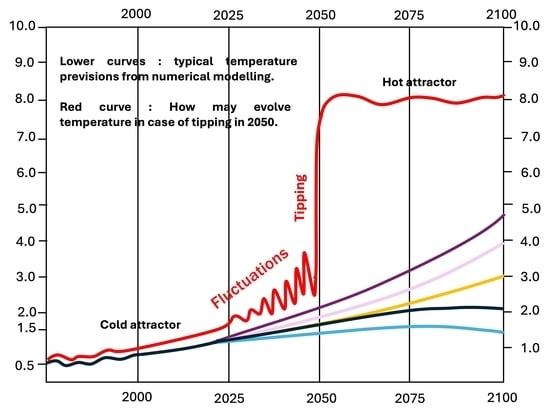
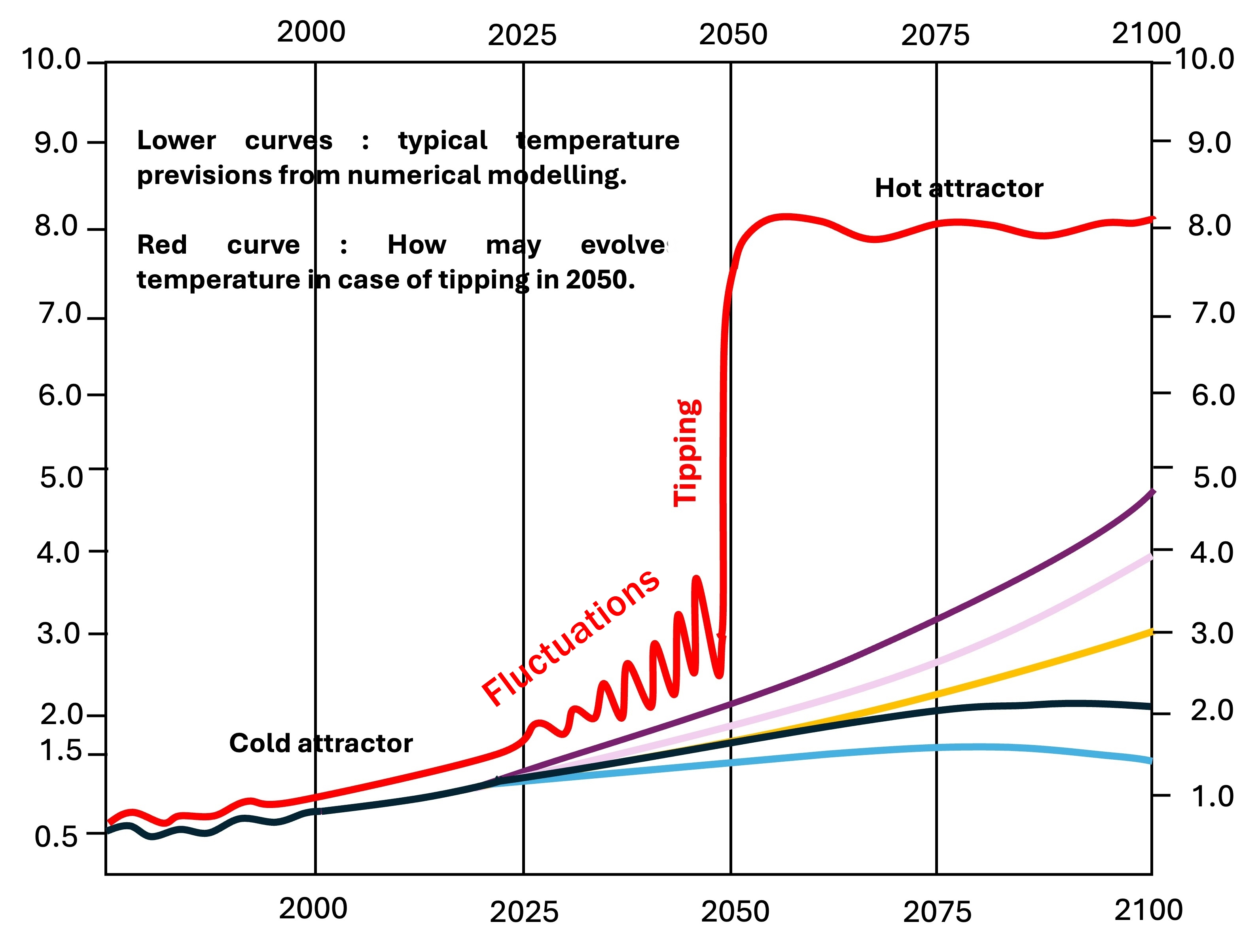
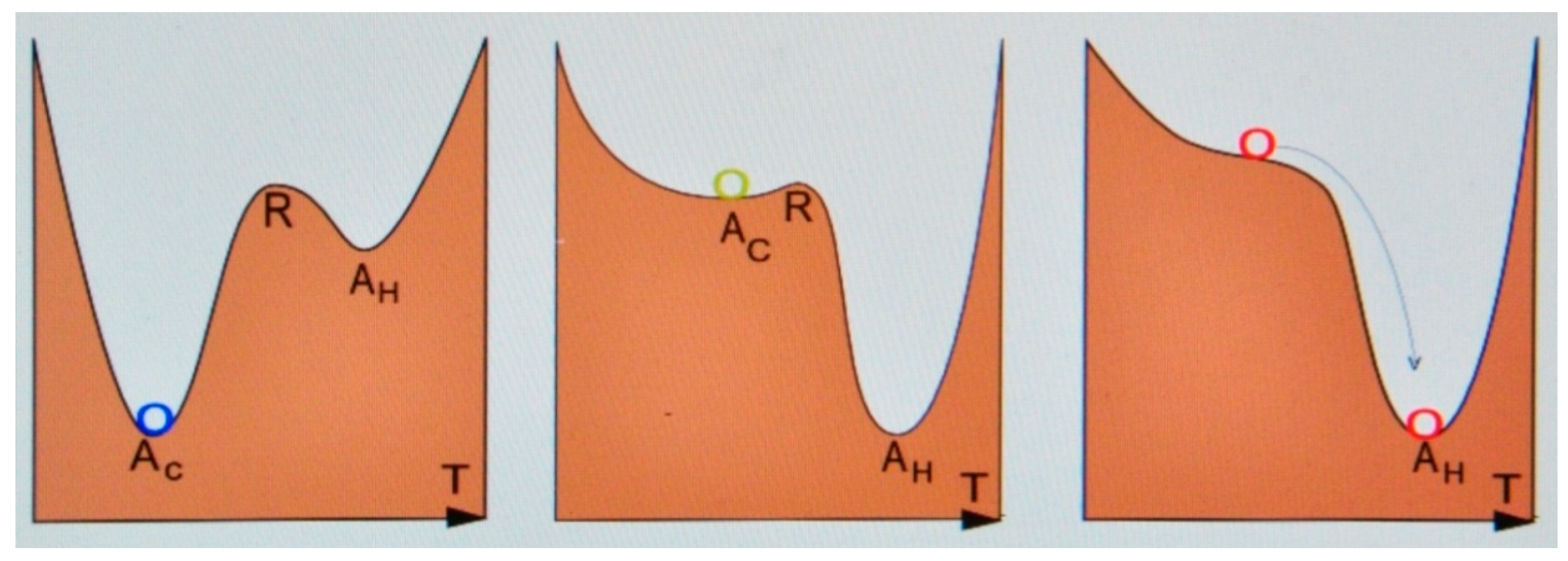
In this paper, climate evolution is revisited in terms of the theory of dynamical systems, which has been successfully used in predictions of catastrophic events such as avalanches, landslides, or economy and civilization collapses. Such tipping events are announced by warning signs, named “pre-critical fluctuations” or “critical softening”, allowing a tipping date estimate through well-known equations. In the case of climate, the warning signs are extreme events of increasing amplitudes. We show that in such a context, numerical simulations can hardly predict incoming tipping points, due to a divergence in computational time at the singularity. Based on the dynamical systems theory, a recent publication from Copenhagen University shows that the Atlantic Meridional Oceanic Circulation is likely to collapse well before the end of the century, triggering switchover cascades, eventually culminating in global climate tipping. Paleoclimatic studies also show that tipping events occurred in the past, particularly during the PETM period 56 Myrs ago. If this was to happen now, average global temperatures might reach an unbearable level, with a deadline much closer than expected. This extreme emergency has major consequences on the implementation times of sustainability policies and in energy production, mobility, agriculture, housing, etc., that absolutely must be operational on time.
Keywords: climate tipping; extreme climatic events; critical systems; dynamical systems; energy production; IPCC; numerical simulations; sustainability; renewable energy; climatic emergency climate tipping; extreme climatic events; critical systems; dynamical systems; energy production; IPCC; numerical simulations; sustainability; renewable energy; climatic emergency
Graphical Abstract