1. Introduction
Environmental protection is a key factor in the business of companies. By applying the principles of the circular economy, companies differentiate themselves from the competition, which is increasing every day [
1]. The principles of using the circular economy require that resources be used efficiently and waste be minimized, and that packaging be reused as much as possible [
2]. These principles must be incorporated into the operations of agro-food companies that are under the influence of changes caused by increasing customer demands and environmental concerns by stakeholders [
3]. Therefore, these companies must take care of product quality and reduce the pollution caused by their packaging [
4].
Globally, plastic is increasingly being used as packaging. Plastic packaging makes up half of all waste [
5]. Every year, more and more waste is caused by the use of plastic packaging. This is due to the growing demand of the population for food packaged in disposable plastic packaging [
6]. Due to the inadequate management of plastic waste from packaging in the food industry, this waste is increasingly found in soil and water [
7], and it affects environmental pollution [
8]. Through decomposition into microplastics, this waste begins to appear in living organisms, including humans [
9]. For this reason, more and more activities are being carried out to reduce pollution caused by the use of plastic in packaging. In this connection, there is a change in the packaging itself in order to reduce environmental pollution.
In order to solve this, packaging that has little or no impact on the environment [
5] and which represents “green” packaging is increasingly being used. This packaging is made from biodegradable materials as well as materials that are easily recycled and reused. In this way, the application of the circular economy is implemented through the use of green packaging. Since this packaging is specific, it is necessary to purchase it from specialized suppliers. Therefore, the choice of suppliers is a key factor [
6] that helps agro-food companies reduce waste generated by consuming their products and thus protect the environment.
Agro-food companies are required to ensure that their products are safe for consumer health, and that their packaging does not pollute the environment [
7]. The use of green packaging improves the company’s reputation and develops a recognizable brand in the market. This is especially important for new companies that have to fight for their place in the market. The importance of green packaging is that it is a very important tool in the circular economy because its use reduces waste and protects the environment [
8]. In addition to preserving the environment, packaging has additional functions [
9]. Packaging primarily protects the product, helps with its transport and storage from the manufacturer to the customer, and attracts customers to buy these products. In addition, the use of appropriate packaging reduces costs, which achieves the economic function of packaging, and in addition, packaging has a useful function that makes the product easier to use. In addition to being functional, it must differentiate the product from competing products, so great attention must be paid to the esthetics of the packaging itself.
This is especially important in the agro-food sector because products from this sector are constantly purchased and used by customers [
10]. Their needs are growing because the population is increasing, so waste generated by the use of packaging is an increasing problem [
11]. In order to solve this problem, business concepts are changing, and new paradigms are being created. Based on this, increasing importance is given to the circular economy [
12], which aims to reduce resources and waste, and it is advocated that certain products be used and recycled multiple times [
13]. By applying these principles, green packaging has become a very important and significant factor in reducing environmental impact [
14]. Therefore, it is very important for agri-food companies to use green packaging for packaging their products in order to reduce the negative impact on the environment.
Companies must involve suppliers from whom they purchase packaging in order to meet the increasingly strict environmental standards set on the market; the packaging design must also be appropriate to meet esthetic standards as well. Based on this, it can be concluded that packaging plays a very important role in food products and great attention must be paid to whom it is purchased from. The choice of supplier is therefore a very important item in the development of a circular economy and a green supply chain for companies [
15]. By establishing a long-term partnership, it contributes to the improvement of business for both companies in this partnership. Therefore, it is very important to establish a partnership between the customer and the supplier because it helps both companies [
16].
When establishing a partnership with a supplier, it is first necessary to determine which supplier can best help in achieving the company’s goals. These company goals are presented in the form of criteria for selecting suppliers. In this research, ten criteria were used, which also represent sustainability criteria because they include economic, social, and environmental aspects. Potential suppliers were evaluated by these criteria. This is a classic decision-making problem [
17] that is solved by applying multi-criteria decision-making methods (MCDMs). MCDMs are used when selecting an alternative—which, in this case, is suppliers—to be evaluated using multiple indicators or criteria [
18].
In this research, the intuitionistic fuzzy approach (IFS) was used because the classic fuzzy set does not include uncertainty in decision-making. Uncertainty exists when the decision-maker (DM) does not have all the information related to the decision. On the other hand, uncertainty represents the inability of the DM to know what will happen in the future, and therefore the decision can be good or bad, and this also affects the uncertainty of the DM when making a decision. By applying the IFS approach, uncertainty in decision-making is adjusted to the decision. When defining the ratings, a membership function and a non-membership function are defined. Based on these functions, an uncertainty function is also defined, which represents the part that is not covered by the previous two functions, and thus uncertainty in decision-making is used. For the reason that the DM cannot have all the information, this decision-making problem will be solved by applying the IFS approach.
1.1. Research Motivation and Objectives
The supplier must help the company by providing green packaging with which the company will differentiate itself from its competitors. Companies must select one or several potential suppliers with whom to establish a partnership in order to improve the business of agro-food companies, taking into account the impact on the environment and the application of the principles of the circular economy. This choice falls within the domain of business decision-making, and each decision-making carries with it uncertainty and risks. Choosing the wrong supplier opens up possible problems in the company’s business. Therefore, decision-makers (DMs) in companies always have a certain level of insecurity in the decision-making process. This research used the intuitionistic fuzzy approach (IFS). Applying this approach allows the company to cope with changes in the market in a dynamic business environment because it includes insecurity and uncertainty in the decision-making process. The motivation of this research based on all of the above is multifaceted because it includes the application of ecological principles in business through the application of green packaging, differentiation from competitors by building a recognizable brand, building a partnership with suppliers that will help in all this, and in addition, the application of the IFS approach in the decision-making process, which allows the inclusion of insecurity and uncertainty in the decision-making process.
Due to the complexity of the motivation for this study, the research itself covered several segments that are very important for improving the company’s business. In order to conduct this research, company X, which is an agro-food company, was the subject of observation. The company’s business is agricultural production and the production of food products based on its own raw materials and raw materials from its subcontractors. The supplier selection process was carried out using IFS in order to include insecurity and uncertainty in the decision-making process. Based on this, the goal of this research is to select a supplier of green packaging using the IFS approach using appropriate criteria in order to apply the circular economy at company X through the development of long-term partnerships with the selected supplier. Based on this main goal, consolidated goals are also established. The first is to create a model for selecting suppliers of green packaging. The second is to refine the evaluation of selected criteria and suppliers. The third, using the MCDM method and the IFS approach, is to determine the importance of criteria and rank suppliers. Fourth, to select a supplier that best meets the set goals of company X with whom long-term business relationships will be established. Fifth, to create recognizable products by using green packaging.
Based on this research objective, the following research questions are raised and answered by this research:
- -
How can company X use green packaging to build a brand that will help it develop its business?
- -
What are the key criteria for selecting a green packaging supplier for company X in order to apply the principles of the circular economy?
- -
Which supplier best meets these criteria and with whom should long-term partnerships be established?
- -
How can the IFS approach be applied to include insecurity and uncertainty in the decision-making process?
1.2. Research Contribution
Due to the specificity of this research, its contributions are numerous in practice and theory. First, when studying the use of green packaging, the contribution of this research is how to apply the circular economy, because in the agro-food industry, packaging represents the biggest problem for the environment [
5]. In order to prevent this, it is necessary to change the packaging industry and produce green packaging that does not have an impact on the environment. Second, the contribution of this research is on how to select packaging suppliers, where the focus is on developing companies’ ecological business operations. Methodological frameworks are important criteria for selecting green packaging suppliers. Third, the contribution of this research is in the application of IFS, which allows the inclusion of insecurity and uncertainty in decision-making. Providing guidelines for the development of the IFS approach opens up new opportunities for further improving this approach. Fourth, this research contributes to the development of new approaches in future research in order to pay more attention to the selection of packaging suppliers, because packaging has a multiple function that can be used in marketing activities. The use of packaging also develops a brand, which helps a company’s products become recognizable on the market and thus distances the company from the competition.
1.3. Paper Organization
This research is methodologically designed to apply seven thematically related selections. The first selection is an introduction in which introductory guidelines of the research subject, the motivation for conducting the research, objectives of the research questions, as well as the contributions of this research are given. The Literature Review section provides reviews of previous research in terms of the application of green packaging, the selection of packaging suppliers, as well as the application of IFS in supplier selection. The next section, Preliminaries and Methods, provides the basics of the application of the IFS approach as well as the steps of the methods used in this paper. The fourth section is a Case Study where the basics of the selection of green packaging suppliers are set using the example of the company X. The Results section deals with the processing of the obtained data and their presentation in the form of criterion weights as well as supplier rankings in order to choose the supplier with the best indicators in order to develop partnership relations with it; in addition, the influence of individual criteria is examined through sensitivity analysis. The sixth section explains the obtained results and answers the question as to why these results were obtained, the practical and theoretical implications of this research, as well as its limitations before providing guidelines for future research. The final section is the Conclusion, where the most important results of this research are given and how the research questions of this paper were answered.
3. Preliminars and Methods
With the development of the decision-making system in theory and practice, different approaches appeared that were upgraded over time. With the development of the fuzzy approach [
76], the basis for decision-making was given when the DM does not have all the information, so the exact boundaries of the sets cannot be defined, so the fuzzy approach is used. This approach allows the DM to make decisions even with imprecise information. However, decision-making in the economy is always accompanied by a certain level of insecurity and uncertainty. For this reason, the author Atanassov [
77] defined the IFS, which takes in addition to the degree of belonging of the elements to a set.
With the development of decision-making systems in theory and practice, various approaches emerged that were upgraded over time. With the development of the fuzzy approach [
76], the basis for decision-making was provided when the DM does not have all the information at its disposal, so the exact boundaries of the sets cannot be defined, so the fuzzy approach is used. This approach allows the DM to make decisions using imprecise information. However, decision-making in economics is always accompanied by a certain level of uncertainty and risks. For this reason, the author Atanassov [
77] defined the IFS, which takes into account, in addition to the degree of membership of elements to a set
, the degree of non-membership to that set
is taken. Based on the membership and non-membership of elements in set
A, the degree of insecurity
is also defined. IFS can be defined through a set
A as
Based on the degree of membership and non-membership, the degree of insecurity is calculated as follows:
In order to implement this approach, it is necessary to define basic operations with IFS. These operations serve to use the appropriate methods in this approach.
In order to use this approach in the decision-making process, it is first necessary to define the ratings with which the importance of the criteria will be determined and how individual suppliers meet these criteria. In this research, unique ratings in the form of linguistic values were used (
Table 2). When defining these linguistic values, it is also necessary to define intuitionistic fuzzy numbers (IFN) that represent the membership function of these linguistic values. IFNs are defined so that the values are inverse. The best value is the inverse of the worst value, and each IFN has its own inverse value. In this way, these IFNs defined in this way are symmetric. This symmetry is usually used when determining preference pairs in fuzzy logic, when determining the value of fuzzy numbers, and such values allow giving the same uncertainty value for all ratings. If the DM is uncertain in the rating, he is equally uncertain no matter which value he chooses. He cannot be less uncertain if he has given a higher or lower value. His insecurity is due to the incomplete information he has in the decision-making process, and not in the ratings he gives. Therefore, in this research, it was decided that IFNs should be inverse and symmetrical.
In this study, a modified principle of transforming IFN into crips values, which was applied by the authors Işık, & Adalar [
78], was applied. The reason for this approach is that it is not necessary to modify the methods and adapt them to the IFS approach, but rather to use classical methods. The steps of this approach are as follows:
Step 1. Evaluation of DMs using linguistic values.
Step 2. Defining IFNs based on linguistic values.
Step 3. Formation of an aggregate decision matrix for IFNs:
Step 4. Defining the IFN positive ideal solution () and negative ideal solution ().
Step 5. Determining the distance measure by applying the Euclidean equation to determine the positive
and negative distances
:
Step 6. Calculation of closeness coefficient (
CC):
The CC values serve as crisp numbers and are the basis for forming a decision matrix for determining the importance of criteria weights, as well as for ranking alternatives.
3.1. Methodology and Steps of the MCDM
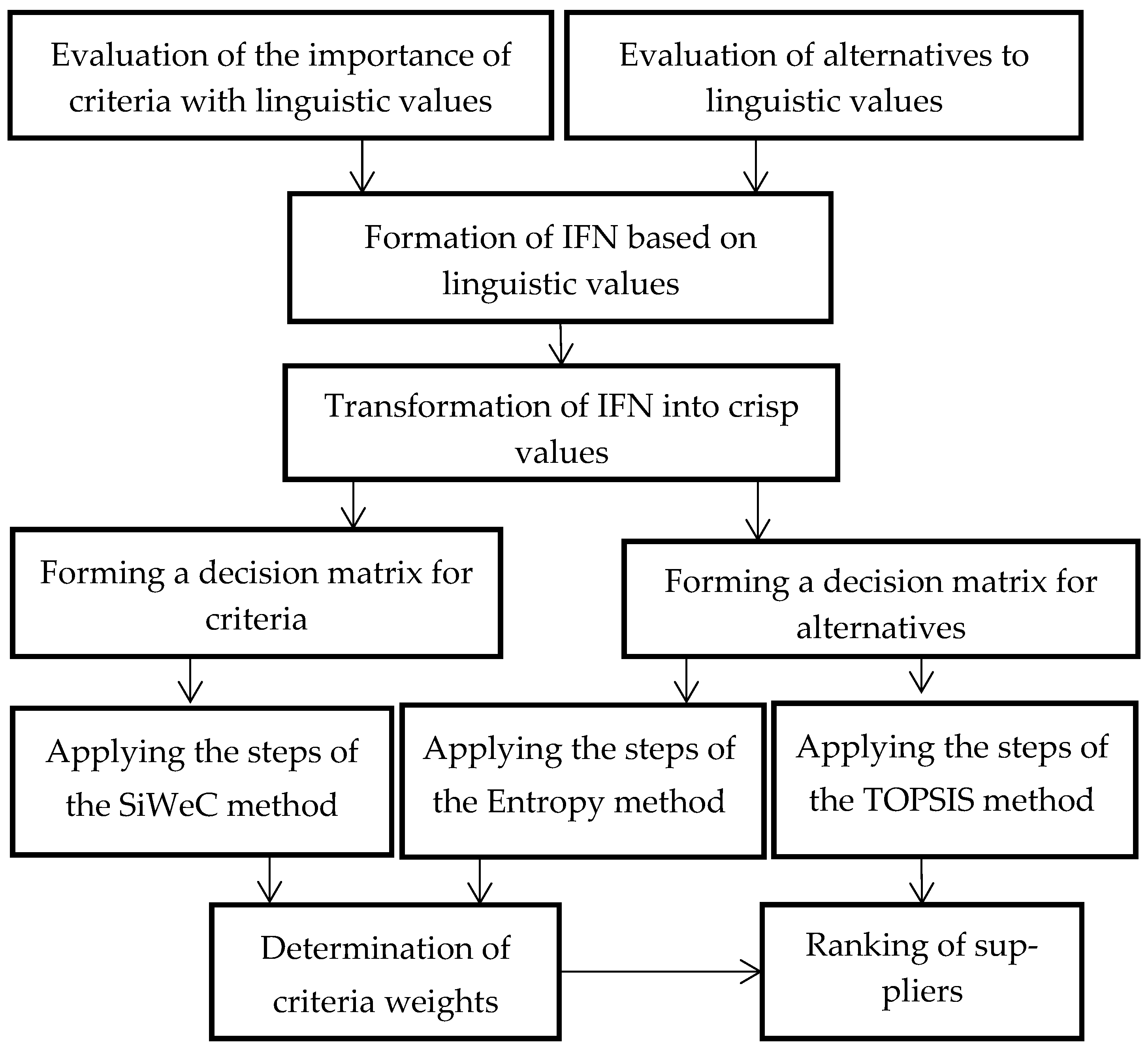
MCDMs are used to determine the importance of criteria and rank alternatives. In order to use these methods, it is first necessary to define the research methodology (
Figure 1).
In order to determine the importance of criteria and alternatives in the form of green packaging suppliers, it is first necessary to perform an assessment by DMs. They perform the assessment using defined linguistic values (
Table 2), and then these values are transformed and IFN is formed. Then the IFN value is transformed into crips value in the manner explained in the previous text. Based on these values, decision matrices are then formed for the criteria weights and for the alternatives. After that, the selected MCDMs are used.
In this research, three methods were selected to be used, namely the SiWeC and Entropy methods, which were used to determine the importance of the criteria, as well as the TOPSIS method, which was used to rank the suppliers. The SiWeC method is a newer MCDM that determines the weight of the criteria, and this method belongs to the methods for subjective determination of the weights of the criteria. Unlike other methods that belong to this group of methods for subjective determination of weights, it is not necessary to compare the criteria with each other, as well as to rank the criteria by importance [
79]. It is enough to give an assessment of the importance of the criteria based on the preferences of the DM and his assessment of how important a certain criterion is to them. In addition, this method also determines the importance of the DM based on their ratings, and it is also very simple to use since there are not many steps. The Entropy and TOPSIS methods are methods that have existed for many years, and their justification has been shown in many papers, which is why these methods were chosen. As can be seen from the selected methods, two are used to determine the weight of the criteria, namely SiWeC and Entropy. The reason why these methods are used is to reduce the subjective influence of the DM on the final decision, and therefore the Entropy method was used, which is one of the objective methods for determining the weights. The weight of the criteria is then obtained by compromising the weights of these two methods. The steps of these methods are explained in the following text.
The SiWeC method was first used by the authors Puška et al. [
80] to determine the weights of sales channels. This method has the following steps:
Step 1. Normalization of CCs for the following criteria:
where
is the maximum value of the CC per individual criterion.
Step 4. Calculating the standard deviation () for DMs.
Step 5. Multiplying the normalized values with the standard deviation:
Step 6. Calculating the sum of criteria weights:
Step 7. Calculation of final values of criteria weights:
The basics of using Entropy were given by Shannon [
81] in the framework of information theory. This approach is upgraded and adapted to the MDCM approach. The specificity of this and other objective methods is that the weights of the criteria are calculated based on the initial decision matrix for the alternatives [
82]. Based on this, the steps of this method are as follows [
83]:
Step 1. Normalization of CCs for the alternatives:
where
is the highest value of an individual criterion
Step 2. Determining the Entropy Value (
):
Step 4. Calculating criteria weights:
TOPSIS methods were first used by the authors Hwang & Yoon [
75]. The steps of this method are as follows:
Step 1. Normalization of CCs for alternatives
Since the scores are created in such a way that regardless of the criterion, the scores must be higher in order for the alternatives to be ranked better; only this normalization is used for cost criteria.
Step 2. Aggravating of normalized values:
Step 3. Determination of ideal and negative ideal alternatives:
When defining ideal alternatives, it is necessary that the alternatives be as close as possible to ideal alternatives and as far as possible from negative ideal alternatives.
Step 4. Calculation of the deviation from the ideal and the negative ideal alternative:
Step 5. Calculation of the deviation from the ideal alternative:
3.2. Case Study
Company X is a company engaged in production in the agro-food sector with an emphasis on fruit products. The headquarters of this company is in the northeast of Bosnia and Herzegovina. It is a new company in the agro-food sector. Its business includes agricultural production and uses raw materials from this production to make its food products. Therefore, it must carry out various activities in order to fight for its place in the market. The company carries out various activities in order to strengthen the brand of its products. In order to improve its business, this company decided to use green packaging to develop a recognizable product and thus distance itself from the competition. Since company X does not have its own capacity to produce green packaging, they purchase this packaging from suppliers. In order to further develop its business, the company decided to establish a partnership with certain suppliers in order to have a reliable supplier on which it can rely. In order to apply this decision-making process, this company first identified eight suppliers engaged in the production of green packaging. All of these suppliers are from the territory of Bosnia and Herzegovina. The reason for this decision is that if they come from other countries, the purchased packaging must be imported either through an intermediary or company X must purchase it directly from them, which means that it must solve the problem of customs clearance and import. This poses the problem that the packaging, even if produced on time, cannot be delivered on time due to customs procedures. Then, this company also selected the criteria by which it would observe these suppliers (
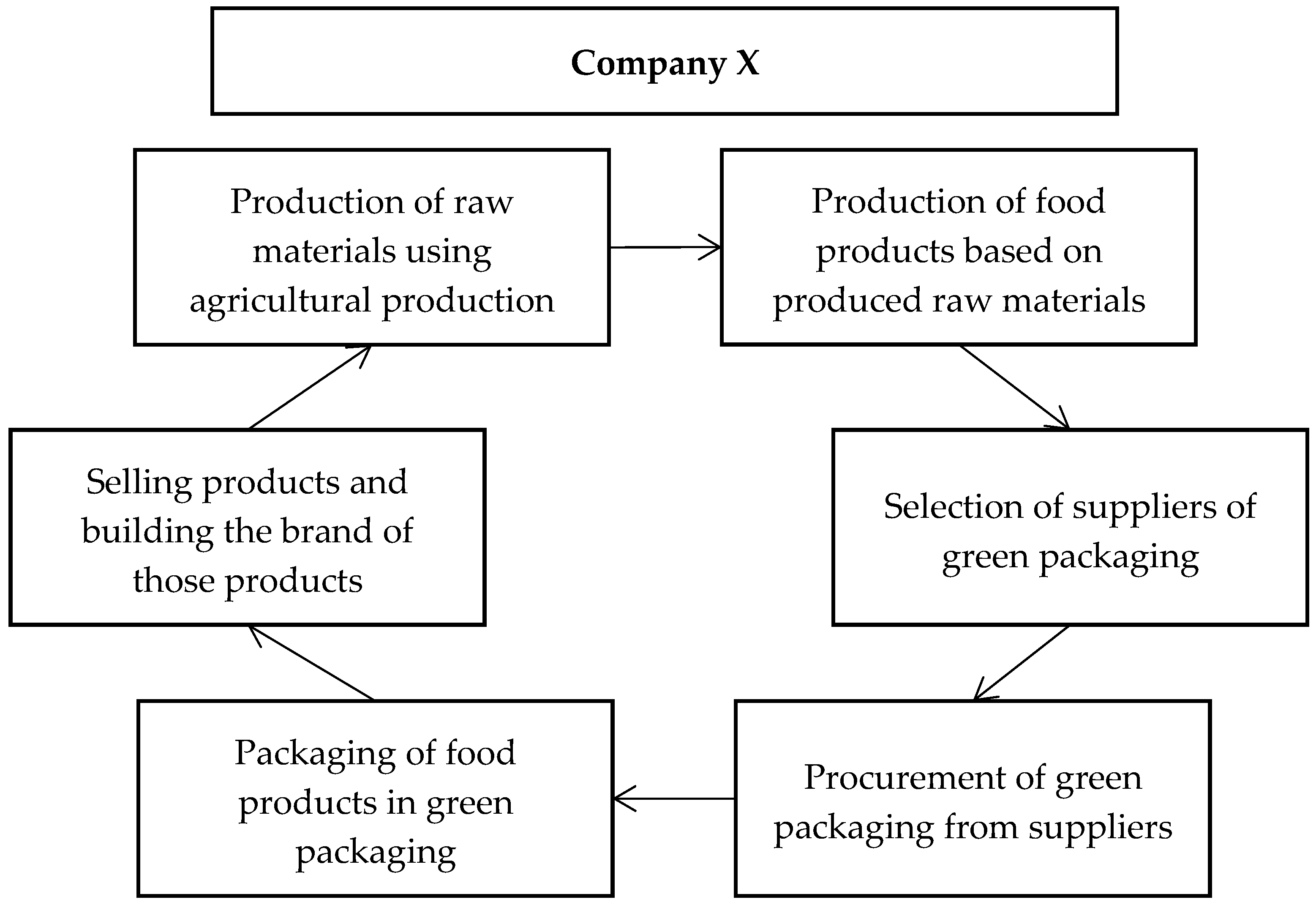
Table 3). A total of 10 criteria were selected, which included ecological, economic and social criteria. In this way, a sustainable selection of green packaging suppliers was applied to these criteria. Finally, DMs were selected who would first determine the importance of these criteria and then evaluate the selected suppliers with these criteria. A total of five employees were selected to be DMs. All these employees have at least five years of experience. Based on this, the problem of this research can be posed using a closed diagram for the example of company X. This diagram essentially represents the business activities of company X (
Figure 2). This process represents the first process, while in the second process, the activities will only be reduced by no longer choosing a green packaging supplier but purchasing green packaging from the selected supplier. Therefore, the choice of a green packaging supplier is important for company X.
4. Results
In order to determine which supplier should be selected for establishing a long-term partnership, it is first necessary to determine the importance of the criteria and then to rank the suppliers. Since the weights of the criteria are needed for ranking suppliers, how important individual criteria are for the ranking process should thus be determined first. Therefore, the weights of the criteria are first determined using the SiWeC method and then using the Entropy method. The reason for this is that for determining the weights using the SiWeC method, it is necessary for the DM to give an assessment of the importance of the criteria, while for determining the weights using the Entropy method, it is necessary for the DM to evaluate the suppliers with the selected criteria.
The first step in determining the weights using the SiWeC method is to assess the importance of the criteria using linguistic values by the DM (
Table 4). After that, the IFN is formed where the linguistic values are transformed into these numbers. For example, the linguistic value EXG is transformed into IFN [0.90, 0.00], the value VVG into IFN [0.80, 0.10], while the other values are transformed according to certain values of IFN defined in
Table 1. Since IFNs are defined symmetrically using inverse values, the uncertainty in all these ratings is the same and amounts to 0.1. For example, for the linguistic value EXG, it is calculated as follows
.
After linguistic values are transformed into IFN and insecurity values are determined, these values are transformed into crisp values. The next step is to calculate the positive and negative distance. On the example of criteria C1 and DM1, the calculation procedure is performed as follows:
After these deviations are calculated, the closeness coefficient (CC) value is calculated. In the same example, the calculation procedure is performed as follows:
By applying this procedure, each linguistic value is first transformed into membership and non-membership functions, and an uncertainty function is determined. These functions are then transformed into crips values. In this way, all these functions are adjusted to these values. Therefore, crips values do not take the value one because uncertainty is present in the decision-making process and affects it. Due to the good ratings of all criteria, the lowest value is 0.549, while the highest value is 0.905.
This procedure is continued for all criteria and all DMs, and an initial decision matrix is formed (
Table 5), which is the basis for calculating the criteria values based on the SiWeC method.
The next step in the calculation of criteria weights using the SiWeC method is the calculation of normalization. Unlike the normalization applied in some other MCDMs, in the SiWeC method, all values are divided by the highest value for all criteria. In other MCDMs, dividing by individual criteria is performed by dividing that criterion by the highest value of that criterion. The highest value among all values is 0.905 and all individual values are divided by this value, and this way, a normalized decision matrix is formed. In the same example, it is calculated as follows:
The next step is to calculate the standard deviation values for the DM ratings. These values for DMs are, respectively, as follows: 0.125, 0.112, 0.130, 0.145, 0.144. Based on these values, it can be said that the grades in DM4 are the most dispersive, so the value of the standard deviation is the highest. Applying these values when multiplying with normalized values gives the most importance to DM4. In the same example, the procedure for calculating that step looks as follows:
In this way, an aggravated decision matrix is obtained (
Table 6) where the normalized values are multiplied by the standard deviation. After that, aggregate values for individual criteria are calculated, and finally the weights for the criteria are calculated. The procedure for calculating those steps on the example of criterion C1 looks as follows:
Based on the steps of the SiWeC method and the DM assessment, the most important criterion was the criterion C4—Product quality, functionality and protection, followed by the criterion C8—Delivery capacity and reliability, while the least important criterion is C6—Product innovation and design.
The first step for calculating the Entropy method and ranking suppliers using the TOPSIS method is the evaluation of suppliers by DMs based on the selected criteria (
Table 7). This step is similar to the evaluation of the importance of criteria, except that DMs evaluate suppliers of green packaging using the selected criteria. The further procedure is the same as in the SiWeC method, except that when IFNs are formed, the average IFN values are calculated so that each of the DMs has the same role in the decision-making process, so these steps are not explained in detail because they have already been explained in the SiWeC method.
After the IFNs are transformed into crips values, an initial decision matrix is formed (
Table 8) for calculating the weights of the criteria using the Entropy method and ranking the suppliers using the TOPSIS method.
The first step in the Entropy method is data normalization. Unlike the SiWeC method, the Entropy method determines the highest value for each criterion and divides all values in that criterion by that value. In the example of Supplier 1 and criterion C1, the calculation procedure is performed as follows:
The other normalized values are calculated in the same way, and a normalized decision matrix is formed. The next step is the calculation of Entropy Value (
). On the example of criterion C1, the calculation procedure is performed as follows:
Based on the entropy value, the final value of the criterion weights is also calculated. On the example of criterion C1, the weight calculation procedure is carried out as follows:
Using this procedure, weights are calculated for all criteria. The most important criterion is C3—Packaging Life Cycle Assessment, followed by criterion C10—Transparency and ethics in business, while the least important criterion is C6—Product innovation and design (
Table 9). In order to obtain the final weights, the individual weights of the criteria obtained by the SiWeC and Entropy methods are multiplied. In this way, the subjective influence of DM on determining the importance of the criteria is reduced. After the product of these weights has been calculated, it is necessary to normalize it so that the weight value is equal to one. For this reason, normalization, which in practice is called percentage normalization, was used. In this normalization, the individual product of the weights of the criteria is divided by the sum of the products of all the criteria.
On the example of criterion C1, the procedure for calculating the final weights is carried out as follows:
By applying this procedure to all criteria, the final results of the criterion weight values were obtained (
Table 10). The results of this approach showed that the most important criterion is criterion C2—Use of renewable and recycled materials, followed by criterion C1—Application of environmental standards. These two criteria were not evaluated as the best by the results obtained using the SiWeC and Entropy methods. However, their weight values were the most consistent, which is why these criteria were characterized as the most important criteria. In this way, the application of the objective approach was used to correct the importance of the weights in relation to the subjective assessments of the DM. What is specific is that the least important criterion using both of these methods is criterion C6—Product innovation and design, and its importance is therefore even lower than it is with both of these methods.
After the importance of the criteria has been calculated, the ranking is determined using the TOPSIS method. The first step of the TOPSIS method is the normalization of the initial decision matrix for alternatives (
Table 7). The specificity of this method is that it uses a different type of normalization and that it differs from normalization in the SiWeC and Entropy methods. Using the example of criterion C1 and Supplier 1, the procedure for calculating this normalization is performed as follows:
In this normalization, the individual value is divided by the value of the square root of the sum of the degrees of all individual values in that criterion. It is therefore necessary to first calculate this value of the square root, then divide all the individual values of that criterion by that value. After the normalized values are calculated, they are weighted with the appropriate weight of the criteria. In the same example, the aggravation procedure is carried out as follows:
After that, the ideal and negative ideal alternatives are determined (
Table 11). The ideal alternative is the highest value of the alternative for a given criterion, while the negative ideal alternative is the lowest value of the alternative for a given criterion. After these values are determined, the deviation from these values is calculated.
In order to explain how the deviation from these values is calculated, the calculation procedure is explained using the example of Supplier 1.
In the same way, the value deviation of other suppliers is calculated and finally the final value of the TOPSIS method is formed. On the example of Supplier 1, the procedure for calculating the final value of the TOPSIS method is performed as follows:
Based on the supplier ratings and the steps of the TOPSIS method, supplier rankings were obtained. The best results were shown by Supplier 5, followed by Supplier 2, while the worst results were shown by Supplier 1 (
Table 12). Based on these results, it can be concluded that Supplier 5 is the best choice for company X to establish a long-term partnership in order to purchase green packaging from it, which is an important component of the circular economy.
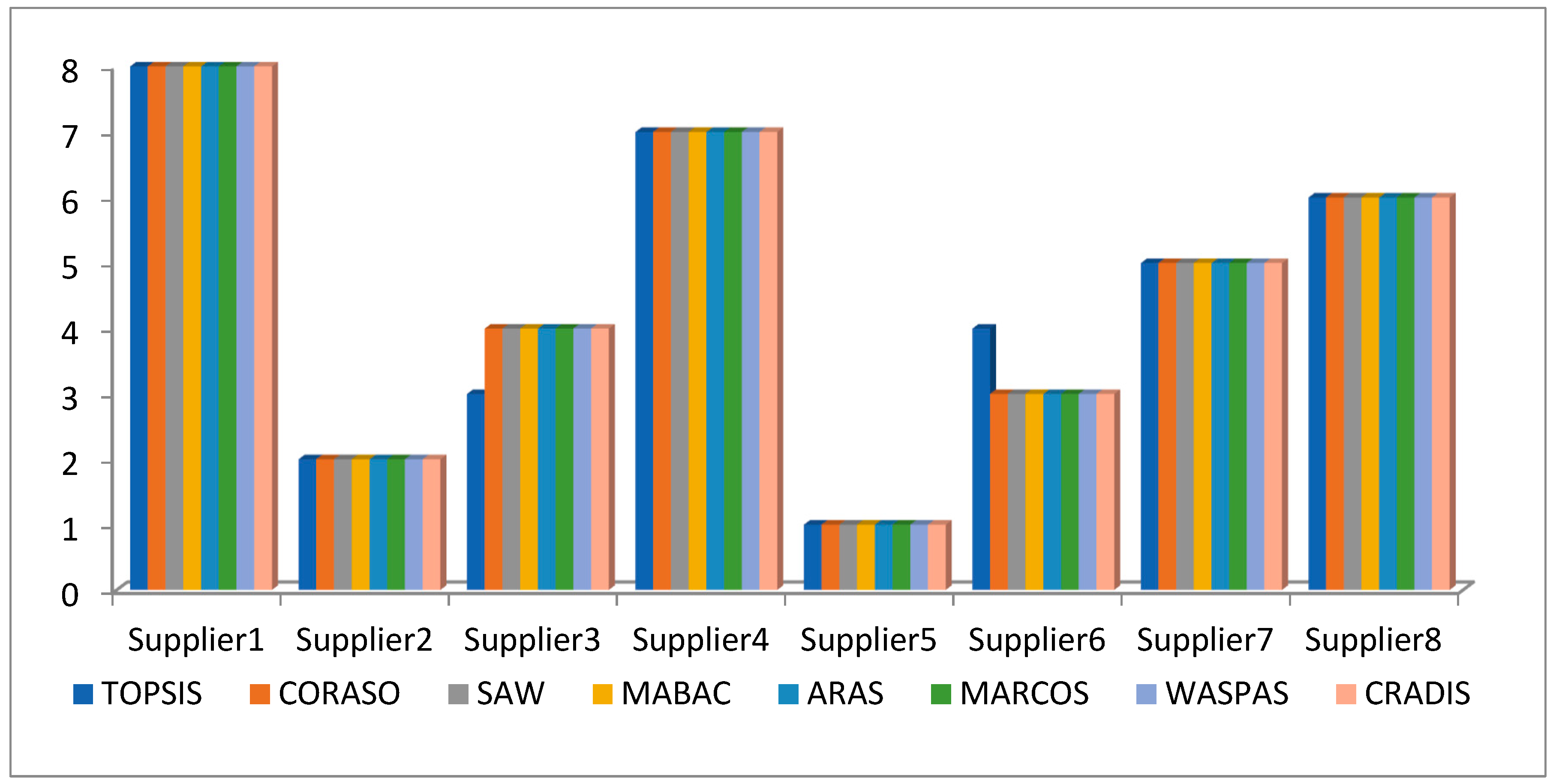
In order to prove these results, a comparison of the results of the TOPSIS method with the results of other MCDMs is performed. In this comparative analysis, the same weights and the same initial decision matrix are taken for the alternatives, but different methods are applied for ranking suppliers. In this study, the result of the TOPSIS method is compared with the results of seven other MCDMs. The CORASO method (COmpromise Ranking from Alternative SOlutions) was chosen because its steps resemble the TOPSIS method, but a different normalization is applied, and instead of calculating the deviation, the utility function is calculated in relation to the ideal and negative ideal alternatives. The SAW (Simple Additive Weighting) method was taken in this analysis because this is the simplest MCDM method where, after weighting, the aggregate value for the alternatives is calculated and a rank order is formed with this value. The MABAC (Multi-Attributive Border Approximation area Comparison) method is specific in that the rank order of the alternatives is performed based on the geometric mean of the values of the alternatives. In addition, this method applies a different normalization and the weighting itself is different. The ARAS (Additive Ratio Assessment) method was chosen because it uses a different normalization, and the final value of the alternative is calculated based on the utility function in relation to the ideal alternative. The MARCOS (Measurement Alternatives and Ranking according to Compromise Solution) method is one of the new methods that have been most widely used in practice. Its specificity is that the deviation from the ideal and anti-ideal solutions is calculated, and a ranking is formed using the utility function and the degree of utility. The WASPAS (Weighted Aggregated Sum Product Assessment) method uses a combination of the two methods, WSM and WPM, and a compromise is made between the results of these two methods. The CRADIS (Compromise Ranking of Alternatives from Distance to Ideal Solution) method uses modified steps of other methods and is specific in that it also uses one modified step of the TOPSIS method, which is the calculation of the deviation from the ideal and anti-ideal solutions.
The results of this approach show that the difference in ranking is only with the TOPSIS method, as well as for Supplier 3 and Supplier 6 (
Figure 3). The reason for this should be sought in the specifics of using specific normalization and calculating deviations from the ideal and negative ideal alternatives. However, this difference does not affect the selection of suppliers with whom a long-term partnership relationship will be established, which is Supplier 5.
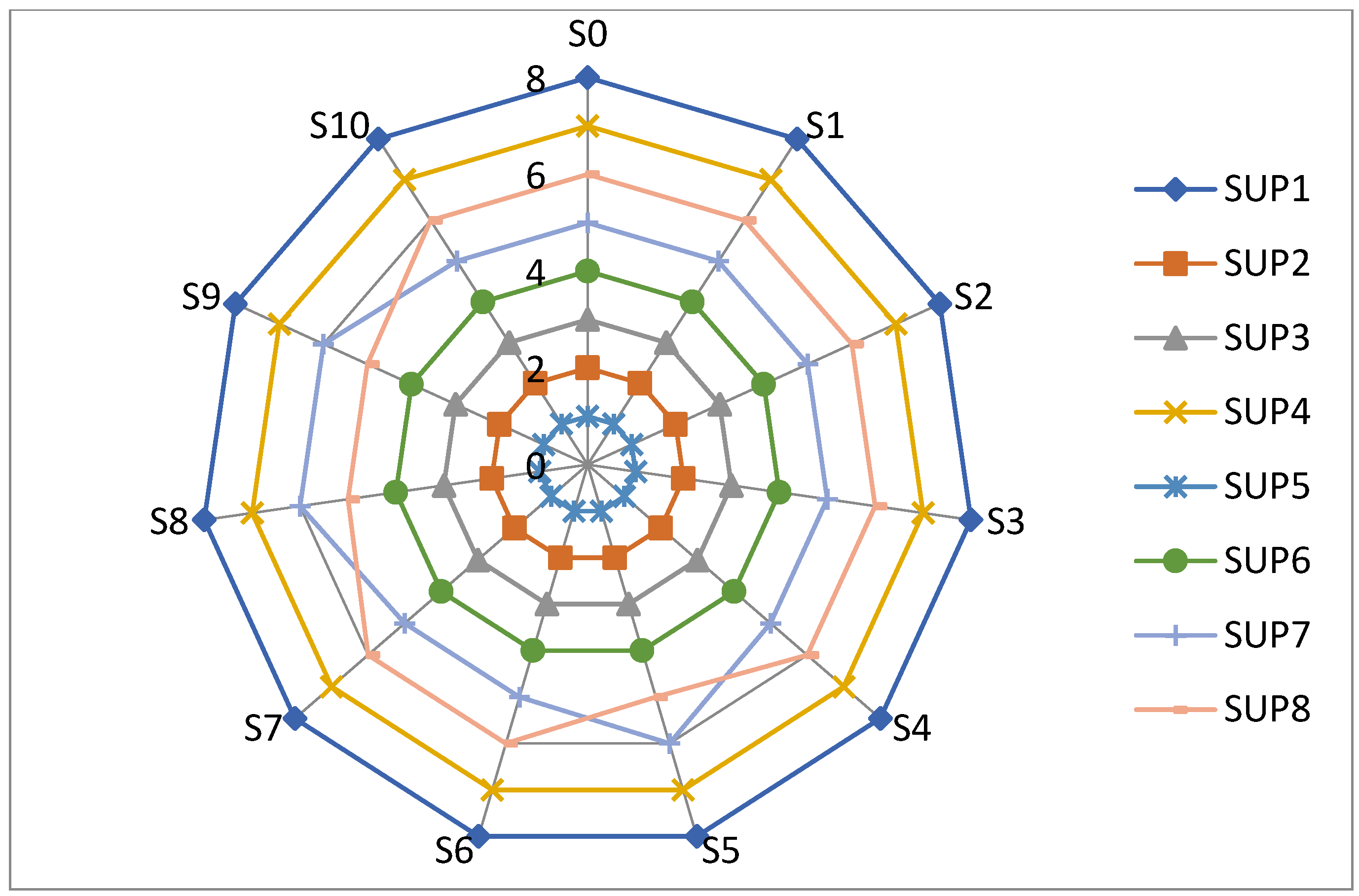
At the end of the results of this research, a sensitivity analysis is performed. This analysis aims to change the weights of the criteria and to determine how this change in weights plays a role in the final ranking of the alternatives. In this research, the importance of individual criteria is reduced by 90%, while the remaining criteria is increased by 10% so that the sum of the weights is approximately equal to one (1). Since there are 10 criteria, each individual criterion is reduced ten times, thus forming ten scenarios (
Figure 4).
The results of this analysis show that the ranking order changed for Supplier 7 and Supplier 8, while the ranking order did not change for the other suppliers. This is because the ranking of these two suppliers had the smallest difference in the final value of the TOPSIS method, so with the reduction in the importance of certain criteria, this ranking order changed. The changes came when the importance of criteria C5, C8, and C9 decreased. The change in ranking therefore occurred because Supplier 7 had better indicators in these criteria. With the decrease in the importance of these criteria, Supplier 8 then achieved a better ranking (
Figure 4). The ranking order did not change for the other suppliers, which confirms that one criterion does not play a major role in the ranking of suppliers, but that all the criteria used affect it. Therefore, in order for a supplier to be as good as possible, it must improve all criteria.
5. Discussion
Environmental protection has become an important segment of every agro-food company [
84]. That is why these companies are increasingly turning to a circular way of doing business where the focus is on product reuse. However, the product itself cannot be reused by these companies, but its packaging can be reused. In addition, the greatest environmental pollution is caused by packaging. Research by Fogt Jacobsen et al. [
85] has shown that solving the problem of packaging has become a global problem, especially since after the use of food products, packaging becomes waste. Therefore, great attention must be paid to the type of packaging that will be used in the products of these companies. This research was therefore focused on the selection of suppliers of green packaging for the needs of the circular economy, because company X does not have the capacity to produce this packaging itself. Another reason is that it is necessary to change the way this company does business to dedicate itself to the production of this packaging, and for this it is necessary to have machines and raw materials, so it is easier to obtain this packaging from suppliers. Green packaging, as shown by research by the author Salandri et al. [
31], can improve the business of companies, and this is especially important for the business of agro-food companies.
The supplier is a very important aspect of supply chain management in a company [
86]. The supply chain encompasses all activities that are directed from the selection of suppliers to the sale of products to the customer [
87]. Therefore, the first step in the supply chain is the selection of suppliers. This selection directs the company’s operations. If a supplier is selected that helps achieve the company’s goals, that company will achieve good results and vice versa. Therefore, it is important that the supply chain secures raw materials, intermediate materials and packaging from suppliers, which is necessary for the production process of company X. The supplier also plays a role in reducing environmental pollution, because it helps agro-food companies reduce this pollution. He offers companies green packaging, and thus the environment is preserved. This packaging, as shown by the research of the author Adela et al. [
33], helps improve the competitive advantage of companies. However, in order to choose a green packaging supplier with whom long-term business cooperation will be established that will also affect the development of the circular economy in these companies, it was necessary to develop a methodology that is adapted to solving this problem. For this purpose, ten criteria were selected to help company X to choose a green packaging supplier. These criteria emphasized the importance of not only purchasing green packaging but also choosing a supplier that is green and sustainable, as the focus was on economic and ecological criteria along with social criteria [
88].
Since every decision-making in the economy is accompanied by a certain uncertainty and insecurity that is present in DM, it was decided to apply the IFS approach. This approach, as shown by research by Trupti & Umap [
56] and many other authors, has shown good results when it is necessary to incorporate insecurity into decision-making. In this approach, it is determined how many elements belong to and how many do not belong to a certain set, as well as the rest that neither belong nor do not belong to the set represent insecurity in decision-making. In order to use this approach in this research, this belonging and non-belonging to the set had to be defined. This was performed by using an inverse symmetric series where the highest value is inversely symmetrical to the lowest value. In addition, all linguistic values were given the same percentage of insecurity because it is difficult to determine how much uncertainty there is in DM ratings. They would then have to determine their insecurity for each assessment, which would greatly complicate the DM’s work. Therefore, this approach was decided, which made the decision-maker’s job easier. In this research, a method of transforming these defined IFNs into crips values was also used, based on the approach presented in the research by Işık & Adalar [
78], and this approach was further simplified in order to be used as much as possible in practice.
This research used ten criteria for evaluating green packaging suppliers. These criteria should be aligned with the company’s goals. If a company changes its goals, it is then necessary to change the criteria when selecting suppliers. Changing the criteria is thus linked to changing the company’s business activities, which changes the company’s vision and with it, the company’s strategy and goals. Therefore, this decision-making model can be applied to other companies, provided that the criteria are aligned with the company’s goals.
In order to further facilitate the DM’s work in assessing the importance of criteria, the SiWeC method was chosen. As shown by the research by the author Puška et al. [
80], when using the SiWeC method, it is not necessary for the DM to rank the criteria according to importance and compare the criteria in pairs, but it is sufficient to determine the importance of that criterion independently of other criteria [
89]. Due to the great influence that the DM would have in this research, it was decided that in addition to the SiWeC method, the Entropy method, which is one of the objective methods for determining the importance of weight, should be used. In this way, using these two methods, a compromise was reached between the weights given in a subjective and objective way. The combination of the results of these methods showed that the highest weight does not necessarily have to be given to the criterion that has the highest importance in some of these methods, but that it has great importance in both methods. In this way, the criterion C3—Packaging Life Cycle Assessment had the highest weight because it showed good values in both of these methods.
The TOPSIS method was used to determine the ranking of suppliers. This method is one of the most famous MCDMs for determining the ranking of alternatives and has been widely used in practice, as shown in this research. Its application was also in the selection of suppliers using the IFS approach, which is another reason why this method was used. By applying this method, it was shown that Supplier 5 has the best indicators of all other observed eight suppliers selected by company X. This supplier had the best indicators compared to other suppliers in eight criteria. Only in two criteria did other suppliers have better results, and these are criteria C5—Cost effectiveness and C6—Product innovation and design. It was to be expected that if one strives to provide good quality in packaging, one cannot expect the price of this packaging to be the most favorable. However, this supplier does not work on daily innovation of its products because they are of good quality and does not have to spend so much time improving its products. When compared in more detail, it is possible to see that this supplier also has good results in these two criteria. Supplier 2 was in second place. The reason why it was better than Supplier 3, who was ranked third, should be sought in the fact that it had better grades in most criteria. In three criteria, it had worse grades, namely in criteria C1—Application of ecological standards, C5—Cost-effectiveness, and C6—Product innovation and design. But in these criteria, the grades it received were not that much lower, which is why it was the second-ranked supplier. These results were also proven by applying comparative analysis and sensitivity analysis. Based on this, this supplier represents the first choice with which this company would enter into long-term partnerships and thus improve its business and the application of the principles of the circular economy, because green packaging helps with this. This does not mean that company X should not purchase packaging from other suppliers and should only cooperate with this company. It should perform most of its packaging procurement activities with Supplier 5, while it should also cooperate with Suppliers 2 and 3 because they have also shown good results. This is because company X cannot influence the operations of other companies and therefore should cooperate with other suppliers.
5.1. Research Implications
The conducted research aimed to improve certain segments of research that were presented as gaps in this research. In addition, this research also has significant implications that affect the development of theory and practice: firstly, on the importance of supplier selection and secondly, on the importance of green packaging for the application of the principles of the circular economy. Therefore, this research has implications for the development of similar research focused on the selection of packaging suppliers because these suppliers have been marginalized in previous research. Greater focus is given to the selection of suppliers of raw materials and materials, because they have a great influence on the quality of the product itself. However, in companies that produce fruit and fruit products, they do not purchase raw materials from others but produce them themselves. Then, the focus of this research is on green packaging that helps reduce waste caused by packaging in food products. In addition, packaging should also help companies develop their brand. However, in order to select a green packaging supplier, it was necessary to develop a research methodology that included sustainable criteria. In this way, the implications of this research are on the development of similar research and improving the process of selecting suppliers of green packaging. This is how the theory of packaging supplier selection and the practical application of this selection methodology are improved. The focus was on green packaging having no impact on the environment, which would allow companies to emphasize the application of the principles of the circular economy. Therefore, it was important to link the impact of green packaging to the application of the circular economy, thereby developing theory and practice within the circular economy. The application of the IFS approach to supplier selection is not new in theory and practice, but rather a way to simplify this approach so that it can be used as widely as possible. Therefore, the implications of this research are also on the development of new approaches to the use of IFS.
Based on these theoretical and practical implications, this research also has managerial implications. First, managers in the decision-making process can apply the methodology from this research to help them select suppliers. However, with certain corrections, this methodology can also be used by managers to make other decisions for companies. By applying green packaging, managers can work on strengthening the brand for their products as well as reducing the negative impact of products on the environment. Based on this, managers, through the environmental benefits they receive from green packaging, improve the company’s social responsibility and strengthen their reputation in the market. Based on this, it attracts new customers and leads to the emergence of loyal customers who are willing to pay more for products just to know that these products do not negatively affect the environment. By applying green packaging, managers also apply sustainability in their business. By balancing the application of sustainability and costs in business, managers work on market differentiation, which affects the development of the company’s competitiveness. The implications of this research can also serve as a guideline for how the principles of the circular economy can be applied through the selection of suppliers and packaging. By applying it, managers meet the strict requirements regarding the safety of their product, thereby achieving advantages over other companies.
5.2. Limits and Directions for Future Research
Like any other research, this research has its limits. The biggest challenge was about the possibility of covering all segments in one survey, which is why guidelines for future research have been set. In the case of this research, the limits may be related to the research methodology itself, as well as to the criteria used in this research. It is always possible to use some other criteria, because in practice, there are a large number of criteria with which it is possible to choose a supplier. This research provided the basis for the selection of suppliers of green packaging, so it is necessary in future research to pay attention only to the criteria and make a selection that could solve this decision-making problem in the best way. For this reason, it is possible that some criteria are replaced with other criteria in this research as well. In addition, the number of suppliers can be set as a limit of this research. Due to the globalization of business, it is possible to obtain green packaging from any supplier in the world, but the problem is whether you can obtain the necessary packaging on time or if you have to increase the procurement costs and always have a larger amount of packaging in the warehouse. In this way, the company’s operating costs also increase. The limit of the research may also be the IFS approach used in this study. This approach is more complex than the usual fuzzy approach, but unlike that approach, the IFS allows the insecurity present in DM to be included in the decision-making process. Therefore, an attempt was made to improve and simplify this approach in order to make it easier to use and to be used more in future research. A further limit of this research may be the methods used in this study. In order to reduce this limit, two methods were used that have been widely used in previous research and are accepted in practice. For this reason, a comparative analysis was used, which aimed to show that other methods can also be used in this approach and that they give similar results as the TOPSIS method. Therefore, in future research using this approach, other MCDMs should be used, thus ensuring diversity in the decision-making process and the use of MCDMs
6. Conclusions
The research conducted had several focuses. Through the selection of suppliers, using the example of company X, an attempt was made to show what role green packaging plays in the circular economy and what role the supplier plays in reducing the impact of packaging on the environment. The study of green packaging is important because food products themselves do not have a large impact on the environment, while packaging has a significant impact on environmental pollution. Therefore, it was important to choose a supplier who would deliver green packaging to company X. In order to carry out the supplier selection process, ten criteria were used that can be classified as basic sustainability criteria. In this way, the selection of green packaging suppliers was based on sustainable criteria.
Determining the importance of these criteria was carried out using a combination of subjective and objective approaches to determining weights and using the SiWeC and Entropy methods. In this way, the DM’s assessments of the importance of the criteria as well as the DM’s assessments of alternatives with these criteria were used. By compromising the results of these methods, the results obtained show that the most important criteria for selecting a green packaging supplier were the assessment of the packaging life cycle and transparency and ethics in business. Based on this, it can be concluded that the supplier should deliver green packaging that can be used multiple times, thus using the principles of the circular economy. On the other hand, this supplier must have transparent business operations and apply ethics in business, which further ensures the success of company X, because if a company has set ethical principles in business, it will use these principles in business operations and this company. However, what both of these methods have shown is that the criteria for innovation and product design are of the least importance, although these criteria are quite significant for the development of recognizable packaging that will help in brand development.
The ranking and selection of green packaging suppliers was carried out using the TOPSIS method. The results of this method show that Supplier 5 is the first choice for establishing long-term partnerships. This supplier showed the best indicators compared to other suppliers, which was determined based on DM ratings. These results were confirmed using additional analyses in the form of comparative analysis and sensitivity analysis. In all other MCDMs used, Supplier 5 showed the best results and was the first-ranked supplier. By applying sensitivity analysis, it was shown that changing the importance of certain criteria did not affect Supplier 5 from being ranked the best in certain scenarios. Based on this, it can be concluded that Supplier 5 had the best indicators compared to other suppliers and that it is the first choice for establishing long-term partnerships that will improve the business of both companies.
The way in which this research was conducted, which was based on a decision-making model, showed that it can be carried out wherever there is decision-making based on multiple criteria. This decision-making model can also be applied to other companies, provided that it is necessary to determine the goal of that company and adapt the decision-making model to that company. In this way, some of the criteria would be changed, but the essence and decision-making process would be the same. From all of the above, it can be concluded that both the research conducted and the formed decision-making model showed high flexibility and that it is possible to apply it to other companies.




 ,
,