1. Introduction
The maritime industry is a cornerstone of global trade, transporting over 90% of goods worldwide. Yet, it remains a major contributor to climate change, accounting for approximately 3% of global CO
2 emissions [
1]. As decarbonization becomes a global imperative, maritime stakeholders face growing pressure from regulatory frameworks, such as the International Maritime Organization’s (IMO) carbon intensity targets [
2,
3], to radically improve energy efficiency and reduce emissions across fleets.
Broader sustainability initiatives in the sector have included vessel scheduling and berth allocation strategies that explicitly integrate carbon emissions into port operations planning, particularly for ports with restricted channels [
4]. Complementary shore-side interventions, such as the installation of onshore power supply (OPS) systems, have also shown measurable reductions in CO
2 emissions, as demonstrated in Spanish medium-sized ports like Santander [
5]. Simultaneously, maritime operations are being reshaped by macro-level digital transformation trends. These include the strategic assessment of non-polar commercial use of the Northern Sea Route [
6], blockchain-enabled logistics systems with policy frameworks for implementation [
7], and the broader integration of digital technologies into the maritime transport sector [
8]. Such developments highlight the increasing reliance on advanced digital infrastructures to enhance operational efficiency, regulatory compliance, and environmental performance.
Within this evolving context, ports and fleets are exploring critical success factors for green transformation using digital technologies [
9] and adopting sixth-generation smart port models that leverage automation, IoT, and AI for performance optimization [
10,
11]. However, despite these advances, a persistent challenge remains in translating complex, real-time IoT data into actionable insights at the point of need, particularly in dynamic, high-stakes operational environments.
Augmented Reality (AR) presents a promising yet underexplored solution to this challenge in the maritime domain [
12,
13]. By embedding real-time data into the user’s field of view, AR can enable hands-free, spatially contextualized interaction with complex systems, improving operational responsiveness, reducing cognitive load, and supporting sustainability-focused decisions such as emissions mitigation and fuel optimization [
14]. While AR and IoT integration has shown benefits in manufacturing and automotive sectors, its application in maritime energy systems remains limited [
15]. Technical constraints—such as harsh onboard environments, limited connectivity, and resistance to new technologies—have slowed adoption [
16]. Yet, the potential to bridge the gap between machine intelligence and human decision-making is substantial, particularly for predictive maintenance, energy efficiency, and environmental compliance.
This study introduces a large-scale AR-IoT platform deployed on over 800 vessels [
17], designed to empower crew members with immersive access to operational intelligence. Through a combination of real-time visual overlays, context-aware alerts, and intuitive interaction, the system supports more proactive and sustainable vessel operations. The aim of this work is to address three research questions:
How can AR enhance crew interaction with real-time energy and emissions data?
What technical and human-centered challenges arise during AR-IoT deployment?
How does this convergence impact sustainability performance in operational maritime contexts?
The remainder of this paper is structured as follows:
Section 2 outlines the contribution of this work and its novelty;
Section 3 presents the system architecture and interface design;
Section 4 details the research methodology and evaluation framework;
Section 5 discusses the use cases and results from field testing; and
Section 6 offers broader implications, limitations, and future directions.
3. System Overview
The architecture of the integrated AR-IoT system deployed in the maritime sector is composed of several components designed to work together seamlessly, ensuring real-time data collection, processing, visualization, and interaction. The system integrates AR technology with a large-scale IoT platform to improve operational efficiency, energy optimization, and crew decision-making.
3.1. Overview of System Components
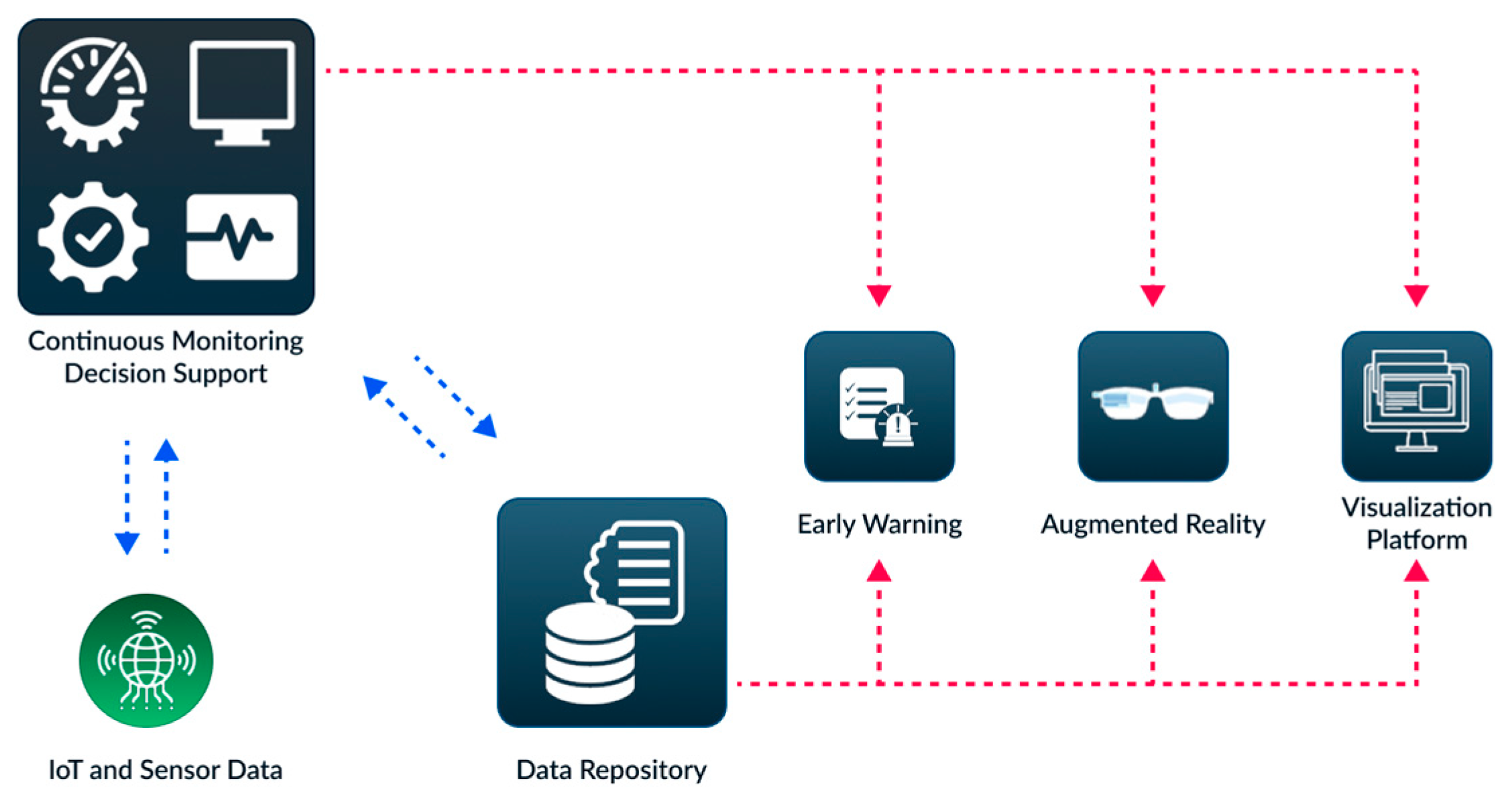
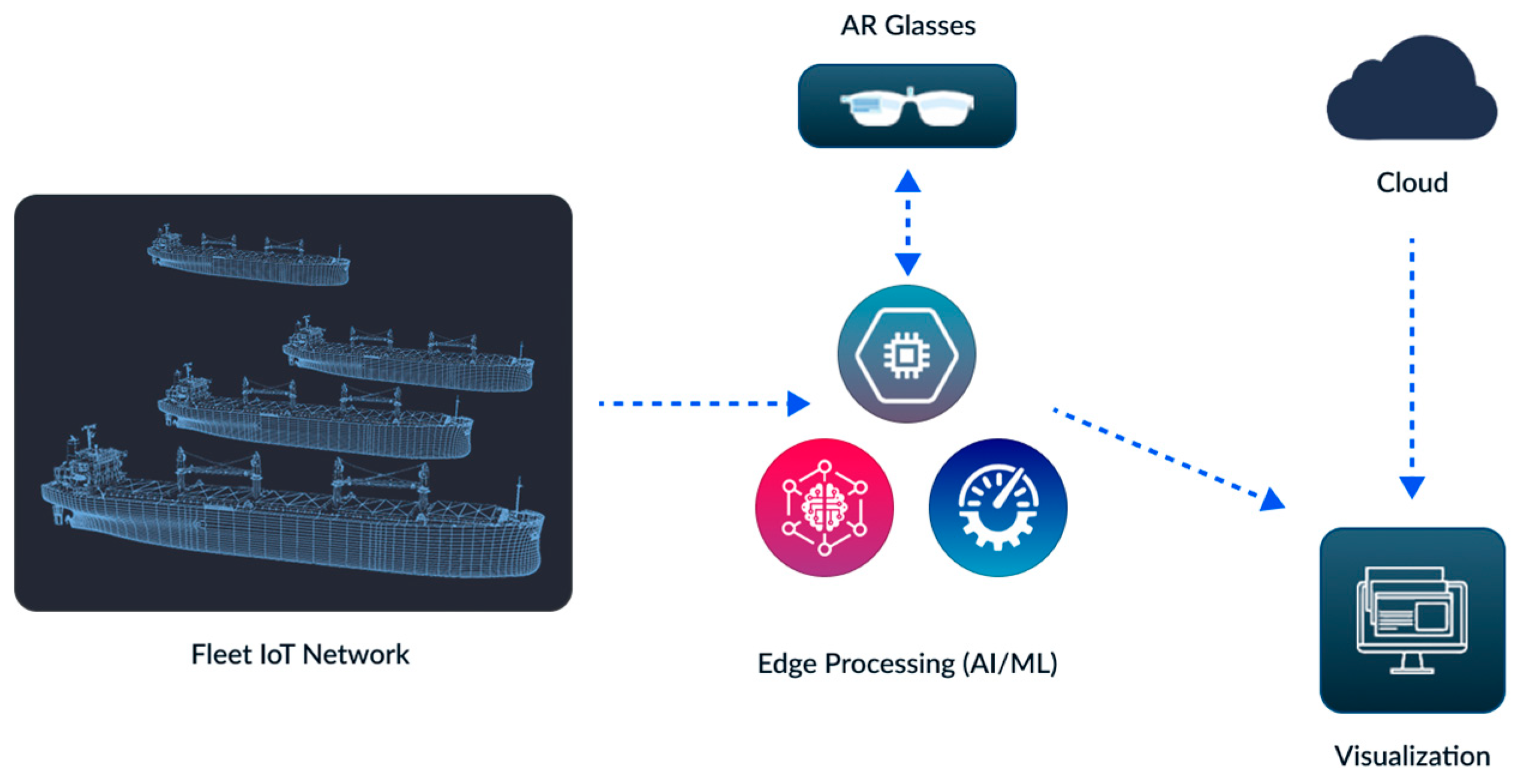
The AR-IoT system designed for maritime applications is composed of three tightly integrated subsystems: (i) a wearable AR interface (smart glasses), (ii) an IoT-based data sensing and aggregation infrastructure, and (iii) a real-time data processing and visualization platform. Each component is engineered to address the challenges of maritime energy monitoring, maintenance, and emissions control, with specific attention to the constraints of onboard environments such as vibration, lighting variability, and safety compliance (
Figure 1).
AR Smart Glasses
At the core of the user interface is a custom-designed set of smart glasses adapted from the SeeFar project architecture [
18]. The glasses enable crew members to interact with digital data in real time through spatially contextualized overlays. Unlike conventional handheld devices or fixed terminals, the AR glasses provide hands-free operation with a transparent waveguide display, ensuring unobstructed visibility of the physical environment.
The key functionalities include the following:
Real-time data overlays directly mapped onto the physical components (e.g., engines, panels).
Visual and auditory alerts when thresholds (e.g., vibration, emissions) are exceeded.
On-demand access to historical system trends and diagnostic guidance.
Hand gesture and voice recognitions, which allows users to control AR glasses.
Detect and locate user inside the vessel using object detection on real-world objects and physical components (e.g., engines, panels)
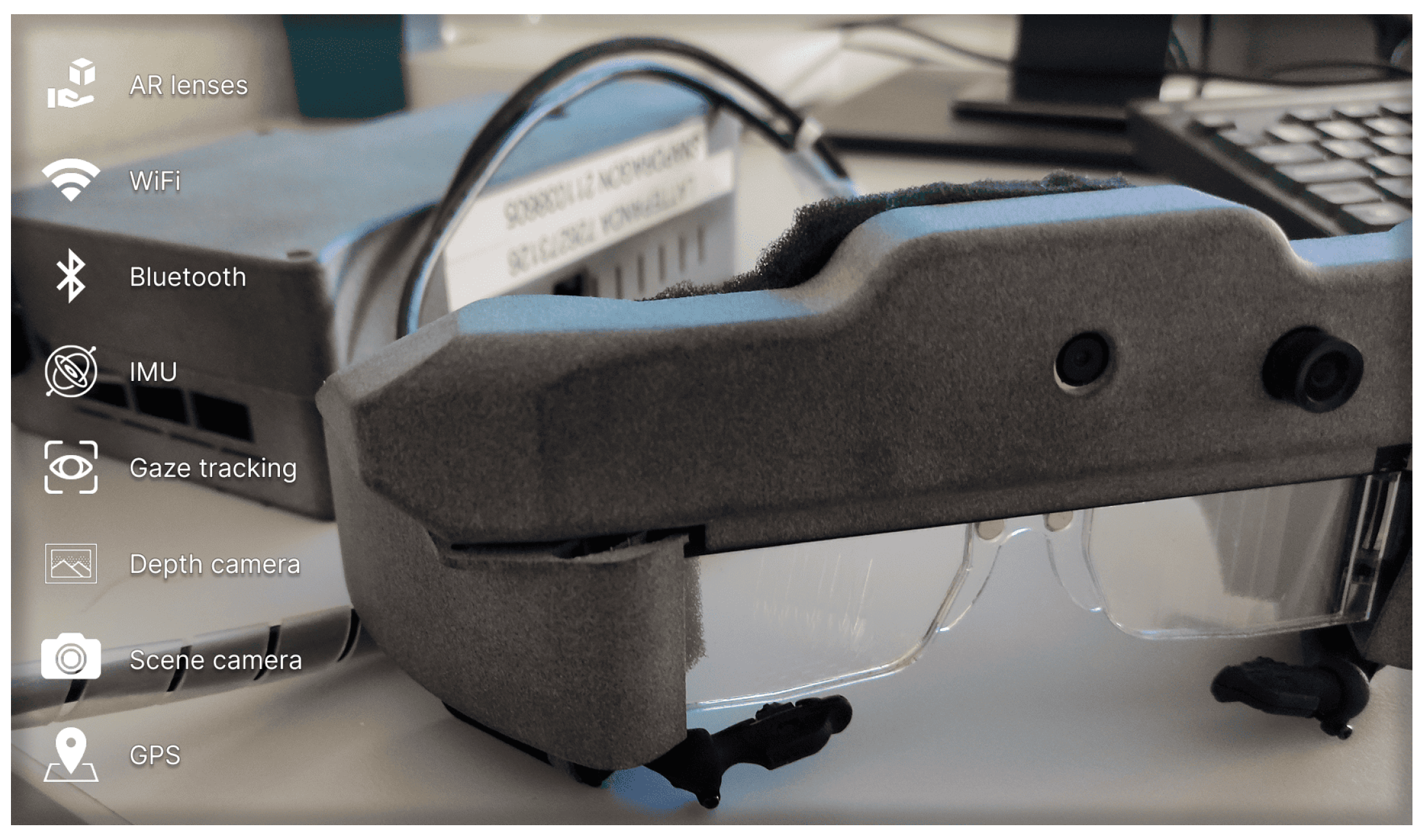
The glasses integrate a number of sensors and communication modules, as detailed in
Table 1, and are powered by a Snapdragon 845-based SOM capable of local processing and rendering.
A functional diagram of the AR smart glasses, including sensor placement and communication architecture, is shown in
Figure 2.
3.2. Data Flow and Communication
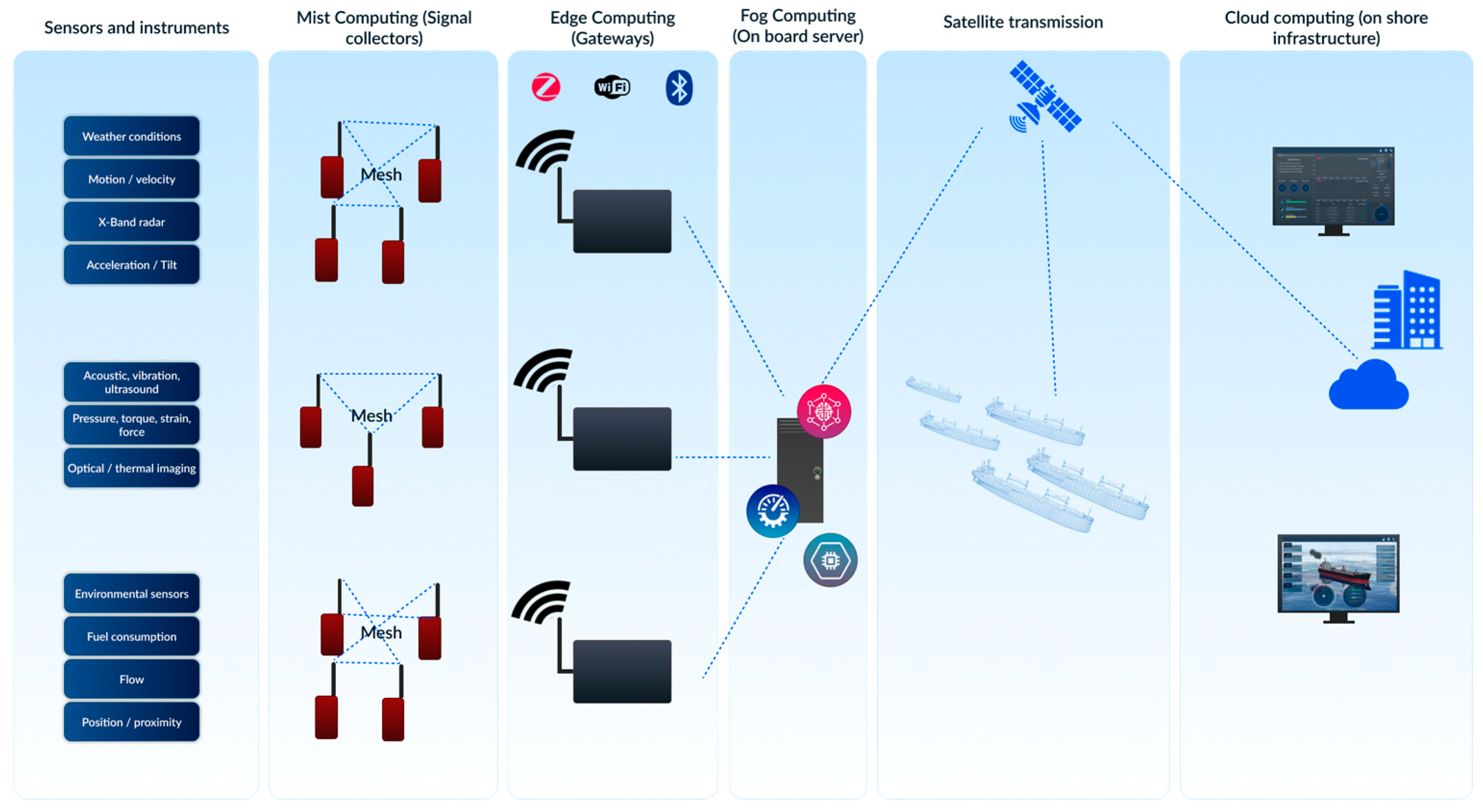
To monitor the vessel’s systems, a network of IoT sensors is deployed across key mechanical and electrical subsystems, such as propulsion engines, fuel injection modules, auxiliary generators, HVAC units, and emission stacks. These sensors continuously collect a wide range of data, including power consumption from load meters and current sensors, fuel flow and efficiency from flow meters, engine performance data such as temperature, vibration, and RPM, as well as emissions data from CO2, NOx, and SOx sensors. For real-time, context-aware interaction with the vessel systems, the AR-IoT platform relies on a robust, multi-layered data architecture that integrates mist, edge, fog, and cloud computing to ensure seamless information flow. This architecture is specifically designed for maritime environments, which often present challenges such as intermittent connectivity, harsh operating conditions, and the need to integrate data from diverse and heterogeneous sensors.
The data pipeline begins at the mist layer, where sensor readings are collected directly from the vessel’s subsystems through smart signal collectors. These collectors interface with both analog and digital sensors, including 4–20 mA signals, Modbus instruments, and CAN-bus integrations. The mist nodes are responsible for tasks such as signal conditioning, time-stamping, and validation, ensuring that only structured data proceeds further along the pipeline. Once validated, the data is transmitted via secure mesh networking protocols, based on IEEE 802.15.4 with custom maritime Quality of Service (QoS) layers, to the edge layer. Located on each deck or subsystem cluster, edge computing gateways process the data locally. At this stage, the system performs high-frequency analytics such as vibration pattern recognition, anomaly detection, and predictive modeling using embedded machine learning modules [
19]. Additionally, it supports real-time data distribution to AR smart glasses for immediate user interaction. At the fog layer, processed data is stored in databases for historical trend analysis. This layer also handles detection of incoming events, which can trigger alert and notification mechanisms. At the cloud layer, data is synchronized via satellite.
Table 2 summarizes the roles and functionalities of each processing layer in the AR-IoT data pipeline, from the mist layer, which handles data acquisition and initial validation, to the cloud layer, which is responsible for long-term storage, fleet-wide benchmarking, and optimization.
The hybrid data fusion pipeline, depicted in
Figure 3, shows the integration of mist, edge, fog, and cloud computing to ensure the smooth flow of data from sensor collection to cloud-based processing.
At the core of long-term fleet optimization and sustainability tracking is the Decision Support Platform (DSP), a scalable, cloud-native platform that consolidates all vessel data streams. This platform integrates time-series data, predictive model outputs [
20], and external inputs—such as weather forecasts and port scheduling—into a unified dashboard and analysis interface, allowing operators to make informed decisions.
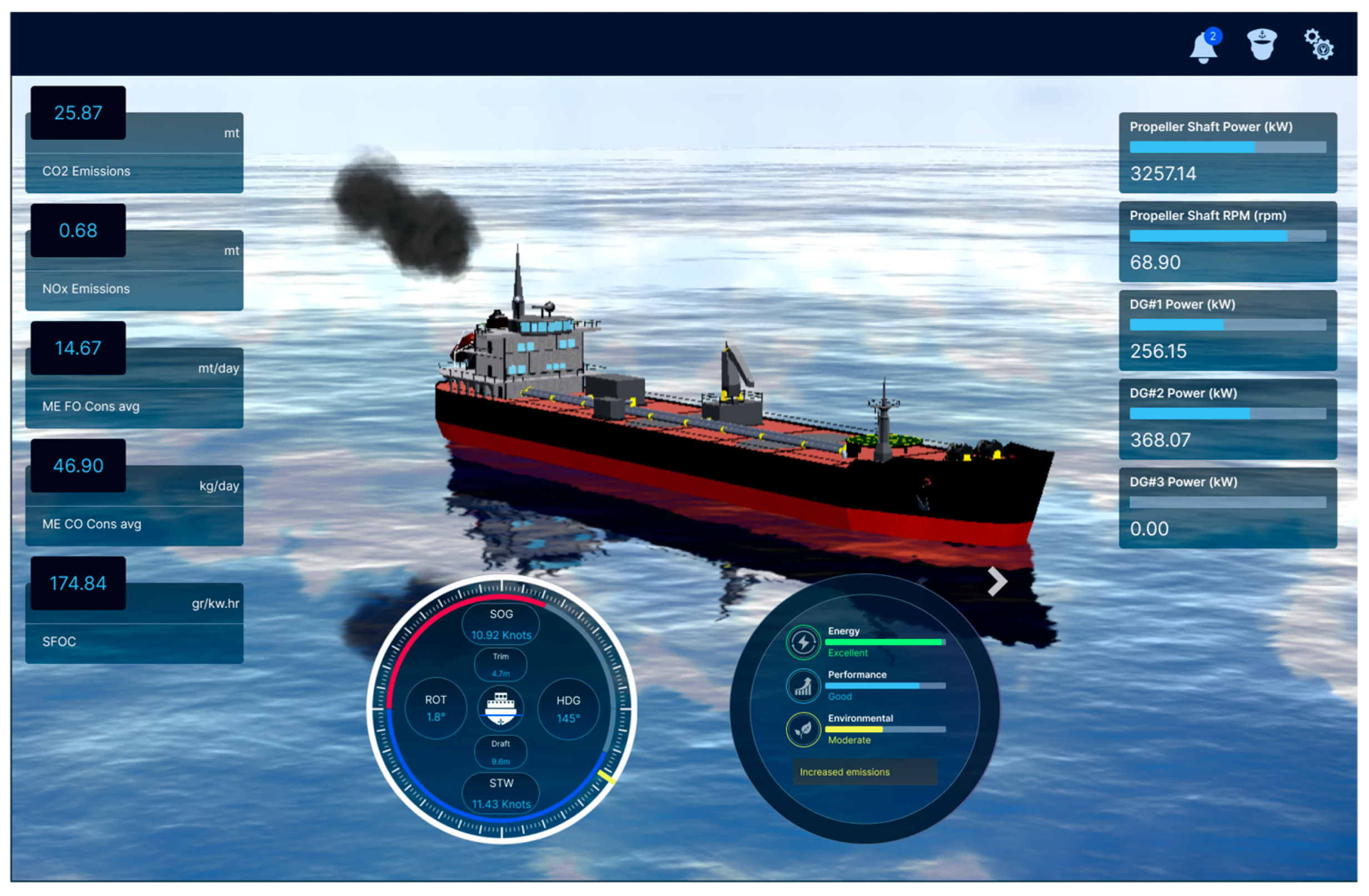
The DSP offers real-time KPI dashboards, displaying key metrics like fuel efficiency, vibration index, and emissions per kWh. It also generates predictive maintenance alerts based on regression models and system scores, and provides geospatial 3D visualizations of vessel conditions and operating states. Additionally, the DSP automatically generates reports for environmental compliance, streamlining regulatory processes.
Figure 4 illustrates how the dynamic KPI dashboard and predictive system scoring function within the DSP to monitor vessel performance in real time.
Given the maritime sector’s growing exposure to cyber threats, the AR-IoT platform incorporates a multi-layered cybersecurity framework aligned with IMO Resolution MSC.428(98) on Maritime Cyber Risk Management. All ship–shore communications are encrypted using TLS 1.3, while onboard device interactions utilize WPA3-secured Wi-Fi and Bluetooth 5.2 with authenticated pairing. AR smart glasses require user-specific credentials and two-factor authentication before accessing operational data. Intrusion detection and anomaly monitoring are implemented at the fog and cloud layers, with automatic alerts sent to designated security officers upon detection of unauthorized access attempts or abnormal data traffic patterns. All software components undergo periodic vulnerability scanning and adhere to ISO/IEC 27001 standards [
21], ensuring that operational intelligence can be delivered without compromising vessel safety or data integrity.
To facilitate secure communication between vessels and headquarters, the system uses an API Gateway, which manages data transformation, access security, and protocol adaptation. The gateway ensures compatibility across systems and enables seamless integration with AR Glasses, offering a more immersive user interface for the crew.
3.3. User Interface and Interaction
Each layer of the system utilizes lightweight, asynchronous communication protocols, such as MQTT, gRPC, and HTTPS, to propagate data based on its relevance and urgency. Following event-driven architecture principles, data transmission only occurs when sensor values exceed defined thresholds or deviate from learned baselines. This approach minimizes unnecessary data flow, reduces bandwidth consumption, and ensures that only relevant, actionable information is communicated for further processing.
The edge gateways serve as the initial decision-making points, executing pre-trained models to detect conditions such as rising engine vibrations or rapid fuel inefficiencies. These detected events are flagged and packaged into data capsules, which are streamed to both the AR glasses via local Wi-Fi or Bluetooth and to the fog node for further enrichment.
Insights that require low latency, such as emissions threshold violations or fault pre-cursors, are prioritized for immediate display on the AR interface. Meanwhile, historical and context-enhanced data, which includes trends and diagnostic recommendations, is stored at the fog level and periodically synchronized with the cloud server when satellite connectivity permits. A real-time data broker ensures low-latency communication between the vessel’s edge layer and the AR glasses. When sensor events, such as fault detection or emission spikes, are triggered, the processing unit dynamically adjusts the data content streamed to the AR interface (
Figure 5).
Processed outputs from the edge and fog levels are selectively streamed to the AR glasses through a local content broker installed on the vessel’s onboard server. The broker performs three primary functions: it filters and categorizes data based on the task context, formats the visualization for AR overlays, and queues events for asynchronous notifications and user-triggered queries. Communication between the glasses and the edge/fog stack is managed via a RESTful API layer with local caching, ensuring that the system remains operational even during brief periods of disconnection or Wi-Fi interference.
3.3.1. Human—AR Glasses Interaction and Dynamic Visual Elements
The core value proposition of the AR-IoT platform lies in its ability to translate complex sensor data into intuitive, context-aware visualizations directly within the crew’s operational environment. The user interface (UI), delivered through the smart glasses, is not a conventional screen-based dashboard but a spatially embedded information system that prioritizes relevance, clarity, and safety, especially in demanding maritime conditions.
The design of the UI is based on three key principles: minimalism and task relevance, hands-free interaction, and multi-modal feedback. Only the most pertinent data is displayed, based on the user’s physical location, task context, and operational priorities. Interaction with the system is fully hands-free, either through voice commands, hand gestures, or a side-mounted touchpad interface, ensuring that the crew can maintain mobility and focus. To enhance situational awareness, especially in low-visibility or high-noise environments, the system incorporates multi-modal feedback through visual cues (such as color-coded alerts), auditory notifications, and tactile confirmation (vibrations).
The UI dynamically adapts based on real-time context, such as the system state, the user’s location, and proximity to equipment. For instance, when an operator approaches a generator or exhaust stack, the AR Smart Glasses leverage real-time positioning data to identify the user’s location, subscribe to relevant topics from local content broker, and automatically display the relevant KPIs, such as power output or emission levels, as floating overlays anchored to the physical asset.
In terms of functionality, the system features a layered information architecture that allows users to “drill down” into data levels through simple gestures or commands. By default, the glasses display summary indicators such as asset status, emission scores, vibration indices, or energy efficiency ratings. Active alerts, such as high fuel flow or abnormal vibration, are also flagged. If more detailed information is required, users can expand the data to view time-series graphs, comparative baselines, and suggested corrective actions.
The interface includes several components that activate based on specific contexts.
Table 3 provides a clear overview of the key AR interface elements and their corresponding activation contexts:
These components ensure that the AR interface remains flexible and responsive to the operational context, offering real-time, relevant data tailored to the specific needs of the crew.
3.3.2. Visualization Scenarios and Use Case Alignment
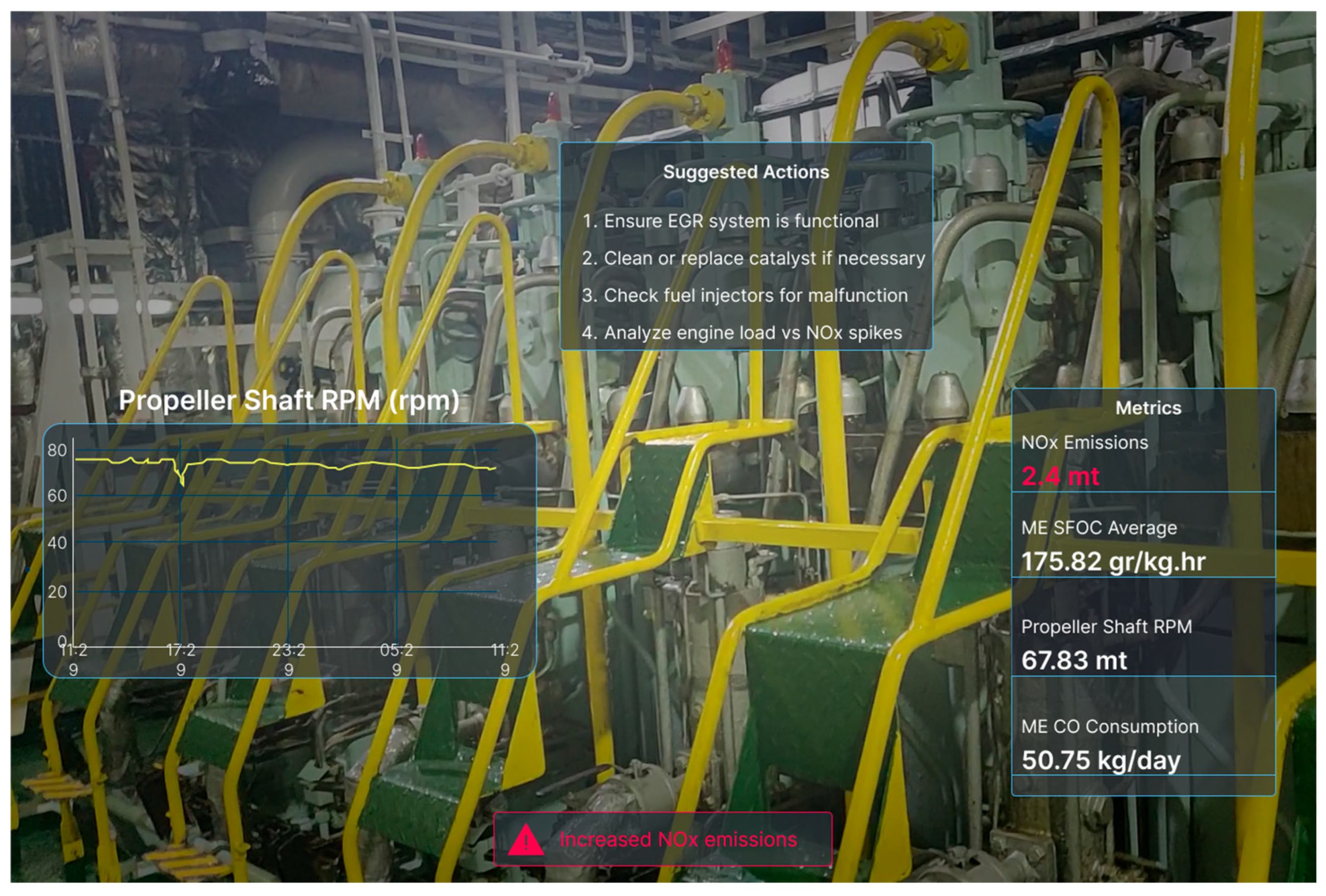
The UI is tailored to suit different operational use cases. In energy optimization scenarios, the AR system displays fuel consumption data per generator, suggests load balancing adjustments, and presents energy KPIs on switchboards or power panels. During predictive maintenance rounds, the interface guides engineers by overlaying component-specific health indicators, vibration alerts, and diagnostic timelines on pumps or engine mounts. In emissions monitoring, the display activates geo-fenced overlays near exhausts and fuel systems, alerting the crew when emissions approach or exceed thresholds—especially when entering Emission Control Areas (ECAs). A visual rendering of the AR interface in action is shown in
Figure 6, illustrating live data overlays during an inspection routine.
4. Methodology
This section outlines the systematic approach adopted to evaluate the effectiveness of the AR-IoT system in enhancing maritime operations, with a specific focus on improving energy efficiency, predictive maintenance, and sustainability outcomes. A rigorous mixed-methods design, combining both quantitative and qualitative research techniques, was employed to ensure a comprehensive evaluation of the system’s impact. This methodology details the research design, data collection procedures, testing phases, evaluation metrics, and statistical methods used to analyze the results.
4.1. Research Design
The research design was constructed to address key research questions regarding the impact of AR interfaces in optimizing decision-making and operational efficiency within the maritime industry. Specifically, the study investigates how the integration of AR with IoT systems can enhance energy usage, enable predictive maintenance, and improve crew responsiveness during routine operations.
A quasi-experimental design [
22] was employed, utilizing a pre-test/post-test control group design to evaluate the system’s impact. A control group (vessels without the AR system) was compared against experimental groups (vessels equipped with the AR system). The evaluation was focused on three primary metrics: energy efficiency, predictive maintenance, and user interaction with the system. The key research objectives guiding this methodology include the following:
Assessing the impact of the AR interface on crew interaction with real-time energy data and its influence on operational decision-making.
Evaluating system performance in terms of fuel consumption, emissions, and maintenance efficiency.
Exploring human-centered challenges associated with the adoption of AR-IoT systems in maritime environments.
4.2. Data Collection Procedures
Data collection was carried out in two distinct phases: Prototype Testing and Field Testing.
Prototype Testing: This phase was conducted in a controlled environment using simulated vessel systems. It focused on evaluating the technical performance and reliability of the AR-IoT system. Key performance indicators, including system latency, response times, communication stability, and hardware/software integration, were tested. The AR system’s ability to accurately track user gaze, overlay data, and communicate with onboard sensors was assessed, with system performance benchmarked against standards such as ISO/IEC 250002:2024 [
23] to ensure operational reliability.
For prototype evaluation, rather than creating synthetic or hypothetical datasets, we utilized two years of historical operational data from the same Panamax-class vessel. This dataset covered multiple voyage cycles, seasonal variations, and a range of mechanical conditions. A custom playback application injected these historical data streams into the AR-IoT platform in real time, preserving authentic signal patterns, update rates, and sensor noise characteristics. This allowed system functionality and user interface performance to be assessed in a controlled lab setting without the variability introduced by vessel mismatches, while still relying on genuine operational data.
Field Testing: The core data collection system described in
Section 3 is currently installed and operational on more than 800 vessels worldwide, covering a wide range of ship categories and sizes. The Augmented Reality (AR) interface developed in this work represents a new capability integrated into this existing infrastructure. For feasibility and validation purposes, AR field testing was carried out on a single dry bulk carrier (length overall: 225 m; deadweight: ~75,000 DWT). This vessel type was selected due to its representative operational profile and accessibility during the testing period. During the trial voyage, the AR system maintained 99.3 % uptime, with stable IoT data acquisition and responsive interface performance. Wireless network stability remained high throughout, and any minor latency variations were within acceptable operational limits. Although multi-vessel AR trials were not conducted at this stage, the successful deployment on a working commercial vessel indicates strong potential for reliable performance across other vessel categories in the fleet.
4.3. Evaluation Metrics
The effectiveness of the AR-IoT system was evaluated based on both technical performance and user experience, utilizing a range of metrics to capture the system’s impact across several key areas. These metrics were designed to assess not only the system’s operational impact but also the tangible benefits realized by the crew and the vessel’s overall performance in terms of energy efficiency, maintenance, and sustainability.
Energy efficiency was one of the primary areas of focus. Fuel consumption data was collected before and after the deployment of the AR system. A difference-in-differences (DiD) statistical analysis was employed to quantify the impact of the AR system on fuel efficiency. This analysis compared the changes in fuel consumption over time between vessels with and without the AR system, thereby isolating the effect of the system on energy usage. Additionally, the AR-IoT system’s influence on energy load balancing was assessed through regression models, which quantified how real-time data overlays helped optimize the distribution of energy across the vessel’s systems.
In terms of predictive maintenance, several performance indicators were measured to assess the system’s impact on reducing downtime and improving maintenance efficiency. Maintenance logs and failure incidents were compared pre- and post-deployment to determine whether the AR system contributed to a reduction in unplanned maintenance events. A key metric in this area was the mean time between failures (MTBF), which was tracked alongside mean time to repair (MTTR) to evaluate whether predictive maintenance capabilities led to more efficient repairs and reduced operational downtime. Predictive accuracy was also measured through confusion matrices, which assessed how effectively the system could predict maintenance needs and classify equipment failure risks.
User interaction with the system was another critical aspect of the evaluation. This was measured through the gaze-tracking feature of the AR glasses, which recorded how frequently and for how long crew members interacted with different data points during operations. This data was analyzed using time-series analysis to model and understand user behavior over time. Another metric that highlighted the effectiveness of the system was task completion time, which tracked how quickly crew members responded to critical operational alerts. Reductions in response times were indicative of the system’s success in streamlining decision-making and improving operational efficiency.
Finally, the sustainability impact of the AR-IoT system was assessed through fuel savings and emission reductions. Emissions data for carbon dioxide (CO
2) and nitrogen oxides (NO
x) were collected before and after system deployment, and the reductions in the carbon footprint were quantified using emission factors in conjunction with operational fuel data. Additionally, the overall impact on operational efficiency, including task execution speed and error reduction, was measured using a set of key performance indicators (KPIs) specific to each vessel’s operations (
Table 4).
4.4. Data Analysis and Statistical Methods
The data gathered during both the prototype and field-testing phases was subjected to rigorous statistical analysis in order to evaluate the system’s performance and assess its impact on operational outcomes.
Quantitative data was analyzed using a variety of statistical techniques, including descriptive statistics and regression analysis, to explore trends in fuel consumption, maintenance frequency, and system responsiveness. A key element of this analysis was the application of a difference-in-differences (DiD) model, which allowed for a comparison of energy optimization metrics between vessels with and without the AR system. This statistical approach provided valuable insights into the AR system’s direct influence on energy efficiency and operational performance.
Prior to conducting the difference-in-differences (DiD) analysis on fleet-level fuel efficiency, baseline normalization procedures were applied to ensure comparability between control and experimental vessels. Specifically, pre-deployment fuel consumption values were normalized for deadweight tonnage (DWT), average voyage speed, and ballast-to-laden voyage ratio. To control for environmental variability, voyages conducted under severe weather conditions (Beaufort scale > 6) were excluded from the analysis dataset. These normalization steps reduced the influence of vessel size, voyage profile, and adverse weather on the fuel consumption comparisons, thereby isolating the effect of the AR-IoT system on operational performance.
In addition to quantitative analysis, qualitative data was also collected through open-ended feedback from the crew members interacting with the system. This feedback was analyzed using thematic analysis to uncover common themes and insights regarding the usability of the AR-IoT system, crew experience, and its perceived impact on operational efficiency. Thematic analysis helped identify areas where the system could be improved and provided a deeper understanding of how crew members interacted with the technology in real-world conditions.
Statistical analysis employed paired-sample t-tests for within-vessel pre/post comparisons and one-way ANOVA for between-group differences across vessel types, with Bonferroni correction for multiple comparisons. Effect sizes (Cohen’s d for t-tests, partial η2 for ANOVA) were reported alongside p-values to indicate practical significance. All models satisfied normality and homoscedasticity assumptions, verified via Shapiro–Wilk and Levene’s tests.
To ensure a comprehensive evaluation, the results from the quantitative and qualitative analyses were integrated using a mixed-methods approach. This integration provided a more holistic view of the AR-IoT system’s effectiveness. Triangulation was used to ensure that the conclusions drawn from both the quantitative and qualitative data were robust and valid, further enhancing the credibility of the findings.
4.5. Ethical Considerations
Ethical considerations were an integral part of the research process. The deployment of the AR-IoT system was conducted with the full consent of the vessel operators, in compliance with data privacy regulations such as the General Data Protection Regulation (GDPR) and other maritime data protection laws. Crew members were fully informed about the nature of the system, the scope of their involvement in the study, and the data being collected. The study was designed to minimize any disruption to the daily operations of the crew, and efforts were made to ensure that their work routines were not negatively impacted by the testing process.
Furthermore, privacy concerns were carefully addressed by ensuring that any personally identifiable information (PII) or sensitive data collected from crew members was anonymized and securely stored. The research adhered to ethical guidelines to protect the rights of the participants and ensure that the study was conducted with transparency and accountability. The primary focus was on minimizing any potential disruptions to crew routines while maximizing the value derived from their interactions with the AR-IoT system.
4.6. Limitations
While the methodology was designed to provide a thorough evaluation of the AR-IoT system, several limitations must be acknowledged.
First, the study was conducted over a 6-month period, which, although sufficient for an initial assessment, did not allow for a full exploration of the long-term effects of the system on operational performance, energy efficiency, and sustainability outcomes. Longer-term studies would be necessary to understand how the AR-IoT system influences performance over extended periods, particularly in terms of maintenance needs and system wear and tear. While the field evaluation lasted six months, insights from the prototype phase drew upon a two-year historical dataset from the same vessel, encompassing seasonal variations and mechanical aging effects. This provides some longitudinal context to the observed short-term improvements; however, a planned 12–18 month onboard study will more directly measure the durability of these gains under real-world operational variability.
Second, although the system was deployed across 800 vessels, the study’s ability to account for all environmental and operational variations was limited. The maritime environment is highly diverse, with vessels operating under varying conditions, and factors such as weather, location, and specific operational needs could influence the system’s effectiveness. Future research could expand the scope to include a more diverse set of vessels across different geographies and operational contexts to provide a more comprehensive understanding of the AR-IoT system’s impact.
Finally, the user learning curve presented a challenge. Crew members’ adaptation to the AR system varied significantly, with some crew members taking longer to familiarize themselves with the technology than others. This variation in learning speed could have influenced the overall effectiveness of the system during the initial deployment phase. While the system showed promising results, future studies could address the potential impacts of the learning curve on system adoption and performance, providing additional insights into how to optimize user training and system deployment strategies.
5. Use Cases and Results
To assess the practical relevance and applicability of the proposed AR-IoT system, three representative use cases were developed and evaluated: energy optimization, predictive maintenance, and emissions monitoring. These domains were selected for their direct link to environmental sustainability goals and their operational significance in maritime vessel management. Each use case was explored through scenario-based workshop simulations involving professional crew members, allowing for an early-stage yet targeted validation of the system’s effectiveness under realistic task conditions. The following subsections present the rationale, implementation, results, and implications of each use case, culminating in a cross-cutting discussion of the key challenges and lessons learned. The participant cohort was intentionally composed to represent a balance of senior and junior personnel. Across all workshops, senior officers constituted 55%, mid-career officers 30%, and junior officers or cadets 15%. Functional roles included engineering, deck operations, and environmental compliance.
5.1. Energy Optimization
Problem Context. Energy management onboard maritime vessels presents persistent challenges due to the dynamic nature of propulsion and auxiliary systems, shifting environmental conditions, and operational demands [
24]. Effective optimization requires timely, context-aware decision-making—something not fully supported by conventional control interfaces.
Traditional Approach. Typically, energy data is displayed on fixed-location dashboards where crew members interpret aggregated fuel and power information. This setup requires multiple manual inputs and often disconnects operators from the systems they are managing. Delays in decision-making, lack of real-time visibility at equipment level, and reliance on post-voyage performance reports characterize the traditional workflow, resulting in inefficiencies.
AR-IoT Enhanced Approach. To address these challenges, the prototype AR-IoT system was developed to provide immersive, real-time visualizations of energy data directly at the point of need. Crew members wearing AR glasses could view system-specific overlays superimposed onto physical components such as engine panels or control boxes. These overlays presented real-time data (e.g., fuel flow rate, generator load), efficiency indicators, and contextual alerts.
The interface employed a minimal interaction model using a touchpad on the AR device and optional voice control (in controlled environments), prioritizing clarity and low cognitive load. All data was sourced from a simulated IoT backend that emulated sensor input under dynamic operational profiles (
Table 5).
Evaluation Methodology. Three structured workshops were conducted with a total of 18 maritime professionals (engineers and deck officers), using realistic operational scenarios. Each participant completed energy management tasks twice: once using a traditional dashboard and once with the AR prototype. Scenarios were designed to simulate load-balancing decisions during variable power demands, detection of high fuel usage, and response to system alerts.
Data was gathered via observation, system logs, time tracking, and post-session surveys (NASA-TLX and SUS).
Outcomes. The use of AR glasses resulted in noticeable performance gains. The crew’s ability to respond quickly and confidently to dynamic energy demands improved significantly. Participants spent less time referencing remote screens, and instead relied on live data embedded in their operational context (
Table 6).
Discussion and Impact. The workshop findings underscore the AR-IoT system’s potential to transform energy management into a more immediate and intuitive process. Crew members engaged more actively with energy efficiency tasks when information was available “on location” rather than at a centralized console. The contextual nature of the data—tied directly to the physical equipment—helped bridge the gap between abstract information and physical action.
While still in the prototype stage, the system demonstrated the capacity to support more responsive and accurate operational decisions. The observed improvements suggest that even low-fidelity AR systems can offer measurable benefits in maritime environments, especially when targeted at high-impact domains, like fuel and power efficiency.
5.2. Predictive Maintenance
Problem Context. Unplanned equipment failures in maritime operations can lead to significant downtime, safety risks, and costly emergency repairs. Traditional maintenance models are often time-based (preventive) or reactive, relying on periodic inspections and post-failure diagnostics [
25]. Given the distributed and complex nature of onboard machinery, identifying early warning signs of mechanical degradation is particularly challenging, especially under operational pressure.
Traditional Approach. In current maritime practice, predictive maintenance relies heavily on centralized monitoring tools, often embedded in Engine Control Rooms (ECR). Engineers interpret condition data from vibration sensors, thermographic readings, and maintenance logs via screen-based diagnostic platforms. While these systems can predict potential failures, translating abstract data into physical inspection or timely intervention often creates a gap. Engineers must mentally map data trends to physical subsystems, which slows down response and increases the risk of oversight.
AR-IoT Enhanced Approach. The AR-IoT prototype introduced in this study aims to reduce that gap by integrating real-time equipment condition data into the visual field of crew members conducting maintenance rounds. As engineers move through engine spaces, AR glasses provide overlaid status indicators and diagnostics for key components such as pumps, shafts, gearboxes, and exhaust systems. Components flagged for attention are highlighted in the user’s view, and corresponding performance data—e.g., vibration levels, thermal readings, and historical failure rates—are displayed contextually.
Instead of requiring engineers to interpret raw sensor data remotely, the system enables direct visualization of the machine’s health at the point of inspection. Maintenance prompts can also be triggered when pre-set thresholds (e.g., temperature rise or vibration spikes) are exceeded (
Table 7).
Evaluation Methodology. To assess the usability and effectiveness of the AR-enabled predictive maintenance system, a series of workshop simulations were conducted with 14 participants from engineering departments. Scenarios included simulating a gradual failure in a main circulation pump and an overheating auxiliary generator. Participants completed inspection tasks first with conventional procedures (using system logs and printed maintenance records) and then repeated them using the AR prototype.
Each session was evaluated on task efficiency, fault detection accuracy, decision-making confidence, and subjective usability and workload.
Outcomes. The AR system enabled participants to more quickly identify components exhibiting early fault signatures. With performance indicators available during walkthroughs, engineers were able to prioritize inspections and respond to issues more proactively (
Table 8).
Discussion and Impact. This use case illustrates the potential of AR to transform routine inspections from passive data interpretation exercises into active, information-rich experiences. By providing engineers with targeted, visualized data on equipment health during physical rounds, the system increases both the speed and quality of fault detection.
Moreover, the ability to access historical context directly at the equipment location reduces reliance on memory or back-and-forth consultation with logs. Participants reported feeling more confident in their assessments and less cognitively strained, suggesting the interface reduces both informational and decision-making burdens.
Although the prototype is not yet field-deployable under high-vibration or high-temperature conditions, the simulated scenarios and user feedback point to strong potential for AR-supported predictive maintenance in future commercial deployments.
5.3. Emissions Monitoring
Problem Context. With increasing regulatory pressure from the IMO and national environmental agencies, emissions monitoring has become a critical operational requirement for maritime fleets [
26]. Accurate tracking of CO
2, NO
x, and SO
x emissions is essential for compliance, reporting, and optimization. However, emissions data are typically processed post-voyage or at fixed intervals, limiting the ability of crews to make real-time adjustments that could reduce a vessel’s environmental footprint.
Traditional Approach. Historically, emissions data are gathered via fixed sensors and logged into onboard monitoring systems. Readings are periodically reviewed by engineering staff, who then correlate the data with fuel consumption, engine RPM, and environmental conditions. Reports are generated for compliance or audit purposes, but operational feedback loops are slow. This means that real-time mitigation actions—such as load reduction, fuel switching, or rerouting—are rare unless thresholds are exceeded drastically.
AR-IoT Enhanced Approach. The AR-IoT system developed in this study integrates emissions monitoring directly into the visual interface used by vessel engineers and environmental officers. When conducting rounds or navigating the engine control room, crew members using AR glasses receive live emissions data—CO2 output, NOx levels, and emissions per kWh—superimposed on fuel system components, exhaust manifolds, and engine displays.
In cases where emission levels approach regulatory thresholds, the AR interface triggers a visual and auditory alert. It also offers quick-access recommendations (e.g., adjust throttle, reduce generator load, switch to low-sulfur fuel) based on real-time engine data. The system’s goal is not only to inform but also to support immediate intervention decisions, shifting emissions management from passive monitoring to active mitigation (
Table 9).
Evaluation Methodology. Two emissions-oriented scenarios were designed and tested in controlled workshop simulations with 12 participants experienced in vessel fuel and emissions management. Scenarios included a simulated spike in NOx emissions during high engine load and a compliance check entering an Emission Control Area (ECA).
Participants completed the simulations first with standard system logs and monitoring panels, then repeated the tasks using the AR prototype. Task performance, reaction time, compliance confidence, and cognitive load were recorded and compared.
Outcomes. Participants using the AR interface were more likely to take corrective action before exceeding emission thresholds and expressed higher confidence in their ability to maintain compliance (
Table 10).
Discussion and Impact. The integration of live emissions data into an AR interface significantly improves crew responsiveness and situational awareness during critical phases such as ECA entries or high-load engine operations. The AR system allows crew members to connect environmental performance indicators directly with actionable engineering decisions.
This use case highlights the potential for AR to serve as a frontline tool in sustainability enforcement, not just compliance reporting. Real-time visibility empowers crews to treat emissions control as a dynamic task rather than a regulatory afterthought. While the prototype relied on emulated sensor data and controlled conditions, the outcomes suggest that with robust sensor integration, such systems could play a pivotal role in meeting IMO targets for the reduction of emissions from shipping [
27].
5.4. Challenges and Lessons Learned
While the results of the workshop-based evaluations were largely positive, several technical and operational challenges emerged that warrant consideration for future development. A recurring theme was the diversity in user adaptability and perception. Some participants, particularly those unfamiliar with wearable interfaces, showed initial reluctance or discomfort in using the AR system. Others—more enthusiastic about technology—demonstrated an eagerness to highlight the benefits, sometimes bypassing procedural fidelity to “make the system work.” This divergence revealed a participant bias, likely intensified by the presence of the researcher, which may have influenced how the system was perceived or performed during testing.
Moreover, a subgroup of participants—referred to informally during debriefs as “restrictive”—appeared resistant to adopting the system regardless of outcome, often preferring conventional methods out of habit or skepticism. Conversely, “technology enthusiasts” were more likely to adapt quickly, sometimes overlooking the system’s limitations. These behavioral dynamics underscore the subjective nature of short-term trials and emphasize the need for longer-term, unsupervised deployments to truly assess usability, adoption rates, and behavioral integration under authentic working conditions.
From a technical standpoint, sensor emulation and AR-rendering synchronization introduced some limitations during testing. Since real-world IoT sensor integration was not feasible at this stage, some crew feedback questioned the realism of the data streams, particularly regarding update latency and edge-case accuracy. In actual maritime environments, where connectivity, vibration, and lighting conditions vary significantly, ensuring robust system responsiveness remains a key challenge. Participants also highlighted occasional AR display legibility issues, particularly in low-light engine rooms or areas with reflective surfaces, indicating the need for adaptive contrast and brightness settings in future iterations.
While the AR system generally reduced information search time and improved decision-making speed, some participants noted the potential for cognitive overload, especially when multiple data layers were presented simultaneously. This finding supports the importance of context-aware content filtering, where only the most relevant metrics are displayed based on the task, crew role, and environment.
Despite these challenges, participants consistently recognized the value of spatially contextualized information—the ability to see operational data directly on the physical systems being inspected. However, they also noted that any future deployment at scale must include robust training programs, customizable interfaces, and built-in safety measures to ensure that the system enhances rather than distracts from situational awareness in complex operational environments.
In summary, while the initial evaluations validate the conceptual value of the AR-IoT system, extended testing in live vessel environments over longer durations will be essential to draw reliable conclusions about operational resilience, user trust, and behavioral integration. Only through such deployments the system’s true impact on maritime sustainability and performance can be fully assessed.
6. Discussion
6.1. Advancing Operational Intelligence in Maritime Contexts
This research demonstrates that the convergence of IoT data streams and augmented reality interfaces can substantially enhance operational intelligence in maritime environments. Across all three use cases—energy optimization, predictive maintenance, and emissions monitoring—the AR-IoT prototype enabled more intuitive, timely, and context-rich interactions between crew members and complex vessel systems. Importantly, the results do not merely suggest marginal efficiency gains; they indicate a qualitative shift in how operational decisions are made, transforming traditionally reactive workflows into proactive, data-driven practices.
Unlike traditional dashboards or control room interfaces, which are often removed from the systems they monitor, the proposed AR system embeds digital information within the physical context of use. This spatial alignment between data and equipment supports what can be termed situated operational awareness, enabling crew members to perceive, interpret, and act upon system states without cognitive fragmentation. This recontextualization of data access—placing intelligence at the point of need—marks a significant innovation in maritime human–machine interaction.
The findings align with previous maritime AR research (e.g., [
12,
13]), which reported gains in navigational efficiency and crew situational awareness through spatially contextualized displays. Our results extend this work by demonstrating similar benefits in engineering and environmental monitoring domains, with measurable operational outcomes in a large-scale deployment context. Likewise, IoT-enabled sustainability initiatives in the maritime sector [
15] have emphasized real-time emissions monitoring; however, these typically rely on centralized dashboards rather than distributed, hands-free interfaces. By embedding IoT data into AR overlays at the point of action, the present study operationalizes a more direct human–machine feedback loop, consistent with the “operational intelligence” paradigm emerging in industrial IoT literature [
28].
6.2. Contribution to the Discourse on IoT-Enabled Sustainability
From a sustainability perspective, the findings of this study align with a growing body of research advocating for the integration of digital technologies to support decarbonization and environmental compliance in heavy industries. However, the contribution here is twofold. First, the study moves beyond the often-theoretical discourse around IoT and presents a human-centered implementation framework grounded in real-world operational constraints. Second, it highlights augmented reality as a critical enabling layer in IoT systems—one that translates raw data into accessible, actionable information for frontline decision-makers.
By evaluating the prototype through scenario-based workshops, this research offers a methodological template for low-cost, early-phase validation of emerging technologies in high-stakes environments. The incorporation of usability, workload, and behavioral metrics ensures that technical performance is not divorced from human experience—a vital consideration for systems intended to operate in safety-critical domains.
In predictive maintenance, our anomaly detection results parallel those in heavy manufacturing (e.g., [
29,
30]), where AR-guided inspections have reduced downtime and improved fault localization. However, few of these studies have been validated under maritime constraints, such as structural interference, vibration, and intermittent connectivity, underscoring the novelty of our empirical contribution.
6.3. Limitations and the Value of Empirical Realism
The present findings should be interpreted as proof-of-concept results rather than definitive measures of fleet-wide impact. While energy savings, predictive maintenance gains, and emissions reductions were observed, these outcomes were derived from controlled environments and short-term exposure—factors that may amplify novelty effects, observer bias, and performance enthusiasm among participants. Long-term operational realities, including system fatigue, evolving user trust, and behavioral integration into standard operating procedures, remain untested. To address these limitations, a planned longitudinal deployment over 12–18 months will monitor reliability metrics (system uptime, latency), user trust indices, and behavioral adaptation using unobtrusive interaction logging and post-deployment surveys. This will enable a more robust assessment of generalizable performance benefits and adoption barriers.
These limitations, however, are not weaknesses but reflections of empirical realism—a recognition that novel systems must pass through constrained prototyping stages before reaching full deployment. The structured workshops and carefully selected scenarios offered a controlled yet authentic glimpse into potential operational futures, providing evidence-based insight into how emerging digital tools may be integrated into real-world maritime workflows.
6.4. Implications for Design, Deployment, and Policy
The implications of this study extend across design, implementation, and governance domains. For system designers, the findings point to the importance of adaptive interfaces that can scale cognitive load based on user expertise, task urgency, and environmental conditions. For deployment strategists, the study highlights the need for longitudinal pilot programs and crew-centric onboarding procedures that allow new technologies to embed naturally into existing routines.
In addition to evaluating the operational and environmental impact of the AR-IoT platform, we identified a set of deployment prerequisites that are critical for scaling the system across different fleets. The hardware requirements per vessel include (i) one or more pairs of AR smart glasses adapted for maritime environments, (ii) a vessel-wide IoT sensor network comprising fuel flow meters, vibration and temperature sensors, and emissions analyzers, and (iii) edge/fog computing units for local data processing and AR content delivery.
The estimated capital expenditure (CAPEX) for full system deployment ranges from USD 20,000 to 52,000 per vessel, depending on vessel size and existing infrastructure. Operating expenditure (OPEX) is approximately USD 4000 annually, covering software licensing, cloud hosting, and periodic hardware maintenance. A two-day onboard training program, tailored to crew roles, is recommended to familiarize operators with AR device handling, interface navigation, and safety protocols, followed by a one-month period of remote technical support for troubleshooting and feedback collection.
From a network perspective, reliable local Wi-Fi connectivity is required for communication between AR devices and the vessel’s edge processing unit, while satellite bandwidth is needed for non-critical cloud synchronization and fleet-level benchmarking. These prerequisites provide a clear framework for assessing the feasibility of replicating the deployment in other maritime or industrial contexts.
Field-testing data indicates average fuel savings of 3–6% and a 15–20% reduction in unplanned maintenance incidents. For a Panamax-class bulk carrier consuming ~20 tons of fuel per day, these savings translate to USD 90,000–180,000 annually at a conservative bunker fuel price of USD 500/ton. Accounting for both energy efficiency and reduced downtime, the payback period is estimated at 18–24 months. For vessels operating in fuel-regulated zones or high-traffic trades, the economic return may be realized even sooner. These findings suggest that beyond environmental compliance, AR-IoT integration offers a financially sustainable pathway for fleet digitalization.
Broader technological adoption will also depend on alignment with emerging digital compliance and collaborative infrastructure frameworks, such as those enabling remote inspections and vessel digital twins [
15]. Recent cross-sector analyses [
28,
29,
30] underscore the strategic value of unifying IoT, AR/VR, AI, and blockchain in Industry 4.0 ecosystems to enable transparency, interoperability, and secure data sharing—attributes increasingly relevant to IMO compliance mechanisms. Positioning the AR-IoT platform within such converged infrastructures may accelerate not only technological scaling but also its policy-level integration into decarbonization roadmaps.
Finally, at the policy level, this work reinforces the argument for technology-inclusive sustainability frameworks. Regulatory bodies such as the IMO could benefit from promoting not only emissions limits and fuel standards but also the operational technologies that enable compliance. Integrating AR-IoT solutions into decarbonization strategies could offer a practical means of bridging the gap between regulatory ambition and onboard implementation.
From a policy and industry transformation perspective, our findings complement broader trends in maritime digitalization. For instance, research on green port transformation identifies critical success factors—such as stakeholder collaboration, technology readiness, and regulatory alignment—that also apply to fleet-level AR-IoT deployments [
9]. Similarly, the performance benchmarks of sixth-generation smart ports in China [
10] underscore the systemic benefits of integrating advanced data-driven tools into operational decision-making.
These macro-level frameworks parallel our vessel-level results, suggesting that the AR-IoT platform could be embedded into wider Industry 4.0 strategies for maritime transport. This aligns with earlier studies on blockchain adoption [
7], digital transformation in shipping [
8], and route optimization strategies like the Northern Sea Route assessment [
6], all of which highlight that digital innovations are most impactful when combined with operational intelligence systems that directly inform frontline decision-making.
6.5. Human Factors and Usability
User feedback collected during evaluation workshops (
Section 5) highlighted the system’s ability to reduce information retrieval effort and enhance task confidence. The spatial coherence of data and physical systems was frequently cited as a key benefit, allowing crew members to act on information without leaving their task environment.
The observed reductions in task completion time and reported workload can be interpreted through Endsley’s [
31] three-level model of situational awareness (SA): (1) perception of elements, (2) comprehension of meaning, and (3) projection of future status. The AR-IoT interface supports SA by presenting real-time KPIs directly in the operator’s field of view, minimizing cognitive shifts between system monitoring and physical action. Additionally, according to Wickens’ multiple resource theory [
32], distributing information across visual and auditory modalities can reduce resource competition, thereby lowering cognitive load during complex tasks. By leveraging spatial alignment and multimodal cues, the system appears to enhance both SA and decision-making speed without overloading the operator’s perceptual channels.
To facilitate smooth adoption, a structured crew training program was implemented during the evaluation phase. This consisted of a two-day onboarding workshop covering AR device handling, interface navigation, and safety protocols for operating wearable systems in engine rooms. Training modules were tailored to specific crew roles—engineering, navigation, and environmental compliance—with scenario-based exercises for energy optimization, predictive maintenance, and emissions control. A remote support channel was maintained for the first three months post-deployment, enabling real-time troubleshooting and user feedback collection. Observations from the field indicate that structured training significantly reduced the learning curve, with average task completion times improving by an additional 12% in the weeks following onboarding.
However, concerns were also raised about potential information overload when too many metrics appeared simultaneously, particularly in alert conditions. In response, the interface was enhanced with adaptive content filtering, showing only the top-priority indicators in time-critical situations, while allowing access to deeper data on request.
User comfort, legibility under variable lighting, and safe interaction were also considered in the UI iteration process. The transparent nature of the waveguide display ensured that operators retained full situational awareness, even while receiving system information.
6.6. Toward a New Paradigm of Maritime Interaction
Ultimately, this research contributes to a broader shift in the maritime sector—from automation-centric approaches toward augmented intelligence paradigms, where technology supports rather than supplants human expertise. The AR-IoT prototype serves not merely as a technical solution, but as a vision for more responsive, intuitive, and sustainable vessel operations. Beyond routine operations, the AR-IoT system is designed to augment human decision-making in emergency contexts. During simulated incidents—such as engine room fires, sudden equipment failures, and hazardous gas leaks—the AR interface provided real-time hazard overlays, dynamic evacuation routes, and instant access to emergency checklists without requiring crew to disengage from the incident site. Integrated live-streaming functionality enabled shore-based specialists to guide onboard teams through corrective actions in real time. These features reinforce the principle that in maritime emergencies, human judgment remains paramount, with AR serving as a force multiplier to enhance situational awareness and coordination under time-critical conditions. As digital transformation accelerates across the shipping industry, this work lays foundational ground for embedding environmental intelligence into the daily practices of those at sea.
7. Conclusions
The integration of Augmented Reality and Internet of Things technologies presents a promising pathway for enhancing both operational intelligence and environmental sustainability in the maritime sector. This study demonstrated that situating real-time data within the crew’s field of view—through wearable AR interfaces—can significantly improve energy management, predictive maintenance, and emissions monitoring. By enabling faster decision-making, reducing cognitive workload, and increasing task accuracy, the AR-IoT system not only supports more efficient operations but also contributes directly to the maritime industry’s decarbonization objectives.
Importantly, these results do not represent a marginal technical improvement but rather a shift in how operational information is accessed and acted upon. Unlike traditional monitoring tools, which often separate data from the physical systems they describe, this approach creates a tightly coupled feedback loop between environmental conditions, system performance, and human response. It empowers maritime professionals to make sustainability-aligned decisions in real time, rather than relying solely on post-event reporting or control room assessments.
While the initial deployment results are promising, further research is necessary to evaluate the long-term effects of AR-IoT systems under varying maritime conditions. Extended deployments across diverse vessel types and geographies would provide critical insights into the system’s scalability, robustness, and behavioral integration over time. Equally important is the continued development of adaptive user interfaces that can respond to crew expertise levels, task complexity, and operational environments. Such enhancements would help ensure broad adoption across heterogeneous fleets.
Looking ahead, integrating advanced predictive analytics and machine learning models could further elevate the platform’s utility, allowing for emissions forecasting, fault prediction, and optimized voyage planning. Moreover, closer collaboration with regulatory bodies may create opportunities for incorporating such technologies into formal compliance mechanisms. Digital certification schemes and incentive-based policies could support widespread implementation, helping the industry bridge the gap between regulatory ambition and practical execution.
Ultimately, this work contributes to a growing recognition that digital innovation must play a central role in maritime sustainability. By demonstrating how AR and IoT can be effectively deployed at scale to improve operational and environmental performance, this research lays essential groundwork for future systems that are not only more efficient, but also more intelligent, resilient, and aligned with the climate commitments shaping the future of maritime transportation.