1. Introduction
The maritime sector is a complex industry that is influenced by numerous financial factors. Financialization within the port and terminal industry has highlighted the inherent risks in the maritime sector, particularly those linked to business cycles [
1]. Dividend management is crucial in the shipping industry, with research focusing on how globally listed maritime companies handle income dynamics [
2]. The maritime transport sector has mostly been influenced by economic expansion in developing nations and regulatory measures implemented in response to financial crises [
3]. The significance of adaptation and resilience in the maritime sector has been emphasized by crises such as the 2009 financial crisis and the 2020 pandemic [
4]. Furthermore, this sector exerts a substantial impact on the economy, fostering significant employment opportunities in coastal areas and providing support to diverse industries [
5]. Maritime clusters have been acknowledged for their economic importance, as they make substantial contributions to both employment and GDP (Gross Domestic Product) [
6]. The post-COVID-19 era presents both unprecedented challenges and opportunities for the revitalization of maritime industries in the European Union [
7].
As a result of these economic activities, environmental issues are also becoming increasingly important. The shipping industry plays a vital role in greenhouse gas emissions, and policies governing these activities promote decarbonization efforts through regulations [
8]. Indeed, the safety management methods in the maritime sector have been closely examined after major disasters, prompting efforts to improve safety culture related to environmental sustainability [
9]. This research highlights the significance of fuel type selection in ensuring the efficient and dependable functioning of the propulsion system. Also, research on dual-fuel engines suggests that they can achieve efficiency levels comparable to those of diesel engines while notably reducing NO
x emissions [
10]. This underscores the potential for enhancing operational effectiveness while concurrently integrating environmental and financial considerations.
Significant maritime regulations concerning emissions are transforming the shipping sector. The rules established by the International Maritime Organization (IMO) and regional authorities are designed to substantially decrease air pollution and greenhouse gas emissions from maritime vessels. This initiative aligns with larger global objectives, including those outlined in the Kyoto Protocol and the Paris Agreement [
11]. For instance, the IMO’s sulfur cap requires a reduction in sulfur content in fuels on a global scale, whereas the European Union’s Emissions Trading System (ETS) imposes a cost on carbon emissions for vessels entering European ports [
12]. In North America, the United States (US) Environmental Protection Agency (EPA) has established rigorous standards for nitrogen oxides and particulate matter emissions for vessels navigating in US waters, while California enforces its distinct regulations for ships operating in proximity to its coastline [
13]. These regulations include various measures, such as more stringent limits on sulfur content in fuels and requirements for cleaner-burning engines, as well as novel strategies such as emissions trading schemes and incentives for the adoption of alternative fuels, including Liquefied Natural Gas (LNG) or methanol [
14]. Additionally, the IMO has implemented initiatives such as the Energy Efficiency Design Index (EEDI) for newly constructed vessels and the Energy Efficiency Existing Ship Index (EEXI) for those already in operation, advocating for enhancements in ship design and operational performance [
15]. The implementation of these technical regulations, in conjunction with market-oriented strategies, facilitates the integration of technologies such as scrubbers, selective catalytic reduction (SCR) systems, and alternative fuel systems [
16]. The financial aspects of the maritime sector are complex and affected by multiple factors, such as trends in financialization, strategies for managing dividends, economic growth, regulations, sustainability initiatives, technological advancements, safety management practices, and Industry 4.0 transformations.
The financial dynamics associated with different main engines and fuel types are vital for ensuring operational efficiency and profitability in the maritime sector. Comprehending the power demands, pollutants, and dependability of main engines is crucial for making informed decisions. Research conducted in [
17,
18] provides valuable information on the estimation of main engine power, emissions, and the likelihood of failures. This information is an important element for effectively scheduling maintenance and managing costs. Moreover, the study in [
19] on simulation modeling of ship propulsion systems emphasizes the significance of examining the thermodynamics of the main engine in different sea conditions to ensure effective control and management. The analysis in [
20] highlights the importance of financial factors such as uncertainty, financial frictions, and investment dynamics. Gaining insight into the influence of financial obstacles on investment choices in the shipping sector is also significant for ensuring its long-term viability and expansion. In addition, the analysis in [
21] on fuel consumption estimation in fishing vessels highlights several aspects that affect fuel efficiency, such as main engine power, load factors, fuel types, and maintenance methods.
Consequently, a thorough examination of the financial aspects of different fuel types in the shipping industry necessitates a multidimensional strategy that combines technical factors such as power estimation, reliability prediction, and emissions modeling with financial considerations such as investment dynamics, fuel efficiency, and maintenance costs. By utilizing knowledge gained from a variety of research, stakeholders involved in the shipping sector can make well-informed choices to improve operational efficiency and financial viability.
This study aims to evaluate how different main engine and fuel type combinations affect the financial viability of container shipping operations under evolving regulatory and market conditions. Specifically, it addresses the research question: which propulsion configuration provides the most favorable financial outcomes when long-term fuel costs and capital investment dynamics are considered? Unlike earlier studies that focus predominantly on environmental metrics or technical efficiency, this research integrates technical fuel consumption modeling with financial valuation tools, including Net Present Value (NPV), Weighted Average Cost of Capital (WACC), and the Capital Asset Pricing Model (CAPM). By doing so, the study fills a critical gap in the maritime finance literature and offers a data-driven framework to support investment decisions in an increasingly decarbonized and cost-sensitive shipping environment. To address the stated research question and evaluate the financial outcomes of alternative propulsion systems, the following section presents the methodological framework and underlying assumptions used in the analysis.
This study begins by detailing the ship model’s technical specifications.
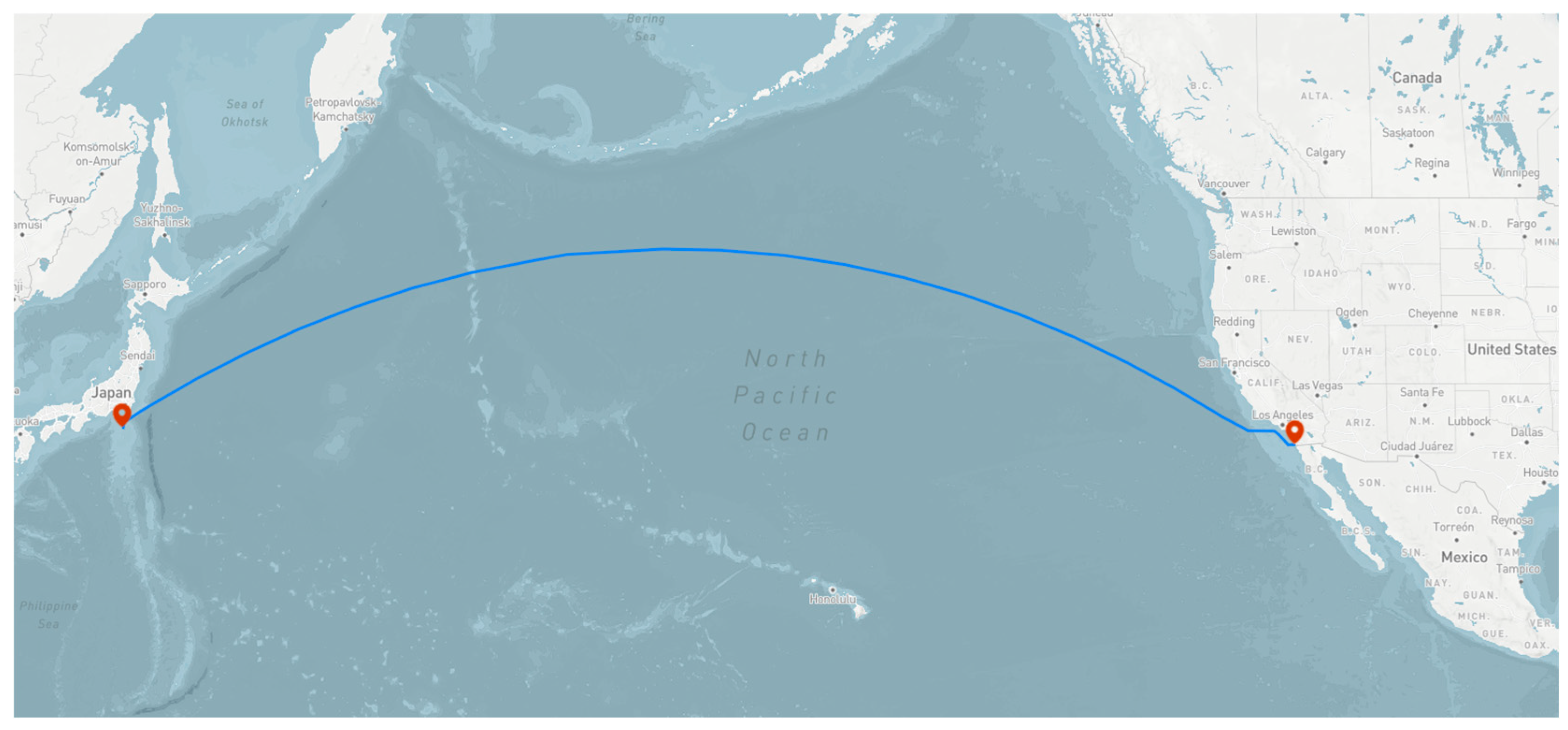
Section 2 of this paper presents the technical specifications of the ship model, which lays the foundation for the financial analyses. These specifications were determined based on similar types and sizes of vessels. The region where this ship will operate regular voyages is the North Pacific Ocean, a major region for global container transportation, and evidence supporting this selection is also provided in this section. The initial investment and operational expenses that a ship management company would encounter were analyzed using current and historical statistical data in
Section 3, and the resulting values were presented in
Section 4. Finally, the last section includes the conclusions drawn from this study and the key indicators that companies intending to engage in ship management should consider.
3. Financial Modeling Methodology
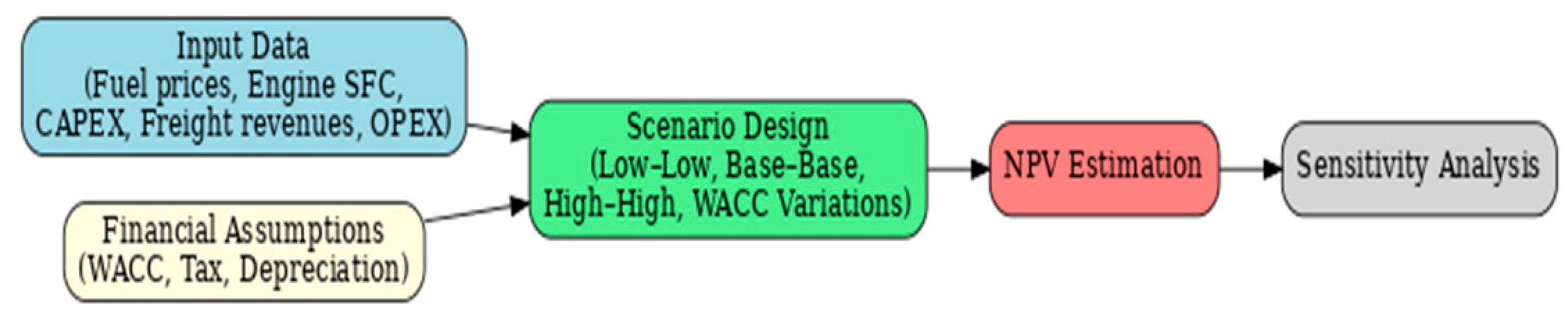
This section outlines the financial modeling approach used to assess the economic feasibility of each engine–fuel configuration over a 10 year operational horizon. The NPV methodology was employed to compare alternative propulsion investments by evaluating the stream of expected cash flows discounted at an appropriate rate of return.
3.1. Financial Structure and Assumptions
The NPV of each propulsion system was calculated using Equation (2):
where
: Net cash flow in ‘’ year [$]
: Initial capital investment [$]
: Discount rate (WACC) [%]
: Investment period [year]
Annual cash flows were derived by subtracting annual fuel costs from estimated annual revenues, based on historical freight rate trends and vessel utilization assumptions. All prices were expressed in constant US Dollars (USD) terms.
3.2. Revenue Estimation
Projected annual revenues were determined by three primary factors: container capacity, operational efficiency, and freight market dynamics. This study assumes that all configurations will carry 2880 TEU at 80% utilization. The San Diego–Yokohama route was anticipated to generate freight revenue from both outbound and inbound segments, with each vessel expected to complete multiple round-trip voyages annually, as outlined in
Section 2.2.2.
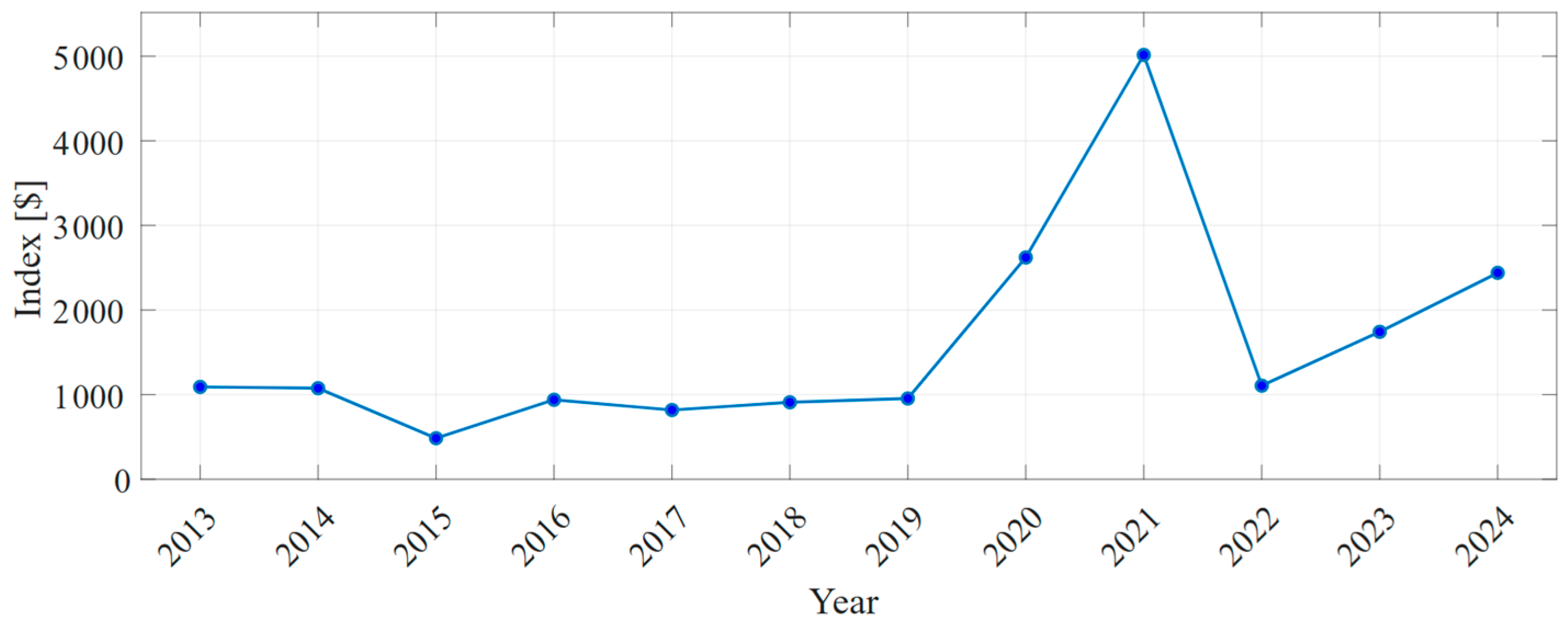
The Containerized Freight Index (CFI) provides historical data used to project freight rates for the 2024–2033 period. The arithmetic means of annual percentage changes in CFI values from 2014 to 2023 were calculated and applied iteratively to the base-year freight rate to simulate future price estimations. This approach captures typical annual volatility in the container shipping sector and mitigates distortions from exponential compounding.
Annual revenue was projected using Equation (3):
Projected freight rate trends are illustrated in
Figure 4.
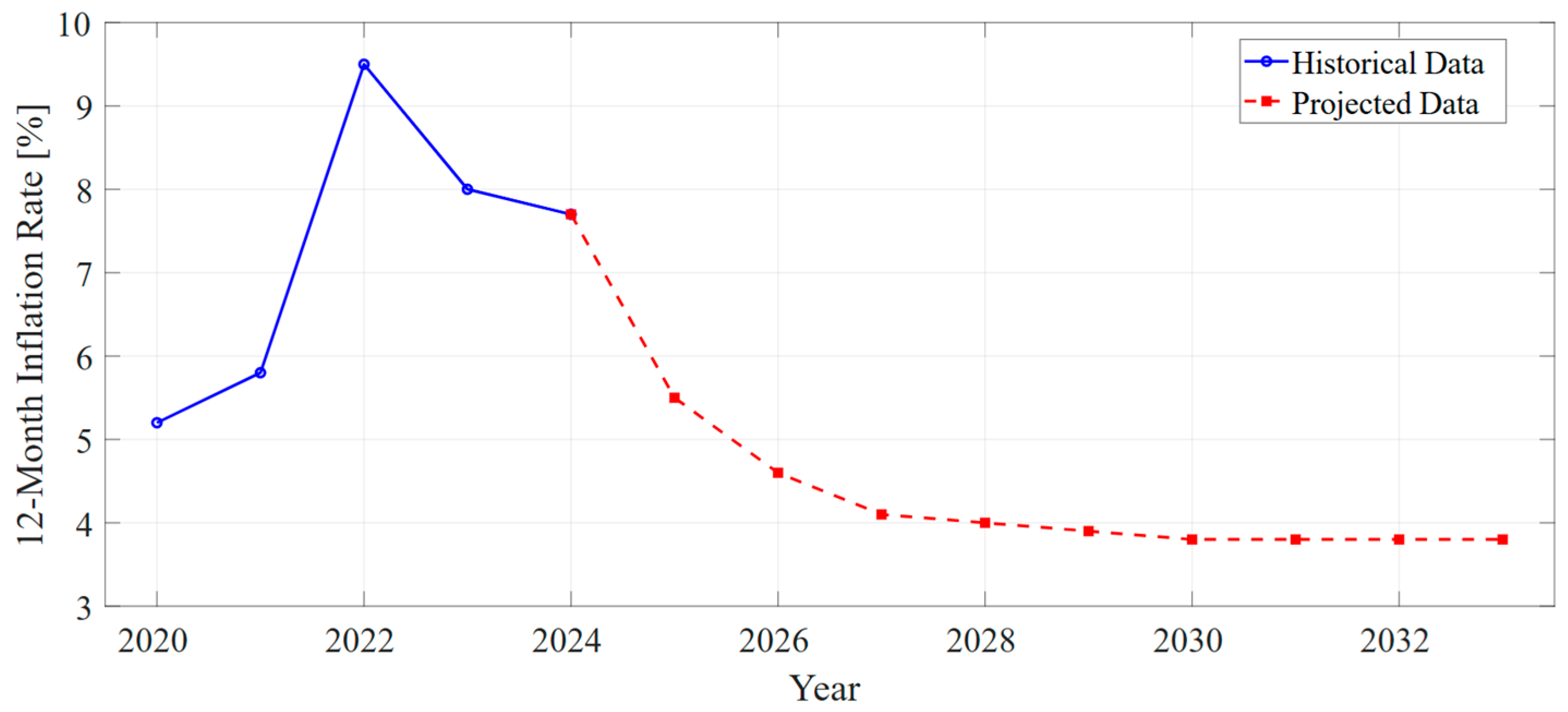
The historical average growth rate, excluding pandemic-related fluctuations, was approximately −2.4%; however, this figure does not adequately reflect current and forward-looking market conditions. Therefore, the projection incorporates global inflationary pressures and anticipated structural recovery trends in the container shipping sector over the coming decade. In this study, a conservative nominal growth rate of 5% per annum was assumed as a baseline projection to reflect expected inflation and moderate market recovery trends, abstracting from the short-term volatility typically observed in the container shipping market, consistent with recent projections from the IMF’s medium-term inflation outlook [
25]. While the 5% nominal growth rate assumption for freight revenues used in our financial model is consistent with the IMF’s medium-term inflation expectations and macroeconomic recovery trends in the sector, this approach does not fully reflect the high volatility that the container shipping market has historically exhibited. This methodological simplification excludes the potential impact of sudden and large price fluctuations, particularly during periods such as the COVID-19 pandemic. Consequently, this constant growth rate assumption presents a limitation in modeling the impact of future market fluctuations on financial results.
Figure 5 illustrates the IMF’s long-term inflation expectations, which provide a macroeconomic rationale for this adjustment.
This revenue projection provides a robust and comparable foundation for evaluating the financial performance of various propulsion configurations.
3.3. Fuel Expenditures and Operational Costs
Annual fuel expenditures represent the primary operating cost driver in this analysis and were estimated for each engine–fuel configuration, based on annual fuel consumption values (as derived in
Section 2.2.2) and corresponding average bunker fuel prices. Equation (4) was used to compute annual fuel costs.
Fuel prices vary according to the specific type (e.g., HFO, LFO, LNG, or methanol) but were assumed to remain stable in real terms over the 10 year analysis period, reflecting average recent market levels. This assumption abstracts from short-term price volatility and facilitates consistent financial comparisons across different propulsion configurations.
Additional operating expenses—including crew salaries, insurance premiums, maintenance costs, and port fees—were treated as a fixed element to ensure comparability across configurations. Total operating costs, comprising both fuel and non-fuel expenditures, for the common configuration were calculated to represent approximately 60% of gross annual revenue, consistent with current industry benchmarks for modern container vessels.
For this assumption, non-fuel costs were determined by subtracting the calculated fuel costs for the baseline engine from the 60% total operating cost benchmark. This resultant non-fuel cost figure was then held constant across all configurations as a standardized estimate for supplementary fixed operating expenses.
For alternative engine–fuel combinations, actual fuel costs were calculated independently and added to this standardized non-fuel cost figure. This methodology ensures that variations in total operating costs—and, consequently, EBIT and NPV estimates—are attributable solely to differences in fuel efficiency and fuel prices across configurations. As such, this approach effectively isolates the financial impact of propulsion-related variables.
3.4. Discount Rate and Capital Cost Assumptions
This study employs a WACC framework as the discount rate for the NPV analysis. The WACC is a measure that indicates the aggregate cost of debt and equity financing. It also represents the opportunity cost of capital for investments in alternative propulsion systems. It seeks to establish a consistent and reasonable discount rate across all scenarios to evaluate the financial impacts of different engine fuel configurations.
3.4.1. Cost of Debt Estimation
Shipping companies typically maintain highly leveraged capital structures to finance vessel acquisitions and modernization, with debt often exceeding 80% of external capital and sourced through syndicated loans, ship mortgages, and exported credit-backed facilities [
26,
27]. While debt levels can exceed 80% across total capital structures, studies indicate that for vessel-specific transactions such as ship acquisitions and newbuild financing, loan-to-value (LTV) ratios typically range between 50% and 60% [
28]. Accordingly, this study adopts a capital structure of 55% debt and 45% equity to reflect prevalent industry practices in ship finance while maintaining a prudent analytical approach.
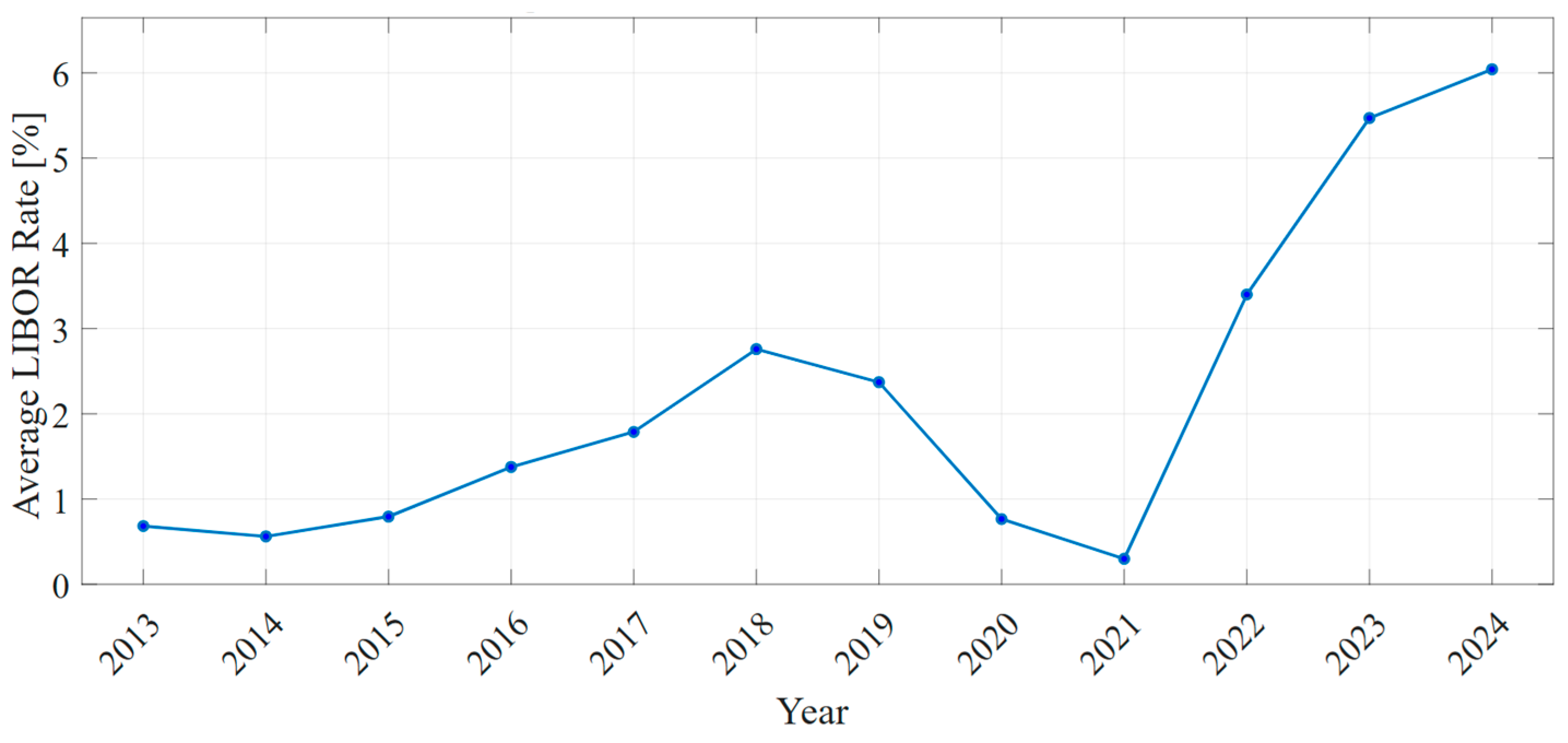
The Weighted Average Cost of Debt (WACD) reflects this financing environment by combining variable and fixed interest rate components. Variable rates are generally tied to global benchmarks such as LIBOR (London Interbank Offered Rate), SOFR (Secured Overnight Financing Rate), or EURIBOR (Euro Interbank Offered Rate); this study uses the 10 year average LIBOR (2013–2024), as can be seen from
Figure 6, as a proxy for floating-rate debt, estimated at 4.5%.
Fixed rates are typically associated with Export Credit Agencies (ECAs), which provide long-term financing under stable and concessional terms compared to commercial loans. In practice, rates on such loans are often structured as a spread over benchmark indices (e.g., EURIBOR + 2–3% for BNP Paribas; LIBOR/SOFR + 2–2.5% for HSBC). However, for modeling purposes and to maintain analytical consistency, this study assumes a representative fixed rate of 3.0% for ECA-backed financing, reflecting the generally favorable terms extended to environmentally compliant vessel projects [
30].
The WACD formula was expressed by Equation (5):
where
: Debt amount from each source [%]
: Total debt financing [%]
: The average effective tax rate for the sector is used for this computation [%]
: Interest rate on each debt component [%]
This formulation incorporates the tax shield that reduces the effective borrowing cost by allowing interest expenses to be deducted from taxable income.
In shipping finance, Value Added Tax (VAT) is generally recoverable for international trade and is therefore excluded from long-term investment models. However, due to its short-term liquidity impact during vessel construction and delivery stages, VAT was acknowledged in scenario-based cash flow modeling but excluded from WACC computations.
For this study, a corporate tax rate of 20% is applied to capture the tax shield effect. The after-tax WACD was calculated by Equation (6):
This value reflects the blended cost of commercial and ECA-backed borrowing adjusted for tax benefits. The resulting after-tax WACD was integrated into the overall WACC, which serves as the discount rate in the NPV analysis. Applying a uniform WACC across all engine–fuel configurations ensures that differences in NPV outcomes reflect operational and fuel-related performance rather than variations in financial assumptions.
3.4.2. Cost of Equity Estimation (CAPM Approach)
The cost of equity was estimated using the Capital Asset Pricing Model (CAPM), which reflects the return expected by equity investors for bearing systematic risk. The CAPM formula was expressed by Equation (7):
where
: Cost of equity (expected return for shareholders) [%]
: Risk free rate (US Treasury Yield ≅ 4% in 2024 [
31]) [%]
: Industry beta, reflecting the volatility of shipping company returns relative to the market
: Market risk premium [%]
For this study, a risk-free rate of 4.5% was used, based on US 10 year Treasury bond yields as a stable long-term benchmark. The equity beta was derived from leading global container shipping firms, including Maersk (0.92), Hapag-Lloyd (1.30), Cosco Shipping Lines (1.32), Evergreen Marine Corp. (1.57), Zim Integrated Shipping Services (1.62), Yang Ming Marine Transport Corp. (1.74), and Wan Hai Lines Ltd. (1.72). The arithmetic means of these values were calculated as 1.46; however, to reflect a conservative industry-wide risk estimate, a rounded value of 1.5 was adopted. The equity market risk premium was set at 5.0%, based on [
32], reflecting both historical averages and current expectations in developed equity markets.
Substituting these values was represented by Equation (8):
This value for the cost of equity was then incorporated into the WACC calculation, ensuring that both equity and debt financing costs were properly reflected in the investment evaluation model. The relatively high beta captures the capital-intensive and cyclical nature of the shipping industry, which increases sensitivity to macroeconomic conditions and fuel price volatility.
3.4.3. Calculations of the WACC
The Weighted Average Cost of Capital (WACC) represents the overall rate of return required by both equity and debt holders, weighted according to the capital structure of the company. It was used as the discount rate in NPV analysis to evaluate the financial viability of each propulsion system.
For this study, capital structure was assumed to consist of 45% equity and 55% debt, reflecting typical loan-to-value ratios observed in ship acquisition and newbuild financing [
28]. The formula for WACC was expressed by Equation (9):
where
: Proportion of equity in total capital (45%)
: Proportion of debt in total capital (55%)
: After-tax weighted average cost of debt (as calculated in
Section 3.4.1)
Substituting into the formula was presented by Equation (10):
This WACC reflects a blended financing cost based on a capital structure aligned with current ship finance practices and was applied uniformly as the discount rate across all scenarios in the NPV analysis.
3.5. Operational Cost Allocation Methodology
To reflect modern efficiency trends in container shipping, where overall operating expenses (OPEX) typically account for approximately 50–65% of gross revenue [
33], this study adopts a benchmark OPEX-to-revenue ratio of 60%.
Given that LFO is a common fuel across all three engine configurations, non-fuel operating costs—including crew salaries, insurance, maintenance, and port fees—were assumed to be uniform and fixed across scenarios. Specifically, non-fuel operating costs were estimated by deducting the calculated fuel expenditure for the baseline configuration from 60% of gross revenue. This resulting figure was then held constant for all scenarios as a standardized estimate of fixed operating expenses.
Actual fuel costs were computed independently for each engine–fuel combination and added to this fixed non-fuel cost. This ensures that variations in total operating costs—and thus EBIT and NPV outcomes—are solely attributable to differences in fuel consumption efficiency and bunker prices. This methodological approach isolates the financial impact of propulsion system choice while maintaining consistency in operational expenditure assumptions.
In addition to operating costs, two financial metrics were derived to support the net cash flow estimations used in the investment analysis: EBIT and FCF. EBIT, or Earnings Before Interest and Taxes, indicates the vessel’s operating profitability and was calculated by subtracting total operating expenses, including both fuel and non-fuel costs, from the gross revenue. Free Cash Flow (FCF), on the other hand, represents the actual amount of cash available after covering all operational expenditure and taxes. It was obtained by adjusting EBIT for tax payments and adding back non-cash items such as depreciation, which are embedded in the operating cost assumptions. These two indicators were used to construct the cash flow stream for each propulsion scenario and form the financial basis of the Net Present Value (NPV) analysis conducted in this study.
3.6. Calculation of the Bunker Prices and Projection Approach
Historical bunker fuel prices were obtained from publicly available industry sources [
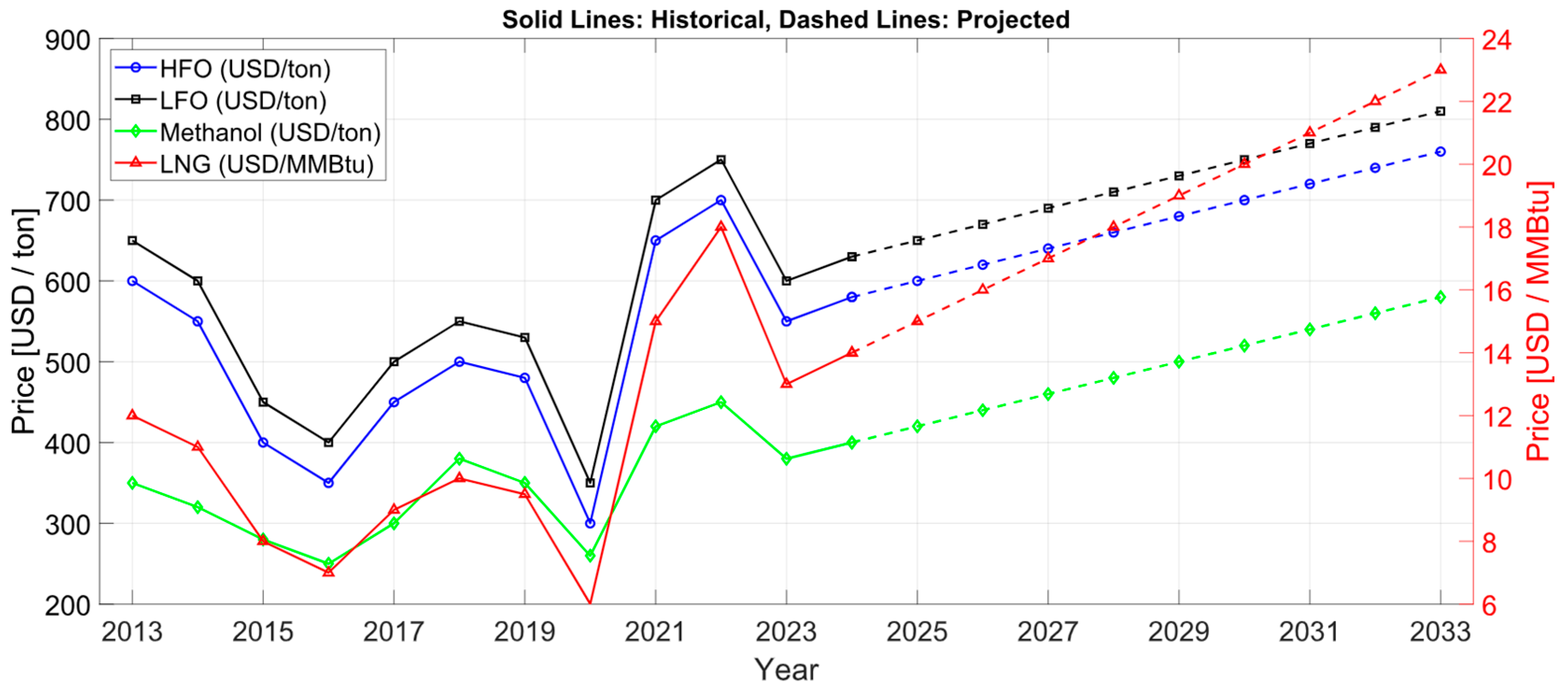
34], with 2023 average prices used as the base-year reference for each fuel type (HFO, LFO, LNG, and methanol). The base-year average bunker prices were assumed to reflect prevailing market conditions at the start of the projection horizon.
This study employs a differentiated, fuel-specific methodology to forecast bunker fuel costs from 2024 to 2033, grounded on historical price patterns for each fuel. Annual percentage changes in historical prices for each fuel—HFO, LFO, LNG, and methanol—were calculated individually over the period 2013 to 2023. The arithmetic mean of these annual changes was then used to derive an average annual growth rate specific to each fuel, forming the basis for future price estimations.
This approach ensures that each fuel’s predicted price trajectory reflects its unique historical behavior and market volatility patterns, rather than applying a uniform growth rate across all fuels. The resulting average annual growth rates—approximately 5% for methanol and HFO, 8% for LFO, and 9% for LNG—demonstrate the distinct market dynamics influencing these fuels.
The period from 2013 to 2023 was characterized by significant market disruptions, particularly the COVID-19 pandemic and its impact on global supply chains, contributing to short-term price volatility.
The historical average global inflation rate (2013–2023) was approximately 2.1% annually, while bunker fuel prices exhibited higher volatility, particularly during 2020–2022 when industry events and geopolitical shocks triggered price spikes. Over the full decade (2013–2023), bunker fuel prices consistently outpaced general inflation, often in the 5–12% annual range. Consequently, the fuel price growth rates adopted in this study—5% for HFO and methanol, 8% for LFO, and 9% for LNG—exceed global inflation benchmarks, but this reflects the inherent characteristics of bunker fuel markets. This approach ensures that projections were grounded in historical market realities rather than being narrowly tied to consumer price trends.
Based on these calculations, a decadal prediction was generated for each fuel type. Calculations assume that prices will increase at a constant annual rate that is sufficient to reach the estimated 2033 target price derived from historical trends.
Figure 7 illustrates historical and projected prices for LNG, HFO, LFO, and methanol over the 2013–2033 period, providing a comparative overview of fuel price trends that underpin this study’s financial analysis.
This approach ensures that fuel cost predictions capture the expected medium-term market adjustments while abstracting from short-term volatility. The resulting annual fuel price series serves as the input for calculating total fuel expenditures in the financial modeling framework.
3.7. Calculating Initial Investment Costs for the Combinations
The initial capital outlay for ships can vary considerably, based on the type of propulsion system employed. For example, the initial capital expenditure for a new LNG–DF (liquefied natural gas–dual fuel) system is almost 30% greater than that of a new vessel utilizing low-sulfur oil [
38]. Conversely, the initial capital expenditure for a battery-powered vessel is significantly greater than that of a conventional diesel-powered vessel, mostly because of the present exorbitant price of lithium-ion batteries [
39].
Table 6 presents new building prices and current estimated market values for vessels comparable in capacity to the case vessel, necessitating meticulous analysis. For contemporary container ships, new building prices are between
$30 million and
$60 million. The projected market values for these relatively new vessels (mostly constructed in 2023–2024) significantly surpass their original prices, frequently exceeding
$75–
$100 million. This illustrates the volatility characteristics of the shipping sector [
40] and the potentially elevated demand and freight rate conditions observed in recent years.
4. Results and Discussion
This section presents and interprets the findings of the financial analysis for six individual propulsion scenarios derived from three different main engine types: each operated under two fuel configurations. While the vessels are identical in design and carrying capacity, variations in engine power output, service speed, and fuel consumption yield substantial differences in financial outcomes. Furthermore, Engine One with HFO option’s results were given at the
Appendix A by all the details.
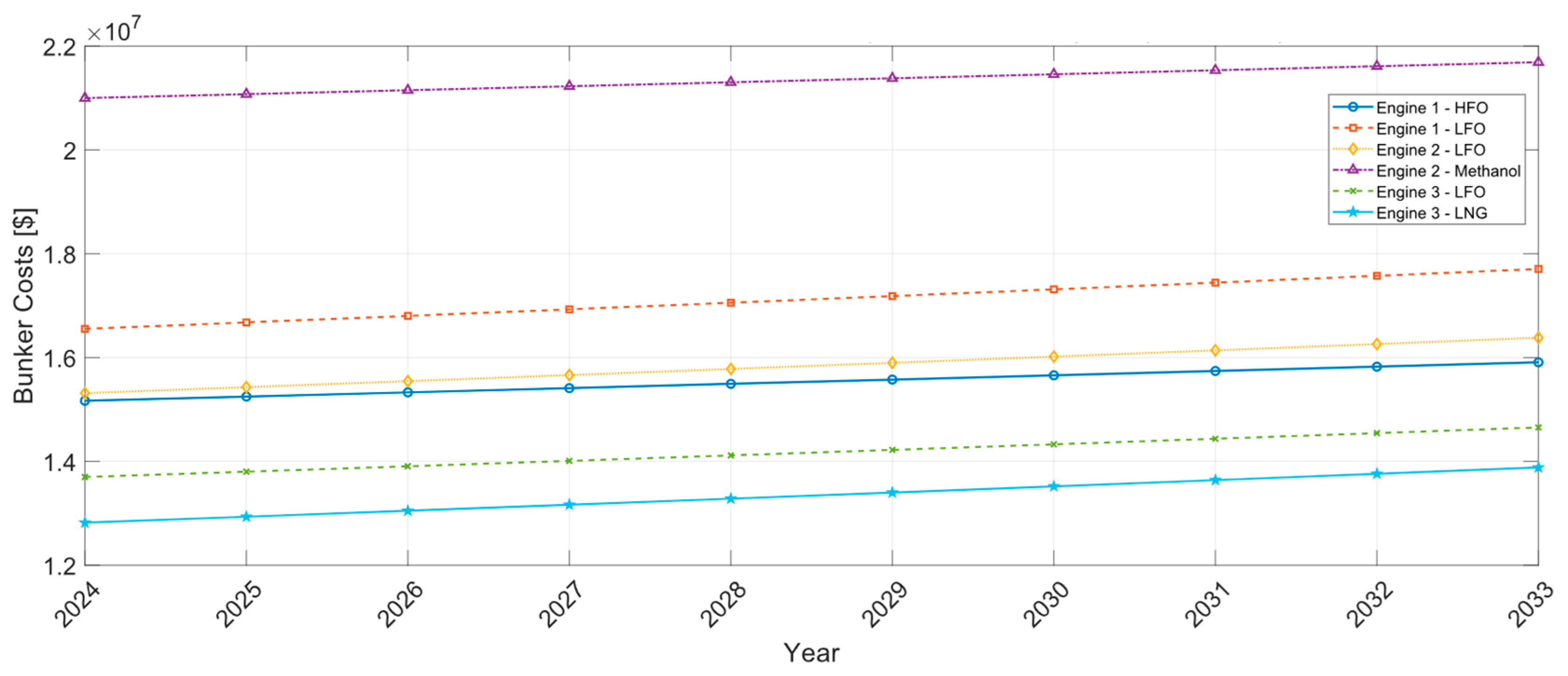
The discrepancies in these outcomes among engine–fuel configurations reflect variations in fuel price trends, consumption rates, and complex technical differences in engine power output. The engine’s power output directly impacts the vessel’s speed, subsequently influencing the voyage’s duration. Thus, these discrepancies impact the overall number of viable round-trip voyages during the next 10 year period and the overall fuel consumption throughout that duration. The total bunker costs of these six different configurations for 10 year periods are shown in
Figure 8.
One of the biggest limitations of the results in
Figure 8 is the difficulty in accurately predicting future fuel prices, as these prices are likely to be significantly affected by new regulations and market dynamics, such as carbon pricing.
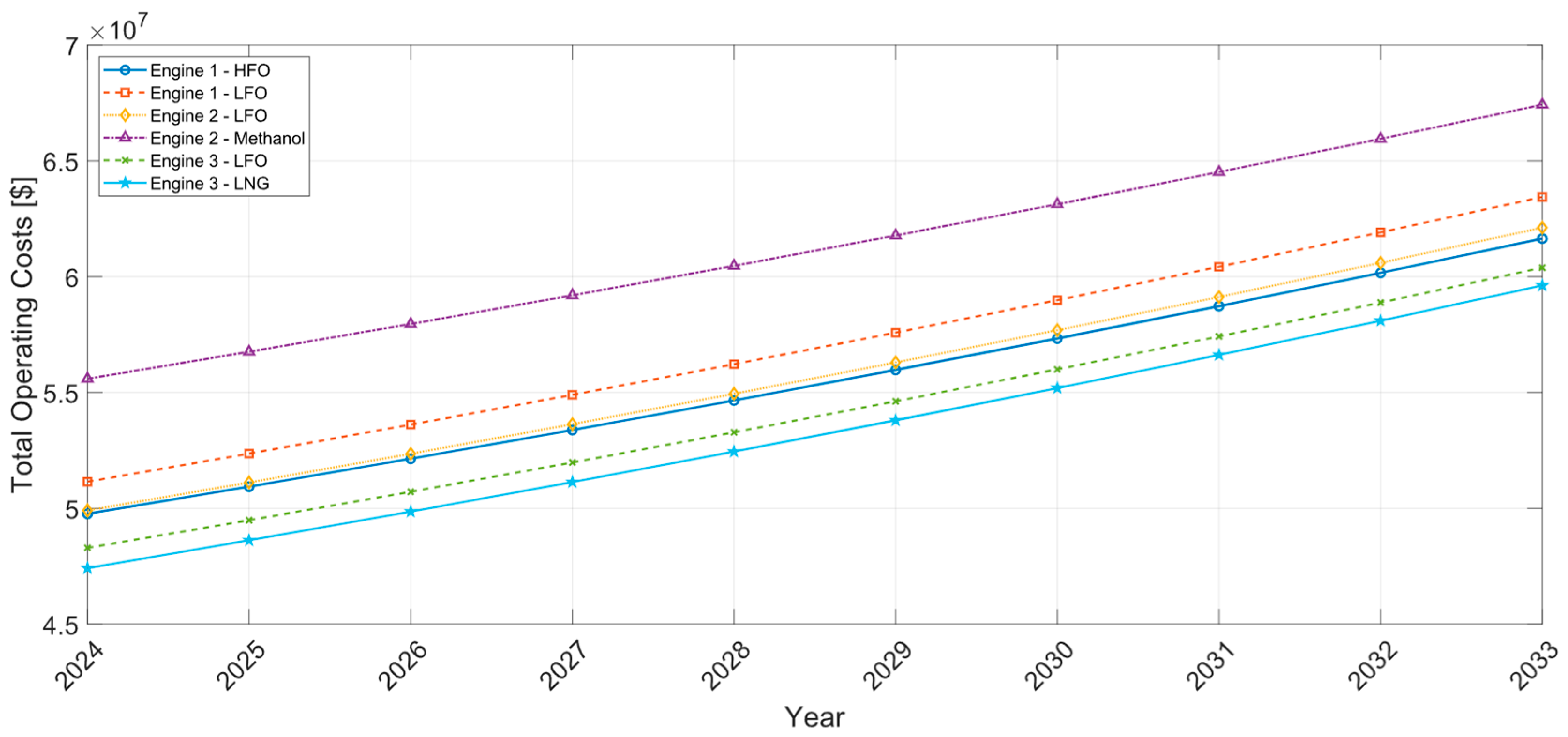
Figure 9 illustrates the projected total operating costs for various combinations of engine and fuel types from 2024 to 2033, emphasizing the financial implications of these performance disparities.
The Wärtsilä 16V26 engine (Engine One) is an IMO Tier III optimized (SCR) design, generating a power output of 4624 kW and achieving a service speed of 16.16 knots regardless of fuel type (HFO or LFO). Under these conditions, the vessel completes approximately 12.2 round-trip voyages annually on the San Diego–Yokohama route. Fuel consumption per round trip is slightly higher when operating on LFO (2153.74 tons) compared to HFO (2143.62 tons), though this marginal difference has a negligible impact on voyage duration or operational frequency. When fuel costs are incorporated into the financial analysis, LFO exhibits a comparative advantage despite its marginally higher physical consumption, driven by the prevailing price differential that favors LFO over HFO during the projection period. Given that both configurations generate equivalent revenues (2880 TEU at 80% utilization), and non-fuel operating expenses were standardized at 60% of gross revenue, fuel costs emerged as the principal driver of total cost variation. As a result, Engine One operating on HFO achieves lower total operating costs than when operating on LFO, underscoring the combined effects of market fuel price differences and fixed non-fuel costs.
The Wärtsilä 9L32 engine (Engine Two) delivers a slightly lower power output of 4437 kW and reaches a service speed of 15.93 knots, resulting in approximately 12.1 round trips annually—marginally fewer than the combination that has Engine One. Fuel consumption differs significantly between fuel types: 4338.56 tons per round trip for methanol and 2009.04 tons for LFO. Methanol provides higher physical fuel consumption per kilowatt-hour, and it also leads to greater total fuel expenditure over the projection period. Given the same revenue base and standardized non-fuel operating expenses, fuel costs remain the key determinant of total operating cost differences. Operating Engine Two with LFO yields lower total operating costs than methanol. Furthermore, when compared to Engine One operating on LFO, Engine Two operating on LFO incurs considerably lower fuel consumption and consequently lower total operating costs, highlighting the importance of engine specifications.
The Wärtsilä 8V31DF engine (Engine Three) produces 4080 kW and achieves a service speed of 15.46 knots, enabling approximately 11.7 round trips per year—fewer than both Engine One and Engine Two due to lower output power and reduced speed. Fuel consumption also varies by fuel type: 1548.14 tons per round trip for LNG and 1858.50 tons for LFO. Despite LNG’s typically higher unit price, its superior energy content and lower physical consumption result in lower total fuel costs compared to LFO for this engine. Given identical revenue generation and standardized non-fuel operating expenses, the difference in total operating costs has been driven primarily by fuel expenditure. Engine Three operating on LNG achieves a more favorable total cost profile than when operating on LFO, owing to reduced fuel consumption and moderate price predictions for LNG. When also compared to Engine One and Engine Two operating on LFO, Engine Three (LNG configuration) demonstrates competitive performance in total operating costs, reflecting its fuel efficiency and fuel expenses. However, its slower speed and reduced voyage frequency partially offset these advantages by lowering the number of revenue-generating round trips annually.
As a result, Engine Three operating on LNG offers one of the most advantageous total costs among all configurations analyzed, emphasizing the critical role of both technical performance and fuel market dynamics when evaluating alternative propulsion and fuel options.
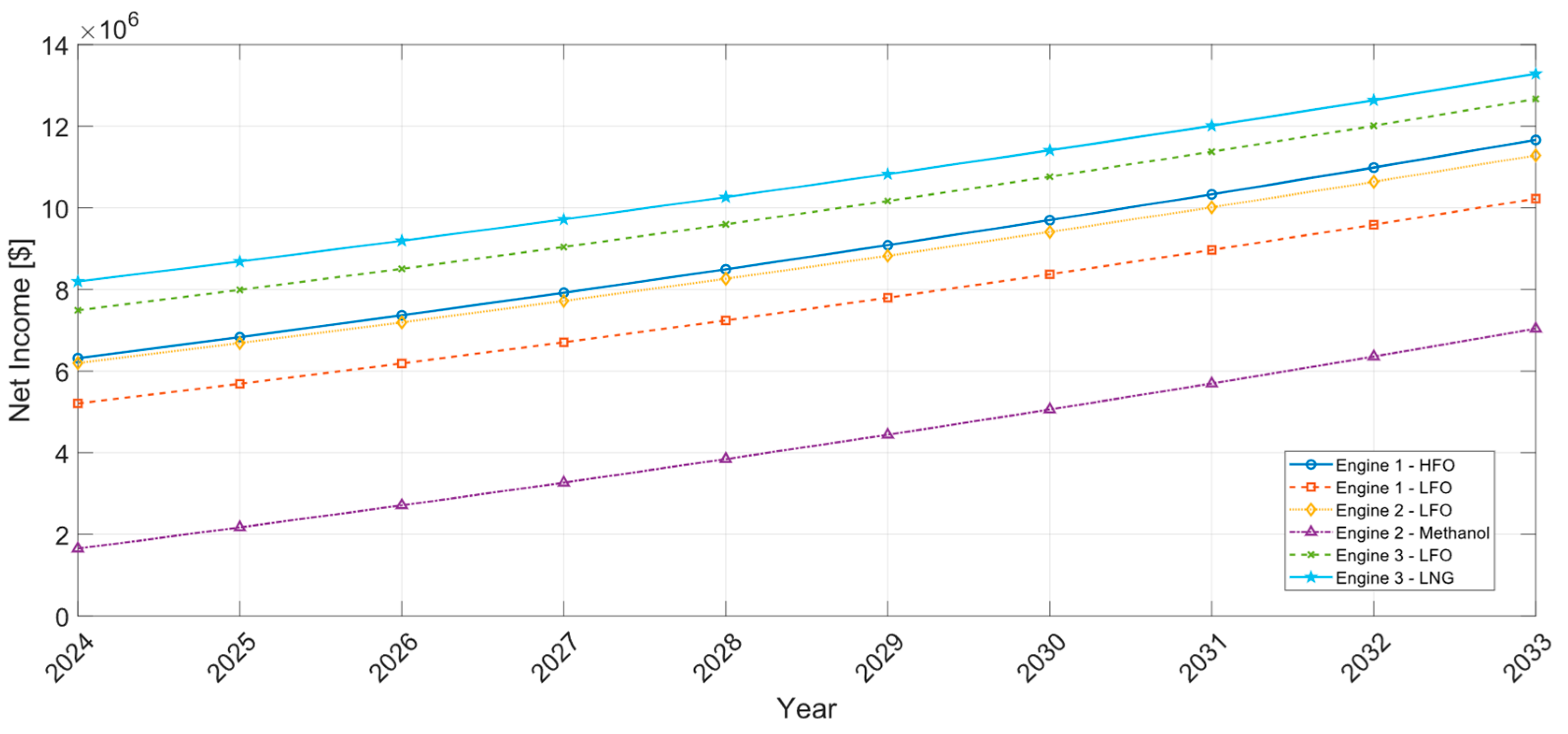
Figure 10 presents the forecasted annual net incomes for each engine and fuel configuration between 2024 and 2033. This comparison incorporates projected revenues, fuel expenses, and standardized non-fuel operating costs.
The results confirm that vessels equipped with Engine Three (LNG configuration) consistently achieved the highest net income. This was primarily attributed to the combined effect of lower LNG fuel consumption, relatively moderate price growth, and engine-specific efficiency, even though the number of annual round trips was slightly reduced. These factors collectively enhance the long-term financial sustainability of LNG-powered operations.
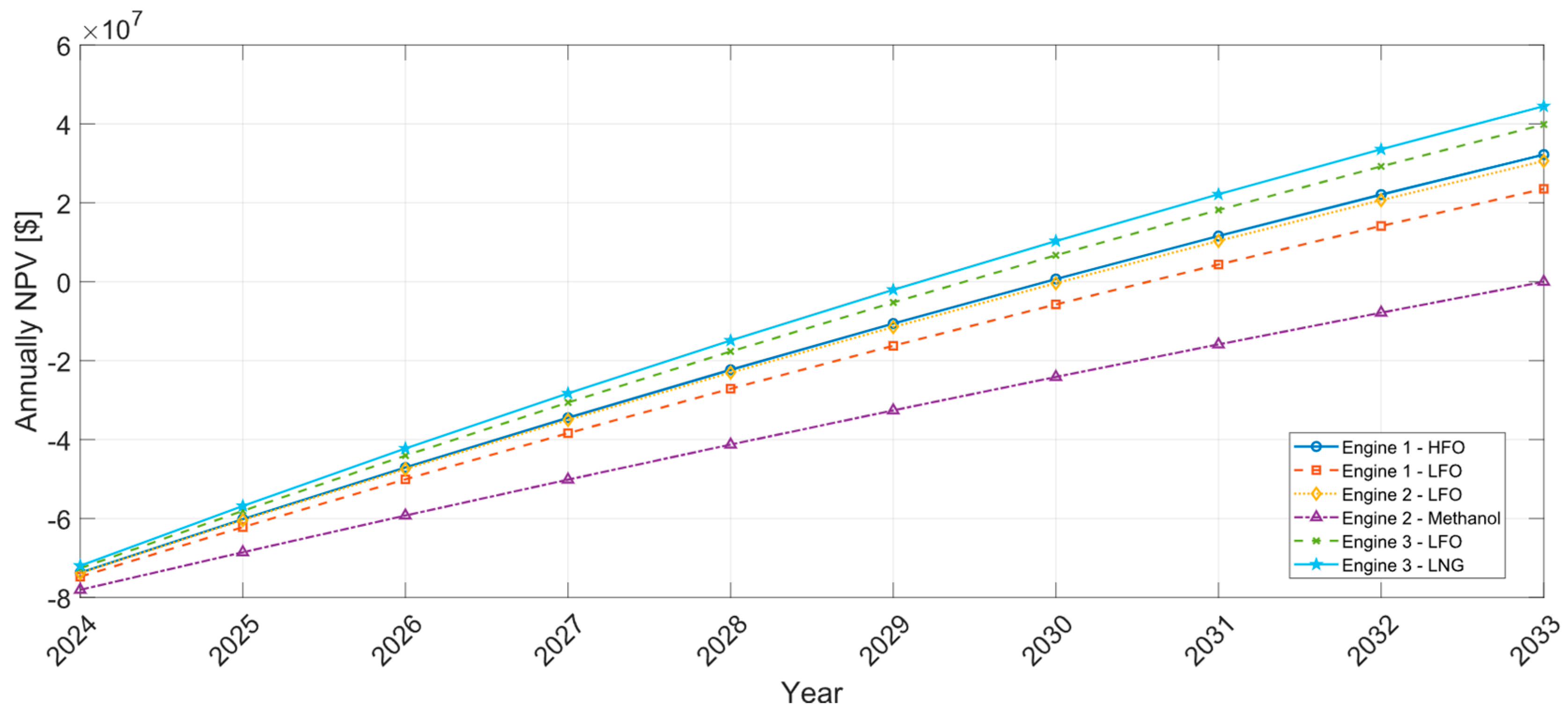
Figure 11 provides a summary of the net present value outcomes of all configurations during the estimation period.
The highest NPV, amounting to around $44,479,000 was achieved by the Wärtsilä 8V31DF engine operating on LNG. This outcome highlights the synergistic effect of comparatively lower LNG prices and enhanced fuel efficiency, despite a slight reduction in service speed and voyage frequency.
In contrast, the lowest NPV was around −$8698, associated with the Wärtsilä 9L32 engine operating on methanol. The main engine behind this unfavorable result is the combination of high bunker prices for methanol and increased operational fuel consumption, which together lead to elevated total operating costs.
These findings confirm that LNG-fueled engines provide a superior financial performance relative to other fuel options, aligning with current industry transitions favoring LNG as a promising marine fuel. Additionally, the analysis emphasizes the critical role of voyage-planning in optimizing financial outcomes, especially under varying propulsion and fuel configurations. Our results are broadly consistent with recent techno-economic assessments in the literature, which also identify LNG as the most competitive transitional fuel. For instance, Ref. [
8] highlights LNG’s role in shipping decarbonization pathways, while [
42] emphasize LNG’s resilience as a cost-effective transitional option. By explicitly incorporating differentiated CAPEX, freight–fuel volatility, and WACC sensitivity into our NPV framework, this study extends the existing literature and reinforces LNG’s short-term viability under regulatory and market uncertainties.
To enhance the robustness of the analysis, sensitivity tests were conducted under three alternative market conditions, defined by simultaneous changes in freight revenues and fuel costs. The Low–Low scenario assumes a 20% decrease in both variables relative to the baseline, while the High–High scenario assumes a 20% increase. The Base–Base scenario represents the benchmark forecast.
Table 7 reports the resulting NPVs (million USD) for each engine–fuel configuration under alternative WACC levels. Despite requiring the highest CAPEX (105 million USD), the LNG-fueled 8V31DF consistently delivers the most favorable NPVs, confirming their resilience even under adverse market conditions. In comparison, the 9L32 (101 million USD) and 16V26 (87.8 million USD) configurations show moderate results that are more sensitive to changes in discount rates, while the methanol-based option remains the weakest performer, with negative NPVs in most cases except in highly favorable scenarios.
The sensitivity analysis reveals that the relative ranking of engine–fuel configurations is robust across different freight–fuel scenarios and discount rates. The LNG-fueled 8V31DF, despite requiring the highest CAPEX (105 million USD), consistently delivers the most favorable and resilient NPVs, remaining positive even under adverse conditions and emerging as the most commercially stable option. In comparison, the 9L32 (CAPEX 101 million USD) and 16V26 (CAPEX 87.8 million USD) configurations generate moderate NPVs: they remain positive under base conditions but decline significantly when discount rates rise, making them more sensitive to financing assumptions. In contrast, the methanol-fueled 9L32 performs the weakest, producing negative NPVs in both low and base scenarios and becoming profitable only in highly favorable markets, indicating strong dependence on optimistic market dynamics. Overall, these findings confirm that the study’s conclusions are not contingent on a single assumption but hold across different macroeconomic environments.
5. Conclusions
This study extensively assessed the financial feasibility of different main engine and fuel configurations for a medium-sized container vessel, combining technical performance indicators with comprehensive financial modeling over a 10 year horizon. Our investigation, utilizing Net Present Value methods, revealed substantial discrepancies in financial outcomes influenced by fuel type, consumption efficiency, and operational profiles within the framework of the IMO’s regulatory environment.
A key limitation of this study is the difficulty of accurately estimating the impact of regulations, particularly the EU Emissions Trading System (ETS), on future fuel prices. Due to this uncertainty, our fuel cost analysis relied on historical data, complemented by sensitivity tests with ±20% freight–fuel variations. These tests confirm that the relative NPV ranking of propulsion alternatives remains stable even under volatile market conditions, with LNG consistently delivering the highest and most resilient NPVs. This robustness was further validated under alternative WACC assumptions (5%, 7.18%, and 10%), showing that financing costs change the absolute NPV levels but not the overall ranking.
The analysis also incorporated differentiated capital expenditures (CAPEX) across propulsion systems, assuming 87.8 million USD for the Wärtsilä 16V26, 101 million USD for the Wärtsilä 9L32, and 105 million USD for the Wärtsilä 8V31DF. Despite LNG engines requiring the highest CAPEX, the LNG-based 8V31DF consistently achieved the greatest NPV across all scenarios, highlighting its long-term economic benefits and commercial stability. The robustness of this conclusion is demonstrated in
Table 7: under the Low–Low scenario (−20% freight revenues and −20% fuel costs), the 8V31DF–LNG option still generated a positive NPV of approximately 0.93 million USD at a WACC of 7.18%. In the Base–Base scenario, its NPV reached 54.8 million USD, and in the High–High scenario (+20% freight and fuel), it attained nearly 317.9 million USD. By contrast, methanol consistently produced negative NPVs in both Low–Low and Base–Base cases, becoming marginally competitive only under the most optimistic assumptions.
Several methodological limitations must be acknowledged. Fuel consumption calculations are based on Wärtsilä’s specific fuel consumption (SFC) values under ideal test conditions, whereas real-world performance may vary due to load profiles, engine wear, and operational practices. Similarly, assuming constant non-fuel operating costs across all configurations simplifies the analysis but may underestimate the maintenance demands of dual-fuel engines. Furthermore, the adoption of Sea State Five as a fixed environmental condition provides a consistent baseline but does not capture the variability of real-world sea states, which would influence both power demand and financial results.
In line with recent techno-economic studies on marine fuels, our results confirm LNG’s near-term resilience while reinforcing the broader literature’s view that methanol and other emerging fuels require supportive policy frameworks to become competitive. From a policy perspective, LNG-fueled propulsion systems emerge as the most viable short-term option, particularly under the current EU ETS and IMO regulatory trajectories. Conventional fuels such as HFO and LFO remain serviceable in the immediate term but are increasingly exposed to carbon pricing and regulatory surcharges, which gradually erode their competitiveness. Methanol performed poorly due to high costs and consumption, but future reductions in bio-methanol prices or the introduction of strong carbon pricing mechanisms could significantly enhance its competitiveness. In the longer term, alternative fuels such as ammonia and hydrogen, though not yet commercially mature, may reshape the investment landscape. These results provide clear signals for regulators and industry stakeholders, highlighting the urgency of aligning infrastructure investments with the fuels most resilient under foreseeable regulatory and market conditions.
The findings of this study are specific to a ~3000 TEU container vessel operating on the San Diego–Yokohama route, limiting direct generalizability. Future research should consider ultra-large container ships (ULCS), different trade routes, and scale effects. Moreover, integrating carbon pricing scenarios, diverse sea states, and infrastructure readiness for alternative fuels would further improve the robustness of techno-economic assessments. Such extensions will strengthen the role of this framework as a decision-support tool for shipowners and policymakers navigating the transition toward a sustainable and economically viable maritime future.