Article

How Does Carbon Constraint Policy Uncertainty Affect the Corporate Green Governance? Evidence from Chinese Industrial Enterprises


1
Business School, Chengdu University of Technology, Chengdu 610059, China
2
Institute for Industrial Economics, Sichuan Academy of Social Sciences, Chengdu 610071, China
3
Institute of Western China Economic Research, Southwestern University of Finance and Economics, Chengdu 611130, China
*
Author to whom correspondence should be addressed.
Sustainability 2025, 17(17), 7938; https://doi.org/10.3390/su17177938
Submission received: 1 August 2025 / Revised: 29 August 2025 / Accepted: 31 August 2025 / Published: 3 September 2025

Abstract

Macro policy regulation centered on carbon emissions profoundly influences the path for enterprises to achieve low-carbon transformation. Using panel data from Chinese A-share listed companies over the period from 2014 to 2023, this study adopts the methods of panel regression, moderating effect and mediating effect. The empirical research finds that: (1) Policy uncertainty from carbon emission constraints significantly incentivizes industrial enterprises to adopt greener governance strategies. (2) The mechanism analysis indicates that the uncertainty posed by carbon emission constraints influences corporate green governance by enhancing regional green finance development, intensifying corporate financing constraints, and improving the quality of corporate green innovation. (3) Enterprises with substantial environmental protection investments and stronger reputations are less susceptible to changes in their green governance strategies triggered by carbon emission constraint policies. (4) The effects of carbon constraint policy uncertainty on green governance strategies of industrial enterprises exhibit heterogeneity. Specifically, these effects are relatively weaker for non-heavy-polluting enterprises located in carbon emission trading pilot cities, enterprises with higher information disclosure quality, and enterprises whose senior executives have backgrounds in environmental protection. Ultimately, to promote the sustainable development of industrial enterprises, this study provides three recommendations.

1. Introduction

With escalating global climate pressures and increasingly frequent extreme climate events, climate-related risks have emerged as one of the most critical challenges confronting humanity in the 21st century [1]. The concept of sustainable development was formally introduced by the United Nations in 1987 and was subsequently affirmed as a global development direction at the Rio Earth Summit in 1992. Countries have gradually recognized that traditional development models, while facilitating rapid economic growth, also result in negative outcomes such as excessive resource consumption, severe environmental pollution, and widening social disparities [2,3]. The adoption of the 2030 Agenda for Sustainable Development has further prompted nations to collaborate on the 17 global sustainable development goals (SDGs), and to formulate coordinated policies and institutional frameworks [4]. Transitioning toward sustainable development has thus become a critical and universally pursued goal [5]. Against this backdrop, carbon emission constraint policies, serving as essential tools for climate change mitigation, have seen unprecedented intensification and expansion globally. From traditional carbon taxes to emissions trading systems and mandatory environmental information disclosure requirements, countries’ environmental policy toolkits are continuously evolving [6]. The central aim of these policies is to steer the global economy toward a sustainable transformation through a combination of economic incentives and regulatory constraints [7]. However, for microeconomic entities, particularly industrial enterprises, these policies also entail substantial risks that manifest in multiple dimensions, including policy uncertainty; rising compliance costs due to stricter enforcement; heightened supply-chain cost pressures stemming from tighter carbon footprint requirements; and reputational damages and financing constraints arising from ineffective management of low-carbon transition risks [8,9].
Facing these policy risks, enterprises increasingly prioritize formulating and implementing green governance strategies, such as enhancing carbon management capabilities, adopting cleaner technologies, and optimizing energy structures, to reduce compliance costs and environmental risks [10,11]. Green governance represents a long-term approach toward economic, social, and environmental sustainability [12]. Some scholars argue that proactive green governance not only contributes to carbon and pollution reduction [13] but also enhances enterprises’ competitiveness [14], thereby improving environmental performance and economic benefits. Furthermore, when designing green governance strategies, enterprises must weigh policy risks against transitional benefits and carefully assess how external policy changes affect operational decisions and strategic adjustments [15]. Although some scholars have pointed out that in the face of increasingly evident climate policy uncertainty, companies are likely to adopt symbolic governance measures such as “greenwashing” to align with SDGs [16]. However, in jurisdictions with clear accountability and standardized information requirements, long-term institutional pressures will still compel companies toward substantive green governance [17]. Overall, carbon emission policy risks have become significant external factors accelerating enterprises’ adoption of green governance, exerting profound impacts on their sustainable development strategies.
Currently, governments around the world are accelerating their energy conservation and emission reduction efforts, making substantial commitments toward achieving their respective carbon reduction goals [18]. Prominent initiatives, such as the EU’s Carbon Border Adjustment Mechanism (CBAM) and the U.S. Inflation Reduction Act (IRA), not only reshape the operational boundaries of domestic enterprises but also elevate green governance standards across global industrial chains [19,20]. The carbon constraint policy uncertainty is no longer a local issue for a single country or region, but rather a key variable embedded in global market rules and governance systems. Consequently, corporate responses to carbon policy risks influence not only their own sustainable competitiveness but also their positions and developmental prospects within global value chains [21]. In particular, given the strengthening global consensus around carbon neutrality, clarifying how carbon emission policy risks shape corporate green governance behaviors is crucial for promoting green transformation among enterprises in developing economies and enhancing their resilience in global green competition. The industrial sector, as the largest single source of global greenhouse gas emissions, represents the frontline in achieving global carbon neutrality objectives.
Therefore, this study addresses the following key research questions: (1) Through which mechanisms do carbon constraint policy uncertainty influence green governance in industrial enterprises? (2) Does carbon constraint policy uncertainty have heterogeneous effects on industrial enterprises? (3) How can industrial enterprises be encouraged to implement green governance strategies to achieve sustainable development? To effectively resolve the above research questions, the main research objectives of this paper are as follows: (1) to systematically explore, through theoretical analysis and empirical examination, the impact pathways and mechanisms through which carbon constraint policy uncertainty affects industrial enterprises’ green governance; (2) to identify the moderating roles of environmental protection investment and corporate reputation in the relationship between carbon constraint policy uncertainty and industrial enterprises’ green governance; and (3) to comprehensively assess the heterogeneous impacts of carbon constraint policy uncertainty on different types of industrial enterprises’ green governance, thus providing targeted policy implications for the sustainable development of diverse enterprises.
Traditional corporate governance research has primarily focused on the impact of financial risks, market risks, and climate risks on corporate governance. For example, Liu et al. investigated the effects of heterogeneous market sentiment on corporate risk-taking and governance, finding that differences in market sentiment influence corporate risk decisions and governance structures [22]. Liu et al. argued that climate risks significantly enhance corporate ESG performance, reinforcing the need for companies to incorporate climate-related risks into strategic decision-making [23]. However, carbon constraint policy uncertainty, as an emerging policy risk, has not been considered in previous studies regarding its impact on green governance in industrial enterprises. Additionally, research on how firms can mitigate the impact of policy risks and achieve green governance through their own characteristics, such as environmental investments, reputation, and disclosure quality, remains relatively limited. Against this backdrop, this paper constructs a framework for the impact of carbon constraint policy uncertainty on green governance in industrial enterprises and uses Chinese A-share industrial firms as the empirical sample. The contributions of this study are as follows: First, this study takes “carbon emission constraint policy uncertainty” as the core analytical dimension, expanding the theoretical boundaries of policy-firm green governance research. Second, by introducing mechanism variables such as green finance, financing constraints, and innovation quality, this study enriches the perspective on identifying the pathways through which policies influence firm behavior. Finally, by identifying firm-level factors and institutional environment heterogeneity, this study provides empirical evidence to understand the differences in green governance strategies among firms. These contributions not only deepen our understanding of the microeconomic effects of carbon policies but also offer policy insights and governance strategies for achieving the green and low-carbon transformation of industrial enterprises under the backdrop of sustainable development.
The remainder of this paper is structured as follows: Section 2 reviews the relevant literature and develops theoretical hypotheses. Section 3 presents the research design, including econometric models, variable selection, sample selection, and data sources. Section 4 reports the empirical results, encompassing baseline regression results, robustness checks, moderation effect analyses, mechanism discussions, and heterogeneity analyses, and clarifies the deeper implications of these results. Finally, Section 5 concludes the study and provides relevant policy recommendations.

2. Theoretical Analysis and Research Assumptions

2.1. Carbon Constraint Policy Uncertainty and Enterprises Green Governance

The signing and entry into force of the United Nations Framework Convention on Climate Change and the Kyoto Protocol have gradually ushered the world into an era of carbon emission constraints [24,25]. Between 2014 and 2023, countries and organizations around the world reached numerous agreements to achieve sustainable development, such as the Paris Agreement and the annual Conference of the Parties (COP) Decisions [26,27]. Although these documents all reflect the clear direction of global carbon reduction, there is a high degree of uncertainty in the actual implementation of these policies. Under the Paris Agreement, since countries’ “commitments” are highly autonomous, some nations’ nationally determined contributions lack clarity and enforceability. Additionally, the specific measures and standards implemented by countries to reduce carbon emissions vary significantly. For example, carbon market rules and standards differ across nations, and carbon trading involves high complexity and uncertainty. These factors contribute to the uncertainty surrounding carbon constraint policies. Compared to the Paris Agreement, which focuses more on long-term goals, the annual COP Decisions primarily address short-term and medium-term uncertainties in carbon constraint policies by refining and updating rules. While this reduces uncertainties at the implementation level, annual negotiations involving political bargaining and changes in wording can lead to temporary policy fluctuations. The combined effects of these key resolutions form a carbon constraint policy uncertainty evolution pattern characterized by “long-term certainty and short-term recalibration”.
With the concept of climate policy uncertainty increasingly applied in the measurement of policy risk, scholars began focusing on exploring and quantifying the risks associated with carbon emission constraint policies. Gavriilidis was the first to introduce the Climate Policy Uncertainty Index (CPU Index) to quantify the risk of carbon emission constraint policies. The index measures climate policy uncertainty over time by tracking the proportion of news articles that simultaneously reference climate change, policy, and uncertainty-related terms, normalized by the total volume of news coverage. According to Gavriilidis’s calculations, the minimum value of the monthly CPU Index in the United States from 2000 to 2020 was 1.23, the maximum value was 629.02, and the average value was 102.72. Although Gavriilidis did not provide criteria for classifying the CPU Index as high or low, he pointed out that the higher the CPU Index, the greater the uncertainty of climate policy [28]. Following the development of this index, numerous studies have examined the economic consequences of uncertainty stemming from carbon emission constraint policies. For instance, building on Gavriilidis’s research, Berestycki et al. expanded the application scope of the climate policy uncertainty index to twelve OECD countries and China [29]. Additionally, Lee and Cho employed Twitter data to construct a monthly index capturing climate policy uncertainty in China based on tweets containing relevant information from users around the world [30]. Although these approaches generally rely on indices constructed via predetermined rules and dictionaries, revealing certain methodological limitations [31], they nevertheless represent preliminary advances in exploring climate policy uncertainty.
Green governance was initially viewed solely as environmental governance at the national level. With the continuous deepening of the concept of sustainable development, green governance has gradually extended to the micro level [32], evolving into a networked collaborative process involving multiple stakeholders [33]. From a corporate governance perspective, risks associated with carbon emission constraint policies may profoundly influence enterprises’ green governance through various channels. Scholars have conducted extensive research on the theme of sustainable development. D’Adamo’s findings reveal that investment returns exhibit high sensitivity to subsidies, carbon price corridors, and certification systems. This implies that once policy variables permeate cash flows and project viability, boards will be compelled to embed green governance into capital budgeting and operational protocols to define risk boundaries [34]. Rubáček’s study of the EU’s three major financial regulators and sustainability disclosure demonstrates that cross-sectoral regulation and information standardization are curbing greenwashing and reducing “calibration drift” [35]. For enterprises across financial and industrial chains, this translates to integrating climate issues into universal governance and compliance frameworks. Simultaneously, variations in the information environment reshape the intensity of external legitimacy pressures. Based on evidence from Central and Eastern Europe, Hála demonstrates that in regions where public discourse is susceptible to misdirection, even when policies advance low-carbon transitions, external legitimacy pressures on companies from consumers, employees, and local communities are weaker [36]. Carbon constraint policy uncertainty thus more readily permeates board decisions on green governance. Van Tulder, studying multinational corporations, notes that while the SDGs function as a “goal-oriented system,” they exhibit “institutional gaps” and weak constraints. In environments lacking enforceability and enforceability, companies facing uncertain policies often require a hybrid strategy of “multi-stakeholder collaboration—self-regulation—cross-domain governance.” Multinational corporations must design governance portfolios tailored to jurisdictional differences [37]. Amid intensifying carbon constraints and fluctuating policy trajectories, corporate green governance is not merely an exogenous “compliance add-on” but also a rational choice for internalizing uncertainty management.
On the one hand, according to institutional theory, corporate green governance behaviors are significantly influenced by external policies, with the risks stemming from carbon emission constraints intensifying institutional pressures faced by enterprises [38]. Confronted with abrupt policy tightening, firms may resort to short-term behaviors such as temporary procurement of green equipment or phased implementation of carbon reduction measures [39]. Furthermore, carbon emission constraints require enterprises to purchase allowances, upgrade equipment, or pay carbon taxes, thereby raising operating costs. Under tightening cash-flow conditions, expenditures on “soft governance” activities such as green R&D and employee environmental training are often reduced first, resulting in compliance costs crowding out investment in substantive green innovation [40]. Short-termism and symbolic compliance often overlap, jointly reflecting a tendency towards “symbolic adaptation” aimed at cost minimization in unstable policy environments. However, due to insufficient substantive environmental investments, such opportunistic behaviors mask enterprises’ real environmental performance and undermine the effectiveness of external monitoring mechanisms [41].
On the other hand, from the resource-based view (RBV), corporate green governance inherently involves adjustments to resource allocation. Increased policy risks imply greater uncertainty in corporate resource allocation [42], thereby diminishing enterprises’ willingness to invest in green initiatives and prompting them to seek short-term returns [43]. In the absence of stable policy incentives and clear expectations about investment payoffs, enterprises may prefer allocating resources toward more predictable profit-generating activities rather than sustained environmental technology upgrades or systemic transformations. Consequently, “greenwashing” emerges as a low-cost, high-reputation alternative [44], whereby companies burnish a green image through glossy environmental reports or symbolic public welfare activities without investing significant resources to genuinely improve environmental performance [45]. Such shortsightedness in resource allocation undermines the real effectiveness of green governance and may, over the long term, weaken enterprises’ sustainable development capabilities.
Additionally, scholars adopting a stakeholder theory perspective argue that carbon emission policy risks influence corporate green governance strategies not only directly through internal decision-making but also indirectly through the expectations and behaviors of stakeholders, including governments, customers, and investors [8]. When policy risks are elevated, enterprises face intensified external pressures and reputational risks, prompting more cautious approaches to green investment and governance activities. Thus, the relationship between carbon constraint policy uncertainty and corporate green governance affects not only internal decisions but also exerts indirect impacts through stakeholder-driven transmission effects. Based on the above analysis, we propose the following hypothesis:
H1. 
To ensure sustainable development and mitigate operational risks, carbon constraint policy uncertainty is likely to encourage enterprises to adopt greener governance strategies.

2.2. The Mediating Role of Green Finance, Financing Constraints and Green Innovation

Current studies on carbon emission policy risk primarily focus on macroeconomic impacts. However, achieving genuine sustainable development requires more than a macroeconomic assessment of policy risks, as ultimately, these risks are borne by microeconomic entities. Therefore, firms need to proactively respond and effectively manage such risks [46]. It is therefore essential to examine in depth the mechanisms through which carbon emission policy uncertainty shapes corporate green governance, and to clarify how firms can achieve sustainable development goals amid policy uncertainty.
Green finance plays a crucial role in sustainable development and environmental protection [47]. Unlike traditional finance, which prioritizes capital appreciation and short-term economic benefits, green finance places greater emphasis on balancing environmental and social benefits, emphasizing long-term sustainability [48]. On the one hand, under conditions of heightened carbon emission policy uncertainty, green finance guides firms away from conventional carbon-intensive production toward greener practices through preferential financial resource allocation. For example, Liu and Wang used green finance reform and innovation pilot zones as a policy shock and found that firms within these zones achieved a 10.6% higher output in green innovation compared to those in control regions, thus confirming the “incentive-compatible” effect of green finance policies on green production [49]. On the other hand, green finance reinforces corporate environmental transparency and strengthens the standardization and public trust in green governance through information disclosure and external supervision mechanisms. In green bond and ESG investments practices, companies must disclose environmental impact information and governance measures associated with their projects [50]. Such disclosure practices not only drive firms to enhance their internal governance efficiency but also reinforce their accountability toward stakeholders, helping build a sustainable corporate image [51]. From a sustainable development perspective, green finance represents more than just an environmentally friendly financing channel; it serves as an institutional bridge facilitating effective governmental policy implementation and promoting green transformation among firms [52]. The mediating role of green finance between carbon policy uncertainty and corporate green governance thus serves as a critical linkage connecting the global vision of carbon neutrality with firms’ sustainable development goals.
In a context of rising carbon emission policy uncertainty, firms are facing significantly increased financial pressures [53]. Capital markets, financial institutions, and regulatory agencies are increasingly focusing on corporate environmental performance and governance levels, which have become important factors influencing the availability of financing [54]. In the short run, financing constraints inhibit corporate development [55], but in the long run, these constraints can be transformed into an incentive mechanism, compelling companies to adopt green governance practices. First, in the face of financing difficulties, companies often proactively enhance environmental disclosure and institutionalize environmental compliance behaviors to strengthen market trust and improve transparency [56]. Second, to secure preferential policy-oriented financing resources such as green loans or green bonds, companies must improve their environmental performance and reduce their carbon emission risks [57]. This institutional threshold creates combined market pressures and regulatory forces, jointly encouraging firms to integrate green governance into their core strategic framework. For instance, Tian et al. constructed a quasi-natural experiment and found that green credit constraints positively influence both the quantity and quality of green innovation in high-polluting enterprises, indicating that such constraints can significantly foster corporate green transformation and new patterns of sustainable development [58]. Wang further illustrated that credit constraints significantly reduced pollution emissions in high-polluting enterprises, thus improving their environmental performance [59]. Ultimately, firms, compelled by this passive incentive mechanism, progressively deepen their sustainable development practices, transitioning from mere environmental compliance to strategic value restructuring.
Greenwashing represents symbolic green governance, while technological advancements that integrate economic growth with environmental protection are typically regarded as substantive green governance [34]. Green innovation contributes to sustainable development through the development and implementation of new technologies, products, and processes aimed at reducing environmental impacts and resource consumption [49]. As carbon emission policy uncertainty increases, external governance pressures from governments, markets, and society force firms to pursue green innovation to comply with environmental regulations, satisfy green market demands, and fulfill social-environmental responsibilities [60]. On the one hand, under complex and volatile conditions of carbon constraint systems, green innovation has not only become a compliance mechanism but has also gradually evolved into the core of corporate strategy [61]. Luo and Tang found that in the face of potentially tightening carbon disclosure rules in the future, companies that proactively adopting green governance reforms, such as establishing sustainability committees or integrating carbon indicators into CFO performance evaluations, can significantly reduce market discounting due to perceived carbon risk [62]. On the other hand, when companies face carbon price fluctuations, emissions quota adjustments, or changes in policy direction, they can stabilize their environmental performance and production efficiency in an uncertain environment through means such as investments in green equipment upgrades and optimization of cleaner production processes [63,64]. Green innovation is inherently a multifaceted, interdisciplinary process combining technological and managerial innovations [65]. Traditionally, research has measured corporate green innovation quality based on the quantity or percentage of green invention patents [50,66,67], often insufficiently capturing cross-disciplinary integration capabilities. In contrast, this study measures corporate green innovation quality using the breadth of technological knowledge encompassed by green patents, effectively reflecting enterprises’ ability to integrate diverse knowledge domains and achieve multi-source innovation. Based on the above analysis, we propose:
H2. 
Increased carbon constraint policy uncertainty promotes the development of regional green finance, intensifies financing constraints for enterprises, prompts businesses to place greater emphasis on green innovation, and thereby elevates the strategic importance of green governance for enterprises.

2.3. The Moderating Role of Environmental Protection Investment and Corporate Reputation

Under the global goal of carbon neutrality, environmental protection investment is regarded as an effective approach for addressing environmental issues and achieving sustainable development at the micro level, as well as a way to integrate green practices into all aspects of corporate activities. Environmental protection investment encompasses various corporate expenditures aimed at preventing and controlling environmental pollution and generating environmental benefits [68]. Such investment not only demonstrates the proactive attitude of enterprises in assuming social responsibility [54], but also provides enterprises with an effective pathway and critical support for achieving sustainability in the face of external constraints imposed by carbon emission policies.
From the perspective of resource-based theory, environmental protection investment essentially represents corporate investment in green technology, equipment, and management systems, which can enhance energy efficiency and reduce carbon emissions intensity during production [43]. This enables companies to more easily meet policy requirements when faced with carbon constraints, thereby transforming policy pressure into a competitive advantage and promoting the continuous deepening of corporate green governance. From the technological innovation perspective, environmental protection investment stimulates green technological innovation, enabling firms to achieve emission control objectives through innovation breakthroughs, thus meeting regulatory demands under carbon constraint policies [69]. According to the Porter Hypothesis, stringent carbon emission constraints incentivize firms to enhance innovation capacities, thereby obtaining sustained competitive advantages in technology and production efficiency [70]. Such positive feedback mechanisms motivate firms to increase investment in green governance practices. From the perspective of cost reduction and efficiency enhancement, when policy uncertainty is high, enterprises actively engaging in environmental protection investments can effectively mitigate the cost risks associated with policy uncertainty. The earlier environmental protection investments are made, the stronger the enterprise’s adaptability will be when facing the impact of carbon constraint policies in the future [71], thus generating cost advantages. Such cost advantages, in turn, encourage enterprises to actively advance green governance measures.
According to signaling theory, corporate image serves as a signal that influences stakeholders’ perceptions regarding corporate transformation [72]. When enterprises actively convey signals emphasizing their commitment to sustainable development, stakeholders are more likely to perceive firms as sincerely committed to environmental responsibility [73]. This not only strengthens stakeholders’ trust in corporate green transformation but also motivates firms to adopt more proactive and profound green governance measures under carbon emission constraints, thereby achieving shared corporate and societal sustainable development goals.
From the perspective of stakeholders, stakeholder theory emphasizes the significant influence that relationships between enterprises and their customers, governments, investors, and other stakeholders have on corporate decision-making behaviors [74]. Under carbon emission constraint policies, a strong environmental reputation allows firms to secure greater recognition and support from stakeholders, consequently incentivizing sustained attention to and active responses toward carbon emission constraints. This external pressure drives continuous improvements in corporate green governance systems, enhancing enterprises’ market positions [75]. From the perspective of capital markets, in the context of the global rise of ESG investment, companies with strong environmental reputations are more likely to attract the favor of capital markets, thus obtaining financial resources at lower costs [76]. Strong environmental performance under carbon emission policies has increasingly become one of the crucial criterion for capital markets to evaluate companies. Therefore, firms seeking to maintain their environmental reputations actively implement green governance strategies to align with investor preferences and avoid carbon-related risks. From the perspective of long-term corporate competitiveness, reputation building typically involves strategic long-term planning. Companies with stronger reputations generally place greater emphasis on brand building and social responsibility practices [77], displaying greater initiative when confronted with carbon emission policy constraints. Based on these arguments, we propose the following hypothesis:
H3. 
Maintaining a strong corporate reputation and investing appropriately in environmental protection can help mitigate the impact of carbon constraints policy uncertainty on green governance in industrial enterprises.
Against the backdrop of accelerating global climate governance, carbon emission constraint policies are evolving from voluntary initiatives into mandatory regulatory frameworks, rendering carbon policy uncertainty a critical variable in firms’ green transformation processes. Faced with the dual challenges of green compliance pressures and cost burdens, whether business can effectively address carbon policy uncertainty and establish robust green governance mechanisms has increasingly become a research focus. This issue is particularly salient for industrial enterprises in developing countries, which are more susceptible to spillover effects from fluctuations in carbon policies. Hence, examining the impact of carbon emission policy uncertainty on corporate green governance behavior provides insights into how policy risks reshape corporate strategic decisions, resource allocation, and organizational governance logic.

3. Research Design

3.1. Sample Selection and Data Sources

To achieve the twin goals of carbon peak and carbon neutrality, China must complete the industrialization process that took developed economies 60 years to accomplish within just 30 years. As a result, China must achieve faster carbon emission reduction rates and implement more stringent carbon emission constraint policies than developed countries. This urgent need for transformation has led to greater policy uncertainty, with carbon constraint policy uncertainty emerging as a unique and increasingly significant transformation risk. Based on this, the primary research data of this article are the panel data related to Chinese industrial enterprises from 2014 to 2023. Considering the availability and comparability of the data, Xizang, Hong Kong, Macao and Taiwan are excluded from the analysis. The sources of the basic information and financial data of the enterprise in this article include CSMAR database [78], CNRDS database [79], and the patent data is from Dawei Innojoy database [80]. The policy text data at the regional level is sourced from the WiseNews database [81], and the statistical data at the regional level is derived from the China Statistical Yearbook and numerous provincial statistical yearbooks [82].

3.2. Variable Definitions

3.2.1. Dependent Variable

Corporate Green Governance (CGG). Corporate green governance strategies represent the approaches enterprises adopt, considering their external environment and internal conditions, to achieve strategic goals of pollution reduction and sustainable development by improving or transforming production and operation activities through the adoption of “green technology” or “clean technology.” This comprehensively reflects firms’ behavioral preferences and value orientations regarding green development. In this study, corporate green governance strategies are evaluated using the Janis-Fadner coefficient, calculated based on firms’ positive and negative scores in green governance participation. The formula is presented as follows:
C G G = M 2 M × N / r 2 , i f   M > N 0 , i f   M = N M × N N 2 / r 2 , i f   M < N
Specifically, this article categorizes events such as whether a company has obtained ISO 14000 series standard certification, received green awards, strictly enforced the environmental protection department’s “three simultaneous” system, established an emergency response mechanism for major environmental incidents, and participated in environmental protection special actions as positive scores (M). In positive point events, if a particular event occurs, it is scored as 1 point; if two events occur, it is scored as 2 points, and so on. If no events occur, it is scored as 0 points. Negative scores (N) are assigned based on whether there are environmental administrative penalties, environmental complaints, or non-compliance with pollutant emission standards. In negative point events, if an event occurs, it is assigned -1 point; if two events occur, it is assigned -2 points, and so on. If no events occur, it is assigned 0 points. r is the sum of the absolute values of M and N, i.e., r   =   M   +   | N | , and the specific evaluation system is shown in Table 1. The numerical range of CGG is set between −1 and 1. The closer the value is to the upper limit of 1, the more inclined the enterprise is to adopt a green governance strategy. The increase in CGG also means that enterprises are taking further steps toward green and low-carbon transformation, which will play a positive role in achieving sustainable development goals.

3.2.2. Core Independent Variable

Carbon Constraint Policy Uncertainty (CCUP). China’s climate policy takes “carbon emissions” as its core objective and makes a series of institutional innovations and policy adjustments around carbon emission constraints. To overcome the limitations of quantifying the policy risks of carbon emission constraints in previous studies, this paper draws on the climate policy uncertainty index constructed by Ma et al. as a proxy variable for the policy risks of carbon emission constraints [31]. Specifically, first of all, considering comprehensively from the three dimensions of credibility, influence and internationalization, we select authoritative and widely influential news media, which specifically include six newspapers such as People’s Daily, Guangming Daily, Economic Daily, Global Times, Science and Technology Daily and China News Service, to ensure that the CCUP index can fully reflect the carbon constraint policy uncertainty in the economic operation process. Secondly, given the inconsistency in news formats and structures, ranging from a few sentences to several paragraphs, the title and body of the article are first merged into one text document. Carry out further text cleaning to ensure data quality and improve the accuracy and reliability of the model. Then, the MacBERT model was adopted to classify and quantitatively count the texts regarding the policy risks of carbon emission constraints in the aforementioned newspapers and periodicals [83]. At this stage, the most crucial aspect is the training of the model, which will directly affect the measurement of the CCUP index. We randomly selected 70% of the labeled data as the training dataset and 30% of the data as the test dataset. During the training phase, the classification function is implemented through a linear layer, which generates a score relative to each class label. Then, use the Softmax activation function to convert these scores into probabilities. Activation functions are a crucial component of neural networks, primarily serving to introduce nonlinear elements, enabling the network to learn and simulate complex nonlinear relationships. Softmax can normalize a numerical vector into a probability distribution vector, where the sum of all probabilities equals 1. Specifically, the model’s output is a vector representing the scores for different categories of the input text. The Softmax function converts these scores into probability values, ensuring that each category’s probability value falls between 0 and 1, and the sum of all categories’ probability values equals 1.
L y , k = i = 1 2 y i log k i
In the Softmax activation function, L y , k represents the classification loss value of each piece of news, y is a two-dimensional vector indicating the actual classification of the news, and the i -th element y i in y indicates whether the news belongs to the i -th category of the label. If y i   = 1, then the news belongs to the i -th category; otherwise, y i   = 0. k is also a two-dimensional vector, representing the output of the model. The i -th element k i in k indicates the probability that the news belongs to the i -th class label. After training and evaluation, the MacBERT model can be used to directly classify unlabeled news articles. After classifying and extracting the number of these news articles within a specific period, the original CCUP data can be obtained. Finally, drawing on the index construction principle of Baker et al., the data is standardized to eliminate potential deviations caused by the fluctuation of the number of news reports over time. Specifically, let X i t denote the ratio of the number of CCUP news items in month t of the i -th newspaper to the number of news items issued in the same month. To aggregate over newspapers and construct the monthly CCUP index, the following steps are taken: (1) Compute the time-series variance, σ i , in the interval T for each newspaper i ; (2) Standardize X i t by dividing through by the standard deviation σ i for t —the operation yields for each news a series Y i t with a unit standard deviation in the interval T ; and (3) Compute the average over newspapers of Y i t in each month t to obtain the series Z t , which is the normalized CCUP index. After obtaining the monthly CCUP index, we finally summarize all monthly CCUP indices within a year and calculate the arithmetic mean to obtain the annual CCUP index. Standardized methods ensure the consistency of the time series of the index, enabling the CCUP index to accurately reflect the changes in carbon constraint policy uncertainty at different time periods. The increase in CCUP reflects heightened uncertainty in the external institutional environment, indicating that companies are facing increased carbon regulatory risks.

3.2.3. Control Variables

Following prior studies, this paper controls for corporate financial characteristics, including total assets (Asset), financial stability (Qkr), and firm growth (Growth). To eliminate the confounding effects of differences arising from distinct corporate governance structures, shareholder concentration (Ocen), firm age (Age), the proportion of independent directors (Indep), and market concentration (Hhi) are also included in the regression model. Additionally, this paper also controls for the influence of regional economic development level (Ued) as an external factor at the regional level.
Notably, the quick ratio is used as a proxy indicator for Qkr. The quick ratio, by excluding inventories, represents the proportion of highly liquid assets to current liabilities and thus accurately reflects firms’ short-term solvency [84]. Since it directly measures a company’s ability to quickly repay short-term debt without relying on inventory, the higher the Qkr, the more stable the company’s short-term cash flow and the lower the financial risk. Conversely, a lower Qkr indicates that financial stability may be insufficient. Growth is measured by firms’ annual revenue growth rate. The Ocen is captured by the combined shareholding ratio of the top three shareholders. Moreover, the Hhi is calculated based on total corporate assets following the Herfindahl-Hirschman Index method, as shown in the following equation:
H h i = i = 1 n I i j t I j t 2
Among them, I i j t represents the total assets of enterprise i belonging to industry j in year t , and I j t represents the cumulative total assets of all enterprises in industry j in year t .
The key variable names and variable symbols used in this paper are shown in Table 2.
This study excludes listed firms from the financial industry and firms involved in irregular transactions (e.g., ST and ST*). Additionally, after removing samples with missing data and abnormal observations, a final dataset comprising 15,479 observations is constructed. In the empirical analysis, total assets, firm age, and regional per capita GDP are transformed using natural logarithms and winsorized at the 1% level on both tails to mitigate the influence of extreme outliers on the regression results. A small number of missing values are imputed using linear interpolation. Descriptive statistics of the main variables are presented in Table 3.
As shown in Table 3, the mean value of CGG is 0.606, and the median value is 1.000, indicating that CGG generally exhibits a left-skewed distribution. The standard deviation of CGG is 0.440, suggesting that there are significant differences in corporate practices related to green governance, which may be attributed to factors such as corporate characteristics and geographical location. The median of CCUP is 1.689, and the mean is 1.660, with a very small difference between the two, indicating that the distribution of carbon constraint policy uncertainty is generally symmetrical. However, the maximum value of CCUP is approximately 20 times the minimum value, indicating that there are significant differences in carbon constraint policy uncertainty between regions.

3.3. Model Specification

Based on the Hausman test results, this paper adopts a bidirectional fixed effects model to study the impact of carbon constraint policy risks on the green governance strategies of industrial enterprises. The benchmark regression model is constructed as follows:
C G G i t = β 0 + β 1 C C U P p t + λ C o n t r o l s + γ t + ν i + ε i t
Among them, C G G i t reflects the green governance strategy of enterprise i at time t , and C C U P p t represents the uncertainty of the carbon emission constraint policy of city p at time t . C o n t r o l s reflects a series of control variables, γ t and ν i stand for the time fixed effects and individual fixed effects respectively, ε i t is a random disturbance term.
Moreover, in order to verify H2, it is also necessary to study the mechanism by which the independent variable affects the dependent variable. This section involves examining how independent variables affect mediating variables and using theoretical models or academic research to explain how mediating influences dependent variables [85]. Therefore, we constructed the following model for mediation testing:
M e c h a n i s m p t = β 0 + β 1 C C U P p t + λ C o n t r o l s + γ t + ν i + ε i t
M e c h a n i s m i p t = β 0 + β 1 C C U P p t + λ C o n t r o l s + γ t + ν i + ε i t
Model (5) is used to examine the impact of carbon constraint policy uncertainty on the development of regional green finance, and Model (6) is used to examine the impact of carbon constraint policy uncertainty on enterprise financing constraints and green innovation. In Model (5), Mechanismpt describes the mechanism variables of city p in year t, representing GF, while other variables remain unchanged from the benchmark regression model. In Model (6), Mechanismpt describes the mechanism variables of enterprise i located in city p in year t, representing FC and Quality, while other variables remain unchanged from the benchmark regression model.
In addition, to verify H3, we also constructed the following model for the regulation effect test:
M o d e r a t i o n i t = β 0 + β 1 C C U P p t + λ C o n t r o l s + γ t + ν i + ε i t
Model (7) is used to examine how enterprises’ environmental protection investment and reputation moderate the impact of carbon emission constraint policy uncertainty on the green governance of industrial enterprises. Moderationit describes the moderating variables of enterprise i at year t, representing EPI and REP, while the remaining variables remain unchanged from the benchmark regression model.

4. Empirical Analysis

4.1. Baseline Estimation Results

Columns (1) and (2) in Table 4 respectively report the benchmark regression results of the impact of carbon constraint policy uncertainty on the green governance strategies of Chinese industrial enterprises when control variables are not included and when they are included. The results show that the uncertainty of carbon emission constraint policies will induce industrial enterprises to implement greener governance strategies at a significance level of 5% in response to the sustainable development goals of the policies. And after adding a series of control variables, this influence will be further enhanced. Thus, the H1 of this article is verified. The baseline estimation results further confirm that companies’ adoption of green governance strategies in the face of policy uncertainty is not a random choice, but rather stems from the combined effects of systemic incentives and constraints. From a theoretical perspective, as explained in the preceding theoretical analysis, when the policy environment poses potential risks, firms often view green governance as a multidimensional strategic tool: on the one hand, it can effectively mitigate compliance and cost pressures arising from future policy tightening; on the other hand, by actively demonstrating green responsibility, firms can maintain external legitimacy with governments, investors, and customers, and gain potential advantages in reputation and market trust. In this process, green governance also plays a role in enhancing organizational resilience and adaptability, enabling companies to maintain strategic flexibility and competitive advantages in uncertain environments. In other words, carbon constraint policy uncertainty not only fails to inhibit companies’ green and low-carbon transformations but also reinforces their overall green governance practices through the synergistic effects of institutional pressure, resource reallocation, and stakeholder constraints.

4.2. Robustness Checks

4.2.1. Incorporating Additional Dimensions of Fixed Effects

To further account for potential omitted regional heterogeneity, regional fixed effects and interaction fixed effects between region and firm are introduced. The results are presented in Column (1) of Table 5. The regression results show that carbon constraint policy uncertainty continues to have a statistically significant impact on corporate green governance at the 1% level, indicating the robustness of the baseline regression findings.

4.2.2. Excluding Samples from Special Periods

Considering that the period from 2015 to 2016 in China was marked by stock market turbulence and the implementation of the new Environmental Protection Law—both of which may have directly or indirectly influenced corporate green governance—this study follows the approach of Tian and Wang [86] to exclude the potential effects of extreme market fluctuations. The results are presented in Column (2) of Table 5. The regression results show that carbon constraint policy uncertainty remains statistically significant at the 1% level in influencing corporate green governance, confirming the robustness of the baseline regression results.

4.2.3. Changing the Measurement of the Dependent Variable

Enterprises green governance is primarily reflected in carbon governance efforts [87]. Carbon information disclosure can to some extent indicate a firm’s level of green governance [88]. This study utilizes the Carbon Disclosure Index from the CSMAR database, which comprehensively measures corporate carbon disclosure based on low-carbon transition strategies, carbon reduction targets, other climate management goals, and emission reduction measures. After changing the measurement of the dependent variable, the re-estimated results are shown in Column (3) of Table 5. The findings reveal that carbon constraint policy uncertainty continues to have a statistically significant effect on corporate green governance at the 1% level, further confirming the robustness of the baseline regression results.

4.2.4. Placebo Test

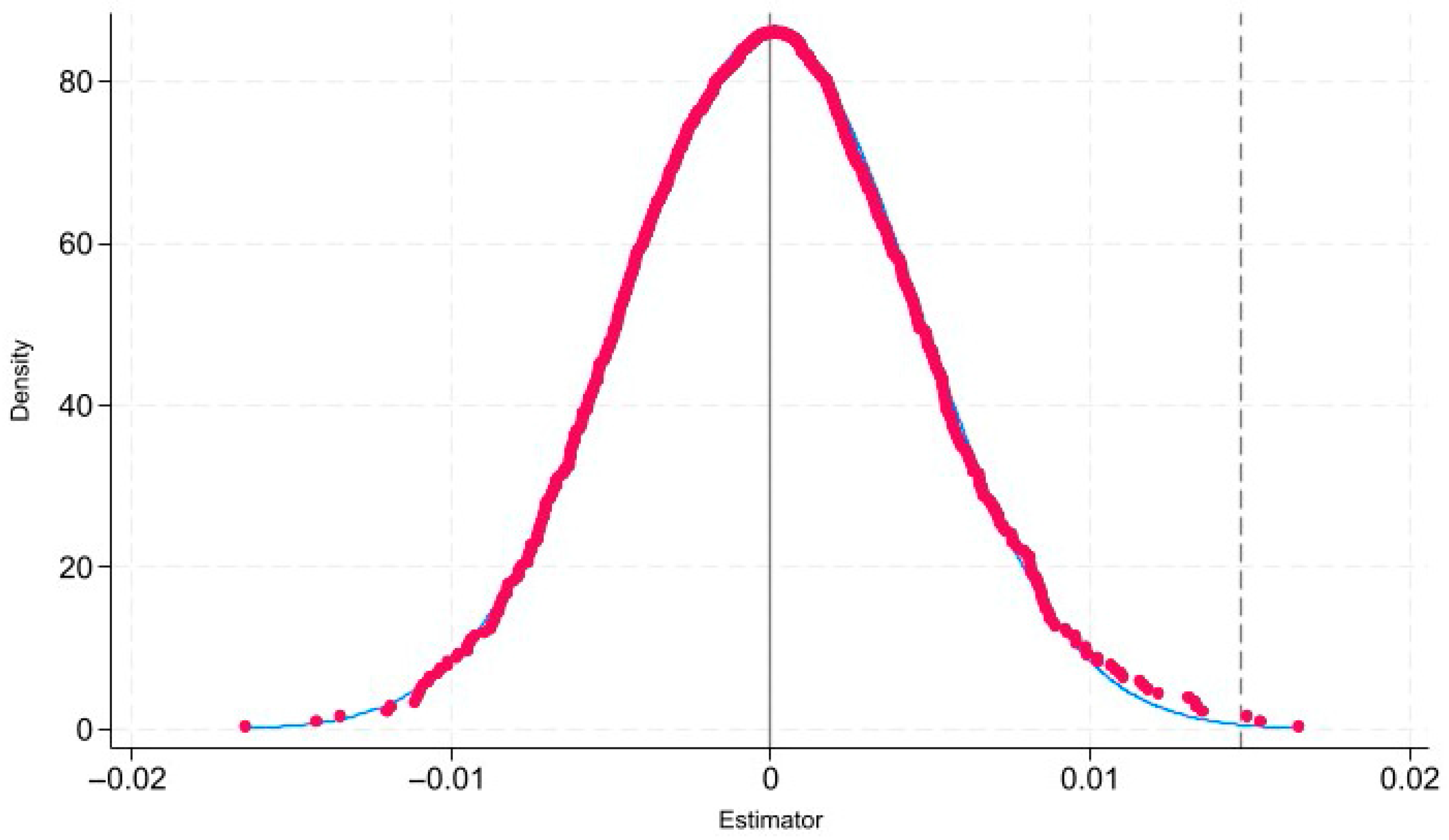
To rule out the influence of other unknown factors on the regression results, this study conducts a placebo test by randomly selecting treatment groups 1000 times and re-estimating the results using Model (4). As shown in Figure 1 and Figure 2, the distribution of t-values from the 1000 placebo tests is symmetric with a mean close to zero, and no statistically significant treatment effects are observed. Moreover, the vast majority of the t-values and coefficient estimates from the randomized tests do not exceed the actual t-value and coefficient from the baseline model, indicated by the dashed lines. These results suggest that the original regression findings are unlikely to be driven by unobserved factors, thereby confirming the reliability of H1.

4.2.5. Adding the “Greenwashing” Factor

Greenwashing (GW) practices embellish corporate green governance while diminishing the effectiveness of information disclosure. Numerous scholars have conducted in-depth research on “anti-greenwashing” [35,37,89]. To quantify corporate greenwashing behavior, this paper adopts the methodology proposed by Hu et al. [90], constructing a relative greenwashing indicator based on the degree of decoupling between disclosed information and actual performance. The formula is as follows:
G W i , t = E S G d i s   i , t E S G d i s ¯ σ d i s E S G p e r   i , t E S G p e r ¯ σ p e r
Among these, E S G d i s i , t and E S G d i s i , t ¯ represent Bloomberg’s environmental disclosure score for the i -th company and the average environmental disclosure score of other companies in the same industry excluding that company, respectively. E S G p e r i , t and E S G p e r i , t ¯ denote Huazheng’s environmental performance score for the i -th company and the average environmental performance score of other companies in the same industry, respectively. σ d i s and σ p e r denote the standard deviations of environmental disclosure and performance, respectively.
To mitigate the impact of greenwashing practices on green governance, we incorporated GW into our empirical analysis. The results are presented in Table 6, where Column (1) reflects findings without considering greenwashing, and Column (2) reflects findings with greenwashing accounted for. The results indicate that GW does indeed exert a significant influence on CGG. After incorporating GW, the impact of carbon policy uncertainty on corporate green governance exhibits some variation, yet the main conclusions of this paper remain valid.

4.3. Mechanism Examination

Regional green finance development (GF). To measure the level of regional green finance development, this study draws on the methodologies of Liu et al. and Wang et al. [91,92], constructing a composite green finance index at the prefecture-level city scale. The index incorporates seven key dimensions: green credit, green investment, green insurance, green bonds, green support, green funds, and green equity. First, we use Min-Max Normalization method to standardize the raw data. The formula is as follows:
F i j = x i j m i n i j m a x i j m i n i j , when   x i j   is   a   positive   indicator . m a x i j x i j m a x i j m i n i j , when   x i j   is   a   negative   indicator .
Among them, F i j represents the i -th sample in the j -th indicator after standardization processing, x i j represents the i -th sample in the j -th indicator before standardization, and m a x i j and m i n i j respectively represent the maximum and minimum values among the values of each index. It should be pointed out that all seven indicators used here are positive ones. Then, the entropy weight method is used to aggregate these indicators into a comprehensive index. Table 7 shows the seven dimensions for constructing GF and the specific measurement methods for each dimension.
The entropy weight method is an objective weighting technique that is widely employed in the construction of composite indicator systems. Its core principle is that the greater the variation in an indicator, the smaller its entropy value, and thus the more information it provides to the system, leading to a higher assigned weight. The specific steps are as follows.
Calculate the weight of the i -th sample under the j -th indicator.
A i j = F i j i = 1 m F i j ,   m = 1 , 2 , 3 , 7
Calculate the information entropy value of the j -th indicator. c represents the sample size.
E i = 1 ln c i = 1 m A i j l n A i j
Calculate the weights of each evaluation indicator.
W i = 1 E i i = 1 m 1 E i
Based on the weights of each dimension derived from the entropy method, a weighted average is calculated to obtain the GF data.
Column (1) of Table 8 presents the estimation results. The findings indicate that carbon constraint policy uncertainty significantly influences corporate green governance strategies at the 1% level by promoting the development of regional green finance, thereby confirming H2. Prior research suggests that heightened uncertainty in carbon policies increases firms’ demand for green financing [93], prompting local governments and financial institutions to accelerate improvements in green finance infrastructure—such as expanding green credit issuance, developing carbon finance instruments, and strengthening green rating mechanisms [52]. The development of regional green finance provides firms with clearer direction for sustainable development. Green finance enhances corporate environmental responsibility through mechanisms such as green ratings [51], financial constraints [50], and market signaling [94], further reinforcing the execution and continuity of corporate green governance strategies [95]. Therefore, green finance serves a “bridging” role in this mechanism, linking policy uncertainty to corporate strategic adjustments through a causal chain.
Enterprise financing constraints (FC). At present, many scholars have developed various methods to quantify the financing constraints of enterprises, such as the KZ index, SA index and FC index, etc. [96]. Based on three dimensions: internal financing constraints, external financing constraints, and investment opportunities, and drawing on the research of Chen and Liu [97], this paper uses the FC index to construct the following model to measure the degree of financing constraints faced by enterprises:
D ( Q U F C = 1   o r   0 Z F C i t ) = e Z F C i t 1 + e Z F C i t
Z F C i t = β 0 + β 1 S i z e i t + β 2 L e v i t + β 3 C a s h D i v A s s e t i t + β 4 M B i t + β 5 N W C A s s e t i t + β 6 E B I T A s s e t i t
Among these variables, ZFC represents the linear predictor term of the logit regression model, which determines the probability of a company experiencing financing constraints. QUFC stands for financing constraint dummy variable, Size is measured as the natural logarithm of total assets, Lev represents the asset-liability ratio, CashDiv indicates the cash dividends paid by the company during the year, MB denotes the market-to-book ratio, NWC refers to net working capital, and EBIT represents earnings before interest and taxes. The definitions of the remaining variables are consistent with those used in the baseline regression model.
To compute FC, we adopt the following procedure: first, we standardize the variables for firm size, firm age, and dividend payout ratio by year. Then, firms are ranked based on these standardized variables, and QUFC is constructed using the upper and lower tertiles as thresholds. Firms above the 66.7th percentile are classified as having low financing constraints (QUFC = 0), while those below the 33.3rd percentile are considered highly constrained (QUFC = 1). Finally, a Logit regression is estimated according to Equation (8) to fit the annual probability of a firm being financially constrained, denoted as D, which is used as the FC index. A higher FC index indicates more severe financial constraints faced by the firm.
Column (2) of Table 8 presents the estimation results. The findings reveal that increased carbon constraint policy uncertainty significantly intensifies corporate financing difficulties at the 1% level, thereby affecting green governance in industrial enterprises. This provides empirical support for H2. Previous studies have shown that financing constraints play a decisive role in corporate green technological innovation [50]. Financial constraints divert firms away from long-term sustainability goals by shifting capital toward short-term productive investments, resulting in underinvestment in green innovation initiatives [98], thereby weakening the technological foundation for green governance. Moreover, when under financial pressure, firms often adopt a “non-core expenditure reduction” strategy, where environmental governance spending is among the first to be cut [54], leading to insufficient financial support for green governance. In the absence of stable financing sources, firms are more likely to choose low-risk, conventional business operations rather than high-risk, long-horizon green technology pathways [99], thus hindering their sustainable transformation. This study provides new empirical evidence on how carbon constraint policy uncertainty increases firms’ financing constraints, ultimately influencing the green governance of industrial enterprises, and contributes to the broader understanding of how industrial firms can achieve sustainable development.
Enterprise green innovation (Quality). Extensive evidence suggests that carbon emission constraints significantly and positively affect the quantity of corporate green innovation [66,100]. Building on this, the present study focuses on the quality dimension to investigate whether carbon emission constraints also influence corporate green innovation. The International Patent Classification (IPC) system, as the only globally recognized hierarchical structure for patent classification and retrieval, uses a five-level system—section, class, subclass, main group, and subgroup—to categorize patents. The number of IPC categories associated with a given patent is positively correlated with the breadth of its technological coverage. A broader coverage implies greater technological complexity, which in turn leads to higher technological barriers and added value [67]. Therefore, the number of IPCs linked to a patent reflects the quality of the underlying innovation. Since the breadth and complexity of knowledge at the IPC subgroup level show limited differentiation [101], the measurement of patent quality in this study is based on the main group level. Drawing on the logical idea of the Herfindahl-Hirschman index, this paper defines green innovation quality as follows:
Q u a l i t y i t = 1 α 2
where Quality represents the green and innovative quality of an enterprise, α represents the percentage of each group classification among all patent classifications. A higher value of α indicates that one particular main group dominates the patent’s classification structure, implying less internal diversity in classification codes and, consequently, lower technological complexity and lower patent quality. This study uses the knowledge breadth derived from IPC main group classifications to calculate the quality of green innovation. Specifically, we compute the average knowledge breadth of all green invention patents and green utility model patents filed by a firm in a given year, and use this value as the firm’s green innovation quality indicator.
Column (3) of Table 8 presents the estimation results. The findings show that an increase in carbon constraint policy uncertainty significantly enhances firms’ attention to the quality of green innovation at the 1% significance level. This, in turn, influences green governance in industrial enterprises, providing empirical support for H2. Green governance is essentially a systematic approach to managing carbon emission reduction, pollution control, and resource conservation [12]. Firms with high-quality green technologies typically demonstrate greater efficiency in green governance practices [102]. Moreover, high-quality green innovation often stems from long-term R&D accumulation within firms [103], representing a strategic and endogenous choice. This internally developed green capability enables firms to invest in green governance more proactively and consistently [104,105]. According to the dynamic capabilities theory, the quality of green innovation reflects a firm’s adaptive capacity in response to changes in the external policy environment. Enhancing green innovation quality contributes to the realization of long-term sustainable development goals.

4.4. Moderation Analysis

Environmental protection investment (EPI). Environmental protection investment is aimed at preventing and controlling environmental pollution and serves as a key instrument for achieving corporate sustainable development [106]. Following the approaches of Lu and Cui et al. [68,94], this study collects data consistent with the definition of environmental protection investment from the notes to annual reports of listed companies, focusing primarily on details disclosed under construction-in-progress and administrative expenses. Specifically, under the construction-in-progress account, capitalized expenditures related to wastewater and gas treatment, energy and water conservation, desulfurization, denitrification, dust removal, waste treatment, waste heat recovery and utilization, and tail gas treatment are included. Under administrative expenses, expensed items such as pollutant discharge fees, environmental protection fees, and vegetation restoration fees are also considered. These capitalized and expensed items, consistent with the definition of green investment, are aggregated to calculate each firm’s total environmental protection investment. This total is then divided by the firm’s total assets at the end of the year to control for firm size differences. As shown in Column (1) of Table 9, firms with higher levels of environmental protection investment exhibit a significantly stronger buffering effect against the impact of carbon constraint policy uncertainty on green governance. This suggests that firms with substantial environmental protection investments are less vulnerable to the negative effects of carbon policy uncertainty on sustainable development. Firms with strong ongoing commitments to environmental protection investment tend to have already deployed measures for energy conservation, emissions reduction, cleaner production, and pollution control. These existing capabilities allow such firms to respond swiftly to policy changes without the need for substantial strategic adjustments. Moreover, long-term environmental protection investments are typically associated with advanced green technologies, process optimization, and institutional infrastructure, embedding green governance into daily operations. As a result, their governance practices are less likely to fluctuate with policy uncertainty.
Enterprise reputation (REP). While existing literature often uses information disclosure or survey-based methods to measure corporate reputation, these approaches are prone to bias and may suffer from subjectivity and incompleteness in reputation assessment [73]. To ensure both practical feasibility and a relatively comprehensive evaluation, this study incorporates perspectives from multiple stakeholders to construct an integrated measure of corporate reputation [107,108]. First, adhering to principles of operability, hierarchy, validity, and relative completeness, we select 12 indicators for evaluating corporate reputation, as detailed in Table 10. Second, factor analysis is applied to compute reputation scores based on these 12 indicators. Finally, enterprises are divided into ten groups according to their reputation scores, ranked from lowest to highest, and assigned a value from 1 to 10, respectively. As shown in Column (2) of Table 9, strong corporate reputation significantly mitigates the impact of carbon constraint policy uncertainty on industrial enterprises’ green governance at the 1% significance level. This indicates that firms with better reputations are less affected by policy uncertainty in terms of their sustainable development performance. On the one hand, reputable firms tend to place greater emphasis on their social influence in daily operations, particularly regarding long-term responsibility fulfillment and the credibility of their green commitments. This lends them greater strategic stability and institutional resilience when facing policy fluctuations. On the other hand, strong public trust and heightened external monitoring pressure compel these firms to maintain—or even enhance—their environmental governance standards under changing policy environments.

4.5. Heterogeneity Test

4.5.1. Information Disclosure Quality

High-quality information disclosure is not only a regulatory requirement but also a key mechanism for gaining market trust and advancing sustainable development. Following the approach of Sun et al. [109], this study adopts the KV Index to quantify corporate information disclosure quality. If the quality of information disclosure by listed companies is high, investors’ stock returns are less dependent on stock trading volume. If the quality of information disclosure by listed companies is poor, investors are unable to use information disclosure to assess the investment value of listed companies, resulting in a stronger dependence on stock trading volume. The KV index reflects market information, serving as an objective evaluation of the degree of information asymmetry by investors. As such, it truly reflects the actual effectiveness of listed companies’ information disclosure, encompassing both mandatory and voluntary disclosure, and serves as a comprehensive measure of the quality of listed companies’ information disclosure. The specific calculation method of the KV index is as follows:
L n R t R t 1 R t 1 = μ + η v o l t v o l 0 1 + ε
Among them, R t represents the closing price of the enterprise’s stock on day t , R t 1 represents the closing price of the enterprise’s stock on day t     1 , v o l t and v o l 0 respectively represent the trading volume of the enterprise’s stock on day t and the average daily trading volume of the enterprise within the sample interval, μ is a constant, and ε represents the random disturbance term. The KV index can be calculated by using the η obtained from the ordinary least square (OLS) method. Generally speaking, the lower the KV index, the better the quality of corporate information disclosure.
After calculating the KV Index, we define two subsamples based on the sample mean: firms with KV Index scores above the mean are classified as the high-disclosure-quality group, while those below the mean are classified as the low-disclosure-quality group. Grouped regressions are then performed accordingly. Columns (1) and (2) of Table 11 present the regression results for high and low disclosure quality groups, respectively. The results show that the impact of carbon constraint policy uncertainty on corporate green governance is significantly more pronounced among firms with lower disclosure quality. Low transparency in information disclosure tends to erode investor confidence—especially as ESG investors place increasing emphasis on the quality of carbon-related disclosures. Firms with poor disclosure quality are more likely to experience stock price volatility, capital outflows, and other “green discount” effects when carbon policies are introduced. Moreover, low-quality disclosure often reflects short-termism in corporate management, which undermines sustainable development planning. These firms typically have weaker green governance capabilities and are thus more vulnerable to the adverse effects of carbon emission policy risk.

4.5.2. Appointment of Executives with Environmental Backgrounds

Compared with other executives, board members and senior managers with environmental backgrounds, owing to their strong environmental awareness, extensive green knowledge, and practical experience in sustainability, are better equipped to identify environmental risks and opportunities and to proactively respond to stakeholder expectations for sustainable development. Therefore, when facing the same carbon constraint policy uncertainty, the presence of environmentally experienced executives may lead to heterogeneous responses in corporate green governance strategies. To explore this heterogeneity, we divide the sample into two subgroups: firms that have appointed executives with environmental backgrounds and firms that have not. Grouped regression analyses are then conducted. Columns (3) and (4) of Table 11 report the results for the two subgroups, respectively. The findings indicate that firms without executives with environmental backgrounds tend to intensify their green governance efforts more significantly in response to carbon emission policy risks, whereas firms with such executives generally already have a well-established green governance system and exhibit more stable responses. This outcome reflects two underlying mechanisms: (1) “latecomer compensation” behavior triggered by policy pressure, and (2) reputation recovery driven by market pressure. First, firms lacking environmentally knowledgeable executives typically have weaker green governance foundations and thus must make more aggressive improvements to avoid regulatory penalties when faced with policy pressure. Second, the absence of environmentally experienced leadership may cause stakeholders to question the firm’s capabilities or commitment to sustainability, potentially resulting in lower ESG scores, increased stock price volatility, and rising financing costs. According to upper echelons theory, executives’ environmental cognition and long-term orientation are critical in determining whether a firm’s green governance can evolve from being merely symbolic to becoming truly substantive.

4.5.3. Carbon Emissions Trading Pilot Cities

As a key environmental economic policy in China, the carbon emissions trading system serves as a major driver in promoting pollution reduction and achieving sustainable development. Based on the official list of carbon trading pilot cities, we classify firms according to their location into two groups: those located in non-pilot cities and those in carbon emissions trading pilot cities, and conduct grouped regressions accordingly. The regression results are presented in Columns (1) and (2) of Table 12. The results show that firms located in carbon trading pilot cities are more proactive in adjusting their green governance strategies when facing the same level of carbon constraint policy uncertainty. As early as 2011, China launched carbon trading pilot programs in seven provinces and municipalities—Beijing, Tianjin, Shanghai, Chongqing, Hubei, Guangdong, and Shenzhen. In these pilot regions, carbon emission policy signals tend to be clearer and more stable, allowing firms to form stronger expectations and more accurate understandings of future regulatory trends, thus enabling strategic adjustment based on more predictable institutional environments. Moreover, the carbon emissions trading system plays an effective signaling role, attracting green fund investments, environmental subsidies from governments, and green credit support. These benefits enhance firms’ environmental initiative and help reconcile the potential conflict between economic interests and environmental responsibility. As a result, the system promotes more effective and sustained corporate green governance.

4.5.4. The Degree of Pollution Caused by Enterprises to the Environment

Heavy-polluting enterprises are characterized by high technological barriers, strong historical path dependence, and limited strategic flexibility. As a result, their governance responses to carbon-related risks are more complex and varied, making them especially worthy of separate analysis. Based on this, we divide the sample into heavy-polluting and non-heavy-polluting firms and conduct grouped regressions. The regression results are reported in Columns (3) and (4) of Table 12. The empirical results indicate that the green governance strategies of heavy-polluting enterprises are more susceptible to the uncertainty of carbon emission constraint policies. Specifically, when carbon regulations are suddenly tightened or environmental standards are abruptly raised, heavy-polluting firms—due to limited technological flexibility and significantly higher marginal abatement costs—are more likely to adjust or weaken their green governance strategies. Moreover, under a continuously evolving regulatory environment, these firms are compelled to accelerate the construction and optimization of their green governance systems to mitigate policy risks, preemptively adapt to rising environmental standards, and reduce compliance costs. In this sense, the pressure from policy constraints and uncertainty acts as a forcing mechanism, pushing heavy-polluting enterprises to enhance their green governance efforts in pursuit of long-term sustainable development.

5. Conclusions and Policy Recommendations

5.1. Conclusions

Based on panel data of Chinese A-share listed companies from 2014 to 2023, this study conducts a statistical analysis and arrives at the following four conclusions.
Firstly, carbon constraint policy uncertainty significantly promotes the adoption of greener governance strategies among industrial enterprises. This conclusion remains robust after a series of robustness checks, including the incorporation of additional fixed effects, the exclusion of special periods, changes in the measurement of the dependent variable, and placebo tests. Moreover, after accounting for the influence of “greenwashing,” we find that carbon constraint policy uncertainty exerts a greater impact on corporate green governance. Existing research has primarily focused on the direct effects of environmental regulations (such as carbon taxes and carbon emissions trading) while neglecting the prospective impact of policy uncertainty on corporate strategy. This study expands the policy research perspective from “post hoc response” to “pre-emptive prevention” and, for the first time, reveals the driving role of “carbon constraint policy uncertainty” in green governance of industrial enterprises, rather than the policy itself.
Secondly, mechanism analysis reveals that carbon constraint policy uncertainty affects corporate green governance through three main channels: enhancing regional green finance development, intensifying firms’ financing constraints, and improving the quality of green innovation. Previous studies have extensively explored the impact of green finance, financing constraints, and innovation incentives on corporate green governance. Building on this foundation, this paper examines the effects of carbon constraint policy uncertainty on green finance, financing constraints, and innovation incentives from both theoretical and empirical perspectives. The aim is to shed light on the mechanisms through which carbon constraint policy uncertainty influences corporate green governance, thereby providing new evidence for the transmission mechanisms of environmental policies.
Thirdly, firms with higher levels of environmental protection investment and stronger reputations are less susceptible to the adverse impacts of carbon emission constraint policies on their green governance strategies. Existing literature generally focuses on the driving role of policy pressure in corporate green transformation, but rarely explores the differentiated capabilities of companies to withstand policy shocks. This paper finds that environmental investments and reputation constitute a company’s “resilience capital,” revealing the buffering effect of corporate characteristics in policy transmission, and supplementing existing research on the micro-mechanisms of policy responses.
Finally, the effect of carbon constraint policy uncertainty on corporate green governance exhibits significant heterogeneity. Specifically, the impact is milder for non-heavy-polluting firms that are located in carbon emissions trading pilot cities, have high-quality information disclosure, and employ senior executives with environmental backgrounds. This conclusion not only supplements the first conclusion in terms of geographical and corporate characteristics, but also provides policymakers with directions and ideas for improving policies.

5.2. Policy Recommendations

To promote the green and low-carbon transition of industrial enterprises and achieve sustainable development goals, this study proposes the following policy recommendations based on conclusions.
Firstly, the government should accelerate the improvement of a supporting policy framework centered on green finance, transforming carbon constraint policy risks into green investment opportunities. Efforts can focus on expanding the scale of interest subsidies for green credit and green bonds. For projects aligned with green transformation but facing increased financing costs due to carbon constraints, the government should offer preferential loan policies, including targeted re-lending, credit guarantees, and interest subsidies. Additionally, a regional green finance “competition mechanism” could be introduced, incorporating indicators such as the share of green credit, green bond balances, and green fund capital raised into local government performance evaluations. This would help establish a positive policy transmission chain—from policy risk to green finance to corporate green governance. At the same time, digital regulatory platforms should be used to monitor corporate carbon and financing data in real time, enabling the accurate identification of “pseudo-green” projects to ensure financial resources are directed toward genuine green governance efforts.
Secondly, for industrial enterprises with high levels of environmental investment and strong reputations, the policy focus should shift from “constraint” to “incentive” in order to amplify their demonstrative role in green governance. The government could implement a “green leader” program by offering preferential policies—such as tiered carbon allowance rewards, income tax reductions, and priority in government green procurement—to industrial enterprises that consistently achieve top-tier carbon performance within their industries. These firms could also be allowed to sell surplus carbon allowances at premium prices in the carbon market. Furthermore, industry associations should be encouraged to publish sector-specific Corporate Green Reputation Indexes, linking carbon performance to brand value. This would help form a virtuous cycle of “high reputation—lower risk premium—lower financing costs”, thus mitigating the negative impact of carbon constraint policy uncertainty on the sustainable development of these firms and incentivizing others to follow suit.
Thirdly, a differentiated and targeted policy mix should be adopted to reduce the “over-compliance” costs associated with carbon constraints for heterogeneous enterprises. For firms whose executives have environmental backgrounds, regulators may reduce the frequency of carbon audits and allow the substitution of publicly audited data for some on-site inspections. Enterprises located in carbon trading pilot cities and demonstrating high-quality information disclosure could be granted “autonomous compliance” pilot status, allowing them to design their own emission reduction pathways based on internal carbon management systems, with regulators shifting to ex-post inspections instead of ex-ante approvals. Moreover, the government could establish a Carbon Policy Risk Mitigation Fund. When firms experience short-term cash flow shortages due to policy adjustments but possess clear long-term green transformation trajectories, the fund could provide low-interest bridge loans or carbon futures hedging tools to support the steady advancement of their green governance strategies.

5.3. Limitations

Despite conducting a comprehensive and multidimensional empirical analysis of how carbon constraint policy uncertainty affects green governance in industrial enterprises, this study still faces several limitations.
Firstly, this study uses panel data from Chinese A-share listed industrial enterprises. While the sample is representative and data-rich, it does not include a large number of non-industrial enterprises and unlisted small and medium-sized industrial enterprises. These unlisted enterprises often differ significantly from listed ones in terms of policy responsiveness, governance resource allocation, and information disclosure behavior. As a result, the external validity of the conclusions is somewhat limited.
Secondly, this paper identifies the mechanisms through which carbon emission policy risk affects corporate green governance via three mediating variables: green finance, financing constraints, and green innovation. While these mechanisms provide a relatively complete logical framework, potential interrelations that may exist among intermediaries have not been fully discussed. For example, a large body of literature suggests causal links between green finance and corporate financing constraints.
Thirdly, corporate green governance in this study is measured using the Janis-Fadner coefficient, which effectively reflects the breadth of green governance behavior but may not fully capture its depth and substantive intent. For instance, corporate ISO 14000 certification may represent compliance rather than genuine environmental commitment, potentially leading to overestimation of green governance effectiveness.
Finally, the impact of greenwashing on corporate green governance is complex and multifaceted. This paper only preliminarily considers the effect of greenwashing on the benchmark conclusions presented herein, without delving deeply into the specific implications of greenwashing practices within this study.

5.4. Prospects

Due to the limitations of this paper, future research on this topic can be conducted in the following directions.
Firstly, in terms of the research sample, future studies could be expanded to include agricultural enterprises and service sector enterprises, thereby enhancing the generalizability of the findings. Additionally, future research could incorporate multi-level data, such as data from non-listed enterprises, to further enhance the generalizability and explanatory power of the research conclusions. Secondly, from the perspective of the research framework, future studies could focus on mediating variables to construct a chained mediation model, thereby delving deeper into the impact of carbon constraint policy uncertainty on corporate green governance and expanding the framework of this study. Thirdly, from the perspective of research methods, future studies could consider incorporating multi-dimensional approaches such as text analysis and case evaluations to provide a more comprehensive portrayal of “soft governance” aspects such as corporate green strategic objectives, implementation mechanisms, and organizational transformations, thereby enhancing the substantive nature of green governance measurements. Finally, from a greenwashing perspective, future research could explore more advanced, complex, and precise methods to measure corporate greenwashing behaviors, integrating them into assessments of substantive and symbolic green governance. Additionally, studies should investigate whether greenwashing exhibits moderating or threshold effects in examining how carbon constraint policy uncertainty influences green governance.
By outlining the limitations and offering directions for future research, this study aims to contribute to the growing body of research on corporate sustainability under the global carbon neutrality agenda. This paper also seeks to provide more targeted and actionable insights for policymakers and enterprises, ultimately supporting the advancement of corporate green governance and the green, low-carbon transformation of industries.

Author Contributions

Conceptualization, Q.W. and Z.W.; methodology, Q.W.; validation, Q.W. and Z.W.; resources, Q.W.; data curation, Z.W.; writing—original draft preparation, Z.W.; writing—review and editing, Q.W.; visualization, Z.W.; supervision, Q.W.; project administration, Q.W.; funding acquisition, Q.W. All authors have read and agreed to the published version of the manuscript.

Funding

This work is supported by the China Postdoctoral Science Foundation (No. 2022MD713778), the Sichuan Province Key Laboratory of Philosophy and Social Science-Key Project of the Key Laboratory for Digital Intelligent Management and Ecological Decision Optimization of Baijiu in the Upper Reaches of the Yangtze River (No. zdsys24-01), the Yibin Social Sciences Planning Project (No. YB25ND034), the Chengdu Social Science Planning Project (No. 2024CS115), and the Key Project of Sichuan Disaster Economy Research Center (No. ZHJJ2023ZD001).

Institutional Review Board Statement

Not applicable.

Informed Consent Statement

Not applicable.

Data Availability Statement

Data will be made available on request.

Conflicts of Interest

The authors declare no conflicts of interest.

References

  1. Peduzzi, P. The Disaster Risk, Global Change, and Sustainability Nexus. Sustainability 2019, 11, 957. [Google Scholar] [CrossRef]
  2. Hariram, N.P.; Mekha, K.B.; Suganthan, V.; Sudhakar, K. Sustainalism: An Integrated Socio-Economic-Environmental Model to Address Sustainable Development and Sustainability. Sustainability 2023, 15, 10682. [Google Scholar] [CrossRef]
  3. Zeb, A.; Shuhai, N.; Ullah, O. Navigating Sustainability and Economic Growth: The Dual Influence of Green Economic Growth and Technological Innovation on Environmental Outcomes in South Asia. Environ. Dev. Sustain. 2025, 1–26. [Google Scholar] [CrossRef]
  4. United Nations. Transforming Our World: The 2030 Agenda for Sustainable Development; United Nations: New York, NY, USA, 2015. Available online: https://sdgs.un.org/2030agenda (accessed on 22 August 2025).
  5. Andrews, T.M.; Simpson, N.P.; Mach, K.J.; Trisos, C.H. Risk from Responses to a Changing Climate. Clim. Risk Manag. 2023, 39, 100487. [Google Scholar] [CrossRef]
  6. Zhu, B.; Liu, C.; Wei, C. Urban Residential Heating Policy in China: A Review. Energy Build. 2021, 253, 111547. [Google Scholar] [CrossRef]
  7. Lai, L.W.C.; Lorne, F.T.; Davies, S.N.G.; Chau, K.W. Innovative Planning for Sustainable Development: A Win-Win Approach through Conversion of Negative into Positive Externalities. Land Use Policy 2025, 157, 107643. [Google Scholar] [CrossRef]
  8. Meah, N. Climate Uncertainty and Policy Making—What Do Policy Makers Want to Know? Reg. Environ. Change 2019, 19, 1611–1621. [Google Scholar] [CrossRef]
  9. Wan, K.; Yu, X. Green Structural Monetary Policy and Firms’ Asymmetric Carbon Emission Reduction: Evidence from China. Econ. Anal. Policy 2025, 86, 1914–1928. [Google Scholar] [CrossRef]
  10. Almeida, C.M.V.B.; Agostinho, F.; Giannetti, B.F.; Huisingh, D. Integrating Cleaner Production into Sustainability Strategies: An Introduction to This Special Volume. J. Clean. Prod. 2015, 96, 1–9. [Google Scholar] [CrossRef]
  11. Mohy-ud-Din, K.; Shahbaz, M.; Khamdamov, S.-J. Does Green Governance Reflect Corporate Sustainability Performance? New Insight from G5 Countries. Corp. Soc. Responsib. Environ. Manag. 2025, 32, 4900–4922. [Google Scholar] [CrossRef]
  12. Li, W.; Xu, J.; Zheng, M. Green Governance: New Perspective from Open Innovation. Sustainability 2018, 10, 3845. [Google Scholar] [CrossRef]
  13. Deng, C.; Peng, W.; Dou, Z.; Zhang, Q. Environmental Background Directors and ESG Performance: A Perspective on Green Governance. Sustainability 2024, 16, 10559. [Google Scholar] [CrossRef]
  14. Rokhmawati, A. The Nexus among Green Investment, Foreign Ownership, Export, Greenhouse Gas Emissions, and Competitiveness. Energy Strategy Rev. 2021, 37, 100679. [Google Scholar] [CrossRef]
  15. Li, W.; Zheng, M.; Zhang, Y.; Cui, G. Green Governance Structure, Ownership Characteristics, and Corporate Financing Constraints. J. Clean. Prod. 2020, 260, 121008. [Google Scholar] [CrossRef]
  16. Caferra, R.; Tsironis, G.; Morone, A.; Tsagarakis, K.P.; Morone, P.; D’Adamo, I. Is the Circular Economy Proposed as Sustainability in Firm Mission Statements? A Semantic Analysis. Environ. Technol. Innov. 2023, 32, 103304. [Google Scholar] [CrossRef]
  17. Pelikánová, R.M.; Rubáček, F. Taxonomy for Transparency in Non-Financial Statements—Clear Duty with Unclear Sanction. Danube 2022, 13, 173–195. [Google Scholar] [CrossRef]
  18. Zhang, S.; Cai, W.; Zheng, X.; Lv, X.; An, K.; Cao, Y.; Cheng, H.S.; Dai, J.; Dong, X.; Fan, S.; et al. Global Readiness for Carbon Neutrality: From Targets to Action. Environ. Sci. Ecotechnology 2025, 25, 100546. [Google Scholar] [CrossRef]
  19. Bang, G. The U.S. Inflation Reduction Act: Climate Policy as Economic Crisis Response. Environ. Politics 2023, 1–22. [Google Scholar] [CrossRef]
  20. Yue, T.; Tong, J.; Qiao, Y.; Chen, L. Carbon Governance or Trade Gaming: China’s Approach to Addressing the EU’s Carbon Border Adjustment Mechanism. J. Clean. Prod. 2024, 484, 144359. [Google Scholar] [CrossRef]
  21. Yin, N.; Zhu, Y. Investigating Investor Attention to Carbon Risk from a Supply Chain Perspective. Int. Rev. Financ. Anal. 2024, 96, 103630. [Google Scholar] [CrossRef]
  22. Liu, H.; Guo, X.; Sheng, D. The Impact of Heterogeneous Market Sentiments on Corporate Risk-Taking and Governance. Mathematics 2024, 12, 3505. [Google Scholar] [CrossRef]
  23. Liu, Y.; Dong, K.; Nepal, R.; Afi, H. How Do Climate Risks Affect Corporate ESG Performance? Micro Evidence from China. Res. Int. Bus. Financ. 2025, 76, 102855. [Google Scholar] [CrossRef]
  24. United Nations. United Nations Framework Convention on Climate Change; United Nations: New York, NY, USA, 1992. Available online: https://treaties.un.org/doc/Publication/MTDSG/Volume%20II/Chapter%20XXVII/XXVII-7.en.pdf (accessed on 22 August 2025).
  25. United Nations Climate Change (UNFCCC). What is the Kyoto Protocol? In Proceedings of the Kyoto Protocol, Kyoto, Japan, 11 December 1997; Available online: https://unfccc.int/kyoto_protocol (accessed on 22 August 2025).
  26. The Paris Agreement. Available online: https://unfccc.int/zh/guojiazizhugongxian-ndc-zixun/balixieding (accessed on 23 August 2025).
  27. Conference of the Parties. Available online: https://unfccc.int/zh/process/bodies/supreme-bodies/conference-of-the-parties-cop (accessed on 23 August 2025).
  28. Gavriilidis, K. Measuring Climate Policy Uncertainty. SSRN Electron. J. 2021. [Google Scholar] [CrossRef]
  29. Berestycki, C.; Carattini, S.; Dechezleprêtre, A.; Kruse, T. Measuring and Assessing the Effects of Climate Policy Uncertainty; OECD Economics Department Working Papers: Paris, France, 2022. [Google Scholar]
  30. Lee, K.; Cho, J. Measuring Chinese Climate Uncertainty. Int. Rev. Econ. Financ. 2023, 88, 891–901. [Google Scholar] [CrossRef]
  31. Ma, Y.-R.; Liu, Z.; Ma, D.; Zhai, P.; Guo, K.; Zhang, D.; Ji, Q. A News-Based Climate Policy Uncertainty Index for China. Sci. Data 2023, 10, 881. [Google Scholar] [CrossRef] [PubMed]
  32. Agrawal, A.; Brandhorst, S.; Jain, M.; Liao, C.; Pradhan, N.; Solomon, D. From Environmental Governance to Governance for Sustainability. One Earth 2022, 5, 615–621. [Google Scholar] [CrossRef]
  33. Martinelli, A.; Midttun, A. Introduction: Towards Green Growth and Multilevel Governance. Energy Policy 2012, 48, 1–4. [Google Scholar] [CrossRef]
  34. Appolloni, A.; Chiappetta Jabbour, C.J.; D’Adamo, I.; Gastaldi, M.; Settembre-Blundo, D. Green Recovery in the Mature Manufacturing Industry: The Role of the Green-Circular Premium and Sustainability Certification in Innovative Efforts. Ecol. Econ. 2022, 193, 107311. [Google Scholar] [CrossRef]
  35. Rubáček, F.; Pelikánová, R.M.; MacGregor, R.K. The Sustainability of Esas Triumvirate for Sustainability-Related Disclosures in the Financial Sector—All for One and One for All? Acta Univ. Lodziensis. Folia Iurid. 2023, 105, 123–143. [Google Scholar] [CrossRef]
  36. Hála, M.; MacGregor Pelikánová, R.; Rubáček, F. Negative Determinants of CSR Support by Generation Z in Central Europe: Gender-Sensitive Impacts of Infodemic in “COVID-19” Era. Cent. Eur. Bus. Rev. 2024, 13, 89–115. [Google Scholar] [CrossRef]
  37. Van Tulder, R.; Rodrigues, S.B.; Mirza, H.; Sexsmith, K. The UN’s Sustainable Development Goals: Can Multinational Enterprises Lead the Decade of Action? J. Int. Bus. Policy 2021, 4, 1–21. [Google Scholar] [CrossRef]
  38. He, P.; Shen, H.; Zhang, Y.; Ren, J. External Pressure, Corporate Governance, and Voluntary Carbon Disclosure: Evidence from China. Sustainability 2019, 11, 2901. [Google Scholar] [CrossRef]
  39. Guan, Y.; Su, C.; Guan, T. The Dynamic Bidirectional Causality Between Carbon Pricing and Green Technology Innovation in China: A Sub-Sample Time-Varying Approach. Sustainability 2025, 17, 5371. [Google Scholar] [CrossRef]
  40. Han, D.; Li, M.; Lu, K. Digital Platforms Enabling Carbon Neutral Technology Innovation: Based on Market Incentives and Government Constraints. Humanit. Soc. Sci. Commun. 2025, 12, 355. [Google Scholar] [CrossRef]
  41. Liu, S.; Liu, H.; Chen, X. Does Environmental Regulation Promote Corporate Green Investment? Evidence from China’s New Environmental Protection Law. Environ. Dev. Sustain. 2024, 26, 12589–12618. [Google Scholar] [CrossRef]
  42. Darby, J.L.; Ketchen, D.J., Jr.; Williams, B.D.; Tokar, T. The Implications of Firm-Specific Policy Risk, Policy Uncertainty, and Industry Factors for Inventory: A Resource Dependence Perspective. J. Supply Chain Manag. 2020, 56, 3–24. [Google Scholar] [CrossRef]
  43. Hu, Y.; Bai, W.; Farrukh, M.; Koo, C.K. How Does Environmental Policy Uncertainty Influence Corporate Green Investments? Technol. Forecast. Soc. Change 2023, 189, 122330. [Google Scholar] [CrossRef]
  44. Zhang, D. Does Green Finance Really Inhibit Extreme Hypocritical ESG Risk? A Greenwashing Perspective Exploration. Energy Econ. 2023, 121, 106688. [Google Scholar] [CrossRef]
  45. Lublóy, Á.; Keresztúri, J.L.; Berlinger, E. Quantifying Firm-Level Greenwashing: A Systematic Literature Review. J. Environ. Manag. 2025, 373, 123399. [Google Scholar] [CrossRef] [PubMed]
  46. Shu, H.; Tan, W. Does Carbon Control Policy Risk Affect Corporate ESG Performance? Econ. Model. 2023, 120, 106148. [Google Scholar] [CrossRef]
  47. Liu, X.; Zhang, W.; Liu, M.; Han, J. Editorial: Green Finance & Carbon Neutrality: Strategies and Policies for a Sustainable Future. Front. Environ. Sci. 2025, 13, 1560927. [Google Scholar] [CrossRef]
  48. Ma, M.; Zhu, X.; Liu, M.; Huang, X. Combining the Role of Green Finance and Environmental Sustainability on Green Economic Growth: Evidence from G-20 Economies. Renew. Energy 2023, 207, 128–136. [Google Scholar] [CrossRef]
  49. Liu, S.; Wang, Y. Green Innovation Effect of Pilot Zones for Green Finance Reform: Evidence of Quasi Natural Experiment. Technol. Forecast. Soc. Change 2023, 186, 122079. [Google Scholar] [CrossRef]
  50. Yu, C.-H.; Wu, X.; Zhang, D.; Chen, S.; Zhao, J. Demand for Green Finance: Resolving Financing Constraints on Green Innovation in China. Energy Policy 2021, 153, 112255. [Google Scholar] [CrossRef]
  51. Liu, J.; Liang, G. Green Finance, Green Governance Performance, and the ESG Performance: Evidence from a Quasi-Natural Experiment. Financ. Res. Lett. 2025, 84, 107785. [Google Scholar] [CrossRef]
  52. Liu, C.; Xiong, M. Green Finance Reform and Corporate Innovation: Evidence from China. Financ. Res. Lett. 2022, 48, 102993. [Google Scholar] [CrossRef]
  53. Zhao, Y.; Liu, Y.; Dong, L.; Sun, Y.; Zhang, N. The Effect of Climate Change on Firms’ Debt Financing Costs: Evidence from China. J. Clean. Prod. 2024, 434, 140018. [Google Scholar] [CrossRef]
  54. Li, K.; Xia, B.; Chen, Y.; Ding, N.; Wang, J. Environmental Uncertainty, Financing Constraints and Corporate Investment: Evidence from China. Pac.-Basin Financ. J. 2021, 70, 101665. [Google Scholar] [CrossRef]
  55. Zhang, D.; Brian, M. Lucey Sustainable Behaviors and Firm Performance: The Role of Financial Constraints’ Alleviation. Econ. Anal. Policy 2022, 74, 220–233. [Google Scholar] [CrossRef]
  56. Cheng, H.; Taghizadeh-Hesary, F. How Green Finance Can Bridge the Energy Poverty Gap: Policies to Mitigate Socioeconomic and Environmental Consequences. Energy Policy 2023, 182, 113758. [Google Scholar] [CrossRef]
  57. Chai, S.; Zhang, K.; Wei, W.; Ma, W.; Abedin, M.Z. The Impact of Green Credit Policy on Enterprises’ Financing Behavior: Evidence from Chinese Heavily-Polluting Listed Companies. J. Clean. Prod. 2022, 363, 132458. [Google Scholar] [CrossRef]
  58. Tian, S.; Zhang, H.; Xu, G. The Effect of Green Credit on Enterprises’ Green Transformation under Sustainable Development: Evidence from Green Innovation in High-Pollution Enterprises in China. Sustainability 2024, 16, 235. [Google Scholar] [CrossRef]
  59. Wang, S. Green Credit, Digital Economy and Enterprise Pollution Reduction. Sustainability 2025, 17, 3791. [Google Scholar] [CrossRef]
  60. Tan, W.Y.; Guo, L.; Wang, W. Research on the Relationship Between Environmental Governance Pressure and Green Innovation. Environ. Dev. Sustain. 2025, 27, 5255–5278. [Google Scholar] [CrossRef]
  61. Le, T.T. How Do Corporate Social Responsibility and Green Innovation Transform Corporate Green Strategy into Sustainable Firm Performance? J. Clean. Prod. 2022, 362, 132228. [Google Scholar] [CrossRef]
  62. Luo, L.; Tang, Q. The Real Effects of ESG Reporting and GRI Standards on Carbon Mitigation: International Evidence. Bus. Strategy Environ. 2023, 32, 2985–3000. [Google Scholar] [CrossRef]
  63. Tian, H.; Lin, J.; Jiang, C. The Impact of Carbon Emission Trading Policies on Enterprises’ Green Technology Innovation—Evidence from Listed Companies in China. Sustainability 2022, 14, 7207. [Google Scholar] [CrossRef]
  64. Khurshid, A.; Rauf, A.; Qayyum, S.; Calin, A.C.; Duan, W. Green Innovation and Carbon Emissions: The Role of Carbon Pricing and Environmental Policies in Attaining Sustainable Development Targets of Carbon Mitigation—Evidence from Central-Eastern Europe. Environ. Dev. Sustain. 2023, 25, 8777–8798. [Google Scholar] [CrossRef]
  65. Zhou, Q.; Wang, S.; Ma, X.; Xu, W. Digital Technologies and Corporate Green Innovation: Opening the “Black Box” of Resource Orchestration Mechanisms. Sustain. Account. Manag. Policy J. 2024, 15, 884–912. [Google Scholar] [CrossRef]
  66. Li, Y.; Yaacob, M.H.; Xie, T. Effects of China’s Low Carbon Pilot City Policy on Corporate Green Innovation: Considering the Mediating Role of Public Environmental Concern. Financ. Res. Lett. 2024, 65, 105641. [Google Scholar] [CrossRef]
  67. Zhang, Y.; Sun, Z.; Zhou, Y. Green Merger and Acquisition and Green Technology Innovation: Stimulating Quantity or Quality? Environ. Impact Assess. Rev. 2023, 103, 107265. [Google Scholar] [CrossRef]
  68. Lu, J. Can the Green Merger and Acquisition Strategy Improve the Environmental Protection Investment of Listed Company? Environ. Impact Assess. Rev. 2021, 86, 106470. [Google Scholar] [CrossRef]
  69. Zhang, J.; Wu, R.; Wang, H. Environmental Governance Innovation and Corporate Sustainable Performance in Emerging Markets: A Study of the Green Technology Innovation Driving Effect of China’s New Environmental Protection Laws. Sustainability 2025, 17, 6556. [Google Scholar] [CrossRef]
  70. Porter, M.E.; van der Linde, C. Toward a New Conception of the Environment-Competitiveness Relationship. J. Econ. Perspect. 1995, 9, 97–118. [Google Scholar] [CrossRef]
  71. Van den Bergh, J.C.J.M. Environmental and Climate Innovation: Limitations, Policies and Prices. Technol. Forecast. Soc. Change 2013, 80, 11–23. [Google Scholar] [CrossRef]
  72. Heinberg, M.; Ozkaya, H.E.; Taube, M. Do Corporate Image and Reputation Drive Brand Equity in India and China?—Similarities and Differences. J. Bus. Res. 2018, 86, 259–268. [Google Scholar] [CrossRef]
  73. Pan, J.; Hunjra, A.I.; Bruna, M.G.; Zhao, S.; Bouri, E. Shaping Sustainability: How Corporate Reputation Can Be Enhanced under Climate Change Conditions. Financ. Res. Lett. 2024, 62, 105174. [Google Scholar] [CrossRef]
  74. Geng, Y.; Chen, J.; Liu, R. ESG Rating Disagreement and Corporate Green Innovation Bubbles: Evidence from Chinese A-Share Listed Firms. Int. Rev. Financ. Anal. 2024, 95, 103495. [Google Scholar] [CrossRef]
  75. Zhu, B.; Wang, Y. Green Governance and Stock Price Crash Risk: Evidence from China. Int. Rev. Econ. Financ. 2024, 96, 103683. [Google Scholar] [CrossRef]
  76. Cho, C.H.; Guidry, R.P.; Hageman, A.M.; Patten, D.M. Do Actions Speak Louder Than Words? An Empirical Investigation of Corporate Environmental Reputation. Account. Organ. Soc. 2012, 37, 14–25. [Google Scholar] [CrossRef]
  77. Fu, S.; Tian, M.; Ge, Y.; Yao, T.; Tian, J. Influencing Factors and Mechanisms of Corporate Social Responsibility Reputation under Green and Low-Carbon Transition: Evidence from Chinese Listed Companies. Energies 2024, 17, 2044. [Google Scholar] [CrossRef]
  78. CSMAR Database. Available online: https://data.csmar.com/ (accessed on 23 August 2025).
  79. Chinese Research Data Services Platform (CNRDS). Available online: https://www.cnrds.com/ (accessed on 22 August 2025).
  80. Dawei Innojoy Database. Available online: https://www.innojoy.com/ (accessed on 23 August 2025).
  81. WiseNews Database. Available online: http://wisenews.wisers.net.cn/wisenews/index.do (accessed on 23 August 2025).
  82. National Bureau of Statistics. Available online: https://www.stats.gov.cn/sj/ndsj/ (accessed on 23 August 2025).
  83. Cui, Y.; Che, W.; Liu, T.; Qin, B.; Wang, S.; Hu, G. Revisiting Pre-Trained Models for Chinese Natural Language Processing. In Findings of the Association for Computational Linguistics, Proceedings of the EMNLP 2020, Online, 16–20 November 2020; Cohn, T., He, Y., Liu, Y., Eds.; Association for Computational Linguistics: Stroudsburg, PA, USA, 2020; pp. 657–668. [Google Scholar]
  84. Nguyen, L.T.M.; Dinh, P.H. Ex-Ante Risk Management and Financial Stability During the COVID-19 Pandemic: A Study of Vietnamese Firms. China Financ. Rev. Int. 2021, 11, 349–371. [Google Scholar] [CrossRef]
  85. Jiang, T. Mediating Effects and Moderating Effects in Causal Inference. China Ind. Econ. 2022, 05, 100–120. (In Chinese) [Google Scholar] [CrossRef]
  86. Tian, L.H.; Wang, K.D. The “Masking Effect” of Social Responsibility Disclosure and the Risk of Collapse of Listed Companies: DID-PSM Analysis from the Chinese Stock Market. Manag. World 2017, 11, 146–157. (In Chinese) [Google Scholar] [CrossRef]
  87. Ali, W.; Wilson, J.; Frynas, J.G. Corporate Governance Mechanisms and Carbon Disclosure: A Multilevel and Multitheory Literature Survey. Corp. Soc. Responsib. Environ. Manag. 2024, 31, 5670–5689. [Google Scholar] [CrossRef]
  88. Karim, A.E.; Albitar, K.; Elmarzouky, M. A Novel Measure of Corporate Carbon Emission Disclosure, the Effect of Capital Expenditures and Corporate Governance. J. Environ. Manag. 2021, 290, 112581. [Google Scholar] [CrossRef] [PubMed]
  89. Morone, P.; D’Adamo, I.; Yilan, G. Editorial Overview: The Fashion Industry Wears the Circular Economy and Sustainability. Curr. Opin. Green Sustain. Chem. 2023, 42, 100815. [Google Scholar] [CrossRef]
  90. Hu, X.; Hua, R.; Liu, Q.; Wang, C. The Green Fog: Environmental Rating Disagreement and Corporate Greenwashing. Pac.-Basin Financ. J. 2023, 78, 101952. [Google Scholar] [CrossRef]
  91. Liu, X.; Zuo, Z.; Han, J.; Zhang, W. Is Digital-Green Synergy the Future of Carbon Emission Performance? J. Environ. Manag. 2025, 375, 124156. [Google Scholar] [CrossRef]
  92. Wang, C.; Liu, P.; Ibrahim, H.; Yuan, R. The Temporal and Spatial Evolution of Green Finance and Carbon Emissions in the Pearl River Delta Region: An Analysis of Impact Pathways. J. Clean. Prod. 2024, 446, 141428. [Google Scholar] [CrossRef]
  93. Sun, G.; Fang, J.; Li, T.; Ai, Y. Effects of Climate Policy Uncertainty on Green Innovation in Chinese Enterprises. Int. Rev. Financ. Anal. 2024, 91, 102960. [Google Scholar] [CrossRef]
  94. Cui, X.; Mohd Said, R.; Abdul Rahim, N.; Ni, M. Can Green Finance Lead to Green Investment? Evidence from Heavily Polluting Industries. Int. Rev. Financ. Anal. 2024, 95, 103445. [Google Scholar] [CrossRef]
  95. Huang, H.; Mbanyele, W.; Wang, F.; Zhang, C.; Zhao, X. Nudging Corporate Environmental Responsibility through Green Finance? Quasi-Natural Experimental Evidence from China. J. Bus. Res. 2023, 167, 114147. [Google Scholar] [CrossRef]
  96. Balan, P.; Norden, L. Are Measures of Corporate Financial Constraints Universal? Evidence from Brazil. Financ. Res. Lett. 2024, 70, 106353. [Google Scholar] [CrossRef]
  97. Chen, G.; Liu, P.; Jiang, A. Does Digital Transformation in Enterprises Reduce Debt Default Risk? Int. Rev. Econ. Financ. 2024, 96, 103529. [Google Scholar] [CrossRef]
  98. Lin, B.; Ma, R. How Does Digital Finance Influence Green Technology Innovation in China? Evidence from the Financing Constraints Perspective. J. Environ. Manag. 2022, 320, 115833. [Google Scholar] [CrossRef] [PubMed]
  99. Zheng, Z.; Xu, B.; Xu, Y. Family Business Financialization and Green Innovation in China from 2008 to 2023. Int. Entrep. Manag. J. 2024, 20, 2453–2479. [Google Scholar] [CrossRef]
  100. Cheng, Z.; Wang, L. The Impact of Carbon Emission Trading Schemes on Corporate Green Innovation. J. Clean. Prod. 2025, 514, 145792. [Google Scholar] [CrossRef]
  101. Li, Z.; Lin, B. Quantity or Quality? The Impact Assessment of Environmental Regulation on Green Innovation. Environ. Impact Assess. Rev. 2025, 110, 107726. [Google Scholar] [CrossRef]
  102. Guo, G.; Guo, J.; Yang, F.; Wang, C. Environmental Regulation, Green Innovation and High-Quality Development of Enterprise: Evidence from China. J. Clean. Prod. 2023, 418, 138112. [Google Scholar] [CrossRef]
  103. Jiao, J.; Zhang, X.; Tang, Y. What Factors Determine the Survival of Green Innovative Enterprises in China?—A Method Based on fsQCA. Technol. Soc. 2020, 62, 101314. [Google Scholar] [CrossRef] [PubMed]
  104. Mai, Y.; Yu, K.; Zhang, X. Enhancing Corporate Carbon Performance Through Green Innovation and Digital Transformation: Evidence from China. Int. Rev. Econ. Financ. 2024, 96, 103630. [Google Scholar] [CrossRef]
  105. Zhang, D.; Rong, Z.; Ji, Q. Green Innovation and Firm Performance: Evidence from Listed Companies in China. Resour. Conserv. Recycl. 2019, 144, 48–55. [Google Scholar] [CrossRef]
  106. Ding, Q.; Huang, J.; Chen, J. Does Digital Finance Matter for Corporate Green Investment? Evidence from Heavily Polluting Industries in China. Energy Econ. 2023, 117, 106476. [Google Scholar] [CrossRef]
  107. Guan, K.L.; Zhang, R. Corporate Reputation and Earnings Management: Efficient Contract Theory or Rent—Seeking Theory. Account. Res. 2019, 375, 59–64. (In Chinese) [Google Scholar]
  108. Wei, Y. Gender Matters: Board Gender Diversity and Firms’ Export Resilience. Humanit. Soc. Sci. Commun. 2024, 11, 766. [Google Scholar] [CrossRef]
  109. Sun, J.; Zheng, L.; Zhan, M. New Path to Green Transformation: Exploring the Impact of Corporate Governance on Environmental Information Disclosure Quality of New Energy Companies. J. Environ. Manag. 2025, 373, 123789. [Google Scholar] [CrossRef] [PubMed]
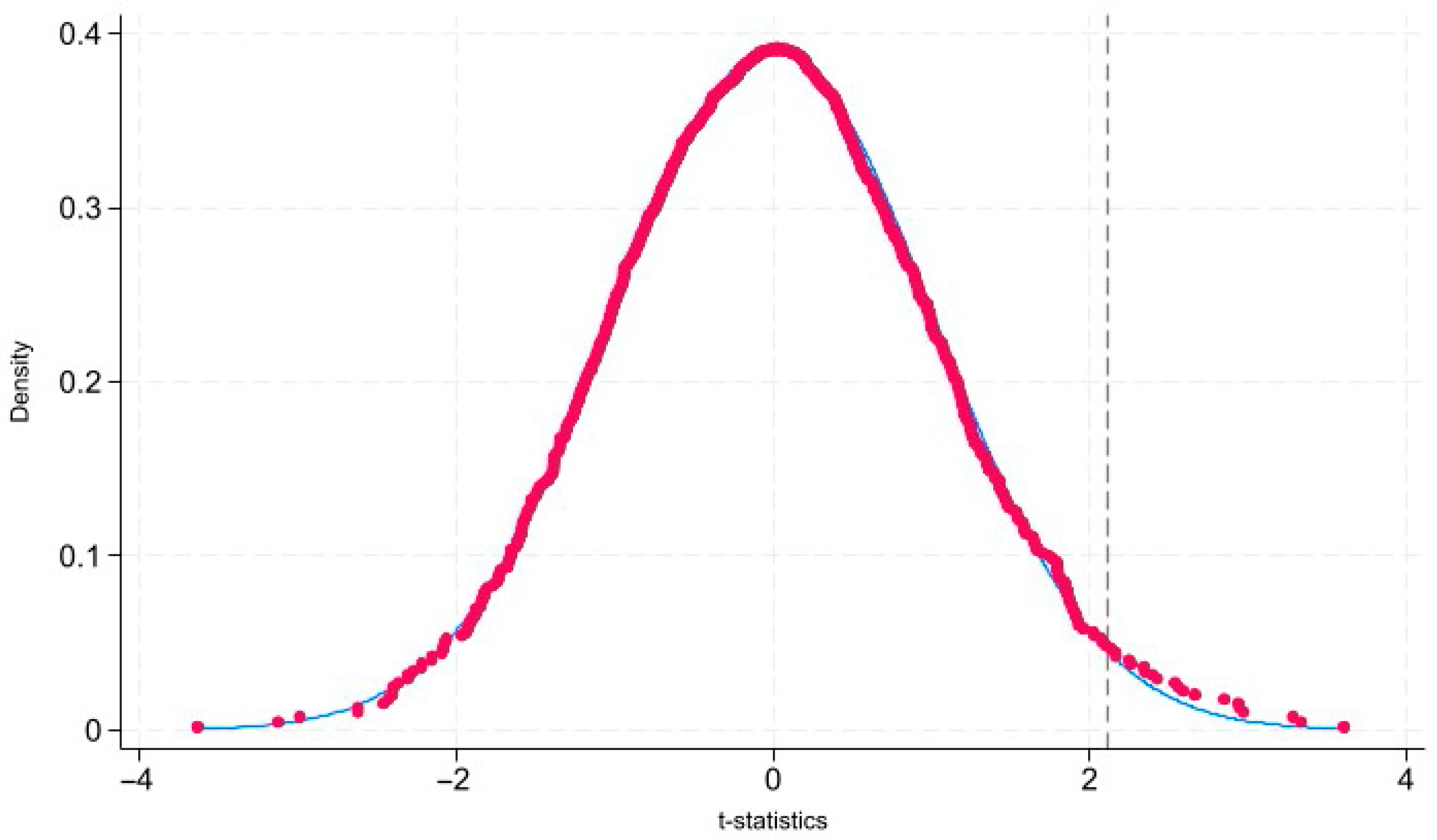
Figure 1. Placebo test t-value plot.
Sustainability 17 07938 g001
Figure 2. Placebo test coefficient value plot.
Sustainability 17 07938 g002
Table 1. Enterprise green governance evaluation system.
Enterprise Green GovernanceEvaluation Criteria
Positive score (M)Whether it has been certified by the ISO 14000 series standards
Whether the “three simultaneous” system of the environmental protection department is strictly implemented
Has an emergency response mechanism for major environmental incidents been established
Whether to participate in environmental protection special actions
Whether it has an environmental protection concept
Whether the environmental governance score in the ESG rating ranks among the top 30 in the sample
Whether the environmental management system rating is at the highest level in the ESG rating
Negative score (N)Are there any incidents such as environmental administrative penalties
Are there any environmental petition incidents
Whether the pollutant emissions meet the standards
Whether the environmental governance score in the ESG rating is at the bottom 30 of the sample
Whether the environmental management system rating is at the lowest level in the ESG rating
Table 2. Key variables and variable symbol.
Variable TypeVariable NameVariable Symbol
Dependent VariableCorporate Green GovernanceCGG
Core Independent VariableCarbon Constraint Policy UncertaintyCCUP
Mechanism VariablesRegional Green Finance DevelopmentGF
Enterprise Financing ConstraintsFC
Enterprise Green InnovationQuality
Moderation VariablesEnvironmental Protection InvestmentEPI
Enterprise ReputationREP
Control VariablesFinancial StabilityQkr
Total AssetsAsset
Enterprise GrowthGrowth
Enterprise AgeAge
Shareholder ConcentrationOcen
Proportion of Independent DirectorsIndep
Market ConcentrationHhi
Regional Economic Development LevelUed
Table 3. Description statistics of main variables.
VariablesNMeanSDMinMedianMax
CGG15,4790.6060.4400.0001.0001.000
CCUP15,4791.6600.7220.1911.6893.829
Qkr15,4792.0992.1020.2711.38912.909
Asset15,47922.2611.27920.14922.04426.502
Growth15,4790.1330.266−0.4440.1011.241
Age15,4793.0000.2812.1973.0453.611
Ocen15,4790.4870.1510.1710.4790.874
Indep15,4790.3790.0550.3330.3640.571
Hhi15,4790.0560.0460.0110.0370.205
Ued15,47911.5860.46010.29611.68012.223
Table 4. Baseline estimation results.
(1)(2)
VariablesCGGCGG
CCUP0.0134 **0.0147 **
(0.0068)(0.0069)
Qkr −0.0061 *
(0.0032)
Asset 0.0433 ***
(0.0122)
Growth 0.0112
(0.0137)
Age 0.1147
(0.1028)
Ocen 0.1695 **
(0.0760)
Indep 0.2332 **
(0.1100)
Hhi −0.5816 **
(0.2448)
Ued −0.0206
(0.0397)
Constant0.5833 ***−0.6157
(0.0117)(0.6019)
Observations15,47915,479
Adjusted R20.26940.2709
Company FEYESYES
Year FEYESYES
Notes: *, **, *** represent the significance levels of 10%, 5% and 1% respectively, and the robust standard error is in the brackets.
Table 5. Robustness checks results.
(1)(2)(3)
Adding Fixed EffectsExcluding Special SamplesChanging the Measurement Method of Dependent Variable
VariablesCGGCGGCGG
CCUP0.0147 **0.0170 **0.2202 **
(0.0069)(0.0075)(0.1081)
Constant−0.6157−0.5402−89.4591 ***
(0.6019)(0.7007)(8.8895)
ControlsYESYESYES
Company FEYESYESYES
Year FEYESYESYES
Region FEYESNONO
Region × Company FEYESNONO
Observations15,47913,42815,479
Adjusted R20.27090.26600.7025
Notes: *, **, *** represent the significance levels of 10%, 5% and 1% respectively, and the robust standard error is in the brackets.
Table 6. Adding the “greenwashing” factor.
(1)(2)
Baseline Estimation ResultsAdding the “Greenwashing” Factor
VariablesCGGCGG
CCUP0.0147 **0.0152 **
(0.0069)(0.0068)
GW 1.3202 ***
(0.0689)
Constant−0.6157−6.2866 ***
(0.6019)(0.6633)
ControlsYESYES
Company FEYESYES
Year FEYESYES
Observations15,47915,475
Adjusted R20.27090.2915
Notes: *, **, *** represent the significance levels of 10%, 5% and 1% respectively, and the robust standard error is in the brackets.
Table 7. Construction of green finance indicators.
Level 1 IndicatorsDescription of the Indicator
Green creditTotal credit for environmental protection projects in the province/total credit for the province
Green investmentInvestment in environmental pollution control/GDP
Green insuranceEnvironmental pollution liability insurance income/total premium income
Green bondsTotal green bond issuance/total of all bonds
Green supportFinancial environmental protection expenditure/fiscal general budget expenditure
Green FundTotal Market Cap of Green Funds/Total Market Cap of All Funds
Green rightsTotal amount of carbon trading, energy use rights trading, emission rights trading/equity market transaction
Table 8. Mechanism examination results.
(1)(2)(3)
Regional Green FinanceEnterprise Financing ConstraintsEnterprise Green Innovation
VariablesGFFCQuality
CCUP0.0025 ***0.0043 **0.0107 ***
(0.0005)(0.0020)(0.0031)
Constant0.6715 ***5.8609 ***−0.1414
(0.0444)(0.1920)(0.2964)
ControlsYESYESYES
Company FEYESYESYES
Year FEYESYESYES
Observations15,47915,47915,479
Adjusted R20.94130.84370.3801
Notes: *, **, *** represent the significance levels of 10%, 5% and 1% respectively, and the robust standard error is in the brackets.
Table 9. Moderation analysis results.
(1)(2)
VariablesCGGCGG
CCUP0.0173 **0.0522 ***
(0.0071)(0.0109)
EPI0.0100 *
(0.0053)
CCUP *EPI−0.0065 *
(0.0035)
REP 0.0134 ***
(0.0033)
CCUP *REP −0.0075 ***
(0.0016)
Constant−0.6029−0.5881
(0.6015)(0.6103)
ControlsYESYES
Company FEYESYES
Year FEYESYES
Observations15,47915,479
Adjusted R20.27100.2720
Notes: *, **, *** represent the significance levels of 10%, 5% and 1% respectively, and the robust standard error is in the brackets.
Table 10. Comprehensive measurement system for enterprise reputation.
StakeholdersSpecific Indicators
Consumers and SocietyTotal assets of the enterprise
Total revenue of the enterprise
Enterprise net profit
The ranking of value within the industry
CreditorsAsset-liability ratio
Current ratio
Long-term debt ratio
ShareholdersEarnings per share
Dividend per share
Whether it has been audited by the Big Four international accounting firms
EnterprisesSustainable growth rate
Proportion of independent directors
Table 11. Heterogeneity test results (I).
(1)(2)(3)(4)
High Quality of Information DisclosureLow Quality of Information DisclosureExecutives Have Environmental BackgroundsNo Executives Have Environmental Backgrounds
VariablesCGGCGGCGGCGG
CCUP0.00600.0211 **−0.00250.0203 **
(0.0104)(0.0107)(0.0133)(0.0082)
Constant−3.1044 ***0.5676−2.0807 *−0.0157
(1.0486)(0.9045)(1.1534)(0.7695)
ControlsYESYESYESYES
Company FEYESYESYESYES
Year FEYESYESYESYES
Observations64578384453810,716
Adjusted R20.29360.25520.23800.2964
Notes: *, **, *** represent the significance levels of 10%, 5% and 1% respectively, and the robust standard error is in the brackets.
Table 12. Heterogeneity test results (II).
(1)(2)(3)(4)
Pilot Cities for Non-Carbon Emission Trading RightsPilot Cities for Carbon Emission Trading RightsNon-Heavily Polluting EnterprisesHeavily Polluting Enterprises
VariablesCGGCGGCGGCGG
CCUP−0.00270.0201 *0.00790.0291 **
(0.0102)(0.0111)(0.0081)(0.0131)
Constant−0.4041−0.9859−1.2549 *1.5314
(0.7765)(0.9851)(0.7241)(1.1234)
ControlsYESYESYESYES
Company FEYESYESYESYES
Year FEYESYESYESYES
Observations10,035544411,2954180
Adjusted R20.26010.29340.28490.2195
Notes: *, **, *** represent the significance levels of 10%, 5% and 1% respectively, and the robust standard error is in the brackets.
Disclaimer/Publisher’s Note: The statements, opinions and data contained in all publications are solely those of the individual author(s) and contributor(s) and not of MDPI and/or the editor(s). MDPI and/or the editor(s) disclaim responsibility for any injury to people or property resulting from any ideas, methods, instructions or products referred to in the content.