1. Introduction
As the world seeks sustainable and low-carbon energy alternatives, nuclear power has reemerged as a key decision in the global energy mix [
1]. Its ability to provide large-scale, consistent electricity with negligible greenhouse gas emissions makes it a vital part of the transition toward energy security and climate objectives [
2,
3,
4]. It offers significant benefits and has substantial influences on the environment, economy, and social aspects [
5,
6,
7,
8]. Though the development of nuclear energy depends seriously on public insights, acceptance, and willingness to pay (WTP), which differ broadly across countries due to societal, political, cultural, and environmental factors [
9]. Globally, public acceptance of nuclear energy is influenced by concerns about safety, radioactive waste management, ecological impact [
10], and past accidents like Chernobyl and Fukushima [
11]. Even with advances in device technology and stricter safety actions, public trust remains a key factor in nuclear strategy and investment decisions [
12]. The WTP for nuclear-generated electricity reflects public approval and perceived trade-offs between cost, risk, and environmental benefits [
13,
14].
Furthermore, increasing global worry about climate change, energy security, and rising energy demand has motivated more countries to pursue nuclear energy projects. According to the World Nuclear Association [
5], nearly 31 countries operate nuclear power plants, while another 11 countries, including Saudi Arabia, are developing new programs. However, despite its potential benefits and 70 years of technological advancement, nuclear energy remains controversial due to continuing challenges such as waste management, high investment costs, and public acceptance [
15]. In 2022, nuclear power accounted for about 5% of the world’s total primary energy supply [
16].
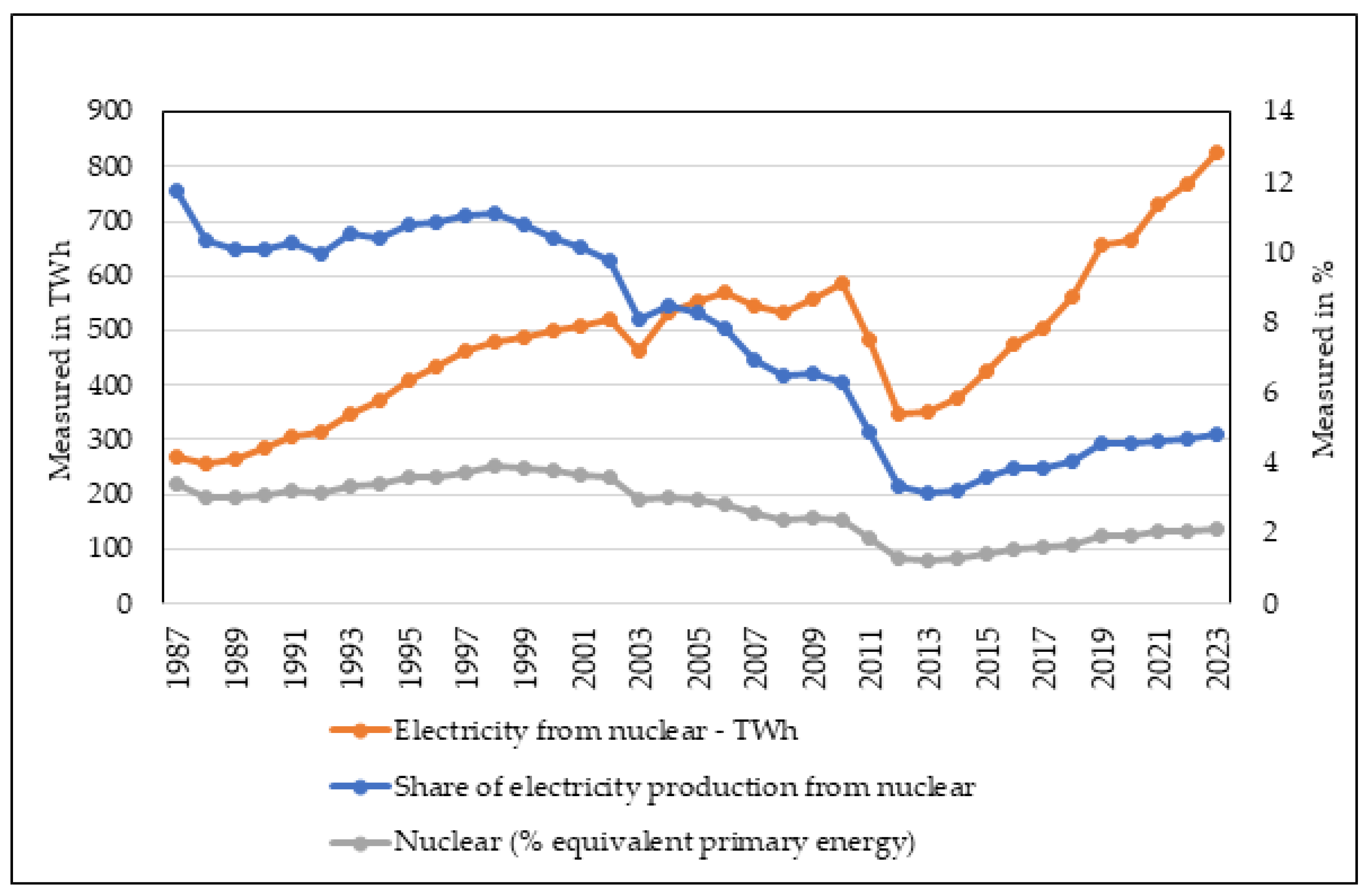
Figure 1 shows the nuclear energy situation in Asia. The figure reveals that the nuclear energy production in Asia improved steadily until 2010 but declined sharply after the 2011 Fukushima disaster, which impacted output and the share of nuclear energy in the energy mix. While production has improved and touched innovative highs by 2023, nuclear’s relative share in electricity generation and primary energy remains lower than before. This proposes that while nuclear energy is of increasing importance, the region’s energy systems are becoming more expanded, with strong growth in alternative sources. The implication is that policymakers may view nuclear as part of a broader low-carbon plan, but its role will probably be balanced alongside renewables and other energy technologies in Asia’s energy transition.
Public acceptance is a crucial factor for the successful growth and establishment of nuclear energy projects. Since the first nuclear power station was established in Obninsk, Soviet Union, in 1954, nuclear energy has expanded to provide about 9% of the world’s electricity from approximately 440 reactors, contributing nearly 25% of the world’s low-carbon electricity [
5]. Despite this development, public perception continues to impact the destiny of nuclear programs meaningfully. When public acceptance is skewed with national energy policies, countries may face serious setbacks, as exemplified by Germany’s premature decommissioning of its nuclear facilities in 2023 due to sustained public opposition [
17]. In the Arab world, the United Arab Emirates is the only country with operational nuclear power plants, while Egypt is constructing four proposed plants to be active by 2031.
Saudi Arabia, which currently generates nearly all of its electricity from fossil fuels, primarily oil and natural gas, is pursuing nuclear energy as part of its strategic effort to diversify its energy mix and reduce carbon emissions. In 2017, King Abdullah City for Atomic and Renewable Energy (KA-CARE) proposed the development of two nuclear power plants with a total generating capacity of 2.9 GWe by 2032 [
18]. This nuclear ambition marks a significant shift for an oil-rich economy and represents a key component of the Kingdom’s long-term energy transition. However, little is known about how the Saudi public perceives nuclear energy or what factors influence their willingness to support and pay for such projects. Without strong public understanding and support, scientific and technological initiatives such as nuclear energy development are unlikely to succeed.
Despite Saudi Arabia’s strategic plans to diversify its energy sources and reduce reliance on fossil fuels, public acceptance of nuclear energy remains uncertain and understudied. Nuclear energy, while offering long-term energy security and environmental benefits, also raises concerns about safety, waste disposal, and public health. In Saudi Arabia, limited public awareness and engagement in nuclear discourse pose a significant challenge to the implementation of nuclear energy projects. Moreover, there is a lack of empirical data on citizens’ WTP for nuclear energy, which is crucial for understanding public support and shaping sustainable energy policies. Without a clear understanding of public attitudes and acceptance, nuclear energy programs may face resistance, delays, or inefficiencies in implementation.
The justification for this study lies in the strategic role of nuclear energy within Saudi Arabia’s Vision 2030, which aims to diversify energy sources and reduce dependence on fossil fuels. As nuclear power emerges as a viable low-carbon option, understanding public acceptance and WTP become critical for its successful implementation.
Despite the growing importance of nuclear energy in the region, there is a notable lack of empirical research specifically focused on how citizens in the Gulf countries, particularly Saudi Arabia, perceive nuclear energy. This gap is particularly concerning given the regions’ unique socio-economic and cultural contexts, which can significantly influence public attitudes toward energy sources.
Current literature on WTP for nuclear energy is limited, especially in the Gulf region, where energy transitions are increasingly necessary. Understanding the public’s concerns, ranging from safety and environmental impact to economic implications, is essential for shaping energy policy, designing effective public engagement strategies, and ensuring the social legitimacy of nuclear initiatives.
This study aims to fill this critical research gap by providing empirical insights into Saudi citizens’ perceptions of nuclear energy, their willingness to financially support its development, and the socio-economic and demographic factors that influence these attitudes. By identifying key factors such as perceived risks, environmental concerns, energy awareness, trust in authorities, and knowledge of nuclear technology, this research offers valuable insights for policymakers as they navigate the complexities of energy transition in the Kingdom.
The objectives of this study are summarized through the following hypotheses:
H1. Saudi citizens show a moderate to high level of public acceptance of nuclear energy as a potential source of electricity within the national energy strategy.
H2. The WTP for nuclear energy development is significantly influenced by socio-economic and demographic factors such as income, education level, and age.
H3. Public opinion toward nuclear energy is significantly shaped by perceived risks, environmental concerns, energy awareness, trust in government institutions, and knowledge of nuclear technology.
By addressing these hypotheses, this study enriches the existing literature on the socio-economic dimensions of nuclear energy and highlights the importance of aligning technological advancement with public preferences, especially among global clean energy transitions. The findings will inform policymakers about the critical role of public engagement and economic willingness in ensuring the successful and socially sustainable adoption of nuclear energy.
Our article is organized as follows:
Section 2 reviews the related literature,
Section 3 outlines the materials and methods adopted,
Section 4 presents the results,
Section 5 displays the discussions, and
Section 6 provides conclusions with policy implications, recommendations, and future research.
2. Literature Review
Since the 1960s, scholars have examined public acceptance issues related to emerging technologies and risky projects, particularly in the context of nuclear energy [
19,
20]. By the 1970s, studies and public opinion polls began measuring attitudes toward nuclear energy, revealing that residents in industrialized countries generally favored it as an alternative to fossil fuels [
21,
22]. However, events such as the environmental movement and significant nuclear power plant accidents (i.e., Three Mile Island in 1979 and Chernobyl in 1986) resulted in a decline in public trust, adversely affecting the development of nuclear energy projects in those countries during the 1970s and 1980s [
23]. In the mid-1990s, nuclear energy regained global prominence, and at the same time, research on public acceptance of nuclear energy has also entered an active phase [
24]. In 2011, after Fukushima nuclear accident, public support for nuclear energy declined in 40 countries [
25]. However, support for nuclear energy began to increase in 2020s [
5].
In this section, we review studies that examined public acceptance and willingness to pay for nuclear energy in countries that are considering this energy source in the future. Most studies available in the literature have traditionally relied on presenting statistics describing the proportion of a particular belief within the sample studied. However, this approach ignores what determines this belief or acceptance. To address this limitation, some studies employed various methods, including structural equation modeling, regression analysis, and network models.
Alzahrani et al. [
26] analyzed the public attitudes and acceptance of nuclear energy among Saudi Arabian citizens. Using a convenience sampling approach, the authors collected data from 1404 participants and employed structural equation modeling to explore the relationships among various factors influencing acceptance. To measure respondents’ acceptance of nuclear power generation, they used four specific statements on a five-point scale, including “I am in favor of nuclear power generation.”, “I support Saudi’s development in nuclear power,” “The advantages of nuclear power outweigh the disadvantages.” and “I support the Saud’s investment in research and development of nuclear energy through vision 2030.” Their results indicated a moderate mean acceptance level of 3.88, and a high correlation between perceived benefits (0.63), perceived risks (−0.43), and proximity (−0.43) with acceptance of nuclear power plants. Furthermore, the study found statistically significant associations between demographic variables, such as gender, age, education, and region, and acceptance of nuclear power. While this study provides a crucial foundation for the Saudi context, its use of structural equation modeling focuses on testing predefined relationships and, as the only existing study, leaves room for other methodological approaches that might uncover different key factors.
Smolinski et al. [
27] examined societal attitudes towards various energy sources, including nuclear energy and renewables in Poland. Using a network modeling approach and randomly collected sample of 338 Polish individuals, they found that political ideology (left or right wing) is the central factor in shaping public acceptance. In addition, they have found that environmental attitudes, risk perception, safety concerns, and economic variables play substantial roles. Bohdanowicz et al. [
28] investigated the relationship between support for the development of nuclear power and pro-environmental and pro-climate attitudes in Germany (n = 933) and Poland (n = 878). To measure pro-environmental attitudes, they used the New Ecological Paradigm scale, which comprises fifteen statements rated on a five-point scale. Using a logistic regression model, they found that support for nuclear power is higher in Poland (44%) compared to Germany (22%). They also found that support for nuclear power relates negatively to environmental values, but it relates positively to the degree of public knowledge, both about nuclear energy and the causes of climate change. The divergence in these primary findings underscores how both national context and methodological choices can significantly influence study outcomes. This highlights a gap in understanding what factors are most salient in the unique socio-political landscape of Saudi Arabia, which our study’s regression analysis helps to clarify.
In Turkey, Topaloglu et al. [
29] explored the relationship between environmental literacy and public acceptance of nuclear power in different cities. They collected the data from 524 participants. They found that about 35% of the participants support nuclear power, and environmental literacy is negatively correlated with the acceptance of nuclear power (i.e., individuals with high environmental anxiety, consciousness, and awareness do not support the installation of nuclear power plants). Ogul and Karaagac [
30] also evaluated public acceptance of nuclear power plants by randomly interviewing 838 people from eight cities in Turkey. To measure support of nuclear energy, the authors used a three-point Likert scale statement “Do you support NPPs in Turkey?” They found that about 42.3% of the participants were in favor of building nuclear power plants.
In Southeast Asia, Sugiawwan and Managi [
31] examined how a multilevel governance system affects public acceptance of nuclear power plants in Indonesia. Using a random sample of more than 5000 respondents and a multinominal logit regression model (i.e., the dependent variable is whether the respondent is in favor, against, or unsure about supporting nuclear power plants), they found that nuclear energy authorities and local governments, instead of central government, are the key players that positively influence the acceptance of nuclear power plants. Ho et al. [
32] used a focus group discussion method to explore public perceptions of benefits, risks, trust, and acceptance of nuclear energy in Thailand and Vietnam. Using a sample of 54 participants (six groups), they proved that the participants indicated that their respective countries were not ready for nuclear energy. Finally, Odonkor and Adams [
33] assessed public knowledge, perception and acceptance of nuclear energy in Ghana using a random sample of more than 1000 respondents. They found that 51% of the respondents support Ghana’s nuclear development plan. These studies primarily measure general support, leaving a critical question unanswered: how does this environmental concern hold up when weighed against tangible economic factors?
As noted in the existing literature, the only study that specifically detected public acceptance of nuclear energy in Saudi Arabia is Alzahrani et al. [
26]. However, our study distinguishes itself in several critical ways. First, our research incorporates the concept of WTP, offering a better understanding of public support for nuclear energy. WTP allows us to quantify the financial value individuals place on the use of nuclear energy, offering a richer perspective on their attitudes. This economic dimension is crucial for understanding how much the public is willing to invest in nuclear energy initiatives. In addition, we adopt a different methodological approach to investigate the key determinants influencing public acceptance and WTP to gain deeper insights into the social, economic, and perceptual factors shaping attitudes toward nuclear energy in Saudi Arabia, which uncover potentially complex interactions that structural equation modeling might not fully reveal. Finally, the study integrates a SWOT analysis to provide a broader strategic perspective.
3. Materials and Methods
3.1. Sampling Procedure
The study employed a descriptive, cross-sectional design using an online self-administered questionnaire to assess the level of knowledge, public perception, and support for nuclear energy development in Saudi Arabia. Data collection took place between October and November 2024 via a structured Google Forms questionnaire, which required approximately 10 min to complete.
Given the exploratory nature of the study, a non-probability convenience sampling method was utilized, consistent with practical guidelines for determining sample sizes in social science research [
34]. The sample size was determined based on rule-of-thumb recommendations (i.e., more than 200 responses) for similar survey-based studies, ensuring adequate representation for preliminary analysis while acknowledging limitations in generalizability.
Participants were recruited through a website link circulated using social network platforms (primarily WhatsApp). Undergraduate students in King Faisal University were also asked to pass the survey website links to their parents. The inclusion criteria for participant’s eligibility include those being more than 18 years old and being a resident in Saudi Arabia. The participants were requested to take part in the survey by completing the questionnaire without any time restrictions.
It is important to note that the use of non-probability sampling in this study may introduce several biases that can affect the validity of the findings. Specifically, the lack of random selection means that certain demographics, such as those actively engaged on social media, may be overrepresented, while other groups may be underrepresented. This self-selection process can lead to a skewed sample, as participants who choose to engage may hold stronger opinions or interests in the topic. Additionally, non-response bias may arise if individuals who do not participate differ significantly from those who do, further limiting the diversity of perspectives captured in the study. These factors collectively highlight the need for caution in generalizing the results to the broader population, as the findings may not fully reflect the views of all segments of society.
3.2. Survey Design and Content
The structured questionnaire was developed based on validated instruments from prior research, primarily adapting scales from Odonkor and Adams [
33] to align with the Saudi context. To ensure clarity and relevance, the survey was pretested with a sample of 30 individuals, resulting in minor revisions to few questions. To avoid missing data issues, the online survey was configured to require responses to all questions before submission. The final instrument consisted of 32 questions organized into five sections. The first section collected demographic and socioeconomic data, including gender, nationality, age, marital status, number of children, education, employment status, and income. The second section assessed participants’ knowledge of nuclear energy and energy sector in Saudi Arabia. The third and fourth sections measured perceptions of risks (e.g., environmental, health, and safety concerns) and benefits (e.g., economic advantages) of nuclear energy. The fifth section evaluated acceptance and willingness to pay for nuclear energy. Various types of questions were used in the survey including five-point and three-point Likert scale statements, open-ended questions, and yes/no questions.
3.3. Willingness to Pay Measurement
The assessment of willingness to pay for nuclear energy development was operationalized through a simple contingent valuation approach. Respondents who expressed support for nuclear energy were asked to specify the maximum percentage increase in their monthly electricity bill they would be willing to pay to support nuclear power projects in Saudi Arabia. This direct elicitation method provided a quantifiable measure of economic commitment, ranging from 0% to 100% of the respondent’s monthly electricity bill. The WTP question was conditional on prior affirmative responses regarding nuclear energy support, ensuring that only conceptually consistent responses were included in the analysis.
3.4. Statistical Analysis
Empathetic descriptive statistics, including frequencies and percentages, were used to summarize categorical variables (e.g., gender, education level). Associations between key variables were assessed using Pearson’s chi-square test for bivariate analysis. To identify determinants influencing public acceptance of nuclear energy and WTP, binary logistic regression and multiple linear regression were employed. In addition, a SWOT analysis was conducted to qualitatively assess internal and external factors influencing the adoption of nuclear energy in Saudi Arabia. The findings from the SWOT analysis were further synthesized using a TOWS matrix to inform potential strategies for enhancing public support and policy design.
3.5. Ethical Consideration
This study adhered to standard ethical guidelines for research including human subjects. Prior to participation, respondents were informed on the cover page that their involvement was voluntary, and they could withdraw at any time without consequence. All data were collected anonymously, with no personally identifiable information recorded, to ensure confidentiality. Ethical approval was granted by the Research Ethics Committee at King Faisal University (Approval No: KFU-REC-2023-AUG-ETHICS1018).
4. Results
4.1. Participants’ Characteristics
A total of 403 eligible participants completed the survey. The demographic and sociodemographic data of respondents are shown in
Table 1. Most of the respondents were Saudi (93.8%) and men (56.3%). The age distribution was relatively balanced, with the largest group aged 25–34 years old (24.3%), followed by 45–54 years old (22.8%). Most participants were married (65.5%), and 61.8% had children, primarily 1–4 children (33.5% combined). Education levels varied, with 52.6% holding a bachelor’s degree, while 53.9% were employed, though only 12.4% of employed respondents worked in the energy sector. Income distribution showed that 34.5% earned less than 5000 SAR per month (about US
$1333), with smaller proportions in higher income brackets.
4.2. Participants’ Knowledge of Energy Resources and Nuclear Power
Respondents were asked about their knowledge of energy resources and electricity generation in Saudi Arabia (
Table 2). Slightly over half of the respondents (51.6%) reported average knowledge, while 18.4% claimed excellent knowledge, and 30% had low knowledge of how electricity is generated. However, when asked to identify the primary energy source for electricity generation, 65% of respondents incorrectly selected oil, whereas only 12.7% correctly chose natural gas. A notable proportion of respondents (18.6%) believed that renewable energy was the main source for electricity generation, possibly reflecting growing public awareness of Saudi Arabia’s solar and wind power initiatives under Vision 2030.
Table 3 provides a summary of self-reported versus actual knowledge.
Regarding nuclear energy, 45.4% of respondents rated their knowledge as excellent, with an equal proportion describing it as average, and only 9.2% admitting low familiarity. The primary sources of nuclear energy information were social media (27.5%) and personal reading (24.6%), followed by conventional media (20.8%) and formal education (17.6%). A combined 63.7% of respondents agreed or strongly agreed that nuclear power reduces emissions, though 27.5% remained neutral, indicating some uncertainty. When asked about the availability of information on Saudi Arabia’s nuclear plans, a combined 58.3% of respondents agreed or strongly agreed that sufficient resources existed, while 30.5% were neutral and 11.2% disagreed.
4.3. Participants’ Perception of Nuclear Energy Risks and Benefits
The results in
Table 4 revealed substantial public concerns about nuclear energy risks alongside strong recognition of its potential benefits. Regarding risks, most respondents expressed apprehension about environmental impacts (65.7% agree/strongly agree), particularly nuclear waste, while 55.6% voiced safety and security concerns. Notably, participants showed greater uncertainty about nuclear energy’s non-renewable nature, with 45.6% expressing concern, 19.4% being unconcerned, and 35.0% neutral, which is the highest level of neutrality across all items, potentially reflecting limited public clarity on nuclear sustainability. Furthermore, when asked to select the most important risks associated with nuclear power plant development (multiple responses allowed), environmental risks (60.8%) and health risks (55.3%) were most frequently cited, followed by safety (45.9%), economic (38.0%), and social risks (20.6%).
In contrast, benefits received stronger endorsement. Job creation was the most recognized advantage (79.2% agreed/strongly agreed), followed by anticipated household electricity bill reductions (62.0%) and cost competitiveness compared to other energy sources (52.6%, though 31.8% were neutral).
4.4. Public Acceptance and WTP for Nuclear Energy
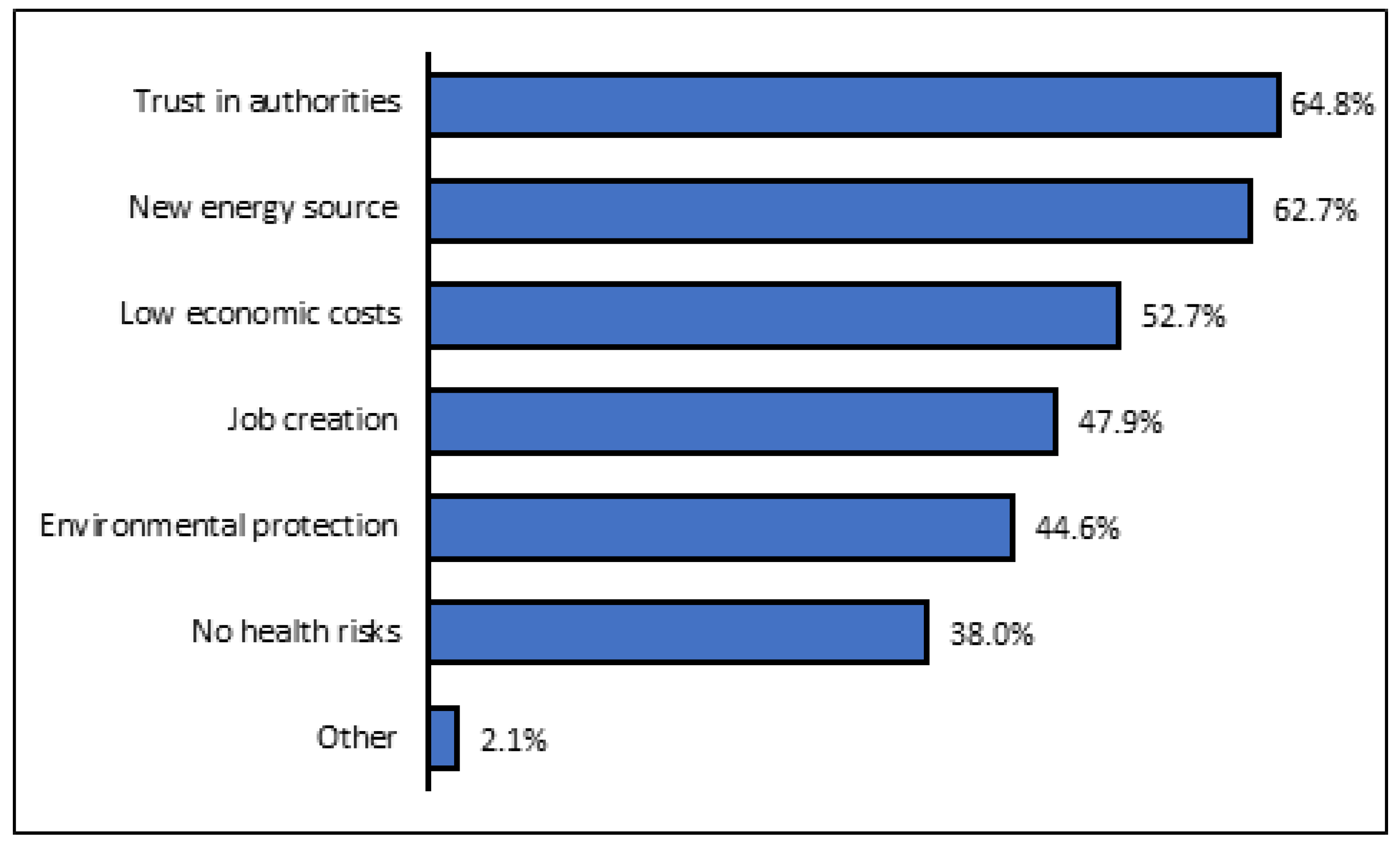
Results show that most of the participants (n = 332, 82.4%) supported the use of nuclear energy when they were presented with the following yes/no statement: “I support the use of electricity generated from nuclear energy in Saudi Arabia.” Based on their answer, the participants were then asked a check-all-that-apply question about the reasons that make them support or oppose the use of nuclear energy in generating electricity.
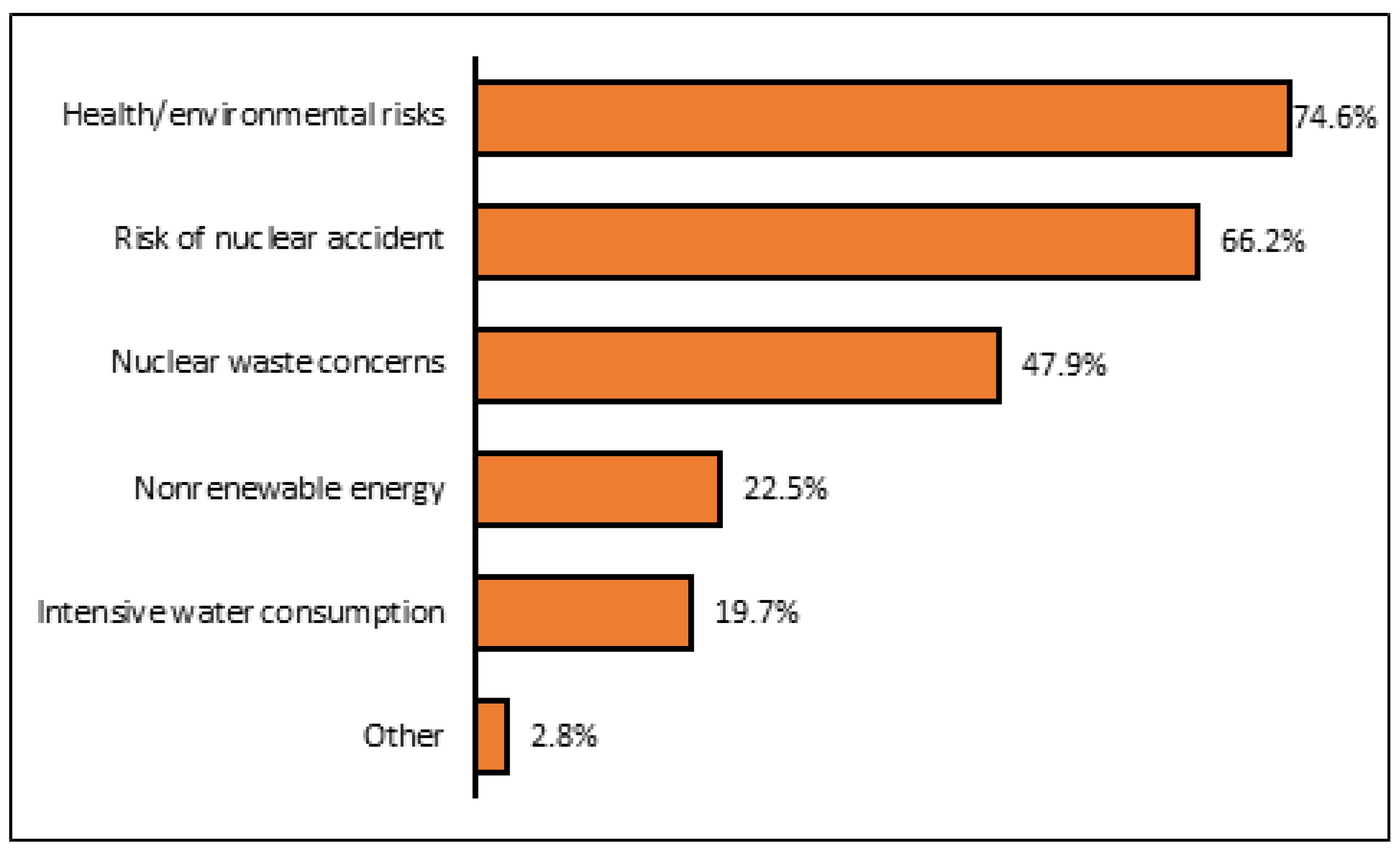
Figure 2 and
Figure 3 summarize the supporting and opposing rationales. Among supporters, the most frequently cited reasons were trust in government oversight (64.8%) and the addition of a new energy source (62.7%). Just over half (52.7%) endorsed nuclear power due to its perceived low economic costs, while 47.9% highlighted job creation as a benefit. Fewer respondents associated nuclear energy with environmental protection (44.6%) or absence of health risks (38%).
In contrast, opponents (n = 71, 17.6%) primarily cited health and environmental risks (74.6%) as their reason for disapproval. Two-thirds of the opponents expressed concerns about nuclear accidents, while nuclear waste disposal concerned 47.9%. A smaller segment raised objections related to water-intensive cooling processes (19.7%), while another 22.5% opposed nuclear energy because it is a nonrenewable resource.
We also quantified supporters’ WTP for the development of nuclear power projects using an open-ended question (Q: “What % of your monthly electricity bill would you pay to support nuclear power project development?). Mean WTP among supporters was 38.2% (SD = 22.1) of their monthly electricity bill, with 60% willing to pay greater than or equal to 30%.
Finally, we examine the determinants of public acceptance and WTP for nuclear power in Saudi Arabia using regression analysis.
Table 5 presents the results of two models: (1) a logistic regression estimating the factors influencing public acceptance (dependent variable: 1 = support, 0 = does not support), and (2) an ordinary least squares (OLS) regression analyzing the determinants of WTP, measured as the percentage increase in monthly electricity bill respondents were willing to pay to support the development of nuclear power projects in Saudi Arabia. For the logistic regression (Model 1), we report average marginal effects to facilitate interpretation.
The results indicate that age is positively associated with support for nuclear power, with each additional year of age increasing the probability of supporting nuclear power by 0.4 percentage points (p < 0.1). Marital status also plays a significant role: married respondents are 16.1 percentage points less likely to support nuclear power compared to single individuals (p < 0.05), while divorced and widowed individuals show even stronger opposition (−31.6 and −25.4, respectively; p < 0.01 and p < 0.1). Employment status further influences acceptance, with employed individuals 9.4 percentage points more likely to support nuclear power than their unemployed, self-employed, or retired counterparts (p < 0.05).
Knowledge about nuclear energy has a substantial effect: respondents who rated their understanding of nuclear energy’s role in electricity generation as “excellent” (coded as 1 in a binary variable, where 0 = “average” or “low”) were 26.1 percentage points more likely to support nuclear power (p < 0.1). Conversely, environmental concerns reduce acceptance; respondents who “agreed” or “strongly agreed” (coded as 1, vs. 0 = neutral/disagree/strongly disagree) that nuclear power poses risks to the environment were 9 percentage points less likely to support it (p < 0.1).
For WTP, marital status remains significant, with married individuals willing to pay 9.9 percentage points less than single respondents (p < 0.1). Students exhibit a significantly lower WTP, with an 11.5 percentage points reduction compared to non-students (p < 0.05). Knowledge again plays a positive role: respondents with greater nuclear energy knowledge are willing to pay 13% percentage points more (p < 0.05). Interestingly, concerns about non-renewable energy sources are associated with 11.8 percentage points higher WTP (p < 0.01).
4.5. SWOT Analysis of the Use of Nuclear Energy in Electricity Generation
SWOT analysis is a fundamental tool in strategic planning. It provides a structured and methodical approach to identifying and prioritizing key internal (strengths and weaknesses) and external (opportunities and threats) factors that influence a particular subject or initiative. The goal is to gain a clearer understanding of how to translate these insights into actionable goals and strategies: enhancing strengths, overcoming weaknesses, capitalizing on opportunities, and confronting threats.
The number of strengths reached 11 points (50%) compared to 11 recorded weaknesses, which means that despite the numerous advantages of using nuclear energy for electricity generation—most notably, from the respondents’ perspective, its role in reducing carbon emissions, lowering costs, improving efficiency, and promoting sustainability—significant efforts are still required to address its shortcomings. These include, in particular, the safe disposal of nuclear waste and the substantial costs associated with plant construction and maintenance.
The number of identified opportunities reached 15 points (63%) against 9 recorded threats, which reflects the existence of an encouraging external environment and a future that holds considerable positive potential for the use of nuclear energy in electricity generation, provided that internal challenges are addressed. This potential can be realized through the collective efforts of relevant authorities, societal engagement, and sustained investment, all aimed at supporting environmental sustainability and achieving the objectives of Vision 2030. According to respondents, the most prominent opportunities include job creation, enhanced well-being, and improved living standards. In contrast, the most significant threats were identified as environmental hazards, health risks, operational challenges, and the possibility of nuclear leakage.
The analysis of the internal and external environments (
Table 6 and
Table 7) reveals the presence of specific weaknesses and threats that require the development of targeted strategies, plans, and programs. These efforts should focus on the key issues identified in the SWOT analysis and serve as the foundation for constructing the TOWS matrix (
Table 8).
Despite the clear advantages of nuclear energy, the successful implementation of its use depends largely on the enhancement of safety systems to mitigate environmental and health risks; the allocation of adequate resources, including the training of skilled labor and the improvement of supporting infrastructure; increasing public awareness to dispel misconceptions and build societal trust; investment in advanced technologies to ensure the development of safer and more efficient systems; and international cooperation to facilitate the exchange of expertise and align practices with global standards.
5. Discussion
This study examined public acceptance and WTP for nuclear energy in Saudi Arabia, offering new insights into a relatively underexplored context and providing crucial insights as the nation pursues its Vision 2030 energy diversification goals. The findings reveal a landscape of strong, albeit complex, public support for nuclear initiatives. A key finding is the remarkably high level of public acceptance (82.4%), which is substantially greater than that reported in similar studies in other countries considering nuclear expansion, such as Turkey (35–42.3%), Germany (22%), Poland (44%), and Ghana (51%) [
28,
29,
30,
33]. This strong endorsement appears to be anchored in a high degree of trust in government oversight (64.8%) and a recognition of the need for new energy sources (62.7%), confirming our first hypothesis (H1) that Saudi citizens show high acceptance. This suggests that public support is strongly linked to the national strategic narrative of economic development and modernization embedded within Vision 2030.
To address potential biases in the sample data regarding support for nuclear energy, we employed a poststratification weighting method that incorporated multiple demographic variables: gender, marital status, education, and age. The final analysis yielded a weighted support rate of approximately 75.2%, indicating a significant level of endorsement for nuclear energy among the participants.
A useful comparison is the UAE, where nuclear plants (e.g., Barakah) are already operational and public acceptance has been relatively high (e.g., 83% of UAE residents supported nuclear energy, and 90% believed Barakah was constructed to the highest safety and quality standards) [
35]. Unlike Saudi Arabia, where acceptance is driven largely by trust in government and the vision of energy diversification, the UAE case illustrates how familiarity with an operational plant reduces perceived risk and normalizes nuclear power as part of the energy mix. This contrast highlights how Saudi acceptance may further evolve once domestic nuclear facilities become visible and operational.
However, this support is juxtaposed with significant gaps between self-assessed energy knowledge and actual understanding of Saudi Arabia’s energy infrastructure. Although most respondents reported average or high knowledge levels, many misidentified oil as the primary electricity source and underestimated the role of natural gas. Similarly, high rates of neutral responses to technical questions (e.g., on renewability or safety) indicate uncertainty and possible misconceptions. These findings support previous research [
10,
32] that highlights the influence of information quality and source credibility on public perception. The reliance on informal sources—especially social media—likely contributes to this disconnect and highlights the need for structured public education and state-led energy literacy initiatives. The study also found a distinct contrast between perceived risks and perceived benefits of nuclear energy. Environmental and safety concerns (e.g., nuclear waste, accidents) were cited as primary reasons for opposition, mirroring global trends observed after events like Fukushima [
25]. In contrast, job creation and lower electricity bills received strong endorsement, with relatively low neutrality. This suggests that while the public recognizes tangible socio-economic benefits, uncertainty remains regarding nuclear technology’s technical safety and sustainability. Addressing this uncertainty through transparent risk communication and public engagement will be essential for long-term acceptance. The determinants of acceptance and WTP provide further nuance. In partial support of our second hypothesis (H2), demographic factors such as age and marital status were significant predictors. The finding that married individuals are less supportive and have a lower WTP may reflect a greater sensitivity to household risks and long-term security. They are likely to weigh potential risks more heavily because of their family responsibilities, particularly concerns over children’s safety and well-being. For example, a large portion of the Saudi economy is dependent on oil and gas sector (i.e., 40% of the country’s GDP). Therefore, economic considerations, such as the financial implications of nuclear energy development on household budgets or the perceived risks of job displacement in traditional energy sectors, may further contribute to their hesitance. This interpretation is consistent with prior studies in risk perception, which suggest that individuals with stronger family obligations are generally more risk-averse and less willing to accept technologies perceived as hazardous. However, unlike the findings of Alzahrani et al. [
26], gender and education level were not significant predictors in our models, suggesting that attitudes toward nuclear energy in Saudi Arabia may transcend traditional socioeconomic divides. The third hypothesis (H3), which posited that public opinion is shaped by perceived risks, concerns, and knowledge, was strongly supported. Knowledge of nuclear energy was a powerful positive predictor for both acceptance and WTP. Conversely, concern for environmental impacts was a significant negative predictor of acceptance, aligning with findings from other contexts that show environmental values can be at odds with support for nuclear power [
28]. These findings can be interpreted through Slovic’s risk perception theory, which emphasizes that technologies such as nuclear power are judged not only by technical risk probabilities but also by perceptions of dread, catastrophic potential, and lack of personal control. In our case, respondents’ lower acceptance when environmentally concerned reflects these affective risk dimensions, while their willingness to support nuclear power under government oversight illustrates the role of institutional trust in mitigating perceived uncontrollability. An intriguing and counterintuitive finding was that concern about non-renewable energy sources was associated with a higher WTP. This suggests that citizens who are worried about the finitude of fossil fuels may view nuclear energy as a necessary long-term investment and are therefore more willing to contribute financially to its development, despite its own classification as a non-renewable resource. Several behavioral explanations could account for this seemingly contradictory stance, all pointing to a pragmatic prioritization of immediate threats over long-term concerns. The risks associated with fossil fuel dependency are highly salient and framed as a potential loss of national energy security. From a behavioral economics perspective, the powerful motivation to avert this immediate loss makes individuals more willing to pay for a viable alternative, effectively treating the higher cost as an insurance premium against a crisis. In this calculated trade-off, nuclear power is viewed as a necessary substitute to mitigate the larger, more pressing risk of fossil fuel depletion. Therefore, this finding likely does not indicate a lack of concern for sustainability, but rather a prioritization of energy security.
Overall, the results from the regression analysis provide a good overview of the determinants of acceptance and WTP for nuclear power. However, it is important to note that the R-squared values for the models are low, indicating that the independent variables included in the analysis explain only a small fraction of the variance in public acceptance and WTP for nuclear power. This suggests that there are likely other influential factors that were not captured in this study that might shape public perceptions such as cultural attitudes, media influence, personal experience, peer influence, among others.
The public’s risk-benefit analysis is clear: economic advantages are readily acknowledged, while environmental and health risks remain the primary barrier. The SWOT analysis reinforces this, identifying job creation and economic development as key opportunities, while nuclear waste and environmental hazards stand out as the most significant weakness and threat. This duality highlights that public support is not absolute but conditional and hinges on transparent governance, safety assurances, demonstrable benefits to individuals and society, and the government’s ability to manage the technological and environmental risks associated with nuclear power. These patterns align with broader theories of risk perception and technology adoption. Protection Motivation Theory (PMT) suggests that individuals weigh the severity of threats (e.g., fossil fuel dependence) against the efficacy of proposed responses (e.g., nuclear as a low-carbon option under strong government oversight). Similarly, the Technology Acceptance Model (TAM) emphasizes perceived usefulness and trust, which in our case are reflected in job creation, lower costs, and confidence in institutions. These frameworks help explain why Saudi respondents show high acceptance and WTP despite acknowledging risks.
This study is subject to some limitations. The cross-sectional design captures public opinion at a single point in time and cannot establish causality or track changes in attitudes as the national nuclear program develops. Also, the data relies on self-reported knowledge and attitudes, which can be subject to social desirability bias. Furthermore, our WTP measurement, while being simple, is subject to hypothetical bias.
Future research should aim to utilize longitudinal designs to monitor the evolution of public perception and explore attitudes using qualitative methods. A longitudinal approach would be particularly valuable in Saudi Arabia, where attitudes are likely to shift as nuclear projects progress, new safety and waste-management information becomes available, and regional or global nuclear events unfold. Comparative studies examining WTP and acceptance across different energy sources (e.g., renewables vs. nuclear) or across countries in the GCC would further enrich the policy dialogue by revealing both shared and divergent patterns in societies with similar cultural and economic profiles. A more robust contingent valuation design could provide deeper insights and reduce hypothetical bias by eliciting more accurate reflections of individuals’ WTP for nuclear energy initiatives. In addition, implementing random sampling and choice experiment methods can also provide valuable and more robust results about public acceptance and WTP for nuclear energy.
6. Conclusions
This study reveals that a significant majority of the Saudi population views nuclear energy favorably and is willing to support its development financially. The key drivers of this support are trust in government institutions, perceived economic and environmental benefits, and increased awareness of nuclear technology. However, safety concerns and environmental risks continue to dampen enthusiasm for some.
These findings highlight the importance of prioritizing public outreach and education to bridge knowledge gaps and foster informed consent. Transparent communication about safety, waste management, and long-term benefits is essential for building trust. Policymakers must also consider demographic variations in support when crafting inclusive energy strategies. Our regression results suggest the need for targeted strategies: married individuals, who were less likely to support nuclear power and had lower WTP, may require reassurance about household safety and intergenerational health risks, while students, who showed significantly reduced WTP, could benefit from educational campaigns emphasizing nuclear energy’s role in long-term energy security and employment opportunities. Specific measures such as establishing a transparent, publicly accessible nuclear waste disposal and management plan could directly reduce perceptions of dread and uncontrollability, reinforcing institutional trust. Such initiatives would demonstrate the government’s capacity to manage long-term risks, thereby addressing a core barrier identified in our regression results.
Integrating public perception into nuclear policy is not only socially responsible but also strategically advantageous. As Saudi Arabia advances its nuclear ambitions, aligning technological progress with societal expectations will be crucial for the legitimacy and success of its energy transition.