Article

Spatial Distribution and Environmental Variables Associated with Control Failures of Phthorimaea absoluta by Insecticides Determined by Machine Learning Algorithm


by
Jhersyka da Silva Paes
1,*,
Letícia Caroline da Silva Sant’Ana
1,
Damaris Rosa de Freitas
1,
Emílio de Souza Pimentel
1,
Darliane Mengali dos Reis
1,
Ricardo Siqueira Silva
2,
Raul Narciso Carvalho Guedes
1 and
Marcelo Coutinho Picanço
1
1
Department of Agronomy, Universidade Federal de Viçosa, Florestal 35690-000, MG, Brazil
2
Department of Agronomy, Universidade Federal dos Vales do Jequitinhonha e Mucuri, Diamantina 39100-000, MG, Brazil
*
Author to whom correspondence should be addressed.
Sustainability 2025, 17(17), 7910; https://doi.org/10.3390/su17177910
Submission received: 1 June 2025 / Revised: 11 August 2025 / Accepted: 28 August 2025 / Published: 3 September 2025

Abstract

For pest control to be sustainable, the methods applied must be efficient and have a low environmental impact. Pest control failures bring economic and environmental problems. Phthorimaea absoluta is the main pest in tomato crops worldwide. Benzoylureas, diamides, and pyrethroids are among the insecticides with the highest reports of pest control failures, and Brazil is the country where this has been most observed. Machine learning models are suitable for predicting biological events. Thus, this study aimed to determine the risks of failures in the control of P. absoluta by insecticides in Brazilian biomes using the MaxEnt machine learning algorithm. The risks of pest control failures by benzoylureas and pyrethroids were higher in tomato crops located in the Cerrado and Atlantic Forest biomes, and annual precipitation was the critical variable associated with these failures. The risks of control failures by diamides were higher in crops located in the Caatinga, Cerrado, and Atlantic Forest, and temperature seasonality was the critical variable associated with these failures. In conclusion, the models determined in the study are robust to predict the regions with higher risks of P. absoluta control failures by insecticides, and they indicated the environmental variables associated with these risks.

1. Introduction

Sustainability in agricultural pest control depends on the application of methods that are both efficient and have low environmental impact. Failure to control the methods applied can result in major losses due to damage caused by pests and environmental problems due to the excessive application of inefficient control methods in an attempt to control these organisms [1,2].
The tomato leafminer Phthorimaea absoluta (Meyrick) (Lepidoptera: Gelechiidae) is the main pest in tomato crops worldwide, and its attack can cause losses of up to 100% [2,3,4]. Its control is mainly performed by applying insecticides [5,6]. When growing a tomato crop, an average of 12 insecticide applications is made, and in some situations, up to 36 applications of these pesticides are made [2,7,8]. In certain crops, failures in the control of P. absoluta by insecticides have been observed [5,9,10]. These failures occur when the insecticides applied do not achieve the desired efficiency in controlling the pest [4,5,6,7,8,9,10,11,12,13]. Its main causes are the selection of pest populations resistant to insecticides and problems occurring in the technology of applying the products [4,13]. Brazil is the country where failures in the control of P. absoluta by insecticides have been reported most frequently. Among these pesticides, insecticides from the benzoylurea, diamide, and pyrethroid groups are among those with the highest occurrence of this phenomenon [3,5,11].
Among the factors that can influence the occurrence of pest control failures by insecticides are environmental variables [4,5,6,7,8,9,10,13,14]. These variables can affect insect population dynamics, plant development, and insecticide efficiency [15,16,17,18,19,20]. Environmental variables affect pest density in crops because they influence insect survival, growth, development, reproduction, and behavior [14,17,21,22]. These variables affect the frequency of insecticide application [23] and the number of generations of the insect per year [8,24], which influences the selection of insecticide-resistant pest populations [24].
Studies of the spatial distribution of control failure risks make it possible to determine the regions where they occur and the environmental variables related to them. The maximum entropy ecological niche model (MaxEnt) is a machine learning algorithm that uses environmental variables to determine the spatial distribution of species and biological phenomena [25,26,27,28,29]. These determinations are useful for understanding the factors regulating insect control failures by different groups of insecticides and for establishing strategies for managing pest resistance to these pesticides. Despite the importance of P. absoluta, no studies have been conducted to date on the spatial distribution of the risks of control failures of this pest by insecticides. Thus, this work aimed to determine, using the MaxEnt machine learning algorithm, the spatial distribution in Brazilian biomes of the risks of P. absoluta control failures by benzoylureas, diamides, and pyrethroids and the environmental variables associated with them.

2. Materials and Methods

The study comprises three phases: data collection, model training and validation, and spatial projection of control failure risks.

2.1. Data Collection

2.1.1. Spatial Distribution of Tomato Crops

Production data (t) of tomato crops were collected for each municipality in Brazil in the last year with available data (2022) [30]. The areas (km2) of each municipality were also collected [31].

2.1.2. Spatial Distribution of Control Failure Records

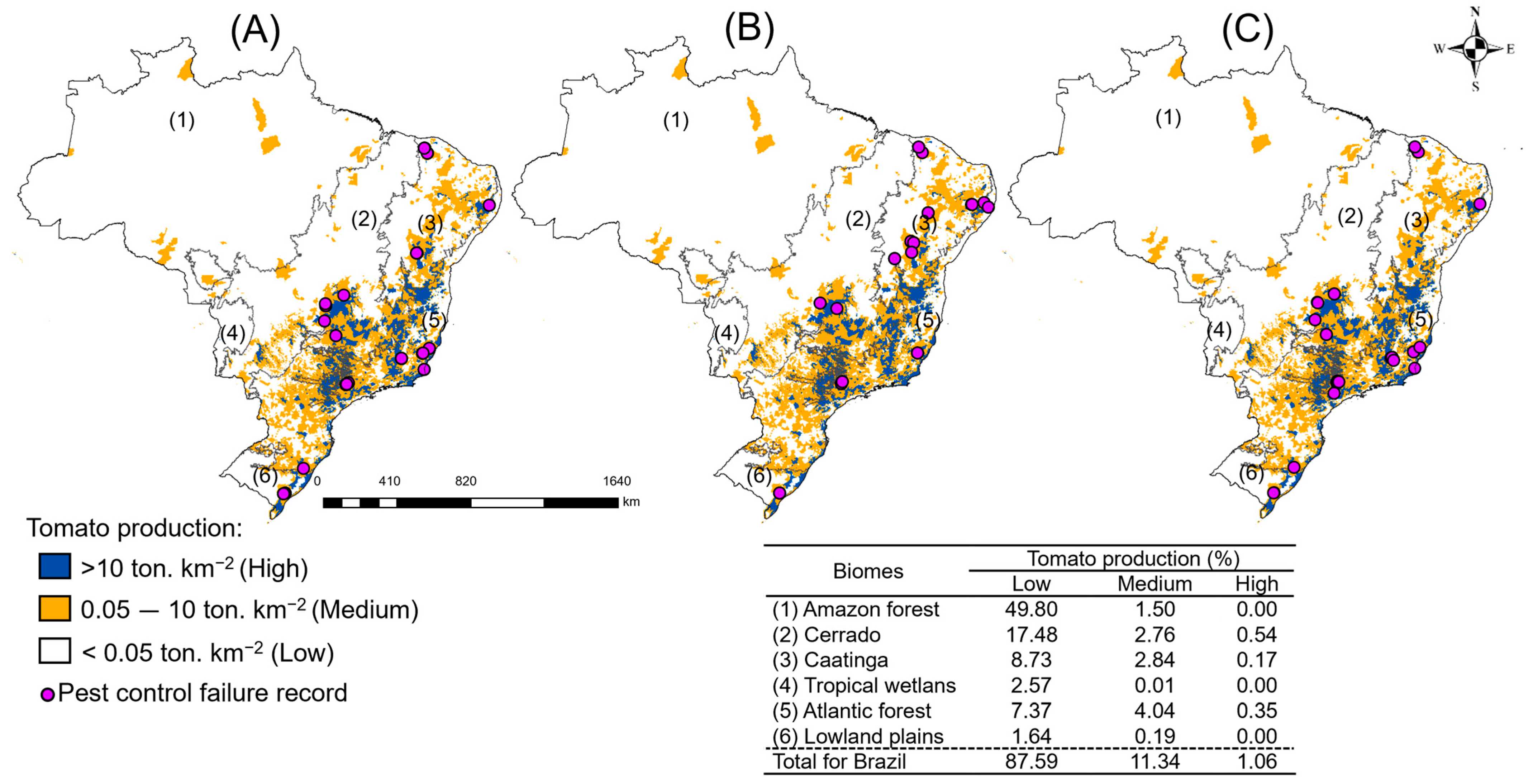
Data on P. absoluta control failures with insecticides from the benzolurea, diamide, and pyrethroid groups in Brazil, since their registrations until 2025, were obtained from scientific publications, reports, and databases. Searches were conducted on the Web of Science, Science Direct, Google Scholar, PubMed, and Arthropod Pesticide Resistance Database. Pest control failure was considered to have occurred when the recommended dose of the insecticide caused mortality of less than 80%. A control efficiency of 80% is the minimum required for an insecticide to be registered in Brazil [4,9,10,11,12]. A total of 63, 48, and 71 points of records of pest control failures by benzolureas, diamides, and pyrethroids were collected, respectively. The control failure recording points were georeferenced (Figure 1).

2.2. Spatial Distribution Models of Control Failures

2.2.1. Selection of Model Variables

Initial models were determined using MaxEnt software (version 3.4.4), 20 variables obtained from WorldClim version 2.1 (http://www.worldclim.org/, accessed on 2 May 2025) with a spatial resolution of 2.5 arc-min (5 km) and the points of occurrence of control failures of each group of insecticides. The 20 environmental variables initially used were selected from the WorldClim database, one of the most widely used platforms for modeling ecological niches and the potential distribution of species and biological phenomena [32]. The variables provided by this database represent fundamental climatic aspects, such as mean, maximum, and minimum temperatures, monthly and annual precipitation, as well as bioclimatic indices derived from these measurements. From an initial set of 20 bioclimatic variables [28], collinearity was assessed using Pearson’s transparency (SDMtoolbox 2.5 [33]). The complete pairwise brightness matrix is available in the Supplementary Material (Table S2). To construct the final models, highly correlated variables (coefficient > 0.7) were removed, retaining the one with the greatest biological relevance for the species in each pair [21]. The variable’s percentage contribution to the model was used as a secondary selective factor for selection [34] (Table S1). This procedure was performed on a final set of ecologically relevant predictors with low collinearity.

2.2.2. Model Configuration Selection

Thirty models were determined for each group of insecticides. In these determinations, the k-fold randomized cross-validation method of the Ecological Niche Model Evaluation (ENMeval) package in R software version 4.2.3 was used [35]. In these determinations, the previously selected variables and 10,000 background points were used. The features class linear, quadratic, hinge, product, and threshold, and regularization multiplier values from 1 to 5 were tested. For each group of insecticides, the model with the configuration that presented the lowest value for the Akaike Information Criterion (AIC) was selected. This was performed because models with lower AIC values have high predictive capacity and smaller size [36,37]. Variation curves of the risks of pest control failures were determined as a function of the model variables. The average value of the other variables was used in these determinations [38].

2.2.3. Model Validation

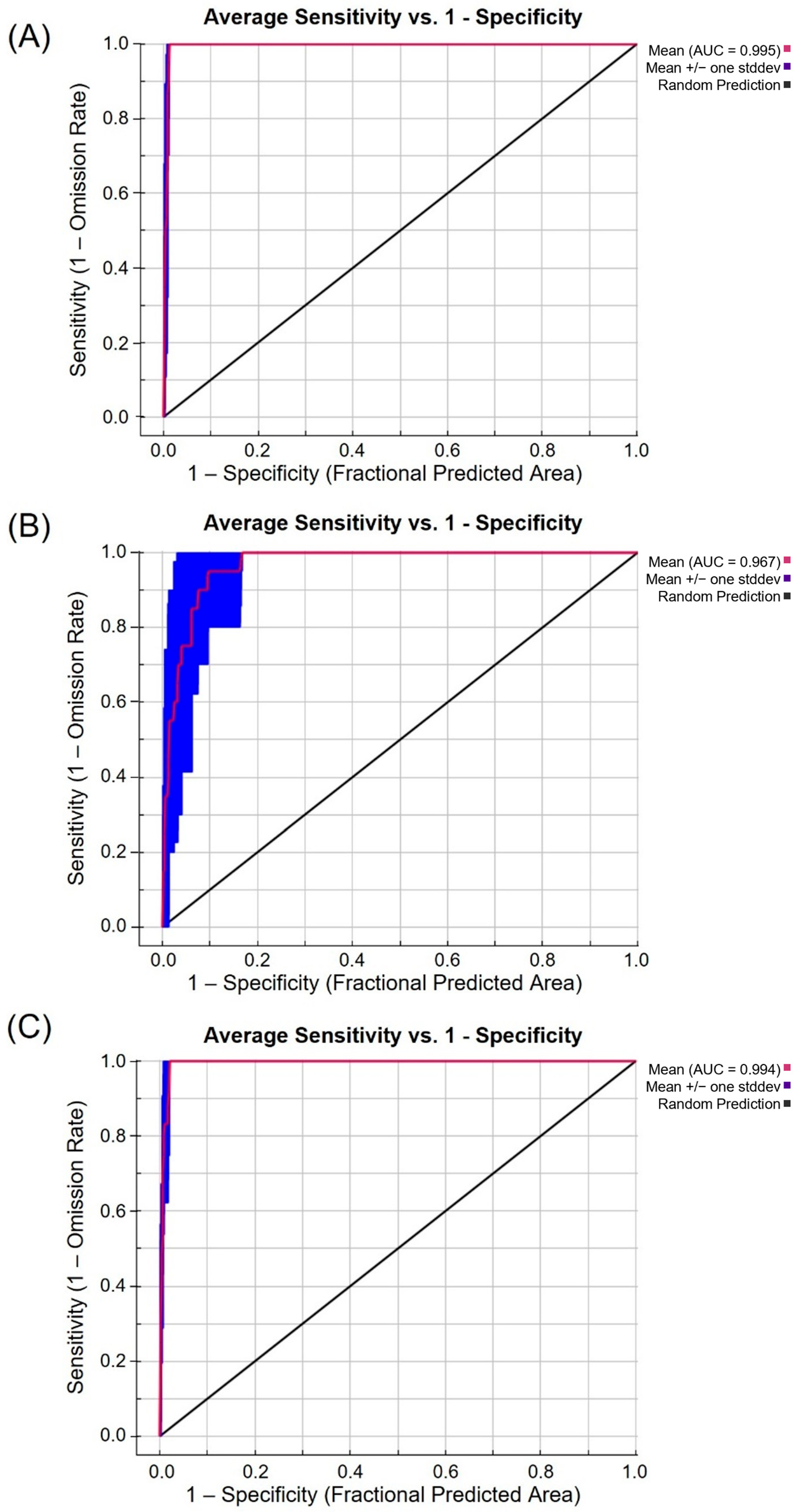
The models were validated by calculating the area under the curve (AUC) and the omission rate, verifying the insertion of pest control failure recording points in areas classified by the models as having a high risk of this phenomenon. Initially, a receiver operating characteristic (ROC) was determined for each model. Subsequently, a ten-fold cross-validation of each ROC was performed to determine the AUC of each model. The omission rate was used to assess the model’s ability to correctly predict failure occurrence records [39,40].

2.3. Projections of Spatial Distributions

2.3.1. Tomato Crops and Control Failure Records

Based on the production data and the areas of tomato crops, the tomato production index was calculated for each municipality using Formula (1).
TPi = PRi ÷ ARi
where TP = tomato production index (t km−2), PR = tomato production in the municipality (t), AR = area of the municipality (km2), and i = municipality in Brazil. A map of the spatial distribution of tomato crops in the Brazilian biomes and the points where pest control failures were recorded for each insecticide group was created using the ArcGIS software version 10.3 [33]. On the maps, areas were classified as having low, medium, and high tomato production when they presented the TP index < 0.05 t km−2, 0.05 ≤ TP ≤10 t km−2, and TP 10 t km−2, respectively.

2.3.2. Risks of Pest Control Failures in Biomes

Using the model for each group of insecticides, the risks of pest control failures in the areas of the Brazilian biomes were determined. For this purpose, the ecoclimatic suitability index was used. This index varies from 0 to 1 in the final maps. When it has a value equal to 0, the area is unsuitable for the phenomenon to occur. When it has a value equal to 1, the area has the maximum probability of the phenomenon occurring [38]. This probability was categorized into three interpretative categories using the Logistic Limit of Maximum Test Sensitivity Plus Specificity (MTSPS). Areas were classified as low risk when this index was less than 0.2, medium risk when the index had values between 0.2 and 0.6, and high risk when the index had a value greater than 0.6. A map with risks of pest control failures for each group of insecticides was created using these indices and the ArcGIS software [41].

2.3.3. Calculation Risks of Control Failures in Tomato-Producing Regions

In this part of the work, the areas with medium and high (>0.05 t km−2) tomato production were intersected with the areas with high risks of control failures. This was performed using the ArcToolbox–Analysis Tools–Intersect tool of the ArcGis software version 10.3 [41]. Subsequently, the percentage of tomato crop areas with risks of control failures was determined using Formula (2).
PRjz = 100 × ARj ÷ BAz
where PR = percentage of tomato crop areas at risk of control failures, AR = area (km2) of tomato crops at risk of control failures, BA = area (km2) of the biome with tomato crops, j = biome (1 = Amazon forest, 2 = Cerrado, 3 = Caatinga, 4 = Tropical wetlands, 5 = Atlantic forest e 6 = Lowland plains), and z = group of insecticides (1 = benzoylureas, 2 = diamides and 3 = pyrethroids).

3. Results

3.1. Spatial Distribution of Tomato Crops and Occurrences of Pest Control Failures

It was found that tomato crops are grown in all Brazilian biomes. They are mainly located in the Cerrado, Atlantic Forest, and Caatinga biomes. The areas with tomato crops in the Amazon, Tropical wetlands, and Lowland plains are smaller (Figure 1). In Brazil, 53, 59, and 71 records of failures in controlling P. absoluta with insecticides from the benzoylurea, diamide, and pyrethroid groups, respectively, were reported. These control failures were observed for populations of P. absoluta from tomato crops grown in the Caatinga, Cerrado, Atlantic Forest, and Lowland plains biomes (Figure 1).

3.2. Spatial Distribution Models of Control Failure Risks

3.2.1. Model of Control Failures by Benzoylureas

Annual precipitation (41.4% contribution to the model), mean temperature of the coldest quarter (25.9%), temperature annual range (22.9%), and elevation of the site (9.8%) were the variables of the final model of spatial distribution of the risks of occurrence of control failures of P. absoluta by benzoylureas (Table 1). The best configuration of this model used the combination of hinge, linear, and quadratic (LQH) resource classes and a regulation multiplier equal to one (Table 2). This configuration was selected because it presented the lowest value for the Akaike information criterion (AIC = 407.46) (Table 2). This final model presented an area under the curve (AUC) of 0.996 ± 0.004 and an omission rate of 0%, indicating that 100% of the recorded control failure locations were correctly identified within areas classified as medium or high risk (Figure 2A).

3.2.2. Model of Control Failures by Diamides

Temperature seasonality (79.6% contribution to the model), elevation (11.3%), temperature annual range (22.9%), and precipitation of the warmest quarter (3.2%) were the variables in the final model of spatial distribution of the risks of occurrence of P. absoluta control failures by diamides (Table 1). The configuration selected for this model used the combination of linear and quadratic resource classes (LQ) and a regulation multiplier equal to one. This configuration was selected because it presented the lowest AIC value (536.90) for the model (Table 2). This final model presented an AUC of 0.967 ± 0.008 (Figure 2B) and an omission rate of 0%, indicating that 100% of the recorded control failure locations were correctly identified within areas classified as medium or high risk.

3.2.3. Model of Control Failures by Pyrethroids

Annual precipitation (56.9% contribution to the model), mean temperature of the coldest quarter (21.1%), temperature annual range (11.3%), precipitation of coldest quarter (4.6%), elevation (4.2%) and precipitation of warmest quarter (1.9%) were the variables of the final model of spatial distribution of the risks of occurrence of control failures of P. absoluta by pyrethroids (Table 1). The configuration selected for this model used the combination of linear, quadratic, hinge, and product (LQHP) resource classes and a regulation multiplier equal to two. This configuration was selected because it presented the lowest AIC value (547.92) (Table 2). This final model presented an AUC of 0.994 ± 0.006 (Figure 2C) and an omission rate of 0%, indicating that 100% of the recorded control failure locations were correctly identified within areas classified as medium or high risk.

3.3. Effect of Environmental Variables on the Risk of Control Failures

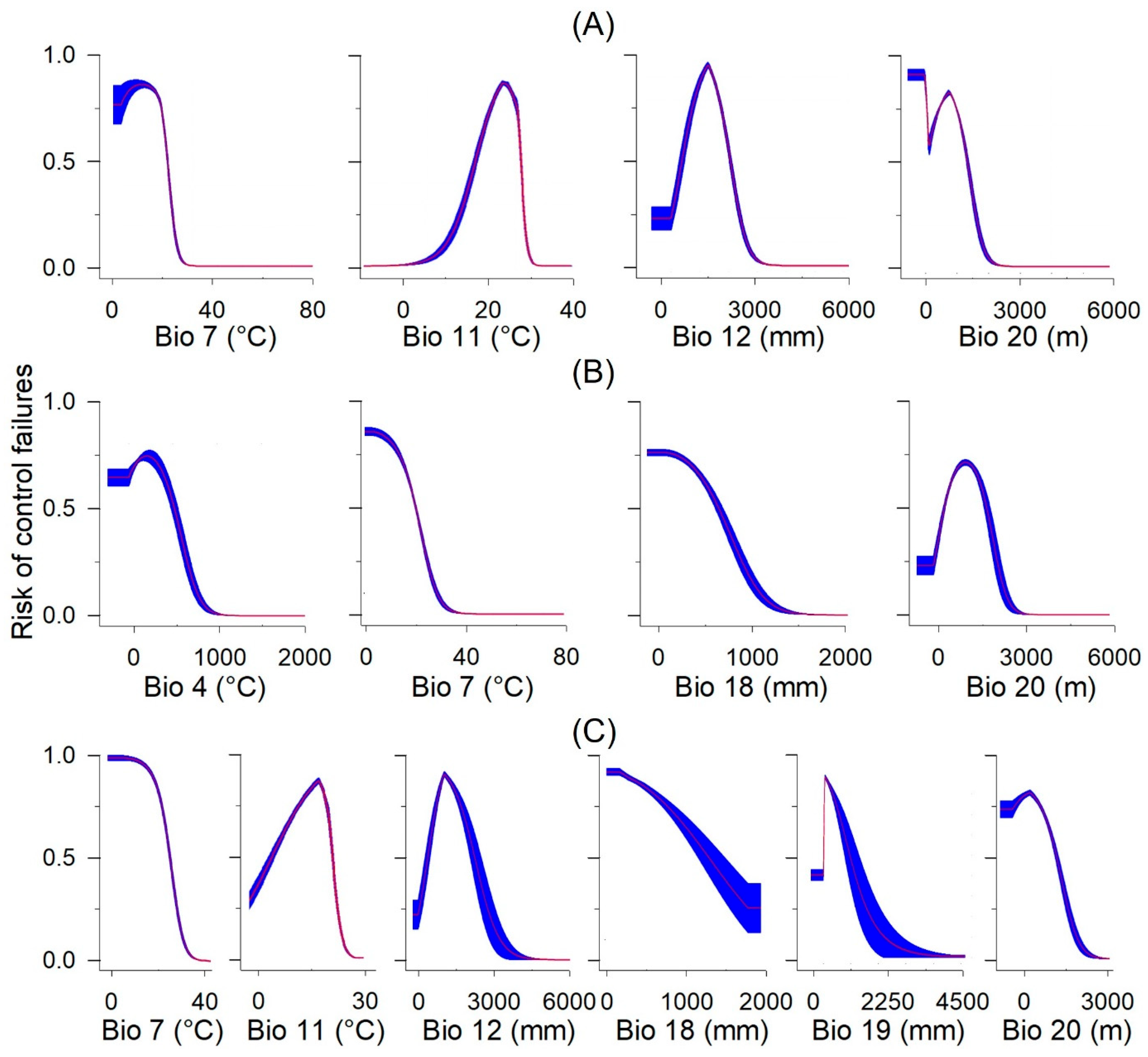
In locations with a temperature annual range of less than 18 °C, a mean temperature of the coldest quarter between 18 and 25 °C, annual precipitation between 860 and 1500 mm, and an altitude of up to 1040 m, the risk of pest control failures by benzoylureas was higher (Figure 3A). In locations with temperature seasonality of less than 10%, temperature annual range of less than 15 °C, precipitation of the warmest quarter of less than 210 mm/month, and elevation between 710 and 1350 m, the risk of pest control failures by diamides was higher (Figure 3B).
In places with temperature annual range of less than 20%, mean temperature of coldest quarter between 10 and 20 °C, Annual precipitation of 850 to 2100 mm, precipitation of warmest quarter of less than 1000 mm, precipitation of coldest quarter of 70 to 600 mm and elevation of less than 1500 m, the risks of failures in pest control by pyrethroids were greater (Figure 3C).

3.4. Spatial Distribution of Pest Control Failure Risks in Brazil

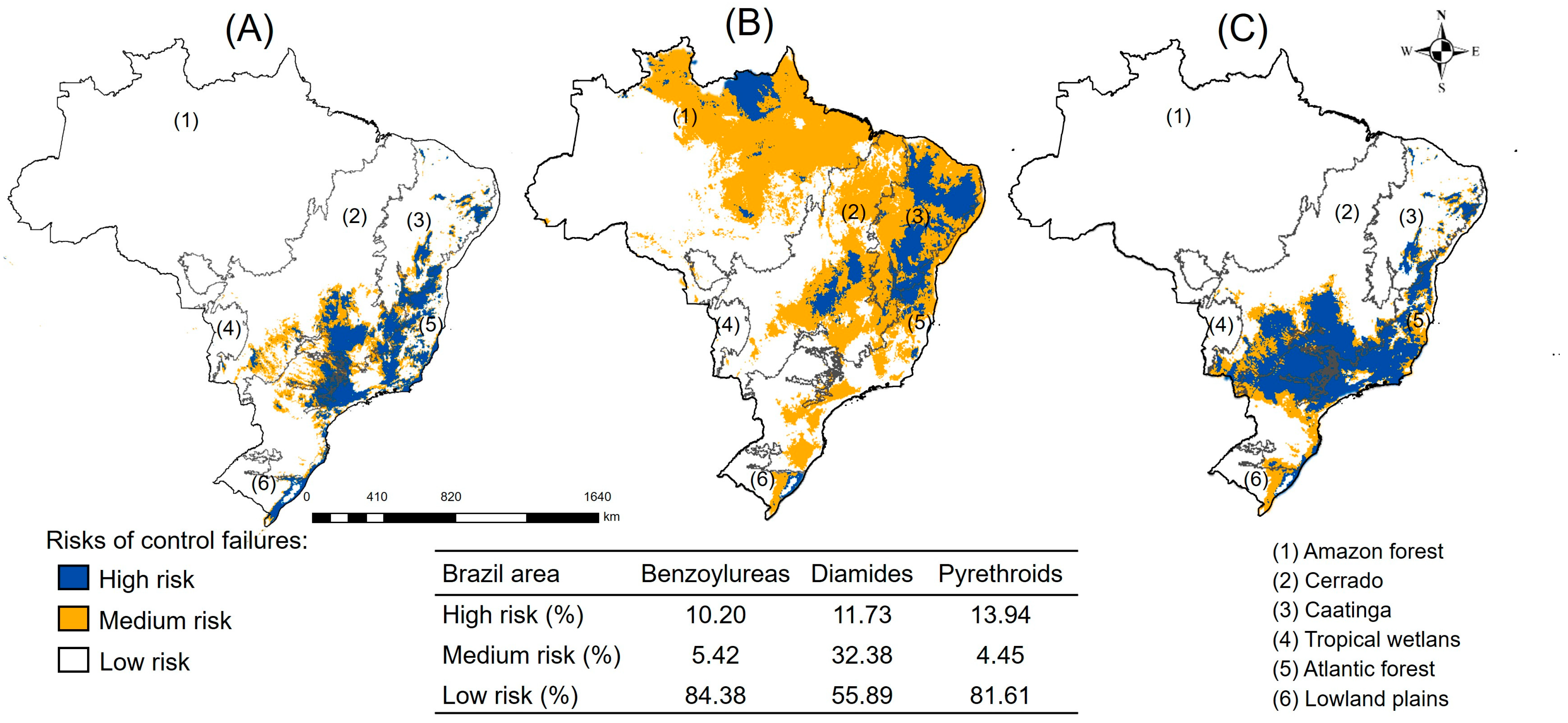
It was found that 10.20%, 5.42%, and 84.38% of the areas in Brazil presented, respectively, high, medium, and low risks of pest control failures due to benzoylrrheas. The regions with the highest risk of control failures due to benzoylrrheas were located in the Atlantic Forest, Cerrado, Caatinga, and the coastal strip of the Lowland plains biomes (Figure 4A). It was observed that 11.73%, 32.38% and 55.89% of the areas in Brazil presented respectively high, medium, and low risks of control failures due to diamides. The regions with the highest risk of control failures due to diamides were located in the Caatinga, Cerrado, north-central Amazon, and Atlantic Forest (Figure 4B). Meanwhile, 13.94%, 4.45%, and 55.89% of the Brazilian area presented, respectively, high, medium, and low risks of pest control failures by pyrethroids. The regions with the highest risk of these failures were located in the Atlantic Forest, Cerrado, Caatinga, and coastal Lowland plains (Figure 4C).

3.5. Risks of Control Failures in Tomato-Producing Regions

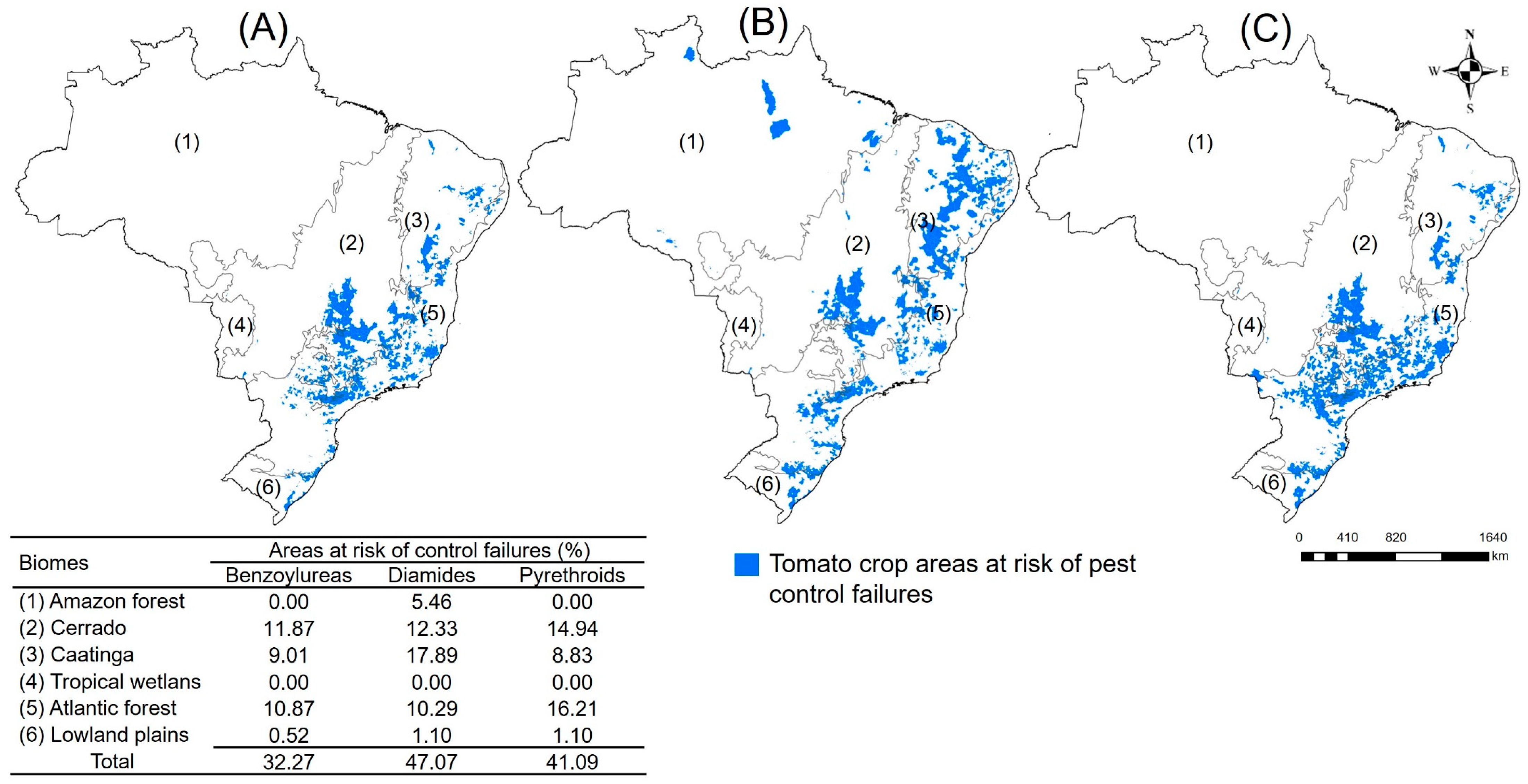
In 32.27%, 47.07% and 41.09% of the areas with tomato crops, there was a risk of pest control failures by benzoylureas, diamides, and pyrethroids, respectively (Figure 5). The tomato-producing regions with a risk of control failures by benzoylureas were located in the Cerrado (11.87% of the area with tomato crops), Atlantic Forest (10.87%), Caatinga (9.01%), and Lowland plains (0.52%) biomes (Figure 5A). The tomato-producing regions with a risk of control failures by diamides were located in the Caatinga (17.89%), Cerrado (12.33%), Atlantic Forest (10.29%), Amazon (5.46%), and Lowland plains (1.10%) (Figure 5B). The tomato-producing regions at risk of control failures due to pyrethroids were located in the Atlantic Forest (16.21%), Cerrado (14.94%), Caatinga (8.83%), and Lowland plains (1.10%) (Figure 5C).

4. Discussion

The spatial distribution of records of failures in the control of P. absoluta by insecticides from the benzoylurea, diamide, and pyrethroid groups in different locations in Brazilian biomes indicates that these phenomena are associated with environmental factors in these locations. The spatial distribution models of the risk of P. absoluta control failures by benzoylureas, diamides, and pyrethroids proved to be adequate to predict these phenomena. This can be demonstrated by their high values for the area under the curves (AUC > 0.96), since models with an AUC > 0.90 have high predictive capacity [42,43].
The fact that the locations where control failures were recorded are located in areas where the models predicted this would happen is also a demonstration of the robustness of the models. Another important characteristic of the models is their simplicity [44]. This can be demonstrated by their having few variables and their configurations having the lowest values for the Akaike information criterion (AIC). Models with lower AIC values combine high predictive capacity and smaller size [45]. The fact that the size and location of areas at risk of pest control failures varied depending on the insecticide group and between Brazilian biomes has implications for the management of pest resistance to insecticides [46].
This indicates that different variables were associated with these processes. In this context, the spatial distribution models of control failures by benzoylureas and diamides had four variables, while the model for pyrethroids had six variables. Furthermore, there are regions where tomatoes are not yet grown in Brazil that present characteristics suitable for the occurrence of these failures, since the size of the areas at risk of control failures was larger than the size of the areas of tomato crops.
Temperature seasonality was the variable that most affected control failures by diamides. The regions with the lowest air temperature variation were where the greatest risk of P. absoluta control failures by diamides occurred. This variable may influence the selection of P. absoluta populations resistant to diamides due to the effect of air temperature on pest density and tomato crops.
In situations of higher pest densities, the frequency of insecticide applications is higher [8], which affects the selection of populations resistant to these products [47]. The biological performance of P. absoluta is affected by air temperature. Since the optimal temperature for P. absoluta is 30 °C [21], in situations of low or very high temperatures, the biological performance of P. absoluta is lower, and consequently, its densities in crops are lower. Locations and seasons with extreme air temperatures are unsuitable for growing tomato crops [48]. In regions with mild temperatures, up to three tomato crops can be grown per year [49].
In regions with year-round tomato crops, the number of generations of the pest is greater, and consequently, the selection of pest populations resistant to insecticides will be greater [22,50,51]. It was found that the variation in annual precipitation was the variable that most affected the risk of failures in pest control by benzoylureas and pyrethroids. In regions with medium rainfall, there were higher risks of failures in controlling P. absoluta by insecticides from these two groups. High rainfall has a negative effect on P. absoluta populations because the mechanical impact of its drops causes mortality of eggs and larvae and increases the action of entomopathogenic fungi [2,14,15,52,53]. On the other hand, situations of very low rainfall are unfavorable to insect populations because humidity is essential for the survival, growth, development, and reproduction of these organisms [47,53]. Thus, in situations of adequate rainfall, the densities of P. absoluta are higher, and consequently, the selection of pest populations resistant to insecticides will be greater.
In regions with a higher risk of P. absoluta control failures using insecticides, more careful management practices to combat the pest’s resistance to insecticides should be carried out [11,13,54,55]. It was observed that the largest areas at risk of failure of P. absoluta control by benzoylureas and pyrethroids occurred in tomato crops located in the Atlantic Forest and Cerrado biomes. The areas with the greatest risk of failure of control by diamides occurred in the Caatinga and Cerrado biomes. This management program should use practices that minimize the selection of P. absoluta populations resistant to insecticides.
Data on control failures of P. absoluta with insecticides from the benzoylurea, diamide, and pyrethroid groups generally do not report the mechanism of insecticide resistance. In studies on P. absoluta resistance to insecticides, the most common resistance mechanism is metabolic [8,14,15,50,55,56]. The selection of insecticide-resistant pest populations involves several factors, such as the initial control efficiency of the insecticide, the number of applications, the number of pest generations per unit time, and the pest’s reproductive rate. Regarding initial efficiency, the higher the initial efficiency, the greater the selection of resistant populations [51,57,58,59,60,61,62]. In this context, benzoylureas, diamides, and pyrethroids showed high efficiency, and the number of applications was also high [4,9,60,61]. The number of generations and reproductive rate of the pest are influenced by both air temperature and rainfall. The optimum temperature for P. absoluta is 30 °C, and heavy rainfall negatively affects the survival and reproduction of this insect [2,21,63,64]. Therefore, in hotter and drier regions, a faster selection of this pest to insecticides is expected due to the shorter generation time, greater reproduction, and survival.
In addition to climatic variables, agronomic practices such as the use of control methods other than chemical ones, frequency of applications, and rotation of insecticides with different modes of action influence the selection of insecticide-resistant pest populations [14,59,65,66]. Therefore, it is important to conduct research on these topics to enable the management of P. absoluta resistance to insecticides. These include the use of a decision-making system, the use of other control methods, especially biological and cultural, the use of insecticide selectivity, resistance monitoring, the use of adjuvants and recommended doses of insecticides, and the rotation of products with different modes of action [51,54,59]. The predictions made by the models determined in this work can be used to carry out efficient and sustainable control of P. absoluta in tomato crops. This is because these predictions can be used to prevent control failures and manage pest resistance to insecticides.
In conclusion, the models determined in this study are robust to predict the regions with the highest risk of failures in the control of P. absoluta by insecticides and indicate the environmental variables associated with these risks. The risks of failures in the control of pests by insecticides of the benzoylurea and pyrethroid groups were higher in tomato crops located in the Cerrado and Atlantic Forest biomes, and annual precipitation was the critical variable associated with these failures. The risks of failures in the control of diamides were higher in crops located in the Caatinga, Cerrado, and Atlantic Forest biomes, and temperature seasonality was the critical variable associated with these failures. These findings are crucial for the development of more sustainable and effective Integrated Pest Management (IPM) strategies. By identifying the areas of greatest risk and determining the environmental variables, it is possible to optimize the use of insecticides, directing their application more strategically and reducing chemical dependence in vulnerable regions. Understanding these environmental factors, therefore, allows the implementation of more sustainable agricultural practices, minimizing the environmental impact of pesticides on biodiversity and ecosystems, and promoting long-term crop resilience.

Supplementary Materials

The following supporting information can be downloaded at: https://www.mdpi.com/article/10.3390/su17177910/s1, Table S1. Code, name, unit and percentage contribution of environmental variables for the initial models of spatial distribution of Phthorimaea absoluta control failures by insecticides from the benzoylureas, diamides and pyrethroids groups. Table S2. Pearson correlations between environmental variables (Bios) of the initial spatial distribution model in Brazil of the risks of failures in the control of Phthorimaea absoluta by insecticides from the benzoylureas, diamides and pyrethroids groups. Table S3. Georeferenced records of Phthorimaea absoluta control failures by chemical groups (year, latitude, longitude and source). Figure S1. Relative importance of environmental variables in the final model of geographic distribution in Brazil of Phthorimaea absoluta control failures by (A) benzoylureas, (B) diamides, (C) pyrethroids using maximum entropy machine learning algorithm (MaxEnt).

Author Contributions

Conceptualization, M.C.P.; Methodology, J.d.S.P., L.C.d.S.S., D.R.d.F., E.d.S.P., D.M.d.R., R.S.S., R.N.C.G. and M.C.P.; Validation, D.R.d.F., D.M.d.R. and M.C.P.; Formal analysis, J.d.S.P., D.R.d.F. and D.M.d.R.; Investigation, D.R.d.F., E.d.S.P., D.M.d.R. and R.S.S.; Resources, L.C.d.S.S. and R.S.S.; Data curation, J.d.S.P. and L.C.d.S.S.; Writing—original draft, J.d.S.P.; Writing—review & editing, J.d.S.P., L.C.d.S.S., R.S.S. and M.C.P.; Visualization, E.d.S.P.; Supervision, R.S.S., R.N.C.G. and M.C.P.; Project administration, R.S.S., R.N.C.G. and M.C.P.; Funding acquisition, R.S.S., R.N.C.G. and M.C.P. All authors have read and agreed to the published version of the manuscript.

Funding

This research was funded by the National Council for Scientific and Technological Development (CNPq), the Minas Gerais Research Foundation (FAPEMIG), and the Brazilian Coordination for the Improvement of Higher Education Personnel (CAPES)—Finance Code 001.

Institutional Review Board Statement

Not applicable.

Informed Consent Statement

Not applicable.

Data Availability Statement

The original contributions presented in this study are included in the article/Supplementary Materials. Further inquiries can be directed to the corresponding author.

Acknowledgments

We are grateful to members of the Integrated Pest Management Laboratory at the Federal University of Viçosa, the National Council for Scientific and Technological Development (CNPq), the Minas Gerais Research Foundation (FAPEMIG), and the Brazilian Coordination for the Improvement of Higher Education Personnel (CAPES).

Conflicts of Interest

The authors declare no conflicts of interest.

References

  1. Rauf, S. Insecticide resistance in agricultural pests: Challenges and solutions. Trends Biotech Plant Sci. 2024, 2, 36–41. [Google Scholar]
  2. Rosenheim, J.A. Control failures following insecticide applications in commercial agriculture: How often do they occur? A case study of Lygus hesperus (Hemiptera: Miridae) control in cotton. J. Econ. Entomol. 2021, 114, 1415–1419. [Google Scholar] [CrossRef]
  3. Krechemer, F.S.; Foerster, L.A. Influence of biotic and abiotic factors on the population fluctuation of Tuta absoluta (Lepidoptera: Gelechiidae) in an organic tomato farming. Int. J. Trop. Insect Sci. 2020, 40, 199–208. [Google Scholar] [CrossRef]
  4. Han, P.; Bayram, Y.; Shaltiel-Harpaz, L.; Sohrabi, F.; Saji, A.; Esenali, U.T.; Jalilov, A.; Ali, A.; Shashank, P.R.; Ismoilov, K.; et al. Tuta absoluta continues to disperse in Asia: Damage, ongoing management and future challenges. J. Pest Sci. 2019, 92, 1317–1327. [Google Scholar] [CrossRef]
  5. Pandey, M.; Bhattarai, N.; Pandey, P.; Chaudhary, P.; Katuwal, D.R.; Khanal, D. A review on biology and possible management strategies of tomato leaf miner, Tuta absoluta (Meyrick), Lepidoptera: Gelechiidae in Nepal. Heliyon 2023, 9, e16474. [Google Scholar] [CrossRef]
  6. Mawcha, K.T.; Kinyanjui, G.; Berhe, D.H.; Hategekimana, A.; Joelle, K.; Ndolo, D. An overview of sustainable management strategies for Tuta absoluta. Int. J. Pest Manag. 2025, 1–24. [Google Scholar] [CrossRef]
  7. Zamora, R.B.; Barreto, A.V.; Bravo, S.P.; Parrales, F.S.; Zambrano, F.; Duarte, R.F. Diagnóstico de uso e impactos de plaguicidas en el cultivo de tomate (Solanum lycopersicum L.) en la parroquia Riochico, cantón Portoviejo, provincia de Manabí, Ecuador. Biologist 2020, 18, 105–118. [Google Scholar]
  8. Silva, W.M.; Berger, M.; Bass, C.; Balbino, V.Q.; Amaral, M.H.; Campos, M.R.; Siqueira, H.A. Status of pyrethroid resistance and mechanisms in Brazilian populations of Tuta absoluta. Pestic. Biochem. Physiol. 2015, 122, 8–14. [Google Scholar] [CrossRef]
  9. Roditakis, E.; Vasakis, E.; García-Vidal, L.; Martínez-Aguirre, M.R.; Rison, J.L.; Haxaire-Lutun, M.O.; Nauen, R.; Tsagkarakou, A.; Bielza, P. A four-year survey on insecticide resistance and likelihood of chemical control failure for tomato leaf miner Tuta absoluta in the European/Asian region. J. Pest Sci. 2018, 91, 421–435. [Google Scholar] [CrossRef]
  10. Gontijo, P.C.; Picanço, M.C.; Pereira, E.J.G.; Martins, J.C.; Chediak, M.; Guedes, R.N.C. Spatial and temporal variation in the control failure likelihood of the tomato leaf miner, Tuta absoluta. Ann. Appl. Biol. 2013, 162, 50–59. [Google Scholar] [CrossRef]
  11. Silva, G.A.; Picanço, M.C.; Bacci, L.; Crespo, A.L.B.; Rosado, J.F.; Guedes, R.N.C. Control failure likelihood and spatial dependence of insecticide resistance in the tomato pinworm, Tuta absoluta. Pest Manag. Sci. 2011, 67, 913–920. [Google Scholar] [CrossRef]
  12. Bartling, M.T.; Brandt, A.; Hollert, H.; Vilcinskas, A. Current insights into sublethal effects of pesticides on insects. Int. J. Mol. Sci. 2024, 25, 6007. [Google Scholar] [CrossRef]
  13. Choudhary, K.; Kumar, S.; Sharma, D.; Ruchika, K.; Thakur, K.; Yangchan, J. A review on destructive tomato pest, Phthorimaea absoluta (Lepidoptera: Gelechiidae) and its management. J. Biol. Control 2022, 36, 84–93. [Google Scholar] [CrossRef]
  14. Tarusikirwa, V.L.; Machekano, H.; Mutamiswa, R.; Chidawanyika, F.; Nyamukondiwa, C. Tuta absoluta (Meyrick) (lepidoptera: Gelechiidae) on the “offensive” in Africa: Prospects for integrated management initiatives. Insects 2020, 11, 764. [Google Scholar] [CrossRef]
  15. Silva, J.E.; Silva, W.M.; Silva, T.B.M.; Campos, M.R.; Filho, A.B.E.; Siqueira, H.Á.A. High resistance to insect growth disruptors and control failure likelihood in Brazilian populations of the tomato pinworm Tuta absoluta. Phytoparasitica 2021, 49, 689–701. [Google Scholar] [CrossRef]
  16. Kobori, Y.; Amano, H. Effect of rainfall on a population of the diamondback moth, Plutella xylostella (Lepidoptera: Plutellidae). Appl. Entomol. Zool. 2003, 38, 249–253. [Google Scholar] [CrossRef]
  17. Zhang, G.F.; Xian, X.Q.; Zhang, Y.B.; Liu, W.X.; Liu, H.; Feng, X.D.; Dai, A.M. Outbreak of the South American tomato leafminer, Tuta absoluta, in the Chinese mainland: Geographic and potential host range expansion. Pest Manag. Sci. 2021, 77, 5475–5488. [Google Scholar] [CrossRef] [PubMed]
  18. Barros, E.C.; Bacci, L.; Picanco, M.C.; Martins, J.C.; Rosado, J.F.; Silva, G.A. Physiological selectivity and activity reduction of insecticides by rainfall to predatory wasps of Tuta absoluta. J. Environ. Sci. Health Part B 2015, 50, 45–54. [Google Scholar] [CrossRef]
  19. Jędrszczyk, E.; Skowera, B.; Gawęda, M.; Libik, A. The effect of temperature and precipitation conditions on the growth and development dynamics of five cultivars of processing tomato. J. Hort. Res. 2016, 24, 63–72. [Google Scholar] [CrossRef]
  20. Maliszewska, J.; Tęgowska, E. A comparison of the effectiveness of insecticides in constant and variable thermal conditions. Int. J. Pest Manag. 2017, 63, 331–340. [Google Scholar] [CrossRef]
  21. Mansour, R.; Brévault, T.; Chailleux, A.; Cherif, A.; Grissa-Lebdi, K.; Haddi, K.; Biondi, A. Occurrence, biology, natural enemies and management of Tuta absoluta in Africa. Entomol. Gen. 2018, 38, 83–112. [Google Scholar] [CrossRef]
  22. Cocco, A.; Deliperi, S.; Lentini, A.; Mannu, R.; Delrio, G. Seasonal phenology of Tuta absoluta (Lepidoptera: Gelechiidae) in protected and open-field crops under Mediterranean climatic conditions. Phytoparasitica 2015, 43, 713–724. [Google Scholar] [CrossRef]
  23. Gagic, V.; Holding, M.; Venables, W.N.; Hulthen, A.D.; Schellhorn, N.A. Better outcomes for pest pressure, insecticide use, and yield in less intensive agricultural landscapes. Proc. Natl. Acad. Sci. USA 2021, 118, e2018100118. [Google Scholar] [CrossRef] [PubMed]
  24. Rosenheimi, J.A.; Tabashnik, B.E. Evolution of pesticide resistance: Interactions between generation time and genetic, ecological, and operational factors. J. Econ. Entomol. 1990, 83, 1184–1193. [Google Scholar] [CrossRef]
  25. Martyushev, L.M.; Seleznev, V.D. Maximum entropy production principle in physics, chemistry and biology. Phys. Rep. 2006, 426, 1–45. [Google Scholar] [CrossRef]
  26. Ou, H.; Mu, X.; Yuan, Z.; Yang, X.; Liao, Y.; Nguyen, K.L.; Sombatpanit, S. Mapping Benggang Erosion Susceptibility: An Analysis of Environmental Influencing Factors Based on the Maxent Model. Sustainability 2024, 16, 7328. [Google Scholar] [CrossRef]
  27. Pascariu, M.D.; Lenart, A.; Canudas-Romo, V. The maximum entropy mortality model: Forecasting mortality using statistical moments. Scand. Actuar. J. 2019, 2019, 661–685. [Google Scholar] [CrossRef]
  28. Ponti, R.; Sannolo, M. The importance of including phenology when modelling species ecological niche. Ecography 2023, 2023, e06143. [Google Scholar] [CrossRef]
  29. Waldrip, S.H.; Niven, R.K.; Abel, M.; Schlegel, M.; Noack, B.R. MaxEnt analysis of a water distribution network in Canberra, ACT, Australia. In AIP Conference Proceedings; American Institute of Physics: Melville, NY, USA, 2015; Volume 1641, pp. 479–486. [Google Scholar]
  30. IBGE—Instituto Brasileiro de Geografia e Estatística. Produção Agrícola Municipal. 2024. Available online: https://www.ibge.gov.br/estatisticas/economicas/agricultura-e-pecuaria/9117-producao-agricola-municipal-culturas-temporarias-e-permanentes.html?=&t=resultados (accessed on 20 November 2024).
  31. IBGE—Instituto Brasileiro de Geografia e Estatística. Áreas Territoriais. 2023. Available online: https://www.ibge.gov.br/geociencias/organizacao-do-territorio/estrutura-territorial/15761-areas-dos-municipios.html. (accessed on 23 April 2025).
  32. Cerasoli, F.; D’Alessandro, P.; Biondi, M. Worldclim 2.1 versus Worldclim 1.4: Climatic niche and grid resolution affect between-version mismatches in habitat suitability models predictions across Europe. Ecol. Evol. 2022, 12, e8430. [Google Scholar] [CrossRef]
  33. Brown, J.L. SDMtoolbox 2.0 User Guide; Southern Illinois University: Carbondale, IL, USA, 2020. [Google Scholar]
  34. El-Gabbas, A.; Dormann, C.F. Improved species-occurrence predictions in data-poor regions: Using large-scale data and bias correction with down-weighted Poisson regression and Maxent. Ecography 2018, 41, 1161–1172. [Google Scholar] [CrossRef]
  35. Kass, J.M.; Muscarella, R.; Galante, P.J.; Bohl, C.L.; Pinilla-Buitrago, G.E.; Boria, R.A.; Soley-Guardia, M.; Anderson, R.P. ENMeval 2.0: Redesigned for customizable and reproducible modeling of species’ niches and distributions. Methods Ecol. Evol. 2021, 12, 1602–1608. [Google Scholar] [CrossRef]
  36. Akaike, H. Information theory and an extension of the maximum likelihood principle. In Selected Papers of Hirotugu Akaike; Springer: New York, NY, USA, 1998; pp. 199–213. [Google Scholar]
  37. Mandrekar, J.N. Receiver operating characteristic curve in diagnostic test assessment. J. Thorac. Oncol. 2010, 5, 1315–1316. [Google Scholar] [CrossRef] [PubMed]
  38. Mahatara, D.; Acharya, A.K.; Dhakal, B.P.; Sharma, D.K.; Ulak, S.; Paudel, P. Maxent modelling for habitat suitability of vulnerable tree Dalbergia latifolia in Nepal. Silva Fenn. 2021, 55, 10441. [Google Scholar] [CrossRef]
  39. Allouche, O.; Tsoar, A.; Kadmon, R. Assessing the accuracy of species distribution models: Prevalence, kappa and the true skill statistic (TSS). J. Appl. Ecol. 2006, 43, 1223–1232. [Google Scholar] [CrossRef]
  40. Schartel, T.E.; Cao, Y. Background selection complexity influences Maxent predictive performance in freshwater systems. Ecol. Model. 2024, 488, 110592. [Google Scholar] [CrossRef]
  41. Pimpler, E. Spatial Analytics with ArcGIS; Packt Publishing Ltd.: Birmingham, UK, 2017. [Google Scholar]
  42. Janssens, A.C.J.; Martens, F.K. Reflection on modern methods: Revisiting the area under the ROC Curve. Int. J. Epidemiol. 2020, 49, 1397–1403. [Google Scholar] [CrossRef] [PubMed]
  43. Vanderlooy, S.; Hüllermeier, E. A critical analysis of variants of the AUC. Mach. Learn. 2008, 72, 247–262. [Google Scholar] [CrossRef]
  44. Venne, S.; Currie, D.J. Can habitat suitability estimated from MaxEnt predict colonizations and extinctions? Divers. Distrib. 2021, 27, 873–886. [Google Scholar] [CrossRef]
  45. Cavanaugh, J.E.; Neath, A.A. The Akaike information criterion: Background, derivation, properties, application, interpretation, and refinements. Wiley Interdiscip. Rev. Comput. Stat. 2019, 11, e1460. [Google Scholar] [CrossRef]
  46. Li, W.; Mao, K.; Liu, C.; Gong, P.; Xu, P.; Wu, G.; Le, W.; Wan, H.; You, H.; Li, J. Resistance monitoring and assessment of the control failure likelihood of insecticides in field populations of the whitebacked planthopper Sogatella furcifera (Horváth). Crop Prot. 2020, 127, 104973. [Google Scholar] [CrossRef]
  47. Roditakis, E.; Grispou, M.; Morou, E.; Kristoffersen, J.B.; Roditakis, N.; Nauen, R.; Vontas, J.; Tsagkarakou, A. Current status of insecticide resistance in Q biotype Bemisia tabaci populations from Crete. Pest Manag. Sci. Former. Pestic. Sci. 2009, 65, 313–322. [Google Scholar] [CrossRef]
  48. Shamshiri, R.R.; Jones, J.W.; Thorp, K.R.; Ahmad, D.; Man, H.C.; Taheri, S. Review of optimum temperature, humidity, and vapour pressure deficit for microclimate evaluation and control in greenhouse cultivation of tomato: A review. Int. Agrophys. 2018, 32, 287–302. [Google Scholar] [CrossRef]
  49. Okali, C.; Sumberg, J. Quick money and power: Tomatoes and livelihood building in rural Brong Ahafo, Ghana. IDS Bull. 2012, 43, 44–57. [Google Scholar] [CrossRef]
  50. Campos, M.R.; Silva, T.B.; Silva, W.M.; Silva, J.E.; Siqueira, H.A. Susceptibility of Tuta absoluta (Lepidoptera: Gelechiidae) Brazilian populations to ryanodine receptor modulators. Pest Manag. Sci. 2015, 71, 537–544. [Google Scholar] [CrossRef]
  51. de Lima, J.O.G.; Machado, W.A. Avaliação de inseticidas para a proteção do tomateiro, em casa de vegetação, contra a traça-do-tomateiro, Srobipalpuloides absoluta (meyrick). Ceres 1996, 43, 337–345. [Google Scholar]
  52. Deboni, T.C.; Castelo Branco, M. Suscetibilidade a Inseticidas e Parasitismo Natural Por Trichogramma sp. em Traça-do-Tomateiro. 2007. Available online: https://www.sidalc.net/search/Record/dig-infoteca-e-doc-781379/Description (accessed on 23 April 2025).
  53. Buxton, P.A. Terrestrial insects and the humidity of the environment. Biol. Rev. 1932, 7, 275–320. [Google Scholar] [CrossRef]
  54. Onstad, D.W.; Knolhoff, L.M. Insect Resistance Management: Biology, Economics, and Prediction; Academic Press: Cambridge, MA, USA, 2023. [Google Scholar]
  55. Reyes, M.; Rocha, K.; Alarcón, L.; Siegwart, M.; Sauphanor, B. Metabolic mechanisms involved in the resistance of field populations of Tuta absoluta (Meyrick) (Lepidoptera: Gelechiidae) to spinosad. Pestic. Biochem. Physiol. 2012, 102, 45–50. [Google Scholar] [CrossRef]
  56. Siqueira, H.Á.A.; Guedes, R.N.C.; Picanço, M.C. Insecticide resistance in populations of Tuta absoluta (Lepidoptera: Gelechiidae). Agric. For. Entomol. 2000, 2, 147–153. [Google Scholar] [CrossRef]
  57. Mani, G.S.; Wood, R.J. Persistence and frequency of application of an insecticide in relation to the rate of evolution of resistance. Pestic. Sci. 1984, 15, 325–336. [Google Scholar] [CrossRef]
  58. Collins, P.J.; Schlipalius, D.I. Insecticide resistance. In Recent Advances in Stored Product Protection; Springer: Berlin/Heidelberg, Germany, 2018; pp. 169–182. [Google Scholar]
  59. Venkatesan, T.; Chethan, B.R.; Mani, M. Insecticide resistance and its management in the insect pests of horticultural crops. In Trends in Horticultural Entomology; Springer: Berlin/Heidelberg, Germany, 2022; pp. 455–490. [Google Scholar]
  60. Guedes, R.N.; Picanço, M.C.; Matioli, A.L.; Rocha, D.M. Efeito de inseticidas e sistemas de condução do tomateiro no controle de Scrobipalpuloides absoluta (Meyrick) (Lepidoptera: Gelechiidae). An. Soc. Entomológica Bras. 1994, 23, 321–325. [Google Scholar] [CrossRef]
  61. Imenes, S.D.; de Campos, T.B.; Takematsu, A.P.; Myasato, A.; da Silva, M.A. Controle químico da traça do tomateiro, Scrobipalpula absoluta (Meyrick, 1917) (Lepidoptera-Gelechiidae). An. Soc. Entomológica Do Bras. 1990, 19, 281–289. [Google Scholar] [CrossRef]
  62. Martins, M.R.; Nascimento, A.F.S.; de Sena Fernandes, M.E.; Tronto, J.; da Fonseca, L.F.; Silva, R.F.S.E.; Fernandes, F.L. Chlorantraniliprole mediating the survival and behavior of adults of Tuta absoluta (Meyrick) (Lepidoptera: Gelechiidae) in tomato. Int. J. Trop. Insect Sci. 2024, 44, 2879–2888. [Google Scholar] [CrossRef]
  63. Richardson, E.B.; Troczka, B.J.; Gutbrod, O.; Davies, T.E.; Nauen, R. Diamide resistance: 10 years of lessons from lepidopteran pests. J. Pest Sci. 2020, 93, 911–928. [Google Scholar] [CrossRef]
  64. Branco, M.C.; França, F.H.; Medeiros, M.A.; Leal, J.G.T. Use of insecticides for controlling the South American Tomato Pinworm and the Diamondback Moth: A case study. Hortic. Bras. 2001, 19, 60–63. [Google Scholar] [CrossRef]
  65. Roditakis, E.; Steinbach, D.; Moritz, G.; Vasakis, E.; Stavrakaki, M.; Ilias, A.; Nauen, R. Ryanodine receptor point mutations confer diamide insecticide resistance in tomato leafminer, Tuta absoluta (Lepidoptera: Gelechiidae). Insect Biochem. Mol. Biol. 2017, 80, 11–20. [Google Scholar] [CrossRef]
  66. Silva, J.E.; Assis, C.P.; Ribeiro, L.M.; Siqueira, H.A. Field-evolved resistance and cross-resistance of Brazilian Tuta absoluta (Lepidoptera: Gelechiidae) populations to diamide insecticides. J. Econ. Entomol. 2016, 109, 2190–2195. [Google Scholar] [CrossRef]
Figure 1. Location of tomato crops in Brazil and records of occurrence of failures in the control of Phthorimaea absoluta by insecticides from the groups of (A) benzoylureas, (B) diamides, and (C) pyrethroids.
Sustainability 17 07910 g001
Figure 2. Repeated operating characteristics curves and areas under the curve for the final models of spatial distribution of Phthorimaea absoluta control failures by (A) benzoylureas, (B) diamides, (C) pyrethroids using the maximum entropy (MaxEnt) machine learning algorithm.
Sustainability 17 07910 g002
Figure 3. Risks of Phthorimaea absoluta control failures by insecticides as a function of the variables of each model. (A) benzoylureas, (B) diamides, and (C) pyrethroids. Bio 4 = temperature seasonality (°C), Bio 7 = temperature annual range (°C), Bio 11 = mean temperature of coldest quarter (°C), Bio 12 = annual precipitation (mm), Bio 18 = precipitation of warmest quarter (mm), Bio 19 = precipitation of coldest quarter (mm) and Bio 20 = elevation of the location (m). The red lines are the mean response curves and the blue margins are the standard deviation calculated over ten repetitions.
Sustainability 17 07910 g003
Figure 4. Risks of failures in the control of Phthorimaea absoluta by insecticides from the groups of (A) benzoylureas, (B) diamides, (C) pyrethroids in Brazilian territory.
Sustainability 17 07910 g004
Figure 5. Risks of failures in the control of Phthorimaea absoluta by insecticides from the groups of (A) benzoylureas, (B) diamides, (C) pyrethroids in areas with crops in Brazilian territory.
Sustainability 17 07910 g005
Table 1. Contribution of environmental variables to the final spatial distribution models in Brazil of the risks of control failures of Phthorimaea absoluta by insecticides from the benzoylurea, diamide, and pyrethroid groups using the maximum entropy machine learning algorithm (MaxEnt).
VariablesBenzoylureasDiamidesPyrethroids
CodeNameVariableContribution
(%)
VariableContribution
(%)
VariableContribution
(%)
Bio 4Temperature seasonality
(°C)
Bio 1241.4Bio 479.6Bio 1256.9
Bio 7Temperature annual range
(°C)
Bio 1125.9Bio 2011.3Bio 1121.1
Bio 11Mean temperature of coldest quarter (°C)Bio 722.9Bio 75.9Bio 711.3
Bio 12Annual precipitation
(mm)
Bio 209.8Bio 183.2Bio 194.6
Bio 18Precipitation of warmest quarter (mm) Bio 204.2
Bio 19Precipitation of coldest quarter
(mm)
Bio 181.9
Bio 20Elevation
(m)
Table 2. Selection of the ideal configuration of spatial distribution models in Brazil for the risk of failures in the control of Phthorimaea absoluta by insecticides from the benzoylurea, diamide, and pyrethroid groups using the Akaike information criterion (AIC).
BenzoylureasDiamidesPyrethroids
RankFCRMAICRankFCRMAICRankFCRMAIC
1LQH1536.901LQ1407.461LQHP2547.92
2LQHP3548.722L1408.362LQHPT2547.92
3LQHPT3548.723LQ2409.793H1725.49
4LQHPT4551.844LQ3410.864H2571.81
5LQ1548.325L2411.215LQHP1587.21
6LQHP1538.166LQ4416.236LQHPT1587.21
7LQH4549.707LQH2416.497LQH2561.53
8H2549.718LQH3418.358LQ1565.10
9LQH3551.149H2419.219LQH3566.86
10LQ2551.5910LQHP2419.2110LQH1572.54
11LQHP4551.8411LQH1419.2411LQ2574.02
12LQ4552.4312LQH4419.9412LQH4574.82
13H3552.6313L3420.4413H3575.08
14LQ3553.4814H3421.5014LQ3575.44
15LQH5553.7815LQHP3421.5015H4575.77
16LQ5554.9416LQHPT3421.5016LQHP3579.82
17LQHP5555.6617H4421.6517LQHPT3579.85
18LQHPT5555.6618LQHP4421.6518LQHP4582.82
19H4556.1219LQHPT4421.6519LQHPT4583.59
20L1556.2820LQ5422.9620LQ4584.85
21L2558.0121LQHPT5423.4321LQ5586.77
22L3560.7322LQHP5423.4322L1587.01
23LQH2561.9023H5423.4323H5587.80
24L4564.4624LQH5424.1824L2590.06
25H5564.6025LQHPT2425.6625L3591.18
26LQHP2565.2926L4426.0626LQHP5591.18
27LQHPT2565.2927L5430.1527LQHPT5594.03
28L5569.2728LQHPT1485.4628L4597.16
29LQHPT1577.0129LQHP1532.6529LQH5633.88
30H1545.6730H1532.6530L5724.76
RM: regularization multiplier; FC: features; Linear (L), quadratic (Q), product (P), limit (T), and hinge (H).
Disclaimer/Publisher’s Note: The statements, opinions and data contained in all publications are solely those of the individual author(s) and contributor(s) and not of MDPI and/or the editor(s). MDPI and/or the editor(s) disclaim responsibility for any injury to people or property resulting from any ideas, methods, instructions or products referred to in the content.