Article

Greenhouse Gas Emissions Assessment of the Ecological Footprint from Tourism-Induced Livestock Aggregation in the Altai Tavan Bogd National Park in Mongolia

by
Yerbakhyt Badyelgajy
1,
Bauyrzhan Aueshanovich Kapsalyamov
1,
Khosbayar Nyamsuren
2 and
Nicolae Marinescu
3,*
1
Environmental Management and Engineering Department, L.N. Gumilyov Eurasian National University, Astana 010000, Kazakhstan
2
International Relations and Cooperation Office, Otgontenger University, Ulaanbaatar 13345, Mongolia
3
MTSAI Department, Transilvania University of Brasov, 500036 Brasov, Romania
*
Author to whom correspondence should be addressed.
Sustainability 2025, 17(17), 7870; https://doi.org/10.3390/su17177870
Submission received: 25 July 2025 / Revised: 25 August 2025 / Accepted: 26 August 2025 / Published: 1 September 2025

Abstract

While livestock presence in national parks is often recognized, its environmental impact is usually treated as a separate issue, and it is commonly assumed that livestock numbers decline as tourism develops. However, this study examines the case of Mongolia, where livestock numbers have actually increased alongside tourism growth, leading to negative environmental consequences. This study introduces and explores the phenomenon termed “tourism-induced livestock concentration”, referring to the rise in livestock numbers driven by unsustainable tourism development and the subsequent settlement of herders in the protected areas. This study is the first in Mongolia to estimate greenhouse gas (GHG) emissions from livestock in specially protected areas, providing a focused analysis of the ecological footprint of tourism through GHG emissions. The findings confirm that tourism contributes to increased GHG emissions in these protected areas. Specifically, in Altai Tavan Bogd National Park, the number of tourists staying in the area increased by 2.7 times, while livestock numbers rose by 3.3 times during the study period. The results indicate that the growth in livestock populations, driven by tourism, has led to higher GHG emissions and intensified grazing pressure, negatively impacting the habitats and sustainability of rare plant and animal species within the park.

1. Introduction

Protected areas are among Mongolia’s primary tourist destinations, with approximately 90% of international visitors passing through national parks [1]. In line with global conservation goals, Mongolia committed in 1995 to place 30% of its territory under protection. By 2019, the country had designated 22 new protected areas covering 3.4 million hectares, bringing the total to 124 sites—representing 19.8% of Mongolia’s land area. Among these is the Altai Tavan Bogd National Park, which spans 656,106 hectares in the country’s westernmost border region. Established in 1996 by Resolution No. 43 of the Mongolian Parliament, the park was created to safeguard the sustainability of rare wildlife, diverse plant species, forest ecosystems, scenic landscapes, permanent snow and glaciers, and critical river headwaters.
Owing to its remote location, tourism in Altai Tavan Bogd National Park remained limited and largely undeveloped until 2015. The park, home to some of Mongolia’s highest snowcapped peaks and glaciers, was later included in the Mongolian Tourism Development Plan as a destination for high-altitude mountaineering and nature-based tourism [2,3,4,5]. However, these plans remained largely theoretical, and prior to the COVID-19 pandemic, only professional mountaineers and a small number of foreign and domestic tourists visited the area. During the pandemic, however, domestic tourism surged, and Altai Tavan Bogd emerged as a popular destination among Mongolian travelers. This sharp increase in visitation led to the rapid and unregulated development of tourism services around major attractions, giving rise to what researchers describe as chaotic tourism. Scientists have since observed a range of environmental impacts resulting from this uncoordinated growth, prompting further investigation into previously unexplored aspects of tourism’s influence in the region.
The phenomenon of tourism-induced livestock concentration is not commonly observed in other parts of the world but represents a distinct form of tourism-related impact typically seen in countries where extensive livestock herding is prevalent. In other words, as the number of tourists visiting national parks increases, herder families with livestock have begun to settle in and around the parks during the summer, while also engaging in tourism-related services. While it is commendable that local residents are earning additional income through tourism, researchers have begun to observe negative impacts on the sustainability and biodiversity of national parks [6]. Since local authorities have paid little attention to the ecological effects of tourism-induced livestock concentration and have taken no significant action, researchers recognized the need to scientifically validate these negative impacts. As a result, this study was conducted to quantify the ecological damage caused by livestock in terms of greenhouse gas emissions.
The objective of this study is to measure the negative ecological impacts of livestock concentration induced by tourism in the Altai Tavan Bogd National Park using greenhouse gas emissions. To achieve this objective, the following research goals were set: (1) To study the increase in the number of concentrated livestock; (2) To calculate the growth of ecological damage caused by livestock in quantitative terms; and (3) To assess the overall ecological impact. This paper is organized as follows: In Section 2, relevant contributions in this field are reviewed; in Section 3 the methodology is detailed, while Section 4 comprises the results of this research. These are discussed in Section 5, while the last section concludes this paper.

2. Literature Review

Although our empirical research was conducted in a protected area in Mongolia only, the review of studies within the scope of the topic was performed in the following related directions, such as tourism-induced livestock concentration, environmental impact of livestock, and methods for measuring greenhouse gas emissions from livestock in national parks, to encompass the relevant knowledge in the field.
Research on tourism-induced livestock concentration. First, information was gathered from studies on tourism-induced livestock concentration. In Mongolia, where the economy is traditionally based on livestock farming, livestock are often grazed in the buffer zones of national parks, tourism areas, and restricted zones [7,8,9] and there are also national parks where no livestock is allowed [10]. Numerous studies have been conducted regarding livestock farming around national parks, and many more studies can be cited [11,12,13]. Since livestock farming is a key pillar of the country′s economy, it is essential to regulate livestock farming to ensure effective management of protected areas [14,15]. In some national parks, livestock numbers have decreased [16,17], while in certain years of difficult winters, herders bring their livestock into the boundaries of protected areas, causing an increase in livestock numbers [18]. However, none of the studies we reviewed mention an increase in livestock numbers due to tourism′s impact in national parks. This phenomenon is not commonly monitored in protected areas. Therefore, the term “tourism-induced livestock concentration” used in our research is likely the first of its kind.
The cited studies do not address livestock as part of the negative impacts of tourism. However, livestock farming is often identified as a pressure on the biodiversity and ecosystems of national parks. In our study, we aimed to demonstrate that when tourism develops in an unorganized and chaotic manner, it may lead to a concentration of livestock, and as livestock numbers increase, so does the environmental impact. Due to the limited research on this topic and the fact that this phenomenon has rarely been observed in other countries, it is not possible to make direct comparisons with similar regions or to conduct a dynamic analysis.
Research on Evaluating the Ecological Impact of Livestock. In the next stage of the literature review, studies were conducted on livestock presence in buffer zones and restricted areas of national parks in other countries. In Bolivia’s Sajama National Park, over 50,000 domesticated animals, such as llamas, alpacas, and sheep, have significantly impacted the park′s ecosystems. Since 1986, the area of healthy bofedal (wetland) has decreased by 35.7%, and the area of dry bofedal/mixed pastures has increased nearly fourfold due to the presence of these animals [19]. In Kenya, research indicated that a portion of the greenhouse gases emitted by cattle herds around protected areas is a contributing factor to environmental changes [20]. However, other studies have not considered greenhouse gas emissions from livestock in African protected areas [21,22]. In the United Kingdom, studies conducted in New Forest National Park, Loch Lomond, and The Trossachs National Park showed that as tourism developed, the greenhouse gas emissions from livestock declined [23,24]. In Cameroon, livestock are not present in Mbam and Djerem National Parks, but in recent years, the number of cattle crossing into protected areas has been steadily risen. This trend is attributed to two main factors: (1) controlling for animal diseases, and (2) the existence of forage and water sources, which serve as attractive points for livestock [25]. Livestock farming’s impact on biodiversity and the surrounding environment of national parks has been documented in several studies, including those conducted in Peru’s Huascaran National Park [26], China’s Yellow River Source National Park in the Tibetan Plateau [27,28], and Ethiopia’s Arsi Mountains National Park [29]. These represent only a part of the studies highlighting similar issues.
As the primary objective of our research was to measure the ecological footprint of livestock concentrated due to tourism in national parks through greenhouse gas emissions, the subsequent phase of this study focused on analyzing existing literature on the assessment of livestock-related ecological footprint. Globally, the agriculture sector accounts for approximately 10–12% of total greenhouse gas (GHG) emissions [30]. In Mongolia, livestock raising is one of the leading sources of GHG emissions [31]. While there is an abundance of research on emissions from livestock, this study focused specifically on literature addressing the ecological footprint of livestock. Pastoral livestock production influences the environment through six main factors: GHG emissions, land use, soil quality, water consumption, nutrient loss, and nutrient cycling [32]. Recognizing the environmental impacts of livestock, international organizations such as the Livestock, Environment and Development (LEAD) Initiative, the Food and Agriculture Organization of the United Nations (FAO), and the European Union have been actively engaged in policy development and research in this field. Studies on the environmental impacts of livestock have significantly expanded since the 1980s. The 2006 “Livestock’s Long Shadow” global report [33] emphasizes that calculating GHG emissions from livestock must take into account a variety of factors. These include emissions related to the production and transportation of livestock products, feed preparation, and manure management. It recommends using a per-unit emission metric, such as emissions per ton of meat produced, to more accurately capture the environmental footprint [34,35]. These studies do not examine the impact of livestock farming on tourism. In fact, the absence of tourism among the sectors discussed in relation to livestock farming highlights the limited research available in this area.
Research on Greenhouse Gas Emissions by Livestock Species. In addition, estimating GHG emissions from live animals must also consider pasture use, surface soil degradation, methane emissions from enteric fermentation, and manure-related emissions. The above-cited report includes global data showing, for example, that 5.3 million tons of live biomass from 19 million camels produce 18 million tons of carbon dioxide (CO2), and 18.6 million tons of biomass from horses result in 71 million tons of CO2. Furthermore, a single cow emits an average of 3.49 kg of CO2 per day [33]. Sheep emit between 3.5 to 25 kg CO2-equivalent per animal depending on their live weight [36]. However, there are limited data on the specific CO2 emissions from goats. Most studies tend to group sheep and goats under the broader category of “small ruminants,” often assuming similar emission profiles for both species.
Livestock emit not only CO2 but also methane (CH4) and nitrous oxide (N2O) through enteric fermentation and manure [37,38,39]. Globally, ruminants are responsible for approximately 29% of total methane emissions [40,41], making livestock the second-largest methane source after the energy sector [42]. In fact, methane accounts for the majority of GHG emissions from animal raising [43,44]. Studies conducted in various European countries allow for comparative analysis of livestock-related GHG emissions, helping to better understand regional and species-specific emission profiles [45].
Some studies focus on estimating the total greenhouse gas (GHG) emissions from the livestock sector at the national level, while others provide more detailed calculations of methane (CH4) emissions per herd type. For example, one study estimated methane emissions from cattle by considering seven variables: body weight, average daily weight gain, feeding conditions, daily production, labor involved in feeding, the proportion of lactating cows, and feed digestibility. Using these parameters, emission factors were derived for ten global regions. According to the findings, farm-fed cattle in Asia emit, on average, 54 kg CH4/year, Weighted emission factor (EF) or 56 kg CH4/year (Tier EF) per animal, depending on their live weight. In contrast, grazing cattle emit less—38 kg CH4/year (Weighted EF) and 44 kg CH4/year (Tier EF). Methane emissions also vary significantly depending on cattle breed and rearing practices. Yak cattle, for example, emit less methane compared to both farm-fed and free-range cattle. Grazing yaks produce approximately 81.4 g of methane per day, or 1.68 g/kg CH4 [46]. Meanwhile, dairy cattle raised in farms emit around 317 g of methane per day [47].
Methane emissions from small ruminants such as sheep and goats vary significantly depending on geographical location, animal weight, and methodology used for estimation. According to the 2006 Intergovernmental Panel on Climate Change (IPCC) Guidelines, the global average annual methane emission per sheep is estimated at 8 kg CH4/year. Country-specific values differ: 9.8 kg CH4/year in the United Kingdom [48], 7.2 kg CH4/year in France [49], 6.6 kg CH4/year in Mongolia [50], and 8.6 kg CH4/year in Australia [51]. In Brazil, studies have shown that methane emissions increase with animal weight. For instance, a 24 kg sheep emits 8.6 kg CH4/year, a 35 kg sheep emits 8.3 kg CH4/year [52], while a 59 kg sheep emits up to 14.6 kg CH4/year [53]. Similarly, in New Zealand, sheep with varying live weights were found to emit differing amounts of methane: 35–5.7 kg CH4/year [54], 36–6.1 kg CH4/year [55], 37–6.9 kg CH4/year [56], 42–7.5 kg CH4/year [57], 47–7.3 kg CH4/year, and 51–9.2 kg CH4/year [58]. Daily methane emissions have also been estimated in several studies. One reports that a grazing sheep emits approximately 21.19 g of CH4 per day [50], while another suggests a higher value of 24.6 g per day [59].
A study conducted near our selected research site in Mongolia found that adult dairy cows (weighing 366.2 kg) emit 76.26 kg CH4/year, and adult male cattle (363 kg) emit 81.66 kg CH4/year [60]. Meanwhile, a 63 kg sheep emitted 13.77 kg CH4/year [61], which aligns closely with findings from North American studies. Due to the variability across studies and species, fixed average values were selected for calculations in this research (Table 1).
In the calculations, the Tier 2 values were used for cattle and sheep herds, while the Tier 1 values were applied for other livestock types, according to the 2006 IPCC Guidelines [62].
Since research on greenhouse gas emissions from livestock farming in Mongolia is still in its early stages, no studies have measured emissions from livestock other than cattle and sheep. In reviewing studies from neighboring regions, we found that the livestock breeds examined were not native to Mongolia; therefore, we adopted Tier 1 values to minimize potential errors in our calculations.

3. Research Methodology and Data Collection

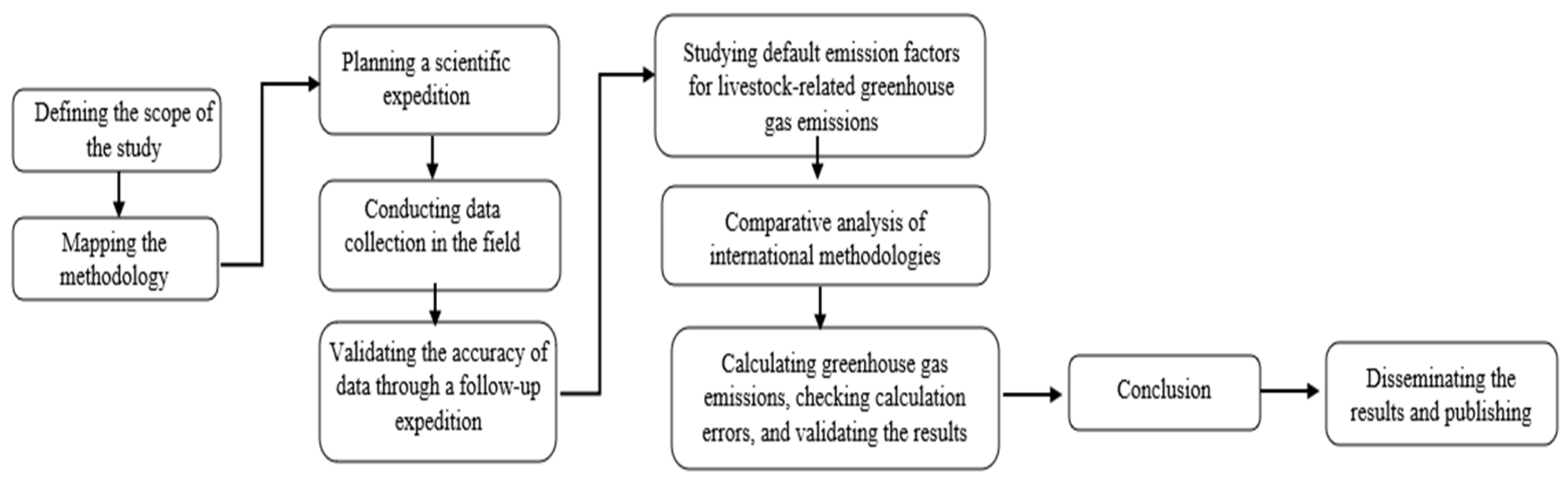
This study used a combination of methods, and the process is illustrated in Figure 1.
During the course of this study, data were collected through two field trips and a statistical reference. The first expedition in the selected region was organized in late July 2023. During the expedition, households around the main tourist attractions were registered, and surveys were conducted using questionnaires administered to each household. The survey results identified the time when each household moved to the area and the types of tourism activities in which they were involved.
After the expedition, in a next phase, spanning September and October 2023, work was conducted in the Ulaanhus and Tsengel regions of Bayan-Olgii province. The number of livestock in the last five years of the participant residents was cross-referenced with the registration database. In Mongolia, the number of herders is annually recorded and verified through a special registration system called the “A-dans”.
The second expedition unfolded during the first week of August 2024. Households camping in the area were re-registered, and the previously collected data were verified. Additionally, it was confirmed whether any new households had moved in. The average length of stay of the campers was determined through a survey.
According to the survey results, all herding households spend approximately 130 days camping between April and August. In contrast, households without livestock that only provide services spend 90 days or fewer, typically between May and August.
The next step consisted in analyzing the emission factors and making the necessary calculations. To estimate greenhouse gas (GHG) emissions from livestock, values from the IPCC 2006 Guidelines were used, primarily Tier 1 values and some Tier 2 values, per head of livestock. Specifically, they were as follows:
  • Enteric methane emissions from ruminants were calculated as follows: goats—5 kg CH4/year (Tier 1), grazing cattle—76.26 kg CH4/year (Tier 1), and sheep—13.77 kg CH4/year (Tier 2).
  • Methane emissions from manure management were calculated as: goats—0.17 kg CH4/year (Tier 1), grazing cattle—3 kg CH4/year (Tier 1), and sheep—0.19 kg CH4/year (Tier 1).
  • Nitrous oxide (N2O) emissions from manure were estimated as: grazing goats and sheep—0.02 kg N2O/year, and grazing cattle—0.4 kg N2O/year.
For hindgut fermenters, emissions were calculated as follows:
  • Methane emissions: horses—18 kg CH4/year, camels—46 kg CH4/year (regional average).
  • Methane from manure: horses—1 kg CH4/year, camels—0.6 kg CH4/year (regional average).
  • Nitrous oxide from manure: horses—0.1 kg N2O/year, camels—0.2 kg N2O/year (regional average).
The emission estimates in this study were calculated using two key equations and a conversion formula based on the IPCC 2006 Guidelines (Tier 1 and Tier 2 methodologies). Specifically, equation 1 was used to calculate methane (CH4) emissions coming from both total enteric fermentation (EFt), through respiration during rumination and total manure management (Nt), using the emission factors outlined above. The calculations were based on the assumption that the livestock remained within the designated study area for a total of 130 days during the reporting period.
Methane   emissions   ( CH 4 ) = T ( E F t × N t ) 10 6
The amount of nitrous oxide excreted in manure was calculated using Equation (2).
Nitrous   oxide   ( N 2 O ) = T ( E F t × N t ) 10 6
To integrate the results obtained from the two equations above, the methane (CH4) and nitrous oxide (N2O) emissions were transformed into carbon dioxide equivalents (CO2-eq), by taking into account their respective values considering global warming potential. Specifically, 1 kg of N2O is the equivalent of 298 kg of CO2, while 1 kg of CH4 is the equivalent of 25 kg of CO2, as per the IPCC 2006 Guidelines.

4. Results

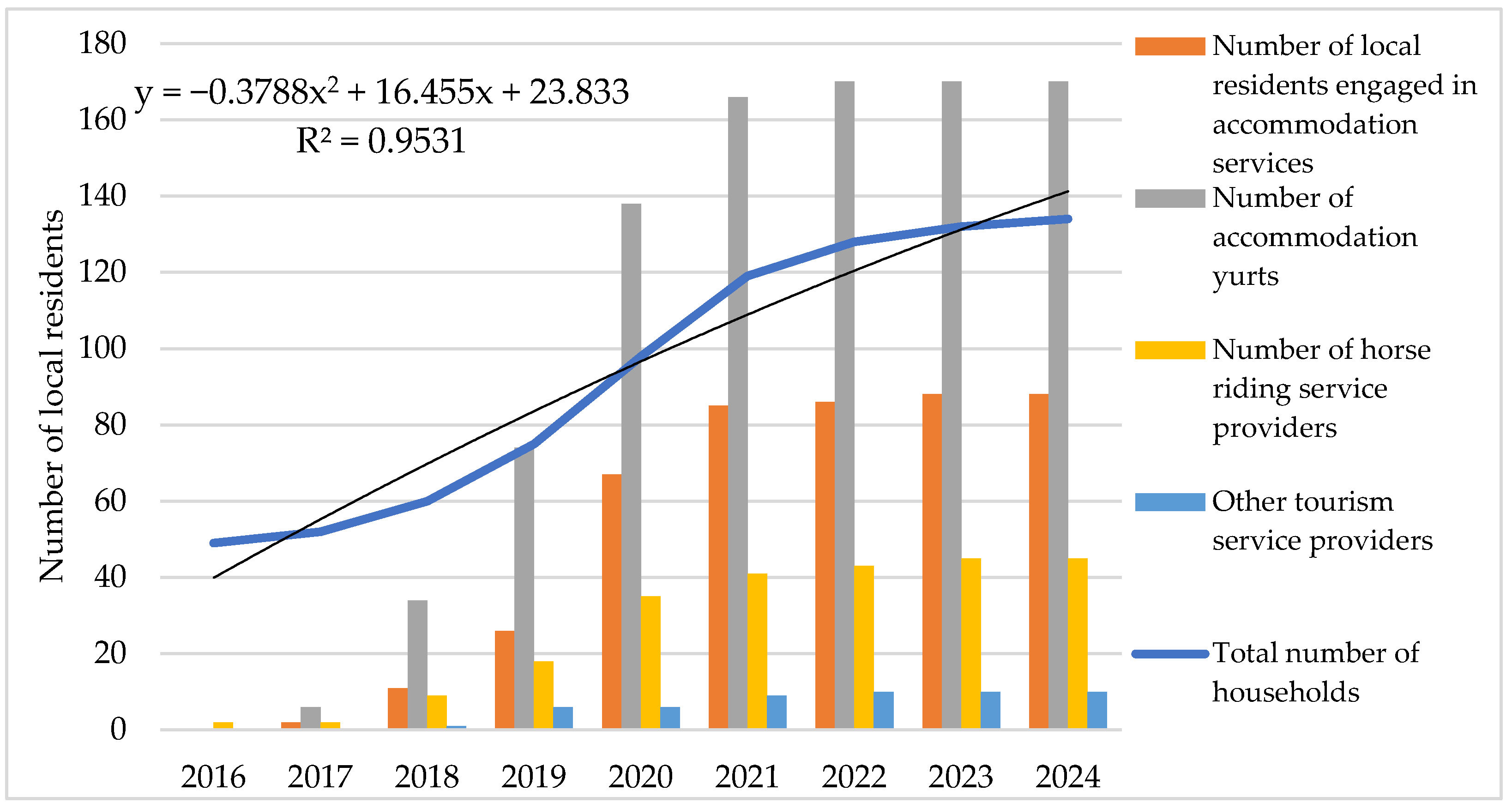
During the two field expeditions, data were collected from households engaged in summer pasturing and tourism activities in the Oigor area (administratively part of Ulaankhus region) and around Khoton and Khurgan Lakes (part of Tsengel region) within the Altai Tavan Bogd National Park. Prior to 2016, there were 49 households summering in these two areas; however, due to the growing number of tourists, the number of households rose significantly, reaching 134 in 2024. Following the peak in tourist arrivals in 2019, the number of indigenous households in these summer areas had doubled. Many households responded to tourism demand by constructing 2–3 additional traditional yurts next to their own and began offering horseback riding services. Some also started selling dairy products, while a few opened mobile grocery shops.
In 2024, a total of 134 households were summering near Khoton and Khurgan Lakes, with 170 yurts in use. Of these, 88 households provided tourist accommodation services using 82 additional yurts. Additionally, 45 households offered horseback riding services, while 10 households sold dairy products and livestock to tourists (Figure 2).
In the Oigor area, 51 households were recorded, of which 26 provided tourist accommodation services with 78 extra yurts. Ten households processed and sold dairy products, and five offered horse riding services to tourists.
According to the data collected during the expedition, the number of indigenous households near Khoton and Khurgan Lakes grew from 17 in 2017 to 83 in 2024. In the Oigor area, the number of yurts increased from over 30 in 14 households in 2017 to 129 yurts across 51 households in 2024. During the last seven years, the number of households migrating to the strictly protected area due to tourism has increased by approximately 173%.
Regression analysis indicates that the total number of households increased rapidly between 2016 and 2020, stabilized in 2021, and reached its peak in 2024. Projections suggest that future growth will be minimal and may even decline. The regression model yielded an R2 value of 0.9531, explaining 95.31% of the variance in the data and implying a margin of error of less than 5%.
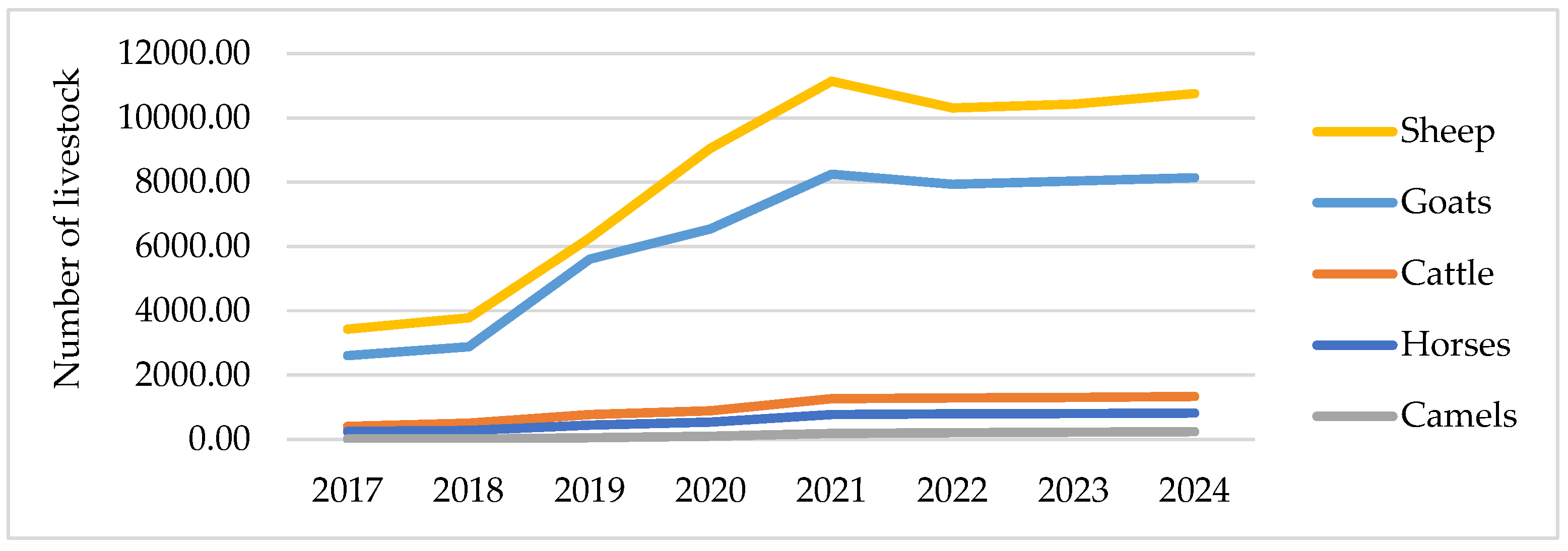
Official records from local authorities also indicate substantial growth in livestock numbers. The camel population rose twentyfold, from 12 in 2017 to 241 in 2024, despite a nationwide and provincial decline in camel numbers. This dramatic increase was driven directly by tourism, as local residents expanded their herds to rent camels to tourists as a traditional means of transport. The horse population grew by 230%, from 250 to 825, while cattle increased by 228%, from 409 to 1340. Among small ruminants, the number of sheep almost tripled from 3400 in 2017 to 10,760 in 2024, and the number of goats had a similar increase, from 2600 to 8100 (Figure 3).
Given the observed increase in livestock numbers, greenhouse gas (GHG) emissions from livestock herds owned by surveyed households in the vicinity of Altai Tavan Bogd area were calculated. As the survey encompassed all households residing within the designated area of the National Park, the margin of error is considered negligible.
Among the various livestock species, horses and camels are most commonly used for tourism-related purposes within the park, while the presence of other livestock types—such as sheep, goats, and cattle—is primarily linked to the households′ traditional pastoral livelihood rather than direct tourism influence. In reference to the IPCC 2006 Guidelines, carbon dioxide (CO2) emissions resulting from animal respiration are part of the natural carbon cycle and are therefore considered carbon-neutral. As such, CO2 from livestock respiration is not included in the greenhouse gas inventory.
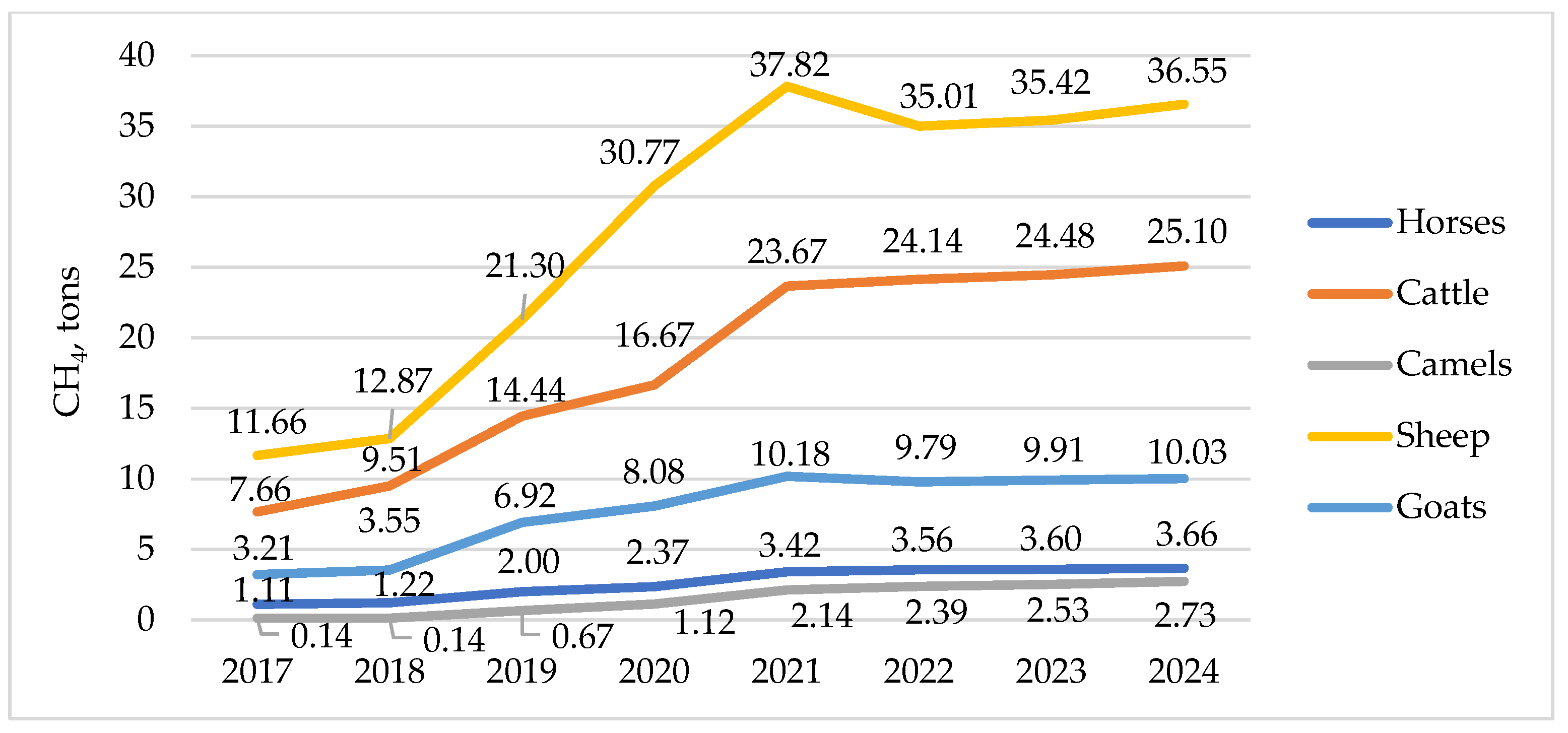
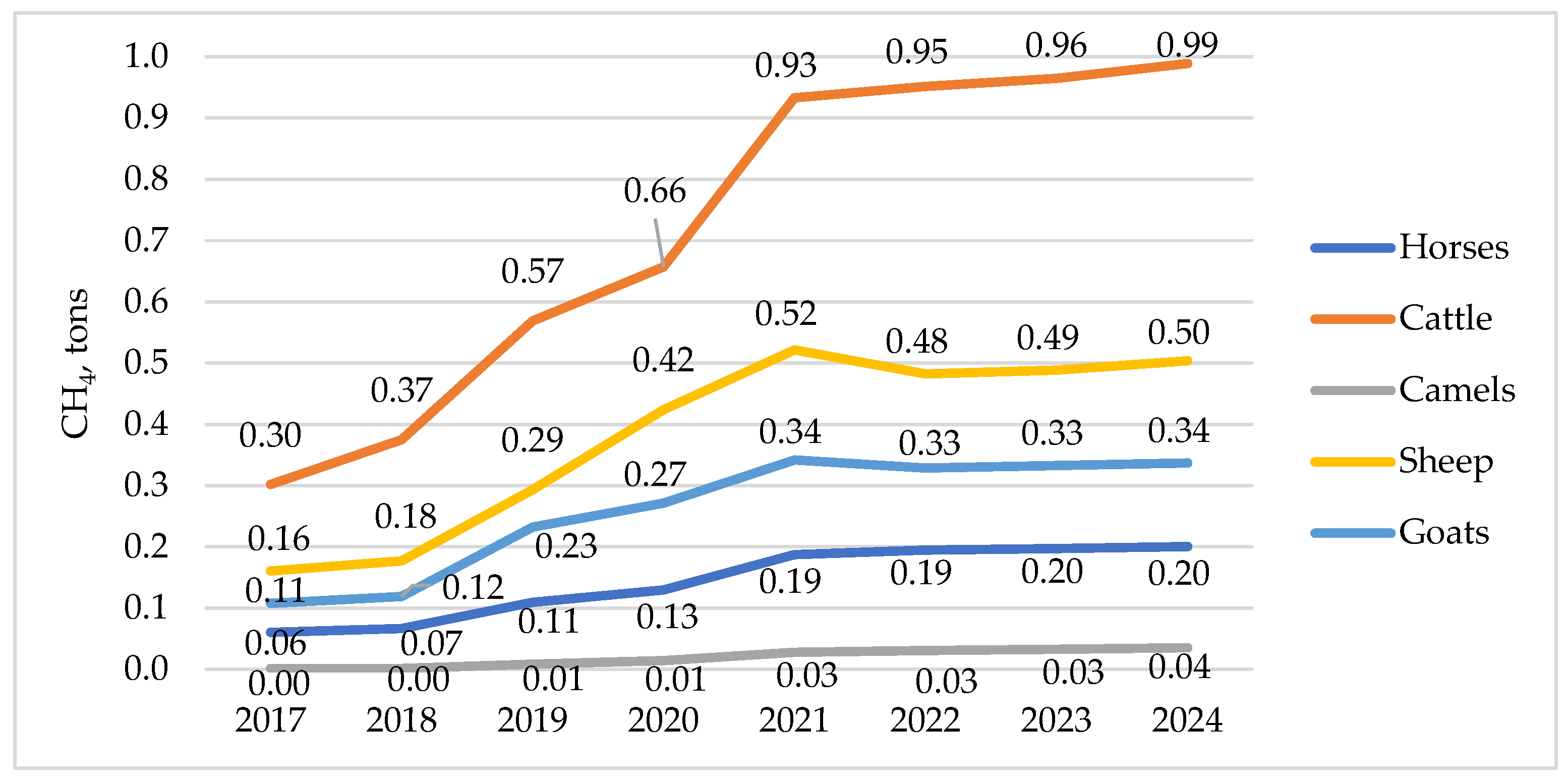
As explained in the methodology section, methane (CH4) emissions were calculated in two categories: emissions from ruminants during grazing and emissions from manure. Since 2017, the amount of methane released during grazing has increased threefold, from 23.78 tons CH4 per year to 78.09 tons CH4. Of this, 4.7% is attributed to the horse population, with methane emissions from horses increasing from 1.1 tons CH4 to 3.6 tons CH4 in recent years. The methane emissions from camels have also increased sharply, reaching levels similar to those of horses, accounting now for 3.5% of the total emissions.
On the other hand, methane emissions from sheep represent half of the total emissions, with emissions from sheep rising to 3.6 tons CH4 since 2017. The next largest source of methane is from cattle, which account for 32% of total emissions. Initially, methane emissions from cattle in this region were 7.6 tons CH4 per year, but now this has risen to 25.1 tons CH4 per year (Figure 4).
The increase in methane emissions from manure follows a similar trend to the increase observed in grazing emissions, but differs in the proportion of total emissions and the total amount of methane released. For instance, methane emissions from cattle manure represent roughly half of the total methane emissions from manure, while methane emissions from sheep manure represent 25% of the total methane emissions (Figure 5).
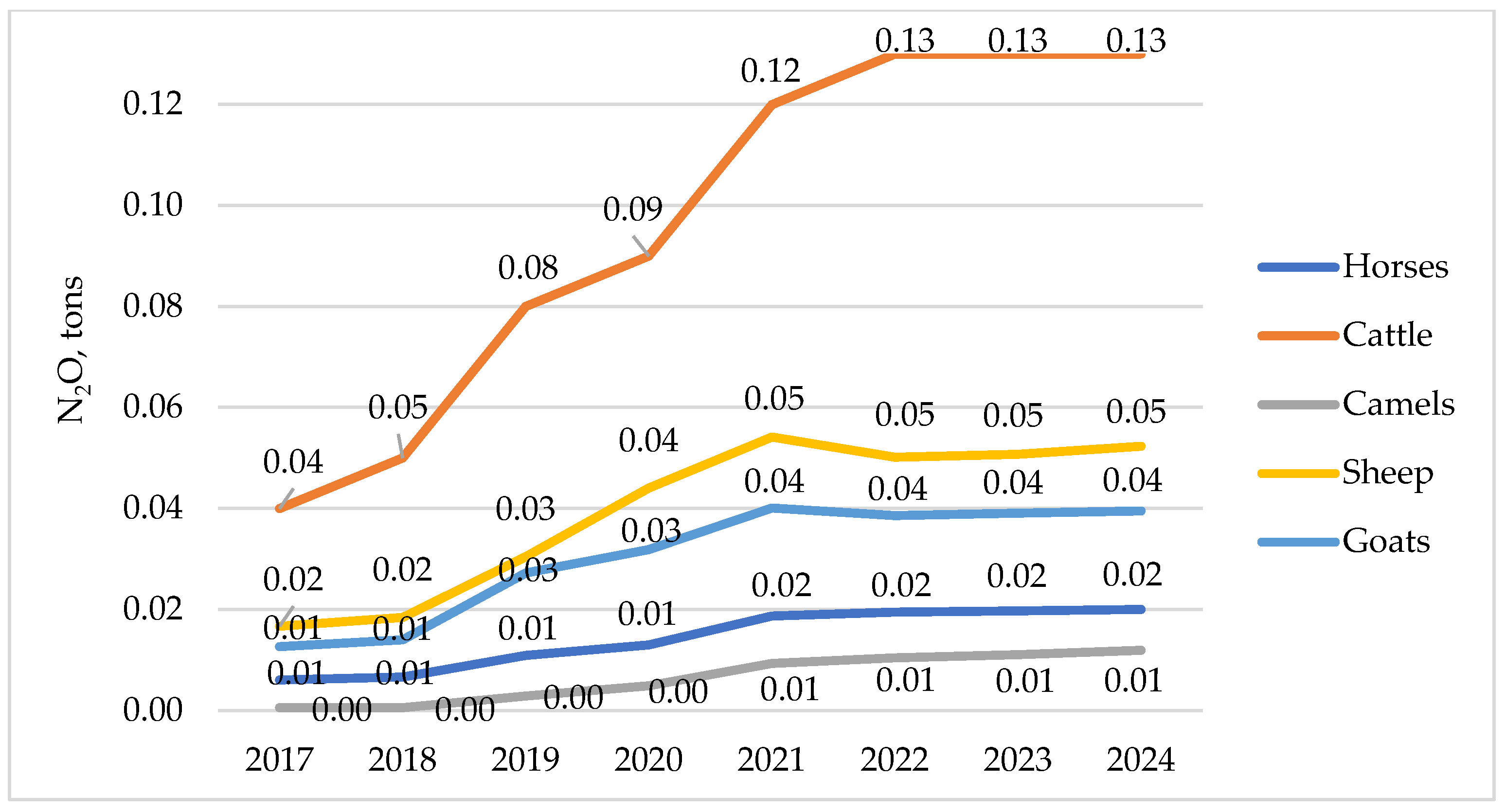
The amount of nitrous oxide (N2O) emitted from manure is significantly lower compared to methane, with annual emissions hovering below 0.3 tons N2O (Figure 6). However, it is important to note that the greenhouse effect of methane is 25 times higher than that of CO2, while the greenhouse effect of nitrous oxide is 298 times higher than that of CO2. Based on this principle, the greenhouse effect from the nitrous oxide emissions from cattle and camels is higher than that from the methane emissions from these livestock.
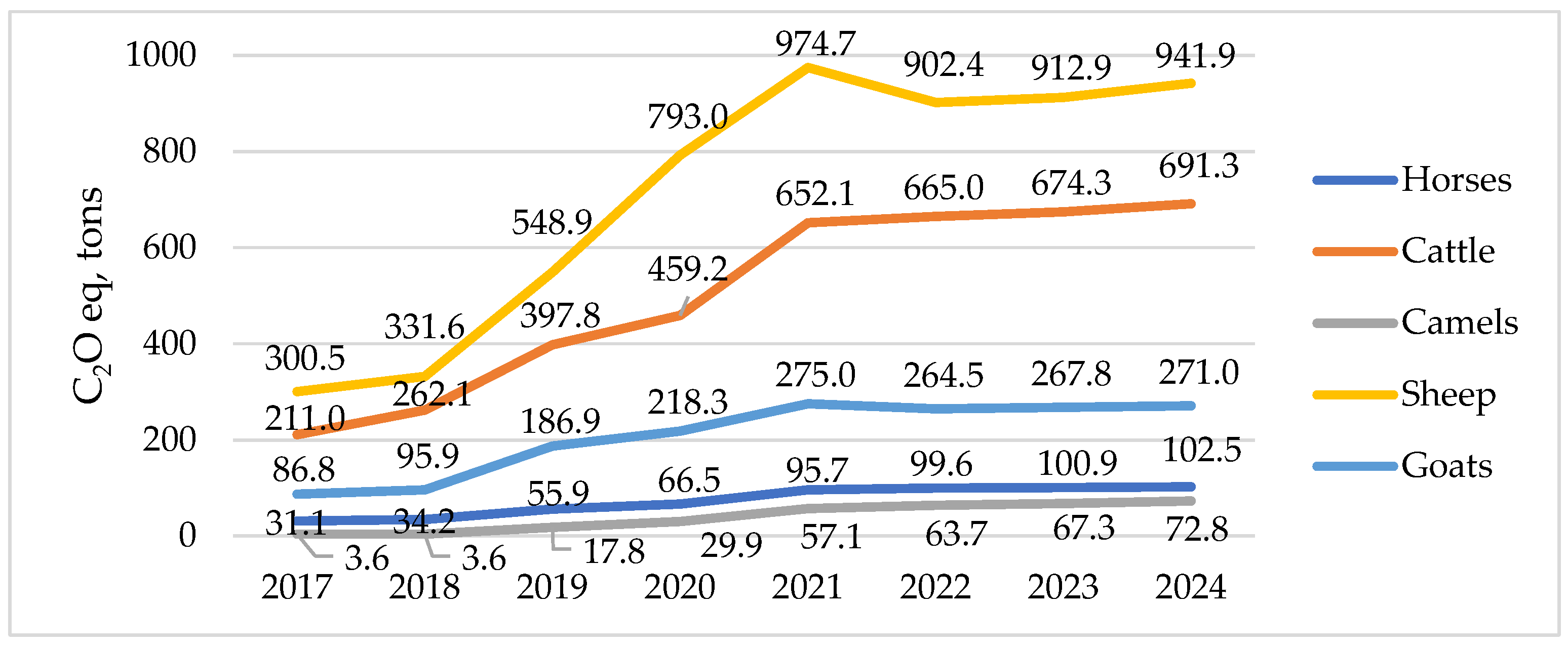
The amount of nitrous oxide emitted is directly linked to the increase in livestock numbers. Cattle account for 52% of the total emissions, sheep account for 20%, and goats account for 15%. When converting the greenhouse effects of the emitted methane and nitrous oxide to carbon dioxide equivalents, the following results are obtained (Figure 7).
Due to the impact of tourism, greenhouse gas emissions from livestock alone in the Altai Tavan Bogd area have increased by 3.3 times from 633 tons/CO2-eq in 2017 to 2079 tons/CO2-eq in 2024.
Sheep make up 50% of the livestock structure, goats 38%, and cattle 6.3%. However, sheep contribute 45.2% of total greenhouse gas emissions, cattle 33.2%, and goats 13%. In other regions of Mongolia, sheep and goats also dominate the livestock structure, reflecting the traditional pattern of Mongolian livestock farming.

5. Discussion

We contacted the Park Administration to compare our study’s findings with other pieces of research. They provided a study on livestock numbers prior to 2012 but noted that no studies had been conducted since then, nor had any research been carried out on greenhouse gas emissions. Similarly, the Ministry of Environment and Climate Change of Mongolia confirmed that no studies on greenhouse gas emissions in national parks exist, making our study a premiere and an important contribution to the sustainability of tourism in the national park. Although conceptual frameworks adapted to the Mongolian context are available for evaluating the influence of livestock on tourism, their suitability for application at the national park level is limited [63].
Regular greenhouse gas inventories have not been conducted in the protected areas of Mongolia, and no previous studies have been carried out to calculate the greenhouse gas emissions from livestock in the Altai Tavan Bogd National Park. Therefore, it is challenging to conduct a comparative analysis of the greenhouse gas emissions from livestock and other sources in protected areas. According to the available data, we compared the greenhouse gas emissions from livestock with those from transportation in the Altai Tavan Bogd area.
The surge in domestic tourism during the pandemic has been largely directed toward Altai Tavan Bogd National Park. Consequently, the number of tourists rose from 4071 in 2020 to 44,000 in 2021, 51,000 in 2022, and 56,000 in 2024. Correspondingly, the number of vehicles entering the park has also increased.
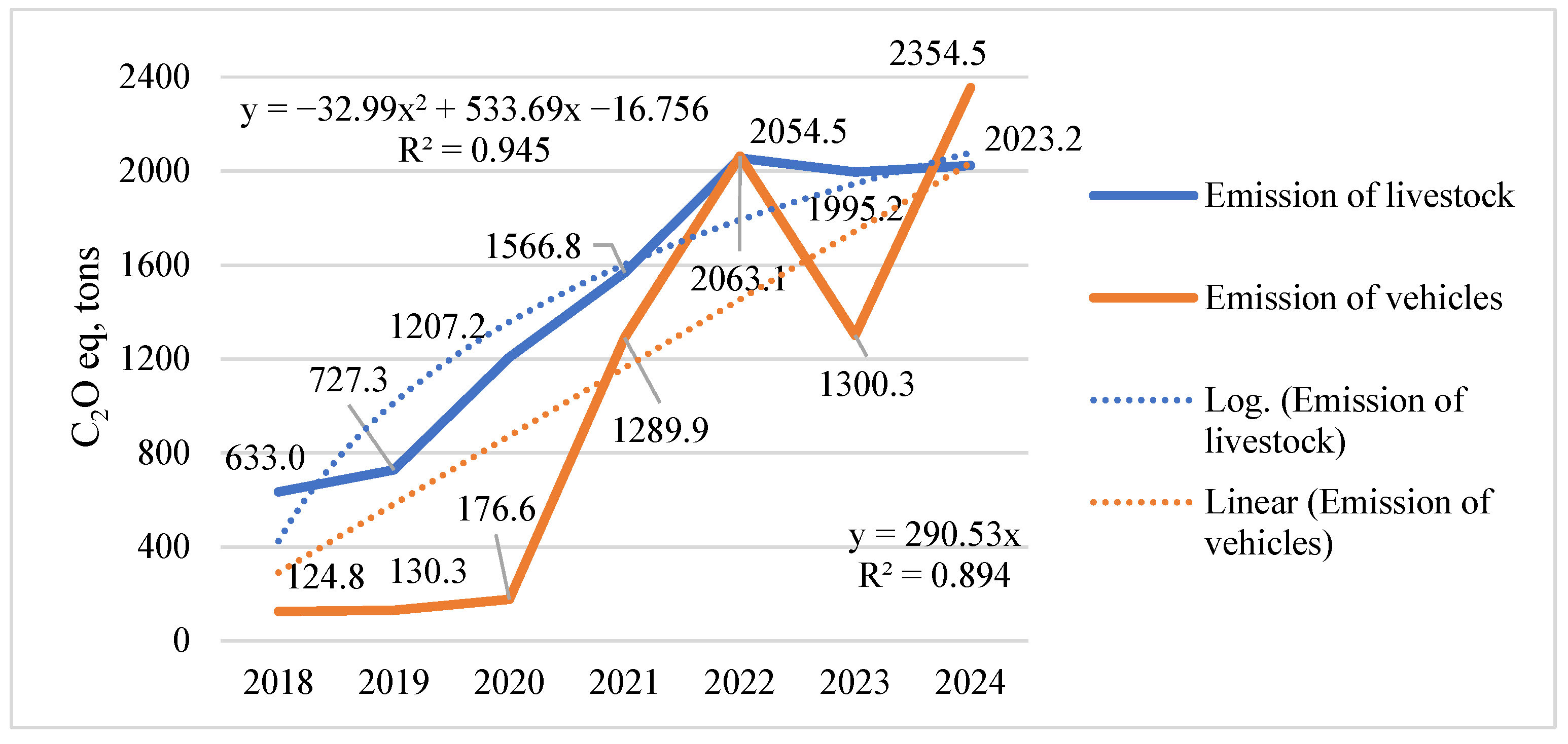
In the Altai Tavan Bogd National Park, 18,621 vehicles entered in 2022, emitting a total of 2063.1 tons of CO2-eq of greenhouse gases, while livestock emitted a total of 2054.5 tons of CO2-eq of greenhouse gases in the same year [64]. The emissions from vehicles fluctuate depending on the number of vehicles, whereas the greenhouse gas emissions from livestock show a consistent upward trend (Figure 8).
Regression analysis shows that greenhouse gas emissions from livestock began to increase in 2018, stabilized in 2021, and peaked in 2024. This trend is consistent with the regression analysis presented in Figure 2, confirming that livestock-related emissions rise in proportion to the number of households. The model explains 94.5% of the variance in the data, indicating a low margin of error. In comparison, the R value for greenhouse gas emissions from vehicles is 89.4%, suggesting a slightly higher margin of error, but still representing a reliable indicator.
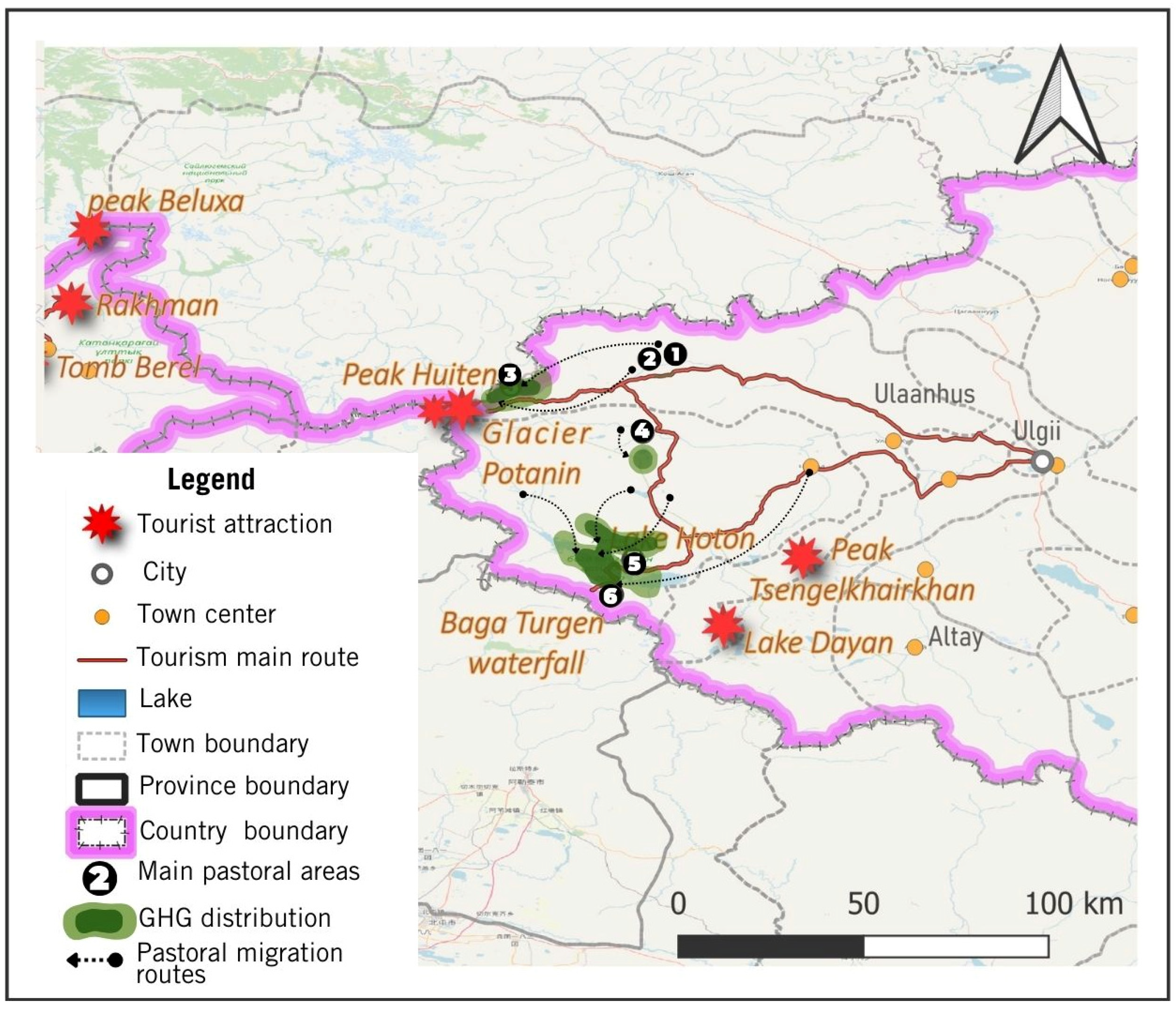
When mapping the greenhouse gas emissions based on the locations of livestock herding households and grazing areas, we found the emissions being concentrated around three areas: the Khoton-Khurgan Lake, the Potanin Glacier, and the White River Bridge (Figure 9).
The highest greenhouse gas emissions occur around the large lakes near Khoton-Khurgan Lake, where significant emissions are being released from the valley. This valley is surrounded by 6–7 perennial glaciers and ice-capped branches. Additionally, the Altai Tavan Bogd National Park, home to the largest glacier in Mongolia, also experiences high greenhouse gas emissions.
Based on the research conducted in the National Park, no studies have been carried out to estimate either the tourism capacity or the livestock carrying capacity. This is likely because tourism in the area was previously underdeveloped and visitor numbers were very low. There was also no prior recognition that tourism development could lead to livestock concentration. Nevertheless, some calculations were undertaken in this study to further enhance and deepen the research findings.
According to our calculations, livestock in the Altai Tavan Bogd area graze over a total area of 33,000 hectares, which accounts for 5% of the entire national park’s territory. While protected areas have become increasingly attractive holiday destinations and tourism may prove supportive for developing them sustainably, on the other hand, there are factors that directly contribute to the deterioration of biodiversity and ecosystems include climate changes due to human intervention in the natural cycle [65], changes in the topsoil, an increase in the number of non-native plant and animal species, a decrease in the number of endemic species, overexploitation of natural resources, and environmental pollution [66]. Livestock farming not only has a strong impact on sustainability and biodiversity loss but also indirectly affects all the above-mentioned factors. As the number of livestock increases, the topsoil is damaged, and this negatively impacts the habitat of various species and the ecosystem in the area. A clear example of this is that as the number of grazing livestock increases, they consume vegetation, directly impacting the productivity of plants.
Livestock farming also influences climate change. Livestock farming has numerous negative effects on the environment, one of which is that it slows down the natural water purification cycle and alters the process of water infiltration into the soil. Given the increase in the number of livestock and the corresponding impact on the soil, it is reasonable to conclude that this is affecting the plant environment in the Altai Tavan Bogd area.
In the Altai Tavan Bogd National Park, 1020 plant species have been registered, including rare and endangered species such as the Lopsided Onion (Allium obliquum), Codonopsis (Cadanopsis cladenifolia), Hegemone lilacina (Trollius lilacinus), Maral root (Leuzea carthamoides), and Ledeb (Dendranthema sinuatum), which are rare both in Mongolia and globally. Of the 889 species of herbaceous plants that serve as livestock feed, 115 species grow in humid environments, 93 species in wetland areas, and 315 species in cold environments [67]. An increase in the number of livestock may affect the productivity of these rare plants and the plants of cold and wetland environments.
In addition, 59 mammal species from 16 families have been registered within the National Park, 5 of which are listed in the Red Book of Mongolia, 4 are included in the Convention on International Trade in Endangered Species of Wild Fauna and Flora, and 7 are protected by law. The area around the Khoton-Khurgan Lake is a key habitat for rare animals such as the Altai argali (Ovis ammon ammon), the Siberian ibex, (Capra sibirica) the red deer (Cervus elaphus), and the famous snow leopard (Uncia uncia). The overlap of livestock grazing areas with the habitats of these rare animals is leading to the reduction of grazing land for herbivores, and carnivores are attacking livestock or fleeing from human presence. For example, during the research expedition, we recorded two cases where brown bears and snow leopards attacked livestock, and we encountered three red deer grazing alongside the livestock. Households are only residing in the designated tourism areas; however, unmanaged livestock are grazing not only in these areas but also in special zones, tourism zones, and restricted zones.
As the concentrated livestock numbers, greenhouse gas emissions, and ecological footprints become more and more linked to tourism activity, several measures must be urgently implemented within the National Park. These include the following:
  • Based on the greenhouse gas emissions within the National Park, setting an upper limit for the number of livestock and implementing policies to reduce livestock numbers as much as possible by the local self-government organizations;
  • The first step in reducing greenhouse gas emissions is to remove small livestock, such as sheep and goats, from within the park boundaries. This measure alone could reduce total greenhouse gas emissions by approximately 58%. Researchers suggest that reducing livestock numbers, particularly cattle and sheep, constitutes a key strategy for mitigating greenhouse gas emissions [68];
  • The National Park Authority can assess both the tourism carrying capacity and the total livestock carrying capacity, and implement measures to ensure these limits are not exceeded. These provisions can be incorporated into the park’s management plan;
  • Establishing grazing zones for livestock and ensuring that special areas are not accessed at all for grazing as much as possible by inserting this into the management plan of the National Park;
  • Protecting the habitats of rare animals and plants and safeguarding the soil layer from livestock;
  • Promoting environmentally sustainable tourism models that have minimal negative impact on the environment and providing herders with secondary income opportunities to decrease greenhouse gas emissions. Such initiatives could be implemented in collaboration with the National Park Administration, local conservation authorities, and international donor organizations. Although many projects are currently underway in Mongolia to improve the conservation management of national parks, this particular park is not included in any of them;
  • Organizing greenhouse gas emission inventories and studying climate change at the micro-region level;
  • Assess the benefits of tourism to the local community and quantify the income generated by local residents. Measures to reduce livestock numbers can then be implemented in proportion to the income earned from tourism. Although such provisions are included in Mongolian law, the National Park Administration has not yet undertaken activities in this area;
  • A key component of the National Park Management Plan should be the approach to stakeholder engagement and the framework for multi-stakeholder participation. The previous management plan was implemented solely by the Park Administration. Given that herder households in the vicinity of the National Park represent the largest stakeholder group, the plan should clearly define how these households will participate in park management. Their duties and responsibilities should be explicitly stated, enabling the monitoring of livestock numbers to ensure they remain within appropriate and sustainable limits.
The National Park Management Plan has been prepared only once, and its implementation period has now expired; however, the next plan has yet to be approved. This gap creates significant uncertainty. Furthermore, the studies conducted are not included in the Mongolian National Park Integrated Database, suggesting that the existing management plan was not implemented effectively. Due to this lack of accessible information, it is unclear whether the results of these studies can be compared with those from other national parks, or whether realistic assessments, implementation steps, and recommendations can be developed for environmental governance and sustainable tourism strategies in the park.
The measurement of greenhouse gas emissions from vehicles and livestock in Altai Tavan Bogd National Park represents an important first step toward establishing a future greenhouse gas reporting system for the park. Emissions from these two sources account for more than half of the park’s total greenhouse gas output. If, in the future, emissions from tourists, tourist food, tourist camps, and fuel consumption by herding households are also measured, it would be possible to account for 80–90% of the park’s total emissions. Comparable studies have been conducted in other countries, and baseline figures are clearly defined under Tier 1 of the 2006 IPCC Guidelines [69]. The remaining emissions are produced by non-human factors that influence the global climate, including greenhouse gases released during glacier melting and those generated during spring yellow dust storms.
The presence of livestock in Specially Protected Areas has been reported in Mongolia, Kazakhstan, eastern Siberia (Russia), northern China, and several countries in Africa and Latin America. The methodology developed in this study can be applied in these regions to assess the ecological footprint of livestock in relation to tourism. Specifically, for Mongolian national parks, the methodology could be applied in the following ways.
While livestock is permitted by law within the buffer zones and restricted areas of Specially Protected Areas, the law prohibits overstocking and the presence of livestock in pristine zones. The methodology applied in this study can be used in other national parks in order to measure the ecological footprint of livestock in a realistic and quantitative manner, and to ensure sustainability. By determining the total greenhouse gas absorption capacity of forests within a given park, emissions from livestock and other sectors can be compared against this capacity to assess whether they remain within reasonable limits. This approach also makes it possible to monitor whether the park’s carrying capacity is being exceeded.

6. Conclusions

Based on the research conducted during 2023–2024, the ecological footprint of concentrated livestock in Altai Tavan Bogd National Park due to tourism has been measured and calculated through greenhouse gas emissions. The results of two specially organized expeditions revealed the growing trend of local residents staying on and providing services to tourists within the park.
As tourist numbers have grown, the number of people engaged in tourism-related activities in the area has increased significantly. The research showed that tourism has intensified since 2017, and by 2024, it increased by 2.7 times, with local residents becoming more involved in tourism activities. The locals have started to build homes and offer accommodation services to tourists, with 62 households constructing 154 additional yurts to host tourists by 2024. Additionally, around 40 households are using approximately 150 horses for tourist services. This confirms that local residents are seeking to earn income not only from livestock herding but also from tourism. In addition to the native population, many newcomers have moved to the area to provide services exclusively during the summer season.
The number of livestock in these households from 2017 onwards was officially recorded by the local self-government authorities, and the growth trends were utilized in this study. Prior to the intensification of tourism in the region, there were approximately 6700 livestock in the area, but by 2024, this number had grown to about 21,300, representing a 3.3-fold increase. These livestock herds are concentrated in the summer months, particularly in the areas around Khoton-Khurgan Lake and Potanin Glacier within the Altai Tavan Bogd National Park, where tourism activities are most active.
Greenhouse gas emissions from livestock were calculated following the IPCC 2006 methodology, utilizing default values and research findings specific to Mongolia for methane emissions from cattle and sheep.
The methane emissions during the summer months have increased significantly over the last seven years, rising from 24.41 tons/CH4 to 80.14 tons/CH4, with cattle and sheep accounting for 76% of these emissions. The growth in methane and nitrous oxide emissions from livestock over the last seven years were displayed by means of graphs. When the total greenhouse gas emissions from livestock were converted into CO2-eq, it became clear that emissions from livestock have increased 3.3-fold since 2017, from 633 tons/CO2-eq to 2079 tons/CO2-eq in 2024. This level of emission is comparable to the emissions from vehicles in the area, indicating that the impact from livestock is similar to that of transportation in terms of greenhouse gas emissions.
In Altai Tavan Bogd National Park, livestock grazing affected approximately 10.4 thousand hectares in 2017, increasing to 33 thousand hectares by 2024—equivalent to 5% of the park’s total area. This area overlaps with the primary habitats of rare animals and plants. In other words, a large number of animals are concentrated in a relatively small area, leading to high greenhouse gas emissions per unit of land.
The greenhouse gas inventory within the Altai Tavan Bogd National Park has not been fully completed. The limits of our study consist in measuring GHG emissions only from livestock, not from other sources. Future studies can fill in this gap and provide an overall assessment. Based on our research, the emissions measured are relatively high. Therefore, to preserve the sustainability of the park, it is necessary to monitor the number of livestock in protected areas and implement policies to reduce greenhouse gas emissions as much as possible.
The newly approved management plan of the National Park should incorporate greenhouse gas inventory targets along with a comprehensive monitoring system. It should also formally document the negative impact of tourism on livestock concentration and clearly define strategies to prevent further increases in livestock concentration as tourism develops.

Author Contributions

Conceptualization, Y.B., B.A.K., K.N. and N.M.; methodology, Y.B. and B.A.K.; software, Y.B. and B.A.K.; validation, Y.B., B.A.K., K.N. and N.M.; formal analysis, Y.B. and B.A.K.; investigation, Y.B. and B.A.K.; resources, Y.B., B.A.K., K.N. and N.M.; data curation, Y.B., B.A.K., K.N. and N.M.; writing—original draft preparation, Y.B. and B.A.K.; writing—review and editing, K.N. and N.M.; visualization, Y.B., B.A.K., K.N. and N.M.; supervision, Y.B., B.A.K., K.N. and N.M.; project administration, K.N.; funding acquisition, Y.B., B.A.K., K.N. and N.M. All authors have read and agreed to the published version of the manuscript.

Funding

This research received no external funding.

Institutional Review Board Statement

Not applicable.

Informed Consent Statement

Not applicable.

Data Availability Statement

The data featured in this study are available on request from the corresponding author. The data are not publicly available due to privacy reasons.

Conflicts of Interest

The authors declare no conflicts of interest.

Abbreviations

The following abbreviations are used in this manuscript:
GHGGreenhouse gas
LEADLivestock, Environment, and Development
FAOFood and Agriculture Organization
CO2Carbon dioxide
CH4Methane
N2ONitrous oxide
EFEmission factor
IPCCIntergovernmental Panel on Climate Change
EFtTotal enteric fermentation
NtTotal manure management

References

  1. Ministry of Environment and Tourism of Mongolia. Report on Expenditure of Inbound Tourism of Mongolia; Ministry of Environment and Tourism of Mongolia: Ulaanbaatar, Mongolia, 2012.
  2. Government of Mongolia. The Master Plan of Tourism Development in Mongolia: 1995–2005; Government of Mongolia: Ulaanbaatar, Mongolia, 1995; Resolution No. 167 dated 11 December 1995. Available online: https://legalinfo.mn/mn/detail?lawId=200886&showType= (accessed on 12 December 2024).
  3. Parliament of Mongolia. Concept of Sustainable Development of Mongolia-2030; Parliament of Mongolia: Ulaanbaatar, Mongolia, 2016; Resolution No. 19 dated 11 February 2016. Available online: https://legalinfo.mn/mn/detail?lawId=207105&showType=1 (accessed on 16 December 2024).
  4. Parliament of Mongolia. Vision-2050 Long Term Development Policy of Mongolia; Parliament of Mongolia: Ulaanbaatar, Mongolia, 2020; Resolution No. 52 dated 13 May 2020. Available online: https://legalinfo.mn/mn/detail/15406 (accessed on 17 December 2024).
  5. Japan International Cooperation Agency. The Master Plan on National Tourism Development in Mongolia; Japan International Cooperation Agency: Ulaanbaatar, Mongolia, 1999; Available online: https://openjicareport.jica.go.jp/pdf/11512910_01.pdf (accessed on 10 January 2025).
  6. Garnett, T. Livestock-related greenhouse gas emissions: Impacts and options for policy makers. Environ. Sci. Pol. 2009, 12, 491–503. [Google Scholar] [CrossRef]
  7. Tsedev, B.E. Land Use and Nature Conservation in Mongolia. In The Physical Geography of Mongolia; Yembuu, B., Ed.; Springer Nature: Cham, Switzerland, 2021; pp. 195–211. Available online: https://link.springer.com/chapter/10.1007/978-3-030-61434-8_11 (accessed on 28 January 2025).
  8. Tugjamba, N.; Gantumur, A. Environmental Protection and Tourism: Tourism in the Protected Area in Mongolia. In Destination Management and Marketing; IGI Global: Hershey PA, USA, 2020; pp. 910–926. [Google Scholar] [CrossRef]
  9. McCarthy, C.; Shinjo, H.; Hoshino, B.; Enkhjargal, E. Assessing Local Indigenous Knowledge and Information Sources on Biodiversity, Conservation and Protected Area Management at Khuvsgol Lake National Park, Mongolia. Land 2018, 7, 117. [Google Scholar] [CrossRef]
  10. Sietses, D.J.; Faupin, G.; de Boer, W.F.; de Jong, C.B.; Henkens, R.J.H.G.; Usukhjargal, D.; Batbaatar, T. Resource partitioning between large herbivores in Hustai National Park, Mongolia. Mamm. Biol. 2009, 74, 381–393. [Google Scholar] [CrossRef]
  11. Reading, R.P.; Bedunah, D.J.; Amgalanbaatar, S. Conserving Biodiversity on Mongolian Rangelands: Implications for Protected Area Development and Pastoral Uses. In USDA Forest Service Proceedings RMRS-P-39; US Department of Agriculture, Forest Service, Rocky Mountain Research Station: Fort Collins, CO, USA, 2006; pp. 1–17. Available online: https://www.researchgate.net/publication/265758791_Conserving_Biodiversity_on_Mongolian_Rangelands_Implications_for_Protected_Area_Development_and_Pastoral_Uses (accessed on 25 August 2025).
  12. International Union for Conservation of Nature and Natural Resources. PARKS–The International Journal of Protected Areas and Conservation; International Union for Conservation of Nature and Natural Resources: Gland, Switzerland, 2016; Volume 22.1. [Google Scholar] [CrossRef]
  13. Wurts, K.E. Mongolian National Parks: Competing Interests and Institutional Viability in a Still Emerging Protected Areas System. Ind. Stud. Proj. (ISP) Collection, 2013; 1702, in press. Available online: https://core.ac.uk/reader/232735150 (accessed on 25 August 2025).
  14. Namsrai, O.; Ochir, A.; Baast, O.; van Genderen, J.L.; Muhar, A.; Erdeni, S.; Wang, J.; Davaasuren, D.; Chonokhuu, S. Evaluating the management effectiveness of protected areas in Mongolia using the management effectiveness tracking tool. J. Environ. Manag. 2018, 63, 249–259. [Google Scholar] [CrossRef]
  15. Erdenebat, N.; Yang, Y. Tourism Management System in Mongolia: The Case of Gorkhi-Terelj National Park. Smart Cit. Reg. Dev. J. 2022, 6, 93–108. Available online: https://scrd.eu/index.php/scrd/article/view/139 (accessed on 25 August 2025).
  16. Bedunah, D.J.; Schmidt, S. Pastoralism and Protected Area Management in Mongolia′s Gobi Gurvansaikhan National Park. Dev. Chang. 2004, 35, 167–191. [Google Scholar] [CrossRef]
  17. Lkhagvadorj, D.; Hauck, M.; Dulamsuren, C.; Tsogtbaatar, J. Pastoral nomadism in the forest-steppe of the Mongolian Altai under a changing economy and a warming climate. J. Arid. Environ. 2013, 88, 82–89. [Google Scholar] [CrossRef]
  18. Begzsuren, S.; Ellis, J.E.; Ojima, D.S.; Coughenour, M.B.; Chuluun, T. Livestock responses to droughts and severe winter weather in the Gobi Three Beauty National Park, Mongolia. J. Arid. Environ. 2004, 59, 785–796. [Google Scholar] [CrossRef]
  19. Yager, K.; Valdivia, C.; Slayback, D.; Jimenez, E.; Meneses, R.I.; Palabral, A.; Bracho, M.; Romero, D.; Hubbard, A.; Pacheco, P.; et al. Socio-ecological dimensions of Andean pastoral landscape change: Bridging traditional ecological knowledge and satellite image analysis in Sajama National Park, Bolivia. Reg. Environ. Chang. 2019, 19, 1353–1369. [Google Scholar] [CrossRef]
  20. Government of Kenya. Inventory of GHG Emissions from Dairy Cattle in Kenya 1995–2017; Government of Kenya: Nairobi, Kenya, 2020.
  21. Nhamo, G.; Dube, K.; Chapungu, L.; Chikodzi, D. Quest for NetZero emissions in South African national parks: A tourism perspective. Heliyon 2023, 9, e16410. [Google Scholar] [CrossRef]
  22. Phophe, P.A.; Masubelele, M.L. Carbon Footprint Assessment in Nature-Based Conservation Management Estates Using South African National Parks as a Case Study. Sustainability 2021, 13, 13969. [Google Scholar] [CrossRef]
  23. Small World Consulting Ltd. A Greenhouse Gas Emissions Assessment and Target Scenario for the New Forest National Park; Lancaster Environment Centre: Lancaster, UK, 2022. Available online: https://newforestnpa.gov.uk/app/uploads/2022/12/New-Forest-NP-GHG-Assessment-Report-v5-FINAL-221117.pdf (accessed on 14 February 2025).
  24. Small World Consulting Ltd. A Greenhouse Gas Emissions Assessment and Target Scenario for the Loch Lomond & The Trossachs National Park; Lancaster Environment Centre: Lancaster, UK, 2023; Available online: https://www.lochlomond-trossachs.org/wp-content/uploads/2025/01/Loch-Lomond-NP-GHG-Assessment-Report.pdf (accessed on 14 February 2025).
  25. Dadem, G.C.; Tchamba, N.M.; Tsi, E.A. Impacts of anthropogenic pressures on wildlife in the northern sector of the National Park of Mbam and Djerem, Adamaou Cameroon. Int. J. Biodiv. Cons. 2018, 10, 145–153. Available online: https://academicjournals.org/journal/IJBC/article-abstract/5DD646F56153?utm_source (accessed on 25 August 2025).
  26. Chimner, R.A.; Resh, S.C.; Hribljan, J.A.; Battaglia, M.; Bourgeau-Chavez, L.; Bowser, G.; Lilleskov, E.A. Mountain Wetland Soil Carbon Stocks of Huascaran National Park, Peru. Front. Plant Sci. 2023, 14, 1048609. [Google Scholar] [CrossRef]
  27. Yu, H.; Liu, B.; Wang, G.; Zhang, T.; Yang, Y.; Lu, Y.; Xu, Y.; Huang, M.; Yang, Y.; Zhang, L. Grass-livestock balance based grassland ecological carrying capability and sustainable strategy in the Yellow River Source National Park, Tibet Plateau, China. J. Mt. Sci. 2021, 18, 2201–2211. [Google Scholar] [CrossRef]
  28. Li, M.; Liu, S.; Sun, Y.; Liu, Y. Agriculture and animal husbandry increased carbon footprint on the Qinghai-Tibet Plateau during past three decades. J. Clean. Prod. 2021, 278. [Google Scholar] [CrossRef]
  29. Girma, Z.; Chuyong, G.; Mamo, Y. Impact of Livestock Encroachments and Tree Removal on Populations of Mountain Nyala and Menelik’s Bushbuck in Arsi Mountains National Park, Ethiopia. Int. J. Ecol. 2018, 2018, 5193460. [Google Scholar] [CrossRef]
  30. Wang, Y.; Liu, S.; Xie, Q.; Ma, Z. Carbon Footprint of a Typical Crop–Livestock Dairy Farm in Northeast China. Agriculture 2024, 14, 1696. [Google Scholar] [CrossRef]
  31. FAO Mongolia. Mongolia Improves Livestock Emissions Estimation with the Global Livestock Environmental Assessment Model; FAO Mongolia: Ulaanbaatar, Mongolia, 2024; Available online: https://www.fao.org/in-action/scala/news/news/news-detail/mongolia-improves-livestock-emissions-estimation-with-the-global-livestock-environmental-assessment-model/en (accessed on 8 February 2025).
  32. Solomon, T.; Gupta, V.; Major Ncho, C. Balancing Livestock Environmental Footprints with Forestry-Based Solutions: A Review. Ecologies 2023, 4, 714–730. [Google Scholar] [CrossRef]
  33. FAO. Livestock’s Long Shadow; FAO: Rome, Italy, 2006; Available online: https://www.fao.org/4/a0701e/a0701e00.pdf (accessed on 7 February 2025).
  34. Mozammel Hoque, A.; Mondal, S.; Adusumilli, S. Chapter Four–Sustainable livestock production and food security. Emerg. Issues Clim. Smart Livest. Prod. 2020, 71–90. [Google Scholar] [CrossRef]
  35. Gerber, P.J.; Steinfeld, H.; Henderson, B.; Mottet, A.; Opio, C.; Dijkman, J.; Falcucci, A.; Tempio, G. Tackling Climate Change Through Livestock–A Global Assessment of Emissions and Mitigation Opportunities; FAO: Rome, Italy, 2013; Available online: https://openknowledge.fao.org/items/5e54916e-a037-4b05-b04a-a46e87ffbe72 (accessed on 21 February 2025).
  36. Bhatt, A.; Abbassi, B. Review of environmental performance of sheep farming using life cycle assessment. J. Clean. Prod. 2021, 293, 126–192. [Google Scholar] [CrossRef]
  37. Sanjo Jose, V.; Sejian, V.; Bagath, M.; Ratnakaran, A.P.; Lees, A.M.; Al-Hosni, Y.A.S.; Sullivan, M.; Bhatta, R.; Gaughan, J.B. Modeling of Greenhouse Gas Emission from Livestock. Front. Environ. Sci. 2016, 4, 27. [Google Scholar] [CrossRef]
  38. Rotz, A. Environmental Sustainability of Livestock Production. Meat Muscle Biol. 2020, 4, 1–18. [Google Scholar] [CrossRef]
  39. Li, C.; Pradhan, P.; Wu, X.; Li, Z.; Liu, J.; Hubacek, K.; Chen, G. Livestock sector can threaten planetary boundaries without regionally differentiated strategies. J. Environ. Manag. 2024, 370, 122444. [Google Scholar] [CrossRef] [PubMed]
  40. Chen, G.Q.; Zhang, B. Greenhouse gas emissions in China 2007: Inventory and input output analysis. Energ. Pol. 2010, 38, 6180–6193. [Google Scholar] [CrossRef]
  41. Zhang, B.; Chen, G.Q. Methane emissions by Chinese economy: Inventory and embodiment analysis. Energ. Pol. 2010, 38, 4304–4316. [Google Scholar] [CrossRef]
  42. Kabange, N.R.; Kwon, Y.; Lee, S.M.; Kang, J.W.; Cha, J.K.; Park, H.; Dzorkpe, G.D.; Shin, D.; Oh, K.W.; Lee, J.H. Mitigating Greenhouse Gas Emissions from Crop Production and Management Practices, and Livestock: A Review. Sustainability 2023, 15, 15889. [Google Scholar] [CrossRef]
  43. He, D.; Deng, X.; Wang, X.; Zhang, F. Livestock greenhouse gas emission and mitigation potential in China. J. Environ. Manag. 2023, 348, 119494. [Google Scholar] [CrossRef]
  44. Grossi, G.; Goglio, P.; Vitali, A.; Williams, A.G. Livestock and climate change: Impact of livestock on climate and mitigation strategies. Anim. Front. 2018, 9, 69–76. [Google Scholar] [CrossRef]
  45. Weiss, F.; Leip, A. Greenhouse gas emissions from the EU livestock sector: A life cycle assessment carried out with the CAPRI model. Agric. Ecos. Environ. 2012, 149, 124–134. [Google Scholar] [CrossRef]
  46. Ding, X.Z.; Long, R.J.; Kreuzer, M.; Mi, J.D.; Yang, B. Methane emissions from yak (Bos grunniens) steers grazing or kept indoors and fed diets with varying forage: Concentrate ratio during the cold season on the Qinghai-Tibetan Plateau. Anim. Feed. Sci. Tech. 2010, 162, 91–98. [Google Scholar] [CrossRef]
  47. Danielsson, R.; Dicksved, J.; Sun, L.; Gonda, H.; Muller, B.; Schnurer, A.; Bertilsson, J. Methane Production in Dairy Cows Correlates with Rumen Methanogenic and Bacterial Community Structure. Front. Microb. 2017, 8, 226. [Google Scholar] [CrossRef]
  48. Murray, P.J.; Moss, A.; Lockyer, D.R.; Jarvis, S.C. A comparison of systems for measuring methane emissions from sheep. J. Agric. Sci. 1999, 133, 439–444. [Google Scholar] [CrossRef]
  49. Archimede, H.; Rira, M.; Eugene, M.; Fleury, J.; Lastel, M.L.; Periacarpin, F.; Silou-Etienne, T.; Morgavi, D.P.; Doreau, M. Intake, total-tract digestibility and methane emissions of Texel and Blackbelly sheep fed C4 and C3 grasses tested simultaneously in a temperate and a tropical area. J. Clean. Prod. 2018, 185, 455–463. [Google Scholar] [CrossRef]
  50. Zhai, X.; Lu, T.; Tang, S.; Liu, X.; Ma, X.; Han, G.; Wilkes, A.; Wang, C. Methane emission from sheep respiration and sheepfolds during the grazing season in a desert grassland. Open Atmos. Sci. J. 2015, 9, 23–28. [Google Scholar] [CrossRef]
  51. Goopy, J.P.; Donaldson, A.; Hegarty, R.; Vercoe, P.E.; Haynes, F.; Barnett, M.; Hutton Oddy, V. Low methane yield sheep have smaller rumens and shorter rumen retention time. Brit. J. Nutr. 2014, 111, 578–585. [Google Scholar] [CrossRef] [PubMed]
  52. Savian, J.V.; Barth Neto, A.; Bitencourt de David, D.; Bremm, C.; Schons, R.M.T.; Moraes Genro, T.C.; Azevedo do Amaral, G.; Gere, J.; McManus, C.M.; Bayer, C.; et al. Grazing intensity and stocking methods on animal production and methane emission by grazing sheep: Implications for integrated crop–livestock system. Agric. Ecos. Environ. 2014, 190, 112–119. [Google Scholar] [CrossRef]
  53. Savian, J.V.; Schons, R.M.T.; Marchi, D.E.; Freitas, T.S.; Silva Neto, G.F.; Mezzalira, J.C.; Berndt, A.; Bayer, C.; Carvalho, P.C. Rotatinuous stocking: A grazing Rotatinuous stocking: A grazing management innovation that has high potential to mitigate methane emissions by sheep. J. Clean. Prod. 2018, 186, 602–608. [Google Scholar] [CrossRef]
  54. Ulyatt, M.J.; Lassey, K.R.; Shelton, I.D.; Walker, C.F. Methane emission from dairy cows and wether sheep fed subtropical grass dominant pastures in midsummer in New Zealand. N. Z. J. Agric. Res. 2002, 45, 227–234. [Google Scholar] [CrossRef]
  55. Sun, X.Z.; Hoskin, S.O.; Muetzel, S.; Molano, G.; Clark, H. Effects of forage chicory (Cichorium intybus) and perennial ryegrass (Lolium perenne) on methane emissions in vitro and from sheep. Anim. Feed Sci. Tech. 2011, 166–167, 391–397. [Google Scholar] [CrossRef]
  56. Lassey, K.R.; Ulyatt, M.J.; Martin, R.J.; Walker, C.F.; Shelton, I.D. Methane emissions measured directly from grazing livestock in New Zealand. Atmos. Environ. 1997, 31, 2905–2914. [Google Scholar] [CrossRef]
  57. Pinares-Patino, C.S.; Lassey, K.R.; Martin, R.J.; Molano, G.; Fernandez, M.; MacLean, S.; Sandoval, E.; Luo, D.; Clark, H. Assessment of the sulphur hexafluoride (SF6) tracer technique using respiration chambers for estimation of methane emissions from sheep. Anim. Feed Sci. Tech. 2011, 166–167, 201–209. [Google Scholar] [CrossRef]
  58. Hammond, K.J.; Pacheco, D.; Burke, J.L.; Koolaard, J.P.; Muetzel, S.; Waghorn, G.C. The effects of fresh forages and feed intake level on digesta kinetics and enteric methane emissions from sheep. Anim. Feed Sci. Tech. 2014, 193, 32–43. [Google Scholar] [CrossRef]
  59. Pinares-Patino, C.S.; Hickey, S.M.; Young, E.A.; Dodds, K.G.; MacLean, S.; Molano, G.; Sandoval, E.; Kjestrup, H.; Harland, R.; Hunt, C.; et al. Heritability estimates of methane emissions from sheep. Animal 2013, 7, 316–321. [Google Scholar] [CrossRef]
  60. Udval, G.; Urankhaich, C.; Altantsetseg, L.; Sangajav, D.; Gankhuyag, L. A Theoretical Baseline Study on Determining Methane Emissions from Ruminant Livestock (2019–2022); Mongolian State Livestock Research Agency: Ulaanbaatar, Mongolia, 2024. Available online: https://data.stf.gov.mn/report/5151 (accessed on 25 August 2025).
  61. Kumari, S.; Fagodiya, R.K.; Hiloidhari, M.; Dahiya, R.P.; Kumar, A. Methane production and estimation from livestock husbandry: A mechanistic understanding and emerging mitigation options. Sci. Total Environ. 2020, 709, 135–136. [Google Scholar] [CrossRef] [PubMed]
  62. Eggleston, S.; Buendia, L.; Miwa, K.; Ngara, T.; Tanabe, K. 2006 IPCC Guidelines for National Greenhouse Gas Inventories; Intergovernmental Panel on Climate Change: Geneva, Switzerland, 2006; Available online: https://www.ipcc.ch/report/2006-ipcc-guidelines-for-national-greenhouse-gas-inventories/ (accessed on 22 February 2025).
  63. Jing, L.; Stauvermann, P.J.; Kumar, R.R. How the Tourism Industry Can Help Resolve Mongolia’s Environmental Problems. Economies 2025, 13, 64. [Google Scholar] [CrossRef]
  64. Badyelgajy, Y.; Doszhanov, Y.; Kapsalyamov, B.; Onerkhan, G.; Sabitov, A.; Zhumazhanov, A.; Doszhanov, O. Calculation of Greenhouse Gas Emissions from Tourist Vehicles Using Mathematical Methods: A Case Study in Altai Tavan Bogd National Park. Sustainability 2025, 17, 6702. [Google Scholar] [CrossRef]
  65. Hornoiu, R.I.; Padurean, M.A.; Nica, A.M.; Maha, L.G. Tourism Consumption Behavior in Natural Protected Areas. Amf. Econ. 2014, 16, 1178–1190. Available online: https://www.econstor.eu/handle/10419/168885 (accessed on 25 August 2025).
  66. Rusu, T.; Pacurar, I.; Dirja, M.; Pacurar, H.M.; Oroian, I.; Cosma, S.A.; Gheres, M. Effect of tillage systems on soil properties, humus and water conservation. Agric. Sci. 2013, 4, 35–40. [Google Scholar] [CrossRef]
  67. World Resources Institute. Ecosystems and Human Well-Being: Biodiversity Synthesis, A Report of the Millennium Ecosystem Assessment; World Resources Institute: Washington, DC, USA, 2005; Available online: https://www.millenniumassessment.org/documents/document.354.aspx.pdf (accessed on 27 February 2025).
  68. Baast, O. Protected Areas of Mongolia; Admon Printing: Ulaanbaatar, Mongolia, 2012; ISBN 99929-0-337-6. [Google Scholar]
  69. Zhou, S.; Liu, B.; Wang, J.; Jin, D.; Zhang, H. Assessing Global Agricultural Greenhouse Gas Emissions: Key Drivers and Mitigation Strategies. Agronomy 2025, 15, 1336. [Google Scholar] [CrossRef]
Figure 1. Methodology and research phases. Source: the authors.
Sustainability 17 07870 g001
Figure 2. Information on residents engaged in tourism. Source: the authors.
Sustainability 17 07870 g002
Figure 3. Increased livestock numbers due to tourism. Source: the authors.
Sustainability 17 07870 g003
Figure 4. Increase in methane (CH4) emissions from livestock rumination. Source: the authors.
Sustainability 17 07870 g004
Figure 5. Increase in methane (CH4) emissions from livestock manure. Source: the authors.
Sustainability 17 07870 g005
Figure 6. Increase in nitrous oxide (N2O) emissions from livestock manure. Source: the authors.
Sustainability 17 07870 g006
Figure 7. Greenhouse gas equivalent emissions from livestock. Source: the authors.
Sustainability 17 07870 g007
Figure 8. Comparison of greenhouse gas emissions. Source: the authors.
Sustainability 17 07870 g008
Figure 9. Spatial distribution of tourism-derived GHGs along main routes in Altai Tavan Bogd National Park. Source: the authors.
Sustainability 17 07870 g009
Table 1. Types and amounts of greenhouse gas emitted by livestock.
Livestock TypesMethane Emissions from Enteric Fermentation (CH4)Methane Emissions from Manure (CH4)Nitrous Oxide Emissions from Manure (N2O)
Per yearPer dayPer yearPer dayPer yearPer day
Sheep13.77 kg37.7 gr0.19 kg0.52 gr0.02 kg0.054 gr
Goats5 kg13.7 gr0.17 kg0.46 gr0.02 kg0.054 gr
Cattle76.26 kg208 gr3 kg8.2 gr0.4 kg1.09 gr
Horses18 kg49.3 gr1 kg2.7 gr0.1 kg0.27 gr
Camels46 kg126 gr0.6 kg1.64 gr0.2 kg0.55 gr
Source: Authors’ own compilation from literature review.
Disclaimer/Publisher’s Note: The statements, opinions and data contained in all publications are solely those of the individual author(s) and contributor(s) and not of MDPI and/or the editor(s). MDPI and/or the editor(s) disclaim responsibility for any injury to people or property resulting from any ideas, methods, instructions or products referred to in the content.