3.1. Analysis of Soil Constituents
The descriptive statistical results for the soil constituents analyzed are presented in
Table 4. These results show that the soil texture in the study area consists primarily of fine sand (59.12% > fine sand > 22.59%) and coarse sand (54% > coarse sand > 27%), indicating a predominantly sandy texture. Additionally, gypsum content is significant, with an average of 20.2%, and exhibits a highly heterogeneous distribution (CV = 43.76%). In contrast, the total limestone content is relatively low, averaging only 1.95%.
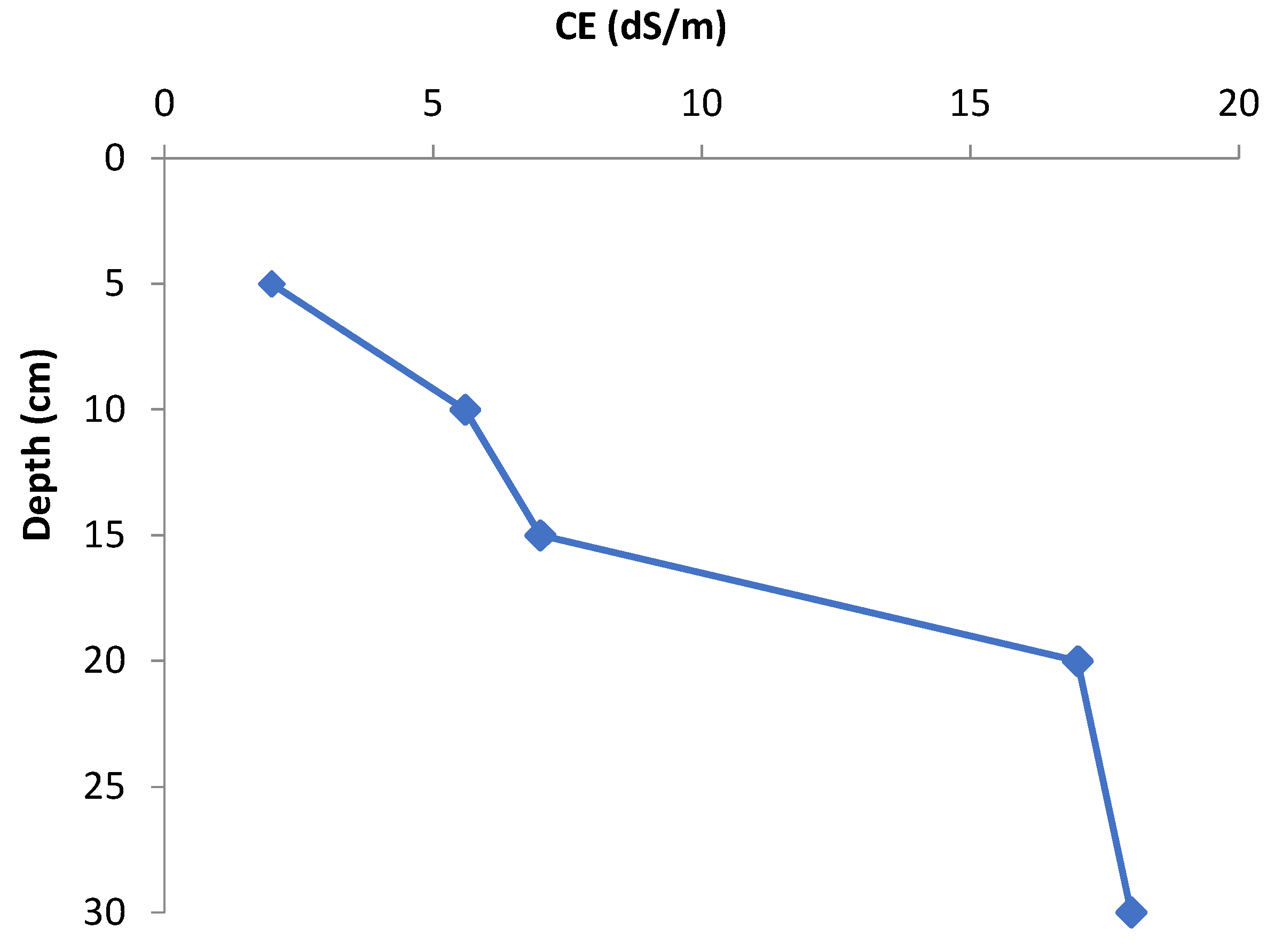
Figure 5 and
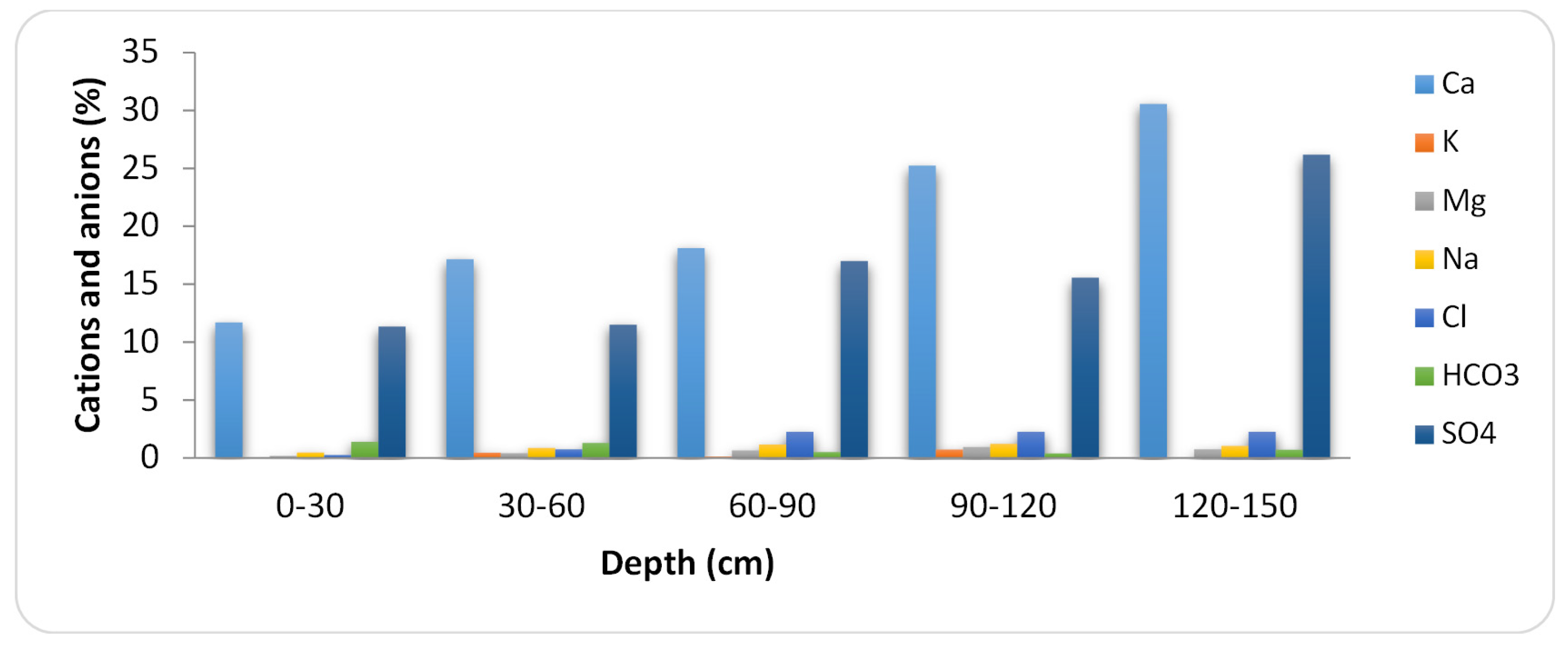
Figure 6 display the findings of the analysis of the soil solution for Profile 1 regarding the ionic composition and salinity of the four soil solutions.
The salt distribution with depth (
Figure 5) reveals high salinity in the deepest horizon (ECps = 19.32 dS m
−1). The relatively lower surface salinity is attributed to leaching caused by recent irrigation, with salts accumulating in the lower horizons. Notably, the highest salinity corresponds to the horizon richest in fine sand, indicating that fine sands are more susceptible to salinization than coarse sands. This suggests a descending salt profile (
Figure 5). According to the U.S. Salinity Laboratory (USSL) classification [
19], all soil levels are saline, with the first horizon classified as only slightly saline.
The cations in the soil solution (
Figure 6) classified according to their predominance are: Ca
2+ > Na
+ > Mg
2+ > K
+.
For the anions present in Profile 1 (
Figure 6), SO
42− is the dominant ion, accounting for 40.42%. The classification of anions by predominance is: SO
42− > Cl
− > HCO
3−.
The analysis of the soil solution for Profile 2 (
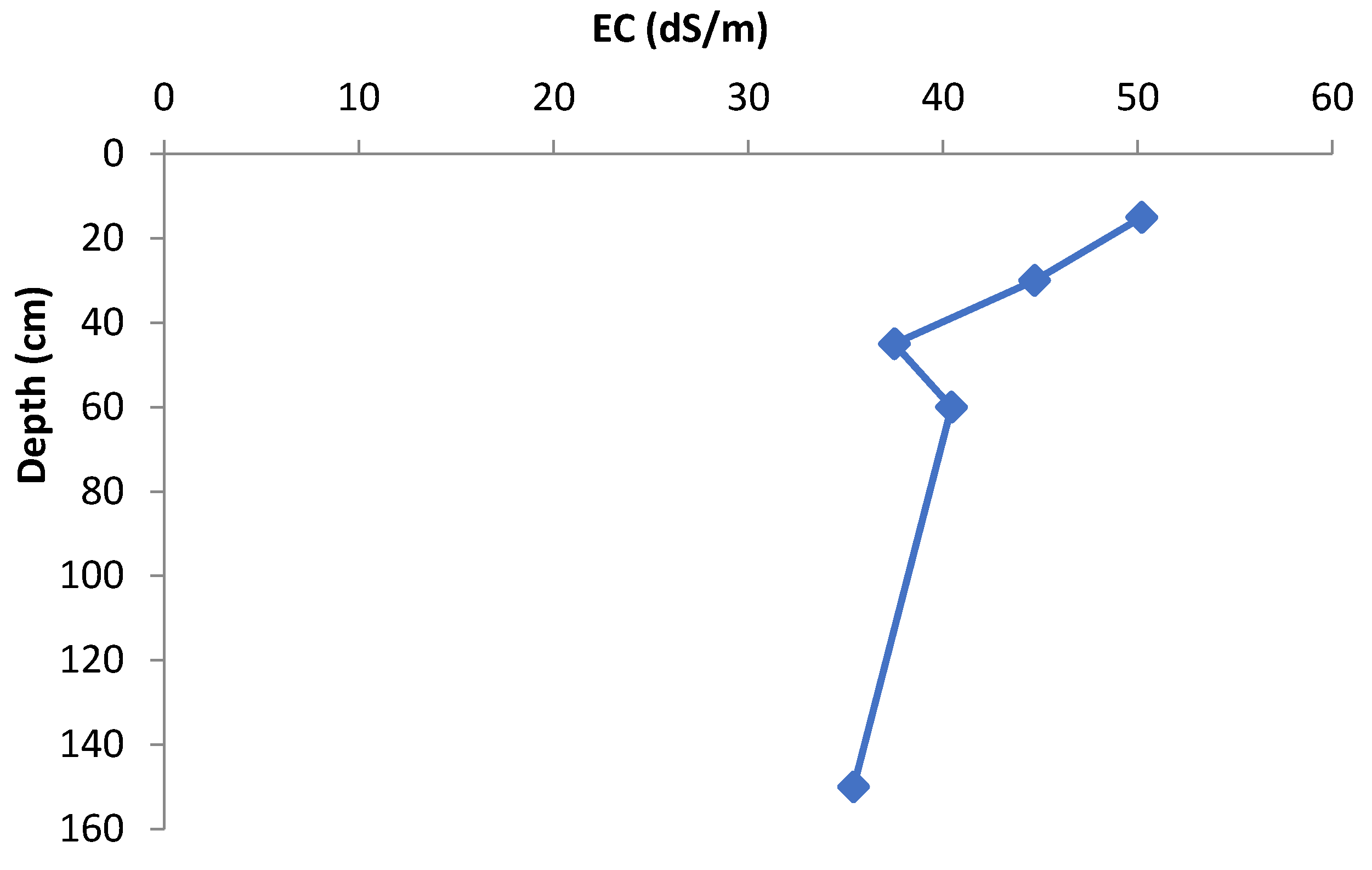
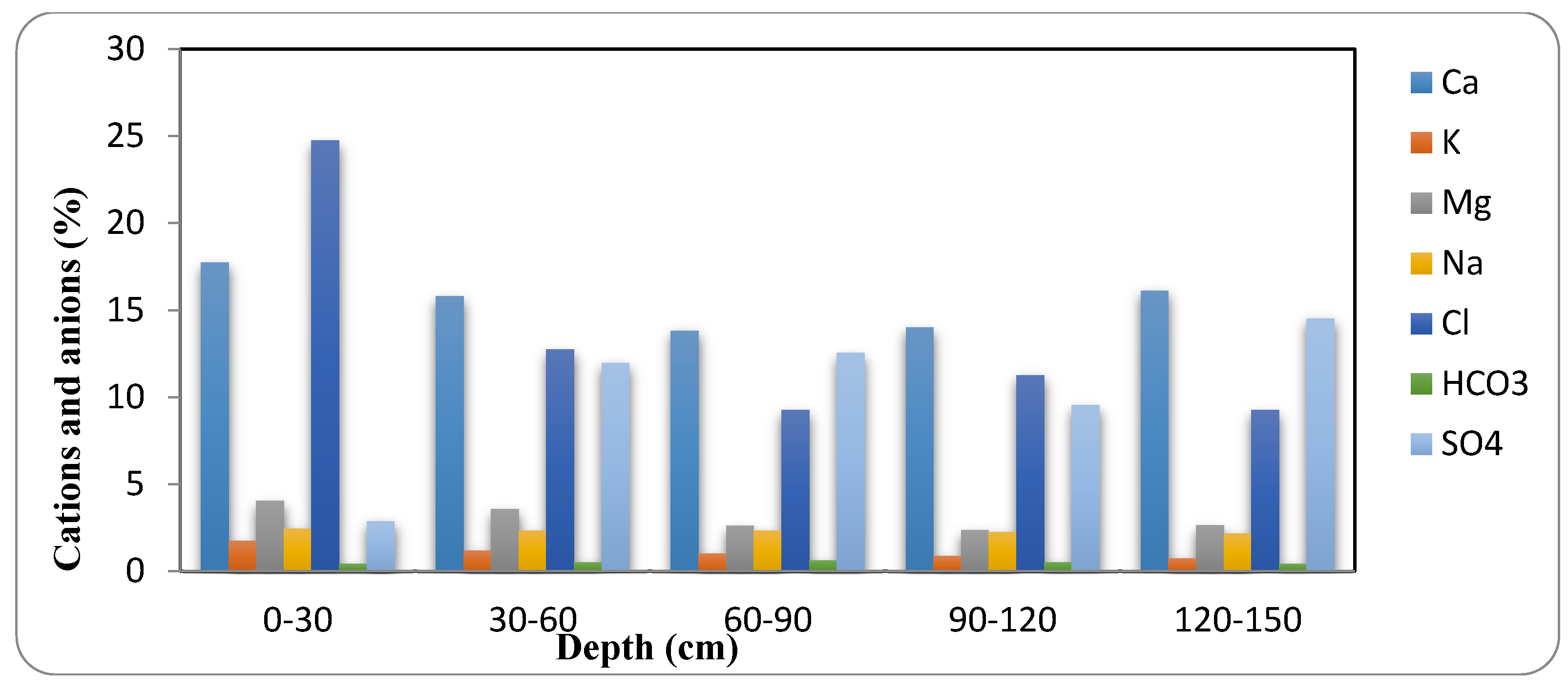
Figure 7 and
Figure 8) displays the findings for the ionic composition and salinity of the four soil solutions for Profile 2.
The salt distribution with depth (
Figure 7) shows high surface salinity (EC = 50.22 dS m
−1). Leaching from irrigation water has lowered the salinity in the deeper horizons, with electrical conductivity varying between 35.42 dS m
−1 and 50.22 dS m
−1. Salinity decreases in the third horizon but increases again in the fourth horizon, indicating salt accumulation. Fine sands are more affected by salinization compared to coarse sands. The salinity profile follows a concave pattern, as shown in
Figure 7. According to [
19], the soil exhibits salinity from the first to the fifth horizon.
The cations present in the soil solution (
Figure 8), show Ca
2+ is the most abundant, with an average concentration of 33.61%. The classification of cations by predominance is Ca
2+ > Mg
2+ > Na
+ > K
+. Amongst the anions in Profile 2 (
Figure 8), the anion Cl
− is the most prevalent, with the following classification predominance: Cl
− > SO
42− > HCO
3−.
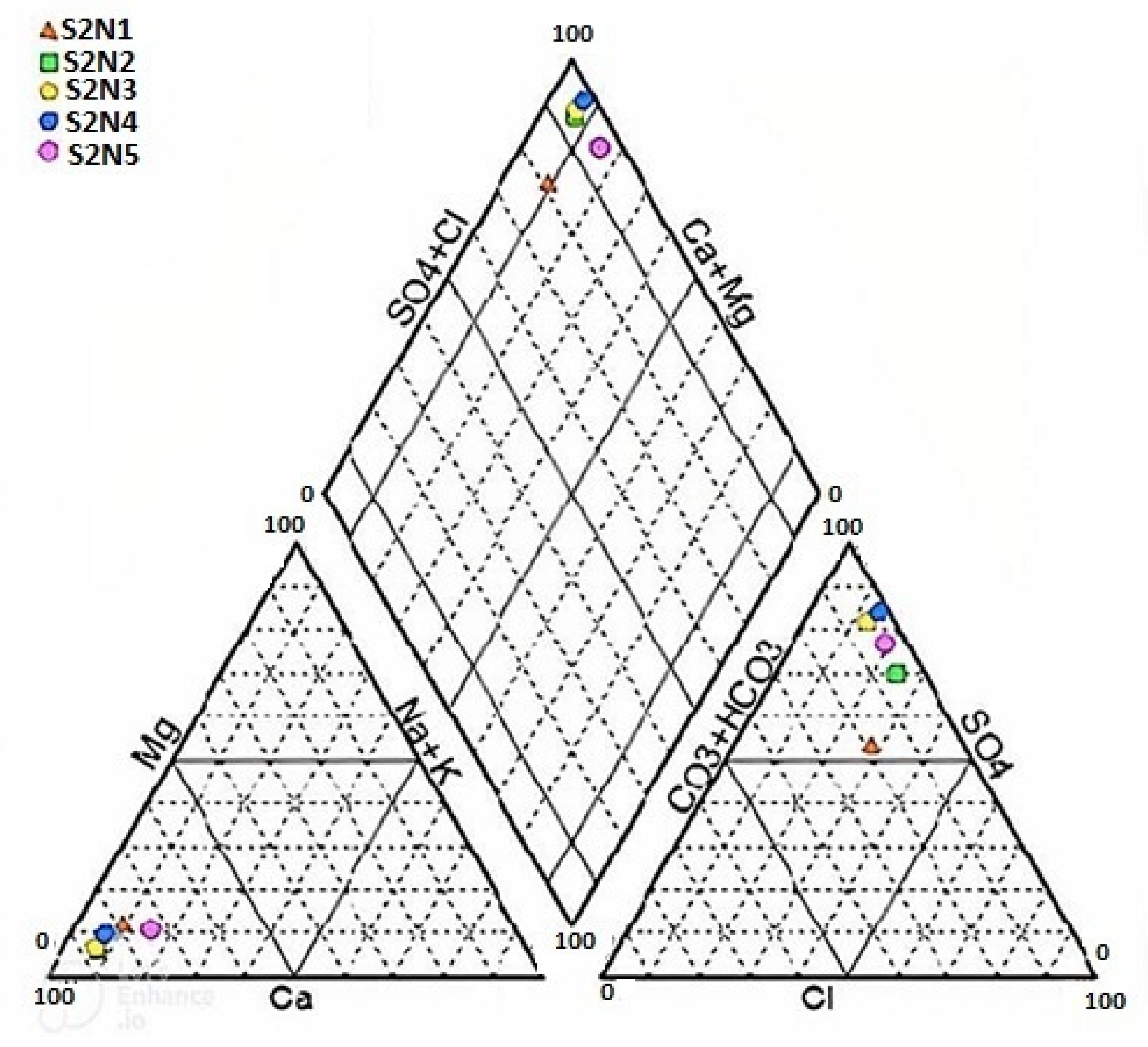
The determination of the chemical facies of the soil solutions studied was based on the Piper diagram (
Figure 9), which revealed the following findings:
Regarding the cations (left triangle,
Figure 9), the points are primarily clustered toward the calcium (Ca
++) apex, with a moderate contribution from magnesium (Mg
++) and a very low proportion of sodium and potassium (Na
+ + K
+). This indicates that most of the samples exhibit a calcium-type facies.
For the anions (right triangle), the points are located between the chloride (Cl−) and sulfate (SO4−) poles, far from the bicarbonate + carbonate (HCO3− + CO3−) pole. This distribution reflects a chloride- to sulfate-type chemical facies, which is characteristic of mineralized waters, typically influenced by evaporation and salt dissolution. In the central diamond-shaped field, the points are concentrated in the SO4 + Cl/Ca + Mg sector, confirming the predominance of calcium–chloride and calcium–sulfate facies. These facies are generally associated with salinization processes and the dissolution of evaporitic minerals, such as gypsum and halite, in the studied soils.
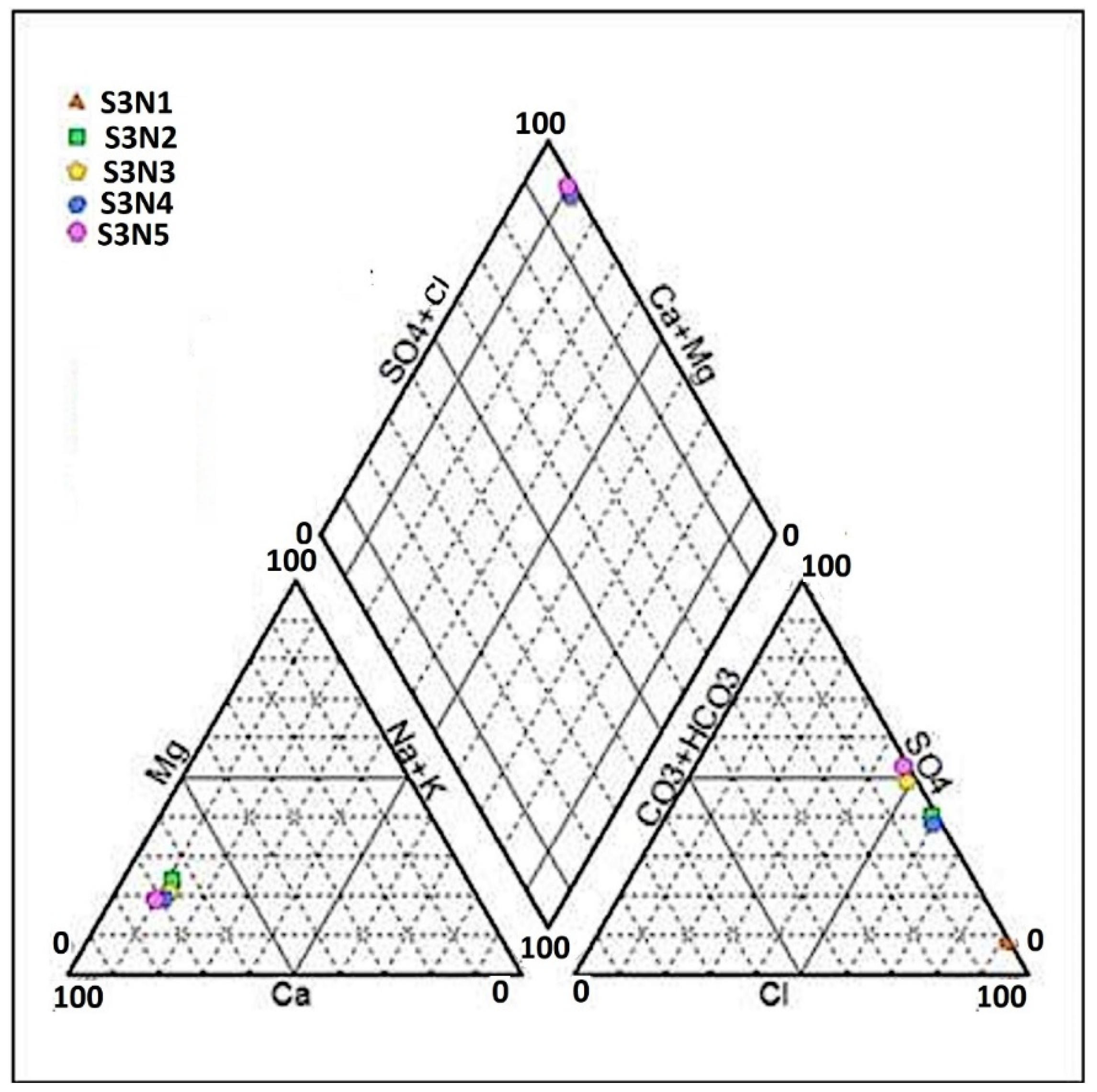
The Piper diagram analysis (
Figure 10) highlighted the following key observations:
For the cations (left triangle), the points are mainly clustered toward the calcium (Ca++) pole, with a moderate contribution from magnesium (Mg++) and a very low proportion of sodium and potassium (Na+ + K+). This indicates a dominant calcium-type facies.
Regarding the soil solution anions (right triangle), the points are mostly located between the sulfate (SO4−) and chloride (Cl−) poles, far from the bicarbonate + carbonate (HCO3− + CO3−) pole. The samples thus exhibit a sulfate to chloride facies, which is typical of mineralized waters, generally influenced by evaporation and salt dissolution.
The central diamond field of the diagram shows a concentration of points in the SO4 + Cl+/Ca+ Mg sector, confirming the predominance of calcium–sulfate and calcium–chloride facies. These facies are commonly associated with salinization processes and the dissolution of evaporitic minerals, such as gypsum and halite, in the soils of the studied area.
The pH values in the soil solutions range from 7.99 to 8.47, showing minimal variation. Overall, the soil reaction is alkaline. These two chemical facies suggest that the soils studied follow a neutral saline pathway, consistent with findings from previous studies [
27].
The gypsum content (calcium sulfate) significantly influences the chemical composition of the soil solution. The solutions from the studied soils show considerable sulfate content and very high calcium concentrations. Chlorides are the dominant anion in the soil solution of Profile 2, while sulfates are predominant in Profile 1. In both profiles, calcium is the dominant cation, followed by magnesium. This distribution explains the two chemical facies observed: calcium chloride and calcium sulfate, both of which indicate a neutral saline pathway. These findings align with previous studies on Algerian soils [
28] in regions such as Bas Cheliff and Ouargla.
3.2. Principal Component Analysis (PCA) of EC, Cations, and Soil Solution
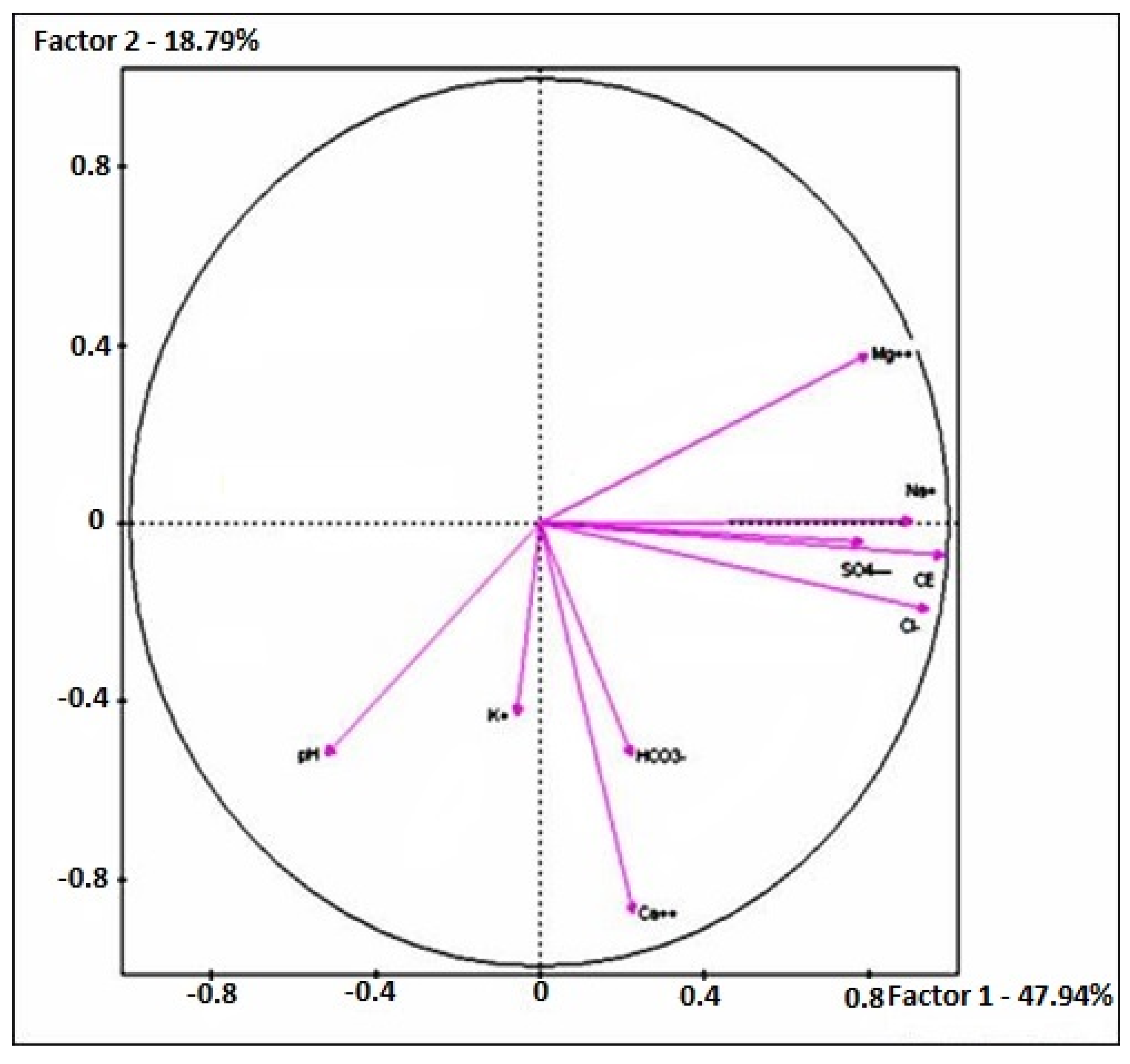
We applied principal component analysis (PCA) to identify which elements of the soil solution most influence the variation in electrical conductivity (EC) (
Figure 11). The PCA results (
Figure 10) show that the first principal axis is driven by the contribution of Cl
− (r = 0.96), SO
4− (r = 0.82), EC (r = 0.99), Na
+ (r = 0.92), and Mg
++ (r = 0.79). The second axis is influenced by HCO
3− (r = 0.55), Ca
++ (r = 0.85), K
+ (r = 0.43), and pH (r = −0.56) (
p > 0.05). Additionally, pH also contributes to the first axis, indicating that Cl
− (20.4%), Na
+ (18.7%), Mg
++ (13.81%), and SO
4− (14.91%) have a stronger effect on the variation in EC than other variables (K+, Ca
++, pH, and HCO
3−).
However, Cl− and SO4− are strongly correlated with EC and load similarly on Factor 1, while Na+ is also aligned but slightly less dominant than initially suggested. These three ions contribute significantly to the variability of EC.
The PCA results highlight that the more soluble ions have a greater influence on EC variation. This observation is consistent with the fact that Na
+ is the dominant cation in the soil solution and does not participate in mineral precipitation until EC values are very high [
29]. The behavior of Mg
++ and Ca
++, however, may be partially influenced by the precipitation of magnesite and calcite [
29]. Yet, this control appears insufficient to prevent their continued increase with rising salinity. Similarly, while sulfate ions can be controlled by precipitation of sulfate minerals, their increase remains insufficient to fully limit their accumulation in the presence of elevated salinity [
19]. The soil’s CaCO
3 content is generally supersaturated with respect to pure calcite, which explains its relatively low variation and persistence at the soil surface [
30,
31]. The chemical composition of soil solutions is mainly controlled by the dissolution of evaporite minerals (gypsum, halite, anhydrite) and the precipitation of carbonate phases such as calcite, aragonite, and dolomite [
32].
3.3. Soil Classification Using Fuzzy Logic
Table 5 displays the statistical findings for the Calcisol (Ic) and Solonchak (Is) indices. The extreme values of the Is and Ic indices for the profiles under study are somewhat close together, as
Table 5 demonstrates, indicating that the soils are comparable. This suggests that some Solonchaks might actually be categorized as Calcisols, or at the very least, resemble them. For Solonchaks and Calcisols, the typical indices are roughly 0.29 and 0.24, respectively. The soils under study are mostly Solonchaks, despite the fact that they also show a notable degree of resemblance to Calcisols, as the fuzzy classification tends to prefer soils with higher indices. Similarly, the mean Is indices are higher than the Ic indices, indicating that fuzzy logic classification predominantly favors Solonchaks. However, some soils are classified as Calcisols by fuzzy logic due to their high CaCO
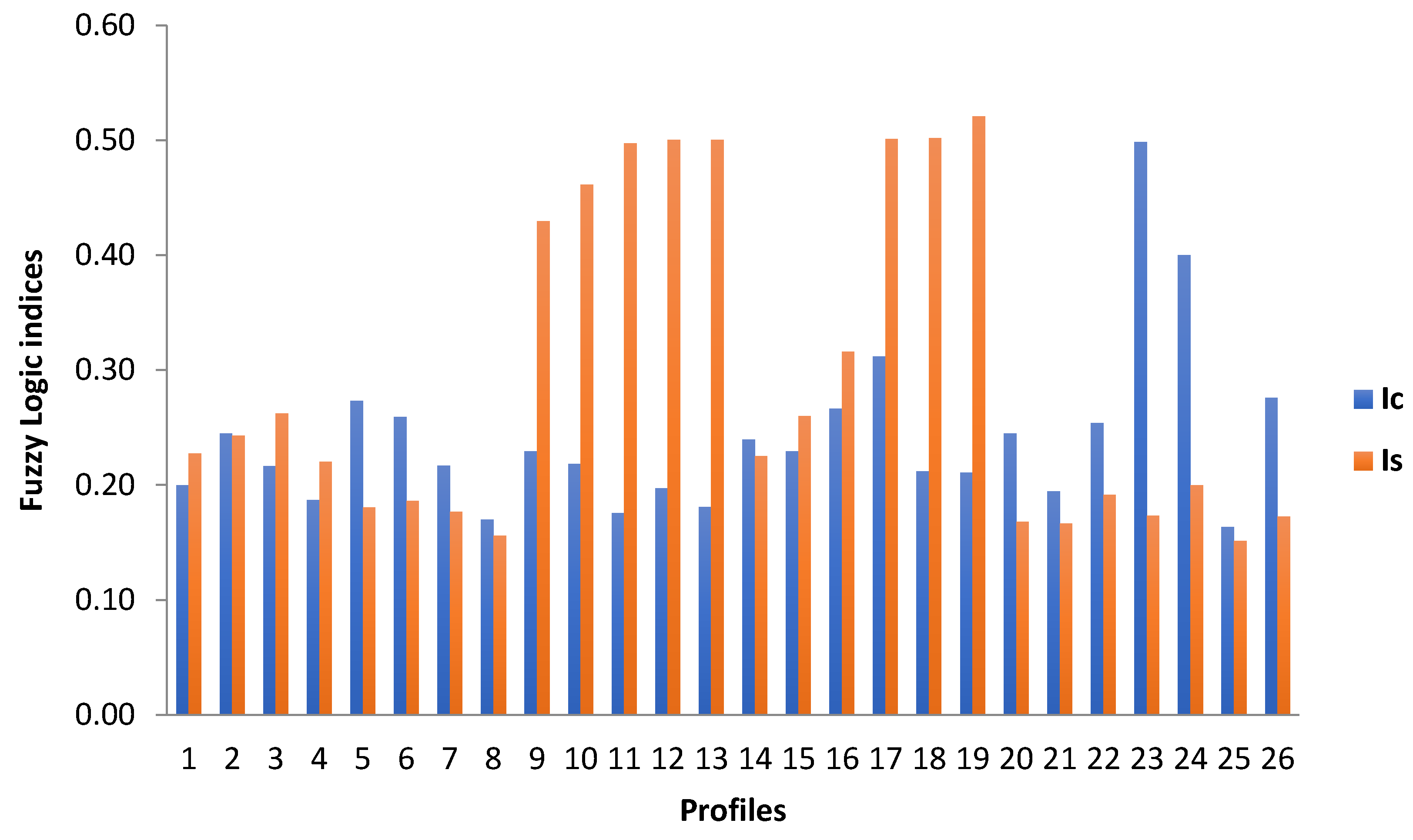
3 content. In contrast, the WRB classifies all of these soils as Solonchaks, because this classification system prioritizes this reference group: a soil is identified as a Solonchak as soon as it meets the diagnostic criteria for Solonchaks, even if the diagnostic features of Calcisols are also present. The indices obtained through fuzzy logic for the 26 profiles are shown in
Figure 12.
Figure 12 illustrates that of the 26 profiles classified as Solonchaks according to the FAO criteria [
11], 13 profiles (50%) were also classified as Solonchaks by fuzzy logic (Is > Ic), due to their high soluble salt content (61.9 > EC (dS m
−1) > 15.5). Conversely, 12 profiles (46.15%) were classified as Calcisols (Ic > Is), likely because they are rich in limestone (52 > CaCO
3 (%) > 18). Additionally, for one profile (Profile 2) (Is = Ic = 0.24), which represents 3.84% of the profiles examined, fuzzy logic generated similar indices. This suggests that Profile 2 was categorized as a Solonchak-Calcisol intergrade using fuzzy logic. The profile’s equilibrium of soluble salts (EC = 23.5 dS m
−1) and limestone concentration (CaCO
3 = 20.5%) is responsible for this outcome. These results are in agreement with [
6].
Fuzzy logic analysis showed that Solonchaks, which were previously categorized by the WRB, are significantly comparable to Calcisols, with Solonchaks belonging to the Calcisol category to a greater extent. Although the WRB designated all 26 profiles as Solonchaks, the distinctions between the two classification schemes might be due to the WRB’s threshold values, which might not be appropriate for every soil situation. The priority order that WRB used to define soil groups may also be to blame for this, as taxonomic fragmentation may cause crucial information to be lost in soil mapping.
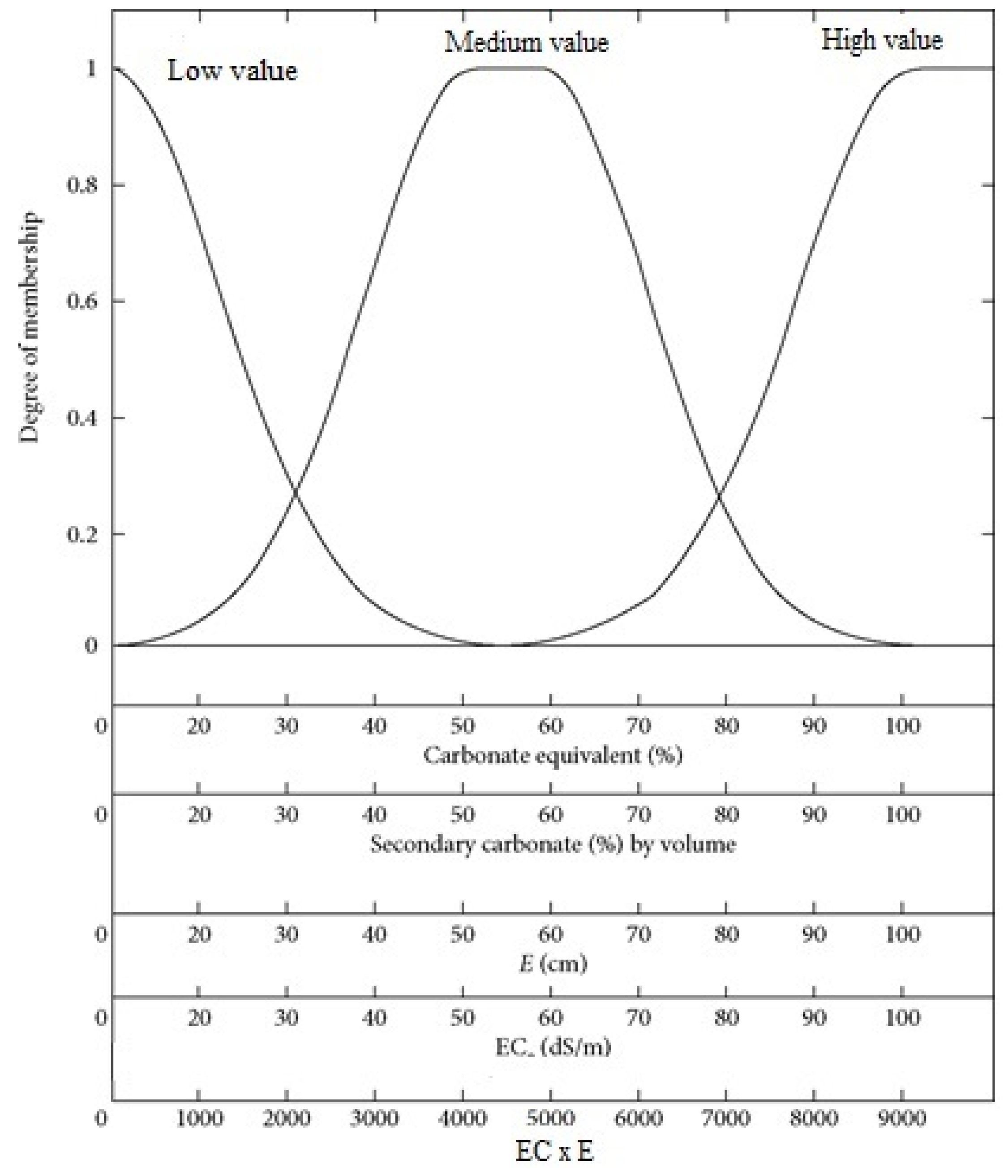
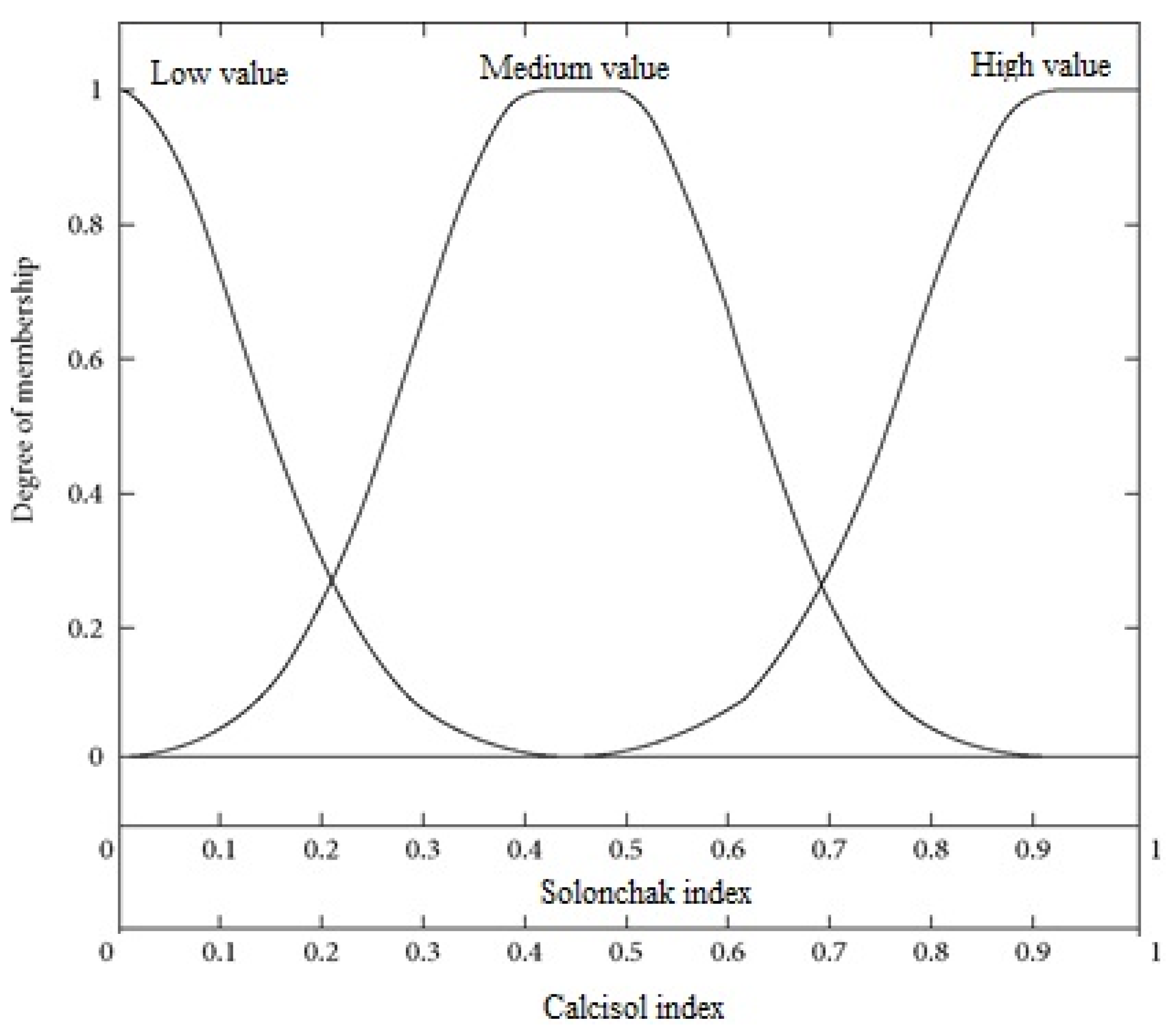
In contrast, fuzzy logic, which is a continuous and numerical classification system [
7], relies on linguistic variables and Gaussian-type membership functions for each criterion. This allows for a more nuanced representation of soils, accounting for overlaps between soil groups [
33].
Fuzzy logic offers a significant advantage over traditional soil classification methods because it can manage uncertainty and ambiguity in data. Unlike rigid approaches, fuzzy logic allows soils to be assigned degrees of membership to multiple categories [
34,
35,
36], making it especially useful for classifying soils with mixed characteristics, such as limestone-rich Solonchaks that may intergrade with Calcisols. Flexibility, adaptability, increased accuracy, and better uncertainty management are some of its advantages. The management of agricultural land impacted by salinization benefits greatly from this increased accuracy in soil classification.
3.4. Modeling of Is Carried out by ANN
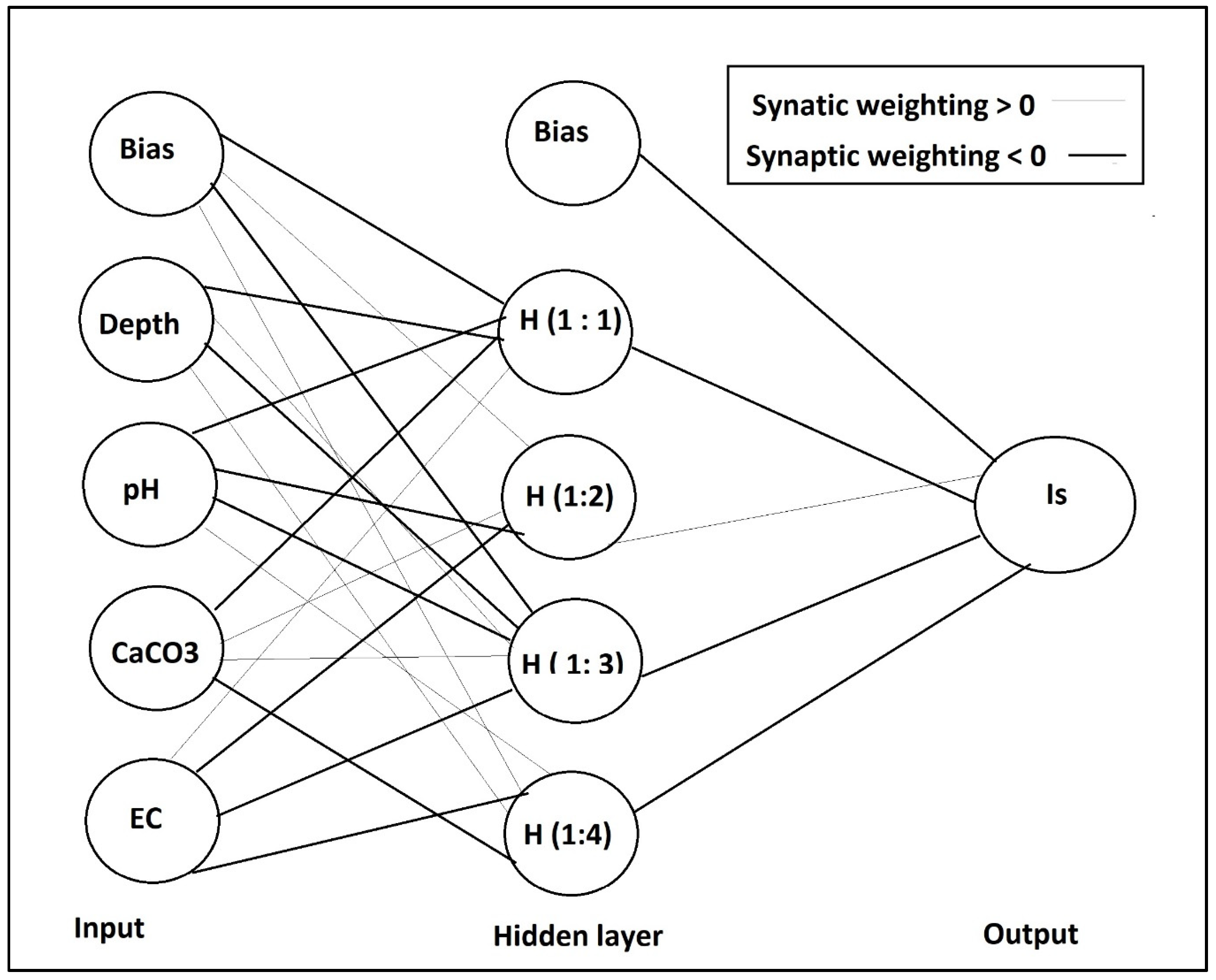
The contribution of each independent variable ranges from 32.6% to 100% (
Table 6). Among these, electrical conductivity (EC) exerts the strongest influence (100%) in predicting the salinization index (Is), followed by the thickness of the diagnostic horizon (E, 32.6%), pH (34.2%), and calcium carbonate (CaCO
3, 34%), with the latter two variables showing an equivalent contribution to Is prediction. Conversely, the ANN model exhibits low sensitivity to the thickness of the diagnostic horizon (E) and high sensitivity to variations in EC.
The analysis of the relative importance of the input variables with respect to salinization highlights EC as the most determinant factor, as its increase directly leads to a rise in Is. This result is scientifically consistent since EC directly reflects the total concentration of soluble salts in the soil, which is the primary indicator of salinization. CaCO3 also has a positive influence, due to its presence in the studied Solonchaks. This observation is confirmed by the results of fuzzy logic, which reveal that these Solonchaks exhibit a certain degree of affiliation with Calcisols. Moreover, the existence of intergrade soils of the Solonchak-Calcisol and the analysis of the ANN model highlights that carbonate-rich soils promote the formation of secondary salts and establish an environment conducive to salinization, particularly through their interactions with calcium sulfates or chlorides. The pH also exerts a positive effect, indicating that a slight alkalinization accompanies the increase in Is, which is expected in saline soils where the accumulation of alkaline salts and carbonate precipitation tend to raise pH. Finally, the positive effect of the diagnostic horizon thickness is more moderate, reflecting a secondary contribution to the development of salinization, likely linked to the role of horizon depth in salt migration and accumulation.
Overall, the ANN model identifies EC as the dominant factor, followed by CaCO3 and pH, while E has a weaker but still coherent effect, aligning with the known mechanisms of soil salinization leading to Solonchak formation. This agreement between the model’s variable importance and the scientific understanding of pedological processes strengthens both the credibility of the model and its scientific utility.
Furthermore, fuzzy logic was employed to validate the ANN model’s ability to predict Is. This finding is consistent with previous studies [
13,
14,
15,
16], which also demonstrated the effectiveness of ANN in predicting various soil parameters. The predictive performance of ANN arises from its use of complex algorithms that integrate both regression and classification for multiple applications, including Solonchak classification. Its capacity to capture intricate, non-linear relationships are inspired by the functioning of the human neurological system [
37].
In comparison, the MLR model produced less accurate predictions. Finally, the awarding of the Nobel Prize in Physics to the pioneers of neural networks underscores their profound impact across diverse scientific fields, including soil science [
16].
3.5. Modeling of Is Using (MLR)
The modeling of Is using MLR (Equation (8)), the regression coefficient parameters of the MLR model are presented in
Among all the predictors (E, pH, CaCO
3, and EC), none showed a significant effect on the prediction of Is (
p < 0.05), except for EC, which exhibited a significant effect (
Table 7).
Modeling of Is produced a relatively weak model (R
2 = 0.41), indicating that the predictive variables explain only 41% of the variability in the dependent variable (Is). Additionally, the Durbin-Watson test [
38] did not provide conclusive evidence of autocorrelation between the residuals (E, pH, CaCO
3, EC) (
Table 8).
The analysis of variance (ANOVA) (
Table 9) indicates that the MLR model explains only a fraction of the total variance (0.20 out of 0.49). However, the F-test value (
p = 0.19) shows that this contribution is not statistically significant. In other words, the independent variables (E, pH, CaCO
3, EC), considered jointly, do not significantly improve the prediction of the dependent variable.
Cross validation tests further reveal that the model derived from artificial neural networks (R
2 = 0.7; RMSE = 0.17) provides a better prediction of Is compared to the MLR model (R
2 = 0.41; RMSE = 0.91) (
Table 10). Likewise, Student’s
t-test indicated that the difference between Is predicted by the ANN model and Is calculated by fuzzy logic is not significant at the 0.05 probability level (
p-value = 0.057 > 0.05). In contrast, Student’s
t-test showed a significant difference between Is predicted by MLR and Is calculated by fuzzy logic (
p-value = 0.01 < 0.05) (
Table 10).
As a result, we can reject the MLR model and confidently verify the ANN model for predicting Is. MLR is a simple method for predicting soil properties [
39]. However, due to its lack of flexibility, MLR does not produce reliable forecasts. As a result, machine learning methods have become increasingly popular for predicting soil properties. Many authors [
13,
14,
15,
16] have emphasized the accuracy of ANN-derived models. Consequently, we can confidently validate the ANN model for predicting Is, while rejecting the MLR model, as confirmed by [
40].