1. Introduction
Biodegradable biobased polymers, commonly referred to as biodegradable bioplastics, are materials derived wholly or partially from renewable natural sources such as plants, animals, or forestry products [
1]. These polymers represent a promising sustainable alternative to conventional petroleum-based plastics due to their renewability and inherent capacity for biological degradation [
2,
3]. Despite their potential, the widespread adoption of biodegradable bioplastics remains constrained by various challenges throughout their life cycle, which must be thoroughly addressed to ensure their environmental benefits [
4,
5].
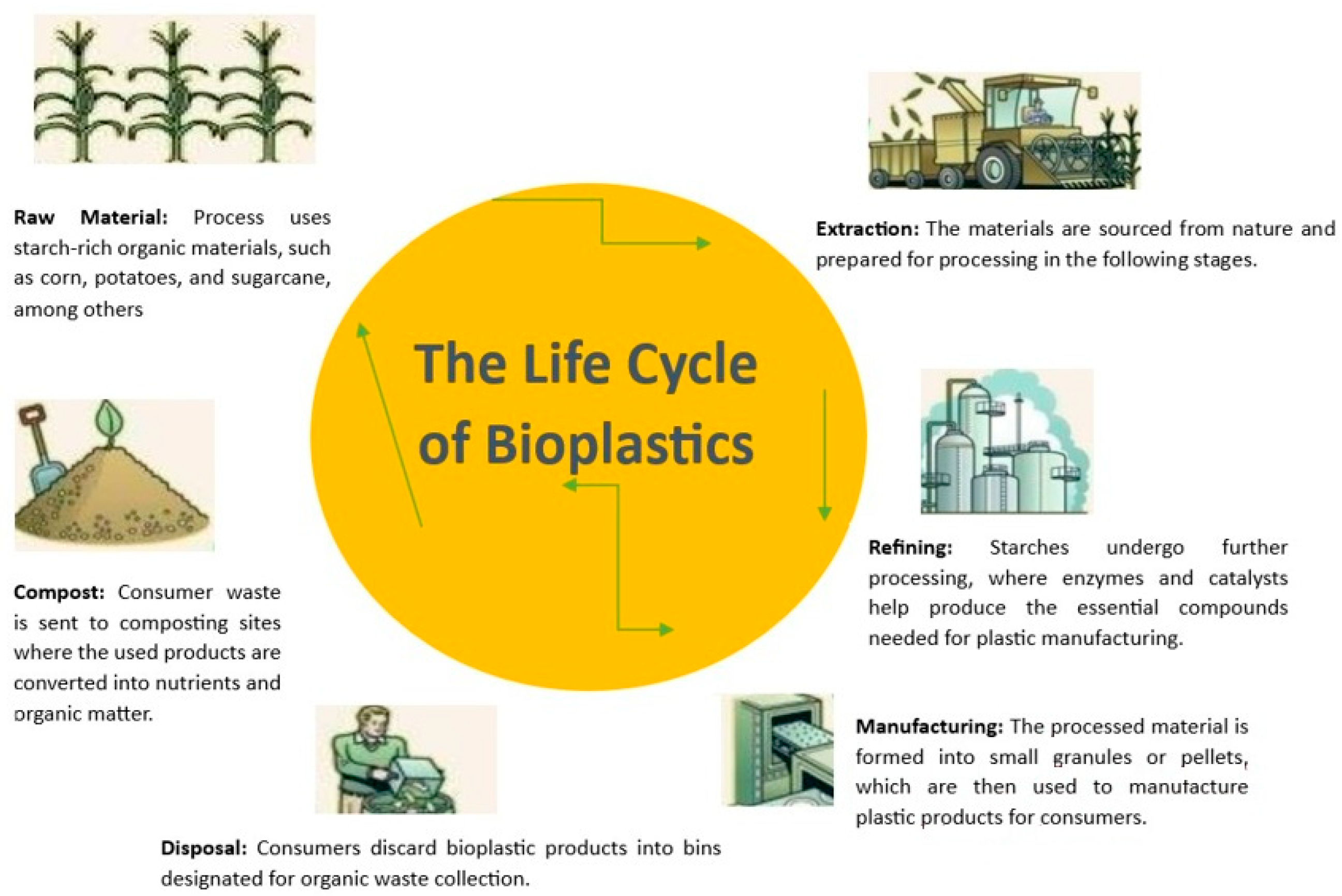
Figure 1 illustrates the typical life cycle of these materials.
Although several European Union member states have prohibited the landfilling of plastic waste, approximately 50% of plastic waste continues to be disposed of in landfills globally. Countries such as Germany, the Netherlands, Sweden, Denmark, and Austria have achieved significant recovery rates—ranging between 80% and 100%—for generated plastic waste; however, effective recycling rates remain comparatively low, at approximately 28% [
4]. This significant discrepancy is due to the fact that the term recovery is broader and includes not only material recycling but also energy recovery through incineration (Waste-to-Energy). While many developed European nations rely on incineration to process a large share of plastic waste—thereby reducing the amount landfilled—the actual rate of material recycling, where plastics are reprocessed into new raw materials, remains considerably lower due to technical challenges, contamination, and economic factors.
While the European Union actively promotes waste reduction, reuse, and recycling initiatives, many developing nations still predominantly rely on traditional landfill disposal. This reliance is exacerbated by higher-than-average plastic consumption, driven by rapid urbanization and economic development [
6]. Notably, countries including China, Indonesia, the Philippines, Sri Lanka, and Vietnam are responsible for over half of global marine plastic pollution [
7,
8,
9,
10].
This situation poses specific challenges for compostable bioplastics. Materials such as PLA require controlled, high-temperature industrial composting conditions and fail to biodegrade effectively in marine or open environments [
11,
12,
13]. In the absence of suitable infrastructure, these bioplastics may persist in the environment, undermining their intended ecological benefits. Although progress has been made in plastic waste recycling technologies, systemic gaps in waste management infrastructure continue to limit their effectiveness [
14,
15,
16].
Advancements in plastic waste recycling technologies have been made; however, the anticipated global population growth to nearly 9 billion by 2050 is expected to increase plastic production and consequent waste generation [
2,
4,
6]. Incineration remains a prevalent waste management strategy in some European countries, such as Denmark, where the incineration rate reaches 76% [
7]. Although incineration facilities comply with environmental regulations, concerns persist regarding their environmental impacts, including increased CO
2 emissions and the generation of toxic ash residues requiring careful disposal [
4].
In response to the persistent environmental challenges posed by plastic waste, bioplastics have garnered increasing interest due to their biodegradability. The term “bioplastic” encompasses both polymers produced from renewable biomass—such as polylactic acid (PLA) and polyhydroxyalkanoates (PHA)—and certain fossil fuel derived materials like poly (butylene succinate) (PBS), which can also be biologically degraded [
6,
17]. For example, utilizing starch as a renewable feedstock in bioplastic packaging has been shown to reduce non-renewable energy consumption by approximately 50% and greenhouse gas emissions by up to 60% compared to conventional polystyrene packaging [
18].
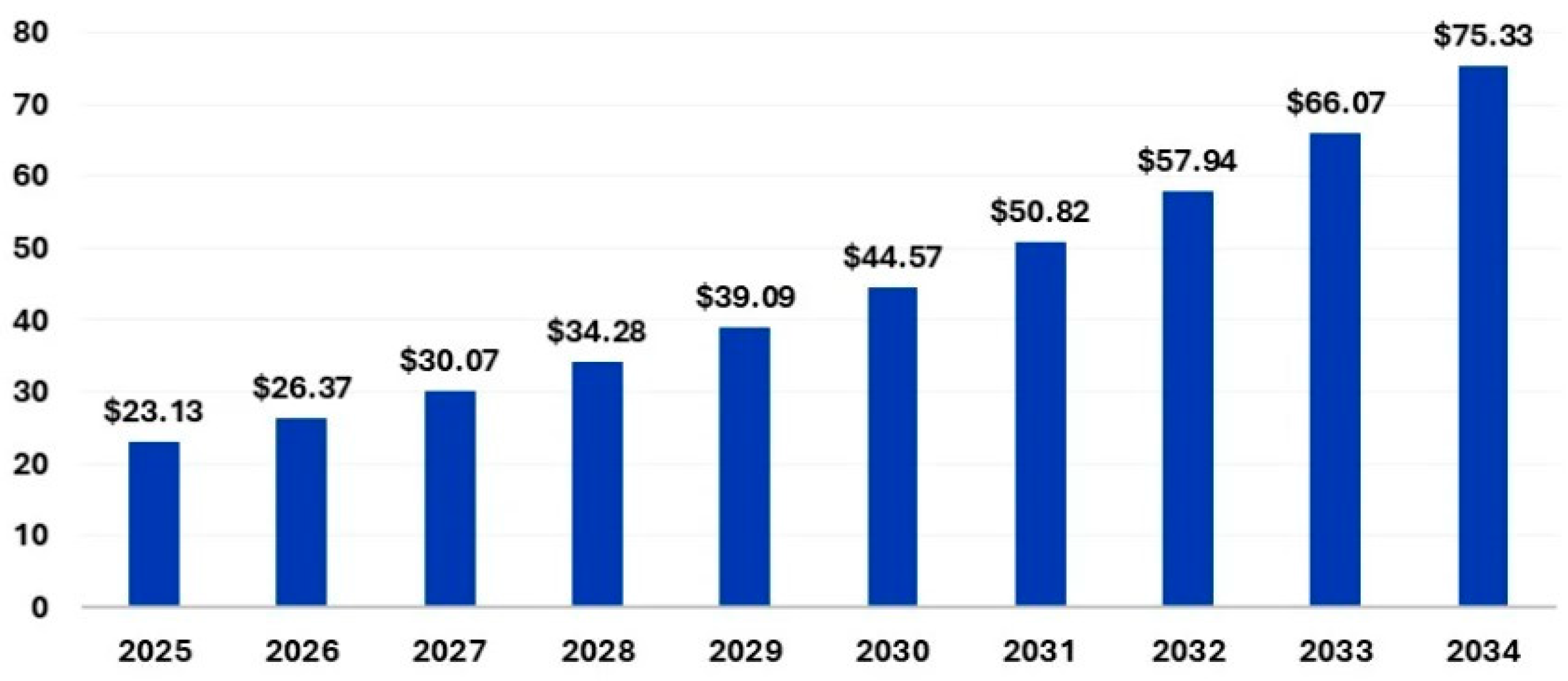
The global bioplastic packaging market continues to expand rapidly. According to Precedence Research, the market was valued at USD 20.28 billion in 2024 and is projected to grow to USD 23.13 billion in 2025, with forecasts estimating an increase to approximately USD 75.33 billion by 2034 at a compound annual growth rate (CAGR) of 14.02% (2025–2034) (
Figure 2). Europe currently holds a leading position in this market, accounting for roughly 34% of the global share in 2024, driven by stringent environmental regulations and heightened consumer awareness. Biodegradable bioplastics represent over half of this market segment, with flexible packaging and the food and beverage sectors as predominant consumers.
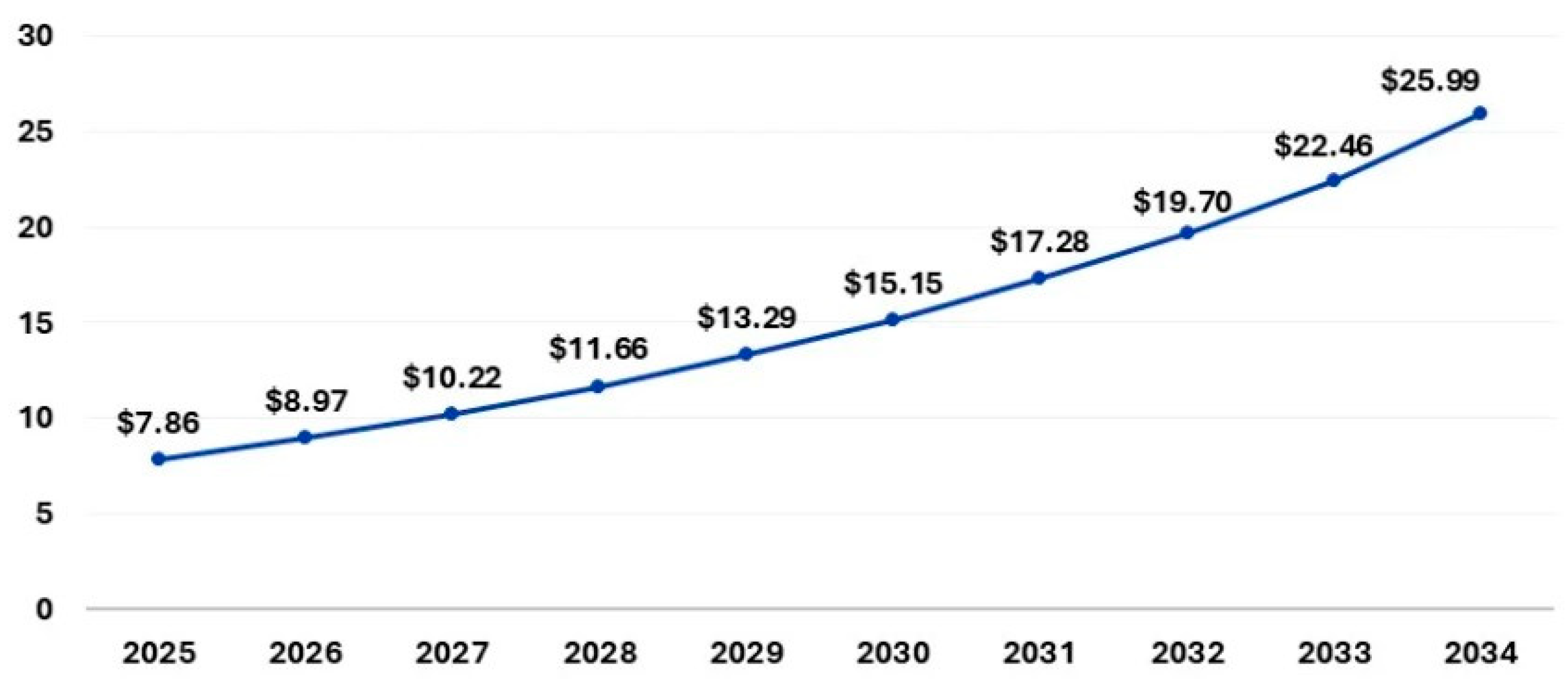
The European bioplastic packaging market, according to a report published by Precedence Research, was valued at USD 7.86 billion in 2025 and is estimated to grow to approximately USD 25.99 billion by 2034, registering a compound annual growth rate (CAGR) of 14.18% over the period 2025–2034 (
Figure 3).
In 2024, the European bioplastic packaging market recorded the largest revenue share, representing 34%. This is due to both strict environmental regulations and the growing consumer interest in environmental protection, which is likely to drive significant growth in the coming years.
Despite their environmental advantages, bioplastics face limitations such as higher production costs and sometimes inferior mechanical properties compared to conventional plastics. These drawbacks can be mitigated by utilizing renewable, widely available raw materials, including agricultural residues [
18]. Among bioplastics, PLA is notable for its superior mechanical performance, including high tensile strength and elastic modulus, while PHA offers a commercially viable alternative despite certain optical and mechanical limitations [
18,
19].
The biodegradation of polymers is a complex biological process consisting of three principal stages: biodeterioration (the alteration of polymer properties due to microbial colonization), biofragmentation (enzymatic breakdown into oligomers and monomers), and assimilation (microbial uptake and conversion into biomass, CO
2, and water) [
19,
20]. The extent of biodegradation is influenced by polymer characteristics—such as chemical structure, chain length, crystallinity—and environmental conditions including pH, temperature, humidity, and oxygen availability [
21].
Historically, the non-biodegradability of synthetic plastics has led to the accumulation of vast amounts of plastic waste in natural environments [
22,
23]. The advent of biodegradable bioplastics has therefore heightened the necessity for a sustainable approach that considers not only material properties but the entire product life cycle. This holistic perspective has prompted the development of systemic evaluation methods aimed at improving environmental outcomes.
Sustainable design emphasizes the optimization of environmental impacts throughout the entire life cycle, from raw material extraction to end-of-life (EoL) management [
1,
24]. To address challenges related to single-use packaging, this study employs scenario-based systemic analysis and life cycle thinking within the framework of sustainable product design and industrial engineering [
4,
25]. The research focuses on assessing the systemic performance of compostable products, integrating insights from environmental sciences and waste management.
Current legislative and consumer pressures have accelerated the incorporation of circular economy principles within product design processes [
26]. Consequently, innovation in raw materials, including the development of compostable and bio-based alternatives to petroleum-based polymers, has become prevalent [
27,
28]. However, the anticipated environmental benefits of such materials depend critically on the waste management infrastructure within which products are ultimately disposed [
29].
While material properties remain essential, designers must also anticipate the real environmental performance of products within operational systems. Understanding the state of waste management infrastructures is therefore a key factor [
23,
30]. Integrating a systemic perspective into sustainable design is imperative to address this challenge.
This study adopts a systemic perspective (‘a systemic view’), analyzing the product as a component of a broader socio-technical system (design, use, waste management) in order to understand critical interdependencies. This approach is not a systematic literature review (‘systematic review’), but rather a qualitative system analysis. Therefore, this study does not involve laboratory experiments or the generation of original experimental results, but rather a conceptual and documented analysis of end-of-life scenarios. The focus is on evaluating whether compostable products, specifically polylactic acid (PLA) coffee capsules—chosen due to their market prominence and biodegradation requirements—fulfill their intended environmental benefits in real-world disposal contexts. Prior research highlights a significant discrepancy between PLA’s theoretical biodegradation potential and its actual performance under typical waste management conditions, justifying emphasis on the end-of-life stage [
7]. Manufacturing and use phases were excluded to isolate the impact of disposal infrastructure.
This study aims to investigate the potential negative deviation of compostable products when placed in existing waste management systems [
22,
31]. Of three scenarios considered, two reflecting realistic conditions demonstrated substantial negative environmental impacts.
Notably, while life cycle (LCA) is widely employed to evaluate material sustainability, scenario-based systemic analyses that reveal infrastructural shortcomings are comparatively rare within design literature [
4,
32]. The absence of systemic thinking limits designers’ ability to select truly sustainable materials. Following the identification of this limitation, the present study focuses on assessing the systemic performance of compostable products and quantifying the gap between intended functionality and real-world outcomes.
The research is subject to limitations, including the focus on a single product type (coffee capsule) and material (PLA), as well as the limited generalizability of results to regions with similar waste management infrastructures [
33].
Although the literature provides numerous quantitative life cycle assessments (LCAs) of coffee capsules, comparing different materials and designs [
34,
35,
36], most of these studies focus on measuring impact or optimizing a specific product under predefined conditions. The distinct contribution of this paper lies in adopting a qualitative and systemic approach, aimed not at quantifying impacts, but at diagnosing the fundamental gap between the designed performance of a compostable material and its actual outcomes within existing waste management systems. Accordingly, our research positions itself at the intersection of industrial design and system analysis, offering a conceptual framework—the ‘designed sustainability paradox’—to inform design strategies that are more attuned to infrastructural context.
2. Materials and Methods
To achieve a systemic characterization, the methods and tools used in life cycle and systems analysis recommend the construction of distinct scenarios for evaluating a product’s performance [
4,
24]. The central hypothesis of this study is that there exists a significant “performance gap” between the ideal, designed end-of-life (EoL) pathway of a compostable product and its actual environmental outcome within the prevailing waste management infrastructures. To test this hypothesis, various end-of-life (EoL) scenarios were developed: an idealized reference scenario based on technical standards, and two real-world scenarios constructed using data from waste management reports and specialized literature.
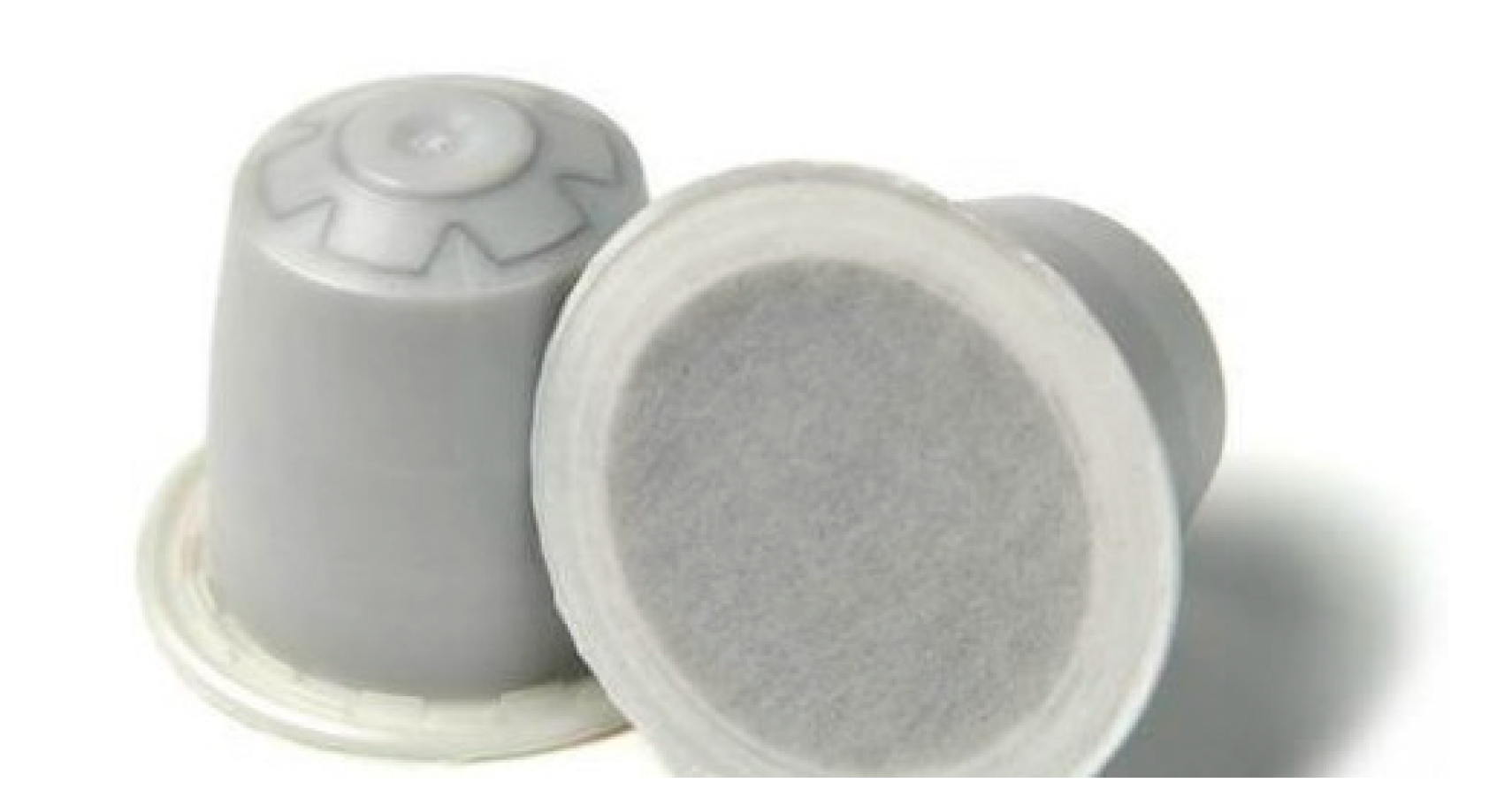
To investigate this hypothesis, the object of analysis was a compostable coffee capsule made from polylactic acid (PLA) (
Figure 4). The manufacturing process of such a product typically involves injection molding of PLA-based resins [
26]. The compostability of the material, certified according to the EN 13432 standard [
37], is a key determinant of its projected environmental performance [
26]. Based on this certification, the material is intended for a specific end-of-life pathway: industrial composting.
2.1. Defining the Object of Study and System Boundaries
The methodology adopted in this study is a qualitative systemic analysis based on scenario modeling. The research process did not involve laboratory experiments, but consisted of the following steps: (1) Defining a generic object of study (the PLA compostable coffee capsule); (2) constructing three conceptual models (scenarios) for its end-of-life trajectory—one ideal scenario, based on technical standards [
38], and two realistic scenarios (landfilling and recycling stream contamination)built from aggregated data in reports (Eurostat, EEA) and the scientific literature; (3) conducting a comparative analysis of the technical and environmental consequences of each scenario, using key performance indicators (KPIs) derived from circular economy principles, in order to identify and theorize the “performance gap”.
This methodological approach (“reduced cradle-to-grave”) was deliberately adopted to isolate the key variable of the study: the compatibility between product design for end-of-life (EoL) and the capacity of existing infrastructure to effectively manage its disposal. Our objective is not to provide a full life cycle assessment, including upstream impacts (production, transport), but to test the “performance gap” hypothesis post-consumption. Including production-phase impacts would shift the focus from analyzing systemic dysfunction to a material comparison, diluting the core argument. Therefore, focusing exclusively on the EoL stage is essential to address the research question: to what extent does a product designed for compostability fulfill its ecological function in real operational contexts?
The subject of this research is a generic single-use compostable coffee capsule predominantly made of polylactic acid (PLA). This type of packaging was selected as an archetypal case study for a systemic analysis, not for an experimental investigation. It is essential to emphasize that this paper does not involve the fabrication or physical characterization of a new material. Instead, the analysis relies on standard properties of PLA certified for compostability [
37] and on its documented behavior in the scientific literature under different disposal conditions. Therefore, experimental parameters such as material composition, film thickness, or SEM/DSC/TGA characterization are not applicable to the design of this research.
The choice of this product type as the object of research is motivated by its relevance to current debates regarding the circular economy, biodegradable materials, and sustainable design. Additionally, PLA compostable capsules constitute an ideal case study for investigating discrepancies between the projected environmental performance and the actual results achieved within real post-consumer waste management systems.
The systemic boundaries adopted in this study are partial, following a “reduced cradle-to-grave” approach, focusing exclusively on the product’s end-of-life (EoL) stage—specifically, the period beginning with the consumer’s disposal of the capsule and ending with the final treatment of the material. Previous life cycle stages—such as raw material extraction, material processing, product manufacturing, or use—were excluded from the analysis to isolate the specific impact of waste management infrastructure on the product’s environmental performance [
37]. This methodological approach allows exclusive focus on the key systemic variable: the compatibility between the product’s EoL design and the capacity of existing infrastructure to efficiently manage its disposal.
Therefore, this research aims to evaluate the real waste management system’s ability to support and validate the environmental performances envisioned through design. Specifically, it seeks to determine the extent to which a product designed for compostability can, in practice, fulfill this function within an operational context. To support this analysis,
Table 1 summarizes the relevant characteristics of the product, material, and end-of-life treatment system as defined for this study.
2.2. Construction of End-of-Life (EoL) Scenarios
The central element of the methodology adopted in this research consists of the development and comparative analysis of distinct end-of-life (EoL) scenarios designed to reflect both the ideal context of technical performance and the existing infrastructural realities. In the sustainability analysis of product systems, using a scenario-based approach enables the exploration of the relationship between the design intent and the contextual behavior of the product, depending on the conditions under which it is disposed of after use [
27].
A scenario, in the methodological sense of this study, is defined as a systemic representation of a potential pathway that the product may follow during its post-consumer stage. Each scenario is characterized by a specific set of technical, operational, and infrastructural conditions that determine the final performance of the product in terms of degradability, resource recovery, and climate impact. For a scenario to be considered analytically valid, it must meet three essential criteria: relevance (representative of the investigated context), plausibility (possible under real conditions), and differentiation (distinct compared to other analyzed scenarios) [
30].
It is important to note that, although these scenarios are representative of conditions in many European regions, waste management infrastructures vary considerably across the European Union. While countries such as Germany or Austria have advanced systems for separate collection and industrial composting, in many other Member States, municipal mixed-waste landfilling and contamination of recycling streams remain major challenges. Therefore, Scenarios II and III reflect a widespread problematic reality that limits the systemic effectiveness of compostable products, even though notable exceptions exist at local or national levels.
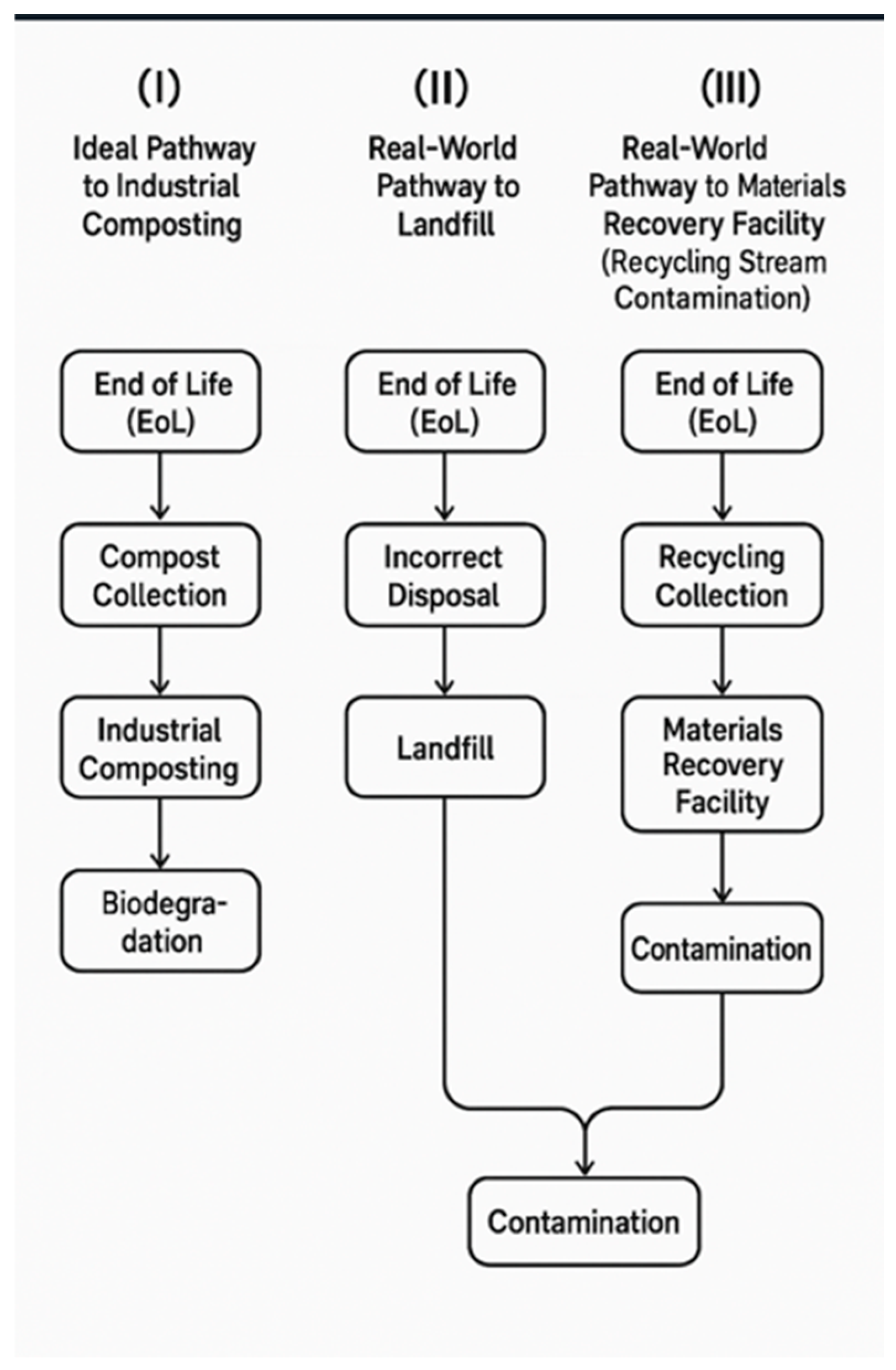
Within this research, three EoL scenarios were developed:
Scenario I—Industrial Composting (Reference Scenario): This scenario was constructed based on the requirements specified in the European standard EN 13432 regarding the compostability of plastic materials [
37]. It represents the ideal context in which the product can fully achieve its designed ecological function.
Scenario II—Landfill Disposal: This scenario reflects the situation where the compostable product is disposed of along with mixed municipal waste and stored in an anaerobic environment. This is a common practice in regions where industrial composting infrastructure is either nonexistent or inaccessible to the consumer.
Scenario III—Recycling Stream Contamination: This scenario examines the technical implications of incorrect sorting, where the compostable product is disposed of within the recycling stream of conventional plastics (e.g., PET). This situation causes material compatibility issues and can compromise the quality of the recycled material obtained.
Scenarios II and III are grounded in empirical data obtained from waste management reports published by Eurostat, the European Environment Agency, as well as specialized literature documenting current practices and trends in post-consumer waste sorting [
20].
A dedicated scenario for the mechanical recycling of PLA was intentionally excluded. While PLA is technically recyclable, in practice, dedicated collection and recycling streams for post-consumer PLA packaging are virtually non-existent in most European member states. Due to its low market volume compared to conventional polymers (like PET or HDPE) and its different melting properties, PLA is treated as a contaminant in conventional plastic recycling streams—a reality captured in our Scenario III. Establishing a separate, economically viable recycling loop for PLA coffee capsules would require significant investment in collection, sorting, and reprocessing infrastructure, which is not the current norm. Therefore, focusing on composting, landfilling, and recycling contamination reflects the most frequent and realistic end-of-life trajectories for these products today.
Through these three contrasting models, the study aims to highlight the gap between the intended design of a product (based on circular principles and compostable materials) and its actual performance within real disposal infrastructures. This analytical framework is visually summarized in
Figure 5, which compares the possible trajectories of the product depending on the EoL scenario it falls under.
2.3. Scenario Parameterization and Data Sources
In the evaluation of end-of-life (EoL) scenarios for compostable bioplastic products, rigorous parameterization of each scenario is an essential step in obtaining coherent and relevant results. This stage involves the detailed definition of the technical and operational conditions governing the degradation processes, as well as the selection of primary and secondary data sources used to support the analysis [
39]. The specialized literature unanimously emphasizes that the physicochemical environment in which biopolymer degradation occurs is a key determinant of their behavior and, consequently, of the final ecological outcome [
23,
40,
41].
Considering the aim of the study—to compare the ideal performance with the actual performance of the product—each scenario was constructed based on critical parameters that define the context in which the product reaches the end of its life cycle [
42,
43]. The included parameters reflect environmental conditions (aerobic/anaerobic), temperature range, chemical transformation processes involved, as well as the expected outcome (complete mineralization, biogas generation, or recycling stream contamination) [
44,
45]. These data were collected from normative sources, technical guidelines, and specialized scientific literature, ensuring the scientific validity of the model.
Scenario I: Industrial Composting (Reference Scenario)
This scenario was built to represent the product’s ideal designed trajectory, in accordance with the European standard EN 13432, which establishes requirements for packaging compostability [
37]. Operational parameters include the following:
Degradation environment: aerobic;
Temperature range: presence of a thermophilic phase with temperatures above 58 °C; composting duration: maximum 180 days;
Target outcome: mineralization exceeding 90%, in the form of CO2, H2O, and biomass;
Additional conditions: physical fragmentation and absence of ecotoxicity. These conditions were extracted from the technical specifications provided by the European Committee for Standardization (CEN) [
37].
This scenario is not only a theoretical model but also a representation of existing facilities, though limited in geographic coverage and accessibility.
Scenario II: Landfill Disposal
In this scenario, the product is disposed of together with household waste and ends up in an anaerobic environment typical of landfills—a still dominant practice in many European and global regions. Defined parameters for this context include the following:
Degradation environment: anaerobic;
Temperature range: mesophilic temperatures (20–45 °C);
Biochemical processes: anaerobic fermentation accompanied by biogas generation (mainly CH4 and CO2);
Degradation time: prolonged and dependent on waste characteristics;
Ecological risks: net methane (CH4) emissions, with a high global warming potential.
Data used for parameterization were taken from IPCC guidelines on waste management and internationally recognized landfill gas generation models [
21,
46].
Scenario III: Recycling Stream Contamination
This scenario explores the case where the PLA product is mistakenly disposed of in the conventional plastics recycling stream, such as PET or PP. This contamination can have significant technical consequences on mechanical recycling processes, especially within Material Recovery Facilities (MRFs). Key parameters include the following:
Processing stream: mechanical recycling (extrusion, melting, regranulation);
Material compatibility: low; PLA is not compatible with conventional thermoplastic polymers;
Technical consequences: degradation of the physical–mechanical properties of the recyclable batch, including embrittlement, thermal instability, and loss of transparency;
Ecological outcome: reduced recycling cycle efficiency and potential batch contamination, negatively impacting resource recovery.
The parameterization of this scenario was based on technical reports from industrial recycling associations (e.g., Plastics Recyclers Europe), as well as scientific literature on the behavior of incompatible polymer blends in recycling processes [
25,
47] (
Table 2).
2.4. Method of Analysis and Key Performance Indicators (KPIs)
The analytical methodology adopted in this study is based on a qualitative and systemic approach, characteristic of transdisciplinary studies aiming to integrate the material dimension of products with the infrastructural and operational context in which they are managed. The primary goal of the analysis was to identify and compare the ecological and technical performance of different end-of-life (EoL) scenarios associated with a compostable PLA product in order to understand the gap between the design potential and the actual performance of the product within current waste management systems.
Given the exploratory and integrative nature of the research, the analysis did not employ traditional quantitative life cycle assessment (LCA) modeling but rather used a qualitative evaluation matrix based on a set of key performance indicators (KPIs). These indicators were selected in accordance with the fundamental principles of the circular economy, particularly those aiming to optimize resource cycles, reduce climate impact, and maintain systemic functionality.
The analysis relied on three key indicators to evaluate the product’s performance across different end-of-life scenarios.
First, the Resource Recovery indicator measures how effectively the materials in the product are reintegrated into productive or biological cycles, following the principle of maximizing resource valorization. Ideally, the compostable material should completely break down into usable biomass, thereby supporting the regeneration of natural systems. In less favorable scenarios, where the material ends up stabilized in landfills or contaminates recycling streams, this results in a loss of material value, signaling poor environmental performance.
Second, the Climate Impact, expressed as Global Warming Potential (GWP), examines the types of emissions produced under each scenario—primarily carbon dioxide (CO2) and methane (CH4)—and their relative contributions to climate change. For instance, methane emissions generated in anaerobic landfill conditions have a much higher warming potential compared to carbon dioxide released during aerobic composting. This indicator helps quantify the climate-related consequences of each disposal pathway.
Finally, the System Integrity indicator evaluates how well the product’s design aligns with the existing waste management infrastructure. It assesses whether the product supports or disrupts current system operations. For example, when compostable materials mistakenly enter conventional plastic recycling streams, they can cause contamination, leading to material loss, increased processing costs, and reduced quality of recycled products. Such contamination significantly undermines the overall integrity and efficiency of the waste management system.
By applying these indicators to each scenario, the analysis enables a differentiated evaluation of the product’s ecological and systemic performance.
Table 3 summarizes the qualitative scores assigned based on the specialized literature and data sources mentioned in the previous section.
Since the primary objective was to analyze the gap between design intent and operational reality, this research did not employ quantitative statistical methods, as these would have been inadequate due to the lack of complete and homogeneous databases for each region and waste stream. Instead, a qualitative-descriptive approach was adopted, based on triangulating data from technical, regulatory, and scientific sources. This methodological choice aligns with current practices in systemic studies and exploratory research within the field of sustainability.
3. Results
The results obtained from the analysis of the end-of-life (EoL) scenarios for the compostable product highlight a significant performance gap between the ideal trajectory, as designed (Scenario I—Industrial Composting), and the product’s actual behavior within the real conditions of predominant waste management infrastructures (Scenarios II and III).
Table 4 provides a qualitative summary of the performance for each scenario, using the three key performance indicators (KPIs) defined in the methodology section:
These results are visually and comparatively illustrated in
Figure 5, which highlights the divergent trajectories of environmental performance depending on the post-consumer disposal context.
3.1. Interpretation of Results
The analysis highlights that only Scenario I—which assumes industrial composting in a controlled environment—allows the product to achieve the intended ecological functionality designed based on compostability. In this context, the PLA material is valorized through conversion into biomass, with minimal climate impact and no systemic dysfunctions.
In contrast, Scenarios II and III—reflecting prevailing practices in many European and non-European regions—yield substantially poorer ecological outcomes:
Scenario II (landfill disposal) places the product in an anaerobic environment that does not favor complete degradation and generates the emission of methane, a gas with a global warming potential over 25 times greater than CO2. Additionally, the material value of the product is completely lost, since it is not reintegrated into any biological or technical cycle. Although the waste management system is not structurally disrupted, resource recovery inefficiency and negative contributions to climate change define this scenario as problematic from a sustainability perspective.
Scenario III (recycling stream contamination) has serious technical and systemic implications. The presence of PLA in a stream intended for conventional polymers such as PET can compromise the recycling quality of the entire batch. Thus, the product is not only not valorized, but it also generates indirect negative effects by reducing the efficiency and economic viability of the whole recycling system. This scenario is characterized by very low systemic performance and a persistent indirect ecological impact.
To evaluate the systemic suitability of compostable coffee capsules under different disposal scenarios, a matrix of key performance indicators (KPIs) was developed. This matrix synthesizes not only biodegradation metrics but also compatibility with infrastructure and ecological risk.
Table 5 presents the comparative framework for assessing end-of-life scenarios. It summarizes key performance dimensions—biodegradation efficiency, greenhouse gas emission potential, infrastructure compatibility, material recovery value, ecological risk, and sorting accuracy by users—for three disposal routes: industrial composting, landfilling, and recycling contamination. This qualitative comparison provides a comprehensive understanding of how each scenario performs in real-world contexts, both environmentally and operationally.
As shown in
Table 5, industrial composting provides the most favorable ecological outcome, yet it strongly depends on user compliance and the availability of suitable composting infrastructure. Landfilling, while common, entails significant risks due to methane emissions and minimal material recovery. At the same time, contamination of mechanical recycling streams remains an increasing concern, given its disruptive effects on recycling efficiency and the quality of recycled products.
3.2. Assessment of the Design–Reality Gap
In light of these results, it becomes clear that a structural gap exists between the design intent of compostable products and the infrastructural reality managing their disposal. Although PLA is certified as compostable under industrial conditions, access to such facilities is limited, and the lack of effective separate collection systems and consumer awareness leads to suboptimal disposal pathways.
This discrepancy can be conceptualized as a “designed sustainability paradox”: products are developed to function within an ideal system, yet the real infrastructure is not prepared to support the performance envisaged by design.
3.3. Implications for Policy and Design
The findings underscore the necessity for coordinated interventions across multiple dimensions to effectively address the identified sustainability gaps. Firstly, at the infrastructural level, there is a critical need to both expand the availability and standardize the operation of industrial composting facilities. Equally important is the development and implementation of efficient separate collection systems tailored specifically for compostable waste streams, ensuring that such materials are appropriately channeled to these facilities.
Secondly, from a regulatory standpoint, the study highlights the imperative to enforce more stringent market entry conditions for compostable products. These regulatory measures should be closely linked to the actual presence and accessibility of suitable composting infrastructure within the targeted regions. Such alignment would prevent the premature introduction of products that cannot be properly managed within existing waste treatment frameworks, thereby mitigating the risk of environmental and systemic inefficiencies.
Thirdly, in terms of product design, the findings advocate for a systemic sustainability approach that actively incorporates an understanding of current infrastructural capabilities and limitations into the product development process. This approach, increasingly recognized within the paradigm of “design for circularity,” encourages designers to move beyond material innovation alone and consider the entire life cycle and end-of-life pathways within existing waste management systems. Together, these multi-level strategies are essential to bridge the gap between the intended ecological benefits of compostable products and their real-world performance, ultimately advancing the transition toward a more effective and resilient circular economy.
The findings confirm the study’s original assumption: the compostable product under review fails to deliver its intended environmental benefits in most real-world disposal contexts, highlighting the urgent need to better align product eco-design with actual waste management infrastructure. This misalignment poses a significant obstacle to achieving a truly functional circular economy.
4. Discussion
The results presented in this research highlight a central challenge in implementing circular economy principles: the inadequacy of the actual waste management infrastructure in relation to the sustainable design of products. The analysis of the three end-of-life (EoL) scenarios for compostable PLA coffee capsules underscores that the biodegradability of a material does not, by itself, guarantee the product’s sustainability if it is not supported by appropriate operational conditions.
4.1. The Discontinuity Between Design and Infrastructure
Scenario I—industrial composting—demonstrates that under optimal technical conditions and within a controlled framework, bioplastics can significantly contribute to resource recovery and climate impact reduction. This result validates the theoretical premises of the EN 13432 standard, providing an example of alignment between design, infrastructure, and ecological performance [
37].
However, Scenarios II and III—corresponding to prevalent practices in the absence of adequate infrastructure—show how this alignment is rarely achieved in reality. Landfilling completely compromises the ecological function of the product, generating significant methane (CH4) emissions, while contamination of the recycling stream causes systemic disruptions, affecting not only the analyzed product but also other recyclable materials within the same stream.
This discontinuity between design intent and the product’s contextual behavior represents a systemic problem documented in other studies [
4,
24] which emphasize that compostable materials fulfill their function only in the presence of dedicated infrastructures and coherent collection and treatment policies.
4.2. The Role of Stakeholders
Designers and manufacturers play an essential role in anticipating the systemic performance of the product. Choosing a material like PLA should be accompanied by an analysis of existing infrastructure in distribution regions and, potentially, by the development of dedicated collection solutions, such as Extended Producer Responsibility (EPR) schemes. Consumers, in turn, influence ecological performance through post-consumption sorting decisions. Without a clear understanding of the differences between compostable, biodegradable, and recyclable, sorting errors remain frequent, especially in the absence of clear labeling and adequate environmental education.
Public authorities, however, are the key factor in creating the conditions necessary for systemic functioning. Investments in industrial composting facilities, integration of compostable flows into municipal separate collection systems, and harmonization of legislation with the technical requirements of new materials are fundamental conditions for achieving circularity goals.
4.3. Strategic Implications
What emerges from this research is that sustainable materials must be understood as elements within a complex system, not isolated solutions. The success of a compostable product depends not only on its certification according to technical standards but especially on the institutional, logistical, and behavioral ecosystem in which it is introduced. Furthermore, the lack of uniform infrastructure at the European (and international) level causes uneven ecological performance of the same product in different regions, raising important questions regarding the transnational responsibility of producers and the harmonization of environmental regulations.
This finding reinforces the idea that design for circularity must integrate not only the product’s life cycle but also the “infrastructure cycle”—that is, the capacity of local systems to support the product’s ecological function. Without this integration, the risk of systemic greenwashing is considerable: seemingly sustainable products that, in practice, contribute to worsening environmental problems.
4.4. Positioning in Relation to Existing Literature and Specific Contribution
To underline the specific contribution of our research, it is useful to directly compare it with recent studies in the field. Our approach differs fundamentally in scope and methodology. Unlike quantitative LCA-based studies, such as those by Kooduvalli et al. [
34] and Desole et al. [
36], which provide valuable data on the comparative environmental footprint of capsules, our study does not seek to quantify emissions or resource use. Those studies answer the question “which option is better under ideal or specified conditions?”, assuming that end-of-life scenarios (e.g., 100% composting) are feasible. In contrast, our study asks “why does the ideal option fail under real conditions?” We do not measure impact but investigate systemic causes of failure, offering a diagnosis of the misalignment between product and infrastructure.
Similarly, Pinto et al. [
35] focus on optimizing product design to improve recyclability and environmental performance. While valuable, our contribution is complementary: rather than optimizing the product itself, we analyze the systemic context in which the product operates. Even a perfectly designed circular product will fail if the system (collection, sorting, processing) is not ready to handle it. Thus, while other studies provide product-level solutions or impact data, this work offers a systemic diagnosis and a critical conceptual framework primarily intended for designers and strategists, encouraging them to integrate infrastructural limitations as a central variable in innovation processes.
The object of study is a generic compostable coffee capsule made primarily from PLA. The paper is based on the standard properties of certified compostable PLA (EN 13432) and documented data from the literature, without experimental material characterization or actual capsule production [
37].
4.5. Study Limitations
It should be noted that this research focuses on a single product type (coffee capsules) and a single compostable material (PLA). Although the case is representative of the category of compostable packaging and relevant in the sustainability debate, the results cannot be automatically generalized to other types of products or biodegradable materials without a similar contextualized analysis.
Also, the lack of a complete quantitative LCA model limits the ability to precisely quantify the impact of each scenario. Nonetheless, the qualitative systemic approach used is appropriate for the exploratory purpose of the study and provides a solid framework for reflection and intervention.
The discussion highlights that the ecological impact of a compostable product depends more on the infrastructure and behaviors associated with its disposal than on the material itself. For bioplastics to fulfill their circular promise, systemic coordination between design, public policy, infrastructure, and user is essential, and this study offers a concrete example of how this interdependence can be critically investigated.
Although this study focused on PLA, the systemic challenges identified are largely extrapolable to other compostable polymers. Materials such as starch-based polymers or even polyhydroxyalkanoates (PHA), although they may have different degradation rates, face the same fundamental reliance on functional separate collection and processing systems to achieve their ecological potential. In the absence of such systems, they are equally prone to ending up in landfills or contaminating recycling streams. Furthermore, geographic context is a determining factor. In regions with mature and accessible industrial composting infrastructure, such as Germany or Austria, Scenario I (ideal) becomes much more plausible, validating product design. In contrast, in many developing nations, where formal waste management infrastructure is limited or nonexistent, the “performance gap” would likely be even more pronounced, and Scenarios II and III would represent the norm rather than the exception. Thus, the limited scope of the study serves to illustrate a universal systemic issue: the ecological performance of a compostable product is fundamentally determined by the infrastructural context, not just material properties.
5. Conclusions
This research demonstrated, through a scenario-based systemic approach, that the ecological performance of a product designed for compostability overwhelmingly depends on the infrastructural context in which the product is disposed of, and not only on its material characteristics or technical certifications.
The adopted methodology—which involved defining and comparatively analyzing three end-of-life (EoL) scenarios—allowed for a contextualized and realistic evaluation of the functional viability of compostable products within a real waste management system. It showed that the gap between theoretical design and practical performance can be significant, and in many cases even negative, undermining the product’s circular intentions.
By applying a matrix of qualitative indicators (resource recovery, climate impact, and system integrity), the research highlighted the following:
The ideal scenario (industrial composting) validates the product design but is difficult to access at a large scale;
The real scenarios (landfilling and recycling contamination) lead to significantly poorer ecological outcomes, affecting not only the product itself but also the operation of other system components.
This type of analysis has strategic value for sustainable design professionals, as it proposes a reproducible and comprehensible methodology that can be applied in the early stages of the design process to anticipate infrastructural limitations and encourage the development of products compatible with real disposal systems.
The research contributes to the field of sustainable design by
Introducing a systemic perspective in the evaluation of materials and products;
Reconceptualizing infrastructure as a critical variable in the material selection decision-making process;
Promoting an interdisciplinary vision for the development of circular products, in which material engineering, life cycle analysis, and waste management are deeply interconnected.
In light of the results obtained, three promising directions for future research emerge:
Extending the methodology toward a quantitative LCA analysis applied to specific geographical regions to obtain numerical data on emissions, material degradation, and systemic efficiency;
Applying the scenario-based framework to other product categories labeled as “sustainable” (fiber packaging, biodegradable textiles, etc.) to test the functional robustness of these solutions in real contexts;
Developing digital tools for assisted design that integrate data about local waste management infrastructure, helping designers choose materials and product formats aligned with field conditions.
This research proposes a paradigm shift in the evaluation of sustainable products: from an approach focused exclusively on materials and properties to an integrative vision that includes infrastructure, context, and behaviors associated with the product. Only through this systemic understanding can we hope to develop truly sustainable products capable of realizing their ecological potential in the real world.