1. Introduction
At present, poverty is still a major global social issue and a realistic problem, and poverty eradication has become one of the core strategic goals of national governments. “End poverty in all its forms everywhere” is the first goal of the UN’s 2030 Agenda for Sustainable Development, which is also the basis for achieving the other Sustainable Development Goals. From 1990 to 2017, 1.22 billion people were lifted out of extreme poverty, shifting the global poverty epicenter from Asia to Africa [
1]. China has demonstrated a strong commitment to poverty alleviation and has achieved notable achievements as the world’s largest developing country. By the end of 2020, China had eradicated absolute poverty and accomplished the poverty reduction goals outlined in the UN’s 2030 Agenda for Sustainable Development a decade ahead of schedule, contributing significantly to global human development and poverty alleviation [
2]. Nevertheless, due to poverty’s multidimensional, dynamic, and persistent characteristics, it cannot be permanently eradicated [
3]. Recent years have seen economic downturns, conflicts, pandemics, and natural disasters collectively impede global poverty reduction efforts. For example, it is estimated that the COVID-19 pandemic may push approximately 420 to 580 million individuals return into poverty, reversing the progress made in poverty reduction over the years [
4]. As a result, due to various external risk disturbances and their lack of risk resilience, some rural households that have already escaped from poverty may become poor households again in the future, and are in the state of “vulnerable” poverty alleviation. In other words, they may return to poverty due to vulnerability and become vulnerable poverty-eradicated rural households. Livelihood vulnerability can be defined as the extent to which household livelihoods are susceptible or are able to cope with various socio-economic, political, and environmental stresses [
5]. Meanwhile, it is increasingly recognized as a key attribute of poverty dynamics and a fundamental driver of the risk of re-entrance into poverty [
6]. Especially in recent years, amid the global COVID-19 pandemic and frequent local natural disasters, vulnerable poverty-eradicated rural households, as micro-level socio-economic units, are often directly exposed to various risk disturbances. Meanwhile, due to their own endogenous capacity deficiency and relative lack of external resource endowment, compared to other rural households, they face a higher likelihood of experiencing risk disturbances. This exacerbates vulnerability, triggering a domino effect that leads to recurrent impoverishment and compromises livelihood sustainability.
Risk and vulnerability coexist, and the most prominent feature of risk is the interweaving of multiple risks. It forces rural households to be in a state of intertwined natural, social, and health risks, leading to livelihood vulnerability [
7]. Global environmental change, extreme risk events, and uncertain future changes will always challenge the sustainability of livelihoods. The use of vulnerability and resilience theories to understand livelihood systems affected by risk disturbances has gradually become a new methodology in international sustainability science research. In the face of constantly changing vulnerability under multi-risk disturbances, maintaining and improving the livelihoods of rural households requires linking livelihood with resilience thinking to enhance their ability to prevent, control, and respond to risks, thereby truly achieving the goal of sustainable livelihood development. Resilience refers to the capacity of rural households to withstand external shocks and recover from adversity, thereby addressing the developmental needs of vulnerable populations [
4]. It offers a novel and dynamic perspective for examining sustainable livelihoods. Within the rural household livelihood system, resilience and vulnerability coexist as opposing yet interrelated forces—resilience acting as a driver of poverty alleviation, and vulnerability as a barrier. Achieving sustainable livelihoods and preventing poverty recurrence hinges critically on maximizing resilience while simultaneously minimizing vulnerability. This dual imperative constitutes a key pathway toward the transformation and long-term sustainability of rural livelihoods. However, due to the controversy in the academic community over the definition and interrelationships of concepts such as vulnerability and resilience, the construction of a universal framework and theoretical research faces numerous difficulties. The integration of these concepts is still in the exploratory stage and has not yet formed a unified paradigm. Meanwhile, there are relatively few integrated quantitative constructions and case studies on the multi-risk disturbance sources of vulnerability, the spatiotemporal impact mechanisms of resilience, and their heterogeneity. Therefore, this paper aims to explore the key issue of the spatiotemporal impact mechanism of livelihood vulnerability on resilience under multi-risk disturbances, to further explore and expand research and analysis in the field of sustainable livelihoods. This can provide targeted support policies for rural households in different regions to prevent risks, reduce livelihood vulnerability, and enhance resilience. This cultivates the intrinsic motivation of rural households to reduce their likelihood of falling back into poverty under multiple risk disturbances, ultimately achieving sustainable livelihood development [
8,
9].
2. Literature Review
With the increasing frequency and impact of shocks and stresses, the path to human sustainability faces significant challenges. Resilience and vulnerability have become focal points in both policy and academic discussions. In this context, it is essential to concentrate on specific risk shocks when examining rural resilience and vulnerability [
10]. The concept of resilience originated in classical physics and was subsequently introduced into ecology and the humanities and social sciences. In 1973, Holling introduced the concept of resilience into ecology and proposed ecosystem resilience, defined as the capacity of an ecosystem to recover to a stable state following disturbances [
11]. Building on Holling’s foundational work, scholars such as Walker [
12] and Folke [
13] proposed the transformation of social ecological resilience. Resilience has thus undergone a conceptual evolution—from engineering resilience to ecological resilience and further to transformative resilience, reflecting a theoretical evolution from equilibrium-based to evolutionary perspectives. It has now become a powerful analytical framework for research on social-ecological systems and sustainable development. Engineering resilience refers to a system’s capacity to maintain stability and recover to an equilibrium state following external disturbances [
14]. Ecological resilience denotes the ability of a system to absorb perturbations while retaining its essential structure and function, enabling it to transition into a new equilibrium state [
15]. In contrast, transformative resilience shifts the focus from returning to or maintaining a specific equilibrium toward adaptive transformation. It emphasizes the system’s dynamic reorganization and capacity to adapt to long-term environmental changes through learning, innovation, and transformation [
16]. With the continuous deepening of research, Speranza et al. [
17] pioneered the study of resilience in the field of livelihoods through the integration of relevant theories. They believe that livelihood resilience refers to the ability of livelihoods to cope with stress and disturbance when maintaining or improving basic characteristics and conditions. The concept of livelihood resilience has been further expanded and enriched. Among studies on sustainable livelihood resilience, evaluating the resilience of individual residents’ livelihood activities or socio-ecological systems quantitatively and accurately identifying influencing factors has become a prominent topic in the sustainable development field. Existing research on livelihood resilience primarily focuses on conceptual definitions [
18], the identification of influencing factors [
19], and quantitative assessment methods [
20]. In terms of the theoretical framework, Speranza was the first to integrate resilience theory into the traditional Sustainable Livelihood Framework (SLF) originally proposed by the UK Department for International Development (DFID). This integration resulted in a more comprehensive sustainable livelihood resilience analysis framework that considers various factors, including livelihood capital [
17,
21]. Regarding the selection of dimensions for measuring and evaluating rural households’ sustainable livelihood resilience, most scholars construct the basic dimensions for evaluating rural households’ sustainable livelihood resilience from three dimensions: buffering, self-organizing, and learning capacity [
22,
23,
24,
25]. For example, Sun et al. [
25] quantitatively measured the sustainable livelihood resilience of rural households and analyzed their internal synergies and development status. However, this study only analyzed livelihood resilience in terms of theoretical framework and research methods, but does not fully consider the related livelihood risks, livelihood vulnerability, and their impact on livelihood resilience. Meanwhile, some scholars also measure the resilience of sustainable livelihood from three dimensions of resistibility, adaptability, and transformation capacity [
25,
26,
27]. Currently, there is no generally accepted paradigm for measuring resilience. Therefore, it remains common to comprehensively assess the resilience of rural households’ livelihoods using different empowerment methods from the perspective of considering livelihood factors and the precision and analyzability of the results. In addition, using methods such as geographically weighted regression models, principal component analysis, and factor contribution models to explore factors affecting resilience and enhancement strategies is still the mainstream perspective [
28,
29]. To follow this evaluation method, the challenge lies in highlighting the distinctive features of resilience that set it apart from development research or traditional poverty topics. This aims to fully elucidate the unique attributes of resilience and thereby provide theoretical support and methodological guidance for in-depth exploration of the livelihoods of impoverished groups.
The concept of “vulnerability” was first introduced by White [
30] and Burton et al. [
31], with early vulnerability research primarily concentrated in the geosciences. Since the early 1990s, scholars have expanded vulnerability research beyond physical disaster analysis, recognizing that socio-economic factors such as income, education, health, and savings are critical determinants of livelihood vulnerability, highlighting socio-economic dimensions that were previously overlooked [
32]. The UK’s DFID later incorporated these insights into its SLF, which analyzes how households draw on livelihood assets to cope with external shocks and stresses [
21]. A significant methodological advance was the development of the Livelihood Vulnerability Index (LVI) by Hahn et al. [
33], which expanded beyond Cannon’s narrow definition to encompass vulnerability to a wider range of factors. This was later further developed into the Multiple LVI (MLVI) by Gerlitz et al. [
34] to better capture multi-dimensional aspects. As global environmental and sustainability challenges have become increasingly prominent, the scope of livelihood vulnerability research has broadened significantly, spanning disciplines such as ecology, environmental science, management, and social sciences. Research foci have also gradually shifted from theoretical exploration toward practical applications [
35]. Among the studies on livelihood vulnerability, most scholars have studied from the perspectives of climate change [
36,
37,
38], sustainable development [
39], and household poverty (income, assets) [
40]. The relevant study results mainly cover the concept of livelihood vulnerability, the analytical framework, and the evaluation methods. Among them, in terms of the definition of livelihood vulnerability, it mainly falls into two types: The first type defines vulnerability as a function of the internal characteristics of a population or system, that is, to what extent a population or system has suffered harm, emphasizing how the internal characteristics of a population or system determine the extent of damage suffered under external hazards. Another category, represented by the IPCC, regards vulnerability as a function of the three elements of exposure, sensitivity, and adaptive capacity, which includes both internal and external driving factors [
34]. And the current mainstream definition is based on the Intergovernmental Panel on Climate Change (IPCC) [
41], Department for International Development (DFID) [
21], World Bank [
42]. Due to differences in research backgrounds and subjects, the definition of livelihood vulnerability is not uniform. However, the concept of vulnerability is always linked to concepts such as risk, loss, poverty, resilience, and capacity, indicating that vulnerability is a term closely related to risk and resilience [
43]. In terms of the theoretical framework, as SLF is the foundation of rural vulnerability research regardless of country, there is an increasing trend in evaluating livelihood vulnerability based on SLF [
44]. Most scholars combine the vulnerability framework of “exposure-sensitivity-adaptability” and SLF to construct a sustainable livelihood vulnerability framework [
45]. In terms of measurement methods, the most representative ones currently include vulnerability as exposure to risk (VER), vulnerability as the low expected utility (VEU), and vulnerability as expected poverty (VEP) [
46,
47]. Among them, the VEP method is adopted by most researchers. However, there are still some shortcomings in the current vulnerability-based research. Firstly, according to Majumder et al. [
48], vulnerability is a multifaceted process influenced by a variety of contextual variables, particularly by diverse risks. However, early vulnerability research primarily focused on the losses and self-adaptive capacities of livelihood systems under single risks, such as climate change and geological disasters. For instance, Hoque et al. [
49] assessed the livelihood vulnerability of farming and pastoral households in coastal communities of Bangladesh under climate change, while Thao et al. [
50] and Sarker et al. [
51] confirmed that natural disasters such as droughts and floods are significant drivers of household livelihood vulnerability. As research has deepened, increasing attention has been directed toward the impacts of anthropogenic stressors on livelihood vulnerability, strengthening the social dimension of vulnerability studies. The scope of inquiry has gradually expanded from natural ecosystems to coupled human–natural systems, and research content has evolved toward understanding livelihood vulnerability under multiple, interacting risks. Notably, existing vulnerability studies lack a multi-risk perspective to consider and measure the livelihood vulnerability of rural households, and have not introduced multi-risk disturbance factors into vulnerability measurement. Meanwhile, existing studies still predominantly emphasize natural hazards, with relatively insufficient attention paid to socioeconomic risks such as those related to health and education. Therefore, identifying the multifaceted risk factors influencing livelihood vulnerability has emerged as a critical need for advancing the depth and comprehensiveness of livelihood vulnerability research. Moreover, the studies were mainly focused on the prospective assessment before the occurrence of risks and the loss assessment after the occurrence of risks, while the exploration of the intermediate dynamic processes was relatively lacking.
In addition, studies on the correlation between vulnerability and resilience for comprehensive analysis mainly focused on the interpretation and differentiation of the two related concepts, as well as the qualitative discussion and analysis of the relationship between the two, while the relevant quantitative studies were initially carried out in recent years [
52,
53]. And in recent years, most scholars regard vulnerability and resilience as the structure of a double helix, rather than simply a linear correlation or two sides of a coin. The relationship between the two is intricate, necessitating detailed analysis of the specific circumstances in different regions [
53,
54,
55,
56]. Furthermore, some scholars have explored the relationship between these two concepts and addressed sustainable livelihood through the construction of a vulnerability-resilience analytical framework. For instance, Ye et al. [
53] argued that vulnerability and resilience coexist within rural households’ livelihoods and that enhancing resilience and mitigating vulnerability is key to addressing poverty. In summary, scholars mainly studied livelihood resilience and vulnerability separately, and few related studies combined the two to analyze rural households’ livelihood. Especially in the field of livelihood, most existing studies have only qualitatively revealed the linear correlation between resilience and vulnerability but have neglected to quantitatively examine their interaction and spatiotemporal impact mechanisms from a risk perspective. Because of the close relationship between the two, it is difficult to analyze resilience in isolation from vulnerability to reveal the full extent of a study subject’s response to risk, which is not consistent with the need for sustainable development [
53,
57].
From the above, it can be concluded that there are at least three significant questions to be solved: How to interpret the relationship between risk, livelihood vulnerability, and resilience? How to measure livelihood vulnerability rationally and scientifically from a multi-risk perspective? How to reveal the spatiotemporal impact mechanism of livelihood vulnerability on resilience from a multi-risk perspective? To answer the above questions, we aim to combine the theory of vulnerability and resilience to construct a sustainable livelihood-vulnerability-resilience system analysis framework for rural households with multi-risk disturbance. Subsequently, we quantitatively assess the livelihood vulnerability and resilience of rural households, and clarify the correlation between the two. Notably, we measure livelihood vulnerability by incorporating multiple risk factors into the VEP model. Furthermore, by clarifying the change in sustainable livelihood resilience of rural households under multi-level vulnerability and multi-risk dominated vulnerability background, we explore the spatiotemporal impact mechanism of livelihood vulnerability on resilience from a multi-risk perspective. By addressing the above issues, forward-looking theoretical foundations and methodological guidance can be provided for expanding and strengthening rural revitalization and poverty alleviation work.
The remainder of the paper is organized as follows.
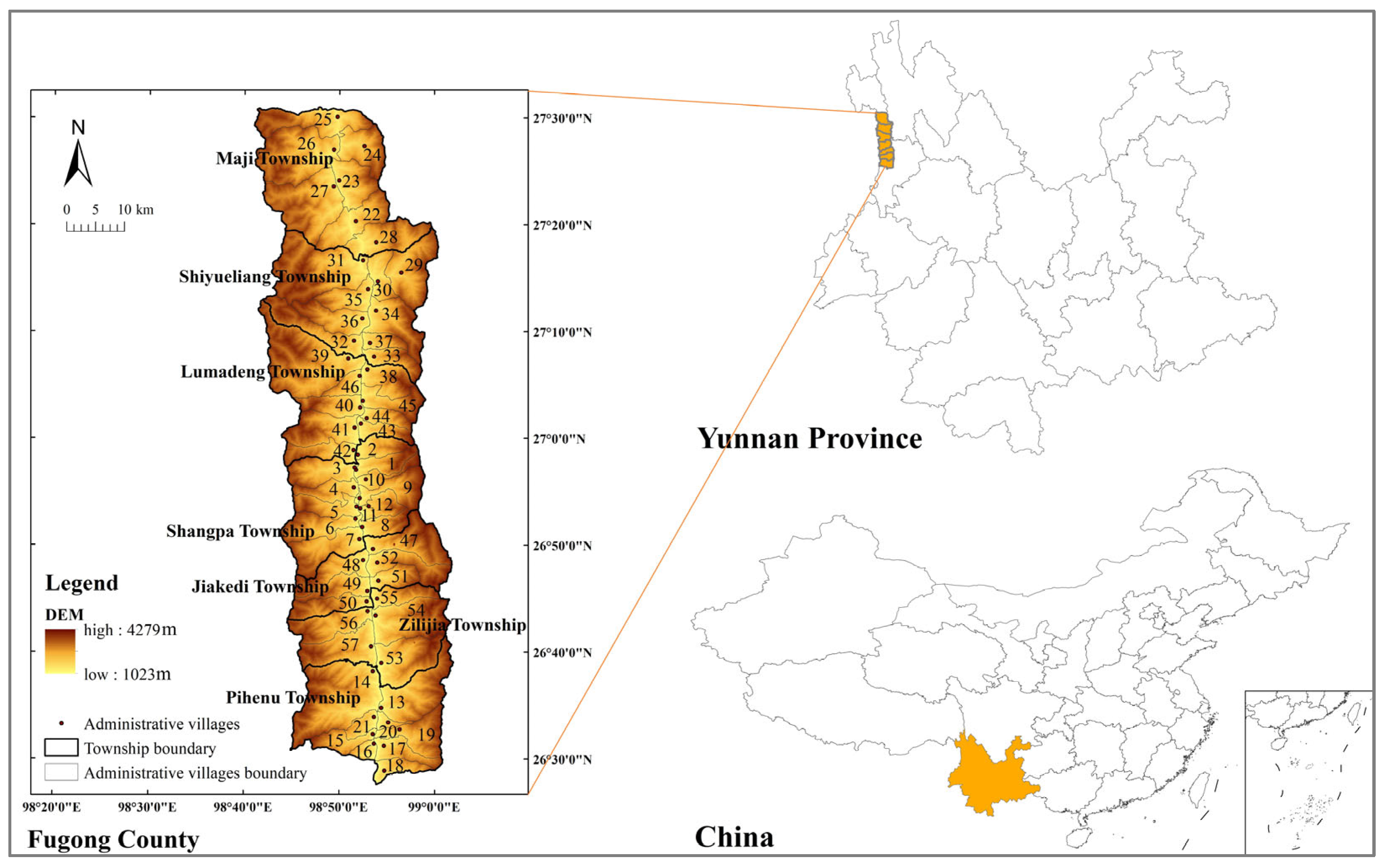
Section 3 briefly describes the study area and data sources.
Section 4 introduces the theoretical framework, the measurement methods of rural households’ livelihood resilience and vulnerability, as well as the analysis of the spatiotemporal impact mechanism of livelihood vulnerability on resilience under multi-risk disturbances.
Section 5 presents and discusses the research results.
Section 6 and
Section 7 conclude the most important findings.
4. Research Methods
This study integrated the theoretical connotations of “livelihood vulnerability” and “livelihood resilience” to develop a systemic analysis framework for sustainable livelihood-vulnerability-resilience for rural households from a multi-risk perspective. This framework is used to guide the elucidation of the impact mechanism of livelihood vulnerability on resilience under multiple risk disturbances. Considering that the livelihood vulnerability of rural households is affected by various risks, such as homogeneous and heterogeneous risks, this paper incorporates multiple risk factors into the VEP model to measure livelihood vulnerability. In addition, we constructed an evaluation indicator system for rural households’ livelihood resilience, which included the dimensions of resistibility, adaptability, and transformation capacity. Meanwhile, we introduced a fuzzy comprehensive evaluation method based on cloud models to measure livelihood resilience. Finally, by clarifying the correlation between livelihood vulnerability and resilience, we adopted a quantile regression method and factor contribution model to reveal the spatiotemporal impact mechanism of multi-level and multi-risk dominated vulnerability on rural households’ livelihood resilience.
4.1. Analysis Framework for Sustainable Livelihood-Vulnerability-Resilience of Rural Households
From the perspective of livelihoods, the traditional SLF first proposed by DFID has been widely used by scholars [
21]. This framework adopts the logical form of “lack of livelihood capital-limited livelihood strategies-poverty”, but ignores changes in the vulnerability context and coping processes that may arise from livelihood outcomes under multiple risk perturbations. It tends to emphasize short-term dynamics over long-term ones, which diminishes the livelihood resilience needed to cope with the dynamic vulnerability context of livelihoods under multiple risk perturbations. However, it is worth noting that focusing on the resilience of household livelihoods under multiple risks is a critical pathway to mitigate vulnerability. This requires integrating the theoretical framework of sustainable livelihood vulnerability and resilience from a multi-risk perspective to assess the internal evolutionary driving process of rural household livelihood systems and the response mechanism to systematic risk perturbations. This can compensate for the shortcomings of SLF, which focuses more on economic poverty and livelihood capital, but fails to analyze the interaction among multi-risk, vulnerability, and resilience from a more micro and dynamic perspective.
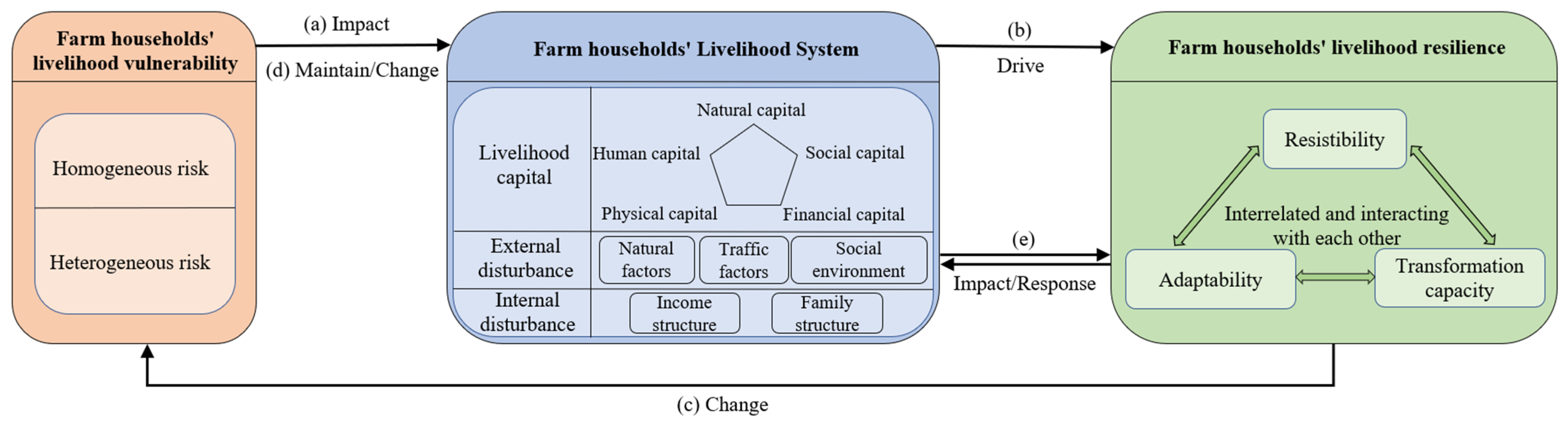
Therefore, we expand and refine the traditional sustainable livelihoods analytical framework by integrating the theories of vulnerability and resilience from a multi-risk perspective. Specifically, we developed a system description and analysis framework for rural households’ sustainable livelihood-vulnerability-resilience, centered around the core elements of rural households’ livelihood vulnerability, livelihood system, and livelihood resilience (
Figure 2). The framework expresses the meaning of key components and system dynamic processes. It also describes the multi-risk factors of vulnerability and the formation mechanism of resilience and vulnerability of poverty-eradicated rural households. In addition, we develop an in-depth and fine-grained deconstruction of the dynamics of how livelihood vulnerability under different risk perturbations affects resilience from an integrated perspective of factors, structures, impacts, and driving evolutionary mechanisms. Meanwhile, we analyze the intrinsic mechanisms and logical links between the vulnerability and resilience of farmers’ livelihoods at different risk perturbations from a micro perspective. We believe that the evolution of system state is a dynamic process and outcome of the interaction of risk, vulnerability, and resilience. Each of them has its own responsibilities and interacts with the other to determine the level of vulnerability of farmers’ livelihoods under different risk perturbations and their resilience to cope with them in the later stages of risk.
4.1.1. Framework Elements
This study considered that the system description and analysis framework for rural households’ sustainable livelihood-vulnerability-resilience from a multi-risk disturbance perspective comprises three main components: the rural household’s livelihood system, resilience, and vulnerability. The framework systematically describes the dynamic process through which households or individuals utilize their livelihood assets to dynamically exert resistibility, adaptability, and transformation capacity to deal with uncertainties and recover from shocks in a multi-risk vulnerability context. Ultimately, the livelihood of rural households can be maintained stable and sustainable development can be achieved.
Among them, the rural household livelihood system encompasses all elements that influence or constitute the rural household’s livelihood context, means, and process. Since the traditional framework of sustainable livelihood analysis of rural households lacks an integrated consideration of the external dynamic interaction between rural households and their external livelihood environment, as well as the internal dynamic role of the rural household livelihood structure itself, which needs close attention under the resilience perspective. Therefore, we extended the definition of livelihood by considering that rural households’ livelihood system includes three major components: their own livelihood capital, external livelihood environment, and internal livelihood structure. It includes rural households’ own livelihood capital, that is, rural households’ own resource endowment from five perspectives: natural, social, human, physical, and financial. Meanwhile, rural households’ livelihood system is also influenced by their own internal structure and the external environment, which were, respectively, referred to as external and internal disturbance in this study. External disturbance refers to the impact of differences in natural conditions or social background on the livelihood process of rural households, emphasizing the interaction and connectivity with the external world during the livelihood processes. Internal disturbances refer to the impact of the composition of rural households’ labor force or the characteristics of their income sources on the livelihood processes, highlighting the specificity and distinctiveness of rural households’ internal livelihood compositions.
Rural households’ livelihood vulnerability in this study refers to the likelihood that a household or individual is exposed to risk, leading to the loss of livelihood assets or a decline in living standards below socially acceptable levels. To further quantify livelihood vulnerability from a multi-risk perspective, with reference to the classification of livelihood risk types by He et al. [
58], the influence factor of vulnerability was attributed to homogeneous and heterogeneous risks. Among them, homogenous risk refers to the common risk factors faced by rural households, which mainly include the natural and social risk caused by social environmental factors such as long-term natural environmental conditions and short-term sudden disasters that lead to property losses of rural households, obstructed transportation, and declining infrastructure services; Heterogeneous risk refers to the specific risk factors faced by rural households, mainly including labor, health, education, social security, assets and income stability risks caused by low individual or household income levels, high household education burden, and serious illness or disability of family members. Under the influence of homogeneous and heterogeneous risks, the elevated rural households’ livelihood vulnerability can be seen as the “cause” within the entire framework, which can be considered as a disturbance background in the development process of the rural households’ livelihood system. Rural households with high vulnerability face greater difficulties in maintaining their livelihoods, which is detrimental to the stable and sustainable development of the rural households’ livelihood system. It can be seen that livelihood vulnerability is manifested in two aspects: the external environment (i.e., homogeneous risks) and the internal structure and mechanism of the livelihood system (i.e., heterogeneous risks). These risk factors interact with each other and cause multiple disturbances, which is the root cause of livelihood vulnerability. Therefore, within the proposed framework, livelihood vulnerability subjected to risk disturbances operates as both a disturbance factor and an endogenous state. As a disturbance, elevated vulnerability disrupts the stability of rural households’ livelihood systems, creating barriers to sustainable development. As an endogenous state, vulnerability reflects the system’s inherent deficiencies. Households with high vulnerability often exhibit structural weaknesses in livelihood capital or adaptive capacities, which in turn reduce their ability to resist external shocks. This dual nature of risk and vulnerability underscores their dynamic interaction with the livelihood system and resilience.
Rural households’ livelihood resilience is an attribute that exists objectively in rural households’ livelihood activities, which maximizes the buffering of external and internal influences, sustains their livelihood structure, and efficiently carries out livelihood transformation under livelihood vulnerability disturbances. We characterized the ability of rural households to maintain long-term stable or sustainable development levels under a multi-vulnerability background. Rural households’ livelihood resilience includes three dimensions: resistibility, adaptability, and transformation capacity. Resistibility is the rural household livelihood system that resists risks to the maximum through its endowment conditions, serving as the first line of defense against risks. Adaptability is the system’s ability to minimize structural changes when disturbances breach the resistance defenses and affect the livelihood system, acting as the second measure for coping with risk. Transformation capacity is the system’s ability to achieve state transformation through self-regulation. Transformation capacity occurs when adaptive capacity is unable to buffer the disturbance and the system is out of balance, in a state of chaos, and has to be transformed. High transformation capacity means the ability to transition more quickly and smoothly to another stable system state, which is the last measure to deal with risks. While the three dimensions collectively constitute the livelihood resilience of rural households, they interact and are linked internally. The absence of any dimension may cause systemic imbalance and affect the development of other dimensions. Rural households’ livelihood resilience, which links livelihood vulnerability and livelihood systems to make the whole framework work, is the core of the framework and the focus of this study. The role of resilience in coping with homogeneous and heterogeneous risks maximally prevents the increase in rural households’ vulnerability and enables rural households to sustain and stabilize their development. It is a crucial approach to enhancing the level of rural households’ livelihood resilience, strengthening their risk-coping capacity, and addressing their livelihood vulnerability.
4.1.2. Framework Construction
Combined with the scientific explanation of the key elements mentioned above, the sustainable livelihood-vulnerability-resilience framework from a multi-risk perspective constructed in this study can be seen as a dynamic system structure consisting of these four main links in
Figure 2: (a) The multiple perturbations of homogenous and heterogeneous risk factors that rural households’ livelihood face is the root cause of livelihood vulnerability, and this background creates an unbalanced and unstable internal environment after impacting on rural households’ livelihood systems, thus making vulnerable rural households gradually start to show a tendency to return to poverty, which is also a specific context and prerequisite for studying rural households’ sustainable livelihood resilience. (b) Rural households’ livelihood systems are continuously updated, reorganized, and optimized dynamically, which enables livelihood resilience to detect and perceive vulnerability background faced by livelihood systems and serve as a means to respond to and recover from them. (c) Rural households’ livelihood vulnerability changes under the influence of livelihood resilience, for example, when livelihood resilience reaches a certain level, rural households are able to respond to and prevent external risk perturbations in time, then livelihood vulnerability can be alleviated and reduced. (d) As changes in rural households’ livelihood vulnerability lead to the maintenance or transformation of the livelihood system into a new state, on the one hand, the increase in livelihood vulnerability will impose constraints on the livelihood system and cause an increasingly unstable state within it. On the other hand, if the livelihood vulnerability is alleviated, the livelihood system can actively reorganize its internal resources, so that the system environment can be restored to its original stable state or even improved. In addition, from a local perspective, resilience and livelihood system interact
Figure 2 (e). Firstly, resilience is determined by the livelihood system’s internal factors, and changes in these internal factors due to risk disturbances will inevitably affect resilience; meanwhile, resilience can cope with risks and thus control the changes in internal elements of the system to a certain extent. From a macro point of view, the whole framework constitutes a causal cycle, mutual influence, and adaptation relationship, in which rural households’ livelihood system is constantly developing and evolving with the help of rural households’ livelihood resilience under the vulnerability situation full of risk disturbances, and circulating and spiraling upward in different development states, eventually tending to the ideal state of stability indefinitely.
In the framework, rural household livelihood vulnerability and livelihood resilience represent different system capabilities that interact with each other to ultimately influence the performance and outcomes of rural household livelihood systems under multi-risk disturbances. When the system runs normally, it indicates that livelihood vulnerability and resilience maintain a relatively balanced state. Although livelihood vulnerability may fluctuate in response to some risk disturbances, livelihood resilience is sufficient to enable the system to absorb the disturbances caused by the exposure of these vulnerable factors through the joint operation of internal resistibility, adaptability, and transformation capacity. This allows the livelihood system to either maintain its original state or transform into a new one. Meanwhile, the improvement of livelihood resilience can also enhance the perception and prediction of risk disturbance or livelihood vulnerability, leading to preventive behaviors and reducing the risk of rural households falling back into poverty. Therefore, we argue that the relationship between livelihood resilience and vulnerability is relative, and both together determine the developmental trend of rural household livelihood systems. Among them, livelihood vulnerability determines the degree of system collapse, and resilience determines the degree of adaptation of the system. The higher the resilience and lower the vulnerability of the rural households’ livelihood system, the easier it is to maintain or reach a new equilibrium state to achieve sustainable development.
4.2. Measuring Method of Rural Households’ Livelihood Resilience
Guided by the above description framework for describing sustainable livelihood-vulnerability-resilience of rural households, and informed by the prevailing trends and pertinent research findings in international indicators for measuring livelihood resilience of rural households [
25,
26,
27], and based on the conditions of the study area, data accessibility, index representativeness and scientific principles, the indicator system for measuring rural households’ livelihood resilience was constructed from three dimensions of resistibility, adaptability and transformation capacity, as shown in
Table 2.
In the indicator system, resistibility is expressed as the behavior of rural households to maximize the buffering of risk-induced disturbances by using their own endowment conditions. It can be considered that the influencing factors of resistibility are often explicit and the most intuitive indicators of rural households’ livelihood levels, which are usually characterized by five major livelihood capitals: human, natural, financial, physical, and social capital [
23]. Therefore, in this study, four indicators of human, natural, financial, and physical capital are selected to evaluate the resistibility, and it is believed that the higher the livelihood capital level of rural households, the stronger their resistibility. The specific sub-indicators include Terrain, environmental conditions, land use, labor force and health status, housing conditions, fixed assets, and per capita income of rural households’ livelihood.
Adaptability is the ability to maximize adaptation to a perturbation to minimize changes in system structure due to risk when resistibility is unable to buffer the disturbance [
29,
59]. In this study, it is argued that rural households’ resilience is mainly related to indirect factors dominated by their social background, which manifests itself in the behavior of being more likely to mobilize social resources in time to seek external help to solve difficulties when exposed to risk. Here, three indicators of public services, social help, and life security were selected to evaluate adaptability. Specifically, the sub-indicators include the level of basic public services in the administrative village where the rural household is located, the social network of the rural household, social welfare, and other indicators.
Transformation capacity is the ability of rural households to efficiently achieve transformation when they are unable to adapt to risks and is mainly related to rural households’ access to information, livelihood behavior, and their own literacy level [
60]. Rural households with rich information access, rich livelihood means, and high education and literacy tend to be more flexible and successful in transitioning in the face of risk. We selected three indicators of learning access, livelihood path, and cultural reserve to evaluate transformation capacity, including the number of village information officers, student village officials, professional cooperatives, the proportion of income from agricultural production, work status, education, politics, and Mandarin in the administrative village where the rural households live.
Building on the indicator system of livelihood resilience constructed above as the evaluation factor set, we refer to the method of Sun et al. [
25] to measure livelihood resilience. Specifically, we employ a multi-level fuzzy comprehensive evaluation method [
25] to assign weights to the indicators of livelihood resilience. In this process, we integrate a cloud model [
61] to enhance the objectivity of the evaluation results. Initially, we used the entropy weight method to determine the weight of each indicator. Formulas are shown in Formulas (1) to (3). Subsequently, a judgment matrix was constructed to assess the relative significance of each index item. A nine-point Likert-scale was employed to gauge the importance of each indicator, with 1, 3, 5, 7, and 9 corresponding to “not important”, “ lightly important”, “moderately important”, “more important”, and “very important”, respectively.
where
denotes the standardized value of index
j for rural household
i,
represents the entropy value of index
j,
is the weight of index
j, and the set
W comprises the weights of each indicator.
Building on the established weight and judgment sets, a fuzzy comprehensive assessment was conducted. To mitigate errors arising from random or contingent factors during the evaluation process and enhance the objectivity of judgments, a cloud model was incorporated. This model characterizes its mathematical properties through three parameters: expectation (
Ex), entropy (
En), and hyper-entropy (
He), which establish a bidirectional mapping between qualitative descriptions and quantitative measurements. Such a framework provides robust methodological support for the integrated weighting process that combines qualitative and quantitative approaches in determining the weights for farmers’ livelihood resilience. This combined method provides a more nuanced and reliable assessment of livelihood resilience. Here, the five importance scales are converted into cloud model-based importance scales, denoted as
E1 = (
Ex1,
En1,
He1),
E2 = (
Ex2,
En2,
He2),
E3 = (
Ex3,
En3,
He3),
E4 = (
Ex4,
En4,
He4),
E5 = (
Ex5,
En5,
He5). Where
Exi (
i = 1, 2, 3, 4, 5) represents the expectation;
Eni (
i = 1, 2, 3, 4, 5) denotes the evaluation entropy; and
Hei (
i = 1, 2, 3, 4, 5) stands for the evaluation hyper-entropy. Multiple experts were invited to score the importance of each factor, and the scoring results were input into the cloud model to derive the fuzzy evaluation matrix
V, as illustrated in Equations (4)–(7).
Among them, Cmin and Cmax are the bilateral constraint relationships in the cloud model, m is the number of indicators participating in the evaluation, k is the number of experts participating in the evaluation, is the variance of the m-th row data, Ex, En, He are the evaluation expectation, entropy, and hyper-entropy of the cloud model.
Subsequently, to obtain a quantitative result for subsequent comprehensive evaluation and analysis, Formula (8) is defined to represent the final fuzzy comprehensive evaluation score for each indicator:
P represents the final fuzzy comprehensive evaluation score for each index, Ex, En, and He are the same as above, and W is a weight set.
Finally, the objective weights determined by the entropy weight method for each indicator are combined with the fuzzy comprehensive evaluation scores of rural households on each indicator as the weights for each indicator. In order to further obtain the final resilience evaluation results, the weighted sum of each indicator is used to quantitatively express the livelihood resilience of each farmer. As shown in Formulas (9)–(12):
xi is the value of index x of rural households i; Re is resistibility; Ad is adaptability; Tr is transformation capacity; , and respectively represent the weights of indicator i in the three dimensions obtained using entropy weight method and the cloud-based fuzzy integrated evaluation method; Res, Ads, and Trs are the standardized results of the above three dimensions; w1, w2, and w3 are of equal weight, that is, 0.333; R represents the livelihood resilience of rural household i.
4.3. Measuring Method of Rural Households’ Livelihood Vulnerability
This study used the most widely used VEP (Vulnerability as Expected Poverty) method [
61,
62,
63] to measure the livelihood vulnerability of farm households. The advantage of this method is that it not only gives an intuitive probability that the farmer will fall into poverty in the future, but also can be used to predict the incidence of poverty for the farm household in a given period, and the estimation method is simple and easy to calculate. When using VEP to measure vulnerability, it is necessary to select characteristic variables. However, in most existing studies, the VEP model is constructed by regressing a welfare indicator (e.g., household consumption or income) on a vector of household characteristics, then using the predicted mean and variance of welfare to estimate the probability of future poverty [
63]. Unlike most existing applications of the VEP method, which typically include only household or individual characteristics, this study integrates multiple risk factors directly into the explanatory vector of the welfare function. In doing so, we internalize the influence of multidimensional risks on expected welfare. The model’s error term is interpreted as a composite disturbance capturing the unobserved effect of these risks on household well-being. By embedding multiple sources of risk within the VEP structure, the study not only addresses a major limitation in the conventional VEP approach, which do not consider risk factors [
64], but also aligns with the conceptual understanding that risk and vulnerability are inherently intertwined. This risk-based of the VEP allows us to reflect how various external shocks interact with household endowments and capabilities, thereby offering a more comprehensive estimation of livelihood vulnerability under conditions of uncertainty.
Based on this, combining the definition of rural household livelihood vulnerability and the classification of risk factor types given in this study, the multiple risk disturbances influencing rural household livelihood vulnerability were attributed to homogeneous risks shared at the village scale and heterogeneous risks faced at the individual or household scale. According to the description of the sustainable livelihood-vulnerability-resilience system framework in this study, it can be seen that resilience is the ability to cope with risk, which generally mitigates risk, whereas vulnerability is the probability of decreasing the quality of rural households’ livelihood due to risk, which tends to increase risk, and the two are relative to each other. Therefore, when constructing the specific influencing factors of homogeneous and heterogeneous risks under livelihood vulnerability, the indicators of resilience can be referred to, but the positive and negative directions of the indicators will also change accordingly. The multiple risk factors that affect vulnerability are shown in
Table 3:
Therefore, the formula for measuring vulnerability using VEP from a multi-risk perspective is as follows:
is the livelihood vulnerability of rural households
h in period
t, where
Z is the expected future income criterion, and the national poverty line is often used to replace it in reference to relevant studies [
65,
66,
67], and
C is the actual future welfare level of rural households. The actual future welfare level of rural households obeys a lognormal distribution, and
is the cumulative density of the standard normal distribution, where
represents the expected value of future welfare and
represents the standard deviation of future welfare.
In the welfare equation, the error term is interpreted as the influence of risk disturbances on the level of welfare. Therefore, the key to measuring livelihood vulnerability disturbed by multi-risk factors is to incorporate various risks into the factors influencing the household feature vector and then estimate the expected welfare and its standard deviation. For this purpose, the following welfare model was established:
xi represents the risk disturbance factors to which the rural households’ characteristic vector is susceptible. We further refined the 12 risk disturbance influence indicators and incorporated the factors influencing the feature vectors from the two main types of homogeneous and heterogeneous risks described above, as shown in
Table 3.
e is the residual, and the two parameters
and
need to be estimated using the three-stage generalized least squares method to obtain the effective values. Formula (16) is derived from Formula (13), and the value of livelihood vulnerability from a multi-risk perspective can be estimated by substituting
and
into Formula (16) as follows:
4.4. Method for Analyzing the Mechanism of Multi-Vulnerability on the Livelihood Resilience of Rural Households
Building on the clarification of the correlation between livelihood vulnerability and resilience of rural households, we explored the mechanism of change in rural households’ livelihood resilience from two different types of vulnerability background: multi-level vulnerability and multi-risk dominated vulnerability.
4.4.1. Correlation Analysis Method
In this study, Spearman’s correlation coefficient [
68] was introduced to explore the correlation between rural households’ livelihood vulnerability and resilience. On the one hand, this method does not need to meet the requirement that the data must follow a continuous and normal distribution, which is more adaptable; on the other hand, it effectively reduces the error caused by deviating from the sample by replacing the data’s own value with the rank. The method is shown in Formula (17):
where
di is the rank difference between the same individuals of two groups of comparison objects, and
n is the number of samples. The positive and negative values of
ps respectively represent the positive and inverse correlation of the two. If the same rank exists, the Pearson correlation coefficient between the ranks should be calculated, as shown in Formula (18).
xi and
yi are the values of the same individual in the two comparison groups, and
x and
y are the mean values of the two comparison groups in the total sample. When evaluating the results of correlation analysis, the more the absolute value of the correlation coefficient tends to 1, the stronger the correlation between the two is (as in
Table 4).
4.4.2. Spatiotemporal Impact Mechanism Detection Method
To explore the spatiotemporal impact mechanism of rural households’ livelihood vulnerability on resilience from a multi-risk perspective, we analyzed from two different perspectives: the contribution of resilience internal factors under multi-level vulnerability and the resilience change characteristics under multi-risk dominated vulnerability, so as to reveal the manifestations and change mechanisms of rural households’ livelihood resilience under different levels and dominant risks of vulnerability.
Method from a Multi-Level Vulnerability Perspective
To move beyond the examination of average effects and further elucidate the differences in the impact mechanism of varying vulnerability levels on resilience, the vulnerability of rural households was decomposed to identify distinct levels using the quantile regression method. It allows us to answer a more nuanced question: Does the impact of vulnerability on resilience vary for households with low, medium, or high vulnerability? Quantile regression was proposed by Koenker and Bassett in 1978 [
69]. Its algorithm principle is to split data into multiple quantile points according to the dependent variable, revealing the regression influence relationship under different quantile points. When faced with dependent variables that do not follow a normal distribution, have heteroscedasticity, or have outliers in the data, using quantile regression algorithm can obtain more robust results and reliable conclusions compared to traditional multiple linear regression models, and can more comprehensively describe the full picture of the conditional distribution of the explained variable. This robustness avoids the biased results that might arise from applying methods like principal component analysis (PCA), which prioritizes variance explanation over distributional nuances, or structural equation modeling (SEM), which requires strict distributional assumptions. Therefore, we used the Quantreg package of R software to implement quantile regression. Here, the independent variables are the vulnerability component indicators (
Table 3), and the dependent variable is the vulnerability. Meanwhile, the 0.1–0.9 quantile interval with 0.1 as a step size was used to explore the influence difference under different levels of vulnerability. As shown in Formula (19):
where
is the quantile point (0 <
< 1),
is the indicator function,
is the coefficient vector of quantile regression,
is the dependent variable of the
i-th household,
is the independent variable of the
i-th household,
is a K-dimensional vector.
On this basis, rural households were divided into different intervals according to the level of vulnerability, and a factor contribution model [
70] was introduced to conduct an in-depth analysis of the internal factor contribution to the livelihood resilience under varying vulnerability levels. This approach offers unique value by quantifying the proportional contributions of resilience sub-indicators within each vulnerability level. Unlike SEM, which focuses on path coefficients and overall model fit without explicitly decomposing factor contributions, or multilevel models, which emphasize hierarchical structures over intra-group factor dynamics, the factor contribution model isolates how specific resilience components drive overall resilience in distinct vulnerability contexts. By linking these contributions to the quantile-based vulnerability strata, we have a more integrated understanding of how resilience operates across the vulnerability spectrum. The objective was to elucidate the mechanisms underlying changes in livelihood resilience across different vulnerability levels. As shown in Formula (20):
where
Xj is the standardized value of the livelihood resilience indicator, and
wj is the weight of the indicator.
Method from a Multi-Risk Dominated Perspective
Considering the theory that regression coefficients can measure the extent of influence of independent variables on dependent variables [
71], this section further explored the impact mechanism of multi-risk dominated vulnerability on rural households’ livelihood resilience. Specifically, as follows:
Firstly, rural households’ livelihood vulnerability was divided into five intervals of [0,0.2], [0.2,0.4], [0.4,0.6], [0.6,0.8], [0.8,1] according to the interquartile equal interval, and 0.1, 0.3, 0.5, 0.7, 0.9 as the center point of the interval, respectively. Then, the interval of rural households’ livelihood vulnerability was judged, and the regression coefficient corresponding to the central point of each factor
xi, was found as the influence weight of the factor. Finally, the ranking
of each factor of each rural households’
among all the rural households is judged, and the rural households whose factor ranking was in the top 20% can be considered to be dominated by the corresponding risks. Following this idea, there may be more than one dominant risk for each rural household. As shown in Formulas (21) and (22):
where
is the risk score of the
ith sample,
is the risk score ranking of the
ith sample,
m is the number of risks, and
i is the number of samples.
It was assumed that rural households’ livelihood vulnerability may be affected by multiple risks, the influence coefficient
k of each risk factor on vulnerability can be known through regression analysis; with the help of this impact coefficient, the potential risks that have the greatest impact on their vulnerability in each rural household can be identified, and the ruraling communities dominated by different types of vulnerability causes can be initially obtained. Furthermore, the difference
between the resilience, internal resistibility, adaptability, and transition force of these special communities and the overall average level obtained by the above comprehensive evaluation can be further observed. Finally, the differences and characteristics of rural households’ livelihood resilience and internal resistibility, resilience, and transformation under different dominant risks were summarized to reveal the evolution mechanisms of rural households’ livelihood resilience under the influence of different risk-dominated vulnerability. As shown in Formulas (23) and (24).
where
is the specific resilience of the rural household group dominated by risk
n, and
is the difference between the resilience of the group dominated by risk
n and the overall resilience,
max(
kixi) means that risk
k is the dominant risk for rural households
x.
6. Discussion
6.1. Contributions
This study proposes a theoretical framework that integrates the vulnerability and resilience of rural household livelihoods from a multi-risk perspective, and quantitatively reveals the spatiotemporal impact mechanism of livelihood vulnerability at different levels and dominant risks on resilience. This further advances the application of theory and methods based on existing research. There is evidence to suggest that in the livelihood field of existing rural households internationally, although most previous studies have separately examined vulnerability and resilience, incorporated limited risk types [
53], this research bridges the gap in capturing their dynamic impacts and effects by operationalizing how internal and external risks simultaneously shape vulnerability and further influence resilience. In this way, we further explore and enrich the analytical perspective and theoretical framework in the field of sustainable livelihood, and enhance the analysis of dynamic mechanisms. This provides a reference theoretical basis and research paradigm for effectively identifying and preventing the potential risk disturbances of vulnerable households to enhance their livelihood resilience.
Specifically, in terms of theory, although existing research has gradually introduced and expanded resilience and vulnerability theories into traditional SLF, constructing the sustainable livelihoods vulnerability, resilience, and vulnerability-resilience framework [
17,
45,
53]. Among these existing frameworks, the first focuses on only one of the aspects of vulnerability and resilience, limiting a comprehensive understanding of their interaction and impacts on livelihood sustainability. This does not meet the needs of sustainable livelihood development. While the latter integrates vulnerability and resilience, the framework fails to adequately consider the dynamic interactions between multiple risk perturbations and the two from a global and micro perspective. Meanwhile, it also fails to deconstruct the impacts on livelihood systems when different risks dominate in a fine-grained manner, which may lead to a partial analysis. Therefore, the contribution of this paper lies in proposing a systematic analysis framework of sustainable livelihood-vulnerability-resilience for rural households from a multi-risk perspective. We verify that integrating vulnerability and resilience into the research framework of sustainable livelihoods from a multi-risk perspective can simultaneously take into account individual resource endowments and livelihood structures, as well as complex risks induced by internal and external environments and societies. This provides a new research idea and paradigm to enhance the resilience in coping with risk disturbances and to predict the kind and extent of risk disturbances occurring from a dynamic perspective, which can play an effective role in preventing risks and thus reducing vulnerability beforehand and avoiding returning to poverty again. Meanwhile, it can also provide a new perspective and theoretical basis for exploring the dynamics and the mechanisms of change in rural households’ livelihood resilience within the framework of changes in vulnerability due to multiple risks.
Moreover, methodologically, there is a lack of research on quantitatively exploring how livelihood vulnerability affects resilience from a multi-risk perspective [
48]. Existing research often considers the impact of a single risk disturbance on livelihood vulnerability or resilience, and fails to comprehensively consider multiple risk shocks [
63]. The contributions of this paper are proposing how to internalize multi-risk factors in measuring livelihood vulnerability. Meanwhile, targeted method combinations are designed to address the multidimensionality and dynamism of research problems. Specifically, the risk perspective VEP model, cloud-based fuzzy evaluation, quantile regression, and factor contribution model are integrated. The combination of these methods forms a coherent analytical chain to capture the complexity of the interactions between various risks, vulnerabilities, and resilience. This can effectively combine multi-risk, livelihood vulnerability, and resilience to quantitatively explore dynamic impact mechanisms. Firstly, in measuring core variables, we measure vulnerability by internalizing multi-risk factors as feature vectors in the VEP model. Compared to previous studies, such as Hahn et al.’s [
33] LVI, which evaluates current or recent conditions in dimensions such as income, health, and natural capital, vulnerability is considered a state derived from existing livelihood assets and risks. Gerlitz et al.’s [
34] MLVI expands this by integrating more multi-dimensional factors but retains a focus on current contextual and structural determinants of vulnerability. Neither of these has been specifically designed to predict future vulnerability or incorporate predictive elements for risk exposure. This makes them different from the VEP model, which inherently embeds forward-looking predictions about poverty. Therefore, although LVI and MLVI provide comprehensive cross-sectional assessments, they lack clear prospective directions to predict how vulnerability may evolve under future risk scenarios. Our method further advances the measurement perspective of vulnerability, enabling a forward-looking and multi-risk assessment of livelihood vulnerability. Complementarily, the cloud-based fuzzy evaluation method, through its comprehensive weighting process integrating qualitative and quantitative inputs, effectively handles the uncertainty and fuzziness in evaluating rural households’ livelihood resilience, ensuring a more objective and scientific measurement of resilience. Secondly, quantile regression and factor contribution model are used to explore the spatiotemporal impact mechanism of rural household livelihood vulnerability on resilience from a multi-risk perspective, surpassing the limitations of traditional linear regression, which tends towards average heterogeneity. Unlike linear models, which summarize relationships using mean values and mask variation across different vulnerability levels, quantile regression identifies how the impact of vulnerability on resilience shifts at specific quantiles. These methods collectively enable us to quantify the spatiotemporal heterogeneity of vulnerability and resilience impacts from a risk perspective, taking a step forward and broadening the analytical perspective in the field of sustainable livelihoods research. Through the design of the above comprehensive methods, the conclusion is that the impact of multiple risks on different poor groups is heterogeneous, resulting in differential effects on the severity of livelihood vulnerability. This forms distinct levels of vulnerability at high, medium, and low levels, respectively. It leads to a differential mechanism of change in rural households’ livelihood resilience, with those differently influenced by varying levels of vulnerability, and the degree of influence deepens year by year. At the same time, it also further reveals that the degree of change in rural households’ livelihood resilience and its internal dimensional development level under multi-risk dominated vulnerability is also heterogeneous, and clarifies the key factors and risk disturbances that affect rural households’ livelihood resilience in a vulnerability background. This provides new ideas for research on sustainable livelihood resilience. On the one hand, by classifying different vulnerability levels, effective resilience enhancement schemes can be made in a targeted manner according to the different vulnerability levels of the region. On the other hand, by classifying multi-risk dominated vulnerability, we can pinpoint the key factors influencing the rural households’ livelihood resilience. This analytical perspective enables us to discern how livelihood resilience evolves as a reaction to risk disturbances under multi-risk vulnerability. It also helps us accurately identify the primary risk disturbances and poverty-inducing factors faced by the region, and facilitates a better understanding of how rural households sustain and enhance their livelihoods in the face of risks and shocks.
Significantly, the theoretical framework and methodology of this study have broader significance and applicability for global rural livelihood research and practice, as they can flexibly adapt to rural areas in different countries characterized by multiple risk exposures. In recent years, the global development situation has faced unprecedented complexity due to the overlapping of risk shocks such as the climate crisis and the new crown epidemic. For example, in sub-Saharan African countries, rural households commonly face overlapping risks such as droughts, crop diseases, and market fluctuations, resulting in high vulnerability and low resilience [
72]. Our integrated analysis can serve as a critical tool to unpack the heterogeneous resilience trajectories in these areas, guiding context-specific interventions by identifying risk-dominant factors and vulnerability levels. Research on farmers’ adaptation to climate change risks in Kenya shows that different climate and economic risk factors lead to different adaptation and resilience-building pathways in rural communities [
73], much like the heterogeneous impacts we see in our study. This is precisely why we emphasize the need to tailor resilience strategies to different dominant risks. In Vietnam, studies on climate change adaptation strategies of farmers also illustrate the importance of considering multiple risks and their combined effects on livelihoods [
74]. Although the global population is urbanizing at an unprecedented rate, rural populations continue to account for half of the global population. Rural poverty accounts for 79% of global poverty, and the poverty rate in rural areas is more than three times that in urban areas. Especially in rural areas in developing countries, various risks pose a great threat to the livelihoods of local populations due to weak infrastructure, fragile economic foundations, and limited coping capacities [
75]. It can be seen that by highlighting the universality of multi-risk exposure and the necessity of integrated vulnerability-resilience analysis, this study contributes to a global dialog on sustainable rural development. It offers a transferable research paradigm, both in terms of theoretical framework and methodology, that can be adapted to diverse geographical and socioeconomic contexts, informing more effective and internationally relevant resilience-enhancing strategies and risk interventions.
6.2. Policy Recommendations
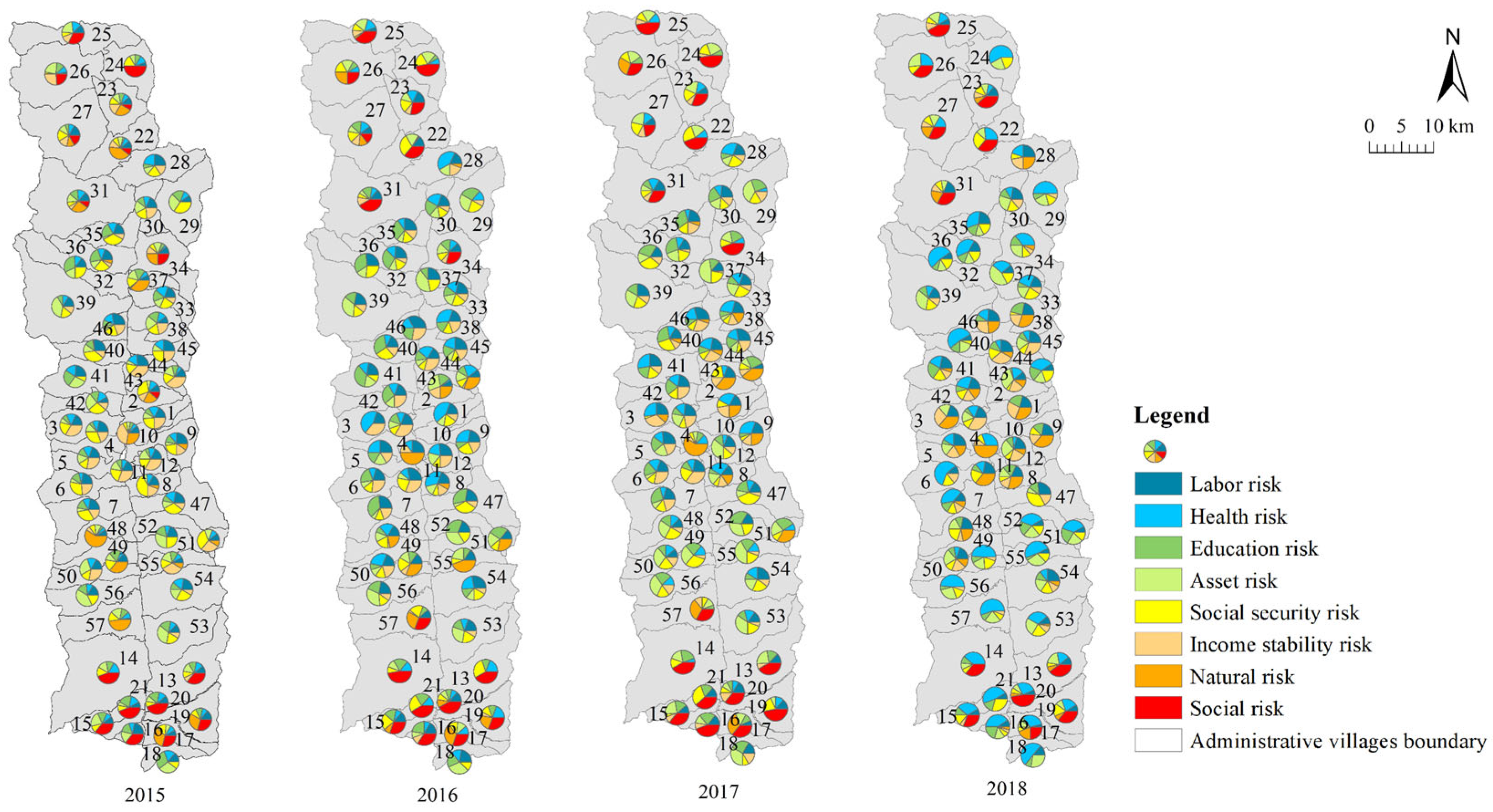
To achieve sustainable livelihood development for rural households and establish a long-term mechanism for stable poverty alleviation, we offer the following suggestions for reference. On the one hand, in terms of coping with risk disturbance, considering the dynamic nature of poverty and the differences and complexity of the impact of rural households’ livelihood vulnerability on resilience, groups in different vulnerable backgrounds should be taken into consideration when implementing specific support policies for rural households in impoverished areas. For instance, based on our findings, it is known that the central region experiences greater disturbance from education and income stability risks, and the shift from the middle to the north and south is mainly disturbed by the risk of labor and assets, while in the northernmost and southernmost regions, they are most affected by the disturbance of natural and social risks. Therefore, vulnerable rural households with different dominant risks in different regions should focus on addressing and preventing their corresponding risk disturbance. In particular, for highly vulnerable households, they should be the priority target of assistance, and a specific analysis should be made to provide targeted assistance to each household to improve their ability to resist risks and reduce their livelihood vulnerability. Furthermore, attention should not be limited to currently vulnerable households but should also encompass those at risk of future impoverishment, aiming to strengthen their capacity to cope with external risk disturbances and prevent potential poverty in advance. Local governments should improve their ability to monitor and identify various types of risks when establishing a dynamic monitoring and assistance mechanism to prevent poverty relapse. This includes timely detection of issues such as unexpected accidents and significant medical expenses, followed by early warning and intervention. Simultaneously, efforts should be made to assess the livelihood capital situation of at-risk rural households, identify the causes of their vulnerability, and comprehensively evaluate the degree of their risk of poverty relapse. This will improve the responsiveness and effectiveness of the early warning mechanism for various types of risks, actively reducing their vulnerability to poverty, thereby preventing relapse into poverty and consolidating poverty alleviation achievements.
On the other hand, to better reduce rural households’ vulnerability and enhance their resilience, the dominant risks and the key contributing factors of livelihood resilience in each administrative village can be considered to know which risk disturbances to prevent to reduce livelihood vulnerability and which factors can effectively improve livelihood resilience by increasing the development level of those factors. Overall, the local governments should address the livelihood challenges faced by different villages and rural households from multiple angles and provide targeted support policies. They can systematically improve rural households’ education by consolidating compulsory education, promoting advanced education, caring for special education, and increasing support for students with disabilities. Technical training should be provided for migrant workers to enhance their knowledge and skills, thereby strengthening their intrinsic capacity for employment, self-improvement, and social integration. Concurrently, the quality of electricity, drinking water, and all living facilities for rural households should be improved, the village sanitation and infrastructure should be further improved, the primary medical and health service system in poor areas should be enhanced, and the conditions of medical and rehabilitation service facilities should be improved. Additionally, relevant government departments should implement various measures to encourage rural households to proactively purchase agricultural insurance, enabling them to effectively prevent poverty relapse due to natural disasters. Notably, the above policy recommendations are not only aimed at rural households, but can also provide coping strategies for regions around the world facing livelihood difficulties. We believe that these have reference value for livelihood issues at different levels in the entire society.
6.3. Limitations and Future Directions
Considering the complexity of rural households’ livelihood systems, this study still has some limitations. Firstly, in terms of data time series, we only analyzed 4 periods of data, which may have overlooked the characteristics and changes in certain time periods and made it difficult to fully capture the evolutionary characteristics of long-term risk, vulnerability, and resilience. In the future, long-term series can be constructed to extend the time dimension of evaluation. In addition, the methods and indicators for measuring vulnerability and resilience in the field of rural households’ livelihood are not unified at present. In this study, limited by the accessibility of indicators, the applicability and comprehensiveness of the risk influencing factors and resilience evaluation index system, and its measurement methods need to be improved. Specifically, the current analysis does not incorporate key institution-related factors (e.g., access to credit, advisory services, food security). These institutional elements play a critical role in shaping household risk exposure and capacity to cope. Future research should prioritize the integration of institutional and policy dimensions to achieve a more comprehensive understanding of rural livelihood systems. Meanwhile, this study has not been validated through external datasets or other case studies, and the universality of this research method needs to be tested through cross-regional rural livelihood data in the future. In addition, in terms of methodology, this study achieved systematic quantification of multi-risk heterogeneity through a combination of multiple methods. However, in the future, a simplified model structure that maintains dynamic capture capability can be explored to promote the efficient practical application of this framework in more diverse scenarios. Furthermore, resilience can also provide feedback on the state of vulnerability. There may be complex dynamic nonlinear influence mechanisms between vulnerability disturbed by multiple risks and resilience, which is also an important direction for future study.
7. Conclusions
Clarifying the spatiotemporal impact mechanism of rural households’ livelihood vulnerability on resilience from a multi-risk perspective can help to formulate risk prevention and livelihood resilience enhancement strategies for vulnerable rural households in different situation areas, which is important for promoting long-term sustainable development. We introduced the theoretical ideas of livelihood vulnerability and resilience based on the traditional sustainable livelihood framework. From a multi-risk disturbance perspective, we constructed a theoretical framework of a sustainable livelihood-vulnerability-resilience system for rural households. Based on this framework, we studied the mechanism of change in livelihood resilience within the context of rural households’ livelihood vulnerability disturbed by multiple risks. Then, selected risk impact factors from two types of homogeneous and heterogeneous risks, and utilized VEP to measure the livelihood vulnerability. Moreover, constructed an evaluation index system and introduced a fuzzy comprehensive evaluation method based on cloud models to assess the livelihood resilience of rural households in three dimensions: resistibility, adaptability, and transformation capacity. Then, based on the Spearman correlation analysis between livelihood vulnerability and resilience, we took Fugong County as a case study to reveal the evolution mechanism of rural households’ livelihood resilience from two different perspectives: multi-level vulnerability and multi-risk dominated vulnerability. The main conclusions are as follows:
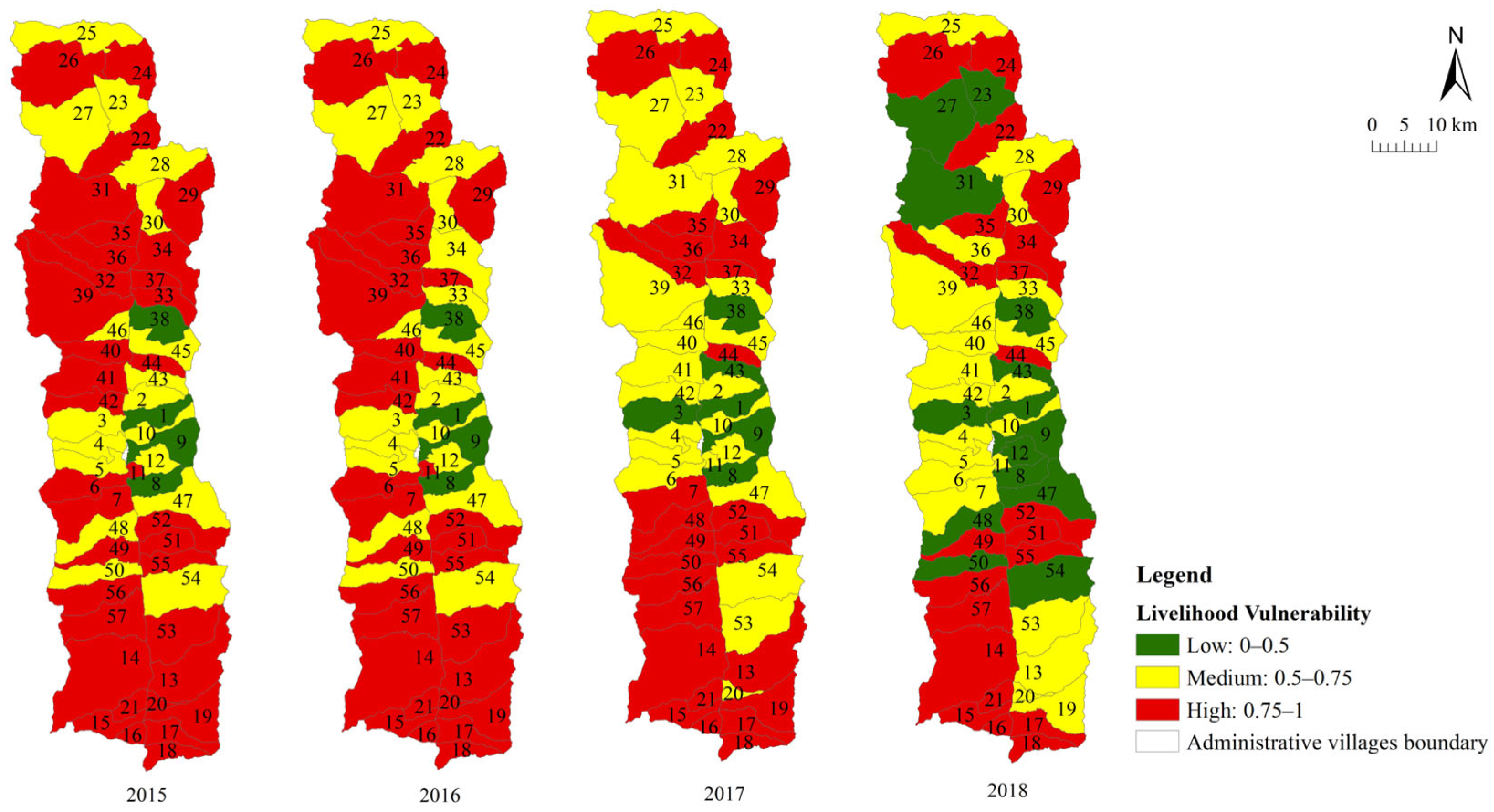
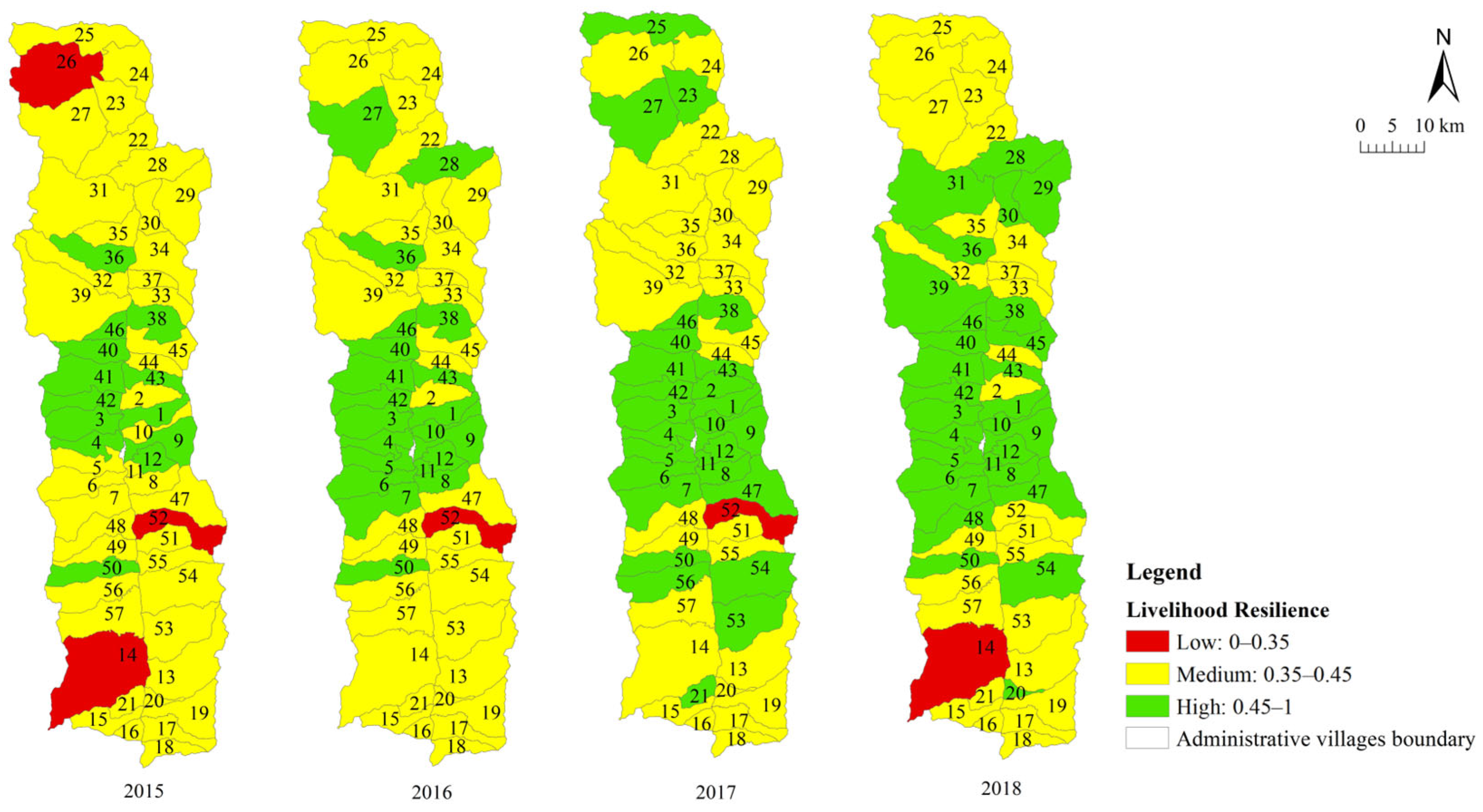
(1) In terms of the spatiotemporal and correlation characteristics of livelihood vulnerability and resilience, it is found that the rural household livelihood vulnerability showed a clear decreasing trend year by year, while rural household livelihood resilience showed a slowly increasing trend year by year, and the development level of rural household livelihood vulnerability and resilience under multi-risk disturbance in different administrative villages had spatial and temporal heterogeneity. In addition, the Spearman correlation coefficient between rural household livelihood vulnerability and resilience showed a negative correlation that gradually increased over time during the study period, indicating that the influence of rural households’ livelihood vulnerability on resilience was deepening annually.
(2) In terms of the impact of multi-level vulnerability on resilience, the impact of health status, social security participation rate, fixed assets, dangerous building classification, and environmental factors on rural households’ livelihood resilience tended to increase as the vulnerability level increases. Conversely, the influence of accessibility to medical facilities, accessibility to educational facilities, and the proportion of agricultural production and operation income tended to decrease, while the labor status and the number of workers remained relatively stable. This indicates that contributing factors of the rural households’ livelihood resilience showed a differential change mechanism at different vulnerability levels. Specifically, the livelihood resilience of low-vulnerability rural households was most influenced by their access to information. The livelihood resilience of medium-vulnerability rural households was primarily influenced by factors such as the proportion of agricultural production and operation income, health status, and accessibility to education and health facilities. Meanwhile, the livelihood resilience of high-vulnerability rural households was more influenced by factors such as the social security participation rate, the total labor score, and the proportion of agricultural production and operation income.
(3) In terms of the impact of multi-risk dominated vulnerability on resilience, livelihood resilience was the lowest when social risk is dominant, indicating that it has the greatest degree of influence on livelihood resilience, followed by asset risk and social security risk, while rural household-specific resilience dominated by labor risk and income stability risk was higher, indicating that the impact of these two risks on resilience was relatively low compared to other dominant risks. Among them, rural households dominated by risk factors such as poor natural livelihood conditions, health problems of family members, and an insufficient labor force generally showed low resistibility; rural households with poor social conditions of livelihood, a lack of personal assets, and low access to social security generally showed low adaptability; rural households troubled by factors such as a relative lack of personal asset endowment and low literacy of family members generally showed low transformation capacity.
In the realm of sustainable development under the backdrop of stable poverty alleviation, the aforementioned findings can provide referential research methodologies and technical schemes for rural household livelihood research facing the problem of poverty eradication and return to poverty. This can intensify the capacity of rural households to manage risks and ensure the stability of livelihood system development, ultimately achieving sustainable livelihood and stable poverty alleviation.