1. Introduction
Agriculture plays a dual role in the global climate crisis—both as a significant source of greenhouse gas emissions and as a sector increasingly vulnerable to its impacts [
1]. In response, many European countries have introduced Agri-Environmental Schemes (AESs), which aim to promote environmentally conscious farming practices while mitigating negative ecological impacts. Since the 1980s, governments in countries such as France and Ireland have utilized AESs to support biodiversity, improve soil and water quality, and align agricultural production with sustainability goals.
AESs typically provide financial incentives and technical support to farmers who adopt environmentally beneficial practices. Over time, they have evolved into a central component of agricultural policy in the European Union and beyond. Research has predominantly focused on the environmental and economic outcomes of these schemes, with numerous studies examining their impacts on biodiversity and farm productivity. However, considerably less attention has been paid to the social dimension of AESs—particularly their effects on the mental health and well-being of farmers.
This omission is notable given that social sustainability is one of the three foundational pillars of sustainability, alongside environmental and economic concerns. Within farming communities, mental health challenges are widespread and deeply concerning. Farmers experience high levels of stress, isolation, and psychological morbidity due to financial uncertainty, long working hours, and a perceived lack of institutional support [
2,
3,
4]. The World Health Organization defines mental health as “a state of well-being in which every individual realizes their own potential, can cope with the normal stresses of life, can work productively and fruitfully, and is able to contribute to their community.” Exploring how AESs might contribute to such outcomes represents a valuable research avenue.
1.1. Environmental and Economic Impacts of AESs
AESs have been the subject of extensive ecological research. Some studies demonstrate positive biodiversity outcomes, such as increased bird populations and improved habitat quality [
5,
6]. Kleijn et al. found that participation in AESs was associated with greater species richness and enhanced ecological value of farmland [
7]. However, these findings are not universal; for example, there were no significant improvements in biodiversity observed on Dutch farms enrolled in AESs [
8,
9]. Kleijn and Sutherland further argue that existing monitoring tools are often insufficient to fully capture biodiversity outcomes [
9]. These inconsistencies highlight the complexity of designing and assessing effective AESs, and the need for robust ecological indicators [
10].
Similarly, the economic impacts of AESs remain mixed. While some farmers benefit from more stable income streams and improved market resilience, others find that payments do not sufficiently offset the costs and constraints of participation. A review by Uthes and Matzdorf revealed a lack of generalizable economic conclusions, emphasizing that most studies are case-specific and fail to account for systemic factors [
11]. Latruffe et al. also noted challenges in evaluating economic sustainability due to a lack of standard indicators [
12]. These limitations in evaluating both ecological and economic outcomes call for a broader understanding of AES impacts—one that includes the social experiences of farmers.
1.2. Social Dimensions and Participation Drivers
One area where environmental, economic, and social dimensions intersect is the question of why farmers choose to participate in AESs. Contrary to common assumptions, financial incentives are not the sole or even primary motivator for many farmers. Multiple studies have identified a range of influences, including farm size, the farmer’s age and health, values regarding environmental stewardship, and prior experience with conservation practices [
13,
14,
15].
Hounsome et al. demonstrated that older farmers and those with poor mental health were less likely to participate in AESs [
16]. Lambert et al. found that household characteristics and business structure significantly influenced uptake [
17]. Defrancesco et al. reported that labor-intensive or highly market-oriented farms tended to avoid AESs due to the time and resource demands involved [
18]. Meanwhile, social and cultural dynamics—such as peer influence, community engagement, and perceptions of environmental responsibility—also play important roles [
19,
20].
Contractual design factors further influence participation. Farmers prefer schemes that offer short-term, flexible agreements with manageable requirements and external oversight [
20]. Excessive bureaucracy, perceived risk, or high time demands discourage engagement. Despite these insights, relatively few studies have explored how such schemes influence farmers’ mental health, either positively or negatively.
1.3. Mental Health and AES Participation
Emerging research has started to highlight potential mental health benefits linked to AES participation. These include improved confidence, reduced isolation, increased social support, and enhanced quality of life [
21,
22,
23]. Participation in AESs often involves peer advisory sessions, training programs, and group discussions that foster community and knowledge sharing. Such interactions can mitigate loneliness, build a sense of purpose, and increase satisfaction in one’s work [
22,
24].
A compelling example is the North Yorkshire Cornfield Flowers Project in England, where farmers reported increased pride and community engagement after observing floral improvements on their land [
24]. Burton et al. similarly found that visible environmental improvements provided farmers with a sense of prestige and validation [
25]. These social benefits represent an often-overlooked dimension of sustainability that deserves further examination.
Yet, AESs can also create mental health burdens. Stress related to administrative processes, inspections, delays in payment, and regulatory complexity can offset perceived benefits. Mills et al. reported that nearly half of their respondents experienced increased stress from these factors [
26]. Therefore, while AESs hold promise as mechanisms for enhancing social sustainability, poor scheme design or implementation could inadvertently harm the very communities they aim to support.
Mills et al. recently proposed a set of social indicators for evaluating the sustainability outcomes of AESs, including willingness to engage, capacity to engage, quality of relationships, and social well-being outcomes (e.g., resilience, health, and quality of life) [
27]. These indicators offer a framework for future assessments but have not yet been widely applied in practice.
1.4. Research Aim and Objectives
Given the growing concerns about farmers’ mental health and the potential role AESs may play, both positively and negatively, this study explores how those working within AES frameworks perceive their impacts on farmer well-being. Using semi-structured interviews with 26 professionals involved in the design, delivery, or evaluation of AESs, this study seeks to achieve the following:
Assess perceived mental health outcomes (positive or negative) of AES participation;
Identify mechanisms by which AESs may support or hinder farmer well-being;
Offer recommendations to inform policy improvements and guide future research.
By addressing these objectives, this research aims to broaden the conversation around agricultural sustainability, drawing attention to the human dimensions of policy design and the importance of integrating mental health into evaluations of environmental programs.
2. Materials and Methods
2.1. Research Design
This study employed a qualitative approach, integrating structured questionnaires with semi-structured interviews to gather insights from professionals involved in Agri-Environmental Schemes (AESs) in France and Ireland. The goal was to explore the perceived effects of AES participation on farmers’ mental health and well-being. While the research did not collect data directly from farmers, it captured the informed perspectives of practitioners (professional agricultural advisors) working closely with them. This practitioner-informed methodology draws on the incidental and cumulative observations of professionals working within AESs in France and Ireland. Rather than interviewing farmers directly, which poses ethical and practical challenges when discussing mental health, the study gathered data from AES practitioners who interact regularly with a wide range of farmers across time and geographical contexts.
Direct discussions about mental health within farming communities are often hindered by cultural norms of stoicism, stigma, and emotional self-reliance. Farmers may be reluctant to disclose psychological distress, and participation in mental health research is frequently limited by discomfort or denial. Consequently, relying solely on farmer self-reporting can result in underreporting or a skewed representation of mental health realities, particularly in short-term, cross-sectional studies.
In contrast, AES professionals are uniquely positioned as consistent, trusted points of contact within agricultural systems. Their ongoing engagement with diverse farming populations allows them to observe behavioral patterns, emotional changes, and informal disclosures over time, providing access to a broader and more nuanced understanding of farmer well-being. This practitioner-based approach facilitates the collection of embedded, practice-informed insights that would be difficult to capture through direct interviews alone.
While this method does not replace the value of farmer-first accounts, it offers a valuable system-level overview of mental health dynamics, as perceived by experienced intermediaries who operate at the interface of policy implementation and everyday agricultural practice.
2.2. Data Collection
A structured questionnaire was developed, informed by the social indicator framework proposed by Mills et al. [
27], which encompasses factors such as quality of life, stress, health, social relations, and environmental attitudes. The questionnaire consisted primarily of closed-ended questions, complemented by open-ended items designed to encourage elaboration. To maximize depth and clarity, all questionnaires were administered through one-on-one online interviews conducted via video conferencing platforms.
Interviews were conducted in either French or English, depending on the respondent’s location, and were audio-recorded with participant consent. Interviews ranged from 25 to 60 min in length, allowing for both structured responses and qualitative elaboration. The audio recordings were transcribed, and both transcripts and questionnaire responses were subjected to qualitative content analysis following the iterative method described by Bryman [
28]. This involved identifying recurring patterns, coding for key themes, and categorizing findings according to the research objectives.
This study was reviewed and approved by the Trinity College Dublin Research Ethics Committee (TCD REAMs Approval No: 3206) which was approved on the 13 February 2024. All participants provided informed consent prior to data collection. Interviews were conducted confidentially, and all data were anonymized during transcription and analysis. Participants were informed of their right to withdraw at any time, and no personally identifiable information has been reported.
2.3. Questionnaire Structure
The questionnaire was organized into six thematic sections designed to cover different aspects of mental health and its potential links to AES participation:
General Information: Collected background information on the participant and the specific AES they work in, as well as the nature and duration of their interactions with farmers.
Quality of Life: Assessed perceived impacts of AESs on farmers’ work satisfaction, happiness, work–life balance, and overall well-being.
Relationships: Investigated whether AESs create opportunities for increased social interaction among farmers.
Physical and Mental Health: Captured observations related to physical health outcomes and signs of psychological distress among farmers.
Stress: Evaluated whether AES participation introduces additional stressors into farmers’ lives or alleviates existing pressures.
Environmental Considerations: Explored how AESs may influence farmers’ environmental awareness and attitudes toward biodiversity.
This structure allowed for a comprehensive exploration of the potential social co-benefits and drawbacks associated with AESs.
2.4. Participant Recruitment
Participants were selected based on the following inclusion criteria:
- i.
Current or past experience working in an AES;
- ii.
Familiarity with farmers participating in the scheme;
- iii.
Availability and willingness to participate in the study.
Relevant contacts were provided through agricultural industry links within the principal investigators professional network primarily involving Irish AES professionals. Further recruitment was conducted through internet searches to identify relevant French AES personnel. In total, 151 individuals (87 in France and 64 in Ireland) were contacted by email in May 2024.
A total of 26 professionals ultimately participated in the study:
In France, most participants (71%) worked in PAECs (Programmes Agro-Environnementaux et Climatiques), while the rest were involved in Re-Sources schemes. In Ireland, participants worked in various AESs, including ACRES (Agri-Climate Rural Environment Scheme), EIP-AGRI (European Innovation Partnership) initiatives, and LIFE programs.
2.5. Participant Experience
Participant experience with farmers varied:
46% (12 participants) had worked with farmers for fewer than five years;
46% (12 participants) had more than ten years of experience;
Most participants (72%) had known the farmers currently under their supervision for less than five years, aligning with the typical AES contract cycle.
The number of farmers each participant worked with ranged significantly:
Some French AESs involved fewer than 100 farmers, allowing for closer interpersonal relationships;
Irish AESs often involved over 1000 farmers, limiting the possibility of deep, individual connections.
This diversity in context, scale, and duration of engagement added richness to the qualitative data and helped reveal potential contextual influences on perceived mental health outcomes.
Overall, the range of participants included leads to a robust and comprehensive study since these professionals were located across the full range of AES either currently or recently in operation in Ireland and France. The 26 individuals will each have been representing their pooled observations for cohorts of farmers ranging between 20 and 3000 so the study can represent anywhere between 2000 and 5000 farmers with which the practitioners have engaged within the past 5 years. This is also spread across five different AESs located across the entire Island of Ireland and large demographic regions of France. This study is balanced between France and Ireland, includes a variety of AESs, and spans a wide range of experience levels, scales, and contexts. While small, the sample size is adequate for identifying key themes across both countries, especially given the qualitative depth from interviews.
3. Results
The interview consisted of 75 questions across the 6 categories listed in
Section 2.3 above. Presented below is a summary of the results from our study under three broad categories:
As outlined in
Section 1.4, the focus of this study was not to highlight general difficulties within the agricultural sector but rather on the observed change from those general difficulties following participation in AES. We therefore present the general results prior to participation under each section as a baseline with which to assess the associated change (or not) from that baseline following AES participation. A more expanded set of results from this study are included in the
Supplemental Information.
3.1. Farmers’ Quality of Life
Farmers’ quality of life is a multifaceted concept influenced by work–life balance, job satisfaction, and personal well-being. Participants reported that while farmers are deeply passionate about their work and often see it as a meaningful part of their identity, numerous occupational challenges negatively impact their quality of life.
3.1.1. Work–Life Balance
Farming is widely perceived as a time-consuming profession, with little separation between personal and professional life. The majority of participants (73%) indicated no improvement in work–life balance due to AES participation, while 27% noted a moderate benefit. This aligns with prior research showing that the integration of work and life is inherent to farming, especially in rural contexts where homes are located on or near the farm.
Despite some AESs providing structure or community engagement opportunities, they were generally not seen as alleviating the heavy workload associated with agricultural life. This diverges from findings in Mills et al. [
26], where a greater proportion of farmers reported satisfaction with their work–life balance. The discrepancy may stem from the second-hand nature of the present study’s data, as participants spoke from observation rather than personal experience.
3.1.2. Job Satisfaction and Sense of Worth
Despite the pressures of the job, farmers were consistently described as being satisfied with their profession. Seventy percent of respondents rated farmers as “moderately satisfied” with being a farmer. Many emphasized that farming is a vocation tied to family heritage and identity. Respondents noted that farmers often “define themselves by their profession” and derive purpose and pride from their work, even when external conditions are difficult.
AES participation was reported to moderately improve farmers’ sense of worth, with 92% of participants observing increased job satisfaction through environmental engagement and recognition. For example, farmers gained pride from biodiversity improvements on their land and from receiving external validation for their contributions.
This theme mirrors findings in Mills et al. and Burton (2008), which show that farmers feel more valued and engaged when environmental stewardship is acknowledged [
25,
26]. However, while Mills et al. found that most AES participants reported no change in their identity as farmers, the current study suggests that such recognition may play a greater role than previously appreciated [
26].
3.1.3. Overall Life Satisfaction and Happiness
When asked about general life satisfaction and happiness, responses were mixed. Most participants rated farmers’ happiness at an average of 3.25 out of 5, citing factors like financial pressure, climate unpredictability, and lack of free time as persistent challenges. Passion for farming was noted as a buffer, allowing many to continue despite hardships.
AESs were seen to have modest benefits in this domain. About half of respondents observed a moderate improvement in overall quality of life and happiness due to AES participation. These effects were attributed to financial incentives, a sense of structure, or increased social engagement. However, delayed payments or administrative complexity were cited as counterbalancing factors that limited positive effects.
A comparison of these results with Mills et al. [
26] revealed similar overall trends. In both studies, quality of life and happiness were reported as neutral to moderately positive, with AESs having limited but occasionally meaningful impacts.
3.2. Mental Health Observations
Mental health emerged as a central concern among respondents, who described a farming profession marked by stress, anxiety, and psychological vulnerability. While most participants lacked formal mental health training, they shared consistent observations about farmers’ emotional states and the role AESs may play in either mitigating or compounding these challenges.
3.2.1. Observed Mental Health Challenges
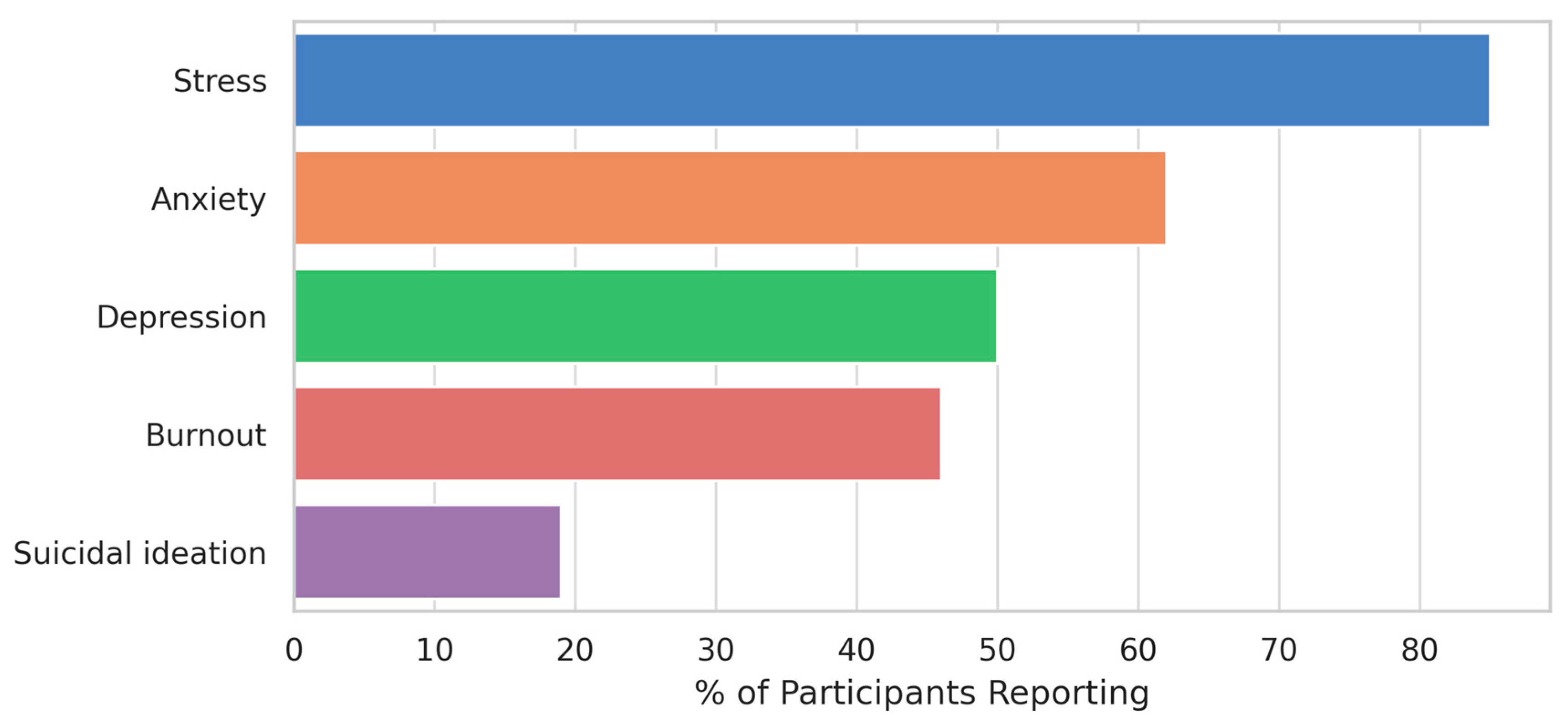
Respondents reported widespread psychological strain among farmers, describing signs of chronic stress, burnout, depression, and—in rare but serious cases—suicidal ideation—refer to
Figure 1 below. These mental health challenges were frequently linked to external pressures such as unpredictable weather, fluctuating market prices, and bureaucratic burdens tied to policy and compliance.
One participant from Ireland noted:
“There’s definitely stress and burnout… The older generation, in particular, feels left behind by regulation.”
Another French participant observed:
“Farmers feel abandoned… they carry the weight of expectations with very little emotional support.”
These findings align with research by Gregoire and Milner et al., who highlight elevated rates of psychological distress and suicide risk among farmers globally [
3,
4].
3.2.2. Perceived Mental Health Impact of AES Participation
Participants expressed mixed views on whether AESs contribute to improved mental health. While a small number observed positive outcomes, such as increased motivation or a sense of purpose, the majority stated that AESs had little or no impact—or that the schemes sometimes introduced additional stress—see the summary of key results given in
Table 1 below.
Key reported benefits:
Increased confidence through environmental achievements
A sense of pride and external validation
Peer support (especially through discussion groups)
Key reported drawbacks:
Stress from inspections, complex application processes, or payment delays
Pressure to meet ecological standards or “perform” compliance
One participant summarized this duality:
“It’s a double-edged sword. AESs can give meaning, but the bureaucracy can really crush people.”
3.2.3. Emotional Narratives and Farmer Attitudes
Several participants emphasized that farmers often mask emotional distress due to cultural norms around stoicism and self-reliance. Consequently, issues like anxiety and depression may go unspoken or unrecognized. AES professionals described difficulty in broaching mental health topics, often relying on informal signs—withdrawal, frustration, or changes in behavior.
Despite this, some farmers were perceived as emotionally uplifted by their AES participation, especially when environmental goals were achieved. This links to prior works by Lobley et al. and Mills, who found that environmental success can foster well-being, self-worth, and resilience [
21,
23].
3.3. Attitudes Toward the Future
Farmers’ outlook on the future was described by participants as deeply intertwined with structural pressures, generational uncertainty, and environmental change. While many farmers maintain pride in their work, most participants characterized their future outlook as cautious, ambivalent, or pessimistic, especially in the absence of meaningful systemic support.
3.3.1. General Outlook and Optimism
Participants reported that farmers often exhibit concern over the sustainability of their profession. Common themes included:
Financial instability
Regulatory unpredictability
Lack of succession planning
Climate-related unpredictability (e.g., drought, flooding)
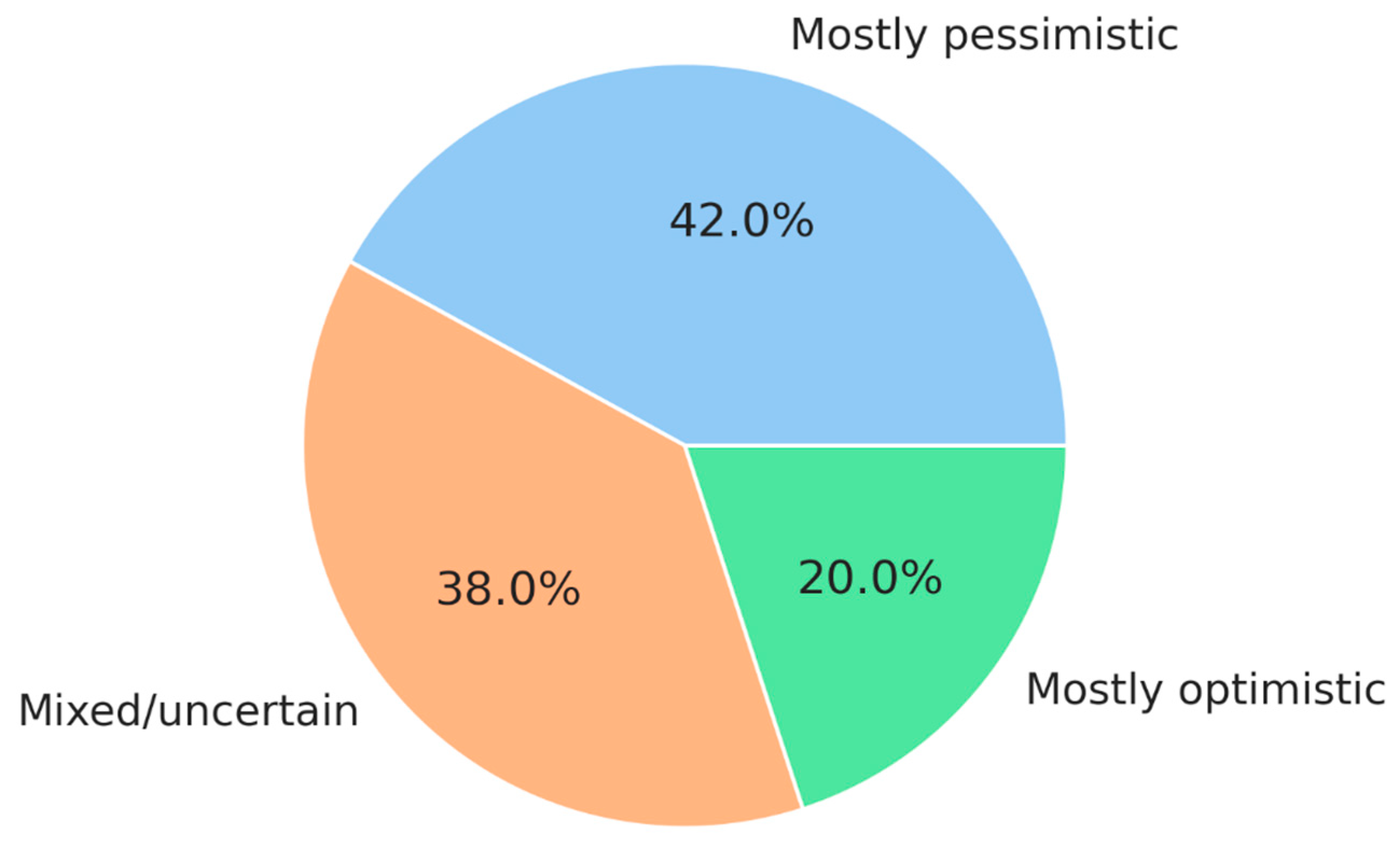
Many participants observed that younger farmers were slightly more hopeful, especially when engaged in innovation or environmental projects. However, overall outlook was more often negative than positive (see
Figure 2).
One French AES professional noted:
“They want to be optimistic, but it’s hard when the entire framework seems against them.”
Another described farmers as “trapped between legacy and policy”, unsure whether future generations would continue farming.
3.3.2. Role of AESs in Shaping Outlook
When asked whether AES participation influenced farmers’ view of the future, responses were again mixed:
31% of participants felt AESs improved optimism by offering stability or environmental purpose.
38% believed AESs had no impact.
31% reported that AESs contributed to stress or pessimism, largely due to poor implementation or inconsistent payments.
One Irish participant explained:
“When schemes work, they help farmers see themselves as part of the solution—but when they don’t, they feel blamed for everything.”
Table 2 below highlights the perceived impact of AES on farmers’ future based on their shift in outlook and the associated reasoning behind this reported change.
3.4. Sources of Stress in AESs
While Agri-Environmental Schemes (AESs) are designed to promote environmental sustainability, many participants noted that these schemes can introduce additional stress into farmers’ lives. Stressors were both systemic and interpersonal, stemming from policy design, administrative complexity, and on-farm compliance.
3.4.1. Bureaucracy and Administrative Burden
A majority of participants (69%) reported that bureaucracy—including paperwork, application forms, and unclear instructions—was a key source of frustration and stress for farmers. Many felt overwhelmed by the amount of documentation required and the changing requirements between schemes or funding rounds.
Table 3 below summarizes the primary stressors and common themes observed within the study.
One French respondent remarked:
“The forms are always changing. Even the advisors don’t always understand them.”
Others described farmers feeling “defeated” by the process, especially older farmers or those without digital literacy.
3.4.2. Inspections and Compliance Pressure
Inspections were commonly cited as a source of acute stress, especially when farmers felt they might be penalized for minor infractions or misunderstood regulations. Participants noted that inspections could feel adversarial and erode trust between farmers and scheme administrators.
“Even when they do everything right, farmers are terrified of inspections”, said one participant.
This fear often discouraged farmers from participating in AESs at all or led to chronic anxiety during inspection seasons.
3.4.3. Financial Uncertainty
Nearly half of the participants (46%) reported that delays in payments or uncertainty around funding cycles caused significant stress. Inconsistent cash flows placed strain on farm operations, especially when farmers had made investments upfront based on scheme commitments.
This finding aligns with prior studies, which highlight the importance of timely payments and administrative transparency in maintaining farmer trust and mental well-being [
26].
3.4.4. Cumulative and Systemic Stress
Several participants emphasized that stress rarely came from one source alone. Instead, it accumulated across bureaucratic demands, inspections, and financial risks, compounded by external pressures like market volatility or climate unpredictability.
“It’s death by a thousand cuts”, one respondent noted.
3.5. Role of Discussion Groups
One of the clearest positive mental health outcomes identified by participants was linked to farmer discussion groups. These groups, often embedded within AES programs—particularly in Ireland—were credited with promoting social connection, peer support, and a sense of purpose.
3.5.1. Social Connection and Reduced Isolation
A majority of participants (65%) highlighted that discussion groups helped to combat social isolation, particularly among older or more geographically remote farmers. Regular group meetings provided farmers with opportunities to:
“The discussion groups are more than educational—they’re therapeutic”, one Irish participant observed.
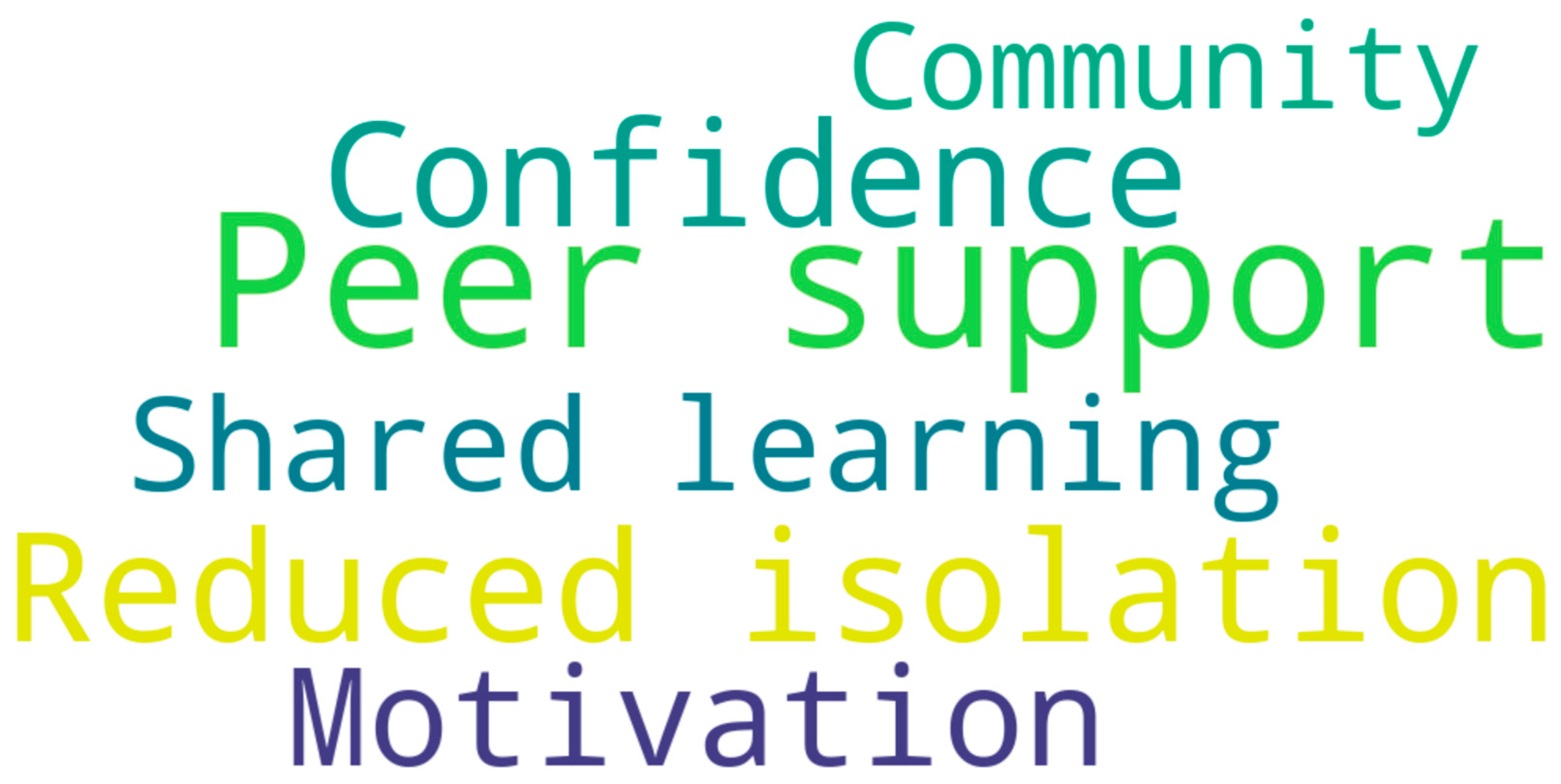
The word cloud shown below in
Figure 3 illustrates the perceived benefits of discussion groups based on the frequency of responses observed within the respondents.
3.5.2. Increased Confidence and Motivation
Many participants noted that farmers gained confidence from sharing experiences with peers. Seeing others adopt similar AES practices created a sense of collective momentum, reducing feelings of uncertainty or inadequacy. One participant described discussion groups as providing “moral backing” that helped farmers believe in the value of their actions.
“Farmers leave the meetings feeling more secure in their decisions”, another noted.
This support reportedly enhanced self-efficacy, a key determinant of psychological well-being.
3.5.3. Environmental Learning and Validation
Discussion groups also played a role in affirming environmental practices. Farmers received validation for their efforts in biodiversity, water quality, or soil improvement, often through presentations or peer feedback. This recognition boosted morale and created a shared identity cantered on stewardship.
Such findings reinforce earlier research by Mills [
22], Lobley et al. [
21] and Saxby et al. [
24], which suggests that peer-to-peer learning environments can produce psychosocial benefits beyond technical knowledge transfer.
4. Discussion
This study explored the perceived impact of Agri-Environmental Schemes (AESs) on farmers’ mental health through the perspectives of 26 AES professionals in France and Ireland. The findings provide preliminary insights into how scheme design, implementation, and context influence farmer well-being. While some potential mental health co-benefits were identified—particularly through discussion groups and recognition of environmental achievement—the overall picture was one of structural stress, administrative burden, and limited emotional support.
4.1. Interpreting Key Findings in Light of Existing Research
The data suggest that AESs are rarely designed with mental health in mind, and in many cases may exacerbate existing psychological pressures. This reinforces earlier studies noting the high baseline of stress, burnout, and even suicide risk within agricultural communities [
2,
3,
4]. While schemes aim to deliver environmental outcomes, their bureaucratic complexity, fear-inducing inspections, and payment delays often introduce stressors that conflict with the broader goals of social sustainability.
Only a minority of participants believed AESs provided measurable mental health benefits. Those who did described increased confidence, motivation, or pride, especially where environmental improvements were visible and acknowledged. These findings are consistent with Mills [
22], Lobley et al. [
21], and Saxby et al. [
24], who highlight the symbolic and psychosocial value of environmental achievement. Burton et al. [
25] similarly found that recognition of stewardship enhances farmer identity and morale—particularly when validated by peers or community.
However, the most consistent benefit reported across participants was the presence of discussion groups. These forums helped to reduce isolation, provided emotional reassurance, and fostered knowledge-sharing among farmers. This aligns closely with findings by Mills et al. [
26] and supports calls to mainstream peer-led interventions in AES frameworks. Such groups appear to be low-cost, high-impact mechanisms for building both social capital and emotional resilience among farmers.
Yet, these social supports are often ancillary rather than integral to AES structures. For most farmers, scheme participation remains a technically and administratively complex endeavor that lacks consistent emotional or social support infrastructure. While environmental and economic impacts of AESs are well-documented [
5,
6,
7,
8,
9,
10,
11,
12], the social pillar of sustainability remains inadequately addressed in most evaluations [
27].
4.2. Broader Implications for AES Design and Policy
The findings underscore the need to reframe how AESs are conceptualized, not only as instruments of environmental reform, but also as human systems that affect real people’s lives, relationships, and identities. As suggested by Mills et al. [
27], incorporating social indicators—such as well-being, engagement, and trust—into AES monitoring could help ensure a more holistic understanding of scheme outcomes.
The social indicators framework proposed by Mills et al. [
27]—including willingness and capacity to engage, quality of relationships, and social well-being outcomes—proved particularly valuable in shaping both the questionnaire and interview themes used in this study. Although applied here through the lens of practitioner observation rather than direct farmer self-reporting, the framework remains readily transferable to other AES contexts. Embedding such indicators alongside ecological and economic measures would allow for a more balanced assessment of scheme performance, ensuring that policy evaluations reflect the interconnected environmental, economic, and human dimensions of sustainability.
Importantly, the results also suggest that good intentions are not enough. Even schemes that are environmentally sound may fail socially if they impose excessive administrative burdens, undermine farmer autonomy, or foster adversarial relationships through inspections and audits. A sustainable AES must work with farmers, not against them.
To this end, future policy development should:
Embed social impact assessments in AES evaluations;
Mandate peer engagement structures, such as discussion groups;
Simplify administrative requirements to reduce stress and confusion;
Ensure timely, transparent payments to build trust and financial stability;
Provide optional mental health training or signposting for AES advisors.
Such interventions would not only improve mental health outcomes but may also boost participation, retention, and compliance—enhancing the environmental impact of the schemes themselves.
4.3. Comparison Between Irish and French Responses
While this study did not aim for a formal comparative analysis between countries, clear contrasts emerged between responses from France and Ireland. These differences offer insight into how national context, scheme structure, and support systems shape the mental health outcomes of AES participation (refer to the
Supplemental Information for additional results).
Irish participants were more likely to report positive mental health impacts, particularly when discussion groups were present. These groups were described as structured, regularly attended, and emotionally supportive. One Irish participant observed:
“The discussion groups are more than educational—they’re therapeutic.”
These groups appeared to foster a sense of connection and collective purpose, mitigating stress and isolation. In contrast, French respondents more frequently described discussion groups as infrequent or informal, with limited reach or emotional function. Some noted a lack of peer cohesion or continuity. A French respondent commented:
“They do the work, they comply, but I don’t think it brings them any peace of mind.”
Administrative burden also appeared more frequently in the French interviews, with references to confusing rules, shifting paperwork, and weak advisory support. Irish participants did note administrative challenges but described them as less obstructive. Notably, Irish respondents were more likely to report hope or optimism among younger farmers, particularly those involved in innovation-focused schemes. French participants generally conveyed a more cautious or pessimistic outlook, tied to regulatory fatigue and perceived stagnation. These national differences are summarized in
Table 4 below.
In summary, the key differences observed between the two regions were better support infrastructure reported in Ireland compared to France (through access to meetings, training and discussion groups) and less administrative burden (greater assistance from their local advisor) in Ireland compared to France. Irish respondents were also less worried about inspections compared to their French counterparts which can be a stressful experience for farmers.
4.4. Study Limitations
This study offers valuable insights, but also carries limitations. First, data were gathered indirectly through professionals rather than farmers themselves. This practitioner-informed approach adopted in this study, while offering a valuable systems-level perspective (benefits outlined in
Section 2.1), carries inherent constraints. Because the data reflect the perceptions of AES professionals rather than direct accounts from farmers, certain personal experiences and emotional nuances may be underrepresented.
Second, the sample was relatively small and geographically limited to France and Ireland. While this provides depth within two contexts, generalizability to other regions or AES models is limited. The findings should thus be interpreted as exploratory and indicative, not definitive.
Third, while mental health was a primary focus, participants were not mental health professionals, and few had formal training in identifying psychological distress. Observations of mental health status were therefore subjective and anecdotal.
For these reasons, the findings should be interpreted as exploratory and indicative, serving to identify emergent themes and policy considerations rather than to provide definitive conclusions.
4.5. Recommendations for Future Research
The study highlights a critical gap in both practice and scholarship: the intersection of agricultural sustainability and mental health. Future research should prioritize the following:
Farmer-first qualitative interviews and ethnographic work, capturing personal accounts of stress, well-being, and AES engagement;
Quantitative studies linking AES participation to validated mental health measures;
Longitudinal research to assess how AESs affect mental health over time;
Comparative studies across different scheme designs and country contexts.
In parallel, policymakers should consider trialing mental health interventions within AESs, such as embedded counseling services, social prescribing models, or emotional resilience training. These innovations could support the long-term viability of both farmers and the schemes designed to help them.
5. Conclusions
This study explored how AESs may influence farmers’ mental health, drawing on the perspectives of professionals working closely with participating farmers in France and Ireland. Although AESs are primarily intended to deliver environmental benefits, this research demonstrates that they may also influence important dimensions of farmer well-being, with both positive and negative effects.
Overall, the findings reveal a complex and uneven landscape. On one hand, many participants observed that AESs contributed to an enhanced sense of purpose, pride, and recognition among farmers. These benefits were often facilitated by training sessions, biodiversity improvements, and especially by discussion groups, which helped reduce isolation and foster community support. Some farmers were also reported to gain new appreciation for environmental stewardship, deriving satisfaction and emotional uplift from observing improvements in biodiversity on their land.
However, these positive effects were neither uniform nor guaranteed. In many cases, AESs introduced new stressors, including burdensome administrative requirements, bureaucratic delays, and inconsistent payments. Participants consistently identified that farmer response to delayed payments were a significant source of anxiety and financial instability, a pattern observed across both national contexts. While Irish respondents tended to report more consistent positive impacts, French respondents more frequently perceived “no change”, underscoring the importance of national context in shaping AES effectiveness.
Participants also described widespread signs of psychological distress among farmers, including stress, depression, and burnout. Although some believed that AESs had a stabilizing effect by providing structure or financial reassurance, others saw the schemes as exacerbating stress due to their complexity and pressure to comply. These findings suggest that well-designed AESs have the potential to support farmer well-being, but poor implementation can undermine this potential and erode trust.
Discussion groups emerged as a particularly promising mechanism for social support and mental health benefit, though their reach remains limited. Groups were often attended by the same farmers repeatedly, and sessions were sometimes too infrequent to make a sustained impact. Nonetheless, their success highlights the importance of peer connection and shared learning in agricultural sustainability programs.
Importantly, many respondents expressed a desire to further explore the mental health impacts of AESs in their own work, with some even considering adopting the research tools used in this study. This reflects an increasing recognition among AES professionals of the importance of addressing social sustainability and the well-being of farmers with greater seriousness and intentionality.
5.1. Policy Recommendations
To better support mental health within AES frameworks, policymakers should:
Simplify administrative processes to reduce stress and confusion—our study findings directly indicate that the administration and bureaucracy involved with such schemes increases stress and anxiety thus promoting negative mental health well-being consequences; for example, 52% of respondents stated this to be a source or major source of stress in our study.
Ensure timely and reliable payments to minimize financial strain—our study found that 58% of respondents found financial issues associated with AES to be a source or major source of stress.
Integrate peer discussion groups and mental health awareness into AES design—it was clear from our study that support infrastructure was of vital importance to farmers with this aspect strongly appearing in interview responses.
Train AES personnel to identify signs of psychological distress and respond appropriately—we observed during our study that the professionals working with farmers on the AES implementation are not mental health professionals and therefore require support and training to identify these signs when encountered.
Include social well-being indicators in scheme evaluation criteria—this would enrich the metrics with which we measure the success of such AES and expand it beyond purely environmental or climate benefits, thus including the farmer and their health. This would be a major advancement since this is aspect is currently overlooked.
5.2. Future Research
This study offers a preliminary but valuable perspective on how AESs intersect with mental health. Future research should:
Directly engage with farmers to capture firsthand experiences;
Use mixed methods approaches, including validated mental health instruments;
Explore differences across AES types, regions, and demographic groups;
Examine long-term trends in mental health linked to environmental policy participation.
Agri-Environmental Schemes are vital tools in the transition toward more sustainable farming. By recognizing the emotional and psychological dimensions of farming life, these schemes can do more than protect biodiversity—they can also protect the people who work the land.
Author Contributions
Conceptualization, C.B., P.M. and D.O.-T.; Methodology, C.B., P.M. and D.O.-T.; Formal analysis, C.B.; Investigation, C.B. and P.M.; Writing—original draft preparation, C.B.; Writing—review and editing, C.B. and P.M.; Supervision, P.M. and D.O.-T. All authors have read and agreed to the published version of the manuscript.
Funding
This research received no external funding.
Institutional Review Board Statement
The study was conducted in accordance with the Declaration of Helsinki, and the protocol was approved by Trinity College Dublin Research Ethics Committee (3206) on 13 February 2024.
Informed Consent Statement
Informed consent for participation was obtained from all subjects involved in the study.
Data Availability Statement
The data presented in this study are available on request from the corresponding author. (The data are not publicly available due to privacy or ethical restrictions).
Acknowledgments
The Authors acknowledge and are deeply grateful to the 26 participants who took the time to answer survey questions and provide valuable information. Their engagement and contribution were essential to the success of this project. During the preparation of this manuscript, the authors used Open AI for the purposes of generating the word cloud shown in
Figure 3 and to aid in shortening an initial long draft manuscript. The authors have reviewed and edited the output and take full responsibility for the content of this publication.
Conflicts of Interest
The authors declare no conflicts of interest.
References
- Malhi, G.S.; Kaur, M.; Kaushik, P. Impact of Climate Change on Agriculture and Its Mitigation Strategies: A Review. Sustainability 2021, 13, 1318. [Google Scholar] [CrossRef]
- Fraser, C.E.; Smith, K.B.; Judd, F.; Humphreys, J.S.; Fragar, L.J.; Henderson, A. Farming and Mental Health Problems and Mental Illness. Int. J. Soc. Psychiatry 2005, 51, 340–349. [Google Scholar] [CrossRef] [PubMed]
- Gregoire, A. The Mental Health of Farmers. Occup. Med. 2002, 52, 471–476. [Google Scholar] [CrossRef] [PubMed]
- Milner, A.; Spittal, M.J.; Pirkis, J.; LaMontagne, A.D. Suicide by Occupation: Systematic Review and Meta-Analysis. Br. J. Psychiatry 2013, 203, 409–416. [Google Scholar] [CrossRef]
- Peach, W.J.; Lovett, L.J.; Wotton, S.R.; Jeffs, C. Countryside Stewardship Delivers Cirl Buntings in Devon, UK. Biol. Conserv. 2001, 101, 361–373. [Google Scholar] [CrossRef]
- Bradbury, R.B.; Browne, S.J.; Stevens, D.K.; Aebischer, N.J. Five-Year Evaluation of the Impact of the Arable Stewardship Pilot Scheme on Birds. Ibis 2004, 146, 171–180. [Google Scholar] [CrossRef]
- Kleijn, D.; Baquero, R.A.; Clough, Y.; Díaz, M.; Esteban, J.D.; Fernández, F.; Gabriel, D.; Herzog, F.; Holzschuh, A.; Jöhl, R.; et al. Mixed Biodiversity Benefits of AESs in Five European Countries. Ecol. Lett. 2006, 9, 243–254. [Google Scholar] [CrossRef]
- Kleijn, D.; Berendse, F.; Smit, R.; Gilissen, N. AESs Do Not Effectively Protect Biodiversity in Dutch Landscapes. Nature 2001, 413, 723–725. [Google Scholar] [CrossRef]
- Kleijn, D.; Sutherland, W.J. How Effective Are AESs in Conserving Biodiversity? J. Appl. Ecol. 2003, 40, 947–969. [Google Scholar] [CrossRef]
- Vickery, J.; Bradbury, R.; Henderson, I.; Eaton, M.; Grice, P. The Role of AESs and Farm Management in Reversing the Decline of Farmland Birds in England. Biol. Conserv. 2004, 119, 19–39. [Google Scholar] [CrossRef]
- Uthes, S.; Matzdorf, B. Studies on Agri-Environmental Measures: A Survey. Environ. Manag. 2013, 51, 251–266. [Google Scholar] [CrossRef] [PubMed]
- Latruffe, L.; Diazabakana, A.; Bockstaller, C.; Desjeux, Y.; Finn, J.; Kelly, E.; Ryan, M.; Uthes, S. Measurement of Sustainability in Agriculture: A Review of Indicators. Stud. Agric. Econ. 2016, 118, 123–130. [Google Scholar] [CrossRef]
- Sattler, C.; Nagel, U.J. Factors Affecting AES Acceptance. Land Use Policy 2010, 27, 70–77. [Google Scholar] [CrossRef]
- Coyne, L.; Kendall, H.; Hansda, R.; Reed, M.S.; Williams, D.J.L. Drivers of AES Engagement for English Dairy Producers. Land Use Policy 2021, 101, 105174. [Google Scholar] [CrossRef]
- Jacobson, S.K.; Sieving, K.E.; Jones, G.A.; Van Doorn, A. Farmer Attitudes Toward Bird Conservation. Conserv. Biol. 2003, 17, 595–606. [Google Scholar] [CrossRef]
- Hounsome, B.; Edwards, R.T.; Edwards-Jones, G. Farmer Mental Health and AES Adoption. Agric. Syst. 2006, 91, 229–241. [Google Scholar] [CrossRef]
- Lambert, D.M.; Sullivan, P.; Claassen, R.; Foreman, L. Profiles of US Farm Households Adopting Practices. Land Use Policy 2007, 24, 72–88. [Google Scholar] [CrossRef]
- Defrancesco, E.; Gatto, P.; Runge, F.; Trestini, S. Factors Affecting AES Participation in Northern Italy. J. Agric. Econ. 2008, 59, 114–131. [Google Scholar] [CrossRef]
- Ahnström, J.; Bergeå, H.L.; Francis, C.A.; Hallgren, L.; Höckert, J.; Skelton, P. Farmers and Nature Conservation: Attitudes and Actions. Renew. Agric. Food Syst. 2009, 24, 38–47. [Google Scholar] [CrossRef]
- Ansell, D.; Gibson, F.; Salt, D. (Eds.) Learning from AESs in Australia; ANU Press: Acton, Australia, 2016. [Google Scholar] [CrossRef]
- Lobley, M.; Saratsi, E.; Winter, M.; Bullock, J. Training Farmers in Environmental Stewardship. Int. J. Agric. Manag. 2013, 3, 12–20. [Google Scholar] [CrossRef]
- Mills, J. Exploring Social Benefits of AESs in England. J. Rural. Stud. 2012, 28, 612–621. [Google Scholar] [CrossRef]
- Mills, J. The Missing Social Dimensions of AESs in the UK and Lessons for a Post-Brexit Era. Ph.D. Thesis, University of Gloucestershire, Cheltenham, UK, 2023. [Google Scholar]
- Saxby, H.; Gkartzios, M.; Scott, K. ‘Farming on the Edge’: Well-being and AES Participation. Sociol. Rural. 2018, 58, 392–411. [Google Scholar] [CrossRef]
- Burton, R.J.F.; Kuczera, C.; Schwarz, G. Cultural Resistance to AESs. Sociol. Rural. 2008, 48, 16–37. [Google Scholar] [CrossRef]
- Mills, J.; Gaskell, P.; Courtney, P.; Chiswell, H.M.; Cusworth, G.; Short, C.J.; Reed, M.; Lobley, M. Social Indicators for Agri-environment Schemes. 2019. Available online: https://eprints.glos.ac.uk/11710/13/11710%20Evidence%20review%20-%20final%20report%20for%20%27Mills%2C%20Gaskell%2C%20Courtney%2C%20Chiswell%2C%20Cusworth%2C%20Short%2C%20Reed%20and%20Lobley%20%282019%29%20Social%20Indicators%20for%20Agri%20Environment%20Schemes%27.pdf (accessed on 17 July 2025).
- Mills, J.; Chiswell, H.; Gaskell, P.; Courtney, P.; Brockett, B.; Cusworth, G.; Lobley, M. Developing Farm-Level Social Indicators for Agri-Environment Schemes: A Focus on the Agents of Change. Sustainability 2021, 13, 7820. [Google Scholar] [CrossRef]
- Bryman, A. Social Research Methods, 5th ed.; Oxford University Press: Oxford, UK, 2016; ISBN 978-0199588053. [Google Scholar]
| Disclaimer/Publisher’s Note: The statements, opinions and data contained in all publications are solely those of the individual author(s) and contributor(s) and not of MDPI and/or the editor(s). MDPI and/or the editor(s) disclaim responsibility for any injury to people or property resulting from any ideas, methods, instructions or products referred to in the content. |
© 2025 by the authors. Licensee MDPI, Basel, Switzerland. This article is an open access article distributed under the terms and conditions of the Creative Commons Attribution (CC BY) license (https://creativecommons.org/licenses/by/4.0/).