Article

Optimizing Urban Thermal Comfort Through Multi-Criteria Architectural Approaches in Arid Regions: The Case of Béchar, Algeria


by
Radia Benziada
1,
Malika Kacemi
2,
Abderahemane Mejedoub Mokhtari
1,
Naima Fezzioui
3,
Zouaoui R. Harrat
4,*,
Mohammed Chatbi
5,
Nahla Hilal
6,*,
Walid Mansour
7,8 and
Md. Habibur Rahman Sobuz
9
1
Materials, Soils and Thermics Laboratory (LMST), Faculty of Architecture and Civil Engineering, University of Science and Technology of Oran Mohamed Boudiaf (USTO-MB), 1505 El Menaouer, Oran 31000, Algeria
2
Metropolis Architecture Urban Planning Society Laboratory (LAMAUS), Faculty of Architecture and Civil Engineering, University of Science and Technology of Oran Mohamed Boudiaf (USTO-MB), 1505 El Menaouer, Oran 31000, Algeria
3
Laboratory of Mechanics of Structures (LMS), Civil Engineering and Hydraulics Department, Faculty of Technology, Tahri Mohamed University, Bechar 08000, Algeria
4
Laboratoire des Structures et Matériaux Avancés dans le Génie Civil et Travaux Publics, Djilllali Liabes University, Sidi Bel Abbes 22000, Algeria
5
Department of Public Works, Mouloud Mammeri University of Tizi-Ouzou, Tizi Ouzou 15000, Algeria
6
Scientific Affairs Department, University of Fallujah, Fallujah 31002, Iraq
7
Guangdong Provincial Key Laboratory of Durability for Marine Civil Engineering, Shenzhen University, Shenzhen 518060, China
8
Civil Engineering Department, Faculty of Engineering, Kafrelsheikh University, Kafrelsheikh 33516, Egypt
9
Department of Building Engineering and Construction Management, Khulna University of Engineering and Technology, Khulna 9203, Bangladesh
*
Authors to whom correspondence should be addressed.
Sustainability 2025, 17(17), 7658; https://doi.org/10.3390/su17177658
Submission received: 22 July 2025 / Revised: 13 August 2025 / Accepted: 17 August 2025 / Published: 25 August 2025

Abstract

Urban planning in arid climates must overcome numerous nonclimatic constraints that often result in outdoor thermal discomfort. This is particularly evident in Béchar, a city in southern Algeria known for its long, intense summers with temperatures frequently exceeding 45 °C. This study investigates the influence of urban morphology on thermal comfort and explores architectural and digital solutions to enhance energy performance in buildings. This research focuses on Béchar’s city center, where various urban configurations were analyzed using a multidisciplinary approach that combines typomorphological and climatic analysis with numerical simulations (ENVI-met 3.0 and TRNSYS 16). The results show that shaded zones near buildings have lower thermal loads (under +20 W/m2), while open areas may reach +100 W/m2. The thermal comfort rate varies between 22% and 60%, depending on wall materials and occupancy patterns. High thermal inertia materials, such as stone and compressed stabilized earth blocks (CSEBs), reduce hot discomfort hours to under 1700 h/year but may increase cold discomfort. Combining these materials with targeted insulation improves thermal balance. Key recommendations include compact urban forms, vegetation, shading devices, and high-performance envelopes. Early integration of these strategies can significantly enhance thermal comfort and reduce energy demand in Saharan cities.

1. Introduction

The rapid and often unplanned urbanization of arid regions in Africa—particularly in Algeria—presents major challenges to achieving thermal comfort and environmental sustainability [1,2]. This growth frequently overlooks critical climatic parameters such as ambient temperature, solar radiation, relative humidity, wind speed, and evapotranspiration [3], leading to the proliferation of urban heat islands (UHIs), deteriorating air quality, and disrupted wind patterns [4]. These effects are especially evident in newer urban developments, which are commonly characterized by excessive solar exposure and inadequate climate-responsive design [5].
The widespread use of standardized, imported architectural models—often disconnected from the climatic, ecological, and cultural context of arid regions—has proven ineffective in mitigating extreme summer heat, cold winters, and water scarcity [6]. By contrast, traditional urban forms, such as the compact historic cores of Saharan cities, offer more sustainable responses [7]. These urban fabrics typically integrate vegetation [8], water features [9], and spatial configurations [10] that support favorable microclimates, exemplifying a synergy between social organization, built form, and environmental resource management. Although these vernacular strategies remain relevant, they must be adapted to modern technologies and living standards [11,12]. When combined with current tools and knowledge, their thermal, hydric, and functional performance can be enhanced—reconciling architectural heritage with the contemporary goals of sustainability, resilience, and quality of life. However, prevailing urbanization trends continue to prioritize generic, globally adopted models over context-sensitive ones. This often results in thermally uncomfortable and environmentally inefficient environments that fail to meet the specific needs of arid regions [13,14,15].
The scientific literature emphasizes the necessity of bioclimatic design in arid contexts, where intense solar radiation, low humidity, and significant diurnal temperature variations demand adaptive solutions. Thermal comfort—both indoors and outdoors—is defined as a state of satisfaction with the thermal environment, shaped by objective parameters (air temperature, solar radiation, humidity, wind) and subjective factors (habits, clothing, acclimatization) [16,17]. In such climates, this complexity requires a holistic integration of architectural, urban, and environmental strategies.
Numerous studies highlight the influence of architectural parameters—such as volumetry, orientation, urban morphology, and envelope design—on thermal comfort and microclimatic performance [18,19,20,21,22]. Emmanuel and Krüger [23], for example, demonstrate the role of spatial configurations in shaping local microclimates and advocate UHI mitigation strategies. Similarly, Athamena [24] proposes decision-making tools tailored to arid environments, while De Schiller and Evans [25] underscore the significance of user-centered thermal design in naturally ventilated buildings. Bellara [26] critiques the transfer of ill-suited architectural practices to Algeria, advocating instead the revalorization of vernacular principles.
To assess urban microclimates, researchers often rely on physical or mathematical simulation models. Physical models, such as scaled-down urban environments, are useful for evaluating factors like shading [27,28,29,30], but they lack the flexibility to test multiple design alternatives or project future scenarios. Mathematical models, while dependent on field data for validation [31], offer greater adaptability and cost efficiency. Some focus exclusively on radiation budgets [32,33,34,35], while others—such as large eddy simulations (LESs)—incorporate fluid dynamics to analyze airflow around buildings [36]. Among these tools, ENVI-met has gained prominence for simulating the microclimatic effects of urban greenery at high resolution [37]. By integrating spatial morphology with climatic indicators, ENVI-met enables three-dimensional analyses of how landscape features regulate local heat conditions. However, while ENVI-met excels at outdoor microclimate analysis, complementary tools are needed for in-depth evaluation of indoor thermal performance.
In this regard, TRNSYS [38] plays a critical role in optimizing urban thermal comfort, particularly within buildings exposed to harsh climatic conditions. Originally developed for analyzing residential and commercial structures, TRNSYS offers a flexible and modular simulation environment tailored to thermal performance modeling. Unlike other tools such as EnergyPlus [39], TRNSYS allows users to create custom components and interface with external simulation platforms, enhancing adaptability to specific architectural contexts [40]. This modularity is essential in multi-criteria design approaches, enabling the precise calibration of variables such as material properties, occupancy schedules, and passive design strategies—key elements in arid climate adaptation [41]. Although it has certain limitations in modeling complex environments [42], TRNSYS remains a preferred platform for its dynamic, customizable, and extensible capabilities in simulating thermal comfort scenarios across diverse urban forms.
Although existing research offers valuable insights into microclimatic effects, vernacular strategies, and urban morphology in arid climates, it remains fragmented, often addressing these aspects separately and without a coherent framework suited to the rapid urbanization of Saharan cities. Few studies integrate morpho-typological analysis, thermal simulation, and design tools in a context-specific way. Focusing on the case of Béchar in southern Algeria, the present work addresses these gaps as follows:
  • Bridging fragmented approaches: Existing studies often separate microclimatic analysis from architectural design. An integrated methodology was developed combining typomorphological analysis, ENVI-met microclimatic modeling, and TRNSYS dynamic thermal simulation, enabling a multi-scale and robust assessment of thermal comfort.
  • Challenging inadequate standardized urban models: Contemporary layouts, often imported without adaptation, neglect Saharan climatic specificities and exacerbate thermal discomfort. The analysis shows that compact, introverted forms inspired by traditional Saharan architecture reduce thermal loads (+20 W/m2 in shaded areas vs. +100 W/m2 in exposed spaces), offering climate-appropriate design guidance.
  • Introducing contextualized morphoclimatic indicators: Few works provide operational measures linking urban form and thermal comfort in arid cities. Indicators such as built-up density, urban roughness, vegetation density, urban porosity, height-to-width ratio, sky view factor, and albedo were introduced and computed to quantify and compare urban thermal performance.
  • Quantifying passive strategy impacts: The benefits of high thermal inertia materials and adaptive ventilation are often assumed but rarely measured. TRNSYS simulations show that materials like stone or compressed stabilized earth blocks can reduce hot discomfort by up to 700 h/year (while increasing cold discomfort by up to 3800 h/year) and that adaptive natural ventilation improves comfort by 10–15%, depending on typology.
  • Providing tailored design tools for Saharan climates: Current tools rarely address microclimatic specificities in hot arid zones. A reproducible analytical framework is proposed, coupling passive bioclimatic strategies (shading, orientation, thermal mass) with preliminary numerical modeling to support climate-responsive decision-making in early design stages.
Through these contributions, this research delivers both conceptual advances and practical tools for sustainable, culturally grounded urban design in hot arid regions.

2. Applied Research Methodology

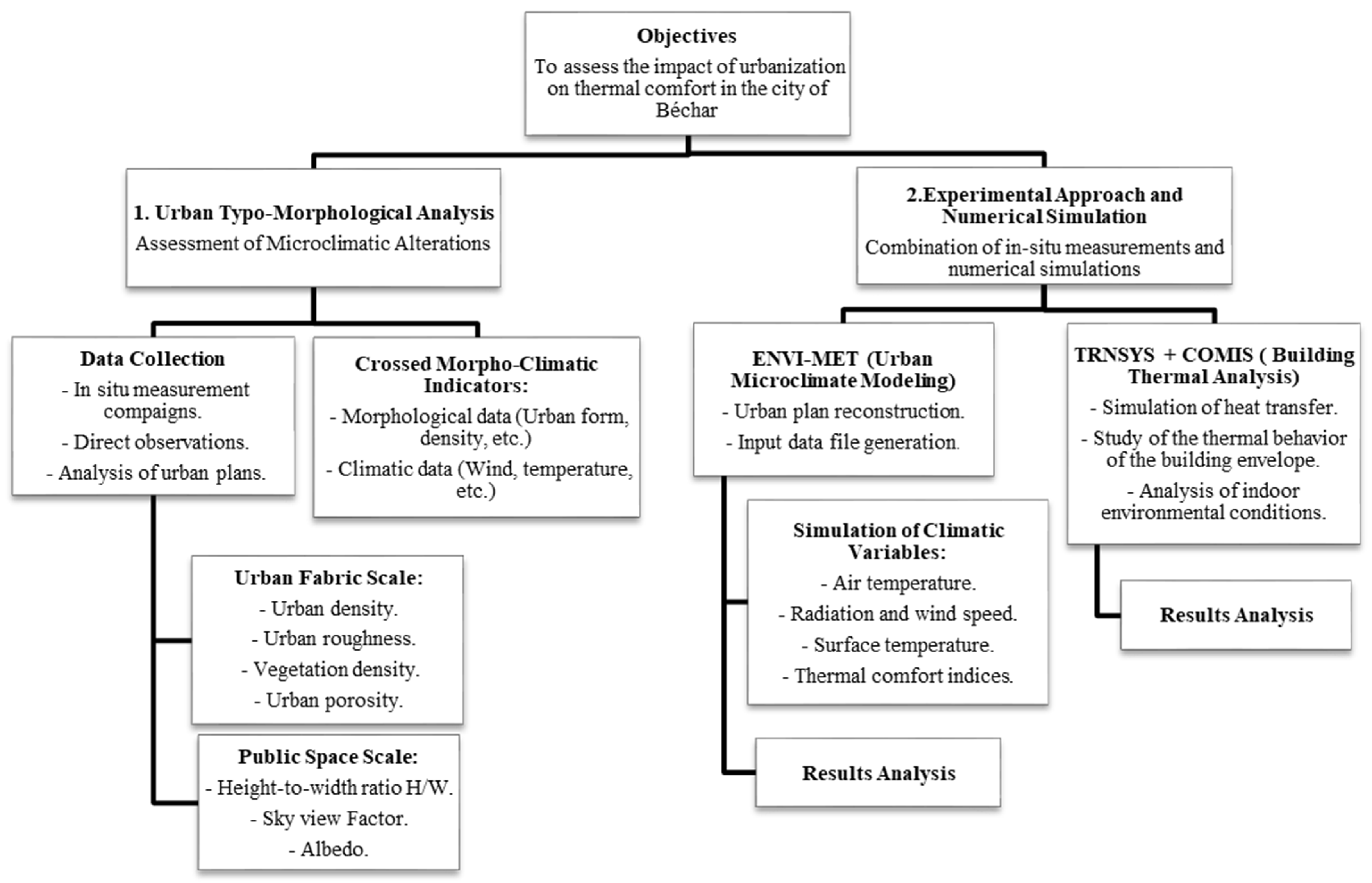
Our methodological approach is both multidisciplinary and multi-scalar, combining urban typomorphological analysis with experimental investigation and numerical simulation (Figure 1) to assess the impact of urbanization on thermal comfort in the city of Béchar. This study focuses on a central urban area selected for its diversity of urban fabrics, which reflect the historical evolution of the city: an old neighborhood (the Ksar), a colonial-era district (the city center), and a contemporary residential area (Cité Aissat Idir). This selection constitutes a representative and relevant sample for the analysis.

2.1. Urban Typomorphological Analysis: Assessment of Microclimatic Alterations

To better understand the complex interactions between urban fabric and local climate, a combined analysis of the morphological typology of the studied spaces and their prevailing microclimatic conditions is essential.
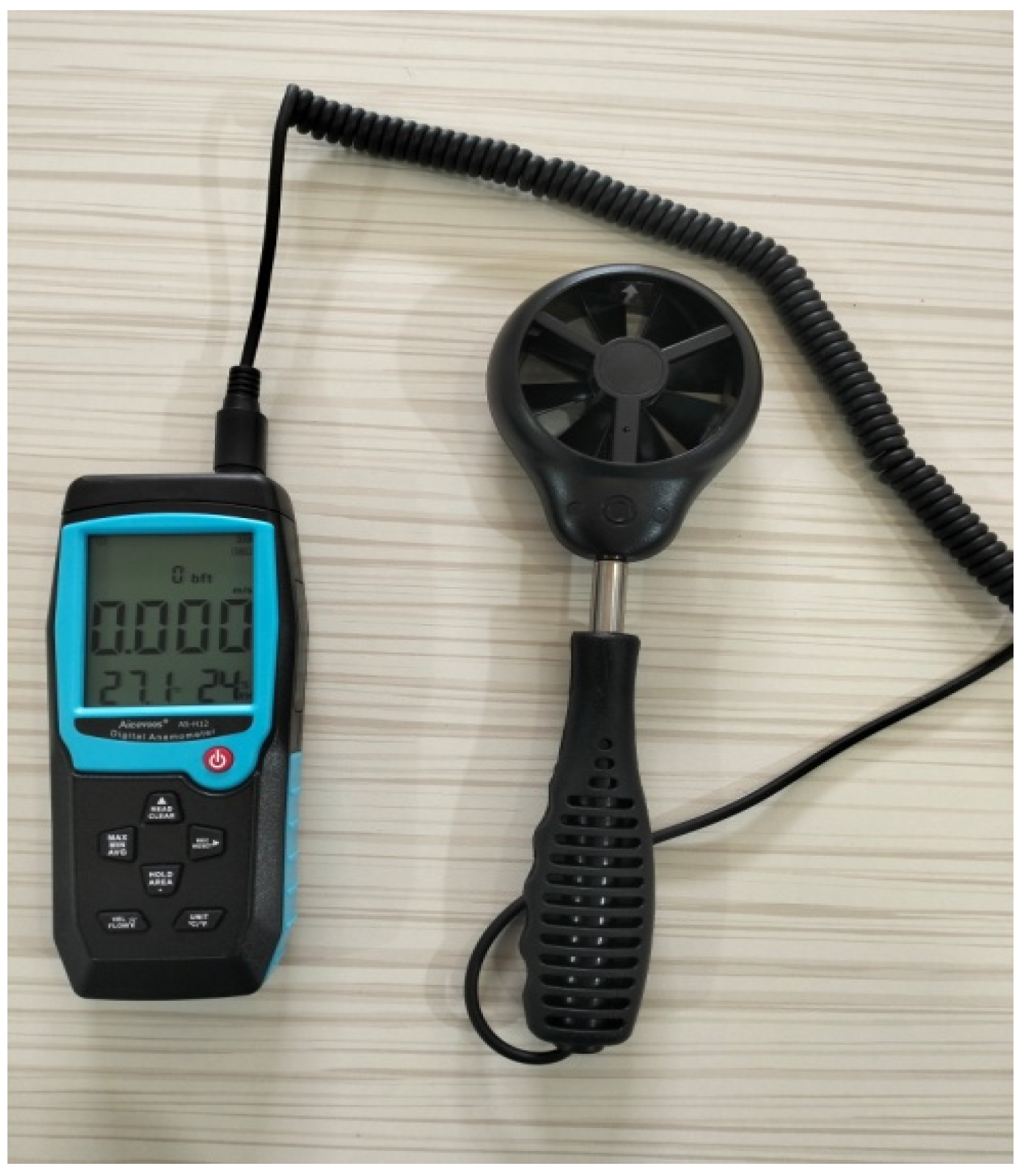
This approach aims to quantify the effects of urbanization on the microclimate using morphoclimatic indicators. These indicators, expressed as numerical values, characterize the urban climate by correlating morphological data (urban form, density, etc.) with climatic variables (temperature, wind, etc.) [43]. Data collection involves in situ measurement campaigns, direct observations, and analysis of urban planning documents. For the in situ climatic measurements, a split-sensor digital anemometer (AS-H12 Split Anemometer), as shown in Figure 2, is used, enabling the simultaneous recording of air temperature, relative humidity, and wind speed. The device operates within a temperature range of −5 to 60 °C (accuracy ±1 °C), a relative humidity range of 1–90% (accuracy ±5%), and a wind speed range of 3–45 m/s (accuracy ±0.5 m/s).
The assessment of indicators is conducted at two spatial scales:
  • Urban fabric scale: Indicators such as urban density, surface roughness, vegetation density, and urban porosity are calculated based on defined perimeters along selected urban routes and specific measurement points.
  • Public space scale: Indicators related to spatial distance, configuration, and proportion are evaluated through plan-based measurements and in situ surveys. Two types of calculations are performed:
    • Space-based calculations: Global characterization of space (e.g., height-to-width ratio H/W).
    • Point-based calculations: Localized characterization of specific spatial points (e.g., sky view factor, average surface albedo).

2.2. Numerical Approach

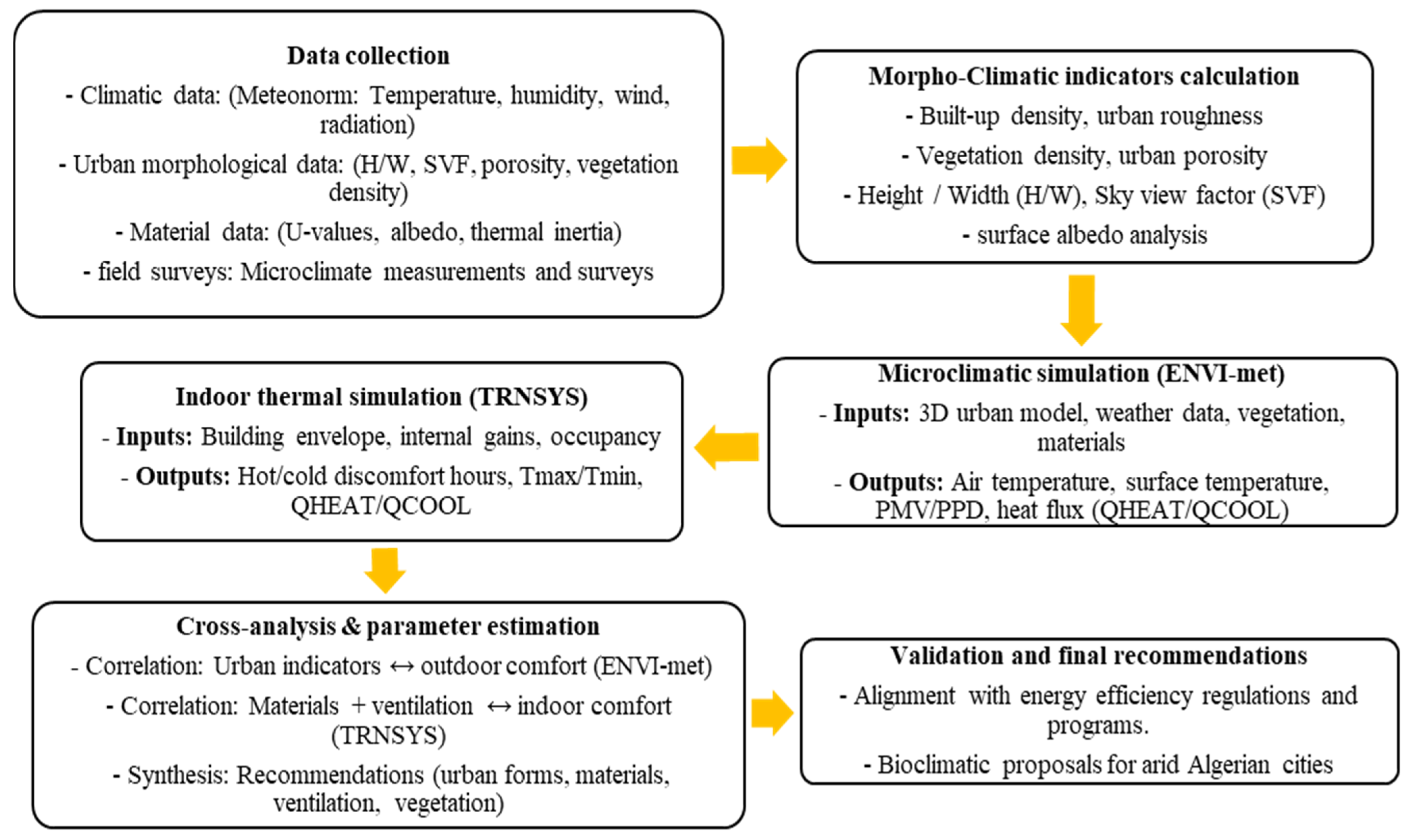
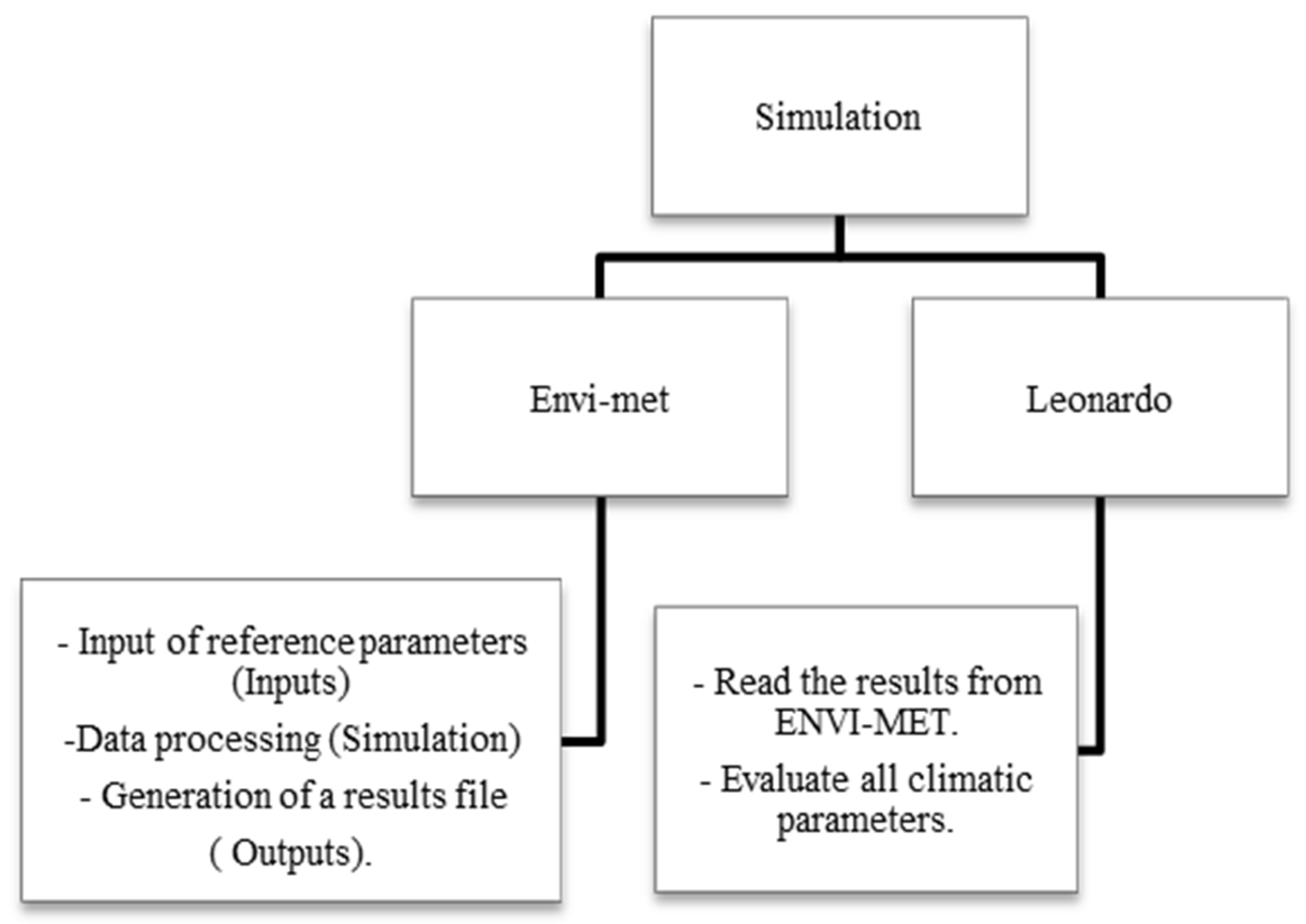
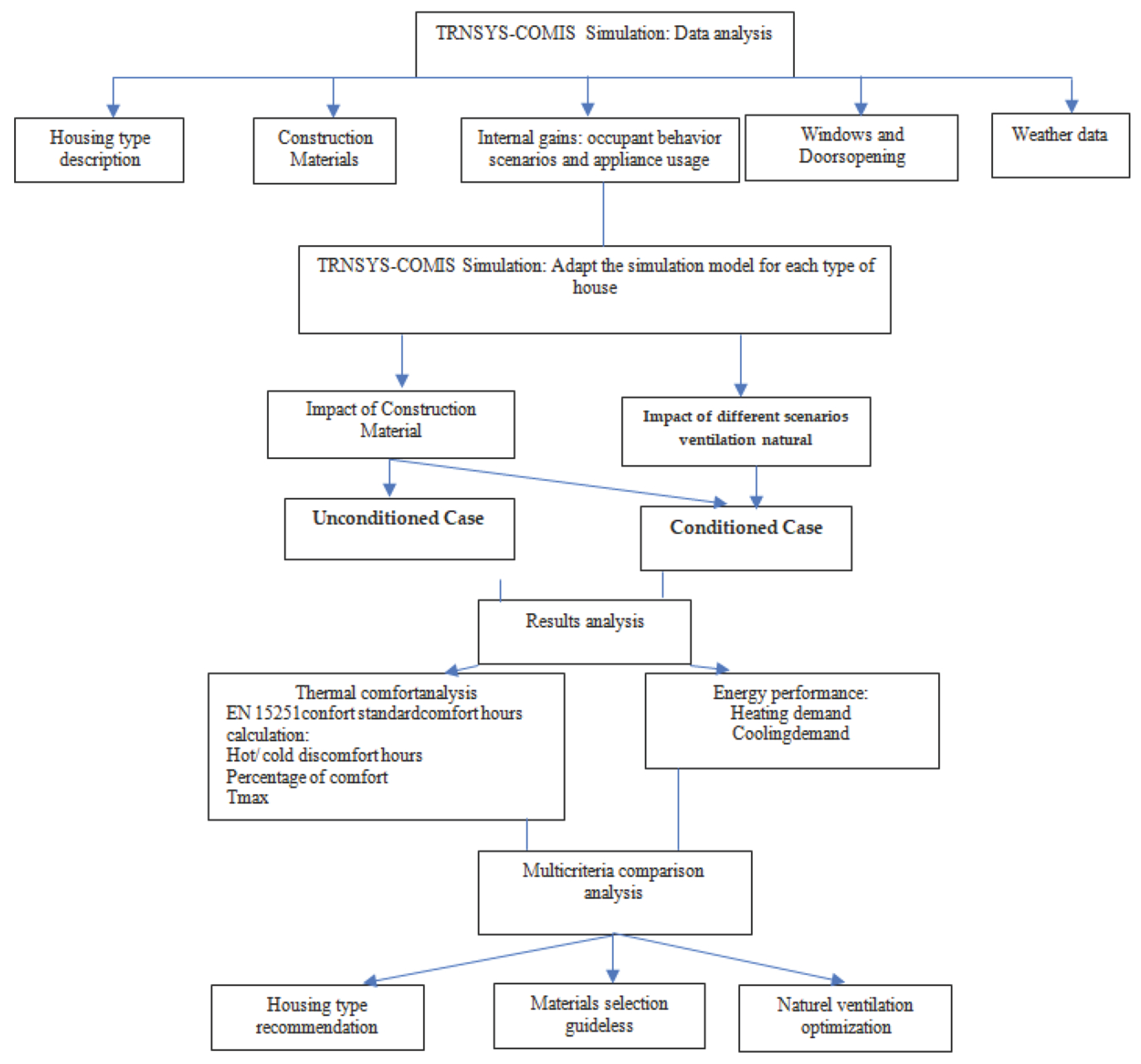
This approach, as detailed in the flowchart depicted in Figure 3, combines in situ measurements with numerical simulations using the ENVI-met [37] and TRNSYS [38] software, enabling both inductive and deductive analysis.
  • ENVI-met: Urban Microclimate Modeling
ENVI-met, coupled with the Leonardo interface, is used to simulate climatic variables and evaluate the outdoor energy balance, including air temperature, wind speed, solar radiation, surface temperatures, and thermal comfort indices. The software allows for detailed analysis of complex urban structures based on a reference database of environmental parameters [44,45]. The simulation process involves several stages: site modeling, creation of the input data file, execution of the simulation, and post-processing of results.
  • TRNSYS: Building Thermal Analysis
TRNSYS, in conjunction with COMIS, is used to perform thermal analysis of buildings, focusing on heat transfer through the building envelope and its effects on indoor environmental conditions. Widely recognized for its robustness in modeling solar systems and renewable energy technologies, TRNSYS is a key tool for dynamic energy analysis of buildings, contributing significantly to reducing energy consumption [46,47]. With the aid of the 1lSiBat graphical interface, it enables detailed and dynamic simulations of complex thermal behaviors in buildings [48].

3. Study Area and Local Climatic Data

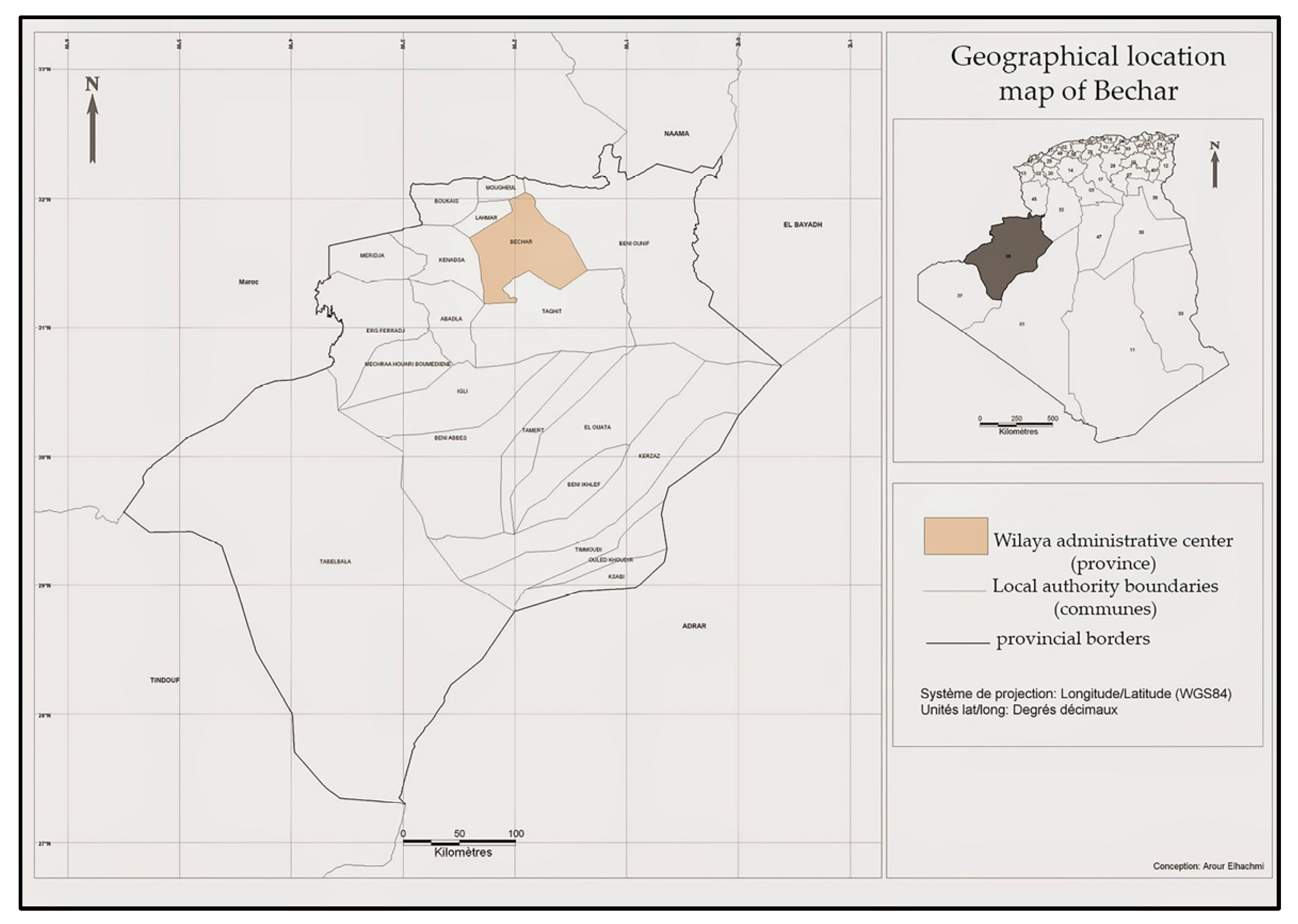
Béchar is a city located in southwestern Algeria at an altitude of 806 m, with geographical coordinates of 31°36′ N latitude and 2°13′ W longitude. It is bordered to the east by the Adrar province, to the west by the Kingdom of Morocco, to the north by the provinces of Naâma and El Bayadh, and to the south by the provinces of Tindouf and Adrar (Figure 4).
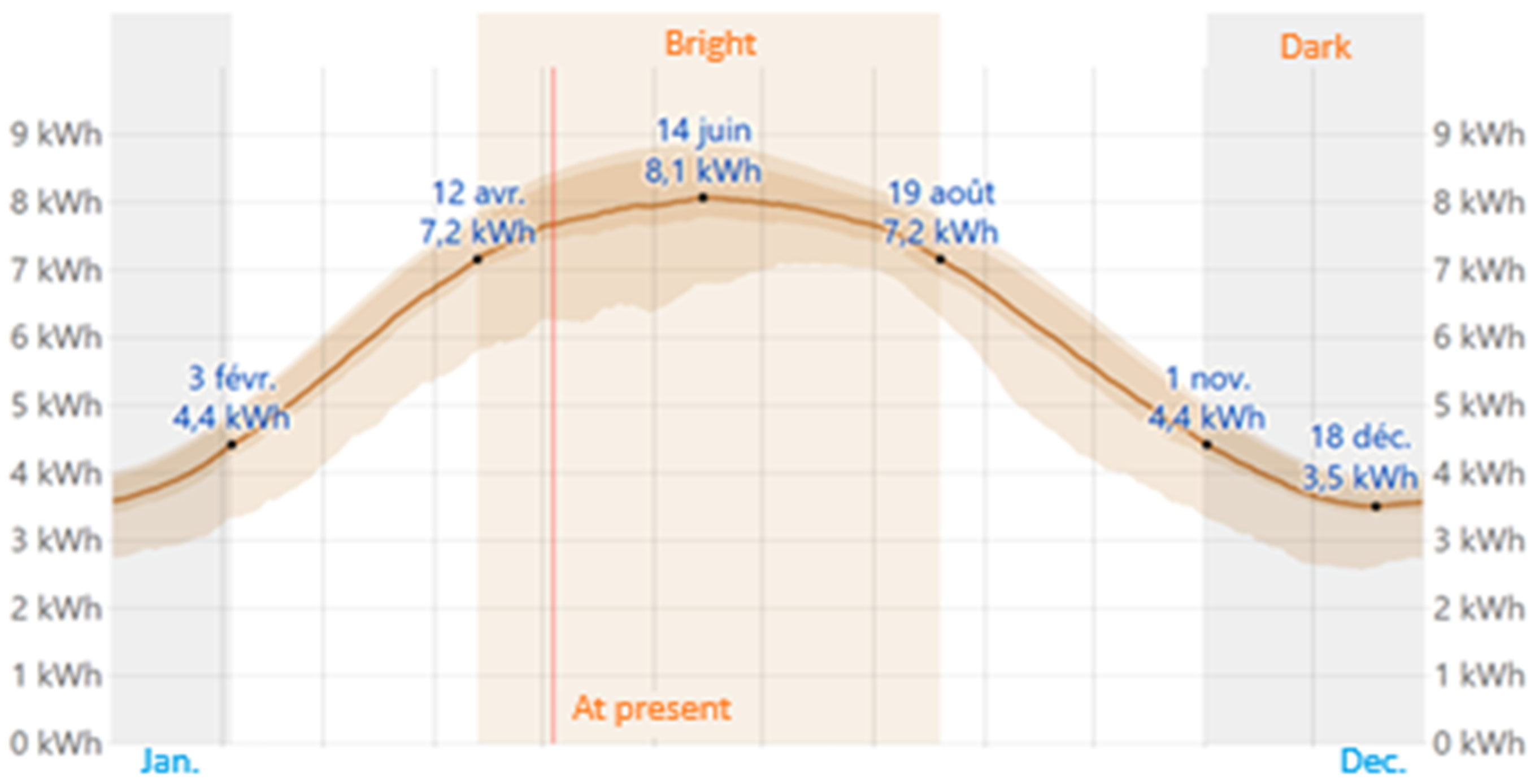
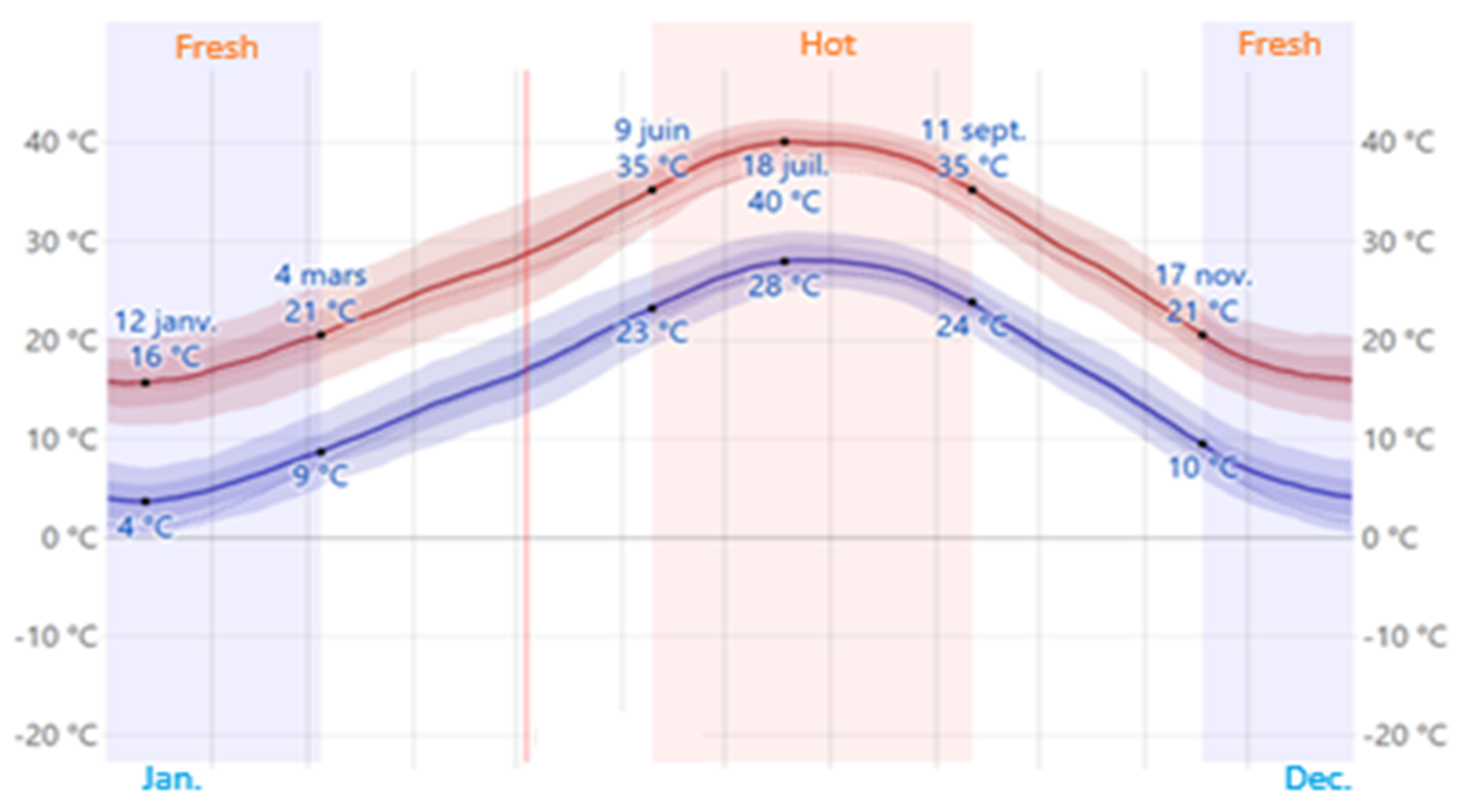
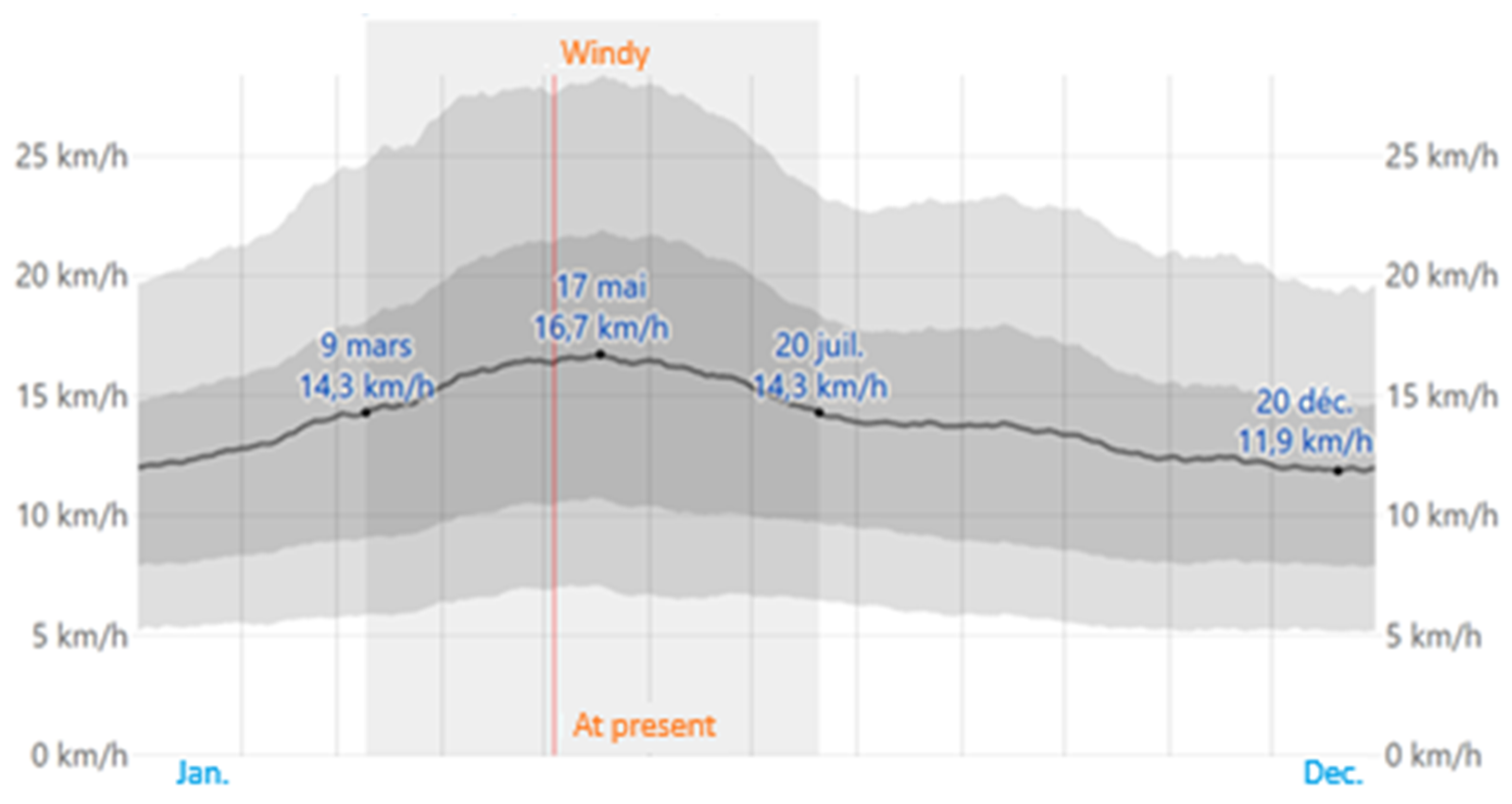
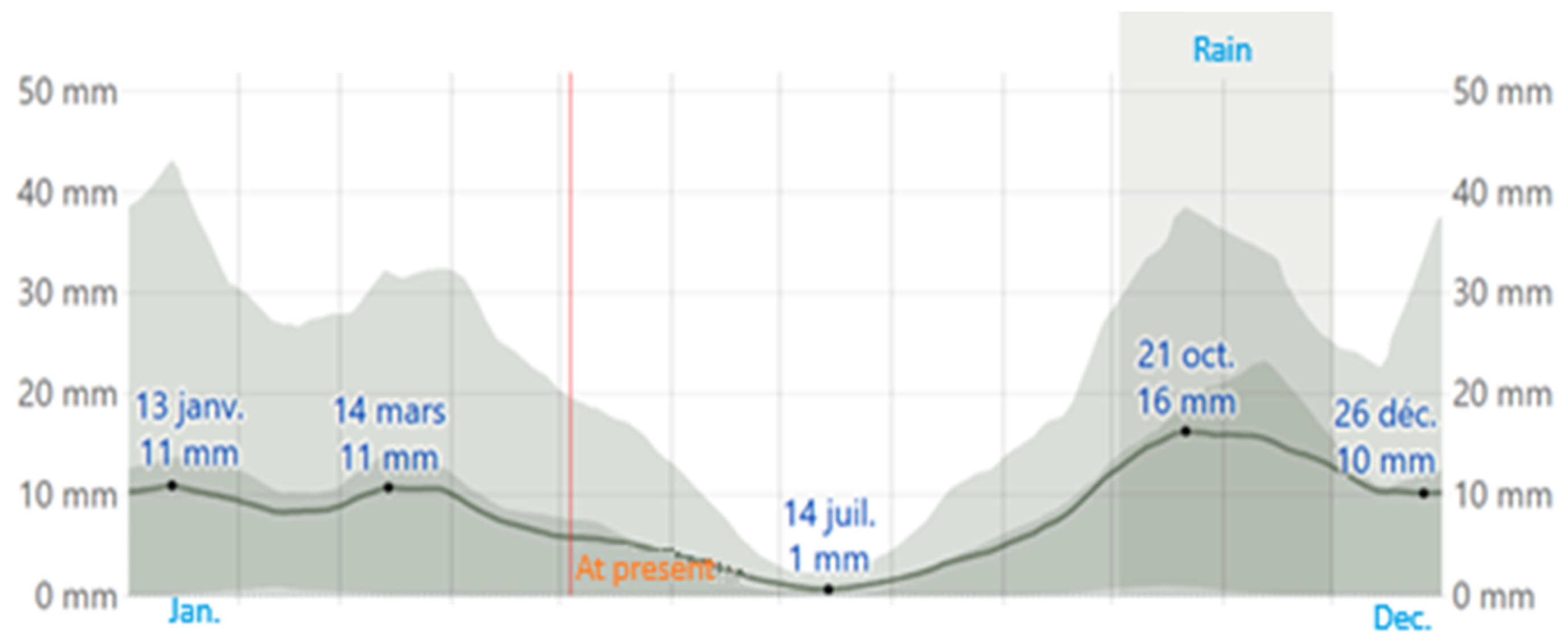
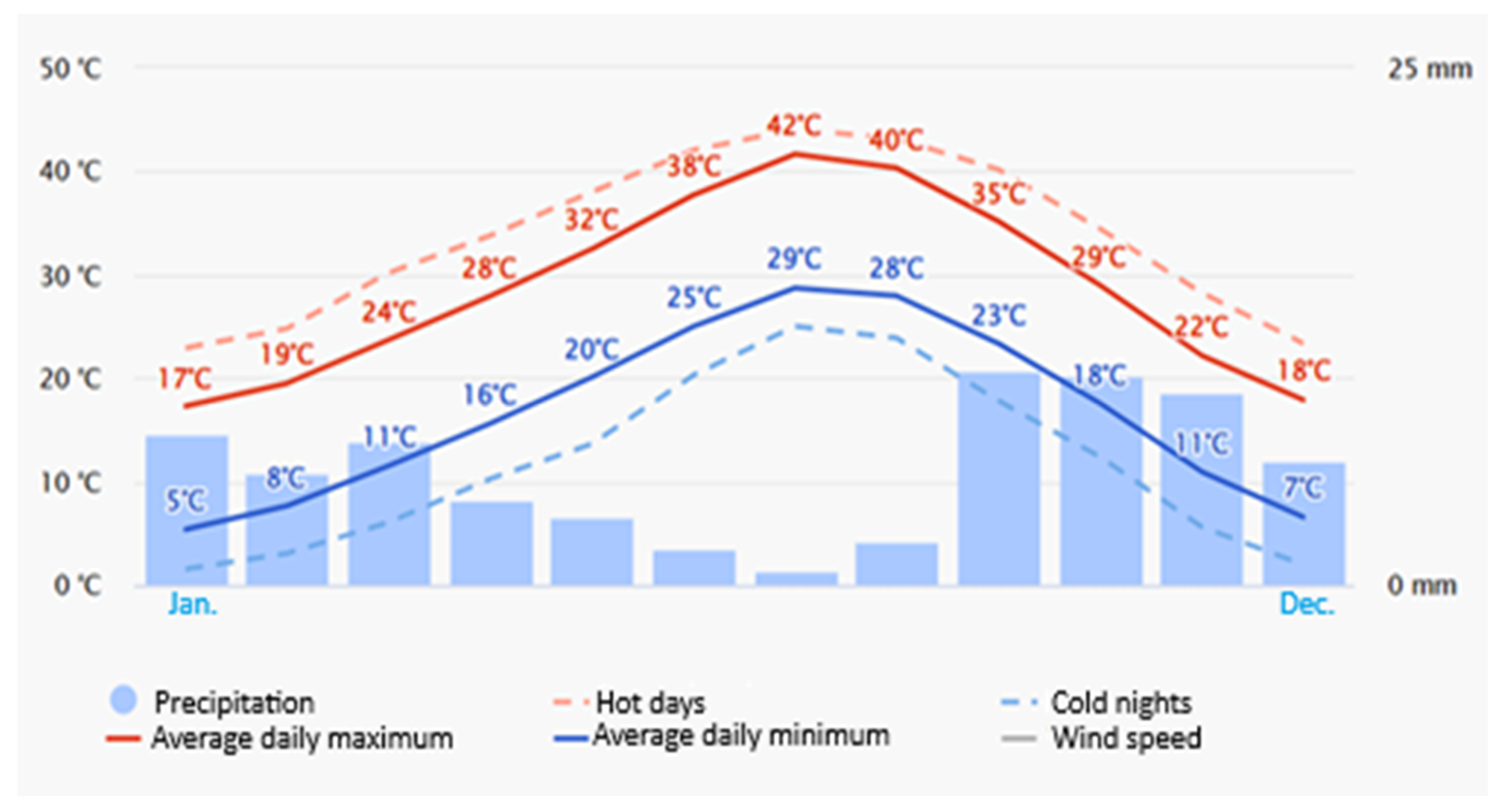
It is characterized by a hot, dry arid climate influenced by several environmental parameters, including solar radiation (Figure 5), air temperature (Figure 6), wind (Figure 7), humidity, and precipitation (Figure 8).
The region benefits from high solar exposure, exceeding 3500 h per year, and intense direct solar radiation reaching up to 800 W/m2. Béchar’s climate is marked by strong thermal contrasts. In summer, shaded temperatures exceed 50 °C (323 K), with a diurnal thermal amplitude that can reach 15 °C (288 K). Relative humidity remains low, around 27%.
During winter, nighttime temperatures can drop to −5 °C (268 K). Rainfall is scarce and irregular (Figure 9), while strong sand-laden winds, reaching up to 100 km/h, frequently occur during transitional seasons [49].
Figure 4. Geographical situation of Béchar [50].
Sustainability 17 07658 g004
Figure 5. Average daily shortwave incoming solar radiation in Béchar: 1994–2024 (Févr. = February, Avr. = April, Juin = June, Août = August, Nov. = November, Déc. = December).
Sustainability 17 07658 g005
Figure 6. Average maximum (red line) and minimum (blue line) daily temperatures in Béchar: 1994–2024 (Janv. = January, Mars = March, Juin = June, Juil. = July, Sept. = September, Nov. = November).
Sustainability 17 07658 g006
Figure 7. Average wind speed in Béchar: 1994–2024 (Mars = March, Mai = May, Juil. = July, Déc. = December).
Sustainability 17 07658 g007
Figure 8. Average monthly precipitation in Béchar: 1994–2024 (Janv. = January, Mars = March, Juil. = July, Oct. = October, Déc. = December).
Sustainability 17 07658 g008
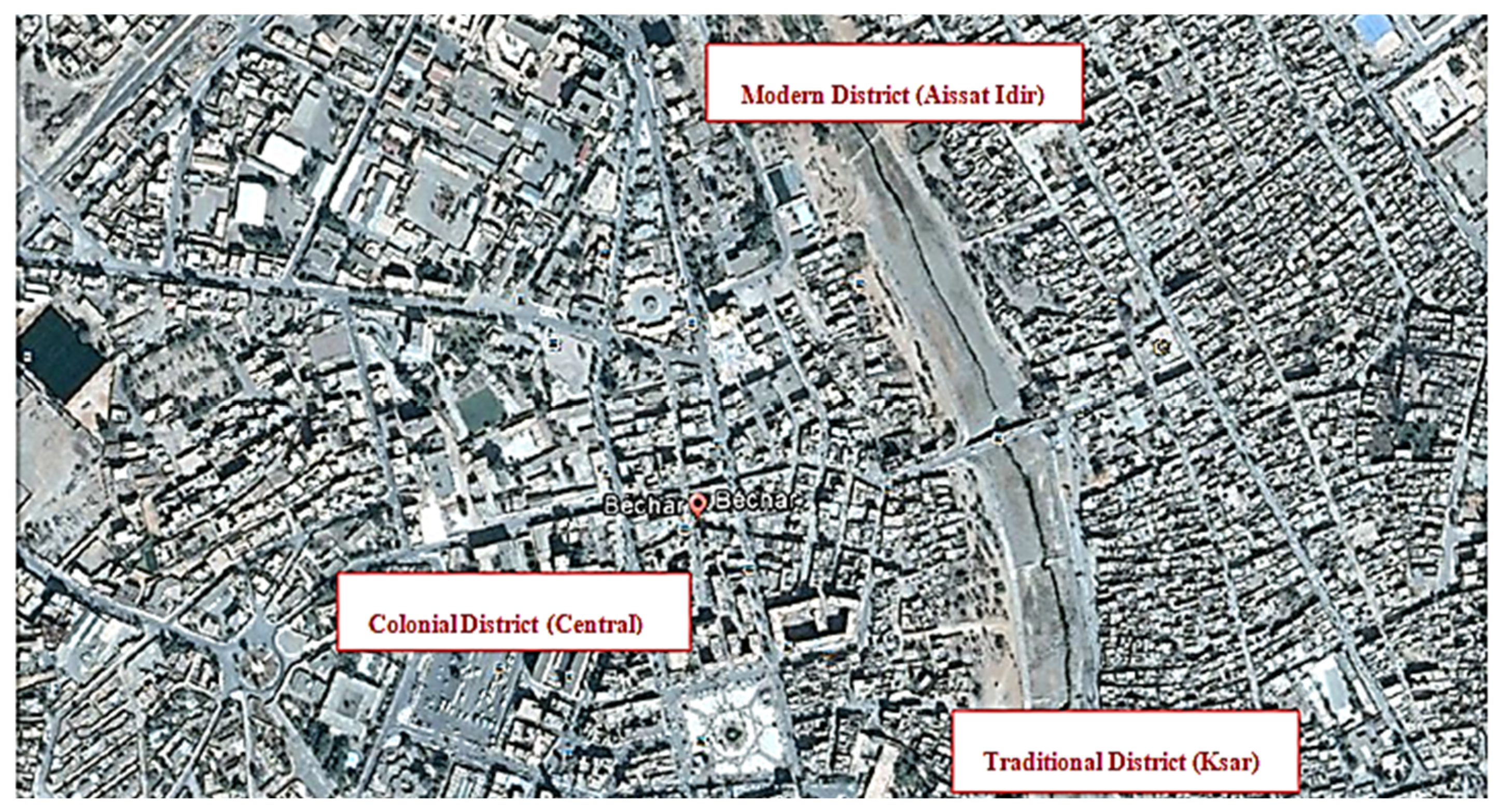
The site is an urban area located in the city center (Figure 10). The choice was motivated by its representativeness, as it includes various urban fabrics: traditional (Ksar district), colonial (central part), and modern (Aissat Idir district).
Figure 9. Average temperatures and precipitation in Béchar: 1994–2024.
Sustainability 17 07658 g009
Figure 10. Urban study area of Béchar showing the main districts: Traditional District (Ksar), Colonial District (Central), and Modern District (Aissat Idir), as used in this study.
Sustainability 17 07658 g010
The climatic study of this site reveals several key characteristics, most notably a high level of solar exposure, intensified by the street layout, which promotes prolonged sunlight on building façades and pavements, especially during the summer season. This phenomenon, combined with a lack of shading, results in outdoor spaces that are uncomfortable and unwelcoming, particularly during the hottest hours of the day, between 10 a.m. and 4 p.m. Additionally, the site is notably exposed to prevailing winds from the south and southeast, which contribute to naturally warm ventilation.

4. Results of the Urban Typomorphological and Microclimatic Approach

This approach made it possible to identify how urban forms, construction materials, and spatial organization influence thermal comfort for users. This study is based on a representative selection of measurement points, chosen for their morphological diversity, in order to accurately characterize the range of thermal environments present in the central area of Béchar.
This dual approach—combining morphological description and microclimatic observations—forms the basis for a deeper understanding of the mechanisms underlying thermal discomfort in arid urban environments.

4.1. Typomorphological Analysis Based on Measurement Points

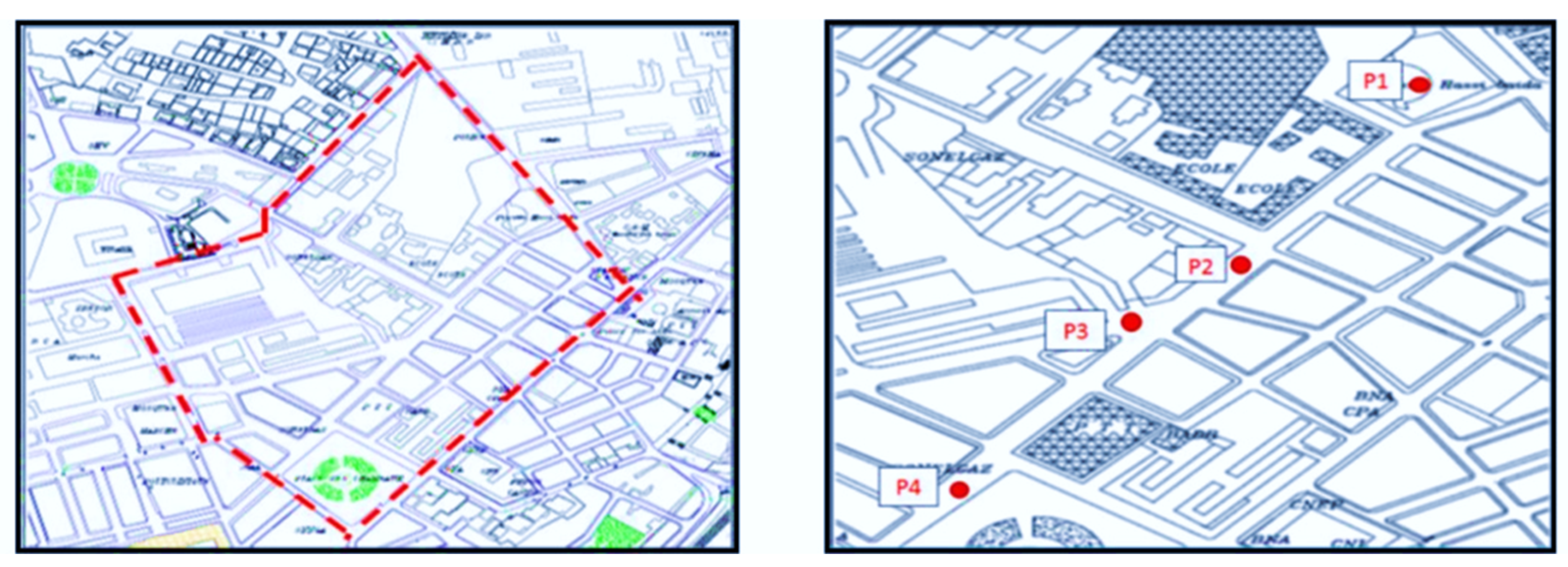
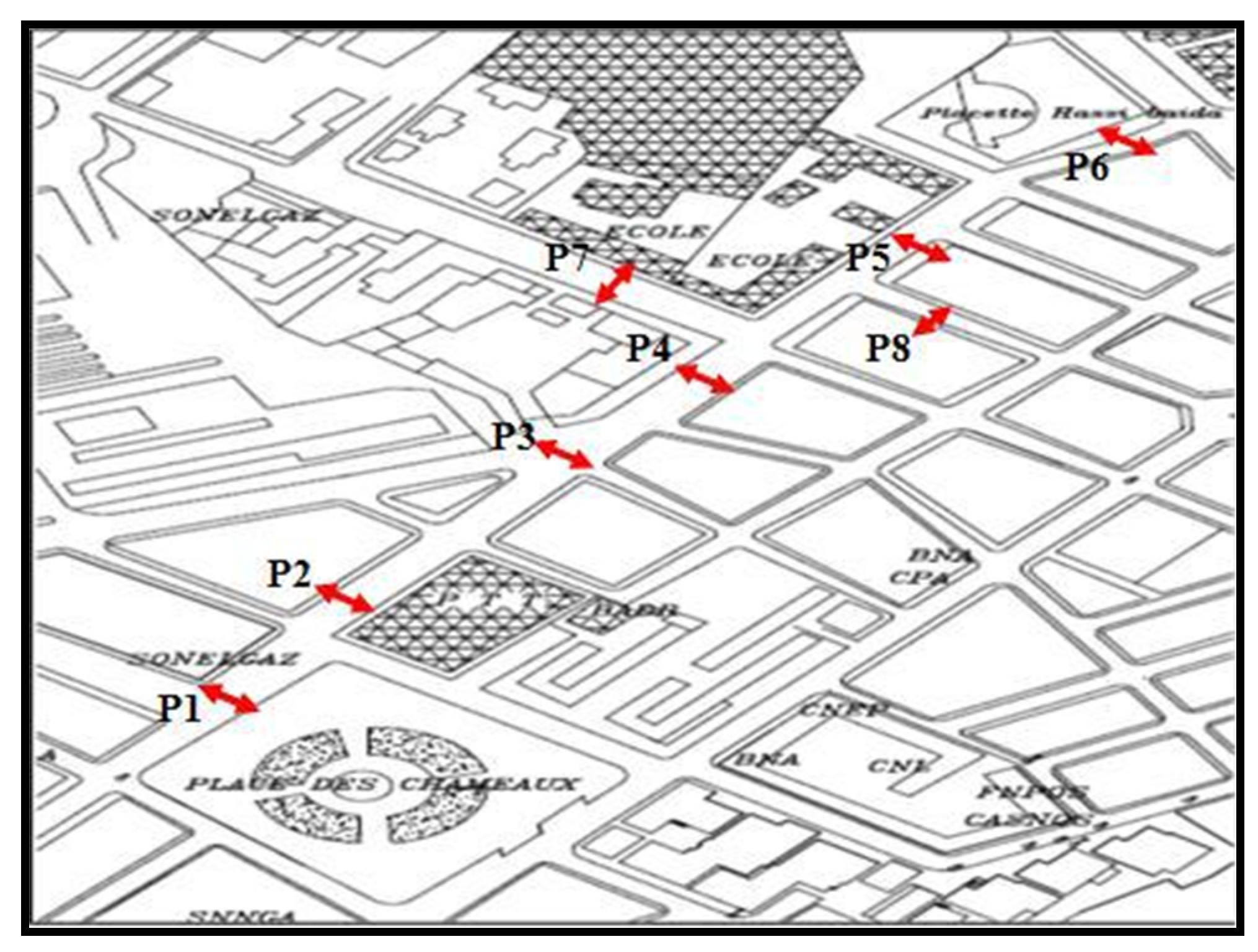
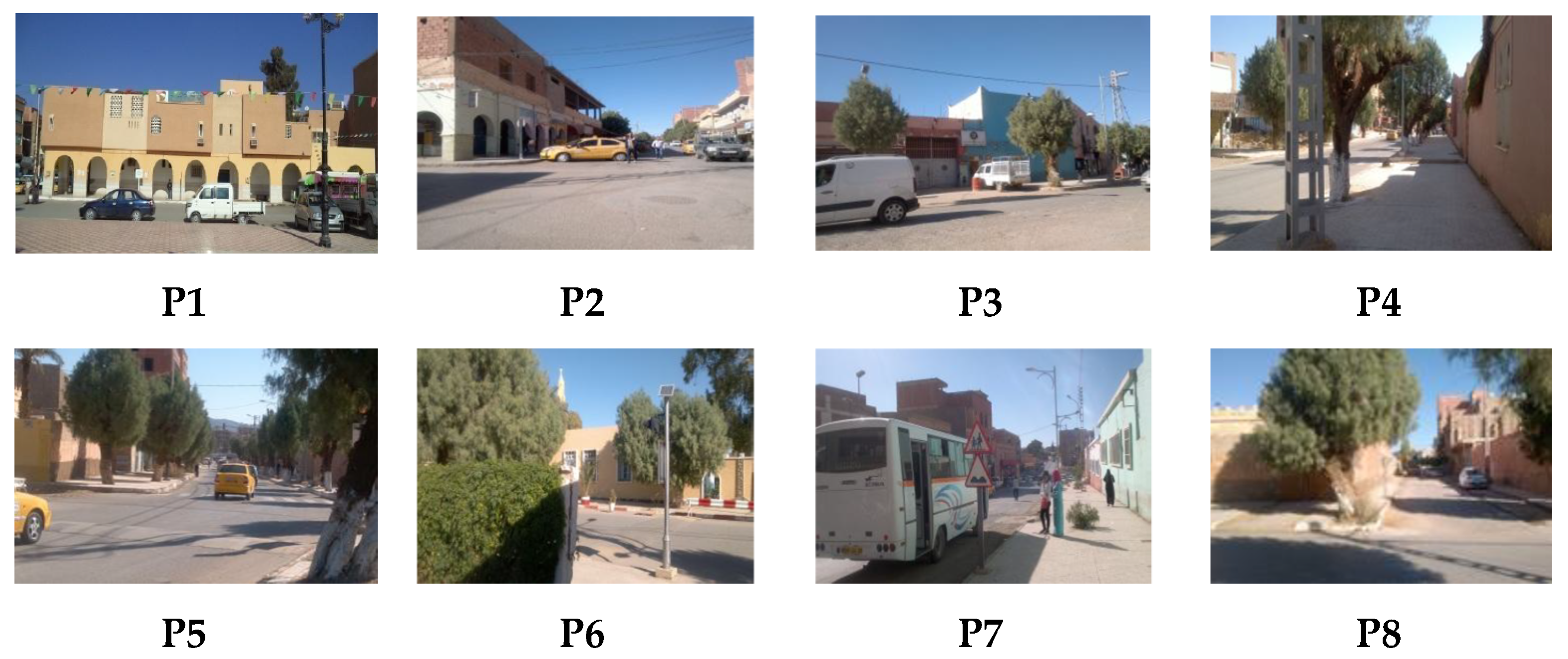
To enable a comparative study of the thermal environment in public spaces, seven fixed measurement points were selected, covering various types of public areas in the city center—ranging from open plazas to boulevards and secondary streets. These points were chosen based on their distinct morphological characteristics, such as solar exposure, height of surrounding buildings, and surface materials.
The analysis of data collected from these locations, as presented in Table 1, serves to demonstrate the influence of these morphological variables on the thermal environment.
These various urban typologies—through their forms, materials, and spatial configurations—modulate airflow, solar exposure, shading, and local humidity, thereby directly affecting perceived temperature and the thermal comfort of users in public spaces.

4.2. Evaluation of Morphoclimatic Indicators

The morphoclimatic analysis was based on several indicators calculated at both the urban fabric scale and the public space scale.

4.2.1. At the Urban Fabric Scale

The evaluation of indicators was carried out within a calculation perimeter defined according to the urban route and the selected measurement points (Figure 11).
To characterize the urban fabric, four main indicators were calculated: built-up density, urban roughness, vegetation density, and urban porosity. The detailed results are presented in Table 2, Table 3, Table 4 and Table 5.
Built-up density, which reflects the horizontal and vertical compactness of a neighborhood, is defined as the ratio between the built-up ground surface and the total area of the perimeter [51]. In our case, it indicates a high level of spatial occupation, reaching 85%.
Urban roughness, calculated using the formula Ru = Sb/Sc.u (where Sb is the built surface area and Sc.u is the urban canopy surface area) [52], expresses the influence of building verticality on the urban microclimate. In this study, the roughness value reaches 50%, reflecting a moderate influence of built structures on airflow and thermal exchanges.
The observed low vegetation density, around 8%, negatively affects urban thermal regulation by limiting the beneficial effects of shading and evapotranspiration—factors that can exacerbate the urban heat island effect.
Moreover, urban porosity, measured as the ratio of the air volume in urban voids to the total volume of the urban canopy [53], is calculated at 0.89 within the neighborhood, indicating a moderate level of porosity.
This value suggests a relative balance between built and open spaces, which promotes moderate airflow and partial solar exposure, contributing positively to thermal comfort in urban public spaces (Figure 12).

4.2.2. At the Public Space Scale

The indicators at this scale are evaluated using two types of calculations:
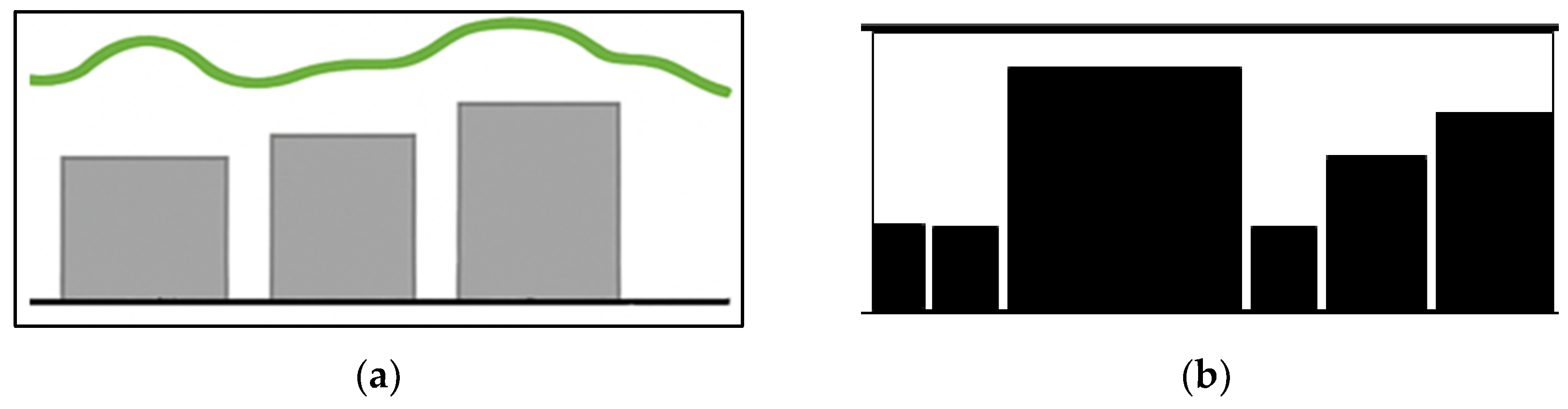
  • Global characterization of space through the height-to-width ratio (H/W), which relates average building height to minimum street width.
  • Local point characterization through the sky view factor (SVF) and the average surface albedo.
  • Height-to-width ratio (H/W)
The H/W ratio is calculated using the following formula:
H / W = H m L p
where Hm is the average height of façades and Lp is the narrowest street width.
Height and width measurements were taken at specific points along A.L.N. Boulevard (Figure 13). The analysis reveals an urban configuration predominantly of dihedral form, which significantly influences sunlight exposure and street-level ventilation.
The evaluation of indicators was carried out within a calculation perimeter defined according to the urban route and the selected measurement points (Figure 11).
Table 6 presents the measured H/W ratios for streets within the study area. These values range from 0.25 (very open street) to 0.66 (highly enclosed street), highlighting significant morphological diversity.
The streets along A.L.N. Boulevard display moderate to high ratios, while Rachid Medouni Street (P7) and Aspirant Djamel Street (P8) exhibit more pronounced contrasts.
Figure 14 visually illustrates these configurations, helping to link street enclosure to their spatial characteristics, which directly influence thermal comfort and natural ventilation.
  • Sky view factor (SVF):
The sky view factor (SVF) was calculated using software-based modeling via Solene-Microclimat [54] and image processing tools, based on the following formulas:
Ψ s e = 1 ( Ψ w 1 + Ψ w 2
Ψ w = 1     ̶   c o s θ / 2
θ = t a n 1 ( H / 0.5 W )
It expresses the degree of sky obstruction, ranging from 0 (completely obstructed view) to 1 (completely unobstructed view), where Ψse is the sky exposure factor, Ψw1w2 is the obstruction factor (portion obstructed by walls on both sides of the street), θ is the obstruction angle, H is building height, and W is the total width of the street.
To ensure consistency in the analysis, the observation point was placed at the center of the street, which is a commonly used approach in urban studies to represent sky visibility as perceived from the pedestrian level. Moreover, the obstruction angle θ is defined per side (from the center of the street to the top of the buildings). In this context, the maximum value is 90°, which corresponds to a completely obstructed sky on one side.
The results (Table 7) indicate a high variability correlated with the H/W ratio, with compact urban fabrics showing low SVF values (around 0.2) and open fabrics displaying higher values (close to 0.8).
  • Albedo:
Albedo, defined as the ratio of reflected solar energy to the incident solar energy on a surface, is primarily influenced by the color and material composition of surfaces. Lighter-colored materials typically exhibit higher albedo values, while darker materials have lower albedos and absorb more heat [55,56]. In the study area, on-site measurements identified the following albedo ranges (Table 8): concrete (0.17–0.27), red paint (0.50–0.75), black asphalt (0.05–0.20), red brick (0.40–0.60), and ceramic tiles (0.40–0.50). These values indicate a predominance of relatively high-albedo materials, directly influencing urban radiative heat exchanges. For the simulations, these ranges were converted into representative values to ensure consistent scenario comparisons. In ENVI-met, albedos of 0.20 were applied to walls and road pavements and 0.30 to light-colored concrete roofs. In TRNSYS, values of 0.50 were assigned to light-painted walls and 0.25 to tiled floors. These parameters, derived from both field observations and the literature, were selected to realistically capture radiative heat exchanges in both indoor and outdoor environments.
The results reveal relatively high albedo values in the neighborhood, corresponding to the predominant materials. Specifically, Table 8 shows the following ranges: concrete (0.17–0.27), red paint (0.50–0.75), black asphalt (0.05–0.20), red brick (0.40–0.60), and ceramic tiles (0.40–0.50).

4.3. Microclimatic Measurements and On-Site Observations

To complement the urban analysis, microclimatic measurements and on-site observations were conducted. These allow for the monitoring of key variables such as sky conditions, wind direction, and sun or shade exposure (Table A1 in Appendix A). At each observation point, the surveyor completes four assessment grids, providing a qualitative judgment of thermal conditions and a subjective evaluation of the overall atmosphere (Table 9). Fixed points are analyzed using a nominal scale, which serves to develop ambiance roses to interpret users’ thermal perception. The assessment of comfort is based on a scale from 0 to 100: a score of 0 indicates a very uncomfortable environment, 25 corresponds to uncomfortable, 50 represents a neutral state, 75 suggests a pleasant environment, and 100 indicates a very pleasant experience.
These observation grids serve as a tool for collecting qualitative data in the field. The results, summarized in Table 10, reflect the surveyor’s perception of the environmental and thermal conditions experienced in the study area at different times of the day.
This analysis reveals that open and mineralized spaces—characterized by sparse vegetation (8%) and low-albedo materials—experience intense heat, thereby exacerbating urban heat island effects. By contrast, semi-enclosed areas with vegetation benefit from cooler microclimates due to shading and natural ventilation. These thermal advantages are influenced by morphological parameters such as the height-to-width ratio (H/W) and the sky view factor (SVF), which affect wind flow and thermal comfort. These observations confirm the direct impact of urban morphology on the local climate and highlight the importance of bioclimatic design strategies tailored to Saharan cities.
Thermal conditions generate significant discomfort between 12:00 p.m. and 6:00 p.m., corresponding to the 12, 15, and 18 measurement periods (taken respectively at 12:00 p.m., 3:00 p.m., and 6:00 p.m.), primarily due to intense solar radiation, the lack of shading, and limited cooling elements. This critical period affects the use and livability of public spaces, influencing user behavior and underlining the necessity of integrating thermal comfort considerations into urban planning.
To further explore the findings, a more detailed quantification was performed using advanced numerical simulations, particularly with ENVI-met and TRNSYS. These tools allow for the evaluation of the outdoor energy balance and the analysis of heat exchange through building envelopes, offering a more refined understanding of the interactions between urban form and architecture.

5. Modeling and Analysis of Urban Ambiances Using ENVI-met

5.1. Software Overview

ENVI-met is a 3D microclimate simulation software developed by Michael Bruse, specifically designed for modeling complex urban environments. It simulates a wide range of climatic variables—including air temperature and velocity, solar radiation, surface temperatures, and thermal comfort indices—while accounting for the site’s geometry.
Thermal comfort indicators are used as comparative analytical tools, enabling the evaluation of different urban configurations and the identification of the most favorable design interventions.
The simulation process with ENVI-met begins with the definition of input parameters, followed by data processing and the generation of an output file. The simulated data, analyzed through ENVI-met and its Leonardo module, are then used to assess climatic parameters, thus completing the simulation cycle (Figure 15).
ENVI-met proves to be a powerful tool for predicting outdoor thermal comfort, allowing designers to assess the impact of individual urban elements on the thermal ambiance.

5.2. Simulation and Analysis of Urban Thermal Comfort

This section presents the results of an ENVI-met simulation conducted in the city of Béchar (arid climate) on April 27, 2019, between 10:00 a.m. and 8:00 p.m. The outputs analyzed include thermal maps, comparative graphs, and a summary table of key indicators. These data enable the assessment of the impact of various urban surface types on local microclimatic conditions.
For ENVI-met, the simulations focused exclusively on outdoor climatic conditions and the urban microclimate. Internal heat gains were not included, as the objective was to examine the influence of microclimatic variables—air temperature, humidity, wind speed, and radiation—on outdoor thermal comfort. Occupancy-related parameters followed ISO 7730 standards [57], assuming light activity (1.2 met) and seasonal clothing insulation levels of 0.5 clo in summer and 1.0 clo in winter.
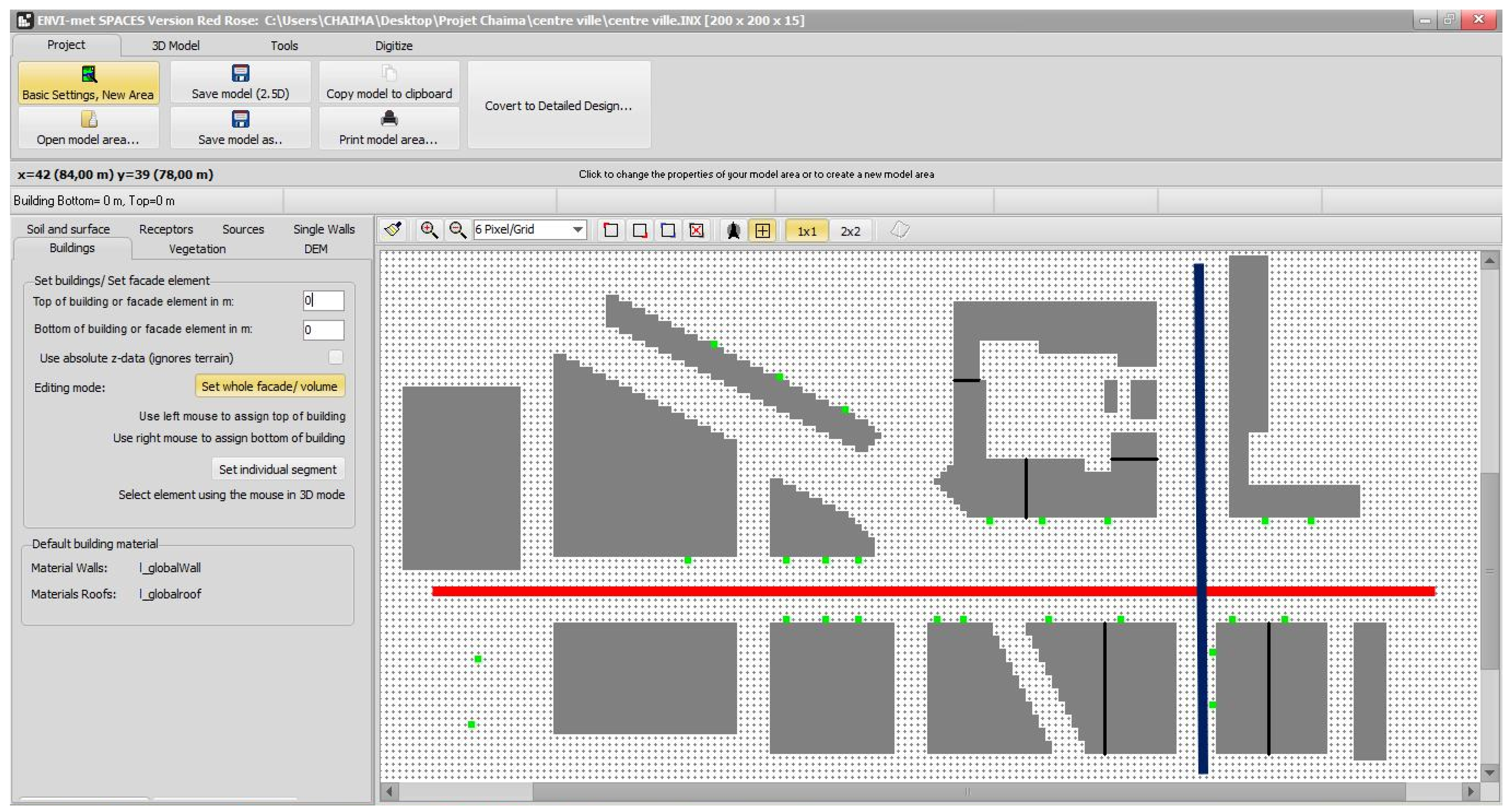
The city center was selected as the simulation area, featuring two main axes oriented north–south and east–west, with two types of urban fabric: compact and semi-open (Figure 16).
The simulations were processed and analyzed using the Leonardo module, which enabled a detailed interpretation of the microclimatic behavior within the urban environment. Thermal comfort at each point was evaluated based on key environmental variables, including air temperature, humidity, wind speed, physical activity, and clothing insulation. The thermal sensation and expected user comfort were quantified using the PMV (Predicted Mean Vote) and PPD (Predicted Percentage of Dissatisfied) indices, which respectively estimate the perceived thermal state (cold, neutral, or hot) and the proportion of individuals likely to experience discomfort under specific conditions.
As part of the analysis, three thermal maps were initially generated: one showing the ground surface temperature, a second illustrating the air temperature at the pedestrian level, and a third presenting a combined view of the air temperature and ground heat flux. These maps were developed to visually represent the spatial distribution of heat across various urban surfaces. Each offered a complementary layer of insight: the ground surface temperature revealed the heat retention characteristics of different materials; the air temperature at pedestrian height captured conditions most directly affecting human comfort; and the combined map highlighted zones of thermal accumulation or dissipation. Collectively, these visual outputs provided a comprehensive understanding of microclimatic dynamics, emphasizing thermal contrasts between vegetated, shaded, and mineralized areas within the urban fabric. The parameters defining the simulation area are summarized in Table 11.

5.2.1. Comparative Graphs

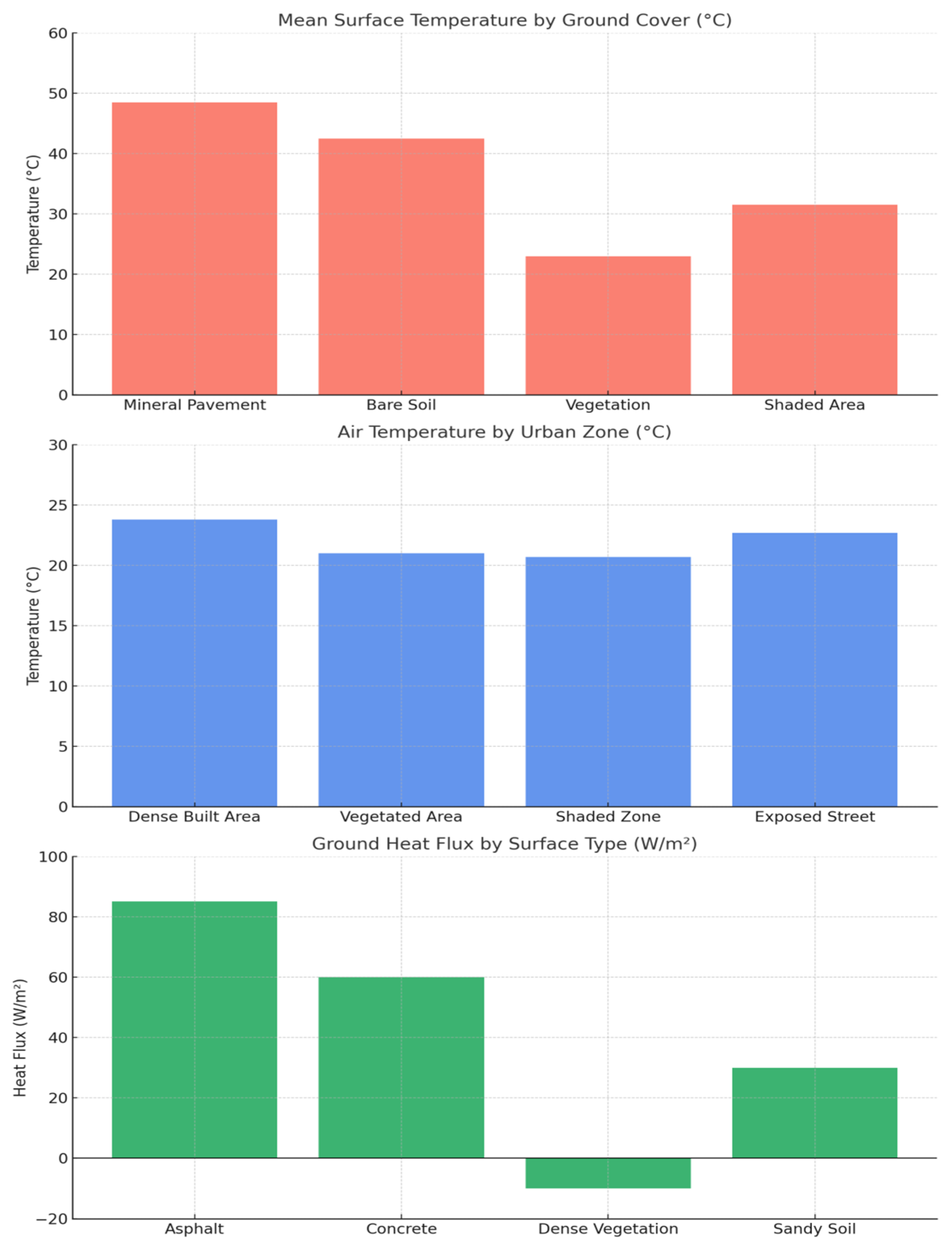
The following graphs illustrate thermal variations across different surface types and urban zones (Figure 17):
  • The highest surface temperatures are recorded on mineral pavements (>48 °C), whereas vegetated areas remain significantly cooler, around 23 °C.
  • Air temperature varies depending on the immediate environment, reaching a maximum of 23.8 °C in densely built-up zones and dropping to a minimum of 20.7 °C in shaded areas.
  • The heat flux (QHEAT) is strongly positive on inert materials (up to 85 W/m2) but becomes negative in vegetated areas due to cooling effects from evapotranspiration.

5.2.2. Key Indicators of Urban Thermal Comfort: Observational Results

Table 12 summarizes the main values observed during the simulation. It reveals a clear contrast between mineral zones—which offer limited thermal comfort—and vegetated or shaded areas, which provide significantly better thermal conditions and contribute positively to urban microclimate regulation.
The values of PMV (Predicted Mean Vote) and PPD (Predicted Percentage of Dissatisfied) presented in Table 12 are derived from ENVI-met simulation outputs and estimated in accordance with the ISO 7730 standard [57], which defines thermal comfort based on environmental and personal parameters.
The thermo-spatial analysis performed with ENVI-met highlights the amplifying effect of mineral surfaces on urban heating and underscores the strategic role of vegetation and shading. In an arid context such as Béchar, these findings emphasize the urgent need to redesign urban environments based on climate-responsive, bioclimatic principles.
Key Findings from the Simulation (27 April 2019, 10:00–20:00):
  • Proximity to Buildings:
    Areas adjacent to building façades show relatively favorable thermal comfort levels (≤+20 W/m2), while fully exposed zones reach up to +100 W/m2, indicating high levels of discomfort.
  • Vegetation:
    The lack of vegetation significantly reduces cooling potential. The comfort index (PMV) ranges between −0.5 and +1, indicating moderate discomfort [58].
  • Urban Ventilation:
    Passages beneath buildings create airflow corridors that enhance heat dissipation, improve local comfort, and exacerbate air pollution [59].
  • Republic Square:
    Due to its open layout and lack of shading, this square remains one of the most thermally uncomfortable public spaces in the study area.
These results confirm the critical influence of urban morphology on thermal comfort. Shaded areas near buildings maintain moderate heat flux values (<+20 W/m2), whereas open, unshaded zones without vegetation exceed +100 W/m2, leading to significant thermal stress. The presence of vegetation and covered walkways significantly improves microclimatic conditions. Introducing water features could further enhance cooling through evaporation, which reinforces the case for adaptive urban planning strategies to mitigate heat island effects in Saharan climates.

6. Dynamic Thermal Simulation of the Building Envelope Using TRNSYS

Following the assessment of outdoor thermal comfort and the influence of urban morphology through ENVI-met, the analysis was extended to the thermal behavior of buildings. This phase aimed to investigate indoor thermal phenomena, particularly fast-evolving events that impact indoor comfort conditions.
TRNSYS [43], a widely recognized simulation software known for its modular structure and flexibility, enables precise modeling of building thermal and airflow systems. Each function is encapsulated within specific modules (Types), interconnected through the TRNStudio interface. This modularity facilitates the integration of diverse parameters such as geometry, construction materials, HVAC systems, and occupant behavior.
For multizone simulations, TRNSYS uses the “Type 56” model, coupled with the TRNBuild interface, which allows for detailed specification of thermal zone configurations and material properties. In this study, TRNSYS (version 16.01) is coupled with the COMIS multizone airflow model to evaluate airflows between zones, accounting for natural ventilation, infiltration, and wind effects. It is worth noting that recent TRNSYS versions natively include TRNFLOW, which integrates these functionalities without the need for external coupling.
To simulate the thermal behavior of the buildings, several envelope configurations were defined based on materials commonly used in the Saharan region. The following table presents the compositions, thicknesses, and thermal transmittance coefficients (U-values) of the external walls, roofs, and floors, which serve as input data for the TRNSYS simulation. To assess the influence of construction materials on thermal comfort, several exterior wall assemblies were considered and are summarized in Table 13.

6.1. Thermal and Energy Simulation of Residential Typologies

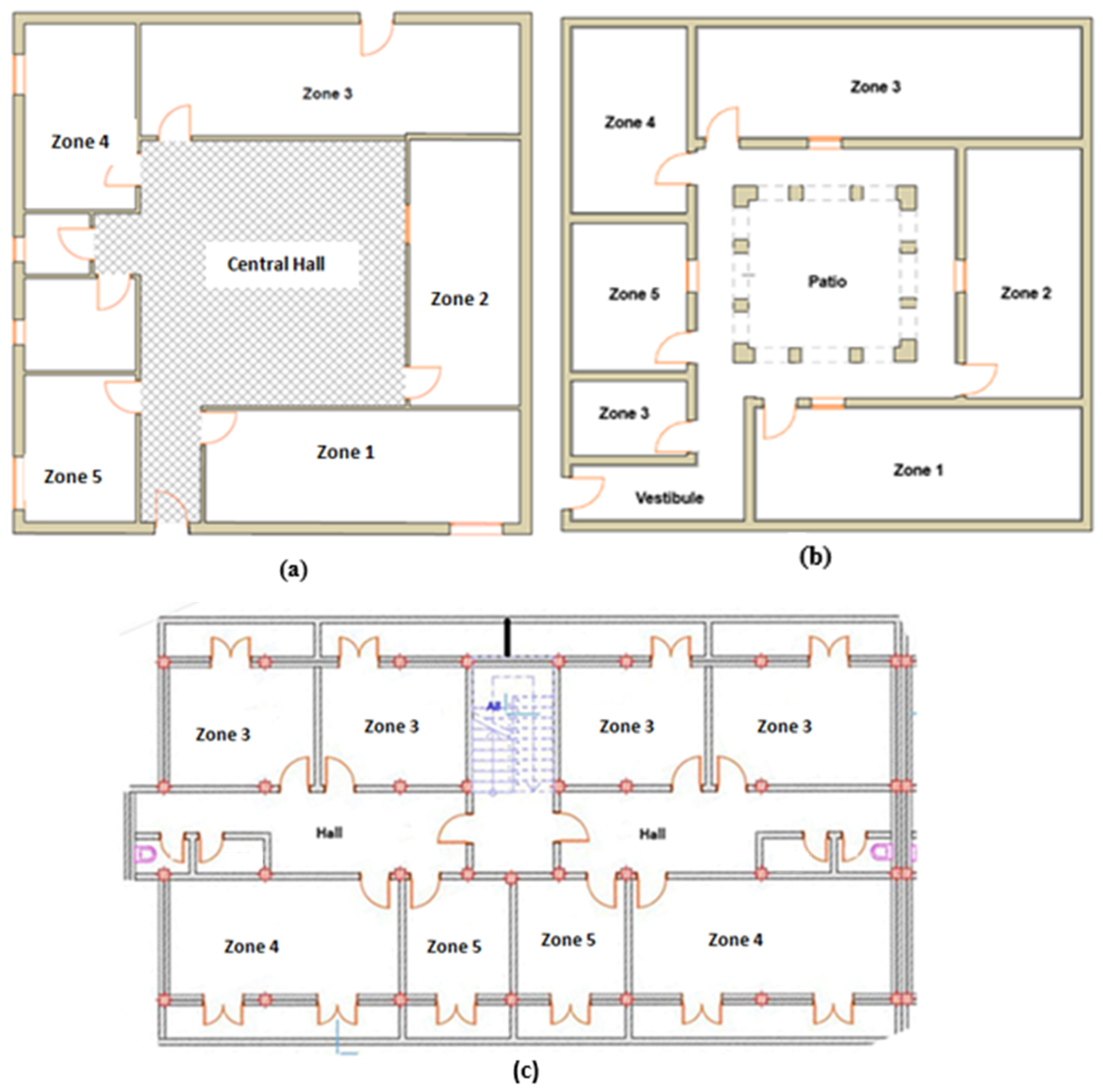
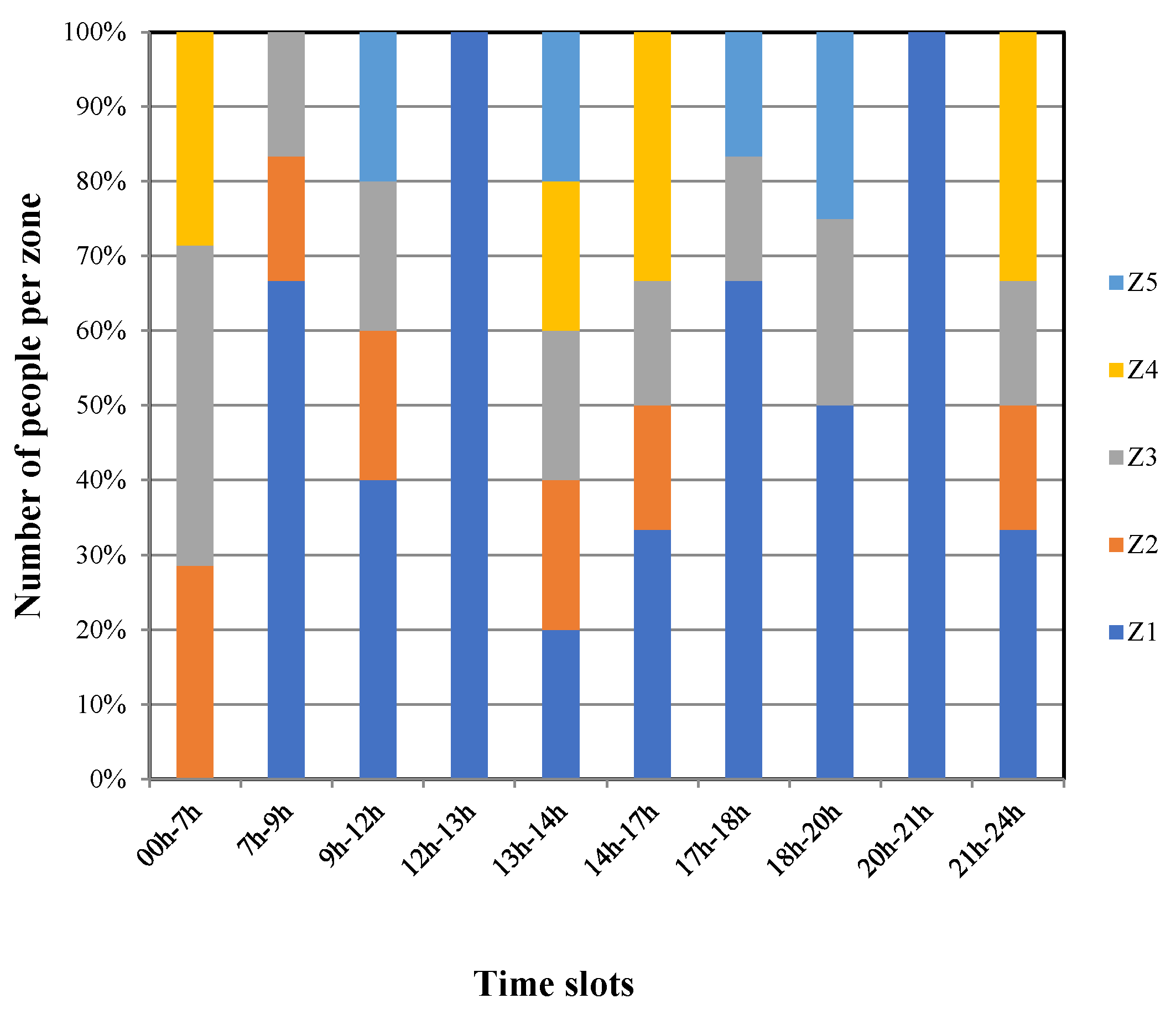
For TRNSYS, which was used for indoor energy simulations, internal heat gains were incorporated in accordance with ASHRAE guidelines: 80 W per person for occupants, 10 W/m2 for lighting, and 8 W/m2 for equipment, combined with standard hourly occupancy profiles. These parameters were chosen to represent realistic indoor conditions and to enable an integrated analysis of the interaction between local climate and thermal comfort. The simulation focuses on three representative housing types, drawn from both traditional and modern urban fabrics within the study area, to compare their thermal performance. The modeled dwellings include: the traditional patio house (MP), the modern detached house (CM), and the apartment unit (AP) (Figure 18). Each dwelling was simulated with six occupants, following realistic occupancy and usage scenarios (Figure 19).
Internal heat gains from household appliances are distributed as follows:
  • The refrigerator (100 W) operates continuously in the kitchen (Zone Z5).
  • Televisions (150 W) are mainly used in the evenings during winter, with extended operating hours in summer, and are distributed across various zones.
  • Computers (100 W), located in Zones Z2 and Z3, have variable seasonal usage—concentrated in the evening during winter and spread across a wider range of hours in summer.
  • Cooking appliances in the kitchen are the primary internal heat source (550 W), operating during occupancy hours.
The simulation evaluated the thermal and energy performance of the three housing types under two configurations:
  • Unconditioned case: To assess thermal comfort using natural ventilation.
  • Conditioned case: To estimate energy consumption for heating and cooling.
Internal gains and building orientation remained constant across both scenarios. A parametric analysis was also conducted to investigate two key factors:
  • The impact of construction materials on thermal comfort and energy consumption.
  • The effect of different window configurations on summer thermal comfort.
The results are expressed as comfort hours in accordance with the EN 15251 standard [60] in the unconditioned case and as energy demand for heating (QHEAT) and cooling (QCOOL) in the conditioned case.
Meteorological data used for the simulation were sourced from the Meteonorm database (Meteonorm version 7.3) [61], specific to the city of Béchar.
Figure 20 shows a detailed flowchart illustrating the methodology and process of data analysis and parameter estimation for the TRNSYS-COMIS simulation.

6.2. Unconditioned Case: Results

6.2.1. Impact of Construction Materials on Building Thermal Comfort

The results are expressed in terms of cold and hot discomfort hours (HTFs and HTCs, respectively) and the percentage of comfort (%C) based on the EN 15251 standard. Extreme temperatures, including maximum (Tmax) and minimum (Tmin), are also reported. The zones analyzed include Z1 (Bedroom 1), Z2 (Bedroom 2), and Z3 (Living Room).
  • Patio House:
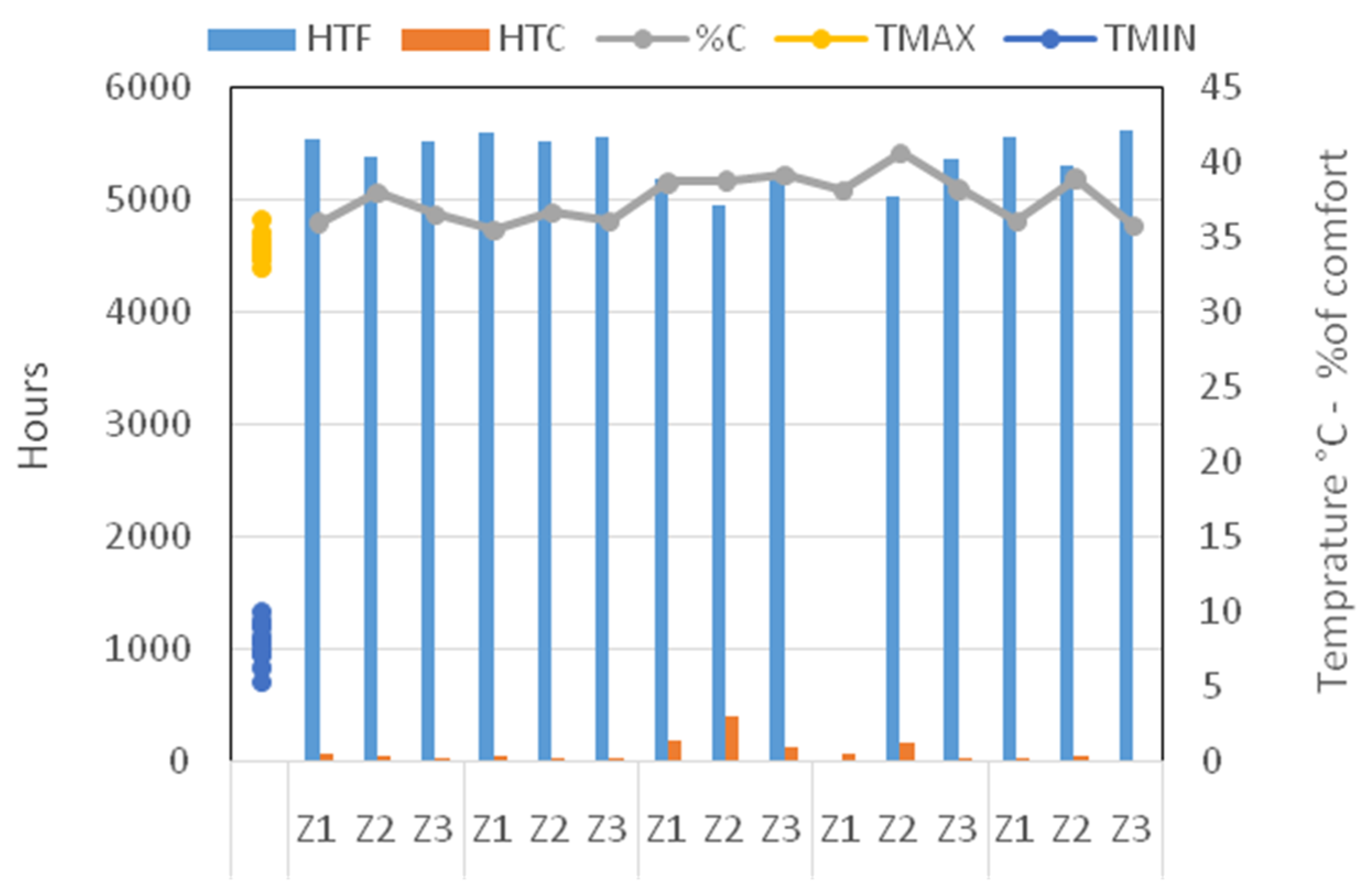
Based on the following assumptions—windows facing the patio are closed from 1:00 p.m. to 6:00 p.m. and open the rest of the time in summer and are opened to 50% from 11:00 a.m. to 4:00 p.m. in winter; doors are closed from 1:00 p.m. to 6:00 p.m. in summer and from 6:00 p.m. to 10:00 a.m. in winter and are half-open outside these periods—the simulation reveals significant differences among the five construction material configurations (Figure 21):
-
Compressed Earth Blocks (BTCS):
This configuration significantly reduces cold discomfort hours (HTFs) compared to adobe:
Z1: −378 h
Z2: −350 h
Z3: −322 h
However, it considerably increases hot discomfort hours (HTCs):
Z1: +153 h
Z2: +363 h
Z3: +116 h
This is due to its high thermal storage capacity, which improves winter comfort at the cost of greater summer overheating.
-
Adobe:
Adobe offers the lowest number of hot discomfort hours:
Z1: 24 h
Z2: 39 h
Z3: 3 h
However, it results in higher cold discomfort hours compared to BTCS.
-
Stone:
Stone exhibits intermediate behavior—reducing cold discomfort compared to adobe,
Z1: −213 h
Z2: −265 h
But increasing hot discomfort, especially in Z2 (+156 h compared to adobe), due to slower heat dissipation.
-
Double Wall and Insulation:
Both configurations show similar performance, with a slight advantage for the insulated wall in reducing hot discomfort. However, they lead to an increase in cold discomfort, especially in Z3, likely due to limited thermal inertia.
-
Extreme Temperatures:
Maximum indoor temperatures are higher with BTCS (e.g., 35.33 °C in Z1 and 36.25 °C in Z2) than with adobe, while minimum temperatures are lower (as low as 5.35 °C in Z2). Despite this, cold discomfort hours do not increase significantly, which suggests faster daytime heat gain.
These variations, influenced by zone orientation and solar exposure, result in a higher overall comfort percentage (%C) for BTCS across all zones. Although it increases summer heat discomfort, its improved winter performance leads to a better overall thermal balance for the patio house.
  • Modern Detached House (CM):
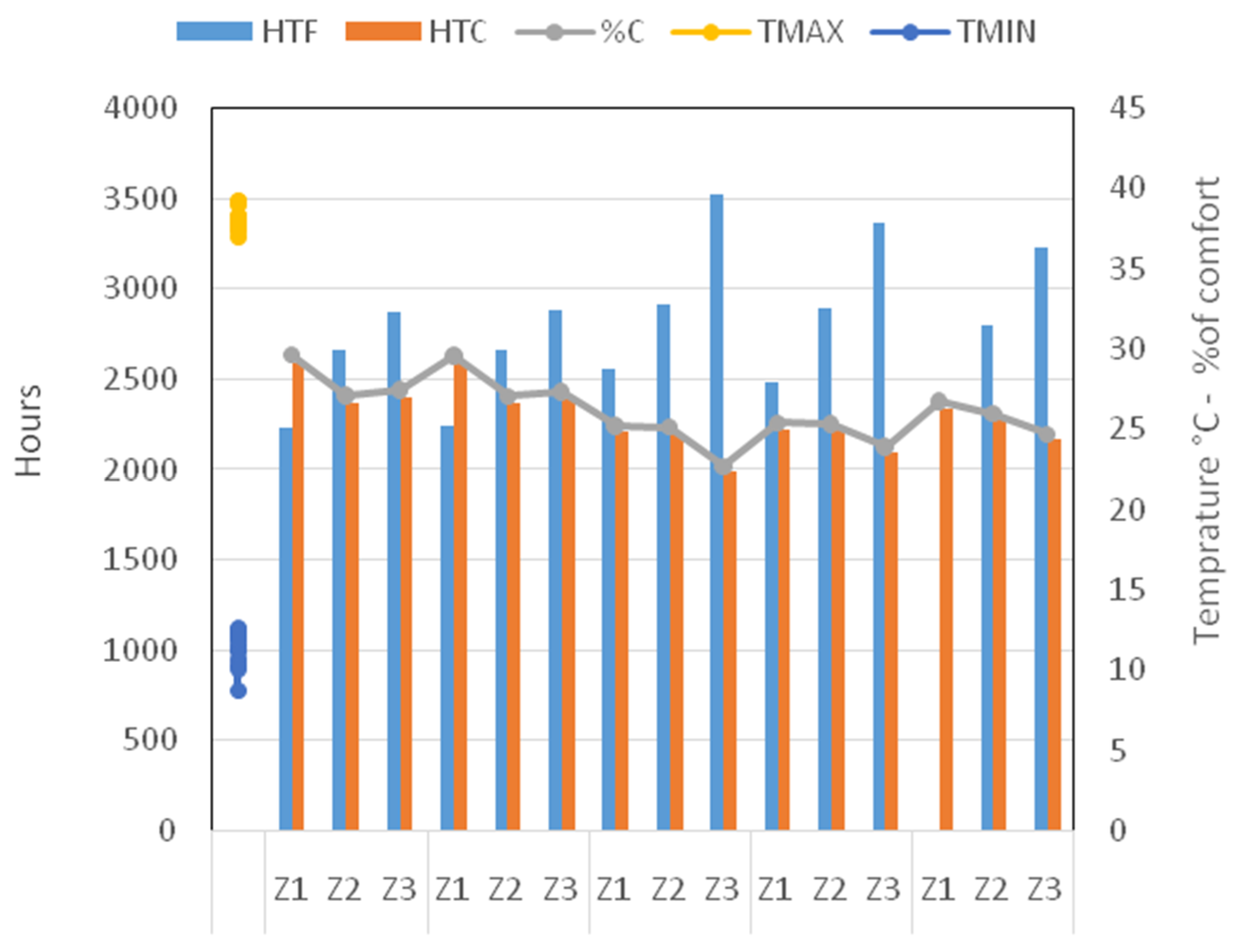
The analysis of the results for the modern house (CM), representative of self-built dwellings in Béchar, is presented in Figure 22. It summarizes thermal discomfort hours based on an opening scenario for windows and doors: in summer, windows are closed from 11:00 a.m. to 6:00 p.m. and open the rest of the time; in winter, they are open from 11:00 a.m. to 4:00 p.m. In summer, doors remain fully open from 7:00 a.m. to 6:00 p.m. and partially open (50%) from 6:00 p.m. to 7:00 a.m. In winter, they are open only from 11:00 a.m. to 4:00 p.m.
The interpretation of the graphical results (Figure 22) shows the following:
-
For all tested materials (double wall, insulated wall, CSEB, and concrete block), the maximum temperatures (Tmax) are relatively consistent, ranging between 38 °C and 39 °C, while the minimum temperatures (Tmin) are also quite similar, between 10 °C and 15 °C.
-
Stone and CSEB generally exhibit more cold discomfort hours (HTFs) due to their high thermal inertia.
-
The double wall and insulated wall provide a better balance between cold and hot discomfort hours, although they tend to result in more hot discomfort hours, which is less suitable for this specific climate.
-
The overall comfort rate ranges from 22% to 28%, indicating that occupants experience thermal comfort for about one quarter of the year without active heating or cooling systems.
In a hot and arid climate like Béchar’s, materials such as stone and CSEB help reduce overall discomfort hours but tend to increase cold discomfort. This suggests that combining the thermal inertia of these materials with appropriate insulation may offer the most effective solution.
  • Apartment (AP):
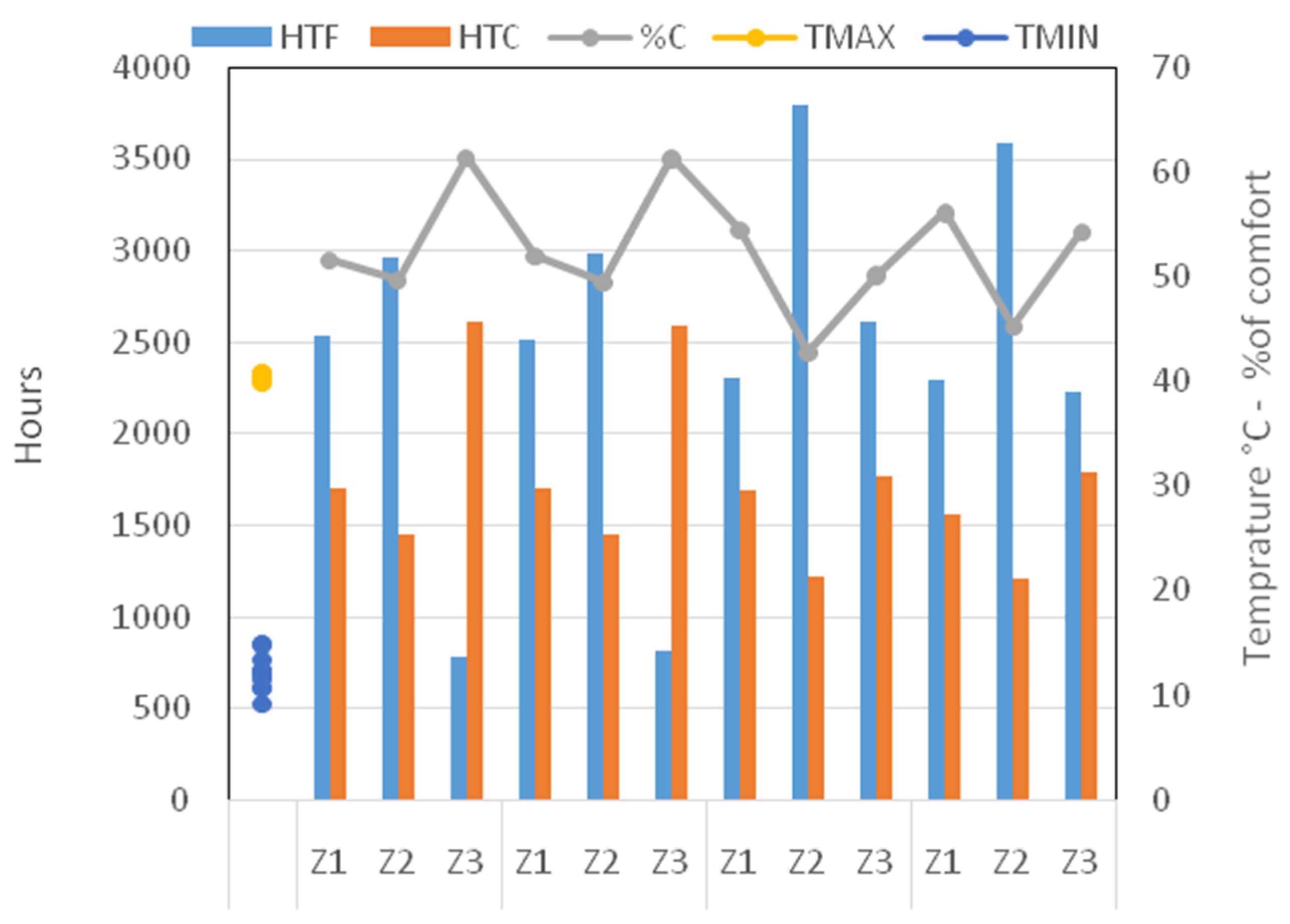
Figure 23 illustrates the thermal behavior of an apartment located on the first floor, tested with various construction materials while maintaining the same door and window opening schedule as used for the detached house scenario. The thermal analysis of the apartment reveals several significant findings:
-
Maximum temperatures (Tmax, yellow line) range between 40 °C and 42 °C and remain stable across all materials, indicating that the construction material has limited influence on peak indoor temperatures in this type of dwelling. Minimum temperatures (Tmin, blue line) vary from 10 °C to 15 °C, with some fluctuations depending on zone and material type.
-
The comfort percentage (%C, grey line) varies significantly between configurations. The double wall and insulated wall achieve comfort levels of up to 60% in Zone Z3—substantially higher than those recorded in the detached house. By contrast, CSEB and stone show more fluctuating comfort rates, with a notable drop in comfort in Zone Z2 when using CSEB.
-
Cold discomfort hours (HTFs, blue bars) are considerably higher for CSEB and stone, especially in Zones Z2 and Z3, reaching between 3500 and 3800 h—equivalent to approximately 40% of the year. This increase is attributed to the thermal insulation effect provided by the floors above and below, coupled with the high thermal inertia of these materials.
-
Hot discomfort hours (HTCs, orange bars) are lower when using CSEB and stone (approximately 1200–1700 h), compared to the double-wall and insulation configurations (ranging from 1400 to 2500 h, depending on the zone). This presents a major advantage for these materials in a hot arid climate like Béchar.

6.2.2. Impact of Natural Ventilation Through Window Openings on Summer Comfort for Each Housing Type

The objective of this section is to examine the influence of the natural ventilation generated by various window- and door-opening scenarios on the thermal comfort of the different housing types. Given the hot and arid nature of the study area’s climate, particular attention is paid to hot discomfort hours during the summer period, from June to September.
The results focus on Zone Z1 as the primary representative zone for each housing type. The tested ventilation scenarios are detailed in the corresponding results tables, enabling a comparative analysis of their effectiveness in mitigating thermal discomfort during the hottest months.
  • Patio House:
During winter, openings remain closed, except for windows facing the patio, which are half-open from 11:00 a.m. to 4:00 p.m.
V: ventilation openings/W: windows/D: doors.
Based on the analysis of Table 14, the following observations can be made:
-
Cases 1 and 2, where windows and doors remain closed during summer, show poor thermal comfort percentages and relatively low maximum temperatures.
-
Case 4, in which all openings are closed from 7:00 a.m. to 6:00 p.m., results in higher maximum temperatures compared to partial opening at 50% (Case 3) and increases hot discomfort hours by 113 h in Zone Z1.
-
Controlled opening (Case 7)—where openings are operated only when the indoor temperature exceeds the outdoor temperature—yields the best results (%C = 38.39, HC = 1006), followed by
Case 5, involving controlled door and window openings combined with a fixed opening schedule for ventilation openings;
Case 6, which controls both ventilation openings and the operation of doors and windows from 7:00 a.m. to 6:00 p.m.
These results indicate that small ventilation openings have a lower thermal impact compared to larger elements like doors and windows.
-
Partial evening openings of windows and doors provide less thermal comfort than fully opening them.
  • Modern Detached House (CM):
For the seven cases presented in Table 15, doors remain fully open from 11:00 a.m. to 6:00 p.m. and are partially open from 6:00 p.m. to 11:00 a.m.
An analysis of Table 15 shows the following insights:
-
Case 1 (windows closed 24/7) exhibits the worst performance, with a Tmax of 38.44 °C, 2346 hot discomfort hours (HCs), and only 44% comfort. This confirms a direct correlation between window opening rates and thermal comfort.
-
Case 7 (adaptive opening when indoor temperature exceeds outdoor temperature) delivers the best performance with 1609 HCs and 50.9% comfort, followed by Case 2 (windows closed from 7:00 a.m. to 6:00 p.m.) with 1674 HCs and 50.42% comfort.
-
Cases 4 and 6 (20% opening) perform worse than Cases 3 and 5 (50% opening), demonstrating that a higher opening rate enhances ventilation and thermal comfort.
-
Keeping windows closed during the day (7:00 a.m.–6:00 p.m.) and open at night (Case 2) is more effective than maintaining partial openings 24/7 (Cases 3, 5, and 6). This strategy prevents heat gain during peak hours while allowing for nighttime cooling.
-
Case 7 (conditional/adaptive opening) outperforms all fixed strategies, highlighting the effectiveness of adaptive ventilation based on real-time thermal conditions.
-
Case 3 (windows half-open during the day) represents a reasonable compromise between ensuring adequate ventilation and limiting heat gains.
  • Apartment (AP):
For the apartment, the window opening scenarios (Table 16) assume doors closed from 7:00 a.m. to 6:00 p.m. and open for the remainder of the day.
An analysis of these results reveals the following:
-
Nighttime natural ventilation helps reduce hot discomfort hours, while daytime ventilation tends to increase them during summer. Window opening significantly impacts comfort: for example, Zone Z1 records 132 additional hot hours between Cases 2 and 3 and 125 more hours in Case 5 (10% window opening in the afternoon) compared to Case 6, with a Tmax increase of 0.41 °C.
-
The difference between Case 1 and Case 4 is minimal, with only 21 fewer hot discomfort hours in Case 4. However, opening windows between 7:00 a.m. and 11:00 a.m. can be beneficial, particularly in May, June, and September, when outdoor air is cooler.

6.3. Conditioned Case: Energy Demand Results by Construction Material

Before conducting the scenario analysis, the TRNSYS–COMIS model was verified by reproducing, within the simulation environment, the experimental conditions reported in the literature (building geometry, material properties, climate data, and setpoint temperatures) and comparing the outputs (indoor temperatures, thermal loads, ventilation rates) with measured data. Evaluation using statistical indicators (MBE, RMSE) showed deviations within the tolerance ranges reported in the literature, confirming the reliability of the model for the present study.
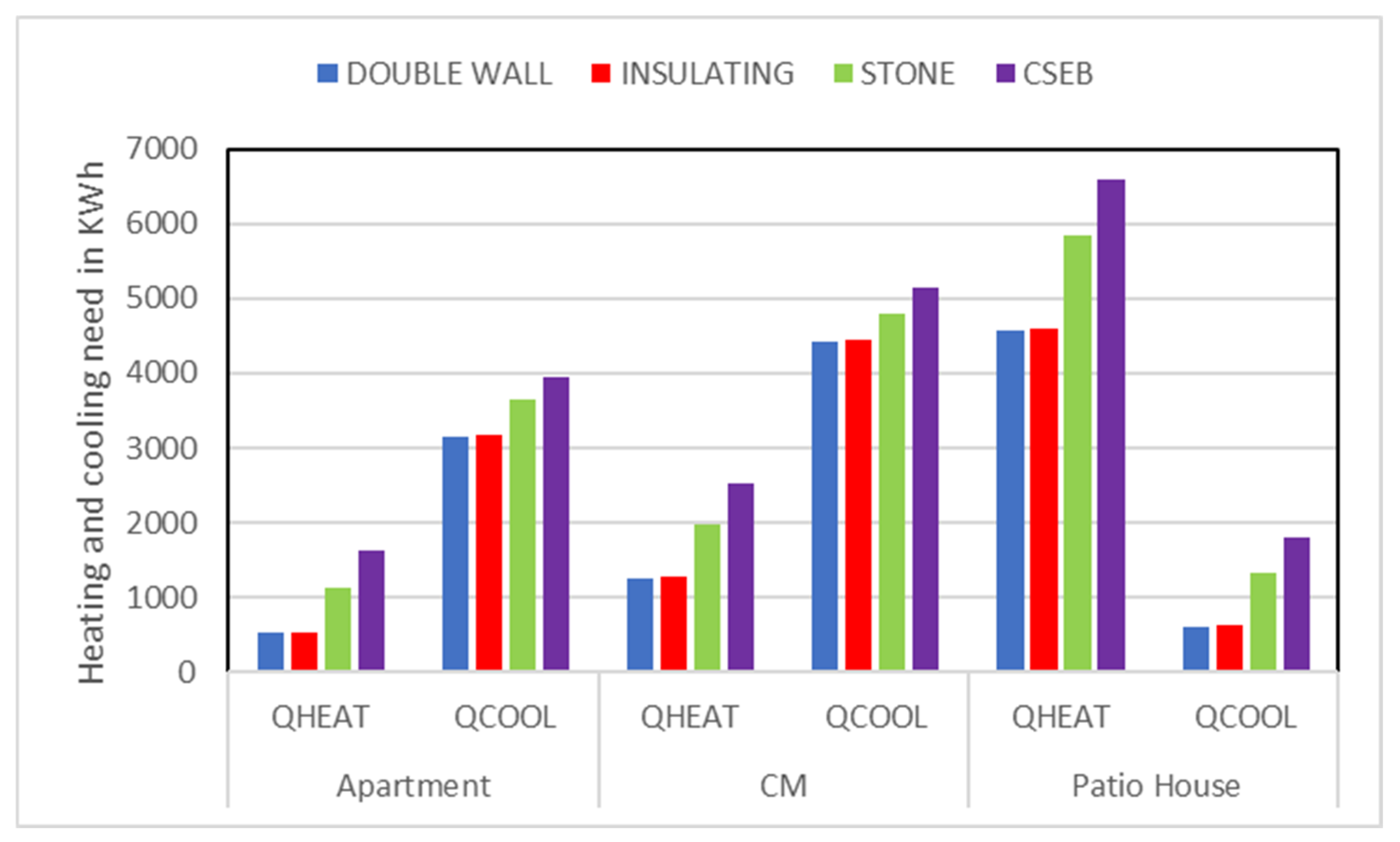
The objective of this section is to estimate the heating (QHEAT) and cooling (QCOOL) energy demands for the three housing types (Figure 24) based on the construction materials outlined in Table 13.
Figure 24 indicates that heating demands are higher than cooling demands across all housing types. However, the low indoor temperatures recorded (never below 6 °C) remain within acceptable limits. Simulations were conducted over a full year using setpoint temperatures of 18 °C for heating and 27 °C for cooling.
For the patio house, heating energy needs arise when indoor temperatures fall below 18 °C—typically at night or during transitional seasons. These demands are considered manageable and could be addressed through passive strategies, such as controlled window openings and improved window airtightness, especially because all rooms face an open patio that facilitates natural ventilation and solar gains.
The modern detached house shows the highest cooling demand, followed by the apartment, while the patio house exhibits the highest heating demand.
For all three housing types, double-wall and insulated wall solutions yield the best energy performance. These configurations significantly reduce heating demand (QHEAT)—by 67% for the apartment and 49% for the detached house—and cooling demand (QCOOL)—by 20% for the apartment and 13% for the detached house—compared to compressed stabilized earth block (CSEB) constructions. However, in the patio house, these same solutions reduce QHEAT by only 30% while increasing QCOOL by up to 65% in summer due to the building’s specific configuration, which may trap heat.
In summary, TRNSYS simulations assessing thermal and energy performance across the three housing types reveal that high thermal inertia materials affect comfort differently depending on building typology and season. Comfort percentage (%C) varies accordingly, underlining the importance of selecting thermal inertia suitable for hot climates. Adaptive ventilation, particularly night cooling, significantly enhances summer comfort. Therefore, an integrated bioclimatic design—combining appropriate materials, spatial morphology, and natural ventilation—is crucial to improve thermal comfort and reduce energy consumption in the specific context and region studied.

7. Discussion

The multidisciplinary approach adopted in this study, based on the combination of three levels of analysis (morphoclimatic, microclimatic, and energy-based), enabled a comprehensive and hierarchical reading of thermal comfort in public spaces and residential buildings in Béchar.
It relies on the complementarity of three methods: field surveys made it possible to observe and interpret the passive design principles embedded in traditional urban morphology; outdoor microclimatic simulations using ENVI-met assessed the impact of urban fabric and vegetation on open-space comfort; and dynamic thermal simulations using TRNSYS quantified hours of discomfort and analyzed the real behavior of building envelopes.
The cross-analysis of these methodological approaches reveals strong correlations as well as specificities linked to each scale of analysis, allowing for a deeper understanding of the complexity of thermal comfort conditions in arid climates.
Methodological Complementarity of the Three Approaches
The typomorphoclimatic analysis made it possible to identify the fundamental principles of passive design embedded in traditional architectural forms, such as volumetric compactness, introversion, and solar control. These structural elements served as the foundation for a contextual reading of thermal comfort and guided the selection of case studies. The compact urban forms analyzed effectively minimize nocturnal heat losses and reduce the penetration of direct solar radiation, confirming the findings of Yannas [62] regarding the efficacy of introverted morphologies in arid climates.
While this approach is essential for the morphological diagnosis of urban form, it remains primarily qualitative and descriptive, requiring quantitative support such as that provided by ENVI-met and TRNSYS to validate its assumptions. ENVI-met simulations confirmed the cooling effects of inner courtyards and narrow streets, while TRNSYS thermal simulations demonstrated their capacity to stabilize indoor temperatures. This dual validation reinforces the view that inherited morphological logic remains compatible with contemporary thermal comfort requirements.
Microclimatic Effects: The Critical Role of Shade and Vegetation
The microclimatic analysis using ENVI-met allowed for a precise evaluation of the impact of urban fabric, vegetation, and materials on the immediate microclimate. Quantitatively, the results revealed significant thermal differences between shaded areas adjacent to buildings (+20 W/m2) and exposed open spaces (+100 W/m2). These findings underscore the critical importance of shade, dense vegetation, permeable surfaces, and the height and layout of buildings in regulating urban heat islands (UHIs).
Beyond measurement, the analysis highlights the inadequacy of recent urban forms that overlook the regulating role of shade and built density. In these contexts, UHIs are intensified not by density itself but rather by poorly structured, unshaded urbanization lacking a vegetative strategy. Demonstrating that narrow streets oriented north–south (H/W > 0.5), patios, permeable ground surfaces, connected building blocks, and protected inner courtyards significantly mitigate temperature—particularly during daytime hours—invites a reconsideration of contemporary urban models in Saharan cities. This critique is especially relevant, as well-designed density, contrary to common assumptions, can foster a more livable microclimate. These results align with and expand upon the work of Emmanuel and Krüger [23], which emphasized the importance of shaded spaces and high-albedo materials in mitigating UHIs.
Thermal Simulation: Inertia, Ventilation, and Performance Thresholds
The use of TRNSYS moved the analysis beyond morphological assessments to a dynamic thermal interpretation of the building envelope’s behavior under extreme climatic conditions, such as those in Béchar. It enabled the quantification of discomfort hours, energy needs, and the potential for improving comfort through targeted actions on materials and openings. Simulations revealed that materials with high thermal inertia—such as CSEB, stone, and adobe—perform well in mitigating heat peaks (less than 1700 hot discomfort hours/year), in line with Athamena [24], who highlighted the value of local materials. However, this study also identified a key secondary effect: without effective nighttime ventilation, these materials can cause overheating, as their heat storage capacity becomes counterproductive. This highlights the importance of not only selecting appropriate materials but also integrating them within a coherent overall system—taking into account form, orientation, usage, ventilation, and interaction with the microclimate.
These findings are consistent with those of De Schiller and Evans [25], who emphasized adaptive ventilation as a core strategy in arid climates (e.g., cross-ventilation devices, vertical openings to enable the stack effect). Our simulations confirm and quantify this principle, showing that the thermal comfort percentage (%C) varies significantly (from 22% to 60%) depending on occupancy and ventilation scenarios. This brings to light a dimension often overlooked in the literature: the role of user behavior and ventilation practices in the overall thermal performance of housing.
Toward an Integrated Bioclimatic Design Approach
The cross-analysis of the typomorphoclimatic, microclimatic, and dynamic thermal dimensions highlights the relevance of a multi-criteria architectural design strategy for achieving thermal comfort in arid climates. The results confirm that thermal comfort stems from a coherent synergy between urban form, passive architectural devices, user behavior, and microclimatic management. Traditional configurations emerge not only as cultural legacies but also as environmentally appropriate responses that remain relevant today. The numerical simulations validated their effectiveness while also stressing the conditions required to fully leverage their potential—particularly, well-managed natural ventilation and the thoughtful use of thermal mass.
This study advocates a reconciliation between vernacular know-how and modern simulation tools to develop bioclimatic design and retrofit models tailored to the constraints of Saharan cities. It encourages architects, planners, and policymakers to move beyond piecemeal adaptation and adopt a truly sustainable design strategy rooted in the local climatic, social, and cultural context.
Such an approach aligns with sustainable development principles by prioritizing passive solutions and local materials to reduce the environmental footprint of buildings. Moreover, it contributes to preserving local architectural heritage and reinforcing the cultural identity of arid regions.
Policy Alignment and Practical Implications for Energy-Efficient Design in Algeria
The recommendations derived from this research are fully aligned with Algeria’s national policies on building energy efficiency and are intended to strengthen the link between scientific evidence and regulatory frameworks. In particular, the findings are consistent with the objectives of the Thermal Regulation of Buildings (Réglement Thermique des Bâtiments RTB) and the National Program for Energy Efficiency (Programme National d’Efficacité Énergétique PNEE), both overseen by the National Agency for the Promotion and Rationalization of Energy Use (Agence Nationale pour la Promotion et la Rationalisation de l’Utilisation de l’Énergie APRUE). These frameworks aim to reduce energy demand, particularly in the residential sector, by promoting passive and bioclimatic design strategies adapted to local climatic conditions. The methodological approach adopted in this study, combining ENVI-met microclimatic simulations with TRNSYS indoor energy modeling, quantitatively demonstrated the effectiveness of urban and morphological optimization, such as street orientation, built density, and natural or artificial shading, in lowering surface temperatures and reducing direct solar exposure. It also confirmed the value of dynamic solar protection devices and high thermal-mass materials in mitigating indoor heat gains and attenuating diurnal temperature fluctuations, as well as the integration of localized microclimatic data into architectural design to enhance the resilience of buildings and outdoor spaces in arid environments. Grounded in long-term climatic data and realistic urban scenarios, these recommendations provide a robust scientific basis to support and complement existing national policies, offering actionable guidelines for refining the RTB and for developing urban planning strategies aimed at reducing energy vulnerability in Saharan and other hot arid regions of Algeria.

8. Conclusions, Recommendations, and Limitations

8.1. Conclusions

In a hot arid context such as Béchar, this research has highlighted the value of adaptive, context-sensitive design approaches supported by dynamic simulation tools to improve the energy performance of Saharan buildings and the thermal comfort of their outdoor environments.
Through a multidisciplinary methodology combining typomorphological, microclimatic, and thermal-energy simulations, this study examined the influence of urban form on radiative exchanges and occupant comfort. Applied to the downtown district of Béchar, this methodology produced a contextual framework for designing better-adapted thermal environments.
An initial morphoclimatic analysis helped identify correlations between urban morphology and thermal environment indicators. Variables such as urban density, roughness, albedo, and height-to-width ratio (H/W) were positively correlated with operative temperature, while vegetation density, urban porosity, and sky view factor contributed to cooling through evapotranspiration.
In a second phase, ENVI-met and TRNSYS were used to simulate external and internal thermal conditions. ENVI-met showed that vegetation, shading elements, and compact urban fabrics improve comfort by reducing urban heat island effects, particularly between 10 a.m. and 4 p.m. Street orientation and surface reflectance were also shown to significantly affect urban air temperature.
TRNSYS simulations demonstrated that a combination of double-wall insulated construction, ventilated roofing, and adaptive natural ventilation strategies can significantly reduce heating and cooling needs—particularly for apartments and modern houses. However, the patio house, although comfortable in summer, showed higher winter discomfort, highlighting the need for context-specific solutions that balance thermal inertia and adaptive ventilation.

8.2. Recommendations

The simulations and analysis conducted for Béchar lead to a set of design and policy recommendations aimed at enhancing thermal comfort through bioclimatic principles:
  • Material Selection:
    Use local materials with high thermal inertia (adobe, CSEB, stone) combined with targeted insulation, particularly on south-facing façades (e.g., 40 cm thick walls). This balances day/night thermal fluctuations while preserving indoor comfort. Avoid single-wall assemblies and promote insulated materials such as red brick or composite envelopes.
  • Surface Treatments and Vegetation:
    Implement high-albedo or permeable ground coverings (e.g., light-colored tiles, permeable pavers) to limit solar heat gain. Promote dense vegetation, not just for aesthetics but also as an active cooling mechanism through evapotranspiration.
  • Ventilation Strategies:
    Leverage dominant southern and southeastern winds by designing buildings with cross-ventilation paths, inner courtyards, and stack ventilation systems (e.g., solar chimneys). Use adaptive ventilation schedules: keep windows closed during peak heat (1–6 p.m. in summer), and open at night to enhance cooling. Controlled openings reduced up to 132 h of heat discomfort and decreased Tmax by 0.4 °C in simulations.
  • Comfort Targets:
    Set achievable comfort thresholds of 28 °C max during the day and 18 °C min at night, aligned with local thermal acceptability and energy constraints.
  • Urban Space Design:
    In public spaces, prioritize shaded zones, vegetated corridors, and wind tunnels (passages under buildings) to combat the high solar exposure and radiative heating of urban surfaces. Street geometry and compactness should be considered critical parameters in reducing outdoor thermal stress.
  • Residential Typologies:
    For modern self-built houses, double walls with insulation provide the best comfort-energy balance. In traditional dwellings, controlled natural ventilation (based on interior/exterior temperature differentials) improves summer comfort. Patio houses, while efficient in summer, require added insulation or active strategies in winter to address thermal losses.
  • Customization and Context:
    Recommendations must be adapted to local socio-economic conditions, including cost, cultural practices, and construction skills. They should not be applied uniformly but rather through a site-specific lens.
  • Monitoring and Feedback:
    Continuous evaluation of thermal performance through post-occupancy monitoring is essential. This ensures that strategies are working as expected and can be fine-tuned over time.

8.3. Limitations and Future Directions

While this research provides a robust methodological and technical framework, certain limitations must be acknowledged:
  • Simulation Assumptions:
    The climatic data used in the simulations were obtained from the Béchar meteorological station (ONM) for a typical reference year, including hourly records of air temperature, relative humidity, wind speed and direction, and global solar radiation. For ENVI-met simulations, two extreme days were selected: one in July (highest daily maximum temperature, low humidity, northwestern winds) and one in January (lowest daily minimum temperature, moderate humidity, low winds). For TRNSYS, equivalent climatic profiles were used, averaged over 10-min intervals to match the simulation timestep. This approach, which we refer to as seasonal representativeness, enables consistent comparison between indoor and outdoor performance under peak thermal stress conditions. However, transitional seasons and rare meteorological anomalies are not represented in this selection, and this limitation is acknowledged in the discussion section. Furthermore, both ENVI-met and TRNSYS rely on input assumptions and simplifications regarding occupant behavior, interior configuration, building airtightness, and climatic variability, all of which may contribute to differences between simulated predictions and real-world performance.
  • Focus on Thermal Comfort Only:
    This study focused primarily on thermal comfort, without extensive treatment of visual, acoustic, or olfactory comfort, which are also critical in overall well-being.
  • Climate Data Validity:
    Climatic datasets are appropriate but may not fully reflect the ongoing climatic shifts in arid regions. Periodic updating and calibration of climate inputs are recommended.
  • Lack of In Situ Testing:
    The recommendations have not yet been experimentally validated through real-world testing. Pilot studies and user feedback would enhance reliability and acceptance.
Future Directions
This study opens promising avenues for further research, including the following:
  • Integrated comfort modeling (thermal, visual, acoustic);
  • Participatory design with local communities to co-create acceptable and sustainable solutions;
  • Post-occupancy evaluation frameworks tailored to Saharan settings;
  • Development of climate-resilient design standards rooted in vernacular knowledge and enhanced by digital tools.

Author Contributions

Conceptualization, R.B., M.K. and A.M.M.; methodology, R.B., N.F. and Z.R.H.; software, R.B., A.M.M. and M.C.; validation, N.F. and N.H.; formal analysis, W.M. and M.H.R.S.; investigation, N.F. and M.C.; resources, M.K. and A.M.M.; writing—original draft preparation, R.B. and Z.R.H.; writing—review and editing, N.F., M.C. and N.H.; visualization, W.M. and M.H.R.S.; supervision, M.K. and Z.R.H.; project administration, M.K. and A.M.M. All authors have read and agreed to the published version of the manuscript.

Funding

This research received no external funding.

Institutional Review Board Statement

Not applicable.

Informed Consent Statement

Not applicable.

Data Availability Statement

The data presented in this study are available on request from the corresponding author.

Conflicts of Interest

The authors declare no conflicts of interest.

Appendix A

Table A1 presents the in situ climatic measurements (air temperature, relative humidity, wind speed and direction, dew point, atmospheric pressure, and sky conditions) recorded with the AS-H12 split-sensor digital anemometer, which were used both as input data for simulations and for model validation.
Table A1. In situ climatic measurements used as input data for simulations and for model validation.
TimeTemperature (°C)Apparent Temperature (°C)WindRelative Humidity (%)Dew Point (°C)Pressure (mb)Description
00:0022214 km/h16−51012.0Clear/Clear
01:002121Calm17−51011.0Clear/Clear
02:00202011 km/h20−41011.0Clear/Clear
03:001920Calm21−41011.0Clear/Clear
04:002220Calm9−121011.0Clear/Clear
05:00222011 km/h9−121011.0Clear/Clear
06:00212115 km/h10−121010.0Clear/Clear
07:00212115 km/h2711011.0Clear/Clear
08:00232219 km/h2941011.0Clear/Clear
09:00262519 km/h2441011.0Clear/Clear
10:00282722 km/h2351011.0Clear/Clear
11:00302819 km/h1941011.0Clear/Clear
12:00323011 km/h1741011.0Clear/Clear
13:00333119 km/h1531011.0Clear/Clear
14:0034326 km/h1431010.0Clear/Clear
15:00343222 km/h1761010.0Clear/Clear
16:00343222 km/h1541009.0Clear/Clear
17:00353222 km/h1331008.0Clear/Clear
18:00353230 km/h1101008.0Clear/Clear
19:00353222 km/h1101008.0Clear/Clear
20:003230Calm1411007.0Clear/Clear
21:0030289 km/h1511008.0Clear/Clear
22:00292711 km/h1611008.0Clear/Clear
23:002625Calm2011008.0Clear/Clear

References

  1. Semahi, S.; Benbouras, M.A.; Mahar, W.A.; Zemmouri, N.; Attia, S. Development of Spatial Distribution Maps for Energy Demand and Thermal Comfort Estimation in Algeria. Sustainability 2020, 12, 6066. [Google Scholar] [CrossRef]
  2. Benbrahim, R.; Sriti, L.; Besbas, S.; Nocera, F.; Longhitano, A. Assessing the Impact of Urban Area Size on Thermal Comfort in Compact Urban Fabrics Considering the Saharan City of Ghardaïa, Algeria. Sustainability 2025, 17, 2213. [Google Scholar] [CrossRef]
  3. Alemu, A.G. An Investigation of Solar Radiation, Dew Point, Relative Humidity, and Air Temperature in the Afar Region of Ethiopia. Int. J. Photoenergy 2025, 1, 4735627. [Google Scholar] [CrossRef]
  4. Mo, Y.; Bao, Y.; Wang, Z.; Wei, W.; Chen, X. Spatial coupling relationship between architectural landscape characteristics and urban heat island in different urban functional zones. Build. Environ. 2024, 257, 111545. [Google Scholar] [CrossRef]
  5. Sun, L.; Xie, C.; Qin, Y.; Zhou, R.; Wu, H.; Che, S. Study on temperature regulation function of green spaces at community scale in high-density urban areas and planning design strategies. Urban For. Urban Green. 2024, 101, 128511. [Google Scholar] [CrossRef]
  6. El Kenawy, A.M. Hydroclimatic extremes in arid and semi-arid regions: Status, challenges, and future outlook. In Hydroclimatic Extremes in the Middle East and North Africa; Elsevier: Amsterdam, The Netherlands, 2024; pp. 1–22. [Google Scholar] [CrossRef]
  7. Matari, N.; Mahi, A.; Chabane, N.; Harrat, Z.R.; Hadzima-Nyarko, M. Design Methodology Development for High-Energy-Efficiency Buildings in Algerian Sahara Climatic Context. Sustainability 2025, 17, 2660. [Google Scholar] [CrossRef]
  8. Vashist, M.; Kumar, T.V.; Singh, S.K. A comprehensive review of urban vegetation as a Nature-based Solution for sustainable management of particulate matter in ambient air. Environ. Sci. Pollut. Res. 2024, 31, 26480–26496. [Google Scholar] [CrossRef]
  9. Jandaghian, Z.; Colombo, A. The Role of Water Bodies in Climate Regulation: Insights from Recent Studies on Urban Heat Island Mitigation. Buildings 2024, 14, 2945. [Google Scholar] [CrossRef]
  10. Beele, E.; Aerts, R.; Reyniers, M.; Somers, B. Spatial configuration of green space matters: Associations between urban land cover and air temperature. Landsc. Urban Plan. 2024, 249, 105121. [Google Scholar] [CrossRef]
  11. Al-Raeei, M. The smart future for sustainable development: Artificial intelligence solutions for sustainable urbanization. Sustain. Dev. 2025, 33, 508–517. [Google Scholar] [CrossRef]
  12. Pata, U.K. How to progress towards sustainable development by leveraging renewable energy sources, technological advances, and human capital. Renew. Energy 2025, 241, 122367. [Google Scholar] [CrossRef]
  13. Chhachhiya, D.; Kumar, A.; Pipralia, S. Area-based development of ecologically sensitive urban areas: Systematic literature review to understand prevailing concepts and practices. Discov. Cities 2025, 2, 59. [Google Scholar] [CrossRef]
  14. Dadashpoor, H.; Malekzadeh, N. Evolving spatial structure of metropolitan areas at a global scale: A context-sensitive review. GeoJournal 2022, 87, 4335–4362. [Google Scholar] [CrossRef]
  15. Bani Khalifi, N.; Avgoustaki, D.D.; Bartzanas, T. Integrating life cycle assessment into green infrastructure: A systematic review and meta-analysis of urban sustainability strategies. Front. Sustain. Cities 2025, 7, 1601091. [Google Scholar] [CrossRef]
  16. Barea, G.; Mercado, M.V.; Filippin, C.; Monteoliva, J.M.; Villalba, A. New paradigms in bioclimatic design toward climatic change in arid environments. Energy Build. 2022, 266, 112100. [Google Scholar] [CrossRef]
  17. Ahriz, A.; Mesloub, A.; Elkhayat, K.; Alghaseb, M.A.; Abdelhafez, M.H.; Ghosh, A. Development of a Mosque Design for a Hot, Dry Climate Based on a Holistic Bioclimatic Vision. Sustainability 2021, 13, 6254. [Google Scholar] [CrossRef]
  18. Wang, Y.; Pan, W.; Liao, Z. Impact of Urban Morphology on High-Density Commercial Block Energy Consumption in Severe Cold Regions. Sustainability 2024, 16, 5795. [Google Scholar] [CrossRef]
  19. Shashua-Bar, L.; Tsiros, I.X.; Hoffman, M.E. A modeling study for evaluating passive cooling scenarios in urban streets with trees. Case study: Athens, Greece. Build. Environ. 2010, 45, 2798–2807. [Google Scholar] [CrossRef]
  20. Oh, M.; Jang, K.M.; Kim, Y. Empirical analysis of building energy consumption and urban form in a large city: A case of Seoul, South Korea. Energy Build. 2021, 245, 111046. [Google Scholar] [CrossRef]
  21. Jaber, S.; Ajib, S. Optimum, technical and energy efficiency design of residential building in Mediterranean region. Energy Build. 2011, 43, 1829–1834. [Google Scholar] [CrossRef]
  22. Oh, M.; Kim, Y. Identifying urban geometric types as energy performance patterns. Energy Sustain. Dev. 2019, 48, 115–129. [Google Scholar] [CrossRef]
  23. Emmanuel, R.; Krüger, E. Urban heat island and its impact on climate change resilience in a shrinking city: The case of Glasgow, UK. Build. Environ. 2012, 53, 137–149. [Google Scholar] [CrossRef]
  24. Athamena, K. Modélisation et Simulation des Microclimats Urbains: Étude de l’Impact de la Morphologie Urbaine sur le Confort dans les Espaces Extérieurs. Ph.D. Thesis, Nantes University, Ecole Centrale de Nantes, France, 2012. [Google Scholar]
  25. De Schiller, S.; Evans, J.M. User perception of the thermal environment in naturally ventilated housing. Energy Build. 1998, 27, 49–57. [Google Scholar]
  26. Bellara, L.S. Optimal orientation for housing with low energy profile in semi aride climate. In Proceedings of the 10th REHVA World Congress, Antaya, Turkey, 9–12 May 2010. [Google Scholar]
  27. Chen, G.; Charlie Lam, C.K.; Wang, K.; Wang, B.; Hang, J.; Wang, Q.; Wang, X. Effects of Urban Geometry on Thermal Environment in 2D Street Canyons: A Scaled Experimental Study. Build. Environ. 2021, 198, 107916. [Google Scholar] [CrossRef]
  28. Pearlmutter, D.; Berliner, P.; Shaviv, E. Physical Modeling of Pedestrian Energy Exchange within the Urban Canopy. Build. Environ. 2006, 41, 783–795. [Google Scholar] [CrossRef]
  29. Park, J.S. Long-Term Field Measurement on Effects of Wind Speed and Directional Fluctuation on Wind-Driven Cross Ventilation in a Mock-up Building. Build. Environ. 2013, 62, 1–8. [Google Scholar] [CrossRef]
  30. Wen, Y.; Zhang, P.; Wei, J.; Yu, F.; Huang, C. Sustainable Urban Designs Integrating Aboveground Microclimates and Underground Heat Islands: A Systematic Review and Design Strategies. Renew. Sustain. Energy Rev. 2025, 212, 115445. [Google Scholar] [CrossRef]
  31. Liu, L.; Zhang, Y. Urban Heat Island Analysis Using the Landsat TM Data and ASTER Data: A Case Study in Hong Kong. Remote Sens. 2011, 3, 1535–1552. [Google Scholar] [CrossRef]
  32. Pigeon, G.; Moscicki, M.A.; Voogt, J.A.; Masson, V. Simulation of Fall and Winter Surface Energy Balance over a Dense Urban Area Using the TEB Scheme. Meteorol. Atmos. Phys. 2008, 102, 159–171. [Google Scholar] [CrossRef]
  33. Thorsson, S.; Lindberg, F.; Eliasson, I.; Holmer, B. Different Methods for Estimating the Mean Radiant Temperature in an Outdoor Urban Setting. Int. J. Climatol. 2007, 27, 1983–1993. [Google Scholar] [CrossRef]
  34. Sarria, F.R.; Delgado, M.G.; Palma, R.M.; Amores, T.P.; Ramos, J.S.; Dominguez, S. alvarez Modelling Pollutant Dispersion in Urban Canyons to Enhance Air Quality and Urban Planning. Appl. Sci. 2025, 15, 1752. [Google Scholar] [CrossRef]
  35. Cheng, W.-C.; Fu, T.-M. Accelerating Urban Street Canyon Wind Flow Predictions with Deep Learning Method. Build. Simul. 2025, 18, 923–936. [Google Scholar] [CrossRef]
  36. Krayenhoff, E.S.; Moustaoui, M.; Broadbent, A.M.; Gupta, V.; Georgescu, M. Diurnal Interaction between Urban Expansion, Climate Change and Adaptation in US Cities. Nat. Clim. Change 2018, 8, 1097–1103. [Google Scholar] [CrossRef]
  37. Envi-Met. Available online: https://envi-met.com (accessed on 2 July 2025).
  38. TRNSYS. Available online: https://www.trnsys.com/ (accessed on 2 July 2025).
  39. EnergyPlus. Available online: https://energyplus.net// (accessed on 2 July 2025).
  40. Ahamed, M.S.; Guo, H.; Tanino, K. A Quasi-Steady State Model for Predicting the Heating Requirements of Conventional Greenhouses in Cold Regions. Inf. Process. Agric. 2018, 5, 33–46. [Google Scholar] [CrossRef]
  41. Baglivo, C.; Mazzeo, D.; Panico, S.; Bonuso, S.; Matera, N.; Congedo, P.M.; Oliveti, G. Complete Greenhouse Dynamic Simulation Tool to Assess the Crop Thermal Well-Being and Energy Needs. Appl. Therm. Eng. 2020, 179, 115698. [Google Scholar] [CrossRef]
  42. Mashonjowa, E.; Ronsse, F.; Milford, J.R.; Pieters, J.G. Modelling the Thermal Performance of a Naturally Ventilated Greenhouse in Zimbabwe Using a Dynamic Greenhouse Climate Model. Sol. Energy 2013, 91, 381–393. [Google Scholar] [CrossRef]
  43. Tebbani, H.; Bouchahm, Y. Caractérisation Du Confort Thermique Dans Les Espaces Extérieurs: Cas De La Ville D’annaba. Rev. Nat. Technol. 2016, 8, 11–22. [Google Scholar]
  44. Yang, J.; Hu, X.; Feng, H.; Marvin, S. Verifying an ENVI-met simulation of the thermal environment of Yanzhong Square Park in Shanghai. Urban For. Urban Green. 2021, 66, 127384. [Google Scholar] [CrossRef]
  45. Lai, Y.; Ning, Q.; Ge, X.; Fan, S. Thermal Regulation of Coastal Urban Forest Based on ENVI-Met Model—A Case Study in Qinhuangdao, China. Sustainability 2022, 14, 7337. [Google Scholar] [CrossRef]
  46. Rashad, M.; Żabnieńska-Góra, A.; Norman, L.; Jouhara, H. Analysis of energy demand in a residential building using TRNSYS. Energy 2022, 254, 124357. [Google Scholar] [CrossRef]
  47. Dogkas, G.; Tsimpoukis, A.; Itskos, G.; del Castillo, J.C.; Lozano, I.; Gustafsson, O.; Nikolopoulos, N. Analysis of a hybrid heating system with TRNSYS: District heating, heat pumps and photovoltaics in a multi-apartment building. Energy Build. 2025, 344, 116011. [Google Scholar] [CrossRef]
  48. Medjelekh, D. Caractérisation Multi-échelle du Comportement Thermo Hydrique des Enveloppes Hygroscopiques. Ph.D. Thesis, Limoges University, Limoges, France, 2015. [Google Scholar]
  49. Meteoblue. Available online: https://www.meteoblue.com/fr/meteo/aujourd%27hui/suisse_suisse_2658434 (accessed on 20 December 2024).
  50. Meknaci, M.E.F.; Wang, X.; Biara, R.W.; Zerouati, W. Analysis of the Urban Form of Bechar through the Attributes of Space Syntax “for a More Sustainable City”. Buildings 2024, 14, 2103. [Google Scholar] [CrossRef]
  51. Uçlar, S.; Buldurur, M.A. Relation between urban form and heating energy consumption. ITU A|Z 2020, 17, 89–101. [Google Scholar] [CrossRef]
  52. Adolphe, L. Modeling the link between built environment and urban climate: Towards simplified indicators of the city environment. Build. Simul. 2001, 7, 679–684. [Google Scholar]
  53. Steane, M.A.; Steemers, K. Environmental Diversity in Architecture, 1st ed.; Taylor & Francis Group: London, UK, 2004; pp. 1–252. [Google Scholar]
  54. Solene-Microclimat. Available online: https://solenemc.hypotheses.org/ (accessed on 4 July 2025).
  55. Zhang, X.; Jiao, Z.; Zhao, C.; Qu, Y.; Liu, Q.; Zhang, H.; Tong, Y.; Wang, C.; Li, S.; Guo, J.; et al. Review of Land Surface Albedo: Variance Characteristics, Climate Effect and Management Strategy. Remote Sens. 2022, 14, 1382. [Google Scholar] [CrossRef]
  56. Bedra, K.B.; Li, J. Relevance of Ground and Wall Albedo for Outdoor Thermal Comfort in Tropical Savanna Climates: Evidence from Parametric Simulations. Sustainability 2025, 17, 6303. [Google Scholar] [CrossRef]
  57. ISO 7730:2005. Ergonomics of the Thermal Environment. Available online: https://www.iso.org/standard/39155.html (accessed on 18 August 2025).
  58. Yan, M.; Chen, L.; Leng, S.; Sun, R. Effects of local background climate on urban vegetation cooling and humidification: Variations and thresholds. Urban For. Urban Green. 2023, 80, 127840. [Google Scholar] [CrossRef]
  59. Han, L.; Zhao, J.; Zhang, T.; Zhang, J. Urban ventilation corridors exacerbate air pollution in central urban areas: Evidence from a Chinese city. Sustain. Cities Soc. 2022, 87, 104129. [Google Scholar] [CrossRef]
  60. CEN, EN 15251:2007; Indoor Environmental Input Parameters for Design and Indoor Air Quality, Thermal Environment, Lighting and Acoustics. European Committee for Standardization: Brussels, Belgium, 2007.
  61. Meteonorm. Available online: https://meteonorm.com (accessed on 2 July 2025).
  62. Yannas, S. Architectural research for sustainable environmental design. In Proceedings of the European Network of Heads of Schools of Architecture Conference on Environmental Design, Chania, Greece, 3–5 October 2013. [Google Scholar]
Figure 1. Synthesis of methods and tools employed in this research.
Sustainability 17 07658 g001
Figure 2. In situ measurements tool.
Sustainability 17 07658 g002
Figure 3. Process of data analysis and parameter estimation.
Sustainability 17 07658 g003
Figure 11. Definition of the calculation perimeter and localization of measurement points within the study area.
Sustainability 17 07658 g011
Figure 12. Evaluation of urban roughness based on a longitudinal section of the study area. (a) Urban canopy surface defined by the maximum building heights of the built environment (green line at the top of the buildings); (b) longitudinal section showing variations in building heights and street widths, used for the calculation of the H/W ratio (built-up surface).
Sustainability 17 07658 g012
Figure 13. Localization of measurement points along streets within the investigation area.
Sustainability 17 07658 g013
Figure 14. Representative views of measurement points P1 to P8 along A.L.N. Boulevard.
Sustainability 17 07658 g014
Figure 15. Summary flowchart of the simulation process.
Sustainability 17 07658 g015
Figure 16. The simulated study area in 2D.
Sustainability 17 07658 g016
Figure 17. Comparative graphs of urban thermal variables.
Sustainability 17 07658 g017
Figure 18. Floor plans of the three selected housing types for simulation: (a) patio house, (b) modern detached house (CM), (c) apartment.
Sustainability 17 07658 g018
Figure 19. Occupancy scenarios for the different housing types studied.
Sustainability 17 07658 g019
Figure 20. Flowchart of TRNSYS-COMIS methodology and parameter estimation.
Sustainability 17 07658 g020
Figure 21. Thermal comfort and discomfort rates (%) and recorded extreme temperatures for the patio house.
Sustainability 17 07658 g021
Figure 22. Thermal comfort and discomfort rates (%) and recorded extreme temperatures for the detached house.
Sustainability 17 07658 g022
Figure 23. Thermal comfort and discomfort rates (%) and recorded extreme temperatures for the apartment.
Sustainability 17 07658 g023
Figure 24. Annual heating and cooling energy demands (kWh) for the three types of housing according to different construction materials.
Sustainability 17 07658 g024
Table 1. Definition of the calculation perimeter and localization of measurement points within the study area (City center district).
Urban FabricMeasurement PointsSection of the Urban SpaceResults
City center districtP1: Hassi El Beida SquareSustainability 17 07658 i001Trapezoidal space measuring 52 × 51 m, oriented southeast, with a mixed-use function (administrative, educational, residential).
The built environment is characterized by two-story (R + 1) buildings made of brick and concrete block (in dark yellow/ochre tones), with no presence of green or water features.
P2: A.L.N. BoulevardSustainability 17 07658 i002Major north–south axis measuring 86.55 m in length, with a width ranging from 15 to 19 m, paved with asphalt.
Lined with residential buildings (R + 1 to R + 3) featuring ground-floor commercial spaces. Façades are finished in cement, red brick, and concrete block (in dark yellow and ochre tones).
Tree alignment is present along the street.
P3: Secondary StreetSustainability 17 07658 i003Canyon-type street oriented east–west (126.53 m × 7 m), paved with asphalt.
Lined with predominantly R + 2 residential buildings.
Façades are made of cement, red brick, and dark-colored plaster.
No vegetation or water features are present.
P4: Rachid Medouni StreetSustainability 17 07658 i004Major east–west axis (232 m × 16.5 m), asphalt-paved, with predominantly commercial, residential, and educational functions.
The built environment is discontinuous, with structures ranging from R + 1 to R + 3.
Façades are made of red brick and concrete block, in light tones such as green and darkened yellow.
No vegetation or water features are present.
P5: Place de la RépubliqueSustainability 17 07658 i005Central rectangular square (115 m × 100 m), oriented north and surrounded by traffic arteries.
Functions include commercial, administrative, and residential uses.
Surrounding buildings range from R + 2 to R + 4, constructed with red brick and concrete block, in dark yellow and ochre tones.
The square features trees, palm trees, and a central water fountain.
P6: Akid Lotfi BoulevardSustainability 17 07658 i006Major north–south axis (1015 m in length, 11–20 m wide), asphalt-paved, characterized by a continuous alignment of residential buildings with ground-floor commercial spaces in the first section, and a more discontinuous layout in the second section (R + 1 to R + 3).
Façades are made of red brick, concrete block, and stone, in tones of dark yellow, ochre, and peach.
Sparse tree alignment is present along the axis.
P7: 1st November SquareSustainability 17 07658 i007Rectangular space (60 m × 40 m) with a northeast-oriented long axis, enclosed to the north and east, serving an administrative function.
Buildings are R + 1, constructed with red brick and concrete block in dark yellow and ochre tones.
A few trees are present but no water features.
Table 2. Calculation of built-up density within the study area.
Calculation of Built-Up Density in the
Investigation Area
ResultsSchematic
Cross-Sections
Total
Perimeter Area
42,590.61 m2Sustainability 17 07658 i008The selected perimeter exhibits a high built-up density, which can be attributed to the limited horizontal spatial dimensions and the scarcity of both mineral and vegetated surfaces.Sustainability 17 07658 i009
Built-Up Area36,234.27 m2
Non-Built Area6356.34 m2
Built-Up
Density
85%
Table 3. Calculation of roughness within the study area.
Calculation of Urban Roughness in the Investigation AreaResultsSchematic
Cross-Sections
Urban Canopy Surface Area10,800 m2Sustainability 17 07658 i010The selected perimeter features average building heights of 9 m, ranging from ground level to four stories. Longitudinal sections were used to assess urban roughness. through variations in canopy height across blocks.Sustainability 17 07658 i011
Built Surface Area5760 m2
Urban Roughness50%
Table 4. Calculation of vegetation density within the study area.
Calculation of Vegetation Density in the
Investigation Area
ResultsSchematic
Cross-Sections
Total Perimeter Area42,590.61 m2Sustainability 17 07658 i012This very low value of 8% is due to the scarcity of green spaces, particularly in squares and inner
courtyards of urban blocks.
Sustainability 17 07658 i013
Green Space Area353.50 m2
Vegetation
Density
8%
Table 5. Calculation of porosity within the study area.
Calculation of Urban Porosity in the
Investigation Area
ResultsSchematic
Cross-Sections
Urban Canopy Air Volume119,253.7 m3Sustainability 17 07658 i014The perimeter exhibits a relatively moderate level of urban porosity, attributed to the presence of public squares, a wide thoroughfare, and unbuilt open spaces.Sustainability 17 07658 i015
Air Volume of Urban Voids106,786.5 m3
Urban Porosity0.89
Table 6. Measured H/W ratios in the streets of A.L.N. boulevard.
Measurement PointsStreet LocationH/W RatioMorphological Observation
P1A.L.N. Boulevard0.51Semi-enclosed street
P2A.L.N. Boulevard0.47Moderately open street
P3A.L.N. Boulevard0.25Very open street
P4A.L.N. Boulevard0.45Moderately enclosed street
P5A.L.N. Boulevard0.57Enclosed street
P6A.L.N. Boulevard0.57Enclosed street
P7Rachid Medouni Street0.43Average street
P8Aspirant Djamel Street0.66Very enclosed street
Table 7. Calculation of the sky view factor (SVF) in the study area.
Plan ViewSectionSVF
Sustainability 17 07658 i016Sustainability 17 07658 i0170.56
Sustainability 17 07658 i018Sustainability 17 07658 i0190.32
Sustainability 17 07658 i020Sustainability 17 07658 i0210.16
Sustainability 17 07658 i022Sustainability 17 07658 i0230.20
Table 8. Albedo values of different materials in the study area.
MaterialAlbedo
Concrete0.17–0.27
Black asphalt0.05–0.2
Red brick0.4–0.6
Red paint0.5–0.75
Tile0.4–0.5
Table 9. Observation grids of physical ambiances in the study area (20–23 April 2022).
 OBSERVATION GRID N°01
Survey location: Béchar city center
Start time: 09:00End time: 09:30
DateTimePositionSkyWindSolar
radiation
Thermal qualityObservations
20 April202209:00P1ClearWeakHigh50I feel hot, no shade.
09:08P2ClearWeakMedium75I’m in the shade of buildings.
09:19P3ClearWeakMedium50No shade, noise from cars.
09:30P4ClearWeakHigh25I feel hot, no shade.
 OBSERVATION GRID N°02
Survey location: Béchar city center
Start time: 12:00End time: 12:25
DateTimePositionSkyWindSolar
radiation
Thermal qualityObservations
21 April 202212:00P1ClearWeakHigh0I feel hot, no shade.
12:08P2ClearWeakHigh25No shade.
12:16P3ClearWeakHigh25No shade.
12:25P4ClearWeakHigh0I feel hot, no shade.
 OBSERVATION GRID N°03
Survey location: Béchar city center
Start time: 15:00End time: 15:45
DateTimePositionSkyWindSolar
radiation
Thermal qualityObservations
22 April 202215:00P1ClearWeakHigh25I feel hot, no shade.
15:11P2ClearWeakMedium50I am in the shade.
15:24P3ClearWeakHigh25I feel hot, no shade.
15:45P4ClearWeakHigh0I feel hot, traffic noise.
 OBSERVATION GRID N°04
Survey location: Béchar city center
Start time: 18:00End time: 18:20
DateTimePositionSkyWindSolar
radiation
Thermal qualityObservations
23 April 202218:00P1ClearWeakMedium50No shade.
18:07P2ClearWeakMedium75Slight freshness.
18:14P3ClearWeakMedium50No shade.
18:20P4ClearWeakMedium25No shade, I feel hot.
Table 10. Surveyor’s perception of the environmental and thermal conditions in the study area. The times 9, 12, 15, and 18 refer to the hours of the day.
Selection of Measurement PointsMeasurement PointsPhotographic SurveyGeometric CharacteristicsThermal Comfort Rose Diagrams
Sustainability 17 07658 i024P1Sustainability 17 07658 i025Completely open area exposed to the skySustainability 17 07658 i026
P2Sustainability 17 07658 i027Partially covered area due to buildings and the alignment of trees along the streetSustainability 17 07658 i028
P3Sustainability 17 07658 i029Partially open space at the intersection of three roadsSustainability 17 07658 i030
P4Sustainability 17 07658 i031Area located near an open space (plaza)Sustainability 17 07658 i032
Table 11. Simulated site parameters.
Location of the City of Béchar
-
Longitude: 2°13′ West
-
Latitude: 31°36′ North
-
Altitude: 806 m
Climate TypeHot and dry (arid)
Simulation Date27 April 2019
Simulation DurationFrom 10:00 a.m. to 8:00 p.m.
Wind Speed16.3 km/h at 10 m above ground level
Prevailing Wind DirectionSouth and southwest in summer, north in winter
Average Outdoor Temperature27.6 °C
Average Relative Humidity16.75%
Table 12. Summary of key thermal comfort indicators (temperature, PMV/PPD, QHEAT/QCOOL).
Zone/SurfaceSurface Temperature
(°C)
Air Temperature
(°C)
Estimated
PMV
Estimated % of People in Comfort
(PPD)
QHEAT (W/m2)QCOOL (W/m2)
MinMaxAvg.MinMaxAvg.MinMaxAvg.MinMaxAvg.MinMaxAvg.MinMaxAvg.
Mineral pavement455248.5212422.71.82.2+2.081210809085000
Bare soil394542.5202322.01.31.7+1.5182220556560000
Vegetation212523.0192221.0−0.20.20.0828885−12−8–10222825
Densely built-up area222523.82.02.4+2.2465657570000
Shaded area293431.5192220.70.30.7+0.572787512181581210
Table 13. Description and characteristics of building envelope elements.
Wall TypeWall Composition (From Outside to Inside)Total ThicknessU-Value (W/m2·K)
Double wallExterior WallCement plaster (2 cm) + Brick (15 cm) + Air gap (5 cm) + Brick (10 cm) + Cement plaster (2 cm)34 cm0.637
Interior wallCement plaster (2 cm) + Brick (10 cm) + Cement plaster (2 cm)14 cm2.396
Double wall + insulationExterior WallCement plaster (2 cm) + Brick (15 cm) + Expanded polystyrene (5 cm) + Brick (10 cm) + Cement plaster (2 cm)34 cm0.665
BTCSExterior WallBTCS14 cm2.802
Interior wallInterior wall12 cm3.030
StoneExterior WallStone40 cm1.194
AdobeExterior WallAdobe40 cm0.903
Roof Cement mortar (2 cm) + Hollow concrete blocks (16 cm) + Reinforced concrete (4 cm)22 cm2.102
Intermediate Floor Tiles (3 cm) + Cement mortar (2 cm) + Sand layer (2 cm) + Reinforced concrete (4 cm) + Hollow concrete blocks (16 cm) + Cement mortar (2 cm)29 cm1.846
Ground Floor Tiles (3 cm) + Cement mortar (2 cm) + Sand layer (2 cm) + Reinforced concrete (4 cm) + Crushed stone foundation (40 cm)51 cm2.494
Table 14. Thermal comfort and discomfort rates (%) for Zone Z1 of the patio house.
Case DescriptionTmaxHC%C
Case 1Small openings closed from 7 h to 18 h and windows and doors closed during summer.35.54161934.87
Case 2Small openings open during summer and windows and doors closed during summer.35.71164034.79
Case 3Small openings closed and windows and doors half-closed from 7 h to 18 h.37.04121335.64
Case 4Small openings and windows closed and doors closed from 7 h to 18 h.37.15110037.83
Case 5Small openings closed from 7 h to 18 h and windows and doors open if Text < Tint.35.3102838.17
Case 6Small openings open if Text < Tint and windows and doors half-closed from 7 h to 18 h.37.01116336.95
Case 7Small openings and windows closed if Text < Tint.35.3100638.39
Table colors indicate relative performance: Green = best, Orange = intermediate, Red = lowest.
Table 15. Thermal comfort and discomfort rates (%) for the CM house.
Case DescriptionTmaxHC%C
Case 1Windows closed 24 h during summer.38.44234644
Case 2Windows closed during summer from 7 h to 18 h.37.54167450.42
Case 3Windows half-closed during summer from 7 h to 18 h.37.82189648.39
Case 4Windows opened to 20% during summer from 7 h to 18 h.38.09210646.5
Case 5Windows half-open 24 h during summer.38.26206346.42
Case 6Windows opened to 20% 24 h during summer.38.27211646.27
Case 7Windows open if Tint > Text (if indoor temperature is higher than outdoor temperature).37.51160950.9
Table colors indicate relative performance: Green = best, Orange = intermediate, Red = lowest.
Table 16. Thermal comfort and discomfort rates (%) for the apartment.
Case DescriptionTmaxHC%C
Case 1Windows closed from 11 h to 18 h during summer.41.66142645.59
Case 2Windows closed from 11 h to 18 h during summer and half-open the rest of the day.42160854.19
Case 3Windows closed from 11 h to 18 h during summer and opened to 10% the rest of the day.41.75147647.52
Case 4Windows closed from 7 h to 20 h during summer.40.86144748.38
Case 5Windows closed from 7 h to 20 h during summer and half-open the rest of the day.41.94161751.76
Case 6Windows closed from 7 h to 20 h during summer and opened to 10% the rest of the day.40.98149249.41
Case 7Windows half-open from 7 h to 11 h, closed from 11 h to 18 h, and fully open the rest of the day.41.74152350.4
Case 8Windows half-open from 7 h to 11 h, opened to 10% from 11 h to 18 h, and fully open the rest of the day41.81156856.32
Table colors indicate relative performance: Green = best, Orange = intermediate, Red = lowest.
Disclaimer/Publisher’s Note: The statements, opinions and data contained in all publications are solely those of the individual author(s) and contributor(s) and not of MDPI and/or the editor(s). MDPI and/or the editor(s) disclaim responsibility for any injury to people or property resulting from any ideas, methods, instructions or products referred to in the content.