Article

On High-Value Mixed Cropping System: Four-Way Evolutionary Game Analysis of HMC Synergy of Circular and Sharing Economy for Multiple Low-to-Middle-Income Farmer Families


1
Faculty of Development Economics, VNU University of Economics and Business, Hanoi 100000, Vietnam
2
Faculty of Finance and Banking, VNU University of Economics and Business, Hanoi 100000, Vietnam
3
Faculty of Information Technology, Thuyloi University, Hanoi 100000, Vietnam
*
Author to whom correspondence should be addressed.
Sustainability 2025, 17(17), 7611; https://doi.org/10.3390/su17177611
Submission received: 3 July 2025 / Revised: 5 August 2025 / Accepted: 21 August 2025 / Published: 23 August 2025
(This article belongs to the Section Waste and Recycling)

Abstract

This paper introduces a novel four-party evolutionary game model to analyze cooperation dynamics in High-Value Mixed Cropping (HMC) systems integrating non-pesticide cacao, cashew nut, and free-range chicken farming within circular and sharing economy frameworks. The model uniquely examines strategic interactions among local government and three farming family types (cacao, cashew, and chicken), incorporating both regulatory mechanisms and cooperative behaviors. Through rigorous stability analysis and MATLAB simulations based on empirical data from Southeast Vietnam, we identify precise conditions for Evolutionarily Stable Strategies (ESSs) that sustain long-term cooperation. Our results demonstrate that government incentives (subsidies, technical support) and reputational sanctions critically shape farmers’ and consumers’ payoffs, thereby steering the system toward collective action equilibria. In particular, increasing the strength of positive incentives or reputational benefits enlarges the basin of attraction for full-cooperation ESSs, regardless of initial strategy distributions. Conversely, overly punitive sanctions can destabilize collaborative outcomes. These findings underscore the pivotal role of well-balanced policy instruments in fostering resilience, innovation, and resource circulation within rural agroecosystems. Finally, we propose targeted policy recommendations, such as graduated subsidy schemes, participatory monitoring platforms, and cooperative branding initiatives, to reinforce circular economy practices and accelerate progress toward the United Nations Sustainable Development Goals.

1. Introduction

1.1. Motivation

The global agricultural sector is undergoing rapid transformation, driven by an urgent need for farming systems that are simultaneously sustainable, resilient, and economically viable. In particular, high-value crops such as cacao (Theobroma cacao) and cashew (Anacardium occidentale) play a pivotal role in the economies of West Africa, Latin America, and Southeast Asia. Small-holder farmers cultivate cacao as one of the most important cash crops in tropical regions, supporting an estimated four to six million livelihoods worldwide, with the unprocessed cocoa bean market projected to reach USD 16 billion by 2025 [1,2,3]. The global cashew nut market, valued at USD 5.95 billion in 2023, is expected to expand at an annual rate of 5.4 percent through 2030, driven largely by growing consumer awareness of cashew’s nutritional benefits [4,5]. Yet these producers face persistent challenges—volatile commodity prices, climate variability, and limited access to essential resources—that threaten both their economic stability and local food security [6].
Mixed-cropping systems that integrate cacao and cashew have emerged as a promising response to these challenges, leveraging the complementary growth habits of the two species to bolster farmer incomes, diversify revenue streams, and enhance ecological outcomes. Cacao, a shade-tolerant understory species, benefits from the presence of cashew and other shade trees, which enrich soil health via increased litterfall, thereby elevating the organic matter content, improving water retention, enhancing nutrient cycling, and stimulating microbial activity [7,8]. Meanwhile, cashew trees, which reach productive maturity more rapidly than cacao, provide farmers with an earlier income stream during the cacao’s extended developmental phase [9,10]. Empirical studies indicate that such intercropping arrangements can yield higher overall earnings and have lower economic risk compared to monoculture systems owing to natural synergies between crops rather than dependence on costly external inputs [11,12].
In this context, the present paper investigates a high-value mixed-cropping (HMC) coalition among low-to-middle-income farming households in Southeast Vietnam—incorporating cacao, cashew, and free-range chicken production—to enhance operational efficiency, minimize waste, and optimize resource utilization. We employ a four-party evolutionary game model to examine how local government policies and incentive structures influence cooperative behaviors among stakeholders within this circular and sharing-economy framework. By elucidating the strategic dynamics that underpin successful HMC implementation, this work aims to inform policy design and promote sustainable rural development across the Global South.

1.2. Research Gaps

While extensive research exists on smallholder farmers and poverty reduction, there is a notable gap in studies specifically examining coalitions of multiple farmer families leveraging sharing and circular economy principles within HMC systems. The existing literature often focuses on individual components, such as farmer coalitions, cacao–cashew intercropping, poultry integration, the sharing economy in agriculture, and the circular economy in agriculture, but lacks comprehensive research integrating these elements, particularly in the context of farmer family coalitions focused on cacao, cashew, and chicken raising. Table 1 summarizes the existing research and highlights the gaps.

1.3. Contribution

The main contributions of this paper can be summarized as follows:
  • Development of a Four-Party Evolutionary Game Model: This paper introduces a novel four-player evolutionary game model involving Local Government, Cacao family A (CFA), Cashew nut family B (CNFB), and Chicken family C (CFC);
  • Identification of Evolutionarily Stable Strategies: Through stability analysis and MATLAB simulations, the research identifies conditions for evolutionarily stable strategies that sustain long-term cooperation among stakeholders;
  • Integration of Circular and Sharing Economy Principles: The paper demonstrates how circular economy practices and sharing economy principles can be integrated to optimize resource use and reduce reliance on external inputs, thereby promoting sustainability;
  • Policy Implications for Sustainable Development: The paper highlights the pivotal role of government incentives in stabilizing cooperation, emphasizing that subsidies and support programs mitigate costs associated with resource sharing and waste management.
The structure of the paper is organized as follows:
  • Section 1 introduces the research background, motivation, and objectives.
  • Section 2 reviews the relevant literature on mixed-cropping systems and circular and sharing economies.
  • Section 3 formulates the four-party evolutionary game model, derives payoff functions for each stakeholder, and specifies the replicator-dynamic equations.
  • Section 4 conducts a stability analysis of all possible strategy combinations using Jacobian methods to identify evolutionary stable strategies.
  • Section 5 presents simulations based on a case study in Southeast Vietnam, examining the effects of regulatory stringency, government incentives, and reputational benefits on system dynamics.
  • Section 6 discusses the theoretical and practical implications of our findings for policy design and smallholder integration.
  • Section 7 concludes with key takeaways and future research directions.

2. Literature Review

The literature on cacao–cashew intercropping underscores its potential to transform rural agricultural systems by delivering economic, ecological, and social benefits. This section reviews existing research on these benefits, focusing on how intercropping cacao with cashew or other crops enhances farmer incomes, promotes environmental sustainability, and addresses implementation challenges. It also examines the application of circular and sharing economy principles, as well as the integration of chicken raising, to amplify these benefits.

2.1. Economic Benefits

Intercropping cacao with other crops, including cashew, significantly enhances farmer incomes by providing multiple revenue streams. The authors in [26] found that integrating food crops such as cassava and plantain into cacao farming systems is a common livelihood strategy among farmers in Côte d’Ivoire. This approach not only diversifies income sources but also enhances household food security through the simultaneous production of subsistence crops. While this paper highlights the impact of intercropping cacao with food crops like plantain and cassava, the principle of income diversification applies to cacao–cashew systems, where cashew nuts provide early yields worth harvesting within 3 years [9], compared to cacao’s 3–4-year gestation period [10]. A meta-analysis of African farming systems revealed that intercropping consistently improved economic outcomes, increasing gross farm income by an average of $172 per hectare and crop yields by 23% compared to monoculture systems [27], with cacao–cashew intercropping offering comparable opportunities to boost income security and optimize land productivity, reinforcing the economic benefits of diverse cropping systems.
Increased income from intercropping translates into improved living standards, including better food security, health, and education opportunities. In cacao-producing households, income from cacao bean sales plays a central role in the overall household economy, helping families afford essential needs such as food, healthcare, education, and other daily expenses [28]. For example, farmers across various regions in Ghana reported using cacao earnings to pay school fees, cover medical expenses, build homes, and support their families throughout the year [29], emphasizing the significant contributes of cacao’s revenue to household welfare by enabling families to invest in education, healthcare, housing, and daily needs. Additionally, diversifying on-farm activities can enhance household food security by ensuring more consistent seasonal and long-term production stability while also promoting greater dietary variety, either directly through consuming farm-grown products or indirectly by boosting income to afford diverse foods [30,31], which improves health outcomes like child growth or maternal nutrition. However, the existing studies have often focused on cacao intercropping with food crops or shade trees rather than specifically with cashew, limiting direct comparisons to cacao–cashew systems.

2.2. Ecological Benefits

Cashew trees contribute to soil fertility through leaf litter and organic matter deposition, creating a favorable environment for cacao growth. Cashew trees enhance soil fertility by maintaining high levels of calcium and magnesium, creating a balanced nutrient environment that supports healthy plant growth. Their presence is also associated with improved base saturation and favorable pH levels, which enhance nutrient availability. In sandy loam soils, organic matter from cashew trees may help improve soil structure and reduce nutrient loss [32]. On the other hand, shade trees in cacao agroforestry systems contribute extra litterfall, which boosts soil organic matter. This organic matter improves the soil’s ability to retain water, hold nutrients, support microbial life, and promote more efficient nutrient cycling [7,8]. In addition, agroforestry systems in tropical regions can enhance soil nutrient levels, including of calcium (Ca), magnesium (Mg), potassium (K), and nitrogen (N), while also raising the soil pH and improving physical properties like water infiltration and soil aggregate stability, though these outcomes vary depending on climate, management practices, and tree species [33]. This synergy significantly reduces farmers’ dependence on synthetic fertilizers, minimizing input costs, enhancing long-term soil health, and fostering environmentally sustainable farming practices that align with resilient and cost-effective agricultural systems.
Cashew trees provide shade for young cacao seedlings, which require partial shade to thrive during early growth stages. Integrating shade trees into cacao agroforestry systems can lead to notable improvements in the chemical conditions of the soil surrounding cacao roots. The authors in [34] found that cacao grown near shade trees had higher soil pH, nitrate (NO3-N), and phosphorus (P) levels—on average, pH increased by 0.3 units, nitrate by 20 ppm, and phosphorus by nearly 70 ppm. While these enhancements did not translate into immediate yield gains, they are likely to support better plant health and increased productivity over time by improving soil fertility and shaping beneficial microbial communities in the rhizosphere [34]. Furthermore, shade trees commonly offer various ecosystem benefits, including reducing wind impact, preventing soil erosion, and suppressing weed growth [35,36,37]. These functions contribute to creating a more stable and resilient agroecosystem, ultimately supporting sustainable crop production.
Intercropping cacao with cashew or other crops enhances biodiversity by creating diverse agroecosystems. Shade trees in cacao agroforestry systems significantly influence the diversity and structure of minute soil organisms, such as earthworms and microarthropods, despite the far greater species richness of these organisms compared to trees [38]. The presence and specific types of shade trees, like cashew or avocado, shape earthworm communities that aerate soil through burrowing, creating tunnels that enhance oxygen and water infiltration, and produce nutrient-rich castings that enrich soil fertility. Similarly, microarthropods and soil microbes, supported by shade tree litter, improve water retention by forming micropores, decompose organic matter into humus, and cycle nutrients like nitrogen and phosphorus, reducing reliance on chemical fertilizers [38,39]. For example, in cacao–cashew systems in Côte d’Ivoire, cashew litter fosters earthworms and microarthropods, aerating soil and supplying natural nutrients, supporting sustainable cacao growth with minimal synthetic inputs. However, the specific biodiversity benefits of cacao–cashew intercropping are less studied compared to cacao–food crop systems.

2.3. Challenges

Intercropping, despite its various benefits, significantly complicates the processes of planting, managing, and harvesting. This heightened complexity frequently leads to increased labor costs and presents considerable hurdles for scaling up mechanized farming operations. Machinery also plays a crucial role in routine agronomic tasks like seeding, weeding, and harvesting. However, intercropping can disrupt the ability to manage each crop individually, making the use of such equipment more challenging [40]. Furthermore, farmers can face the demanding task of precisely determining optimal seeding rates and depths, identifying compatible plant combinations that can thrive together without excessive competition. This suggests that crop compatibility and land management are critical for maximizing benefits, but studies on cacao–cashew systems are limited, highlighting a research gap. Furthermore, farmers must also skillfully manage herbicide application to avoid harming non-target crops and accurately identify the optimal harvesting time for species with different maturity rates, and smartly navigate marketing options for their diverse yields [41].
Agricultural development in Africa faces persistent systemic barriers, particularly in impoverished rural areas where advancement is most crucial, with one of the most significant challenges being thin markets for agricultural inputs, outputs, and financial services—despite agriculture’s centrality to local economies. These thin markets stem from and reinforce a fragile business environment characterized by weak information flow, poor contract enforcement, high risks, and elevated transaction costs [42]. Compounding this, agroforestry producers specifically struggle with scarce market access: existing buyers are often distant, demand strict quality standards, or require large order quantities beyond smallholders’ capacity [43]. Furthermore, markets frequently fail to develop due to low domestic purchasing power and global trade distortions like agricultural subsidies in wealthy nations.
Sustainable intercropping practices must avoid negative environmental impacts. Managing one crop alone is already challenging; adding another, or several more, often intensifies the complexity. Each crop comes with its own distinct growth timeline, nutrient needs, and vulnerabilities to pests and diseases. Effectively aligning these variations demands careful and strategic planning. Some of the main challenges of this system include insufficient data on yield and crop performance in mixed planting, more complex crop management and harvesting processes, and the economic risks linked to new crop combinations [44]. Additionally, errors in crop selection and regional differences can lead to negative outcomes in some multiple cropping systems [45]. Pest and disease management also becomes more difficult in intercropping systems. According to Huss et al. [46], while intercropping may help reduce certain pests, it can also create conditions that favor others, depending on the crops involved. This requires a more focused and labor-intensive approach to pest control, which increases the need for knowledge, monitoring, and resources.

2.4. Circular and Sharing Economy Applications

The integration of circular and sharing economy principles into cacao–cashew intercropping systems offers transformative potential for smallholder farmers. The circular economy focuses on minimizing waste and maximizing resource use through closed-loop systems. For instance, cacao pod husk—the main by-product from the cacao industry (up to 76%)—is a cost-effective, abundant, and renewable source of bioactive compounds such as dietary fiber, pectin, antioxidants, minerals, and theobromine, and even applications such as cosmetics, and other value-added products, as highlighted in [47]. According to Schneider et al. [48], processed cacao pod husks offer a sustainable, nutritious livestock feed alternative after harmful toxins are removed. Furthermore, converting them into biochar creates a potent compost that enhances soil quality by boosting organic matter and improving structure, leading to healthier crops [48]. Also, electricity generation from cacao pod husk biomass provides renewable energy and lowers reliance on fossil fuels. The authors in [49] emphasize that converting agricultural waste into energy is particularly viable in rural farm settings, which offer ample pollution-free raw materials. Significant potential exists to scale this in cacao-producing countries, improving local electricity access and directly enhancing on-farm operations, driving efficiency and productivity to secure higher-quality crops.
On the other hand, cashew apple—an underutilized agro-industrial by-product, serves as a viable substrate for biosurfactant production, which can be used in food, pharmaceutical, and environmental applications such as in emulsifying, foaming, detergency, wetting, dispersing, and solubilizing agents [50]. Although cashew apple pomace is used as a feed ingredient for animals in some areas, it is frequently discarded as waste, leading to environmental issues [51]. The Waste Directive of the European Parliament and of the Council (Directive 2008/98/EC) outlines the most to least preferred strategies, with source prevention as the top priority, followed by food recovery through redistribution and then repurposing waste into new products [52]. Many studies have shown that by-products like pomace and peels can be turned into flour and added to food, helping reduce waste, boost sustainability, and add nutritional value [53,54,55]. Using cashew apple pomace in this way supports a circular food system by cutting waste and improving food quality. Moreover, in a study, the application of decayed and fermented cashew apple at 1.0 kg/kg soil improved plant growth—height, canopy spread, and stem girth—while enriching the soil with nitrogen, phosphorus, and potassium after 196 days. The decayed and fermented juicy apple also showed the highest dry weight (19.7 g), closely followed by DAP treatment (17.7 g), highlighting its potential as an effective organic fertilizer that enhances soil fertility and reduces dependence on chemical inputs [56].
The sharing economy enhances resource efficiency by enabling farmers to pool resources and collaborate. Joining a cooperative society enhances productivity by encouraging households to adopt modern farming practices and technologies, largely through the sharing of knowledge and experiences among members [57,58,59,60]. In addition to cooperative participation, networking plays a crucial role in enhancing income streams and mitigating market challenges for farmers. The authors in [61] indicate that by leveraging existing social networks, such as church groups, stokvels (community savings schemes), and other associations, cooperatives can withstand market volatility more effectively, access new opportunities, and boost revenue generation. On top of that, partnering with other cooperatives strengthens competitiveness; by pooling resources on designated market days, farmers can sell collectively in bulk, enhancing market positioning [61]. Beyond market resilience, cooperatives offer economic security by transforming individual risks into shared group risks and facilitating access to livelihood resources. Another key benefit lies in the pooling and redistribution of human resources, which allows the platform to leverage the shared expertise of farm operators and deliver strategic guidance. It also mitigates seasonal labor shortages by reallocating workers among farms, enhancing labor efficiency during peak periods and strengthening a sense of community among participants [62]. Additionally, shared equipment, such as processing machines, sprayers, or harvesting tools, reduces individual financial burdens. A coalition of farmers can invest in shared storage facilities and drying platforms to minimize post-harvest losses, ensuring higher-quality products reach markets. These models are particularly effective in West Africa, where resource constraints are common, but their application to cacao–cashew systems remains underexplored in the literature.

2.5. Integration of Chicken Raising

Integrating chicken raising into cacao–cashew intercropping systems amplifies economic and ecological benefits. Chicken manure was first used in Côte d’Ivoire in 2001/02, initially costing XOF 1500–2000 per 50-kg bag. By the late 2000s, demand pushed prices to XOF 3500–4500. A 2007 study found 17% of farmers in Duékué and Guiglo used it, compared to 2.3% nationally. Farmers noted quicker yield improvements (3–6 months) compared to chemical fertilizers (6–12 months) and more consistent production throughout the year. Some reported a 30% increase in yields. Though no trials with chicken manure have yet been conducted, its widespread local use suggests it qualifies as a “frugal innovation”—cost-effective and, in some aspects, more beneficial with fewer inputs [63].
Meanwhile, chicken manure serves as a natural fertilizer, enriching soil for cacao and cashew trees. Its high nutrient content supports plant growth and improves soil health. Crop by-products like cacao pod husks (if processed safely) can be used as supplementary chicken feed, creating a closed-loop system [64]. Up to 10% of cacao pod husks can be incorporated into broiler diets and up to 15% in layer hen feed when combined with exogenous enzymes. This agricultural by-product is widely utilized as a feed ingredient and a source of energy and protein in regions across Africa and Asia [65]. This reduces input costs and generates additional income from egg and poultry sales, which have faster revenue cycles than tree crops. For example, egg sales provide quick cash flow to meet immediate needs, buffering against the longer gestation periods of cacao and cashew. Moreover, shared infrastructure for poultry housing, feed production, and collective marketing of eggs, cacao, and cashew enhances efficiency and market access. However, the existing studies have rarely explored this integrated approach, focusing primarily on crop-only systems, which limits insights into its full potential.

3. Model Building

3.1. Research Method

This paper adopts a quantitative research approach grounded in evolutionary game theory to analyze strategic interactions among stakeholders within HMC system. Quantitative methods enable the explicit modeling of payoffs, strategy dynamics, and parameter sensitivity, offering clear, reproducible insights into how cooperation emerges and stabilizes under varying policy regimes. Through mathematical formalization and numerical simulation, we can systematically evaluate the impact of regulatory incentives, reputational effects, and inter-farm synergies on resource-sharing behaviors.
The analytical procedure comprises the following stages:
  • Step 1 (Identification of Players and Strategy Sets): Enumerating the principal stakeholders in the system and specify their admissible strategies, articulating the governing assumptions, and clarifying each participant’s role within the modeling framework.
  • Step 2 (Construction of Payoff Matrices and Utility Functions): Quantifying stakeholders’ payoffs for every possible combination of strategies; formulating utility functions that capture the benefits and costs associated with each strategic profile.
  • Step 3 (Derivation of Replicator Dynamics): Developing the replicator dynamic equations that govern the temporal evolution of strategy frequencies based on the constructed payoff matrices.
  • Step 4 (Equilibrium Determination and Stability Analysis): Solving for equilibrium states by setting the time derivatives of all replicator equations to zero; conducting local stability analysis by evaluating the eigenvalues of the Jacobian matrix at each equilibrium point.
  • Step 5 (Simulation and Sensitivity Assessment): Validating the theoretical model through comprehensive simulations under varying parameter regimes; performing sensitivity analyses to determine how key parameters influence the system’s evolutionary trajectories and the emergence of stable cooperation.

3.2. Model Description

In this model, four primary stakeholders are considered: Local Government, CFA, CNFB, and CFC. As the regulatory authority, the Local Government designs and enforces policies that shape farmers’ choices, offering financial incentives and technical support to promote sustainable practices while imposing penalties for non-compliance. Whether the government adopts a stringent or relaxed regulatory stance directly influences both the efficiency of resource utilization across the system and the farmers’ propensity to engage in cooperative behaviors.
The three farming families, each specializing in a complementary activity, face a binary strategic decision: to cooperate by pooling resources and managing waste jointly or to operate independently, foregoing synergies. Cooperative resource sharing enables reductions in input costs, enhanced yields, and improved environmental outcomes whereas non-cooperation incurs higher operating expenses, suboptimal waste utilization, and lost opportunities for mutual gain.
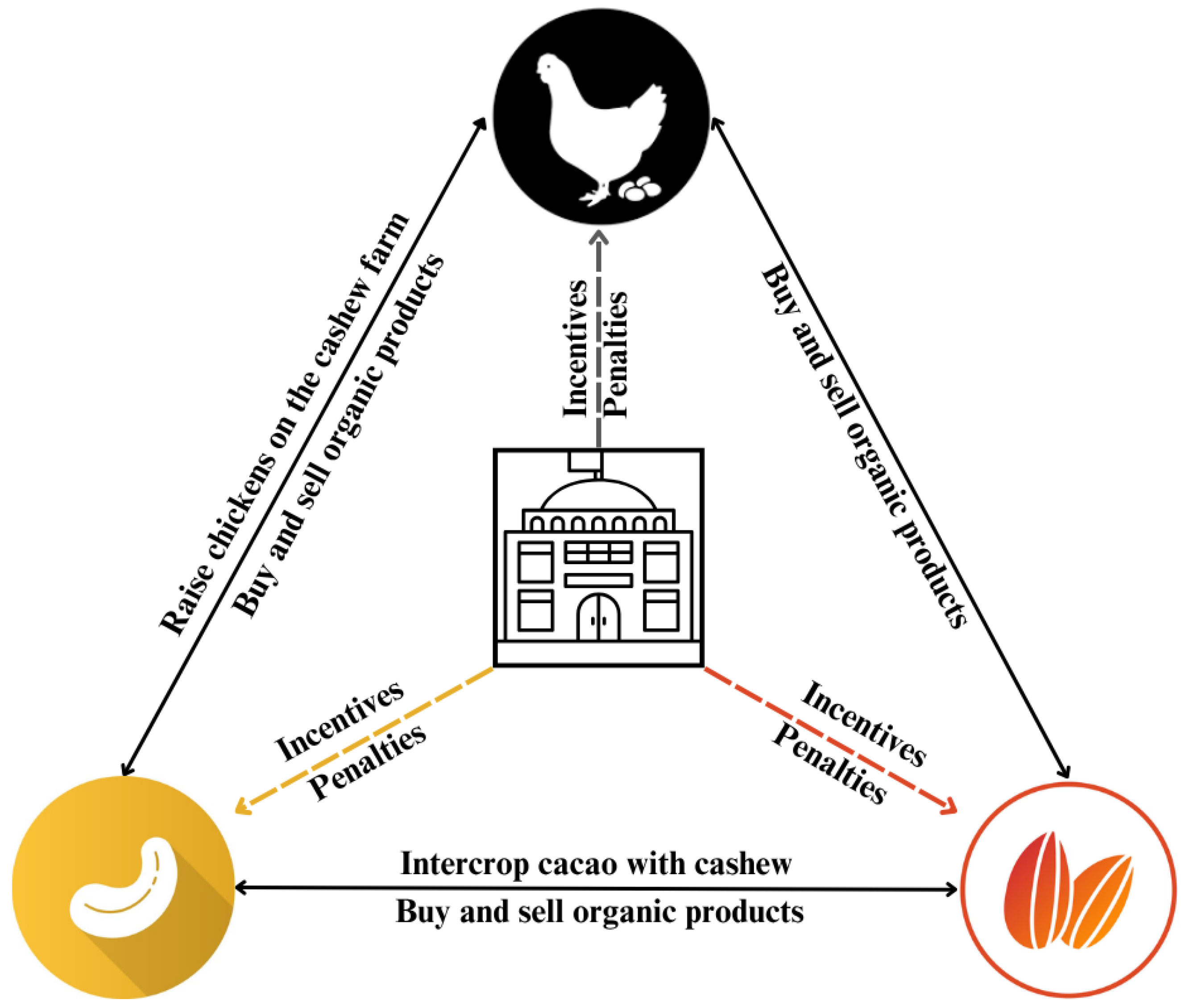
Modeling these interactions as a four-party evolutionary game, we assume that each agent iteratively updates its strategy in response to observed payoffs and the anticipated actions of others. The objective is to identify an Evolutionarily Stable Strategy (ESS) in which cooperation prevails, thereby maximizing both individual and collective returns from resource sharing and waste management. The payoff matrix reflects economic advantages, reputational gains, and the impact of governmental incentives and sanctions. Figure 1 illustrates the four-party evolutionary game model, highlighting the interactions between the local government and the farming families.

3.3. Assumptions and Parameters

Hypothesis 1:
Local Government has two options: “Strict Regulation” or “Lax Regulation” while the remaining three participants choose between “Resource Sharing and Waste Management” or “No Resource Sharing and No Waste Management”. The interplay of these strategic choices influences the evolutionary dynamics of the system, determining the long-term sustainability, and economic viability of cooperative behaviors within the agricultural sector.
Hypothesis 2:
Strict regulation by the Local Government enhances its public image, demonstrating strong governance, a commitment to sustainability, and effective oversight of agricultural cooperatives, thereby bolstering its credibility in promoting resource efficiency and environmental responsibility. In contrast, a lax regulatory approach may lead to non-cooperation among these stakeholders, further damaging the government’s reputation, undermining public trust, and weakening the effectiveness of sustainability policies.
Hypothesis 3:
When the Local Government enforces strict regulations, it provides incentives to encourage CFA, CNFB, and CFC to adopt the “Resource Sharing and Waste Management” strategy. These incentives include financial support for intercropping, organic fertilizer production, and waste recycling, as well as technical assistance through training programs, access to technology, and knowledge-sharing platforms. In contrast, if CFA, CNFB, and CFC choose the “No Resource Sharing and No Waste Management” strategy, the Local Government imposes penalties, including financial fines for inefficient resource use, stricter inspections, and administrative burdens. Through these mechanisms, the Local Government aims to promote sustainable practices and ensure the long-term viability of resource-sharing and waste management strategies.
Hypothesis 4:
Applying the “Resource Sharing and Waste Management” strategy yields significant advantages for CFA, CNFB, and CFC by fostering synergistic collaboration. Through coordinated sharing of inputs and by-products, these households realize improvements in overall productivity, reductions in individual production costs, and enhanced efficiency in the use of land, labor, and organic materials. The incremental profits generated by this cooperative approach create a compelling economic incentive to embrace resource sharing and systematic waste management. Conversely, the decision to forgo resource sharing and waste management results in pronounced economic setbacks. Without collaboration, each household faces elevated production expenses, suboptimal utilization of feedstock and nutrients, and missed opportunities to leverage complementary by-products.
The relevant parameters used in the game model are defined in Table 2.

3.4. Evolutionary Game Profit Matrix

Based on the hypotheses and parameters outlined in the previous section, the four-party evolutionary game profit matrix involving the Local Government, CFA, CNFB, and CFC is constructed, as presented in Table 3 and Table 4.

3.5. Replicator Dynamics Equations

This section employs the replicator dynamics equations from evolutionary game theory to analyze the strategic evolution of Local Government, CFA, CNFB, and CFC.

3.5.1. Local Government

The expected profit for Local Government when adopting the “Strict Regulation” strategy is as follows:
E S G = y z w T O H A I A H B I B H C I C + y 1 z w T O H A I A + R B + S B H C I C + y z 1 w T O H A I A H B I B + R C + S C + y 1 z 1 w T O H A I A + R B + S B + R C + S C + 1 y z w T O + R A + S A H B I B H C I C + 1 y 1 z w T O + R A + S A + R B + S B H C I C + 1 y z 1 w T O + R A + S A H B I B + R C + S C + 1 y 1 z 1 w T O + R A + S A + R B + S B + R C + S C = y z w T O H A I A H B I B H C I C + T O H A I A + R B + S B + R C + S C + T O + R A + S A H B I B + R C + S C + T O + R A + S A + R B + S B H C I C T O + R A + S A H B I B H C I C T O H A I A + R B + S B H C I C T O H A I A H B I B + R C + S C T O + R A + S A + R B + S B + R C + S C   + y z T O + R A + S A + R B + S B + R C + S C + S K A L A K B L B + P C + Q C S + P A + Q A K B L B + P C + Q C S K A L A + P B + Q B + P C + Q C + z w T O + R A + S A + R B + S B + R C + S C + S + P A + Q A K B L B K C L C S + P A + Q A K B L B + P C + Q C S + P A + Q A + P B + Q B K C L C + w y T O + R A + S A + R B + S B + R C + S C + S K A L A + P B + Q B K C L C S K A L A + P B + Q B + P C + Q C S + P A + Q A + P B + Q B K C L C + y T O H A I A + R B + S B + R C + S C T O + R A + S A + R B + S B + R C + S C + z T O + R A + S A H B I B + R C + S C T O + R A + S A + R B + S B + R C + S C + w T O + R A + S A + R B + S B H C I C   T O + R A + S A + R B + S B + R C + S C + T O + R A + S A + R B + S B + R C + S C = y H A + I A + R A + S A z H B + I B + R B + S B w H C + I C + R C + S C + T O + R A + S A + R B + S B + R C + S C
The expected profit for Local Government when adopting the “Lax Regulation” strategy is as follows:
E L G = y z w 0 + y 1 z w G B + y z 1 w G C + y 1 z 1 w G B G C + 1 y z w G A + 1 y 1 z w G A G B + 1 y z 1 w G A G C + 1 y + 1 y 1 z 1 w G A G B G C = y z w 0 + G A G B + G B G C + G C G A G A G B G C G A G B G C + y z G A G B G C + G C G B G C G C G A + z w G A G B G C + G A G C G A G A G B + w y G A G B G C + G B G A G B G B G C + y G B G C G A G B G C + z G C G A G A G B G C + w G A G B G A G B G C + G A G B G C = y G A + z G B + w G C S G A G B G C
The average profit of Local Government is as follows:
E G = x E S G + 1 x E L G
The replicator dynamics equation for Local Government is derived as follows:
F x = d x d t = x E S G E G = x E S G x E S G 1 x E L G = x 1 x E S G E L G = x 1 x y H A + I A + R A + S A z H B + I B + R B + S B w H C + I C + R C + S C + T O + R A + S A + R B + S B + R C + S C y G A z G B w G C + G A + G B + G C = x 1 x y H A + I A + R A + S A + G A z H B + I B + R B + S B + G B w H C + I C + R C + S C + G C + T O + R A + S A + G A + R B + S B + G B + R C + S C + G C

3.5.2. CFA

The expected profit for CFA when adopting the “Resource Sharing and Waste Management” strategy is as follows:
E R A = x z w J A B + Q A B + K A B + Q A C + K A C + H A + I A + x 1 z w J A B Q A B K A B + Q A C + K A C + H A + I A + x z 1 w J A B + Q A B + K A B Q A C K A C + H A + I A + x 1 z 1 w J A B Q A B K A B Q A C K A C + H A + I A + 1 x z w J A B + Q A B + K A B + Q A C + K A C + 1 x 1 z w J A B Q A B K A B + Q A C + K A C + 1 x z 1 w J A B + Q A B + K A B Q A C K A C + 1 x 1 z 1 w J A B Q A B K A B Q A C K A C = x z w J A B + Q A B + K A B + Q A C + K A C + H A + I A + J A B Q A B K A B Q A C K A C + H A + I A + J A B + Q A B + K A B Q A C K A C + J A B Q A B K A B + Q A C + K A C J A B + Q A B + K A B Q A C K A C + H A + I A J A B Q A B K A B + Q A C + K A C + H A + I A J A B + Q A B + K A B + Q A C + K A C J A B Q A B K A B Q A C K A C + x z J A B Q A B K A B Q A C K A C + M A B + N A B + O A B M A C N A C O A C + K A + L A + S A M A B + N A B + O A B M A C N A C O A C H A + S A M A B N A B O A B M A C N A C O A C + K A + L A + S A + z w J A B Q A B K A B Q A C K A C + M A B + N A B + O A B + M A C + N A C + O A C H A + S A M A B N A B O A B + M A C + N A C + O A C H A + S A M A B + N A B + O A B M A C N A C O A C H A + S A + w x J A B Q A B K A B Q A C K A C + M A B N A B O A B + M A C + N A C + O A C + K A + L A + S A M A B N A B O A B + M A C + N A C + O A C H A + S A M A B N A B O A B M A C N A C O A C + K A + L A + S A + x J A B Q A B K A B Q A C K A C + H A + I A J A B Q A B K A B Q A C K A C + z J A B + Q A B + K A B Q A C K A C J A B Q A B K A B Q A C K A C + w J A B Q A B K A B + Q A C + K A C J A B Q A B K A B Q A C K A C + J A B Q A B K A B Q A C K A C = x H A + I A + z 2 J A B + 2 Q A B + 2 K A B + w 2 Q A C + 2 K A C J A B + Q A B + K A B + Q A C + K A C
The expected profit for CFA when adopting the “No Resource Sharing and No Waste Management” strategy is as follows:
E N A = x z w J A B Q A B K A B Q A C K A C R A S A + x 1 z w J A B Q A B K A B Q A C K A C R A S A + x z 1 w J A B Q A B K A B Q A C K A C R A S A + x 1 z 1 w J A B Q A B K A B Q A C K A C R A S A + 1 x z w J A B Q A B K A B Q A C K A C G A + 1 x 1 z w J A B Q A B K A B Q A C K A C G A + 1 x z 1 w J A B Q A B K A B Q A C K A C G A + 1 x 1 z 1 w J A B Q A B K A B Q A C K A C G A = x z w J A B Q A B K A B Q A C K A C R A S A + J A B Q A B K A B Q A C K A C R A S A + J A B Q A B K A B Q A C K A C G A + J A B Q A B K A B Q A C K A C G A J A B Q A B K A B Q A C K A C R A S A J A B Q A B K A B Q A C K A C R A S A J A B Q A B K A B Q A C K A C G A J A B Q A B K A B Q A C K A C G A + x z J A B Q A B K A B Q A C K A C G A + J A B Q A B K A B Q A C K A C R A S A J A B Q A B K A B Q A C K A C G A J A B Q A B K A B Q A C K A C R A S A + z w J A B Q A B K A B Q A C K A C G A + J A B Q A B K A B Q A C K A C R A S A J A B Q A B K A B Q A C K A C G A J A B Q A B K A B Q A C K A C R A S A + w x J A B Q A B K A B Q A C K A C G A + J A B Q A B K A B Q A C K A C R A S A J A B Q A B K A B Q A C K A C G A J A B Q A B K A B Q A C K A C R A S A + x J A B Q A B K A B Q A C K A C R A S A J A B Q A B K A B Q A C K A C G A + z J A B Q A B K A B Q A C K A C G A J A B Q A B K A B Q A C K A C G A + w J A B Q A B K A B Q A C K A C G A J A B Q A B K A B Q A C K A C G A + J A B Q A B K A B Q A C K A C G A = x G A R A S A J A B + Q A B + K A B + Q A C + K A C + G A
The average profit of CFA is as follows:
E A = y E R A + 1 y E N A
The replicator dynamics equation for CFA is derived as follows:
F y = d y d t = y E R A E A = y E R A y E R A 1 y E N A = y 1 y E R A E N A = y 1 y x H A + I A + z 2 J A B + 2 Q A B + 2 K A B + w 2 Q A C + 2 K A C J A B + Q A B + K A B + Q A C + K A C x G A R A S A + J A B + Q A B + K A B + Q A C + K A C + G A = y 1 y x H A + I A + R A + S A G A + z 2 J A B + 2 Q A B + 2 K A B + w 2 Q A C + 2 K A C + G A

3.5.3. CNFB

Similarly, the expected profit for CNFB when adopting the “Resource Sharing and Waste Management” strategy is as follows:
E R B = H B + I B + y 2 J B A + 2 Q B A + 2 K B A + w 2 J B C + 2 Q B C + 2 K B C J B A + Q B A + K B A + J B C + Q B C + K B C
Similarly, the expected profit for CNFB when adopting the “No Resource Sharing and No Waste Management” strategy is as follows:
E N B = x G B R B S B J B A + Q B A + K B A + J B C + Q B C + K B C + G B
The average profit of CNFB is as follows:
E B = z E R B + 1 z E N B
The replicator dynamics equation for CNFB is derived as follows:
F z = d z d t = z E R B E B = z E R B z E R B 1 z E N B = z 1 z E R B E N B = z 1 z x H B + I B + y 2 J B A + 2 Q B A + 2 K B A + w 2 J B C + 2 Q B C + 2 K B C J B A + Q B A + K B A + J B C + Q B C + K B C x G B R B S B + J B A + Q B A + K B A + J B C + Q B C + K B C + G B = z 1 z x H B + I B + R B + S B G B + y 2 J B A + 2 Q B A + 2 K B A + w 2 J B C + 2 Q B C + 2 K B C + G B

3.5.4. CFC

Similarly, the expected profit for CFC when adopting the “Resource Sharing and Waste Management” strategy is as follows:
E R D = x H C + I C + y 2 Q C A + 2 K C A + z 2 J C B + 2 Q C B + 2 K C B Q C A + K C A + J C B + Q C B + K C B
Similarly, the expected profit for CFC when adopting the “No Resource Sharing and No Waste Management” strategy is as follows:
E N D = x G C R C S C Q C A + K C A + J C B + Q C B + K C B + G C
The average profit of CFC is as follows:
E D = w E R D + 1 w E N D
The replicator dynamics equation for CFC is derived as follows:
F w = d w d t = w E R D E D = w E R D w E R D 1 w E N D = w 1 w E R D E N D = w 1 w x H C + I C + y 2 Q C A + 2 K C A + z 2 J C B + 2 Q C B + 2 K C B Q C A + K C A + J C B + Q C B + K C B x G C R C S C + Q C A + K C A + J C B + Q C B + K C B + G C   = w 1 w x H C + I C + R C + S C G C + y 2 Q C A + 2 K C A + z 2 J C B + 2 Q C B + 2 K C B + G C

4. Stability Analysis

According to the method proposed by Friedman, the Evolutionarily Stable Strategy (ESS) of a differential equation system can be identified through the local stability analysis of its Jacobian matrix. From 4 , 8 , 12 , and 16 , a system of replicator dynamics equations is derived as follows:
F x = x 1 x y H A + I A + R A + S A + G A z H B + I B + R B + S B + G B w H C + I C + R C + S C + G C + T O + R A + S A + G A + R B + S B + G B + R C + S C + G C F y = y 1 y x H A + I A + R A + S A G A + z 2 J A B + 2 Q A B + 2 K A B + w 2 Q A C + 2 K A C + G A F z = z 1 z x H B + I B + R B + S B G B + y 2 J B A + 2 Q B A + 2 K B A + w 2 J B C + 2 Q B C + 2 K B C + G B F w = w 1 w x H C + I C + R C + S C G C + y 2 Q C A + 2 K C A + z 2 J C B + 2 Q C B + 2 K C B + G C
Setting F x = F y = F z = F w = 0   yields 16 equilibrium points.
By calculating the partial derivatives of F x ,   F y ,   F z , and F w with respect to x ,   y , z , and w ,   the Jacobian matrix of the replicator dynamic system is derived as follows:
J = F x d x F x d y F y d x F y d y F x d z F x d w F y d z F y d w F z d x F z d y F w d x F w d y F z d z F z d w F w d z F w d w = a 11 a 12 a 21 a 22 a 13 a 14 a 23 a 24 a 31 a 32 a 41 a 42 a 33 a 34 a 43 a 44
where
a 11 = 1 2 x y H A + I A + R A + S A + G A z H B + I B + R B + S B + G B w H C + I C + R C + S C + G C + T O + R A + S A + G A + R B + S B + G B + R C + S C + G C
a 22 = 1 2 y x H A + I A + R A + S A G A + z 2 J A B + 2 Q A B + 2 K A B + w 2 Q A C + 2 K A C + G A
a 33 = 1 2 z x H B + I B + R B + S B G B + y 2 J B A + 2 Q B A + 2 K B A + w 2 J B C + 2 Q B C + 2 K B C + G B
a 44 = 1 2 w x H C + I C + R C + S C G C + y 2 Q C A + 2 K C A + z 2 J C B + 2 Q C B + 2 K C B + G C
Substituting the 16 equilibrium points into this matrix produces the corresponding stability results.
  J =   λ 1   0 0     λ 2   0         0 0         0   0         0 0         0         λ 3 0     0     λ 4  
According to the first Lyapunov theorem, the Jacobian matrix is asymptotically stable when all eigenvalues λ < 0 and unstable when all eigenvalues λ > 0 . If both positive and negative eigenvalues are present, the equilibrium is classified as a saddle point and therefore unstable. The following analysis applies this criterion to evaluate the stability of the four-party replicator dynamic system under two scenarios: when the Local Government adopts a “Strict Regulation” strategy and when it adopts a “Lax Regulation” strategy. This assessment identifies the stable states of the system and clarifies the key determinants shaping the strategic responses of CFA, CNFB, and CFC.

4.1. Stability Under Strict Regulation

When the Local Government adopts the “Strict Regulation” strategy, the eight corresponding equilibrium points are substituted into the Jacobian matrix for stability evaluation. According to Table 5, only one equilibrium point 1,1 , 1,1 is stable.

4.2. Stability Under Lax Regulation

When the Local Government adopts the “Lax Regulation” strategy, the eight corresponding equilibrium points are substituted into the Jacobian matrix for stability evaluation. According to Table 6, only one equilibrium point 0,1 , 1,1 is stable.

5. Simulation Analysis

To assess the impact of key parameters on the trajectory and equilibrium of the four-party evolutionary game, we perform time-series simulations of each stakeholder’s strategy frequencies using MATLAB Online. The simulation protocol tracks changes in strategy adoption over successive iterations, thereby enabling assessment of both dynamic stability and convergence behavior under varying parameter configurations.
For empirical grounding, we select the Southeast region of Vietnam—an area of substantial economic significance in cacao and cashew cultivation—as our illustrative case study. This region encompasses a heterogeneous set of agricultural participants, including smallholder cacao growers, cashew producers, and poultry farmers, alongside municipal authorities tasked with advancing circular-agriculture initiatives and sustainable waste-management policies. The case study selection is further underpinned by access to comprehensive, up-to-date datasets from national industry bodies, namely the Vietnam Coffee and Cocoa Association (VICOFA), the Vietnam Cashew Association (VINACAS), and the Vietnam Poultry Association (VIPA), which furnish critical parameter estimates and serve to validate model outputs.
The assumed parameters are outlined in Table 7 below.

5.1. Impact of Local Government Regulatory Mechanisms

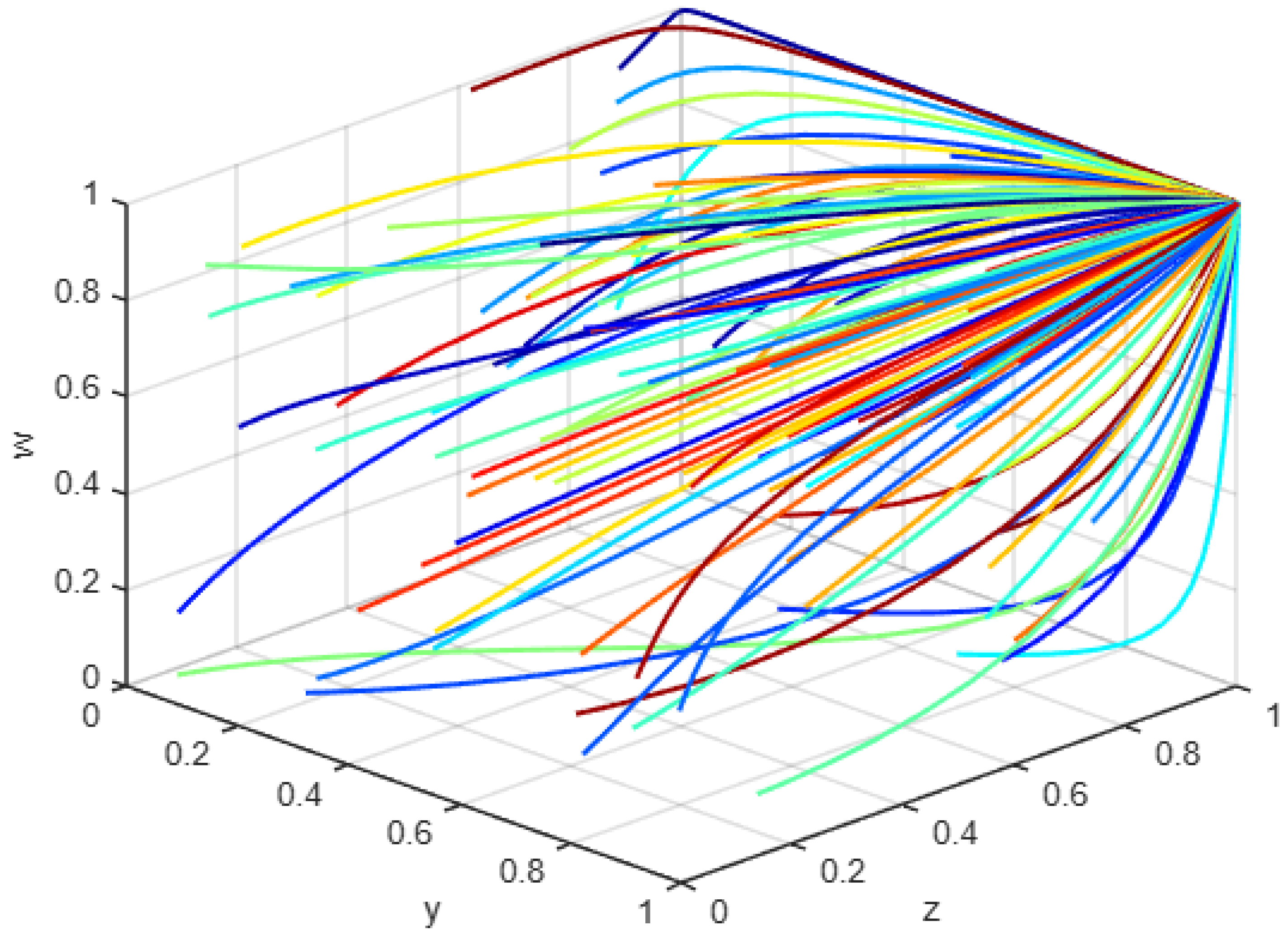
The simulation results in Figure 2 indicate that, even under a lax regulatory approach, the system converges to an evolutionarily stable strategy 1 , 1 , 1 . This equilibrium reflects the continued adoption of the “Resource Sharing and Waste Management” strategy by CFA, CNFB, and CFC, thereby maintaining systemic stability. The persistence of cooperation despite limited regulatory enforcement suggests that intrinsic economic benefits can independently sustain collaboration among stakeholders.
These results underscore the advantages embedded in sharing and circular economy models, where revenues from recycling, by-product utilization, and intercropping provide substantial incentives for voluntary cooperation. However, the absence of a strong regulatory framework introduces risks to long-term stability as market fluctuations and external disruptions may erode cooperative behavior, leading to inefficiencies and adverse environmental outcomes. Accordingly, the establishment of an effective governance structure is essential for ensuring resilience, reinforcing sustainable cooperation, and adapting to evolving socio-economic and environmental conditions.

5.2. Impact of Local Government Reputational Benefits

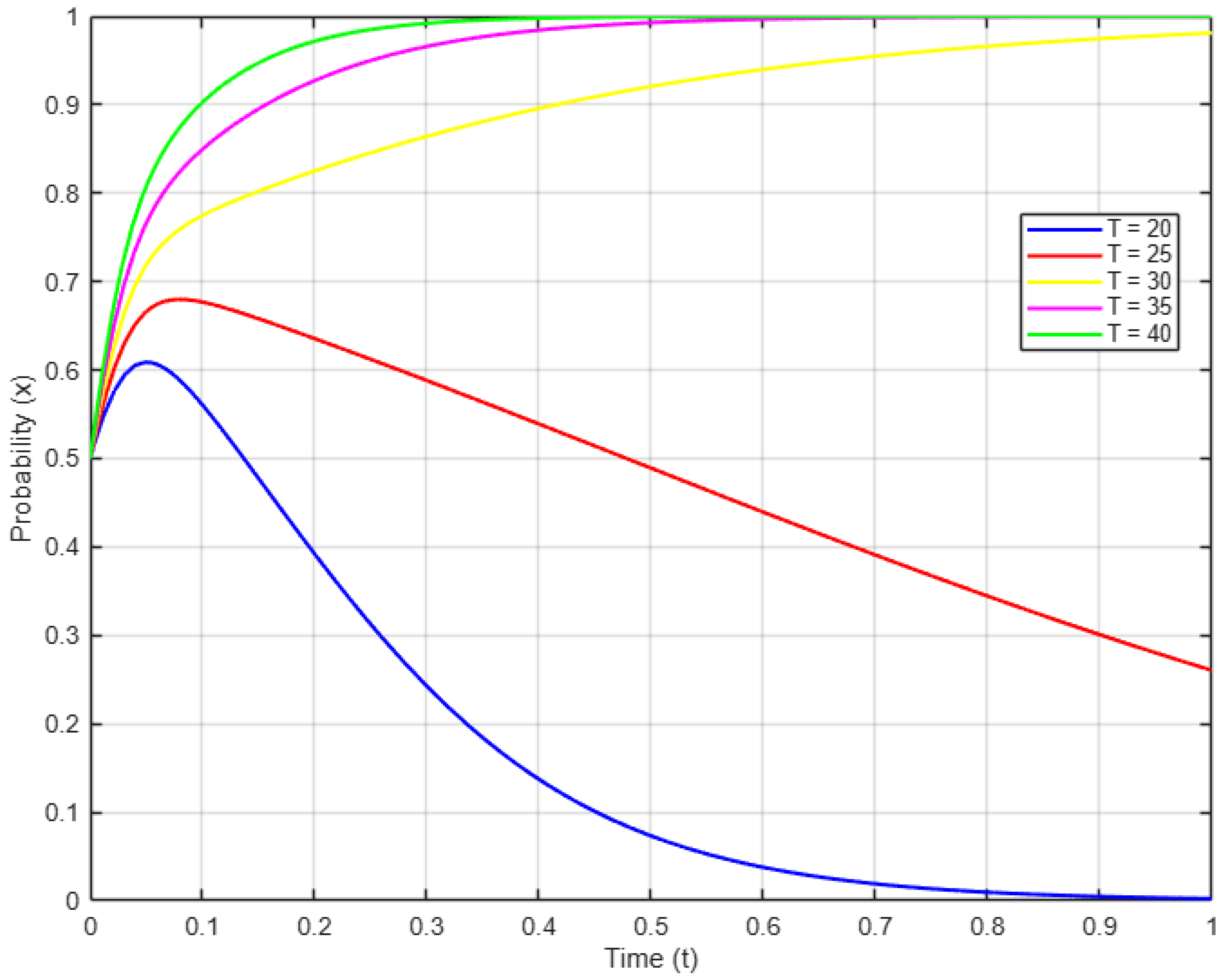
To assess the effect of reputational benefits on the strategic dynamics of all stakeholders, simulations were conducted across five discrete values of the reputational benefit parameter T : 20, 25, 30, 35, and 40. The simulation results are presented in Figure 3.
At lower values of T : 20 and 25, the propensity for strict regulation declines steadily over time. This trend indicates that when reputational rewards are modest, the perceived utility of rigorous enforcement dissipates rapidly, leading the government to default to a more permissive stance. Under these conditions, strict regulatory measures are unsustainable because the non-monetary gains fail to compensate for the administrative costs and implicit burdens of enforcement. In contrast, for moderate-to-high reputational benefit levels T = 30,35,40 , the government’s probability of sustaining strict regulation increases markedly and remains elevated throughout the simulation horizon. These outcomes suggest that sufficiently large reputational incentives create durable motivation for proactive regulatory behavior.
Overall, these results reveal the existence of a critical threshold in reputational incentives: beyond this threshold, the Local Government’s strategic equilibrium shifts decisively in favor of long-term enforcement. This finding underscores the pivotal role of intangible rewards in shaping regulatory policies, particularly in environments where direct financial or policy levers are limited.

5.3. Impact of Local Government Incentives

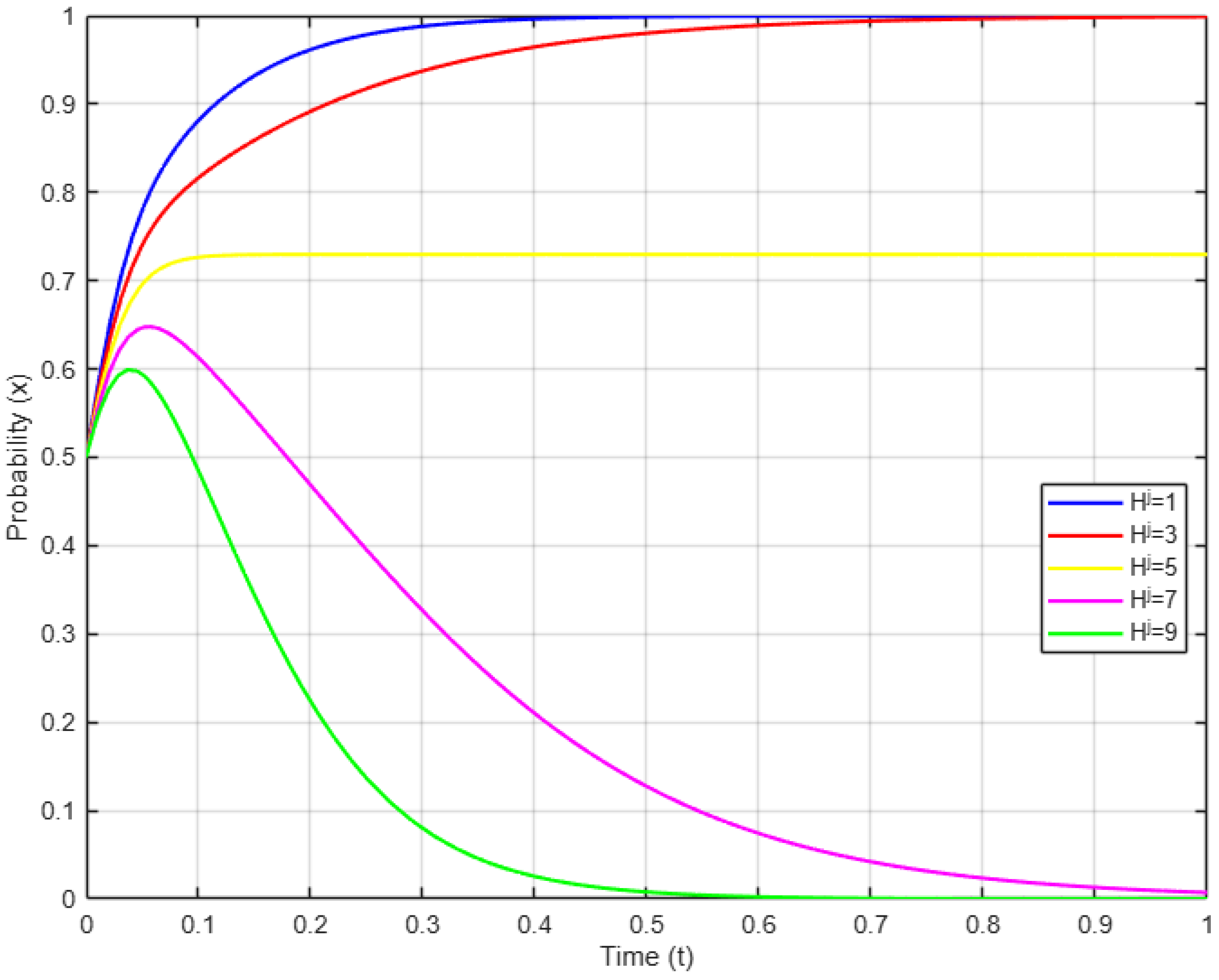
To quantify how variations in the Local Government’s financial and policy incentives alter its regulatory strategy, we simulate the replicator dynamics while varying the incentive parameter H j allocated to each of the three farming households. Five discrete incentive levels are considered: H j = 1, 3, 5, 7, and 9. The simulation results are presented in Figure 4.
The simulation outcomes demonstrate a monotonic relationship between the magnitude of incentives and the timing of regulatory stringency. As H j increases, the onset of strict regulation is postponed. At the critical incentive level H j = 7 , the Local Government never transitions to strict regulation over the simulated horizon, instead maintaining a “Lax Regulation” stance throughout. This behavior indicates that beyond this threshold, the cumulative fiscal commitments required to sustain the farming households outweigh the benefits of strict enforcement, rendering lenient regulation the more cost-effective and sustainable policy choice.
These results identify a threshold incentive level at which the balance between regulatory enforcement and fiscal responsibility decisively shifts. They underscore that the government’s regulatory posture is highly sensitive to its own expenditure commitments and that excessively generous incentives can inhibit the adoption of stringent regulatory measures.

6. Discussion

The results of this paper highlight the potential of the High-Value Mixed Cropping (HMC) model in enhancing agricultural resilience and sustainability in the face of climate change, particularly for low-to-middle-income farming households in rural areas (RAs). This finding aligns with the hypothesis that such models can provide a robust mechanism for adaptation to environmental stresses while promoting food security and economic stability. As the adverse effects of climate change intensify across the Global South, the synergistic implementation of the HMC model can mitigate the vulnerability of smallholder farmers by diversifying income sources, reducing dependency on external inputs, and fostering efficient resource utilization.
Previous studies have demonstrated the substantial economic and ecological benefits of mixed cropping systems, particularly in tropical agricultural settings [26,28,38,39]. This paper supports those findings by confirming that HMC systems not only improve farmer incomes but also strengthen ecological sustainability through practices such as waste valorization and resource recycling. The key contribution of this paper lies in its integration of circular and sharing economy principles into the HMC framework. These principles enable farmers to share resources, reduce waste, and maximize the utility of by-products, thus increasing the economic viability of HMC systems. As seen in the results, waste products from cacao, cashew, and poultry farming can be utilized to create value-added products such as biochar, organic fertilizers, and animal feed. This system of by-product exchange among farmers has the potential to enhance food security while contributing to the broader goals of sustainable development.
However, while the individual components of HMC practices, such as intercropping and livestock integration, have been studied in isolation, the broader, synergistic application of these systems remains underexplored. The current paper fills this gap by focusing on the cooperative dynamics between multiple stakeholders: cacao and cashew farmers, poultry producers, and local governments. The evolutionary game model used here effectively illustrates the importance of government incentives and regulatory frameworks in ensuring the long-term sustainability of these practices. Without sufficient policy support, such as subsidies for resource-sharing infrastructure or penalties for non-compliance with environmental standards, the adoption of HMC systems may be constrained.
While many farmers in Southeast Asia have gained valuable experience with HMC practices, scaling these systems to benefit broader populations will require concerted efforts from national governments, development organizations, and local communities. As emphasized by previous research, the active engagement of stakeholders at all levels, from policymakers to farmers, will be crucial in overcoming barriers related to knowledge gaps, resource access, and market integration.
The following recommendations are proposed to promote the integration and scaling of HMC systems:
  • Integration into National Strategies: It is essential to incorporate the HMC model into national agricultural and food security strategies. This can be achieved by promoting resource-sharing and waste-management frameworks tailored to smallholder farmers, with a focus on enhancing local food systems. Agricultural extension services must be strengthened to provide targeted knowledge, training, and financial support, ensuring that farmers can effectively adopt and sustain these practices.
  • Incremental Implementation: A gradual, step-by-step approach to implementing HMC systems is recommended, starting with small-scale pilot projects that can be expanded over time. This strategy allows for the optimization of cost efficiency, refinement of practices, and the accumulation of empirical data to support future scaling efforts. A well-developed implementation plan, with clear milestones and metrics, will be crucial for the long-term success of HMC systems.
  • Policy Flexibility: Policies should be adaptable to local agricultural practices and socio-economic contexts, allowing farmers to tailor their approach to the specific challenges and opportunities of their region. This flexibility will enhance the likelihood of policy success across a wide range of geographical and cultural settings.
  • Environmental Regulation and Community Initiatives: Effective environmental regulation, combined with robust enforcement mechanisms, is critical for the widespread adoption of HMC practices. Without such measures, the economic incentives for farmers may not be sufficient to drive long-term sustainability. Community-level initiatives, such as farmer cooperatives and local environmental organizations, should be supported to integrate HMC principles into regional development and climate adaptation strategies.

7. Conclusions

This paper has demonstrated the efficacy of the High-Value Mixed Cropping (HMC) model in promoting stakeholder cooperation and enhancing resource utilization within agricultural systems. Nonetheless, several avenues warrant further inquiry. First, investigations into the capacity of HMC systems to yield chemical- and pesticide-free crops could yield significant environmental and public-health benefits. Second, integrating agroecological principles into HMC frameworks may reduce dependency on synthetic inputs while strengthening interdependencies among crops, livestock, and ecosystems. Finally, the systematic evaluation of government incentive structures is needed to identify how fiscal and policy instruments can most effectively underpin the long-term viability and scalability of HMC practices across diverse agroecological regions.
The advancement of circular-economy approaches, coupled with continuous improvements in technology transfer and waste-management infrastructures, will be essential for maximizing resource efficiency and fostering innovation in agricultural practice. Such integrative strategies hold considerable promise for bolstering environmental sustainability and economic resilience among farming communities, particularly in regions like Southeast Vietnam. Scaling HMC systems to address global challenges will require sustained collaboration among governmental agencies, development organizations, and local stakeholders.

Author Contributions

D.N.V.: Conceptualization, formal analysis, methodology, validation, writing—original draft, writing—review and editing; T.L.N.: conceptualization, project administration, validation; M.H.N.T.: conceptualization, project administration, validation; G.K.N.: software, writing—original draft, writing—review and editing; D.B.V.: writing—original draft; N.A.N.: investigation; H.D.N.: conceptualization, validation. All authors have read and agreed to the published version of the manuscript.

Funding

This research received no external funding.

Institutional Review Board Statement

Not applicable.

Informed Consent Statement

Not applicable.

Data Availability Statement

The data is unavailable due to privacy concerns.

Conflicts of Interest

The authors declare no conflicts of interest.

References

  1. Voora, V.; Bermúdez, S.; Larrea, C. Global Market Report: Cocoa; Sustainable Commodities Marketplace Series; The International Institute for Sustainable Development: Winnipeg, MB, Canada, 2019. [Google Scholar]
  2. Clay, K. Fungi and the food of the gods. Nature 2004, 427, 401–402. [Google Scholar] [CrossRef]
  3. Vansynghel, J.; Ocampo-Ariza, C.; Maas, B.; Martin, E.A.; Thomas, E.; Hanf-Dressler, T.; Schumacher, N.; Ulloque-Samatelo, C.; Tscharntke, T.; Steffan-Dewenter, I. Cacao flower visitation: Low pollen deposition, low fruit set and dominance of herbivores. Ecol. Solut. Evid. 2022, 3, e12140. [Google Scholar] [CrossRef]
  4. Danso-Abbeam, G.; Fosu, S.; Ogundeji, A.A. Technical and Resource-Use Efficiencies of Cashew Production in Ghana: Implications on Achieving Sustainable Development Goals. Sci. Afr. 2021, 14, e01003. [Google Scholar] [CrossRef]
  5. Monteiro, F.; Catarino, L.; Batista, D.; Indjai, B.; Duarte, M.C.; Romeiras, M.M. Cashew as a High Agricultural Commodity in West Africa: Insights towards Sustainable Production in Guinea-Bissau. Sustainability 2017, 9, 1666. [Google Scholar] [CrossRef]
  6. Hashmiu, I.; Agbenyega, O.; Dawoe, E. Cash crops and food security: Evidence from smallholder cocoa and cashew farmers in Ghana. Agric. Food Secur. 2022, 11, 12. [Google Scholar] [CrossRef]
  7. Mortimer, R.; Saj, S.; David, C. Supporting and regulating ecosystem services in cacao agroforestry systems. Agrofor. Syst. 2018, 92, 1639–1657. [Google Scholar] [CrossRef]
  8. Tully, K.L.; Ryals, R. Nutrient cycling in agroecosystems: Balancing food and environmental objectives. Agroecol. Sustain. Food Syst. 2017, 41, 761–798. [Google Scholar] [CrossRef]
  9. Malhotra, S.K.; Hubballi, V.N.; Nayak, M.G. Cashew: Production, Processing and Utilization of By-Products; Mallhotra, S.K., Ed.; Directorate of Cashewnut and Cocoa Development: Cochin, India, 2017; 144p. Available online: https://www.researchgate.net/profile/Suresh-Malhotra/publication/316190274_Cashew_Production_Processing_and_Utilization_of_By-Products/links/58f5e153aca27289c21d7d6f/Cashew-Production-Processing-and-Utilization-of-By-Products.pdf (accessed on 2 June 2025).
  10. Delgado-Ospina, J.; Molina-Hernández, J.B.; Chaves-López, C.; Romanazzi, G.; Paparella, A. The Role of Fungi in the Cocoa Production Chain and the Challenge of Climate Change. J. Fungi 2021, 7, 202. [Google Scholar] [CrossRef]
  11. Willey, R.W. A scientific approach to intercropping research. In Proceedings of the International Workshop on Intercropping, ICRISAT, Patancheru, India, 10–13 January 1979; pp. 4–14. [Google Scholar]
  12. Jodha, N.S. Intercropping in traditional farming systems. J. Dev. Stud. 1980, 16, 427–442. [Google Scholar] [CrossRef]
  13. Sarkar, S.; Biswas, T.; Malta, C.M.; Meira, D.; Dutta, A. A coalition formation framework of smallholder farmers in an agricultural cooperative. Expert Syst. Appl. 2023, 221, 119781. [Google Scholar] [CrossRef]
  14. Consedine, M. Farm to All Tables: Understanding How Advocacy Coalitions Influence SNP-Related Policies for Farmers’ Markets. Master’s Thesis, Oregon State University, Corvallis, OR, USA, 2020. [Google Scholar]
  15. Mu, L.; Dawande, M.; Mookerjee, V. Shaping the values of a milk cooperative: Theoretical and practical considerations. Prod. Oper. Manag. 2019, 28, 2259–2278. [Google Scholar] [CrossRef]
  16. Silue, B.K.; Koné, A.W.; Kotaix, A.J.A.; Coulibaly, K.; Aïdara, S.; Chapuis-Lardy, L.; Masse, D. Effects of shade tree legumes on cacao biomass and bean yields after 20 years of intercropping in Ivory Coast. Exp. Agric. 2024, 60, e16. [Google Scholar] [CrossRef]
  17. Ofori, P.A.; Opoku-Agyemang, F.; Owusu-Nketia, S.; Amissah, N.; Notaguchi, M. A new intercropping system for cocoa cultivation using erect cassava. Trop. Agric. Dev. 2023, 67, 54–59. [Google Scholar]
  18. Nursalam, N.; Budiman, K.; Prihantini, C.I.; Hasbiadi, H.; Masitah, M. Efficiency comparison of cacao intercropping farming in Kolaka Regency. Agriekonomika 2021, 10, 183–193. [Google Scholar] [CrossRef]
  19. Carey, A.; Dutter, C.R.; Mbacke, K.; McDaniel, M.D.; Nair, A. Integrating Poultry Improves Soil Health and Vegetable Yield in Organic, Cover-Cropped System. Agric. Ecosyst. Environ. 2025, 382, 109499. [Google Scholar] [CrossRef]
  20. Bist, R.B.; Bist, K.; Poudel, S.; Subedi, D.; Yang, X.; Paneru, B.; Mani, S.; Wang, D.; Chai, L. Sustainable poultry farming practices: A critical review of current strategies and future prospects. Poult. Sci. 2024, 103, 104295. [Google Scholar] [CrossRef]
  21. Rodrigues, T.C.; Leitão, F.O.; Thomé, K.M.; Cappellesso, G. Sharing economy practices in agri-food settlements: Integration of resources, interdependence, and interdefinition. J. Clean. Prod. 2021, 294, 126357. [Google Scholar] [CrossRef]
  22. Boar, A.; Bastida, R.; Marimon, F. A Systematic Literature Review. Relationships Between the Sharing Economy, Sustainability and Sustainable Development Goals. Sustainability 2020, 12, 6744. [Google Scholar] [CrossRef]
  23. Miralles, I.; Dentoni, D.; Pascucci, S. Understanding the organization of sharing economy in agri-food systems: Evidence from alternative food networks in Valencia. Agric. Hum. Values 2017, 34, 833–854. [Google Scholar] [CrossRef]
  24. Ali, J.; Ali, T. Circular economy and agriculture: Mapping scientific productivity, research pattern and future research direction. Environ. Dev. Sustain. 2024, 26, 30063–30108. [Google Scholar] [CrossRef]
  25. Selvan, T.; Panmei, L.; Murasing, K.K.; Guleria, V.; Ramesh, K.R.; Bhardwaj, D.R.; Thakur, C.L.; Kumar, D.; Sharma, P.; Umedsinh, R.D.; et al. Circular economy in agriculture: Unleashing the potential of integrated organic farming for food security and sustainable development. Front. Sustain. Food Syst. 2023, 7, 1170380. [Google Scholar] [CrossRef]
  26. Tokou, B.A.; Coral, C.; Montiel, F.I.; Adou Yao, C.Y.; Sieber, S.; Löhr, K. Diversification strategies to improve cocoa farmers’ household income: The case of Côte d’Ivoire. Front. Sustain. Food Syst. 2025, 9, 1524997. [Google Scholar] [CrossRef]
  27. Himmelstein, J.; Ares, A.; Gallagher, D.; Myers, J. A meta-analysis of intercropping in Africa: Impacts on crop yield, farmer income, and integrated pest management effects. Int. J. Agric. Sustain. 2017, 15, 1–10. [Google Scholar] [CrossRef]
  28. Boadi, S.A.; Bosselmann, A.S.; Owusu, K.; Asare, R.; Olwig, M.F. Household Economics of Cocoa Agroforestry: Costs and Benefits. In Agroforestry as Climate Change Adaptation: The Case of Cocoa Farming in Ghana, 1st ed.; Olwig, M.F., Bosselmann, A.S., Owusu, K., Eds.; Palgrave Macmillan: Cham, Switzerland, 2024; pp. 121–145. [Google Scholar]
  29. Bymolt, R.; Laven, A.; Tyzler, M. Demystifying the Cocoa Sector in Ghana and Côte d’Ivoire; The Royal Tropical Institute (KIT): Amsterdam, The Netherlands, 2018. [Google Scholar]
  30. Fountain, A.C.; Hütz-Adams, F. Cocoa Barometer 2022. Available online: https://voicenetwork.cc/wp-content/uploads/2022/12/Cocoabarometer2022_v1.2.pdf (accessed on 2 June 2025).
  31. Feliciano, D. A review on the contribution of crop diversification to sustainable development goal 1 ”no poverty” in different world regions. Sustain. Dev. 2019, 27, 795–808. [Google Scholar] [CrossRef]
  32. Silva, J.N.; Oliveira, J.C.D.; Martins, Ê.K.L.; Júnior, E.S.N.; Irineu, T.H.S.; Chaves, A.P.; Linhares, A.C.A. Soil fertility evaluation of agricultural areas of cashew community of Catolé Rocha-PB. Bulg. J. Agric. Sci. 2020, 26, 186–191. [Google Scholar]
  33. McQueen, J.P.; Treonis, A.M. Cacao agroforestry in Belize: Effects on soil nematode community structure. Agrofor. Syst. 2020, 94, 1123–1132. [Google Scholar] [CrossRef]
  34. Schmidt, J.E.; Firl, A.; Hamran, H.; Imaniar, N.I.; Crow, T.M.; Forbes, S.J. Impacts of Shade Trees on the Adjacent Cacao Rhizosphere in a Young Diversified Agroforestry System. Agronomy 2022, 12, 195. [Google Scholar] [CrossRef]
  35. Beer, J.; Muschler, R.; Kass, D.; Somarriba, E. Shade Management in Coffee and Cacao Plantations. Agrofor. Syst. 1988, 38, 139–164. [Google Scholar] [CrossRef]
  36. Thomson, A.; Koenig, S.; Bakhtary, H.; Young, K.J. Developing Cocoa Agro-Forestry Systems in Ghana and Côte d’Ivoire; Climate Focus: Washington, DC, USA, 2020. [Google Scholar]
  37. Graefe, S.; Meyer-Sand, L.F.; Chauvette, K.; Abdulai, I.; Jassogne, L.; Vaast, P.; Asare, R. Evaluating Farmers’ Knowledge of Shade Trees in Different Cocoa Agro-Ecological Zones in Ghana. Hum. Ecol. 2017, 45, 321–332. [Google Scholar] [CrossRef]
  38. Korboulewsky, N.; Perez, G.; Chauvat, M. How tree diversity affects soil fauna diversity: A review. Soil Biol. Biochem. 2016, 94, 94–106. [Google Scholar] [CrossRef]
  39. Rousseau, G.X.; Deheuvels, O.; Celentano, D.; Arias, I.R.; Hernández-García, L.M.; Somarriba, E. Shade tree identity rather than diversity influences soil macrofauna in cacao-based agroforestry systems. Pedobiologia 2021, 89, 150770. [Google Scholar] [CrossRef]
  40. Moreira, B.; Gonçalves, A.; Pinto, L.; Prieto, M.A.; Carocho, M.; Caleja, C.; Barros, L. Intercropping Systems: An Opportunity for Environment Conservation Within Nut Production. Agriculture 2024, 14, 1149. [Google Scholar] [CrossRef]
  41. Madsen, I.J.; Parks, J.M.; Friesen, M.L.; Clark, R.E. Increasing biodiversity and land-use efficiency through pea (Pisum sativum)-canola (Brassica napus) intercropping. Front. Soil Sci. 2022, 2, 818862. [Google Scholar] [CrossRef]
  42. Kirsten, J.F.; Dorward, A.R.; Poulton, C.; Vink, N. (Eds.) Institutional Economics Perspectives on African Agricultural Development; International Food Policy Research Institute: Washington, DC, USA, 2009. [Google Scholar]
  43. Tranchina, M.; Reubens, B.; Frey, M.; Mele, M.; Mantino, A. What challenges impede the adoption of agroforestry practices? A global perspective through a systematic literature review. Agrofor. Syst. 2024, 98, 1817–1837. [Google Scholar] [CrossRef]
  44. Himanen, S.J.; Mäkinen, H.; Rimhanen, K.; Savikko, R. Engaging Farmers in Climate Change Adaptation Planning: Assessing Intercropping as a Means to Support Farm Adaptive Capacity. Agriculture 2016, 6, 34. [Google Scholar] [CrossRef]
  45. Burgess, A.J.; Correa Cano, M.E.; Parkes, B. The deployment of intercropping and agroforestry as adaptation to climate change. Crop Environ. 2022, 1, 145–160. [Google Scholar] [CrossRef]
  46. Huss, C.P.; Holmes, K.D.; Blubaugh, C.K. Benefits and Risks of Intercropping for Crop Resilience and Pest Management. J. Econ. Entomol. 2022, 115, 1350–1362. [Google Scholar] [CrossRef]
  47. Campos-Vega, R.; Nieto-Figueroa, K.H.; Oomah, B.D. Cocoa (Theobroma cacao L.) pod husk: Renewable source of bioactive compounds. Trends Food Sci. Technol. 2018, 81, 172–184. [Google Scholar]
  48. Schneider, M.W.; Goldman, C.; Shao, E.; Yang, S. Mapping Cocoa and Assessing Deforestation Risk for the Cocoa Sector in Côte d’Ivoire and Ghana; World Resources Institute: Washinton, DC, USA, 2023. [Google Scholar]
  49. Kilama, G.; Lating, P.O.; Byaruhanga, J.; Biira, S. Quantification and characterization of cocoa pod husks for electricity generation in Uganda. Energy Sustain. Soc. 2019, 9, 22. [Google Scholar] [CrossRef]
  50. Prommajak, T.; Leksawasdi, N.; Rattanapanone, N. Biotechnological valorization of cashew apple: A review. Chiang Mai Univ. J. Nat. Sci. 2014, 13, 159–178. [Google Scholar] [CrossRef]
  51. Esparza, I.; Jiménez-Moreno, N.; Bimbela, F.; Ancín-Azpilicueta, C.; Gandía, L.M. Fruit and vegetable waste management: Conventional and emerging approaches. J. Environ. Manag. 2020, 265, 110510. [Google Scholar] [CrossRef]
  52. Directive 2008/98/EC of the European Parliament and of the Council of 19 November 2008 on Waste and Repealing Certain Directives (Text with EEA Relevance). Available online: https://eur-lex.europa.eu/legal-content/EN/TXT/PDF/?uri=CELEX:32008L0098 (accessed on 4 June 2025).
  53. Gómez, M.; Martinez, M.M. Fruit and vegetable by-products as novel ingredients to improve the nutritional quality of baked goods. Crit. Rev. Food Sci. Nutr. 2018, 58, 2119–2135. [Google Scholar] [CrossRef]
  54. Quiles, A.; Campbell, G.; Struck, S.; Rohm, H.; Hernando, I. Fiber from fruit pomace: A review of applications in cereal-based products. Food Rev. Int. 2018, 34, 162–181. [Google Scholar] [CrossRef]
  55. Santos, D.; da Silva, J.A.L.; Pintado, M. Fruit and vegetable by-products’ flours as ingredients: A review on production process, health benefits, and technological functionalities. Food Sci. Technol. 2022, 154, 112707. [Google Scholar] [CrossRef]
  56. Mbasa, W.V.; Kapinga, F.A.; Nene, W.A.; Kidunda, B.R.; Kabanza, A.K.; Ndibanya, K.N.; Majune, D.J.; Bwaize, H.M.; Merengo, M.J.; Lilai, S.A. Influence of cashew apple utilization on soil nutrient replenishment and performance of cashew seedlings. J. Plant Nutr. 2023, 47, 595–614. [Google Scholar] [CrossRef]
  57. Wollni, M.; Zeller, M. Do farmers benefit from participating in specialty markets and cooperatives? The case of coffee marketing in Costa Rica. Agric. Econ. 2007, 37, 243–248. [Google Scholar] [CrossRef]
  58. Arnould, E.J.; Plastina, A.; Ball, D. Market Disintermediation and Producer Value Capture: The Case of Fair Trade Coffee inNicaragua, Peru, and Guatemala. Product and Market Development for Subsistence Marketplaces. Adv. Int. Manag. 2007, 20, 319–340. [Google Scholar]
  59. Nwankwo, U.M.; Peters, K.J.; Bokelmann, W. Can cooperative membership and participation affect adoption decisions? Issues for sustainable biotechnology dissemination. AgBioForum 2009, 12, 437–451. [Google Scholar]
  60. Liverpool-Tasie, L.S.; Kuku, O.; Ajibola, A. A Review of Literature on Agricultural Productivity, Social Capital and Food Security in Nigeria; Working Paper No. 21; Nigeria Strategy Support Program (NSSP): Washington, DC, USA, 2011; 53p. [Google Scholar]
  61. Mbokazi, N.; Maharaj, P. Agricultural cooperatives as a means of promoting local economic development in a township in South Africa. S. Afr. Geogr. J. 2024, 107, 422–440. [Google Scholar] [CrossRef]
  62. Sun, X.; Ma, Y. Sharing and Co-Creating Value: Innovation in Platform-Based Agricultural Service Models Driven by Service Demand Collaboration—A Case Study of the JN Life. Sustainability 2025, 17, 1215. [Google Scholar] [CrossRef]
  63. Ruf, F.; Kla, A.G.; Dja, K.; Kiendré, J. Chicken Manure in the Cocoa Plantations of Cote d’Ivoire. An Agroecological and Social Revolution, a ‘Frugal’ Village Innovation. 2015. Available online: https://www.inter-reseaux.org/wp-content/uploads/ruf_chicken_manure_in_the_cocoa_plantations_of_cote_d_ivoire.pdf (accessed on 31 July 2025).
  64. World Resources Institute. The Hidden Benefits of Cacao Waste. 2023. Available online: https://www.wri.org/insights/hidden-benefits-cacao-waste (accessed on 31 July 2025).
  65. Mael, S.H. Cocoa pod husk meal as a feed ingredient for livestock. Food Energy Secur. 2024, 13, e70003. [Google Scholar] [CrossRef]
Figure 1. Interaction diagram of four parties.
Sustainability 17 07611 g001
Figure 2. The evolution of Local Government regulatory strategies.
Sustainability 17 07611 g002
Figure 3. Strategic evolution of Local Government under varying reputational benefit scenarios.
Sustainability 17 07611 g003
Figure 4. Strategic evolution of Local Government under varying incentive scenarios.
Sustainability 17 07611 g004
Table 1. Research gaps.
Research AreaKey StudiesFocusGap
Farmer CoalitionsSarkar et al. [13],
Consedine [14],
Mu et al. [15]
Cooperative participation, productivity, and market access.Limited focus on coalitions integrating multiple crops and livestock with sharing and circular economy principles.
Cacao IntercroppingSilue et al. [16],
Ofori et al. [17],
Nursalam et al. [18]
Economic and ecological benefits of intercropping.Lack of integration with livestock and cooperative frameworks in the context of sharing and circular economies.
Poultry IntegrationCarey et al. [19],
Bist et al. [20]
Use of poultry in integrated farming systems.Limited exploration of poultry integration in cacao–cashew coalitions.
Sharing Economy in AgricultureRodrigues et al. [21],
Boar et al. [22],
Miralles et al. [23]
Resource sharing and collaborative models.Limited application to high-value crop–livestock systems with circular economy principles.
Circular Economy in AgricultureAli & Ali [24],
Selvan et al. [25]
Waste valorization and resource recycling.Lack of focus on integrated crop–livestock coalitions with sharing economy principles.
Table 2. Parameters and descriptions.
ParameterDescription
Local Government
x The probability of Local Government choosing the “Strict Regulation” strategy
T Reputational benefits for Local Government when choosing the “Strict Regulation” strategy
O Additional costs incurred by Local Governments in implementing support policies
G j
j = A , B , C
Reputational risks when regulations is lax and parties choose the “No Resource Sharing and No Waste Management” strategy
H j
j = A , B , C
Incentives from Local Government when parties choose the “Resource Sharing” strategy
I j
j = A , B , C
Incentives from Local Government when parties choose the “Waste Management” strategy
R j
j = A , B , C
Penalties by Local Government when parties choose the “No Resource Sharing” strategy
S j
j = A , B , C
Penalties by Local Government when parties choose the “No Waste Management” strategy
CFA
y The probability of CFA choosing the “Resource Sharing and Waste Management” strategy
J A B Additional profit for CFA intercropping cacao with cashew of CNFB
Q A B Additional profit for CFA selling organic fertilizer and biochar made from cacao by-products to CNFB
K A B Additional profit for CFA buying low-cost organic fertilizer and biological products made from cashew by-products of CNFB
Q A C Additional profit for CFA selling animal feed made from cacao by-products to CFC
K A C Additional profit for CFA buying low-cost organic fertilizer composted from chicken manure of CFC
CNFB
z The probability of CNFB choosing the “Resource Sharing and Waste Management” strategy
J B A Additional profit for CNFB intercropping cashew with cacao of CFA
Q B A Additional profit for CNFB selling organic fertilizer and biological products made from cashew by-products to CFA
K B A Additional profit for CNFB buying low-cost organic fertilizer and biochar made from cacao by-products of CFA
J B C Additional profit for CNFB raising chickens of CFC on the cashew farm
Q B C Additional profit for CNFB selling animal feed made from cashew by-products to CFC
K B C Additional profit for CNFB buying low-cost organic fertilizer composted from chicken manure of CFC
CFC
w The probability of CFC choosing the “Resource Sharing and Waste Management” strategy
Q C A Additional profit for CFC selling organic fertilizer composted from chicken manure to CFA
K C A Additional profit for CFC buying low-cost animal feed made from cacao by-products of CFA
J C B Additional profit for CFC raising chickens on the cashew farm of CNFB
Q C B Additional profit for CFC selling organic fertilizer composted from chicken manure to CNFB
K C B Additional profit for CFC buying low-cost animal feed made from cashew by-products of CNFB
Table 3. Profit matrix for the four-party evolutionary game under strict regulation by the Local Government.
Local Government (Strict Regulation)
CB
A
Resource Sharing and Waste ManagementNo Resource Sharing and No Waste Management
Resource Sharing and Waste ManagementResource Sharing and Waste Management T O H A I A H B I B H C I C J A B + Q A B + K A B + Q A C + K A C + H A + I A J B A + Q B A + K B A + J B C + Q B C + K B C + H B + I B Q C A + K C A + J C B + Q C B + K C B + H C + I C T O H A I A + R B + S B H C I C J A B Q A B K A B + Q A C + K A C + H A + I A J B A Q B A K B A J B C Q B C K B C R B S B Q C A + K C A J C B Q C B K C B + H C + I C
No Resource Sharing and No Waste Management T O + R A + S A H B I B H C I C J A B Q A B K A B Q A C K A C R A S A J B A Q B A K B A + J B C + Q B C + K B C + H B + I B Q C A K C A + J C B + Q C B + K C B + H C + I C T O + R A + S A + R B + S B H C I C J A B Q A B K A B Q A C K A C R A S A J B A Q B A K B A J B C Q B C K B C R B S B Q C A K C A J C B Q C B K C B + H C + I C
No Resource Sharing and No Waste ManagementResource Sharing and Waste Management T O H A I A H B I B + R C + S C J A B + Q A B + K A B Q A C K A C + H A + I A J B A + Q B A + K B A J B C Q B C K B C + H B + I B Q C A K C A J C B Q C B K C B R C S C T O H A I A + R B + S B + R C + S C J A B Q A B K A B Q A C K A C + H A + I A J B A Q B A K B A J B C Q B C K B C R B S B Q C A K C A J C B Q C B K C B R C S C
No Resource Sharing and No Waste Management T O + R A + S A H B I B + R C + S C J A B Q A B K A B Q A C K A C R A S A J B A Q B A K B A J B C Q B C K B C + H B + I B Q C A K C A J C B Q C B K C B R C S C T O + R A + S A + R B + S B + R C + S C J A B Q A B K A B Q A C K A C R A S A J B A Q B A K B A J B C Q B C K B C R B S B Q C A K C A J C B Q C B K C B R C S C
Table 4. Profit matrix for the four-party evolutionary game under lax regulation by the Local Government.
Local Government (Lax Regulation)
CB
A
Resource Sharing and Waste ManagementNo Resource Sharing and No Waste Management
Resource Sharing and Waste ManagementResource Sharing and Waste Management 0
J A B + Q A B + K A B + Q A C + K A C J B A + Q B A + K B A + J B C + Q B C + K B C Q C A + K C A + J C B + Q C B + K C B
G B
J A B Q A B K A B + Q A C + K A C J B A Q B A K B A J B C Q B C K B C G B Q C A + K C A J C B Q C B K C B
No Resource Sharing and No Waste Management G A
J A B Q A B K A B Q A C K A C G A J B A Q B A K B A + J B C + Q B C + K B C Q C A K C A + J C B + Q C B + K C B
G A G B
J A B Q A B K A B Q A C K A C G A J B A Q B A K B A J B C Q B C K B C G B Q C A K C A J C B Q C B K C B
No Resource Sharing and No Waste ManagementResource Sharing and Waste Management G C
J A B + Q A B + K A B Q A C K A C J B A + Q B A + K B A J B C Q B C K B C Q C A K C A J C B Q C B K C B G C
G B G C
J A B Q A B K A B Q A C K A C J B A Q B A K B A J B C Q B C K B C G B Q C A K C A J C B Q C B K C B G C
No Resource Sharing and No Waste Management G A G C
J A B Q A B K A B Q A C K A C G A J B A Q B A K B A J B C Q B C K B C Q C A K C A J C B Q C B K C B G C
G A G B G C
J A B Q A B K A B Q A C K A C G A J B A Q B A K B A J B C Q B C K B C G B Q C A K C A J C B Q C B K C B R C G C
Table 5. Eigenvalues of the Jacobian matrix under the “Strict Regulation” strategy.
Equilibrium PointEigenvaluesStability
1,0 , 0,0   λ 1 = T + O R A S A G A R B S B G B R C S C G C
λ 2 = H A + I A + R A + S A > 0
λ 3 = H B + I B + R B + S B > 0
λ 4 = H C + I C + R C + S C > 0
Unstable
1,1 , 0,0 λ 1 = T + O + H A + I A R B S B G B R C S C G C
λ 2 = H A I A R A S A
λ 3 = H B + I B + R B + S B + 2 J B A + 2 Q B A + 2 K B A > 0
λ 4 = H C + I C + R C + S C + 2 Q C A + 2 K C A > 0
Unstable
1,0 , 1,0 λ 1 = T + O R A S A G A + H B + I B R C S C G C
λ 2 = H A + I A + R A + S A + 2 J A B + 2 Q A B + 2 K A B > 0
λ 3 = H B I B R B S B
λ 4 = H C + I C + R C + S C + 2 J C B + 2 Q C B + 2 K C B > 0
Unstable
1,0 , 0,1 λ 1 = T + O R A S A G A R B S B G B + H C + I C
λ 2 = H A + I A + R A + S A + 2 Q A C + 2 K A C > 0
λ 3 = H B + I B + R B + S B + 2 J B C + 2 Q B C + 2 K B C > 0
λ 4 = H C I C R C S C
Unstable
1,0 , 1,1 λ 1 = T + O R A S A G A + H B + I B + H C + I C
λ 2 = H A + I A + R A + S A + 2 J A B + 2 Q A B + 2 K A B + 2 Q A C + 2 K A C > 0
λ 3 = H B I B R B S B 2 J B C 2 Q B C 2 K B C
λ 4 = H C I C R C S C 2 J C B 2 Q C B 2 K C B
Unstable
1,1 , 0,1 λ 1 = T + O + H A + I A R B S B G B + H C + I C
λ 2 = H A I A R A S A 2 Q A C 2 K A C
λ 3 = H B + I B + R B + S B + 2 J B A + 2 Q B A + 2 K B A + 2 J B C + 2 Q B C + 2 K B C > 0
λ 4 = H C I C R C S C 2 Q C A 2 K C A
Unstable
1,1 , 1,0 λ 1 = T + O + H A + I A + H B + I B R C S C G C
λ 2 = H A I A R A S A 2 J A B 2 Q A B 2 K A B
λ 3 = H B I B R B S B 2 J B A 2 Q B A 2 K B A
λ 4 = H C + I C + R C + S C + 2 Q C A + 2 K C A + 2 J C B + 2 Q C B + 2 K C B > 0
Unstable
1,1 , 1,1 λ 1 = T + O + H A + I A + H B + I B + H C + I C
λ 2 = H A I A R A S A 2 J A B 2 Q A B 2 K A B 2 Q A C 2 K A C
λ 3 = H B I B R B S B 2 J B A 2 Q B A 2 K B A 2 J B C 2 Q B C 2 K B C
λ 4 = H C I C R C S C 2 Q C A 2 K C A 2 J C B 2 Q C B 2 K C B
ESS
if T + O + H A + I A
+ H B + I B + H C + I C < 0
Table 6. Eigenvalues of the Jacobian matrix under the “Lax Regulation” strategy.
Equilibrium PointEigenvaluesStability
0,0 , 0,0   λ 1 = T O + R A + S A + G A + R B + S B + G B + R C + S C + G C
λ 2 = G A > 0
λ 3 = G B > 0
λ 4 = G C > 0
Unstable
0,1 , 0,0 λ 1 = T O H A I A + R B + S B + G B + R C + S C + G C
λ 2 = G A
λ 3 = 2 J B A + 2 Q B A + 2 K B A + G B > 0
λ 4 = 2 Q C A + 2 K C A + G C > 0
Unstable
0,0 , 1,0 λ 1 = T O + R A + S A + G A H B I B + R C + S C + G C
λ 2 = 2 J A B + 2 Q A B + 2 K A B + G A > 0
λ 3 = G B
λ 4 = 2 J C B + 2 Q C B + 2 K C B + G C > 0
Unstable
0,0 , 0,1 λ 1 = T O + R A + S A + G A + R B + S B + G B H C I C
λ 2 = 2 Q A C + 2 K A C + G A > 0
λ 3 = 2 J B C + 2 Q B C + 2 K B C + G B > 0
λ 4 = G C
Unstable
0,0 , 1,1 λ 1 = T O + R A + S A + G A H B I B H C I C
λ 2 = 2 J A B + 2 Q A B + 2 K A B + 2 Q A C + 2 K A C + G A > 0
λ 3 = 2 J B C 2 Q B C 2 K B C G B
λ 4 = 2 J C B 2 Q C B 2 K C B G C
Unstable
0,1 , 0,1 λ 1 = T O H A I A + R B + S B + G B H C I C
λ 2 = 2 Q A C 2 K A C G A
λ 3 = 2 J B A + 2 Q B A + 2 K B A + 2 J B C + 2 Q B C + 2 K B C + G B > 0
λ 4 = 2 Q C A 2 K C A G C
Unstable
0,1 , 1,0 λ 1 = T O H A I A H B I B + R C + S C + G C
λ 2 = 2 J A B 2 Q A B 2 K A B G A
λ 3 = 2 J B A 2 Q B A 2 K B A G B
λ 4 = 2 Q C A + 2 K C A + 2 J C B + 2 Q C B + 2 K C B + G C > 0
Unstable
0,1 , 1,1 λ 1 = T O H A I A H B I B H C I C
λ 2 = H A I A R A S A 2 J A B 2 Q A B 2 K A B 2 Q A C 2 K A C
λ 3 = H B I B R B S B 2 J B A 2 Q B A 2 K B A 2 J B C 2 Q B C 2 K B C
λ 4 = H C I C R C S C 2 Q C A 2 K C A 2 J C B 2 Q C B 2 K C B
ESS
if T O H A I A
H B I B H C I C < 0
Table 7. Model parameter settings.
Local GovernmentCFACNFBCFC
x = 0.5 y = 0.5 z = 0.5 w = 0.5
T = 30 J A B = 6 J B A = 6 Q C A = 3
O = 3 Q A B = 3 Q B A = 3 K C A = 3
G A , G B , G C = 5 K A B = 3 K B A = 3 J C B = 6
H A , H B , H C = 4 Q A C = 3 J B C = 6 Q C B = 3
I A , I B , I C = 4 K A C = 3 Q B C = 3 K C B = 3
R A , R B , R C = 2 K B C = 3
S A , S B , S C = 2
Disclaimer/Publisher’s Note: The statements, opinions and data contained in all publications are solely those of the individual author(s) and contributor(s) and not of MDPI and/or the editor(s). MDPI and/or the editor(s) disclaim responsibility for any injury to people or property resulting from any ideas, methods, instructions or products referred to in the content.