Article

Evaluating the Performance of a Wastewater Treatment Plant of a Dairy Facility in Southern Minas Gerais, Brazil

by
Juan Pablo Pereira Lima
and
André Aguiar
*
Institute of Natural Resources, Federal University of Itajubá, Av. Benedito Pereira dos Santos, 1303, Itajubá 37500-903, MG, Brazil
*
Author to whom correspondence should be addressed.
Sustainability 2025, 17(17), 7597; https://doi.org/10.3390/su17177597
Submission received: 6 July 2025 / Revised: 4 August 2025 / Accepted: 20 August 2025 / Published: 22 August 2025

Abstract

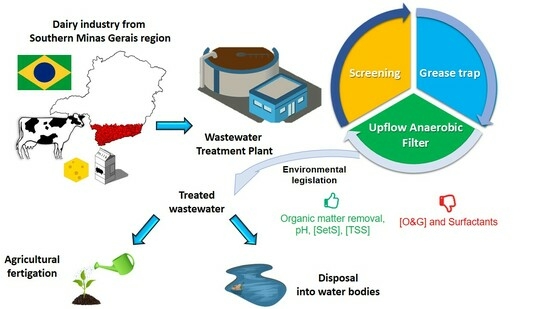
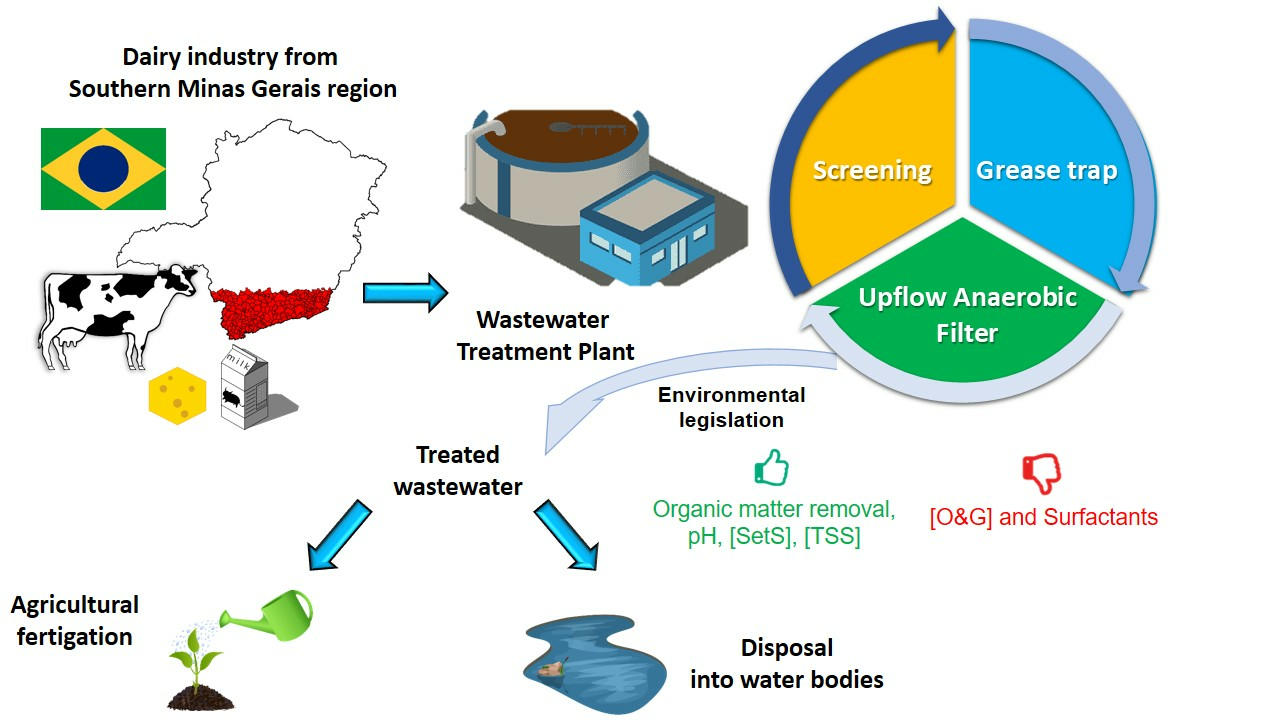
Dairy wastewater is highly polluting and requires treatment before being discharged into receiving surface waters or destined for reuse. This study aimed to evaluate the performance of a wastewater treatment plant (WWTP) at a dairy facility, which includes the following treatment stages: screening, grease trap, and an upflow anaerobic filter (UAF). Monitoring data from a WWTP at a dairy situated in the southern region of Minas Gerais, Brazil, were assessed based on pollutant removal efficiency in accordance with Brazilian environmental regulations. The results showed that the WWTP achieved average removal efficiencies of 96.2% for COD and 97.1% for BOD5. The BOD5/COD ratio of raw and treated wastewater averaged 0.46 and 0.30, respectively, indicating preferential removal of the biodegradable organic fraction. The treated wastewater complied with legal standards for pH, settleable solids, and total suspended solids. However, at least one sample did not meet regulatory limits for discharge into water bodies regarding surfactants and oils & greases. Strong linear correlations (R2~0.8) between COD and BOD5 data were observed for both raw and treated wastewater. While the treated wastewater was not suitable for use in the facility’s wood-fired boiler, it may be reused for agricultural irrigation.

Graphical Abstract

1. Introduction

Brazil is one of the world’s largest producers of milk and dairy products, having processed 25.13 billion liters in 2024. In the same year, the state of Minas Gerais remained the leading producer of raw milk, accounting for around 25% of national production [1]. The country has numerous industries that process milk for direct commercialization or conversion into various products. In cheese production, when milk is enzymatically coagulated by rennin to precipitate casein, whey is generated, which represents 90% of the mass of raw milk [2]. Although disposal without any treatment still occurs [3], many Brazilian industries reuse whey as a raw material for other products or use it directly as animal feed [4]. In addition to whey, wastewater from equipment cleaning, floor washing, and truck sanitation also contributes to the composition of dairy industry wastewater [5].
The volume of dairy wastewater is approximately 2.5 times greater than the volume of processed milk [5]. If discharged into receiving water bodies without adequate treatment, the biodegradation of organic matter contained in the wastewater would consume dissolved oxygen, endangering aquatic life. Due to their low density and tendency to accumulate on water surfaces, fatty substances in dairy wastewater hinder oxygen diffusion and sunlight penetration necessary for photosynthesis [6]. The high nutrient content, particularly nitrogen and phosphorus, also poses a risk of eutrophication [7,8]. Therefore, removing these and other pollutants in dairy industry wastewater is essential to mitigate environmental impacts.
In Brazil, wastewater treatment must comply with standards established by Resolution No. 430/2011 of the National Environmental Council (CONAMA) [9]. The state of Minas Gerais enforces more restrictive regulations. Until the end of 2022, industries in the state had to follow Joint Normative Deliberation No. 1/2008 of the State Councils for Environmental Policy (COPAM) and Water Resources (CERH) [10]. A new regulation for wastewater discharge into receiving water bodies recently took effect in the state [11]. Additionally, effluent discharge into the public sewage system is permitted in Minas Gerais, provided it meets the criteria of the Non-Domestic Effluent Reception Program (PRECEND) by the Minas Gerais Sanitation Company—COPASA [12].
Biochemical oxygen demand (BOD), chemical oxygen demand (COD), pH, total suspended solids (TSS), settleable solids (SetS), and oils and greases (O&G) are the most commonly used parameters to assess the performance of WWTPs treating dairy wastewater [4]. While BOD reflects the concentration of biodegradable organic matter, COD includes both biodegradable and non-biodegradable fractions. Although BOD is commonly used in WWTP design, it requires at least five days for measurement (BOD5), whereas COD can be determined in up to three hours [13]. Therefore, many studies assess linear correlation between BOD5 and COD to estimate the former based on the latter, enabling quicker adjustments to treatment processes and therefore avoiding the discharge of biologically unstable wastewater [14,15,16,17].
The treatment of dairy industry wastewater generally involves initial physical processes (e.g., screen, grease trap and flotation) aimed at removing suspended solids and fatty substances, followed by biological processes (e.g., activated sludge system and anaerobic lagoon, followed by aerobic or facultative lagoon) for the degradation of dissolved and biodegradable organic pollutants [4]. Given the high fatty substance content in dairy wastewater, processes that remove them before biological treatment are typically employed [4]. This preliminary removal is crucial as lipids are degraded more slowly in bioreactors than lactose and proteins. High lipid concentrations in the fixed bed of an upflow anaerobic filter (UAF) inhibit acetogenic bacteria, reduce biomass distribution between support surfaces and void spaces, and produce thinner biofilms. Accumulated biomass and lipids can clog the bed and impair biogas dissipation. Additionally, lipid hydrolysis in the reactor lowers pH levels, inhibiting methanogenic bacteria and reducing organic matter removal efficiency [18]. Recently, Ribeiro and Aguiar [17] found good compliance with discharge standards in a WWTP with dual grease removal stages (grease trap and flotation) followed by a UAF.
A key advantage of grease traps is that they operate without energy input, potentially preceding or making flotation nonrequired, which uses air bubbles to lift and remove grease and solids. If the dairy WWTP studied by Ribeiro and Aguiar [17] lacked a flotation unit, its grease trap would need to sufficiently reduce fatty pollutants to ensure UAF performance, whose main function is removing dissolved solids (lactose and proteins). Since some WWTPs in Minas Gerais use only a grease trap before biological treatment [4], assessing whether they also meet discharge standards is relevant. In addition to Ribeiro and Aguiar [17], several recent studies have evaluated WWTP performance regarding industrial wastewater discharge standards [19,20,21] and municipal sewage [16,22,23,24,25]. These assessments are important for understanding the pollution risks posed by inadequately treated wastewater.
The present study aims to analyze raw and treated wastewater characterization data from a dairy situated in southern Minas Gerais, Brazil. The dairy’s WWTP includes physical–chemical removal of suspended solids and grease via screening and a grease trap, respectively, followed by an equalization tank that ensures a consistent pollutant load for organic matter biodegradation in a UAF. Recent data on BOD5, COD, pH, TSS, SetS, and O&G collected over three years were analyzed to assess compliance with Brazilian environmental agencies. Since the dairy discharges treated wastewater into the municipal sewage system, the effluent was also evaluated under the applicable legislation for such discharge. In addition to WWTP performance evaluation, the study discusses the potential reuse of treated wastewater (e.g., irrigation and boiler feedwater) and investigates linear correlations allowing estimation of BOD5 from COD data. The findings aim to provide practical insights into both the applicability and limitations of this WWTP configuration in the dairy industry.

2. Materials and Methods

2.1. Some Data About the Dairy Unit Under Study

The present study used data on raw and treated wastewater from a dairy situated in a municipality in southern Minas Gerais, Brazil. The identity and location of the company were withheld per its request. According to its environmental licensing document, the dairy has a milk processing capacity of 50,000 L·day−1 and a storage capacity of 165,000 L·day−1. It produces pasteurized milk, butter, fermented dairy drinks, and various cheeses (mozzarella, cream cheese, parmesan, prato, and Minas padrão).
Physicochemical analysis data refer to 12 sampling events conducted between 2022 and 2024. Six samples from 2022 were analyzed by one outsourced laboratory, while the four from 2023 and two from 2024 were analyzed by another contracted laboratory. The sampling program involved the collection of composite samples for the BOD5, COD, temperature, and pH parameters over 7 h, while a simple sampling was carried out for the other parameters. Temporal data analysis from the samples and simple linear regression analyses were made using MATLAB 2024a.

2.2. Description of Wastewater Treatment Processes in the Dairy Facility

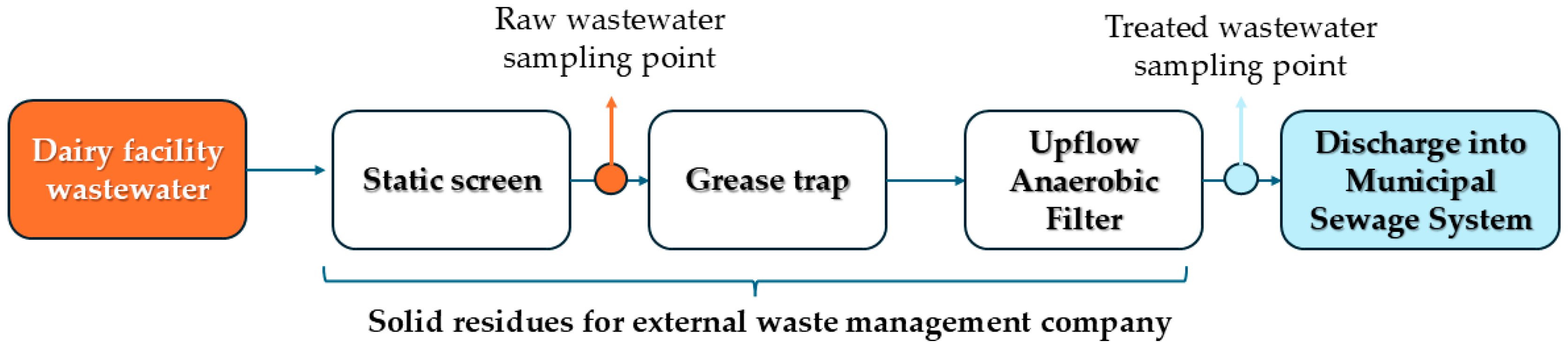
This section describes the treatment processes, sample collection, and discharge practices, based on the environmental licensing document issued by the State Secretariat for the Environment and Sustainable Development of Minas Gerais (SEMAD). Wastewater from the entire dairy, including sanitary effluent, undergoes preliminary treatment via static screening followed by a grease trap. Residual pollutants are removed in a biological process using a UAF. Raw and treated wastewater samples were collected after the static screen and after the UAF, respectively (Figure 1). The dairy is required to sample its wastewater at least every three months for environmental compliance reporting. Treated wastewater is discharged into the municipal sewage system, while an external waste management company handles solid residues separated during treatment.

2.3. Legislation Applicable to the Study

Wastewater characteristics were evaluated against applicable environmental regulations for both discharge into receiving water bodies and municipal sewer systems. Since there was no indication in the environmental licensing document that the dairy was authorized to discharge into the sewer system, its WWTP must comply with the stricter standards for water body discharge. In addition to state-level standards, effluent quality was evaluated against federal regulations for discharge into surface waters. Table 1 presents the discharge limits set by each regulation and the analytical methods used by the laboratories according to APHA [26].
Treated wastewater was also evaluated for reuse in irrigation under CONAMA Resolution No. 503/2021 [27], which sets chemical standards similar to those for discharge into receiving water bodies [9], in addition to microbiological standards.

3. Results and Discussion

3.1. Evaluation of Wastewater Quality Parameters for Discharge into Receiving Water Bodies

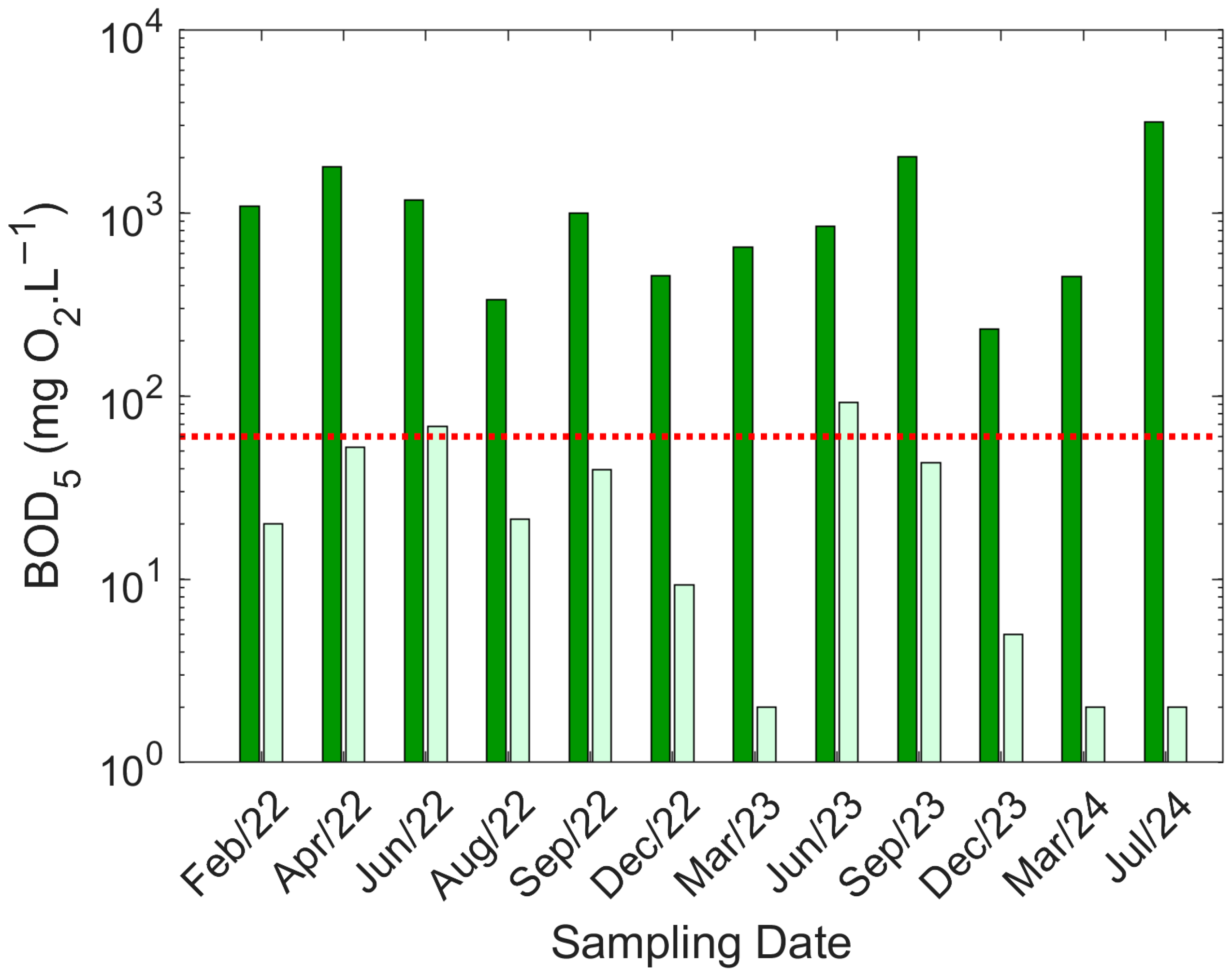
Figure 2 displays BOD5 values for both raw and treated wastewater. Concentration data are presented on a logarithmic scale to improve visualization of treated wastewater values, which are significantly lower. The highest BOD5 value, exceeding 3000 mg·L−1, was observed in the last sampling, while the lowest value (232 mg·L−1) was below the range reported by Tabelini et al. [4], which spans 360 to 20,000 mg·L−1 for raw dairy wastewater. For treated wastewater, only two samples exceeded the legal BOD5 limit of 60 mg·L−1, while five samples were below 10 mg·L−1.
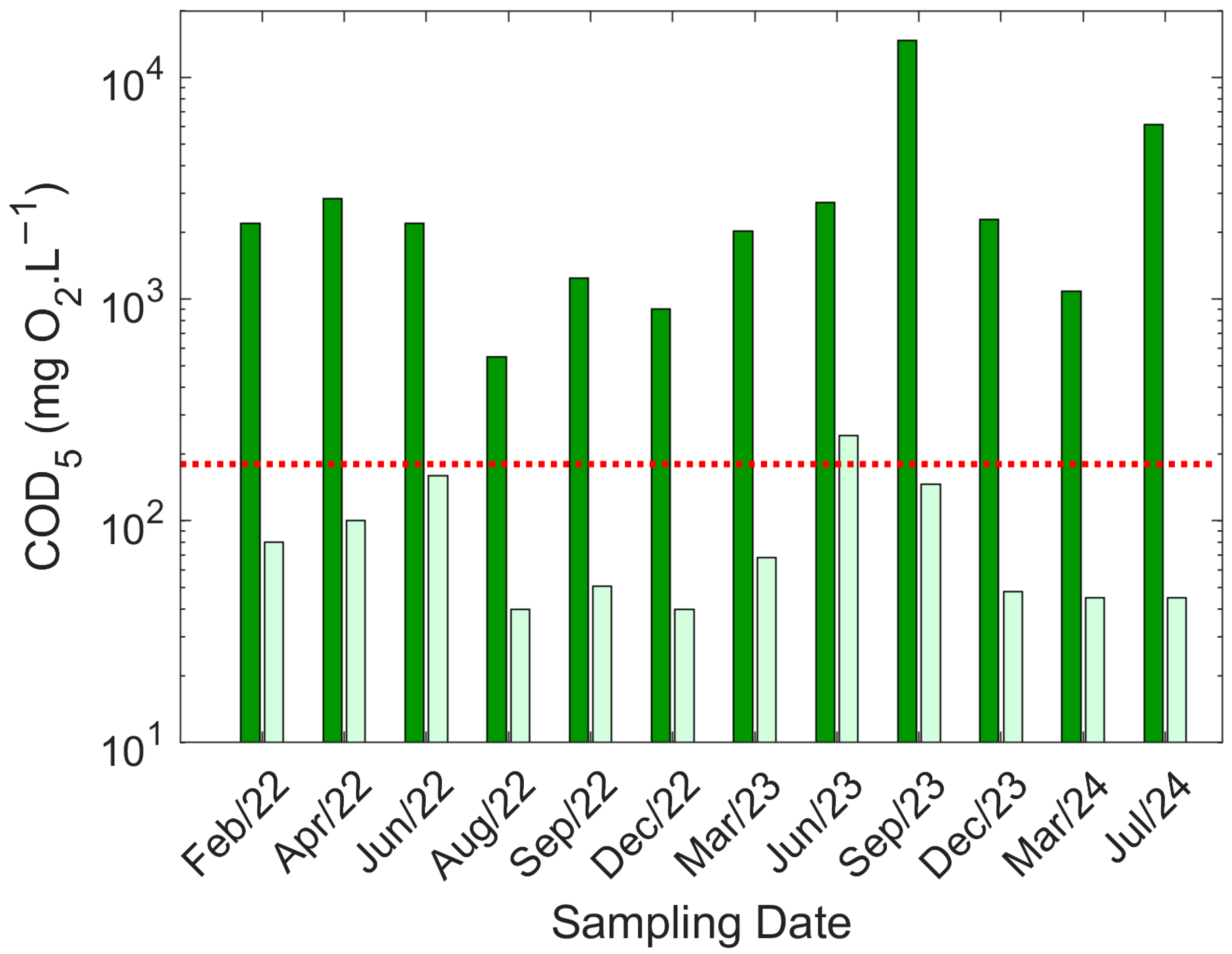
Figure 3 shows COD values. One raw wastewater sample approached 15,000 mg·L−1, similar to the maximum observed by Ribeiro and Aguiar [17]. The COD range reported by Tabelini et al. [4] for raw dairy wastewater is 500 to 61,000 mg·L−1, and all values found in this study were within that range. Among treated samples, the one with BOD5 above the legal limit was also the only one with COD above the permitted threshold.
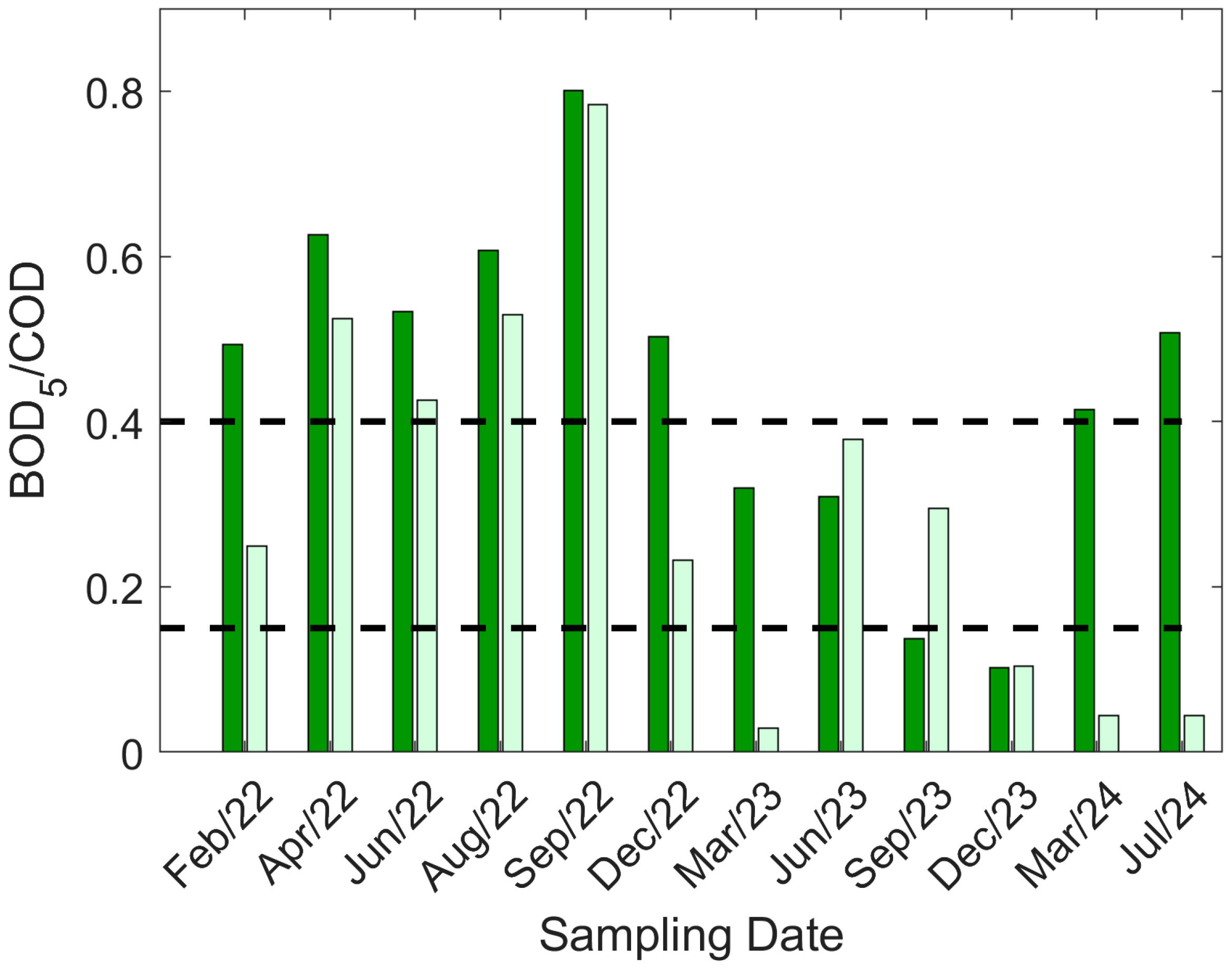
The BOD5/COD ratio was calculated to estimate wastewater biodegradability. Ratios above 0.4 indicate high biodegradability, meaning biological treatment is appropriate [13]. Tabelini et al. [4] noted that most dairy wastewater samples they reviewed had BOD5/COD ratios above 0.4. In the present study, raw wastewater ratios ranged from 0.10 to 0.80, with an average of 0.46. Two samples showed ratios below 0.15, indicating recalcitrance. Treated wastewater ratios ranged from 0.04 to 0.78, with an average of 0.30, suggesting the WWTP preferentially removed the biodegradable organic fraction (Figure 4). Similar results were reported by Ribeiro and Aguiar [17].
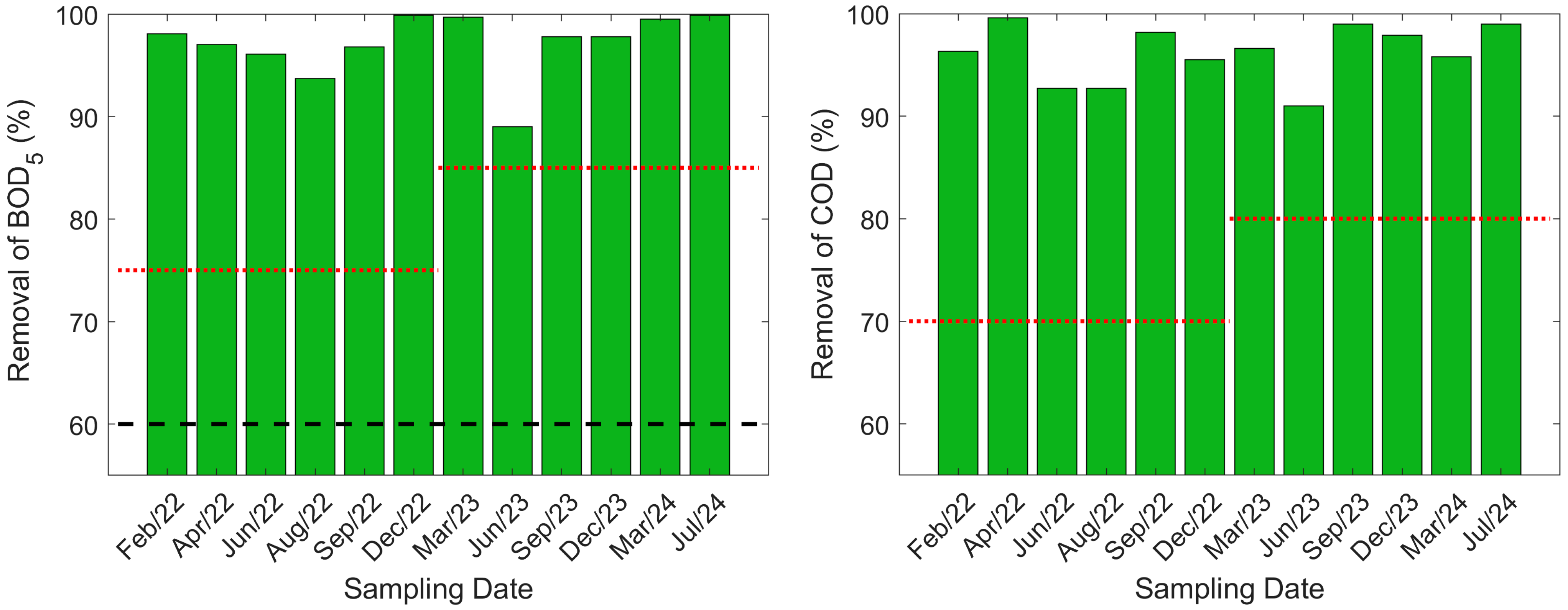
The average organic matter removal efficiencies were 97.1% for BOD5 and 96.2% for COD (Figure 5). The lowest percentage removal values were 89% for BOD5 and 91% for COD. These values are in compliance with all legislation for discharge into receiving water bodies, even though the minimum percentage removals of BOD5 and COD have increased by 10% in the new state legislation [11]. It is worth mentioning that this legislation requires compliance with the maximum allowable concentration or minimum removal efficiency for COD or BOD5. From the data shown, it was evident that the percentage removal was easier to comply with by the evaluated WWTP.
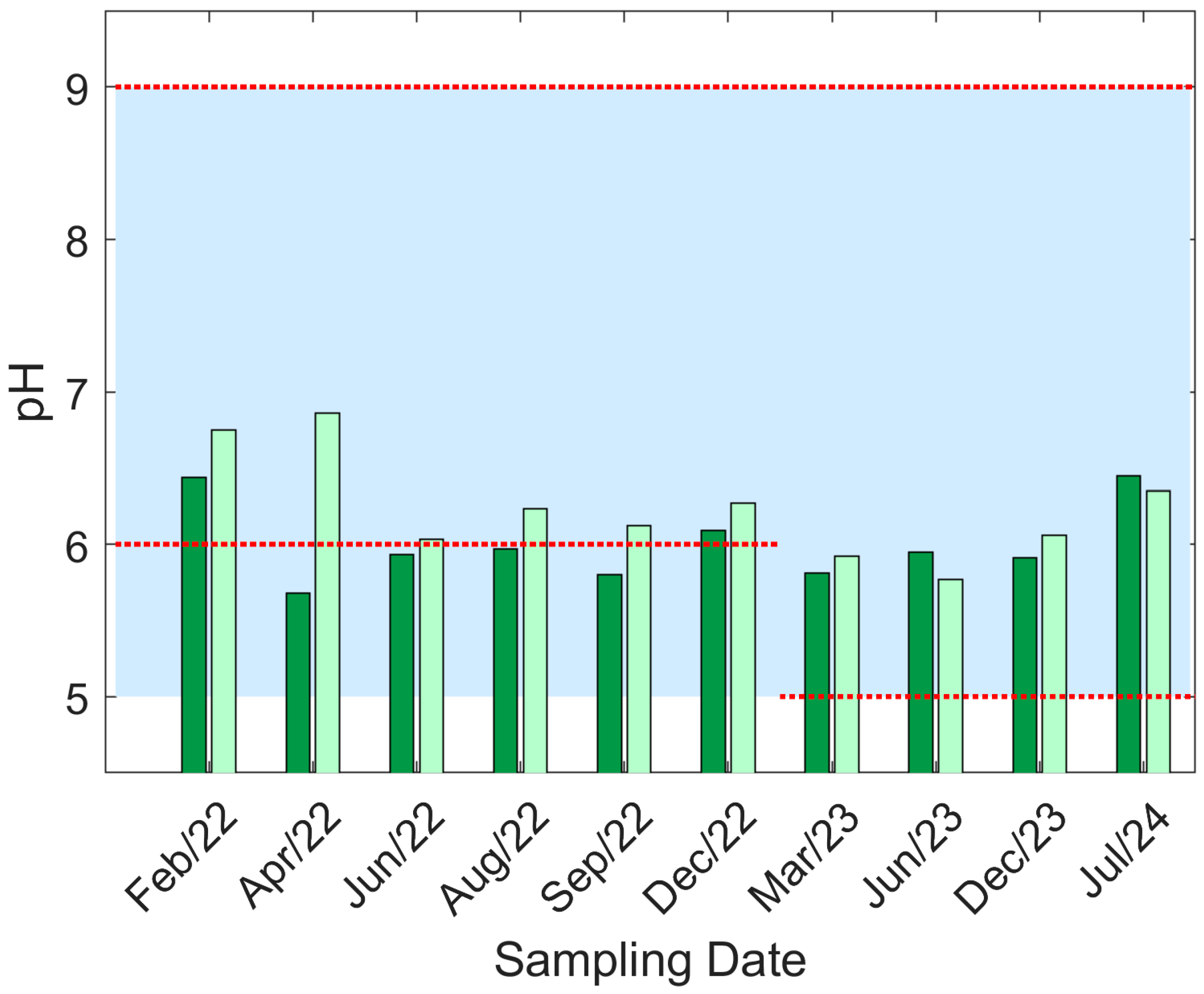
As shown in Figure 6, raw wastewater pH values were within the wide range of 1.0 to 12.0 described by Tabelini et al. [4]. All treated wastewater pH values complied with applicable legislation.
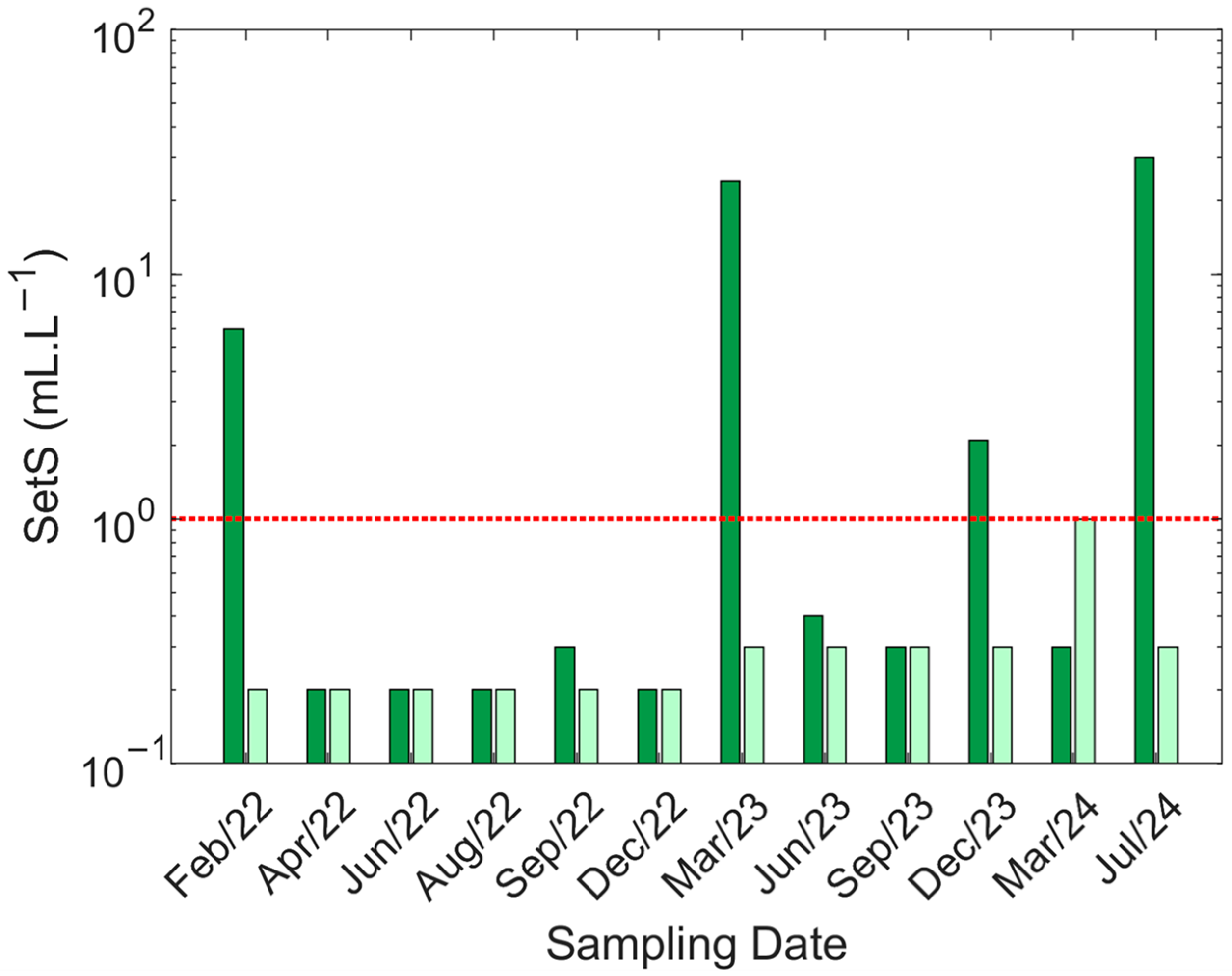
In dairy wastewater, SetS often comes from coagulated milk, cheese residues, and other solids from equipment washing [5]. Figure 7 highlights one raw sample with a high SetS value (30 mL·L−1), above typical levels [4]. All treated wastewater samples showed low SetS values, except one that exactly matched the legal limit of 1 mL·L−1.
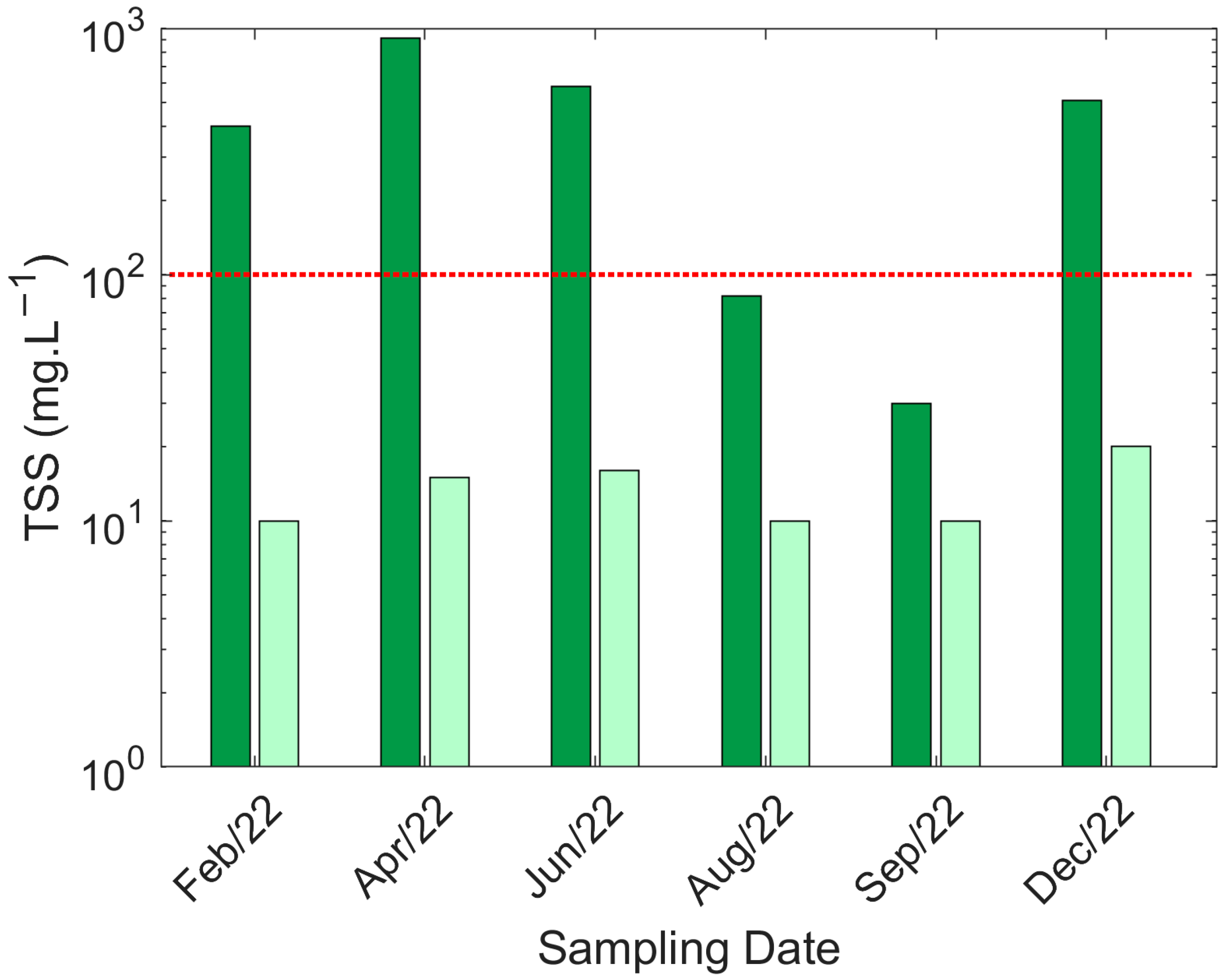
TSS were measured in the first six samplings. Raw wastewater TSS ranged from 30 to 910 mg·L−1 (Figure 8). Although Tabelini et al. [4] have noted that many dairy WWTPs in Minas Gerais fail this parameter, all treated wastewater TSS values in this study were well below the 100 mg·L−1 limit.
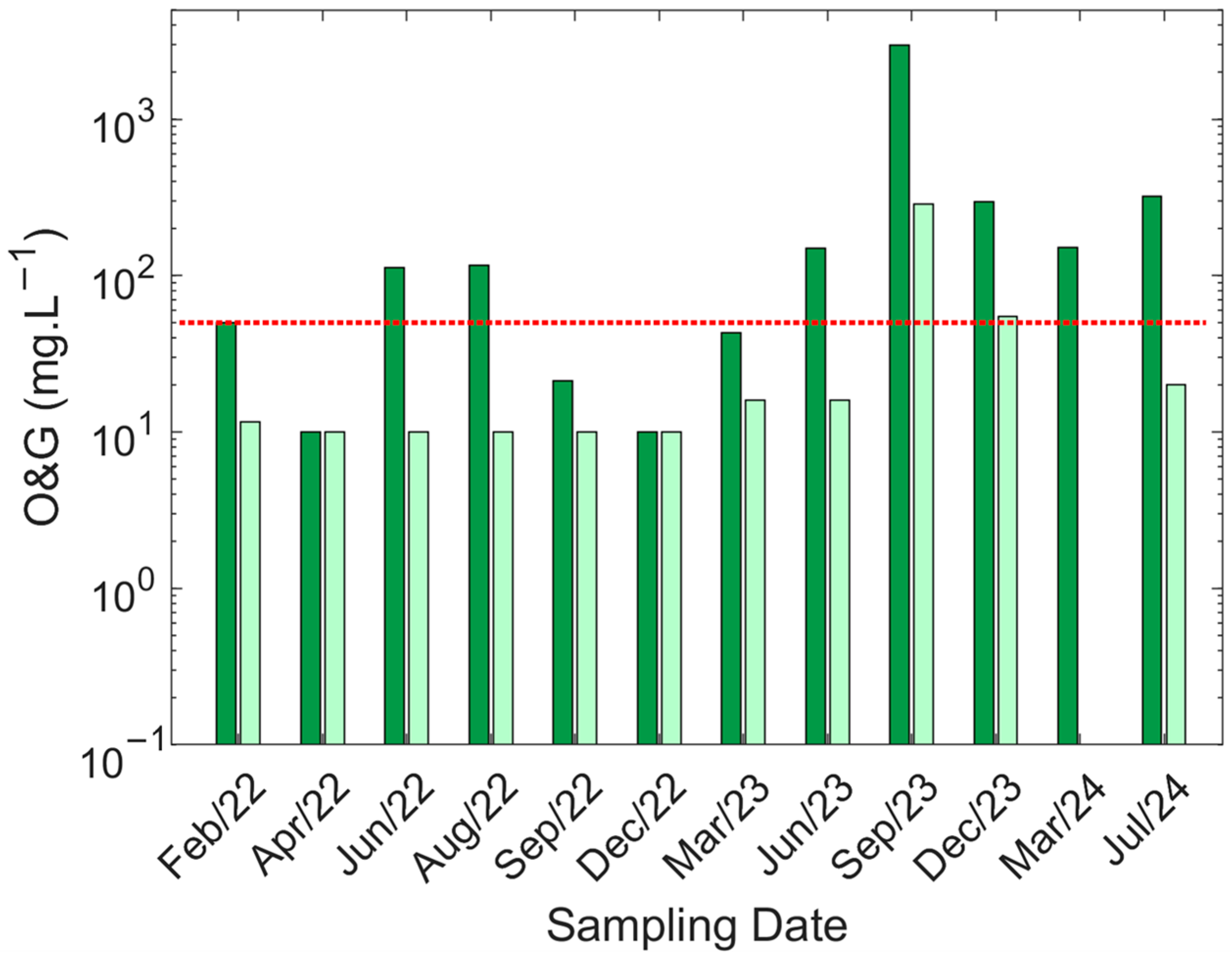
For the O&G parameter, one raw sample had a concentration of around 3000 mg·L−1. This sample also had the highest COD value and one of the lowest BOD5/COD ratios. The second-highest sample had 321 mg·L−1 (Figure 9), a typical concentration according to Tabelini et al. [4]. These authors reported a range of 74 to 14,515 mg·L−1 for raw dairy wastewater. Among the treated samples of the present work, two exceeded the O&G limit.
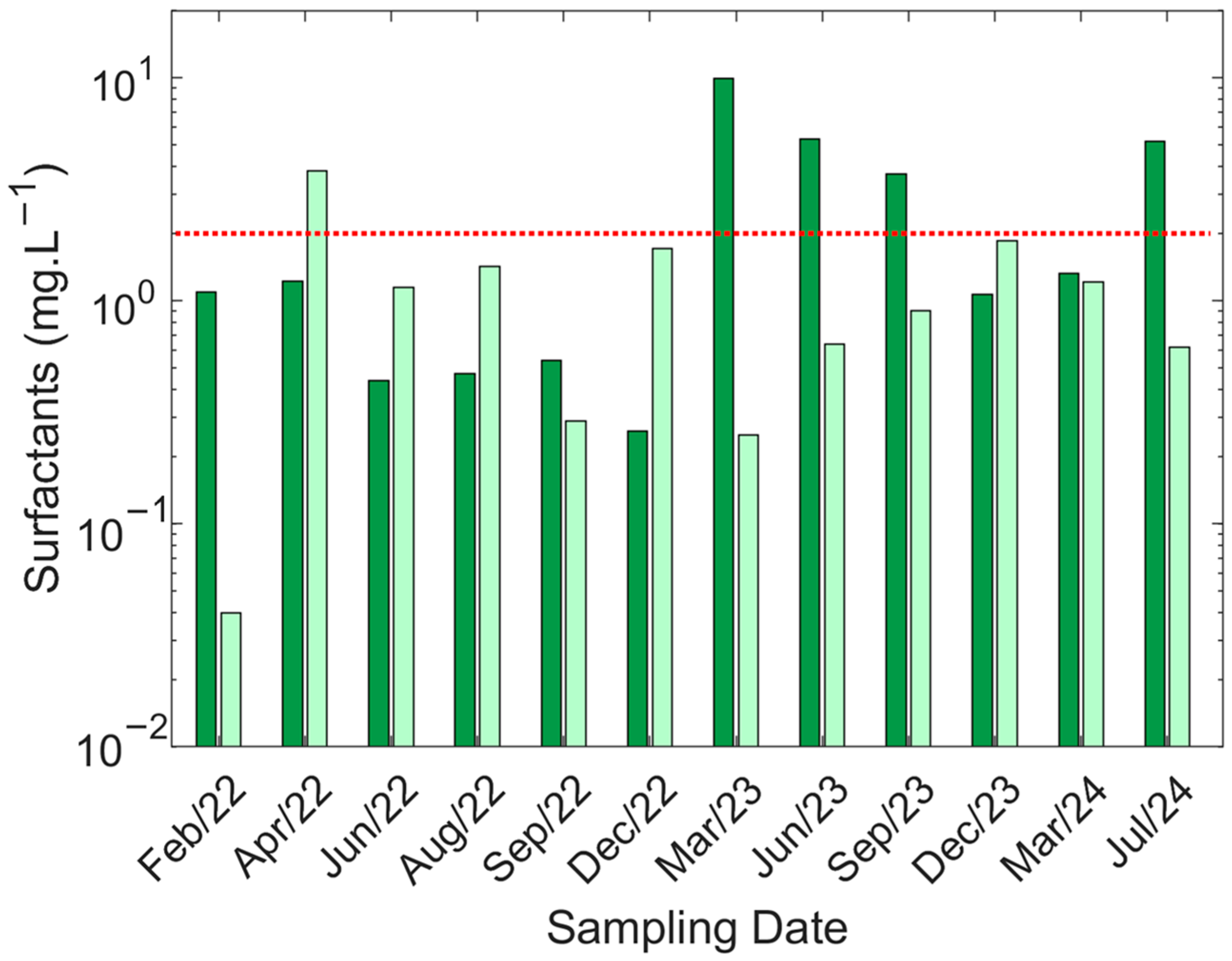
Surfactants represent another highly relevant parameter to be monitored in dairy wastewater. They are routinely used in sanitation practices to remove primarily lipid-based residues from pipes, floors, tanks, and other equipment [5]. Surfactants, commonly used for cleaning, are of great concern due to low biodegradability and bactericidal effects that hinder both biological treatment processes and receiving water body quality [28]. Therefore, these pollutants should ideally be removed before the secondary treatment stage. Figure 10 shows that four raw wastewater samples exhibited anionic surfactant concentrations above the maximum permitted, with the maximum value found being 10 mg·L−1. Conversely, increases in surfactant concentrations were observed for five samples of treated wastewater, but in only one of them was the value observed above the maximum permitted for discharge. It is important to consider that an increase in pollutant concentration at the WWTP outlet is not an unexpected result, since at the time of collection, the samples at the inlet and outlet are different.
Temperature values for raw and treated wastewater did not exceed 25 °C, well below the 40 °C legal threshold. Table 2 presents the raw data for temperature and other physicochemical parameters assessed in this study. Total ammonia nitrogen (TAN) is also an important parameter in dairy wastewater, as ammonia exhibits toxicity. The importance of monitoring N and P salts is well known since they are commonly present in this type of wastewater and can cause eutrophication of water bodies. However, the dairy did not monitor these parameters because its environmental licensing document does not require them to be quantified.
Compared to other published studies, Azadi et al. [29] evaluated a dairy WWTP in Iran composed of screening, primary settling, activated sludge system, and chlorination, and observed average BOD5 and COD percentage removals of 92%, with TSS below 15 mg·L−1. Mendonça et al. [19] found that another WWTP at a dairy in Minas Gerais—including screening, desander, grease trap, and a facultative aerated lagoon—achieved average percentage removals of approximately 75% for BOD5 and 74.5% for COD. Although these values are lower than those obtained by Azadi et al. [29], they still meet current legal standards. However, the average TSS concentration in the treated wastewater remained above 300 mg·L−1. When a pilot tertiary treatment system using constructed wetlands was implemented, Mendonça et al. [19] observed a significant improvement in treatment, with TSS concentrations well below the 100 mg·L−1 limit. Unlike the two aforementioned studies, it is important to consider other wastewater quality parameters such as O&G and surfactants, since they were not consistently compliant in all samples in the present study and may pose an additional challenge for other dairy WWTPs.
Although the characterization data for the treated wastewater largely complied with discharge standards for receiving water bodies, the same data would fully meet the requirements for discharge into the municipal sewer system [12]. It is worth noting that the residual pollutant concentrations in the treated wastewater were considerably lower than the typical concentrations of domestic sewage in Brazilian cities. According to von Sperling [13], the average BOD5 and COD concentrations in raw municipal sewage are 300 and 600 mg·L−1, respectively, whereas the highest values observed in the treated wastewater in this study were only 68 and 243 mg·L−1, respectively. Thus, it is likely that the treated effluent from this dairy has minimal impact on the total pollutant load conveyed to the municipal sewage treatment plant.

3.2. Linear Correlation Analysis Between COD and BOD5

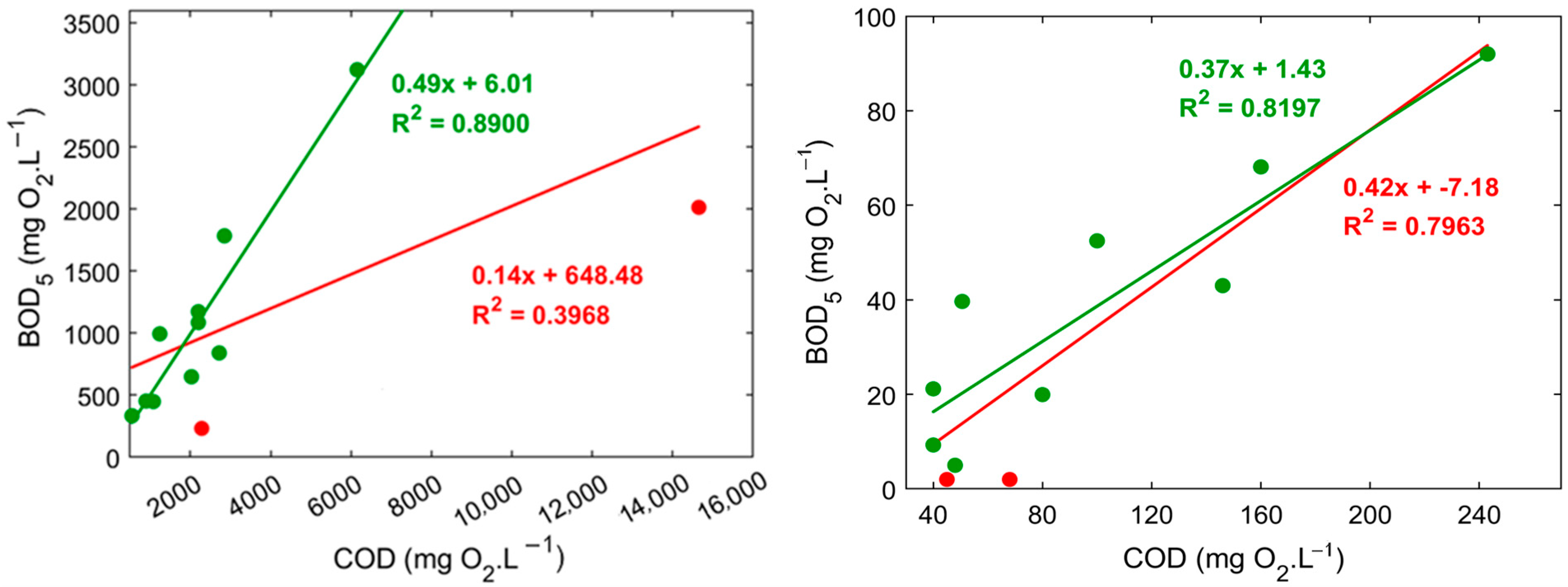
Considering the possibility of estimating BOD5 based on COD data, as proposed by some studies [14,15,16,17], data from these two quality parameters were analyzed to identify potential linear correlations. A coefficient of determination (R2) of 0.8 or higher indicates a strong and applicable correlation. If R2 ranges between 0.5 and 0.8 or between 0.0 and 0.5, the correlation is considered moderate or weak, respectively [30].
Figure 11 shows the results of this analysis for raw and treated wastewater. A weak linear correlation was observed for raw wastewater due to one sample with an extremely high COD value and, consequently, low biodegradability. As previously mentioned, another sample had a very low BOD5/COD ratio (<0.15). When these two outliers were excluded, a strong and reliable linear correlation was obtained. The exclusion of samples with markedly different biodegradability values was also adopted in a previous study [31] to establish strong linear correlations for most of the data.
Although an R2 close to 0.8 was found for treated wastewater, BOD5 and COD values were below detection limits in three and two samples, respectively. Excluding these samples slightly increased R2 to ~0.82, confirming the existence of a strong linear correlation between these two parameters for treated wastewater. Contrary to the findings of Ribeiro and Aguiar [17], the present study suggests using the linear equations obtained to estimate BOD5 from COD for both raw and treated wastewater samples.

3.3. Evaluation of Treated Wastewater Reuse and Other Sustainability Aspects

Wastewater treatment can offer benefits beyond maintaining the quality of receiving water bodies. Industrial wastewater can be reused for both potable and non-potable purposes. As WWTPs aim primarily to remove organic matter, treated dairy wastewater may still contain nutrients essential for agricultural crop growth, and its use for irrigation can reduce both potable water demand and synthetic fertilizer requirements, which are favorable aspects for environmental sustainability.
Recent literature highlights the promise of reusing treated dairy wastewater for agricultural irrigation [32,33,34,35]. CONAMA Resolution No. 503/2021 sets chemical and microbiological criteria for the use of biologically stabilized food industry wastewater in irrigation practices in Brazil [27]. These criteria are largely similar to those for discharge into receiving waters [9], with the exception of parameters relevant to agronomic applications, such as total boron, dissolved copper, dissolved iron, dissolved manganese, TAN, and total zinc. Additionally, the resolution includes Na, P, K, Ca, Mg, and Al for mass balance calculations, sodium adsorption ratio, and exchangeable sodium percentage, and requires microbiological analysis for Escherichia coli estimation.
Although the latter parameters were not quantified in this study, considering only those monitored (pH, O&G, BOD5, and SetS), the treated wastewater would meet criteria for fertigation practices. While the federal regulation for agricultural reuse does not stipulate a maximum permitted TSS concentration, high TSS levels can negatively impact the physical quality of irrigation water. Nakayama and Bucks [36] suggested that TSS concentrations below 50 mg·L−1 present a low risk of emitter clogging in drip irrigation systems, which have smaller orifices and narrower internal channels than other methods. Drip irrigation is also considered the safest method to prevent environmental and food risks [37]. Given that the maximum TSS value found was only 20 mg·L−1 and the pH was below 7.0, the treated wastewater in this study could be deemed suitable for use in drip irrigation systems.
Other relevant parameters for reuse in irrigation include pathogens and chloride. Sodium chloride is commonly used in cheese and butter production, and its presence is expected in dairy wastewater [5]. Sodium chloride and other salts can reduce soil osmotic potential, limiting water availability to crops [38]. Ribeiro and Aguiar [17] found low chloride levels in treated dairy wastewater, with a maximum of 22.3 mg·L−1. Despite the lack of comprehensive and routine characterization, especially of agronomic interest parameters, Tabelini et al. [4] reported that various dairies in Minas Gerais already reuse treated wastewater in fertigation, especially in dairy cattle pastures. This sustainable disposal method should be expanded, particularly in areas prone to seasonal water shortages.
Due to the presence of significant nitrogen and phosphorus levels, treated dairy wastewater could also serve as a culture medium for microalgae. Microalgal biomass can yield various products, including bioenergy [39,40]. Recent studies have evaluated dairy secondary effluents as a cultivation medium for lipid production by microalgae [41] and hydrogen via biophotolysis [42]. With the aim of producing algal biomass, Choi et al. [41] reported that supplementing secondary effluent with nitrate was necessary for Monoraphidium contortum cultivation. In addition to efficiently removing both nitrate and phosphate at the end of the cultivation time, the resulting biomass showed a fatty acid profile similar to vegetable oils, indicating its potential for biodiesel production.
Treated dairy wastewater can also be reused as cooling water [43] and as feedwater for boilers. Sterilization in dairies involves boiling, which requires large volumes of potable water. Cooling, in particular, consumes substantial amounts of water and energy. Therefore, water reuse can help reduce energy demand, and the WWTP can serve as an alternative water supply. Although Brazil lacks specific legislation for wastewater reuse in industry, Asano et al. [44] compiled typical water quality requirements for boiler and cooling tower use. For reuse in the dairy’s wood-fired boiler, only the temperature of the treated wastewater met these requirements. COD values above 5 mg·L−1, pH below 8.0, and TSS above 10 mg·L−1 rendered reuse in the boiler unfeasible. Although the existence of a cooling tower at the dairy was not confirmed, reuse for that purpose would be possible based on temperature (<49 °C) and pH (5.0–8.3); however, half the samples had COD levels exceeding the 75 mg·L−1 limit. As with irrigation reuse, the lack of data on various metal cations and salt concentrations limits a comprehensive evaluation for industrial reuse.
Although this study focused on wastewater quality, solid and gaseous waste management at the dairy facility also merits discussion. According to its environmental licensing document, the dairy generates about 1 ton·month−1 of solid and oily waste, which is sent to external companies for treatment or composting, the latter being a common treatment method in Minas Gerais dairies [4]. This minimizes potential environmental impacts. The reported monthly waste volume likely includes materials removed during screening and grease separation, as well as sludge from the UAF, as there was no specific mention of their destination. Anaerobic treatment processes produce little sludge, which is already stabilized [13]. Although produced in small quantities, UAF sludge could be used as soil fertilizer, provided it meets the chemical and microbiological criteria established by CONAMA Resolution No. 498/2020 [45].
Regarding gaseous emissions, utilizing the biogas produced in the UAF would be another sustainable practice. In many dairies, biogas is simply flared [4]. Although the presence of a biogas flare and production volumes were not confirmed at the studied dairy, using this gas as an energy source is recommended to reduce the dairy’s electricity demand. The study also did not identify emission controls for pollutants such as carbon monoxide and particulate matter from the wood-fired boiler. All gas emissions should be treated in order to minimize atmospheric impacts.

4. Conclusions

Based on the analysis of treated wastewater quality parameters, the WWTP of a dairy facility situated in southern Minas Gerais successfully met the discharge standards for receiving water bodies, except for the parameters O&G and surfactants, which did not comply in no more than two samples. The average removal efficiencies for COD and BOD5 exceeded 96%, highlighting the effectiveness of the treatment processes implemented in the evaluated WWTP. Regarding reuse standards for irrigation, the treated wastewater was in compliance; however, the absence of routine microbiological monitoring, particularly for E. coli, limits its safe application in reuse scenarios. To expand the reuse potential, future efforts should focus on incorporating low-cost polishing steps, such as filtration or disinfection, to ensure effluent safety for purposes like irrigation, cleaning, or even boiler feedwater. Furthermore, strong linear correlations were observed between COD and BOD5 data for both raw and treated wastewater samples, suggesting that BOD5 could potentially be estimated from COD measurements. This would facilitate more efficient monitoring of WWTP operations based on COD data, which is faster and more cost-effective. Overall, optimizing treatment processes and enabling broader, safe reuse applications are essential steps toward improving the environmental sustainability of WWTPs in the dairy sector.

Author Contributions

Conceptualization, A.A.; methodology, A.A.; software, J.P.P.L.; formal analysis, J.P.P.L. and A.A.; data curation, A.A.; writing—original draft preparation, A.A.; writing—review and editing, A.A.; visualization, A.A.; supervision, A.A.; project administration, A.A.; funding acquisition, A.A. All authors have read and agreed to the published version of the manuscript.

Funding

This research was funded by Brazilian Agencies for Scientific and Technological Development: Fundação de Amparo à Pesquisa do Estado de Minas Gerais (Fapemig), Conselho Nacional de Desenvolvimento Científico e Tecnológico (CNPq), and Coordenação de Aperfeiçoamento de Ensino Superior (CAPES)—Finance Code 001. The English grammar review of this article was funded by the Institute of Natural Resources of the Federal University of Itajubá.

Institutional Review Board Statement

Not applicable.

Informed Consent Statement

Not applicable.

Data Availability Statement

Data used in this work are duly referenced in the text.

Conflicts of Interest

The authors declare no conflicts of interest.

References

  1. Brazilian Institute of Geography and Statistics (IBGE). IBGE Indicators: Livestock Production Statistics. 2024. Available online: https://biblioteca.ibge.gov.br/index.php/biblioteca-catalogo?view=detalhes&id=72380 (accessed on 1 June 2025).
  2. Prazeres, A.R.; Carvalho, F.; Rivas, J. Cheese whey management: A review. J. Environ. Manag. 2012, 110, 48–68. [Google Scholar] [CrossRef]
  3. Silva, R.R.; Siqueira, E.Q.; Nogueira, I.S. Impactos ambientais de efluentes de laticínios em curso d’água na bacia do Rio Pomba. Eng. Sanit. Ambient. 2018, 23, 217–228. [Google Scholar] [CrossRef]
  4. Tabelini, D.B.; Lima, J.P.P.; Borges, A.C.; Aguiar, A. A review on the characteristics and methods of dairy industry wastewater treatment in the state of Minas Gerais, Brazil. J. Water Process Eng. 2023, 53, 103779. [Google Scholar] [CrossRef]
  5. Slavov, A.K. Dairy wastewaters—General characteristics and treatment possibilities—A review. Food Technol. Biotechnol. 2017, 55, 14–28. [Google Scholar] [CrossRef]
  6. Roques, H.; Aurelle, Y. Oil-water separations oil recovery and oily wastewater treatment. In New Developments in Industrial Wastewater Treatment; Springer: Dordrecht, The Netherlands, 1991; pp. 155–174. [Google Scholar] [CrossRef]
  7. Behjat, M.; Svanström, M.; Peters, G. A meta-analysis of LCAs for environmental assessment of a conceptual system: Phosphorus recovery from dairy wastewater. J. Clean. Prod. 2022, 369, 133307. [Google Scholar] [CrossRef]
  8. Finnegan, W.; Goggins, J.; Zhan, X. Assessing the environmental impact of the dairy processing industry in the Republic of Ireland. J. Dairy Res. 2018, 85, 396–399. [Google Scholar] [CrossRef]
  9. Brazil, Ministry of the Environment, National Environment Council (CONAMA). Resolution No. 430. 2011. Available online: https://www.suape.pe.gov.br/images/publicacoes/CONAMA_n.430.2011.pdf (accessed on 1 June 2025).
  10. Minas Gerais, State Council of Environmental Policy/State Water Resources Council (COPAM/CERH), Normative Resolution No. 1. 2008. Available online: https://www.compe.org.br/estadual/deliberacoes/conjunta/1-2008.pdf (accessed on 12 October 2024).
  11. Minas Gerais, State Council of Environmental Policy/State Council of Water Resources (COPAM/CERH), Normative Resolution No. 8. 2022. Available online: http://www.siam.mg.gov.br/sla/download.pdf?idNorma=56521 (accessed on 30 October 2024).
  12. Minas Gerais, Sanitation Company of Minas Gerais (COPASA). Technical Guideline for Discharging Non-Domestic Wastewater into the Public Sewerage Network No. T.187/6; COPASA: Belo Horizonte, Brazil, 2018. [Google Scholar]
  13. von Sperling, M. Introdução à Qualidade das Águas e ao Tratamento de Esgotos, 4th ed.; UFMG: Belo Horizonte, Brazil, 2014. [Google Scholar]
  14. Christian, E.; Batista, J.R.; Gerrity, D. Use of COD, TOC, and fluorescence spectroscopy to estimate BOD in wastewater. Water Environ. Res. 2017, 89, 168–177. [Google Scholar] [CrossRef]
  15. Njoya, M.; Basitere, M.; Ntwampe, S.K.O. Analysis of the characteristics of poultry slaughterhouse wastewater (PSW) and its treatability. Water Pract. Technol. 2019, 14, 959–970. [Google Scholar] [CrossRef]
  16. Ramos, M.D.N.; Gomes, T.M.; Aquino, S.F.; Aguiar, A. Sewage treatment in cities of the state of Minas Gerais, Brazil, that use the UASB reactor as the only biological treatment: A case study. J. Water Process Eng. 2023, 56, 104509. [Google Scholar] [CrossRef]
  17. Ribeiro, T.S.; Aguiar, A. Performance evaluation of a wastewater treatment plant from a dairy in the state of Minas Gerais, Brazil: A case study. Environ. Monit. Assess. 2024, 196, 956. [Google Scholar] [CrossRef]
  18. Karadag, D.; Köroğlu, O.E.; Ozkaya, B.; Cakmakci, M. A review on anaerobic biofilm reactors for the treatment of dairy industry wastewater. Process Biochem. 2015, 50, 262–271. [Google Scholar] [CrossRef]
  19. Mendonça, H.V.; Otenio, M.H.; Lomeu, A.A.; Rita, A.V.S. Post-treatment of an aerated facultative pond with constructed wetland: First two years of operation in a dairy industry. Ecol. Eng. 2022, 179, 106623. [Google Scholar] [CrossRef]
  20. Alfiah, T.; Pertiwi, D.D. Performance of dairy factory wastewater treatment plant (case study of Pasuruan dairy factory East Java). J. Community Based Environ. Eng. Manag. 2024, 8, 181–186. [Google Scholar] [CrossRef]
  21. Ferreira, I.T.R.; Marques, R.F.P.V.; Rodrigues, L.S. Tratamento de efluentes industriais de uma fábrica pet food. Rev. Bras. Geogr. Física 2024, 17, 608–625. [Google Scholar] [CrossRef]
  22. Hantoush, N.K.; Ghawi, A.H. Performance evaluation of conventional sewage treatment plant, Iraq. IOP Conf. Ser. Earth Environ. Sci. 2023, 1232, 012019. [Google Scholar] [CrossRef]
  23. Haileselassie, M.M.; Mohamed, J.; Haile, A.T.; Hiruy, A.M.; Acharya, K.; Werner, D. Performance of four wastewater treatment plants serving Ethiopia’s capital city, Addis Ababa. J. Water Sanit. Hyg. Dev. 2025, 15, 127–138. [Google Scholar] [CrossRef]
  24. Lima, J.P.P.; Aguiar, A. Evaluating the performance of sewage treatment plants containing up-flow anaerobic sludge blanket reactors followed or not by post-treatments. Environments 2025, 12, 146. [Google Scholar] [CrossRef]
  25. Nwodo, J.C.; Gericke, O.J.; Woyessa, Y.E.; Oke, S.A. Assessment of wastewater treatment efficiency and the impact on surface water quality in the Free State Province, South Africa. IOP Conf. Ser. Earth Environ. Sci. 2025, 1489, 012012. [Google Scholar] [CrossRef]
  26. APHA. Standard Methods for Water and Wastewater Determination; APHA: Washington, DC, USA, 2017. [Google Scholar]
  27. Brazil, Ministry of the Environment, National Environment Council (CONAMA). Resolution No. 503 (2021). Available online: https://conama.mma.gov.br/index.php?option=com_sisconama&task=arquivo.download&id=813 (accessed on 1 June 2025).
  28. Palmer, M.; Hatley, H. The role of surfactants in wastewater treatment: Impact, removal and future techniques: A critical review. Water Res. 2018, 147, 60–72. [Google Scholar] [CrossRef]
  29. Azadi, N.A.; Falahzadeh, R.A.; Sadeghi, S. Dairy wastewater treatment plant in removal of organic pollution: A case study in Sanandaj, Iran. Environ. Health Eng. Manag. J. 2015, 2, 73–77. [Google Scholar]
  30. Santos, C. Estatística Descritiva—Manual de Autoaprendizagem, 1st ed.; Edições Sílabo: Lisboa, Portugal, 2007. [Google Scholar]
  31. Lima, J.P.P.; Melo, E.D.; Aguiar, A. Characteristics and ways of treating cosmetic wastewater generated by Brazilian industries: A review. Process Saf. Environ. Prot. 2022, 155, 601–612. [Google Scholar] [CrossRef]
  32. Gomes, T.M.; Rossi, F.; Tommaso, G.; Ribeiro, R.; Kushida, M.M.; Stablein, M.J. Supplementation of nutrients for table beets by irrigation with treated dairy effluent. Eng. Agric. 2017, 37, 1137–1147. [Google Scholar] [CrossRef]
  33. Sdiri, W.; Mansour, H.B.; Albergamo, A.; Di Bella, G. Efectiveness of dairy treated wastewater and diferent irrigation systems on the growth, biomass and fruiting of a Tunisian olive orchard (Olea europaea L., cv Chemlali). Nat. Prod. Res. 2020, 34, 183–186. [Google Scholar] [CrossRef] [PubMed]
  34. Sdiri, W.; Dabbou, S.; Nava, V.; Di Bella, G.; Mansour, H.B. Pomological descriptors, phenolic compounds, and chemical monitoring in olive fruits irrigated with dairy treated wastewater. Chemosensors 2021, 9, 130. [Google Scholar] [CrossRef]
  35. Lombardi, B.; Orden, L.; Varela, P.; Garay, M.; Iocoli, G.A.; Montenegro, A.; Sáez-Tovar, J.; Bustamante, M.A.; Juliarena, M.P.; Moral, R. Is dairy effluent an alternative for maize crop fertigation in semiarid regions? An approach to agronomic and environmental effects. Animals 2022, 12, 2025. [Google Scholar] [CrossRef]
  36. Nakayama, F.S.; Bucks, D.A. Water quality in drip/trickle irrigation: A review. Irrig. Sci. 1991, 12, 187–192. [Google Scholar] [CrossRef]
  37. Jesus, F.L.F.; Santos, O.N.A.; Talamini, M.V., Jr.; Gomes, T.M.; Rossi, F.; Román, R.M.S. Águas residuárias para irrigação no Brasil: Uma abordagem química, física e microbiológica. Irriga 2020, 25, 562–589. [Google Scholar] [CrossRef]
  38. Ayers, R.S.; Westcott, D.W. FAO Irrigation and Drainage, 1994, Paper 29 Revision 1. In Water Quality for Agriculture; Food and Agricultural Organization of the United Nations: Rome, Italy, 1994; Available online: https://www.fao.org/4/t0234e/t0234e00.htm (accessed on 1 June 2025).
  39. Nour, A.H.; Mokaizh, A.A.B.; Alazaiza, M.Y.; Bashir, M.J.; Mustafa, S.E.; Baarimah, A.O. Innovative strategies for microalgae-based bioproduct extraction in biorefineries: Current trends and future solutions integrating wastewater treatment. Sustainability 2024, 16, 10565. [Google Scholar] [CrossRef]
  40. Sarker, N.K.; Kaparaju, P. Microalgal bioeconomy: A green economy approach towards achieving sustainable development goals. Sustainability 2024, 16, 11218. [Google Scholar] [CrossRef]
  41. Choi, N.; Nunes, I.V.; Ohira, G.O.; Carvalho, J.C.M.; Matsudo, M.C. Evaluation of Monoraphidium contortum for the tertiary treatment of dairy industry wastewater and biomass production with nitrogen supplementation. Bioproc. Biosyst. Eng. 2023, 46, 265–271. [Google Scholar] [CrossRef]
  42. Dudek, M.; Debowski, M.; Kazimierowicz, J.; Zielinski, M.; Quattrocelli, P.; Nowicka, A. The cultivation of biohydrogen producing Tetraselmis subcordiformis microalgae as the third stage of dairy wastewater aerobic treatment system. Sustainability 2022, 14, 12085. [Google Scholar] [CrossRef]
  43. Yapıcıoğlu, P.; Yeşilnacar, M.I. Energy cost assessment of a dairy industry wastewater treatment plant. Environ. Monit. Assess. 2020, 192, 536. [Google Scholar] [CrossRef] [PubMed]
  44. Asano, T.; Burton, F.; Leverenz, H.; Tsuchihashi, R.; Tchobanoglous, G. Water Reuse-Issues, Technologies, and Applications; McGrow-Hill: New York, NY, USA, 2007. [Google Scholar]
  45. Brazil, Ministry of the Environment, National Environment Council (CONAMA), Resolution No. 498. 2020. Available online: https://conama.mma.gov.br/index.php?option=com_sisconama&task=arquivo.download&id=797 (accessed on 12 October 2024).
Figure 1. Schematic representation of the dairy facility’s wastewater treatment process, including sampling points for raw and treated wastewater.
Sustainability 17 07597 g001
Figure 2. BOD5 values for raw (dark green) and treated (light green) wastewater. The dotted line indicates the maximum limit permitted according to legislation for discharge into receiving water bodies [10,11].
Sustainability 17 07597 g002
Figure 3. COD values for raw (dark green) and treated (light green) wastewater. The dotted line indicates the maximum limit allowed for discharge into receiving water bodies [10,11].
Sustainability 17 07597 g003
Figure 4. BOD5/COD ratio for raw and treated wastewater samples. The dashed lines separate the biodegradability ranges: high—above 0.4; moderate—between 0.4 and 0.15; and low—below 0.15 [13].
Sustainability 17 07597 g004
Figure 5. BOD5 (left) and COD (right) removal percentages. The dotted and dashed lines correspond to the minimum values required by state [10,11] and federal legislation [9], respectively.
Sustainability 17 07597 g005
Figure 6. pH values for raw (dark green) and treated (light green) wastewater. The interval between the dotted lines and the shaded region represents, respectively, the pH ranges allowed for discharge into receiving water bodies according to state [10,11] and federal legislation [9].
Sustainability 17 07597 g006
Figure 7. SetS values for raw (dark green) and treated (light green) wastewater. The dotted line indicates the maximum limit allowed for discharge into receiving water bodies [9,10,11].
Sustainability 17 07597 g007
Figure 8. TSS values for raw (dark green) and treated (light green) wastewater. The dotted line indicates the maximum limit permitted for discharge into receiving water bodies [10,11].
Sustainability 17 07597 g008
Figure 9. O&G concentration in raw (dark green) and treated (light green) wastewater. The dotted line indicates the maximum limit permitted for discharge into receiving water bodies [9,10,11]. For treated wastewater, the two values above the limit indicate non-compliance with legislation.
Sustainability 17 07597 g009
Figure 10. Surfactant concentration in raw (dark green) and treated (light green) wastewater. The dotted line indicates the maximum limit allowed for discharge into receiving water bodies [10,11]. For treated wastewater, the value above the limit indicates non-compliance with legislation.
Sustainability 17 07597 g010
Figure 11. Linear correlation analysis between COD and BOD5 data for raw (left) and treated (right) wastewater samples. For both types of wastewater, the equations in red correspond to the linear fit considering all samples (represented by all circles), while the equations in green correspond to the linear fit performed with the exclusion of outliers (only green circles).
Sustainability 17 07597 g011
Table 1. Regulatory limits for industrial wastewater discharge and the analysis methods used.
ParametersDischarge into Receiving Water BodiesDisposal into the Municipal Sewage SystemMethod
pH5.0–9.06.0–9.05.0–9.06.0–10.0SMWW-4500H+B
Temperature (°C)<40<40<40<40SMWW-2550B
BOD5 (mg O2·L−1)Minimum removal of 60%<60 mg·L−1 or minimal removal of 75%<60 mg·L−1 or minimal removal of 85%-SMWW-5210B
COD (mg O2·L−1)<180 mg·L−1 or minimal removal of 70%<180 mg·L−1 or minimal removal of 80%<450SMWW-5220B/SMWW-5220D *
O&G (mg·L−1)<50<50<50<150SMWW-5520B/SMWW-5520D *
TSS (mg·L−1)<100<100<300SMWW-2540D
SetS (mL·L−1)<1<1<1<20SMWW-2540F
Anionic surfactants (mg·L−1)<2<2<5SMWW-5540C
Reference[9][10][11][12]-
* different methods used by the second outsourced company to perform the physical–chemical analyses.
Table 2. Physicochemical characterization data of raw and treated dairy wastewater.
Sampling DateBOD5 (mg O2·L−1)COD (mg O2·L−1)pHSetS (mL·L−1)TSS (mg·L−1)O&G (mg·L−1)Surfactants (mg·L−1)Temperature (°C)
RWTWEF (%)RWTWEF (%)RWTWRWTWRWTWRWTWRWTWRWTW
Feb/221085.2219.9598.12200.0080.096.36.446.756.0<0.2400.0<10.050.1511.611.09<0.04
Apr/221783.6152.4897.02850.00100.099.65.686.86<0.2 <0.2910.015.0<10.00<10.001.223.8222.025.2
Jun/221172.3468.1296.12200.00160.092.75.936.03<0.2<0.2580.016.0113.0<10.000.441.1524.726.5
Aug/22333.7421.1793.7550.0040.092.75.976.23<0.2<0.282.0<10.0116.0<10.000.471.4225.126.0
Sep/22993.9839.6696.81241.4750.6 98,15.86.120.3<0.230.0<10.021.36<10.000.540.2924.024.5
Dec/22452.389.2999.9900.0040.095.56.096.27<0.2<0.2510.020.0<10.0010.00.261.7125.725.8
Mar/23648.0<2.099.72029.068.096.65.815.9224<0.343.0<16.009.92<0.2525.926.6
Jun/23840.092.089.02720.0243.091.05.955.770.4<0.3149.5<16.005.290.6424.324.6
Sep/232013.043.097.814,652.0146.099.0<0.3<0.32978.0288.03.700.90
Dec/23232.05.097.82284.048.097.95.916.062.1 <0.3297.055.01.071.8626.226.2
Mar/24448.0<2.099.51081.0<45.095.8<0.31152.0<0.11.331.21
Jul/243122.0<2.099.96153.0<45.099.06.456.3530<0.3321.0 20.05.200.6222.522.6
Discharge standards<60 mg·L−1 or minimum 75/85% * removal<180 mg·L−1 or minimum 70/80% * removal5.0 */6.0–9.0<1<100<50<2<40 °C
* discharge standards altered according to new state legislation [11].
Disclaimer/Publisher’s Note: The statements, opinions and data contained in all publications are solely those of the individual author(s) and contributor(s) and not of MDPI and/or the editor(s). MDPI and/or the editor(s) disclaim responsibility for any injury to people or property resulting from any ideas, methods, instructions or products referred to in the content.