Article

Geospatial Patterns of Property Crime in Thailand: A Socioeconomic Perspective for Sustainable Cities


by
Hiranya Sritart
1,*,
Hiroyuki Miyazaki
2,3,
Sakiko Kanbara
4 and
Somchat Taertulakarn
1
1
Faculty of Allied Health Sciences, Thammasat University, Pathum Thani 12120, Thailand
2
Center for Spatial Information Science, University of Tokyo, Chiba 277-8568, Japan
3
GLODAL, Inc., Yokohama 231-0062, Japan
4
Kobe City College of Nursing, Kobe 651-2103, Japan
*
Author to whom correspondence should be addressed.
Sustainability 2025, 17(14), 6567; https://doi.org/10.3390/su17146567
Submission received: 6 June 2025 / Revised: 11 July 2025 / Accepted: 13 July 2025 / Published: 18 July 2025
(This article belongs to the Special Issue GIS Implementation in Sustainable Urban Planning—2nd Edition)

Abstract

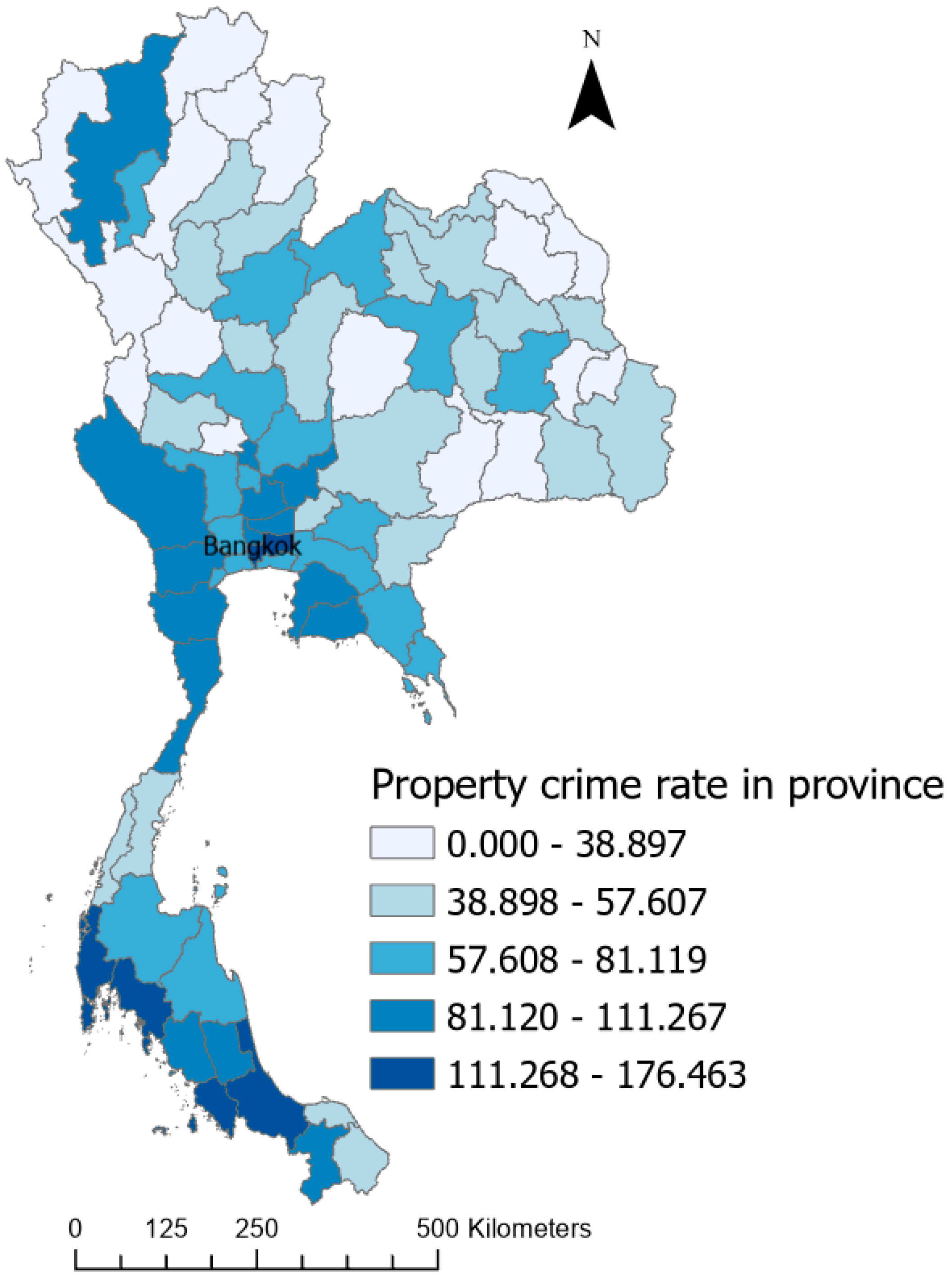
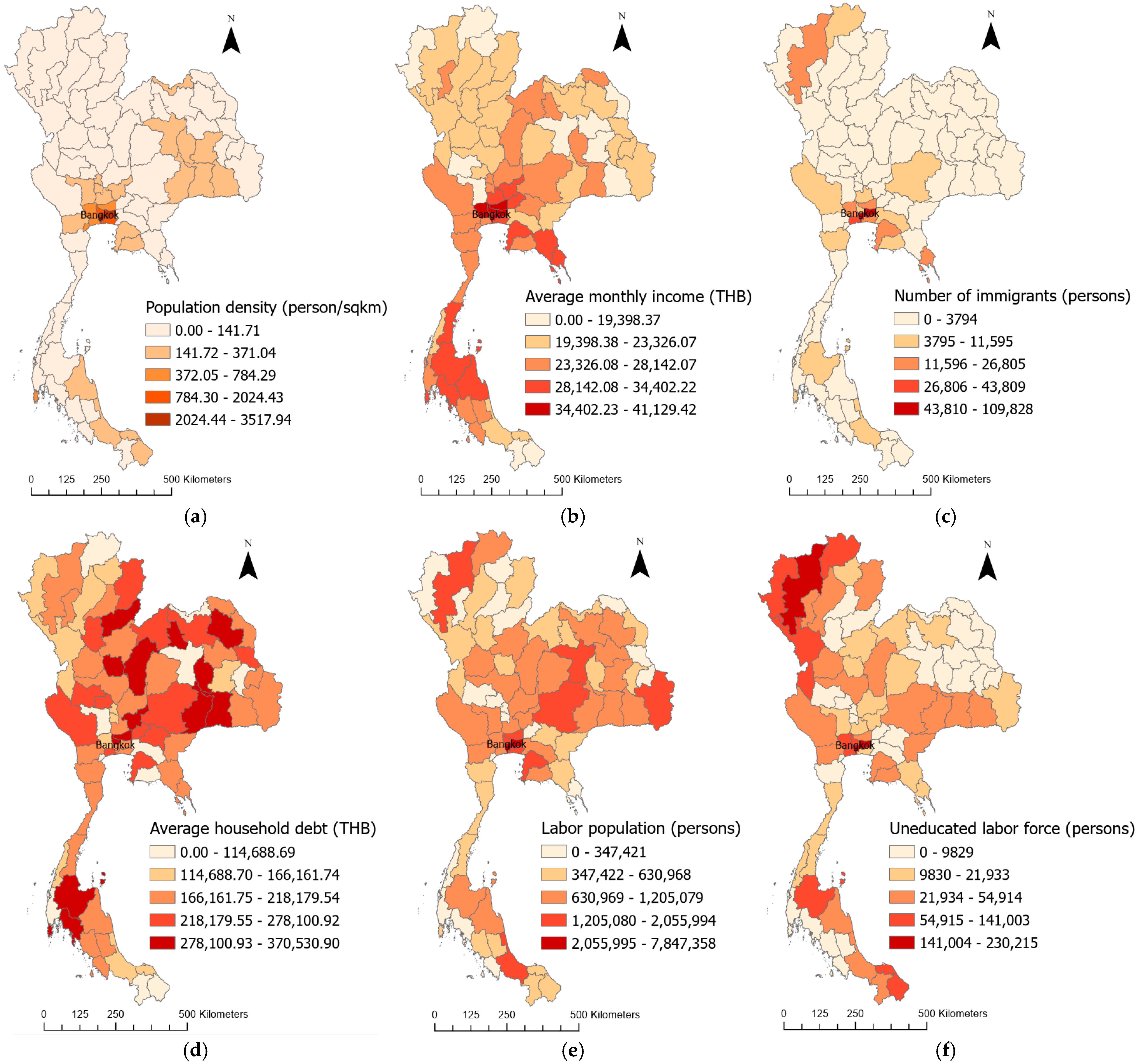
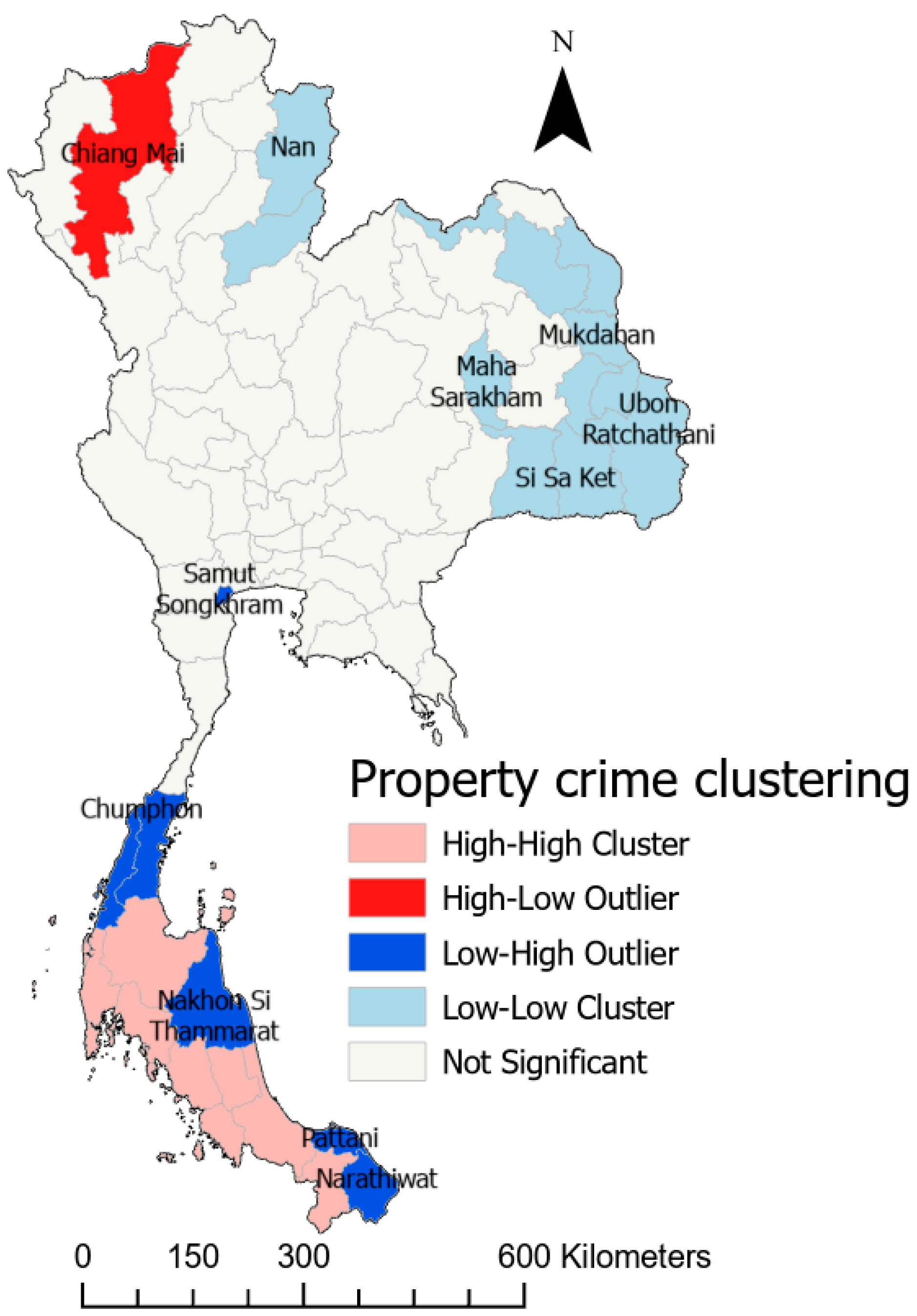
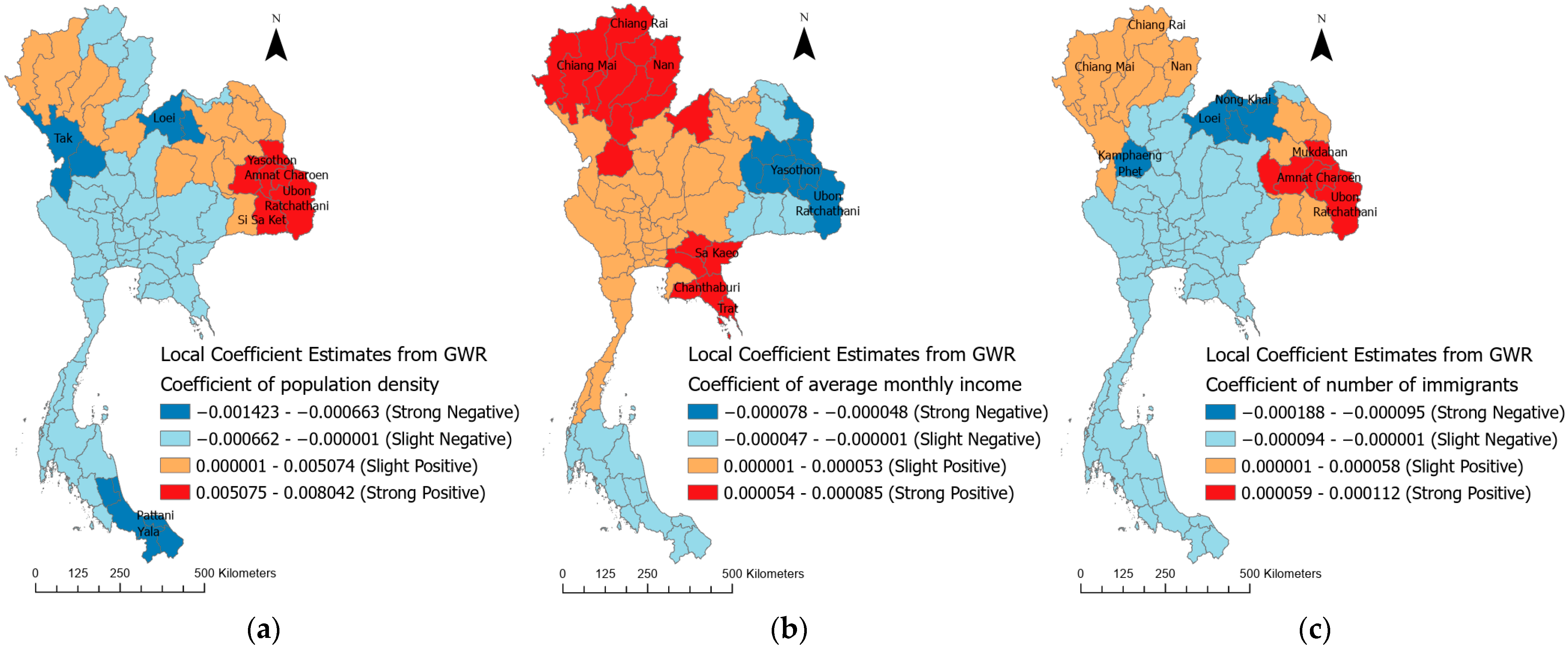
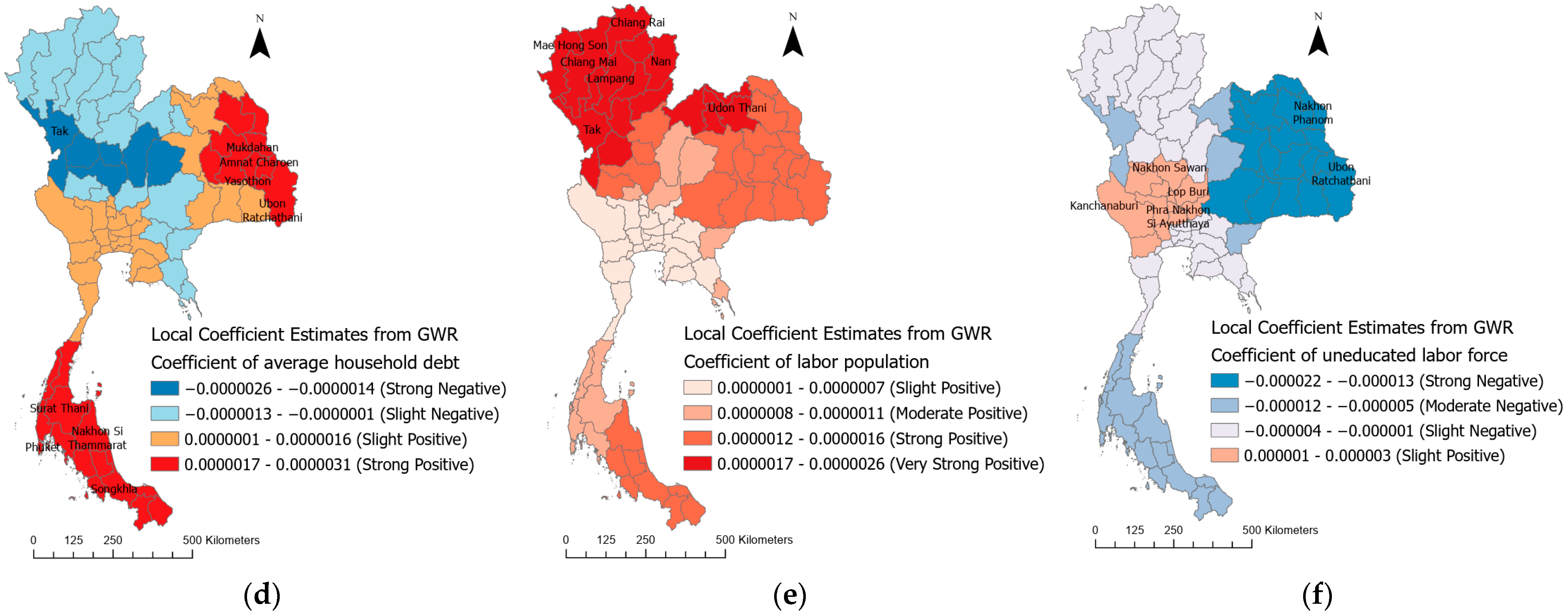
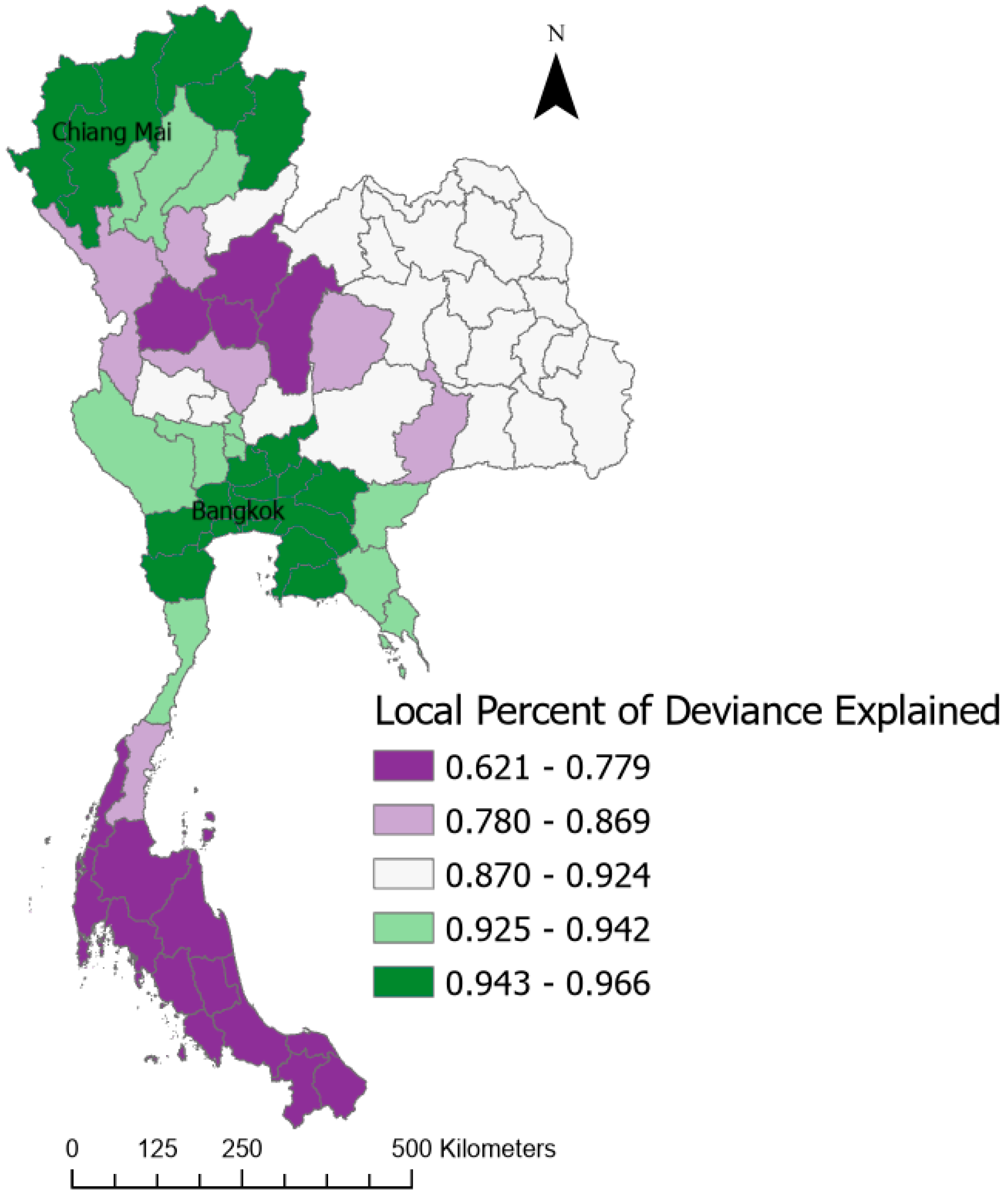
Property crime is a pressing issue in maintaining social order and urban sustainability, particularly in regions marked by pronounced socioeconomic disparity. While the link between socioeconomic stress and crime is well established, regional variations in Thailand have not been fully examined. Therefore, the purpose of this research was to examine spatial patterns of property crime and identify the potential associations between property crime and socioeconomic environment across Thailand. Using nationally compiled property-crime data from official sources across all provinces of Thailand, we employed geographic information system (GIS) tools to conduct a spatial cluster analysis at the sub-national level across 76 provinces. Both global and local statistical techniques were applied to identify spatial associations between property-crime rates and neighborhood-level socioeconomic conditions. The results revealed that property-crime clusters are primarily concentrated in the south, while low-crime areas dominate parts of the north and northeast regions. To analyze the spatial dynamics of property crime, we used geospatial statistical models to investigate the influence of socioeconomic variables across provinces. We found that property-crime rates were significantly associated with monthly income, areas experiencing high levels of household debt, migrant populations, working-age populations, an uneducated labor force, and population density. Identifying associated factors and mapping geographic regions with significant spatial clusters is an effective approach for determining where issues concentrate and for deepening understanding of the underlying patterns and drivers of property crime. This study offers actionable insights for enhancing safety, resilience, and urban sustainability in Thailand’s diverse regional contexts by highlighting geographies of vulnerability.
Keywords: property crime; crime mapping; spatial analysis; socioeconomic disparity; regional inequality; Thailand property crime; crime mapping; spatial analysis; socioeconomic disparity; regional inequality; Thailand