Article

Visitor Number Prediction for Daegwallyeong Forest Trail Using Machine Learning

1
Forest Human Service Division, National Institute of Forest Science, Seoul 02455, Republic of Korea
2
Future City Strategy Division, Gumi City Hall, Gumi 39281, Republic of Korea
3
Legislation and Policy Team, Jeonju City Council, Jeonju 54994, Republic of Korea
*
Author to whom correspondence should be addressed.
Sustainability 2025, 17(13), 6061; https://doi.org/10.3390/su17136061
Submission received: 2 May 2025 / Revised: 30 June 2025 / Accepted: 30 June 2025 / Published: 2 July 2025

Abstract

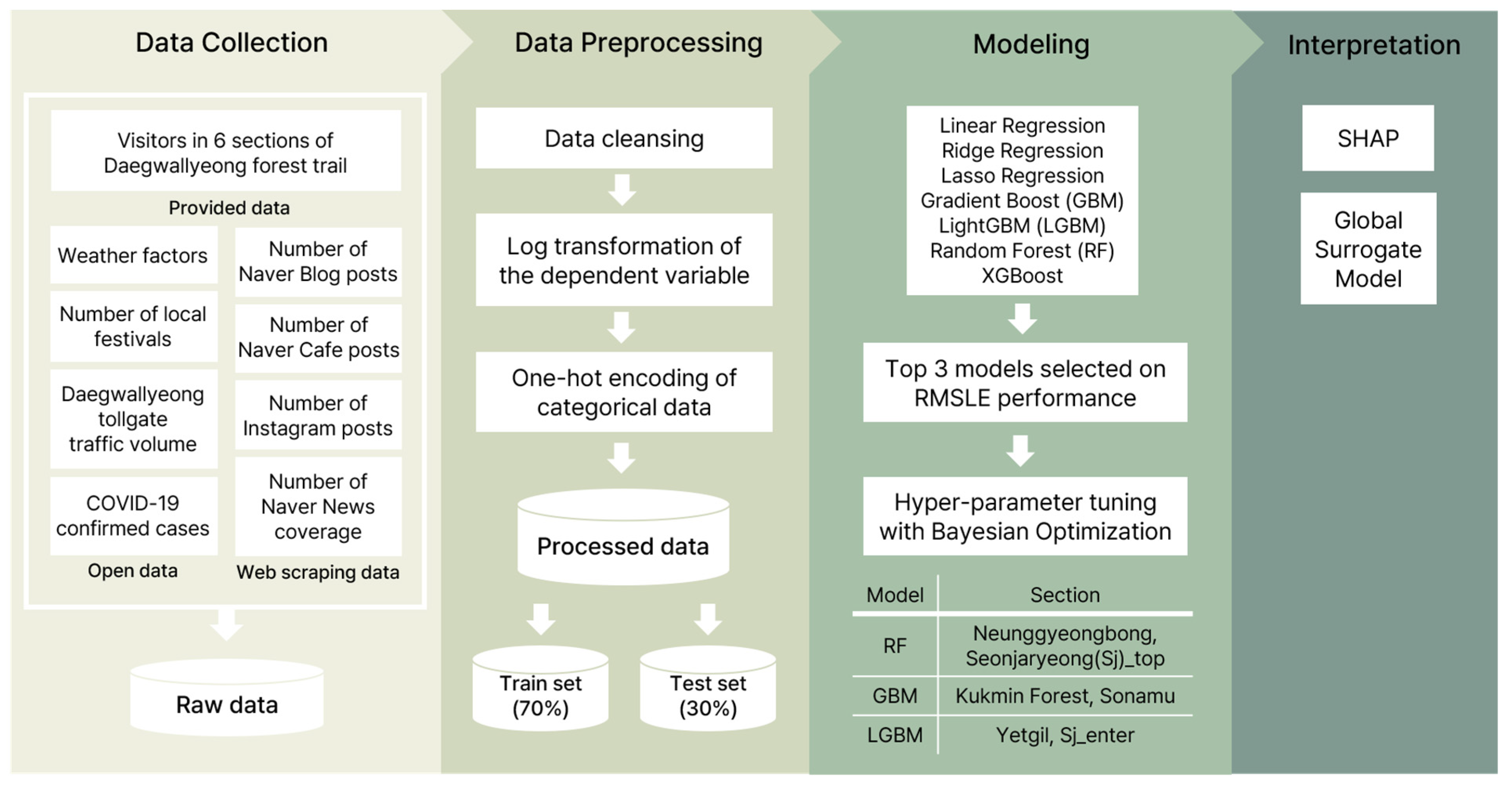
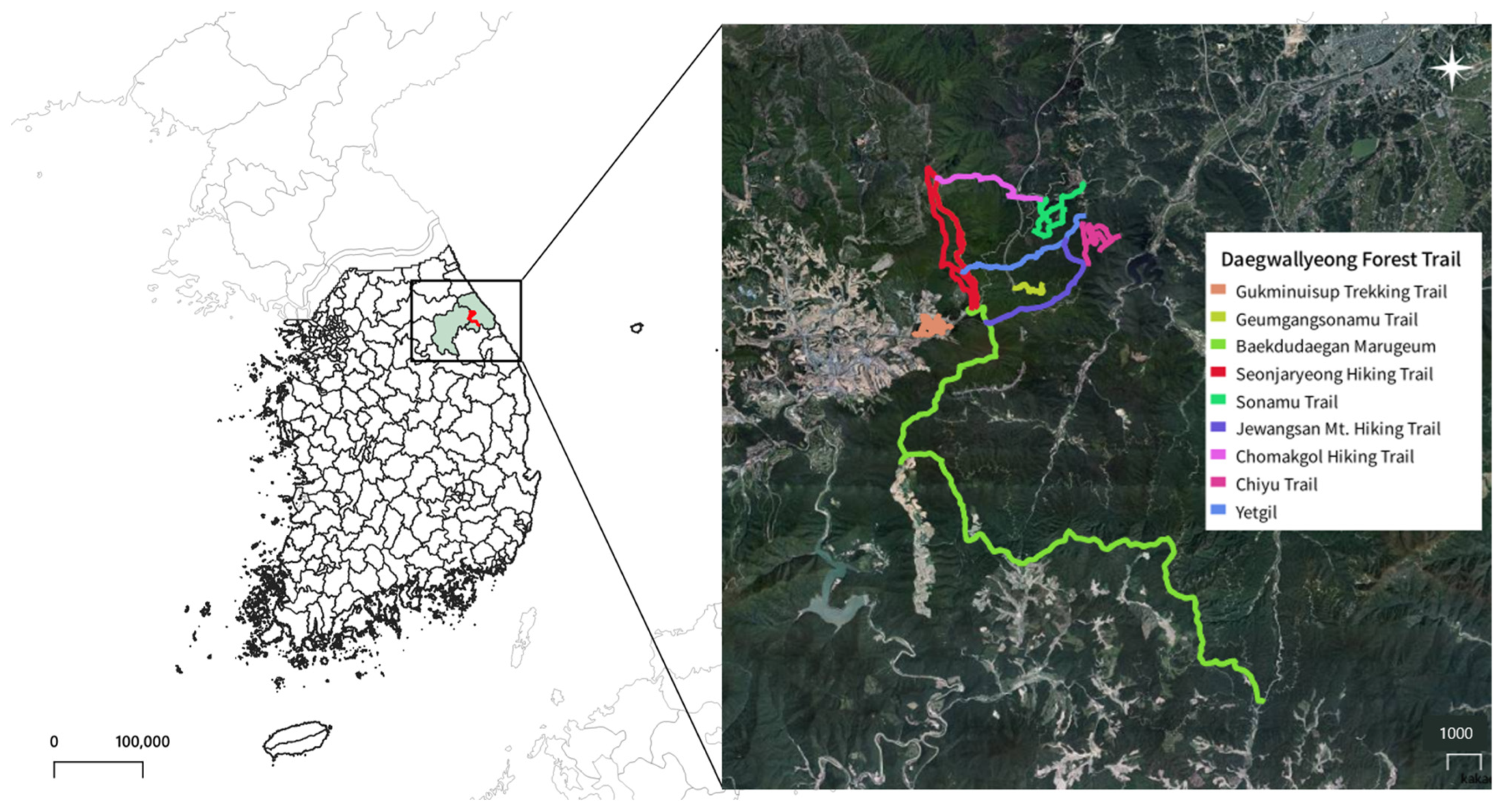
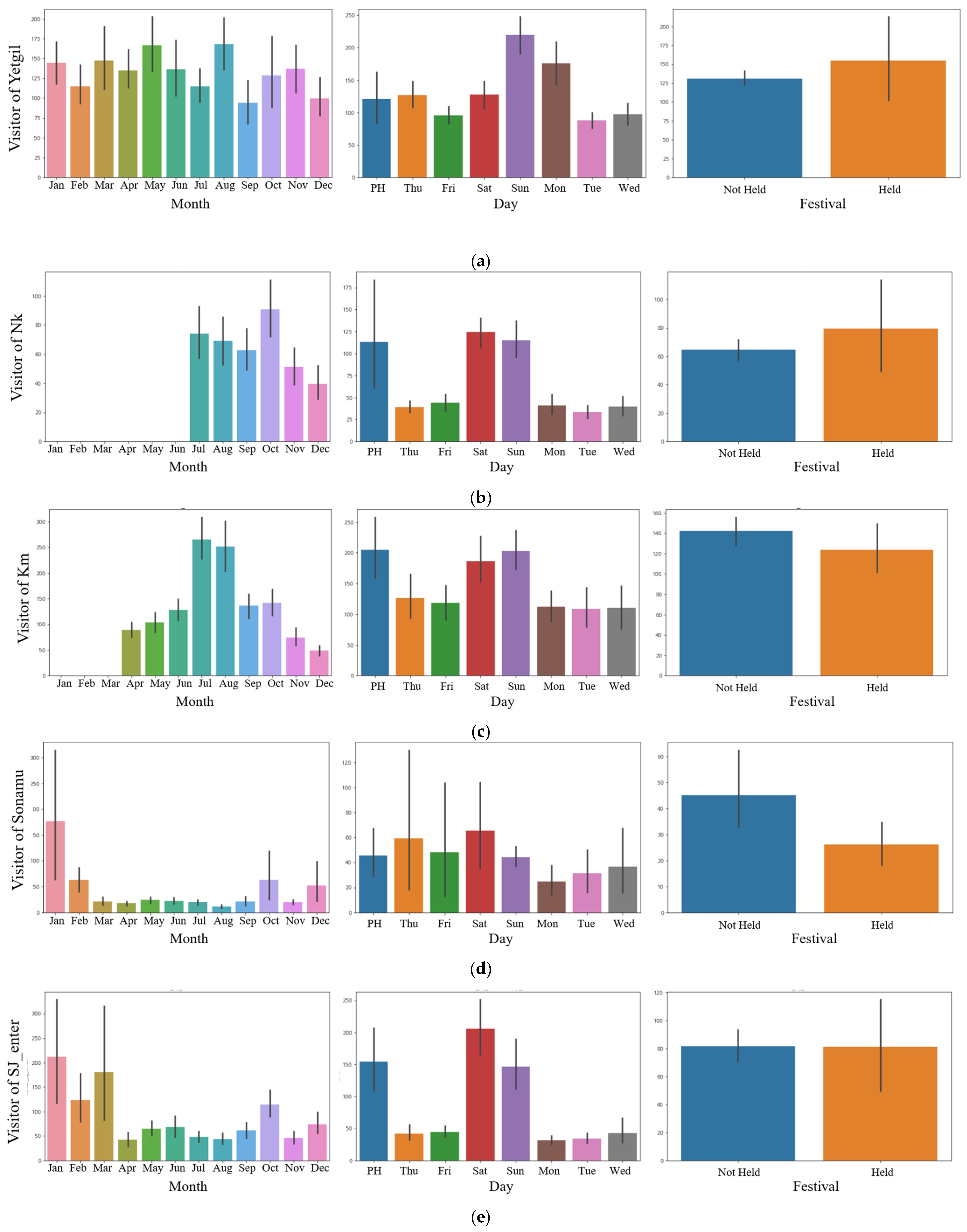
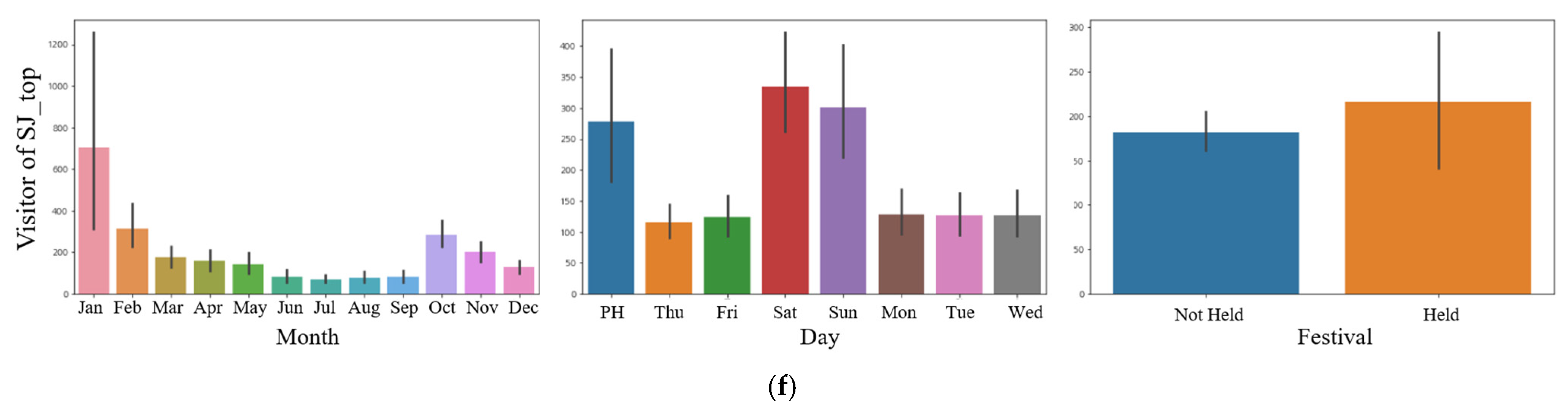
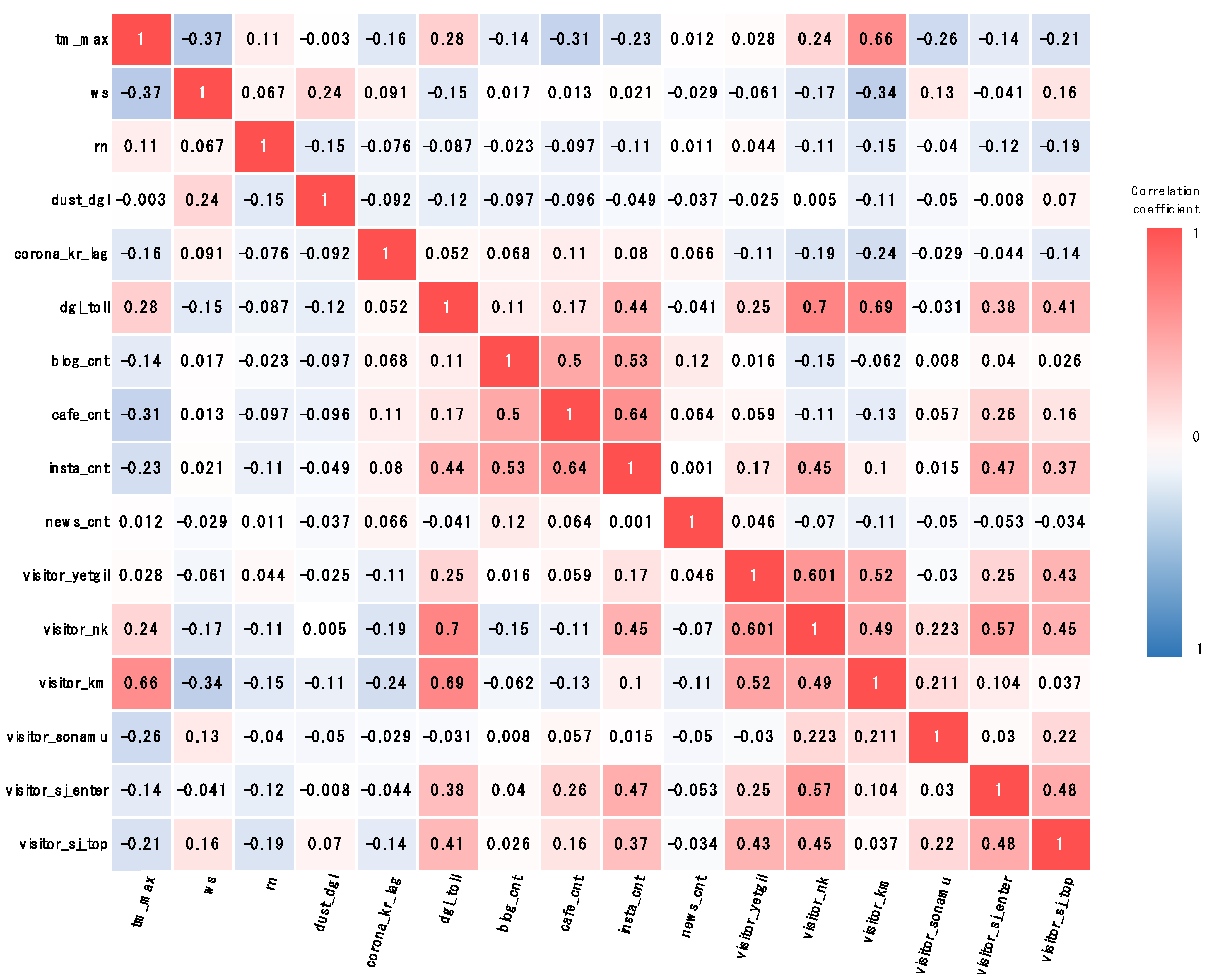
Predicting forest trail visitation is essential for sustainable management and policy development, including infrastructure planning, safety operations, and conservation. However, due to numerous informal access points and complex external influences, accurately monitoring visitor numbers remains challenging. This study applied random forest, gradient boosting, and LightGBM models with Bayesian optimization to predict daily visitor counts across six sections of the National Daegwallyeong Forest Trail, incorporating variables such as weather conditions, social media activity, COVID-19 case counts, tollgate traffic volume, and local festivals. SHAP analysis revealed that tollgate traffic volume and weekends consistently increased visitation across all sections. The impact of temperature varied by section: higher temperatures increased visitation in Kukmin Forest, whereas lower temperatures were associated with higher visitation at Seonjaryeong Peak. COVID-19 cases demonstrated negative effects across all sections. By integrating diverse variables and conducting section-level analysis, this study identified detailed visitation patterns and provided a practical basis for adaptive, section- and season-specific management strategies. These findings support flexible measures such as seasonal staffing, congestion mitigation, and real-time response systems and contribute to the advancement of data-driven regional tourism management frameworks in the context of evolving nature-based tourism demand.
Keywords: national forest trail; forest trail management; visitor prediction; machine learning; SHAP analysis national forest trail; forest trail management; visitor prediction; machine learning; SHAP analysis