Article

Simulation-Based Modeling of the Impact of Left-Turn Bay Overflow on Signalized Intersection Capacity

Faculty of Civil Engineering, Architecture and Geodesy, University of Split, 21000 Split, Croatia
*
Author to whom correspondence should be addressed.
Sustainability 2025, 17(12), 5397; https://doi.org/10.3390/su17125397
Submission received: 24 April 2025 / Revised: 6 June 2025 / Accepted: 10 June 2025 / Published: 11 June 2025

Abstract

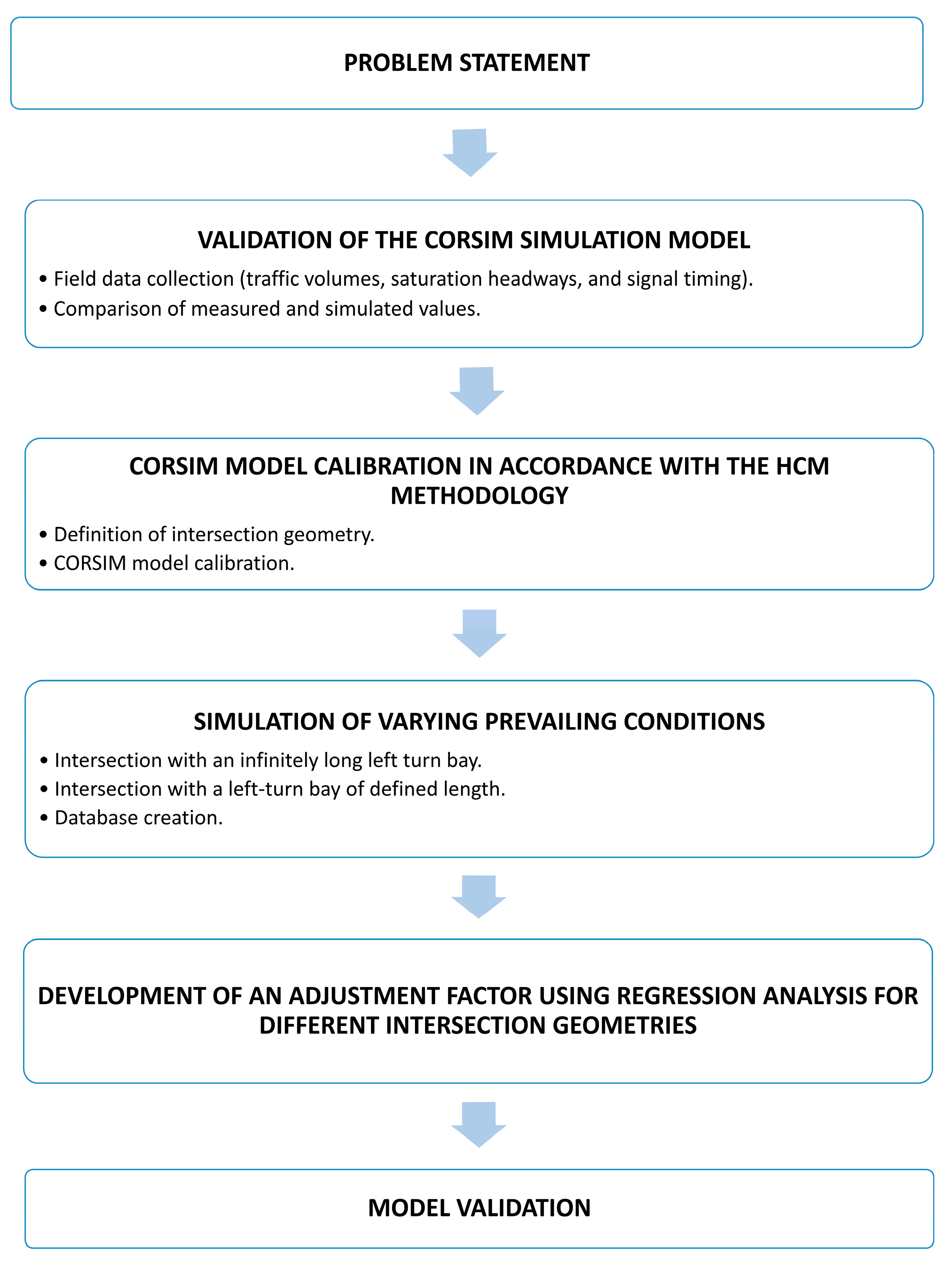
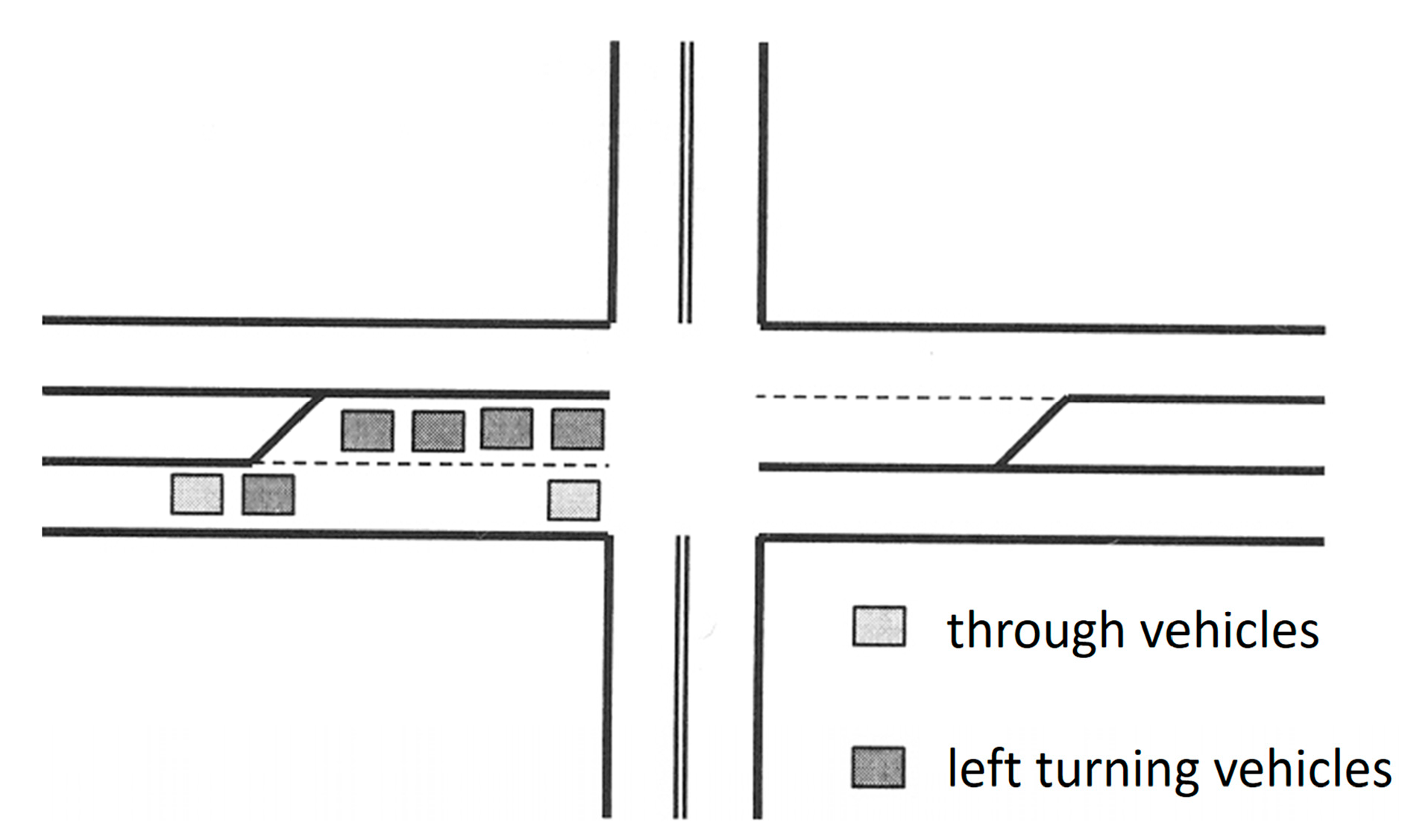
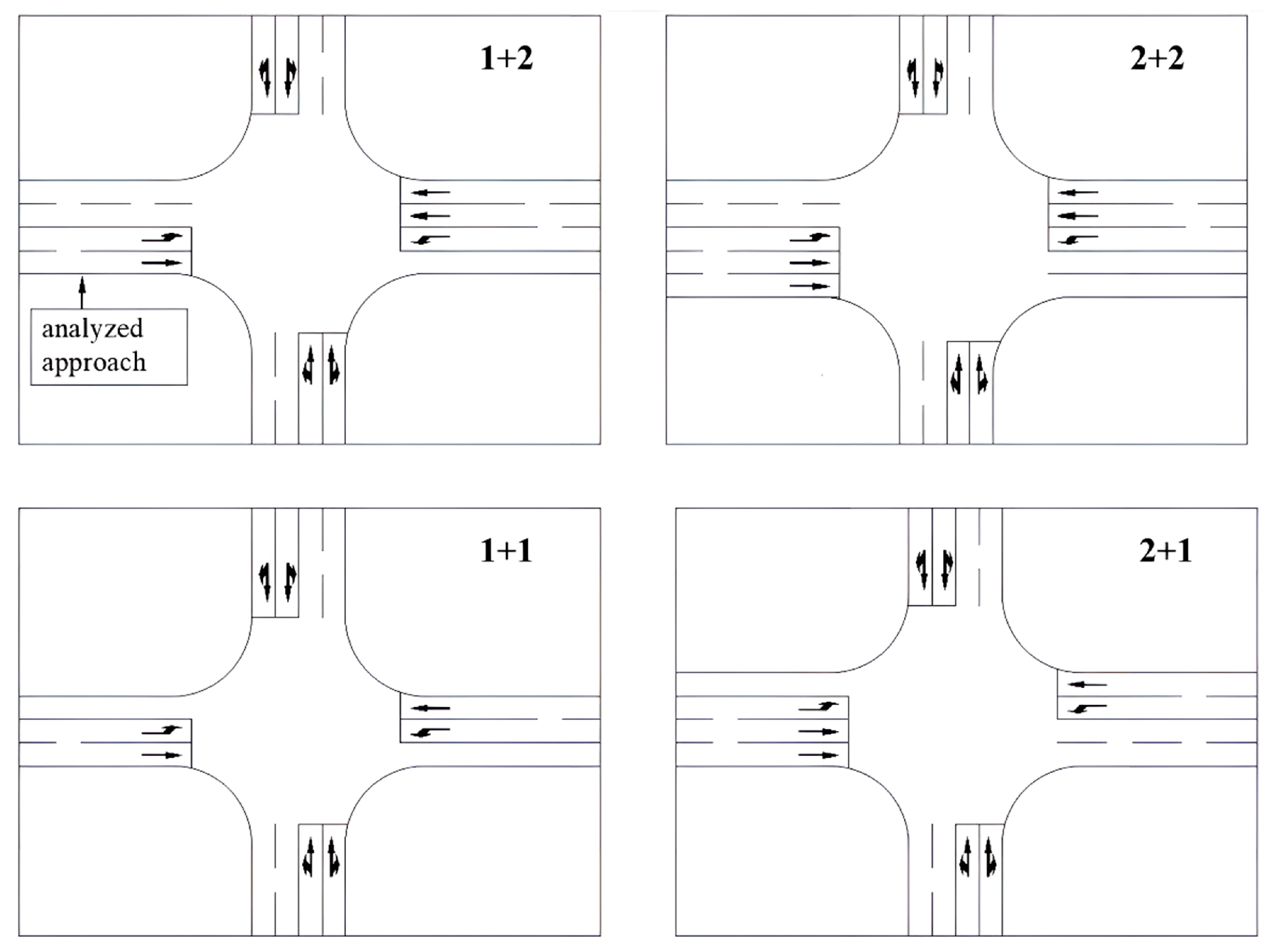
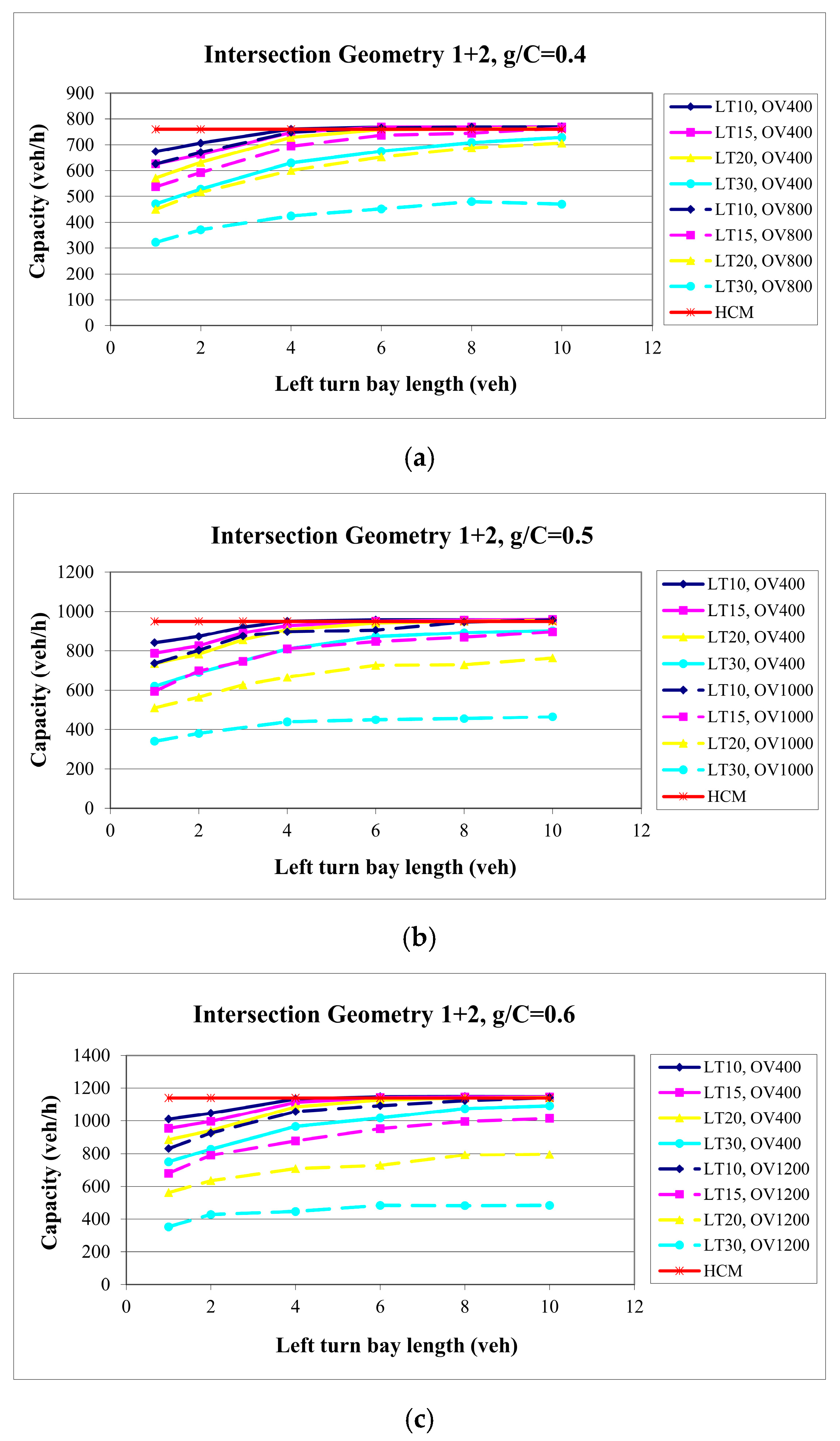
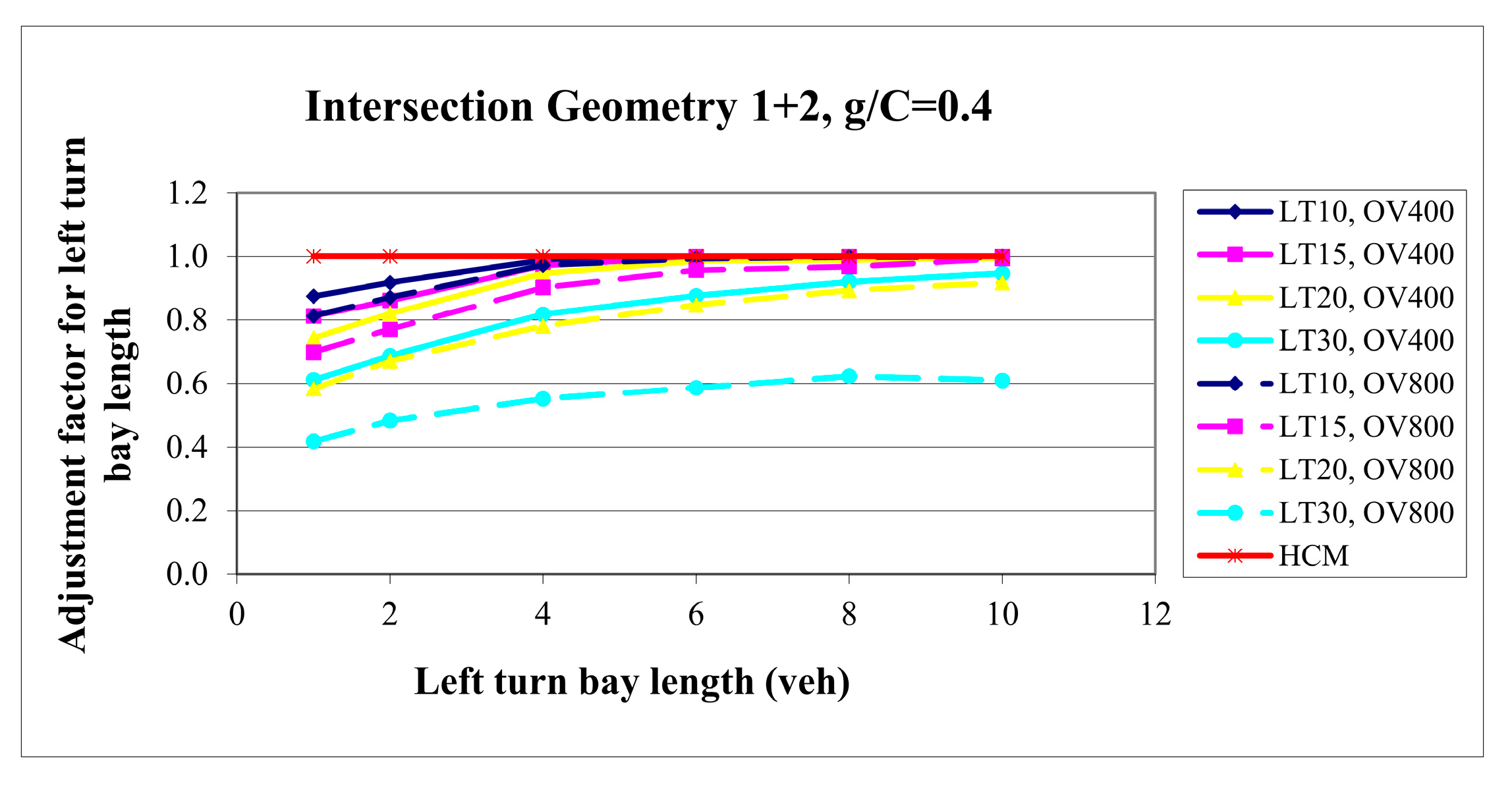
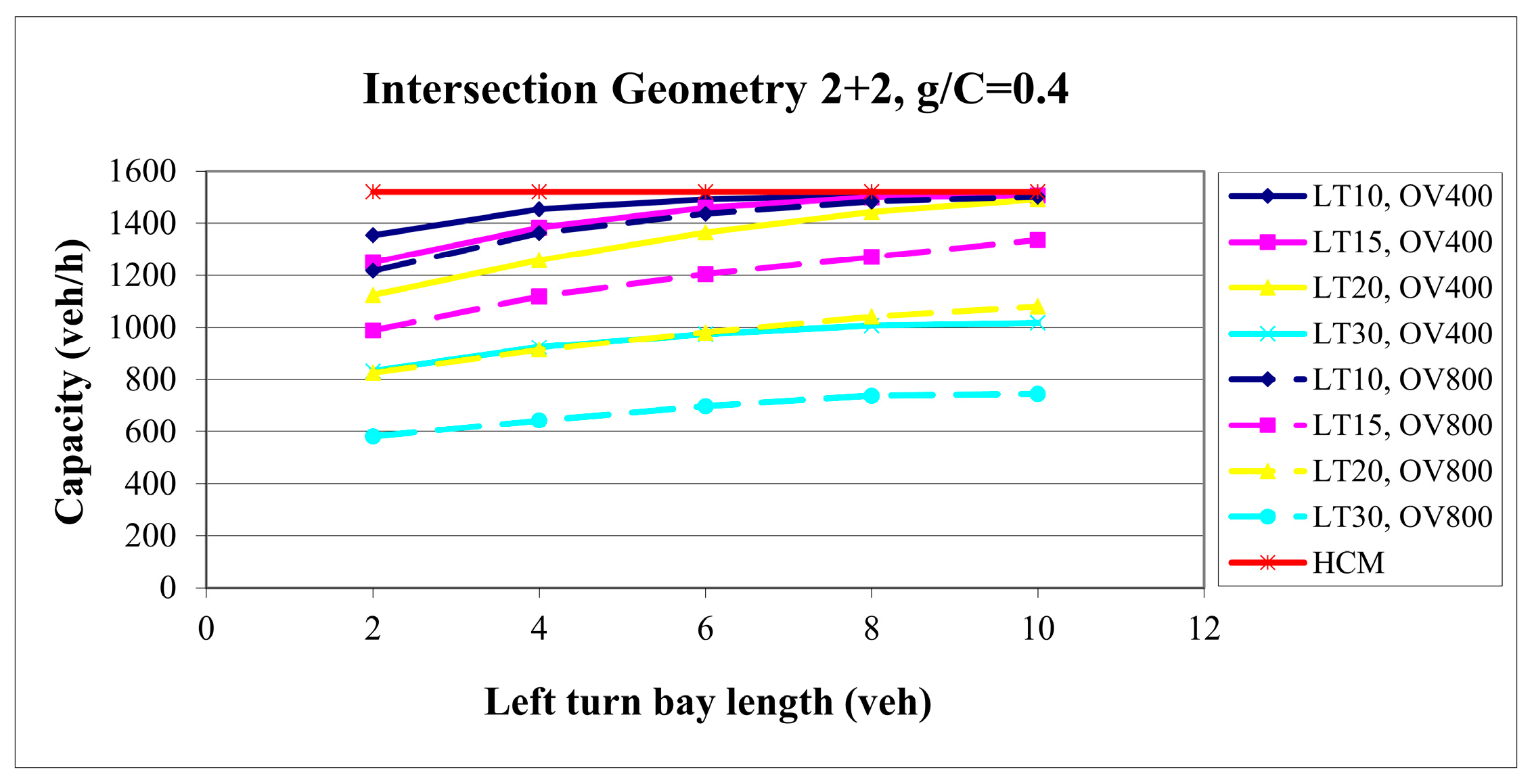
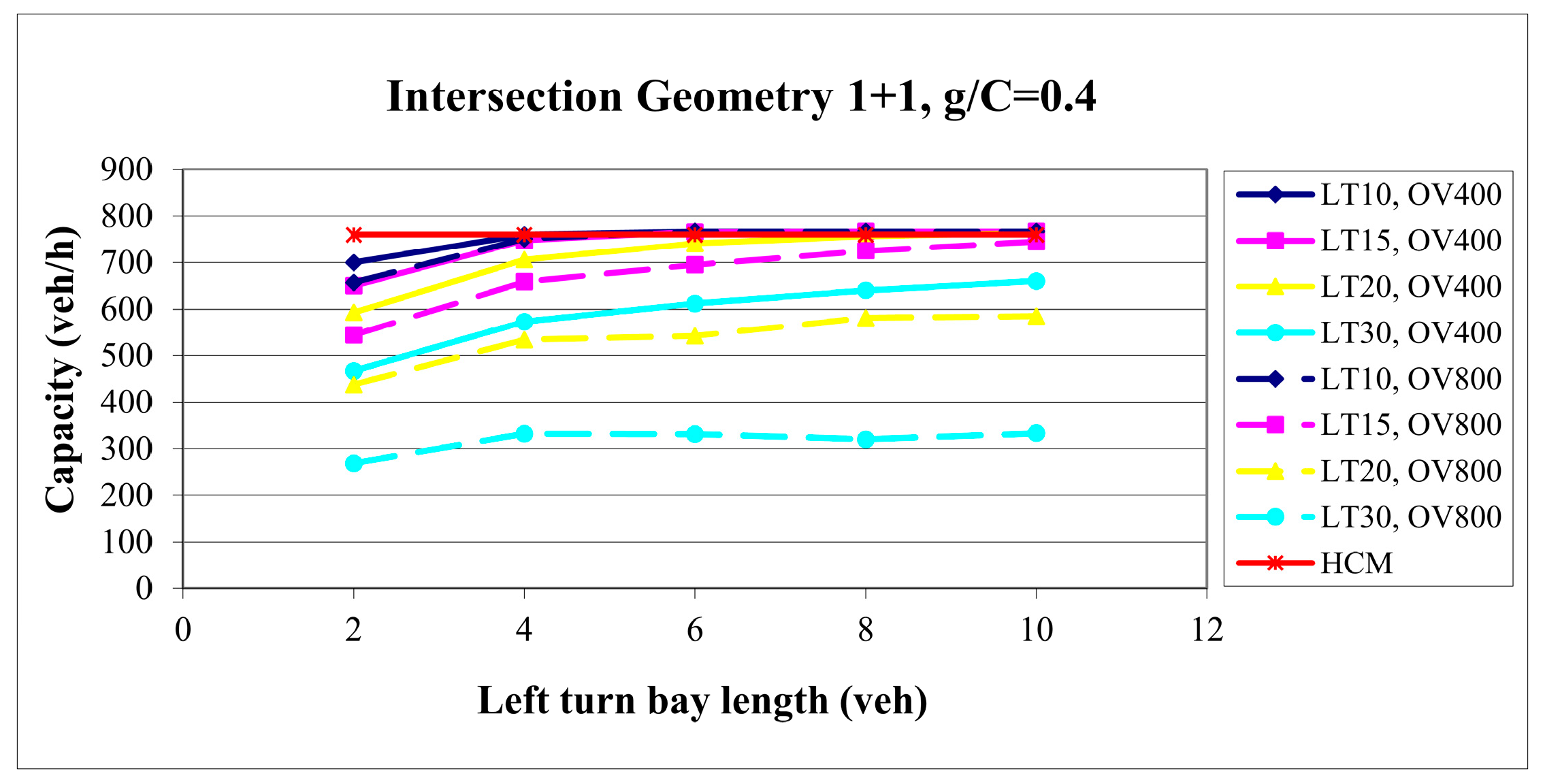
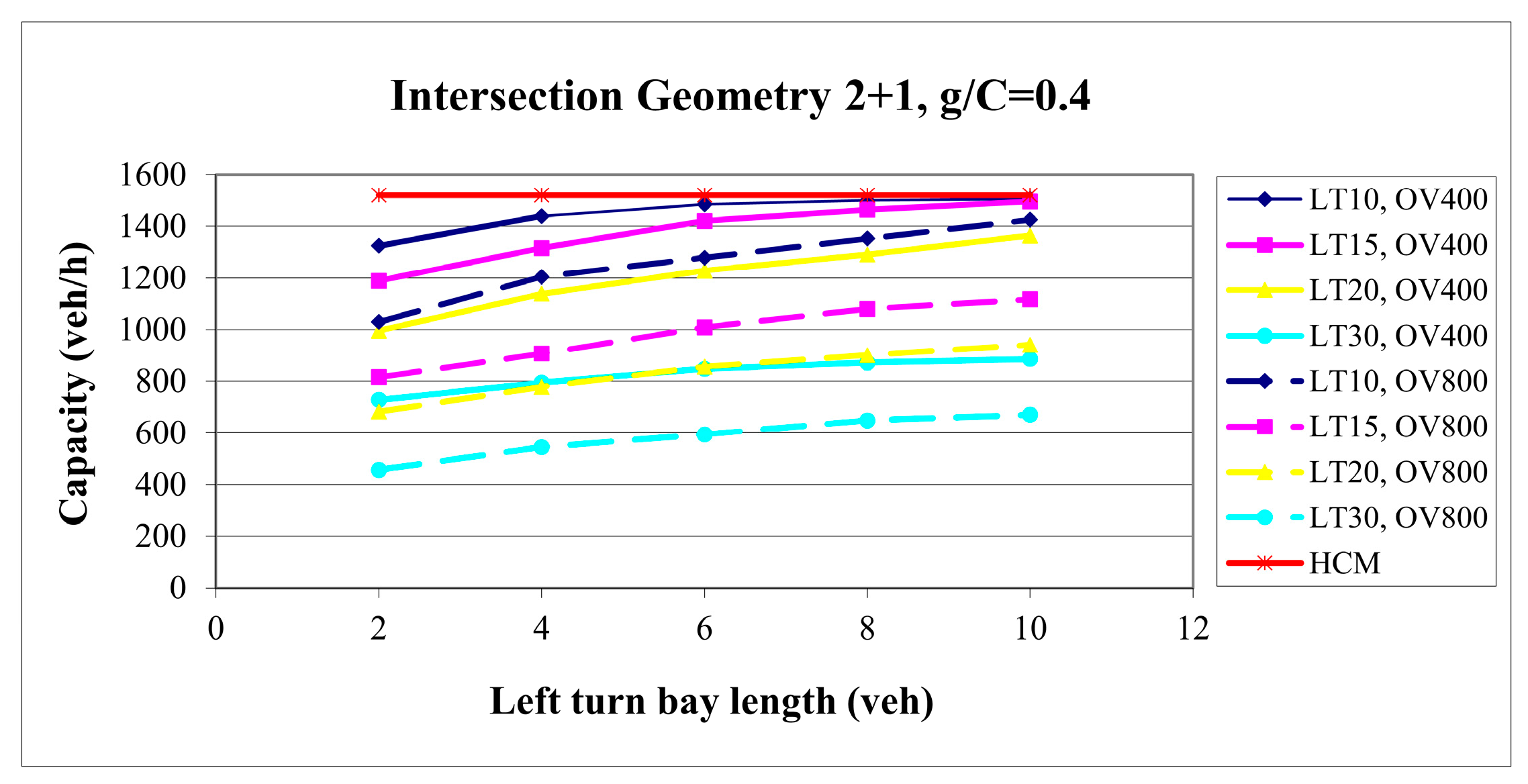
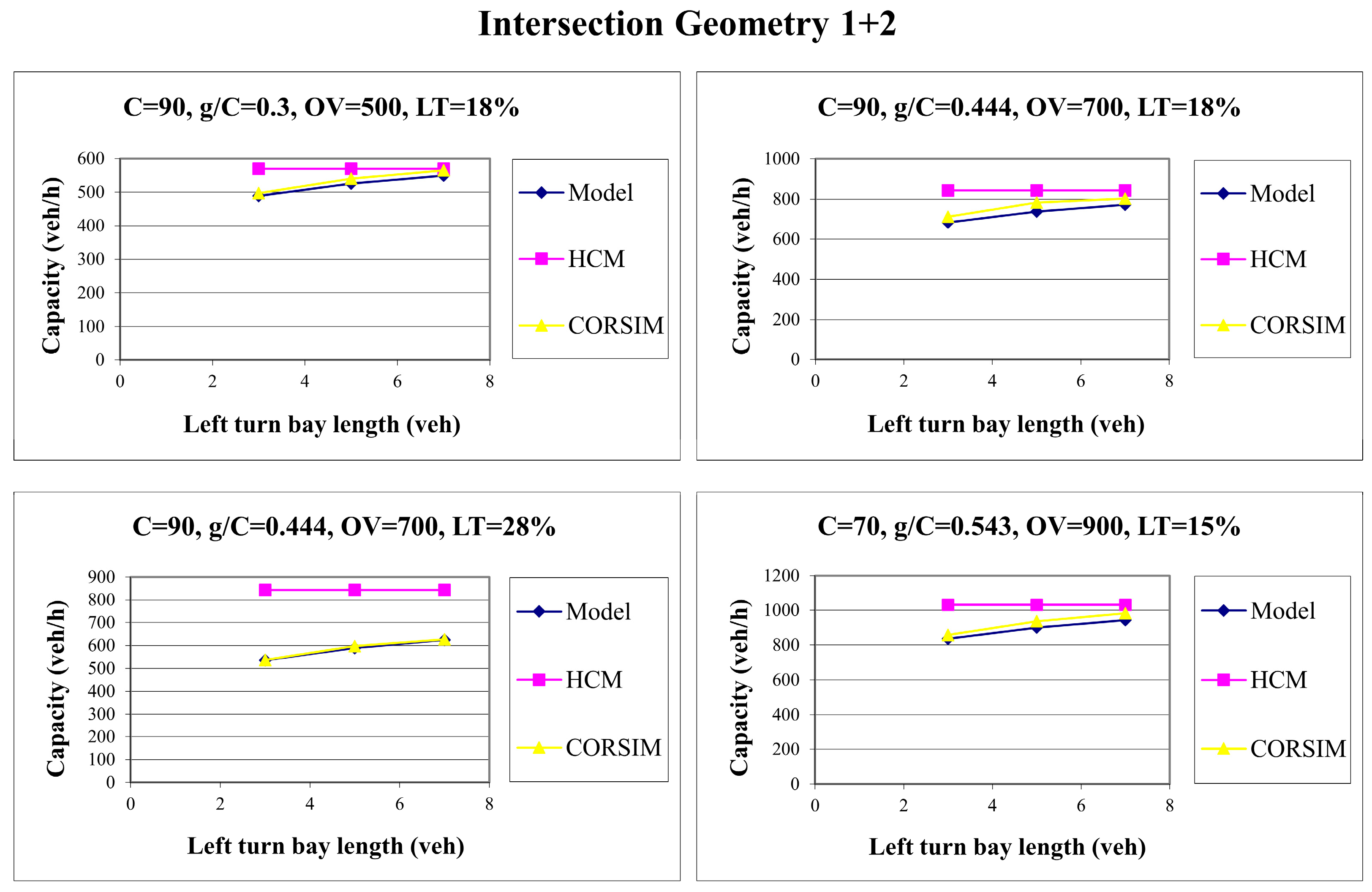
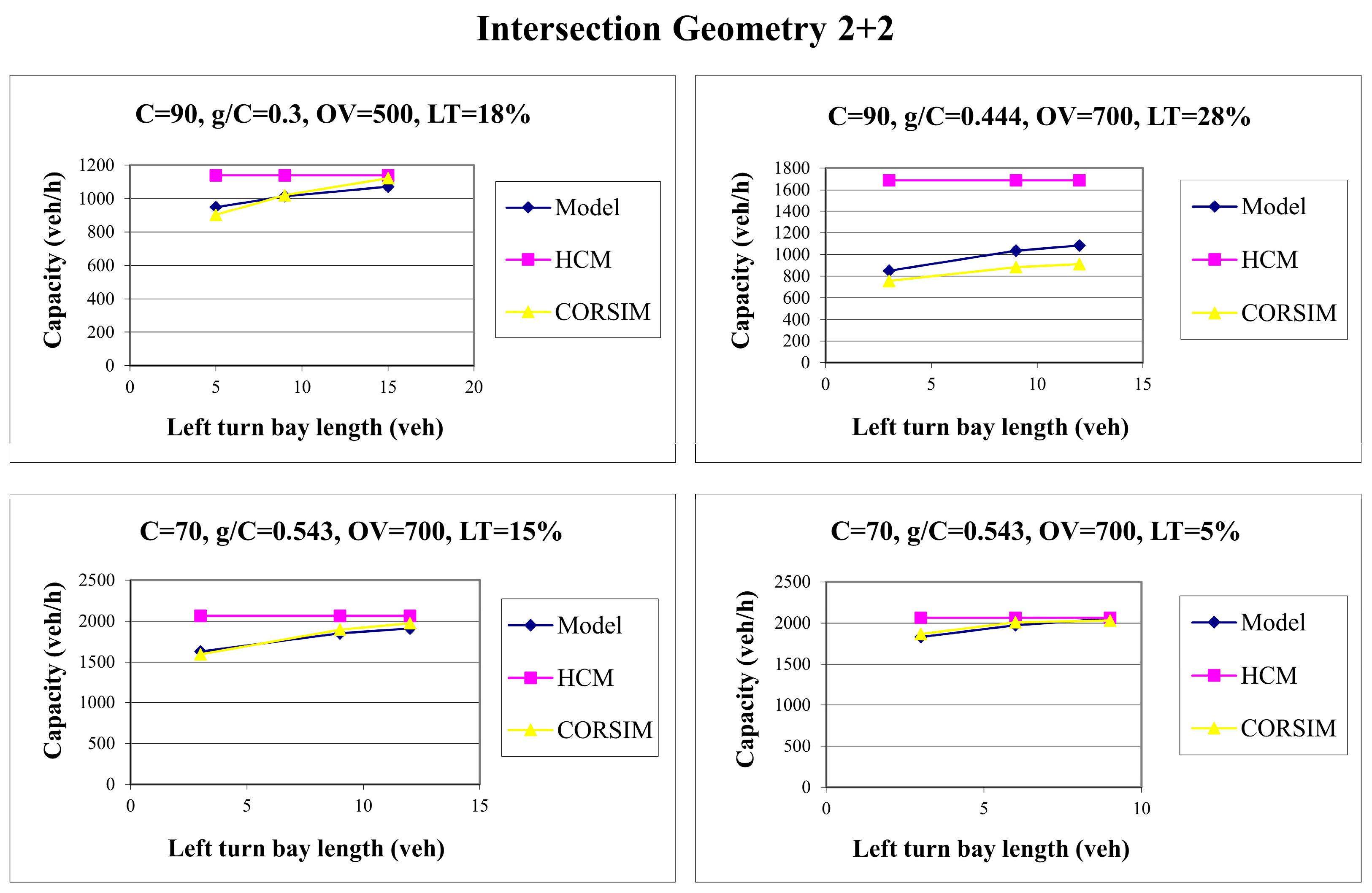
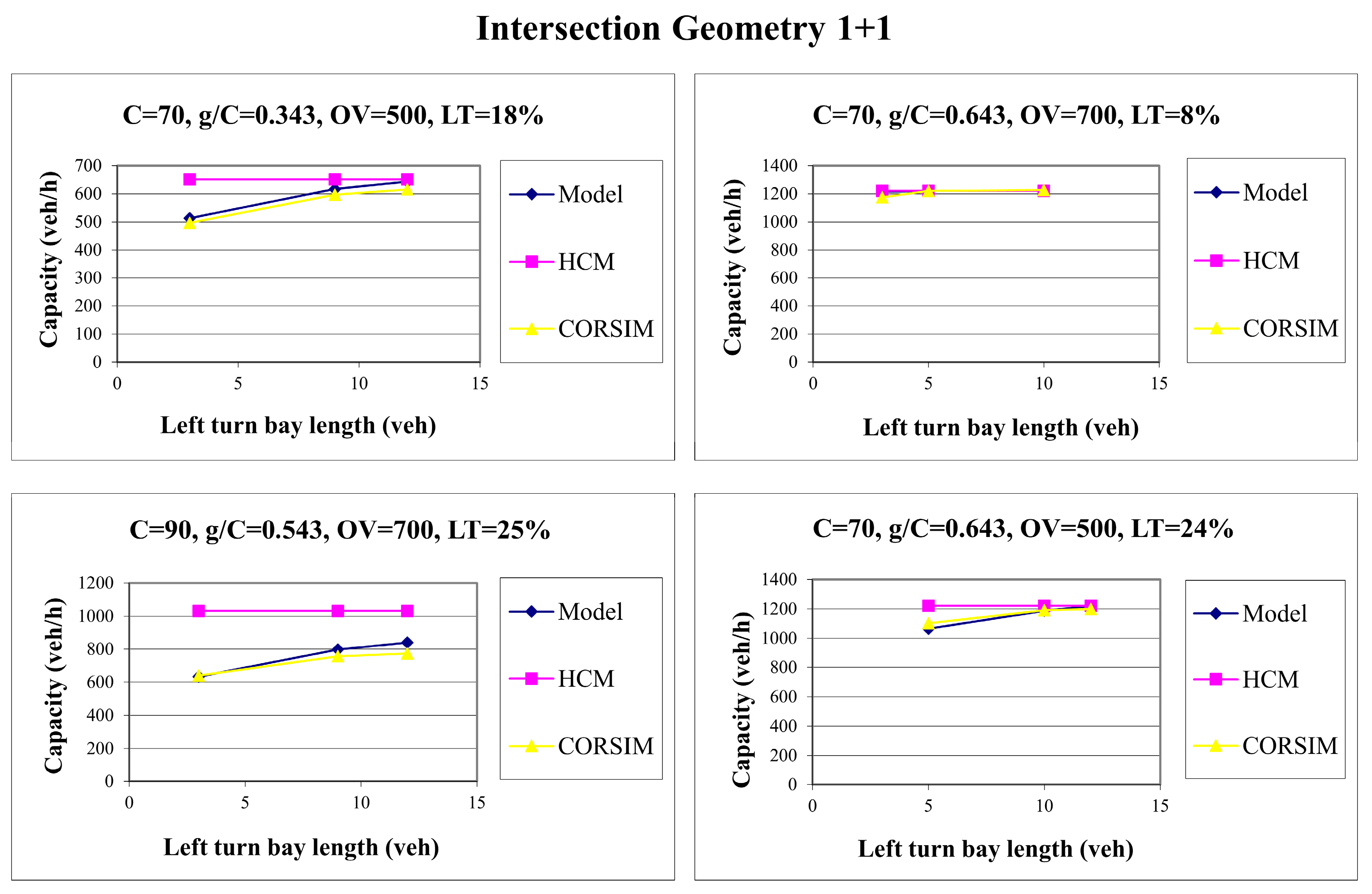
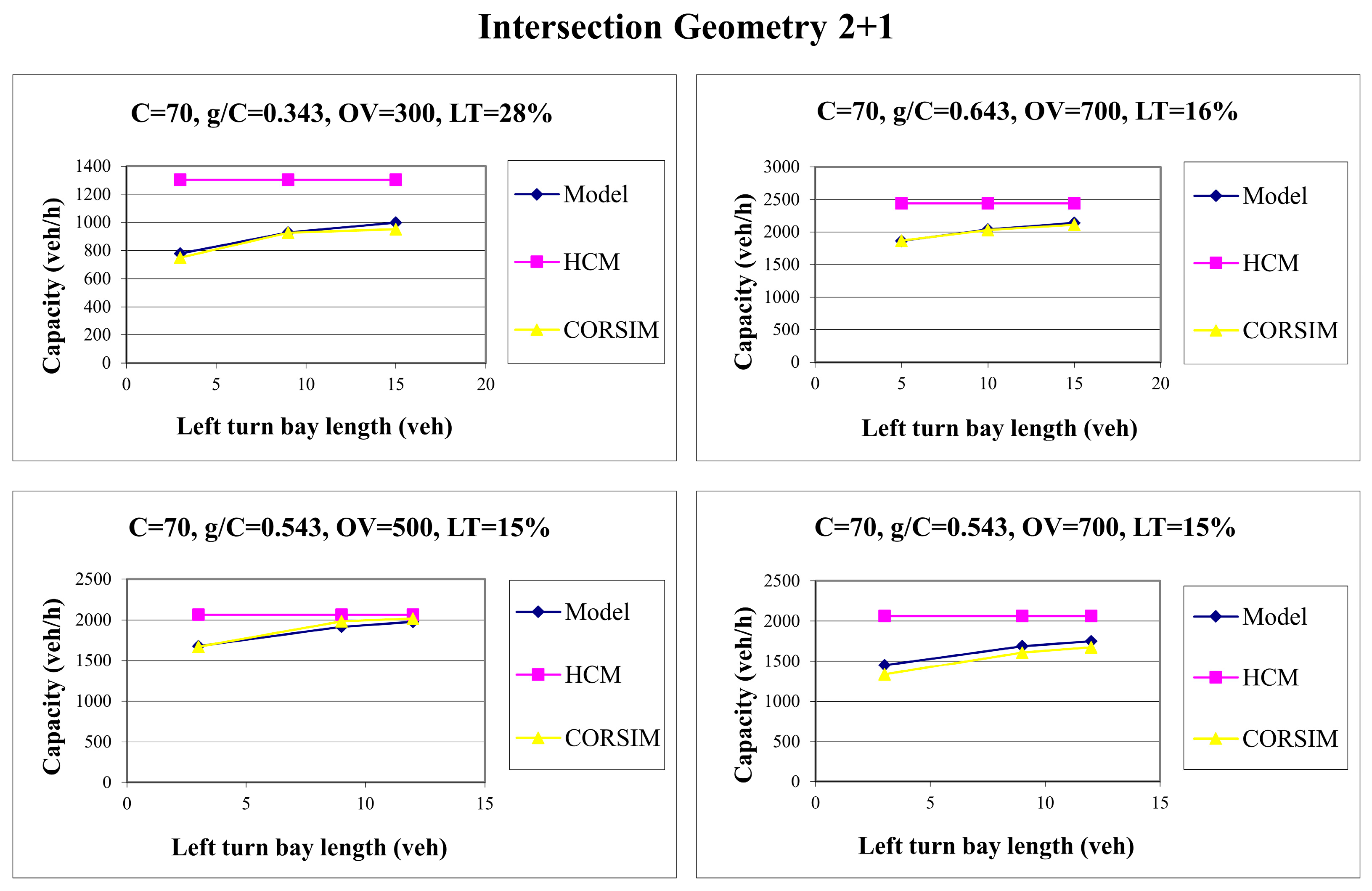
The motorized vehicle methodology in the Highway Capacity Manual (HCM) does not account for the effect of left-turn bay overflow, which is stated as a limitation of the methodology. In this study, an adjustment factor was developed to quantify the impact of left-turn bay length on the through lane capacity at signalized intersections. The adjustment factor was modeled based on a large number of scenarios generated using the CORSIM microsimulation model. These scenarios covered intersection geometries typical for two-phase signal control and included a wide range of traffic parameters (number of lanes, traffic volume, left-turn volume, left-turn bay length, cycle length, and green ratio). By comparing the capacity values obtained with a short left-turn bay to those with an infinitely long bay under identical other traffic conditions, it was possible to develop an adjustment factor that reflects the impact of turn bay overflow. A regression-based model was created and validated, showing very good agreement with the simulated values. The new adjustment factor provides an enhancement of the HCM estimation methodology that improves the accuracy of capacity and delay estimates in intersection evaluations as well as supports more effective intersection design and sustainable mobility. More accurate capacity estimation reduces congestion, travel delays, and vehicle stopping, directly contributing to sustainable transportation goals, lowering emissions, and supporting environmentally responsible urban mobility systems.
Keywords: signalized intersection; capacity; left-turn bay; traffic simulation; regression analysis; adjustment factor; sustainable transportation signalized intersection; capacity; left-turn bay; traffic simulation; regression analysis; adjustment factor; sustainable transportation