



Methodology of Eco-Design and Software Development for Sustainable Product Design

Abstract
1. Introduction
1.1. Literature Review on LCA Methods and Tools
1.2. Results of the Research
- Need for quantitative results for ecological design decisions.
- Lack of time and knowledge of designers regarding ecological data management and methods to apply eco-design improvements to their products.
- Need for friendly software tools aligned to the development process and culture in the company to ensure the acceptance of the methodology.
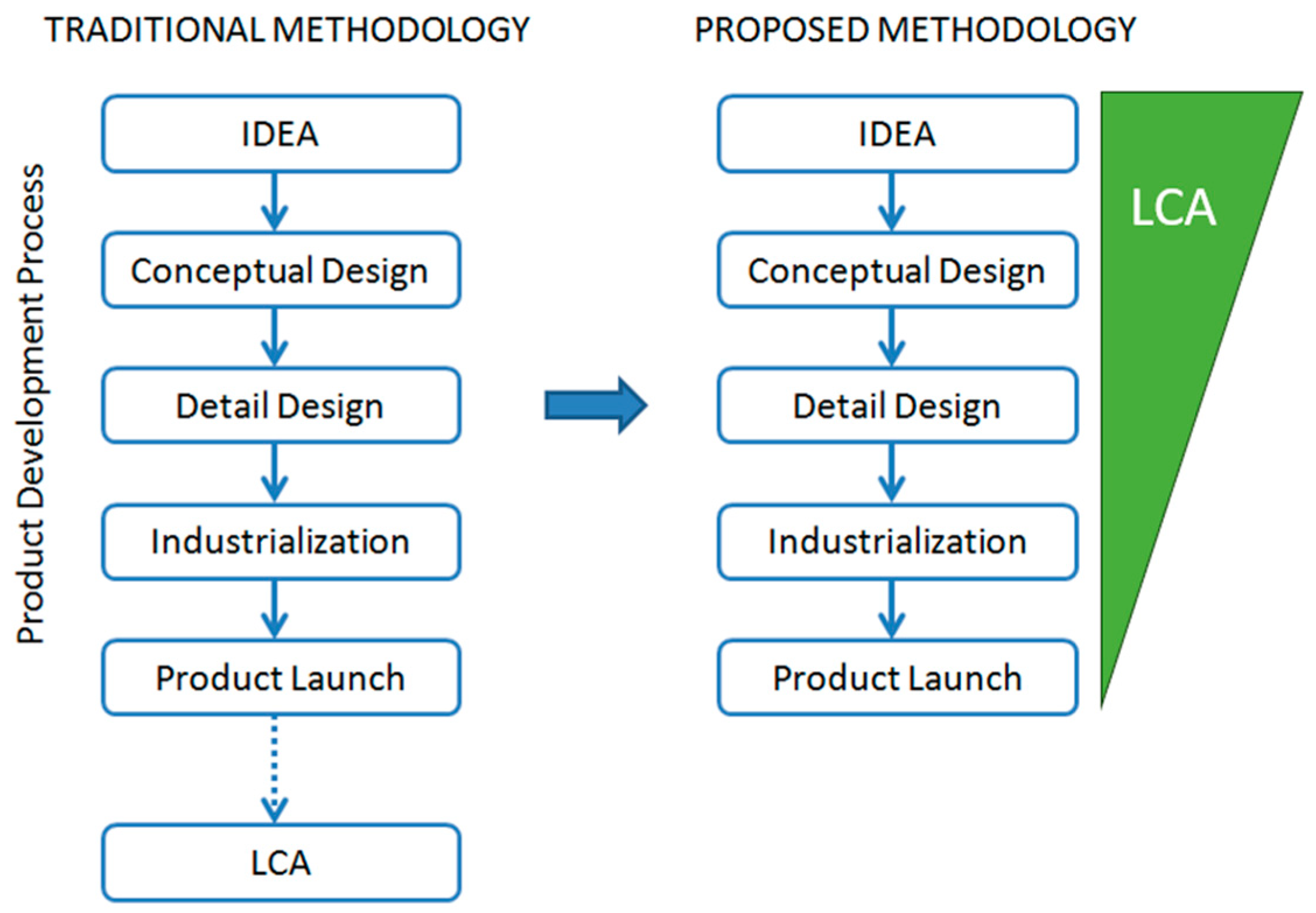
- Adaptation of LCA stages to the development phase, so we ensure quantitative results at earlier phases of development, while optimizing all LCA assessment tasks to be applied during the design phase.
- Databases customized for the product of the company to reduce time in calculation data management and to avoid the need for designers with specific knowledge of environmental calculation methods and environmental inventory creation.
- Software tool development, optimizing the data input process and results analysis through a friendly interface, and with an intuitive usage inspired by CAD software, so no specific training is needed for designers, and the usage will be intuitive to them, fostering the introduction of eco-design principles during the design process.
2. Method
2.1. LCA Methodology Adaptation
2.1.1. Scope Definition
2.1.2. Life Cycle Inventory (LCI)
2.1.3. Impact Assessment
2.1.4. Results Analysis
2.2. Databases Customization
2.2.1. Materials Database
- Basic material: materials directly taken from commercial databases.
- Customized material: materials that have been processed by combining basic materials. For example, plastic combined with glass fiber, to calculate a filled plastic. These materials are customized for the products of the company, according to the percentages of its composition, which offers more accurate results than using the standard unfilled plastic if the required material is not available in the commercial databases.
- Material + process: materials whose manufacturing process is usually unique, due to its characteristics. The dataset can include the environmental burden of the material plus its manufacturing process. A representative example could be a thermoplastic material and the injection molding process. With these elements, the data input process is reduced because the designer does not need to introduce both types of data.
- Whole elements: complete products usually purchased from suppliers, such as electrical wiring, connectors, etc., where the designer has no influence to modify the design to optimize the environmental impact. It is not always possible to perform the LCA of these elements during the design process, so the LCA of these elements should be previously performed and included in this database. Thus, the designer just needs to select the element to take it into account.
2.2.2. Processes Database
- Basic process: processes directly taken from commercial databases.
- Customized processes: processes customized through their own process data such as, for example, real power consumption measurements of machines in the company. To adapt this process, EcoInvent general processes are recalculated with this kind of data.
- Processes summation: Different processes that may come together are included in just one process in the database. For example, the lamination and drawing of a metal sheet. Both the basic process and customized process can be summed.
- Scrap processes: The environmental impact of production scraps for metal, plastic, and other processes is also calculated. These processes are necessary because the methodology works with the net weight of a product; therefore, the environmental impact due to the scrap weight is also required.
- Electrical consumption: These elements are related only to the electrical consumption of products that consume electricity during their use phase, such as electronic products.
2.2.3. Transport Database
2.3. Software
2.3.1. Databases Module
2.3.2. Data Input Module
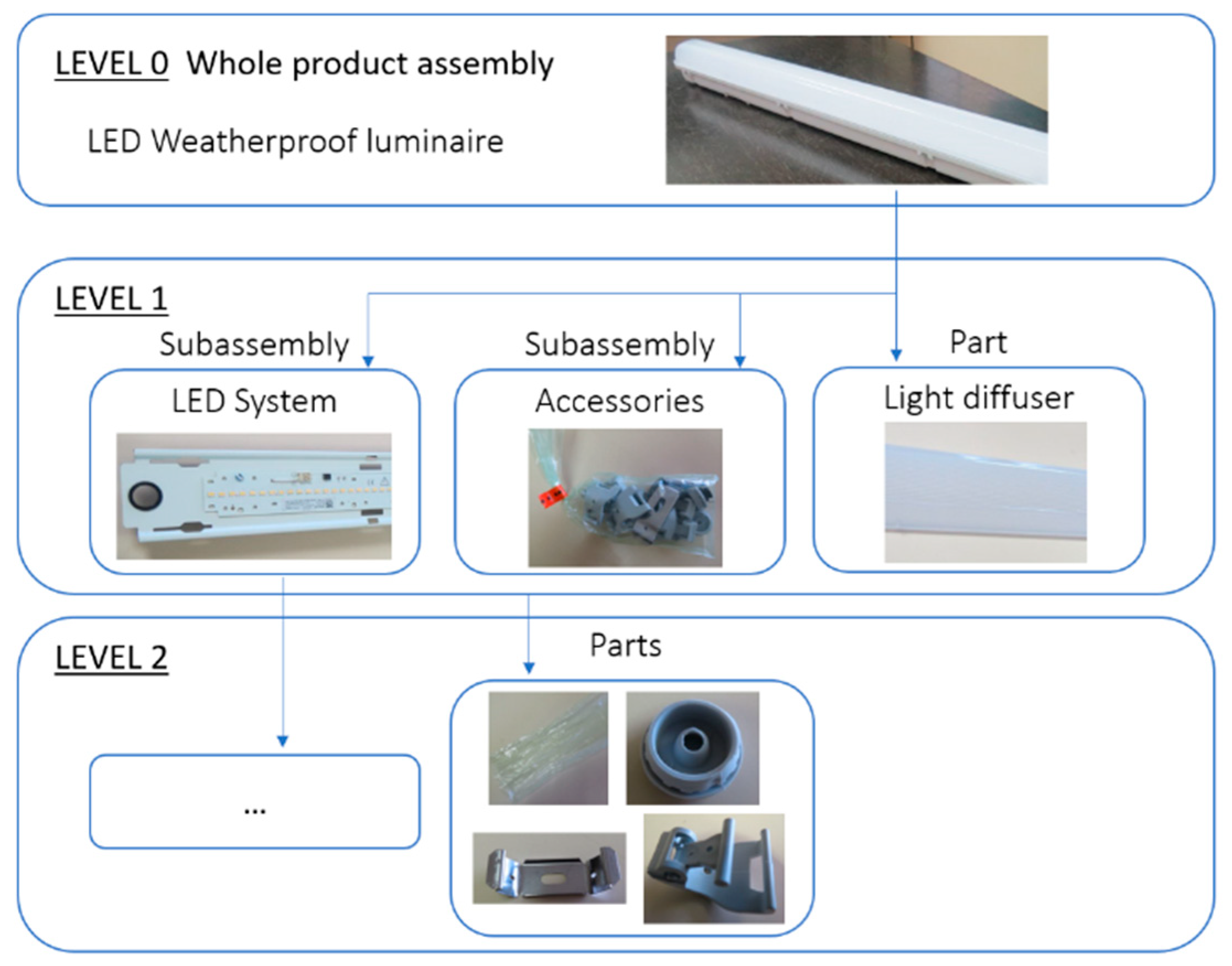
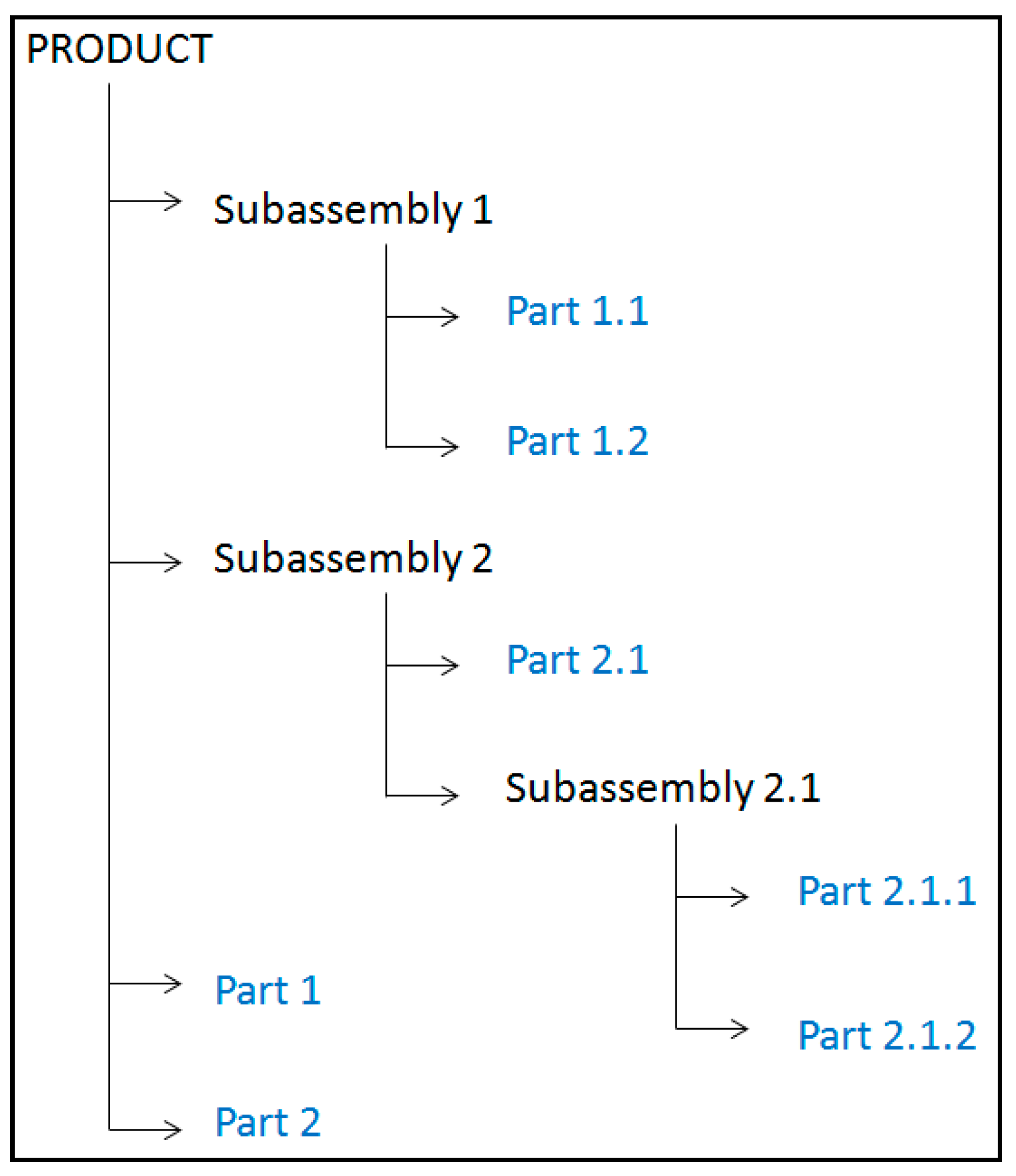
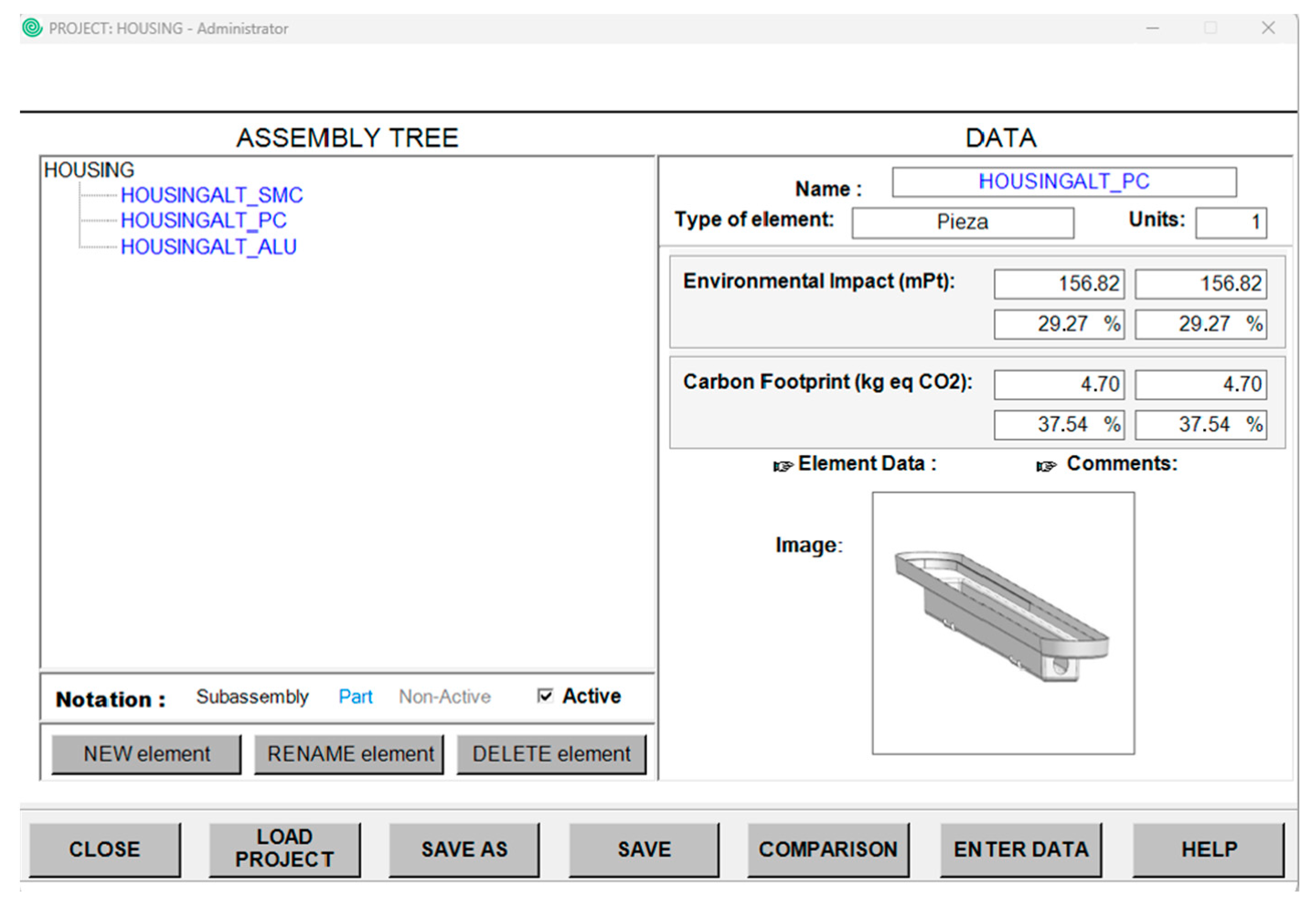
- Product tree structure construction: The software generates a product structure based on a template as previously shown. Figure 6 shows an example of this structure, which gives an overview of the mechanical construction structure of the product.
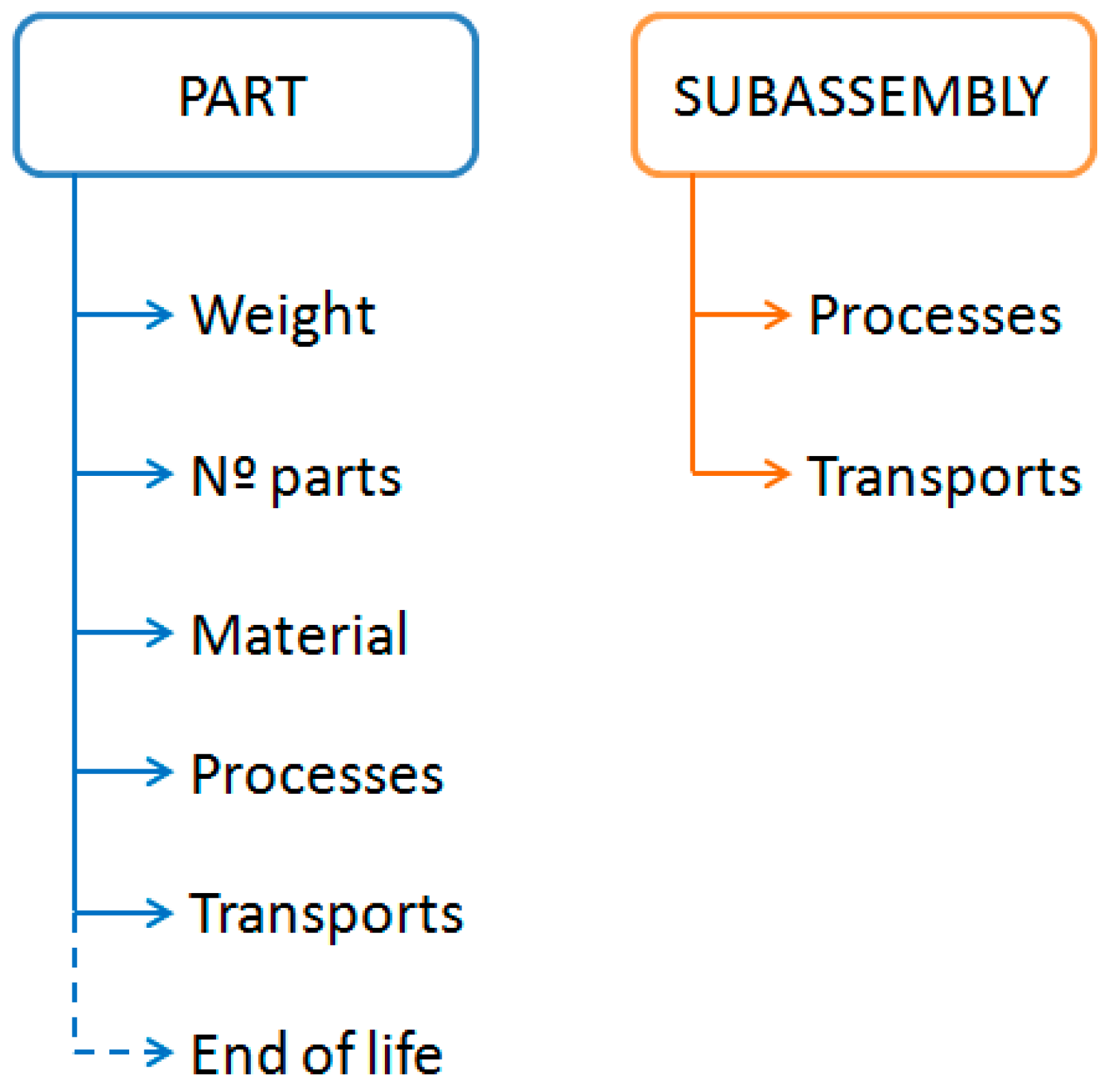
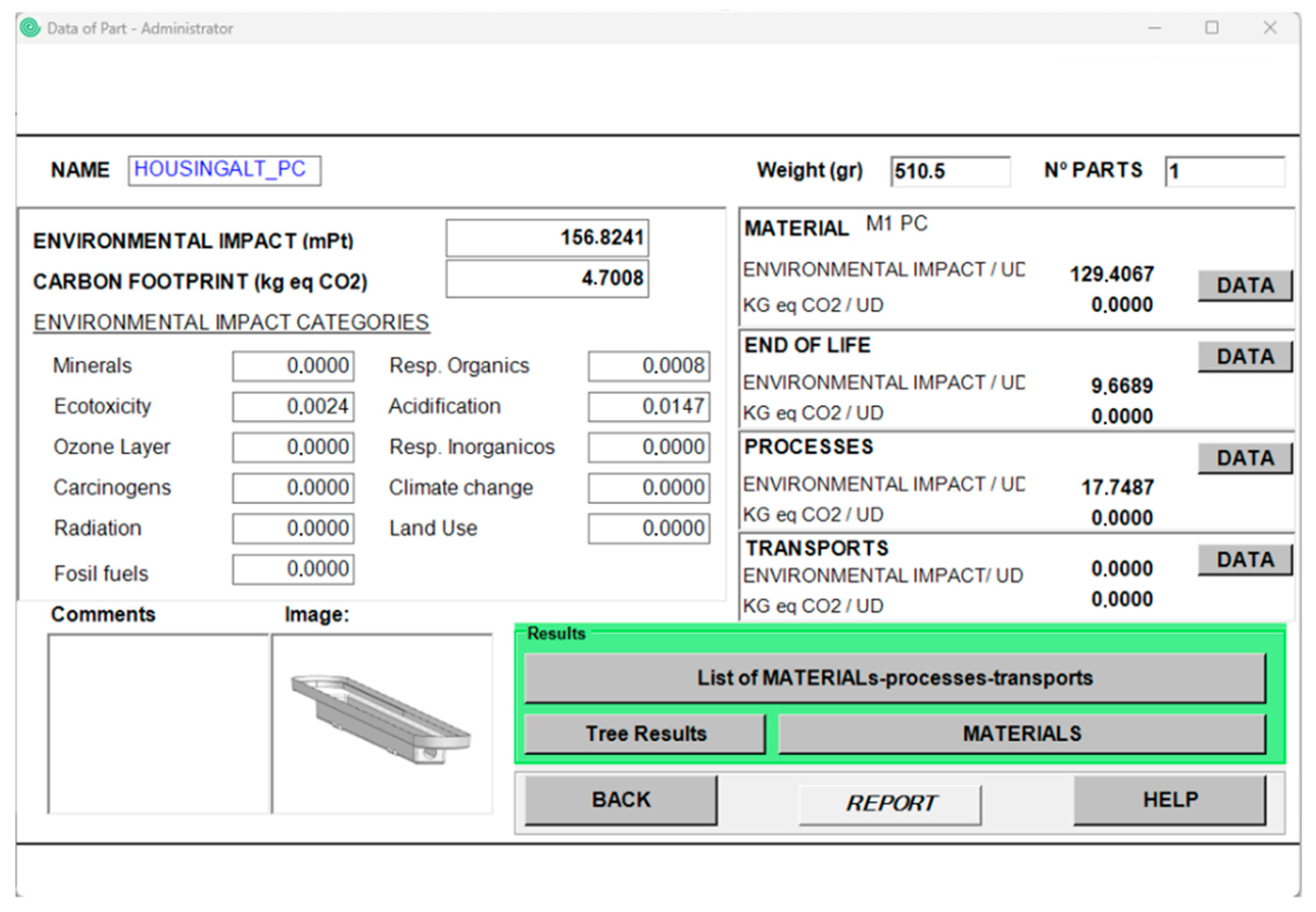
- Data input for each element in the tree structure: For each element, the software requires the data shown in Section 2.1.2. Materials, processes, transports, and end of life are introduced from the databases. The main calculation variable is the weight.
2.3.3. Results Module
3. A Case Study
3.1. Customization of the Databases
- Identification of all the materials and processes used by the manufacturer for the production of these LED weatherproof luminaires.
- In-depth analysis of all these elements to evaluate their environmental impact and include them in the databases.
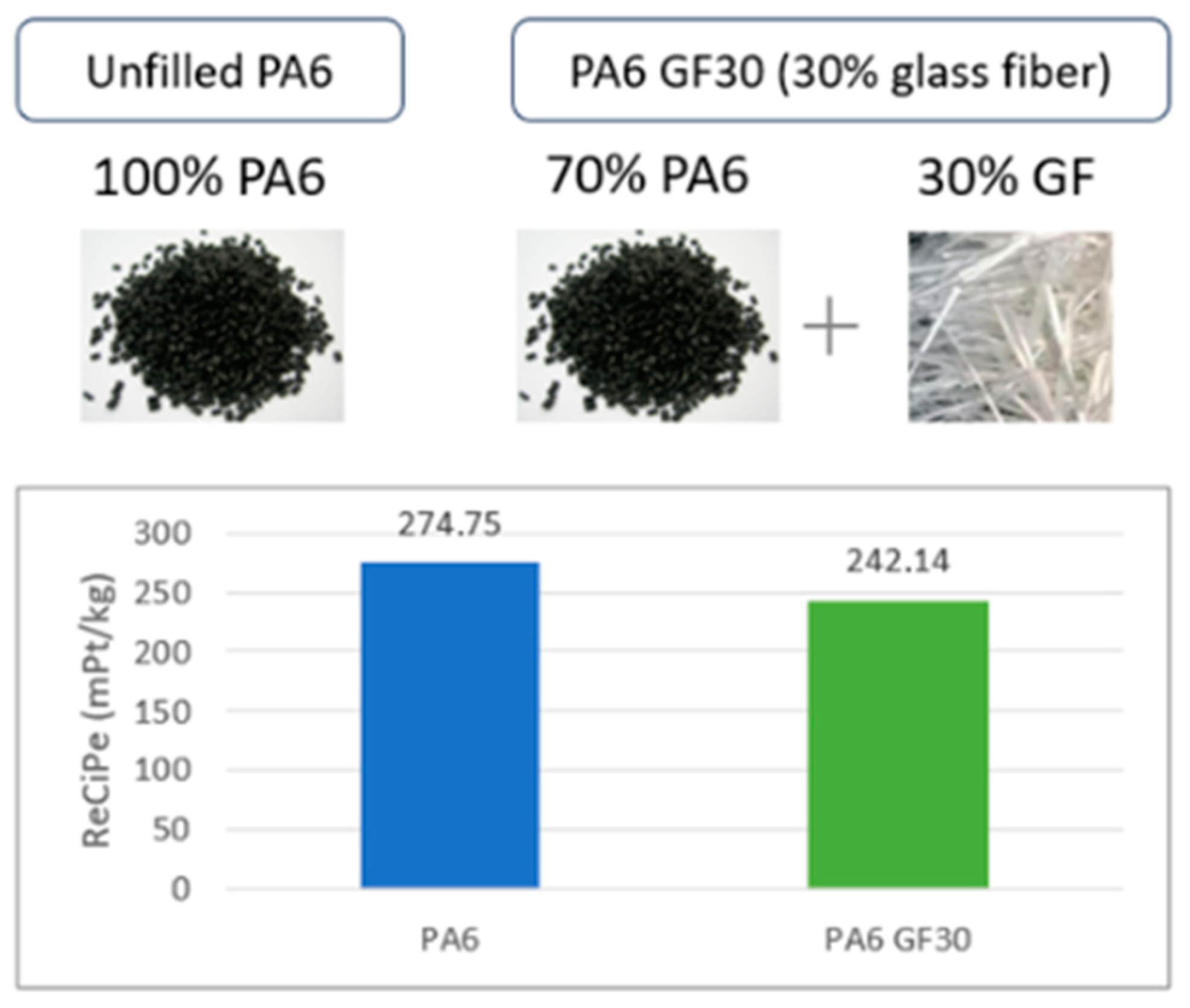
- PA6 GF30: Polyamide 6 reinforced with 30% glass fiber is the main plastic used by the company for luminaires closing clips. To improve the accuracy of the environmental impact calculation for these parts, a new dataset is created for the material PA6 GF30, combining 70% PA6 and 30% glass fiber environmental data from the commercial database, so the customized database now includes this particularized material, which is more accurate that the non-filled PA6 found in the commercial database (Figure 7).
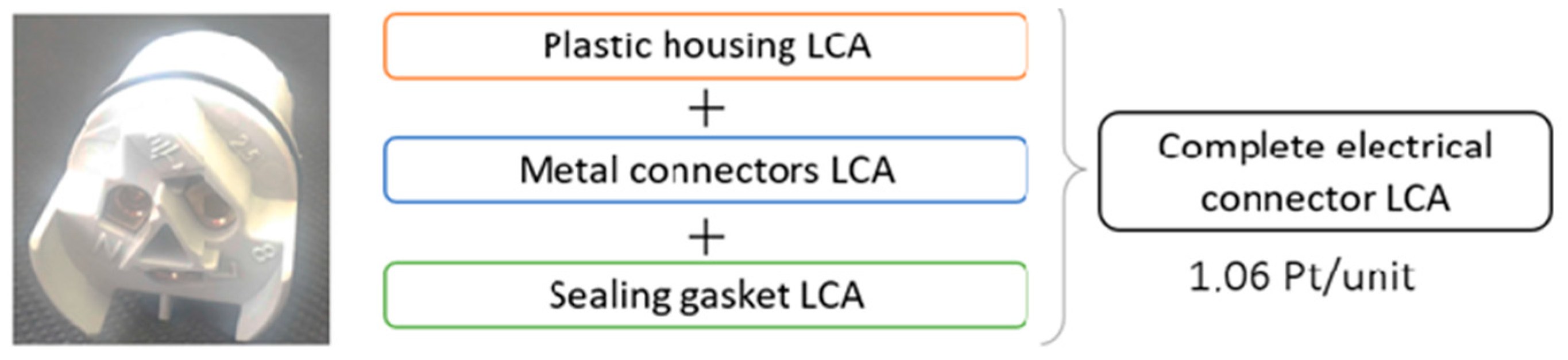
- Electrical connector: This is a complex part, composed by a plastic housing, a sealing gasket, and several metallic parts for the electrical connection. The impact of this connector is calculated entirely through its life cycle, and included in the database as an element, whose environmental impact is the sum of the impact of its elements, so it can be directly selected by the designer and included in the whole impact in just one step (Figure 8). Designers are not able to influence its design to reduce the environmental impact, so it is not optimum for them to invest effort into configuring this connector in the software introducing the different elements. However, thanks to this customized dataset, they can introduce it very easily in the case of calculating the environmental impact of the whole luminaire.
3.2. Calculation Cases
- Design alternative comparison: Different design alternatives have been analyzed for the diffuser, housing, and closing clips.
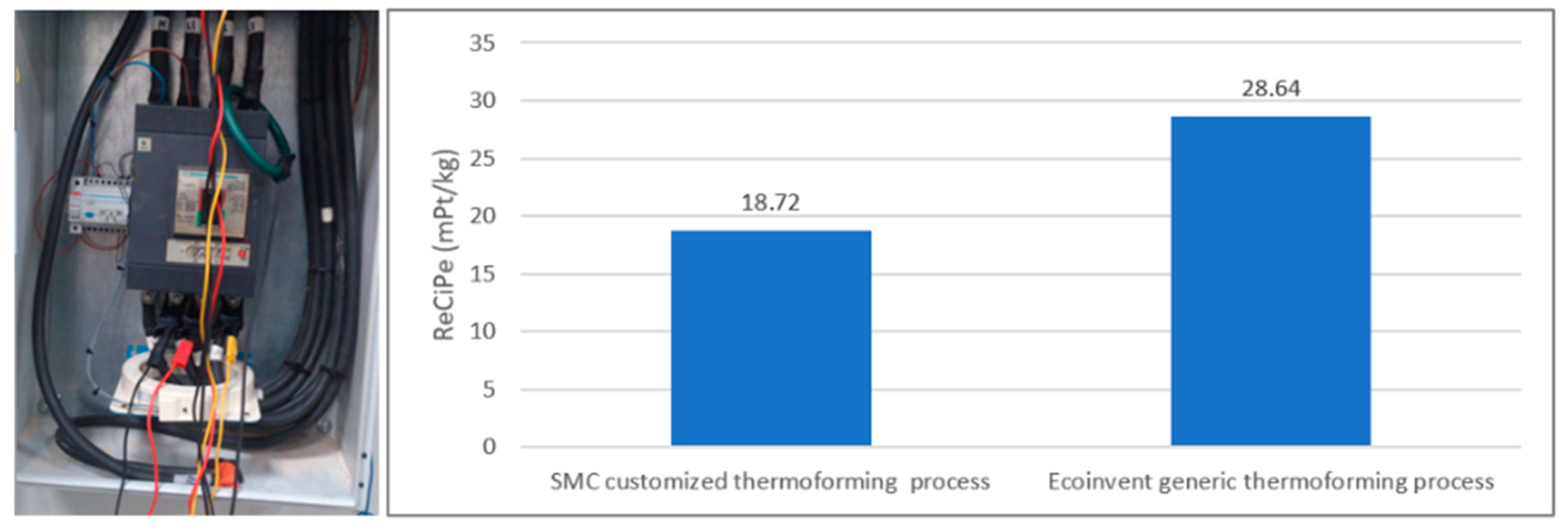
- Production process comparison: The thermoforming process has been analyzed, comparing results with customized SMC thermoforming data and generic process information from EcoInvent.
- EoL scenario comparison: packaging box end-of-life comparison in Germany, Spain, and European average.
3.2.1. Design Alternatives Comparison
- Diffuser: The suitable materials for this part are polycarbonate (PC), polymethylmethacrylate (PMMA), and styrene-acrylonitrile (SAN).
- Closing clips: There are two closing clip alternatives: injected plastic (polyamide 6) and metal (stainless steel).
- Housing: The suitable materials for the housing are aluminum, PC, and SMC.
- Diffuser: SAN
- Closing clips: PA6
- Housing: SMC
3.2.2. Production Process Comparison
3.2.3. EoL Scenario Comparison
4. Conclusions
Limitations of the Study and Future Works
Author Contributions
Funding
Institutional Review Board Statement
Informed Consent Statement
Data Availability Statement
Acknowledgments
Conflicts of Interest
References
- European Commission. Attitudes of European Citizens towards the Environment; s.l.: Special Eurobarometer 416; European Commission: Brussels, Belgium, 2014. [Google Scholar]
- European Commission. Attitudes of Europeans towards the Environment: Eurobarometer; European Commission: Brussels, Belgium, 2020. [Google Scholar]
- Plouffe, S.; Lanoie, P.; Berneman, C.; Vernier, M.-F. Economic benefits tied to ecodesign. J. Clean. Prod. 2011, 19, 573–579. [Google Scholar] [CrossRef] [Scilit]
- Zhang, F.; Zwolinski, P. Integrating environmental considerations into companies: A network of actions to define environmental roadmaps. J. Clean. Prod. 2017, 140, 1699–1718. [Google Scholar] [CrossRef] [Scilit]
- Schäfer, M.; Löwer, M. Ecodesign—A Review of Reviews. Sustainability 2020, 13, 315. [Google Scholar] [CrossRef] [Scilit]
- Watz, M.; Hallstedt, S.I. Towards sustainable product development—Insights from testing and evaluating a profile model for management of sustainability integration into design requirements. J. Clean. Prod. 2022, 346, 131000. [Google Scholar] [CrossRef] [Scilit]
- Pruhs, A.; Kusch, A.; Woidasky, J.; Viere, T. Design for circularity in manufacturing industries—Operationalisation and decision support. Resour. Conserv. Recycl. 2024, 202, 107376. [Google Scholar] [CrossRef] [Scilit]
- Corona, B.; Shen, L.; Reike, D.; Carreón, J.R.; Worrell, E. Towards sustainable development through the circular economy—A review and critical assessment on current circularity metrics. Resour. Conserv. Recycl. 2019, 151, 104498. [Google Scholar] [CrossRef] [Scilit]
- Borchardt, M.; Wendt, M.H.; Pereira, G.M.; Sellitto, M.A. Redesign of a component based on ecodesign practices: Environmental impact and cost reduction achievements. J. Clean. Prod. 2011, 19, 49–57. [Google Scholar] [CrossRef] [Scilit]
- Brambila-Macias, S.A.; Sakao, T. Effective ecodesign implementation with the support of a lifecycle engineer. J. Clean. Prod. 2020, 279, 123520. [Google Scholar] [CrossRef] [Scilit]
- Schöggl, J.-P.; Baumgartner, R.J.; O’Reilly, C.J.; Bouchouireb, H.; Göransson, P. Barriers to sustainable and circular product design—A theoretical and empirical prioritisation in the European automotive industry. J. Clean. Prod. 2024, 434, 140250. [Google Scholar] [CrossRef] [Scilit]
- Buchert, T.; Halstenberg, F.A.; Bonvoisin, J.; Lindow, K.; Stark, R. Target-driven selection and scheduling of methods for sustainable product development. J. Clean. Prod. 2017, 161, 403–421. [Google Scholar] [CrossRef] [Scilit]
- Poulikidou, S.; Björklund, A.; Tyskeng, S. Empirical study on integration of environmental aspects into product development: Processes, requirements and the use of tools in vehicle manufacturing companies in Sweden. J. Clean. Prod. 2014, 81, 34–45. [Google Scholar] [CrossRef] [Scilit]
- Gremyr, I.; Siva, V.; Raharjo, H.; Goh, T.N. Adapting the Robust Design Methodology to support sustainable product development. J. Clean. Prod. 2014, 79, 231–238. [Google Scholar] [CrossRef] [Scilit]
- van der Zwaag, M.; Wang, T.; Bakker, H.; van Nederveen, S.; Schuurman, A.; Bosma, D. Evaluating building circularity in the early design phase. Autom. Constr. 2023, 152, 104941. [Google Scholar] [CrossRef] [Scilit]
- Dervishaj, A.; Gudmundsson, K. From LCA to circular design: A comparative study of digital tools for the built environment. Resour. Conserv. Recycl. 2024, 200, 107291. [Google Scholar] [CrossRef] [Scilit]
- Lindahl, M. Designer’s Utilization of and Requirements on Design for Environment (DfE) Methods and Tools. In Proceedings of the 2005 4th International Symposium on Environmentally Conscious Design and Inverse Manufacturing, Tokyo, Japan, 12–14 December 2005. [Google Scholar]
- Lindahl, M. Engineering Designers’ Requirements on Design for Environment Methods and Tools. Doctoral Thesis, Royal Institute of Technology, Stockholm, Sweden, 2005. [Google Scholar]
- Lindahl, M. Engineering designers’ experience of design for environment methods and tools—Requirement definitions from an interview study. J. Clean. Prod. 2006, 14, 487–496. [Google Scholar] [CrossRef] [Scilit]
- Ramani, K.; Ramanujan, D.; Bernstein, W.Z.; Zhao, F.; Sutherland, J.; Handwerker, C.; Choi, J.-K.; Kim, H.; Thurston, D. Integrated Sustainable Life Cycle Design: A Review. J. Mech. Des. 2010, 132, 091004. [Google Scholar] [CrossRef] [Scilit]
- Gmelin, H.; Seuring, S. Determinants of a sustainable new product development. J. Clean. Prod. 2014, 69, 1–9. [Google Scholar] [CrossRef] [Scilit]
- Chen, Z.; Tao, J.; Yu, S. A Feature-Based CAD-LCA Software Integration Approac for Eco-Design. Procedia CIRP 2017, 61, 721–726. [Google Scholar] [CrossRef] [Scilit]
- O’Hare, J. Eco-Innovation Tools for the Early Stages: An Industry-Based Investigation of Tool Customisation and Introduction. Doctoral Thesis, University of Bath, Bath, UK, 2010. [Google Scholar]
- Verhulst, E.; Boks, C. The role of human factors in the adoption of sustainable design criteria in business: Evidence from Belgian and Dutch case studies. Int. J. Innov. Sustain. Dev. 2012, 6, 146–163. [Google Scholar] [CrossRef] [Scilit]
- Dekoninck, E.A.; Domingo, L.; O’Hare, J.A.; Pigosso, D.C.; Reyes, T.; Troussier, N. Defining the challenges for ecodesign implementation in companies: Development and consolidation of a framework. J. Clean. Prod. 2016, 135, 410–425. [Google Scholar] [CrossRef] [Scilit]
- Marconi, M.; Favi, C. Eco-design teaching initiative within a manufacturing company based on LCA analysis of company product portfolio. J. Clean. Prod. 2020, 242, 118424. [Google Scholar] [CrossRef] [Scilit]
- Schöggl, J.-P.; Baumgartner, R.J.; Hofer, D. Improving sustainability performance in early phases of product design: A checklist for sustainable product development tested in the automotive industry. J. Clean. Prod. 2017, 140, 1602–1617. [Google Scholar] [CrossRef] [Scilit]
- Pigosso, D.C.; Zanette, E.T.; Filho, A.G.; Ometto, A.R.; Rozenfeld, H. Ecodesign methods focused on remanufacturing. J. Clean. Prod. 2010, 18, 21–31. [Google Scholar] [CrossRef] [Scilit]
- Karlsson, R.; Luttropp, C. EcoDesign: What’s happening? An overview of the subject area of EcoDesign and of the papers in this special issue. J. Clean. Prod. 2006, 14, 1291–1298. [Google Scholar] [CrossRef] [Scilit]
- Lindahl, M.; Ekermann, S. Structure for Categorization of EcoDesign Methods and Tools; Sprimger Science + Business Media Singapore: Singapore, 2013. [Google Scholar]
- Lofthouse, V. Ecodesign tools for designers: Defining the requirements. J. Clean. Prod. 2006, 14, 1386–1395. [Google Scholar] [CrossRef] [Scilit]
- Molins Duran, G.; Álvarez del Castillo, M.D.; Garrido Soriano, N.; Macanás de Benito, J.; Carrillo Navarrete, F. Chicken featehers based composites: A life cycle assessment. In Proceedings of the 15th European Conference on Composite Materials, Volumen Venice, Italy, 24–28 June 2012; pp. 24–28. [Google Scholar]
- Tam, V.; Zhou, Y.; Illankoon, C.; Le, K.N. A critical review on BIM and LCA integration using the ISO 14040 framework. Build. Environ. 2022, 213, 108865. [Google Scholar] [CrossRef] [Scilit]
- Subal, L.; Braunschweig, A.; Hellweg, S. The relevance of life cycle assessment to decision-making in companies and public authorities. J. Clean. Prod. 2024, 435, 140520. [Google Scholar] [CrossRef] [Scilit]
- Nissen, U. A methodology for the development of cleaner products: The ideal-eco-product approach. J. Clean. Prod. 1995, 3, 83–87. [Google Scholar] [CrossRef] [Scilit]
- Tao, J.; Li, L.; Yu, S. An innovative eco-design approach based on integration of LCA, CAD∖CAE and optimization tools, and its implementation perspectives. J. Clean. Prod. 2018, 187, 839–851. [Google Scholar] [CrossRef] [Scilit]
- Moshrefi, S.; Abdoli, S.; Kara, S.; Hauschild, M. Product portfolio analysis towards operationalizing science-based targets. Procedia CIRP 2020, 90, 377–382. [Google Scholar] [CrossRef] [Scilit]
- UNE-EN ISO 14040; Environmental Management, Life Cycle Assessment, Principles and Framework. AENOR Asociación Española de Normalización y Certificación: Madrid, Spain, 2006.
- UNE-EN ISO 14044; Environmental Management, Life Cycle Assessment, Requirements and Guidelines. AENOR Asociación Española de Normalización y Certificación: Madrid, Spain, 2006.
- Dlamini, N.G.; Fujimura, K.; Yamasue, E.; Okumura, H.; Ishihara, K.N. The environmental LCA of steel vs HDPE car fuel tanks with varied pollution control. Int. J. Life Cycle Assess. 2011, 16, 410–419. [Google Scholar] [CrossRef] [Scilit]
- Martínez, E.; Sanz, F.; Pellegrini, S.; Jiménez, E.; Blanco, J. Life-cycle assessment of a 2-MW rated power wind turbine: CML method. Int. J. Life Cycle Assess. 2008, 14, 52–63. [Google Scholar] [CrossRef] [Scilit]
- Elduque, A.; Elduque, D.; Clavería, I.; Javierre, C. Influence of material and injection molding machine’s selection on the electricity consumption and environmental impact of the injection molding process: An experimental approach. Int. J. Precis. Eng. Manuf. Technol. 2018, 5, 13–28. [Google Scholar] [CrossRef] [Scilit]
- Herrando, M.; Elduque, D.; Javierre, C.; Fueyo, N. Life Cycle Assessment of solar energy systems for the provision of heating, cooling and electricity in buildings: A comparative analysis. Energy Convers. Manag. 2022, 257, 115402. [Google Scholar] [CrossRef] [Scilit]
- ISO 14006; Environmental Management Systems—Guidelines for Incorporating Ecodesign. ISO: Geneva, Switzerland, 2011.
- Javierre, C. Desarrollo de un Sistema Informático Integral que Cubre los Aspectos Técnico-Económico en el Anteproyecto de una pieza de Plástico. Ph.D. Thesis, University of Zaragoza, Zaragoza, Spain, 1999. [Google Scholar]
- Rounds, K.S.; Cooper, J.S. Development of product design requirements using taxonomies of environmental issues. Res. Eng. Des. 2002, 13, 94–108. [Google Scholar] [CrossRef] [Scilit]
- Pre Consultants. SimaPro 9 Database Manual. Methods Library 2020. Available online: https://simapro.com/wp-content/uploads/2020/10/DatabaseManualMethods.pdf (accessed on 1 August 2023).
- Thilo, K.; Baitz, M.; Colodel, C.M. Gabi Databases & Modelling Principles; Sphera: Leinfelden-Echterdingen, Germany, 2021. [Google Scholar]
- Vallet, F.; Eynard, B.; Millet, D.; Mahut, S.G.; Tyl, B.; Bertoluci, G. Using eco-design tools: An overview of experts’ practices. Des. Stud. 2013, 34, 345–377. [Google Scholar] [CrossRef] [Scilit]
- Speck, R.; Selke, S.; Auras, R.; Fitzsimmons, J. Life Cycle Assessment Software: Selection Can Impact Results. J. Ind. Ecol. 2015, 20, 18–28. [Google Scholar] [CrossRef] [Scilit]
- Herrmann, I.T.; Moltesen, A. Does it matter which Life Cycle Assessment (LCA) tool you choose? A comparative assessment of SimaPro and GaBi. J. Clean. Prod. 2015, 86, 163–169. [Google Scholar] [CrossRef] [Scilit]
- Rossi, M.; Germani, M.; Zamagni, A. Review of ecodesign methods and tools. Barriers and strategies for an effective implementation in industrial companies. J. Clean. Prod. 2016, 129, 361–373. [Google Scholar] [CrossRef] [Scilit]
- Dassault Systemes. Solidworks Sustainability User Manual; Dassault Systemes: Vélizy-Villacoublay, France, 2022. [Google Scholar]
- Ashby, M.; Coulter, P.; Ball, N.; Bream, C. Granta EduPack Eco Audit Tool—A White Paper; ANSYS Inc.: Canonsburg, PA, USA, 2021. [Google Scholar]
- Hallstedt, S.I.; Villamil, C.; Lövdahl, J.; Nylander, J.W. Sustainability Fingerprint—Guiding companies in anticipating the sustainability direction in early design. Sustain. Prod. Consum. 2023, 37, 424–442. [Google Scholar] [CrossRef] [Scilit]
- Bassani, F.; Rodrigues, C.; Marques, P.; Freire, F. Ecodesign approach for pharmaceutical packaging based on Life Cycle Assessment. Sci. Total. Environ. 2021, 816, 151565. [Google Scholar] [CrossRef] [Scilit]
- Margallo, M.; Ruiz-Salmón, I.; Laso, J.; Bala, A.; Colomé, R.; Gazulla, C.; Fullana-I-Palmer, P.; Aldaco, R. Combining technical, environmental, social and economic aspects in a life-cycle ecodesign methodology: An integrated approach for an electronic toy. J. Clean. Prod. 2020, 278, 123452. [Google Scholar] [CrossRef] [Scilit]
- Chaudhary, A.; Akhtar, A. A novel approach for environmental impact assessment of road construction projects in India. Environ. Impact Assess. Rev. 2024, 106, 107477. [Google Scholar] [CrossRef] [Scilit]
- Otazu, R.L.d.L.D.d.; Akizu-Gardoki, O.; de Ulibarri, B.; Iturrondobeitia, M.; Minguez, R.; Lizundia, E. Ecodesign coupled with Life Cycle Assessment to reduce the environmental impacts of an industrial enzymatic cleaner. Sustain. Prod. Consum. 2022, 29, 718–729. [Google Scholar] [CrossRef] [Scilit]
- Wu, Y.; Su, D. LCA of an industrial luminaire using product environmental footprint method. J. Clean. Prod. 2021, 305, 127159. [Google Scholar] [CrossRef] [Scilit]
- Brussa, G.; Grosso, M.; Rigamonti, L. Life cycle assessment of a floating offshore wind farm in Italy. Sustain. Prod. Consum. 2023, 39, 134–144. [Google Scholar] [CrossRef] [Scilit]
- Mao, D.; Yang, S.; Ma, L.; Ma, W.; Yu, Z.; Xi, F.; Yu, J. Overview of life cycle assessment of recycling end-of-life photovoltaic panels: A case study of crystalline silicon photovoltaic panels. J. Clean. Prod. 2023, 434, 140320. [Google Scholar] [CrossRef] [Scilit]
- Leite, F.R.; Antunes, M.L.P.; Silva, D.A.L.; Rangel, E.C.; da Cruz, N.C. An ecodesign method application at the experimental stage of construction materials development: A case study in the production of mortar made with ornamental rock wastes. Constr. Build. Mater. 2021, 293, 123505. [Google Scholar] [CrossRef] [Scilit]
- Azzaro-Pantel, C.; Madoumier, M.; Gésan-Guiziou, G. Development of an ecodesign framework for food manufacturing including process flowsheeting and multiple-criteria decision-making: Application to milk evaporation. Food Bioprod. Process. 2022, 131, 40–59. [Google Scholar] [CrossRef] [Scilit]
- Ulrich, K.; Eppinger, S. Product Design and Development; McGraw-Hill Higher Education: New York, NY, USA, 2000. [Google Scholar]
- Javierre, C.; Fernández, A.; Castany, J.; Salgado, M. Sistema CAE para el diseño de sistemas de refrigeración de moldes para inyección de termoplásticos. In Proceedings of the XI Congreso Nacional de Ingeniería Mecánica, Valencia, España, 16–18 November 1994. [Google Scholar]
- Olivares, T. Manual Práctico NX7-CAD; Servicios Informáticos DAT: Vizcaya, Spain, 2009. [Google Scholar]
- Frischknecht, R.; Jungbluth, N.; Althaus, H.J.; Doka, G. The ecoinvent Database: Overview and Methdological Framework. Int. J. Life Cycle Assess. 2005, 10, 3–9. [Google Scholar] [CrossRef] [Scilit]
- Goedkoop, M.J.; Heijungs, R.; Huijbregts, M.A.; De Schryver, A. ReCiPe 2008: A Life Cycle Impact Assessment Method Which Comprises Harmonised Category Indicators at the Midpoint and the Endpoint Level; Ministerie van Volkshuisvesting: The Hague, The Netherlands, 2013. [Google Scholar]
- Rodríguez, N.B.; Formentini, G.; Favi, C.; Marconi, M. Environmental implication of personal protection equipment in the pandemic era: LCA comparison of face masks typologies. Procedia CIRP 2021, 98, 306–311. [Google Scholar] [CrossRef] [Scilit]
- Ministerio de Agricultura. Real Decreto 163/2014 por el Ministerio de Agricultura, Alimentación y Medio Ambiente en el que se Establece el Registro Nacional de Huella de Carbono. BOE 2014, 77, 27437–27452. [Google Scholar]
- Mandolini, M.; Marconi, M.; Rossi, M.; Favi, C.; Germani, M. A standard data model for life cycle analysis of industrial products: A support for eco-design initiatives. Comput. Ind. 2019, 109, 31–44. [Google Scholar] [CrossRef] [Scilit]
- Gómez, P.; Elduque, D.; Sarasa, J.; Pina, C.; Javierre, C. Influence of Composition on the Environmental Impact of a Cast Aluminum Alloy. Materials 2016, 9, 412. [Google Scholar] [CrossRef] [Scilit] [PubMed]
- Gutiérrez, I.G.; Elduque, D.; Pina, C.; Tobajas, R.; Javierre, C. Influence of the Composition on the Environmental Impact of a Casting Magnesium Alloy. Sustainability 2020, 12, 10494. [Google Scholar] [CrossRef] [Scilit]
- International Electrotechnical Commission. IEC/TR 62635 Guidelines for End-of-Life Information Provided by Manufacturers and Recyclers and for Recyclability Rate Calculation of Electrical and Electronic Equipment; International Electrotechnical Commission: Geneva, Switzerland, 2012. [Google Scholar]
- Kellens, K.; Dewulf, W.; Overcash, M.; Hauschild, M.Z.; Duflou, J.R. Methodology for systematic analysis and improvement of manufacturing unit process life-cycle inventory (UPLCI)—CO2PE! initiative (cooperative effort on process emissions in manufacturing). Part 1: Methodology description. Int. J. Life Cycle Assess. 2012, 17, 69–78. [Google Scholar] [CrossRef] [Scilit]
- Duflou, J.R.; Sutherland, J.W.; Dornfeld, D.; Herrmann, C.; Jeswiet, J.; Kara, S.; Hauschild, M.Z.; Kellens, K. Towards energy and resource efficient manufacturing: A processes and systems approach. CIRP Ann. 2012, 61, 587–609. [Google Scholar] [CrossRef] [Scilit]
- European Comission. Eurostat Database. 2021. Available online: http://ec.europa.eu/eurostat/data/database (accessed on 1 February 2022).

| Component | Design Alternatives | ReCiPe (mPt) | Carbon Footprint (kg eq. CO2) |
|---|---|---|---|
| Diffuser | PC | 139.25 | 4.16 |
| PMMA | 141.10 | 3.76 | |
| SAN | 72.12 | 2.18 | |
| Clip | Injected PA6 | 11.91 | 0.37 |
| Stamped rolled Stainless Steel | 15.32 | 0.15 | |
| Housing | Injected aluminum | 231.04 | 4.46 |
| Injected PC | 156.82 | 4.70 | |
| Thermoformed SMC | 147.93 | 3.36 |
| Process | Alternatives | ReCiPe (mPt) | Carbon Footprint (kg eq. CO2) |
|---|---|---|---|
| SMC thermoforming | SMC customized | 13.45 | 0.28 |
| generic thermoforming | 20.59 | 0.45 |
| Recycling (%) | Incineration (%) | Land Filling (%) | ReCiPe (mPt) | Carbon Footprint (kg eq. CO2) | |
|---|---|---|---|---|---|
| European Average | 83.8 | 7.5 | 8.7 | 10.12 | 0.28 |
| Germany | 88 | 12 | 0 | 8.76 | 0.22 |
| Spain | 78 | 5 | 17 | 10.50 | 0.3 |
Disclaimer/Publisher’s Note: The statements, opinions and data contained in all publications are solely those of the individual author(s) and contributor(s) and not of MDPI and/or the editor(s). MDPI and/or the editor(s) disclaim responsibility for any injury to people or property resulting from any ideas, methods, instructions or products referred to in the content. |
© 2024 by the authors. Licensee MDPI, Basel, Switzerland. This article is an open access article distributed under the terms and conditions of the Creative Commons Attribution (CC BY) license (https://creativecommons.org/licenses/by/4.0/).
Share and Cite
Camañes, V.; Tobajas, R.; Fernandez, A. Methodology of Eco-Design and Software Development for Sustainable Product Design. Sustainability 2024, 16, 2626. https://doi.org/10.3390/su16072626
Camañes V, Tobajas R, Fernandez A. Methodology of Eco-Design and Software Development for Sustainable Product Design. Sustainability. 2024; 16(7):2626. https://doi.org/10.3390/su16072626
Chicago/Turabian StyleCamañes, Víctor, Rafael Tobajas, and Angel Fernandez. 2024. "Methodology of Eco-Design and Software Development for Sustainable Product Design" Sustainability 16, no. 7: 2626. https://doi.org/10.3390/su16072626
APA StyleCamañes, V., Tobajas, R., & Fernandez, A. (2024). Methodology of Eco-Design and Software Development for Sustainable Product Design. Sustainability, 16(7), 2626. https://doi.org/10.3390/su16072626

