Article

Introducing Industrial Clusters in Multi-Node Energy System Modelling by the Application of the Industry–Infrastructure Quadrant


by
Nienke Dhondt
*,
Francisco Mendez Alva
and
Greet Van Eetvelde
Energy & Cluster Management-EELAB, Department of Electromechanical, Systems and Metal Engineering, Faculty of Engineering and Architecture, Ghent University, Tech Lane Ghent Science Park Campus A, Technologiepark-Zwijnaarde 131, 9052 Ghent, Belgium
*
Author to whom correspondence should be addressed.
Sustainability 2024, 16(6), 2585; https://doi.org/10.3390/su16062585
Submission received: 19 February 2024 / Revised: 13 March 2024 / Accepted: 20 March 2024 / Published: 21 March 2024

Abstract

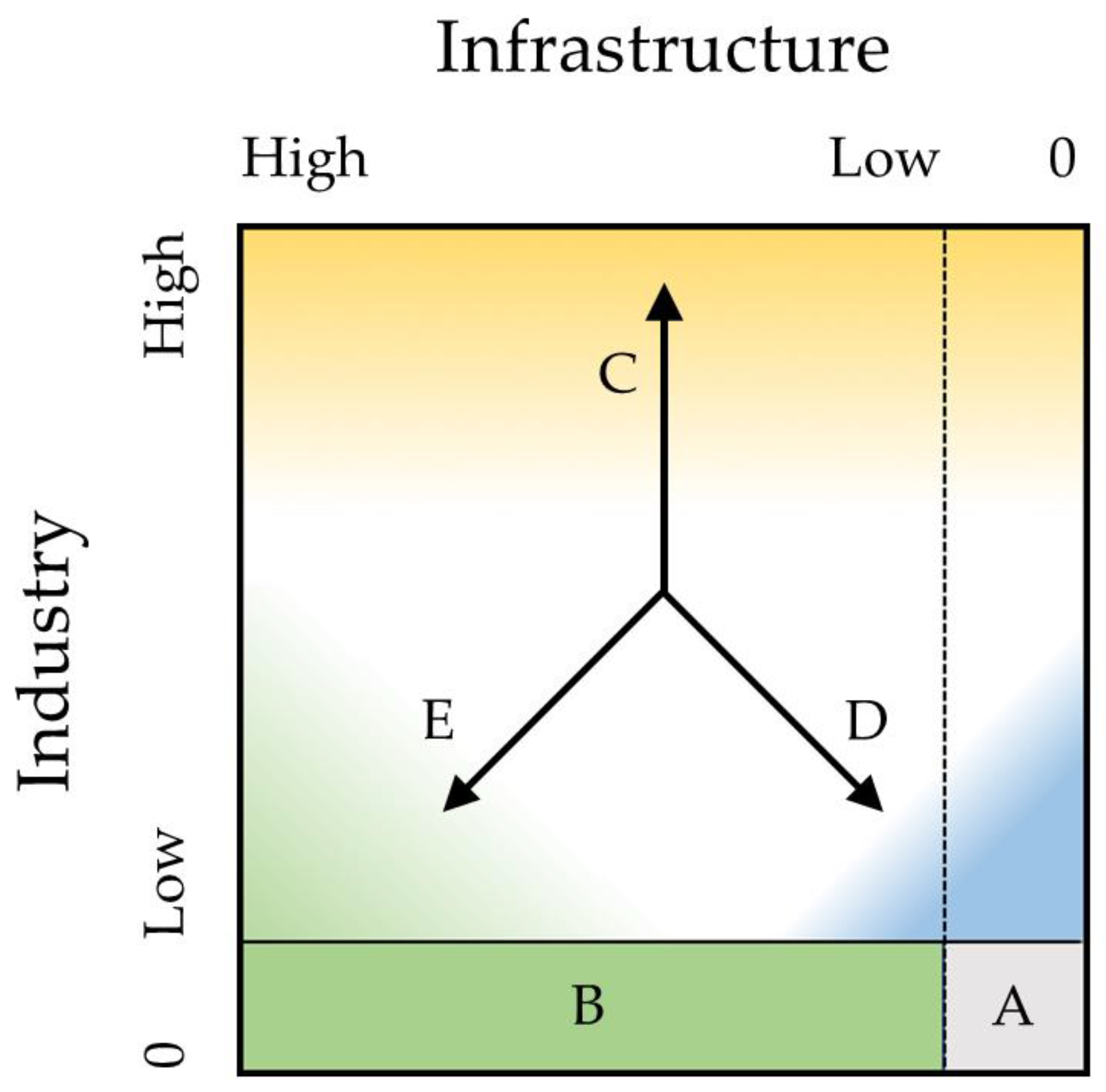
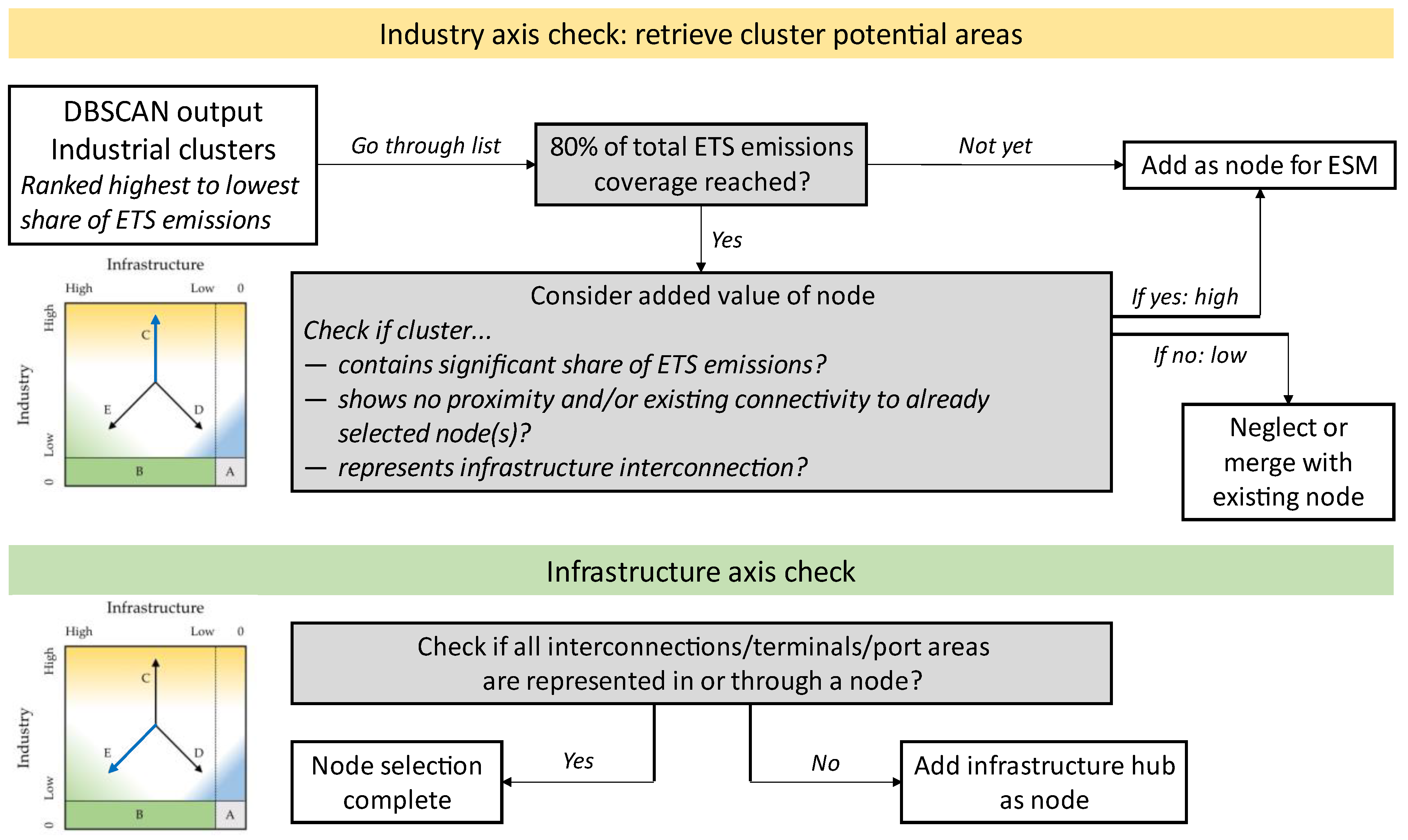
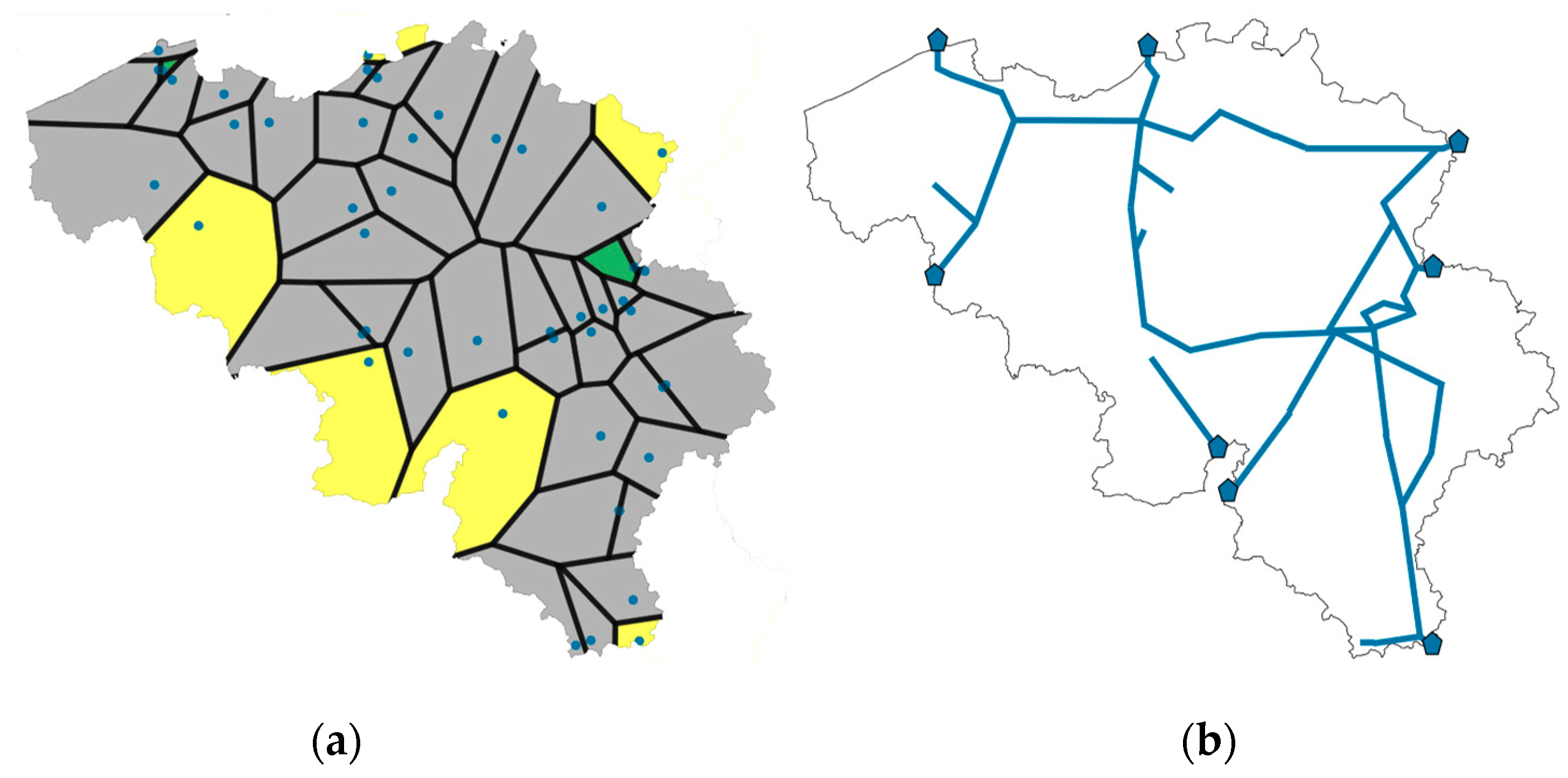
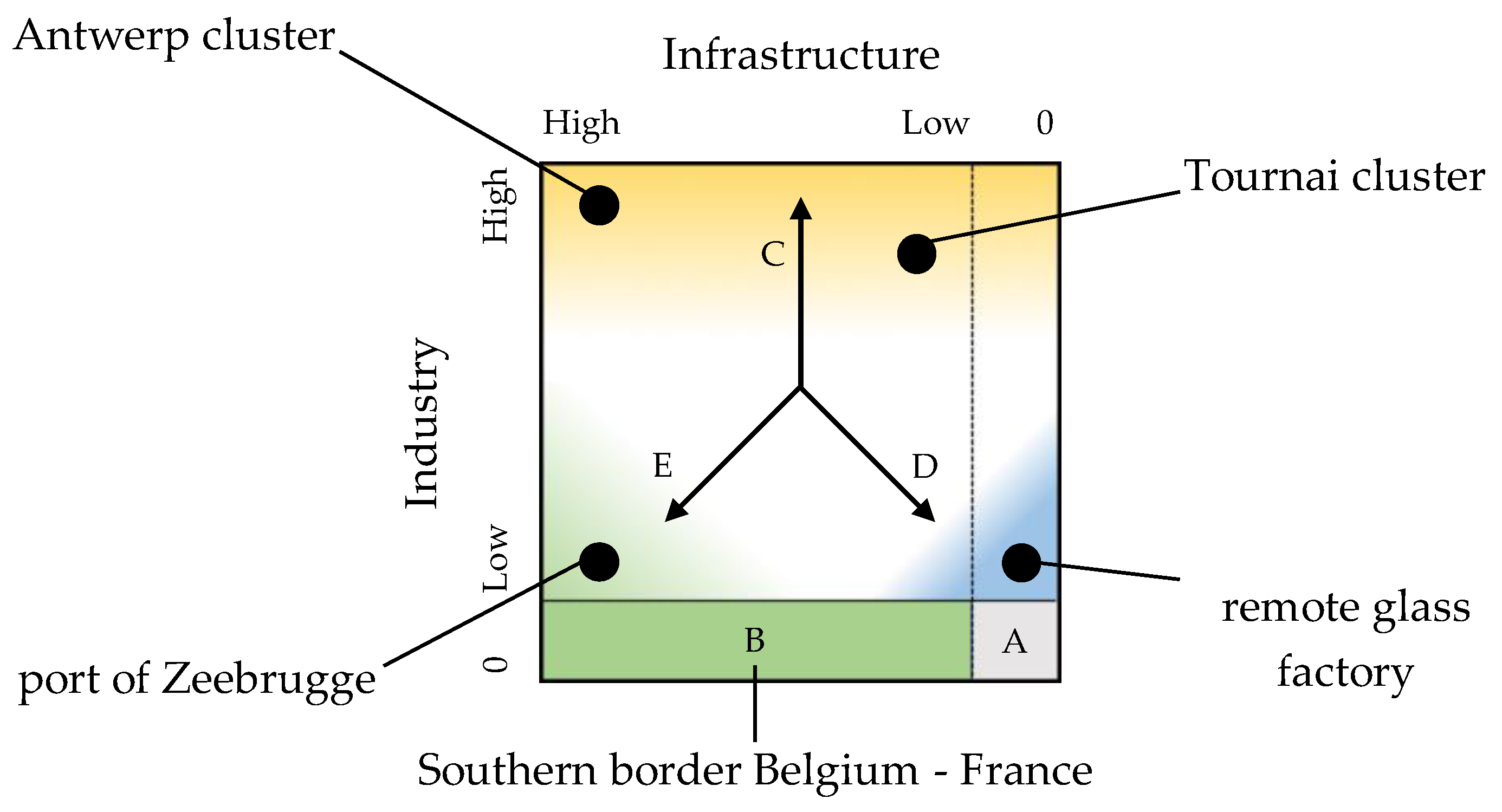
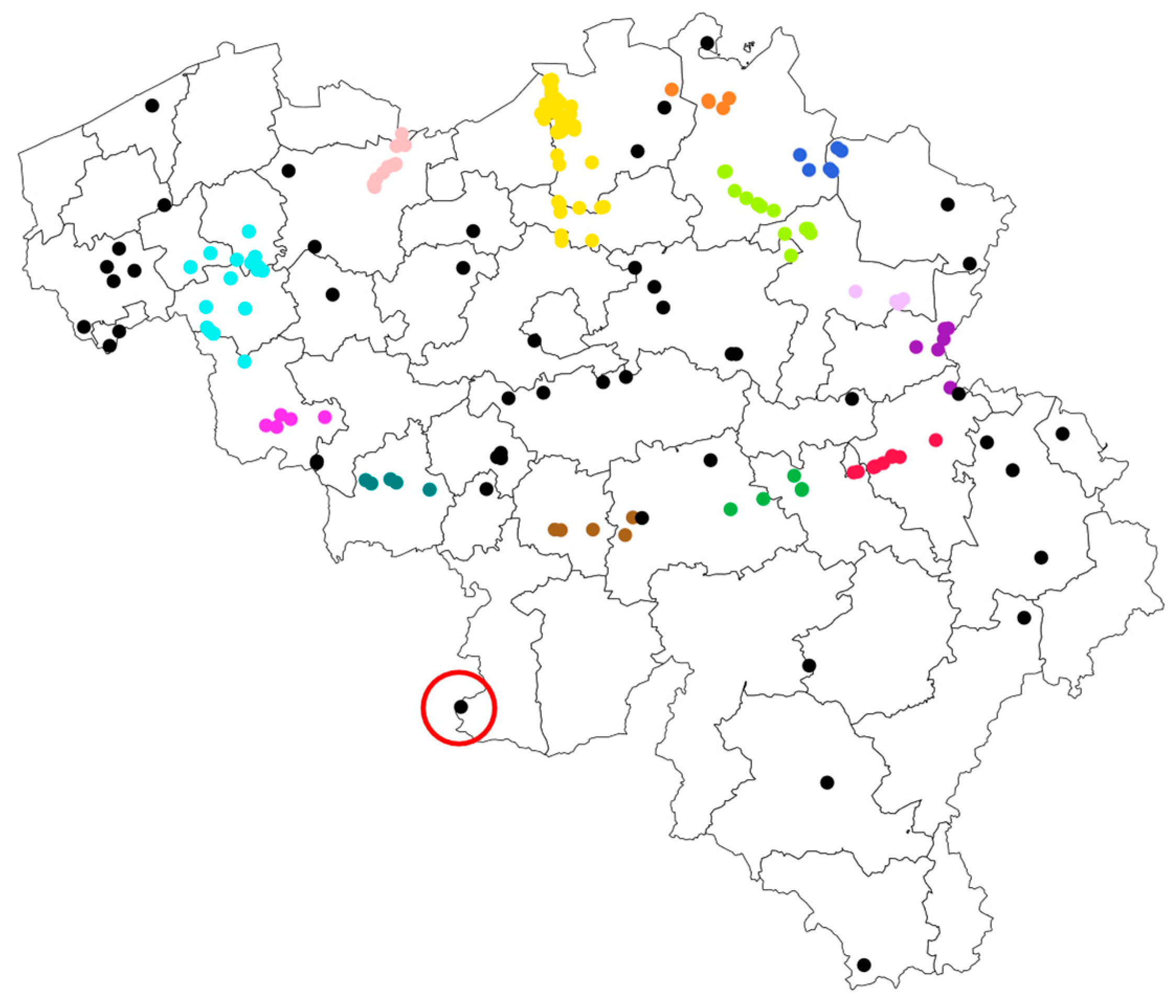
To reach climate neutrality and circularity targets, industry requires infrastructure guaranteeing available, accessible, affordable, and sustainable supply of renewable energy and resources. The layout and operation of the required grids are a key topic in energy system modelling, a research field under constant development to tackle energy transition challenges. Although industry is a core player, its transformation and related policy initiatives are not yet fully reflected, resulting in a research gap. The industrial cluster concept, stimulating local cross-sectoral co-operation, circularity, and optimisation, offers untapped potential to improve the spatial representation of industry in energy system models and paves the way for cluster transition research. This paper introduces the Industry–Infrastructure Quadrant to visualise the relationship between industry and infrastructure presence by means of five distinct area categories. A complementary methodology integrates industrial clusters for multi-node selection in energy system models, solely relying on open-source data and cluster algorithms (DBSCAN). A case study applied to Belgium results in ten nodes to represent the territory, accurately reflecting crucial infrastructure elements and future needs whilst improving industry representation in terms of space and composition. The work serves as a first step towards a deeper understanding of the prominence of industrial clusters in sustainable energy systems.
Keywords: industrial cluster; energy system modelling; cluster analysis; energy-intensive industry; industrial symbiosis; sustainable energy industrial cluster; energy system modelling; cluster analysis; energy-intensive industry; industrial symbiosis; sustainable energy