Article

Assessing Restorative Community Development Frameworks—A Meso-Level and Micro-Level Integrated Approach


1
Strategic Spartanburg, Inc., Spartanburg, SC 29302, USA
2
College of Agriculture, Urban Sustainability and Environmental Sciences (CAUSES), University of the District of Columbia, Washington, DC 20008, USA
*
Author to whom correspondence should be addressed.
Sustainability 2024, 16(5), 2061; https://doi.org/10.3390/su16052061
Submission received: 29 December 2023 / Revised: 21 February 2024 / Accepted: 28 February 2024 / Published: 1 March 2024
(This article belongs to the Collection Toward a Restorative Economy)

Abstract

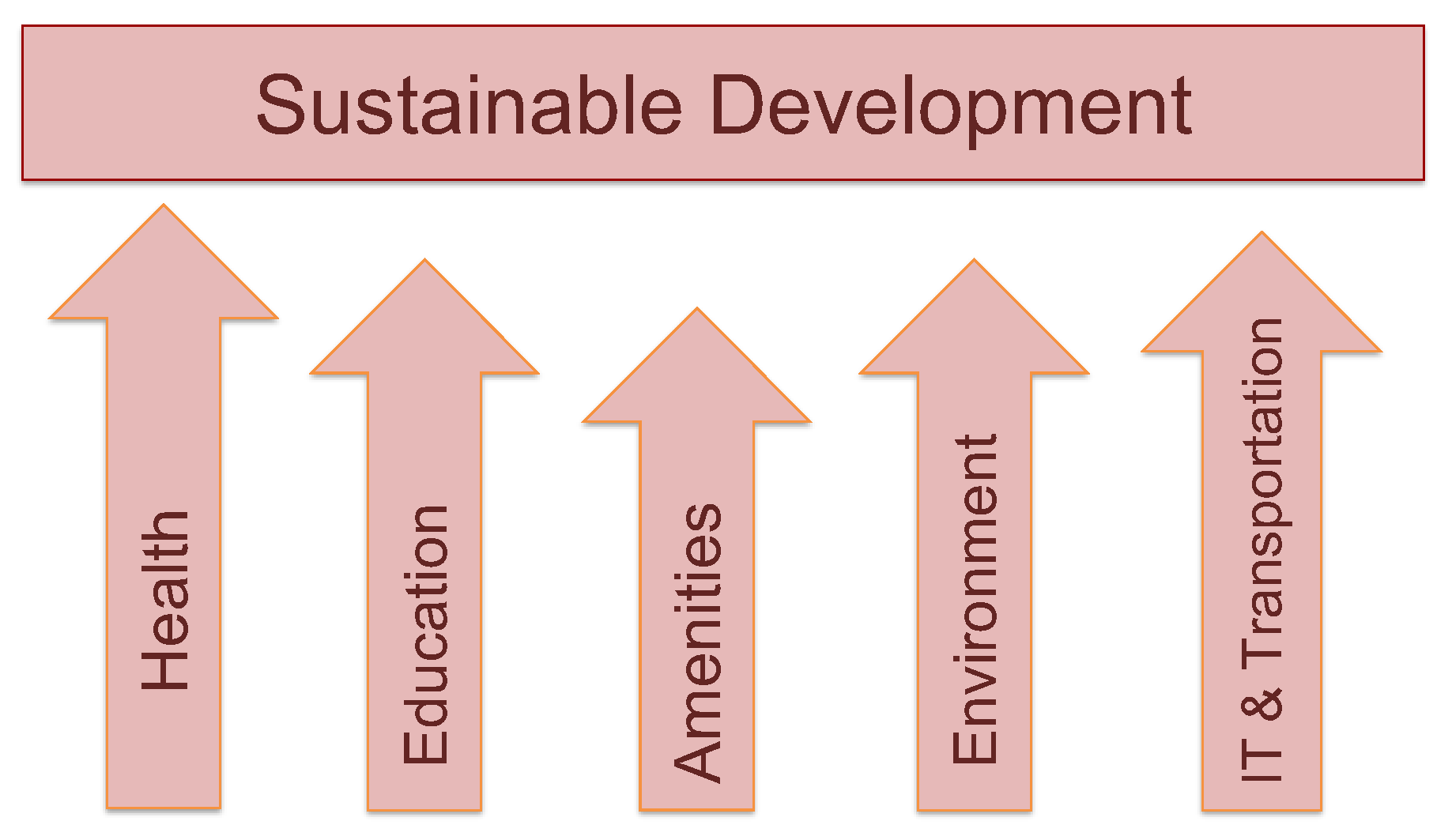
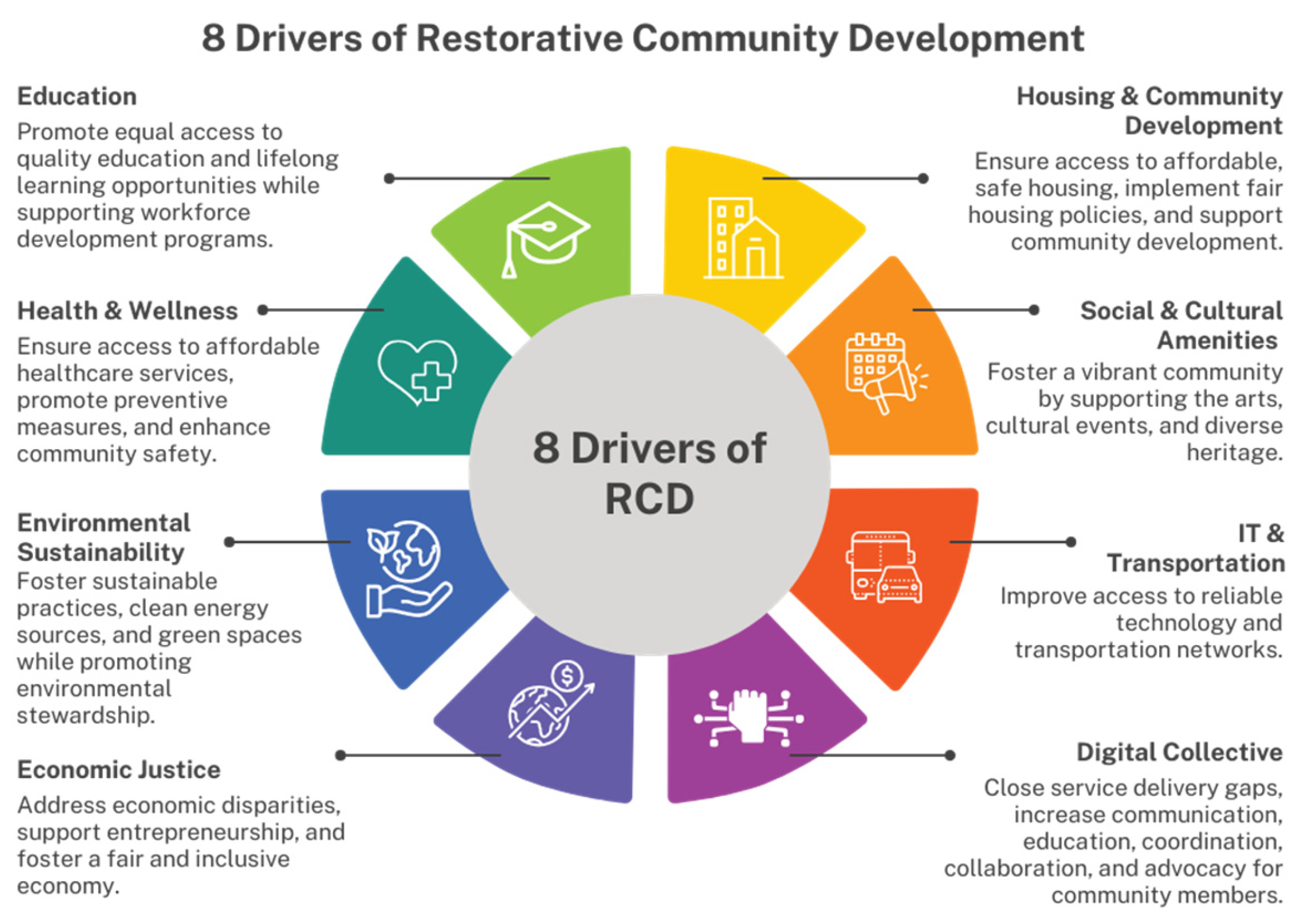
This study critically examines existing frameworks aimed at establishing restorative practices in community development by conducting a comparative analysis of a meso-level development framework called the Five Pillars of Development and a micro-level framework implemented by a grassroots initiative. Both frameworks were implemented in Washington, DC, and both seek to address the enduring negative externalities disinvested communities face and suggest the need for restorative practices in community development. Restorative development practices trace their roots to the field of restorative economics, which is a subfield of sustainable development. It argues that sustainability must also address the sins of the past and restore systems and systems components that have been negatively impacted by past development practices. This study aims to discern the adaptability of the more broadly applicable meso-level Five Pillars framework in capturing nuanced micro-level frameworks like the one devised by the grassroots organization in Ward 8. By identifying potential gaps, this study proposes strategies to enhance the utility of the more transferable meso-level framework, particularly for communities lacking resources to formulate their own micro-level framework. This study, therefore, contributes valuable insights and recommendations for bridging potential disparities between the meso-level and micro-level frameworks, as demonstrated in the Ward 8 case. The overarching objective is to enrich the community development field by presenting a restorative framework that refines existing meso-level approaches and facilitates opportunities for micro-level applications.
Keywords: restorative community development; stakeholder engagement; comparative analysis; disinvested communities; meso-level approach restorative community development; stakeholder engagement; comparative analysis; disinvested communities; meso-level approach