Article

How Does Fertility Policy Relaxation Affect Household Financial Asset Allocation? Evidence from the Universal Two-Child Policy in China

1
Postdoctoral Research Center, Industrial and Commercial Bank of China, Beijing 100140, China
2
School of Public Economics and Administration, Shanghai University of Finance and Economics, Shanghai 200433, China
3
School of Economics, Hangzhou Normal University, Hangzhou 311121, China
4
Fanhai International School of Finance, Fudan University, Shanghai 200433, China
*
Author to whom correspondence should be addressed.
Sustainability 2024, 16(3), 1018; https://doi.org/10.3390/su16031018
Submission received: 20 October 2023 / Revised: 25 December 2023 / Accepted: 17 January 2024 / Published: 24 January 2024
(This article belongs to the Special Issue Sustainable Economic Policy and Econometrics Strategy)

Abstract

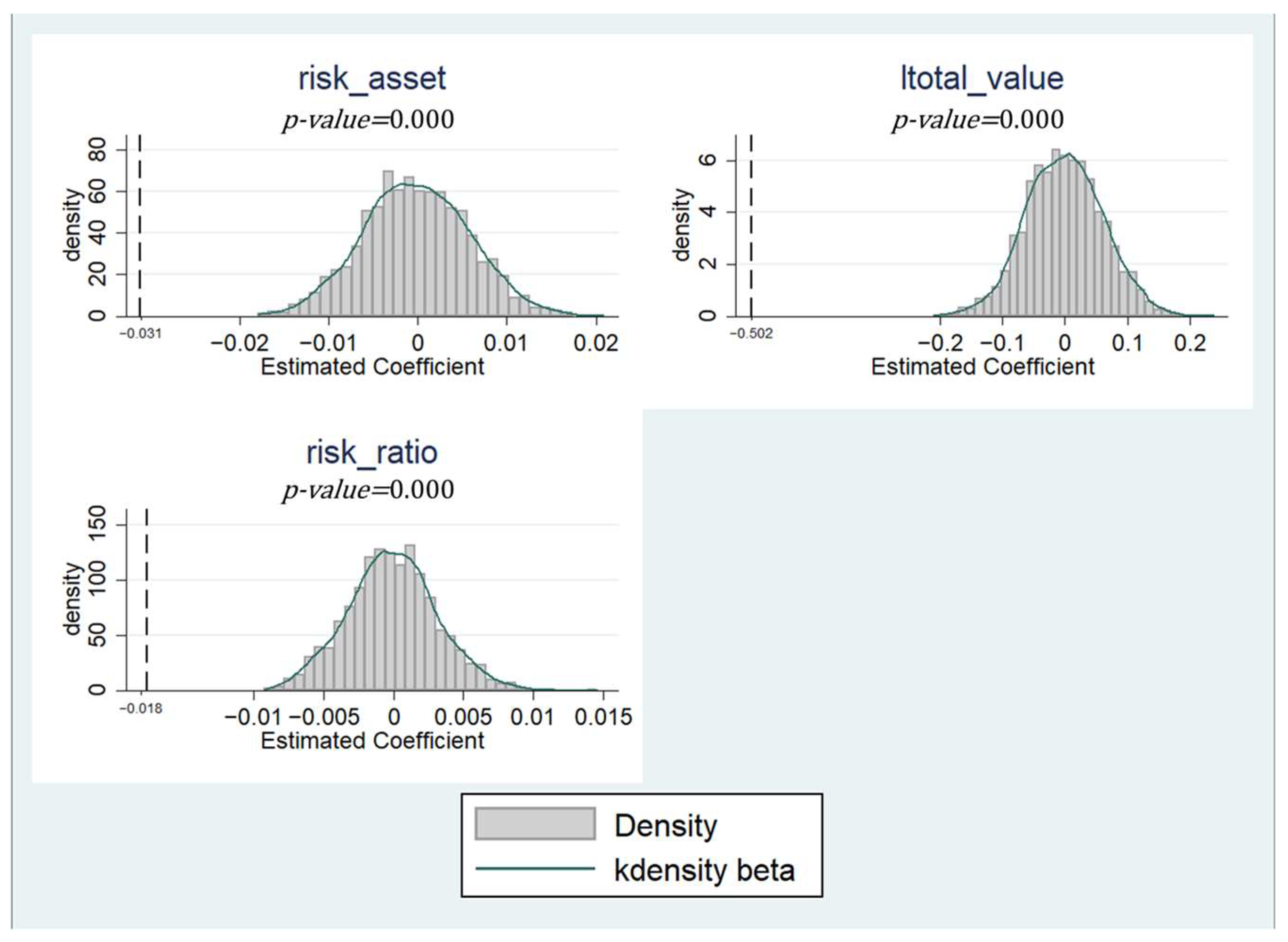
Both fertility policy and the healthy development of financial markets are important topics for sustainable economic and social development. By using the difference-in-difference (DID) model, this paper investigates how the universal two-child policy (UTCP) in China aiming to improve fertility affects household financial asset allocation, based on the China Family Panel Studies (CFPS) data from 2010 to 2018. The results show that the implementation of UTCP has a significant negative impact on household risk asset holdings. Specifically, the policy decreases the probability of households participating in the financial market by 3.1 percentage points, reduces the total value of risk assets held by 50.2%, and lowers the proportion of risk asset investment by 1.76 percentage points. Mechanism analysis suggests that the implementation of the policy has a significantly negative impact on labor market outcomes for women, which decreases household income and increases the time and effort spent on caring for children. As a result, the financial resources available for household financial asset investment are diminished, and the time for activities such as information gathering and financial asset transactions is squeezed out, ultimately leading to a decrease in household risk asset investment. Heterogeneity analysis reveals that households with self-employed wives (higher income instability), households without a co-resident status with grandparents (more time spent on childcare), and high-income households (stronger willingness to have more children) are more affected by the policy. This study provides new supplements on how fertility policies affect the allocation of household financial assets and proposes constructive suggestions on how to establish a comprehensive system of childcare welfare and alleviate the economic pressure of family childcare in developing countries.
Keywords: fertility policy; household risk asset holdings; childcare pressure; financial market development fertility policy; household risk asset holdings; childcare pressure; financial market development