Article

A Comparative Management Analysis on the Performance of Different Solar Drying Methods for Drying Vegetables and Fruits

by
Ganesh Radhakrishnan
1,
Teodora Odett Breaz
2,*,
Al Waleed Ahmed Al Mahrouqi
1,
Nasser Ahmed Al Zakwani
1,
Mohammed Hamed Al Fahdi
1,
Ahmed Said Al Shuraiqi
1,
Said Almur Al Awamri
1,
Rashid Sultan Al Aamri
1 and
Kadhavoor R. Karthikeyan
3,*
1
Mechanical Engineering, College of Engineering and Technology, University of Technology and Applied Sciences, Nizwa P.O. Box 477, Oman
2
Department of Business Administration and Marketing, “1 Decembrie 1918” University of Alba Iulia, 510009 Alba Iulia, Romania
3
Department of Applied Mathematics and Science, National University of Science and Technology, Muscat P.O. Box 620, Oman
*
Authors to whom correspondence should be addressed.
Sustainability 2024, 16(2), 775; https://doi.org/10.3390/su16020775
Submission received: 10 December 2023 / Revised: 10 January 2024 / Accepted: 13 January 2024 / Published: 16 January 2024
(This article belongs to the Collection Solar Energy Utilization and Sustainable Development)

Abstract

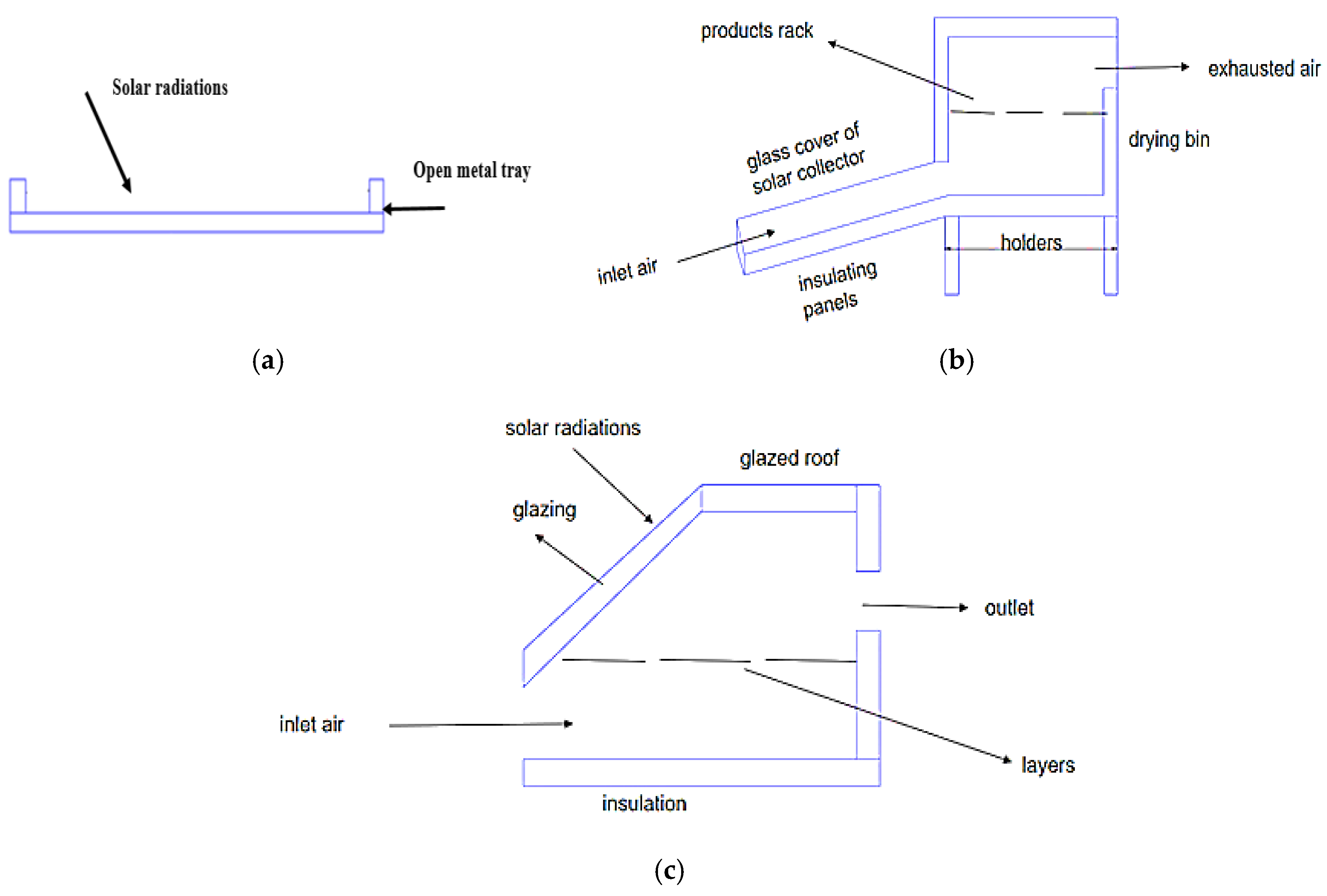
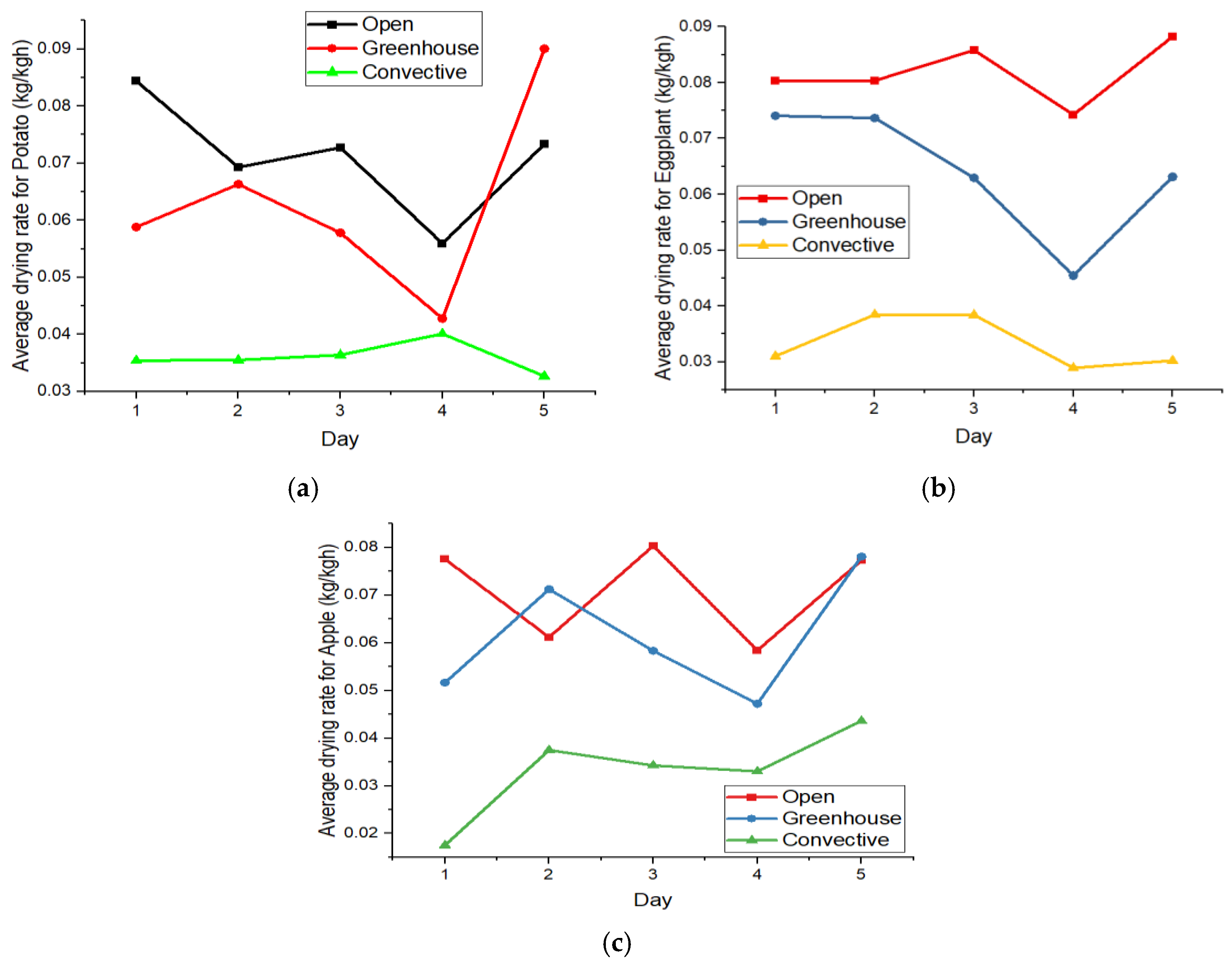
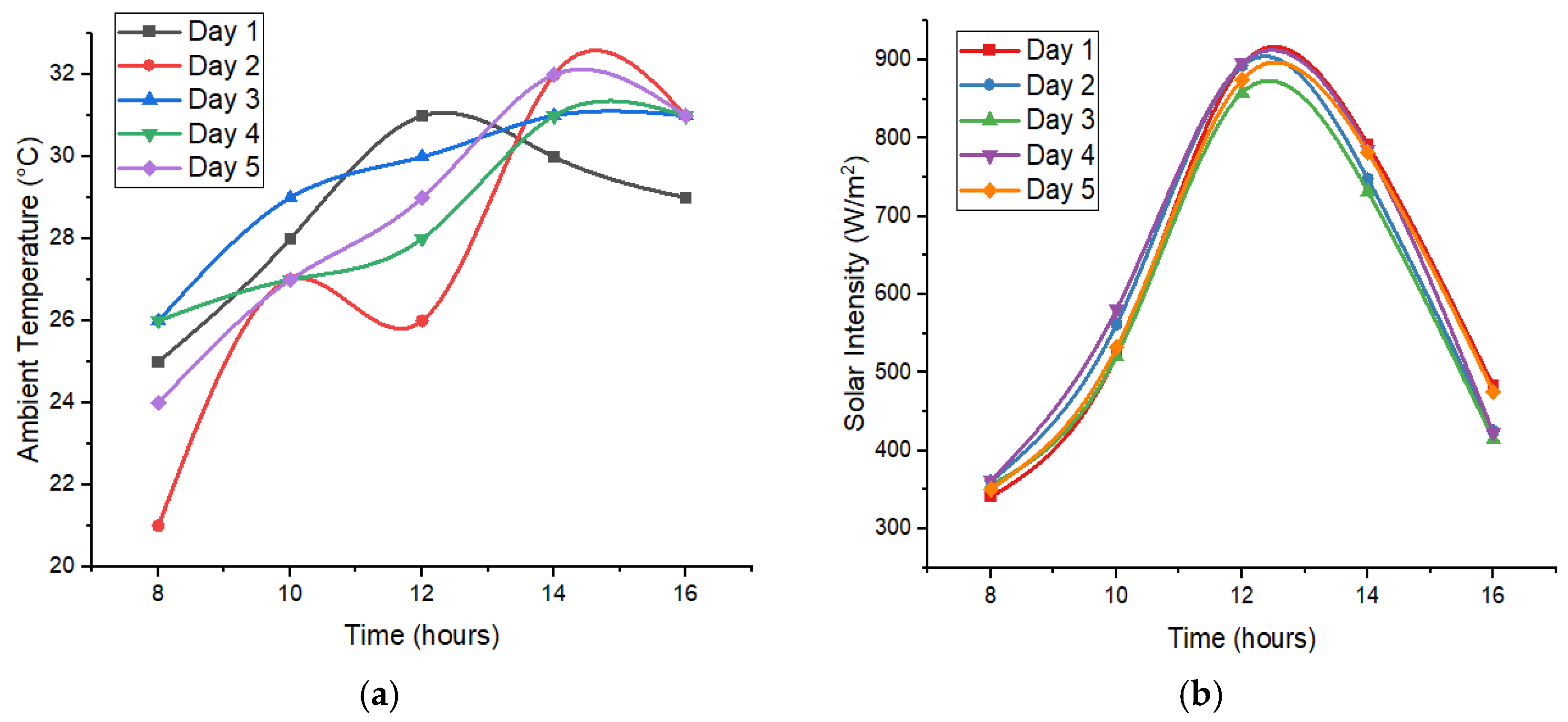
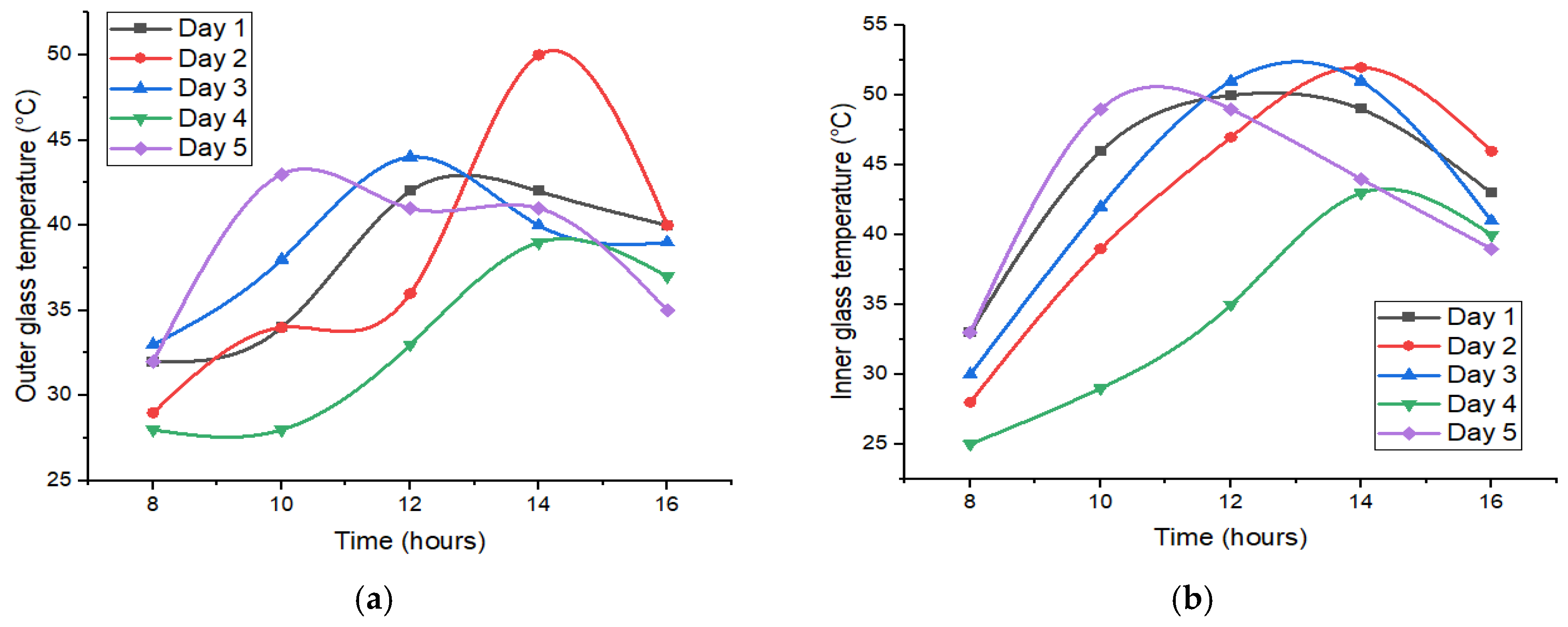
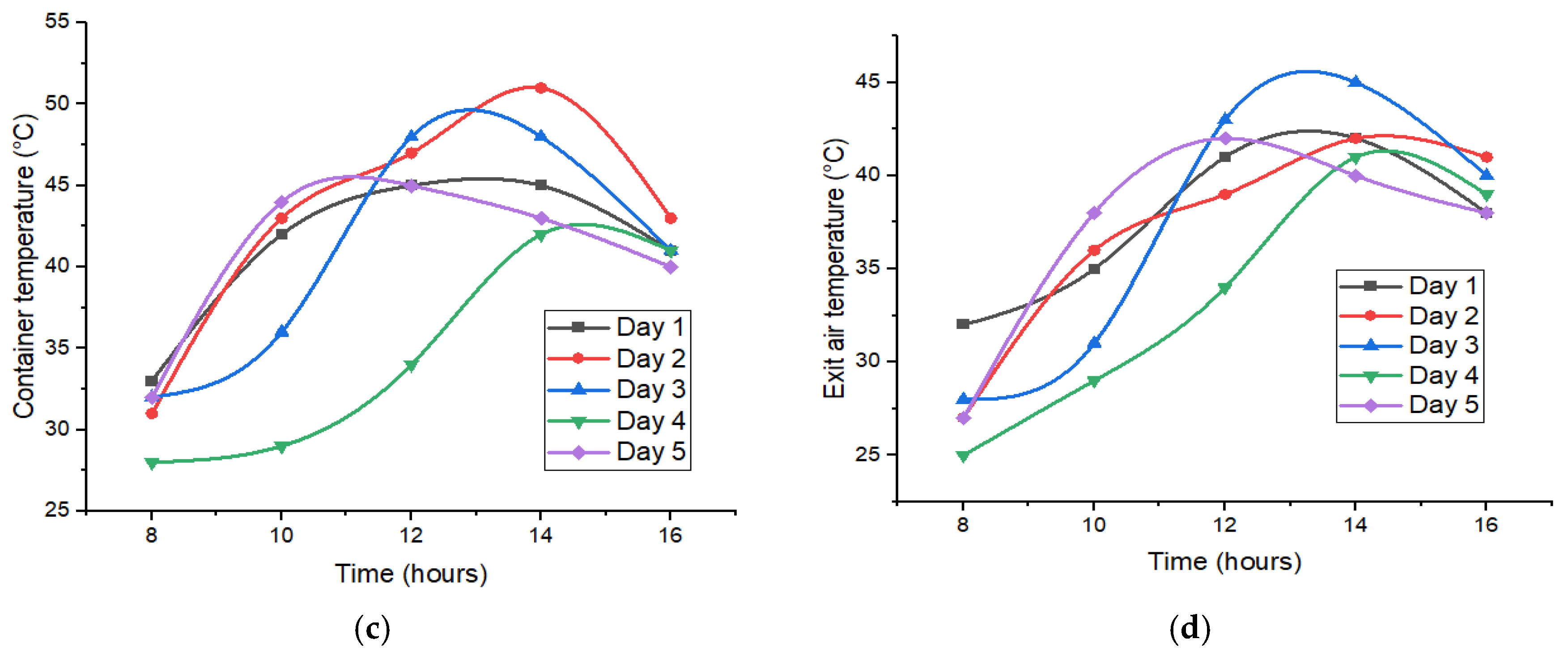
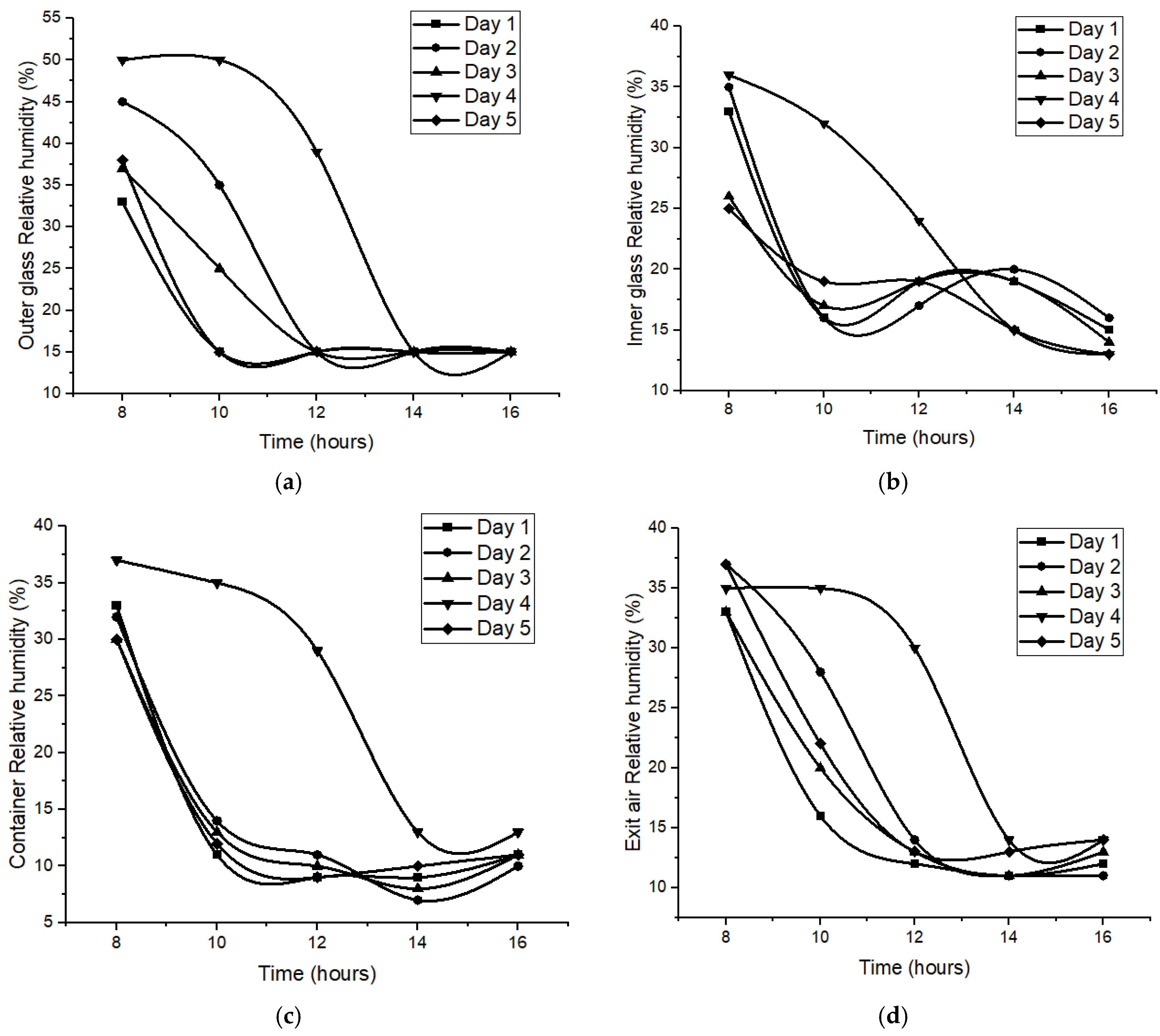
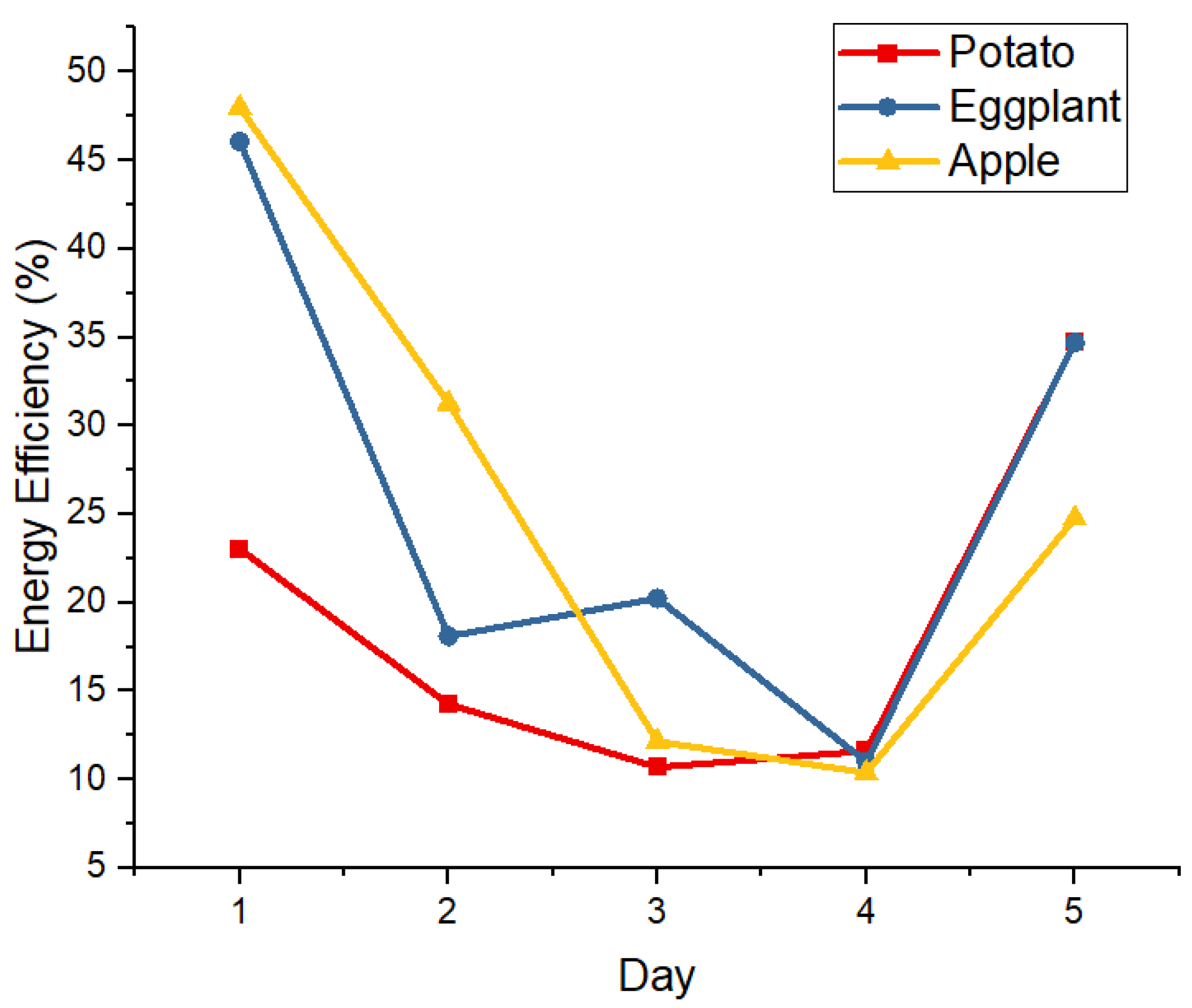
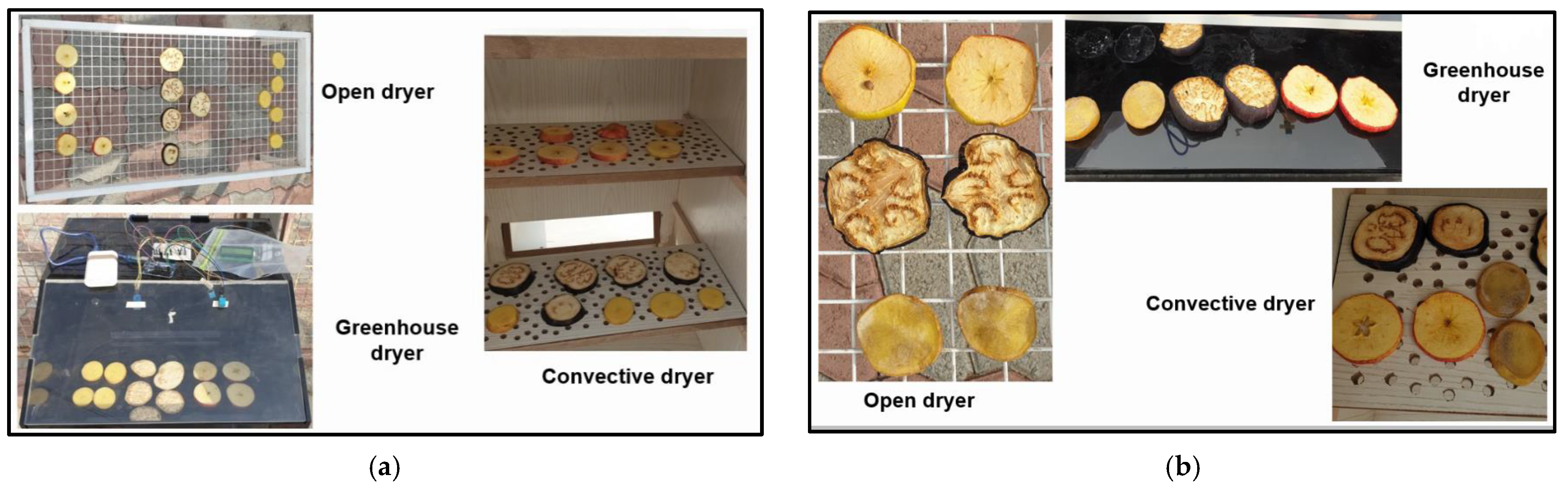
Drying is the process of moisture removal which is applied to many foodstuffs including fruits and vegetables for preservation and storage purposes. Since solar energy is one type of environmentally friendly renewable energy, open-type solar dryers, natural convective type solar dryers and greenhouse type solar dryers were designed and fabricated in this study for the preservation of fruits and vegetables. A comparative study among various solar drying methods was performed to study the drying performance by maintaining the quality and texture of the dried foodstuffs. Factors such as solar radiation, ambient temperature, moisture in the air, materials used for glazing, inclination, etc., were considered during the fabrication of the solar dryer so that a better estimate of the performance of the solar dryer could be obtained. The lowest drying rate was observed when convective drying was used as an indirect mode of heating. The maximum drying rate observed in open drying was 0.088 kg/kgh, whereas in convective drying under the same conditions, it was 0.03 kg/kgh, which was almost 65% less. This in turn also resulted in the dried samples displaying a better texture and better color. The shrinkage effect on the samples was less pronounced for those samples in the convective dryer than it was for those in the open and greenhouse dryers, as the method uses indirect drying. Comparing convective and greenhouse drying, more shrinkage and a greater browning effect were observed for the open drying method. Out of three types of solar dryers, the greenhouse dryer was selected to study thermal performance because of its better drying rate. DHT11 sensors controlled through Arduino programming were employed in this study to record the temperature and moisture at various locations in the greenhouse dryer setup. The range of energy efficiency of the greenhouse solar dryer was estimated to be from around 15% to 25% on average. This might be due to a greater extent of energy losses. No significant difference was observed in the energy efficiency with respect to the samples used for drying.
Keywords: solar dryer; greenhouse; convective; foodstuffs; drying rate; energy efficiency solar dryer; greenhouse; convective; foodstuffs; drying rate; energy efficiency