Article

Achieving SOC Conservation without Land-Use Changes between Agriculture and Forests

by
Hari Prasad Pandey
1,2,*,
Tek Narayan Maraseni
1,3,
Armando Apan
1,4 and
Shreejana Bhusal
5
1
Toowoomba Campus, University of Southern Queensland, Toowoomba, QLD 4350, Australia
2
Department of Forests and Soil Conservation, Babarmahal, Kathmandu 44600, Nepal
3
Northwest Institute of Eco-Environment and Resources, Chinese Academy of Sciences, Lanzhou 730000, China
4
Institute of Environmental Science and Meteorology, University of the Philippines Diliman, Quezon City 1101, Philippines
5
Department of National Parks and Wildlife Conservation, Babarmahal, Kathmandu 44600, Nepal
*
Author to whom correspondence should be addressed.
Sustainability 2024, 16(16), 7207; https://doi.org/10.3390/su16167207
Submission received: 23 July 2024 / Revised: 17 August 2024 / Accepted: 19 August 2024 / Published: 22 August 2024
(This article belongs to the Section Sustainability, Biodiversity and Conservation)

Abstract

Global land-use changes impact soil’s ability to perform essential functions. This study investigates whether soil organic carbon (SOC) can be conserved without altering land use in traditional farming systems and degraded natural forests, focusing on ‘disturbed’ agricultural soils and ‘undisturbed’ forest soils. We also examine the influence of dominant crops on SOC within the top 30 cm of soil in data-deficient regions of Nepal. Using a multi-stage cluster sampling design, we tested 12 regression models to identify the best relationships among variables such as SOC, soil bulk density (BD), pH, dominant crops, climate, topography, and management practices. Our analysis revealed similar SOC levels in both disturbed and undisturbed soils, indicating significant degradation in forested areas, whereas traditional farming systems could support SOC and preserve farm-based indigenous knowledge alongside food security. Further, SOC stocks varied significantly (p < 0.05) across different cropping systems, suggesting that managing dominant crops could be a strategy to optimize SOC, with these crops serving as indicators. Additionally, our results show that the weak linear correlation between SOC and BD in regularly disturbed soils, such as farmlands, where anthropogenic activities frequently alter soil bulk density, may be misleading when estimating bulk density-dependent SOC. This finding suggests the need for further research into varying degrees of anthropogenic disturbance in soil to confirm these results. While the site-specific nature of the findings warrants caution with respect to generalization, they provide valuable insights for carbon monitoring, climate actions, ecosystem health, and land-use management in similar traditional farming systems and degraded forests, particularly in data-poor regions.

1. Introduction

The Earth’s crust reserves the largest amount of carbon in the terrestrial ecosystem [1]. The role of soil in carbon storage has gained prominence in global climate change discourse [2,3,4]. Scholars have since focused on soil, particularly on soil organic carbon (SOC), due to its multifaceted impact on primary production functions and soil characteristics, such as biomass production, carbon sequestration, water-holding capacity, and the physical, chemical, and biological properties of soil [5,6,7]. These characteristics ensure soil quality for cropping [8] and carbon reservation [9,10]. These attributes are fundamental for ecosystem functioning in dynamic socio-ecological landscapes [11]. However, SOC varies widely on spatial and temporal scales due to natural, geological, and geographical factors [12,13]. Such inherent soil characteristics take a relatively long time to alter under anthropogenic interventions. Nevertheless, researchers report that anthropogenic interventions can significantly manipulate SOC in the top layer of the Earth’s crust through various land management practices, improving soil health [14,15] and combating humanitarian and environmental challenges [16,17]. Thus, it seems crucial to estimate SOC stock under different land-use practices and cropping systems to address environmental and anthropogenic problems by minimizing trade-offs and synergizing goods and services at various scales [11], where anthropogenic interventions can impact limited land resources.
Growing concerns are detected in the contemporary literature about anthropogenic interventions to manipulate soil. One reason is that less carbon would be emitted from the terrestrial ecosystem through the manipulation of cropping patterns and proper management systems [18,19]. Some studies cover variations in SOC stocks through changing management systems and patterns [5,20] in unirrigated farmland (upland), irrigated land, forests, and grazing land [5,21]. Various anthropogenic interventions regarding soil [22,23] have been reported to enhance SOC stocks under specific conditions. Further studies explore the fact that SOC increases with the application of organic fertilizers such as farmyard manure, residue return, and green manuring [7]. In contrast, some studies argue that about 50% of SOC is lost when native forests are treated with primary fertilizers [24] and that long-term negative effects result from artificial inorganic fertilizing [5,25]. Less soil carbon is found in conventional farming compared to organic farming systems [26,27]. Organic carbon varies with different degrees of tillage use in agricultural land [28] and varies under the dominancy of the same species in different locations with variations in management interventions. This suggests that differential responses in SOC can be obtained despite employing similar anthropogenic interventions. Factors such as crop rotation and diversification, location, and climatic variations require site-specific assessments.
The relationships between SOC and plants are studied extensively, for instance, the relationship between SOC and canopy cover in forest ecosystems [29], the type and duration of cropping systems [30], the conversion of land cover from cropland to grassland and from grassland to forested land [20], and plant species composition [31]. Further, the literature identifies that cropping patterns, species dominance, sowing legumes, improved grass species, irrigation, and land conversion (from farmland to other land-use types) affect soil carbon stocks [20,30] in conjunction with SOC. These studies compare SOC among and within similar cropping types, such as forest species, grassland species, or agricultural crop dominance. However, studies on SOC dynamics between different dominant crop species, such as woody species in forest ecosystems and agricultural crops in agroecosystems, are rare, particularly in traditional farming systems and unmanaged natural forests on sloping lands with shallow soil depths. Thus, vegetation management seems to be one of the most reliable strategies for conserving carbon in the topsoil and enhancing SOC.
Similarly, SOC across various land-use types has been well-explored. For example, research has focused on SOC stock estimation in relation to crop yield [15,32] and stock comparison among different land-use types [17,33], including forestland [10,14]; natural forests, rangeland, cropland, and larch plantations [34]; grassland, peatland/wetlands, and oceanic carbon [9,17]; as well as agroforestry sites [19]. These studies compare SOC variations observed in cultivated land and other land uses, such as forestland, reporting higher SOC stocks in woody vegetated land compared to agricultural land. In contrast, some studies argue that SOC stocks in agricultural land can be higher than in forested or afforested soils [35,36], orchards [37], or degraded sodic soils [38]. Moreover, organic farming systems are identified as having higher SOC contents compared to conventional farming [26] and cultivated land using straw [39]. This conflicting evidence raises questions about whether natural (unmanaged) forests always conserve more SOC than traditional conservation farming systems in the top layers. Considering this background and the authors’ engagement with traditional conservation farming systems in Nepal, we undertook the research reported in this paper.
Moreover, there is a lack of consistency in defining soil depth for SOC-related research. While the Intergovernmental Panel on Climate Change suggests studying SOC up to a depth of 100 cm for carbon estimation [3], existing studies use a wide range of depths, such as 15 cm [39], 20 cm [38,39], 30 cm [40,41,42,43], 40 cm [44], 60 cm [45,46], 100 cm [36,47], and 1000 cm [37]. This variation may be limited by various factors, such as resource availability, available soil depth, geographical relief, and so forth. However, what is common among the various studies is an observed decrease in SOC proportions with increasing soil depth [29,31], with most SOC being found between 0 and 30 cm [10,40,41,48,49]. Artificial interventions typically have a minimal impact on soil characteristics deeper than 30 cm, particularly in agricultural systems, where the majority of SOC is derived from root organic matter in these layers [14,30]. In forested land, although root-derived SOC is important in deeper soil layers [9,14], the perennial nature of woody vegetation means that carbon accumulation in deeper layers takes longer. Instead, short-lived herbs, bushes, leaf litter, and deadwood contribute to SOC in the top layers due to higher biological and environmental activity [50]. Various approaches model and compare SOC in deeper soil profiles in the absence of complete data [51], and empirical induction can provide more robust and credible insights for decision making. Nonetheless, there are limited studies comparing SOC at equivalent depths between forested and agricultural land uses.
In this context, we aimed to understand whether SOC stock differs between two land uses—forests (‘undisturbed soil’) and agriculture (‘disturbed soil’)—at a depth of 30 cm in traditional farming systems and unmanaged natural forests. We also investigated whether the management of dominant crops significantly influences SOC at this depth. Our study focused on data-poor regions in Nepal. To our knowledge, this research is pioneering in exploring options to provide insights for global environmental crisis management, poverty alleviation, and food security. The findings could offer a comprehensive view of SOC dynamics [52] and serve as a reference for data-poor regions worldwide [9,53], aiding in the formulation and implementation of effective soil carbon management policies, land-use planning, and food security strategies [54]. Additionally, the study could contribute to achieving national and international climate goals, including Sustainable Development Goals (SDGs), Nationally Determined Contributions (NDCs), climate convention resolutions, and land degradation neutrality objectives, across various spatial and temporal scales.

2. Materials and Methods

2.1. Study Area

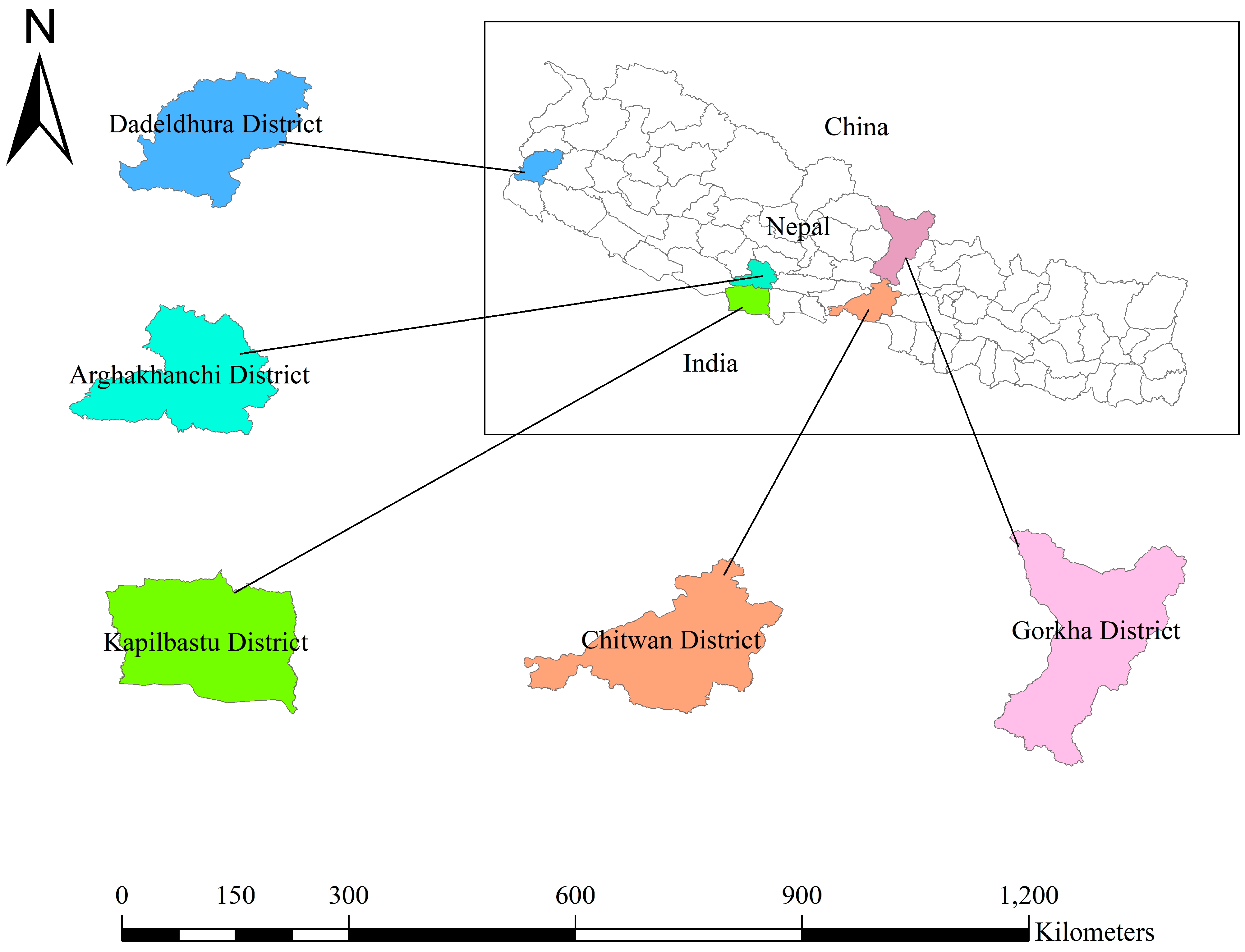
The study covered diverse ecological and geographic regions across Nepal, including Chitwan (Bagmati Province), Gorkha (Gandaki Province), Arghakhanchi and Kapilbastu (Lumbini Province), and Dadeldhura (Sudurpachhim Province) (please refer to the study area map in Appendix A). SOC assessment was conducted in Arghakhanchi and Kapilbastu for agricultural land, focusing on maize and paddy, and in the other districts for forestlands, including Terai Shorea robusta, Hill S. robusta, and Quercus species (Table 1).
All forest crops were naturally regenerated on marginal public land. The Terai Shorea robusta forest features mature trees with dense crown cover (>75%) and includes Terminalia tomentosa and Mallotus philippensis. The alluvial soil is well-drained and situated in a tropical plain. The Hill Shorea robusta forest, with pole-sized trees (DBH < 30 cm), is on a sloping landscape with Pinus roxburghii at higher elevations. The soil is red, sticky, and clay-rich, with occasional fires and disturbances from grazing and firewood collection. Managed by the local community, this forest is in a sub-tropical climate with gentle to steep slopes [10,55]. The Quercus Forest in far-western Nepal, dominated by Quercus leucotrichophora and Q. lanata, also includes Myrica esculenta and Rhododendron arboreum. Located on middle and upper ridges with P. roxburghii at lower elevations, the soil is brown, silty, and rich in humus, and it is covered with mosses. This community-managed forest experiences occasional firewood collection and is situated in a temperate region with gentle to steep slopes.
The paddy field is a level, tropical lowland area with irrigated, alluvial soil that is brown and black with heavy sand. Farmers add manure from farmyards, poultry yards, and pig yards annually before major cropping and cultivate paddy with leguminous lentils in water-regulated beds, followed by mustard and peas. They decompose half of the paddy straw before cultivation and collect litter from floods during the monsoon. In contrast, maize is grown on similarly level, rain-fed uplands. Farmers use compost from livestock dung; burn straw; and leave maize, wheat, and pea roots to decompose in the soil. They practice green manuring, slice terrace risers, and collect leaf litter and hay for plowing before the monsoon. Key soil nurturing strategies include multiple cropping, integrating leguminous trees, livestock management, and crop diversification [56,57].

2.2. Sampling Design and Sample Collection

The study used a multi-stage cluster sampling method: five districts from four provinces were randomly selected, followed by local units chosen in consultation with forest management authorities. Study sites were then selected based on discussions with local government, resource availability, local support, and the absence of similar prior studies.
An international standard protocol [58] was used for soil sampling and SOC estimation. Sample plots were selected based on geographic coordinates uploaded to a GPS device. A 5 m radius circular plot was established, and soil samples were collected from the center and periphery in four directions at three depths (0–10 cm, 10–20 cm, and 20–30 cm). A total of 2310 samples (154 plots × 3 depths × 5 spots in a sample plot) were collected from 154 plots using locally made metal soil corer of 10 cm length and 2 cm diameter (pieces of a pipe). These samples were combined into 154 composite samples, sealed, and sent to the lab for analysis. Vegetation type, land use, elevation, physiographic region, and ecological zones were recorded, and climatic data were obtained from local meteorological stations [59].

2.3. Data Management and Analysis

Laboratory analysis was conducted at the Nepal Agriculture Research Council (NARC) Soil Laboratory in Lalitpur, Nepal. SOC was measured using Walkley–Black’s wet oxidation method [60] and estimated with the formula: SOC = BD × C × D, where SOC is soil organic carbon (g m2), BD is bulk density (kg m3), C is soil carbon content (g kg−1), and D is soil depth (m). Bulk density (BD) was determined in the field using the formula: BD = M/V, where M is soil mass and V is the volume of the sampling cores. Soil pH was also analyzed in the lab.
The relationships between SOC and various variables, including mean elevation, annual minimum and maximum temperatures, bulk density (BD), soil pH, land-use types, and annual rainfall, were tested. Linear regression analyses assessed the connections between SOC, dominant crop types, BD, and pH. A general model (Model 1) was used to evaluate the significance of these relationships, with the final model selected based on statistical criteria for detailed analysis (Table 2).
Yi = aij + a1Xj + eij … (model 1)
where Yi = SOC stock (t ha−1); aij = the constant of the models; Xi = dominant crops, BD, and/or pH; and eij = the error terms.

2.4. Model Selection

Correlation tests were conducted to analyze relationships among numeric variables. Additionally, 12 simple models were developed and tested using standard statistical methods. Of these models (Lm1–Lm12), the SOC was best explained by the interaction of dominant crop type with bulk density, leading to the selection of Lm1 for further analysis. For responses to bulk density (Lm13) and pH (Lm15), models incorporating only the dominant crop were chosen, as adding pH and bulk density did not significantly improve the model outputs and helped reduce the confounding effects of other variables (Table 2).
The models were evaluated using the Shapiro normality test, and residuals were checked with Q-Q plots and histograms. Data were scaled, log-transformed, and analyzed using simple linear models (LMs), generalized linear models (GLMs), and linear mixed-effects models (LMEs). The LMEs and GLMs did not significantly improve model performance, so LMs were chosen for further analysis. Model Lm1 was found to be the best, and all detailed results are based on it (see Table 2). SOC was tested as a response variable against individual predictors, and Tukey HSD multiple-comparisons tests were used to assess the pairwise effects of dominant crops on SOC, BD, and pH. Data analysis was performed using RStudio version 4.3.2 using various libraries such as agricolae, correlplot, ggplot2, glm, lm, multicom and trend [61] and MS Excel (https://www.microsoft.com/).

3. Results

3.1. Mean SOC under Dominant Crops

The results show that SOC stock is highest in Quercus-dominated forests and lowest in Terai S. robusta forests. The mean SOC density was 65.20 t ha−1 for agricultural land and 64.16 t ha−1 for forestland. A higher SOC was observed in hilly regions compared to lowlands, with the temperate zone having the highest SOC. Bulk density ranged from 0.93 cm3 to 1.38 cm3, and soil pH was acidic across all sites (see Table 3).
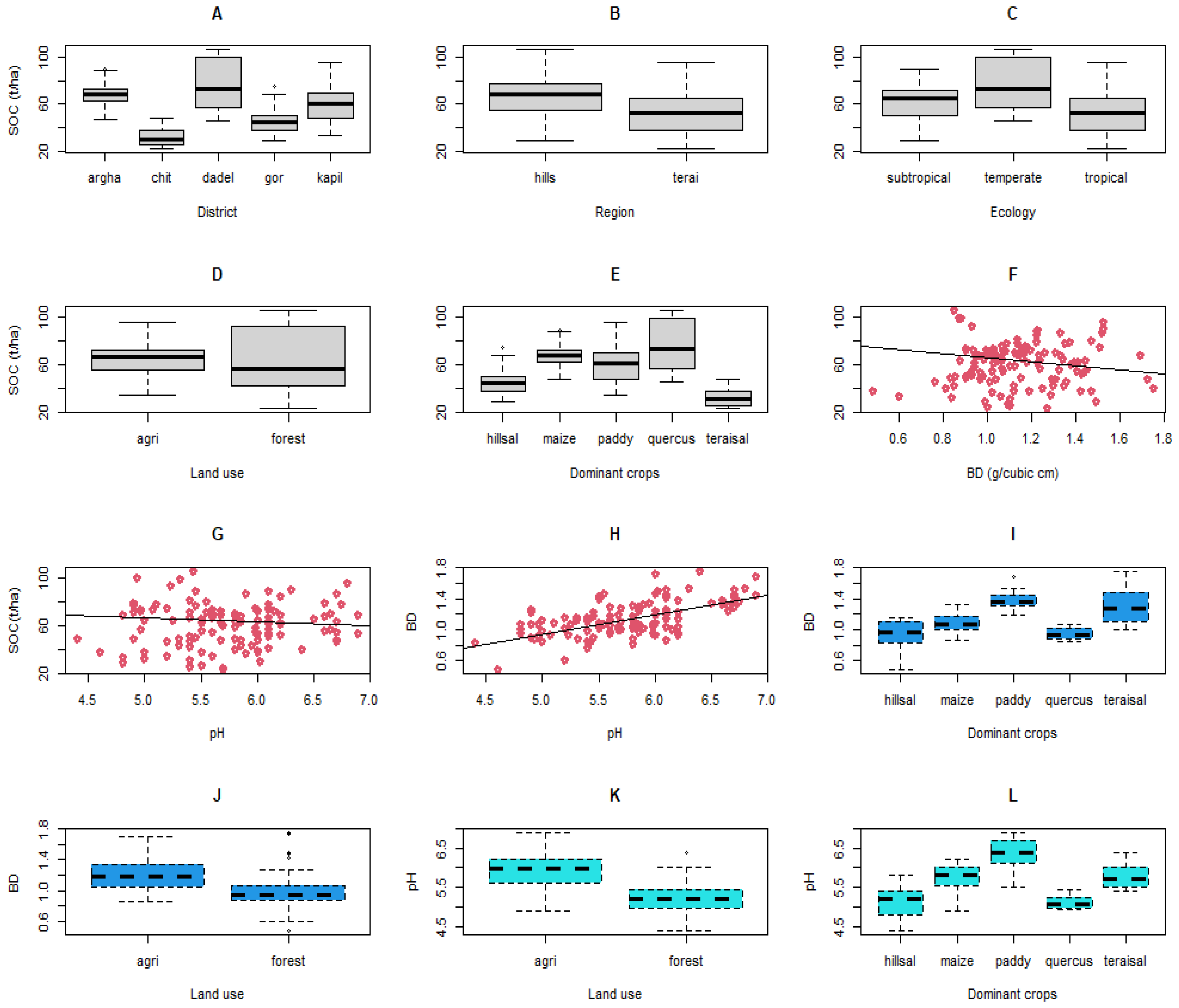
The results show that bulk density (BD) was relatively consistent in the temperate zone, whereas soil organic carbon (SOC) varied the most, with both variables showing the highest variation in tropical regions for both land uses (Figure 1). The test results indicated no significant difference (p > 0.05) in SOC stock between land-use types at the study sites.

3.2. Response to Dependents from Predictor Variables

Based on the selected models (Lm1, Lm13, and Lm15), the relationship between the dependent variables (SOC, BD, and pH) and the dominant crops was found to be significant in most cases (p < 0.05) (Table 4). Specifically, the dominant crops were significantly associated with SOC in Quercus forests and paddy fields, and there was a notable interaction effect with BD for these variables. Additionally, BD and pH levels were correlated with the dominant crops, explaining 63% and 65% of the variation, respectively (Table 2). All dominant crops showed significant responses to BD and pH, except for Quercus (Table 5).
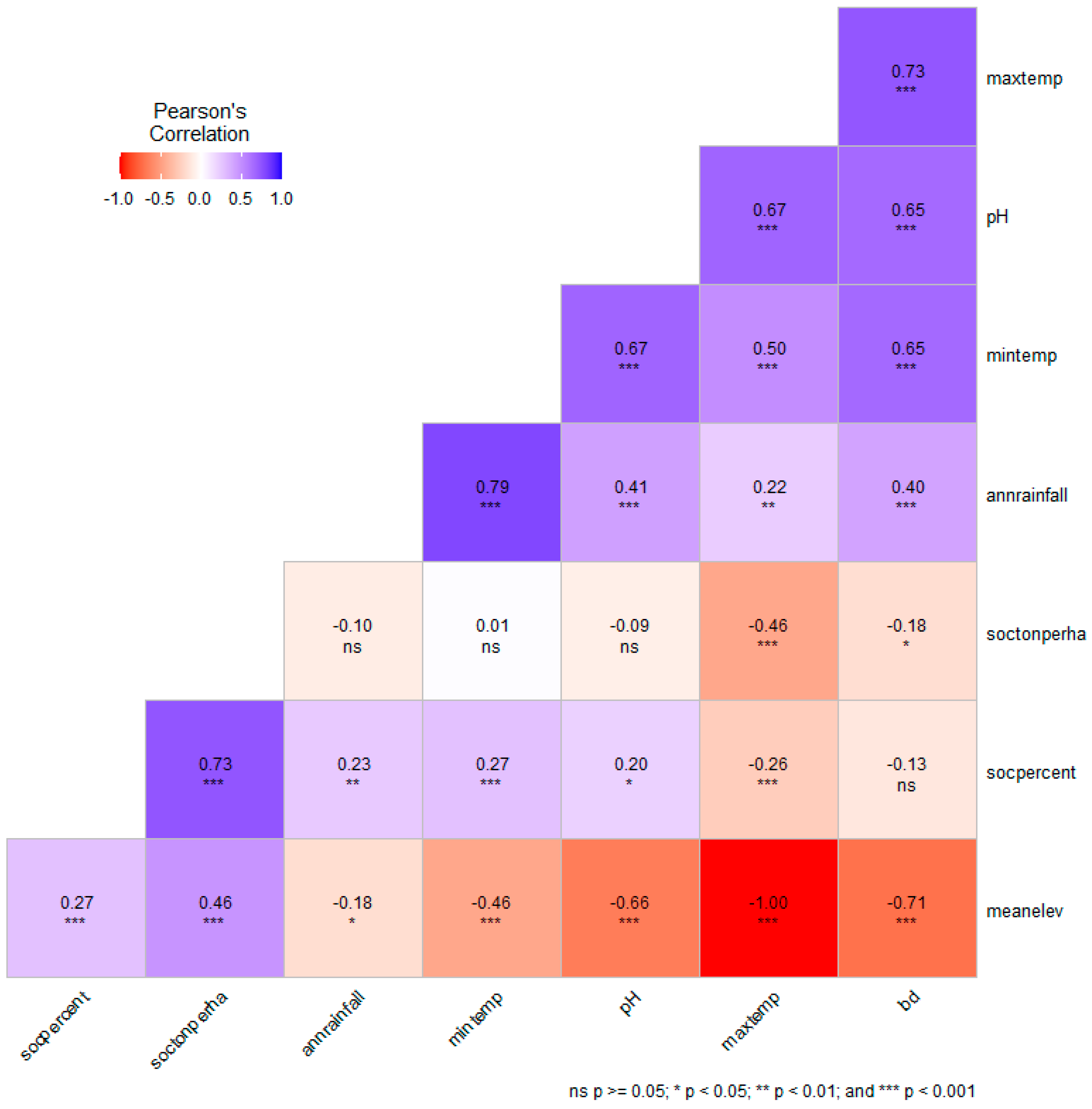
Correlation tests among numerical variables yielded varied results. Of the pairs tested, SOC and pH, as well as mean annual minimum temperature and mean annual rainfall, showed insignificant correlations. However, the remaining pairs demonstrated significant (p < 0.05) associations, particularly between SOC, BD, pH, and variables such as ecological regions, land-use types, elevation, and climatic factors (Figure 2).
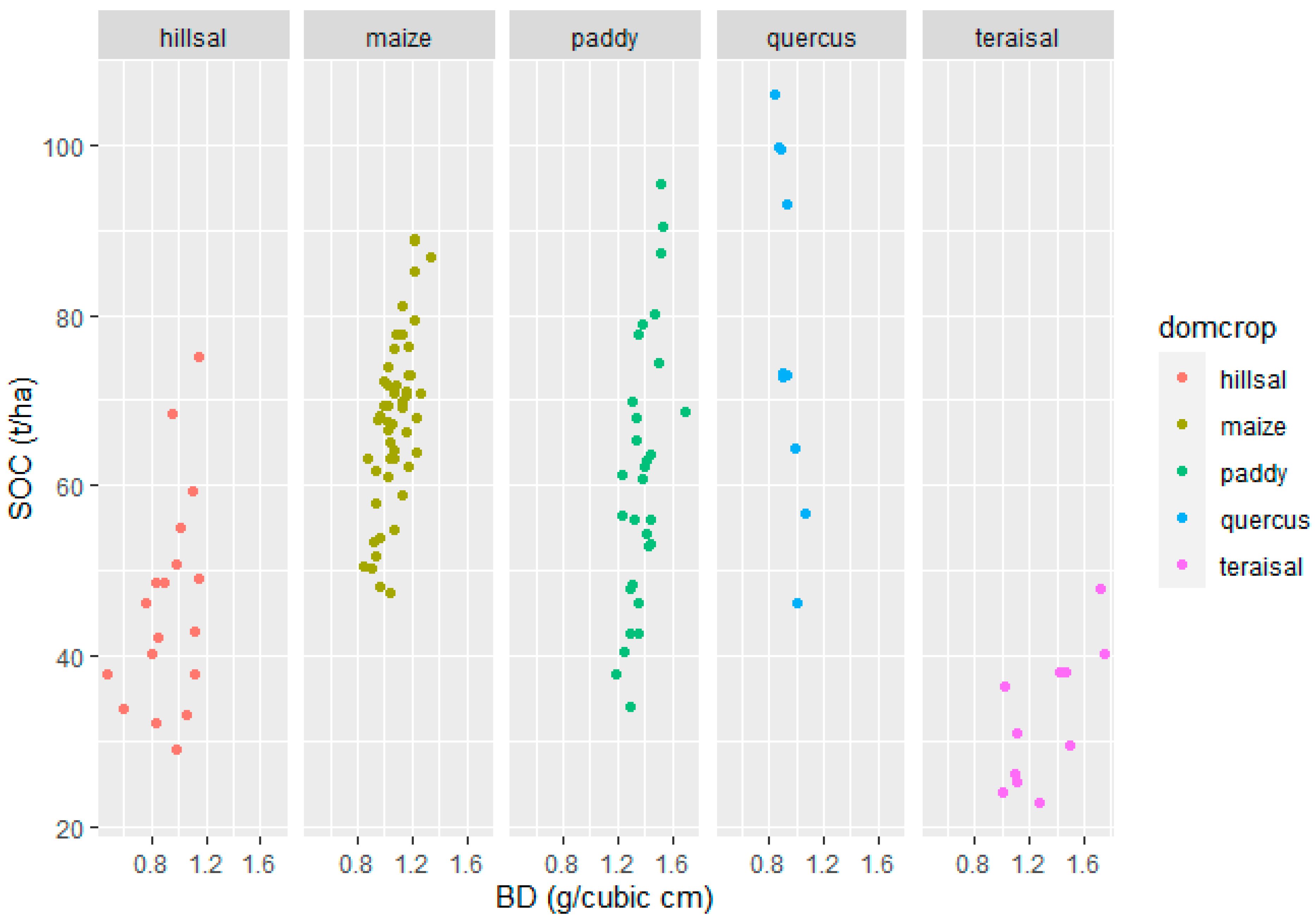
Bulk density (BD) was relatively consistent under paddy and Quercus, yet SOC stock varied widely within these sites. Conversely, Hill S. robusta and Terai S. robusta showed significant variation in BD but relatively consistent SOC values across the sampling plots (Figure 3).
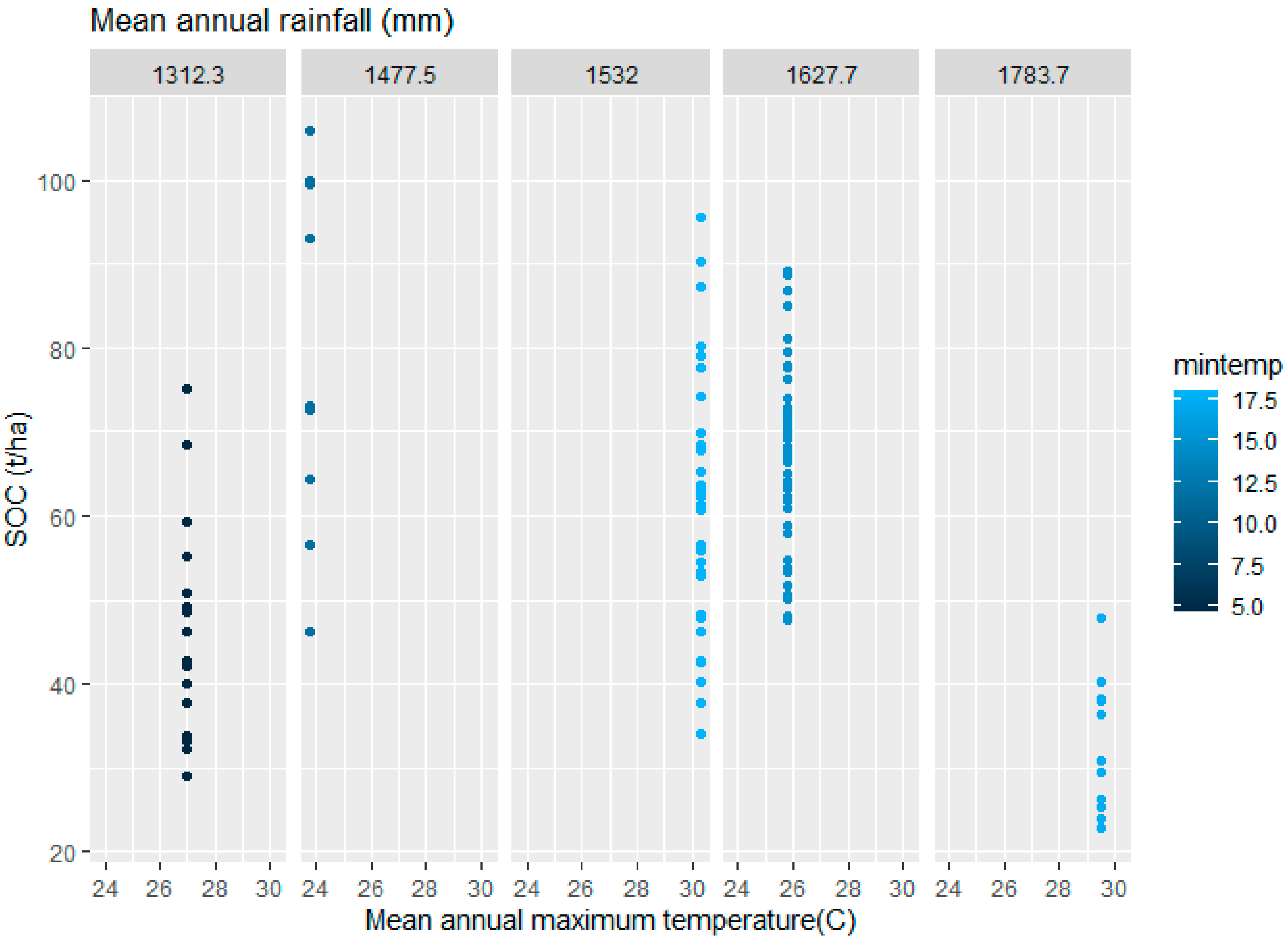
Moreover, no significant trend was observed in the relationship between SOC and minimum or maximum annual temperature or mean annual rainfall (Figure 4). However, significant visual distinctions were observed in the relationship between region, land use, and SOC. Additionally, distinct trends were found in the relationships between BD and pH, dominant crops and land use, and between pH and land use, as well as dominant crops (Figure 5).

3.3. Pair-Wise Tukey HSD Test Output

After finding significant differences in SOC stock across different dominant cropping systems, pairwise comparisons were conducted to identify pairs with significant distinctions (p < 0.05). The results showed that all crop pairs, except for Terai S. robusta vs. Hill S. robusta and paddy vs. maize, exhibited significant differences in SOC (p < 0.05). Similarly, BD showed significant differences in all pairs of dominant crops except for Quercus vs. Hill S. robusta and Terai S. robusta vs. paddy. pH levels differed significantly (p < 0.05) between all crop pairs, except for Quercus vs. Hill S. robusta and Terai S. robusta vs. maize (Table 5).

4. Discussion

The analysis reveals a significant correlation between dominant crops and SOC content. Notably, traditional agricultural practices in developing regions produce soil carbon levels comparable to those in forested areas, especially within the top 30 cm of soil. This suggests that these traditional farming methods effectively retain substantial organic carbon, supporting food security in these regions. These findings provide valuable guidance for decision makers dealing with land-use changes, food security, and environmental issues [16]. Dominant crops alone explain 42% of the variance in SOC stock, and this figure rises to 76% when combined with BD. This highlights the potential of dominant crops as reliable indicators for estimating SOC levels, as supported by previous studies [29,62]. However, the weak linear correlation between SOC and BD in agricultural soils suggests the need to reassess their relationship, especially in areas with frequent human impacts on soil dynamics. Prior research indicates that SOC decreases with soil depth, often due to higher sand contents in deeper layers [36,45]. Given the site-specific nature of these findings, further research is needed on broader temporal and spatial scales to explore this relationship more thoroughly.

4.1. SOC Stock between Land-Use Types

The results reveal that there is no substantial impact on carbon conservation for land-use changes when transitioning to a traditional farming system compared to unmanaged natural forests. This suggests that the variation in SOC is largely governed by the dominant cropping system, implying that soil carbon can be enhanced through crop management. Although this finding is unusual with respect to the contemporary literature, it accurately reflects the study area. Several factors could contribute to the observed significant differences in SOC, including variations in management practices, land-use techniques, geographic terrain, site quality, elevation, and climatic factors. Forests are often situated on challenging terrains with shallow depth, steep slopes, and high coarse grains (boulders and rocks) in the soils, while most agricultural lands generally occupy fertile soil with regular organic inputs. Such differences highlight the sensitivity of SOC to various management interventions like manuring and soil health management strategies [20], which aligns with this study. We observed that traditional agricultural practices, such as slicing and leveling terraces, trapping flash floods from torrents, and using animal-based manuring (e.g., dung, bedding materials, food and fodder remnants, grass, and hay), are employed by farmers throughout the year as organic fertilizers. These practices enrich the organic matter, a prime source of SOC. This system includes strategies like multi-cropping, crop rotation with leguminous plants, crop diversification, and multi-story cropping systems. Additionally, farmers let the land lie fallow and cultivate in alternate years to replenish nutrients; practice slash-and-burn, rotational livestock grazing, and mulching; burn and bury litter and agricultural residues before sowing major crops; and use kitchen waste and green and organic manuring. These practices help maintain nutrient balances and organic carbon stocks in agricultural soil. Similar findings have been reported, showing higher SOC stocks in farmyard manure-nurtured fields compared to non-manured fields [24] and significantly higher stocks with the use of agricultural residues [39,46] and diversified cropping systems [15,57].
In contrast, our study revealed that regular collection of leaf litter, fodder, and fuelwood from forests; uncontrolled grazing and browsing by domestic animals; frequent bushfires; and torrential rain collectively reduce SOC stocks. These practices wash away organic and carbon-containing material, slow the accumulation of root-derived carbon from perennial forest crops, and cause erosion on the sloping land of forested areas. Although root-derived carbon is a major source of SOC in forest soils [14], the deep-rooting systems in multilayer rooting systems of wild plant species, distributed in deeper profiles, and their perennial nature [63], along with the widespread root systems and limited microbial activities in undisturbed and compacted soil profiles [64], do not significantly enrich the organic matter in forest soils. Moreover, there has not been any anthropogenic intervention in Nepalese forests to nourish or add additional carbon resources [65]. Nonetheless, studies suggest that even degraded forests can be restored to a productive stage by adopting active and sustainable management principles to enhance goods and services. This finding indicates significant opportunities to enhance productivity and carbon (including SOC) in degraded but unmanaged forests.
There are numerous debates, policies, and practices worldwide addressing the trade-offs between agriculture and forestland for tackling environmental challenges (e.g., climate change) and humanitarian issues (e.g., food security) [66]. However, our study observed that agricultural land holds an equal stock of SOC to forested land. This suggests that the argument for land-use change from agricultural land to forestland for SOC conservation may not always be accurate [57,67]. Traditional farming systems can ensure food security and conserve biodiversity without compromising SOC conservation, as supported by previous studies in the Global South, where such practices are prevalent [30].
Regardless of land use, enhancing and preserving SOC is crucial for ecological, economic, and environmental benefits. This approach mitigates soil erosion and greenhouse gas emissions by maintaining optimal soil moisture capacity [5]. In forests, establishing mixed-species structures enhances stability and reduces excessive SOC decomposition. Research shows that sustainably managed forest ecosystems with diverse plant species sequester more organic carbon both above and below ground compared to conventional management systems [10]. Conserving species diversity in forests supports SOC accumulation and distribution within soil profiles [31]. Maintaining canopy forests enriches soil carbon through ecosystem functioning [29].
However, forestlands in our study area show significantly lower carbon levels compared to many other regions, contradicting previous research on Nepalese forests [29]. This is due to significant degradation from anthropogenic factors, such as fire, grazing, and fuelwood collection, and natural factors like sloping and rocky terrain. Our findings suggest that incorporating soil carbon into carbon trading along with climate action might be challenging due to substantial SOC loss from forest degradation and deforestation [65]. Agriculture should be practiced where the land is best suited to it, while forests and natural vegetation should be preserved where agriculture is not economically viable. The trade-off between agricultural and forestland use is not always practical solely from a carbon conservation perspective; both land uses can be sustainably managed to achieve win–win solutions for overcoming humanitarian and environmental challenges.

4.2. SOC under Dominant Crops

The SOC density in the hill forested areas (both Quercus and Hill S. robusta) was observed to be higher than in the lowland plain area (Terai), despite their having similar forest types. This is because Terai soil is formed by alluvium deposits with a high sand and silt content, whereas the soil in the hilly region is more mature and contains a larger proportion of clay. Our observation corroborates the results of other studies. For example, the higher BD, the higher density of mature Quercus trees, and parent materials containing higher levels of carbon in the soil [68] indicate that older trees contribute to higher SOC in pine-dominated forests [29] and in midhill mixed forests in Nepal [55]. In contrast, the lowland (Terai) is formed by alluvium deposits with relatively lower carbon contents in their parent materials [69], and it experiences higher temperatures that facilitate decarbonatization due to higher microbial activities and topsoil temperatures, resulting in lower SOC. Research supports that SOC is higher in warm–temperate climates compared to subtropical climates [30]. Additionally, elevation affects SOC density, as higher mean elevations are associated with increased SOC due to changes in mean annual air and soil temperatures, which impact soil organic matter decomposition and accumulation rates through varying biological and physical activities, such as snow, hailstorms, and landslides [70,71]. We used elevation as a categorical variable due to discontinuous elevational data and focused on cluster-based analysis (average site elevation), whereas previous studies considered elevation as a continuous variable [29]. The variation in soil carbon stocks, even under similar species dominancy but different elevations, is likely due to geological factors and varying degrees of anthropogenic disturbances, which should be considered for SOC management.
Similarly, we observed no significant variation in SOC in agricultural fields between upland (maize) and lowland (paddy) areas. This similarity is attributed to the diverse soil fertility management strategies adopted by local farmers, supported by a long history of traditional farming knowledge. In maize fields, farmers typically practice terrace farming and terrace-riser slicing, biological pest control, multi-story cropping, diversifying cropping systems [57], farmyard manuring, diversion channels, green manuring, and mulching. In paddy fields, farmers primarily engage in crop residue mulching, capturing flash floods and torrents during the pre-monsoon season, chicken and green manuring, crop rotation, incorporating legumes and pulses in risers, and agroforestry practices [56]. These practices not only ensure food security and SOC conservation, but also transfer indigenous and traditional knowledge of conservation farming practices. They are effective, efficient, eco-friendly, and culturally appropriate, and thus deserve promotion through affirmative actions and policy decisions.
Significant variation in soil carbon stocks was observed across different dominant crops. This relationship signifies the potential for manipulating SOC levels through crop selection, management, and anthropogenic interventions. Such interventions can not only improve SOC interactions but also enhance plant–soil interactions in a given environment [72]. Plant species exhibit selectivity for specific soil types, and the reciprocal relationship means that different species/crops can be grown in a particular soil type. This crop–soil specification and variation in SOC in such associations has been observed under natural forests, rangeland, cropland, and larch plantations in the Qilian mountains [34]. Given that plant functional groups exert differential influences on carbon uptake and short-term stocks of carbon storage [8], careful consideration is needed for the selection of preferential species/crops and maintaining cropping patterns. This should optimize outcomes and impacts on the soil according to the locality in question and available resources.

4.3. Relationship between SOC and Other Variables

We observed that BD exhibits an insignificant relationship with SOC when considered in a simple linear and standalone form. However, this relationship has a substantial impact when it interacts with the dominant crop, explaining 42% to 76% of the variation (Table 4). Previous findings have indicated that geochemical and physical properties [73] largely influence SOC and increase in soil with a higher BD [74]. Our findings show that SOC density peaks within the mid-bulk density range (0.8–1.5 g cm−3). Research suggests that BD is independent of SOC analysis and could be a viable option, at least under regular soil management conditions, such as tillage in agricultural land [75], as observed in our study. Therefore, a simple relationship between SOC and BD would not be justifiable under wide variations of physiography, ecology, dominant crops, and elevation [75]. The overburden pressure of the soil profile and higher sand content with increasing profile depth [76] could explain the failure of a straightforward relationship between BD and SOC [75], suggesting that estimating SOC based solely on BD might not be credible, especially in agricultural land where regular soil management activities are performed. Contrary to this, some researchers suggest that SOC has a strong relationship (81%) with soil BD [77]. This variation may occur because a certain range of soils with higher BDs containing silt and clay particles contribute to increased SOC, while beyond that range, higher proportions of sand and gravel result in decreased organic carbon despite higher BDs. Our analysis reveals that the interaction effect between BD and dominant crops provides a better explanation of SOC rather than considering BD alone. This suggests revisiting BD-based SOC estimation, especially in cases where regular anthropogenic soil management practices, such as agricultural land use, are performed.
A study reported that climate has a significant influence on terrestrial SOC [78]. We observed that SOC density decreases with increasing temperature but increases with higher annual rainfall. This may be because higher rainfall enhances plant growth, resulting in higher SOC in areas with more rainfall. In contrast, higher temperatures have a negative association with SOC density in soil. This could be due to factors such as higher decomposition rates, soil–microorganism interactions [64], geochemical and physical properties [52,73], carbon inputs, and soil carbon fractions [52]. This finding signifies that SOC varies with changes in climatic parameters, and therefore careful consideration is required when estimating SOC under diverse climatic conditions.
Overall, this study provides key policy insights for SOC management within the context of climate change uncertainties [79] and data-poor regions in the Global South [9,53]. Firstly, our study showed that the dominant cropping system largely influences SOC density at the given sites. This suggests the importance of considering dominant crop management for SOC enhancement. However, we cannot generalize these findings to other cropping systems like agroforestry, mixed cropping, and other perennial cropping systems, as they may not apply to all situations. Secondly, despite the insignificant linear correlation between bulk density and SOC density, our observations revealed that the interaction between BD and dominant crops significantly improves SOC response. This suggests incorporating this interaction effect rather than relying solely on standalone measures for SOC estimation. Finally, we recommend sustainable agriculture and forested land management for SOC conservation rather than converting agricultural land into forested land, or vice versa, at least in traditional farming systems. This approach ensures sustainable SOC management without jeopardizing food security and maintains the ecological integrity provided by forest ecosystems [11,17].
This study focused on comparing SOC levels between forests and crops within the top 30 cm of soil. The outcomes serve as a reference for current forest and agricultural management practices regarding SOC dynamics. However, the study is limited to five sites and 154 sampling plots, which may not be representative of all ecological conditions, cropping systems, farming practices, forest types, geographic variations, and land-use types. Future research could address these limitations across various spatial and relational scales. Moreover, while this study used empirical datasets to compare SOC within two land-use types up to 30 cm in depth, technological advancements such as remote sensing and GIS modeling offer opportunities for more comprehensive comparisons under different scenarios [51]. These technologies can also value ecosystem services under climate change [3]. Despite these limitations, the study provides a unique perspective that contributes to global discourses on SOC management. It enhances understanding of national targets [80] and international commitments, such as the SDGs [81] and climatic goals [82], and informs carbon-related agreements [83]. Ultimately, this research aims to reduce trade-offs and enhance synergies for win–win solutions that balance food security and address global environmental challenges through local carbon management actions, specifically focusing on soil organic carbon.

5. Conclusions

This study provides a detailed analysis of SOC storage in two land-use scenarios and five cropping systems. It was found that SOC levels in agricultural land under traditional farming systems are comparable to those in the top 30 cm of forest soil. This suggests that converting agricultural land to forest may not always be optimal for increasing SOC due to land-use trade-offs. The study shows that agricultural fields, especially under traditional practices, can be significant carbon reservoirs, ensuring food security and preserving the traditional knowledge and practices associated with land-based livelihood systems. It is also noted that unmanaged forests on slopes or forests under heavy human pressure might act as carbon sources rather than sinks, revealing the opportunities for optimizing their benefits through active and sustainable management addressing societal demands together with environmental and ecological preservation.
The study highlights significant variations in SOC levels influenced by dominant crops and climatic conditions, emphasizing the need to account for these factors in soil management. We found that the interaction between dominant crops and bulk density (BD) significantly affects SOC, explaining over 80% of the variation observed. Our result shows the weak linear correlation between SOC and BD in agricultural soils given that soil on agricultural land is regularly disturbed, indicating that bulk density-dependent SOC estimation may be misleading in such soils. This observation suggests that further research is required to explore this relationship regarding different types of anthropogenic and microbial disturbance in soil where BD is frequently altered by these factors. While focused on comparing SOC between forests and crops within the top 30 cm of soil at specific sites, the study offers valuable insights into SOC management, particularly in traditional farming systems and unmanaged degraded forests. These findings are crucial for understanding carbon sequestration in soil, supporting mechanisms for soil carbon deals, addressing food security conserving traditional farming practices, advocate climate actions without land use change between agriculture and forests through dominant crop management, and informing policy making in data-scarce regions in the Global South and beyond.

Author Contributions

H.P.P.: Conception, data curation, analyses, and manuscript drafting. T.N.M.: English proofing, editing, graphics, methodology, and supervision. A.A.: Supervision, editing, and proofreading. S.B.: Data curation, writing of the discussion and introduction, editing. All authors have read and agreed to the published version of the manuscript.

Funding

This research received partial field support and laboratory funding from the Central Department of Botany, Tribhuvan University, Kirtipur, Nepal. The authors would like to thank Manisha Poudel from the Institute of Forestry, Hetauda Campus, for voluntarily preparing the study area map.

Institutional Review Board Statement

The authors adhered to the publishing ethics and the ethical guidelines of the journal.

Informed Consent Statement

Not applicable.

Data Availability Statement

The raw data can be obtained upon request from the corresponding author.

Conflicts of Interest

The authors declare that there are no financial or any other conflicts of interest among the authors or supporting organizations concerning this study or the data used, nor any other issues concerning this research.

Appendix A

Figure A1. Map of the study area.
Sustainability 16 07207 g0a1

References

  1. Green, C.; Byrne, K.A. Biomass: Impact on Carbon Cycle and Greenhouse Gas Emissions Carly Green. In Encyclopedia of Energy; Elsevier: Amsterdam, The Netherlands, 2004; pp. 223–236. [Google Scholar]
  2. Barnwell, T.O.; Jackson, R.B.; Elliott, E.T.; Burke, I.C.; Cole, C.V.; Paustian, K.; Paul, E.A.; Donigian, A.S.; Patwardhan, A.S.; Rowell, A.; et al. An Approach to Assessment of Management Impacts on Agricultural Soil Carbon. In Natural Sinks of CO2: Palmas Del Mar, Puerto Rico, 24–27 February 1992; Wisniewski, J., Lugo, A.E., Eds.; Springer: Dordrecht, The Netherlands, 1992; pp. 423–435. ISBN 978-94-011-2793-6. [Google Scholar]
  3. IPCC. 2019 Refinement to the 2006 IPCC Guidelines for National Greenhouse Gas Inventories—IPCC; Intergovernmental Panel on Climate Change (IPCC): Geneva, Switzerland, 2019. [Google Scholar]
  4. IPCC. Land Use, Land-Use Change, and Forestry—IPCC; Intergovernmental Panel on Climate Change (IPCC): Geneva, Switzerland, 2000. [Google Scholar]
  5. Dahal, N.; Bajracharya, R.M. Prospects of Soil Organic Carbon Sequestration: Implications for Nepal’s Mountain Agriculture. J. For. Livelihood 2010, 9, 45–56. [Google Scholar] [CrossRef]
  6. Fageria, N.K. Role of Soil Organic Matter in Maintaining Sustainability of Cropping Systems. Commun. Soil Sci. Plant Anal. 2012, 43, 2063–2113. [Google Scholar] [CrossRef]
  7. Obalum, S.E.; Chibuike, G.U.; Peth, S.; Ouyang, Y. Soil Organic Matter as Sole Indicator of Soil Degradation. Environ. Monit. Assess. 2017, 189, 176. [Google Scholar] [CrossRef] [PubMed]
  8. Ward, S.E.; Bardgett, R.D.; McNamara, N.P.; Ostle, N.J. Plant Functional Group Identity Influences Short-Term Peatland Ecosystem Carbon Flux: Evidence from a Plant Removal Experiment. Funct. Ecol. 2009, 23, 454–462. [Google Scholar] [CrossRef]
  9. Beillouin, D.; Cardinael, R.; Berre, D.; Boyer, A.; Corbeels, M.; Fallot, A.; Feder, F.; Demenois, J. A Global Overview of Studies about Land Management, Land-Use Change, and Climate Change Effects on Soil Organic Carbon. Glob.Chang. Biol. 2022, 28, 1690–1702. [Google Scholar] [CrossRef]
  10. Pandey, H.P.; Bhusal, M. A Comparative Study on Carbon Stock in Sal (Shorea Robusta) Forest in Two Different Ecological Regions of Nepal. Banko Janakari 2016, 26, 24–31. [Google Scholar] [CrossRef]
  11. Pandey, H.P.; Aryal, K.; Aryal, S.; Maraseni, T.N. Understanding Local Ecosystem Dynamics in Three Provinces of the Lowlands of Nepal. Sci. Total Environ. 2023, 867, 161501. [Google Scholar] [CrossRef]
  12. Barré, P.; Durand, H.; Chenu, C.; Meunier, P.; Montagne, D.; Castel, G.; Billiou, D.; Soucémarianadin, L.; Cécillon, L. Geological Control of Soil Organic Carbon and Nitrogen Stocks at the Landscape Scale. Geoderma 2017, 285, 50–56. [Google Scholar] [CrossRef]
  13. Liu, J.; Han, J.; Zhang, Y.; Wang, H.; Kong, H.; Shi, L. Prediction of Soil Organic Carbon with Different Parent Materials Development Using Visible-near Infrared Spectroscopy. Spectrochim. Acta Part A Mol. Biomol. Spectrosc. 2018, 204, 33–39. [Google Scholar] [CrossRef]
  14. Pollierer, M.M.; Dyckmans, J.; Scheu, S.; Haubert, D. Carbon Flux through Fungi and Bacteria into the Forest Soil Animal Food Web as Indicated by Compound-Specific 13C Fatty Acid Analysis. Funct. Ecol. 2012, 26, 978–990. [Google Scholar] [CrossRef]
  15. Wood, S.A.; Bowman, M. Large-Scale Farmer-Led Experiment Demonstrates Positive Impact of Cover Crops on Multiple Soil Health Indicators. Nat. Food 2021, 2, 97–103. [Google Scholar] [CrossRef]
  16. Amelung, W.; Bossio, D.; de Vries, W.; Kögel-Knabner, I.; Lehmann, J.; Amundson, R.; Bol, R.; Collins, C.; Lal, R.; Leifeld, J.; et al. Towards a Global-Scale Soil Climate Mitigation Strategy. Nat. Commun. 2020, 11, 5427. [Google Scholar] [CrossRef]
  17. Pant, D.; Shah, K.K.; Sharma, S.; Bhatta, M.; Tripathi, S.; Pandey, H.P.; Tiwari, H.; Shrestha, J.; Bhat, A.K. Soil and Ocean Carbon Sequestration, Carbon Capture, Utilization, and Storage as Negative Emission Strategies for Global Climate Change. J. Soil. Sci. Plant Nutr. 2023, 23, 1421–1437. [Google Scholar] [CrossRef]
  18. Johnson, J.M.-F.; Franzluebbers, A.J.; Weyers, S.L.; Reicosky, D.C. Agricultural Opportunities to Mitigate Greenhouse Gas Emissions. Environ. Pollut. 2007, 150, 107–124. [Google Scholar] [CrossRef]
  19. Pandit, B.H.; Neupane, R.P.; Sitaula, B.K.; Bajracharya, R.M. Contribution of Small-Scale Agroforestry Systems to Carbon Pools and Fluxes: A Case Study from Middle Hills of Nepal. Small-Scale For. 2013, 12, 475–487. [Google Scholar] [CrossRef]
  20. Conant, R.T.; Cerri, C.E.P.; Osborne, B.B.; Paustian, K. Grassland Management Impacts on Soil Carbon Stocks: A New Synthesis. Ecol. Appl. 2017, 27, 662–668. [Google Scholar] [CrossRef]
  21. Awasthi, K.D.; Sitaula, B.K.; Singh, B.R.; Bajracharya, R.M. Fluxes of Methane and Carbon Dioxide from Soil under Forest, Grazing Land, Irrigated Rice and Rainfed Field Crops in a Watershed of Nepal. Biol. Fertil. Soils 2005, 41, 163–172. [Google Scholar] [CrossRef]
  22. Lessmann, M.; Ros, G.H.; Young, M.D.; de Vries, W. Global Variation in Soil Carbon Sequestration Potential through Improved Cropland Management. Glob. Chang. Biol. 2022, 28, 1162–1177. [Google Scholar] [CrossRef]
  23. Paudel, M.; Kumar Sah, S.; McDonald, A.; Kumar Chaudhary, N. Soil Organic Carbon Sequestration in Rice-Wheat System under Conservation and Conventional Agriculture in Western Chitwan, Nepal. World J. Agric. Res. 2014, 2, 1–5. [Google Scholar] [CrossRef]
  24. Gami, S.K.; Lauren, J.G.; Duxbury, J.M. Soil Organic Carbon and Nitrogen Stocks in Nepal Long-Term Soil Fertility Experiments. Soil Tillage Res. 2009, 106, 95–103. [Google Scholar] [CrossRef]
  25. Yang, Z.C.; Zhao, N.; Huang, F.; Lv, Y.Z. Long-Term Effects of Different Organic and Inorganic Fertilizer Treatments on Soil Organic Carbon Sequestration and Crop Yields on the North China Plain. Soil Tillage Res. 2015, 146, 47–52. [Google Scholar] [CrossRef]
  26. Brock, C.; Fließbach, A.; Oberholzer, H.-R.; Schulz, F.; Wiesinger, K.; Reinicke, F.; Koch, W.; Pallutt, B.; Dittman, B.; Zimmer, J.; et al. Relation between Soil Organic Matter and Yield Levels of Nonlegume Crops in Organic and Conventional Farming Systems. J. Plant Nutr. Soil Sci. 2011, 174, 568–575. [Google Scholar] [CrossRef]
  27. Manlay, R.J.; Feller, C.; Swift, M.J. Historical Evolution of Soil Organic Matter Concepts and Their Relationships with the Fertility and Sustainability of Cropping Systems. Agric. Ecosyst. Environ. 2007, 119, 217–233. [Google Scholar] [CrossRef]
  28. Ghimire, R.; Adhikari, K.R.; Chen, Z.-S.; Shah, S.C.; Dahal, K.R. Soil Organic Carbon Sequestration as Affected by Tillage, Crop Residue, and Nitrogen Application in Rice–Wheat Rotation System. Paddy Water Environ. 2012, 10, 95–102. [Google Scholar] [CrossRef]
  29. Maraseni, T.N.; Pandey, S.S. Can Vegetation Types Work as an Indicator of Soil Organic Carbon? An Insight from Native Vegetations in Nepal. Ecol. Indic. 2014, 46, 315–322. [Google Scholar] [CrossRef]
  30. Shrestha, R.K.; Ladha, J.K.; Gami, S.K. Total and Organic Soil Carbon in Cropping Systems of Nepal. Nutr. Cycl. Agroecosyst. 2006, 75, 257–269. [Google Scholar] [CrossRef]
  31. Jandl, R.; Lindner, M.; Vesterdal, L.; Bauwens, B.; Baritz, R.; Hagedorn, F.; Johnson, D.W.; Minkkinen, K.; Byrne, K.A. How Strongly Can Forest Management Influence Soil Carbon Sequestration? Geoderma 2007, 137, 253–268. [Google Scholar] [CrossRef]
  32. Oldfield, E.E.; Bradford, M.A.; Wood, S.A. Global Meta-Analysis of the Relationship between Soil Organic Matter and Crop Yields. SOIL 2019, 5, 15–32. [Google Scholar] [CrossRef]
  33. Amanuel, W.; Yimer, F.; Karltun, E. Soil Organic Carbon Variation in Relation to Land Use Changes: The Case of Birr Watershed, Upper Blue Nile River Basin, Ethiopia. J. Ecol. Environ. 2018, 42, 16. [Google Scholar] [CrossRef]
  34. Chang, Z.; Feng, Q.; Si, J.; Li, J.; Su, Y. Soil Carbon Storage and CO2 Flux under Different Vegetation Types in Qilian Mountains. Available online: http://en.cnki.com.cn/Article_en/CJFDTotal-STXZ200805002.htm (accessed on 13 September 2020).
  35. Ahirwal, J.; Kumari, S.; Singh, A.K.; Kumar, A.; Maiti, S.K. Changes in Soil Properties and Carbon Fluxes Following Afforestation and Agriculture in Tropical Forest. Ecol. Indic. 2021, 123, 107354. [Google Scholar] [CrossRef]
  36. Baruah, R.; Medhi, B.; Bhattacharyya, D. Soil Organic Carbon Storage and Factors Affecting on Its Distribution at Paddy and Forest Soil of Jorhat District of Assam. J. Environ. Biol. 2020, 41, 1798–1810. [Google Scholar] [CrossRef]
  37. Niu, X.; Liu, C.; Jia, X.; Zhu, J. Changing Soil Organic Carbon with Land Use and Management Practices in a Thousand-Year Cultivation Region. Agric. Ecosyst. Environ. 2021, 322, 107639. [Google Scholar] [CrossRef]
  38. Du, X.; Xu, Z.; Lv, Q.; Meng, Y.; Wang, Z.; Feng, H.; Ren, X.; Hu, S.; Gao, Z. Fractions, Stability, and Influencing Factors of Soil Organic Carbon under Different Land-Use in Sodic Soils. Geoderma Reg. 2022, 31, e00590. [Google Scholar] [CrossRef]
  39. Wang, J.; Wang, X.; Xu, M.; Feng, G.; Zhang, W.; Lu, C. Crop Yield and Soil Organic Matter after Long-Term Straw Return to Soil in China. Nutr. Cycl. Agroecosyst. 2015, 102, 371–381. [Google Scholar] [CrossRef]
  40. Badgery, W.B.; Simmons, A.T.; Murphy, B.M.; Rawson, A.; Andersson, K.O.; Lonergan, V.E.; Ven, R. van de Relationship between Environmental and Land-Use Variables on Soil Carbon Levels at the Regional Scale in Central New South Wales, Australia. Soil Res. 2013, 51, 645–656. [Google Scholar] [CrossRef]
  41. Hobley, E.; Wilson, B.; Wilkie, A.; Gray, J.; Koen, T. Drivers of Soil Organic Carbon Storage and Vertical Distribution in Eastern Australia. Plant Soil 2015, 390, 111–127. [Google Scholar] [CrossRef]
  42. Tahir, M.M.; Khalid, A.B.; Mehmood, K.; Khaliq, A.; Rahim, N. Variations in Soil Carbon and Nitrogen Contents under Different Land Uses in Sub-Temperate Highland of Azad Kashmir. Eurasian Soil Sci. 2021, 54, 586–596. [Google Scholar] [CrossRef]
  43. Wilson, B.R.; Lonergan, V.E. Land-Use and Historical Management Effects on Soil Organic Carbon in Grazing Systems on the Northern Tablelands of New South Wales. Soil Res. 2013, 51, 668–679. [Google Scholar] [CrossRef]
  44. Shaheen, H.; Awan, S.N.; Khan, R.W.A.; Khalid, A.R.; Ahmed, W.; Chughtai, F.M. Variations in Soil Organic Carbon Stocks under Different Land-Use Categories in Subtropical Ecosystems of Kashmir. For. Sci. 2021, 67, 525–536. [Google Scholar] [CrossRef]
  45. Guo, X.; Liu, Z.; Gao, D.; Xu, C.; Zhang, K.; Liu, X. Application of Land Use Modes in the Spatial Prediction of Soil Organic Carbon in Urban Green Spaces. Int. Agrophys. 2022, 37, 1–14. [Google Scholar] [CrossRef]
  46. Wu, Q.; Jiang, X.; Zhang, C.; Lu, Q.; Li, J.; Whalen, J.K.; Chen, J. Accumulation of Chemically Degraded Organic Carbon in the Soil Profile of Chinese Fir Plantations. Can. J. Soil. Sci. 2020, 100, 245–252. [Google Scholar] [CrossRef]
  47. Kafle, G. Vertical Distribution of Soil Organic Carbon and Nitrogen in a Tropical Community Forest of Nepal. Available online: https://www.hindawi.com/journals/ijfr/2019/3087570/ (accessed on 14 September 2020).
  48. Kumar, A.; Padbhushan, R.; Singh, Y.; Kohli, A.; Ghosh, M. Soil Organic Carbon under Various Land Uses in Alfisols of Eastern India. Indian J. Agric. Sci. 2021, 91, 975–984. [Google Scholar] [CrossRef]
  49. Sulman, B.N.; Harden, J.; He, Y.; Treat, C.; Koven, C.; Mishra, U.; O’Donnell, J.A.; Nave, L.E. Land Use and Land Cover Affect the Depth Distribution of Soil Carbon: Insights From a Large Database of Soil Profiles. Front. Environ. Sci. 2020, 8, 146. [Google Scholar] [CrossRef]
  50. Castellano, M.J.; Mueller, K.E.; Olk, D.C.; Sawyer, J.E.; Six, J. Integrating Plant Litter Quality, Soil Organic Matter Stabilization, and the Carbon Saturation Concept. Glob. Chang. Biol. 2015, 21, 3200–3209. [Google Scholar] [CrossRef]
  51. Khalil, M.I.; Kiely, G.; O’Brien, P.; Müller, C. Organic Carbon Stocks in Agricultural Soils in Ireland Using Combined Empirical and GIS Approaches. Geoderma 2013, 193–194, 222–235. [Google Scholar] [CrossRef]
  52. Luo, Z.; Feng, W.; Luo, Y.; Baldock, J.; Wang, E. Soil Organic Carbon Dynamics Jointly Controlled by Climate, Carbon Inputs, Soil Properties and Soil Carbon Fractions. Glob. Chang. Biol. 2017, 23, 4430–4439. [Google Scholar] [CrossRef]
  53. Paudyal, K.; Baral, H.; Burkhard, B.; Bhandari, S.P.; Keenan, R.J. Participatory Assessment and Mapping of Ecosystem Services in a Data-Poor Region: Case Study of Community-Managed Forests in Central Nepal. Ecosyst. Serv. 2015, 13, 81–92. [Google Scholar] [CrossRef]
  54. Lisciani, S. Sustainable Agriculture and Agri-Food. Sustainability 2024, 16, 6695. [Google Scholar] [CrossRef]
  55. Pandey, H.P.; Maaren, I.E.; Shah, K.K.; Maraseni, T.N. Response of Topographic and Biodiversity Variables on Biomass and Carbon Density in Community Forests of Himalayan Foot-Hills. J. For. Livelihood 2020, 19, 51–65. [Google Scholar]
  56. Pandey, H.P.; Pokhrel, N.P.; Luitel, D.R.; Acharya, K.; Shah, K.K. Diversity of Agroforestry Species and Uses in Two Ecological Regions: A Case from Central Nepal. Adv. Agric. 2021, 2021, e1198341. [Google Scholar] [CrossRef]
  57. Shah, K.K.; Modi, B.; Pandey, H.P.; Subedi, A.; Aryal, G.; Pandey, M.; Shrestha, J. Diversified Crop Rotation: An Approach for Sustainable Agriculture Production. Adv. Agric. 2021, 2021, e8924087. [Google Scholar] [CrossRef]
  58. ANSAB. Guidelines for Measuring Carbon Stocks in Community-Managed Forests; Asia Network for Sustainable Agriculture and Bioresources (ANSAB): Kathmandu, Nepal, 2011. [Google Scholar]
  59. DHM. Observed Climate Trend Analysis in the Districts and Physiographic Region of Nepal (1971–2014); Department of Hydrology and Meteorology (DHM): Kathmandu, Nepal, 2017.
  60. Walkley, A.; Black, I.A. An Examination of the Method for Determining Soil Organic Matter, and a Proposed Modification of the Chromic Acid Titration Method. Soil Sci. 1934, 37, 29–38. [Google Scholar] [CrossRef]
  61. R Core Team. R: A Language and Environment for Statistical Computing; R Version 4.3.2; R Foundation for Statistical Computing: Vienna, Austria, 2023; Available online: https://www.R-Project.Org (accessed on 23 October 2023).
  62. Garland, G.; Edlinger, A.; Banerjee, S.; Degrune, F.; García-Palacios, P.; Pescador, D.S.; Herzog, C.; Romdhane, S.; Saghai, A.; Spor, A.; et al. Crop Cover Is More Important than Rotational Diversity for Soil Multifunctionality and Cereal Yields in European Cropping Systems. Nat. Food 2021, 2, 28–37. [Google Scholar] [CrossRef] [PubMed]
  63. Hicks Priens, C.; Castanha, C.; Parras, R.; Torn, M. The Whole-Soil Carbon Flux in Response to Warming. Science 2017, 355, 1420–1423. [Google Scholar] [CrossRef]
  64. Shao, P.; Zeng, X.; Moore, D.J.P.; Zeng, X. Soil Microbial Respiration from Observations and Earth System Models. Environ. Res. Lett. 2013, 8, 034034. [Google Scholar] [CrossRef]
  65. DFRS. State of Nepal’s Forests; Department of Forest Research and Survey: Kathmandu, Nepal, 2015.
  66. Tang, Z.; Zhang, Z.; Deng, W. Government Environmental Expenditure, Budget Management, and Regional Carbon Emissions: Provincial Panel Data from China. Sustainability 2024, 16, 6707. [Google Scholar] [CrossRef]
  67. Lal, R. A System Approach to Conservation Agriculture. J. Soil Water Conserv. 2015, 70, 82A–88A. [Google Scholar] [CrossRef]
  68. Angst, G.; Messinger, J.; Greiner, M.; Häusler, W.; Hertel, D.; Kirfel, K.; Kögel-Knabner, I.; Leuschner, C.; Rethemeyer, J.; Mueller, C.W. Soil Organic Carbon Stocks in Topsoil and Subsoil Controlled by Parent Material, Carbon Input in the Rhizosphere, and Microbial-Derived Compounds. Soil Biol. Biochem. 2018, 122, 19–30. [Google Scholar] [CrossRef]
  69. Chaopricha, N.T.; Marín-Spiotta, E. Soil Burial Contributes to Deep Soil Organic Carbon Storage. Soil Biol. Biochem. 2014, 69, 251–264. [Google Scholar] [CrossRef]
  70. Malla, R.; Neupane, P.R.; Köhl, M. Modelling Soil Organic Carbon as a Function of Topography and Stand Variables. Forests 2022, 13, 1391. [Google Scholar] [CrossRef]
  71. Tashi, S.; Singh, B.; Keitel, C.; Adams, M. Soil Carbon and Nitrogen Stocks in Forests along an Altitudinal Gradient in the Eastern Himalayas and a Meta-Analysis of Global Data. Glob. Chang. Biol. 2016, 22, 2255–2268. [Google Scholar] [CrossRef] [PubMed]
  72. van der Putten, W.H.; Bardgett, R.D.; Bever, J.D.; Bezemer, T.M.; Casper, B.B.; Fukami, T.; Kardol, P.; Klironomos, J.N.; Kulmatiski, A.; Schweitzer, J.A.; et al. Plant–Soil Feedbacks: The Past, the Present and Future Challenges. J. Ecol. 2013, 101, 265–276. [Google Scholar] [CrossRef]
  73. Doetterl, S.; Stevens, A.; Six, J.; Merckx, R.; Van Oost, K.; Casanova Pinto, M.; Casanova-Katny, A.; Muñoz, C.; Boudin, M.; Zagal Venegas, E.; et al. Soil Carbon Storage Controlled by Interactions between Geochemistry and Climate. Nat. Geosci. 2015, 8, 780–783. [Google Scholar] [CrossRef]
  74. Holmes, K.W.; Wherrett, A.; Keating, A.; Murphy, D.V.; Holmes, K.W.; Wherrett, A.; Keating, A.; Murphy, D.V. Meeting Bulk Density Sampling Requirements Efficiently to Estimate Soil Carbon Stocks. Soil Res. 2011, 49, 680–695. [Google Scholar] [CrossRef]
  75. Lee, J.; Hopmans, J.W.; Rolston, D.E.; Baer, S.G.; Six, J. Determining Soil Carbon Stock Changes: Simple Bulk Density Corrections Fail. Agric. Ecosyst. Environ. 2009, 134, 251–256. [Google Scholar] [CrossRef]
  76. Tranter, G.; Minasny, B.; Mcbratney, A.B.; Murphy, B.; Mckenzie, N.J.; Grundy, M.; Brough, D. Building and Testing Conceptual and Empirical Models for Predicting Soil Bulk Density. Soil Use Manag. 2007, 23, 437–443. [Google Scholar] [CrossRef]
  77. Périé, C.; Ouimet, R. Organic Carbon, Organic Matter and Bulk Density Relationships in Boreal Forest Soils. Can. J. Soil Sci. 2011, 88, 315–325. [Google Scholar] [CrossRef]
  78. Carvalhais, N.; Forkel, M.; Khomik, M.; Bellarby, J.; Jung, M.; Migliavacca, M.; Mu, M.; Saatchi, S.; Santoro, M.; Thurner, M.; et al. Global Covariation of Carbon Turnover Times with Climate in Terrestrial Ecosystems. Nature 2014, 514, 213–217. [Google Scholar] [CrossRef]
  79. Bradford, M.A.; Wieder, W.R.; Bonan, G.B.; Fierer, N.; Raymond, P.A.; Crowther, T.W. Managing Uncertainty in Soil Carbon Feedbacks to Climate Change. Nat. Clim. Chang. 2016, 6, 751–758. [Google Scholar] [CrossRef]
  80. NPC. Fifteenth Periodic Plan of Nepal (2019/20–2023/24); National Planning Commission (NPC): Kathmandu, Nepal, 2019.
  81. UN. The 17 Goals: The 2030 Agenda for Sustainable Development. Available online: https://sdgs.un.org/goals (accessed on 27 May 2021).
  82. UNFCCC. Glasgow Climate Pact; United Nations Framework Convention on Climate Change (UNFCCC): Bonn, Germany, 2021. [Google Scholar]
  83. Poudyal, B.H.; Maraseni, T.; Cockfield, G.; Bhattarai, B. Recognition of Historical Contribution of Indigenous Peoples and Local Communities through Benefit Sharing Plans (BSPs) in REDD+. Environ. Sci. Policy 2020, 106, 111–114. [Google Scholar] [CrossRef]
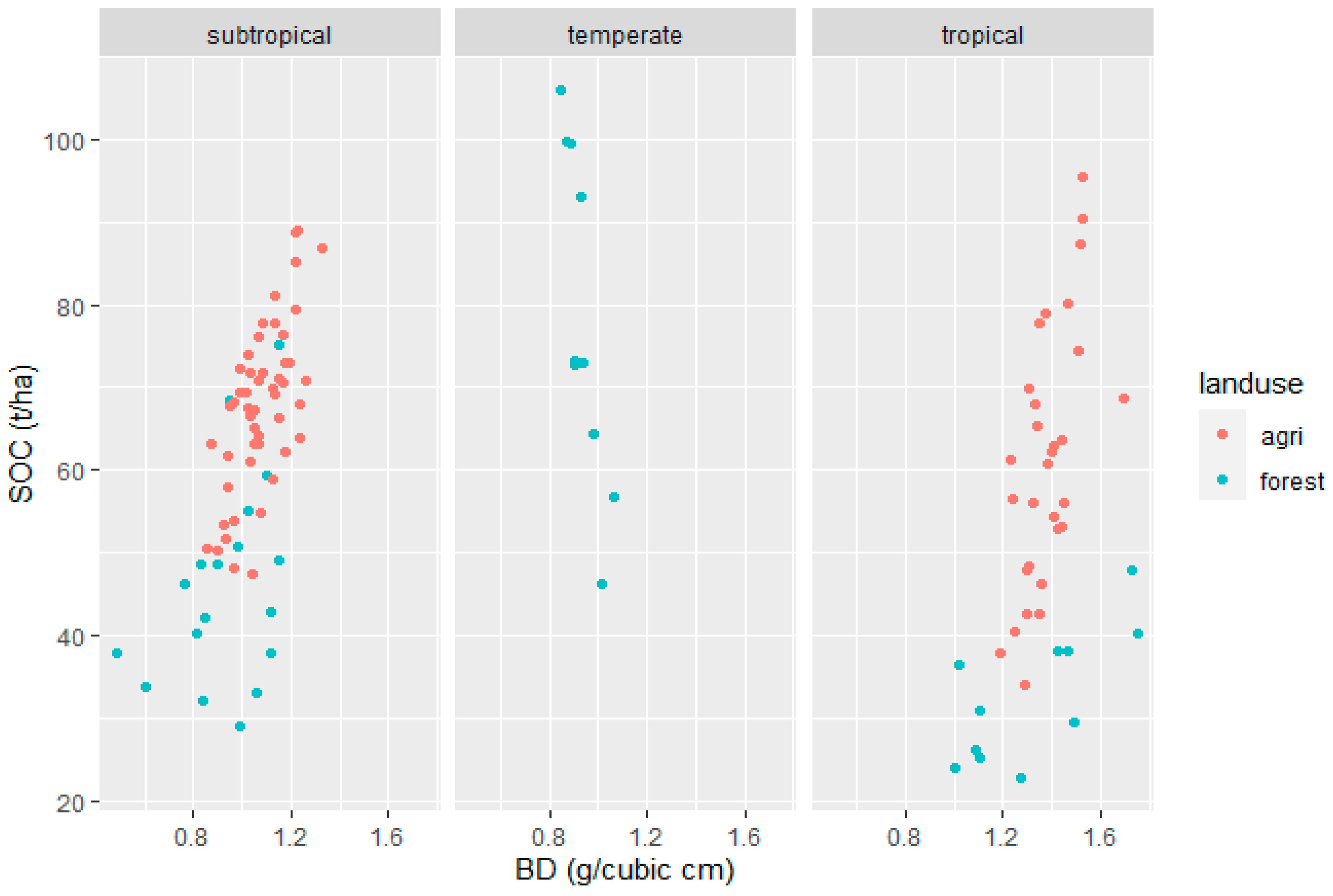
Figure 1. Relationship between SOC and BD under ecological zones and land-use domains.
Sustainability 16 07207 g001
Figure 2. Correlation test of the variable under study [socpercent = soil carbon percentage, soctonperha = SOC ton per ha, annrainfall = annual mean rainfall, mintemp = annual mean minimum temperature, maxtemp = annual mean maximum temperature, bd = BD, meanelev = mean elevation of the study sites, and ns = not significant].
Sustainability 16 07207 g002
Figure 3. The relationship between SOC and BD for the five dominant crops (referred to under the label ‘domcrop’) with respect to bulk density.
Sustainability 16 07207 g003
Figure 4. Relationship between SOC and climatic variables at the study sites. The darkness of the colored circles indicates the range of mean annual minimum temperatures (the lighter the colored circles, the higher the mean annual minimum temperatures, and vice versa). The breaks represent the mean annual rainfall (mm), the x-axis represents the mean annual maximum temperature, and the y-axis indicates the SOC density at the study sites.
Sustainability 16 07207 g004
Figure 5. Relationship between different environmental variables and soil characteristics of the study sites. (A) District-wise SOC distribution. Argh. = Arghakhanchi district, Chit. = Chitwan district, Dade. = Dadeldhura district, Gork. = Gorkha district, and Kapi. = Kapilbastu district. (B) Region-wise SOC distribution. (C) SOC distribution in different ecological zones. (D) SOC distribution under two types of land use. (E) SOC under different dominant cropping systems. (F) Relationship between SOC and BD. (G) Relationship between SOC and pH. (H) Relationship between pH and BD. (I) Dominant crop-wise BD distribution. (J) BD under land-use categories. (K) pH under land-use category. (L) pH under the dominant crops under consideration. The data points located outside the whiskers of box plots represent the outliers. The colors have no specific meaning other than making the themes and categories of the data distinct from each other.
Sustainability 16 07207 g005
Table 1. Characteristics of the sites, include ecological and geographical coverage, sample size at each site, mean elevation, and dominant crops.
District No. of Sample PlotsDominant Vegetation Ecological ZoneGeographical RegionMean Elevation (m)Mean Annual Rainfall (mm)Mean Annual Maximum Temperature (°C)Mean Annual Minimum Temperature (°C)
Arghakhanchi50Maize fieldSubtropical Midhill12001627.725.814.9
Chitwan11Terai Shorea robusta Tropical Terai 5001783.729.517.4
Dadeldhura45QuercusTemperate Midhill16001477.523.811.7
Gorkha18Hill S. robusta Subtropical Midhilll9001312.5274.6
Kapilbastu30Paddy field TropicalTerai300153230.318
Table 2. Models and selection criteria for twelve models tested for SOC density response and two each for bulk density and pH at the bottom of the table for analyzing the relationship of these variables with dominant crops.
Model CodeTested ModelsResid. Std. Error (DF)Adj. R2Shapiro Test (p) Remarks
Lm1SOC = f (dominant crop × BD)10.14 (144)0.760.00Simple and better performance
Lm2SOC = f (dominant crop + pH + BD)15.58 (147)0.420.01Relatively low performance
Lm3SOC = f (dominant crop + pH)15.6 (148)0.420.01Relatively low performance
Lm4SOC = f (dominant crop × pH)15.15 (144)0.460.00Relatively low performance
Lm5SOC = f (dominant crop + pH × BD)15.28 (146)0.450.05Relatively low performance
Lm6 SOC = f (dominant crop + BD)15.71 (148)0.420.02Relatively low performance
Lm7 SOC = f (dominant crop)15.75 (149)0.410.04Relatively low performance
Lm8SOC = f (BD)20.28 (152)0.030.01Relatively poor performance
Lm9SOC = f (pH)20.54 (152)0.000.01Relatively poor performance
Lm10 SOC = f ((dominant crop + BD + pH)2))10.19 (138)0.750.01Better performance but complex
Lm11SOC = f (dominant crop × BD + pH)10.12 (143)0.760.00Better but complex
Lm12SOC = f (dominant crop × pH × BD)9.60 (134)0.780.04Better but too complex
Lm13BD = f (dominant crop)0.13 (149)0.630.01Selected model
Lm14 BD = f (dominant crop + soil pH)0.13 (148)0.630.05Nominal enhanced output
Lm15pH = f (dominant crop)0.33 (149)0.650.00Better model
Lm16pH = f (dominant crop + BD)0.33 (148)0.650.00Nominal enhanced output
[Resid. Std. Error = residual standard errors of the respective models, DF = degrees of freedom (values inside parentheses are DFs), f = function of. Bold criteria are for the final selected models under each model category].
Table 3. The means and SDs for SOC density, BD, and soil pH under the dominant crops under study.
Dominant CropsSOC BD pH
Mean (t ha−1)SDMean (g cm−3)SDMeanSD
Hill S. robusta46.0912.480.930.195.140.38
Maize67.6110.121.080.115.740.35
Paddy61.1815.811.380.116.330.42
Quercus79.0922.050.940.085.120.18
Terai S. robusta32.648.011.310.285.770.32
[SD = standard deviation; other variables have their usual meanings].
Table 4. Model responses concerning SOC density, BD, and pH with dominant crops and their interaction effects with the BD in response to SOC.
VariablesSOC (t ha−1) BD (g cm−3) pH
Intercept22.26 (12.29)0.92 *** (0.03)5.13 *** (0.07)
Maize−20.34 (18.76)0.14 *** (0.03)0.60 *** (0.08)
Paddy−86.49 ** (27.12)0.45 *** (0.03)1.18 *** (0.09)
Quercus293.70 *** (22.48)0.01 (0.03)−0.01 (0.09)
Terai S. robusta−17.23 (19.86)0.38 *** (0.05)0.63 *** (0.12)
BD25.67 (12.99)--
Maize: BD35.36 (18.45)--
Paddy: BD65.23 ** (21.77)--
Quercus: BD−278.32 *** (23.86)--
Terai S. robusta: BD−4.64 (17.45)--
[Significance codes: ‘***’ = p < 0.001, ‘**’ = p < 0.01, ‘’ = p < 0.1. Residual standard errors for the respective models: 10.14 with 144 degrees of freedom (DF) for SOC as the dependent variable; 0.1311 with 149 DF for BD as the dependent variable; and 0.327 with 149 DF for pH as the dependent variable. Figures in parentheses represent standard errors].
Table 5. Outputs of multiple comparisons of means of SOC, bulk density, and pH by Tukey contrast HSD tests.
Compared VariablesDifferences
SOC (t ha−1)BD (g cm−3)pH
Maize—Hill S. robusta21.51 *0.14 *0.60 *
Paddy—Hill S. robusta15.08 *0.45 *1.18 *
Quercus—Hill S. robusta32.99 *0.01−0.01
Terai S. robusta—Hill S. robusta−13.450.38 *0.63 *
Paddy—maize−6.420.30 *0.58 *
Quercus—maize11.47 *−0.13 *−0.61 *
Terai S. robusta—maize−34.97 *0.23 *0.03
Quercus—paddy17.90 *−0.44 *−1.20 *
Terai S. robusta—paddy−28.54 *−0.06−0.55 *
Terai S. robustaQuercus−46.44 *0.37 *0.65 *
[Significance code: ‘*’ = 0.05].
Disclaimer/Publisher’s Note: The statements, opinions and data contained in all publications are solely those of the individual author(s) and contributor(s) and not of MDPI and/or the editor(s). MDPI and/or the editor(s) disclaim responsibility for any injury to people or property resulting from any ideas, methods, instructions or products referred to in the content.