


Simulation Methods and Digital Strategies for Supply Chains Facing Disruptions: Insights from a Systematic Literature Review


Abstract
1. Introduction
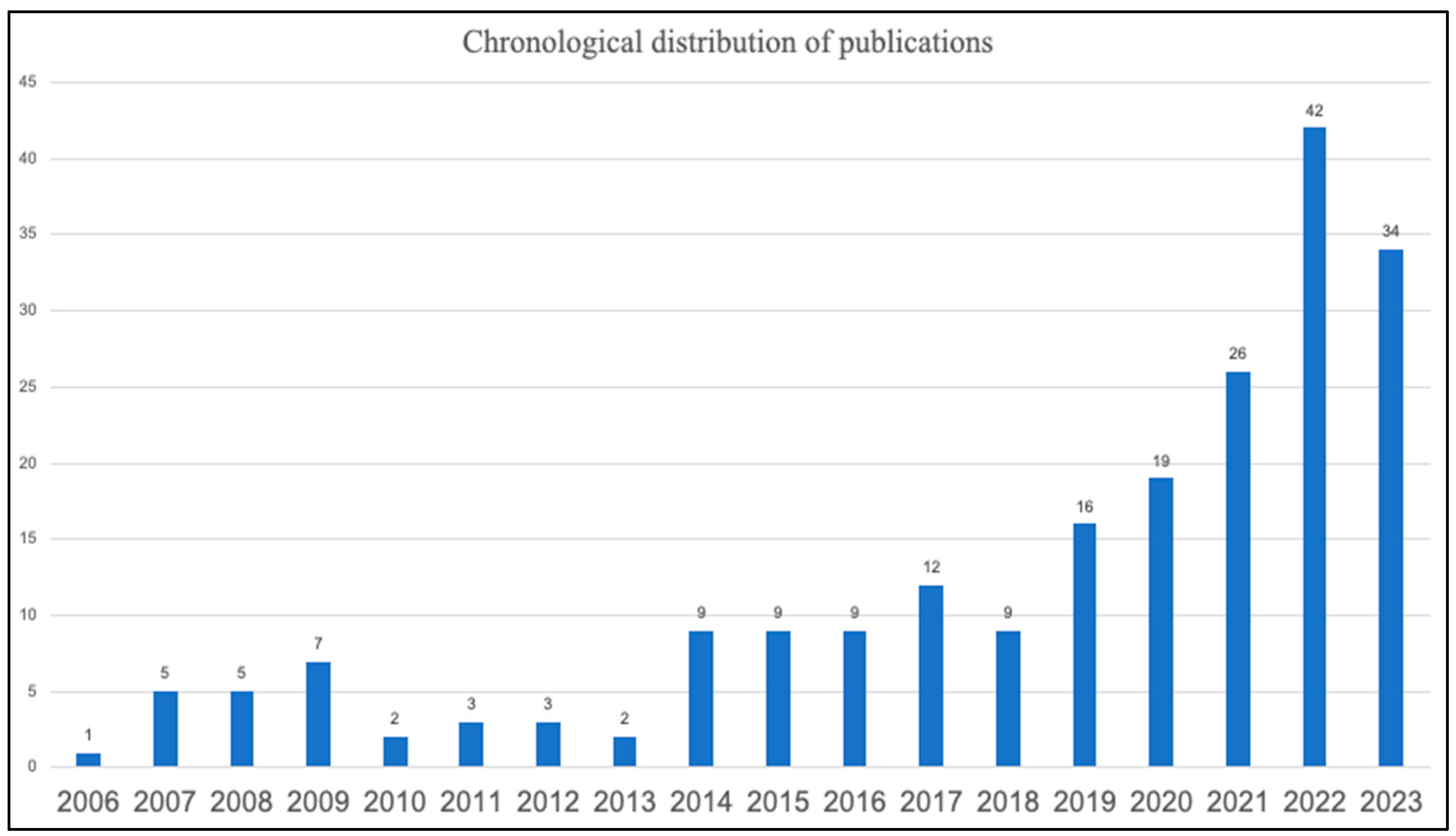
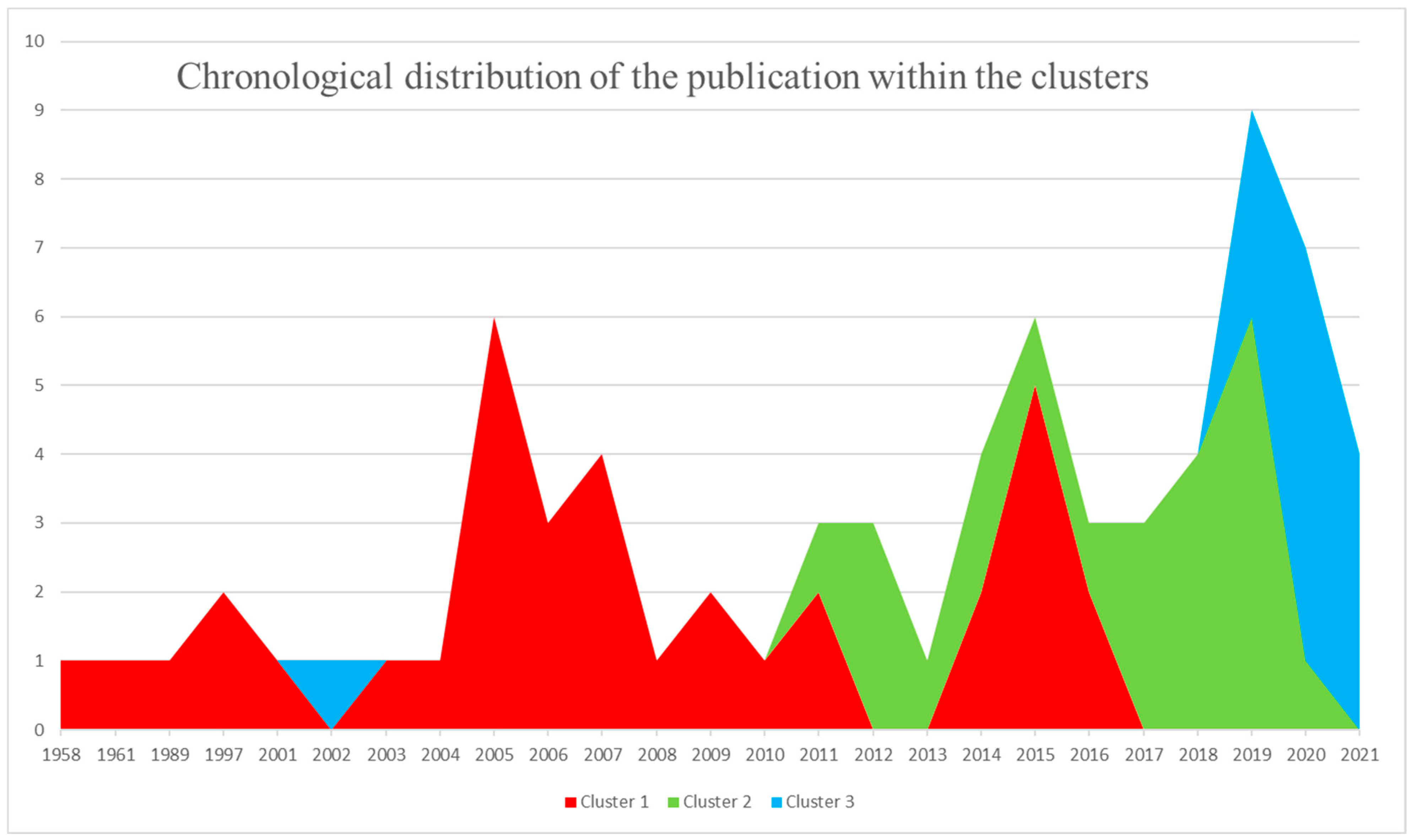
- RQ1: What is the chronological evolution of this scientific field?
- RQ2: Which simulation methods are most commonly employed in this research domain?
- RQ3: Which simulation methods are utilized for specific supply chain challenges?
- RQ4: What are the existing research gaps and promising research directions?
2. Systematic Literature Review
2.1. Previous Literature Reviews

| Paper | Year | Focus | Methodology | Publications Selected | Years Covered | Main Objectives | Main Findings |
|---|---|---|---|---|---|---|---|
| [9] | 2023 | Mnfg | SLR | 158 | 2000–2021 | This paper explores operational and disruption risks in manufacturing paradigms, specifically Flexible Manufacturing Systems (FMSs), Reconfigurable Manufacturing Systems (RMSs), and Smart Manufacturing Systems (SMSs). It categorizes risk strategies, identifying that FMSs focus on reactive approaches to disruptions, RMSs emphasize adaptability, and SMSs prioritize proactive strategies. Risks are classified into various facets: investment, ergonomics, safety, demand uncertainty, resource failures, low quality, substitution, and cybersecurity. The study considers the lifecycle stage in which risks are addressed for each paradigm. | Key findings include a detailed mapping of risks and strategies for each paradigm, highlighting the nuanced approaches to risk management. The paper suggests future research directions, such as exploring additional risks, redesigning layouts for RMSs, retrofitting paths for manufacturing systems, adopting a predict-then-optimize paradigm, incorporating AI and ML, studying the implications of digital twins, involving SMEs, and designing dynamic risk assessments for SMSs. Acknowledging limitations in the literature search, the paper proposes extensions to include conference articles and explore other manufacturing paradigms, such as Computer Integrated Manufacturing (CIM). |
| [10] | 2023 | Mnfg | SLR | 182 | 2012–2023 | This paper delves into the intersection of the metaverse and Quality 4.0 (Q4.0) to enhance the resilience of manufacturing systems during crises, with a specific focus on the COVID-19 pandemic. Through a SLR, the authors aim to answer key research questions regarding the supporting technologies, antecedents, stages, and pandemic-specific applications of metaverse-enabled Q4.0 in manufacturing resilience. The study spans publications from 2012 to 2023, revealing a growing interest in this interdisciplinary field. The overarching goal is to contribute valuable insights for navigating disruptions and improving the resilience of manufacturing processes on a global scale. | Considering the classification of reviewed papers, the findings show that artificial intelligence is especially well-suited to enhancing Manufacturing Excellence. Transparency and flexibility are the resilience enablers that gain the most from implementing MV-based Q4.0. Through analysis and synthesis of the literature, the study reveals the lack of an integrated approach combining MV-based Q4.0 and MFGRES. This is particularly clear during disruptions. |
| [11] | 2022 | SCM | SLR | 50 | 2011–2020 | This publication summarizes nine disruption risk types in SCs, such as natural disasters and delays. It discusses mitigation measures like backup suppliers and excess inventory and explores conceptual frameworks for handling operational risks. The context analysis focuses on the ripple effect in general SCs, with some articles delving into specific cases and the impact of digitalization in the Industry 4.0 context. Overall, the text aims to comprehensively understand disruption risks, mitigation strategies, and contextual considerations in SCM. | The paper underscores the importance of resilient SCs prepared for disruptions. Key findings highlight the significance of proactive and reactive measures, such as risk mitigation inventories and contingency plans. The impact of disruption causes, like low inventory and inflexible capacity, worsens the ripple effect on SC performance. Various disruptions contribute to this effect, including natural disasters and demand interruptions. The study explores conceptual frameworks and emphasizes the role of digital technologies, like Industry 4.0. The proposed framework is validated through a disruption simulation, aiding SC planners. Future research includes extending the literature review and evaluating sustainability. Overall, its findings contribute to understanding and enhancing SC resilience in disruptions. |
| [8] | 2022 | SCM | LR | 82 | Not available | This paper explores the role of digital twin (DT) technology in addressing global energy and environmental challenges. Specifically, it focuses on the energy sector, analyzing DT applications in areas like urban energy systems and smart grids. Its objectives include defining and classifying DT, examining its current state in the energy sector, discussing key techniques, and proposing future research directions. The paper concludes by summarizing insights into the diverse applications of DT in energy supply and contributing to the evolving field of intelligent energy systems. | The paper explores the applications and challenges of DT technology in the energy sector, focusing on power-related systems. It classifies DT applications into levels, such as low-carbon cities and smart grids. Identified challenges include interoperability issues, model repetition, and data processing limitations. The paper suggests solutions like knowledge graph analysis, model migration, and integration of AI technologies. It introduces a novel classification of DT levels in the smart energy field. Key technologies reviewed include AI integration, emphasizing its role in overcoming challenges. The paper concludes with insights into future challenges and directions for advancing DT applications in energy systems. |
| [12] | 2021 | SSC | SLR | 832 | 2004–2021 | This paper aims to fill the research gap concerning risks in Service Supply Chains (SSCs) and their management. It systematically reviews the existing literature to identify and define risks associated with SSCs, explores interactions between these risks, and employs Interpretive Structural Modeling (ISM) and Matrix-based Multiplication Applied to a Classification (MICMAC) to represent their interrelationships hierarchically. The study validates theoretical findings through a real-world case study of an ERP consulting firm. The outcome includes clear definitions of SSC risk categories and a structural model illustrating the nature and consequences of these risks. The objectives ultimately seek to enhance understanding, identification, and management of risks in SSCs for improved overall performance. | The paper identifies and defines seven types of risks in SSCs: financial, relationship, demand, operational, service delivery, IT, and external risks. The study categorizes these risks through a SLR and provides formal definitions, providing a shared vocabulary for SSC risk management. The research employs Interpretive Structural Modeling (ISM) and MICMAC to explore interrelationships between these risk types, providing a hierarchical and dependency-based model. Its findings reveal the highly interrelated nature of these risk types, with external and IT risks classified as influential and others as dependent variables. The study provides a macro picture of SSC risks, enhancing awareness and understanding for decision-makers. |
| [13] | 2020 | SCM | LR | 93 | 2008–2018 | This paper delves into the realm of DTs, aiming to bridge the gap between theoretical concepts and practical implementations. Its objectives include analyzing historical efforts in DT establishment, assessing the impact of allied technologies like machine learning, and reviewing the influence of different domains on DT implementation. The paper also evaluates current limitations and challenges and proposes a conceptualization for DT components and their interdependencies. In essence, it explores the diverse facets of DT to provide comprehensive insights into its potential applications and advancements. | The paper proposes a comprehensive conceptualization of DT, outlining elementary components (physical asset, digital asset, information flow) and imperative components (IoT devices, data, machine learning, security, and evaluation metrics). Key properties of DT, such as self-evolution, domain dependence, autonomy, and synchronization, are discussed. Real-life case studies demonstrate diverse DT implementations, including projects at the University of Cambridge, Italferr in Genoa, and Mater Private Hospital. Its findings emphasize the domain-specific nature of DT components and properties. The paper suggests future steps, including a formal definition, IoT standards, regulations, collaboration with domain experts, and global implementations, to advance the adoption of DT across sectors. |
2.2. Literature Review Methodology
2.3. Screening and Selection Phase
3. Descriptive Analysis of the Information
3.1. Annual Scientific Production
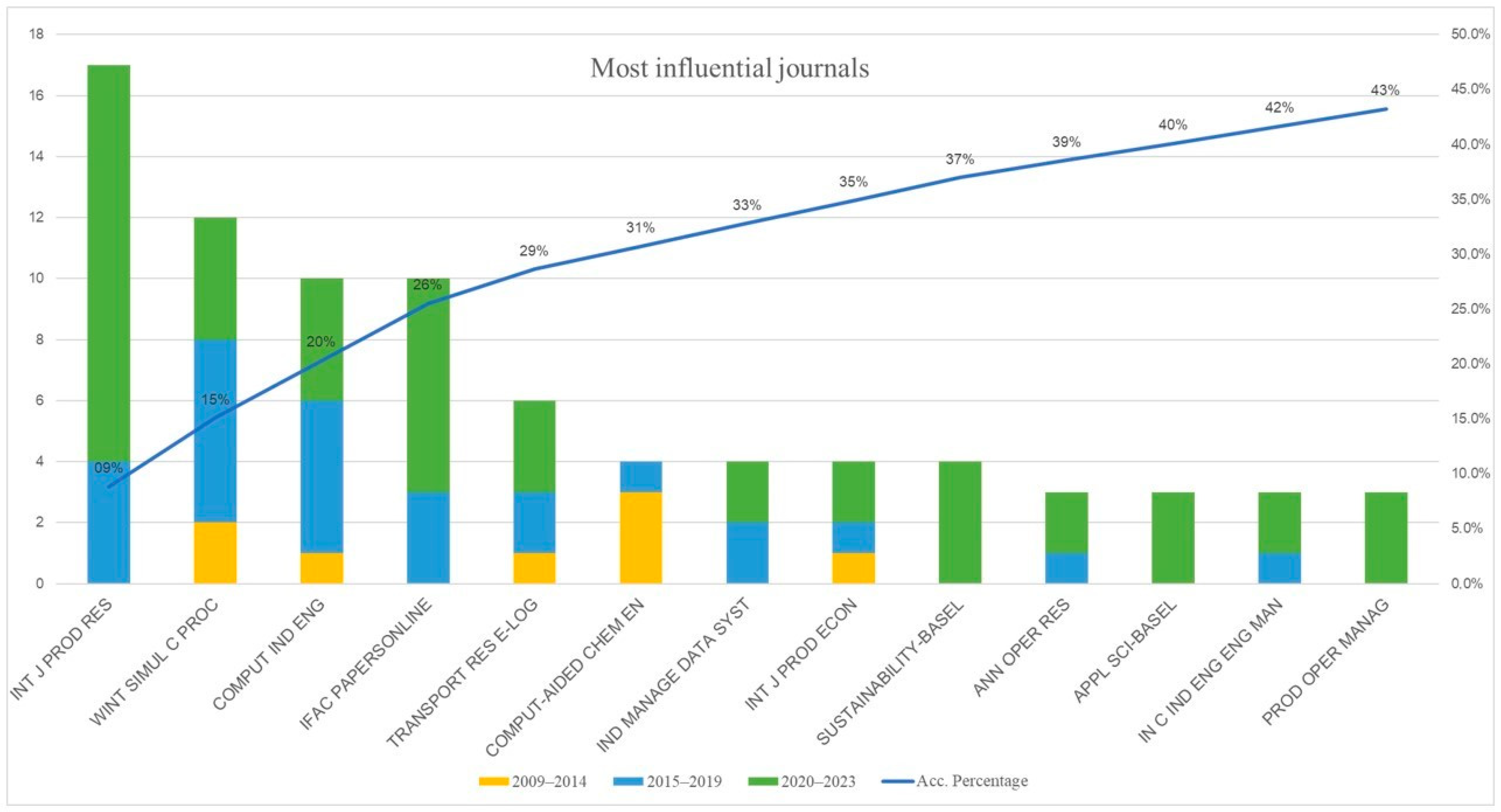
3.2. Most Cited Papers and Journals
3.3. Most Cited Authors
4. Classification and Analysis of the Information Obtained from the Selected Publications
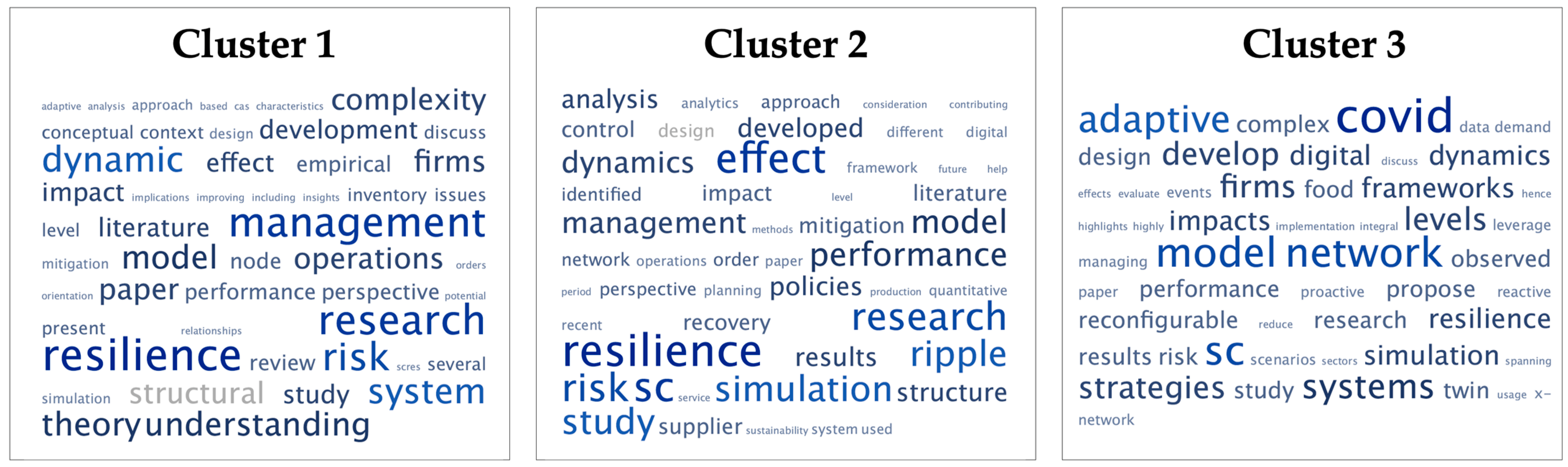
4.1. Chronological Clustering of the In-Scope Articles and Analysis of the Most-Cited Articles
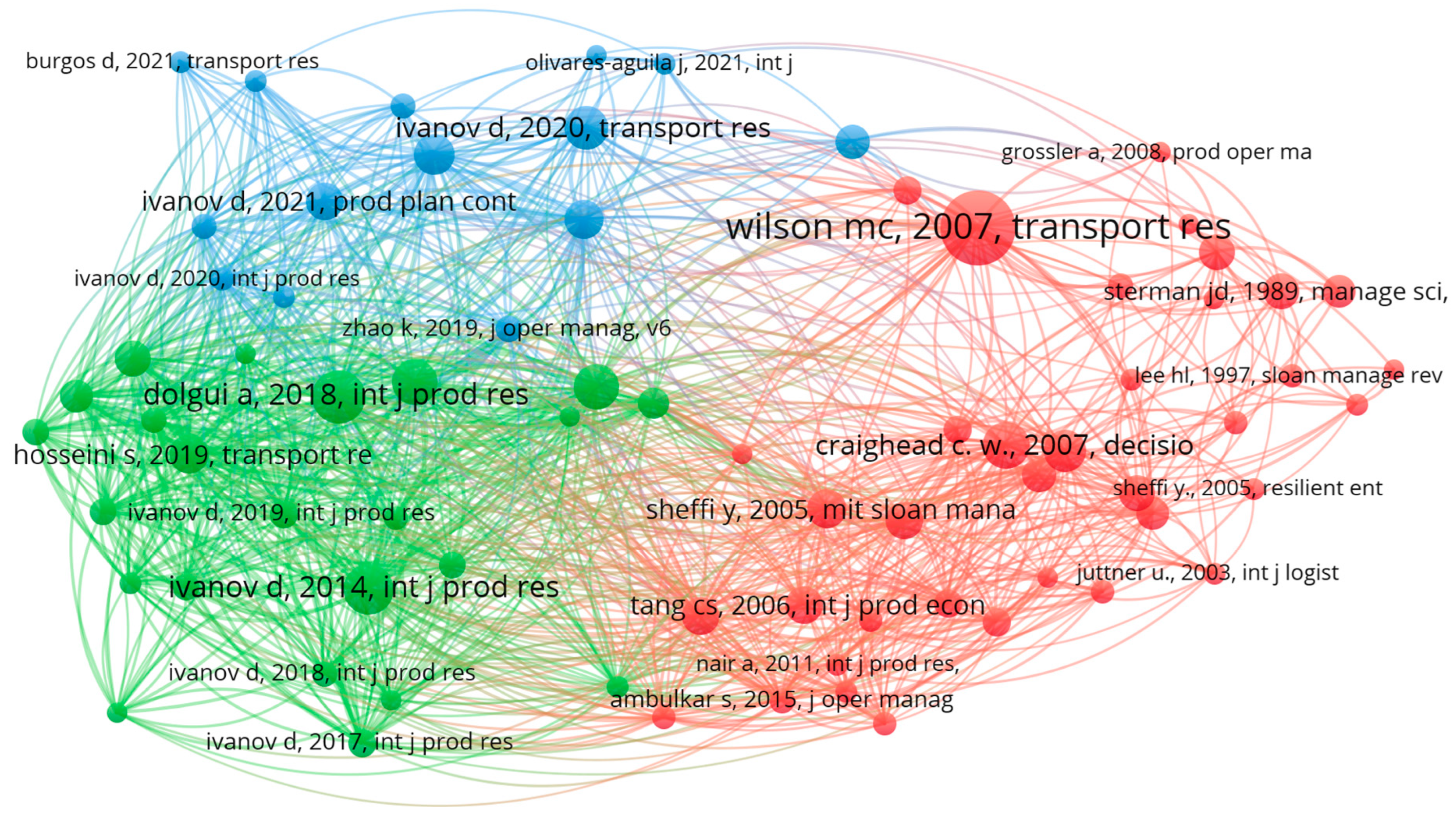
- Cluster 1 [in red]: The average publication date of this cluster aligns with the early 2000s, signifying its origins.
- Cluster 2 [in green]: Subsequently, the second cluster’s average publication date centers around 2010, marking its emergence.
- Cluster 3 [in blue]: Encompasses the most recent publications, commencing around 2019.
4.2. Definition of Key Clusters
4.2.1. Cluster 1: Foundations of SC Disruption and SC Resilience
4.2.2. Cluster 2: Ripple Effect in SC, Optimization and Simulation Approaches
4.2.3. Cluster 3: Technologies 4.0 and SC Survivability in Extreme Disruptions
- Path 1: This first research path in Cluster 3 primarily centers around the COVID-19 pandemic, exploring strategies to contain and mitigate the repercussions of pandemics on SCs.
- Path 2: The second research path is characterized by an extension into SC networks. This expansion is exemplified by publications such as Ivanov’s “Reconfigurable Supply Chain: The X-Network” and “Viability of Intertwined Supply Networks: Extending the Supply Chain Resilience Angles towards Survivability. A Position Paper Motivated by COVID-19 Outbreak” [20,34].
- Path 3: The third research path introduces emerging digital trends into the research landscape. Building upon the established simulation methods of Cluster 2, this path incorporates emerging digital trends like digital twinning, artificial intelligence, and machine learning. Noteworthy examples include D. Burgos’ “Food Retail Supply Chain Resilience [22,39] and the COVID-19 Pandemic: A Digital Twin-Based Impact Analysis and Improvement Directions” and Ivanov’s “A Digital Supply Chain Twin for Managing Disruption Risks and Resilience in the Era of Industry 4.0” [3,40], both from 2021.
4.3. Clusters’ Research Gaps and Opportunities
4.4. Usage of Simulation Methods in the Clusters
5. Conclusions
Supplementary Materials
Author Contributions
Funding
Data Availability Statement
Conflicts of Interest
References
- United Nations. 17 Goals to Transform Our World. Available online: https://www.un.org/sustainabledevelopment/ (accessed on 31 October 2023).
- Wang, Y.; Wang, J.; Wang, X. COVID-19, Supply Chain Disruption and China’s Hog Market: A Dynamic Analysis. China Agric. Econ. Rev. 2020, 12, 427–443. [Google Scholar] [CrossRef]
- Ivanov, D.; Dolgui, A. A Digital Supply Chain Twin for Managing the Disruption Risks and Resilience in the Era of Industry 4.0. Prod. Plan. Control 2021, 32, 775–788. [Google Scholar] [CrossRef]
- United Nations. Goal 9: Build Resilient Infrastructure, Promote Sustainable Industrialization and Foster Innovation. Available online: https://www.un.org/sustainabledevelopment/infrastructure-industrialization/ (accessed on 31 October 2023).
- Katsoras, E.; Georgiadis, P. A Dynamic Analysis for Mitigating Disaster Effects in Closed Loop Supply Chains. Sustainability 2022, 14, 4948. [Google Scholar] [CrossRef]
- Park, Y.W.; Blackhurst, J.; Paul, C.; Scheibe, K.P. An Analysis of the Ripple Effect for Disruptions Occurring in Circular Flows of a Supply Chain Network*. Int. J. Prod. Res. 2022, 60, 4693–4711. [Google Scholar] [CrossRef]
- Xu, X.; Kim, H.S.; You, S.S.; Lee, S.D. Active Management Strategy for Supply Chain System Using Nonlinear Control Synthesis. Int. J. Logist. Manag. 2022, 10, 1981–1995. [Google Scholar] [CrossRef] [PubMed]
- Dy, K.J.; Olivares-Aguila, J.; Vital-Soto, A. A Survey of Digital Supply Chain Twins’ Implementations. In Advances in Production Management Systems. Smart Manufacturing and Logistics Systems: Turning Ideas into Action; Kim, D.Y., Von Cieminski, G., Romero, D., Eds.; IFIP Advances in Information and Communication Technology; Springer Nature: Cham, Switzerland, 2022; Volume 663, pp. 502–509. ISBN 978-3-031-16406-4. [Google Scholar]
- Vital-Soto, A.; Olivares-Aguila, J. Manufacturing Systems for Unexpected Events: An Exploratory Review for Operational and Disruption Risks. IEEE Access 2023, 11, 96297–96316. [Google Scholar] [CrossRef]
- El Jaouhari, A.; Arif, J.; Samadhiya, A.; Kumar, A. Are Metaverse Applications in Quality 4.0 Enablers of Manufacturing Resiliency? An Exploratory Review under Disruption Impressions and Future Research. TQM J. 2023, 36, 1486–1525. [Google Scholar] [CrossRef]
- Llaguno, A.; Mula, J.; Campuzano-Bolarin, F. State of the Art, Conceptual Framework and Simulation Analysis of the Ripple Effect on Supply Chains. Int. J. Prod. Res. 2022, 60, 2044–2066. [Google Scholar] [CrossRef]
- Karadayi-Usta, S.; Serdarasan, S. Defining and modeling risks in service supply chains. Int. J. Ind. Eng. 2021, 28, 52–74. [Google Scholar] [CrossRef]
- Vieira, A.A.C.; Dias, L.M.S.; Santos, M.Y.; Pereira, G.A.B.; Oliveira, J.A. Supply Chain Data Integration: A Literature Review. J. Ind. Inf. Integr. 2020, 19, 100161. [Google Scholar] [CrossRef]
- Korder, B.; Maheut, J.; Konle, M. Ripple Effect in Supply Chains: A Systematic Literature Review Protocol. In Proceedings of the 4th International Conference Business Meets Technology 2022, Ansbach, Germany, 7 July 2022. [Google Scholar]
- Ivanov, D. Predicting the Impacts of Epidemic Outbreaks on Global Supply Chains: A Simulation-Based Analysis on the Coronavirus Outbreak (COVID-19/SARS-CoV-2) Case. Transp. Res. E Logist. Transp. 2020, 136, 101922. [Google Scholar] [CrossRef]
- Ivanov, D. Exiting the COVID-19 Pandemic: After-Shock Risks and Avoidance of Disruption Tails in Supply Chains. Ann. Oper. Res. 2021, 335, 1627–1644. [Google Scholar] [CrossRef]
- Xu, X.; Sethi, S.P.; Chung, S.-H.; Choi, T. Reforming Global Supply Chain Management under Pandemics: The GREAT-3Rs Framework. Prod. Oper. Manag. 2022, 32, 524–546. [Google Scholar] [CrossRef]
- Ivanov, D. ‘A Blessing in Disguise’ or ‘as If It Wasn’t Hard Enough Already’: Reciprocal and Aggravate Vulnerabilities in the Supply Chain. Int. J. Prod. Res. 2020, 58, 3252–3262. [Google Scholar] [CrossRef]
- Wilson, M.C. The Impact of Transportation Disruptions on Supply Chain Performance. Transp. Res. E Logist. Transp. 2007, 43, 295–320. [Google Scholar] [CrossRef]
- Dolgui, A.; Ivanov, D.; Sokolov, B. Reconfigurable Supply Chain: The X-Network. Int. J. Prod. Res. 2020, 58, 4138–4163. [Google Scholar] [CrossRef]
- Ivanov, D. Simulation-Based Ripple Effect Modelling in the Supply Chain. Int. J. Prod. Res. 2017, 55, 2083–2101. [Google Scholar] [CrossRef]
- Burgos, D.; Ivanov, D. Food Retail Supply Chain Resilience and the COVID-19 Pandemic: A Digital Twin-Based Impact Analysis and Improvement Directions. Transp. Res. E Logist. Transp. 2021, 152, 102412. [Google Scholar] [CrossRef]
- Macdonald, J.R.; Zobel, C.W.; Melnyk, S.A.; Griffis, S.E. Supply Chain Risk and Resilience: Theory Building through Structured Experiments and Simulation. Int. J. Prod. Res. 2018, 56, 4337–4355. [Google Scholar] [CrossRef]
- Ivanov, D.; Pavlov, A.; Dolgui, A.; Pavlov, D.; Sokolov, B. Disruption-Driven Supply Chain (Re)-Planning and Performance Impact Assessment with Consideration of pro-Active and Recovery Policies. Transp. Res. E Logist. Transp. 2016, 90, 7–24. [Google Scholar] [CrossRef]
- Behdani, B.; Lukszo, Z.; Adhitya, A.; Srinivasan, R. Agent Based Model for Performance Analysis of a Global Chemical Supply Chain during Normal and Abnormal Situations. In Computer Aided Chemical Engineering; Elsevier: Amsterdam, The Netherlands, 2009; Volume 26, pp. 979–984. ISBN 978-0-444-53433-0. [Google Scholar]
- Behdani, B.; Lukszo, Z.; Adhitya, A.; Srinivasan, R. Agent-Based Coordination Framework for Disruption Management in a Chemical Supply Chain. In Computer Aided Chemical Engineering; Elsevier: Amsterdam, The Netherlands, 2011; Volume 29, pp. 1090–1094. ISBN 978-0-444-53895-6. [Google Scholar]
- Behdani, B.; Adhitya, A.; Lukszo, Z.; Srinivasan, R. Mitigating Supply Disruption for a Global Chemical Supply Chain-Application of Agent-Based Modeling. In Computer Aided Chemical Engineering; Elsevier: Amsterdam, The Netherlands, 2012; Volume 31, pp. 1070–1074. ISBN 978-0-444-59505-8. [Google Scholar]
- Craighead, C.W.; Blackhurst, J.; Rungtusanatham, M.J.; Handfield, R.B. The Severity of Supply Chain Disruptions: Design Characteristics and Mitigation Capabilities. Decis. Sci. 2007, 38, 131–156. [Google Scholar] [CrossRef]
- Sheffi, Y.; Rice, J.B. A Supply Chain View of the Resilient Enterprise; MIT Press: Cambridge, MA, USA, 2005. [Google Scholar]
- Dolgui, A.; Ivanov, D.; Sokolov, B. Ripple Effect in the Supply Chain: An Analysis and Recent Literature. Int. J. Prod. Res. 2018, 56, 414–430. [Google Scholar] [CrossRef]
- Ivanov, D.; Sokolov, B.; Dolgui, A. The Ripple Effect in Supply Chains: Trade-off ‘Efficiency-Flexibility-Resilience’ in Disruption Management. Int. J. Prod. Res. 2014, 52, 2154–2172. [Google Scholar] [CrossRef]
- Schmitt, A.J.; Singh, M. A Quantitative Analysis of Disruption Risk in a Multi-Echelon Supply Chain. Int. J. Prod. Econ. 2012, 139, 22–32. [Google Scholar] [CrossRef]
- Ivanov, D. Viable Supply Chain Model: Integrating Agility, Resilience and Sustainability Perspectives—Lessons from and Thinking beyond the COVID-19 Pandemic. Ann. Oper. Res. 2022, 319, 1411–1431. [Google Scholar] [CrossRef]
- Ivanov, D.; Dolgui, A. Viability of Intertwined Supply Networks: Extending the Supply Chain Resilience Angles towards Survivability. A Position Paper Motivated by COVID-19 Outbreak. Int. J. Prod. Res. 2020, 58, 2904–2915. [Google Scholar] [CrossRef]
- Blackhurst, J.; Craighead, C.W.; Elkins, D.; Handfield, R.B. An Empirically Derived Agenda of Critical Research Issues for Managing Supply-Chain Disruptions. Int. J. Prod. Res. 2005, 43, 4067–4081. [Google Scholar] [CrossRef]
- Kleindorfer, P.R.; Saad, G.H. Managing Disruption Risks in Supply Chains. Prod. Oper. Manag. 2005, 14, 53–68. [Google Scholar] [CrossRef]
- Hosseini, S.; Ivanov, D.; Dolgui, A. Review of Quantitative Methods for Supply Chain Resilience Analysis. Transp. Res. E Logist. Transp. 2019, 125, 285–307. [Google Scholar] [CrossRef]
- Ivanov, D.; Pavlov, A.; Sokolov, B. Optimal Distribution (Re)Planning in a Centralized Multi-Stage Supply Network under Conditions of the Ripple Effect and Structure Dynamics. Eur. J. Oper. Res. 2014, 237, 758–770. [Google Scholar] [CrossRef]
- Badakhshan, E.; Ball, P. Applying Digital Twins for Inventory and Cash Management in Supply Chains under Physical and Financial Disruptions. Int. J. Prod. Res. 2022, 61, 50945116. [Google Scholar] [CrossRef]
- Zhang, Q.; Fan, W.; Lu, J.; Wu, S.; Wang, X. Research on Dynamic Analysis and Mitigation Strategies of Supply Chains under Different Disruption Risks. Sustainability 2021, 13, 2462. [Google Scholar] [CrossRef]
- Tang, C.S. Perspectives in Supply Chain Risk Management. Int. J. Prod. Econ. 2006, 103, 451–488. [Google Scholar] [CrossRef]
- Ambulkar, S.; Blackhurst, J.; Grawe, S. Firm’s Resilience to Supply Chain Disruptions: Scale Development and Empirical Examination. J. Oper. Manag. 2015, 33–34, 111–122. [Google Scholar] [CrossRef]
- Bode, C.; Wagner, S.M. Structural Drivers of Upstream Supply Chain Complexity and the Frequency of Supply Chain Disruptions. J. Oper. Manag. 2015, 36, 215–228. [Google Scholar] [CrossRef]
- Bueno-Solano, A.; Cedillo-Campos, M.G. Dynamic Impact on Global Supply Chains Performance of Disruptions Propagation Produced by Terrorist Acts. Transp. Res. E Logist. Transp. 2014, 61, 1–12. [Google Scholar] [CrossRef]
- Größler, A.; Thun, J.-H.; Milling, P.M. System Dynamics as a Structural Theory in Operations Management. Prod. Oper. Manag. 2008, 17, 373–384. [Google Scholar] [CrossRef]
- Ho, W.; Zheng, T.; Yildiz, H.; Talluri, S. Supply Chain Risk Management: A Literature Review. Int. J. Prod. Res. 2015, 53, 5031–5069. [Google Scholar] [CrossRef]
- Kim, Y.; Chen, Y.; Linderman, K. Supply Network Disruption and Resilience: A Network Structural Perspective. J. Oper. Manag. 2015, 33–34, 43–59. [Google Scholar] [CrossRef]
- Nair, A.; Vidal, J.M. Supply Network Topology and Robustness against Disruptions—An Investigation Using Multi-Agent Model. Int. J. Prod. Res. 2011, 49, 1391–1404. [Google Scholar] [CrossRef]
- Pathak, S.D.; Day, J.M.; Nair, A.; Sawaya, W.J.; Kristal, M.M. Complexity and Adaptivity in Supply Networks: Building Supply Network Theory Using a Complex Adaptive Systems Perspective*. Decis. Sci. 2007, 38, 547–580. [Google Scholar] [CrossRef]
- Ponomarov, S.Y.; Holcomb, M.C. Understanding the Concept of Supply Chain Resilience. Int. J. Logist. Manag. 2009, 20, 124–143. [Google Scholar] [CrossRef]
- Snyder, L.V.; Atan, Z.; Peng, P.; Rong, Y.; Schmitt, A.J.; Sinsoysal, B. OR/MS Models for Supply Chain Disruptions: A Review. IIE Trans. 2016, 48, 89–109. [Google Scholar] [CrossRef]
- Spiegler, V.L.M.; Potter, A.T.; Naim, M.M.; Towill, D.R. The Value of Nonlinear Control Theory in Investigating the Underlying Dynamics and Resilience of a Grocery Supply Chain. Int. J. Prod. Res. 2016, 54, 265–286. [Google Scholar] [CrossRef]
- Tukamuhabwa, B.R.; Stevenson, M.; Busby, J.; Zorzini, M. Supply Chain Resilience: Definition, Review and Theoretical Foundations for Further Study. Int. J. Prod. Res. 2015, 53, 5592–5623. [Google Scholar] [CrossRef]
- Wu, T.; Blackhurst, J.; O’grady, P. Methodology for Supply Chain Disruption Analysis. Int. J. Prod. Res. 2007, 45, 1665–1682. [Google Scholar] [CrossRef]
- Carvalho, H.; Barroso, A.P.; Machado, V.H.; Azevedo, S.; Cruz-Machado, V. Supply Chain Redesign for Resilience Using Simulation. Comput. Ind. Eng. 2012, 62, 329–341. [Google Scholar] [CrossRef]
- Cavalcante, I.M.; Frazzon, E.M.; Forcellini, F.A.; Ivanov, D. A Supervised Machine Learning Approach to Data-Driven Simulation of Resilient Supplier Selection in Digital Manufacturing. IJMI 2019, 49, 86–97. [Google Scholar] [CrossRef]
- Dubey, R.; Gunasekaran, A.; Childe, S.J.; Papadopoulos, T.; Blome, C.; Luo, Z. Antecedents of Resilient Supply Chains: An Empirical Study. IEEE Trans. Eng. Manag. 2019, 66, 8–19. [Google Scholar] [CrossRef]
- Ivanov, D.; Sokolov, B. Control and System-Theoretic Identification of the Supply Chain Dynamics Domain for Planning, Analysis and Adaptation of Performance under Uncertainty. Eur. J. Oper. Res. 2013, 224, 313–323. [Google Scholar] [CrossRef]
- Ivanov, D.; Dolgui, A.; Sokolov, B.; Ivanova, M. Literature Review on Disruption Recovery in the Supply Chain. Int. J. Prod. Res. 2017, 55, 6158–6174. [Google Scholar] [CrossRef]
- Ivanov, D. Revealing Interfaces of Supply Chain Resilience and Sustainability: A Simulation Study. Int. J. Prod. Res. 2018, 56, 3507–3523. [Google Scholar] [CrossRef]
- Ivanov, D. Disruption Tails and Revival Policies: A Simulation Analysis of Supply Chain Design and Production-Ordering Systems in the Recovery and Post-Disruption Periods. Comput. Ind. Eng. 2019, 127, 558–570. [Google Scholar] [CrossRef]
- Ivanov, D.; Dolgui, A. Low-Certainty-Need (LCN) Supply Chains: A New Perspective in Managing Disruption Risks and Resilience. Int. J. Prod. Res. 2019, 57, 5119–5136. [Google Scholar] [CrossRef]
- Ivanov, D.; Dolgui, A.; Sokolov, B. The Impact of Digital Technology and Industry 4.0 on the Ripple Effect and Supply Chain Risk Analytics. Int. J. Prod. Res. 2019, 57, 829–846. [Google Scholar] [CrossRef]
- Ivanov, D.; Dolgui, A.; Das, A.; Sokolov, B. Digital Supply Chain Twins: Managing the Ripple Effect, Resilience, and Disruption Risks by Data-Driven Optimization, Simulation, and Visibility. In Handbook of Ripple Effects in the Supply Chain; Ivanov, D., Dolgui, A., Sokolov, B., Eds.; International Series in Operations Research & Management Science; Springer: Cham, Switzerland, 2019; Volume 276, pp. 309–332. ISBN 978-3-030-14301-5. [Google Scholar]
- Ivanov, D.; Rozhkov, M. Coordination of Production and Ordering Policies under Capacity Disruption and Product Write-off Risk: An Analytical Study with Real-Data Based Simulations of a Fast Moving Consumer Goods Company. Ann. Oper. Res. 2020, 291, 387–407. [Google Scholar] [CrossRef]
- Scheibe, K.P.; Blackhurst, J. Supply Chain Disruption Propagation: A Systemic Risk and Normal Accident Theory Perspective. Int. J. Prod. Res. 2018, 56, 43–59. [Google Scholar] [CrossRef]
- Schmitt, T.G.; Kumar, S.; Stecke, K.E.; Glover, F.W.; Ehlen, M.A. Mitigating Disruptions in a Multi-Echelon Supply Chain Using Adaptive Ordering. Omega 2017, 68, 185–198. [Google Scholar] [CrossRef]
- Simchi-Levi, D.; Schmidt, W.; Wei, Y.; Zhang, P.Y.; Combs, K.; Ge, Y.; Gusikhin, O.; Sanders, M.; Zhang, D. Identifying Risks and Mitigating Disruptions in the Automotive Supply Chain. Interfaces 2015, 45, 375–390. [Google Scholar] [CrossRef]
- Sokolov, B.; Ivanov, D.; Dolgui, A.; Pavlov, A. Structural Quantification of the Ripple Effect in the Supply Chain. Int. J. Prod. Res. 2016, 54, 152–169. [Google Scholar] [CrossRef]
- Dolgui, A.; Ivanov, D. Ripple Effect and Supply Chain Disruption Management: New Trends and Research Directions. Int. J. Prod. Res. 2021, 59, 102–109. [Google Scholar] [CrossRef]
- Olivares-Aguila, J.; ElMaraghy, W. System Dynamics Modelling for Supply Chain Disruptions. Int. J. Prod. Res. 2021, 59, 1757–1775. [Google Scholar] [CrossRef]
- Xu, X.; Rodgers, M.D.; Guo, W. (Grace) Hybrid Simulation Models for Spare Parts Supply Chain Considering 3D Printing Capabilities. J. Manuf. Syst. 2021, 59, 272–282. [Google Scholar] [CrossRef]
- Singh, S.; Kumar, R.; Panchal, R.; Tiwari, M.K. Impact of COVID-19 on Logistics Systems and Disruptions in Food Supply Chain. Int. J. Prod. Res. 2021, 59, 1993–2008. [Google Scholar] [CrossRef]
- Zhao, K.; Zuo, Z.; Blackhurst, J.V. Modelling Supply Chain Adaptation for Disruptions: An Empirically Grounded Complex Adaptive Systems Approach. J. Oper. Manag. 2019, 65, 190–212. [Google Scholar] [CrossRef]
- Dolgui, A.; Ivanov, D.; Rozhkov, M. Does the Ripple Effect Influence the Bullwhip Effect? An Integrated Analysis of Structural and Operational Dynamics in the Supply Chain. Int. J. Prod. Res. 2020, 58, 1285–1301. [Google Scholar] [CrossRef]
- Swanson, J. Business Dynamics—Systems Thinking and Modeling for a Complex World. J. Oper. Res. Soc. 2002, 53, 472–473. [Google Scholar] [CrossRef]
- Tako, A.A.; Robinson, S. The Application of Discrete Event Simulation and System Dynamics in the Logistics and Supply Chain Context. Decis. Support Syst. 2012, 52, 802–815. [Google Scholar] [CrossRef]
- Tako, A.A.; Robinson, S. Model Development in Discrete-Event Simulation and System Dynamics: An Empirical Study of Expert Modellers. Eur. J. Oper. Res. 2010, 207, 784–794. [Google Scholar] [CrossRef]
- Lane, D.C. You Just Don’t Understand Me: Modes of Failure and Success in the Discourse between System Dynamics and Discrete Event Simulation. In Operational Research Working Papers (LSEOR 00.34); Department of Operational Research, London School of Economics and Political Science: London, UK, 2000; p. 26. [Google Scholar]
- Sweetser, A. A Comparison of System Dynamics (SD) and Discrete Event Simulation (DES). In Proceedings of the 17th International Conference of the System Dynamics Society, Wellington, New Zealand, 20–23 July 1999. [Google Scholar]
- Serrano-Ruiz, J.C.; Mula, J.; Poler, R. Smart Master Production Schedule for the Supply Chain: A Conceptual Framework. Computers 2021, 10, 156. [Google Scholar] [CrossRef]
- Rios, P.; Stuart, J.A.; Grant, E. Plastics Disassembly versus Bulk Recycling: Engineering Design for End-of-Life Electronics Resource Recovery. Environ. Sci. Technol. 2003, 37, 5463–5470. [Google Scholar] [CrossRef] [PubMed]
- Page, M.J.; McKenzie, J.E.; Bossuyt, P.M.; Boutron, I.; Hoffmann, T.C.; Mulrow, C.D.; Shamseer, L.; Tetzlaff, J.M.; Akl, E.A.; Brennan, S.E.; et al. The PRISMA 2020 statement: An updated guideline for reporting systematic reviews. BMJ 2021, 372, n71. [Google Scholar] [CrossRef] [PubMed]
| Index | Criteria Description | |
|---|---|---|
| Inclusion Criteria | 1 | Journal articles indexed in Scopus and Web of Science (WoS). |
| 2 | Published in any year (including in the press). | |
| 3 | Research the ripple effect in supply chain networks worldwide. | |
| 4 | Written in English or German. | |
| Exclusion Criteria | 1 | Articles, book chapters, conference articles, or any source that has not passed a sophisticated peer review process. |
| 2 | Publications that refer to a ripple effect but without a relationship with supply chain management, business logistics management, or supply chain networks. | |
| 3 | Research that has no apparent relevance for further research on the ripple effect in supply chain networks. |
| Database | Results | Criteria Description |
|---|---|---|
| Web of Science | 82 | TS = ((“supply chain management” OR “supply chain resilience”) AND TS = (“supply chain network” OR “supply network”) AND TS = (“ripple effect” OR ”cascading failure” OR “contagion” OR “disruption*”)) |
| Scopus | 141 | TITLE-ABS-KEY ((“supply chain management” OR “supply chain resilience”) AND (“supply chain network” OR “supply network”) AND (“ripple effect” OR “cascading failure” OR “contagion” OR “disruption*”)) AND (EXCLUDE (SUBJAREA, “COMP”)) |
| Database | Results | Criteria Description |
|---|---|---|
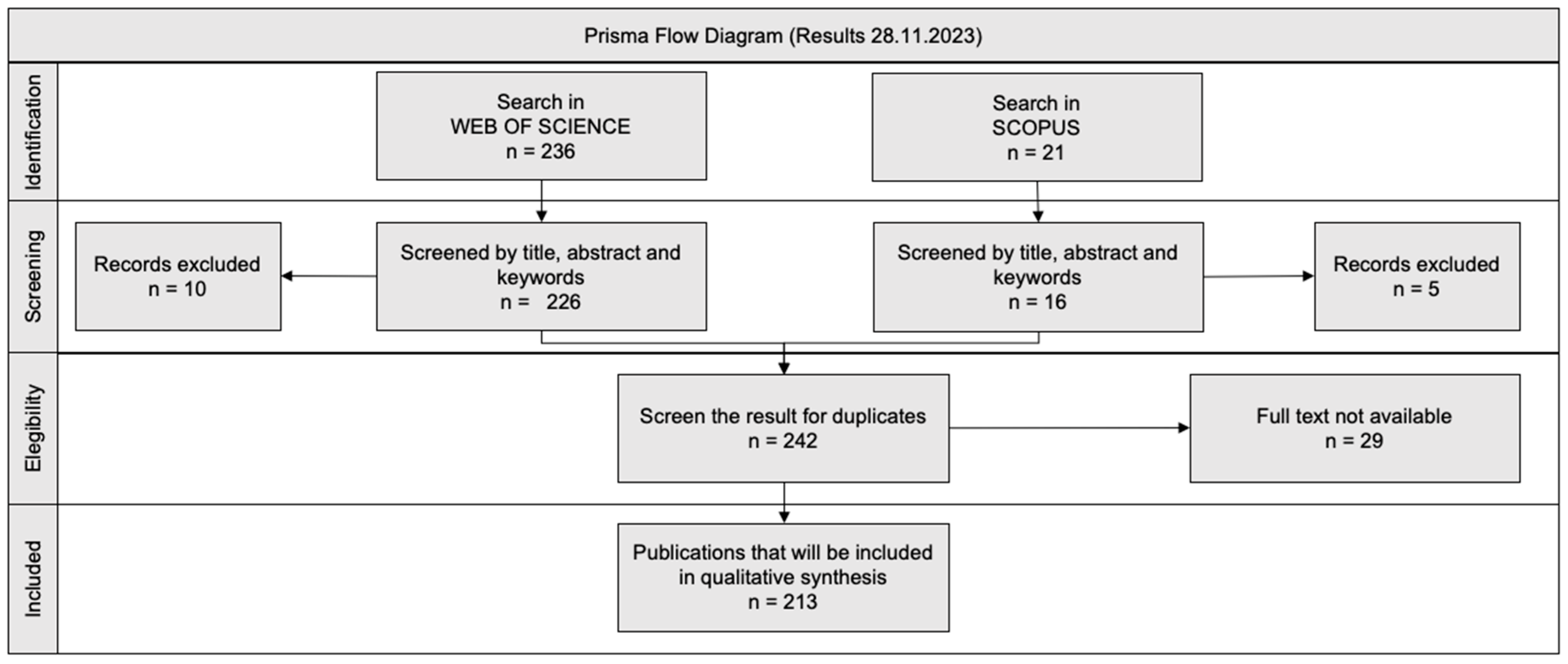
| Web of Science | 236 | TS = ((“ripple effect” OR “cascading failure*” OR “contagion” OR “disruption*”) AND (“Supply Chain”) AND (“Agent-Based Modeling” OR “digital twin*” OR “Discrete Event Simulation” OR “System Dynamics”)) |
| Scopus | 21 | TITLE-ABS-KEY ((“ripple effect” OR “cascading” AND “failure*” OR “contagion” OR “disruption*”) AND (“Supply Chain”) AND (“Agent-Based Modeling” OR “digital twin*” OR “Discrete Event Simulation” OR “System Dynamics”)) |
| Code | Definition | When Used | Action |
|---|---|---|---|
| A: Approved | Title, abstract, and keywords are related to the research objectives. | When the item satisfies the inclusion criteria | Include the item in the reference list, tagging it as an item (A). |
| E: Excluded | The title, abstract, and keywords are unrelated to the study’s objectives. | When the article satisfies the exclusion criteria | Exclude the reference, tagging it as an item (E). |
| Q: Questionable | The article and abstract are not related to the objectives of the study. | When there is no clear evidence that the summary is in accordance with the inclusion criteria but appears to be related to them | Analyze the full text to determine whether this reference should be included in the study, tagging it as item (A) or item (E). |
| Criteria | Definition |
|---|---|
| Publication | 213 |
| Authors | 568 |
| Journals | 138 |
| Institutions | 135 |
| Cited references | 4960 |
| Article Title | Citations | Journal | Year |
|---|---|---|---|
| [15] | 731 | Transport Res. E-Log | 2020 |
| [3] | 449 | Prod. Plan. Control | 2021 |
| [18] | 330 | Int. J. Prod. Res. | 2020 |
| [19] | 298 | Transport Res. E-Log | 2007 |
| [20] | 202 | Int. J. Prod. Res. | 2020 |
| [21] | 151 | Int. J. Prod. Res. | 2017 |
| [22] | 134 | Transport Res. E-Log | 2021 |
| [23] | 118 | Int. J. Prod. Res. | 2018 |
| [24] | 108 | Transport Res. E-Log | 2016 |
| Author | Publications | Citations | Citations/ Publication |
|---|---|---|---|
| Dolgui, Alexandre | 5 | 823 | 164.60 |
| Ivanov, Dmitry | 16 | 2247 | 140.44 |
| Sokolov, Boris | 4 | 426 | 106.50 |
| Georgiadis, Patroklos | 3 | 108 | 36.00 |
| Gaston Cedillo-Campos, Miguel | 3 | 100 | 33.33 |
| Ghadge, Abhijeet | 3 | 95 | 31.67 |
| Vieira, Antonio A. C. | 3 | 58 | 19.33 |
| Samvedi, Avinash | 3 | 58 | 19.33 |
| Dias, Luis | 3 | 58 | 19.33 |
| Chew, Ek Peng | 3 | 58 | 19.33 |
| Santos, Maribel Y. | 3 | 58 | 19.33 |
| Pereira, Guilherme A. B. | 3 | 58 | 19.33 |
| Heidary, Mojtaba Hajian | 3 | 44 | 14.67 |
| Gao, Tiegang | 3 | 25 | 8.33 |
| Behdani, Behzad | 3 | 20 | 6.67 |
| Authors | Chaudhuri, Atanu | Dolgui, Alexandre | Ghadge, Abhijeet | Ivanov, Dmitry | Pavlov, Alexander | Pavlov, Dmitry | Sokolov, Boris |
|---|---|---|---|---|---|---|---|
| Chaudhuri, Atanu | - | 0 | 2 | 1 | 0 | 0 | 0 |
| Dolgui, Alexandre | 0 | - | 0 | 5 | 1 | 1 | 3 |
| Ghadge, Abhijeet | 2 | 0 | - | 1 | 0 | 0 | 0 |
| Ivanov, Dmitry | 1 | 5 | 1 | - | 2 | 2 | 4 |
| Pavlov, Alexander | 0 | 1 | 0 | 2 | - | 2 | 2 |
| Pavlov, Dmitry | 0 | 1 | 0 | 2 | 2 | - | 2 |
| Sokolov, Boris | 0 | 3 | 0 | 4 | 2 | 2 | - |
| Paper | Type of Paper | Gaps/Opportunities |
|---|---|---|
| [42] | Empirical | This study suggests promising avenues for future research in enterprise resilience. It recommends exploring causality through alternatives like longitudinal data or event studies and diversifying data sources for a more accurate understanding. In addition, the paper proposes event studies to investigate resilience under specific circumstances and encourages focused research on specific elements of risk management infrastructure. Lastly, scholars are prompted to extend resilience concepts to encompass broader SC dynamics, exploring relational or SC resilience between multiple firms. |
| [35] | Empirical | This paper underscores the challenges of SCM, emphasizing visibility and capacity to mitigate disruptions. It suggests research areas, including cost–benefit analysis of visibility and the need for real-time SC reconfiguration. SC redesign is identified as a less-developed area, focusing on understanding global cost trade-offs and flexible optimization tools. The conclusion highlights the infancy of knowledge in managing disruptions, presenting a research agenda based on practical insights. |
| [43] | Simulation | This study reveals research gaps, including a low response rate and a focus on manufacturing firms. Future research should broaden its industry scope, involve multiple informants, and explore the dynamics of SC structures over time. In addition, incorporating more objective measures for key variables would enhance the reliability of findings. Addressing these gaps through methodological refinements and diversification across industries would contribute to a more comprehensive understanding of the studied phenomena. |
| [44] | Simulation | This study addresses gaps in the literature by proposing a dynamic model to quantitatively assess the impacts of security-disrupting events on export-oriented SCs resulting from terrorist attacks. It emphasizes the need for dynamic models that simultaneously evaluate the effects of risk across different SC areas. The research also highlights the necessity of measuring the impact of border crossing and understanding the economic implications of reaction time to disruptive events. These identified gaps contribute valuable insights for future research to address these critical aspects comprehensively. |
| [28] | Simulation | Closing research gaps in SC disruptions is imperative. Dynamic models must assess risk propagation and understand economic implications. The “reverse bullwhip” effect needs further exploration, global cost trade-offs, and robust optimization tools. Specific decisions like supply base reduction and global sourcing require scrutiny. Bridging these gaps is essential to effective management in the face of SC complexities. |
| [45] | Simulation | This paper highlights the value of SD in operations management but implies potential research gaps. These gaps include a need for specificity regarding the industries benefiting most, exploring challenges in real-world applications, and comparative studies with other simulation approaches. The transferability of insights, the balance between mathematical elegance and practical relevance, and integration with qualitative methods are also suggested as areas for further research. |
| [46] | Review | Zeng et al. identified gaps in understanding risks in underrepresented sectors like public and renewable energy. Service industries lack attention compared to manufacturing. Cost-effective risk monitoring and benchmarking of mitigation strategies are needed. Research on recovery strategies is scarce. Quantifying SCRM benefits and costs and case studies would offer valuable implementation insights. |
| [47] | Review | This research identifies conceptual and analytical limitations, opening avenues for future exploration. It highlights the need to consider varying probabilities of failure for nodes and arcs, incorporate practical variables like lead time differentials, and adopt dynamic models that account for substitution capabilities. Network size and structure constraints suggest the importance of exploring larger, more complex real-world scenarios. Future studies should address these limitations to enhance understanding and management of supply network disruption and resilience. |
| [36] | Theoretical | This paper emphasizes the challenges and areas where further research is needed, such as refining the SAM-SAC approach, developing indicators for specific sectors and SC archetypes, and addressing disruption risks at individual focal points and SC-wide systems. |
| [48] | Empirical | This study points to crucial future research areas: exploring adaptive mechanisms like inventory reassignment during disruptions, investigating fortification implications for specific network nodes, and emphasizing the need for empirical validation in real-world supply networks. |
| [49] | Empirical | SCM research should focus on emerging best practices in supplier selection and relations amid the shift from dyadic-only to network perspectives. Methodological exploration, including agent-based models, dynamic process models, and more extensive ensemble case studies, is crucial for studying Complex Adaptive Systems Networks (CASNs). Decision-making in supply networks requires a CASN perspective to navigate adaptivity, system complexity, and the broader environment. Understanding network-level decision effects is vital. Research should also examine how organizations interpret and leverage vast information in changing supply networks. Integrating complex scientific principles into SCM practices, guided by CAS analogies, requires further exploration. Establishing an agreed-upon foundation with constructs for CAS in supply network systems is essential. These research directions address the evolving challenges and opportunities in SCM. |
| [50] | Theoretical | This research outlines various open research areas in SC resilience. It advocates for diverse perspectives, emphasizing the need to explore poorly understood elements, relationships, and methodologies. The logistical perspective, empirical testing, qualitative approaches like grounded theory, and metrics for measuring resilience outcomes are key avenues for further investigation. These research spots collectively contribute to advancing the comprehension and management of SC resilience. |
| [51] | Review | Future research on SC resilience should focus on risk aversion, optimizing for worst-case scenarios, and considering risk-neutral decision-making. Developing robust techniques for uncertain parameter estimation is crucial. Integrated mitigation strategies, combining proactive and reactive approaches, enhance overall resilience. A deeper understanding of disruptions in multi-echelon systems is needed. Behavioral studies are crucial to model manager deviations during disruptions. Investigating endogenous disruptions influenced by a firm’s actions and endogenous demand processes tied to disruption states are also vital research avenues. Tackling these aspects will provide a more comprehensive approach to SC resilience. |
| [52] | Simulation | Based on insights from a DC replenishment study, research on SC resilience highlights key areas for exploration. These include addressing the permanent offset in DC stock responses, optimizing control parameters for resilience and cost, understanding the impact of nonlinearities, exploring different demand patterns, and assessing resilience in multi-echelon SCs. Research opportunities also extend to the impacts of structural changes and the comparison of analytical methods for nonlinearities, offering practical insights for dynamic and adaptive SCM. |
| [53] | Theoretical/Review | This paper thoroughly reviews the literature on supply chain resilience (SCRES), achieving three key objectives: refining the SCRES definition to include ‘cost-effectiveness’, categorizing existing research, and proposing a theoretical perspective. The gaps identified suggest future research avenues, including exploring diverse SCRES strategies, understanding their synergies and trade-offs, conducting longitudinal studies, and extending research to neglected contexts like developing countries and service settings. Complex Adaptive Systems (CAS) theory emerges as a promising lens, aligning with identified gaps and offering insights for research and practical applications in SCRES. |
| [19] | Empirical | The research spot identified in this text is the need for further exploration and analysis of alternative risk mitigation strategies, such as carrying additional inventory or having redundant suppliers. The text suggests that while these strategies have potential benefits, their feasibility and impact on SC operations require in-depth investigation. |
| [54] | Empirical | This research suggests potential extensions for the DA_NET methodology in managing disruptions in SC networks. Future directions include applying the methodology to larger-scale systems and various SC types, integrating embedded agents for proactive disruption detection, employing optimization methods for product flow redesign in disruptions, and using DA_NET to assess affected areas and aid in disruption management strategy and robust system design. |
| Paper | Type of Paper | Gaps/Opportunities |
|---|---|---|
| [55] | Empirical | The identified open research spots in SCM include exploring the global applicability of resilience design strategies, understanding the nuanced interplay between strategies and performance metrics, conducting in-depth behavioral analyses of SC entities, developing additional performance measures, and comparing resilience strategies comprehensively. Further research could investigate moderating factors, long-term effects, real-world validation for simulation models, and implications for supply based management policies. Incorporating preemptive strategies for network restructuring and exploring SD in SCM offer promising avenues for future study. |
| [56] | Empirical | This paper introduces a novel approach to resilient supplier selection using Supervised Machine Learning (SML) algorithms in digital manufacturing. It emphasizes leveraging digital data to predict supplier disruptions and their impact on SC performance. Key contributions include deciphering deviations from resilient SC performance profiles and developing digital SC twins. This study suggests applications like identifying critical suppliers and re-engineering the supplier base. Limitations include the need for larger datasets, while future research involves exploring differentiation in supplier profiles, rule-based systems, deep learning techniques, and scalability across industries. Overall, the approach highlights the shift toward data-oriented, resilient supplier portfolios in SCM. |
| [30] | Theoretical | Open research spots in SC resilience include integrating dynamic recovery time and costs, empirical validation of simulation studies with real data, exploring the role of information technology, and incorporating Industry 4.0 and smart sensors. Complexity theory can provide a theoretical basis, while systematic performance management techniques need development. Key areas for investigation include disruptions in SCs for perishable products, competition, behavioral aspects, visualizing the ripple effect, and addressing sustainability challenges. In SC recovery, stress, and coordination efforts, human aspects also require attention. |
| [57] | Empirical | Based on a resource-based view, this study focuses on SC connectivity and information sharing but acknowledges limitations in considering other vital resources like human skills and learning culture. Its survey-based approach may not fully capture the complexity of behavioral uncertainty, suggesting the need for qualitative methods. While the paper explores resilience, it highlights the importance of investigating other aspects like redundancy, robustness, and rapidity through simulation-based modeling. In conclusion, the research makes significant contributions by addressing behavioral dimensions in SC resilience, emphasizing the roles of visibility, trust, and cooperation. Its findings suggest further exploration of resources, capabilities, and behavioral uncertainty in the context of SC resilience. |
| [37] | Review/Empirical | Advancing SC resilience research involves exploring diverse modeling approaches. Two-stage stochastic programming can be extended to include a second-stage objective for SC resilience. Robust optimization, an underexplored area, holds promise. Bayesian network modeling helps to mitigate the ripple effect in complex supply networks. Markov chain modeling, especially multistate processes, captures vulnerability and recoverability. Multi-criteria decision-making (MCDM) methods like TOPSIS and AHP warrant exploration. Investigating the ripple effect within the SC resilience framework is promising. Low-certainty-need SC designs offer a unique approach to disruption risk management. Hybrid approaches with digital technologies and Industry 4.0 need attention for potential vulnerabilities and benefits. Integrating resilience and sustainability in SC design requires multi-objective stochastic optimization models. Leveraging digital SC twins enhances real-time representation and decision-making in disruptions. |
| [58] | Empirical | Advancements in supply chain management (SCM) research are underway. Key areas include exploring human-centric adaptation features, alternative strategies (reliability maintenance, flexibility, and risk financing), and understanding the interplay between complexity, robustness, and economic performance. Information technology, Industry 4.0, and cyber–physical networks introduce challenges and opportunities. Interdisciplinary approaches, human factors in resilience, and resilience–sustainability integration are crucial. Dynamic modeling with time recovery constraints, MCDM in SCM, and digital SC twins for real-time decision-making offer promising research avenues. Quantitative systemization with existing tools can address practical SCM challenges, enhancing adaptability, stability, and crisis resilience in dynamic environments. |
| [31] | Review | The open research gaps in the ripple effect in SCM include the need for clear business process descriptions for SC control, integration of IT-process models, development of a taxonomy for SC control, specialized tools beyond planning tools, and adaptation of control techniques for human-driven SC adaptation. These gaps offer opportunities to enhance decision-making in SCM through interdisciplinary investigations and applying optimization methods with systems and control theoretic approaches. |
| [21] | Empirical | Explores diverse aspects of the ripple effect in SCM through simulation, considering sensitivity analyses, disruptions in perishable product chains, and ABM for collaboration resilience. Enhance visualization tools for a deeper understanding and delve into interdisciplinary connections with financial management and the ripple effect in the processing industry. These avenues promise valuable insights for optimizing decision-making in SC dynamics. |
| [59] | Review | Recent SCM research has delved into the ripple effect, covering SC resilience, flexibility, business processes, mathematical models, and ICT. However, in SC disruptions and planning (SCP) with recovery, quantitative analysis is often segregated from process and ICT considerations. Future research can bridge this gap by focusing on recovery policies and quantitative methods, ensuring clarity in control processes and assessing impacts on economic performance. Key areas for exploration include developing a comprehensive SC recovery taxonomy, optimizing information and communications technology integration, emphasizing data acquisition for performance and resilience measurement, and examining recovery policies, cost analysis, and performance measurement during the recovery stage. Addressing time aspects in disruptions and recovery policies is essential, as is exploring the interdisciplinary intersection of resilience and sustainability in SCs. This research aims to enhance decision-making and broaden our understanding of the broader impacts of disruptions on SC structures and objectives. |
| [60] | Empirical | The identified research opportunities within SC dynamics and resilience focus on integrating quantitative analysis techniques with process and ICT perspectives, developing a taxonomy for the SC recovery domain, enhancing information and communications technology for real-time detection of disruptions, and exploring advanced recovery policies. In addition, there is a need for systematic principles to compute disruption-related performance measures in SC design models, incorporating cost analysis into control models, considering time aspects in disruptions and recovery policies, and investigating the interfaces between resilience and sustainability. Managerial practices, such as dual-sourcing policies and risk-sharing contracts, should be explored, focusing on dynamic reconfigurations and sustainability assessments for backup suppliers and alternative transportation channels in the face of disruptions. |
| [61] | Empirical | The proposed research areas call for a nuanced exploration of the dynamics between demand variability, safety stock, and recovery policies, emphasizing optimal timeframes for implementing recovery strategies and refining control mechanisms. In addition, the need for a thorough examination of the interrelations among disruption duration, backlogs, and SC capacities is stressed, prompting the development of contingent inventory control policies. This study advocates for dedicated revival policies to navigate the transition from disrupted to recovered states. Generalizing findings to various industries and datasets is emphasized, along with a recommendation for analytical studies to yield broadly applicable theoretical insights and practical recommendations. These research directions aim to enhance our understanding of the impact of disruptions on production and distribution networks, facilitating the formulation of effective recovery and resilience strategies. |
| [62] | Review | Research in SC design aims to develop low-certainty-need (LCN) SCs that operate efficiently and resiliently in the face of disruptions. Key features include structural variety and complexity reduction, process and resource utilization flexibility, inexpensive parametric redundancy, and developing a decision-support system for LCN SCs. Specific areas of investigation include lean and resilient network structures, the impact of digitalization on SC resilience, optimization of network redundancy, efficient material classification schemes, comparative simulation experiments, and SC risk analytics for refining and testing the proposed framework. The goal is to create SCs requiring minimal uncertainty consideration in planning decisions and low recovery coordination efforts while maintaining optimal performance in diverse environmental states. |
| [63] | Theoretical | The open research gaps encompass a transformative shift in SC competition, moving from traditional models to focusing on competition between information services and analytics algorithms. Research areas include the impact of digital technologies like 3D printing and blockchain, emphasizing their role in reshaping SC structures. Further exploration involves SC analytics, particularly in descriptive analysis, predictive simulation, real-time control, and adaptive learning. Key areas of interest include integrated service-material flow SCs, dynamic allocation of processes, and risk analytics in the digital SC. Integrating analytics, optimization, and simulation in decision-support systems for proactive and resilient SC design is a critical research avenue. In addition, investigating the challenges and opportunities presented by smart factories in Industry 4.0, reducing structural complexity, exploring process flexibility, and optimizing parametric redundancy is essential to advancing SC research. |
| [64] | Review | The research suggests a comprehensive approach to bolster SC resilience through digital integration. Key focuses include balancing efficiency and resilience, implementing the LCN SC framework with digital solutions, and exploring flexibility in processes and resource utilization. Additional areas of interest involve optimizing network redundancy, leveraging additive manufacturing, and studying the impact of digital technologies on SC optimization and disruption propagation. The concept of SC digital twins emerges as a pivotal tool for decision-making, real-time control, and contingency planning. Simulation-optimization models are highlighted for risk analysis, covering factors like network design, disruptions, and performance impact. Integrating business intelligence tools with simulation models is recommended to leverage digital technologies for robust and efficient SC operations. The overall goal is to foster resilience through a comprehensive, technology-driven approach to risk management. |
| [65] | Empirical/Simulation | Future research in SCM could focus on refining hybrid simulation models for a nuanced understanding of the trade-offs between efficiency and resilience, particularly in the context of perishable products. It is crucial to investigate the concept of postponed redundancy and its impact on SC reactions to disruptions. In addition, exploring the sensitivity of SCs with extended order cycles to production disruptions and optimizing adaptive planning strategies is essential. Further examination of strategies like order cancelation during recovery periods for cost reduction while maintaining service levels is warranted. Metrics related to SC flexibility, such as the frequency of new production order allocations, merit deeper exploration. Exploring multi-product systems within multi-echelon SCs, integrating logistics disruptions, and studying coordinated production-ordering contingency policies offer promising avenues for future research. |
| [34] | Theoretical | Research on interconnected supply networks (ISNs) encompasses various critical areas. It delves into the evolution of SCs towards ISNs, exploring behavioral dynamics in buyer-supplier relations within these networks. The focus extends to understanding the viability of ISNs for ensuring survivability during extraordinary events, distinguishing this concept from resilience. Dynamic game-theoretic modeling aids in comprehending the formation of viability in ISNs. Detailed investigations into the methodology and control of ISNs, particularly during disruptions like epidemic outbreaks, emerge as essential research avenues. In addition, there is a call to explore disruption outbreaks in downstream SC parts within ISNs, considering the combined effects of ripple effects. The application of digital, data-driven technologies, such as digital SC twins, is suggested for supporting decision-making during severe disruptions in ISNs. Furthermore, researchers are encouraged to explore the capabilities of flexible and adaptable production and distribution systems within ISNs. |
| [18] | Empirical | This study delves into the intricate interplay of structural and operational dynamics within SCs. It emphasizes the significance of explicitly incorporating disruption timing for more informed decision-making. The research identifies and tests overlays of reciprocal and aggravate dynamics, shedding light on their impact on SC resilience and recovery policies. Counterintuitive findings challenge assumptions about disruption timing and demand periods. Recommendations highlight the need to vary resilience capability levels dynamically. Acknowledging the existing limitations, this study calls for further research to extend insight into diverse industries and datasets. Future avenues include exploring the timing effects of correlated disruptions and assessing severity beyond the performance impact. |
| [23] | Empirical | This research addresses the critical need for understanding the intricate interaction between SC shocks, the SC ecosystem, and investments in resilience. It contributes by developing a three-component framework, laying the foundation for theory-building in shocks and resilience. This study introduces an empirical approach to analyze an aggregated measure of resilience, demonstrating its ability to capture system subtleties. In addition, a simulation method is presented to facilitate structured experimentation, exemplified by its application in understanding the impact of resilience factors on SC performance. The research encourages further exploration of real-world scenarios to unravel the complex interplay of shock attributes, ecosystem dynamics, and resilience investments. |
| [66] | Review | SC research beckons exploration in several areas, including understanding the dynamics of interconnected supply networks (ISNs) during extraordinary events and the role of digital technologies like SC twins. Overlay dynamics in resilience, dynamic redundancy allocation, and multi-objective criteria for disruption risk mitigation present promising research avenues. A three-component framework and empirical approaches offer foundations, while case studies on best practices in inter-company risk management provide valuable insights for practical applications and future research. |
| [32] | Empirical | This study delves into a consumer packaged goods SC, emphasizing mitigation strategies for disruption risks. The findings, which apply to various SCs, underscore the need for quantitative risk assessment. A systemic approach, strengthening the weakest links, proves crucial to overall resilience. The research advocates proactive measures and calls for future exploration of practical policies, emergency operation thresholds, and the intricate dynamics of multi-echelon SCs to enhance coping mechanisms for SC risks. |
| [67] | Theoretical | This research underscores key areas for further exploration in SCM. It advocates for a quantitative assessment of economic impacts from disruptions, emphasizing the need for practical coping strategies and performance indicators. Understanding the dynamic interactions between resilience factors like the SC ecosystem and investments is crucial. The study also calls for a deeper investigation into multi-echelon SCs and their responses to disruptions at various levels. In addition, there is a push to examine the survivability and viability of interconnected supply networks during extraordinary events, leveraging digital technologies for decision-making. Exploring the overlays of structural and operational dynamics in SCs is essential, along with refining simulation models and developing efficient search methods for global optimization. These research gaps collectively aim to advance our understanding of SC dynamics and improve decision-making in the face of disruptions. |
| [68] | Empirical | Research in SCM should focus on the impact of disruptions from various sources and their economic consequences. Utilizing simulation models, researchers can explore the effects of disruptions on multiple echelons, assembly stages, and time delays. Factors such as capacity interactions, price/demand elasticity, and product quality should be considered for a comprehensive understanding. Developing efficient optimization search methods, exploring dynamic expediting triggers, and investigating disruption propagation factors are essential. In addition, the role of digital technologies, multi-objective criteria, and in-depth case studies can enhance insights into SC resilience and risk management. |
| [69] | Empirical | This study identifies several open research gaps within the realm of SC design. Firstly, it highlights the need for more sophisticated performance indicators beyond those used in network reliability analysis. In addition, the study points out the lack of detailed analysis in specific calculations due to the limited size of the research, emphasizing the importance of precise assumptions regarding initial conditions, inventory levels, demand, and dynamic capacity deployment. Another area for future exploration involves considering the costs of adaptation and developing a benchmarking method for industry-specific values of performance indicators. This study also recognizes the absence of exploration into the costs of flexibility and quick contingency plan deployment, which are deemed crucial for practical decision-making in SC design. Lastly, the research agenda addresses the assumption of complete absence without the option for restoration and recovery, emphasizing the need for a more comprehensive examination in future studies. |
| Paper | Type of Paper | Gaps/Opportunities |
|---|---|---|
| [20] | Empirical | This text highlights key research areas in SCM, including applying disruption models to larger systems, using embedded agents for proactive detection, and optimizing methods for product flow redesign during disruptions. Introducing dynamic SC meta-structures and autonomous services in the reconfigurable SC opens new avenues. Detailed operationalization, thorough investigation into reconfigurable SC formations and control, and mathematical modeling for resolving trade-offs are emphasized. Research directions include holistic SC networks, intertwined supply networks, and cross-disciplinary analysis of reconfiguration frameworks, providing a comprehensive agenda for advancing SC resilience and reconfigurability. |
| [64] | Empirical | This research underscores the rising integration of model-driven and data-driven decision-making in SCM, focusing on data quality in the era of Industry 4.0. Digital SC twins are introduced as a pivotal framework, highlighting their role in providing comprehensive visibility for enhanced SC resilience. Real-time data are emphasized for simulating disruption impacts and crafting alternative resilient configurations. This study advocates for digital SC twin development to support proactive and reactive strategies, outlining methodological principles and a generalized design. Future directions include detailed technical analysis, incorporating data-driven techniques, and exploring organizational changes with an emphasis on AI algorithms. Acknowledged limitations include the absence of in-depth discussions on data processing capacities. |
| [71] | Simulation | The open research gaps identified in the text include exploring the effectiveness of reactive strategies beyond expediting, investigating different SC structures, analyzing the allocation of redundancies, integrating intelligence for preemptive mitigation, examining diverse types of expediting, refining parameter values for accuracy, and adopting comprehensive approaches to understanding disruptions in the entire SC dynamics. These areas present opportunities for further research to enhance the understanding and management of SC disruptions. |
| [73] | Empirical | This paper suggests several research avenues for addressing disruptions caused by the COVID-19 pandemic in SCs. It emphasizes the need for integrated warehouse strategies, the development of a synchronized truck-drones delivery system, and detailed modeling of public distribution networks. Furthermore, it encourages the adoption of rigorous mathematical and statistical approaches to analyze food SC issues and shortages of healthcare equipment. Exploring SC resilience frameworks, multi-factor analysis, and effective post-pandemic reviving strategies is also highlighted as crucial to future research in this domain. |
| [74] | Simulation | This research suggests extending decision-making strategies in agent-based models (ABMs) by considering geographical proximity and competition relationships. It highlights implications for supply based management policies and proposes improvements, including exploring upstream propagation effects and incorporating recovery dynamics. This study calls for analyzing preemptive strategies, the coevolution of large-scale SC networks, and considering disruptions caused by different processes. Acknowledging limitations, this study notes potential biases in supply network data and challenges in validating ABMs due to limited empirical data. It focuses on short-term reactions to disruptions, suggesting incorporating mid- or long-term reactions for a more comprehensive understanding. |
| Cluster (Total Amount of Publications) | Publications with Simulation Method Usage | Using DES | Using SD | Using ABM | Using CT |
|---|---|---|---|---|---|
| Cluster 1 (36) | 5 (14%) | 0 (0%) | 3 (60%) [15,38,39] | 1 (20%) [48] | 1 (20%) [52] |
| Cluster 2 (23) | 9 (39%) | 6 (67%) [21,23,32,55,61,65] | 1 (11%) [60] | 1 (11%) [67] | 1 (11%) [58] |
| Cluster 3 (14) | 7 (50%) | 4 (57%) [15,18,22,75] | 2 (29%) [71,76] | 1 (14%) [74] | 0 (0%) |
Disclaimer/Publisher’s Note: The statements, opinions and data contained in all publications are solely those of the individual author(s) and contributor(s) and not of MDPI and/or the editor(s). MDPI and/or the editor(s) disclaim responsibility for any injury to people or property resulting from any ideas, methods, instructions or products referred to in the content. |
© 2024 by the authors. Licensee MDPI, Basel, Switzerland. This article is an open access article distributed under the terms and conditions of the Creative Commons Attribution (CC BY) license (https://creativecommons.org/licenses/by/4.0/).
Share and Cite
Korder, B.; Maheut, J.; Konle, M. Simulation Methods and Digital Strategies for Supply Chains Facing Disruptions: Insights from a Systematic Literature Review. Sustainability 2024, 16, 5957. https://doi.org/10.3390/su16145957
Korder B, Maheut J, Konle M. Simulation Methods and Digital Strategies for Supply Chains Facing Disruptions: Insights from a Systematic Literature Review. Sustainability. 2024; 16(14):5957. https://doi.org/10.3390/su16145957
Chicago/Turabian StyleKorder, Benjamin, Julien Maheut, and Matthias Konle. 2024. "Simulation Methods and Digital Strategies for Supply Chains Facing Disruptions: Insights from a Systematic Literature Review" Sustainability 16, no. 14: 5957. https://doi.org/10.3390/su16145957
APA StyleKorder, B., Maheut, J., & Konle, M. (2024). Simulation Methods and Digital Strategies for Supply Chains Facing Disruptions: Insights from a Systematic Literature Review. Sustainability, 16(14), 5957. https://doi.org/10.3390/su16145957

