Article

A Wet Scrubber and Electrooxidation System for the Efficient Removal of Odor: A Bench-Scale Study


1
Department of Environmental Research, Korea Institute of Civil Engineering and Building Technology, 283 Goyang-daero, Ilsanseo-gu, Goyang-si 10223, Republic of Korea
2
Department of Civil and Environmental Engineering, Sejong University, 209, Neungdong-ro, Gwangjin-gu, Seoul 05006, Republic of Korea
*
Author to whom correspondence should be addressed.
Sustainability 2024, 16(12), 5008; https://doi.org/10.3390/su16125008
Submission received: 10 May 2024 / Revised: 3 June 2024 / Accepted: 4 June 2024 / Published: 12 June 2024
(This article belongs to the Section Pollution Prevention, Mitigation and Sustainability)

Abstract

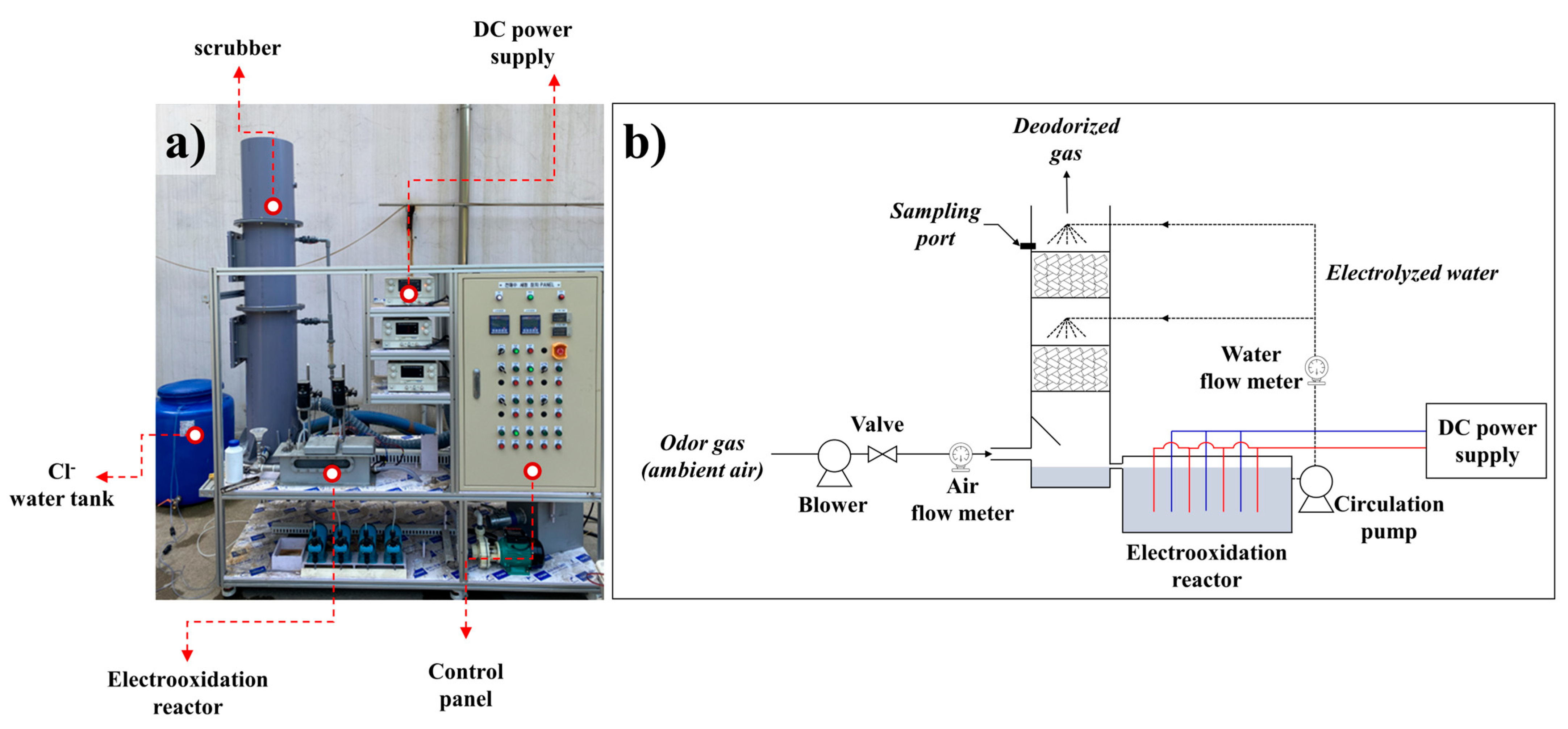
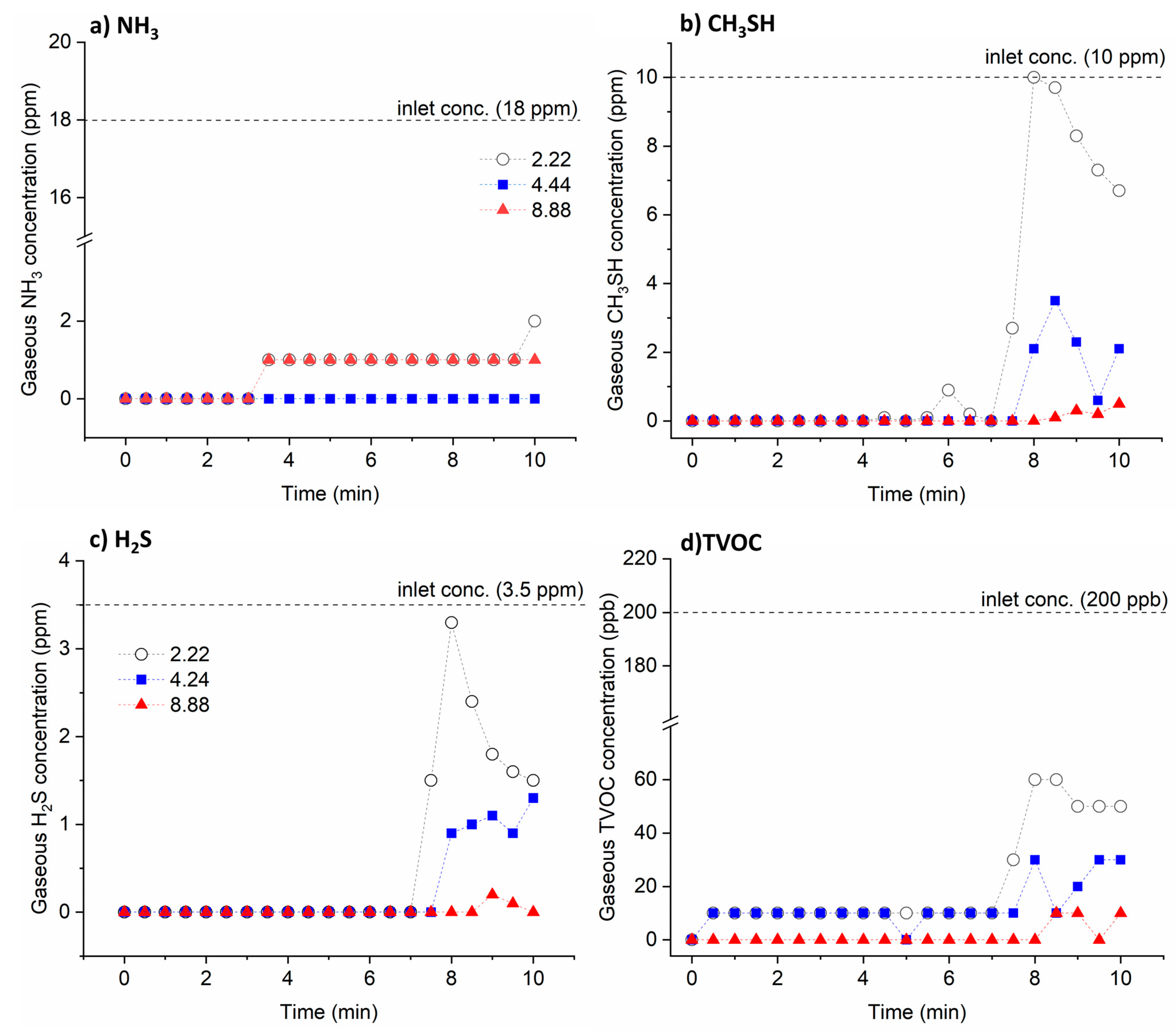
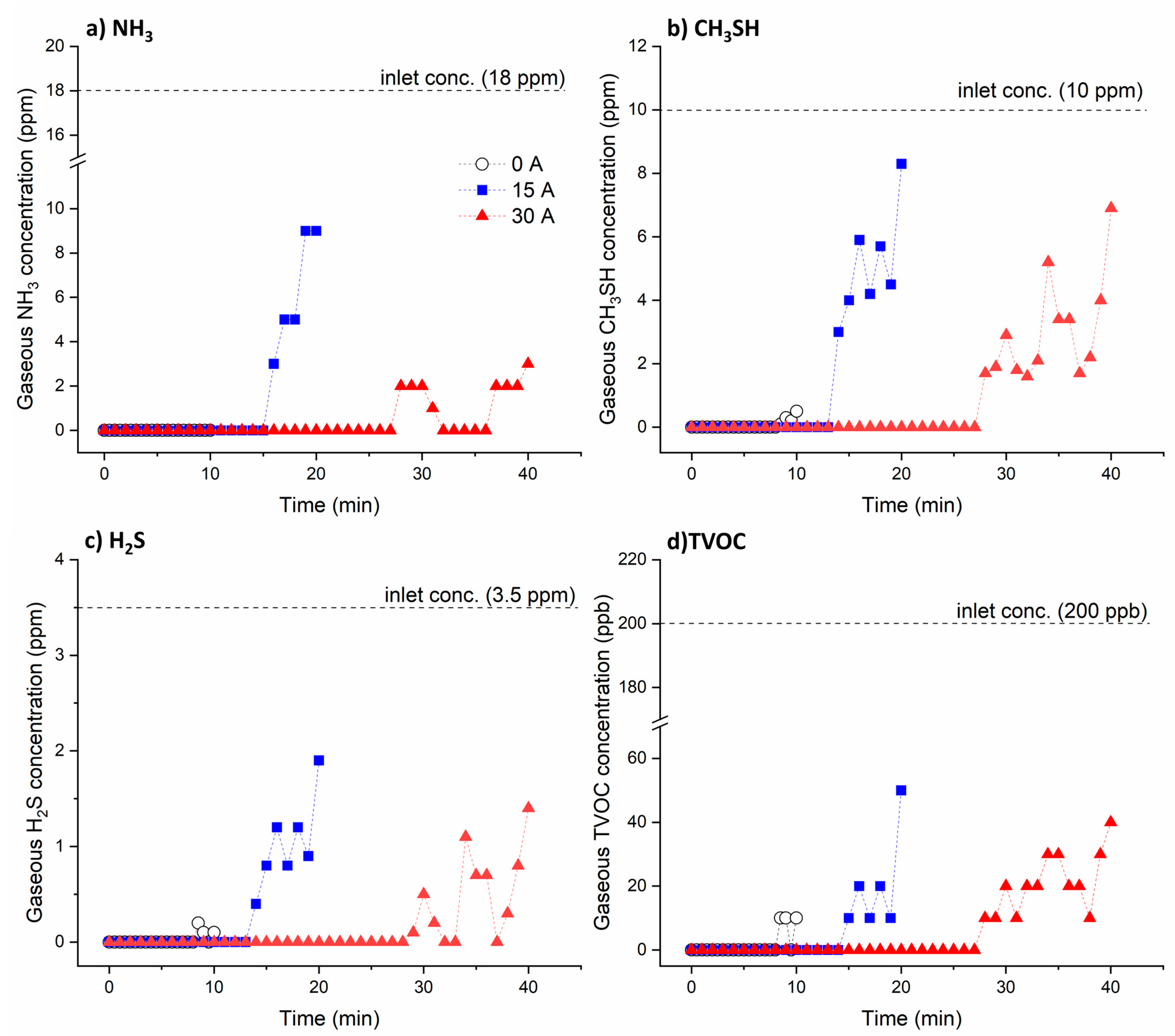
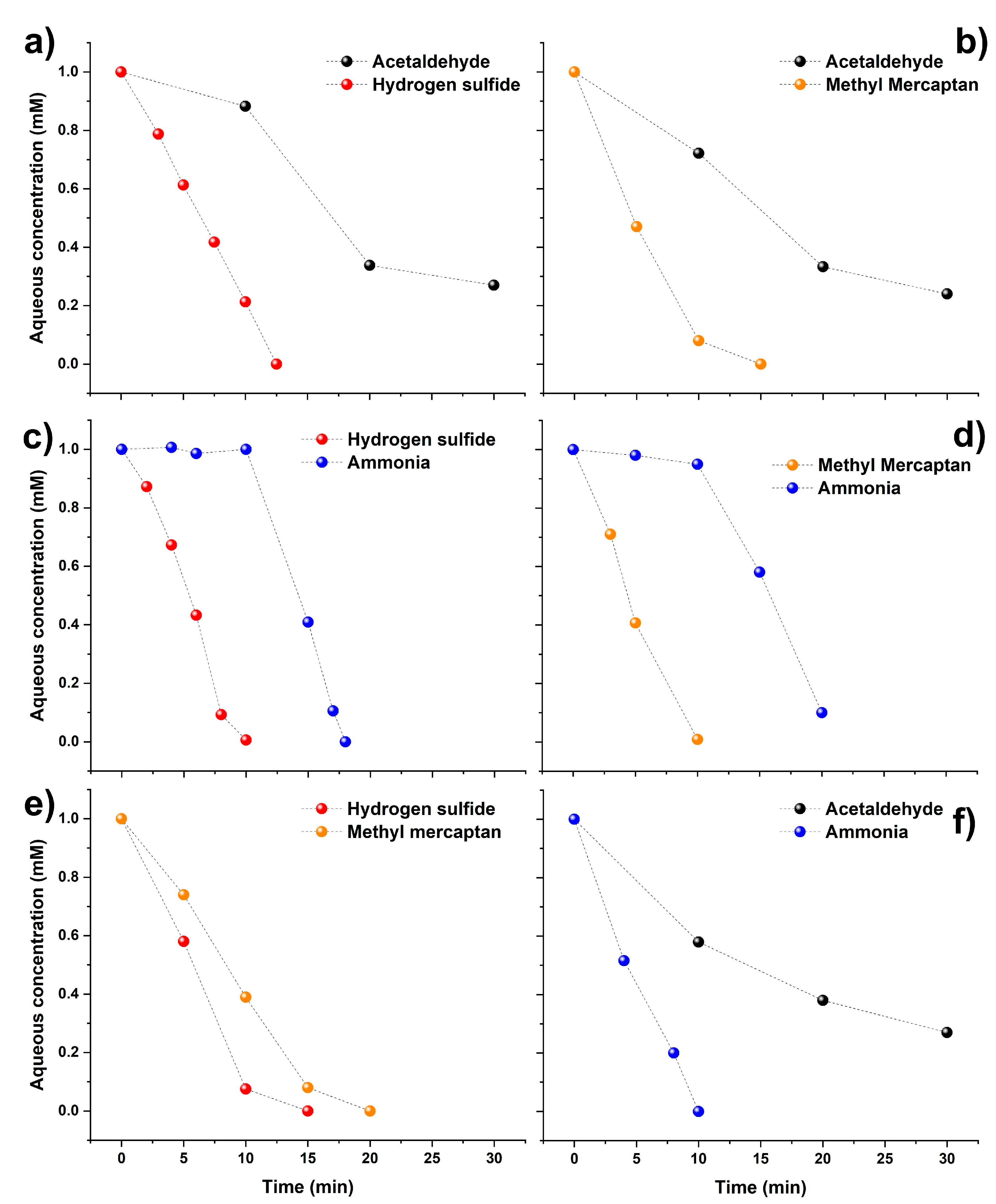
Odor emissions are a crucial component of atmospheric pollution. As odor is a sensory pollutant, its management and treatment are recalcitrant. A wet scrubber (WS) is an efficient technique for odor removal, but disposal of waste liquid discharge leads to secondary pollution and CO2 emissions during transportation. In this study, a system consisting of WS and electrooxidation (EO) was developed and installed in a swine manure fermentation facility. The absorption and EO characteristics were estimated through the practical implementation of a bench-scale WS (BSW). For EO, a dimensionally stable anode and Cl were applied. When the BSW was operated without EO, an L/G ratio of 8.88 was essential for securing the simultaneous removal rate of the four odorants (hydrogen sulfide, methyl mercaptan, ammonia, and total volatile compound). With the operation of the EO, the period to change the liquid based on equilibrium was postponed due to the continuous oxidation of the odorants absorbed in the liquid. As the applied current increased, the change period was further prolonged. However, the oxidation and absorption rates differed depending on the odor substances, due to differences in their physicochemical characteristics. Hydrogen sulfide and methyl mercaptan exhibited similar absorption and oxidation rates. Ammonia had a high absorption rate and a low oxidation rate. The acetaldehyde oxidation rate was the most sluggish among the substances. These findings demonstrate that simultaneous consideration of Henry’s constant and the reactivity of the target pollutant with HOCl renders the design of BSW appropriate for treating odor gases containing various odorants. This study contributes to efforts to address environmental problems concerning odors and also to global climate threats.
Keywords: odor; wet scrubber; water reuse; water regeneration; electrooxidation odor; wet scrubber; water reuse; water regeneration; electrooxidation