Article

An Empirical Study of the Factors Influencing Users’ Intention to Use Automotive AR-HUD

School of Art and Design, Guangdong University of Technology, Guangzhou 510090, China
*
Author to whom correspondence should be addressed.
Sustainability 2023, 15(6), 5028; https://doi.org/10.3390/su15065028
Submission received: 8 February 2023 / Revised: 27 February 2023 / Accepted: 10 March 2023 / Published: 12 March 2023
(This article belongs to the Section Sustainable Management)

Abstract

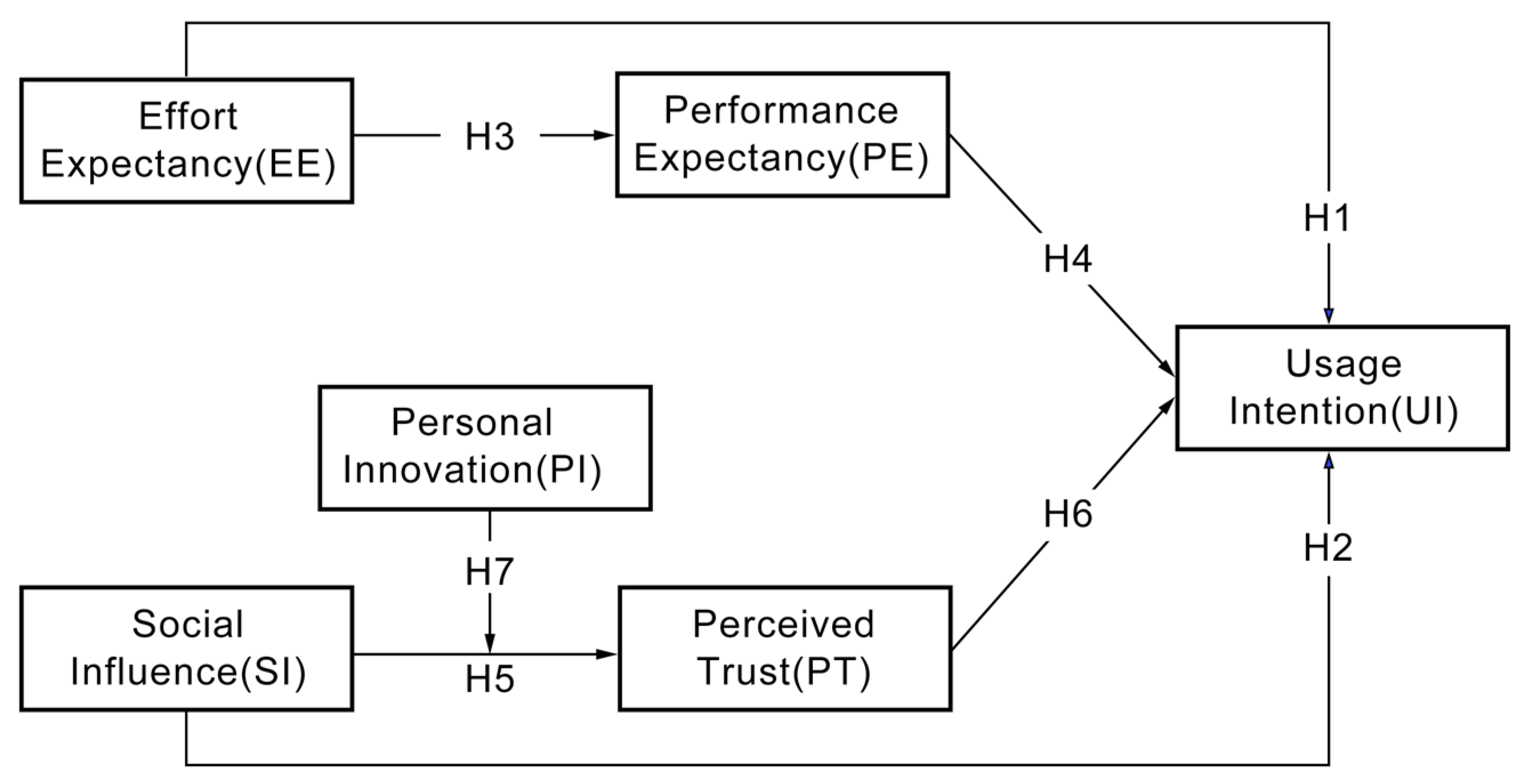
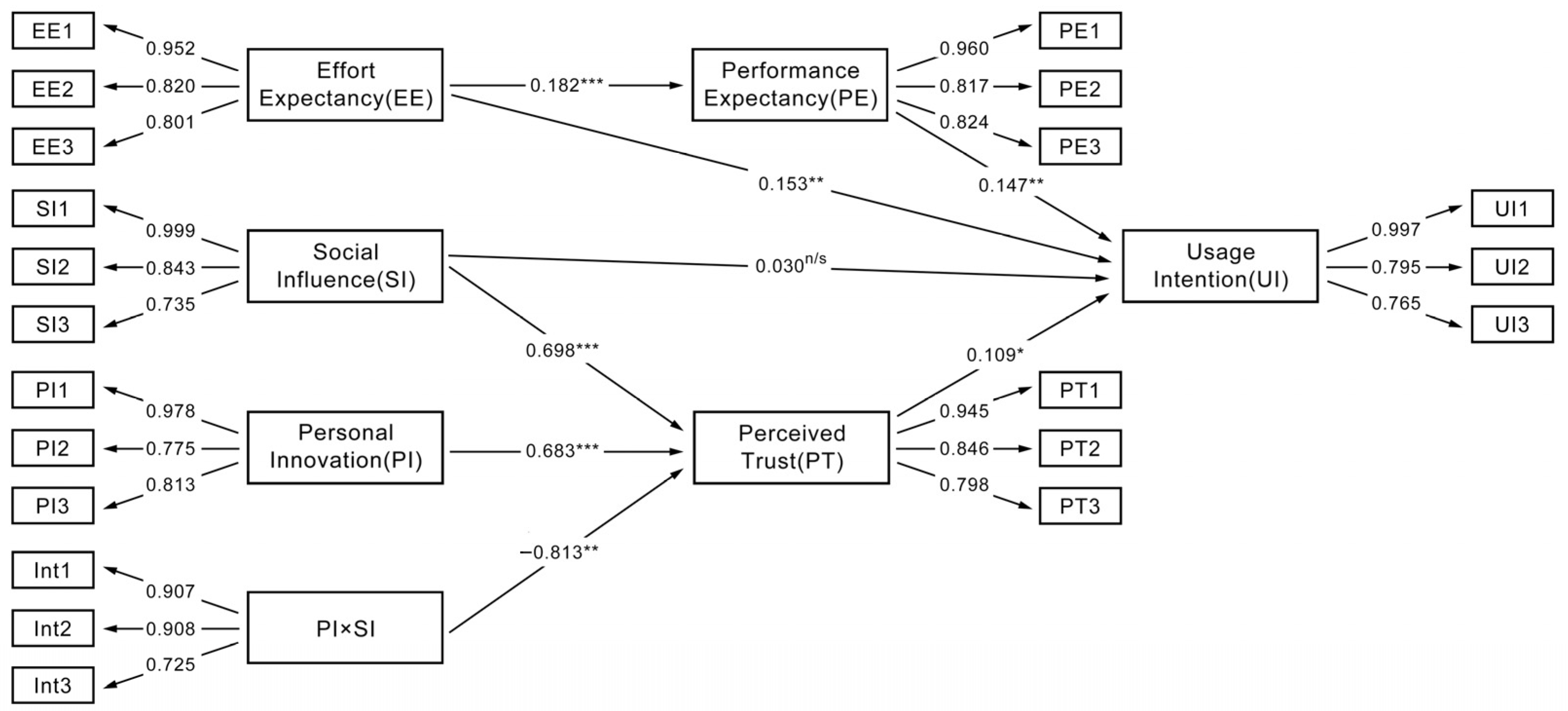
An automotive augmented reality head-up display (AR-HUD) can provide an immersive experience for users and is anticipated to become one of the ultimate terminals for human–machine interaction in future intelligent vehicles within the context of smart cities. However, the majority of the current research on AR-HUD is focused on technological implementation and interaction interface design, and there are relatively few studies that examine the psychological factors that may influence the public’s willingness to utilize this technology. Based on the theory of reasoned action (TRA) and the unified theory of acceptance and use of technology (UTAUT), this study constructs a model of users’ willingness to use automotive AR-HUD involving both cognitive and social factors. The study recruited 377 participants and collected data on users’ effort expectation, performance expectation, social influence, perceived trust, personal innovation, and AR-HUD usage intention through a questionnaire. It was found that users’ effort expectation influenced their intention to use AR-HUD through the mediating role of performance expectation. Social influence had an impact on users’ AR-HUD usage intention through the mediating role of perceived trust, and personal innovation moderated the strength of the role of social influence on perceived trust as a moderating variable.
Keywords: AR-HUD; usage intention; influencing factors; structural model; theory of reasoned action; UTAUT AR-HUD; usage intention; influencing factors; structural model; theory of reasoned action; UTAUT