Experimental Study on Phosphogypsum-Amended Red Mud as Road Base Material
Abstract
1. Introduction
2. Materials and Methods
2.1. Materials
2.2. Methods
2.2.1. Sample Preparation
2.2.2. The Tests of UCS, Dry Density, and pH
2.2.3. The Dry–Wet and Freeze–Thaw Cycle Tests
2.2.4. Microstructure Analysis
3. Results and Discussion
3.1. Selection of Mixture Ratio
3.1.1. Influence of Cement Content
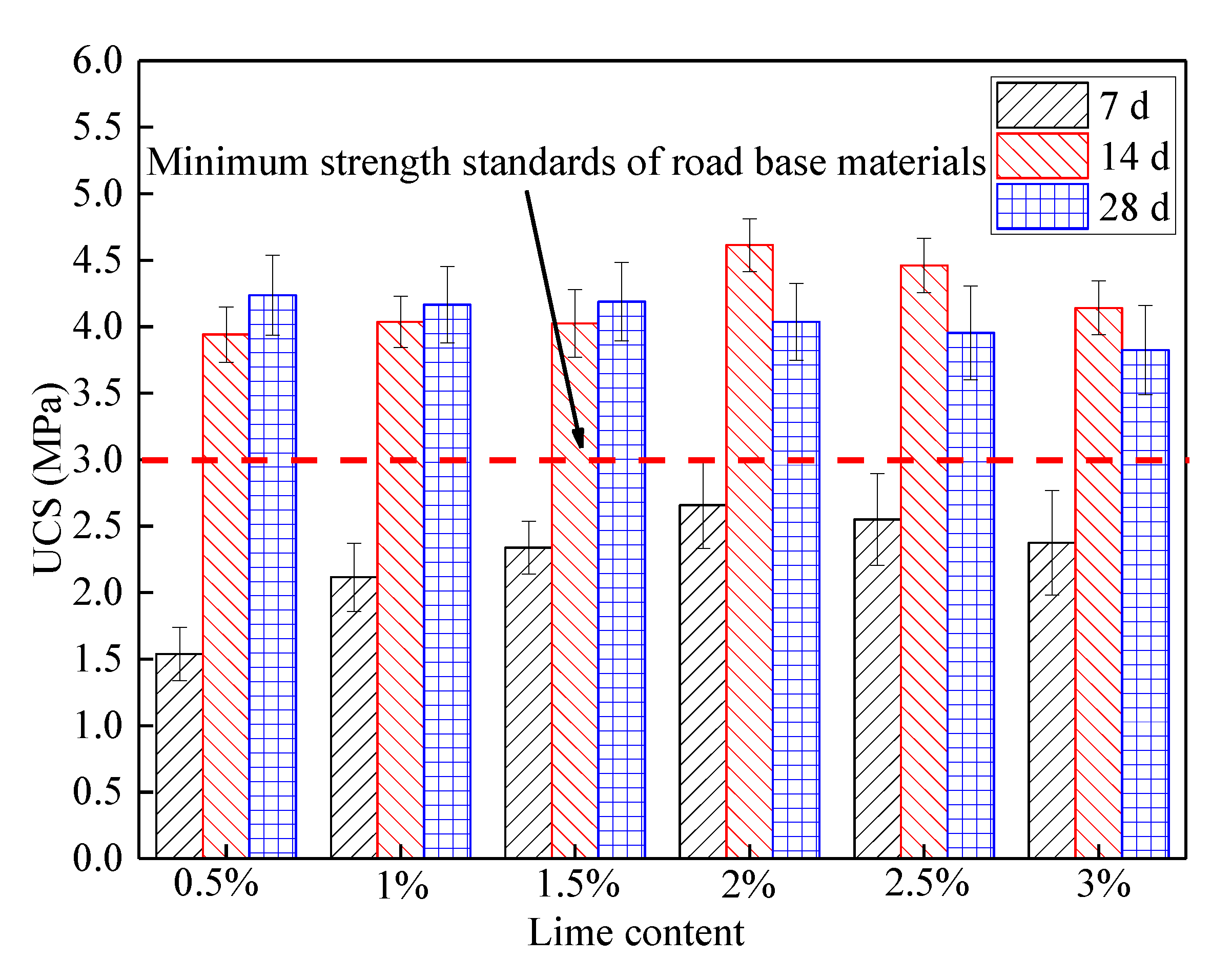
3.1.2. Influence of Cement–Lime Content
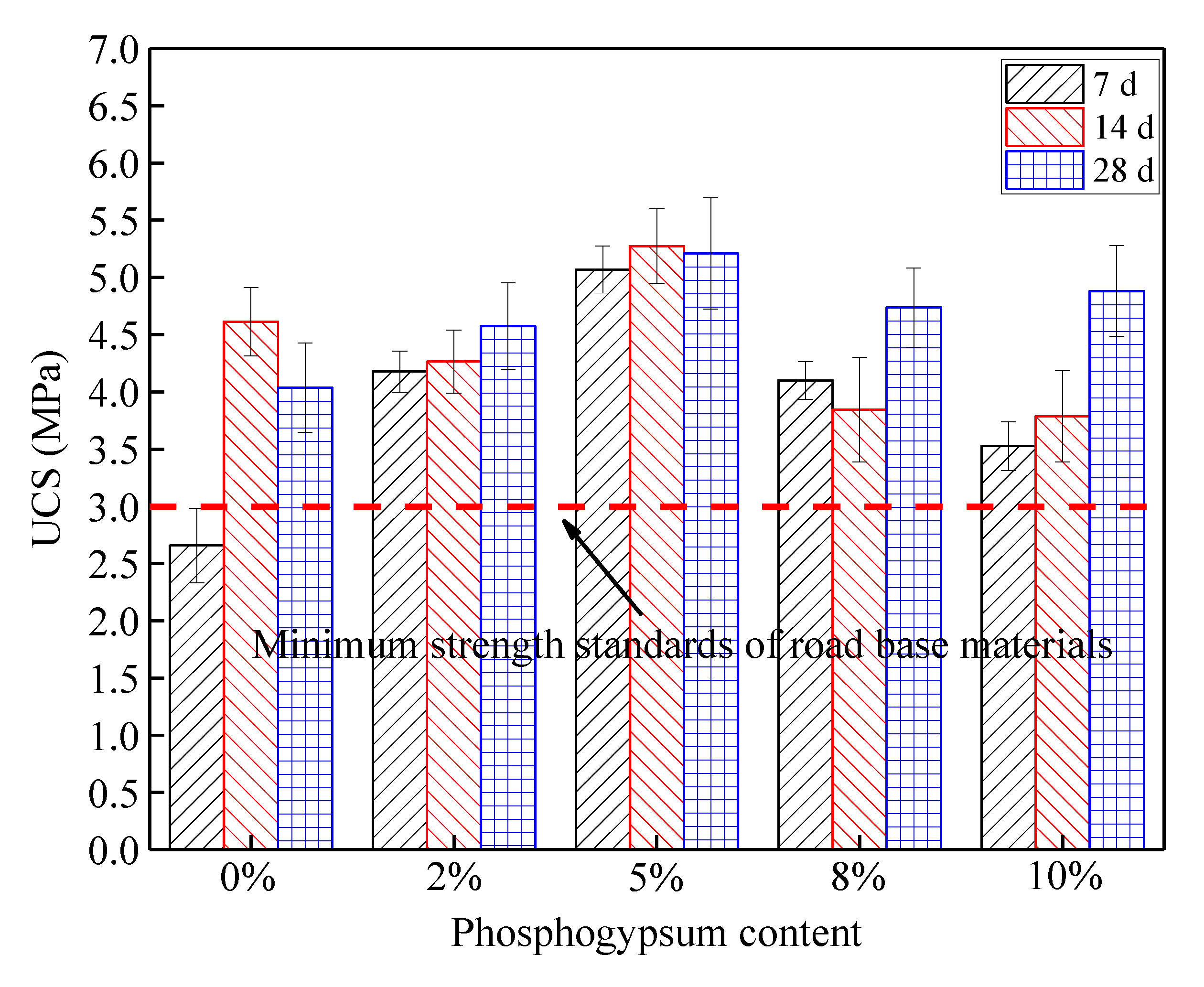
3.1.3. Influence of Phosphogypsum Content
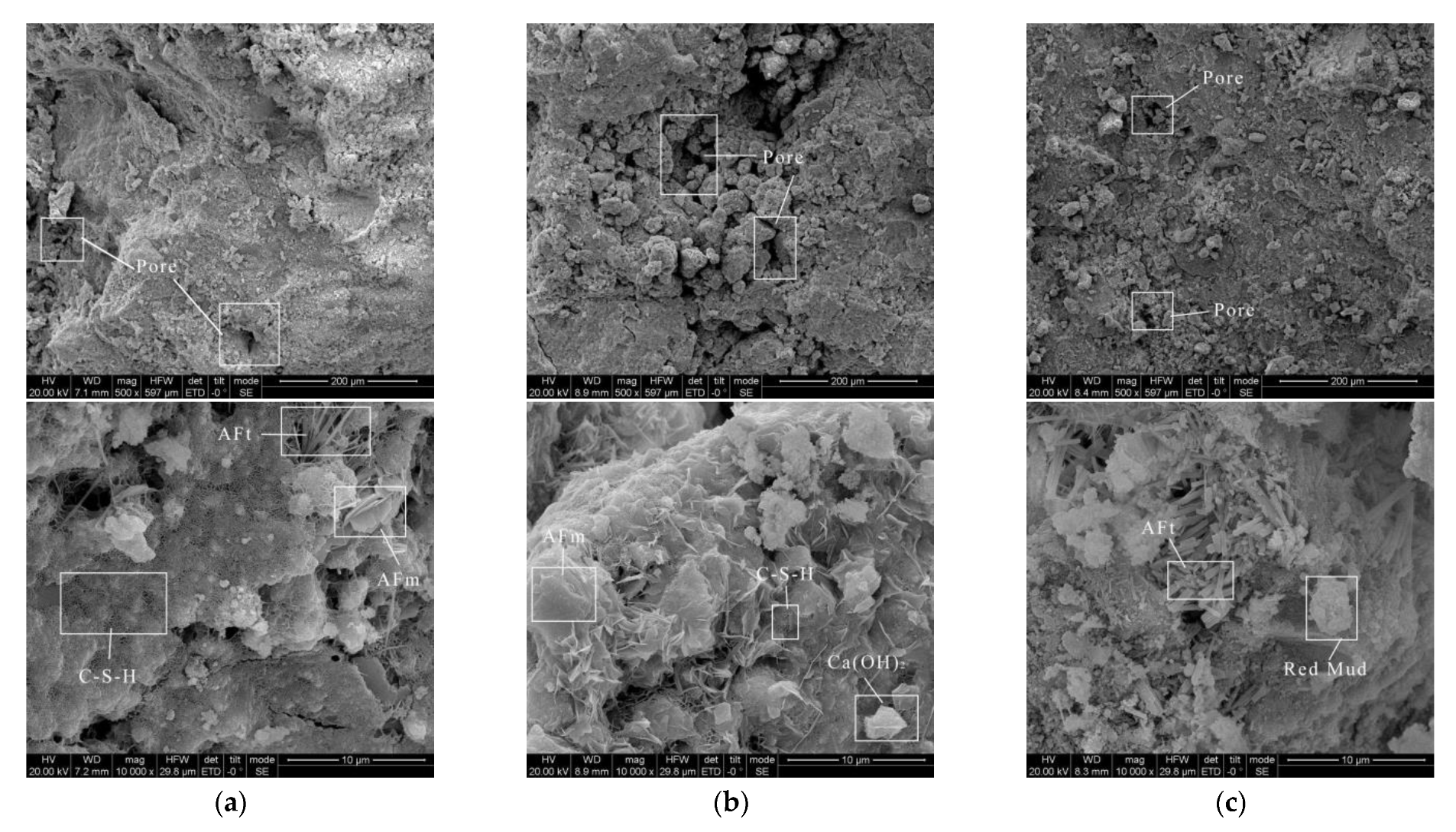
3.2. Scanning Electron Microscope (SEM)
3.3. The Effect of Dry–Wet and Freeze–Thaw Cycles on Phosphogypsum-Amended Red Mud
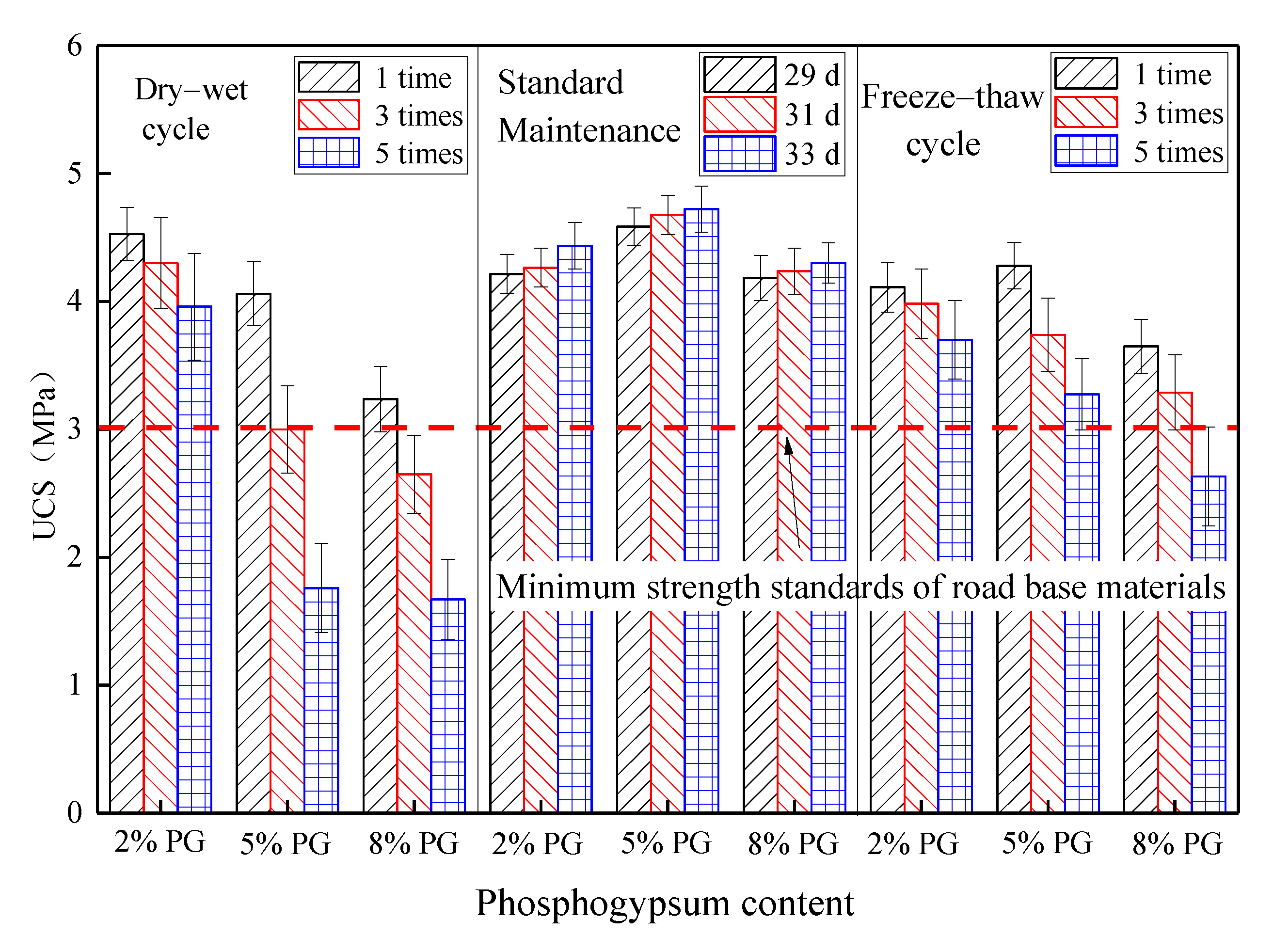
3.3.1. The Variation in UCS
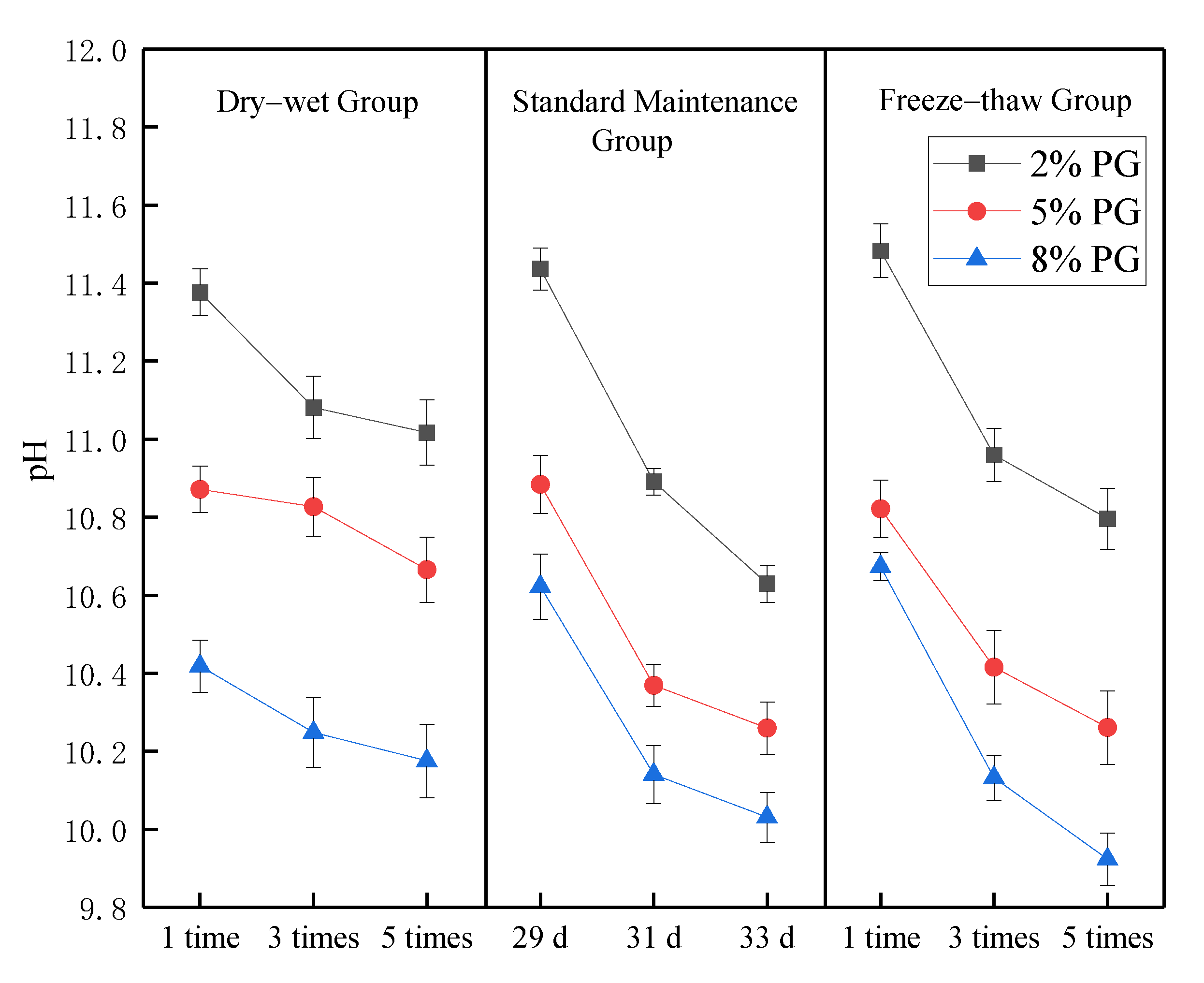
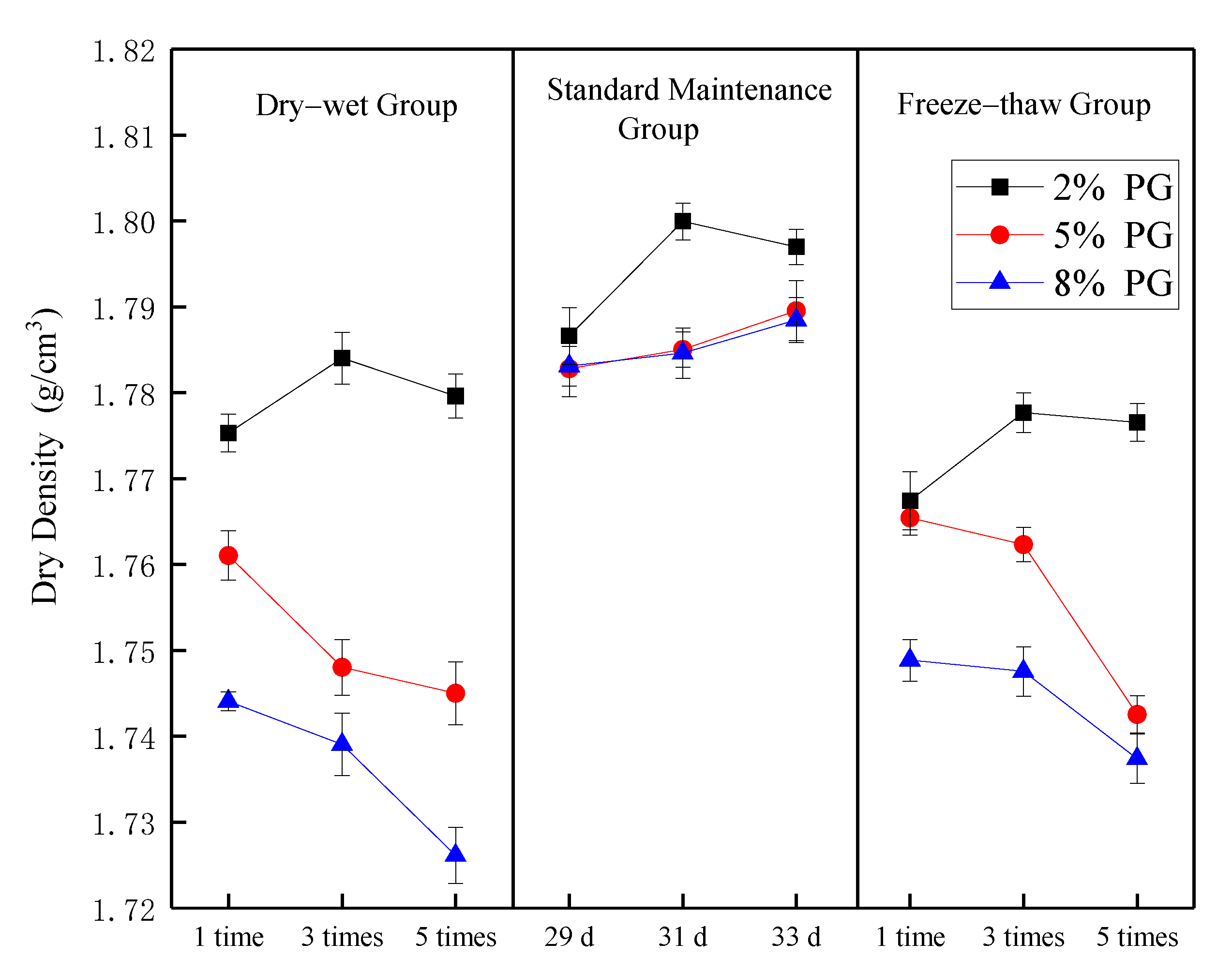
3.3.2. The Variation in pH and Dry density
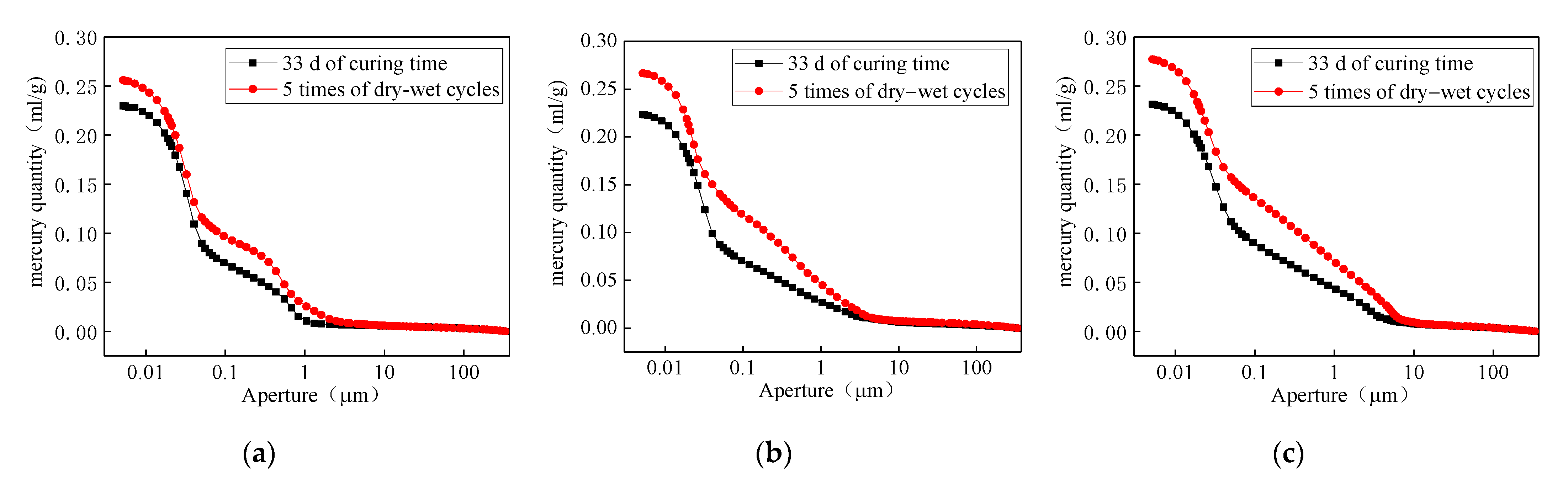
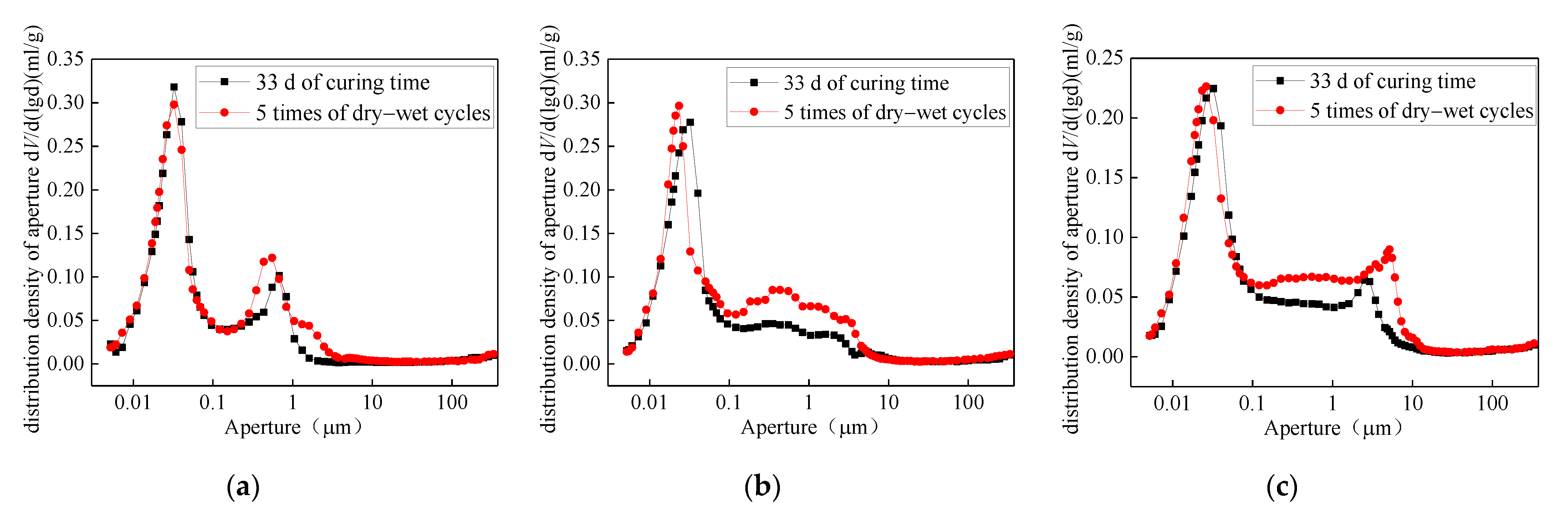
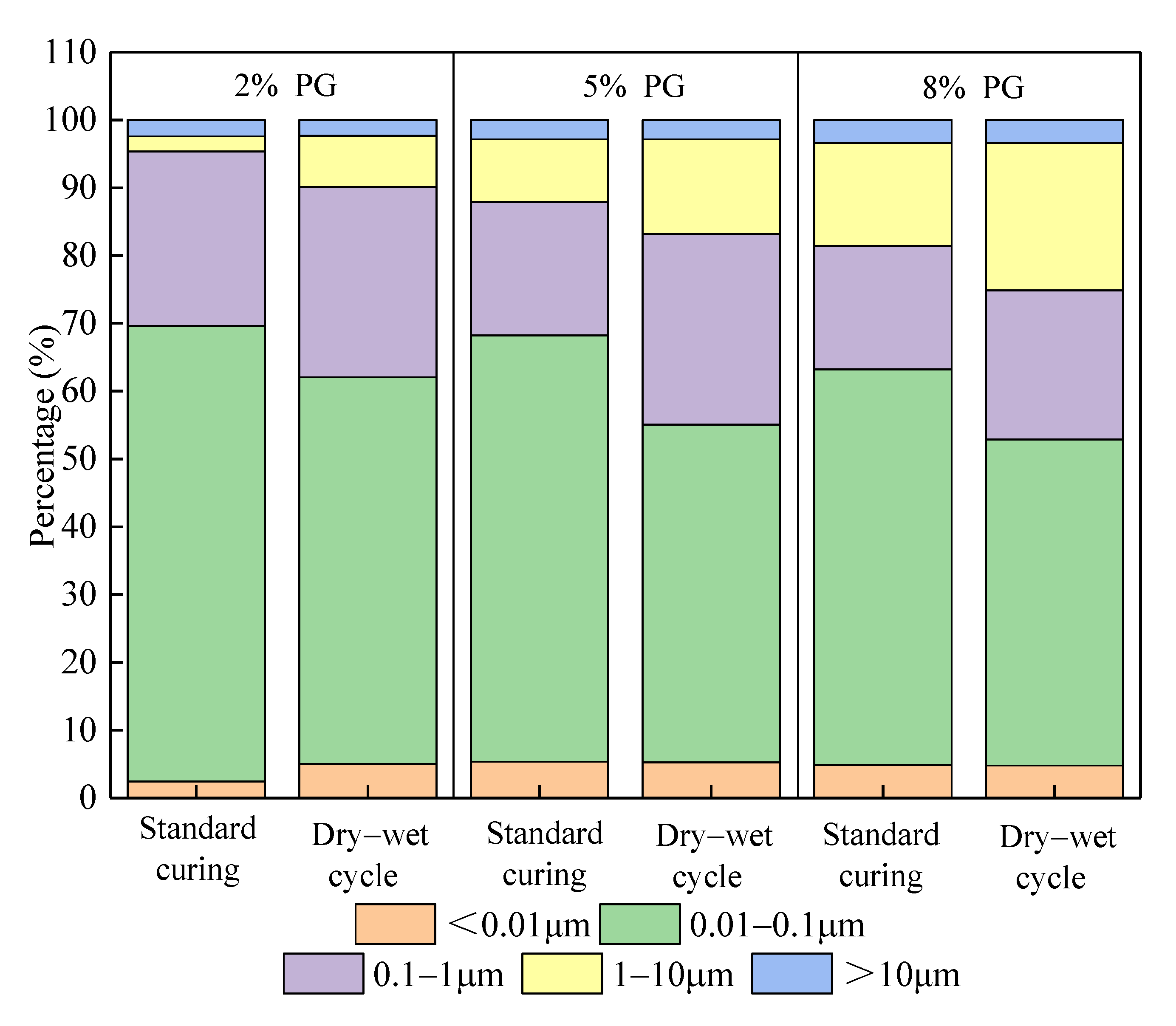
3.3.3. The Variation in Pore Distribution under Dry–Wet Cycles
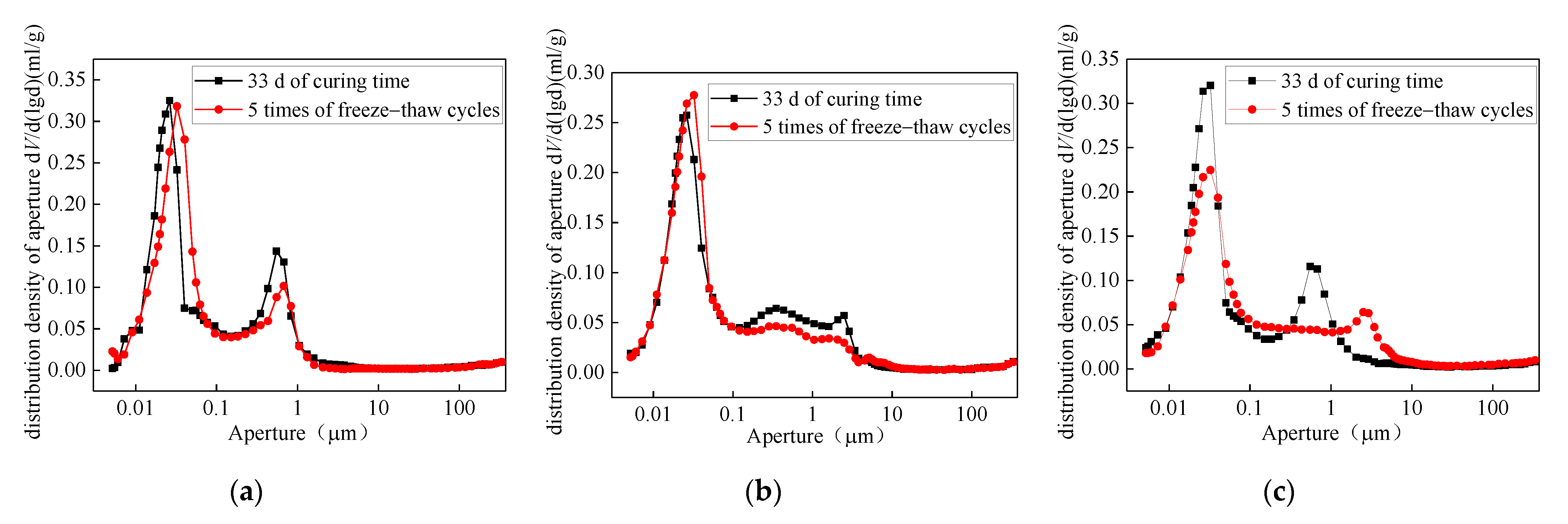
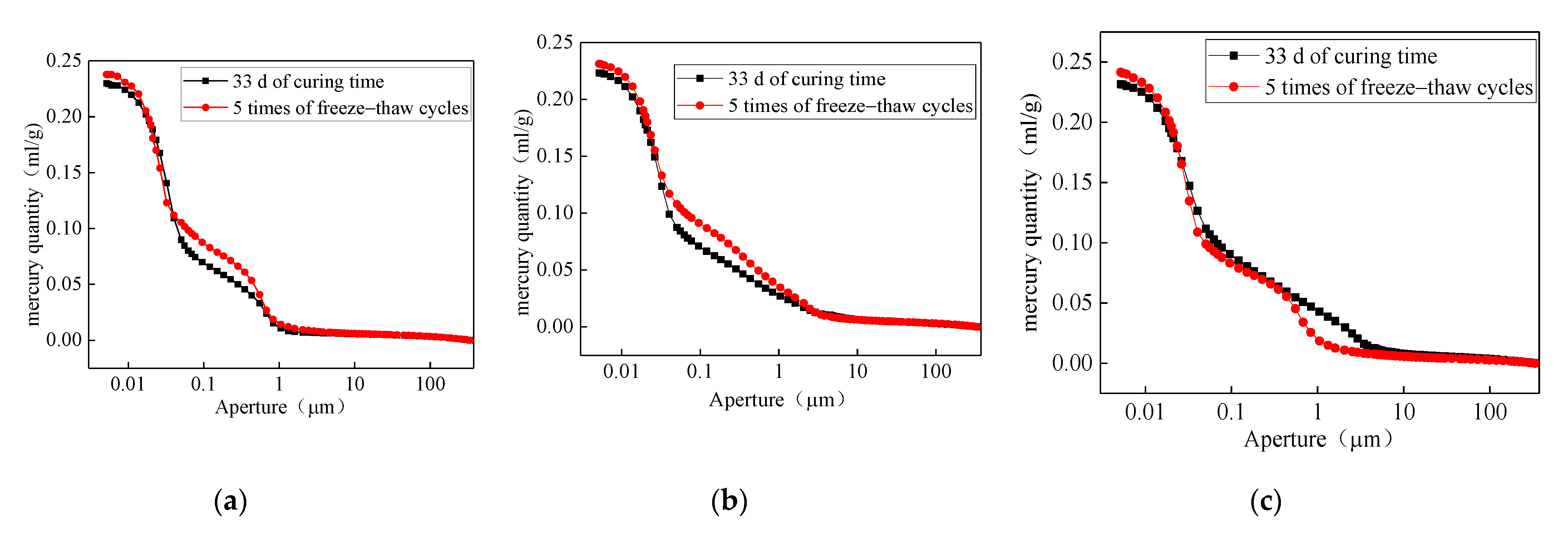
3.3.4. The Variation in Pore Distribution under Freeze–Thaw Cycles
4. Conclusions
- (1)
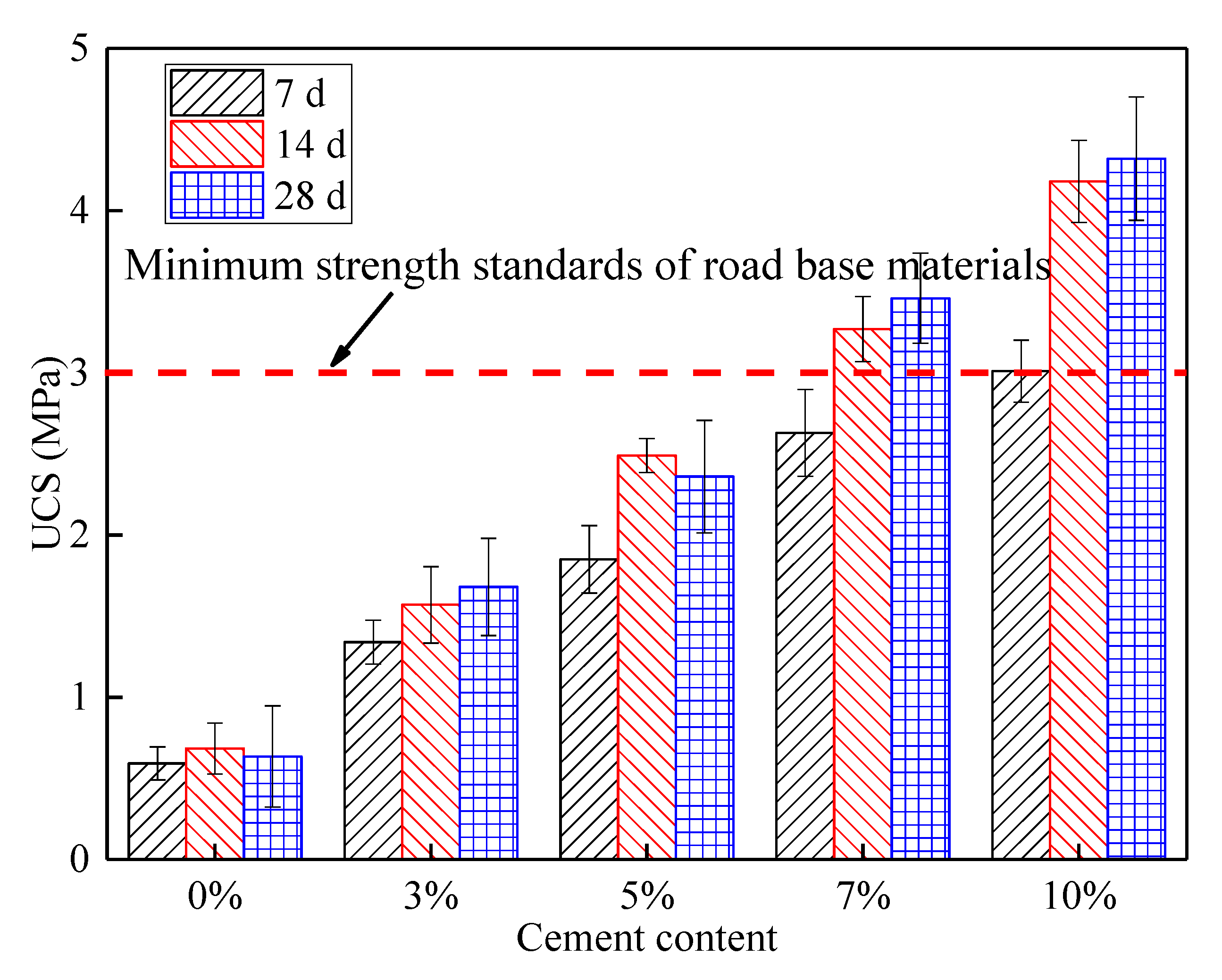
- Through the UCS of cement–lime-stabilized red mud, the optimal ratio was determined to be 8% cement and 2% lime. Additionally, the UCS of amended red mud was significantly increased by the addition of phosphogypsum, and after 7 days of curing time, the sample’s UCS reached the required strength for road base material (3–5 MPa). However, the UCS of the sample increased first and then declined with an increase in phosphogypsum content. The test findings indicated that phosphogypsum content should not be too high.
- (2)
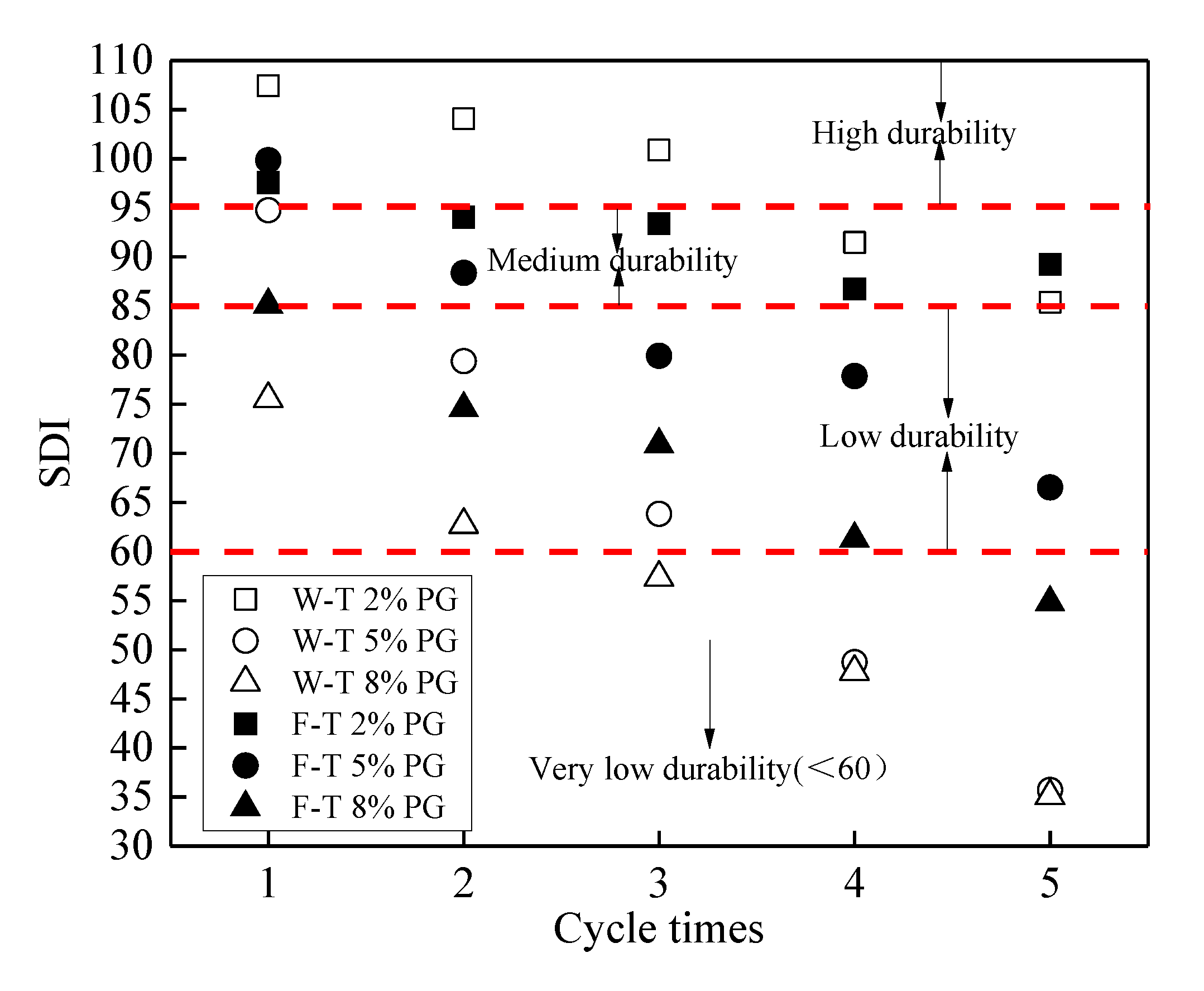
- The UCS, dry density, and pH value of amended red mud were decreased by the dry–wet and freeze–thaw cycles. After five dry–wet cycles, only the samples with 2% phosphogypsum content met the requirements for road base material. Furthermore, after five freeze–thaw cycles, the strength of amended red mud with 8% phosphogypsum content did not meet the standard. Additionally, the impact of the dry–wet cycle was greater than the freeze–thaw cycle on UCS, pH, and dry density of amended red mud.
- (3)
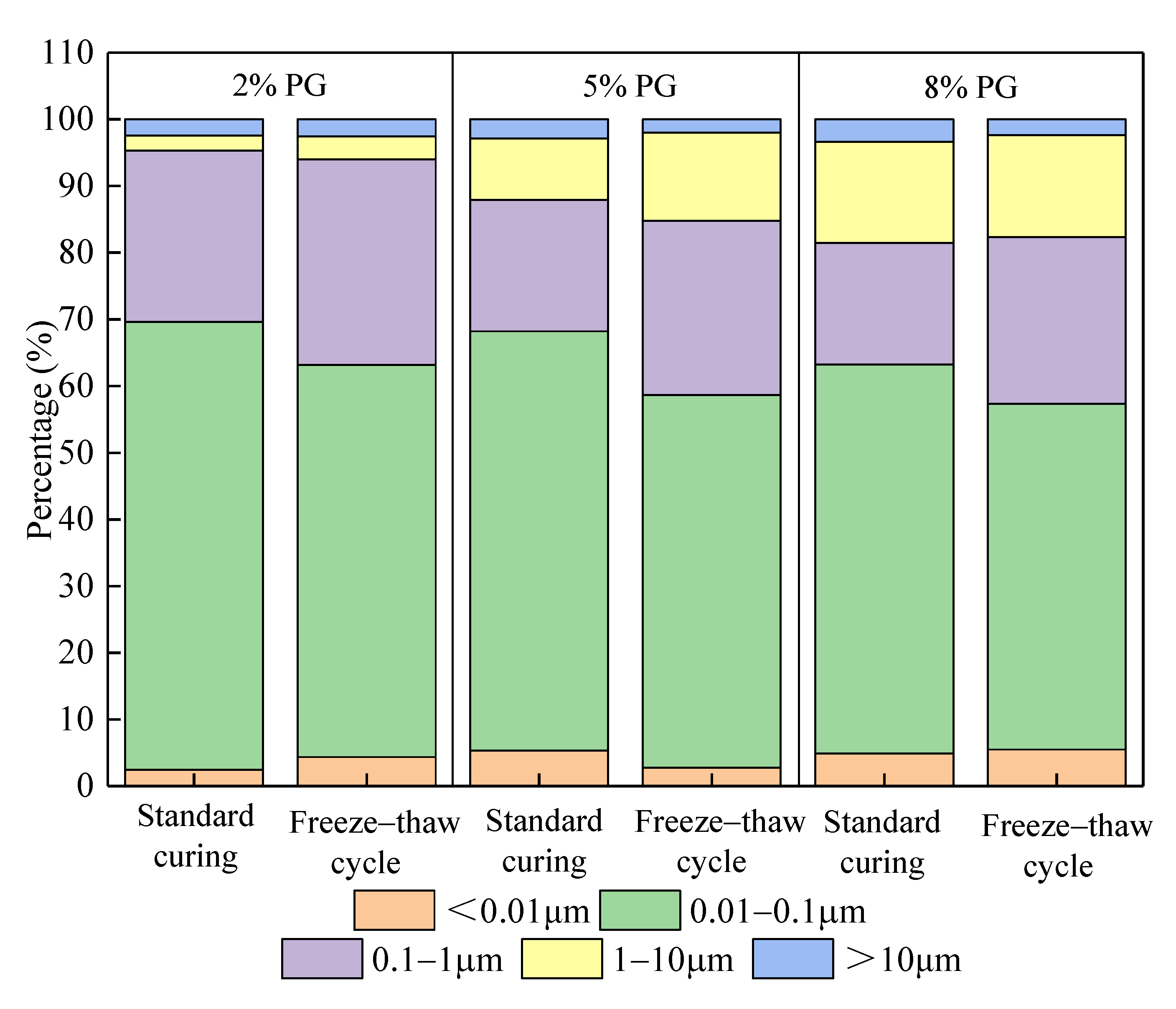
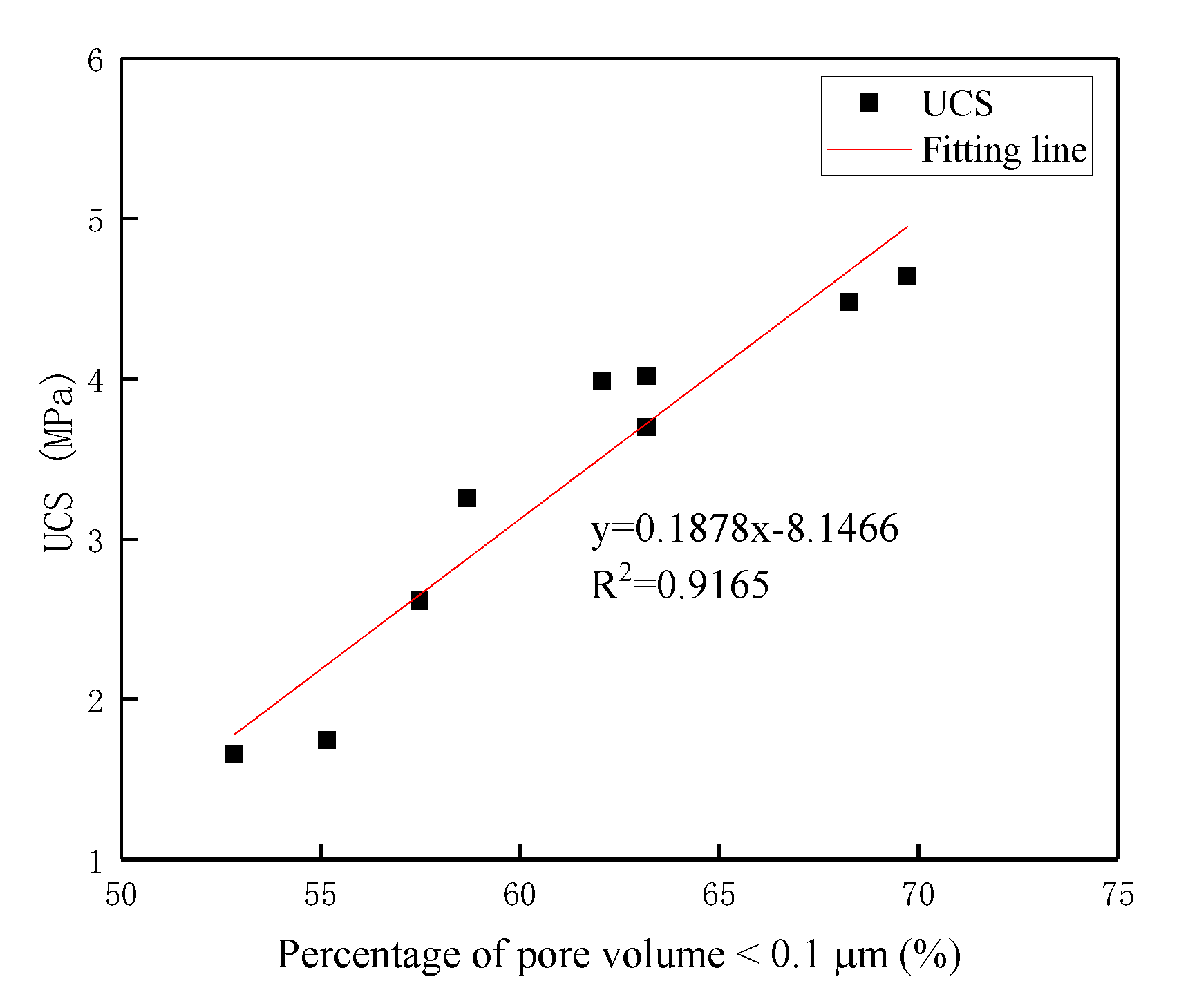
- The percentage of micropores (0.01–0.1 μm) was reduced by dry–wet and freeze–thaw cycles, although the percentage of small pores (0.1–1 μm) and medium pores (1–10 μm) was increased. Additionally, the compactness and compressive strength also fell. The strength of amended red mud with 2% phosphogypsum content was less affected by the dry–wet and freeze–thaw cycles. After five dry–wet and freeze–thaw cycles, the strength assurance rate of the samples was greater than 85%.
Author Contributions
Funding
Institutional Review Board Statement
Informed Consent Statement
Data Availability Statement
Conflicts of Interest
References
- Lyu, F.; Hu, Y.; Wang, L.; Sun, W. Dealkalization processes of bauxite residue: A comprehensive review. J. Hazard. Mater. 2021, 403, 123671. [Google Scholar] [CrossRef] [Scilit] [PubMed]
- Wang, S.; Jin, H.; Deng, Y.; Xiao, Y. Comprehensive utilization status of red mud in China: A critical review. J. Clean. Prod. 2020, 289, 125136. [Google Scholar] [CrossRef] [Scilit]
- Silveira Nathália, C.G.; Martins Maysa, L.F.; Bezerra Augusto, C.S.; Araújo Fernando, G.S. Red Mud from the Aluminium Industry: Production, Characteristics, and Alternative Applications in Construction Materials—A Review. Sustainability 2021, 13, 12741. [Google Scholar] [CrossRef] [Scilit]
- Li, W.Y.; Zhang, Z.Y.; Zhou, J.B. Preparation of building materials from Bayer red mud with magnesium cement. Constr. Build. Mater. 2022, 323, 126507. [Google Scholar] [CrossRef] [Scilit]
- Wang, Y.; Zhang, T.A.; Lyu, G.; Guo, F.; Zhang, W.; Zhang, Y. Recovery of alkali and alumina from bauxite residue (red mud) and complete reuse of the treated residue. J. Clean. Prod. 2018, 188, 456–465. [Google Scholar] [CrossRef] [Scilit]
- Vijayan, D.S.; Parthiban, D. Effect of Solid waste based stabilizing material for strengthening of Expansive soil—A review. Environ. Technol. Innov. 2020, 20, 101108. [Google Scholar] [CrossRef] [Scilit]
- Wang, K.; Yu, Y.; Wang, H.; Chen, J. Experimental study on extracting scandium from red mud by hydrochloric acid leaching. Rare Earth 2010, 31, 95–98. (In Chinese) [Google Scholar]
- Li, D.; Zhang, L.; Liu, X.; Du, Y.; Chen, Y. Research on high-content red mud sintered brick. New Build. Mater. 2009, 36, 26–29. (In Chinese) [Google Scholar]
- Kan, L.; Wang, F.; Zhang, Y.; Wei, Y.; Wu, M. An exploratory study on using red mud waste as a replacement for fly ash to prepare Engineered Cementitious Composites. Constr. Build. Mater. 2022, 342, 127900. [Google Scholar] [CrossRef] [Scilit]
- Sun, D.; Wang, F. Study on the removal of heavy metal ions from wastewater by red mud. Inorg. Salt Ind. 2008, 8, 47–49. (In Chinese) [Google Scholar]
- Wang, Y.; Huo, W. Study on the adsorption performance of granular red mud adsorbent for heavy metal ions. Ind. Water Wastewater 2008, 39, 82–85. (In Chinese) [Google Scholar]
- Zhou, G.; Chen, D.; Luo, J.; Song, Q. Application of high-efficiency flocculant for settling red mud. Min. Metall. 2003, 2, 41–44+48. (In Chinese) [Google Scholar]
- Mukiza, E.; Zhang, L.; Liu, X.; Zhang, N. Utilization of red mud in road base and subgrade materials: A review. Resour. Conserv. Recycl. 2019, 141, 187–199. [Google Scholar] [CrossRef] [Scilit]
- Deelwal, K.; Dharavath, K.; Kulshreshtha, M. Evaluation of characteristic properties of red mud for possible use as a geotechnical material in civil construction. Int. J. Adv. Eng. Technol. 2014, 7, 1053. [Google Scholar]
- Das, S.K.; Rout, S.; Alam, S. Characterization of Red Mud as a Subgrade Construction Material. In Proceedings of the 3rd Conference of Transport Research Group of India (CTRG), Kolkata, India, 17 December 2015. [Google Scholar]
- Zhang, Y.; Qu, Y.; Wu, S. Engineering geological properties and comprehensive utilization of the solid waste (red mud) in aluminium industry. Environ. Geol. 2001, 41, 249–256. [Google Scholar] [CrossRef] [Scilit]
- Sutar, H.; Mishra, S.C.; Sahoo, S.K.; Maharana, H.S. Progress of Red Mud Utilization: An Overview. Am. Chem. Sci. J. 2014, 4, 255–279. [Google Scholar] [CrossRef] [Scilit]
- Liu, S.; Li, Z.; Li, Y.; Cao, W. Strength properties of Bayer red mud stabilized by lime-fly ash using orthogonal experiments. Constr. Build. Mater. 2018, 166, 554–563. [Google Scholar] [CrossRef] [Scilit]
- Rao, C.H.; Naidu, G.; Satyanayarana, P.V.V.; Adiseshu, S. Application of GGBS stabilized Redmud in Road Construction. IOSR J. Eng. 2012, 2, 14–20. [Google Scholar]
- Zhang, J.; Li, C. Experimental Study on Lime and Fly Ash–Stabilized Sintered Red Mud in Road Base. J. Test. Eval. 2018, 46, 1539–1547. [Google Scholar] [CrossRef] [Scilit]
- Li, Y.; Liu, X.; Li, Z.; Ren, Y.; Wang, Y.; Zhang, W. Preparation, characterization and application of red mud, fly ash and desulfurized gypsum based eco-friendly road base materials. J. Clean. Prod. 2020, 284, 124777. [Google Scholar] [CrossRef] [Scilit]
- Tian, T.; Ke, W.S.; Zhu, F.; Wang, Q.L.; Ye, Y.Z.; Guo, Y.; Xue, S.G. Effect of substrate amendment on alkaline minerals and aggregate stability in bauxite residue. J. Cent. South Univ. 2019, 26, 393–403. [Google Scholar] [CrossRef] [Scilit]
- Wang, H.; Jiao, S.; Ge, Y.; Tang, H.; Zhang, J. Experimental study on red mud mixed with silica fume as road base material. Environ. Pollut. Prev. 2016, 38, 8–10+15. (In Chinese) [Google Scholar]
- Sun, Z. Research on Engineering Technology and Environmental Impact of Bayer Red Mud Filling Subgrade. Ph.D. Thesis, Shandong University, Jinan, China, 2017. (In Chinese) [Google Scholar]
- Li, Y.W.; Luo, X.H.; Li, C.X.; Millar, G.J.; Jiang, J.; Xue, S.G. Variation of alkaline characteristics in bauxite residue under phosphogypsum amendment. J. Cent. South Univ. 2019, 26, 361–372. [Google Scholar] [CrossRef] [Scilit]
- Occhicone, A.; Vukčević, M.; Bosković, I.; Ferone, C. Red Mud-Blast Furnace Slag-Based Alkali-Activated Materials. Sustainability 2021, 13, 11298. [Google Scholar] [CrossRef] [Scilit]
- Li, C. Research on the Basic Performance and Engineering Application of Bayer red Mud in Subgrade Filling. Ph.D. Thesis, Shandong University of Architecture, Jinan, China, 2018. (In Chinese) [Google Scholar]
- Qaidi, S.M.; Tayeh, B.A.; Ahmed, H.U.; Emad, W. A review of the sustainable utilisation of red mud and fly ash for the production of geopolymer composites. Constr. Build. Mater. 2022, 350, 128892. [Google Scholar] [CrossRef] [Scilit]
- JTG3430-2020; Test Methods of Soils for Highway Engineering. National Standards of the People’s Republic of China: Beijing, China, 2020. (In Chinese)
- ASTM D4972; Standard Test Methods for pH of Soils. American Society for Testing and Materials: West Conshohocken, PA, USA, 2013.
- JTJ034-2000; Ministry of Communications Technical Specification for Construction of Highway Pavement Base. National Standards of the People’s Republic of China: Beijing, China, 2019. (In Chinese)







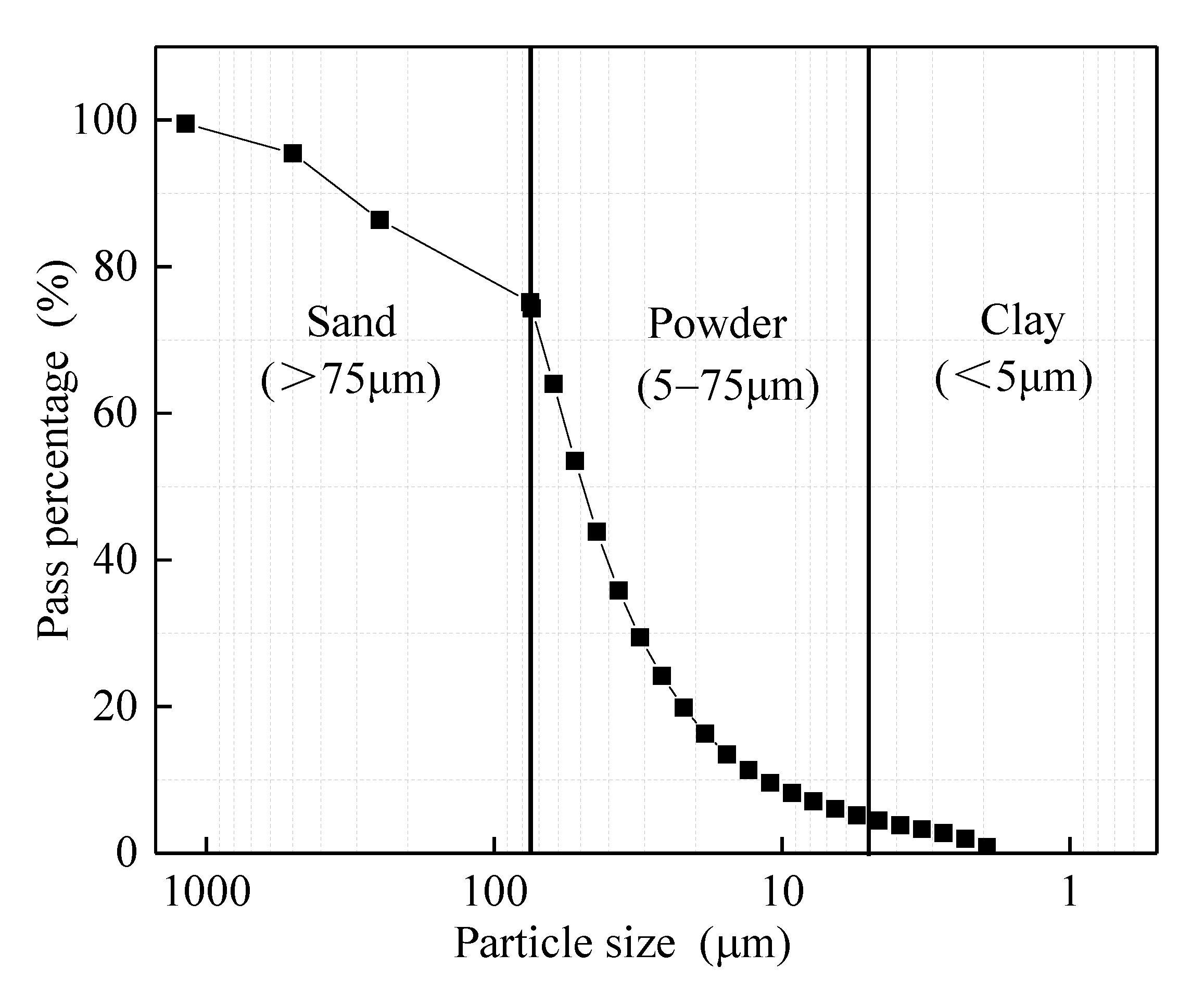
| Water content (%) | Liquid limit wL (%) | Plastic limit wp (%) | Plasticity index Ip | Particle size distribution (%) | ||
| Clay content | Powder content | Sand content | ||||
| <5 μm | 5~75 μm | >75 μm | ||||
| 37.4 | 42.89 | 24.56 | 18.33 | 4.65 | 70.95 | 24.4 |
| Raw Materials | SO3 | CaO | SiO2 | P2O5 | Fe2O3 | Al2O3 | MgO | K2O | Others |
|---|---|---|---|---|---|---|---|---|---|
| Red Mud | 1.6 | 1.4 | 7.777 | / | 53.365 | 22.879 | 1.123 | / | 2.64 |
| Cement | 4.031 | 53.02 | 23.803 | / | 3.881 | 8.871 | 3.744 | 1.126 | 1.524 |
| Lime | 1.759 | 93.209 | 0.996 | / | 1.065 | 0.401 | 2.337 | 0.233 | 1.065 |
| Phosphogypsum | 52.122 | 42.363 | 2.127 | 0.744 | 0.664 | 0.607 | 0.507 | / | 0.866 |
| Number | Cement Content (%) | Maximum Dry Density (g/cm3) | Optimum Water Content (%) | Degree of Compaction |
|---|---|---|---|---|
| 1 | 0 | 1.82 | 23.4 | 96% |
| 2 | 3% | 1.83 | 23.8 | |
| 3 | 5% | 1.85 | 22.9 | |
| 4 | 7% | 1.86 | 22.4 | |
| 5 | 10% | 1.88 | 22.6 |
| Number | Lime Content (%) | Cement Content (%) | Maximum Dry Density (g/cm3) | Optimum Water Content (%) | Degree of Compaction |
|---|---|---|---|---|---|
| 1 | 0.5% | 9.5% | 1.88 | 22.6 | 96% |
| 2 | 1% | 9% | 1.84 | 22.4 | |
| 3 | 1.5% | 8.5% | 1.85 | 22.8 | |
| 4 | 2% | 8% | 1.82 | 23.3 | |
| 5 | 2.5% | 7.5% | 1.83 | 23.0 | |
| 6 | 3% | 7% | 1.8 | 24 |
| Number | Phosphogypsum Content (%) | Cement Content (%) | Lime Content (%) | Maximum Dry Density (g/cm3) | Optimum Water Content (%) | Degree of Compaction |
|---|---|---|---|---|---|---|
| 1 | 0% | 8% | 2% | 1.82 | 23.3 | 96% |
| 2 | 2% | 8% | 2% | 1.84 | 22.7 | |
| 3 | 5% | 8% | 2% | 1.82 | 23.4 | |
| 4 | 8% | 8% | 2% | 1.81 | 24.6 | |
| 5 | 10% | 8% | 2% | 1.80 | 25.2 |
Disclaimer/Publisher’s Note: The statements, opinions and data contained in all publications are solely those of the individual author(s) and contributor(s) and not of MDPI and/or the editor(s). MDPI and/or the editor(s) disclaim responsibility for any injury to people or property resulting from any ideas, methods, instructions or products referred to in the content. |
© 2023 by the authors. Licensee MDPI, Basel, Switzerland. This article is an open access article distributed under the terms and conditions of the Creative Commons Attribution (CC BY) license (https://creativecommons.org/licenses/by/4.0/).
Share and Cite
Wang, H.; Shi, M.; Tian, X.; Yu, C.; Du, X. Experimental Study on Phosphogypsum-Amended Red Mud as Road Base Material. Sustainability 2023, 15, 1719. https://doi.org/10.3390/su15021719
Wang H, Shi M, Tian X, Yu C, Du X. Experimental Study on Phosphogypsum-Amended Red Mud as Road Base Material. Sustainability. 2023; 15(2):1719. https://doi.org/10.3390/su15021719
Chicago/Turabian StyleWang, Huajin, Minglei Shi, Xintao Tian, Changyun Yu, and Xuyang Du. 2023. "Experimental Study on Phosphogypsum-Amended Red Mud as Road Base Material" Sustainability 15, no. 2: 1719. https://doi.org/10.3390/su15021719
APA StyleWang, H., Shi, M., Tian, X., Yu, C., & Du, X. (2023). Experimental Study on Phosphogypsum-Amended Red Mud as Road Base Material. Sustainability, 15(2), 1719. https://doi.org/10.3390/su15021719