Article

Carbon Emission Evaluation of Roadway Construction at Contaminated Sites Based on Life Cycle Assessment Method


1
School of Transportation, Southeast University, Nanjing 211189, China
2
Jiangsu Key Laboratory of Urban Underground Engineering and Environmental Safety, Institute of Geotechnical Engineering, Southeast University, Nanjing 211189, China
*
Author to whom correspondence should be addressed.
Sustainability 2023, 15(16), 12642; https://doi.org/10.3390/su151612642
Submission received: 13 June 2023 / Revised: 28 July 2023 / Accepted: 4 August 2023 / Published: 21 August 2023

Abstract

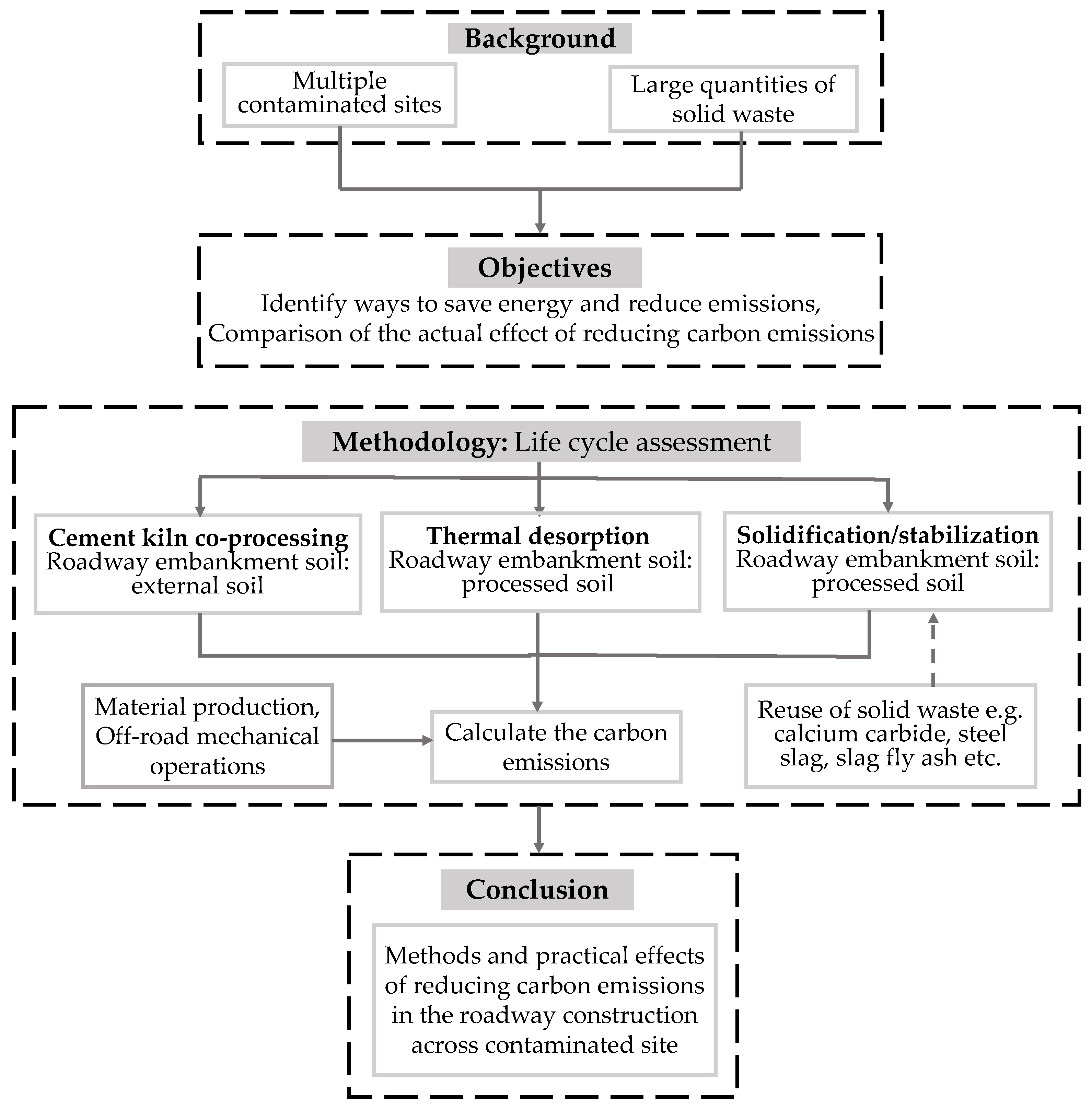
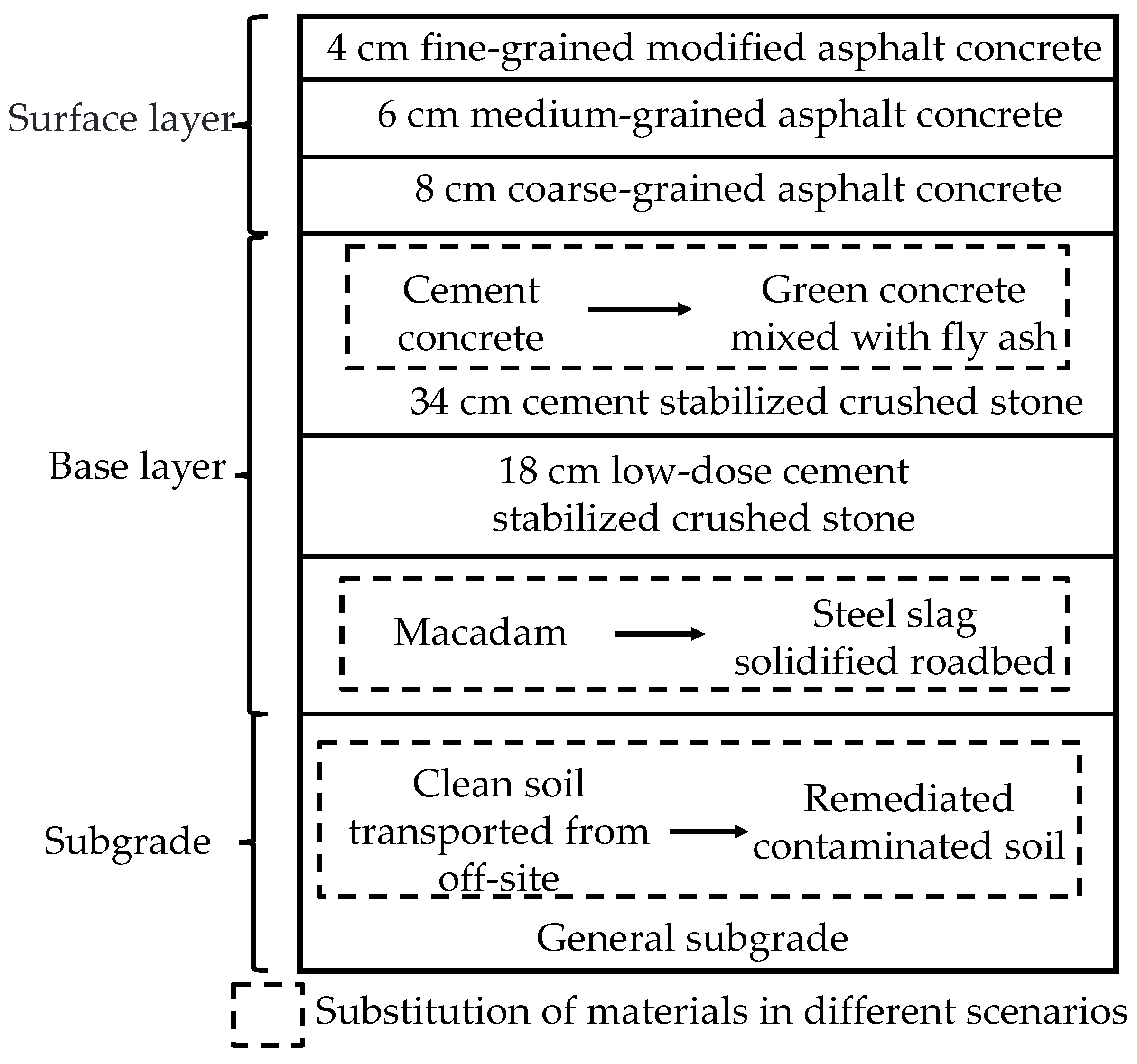
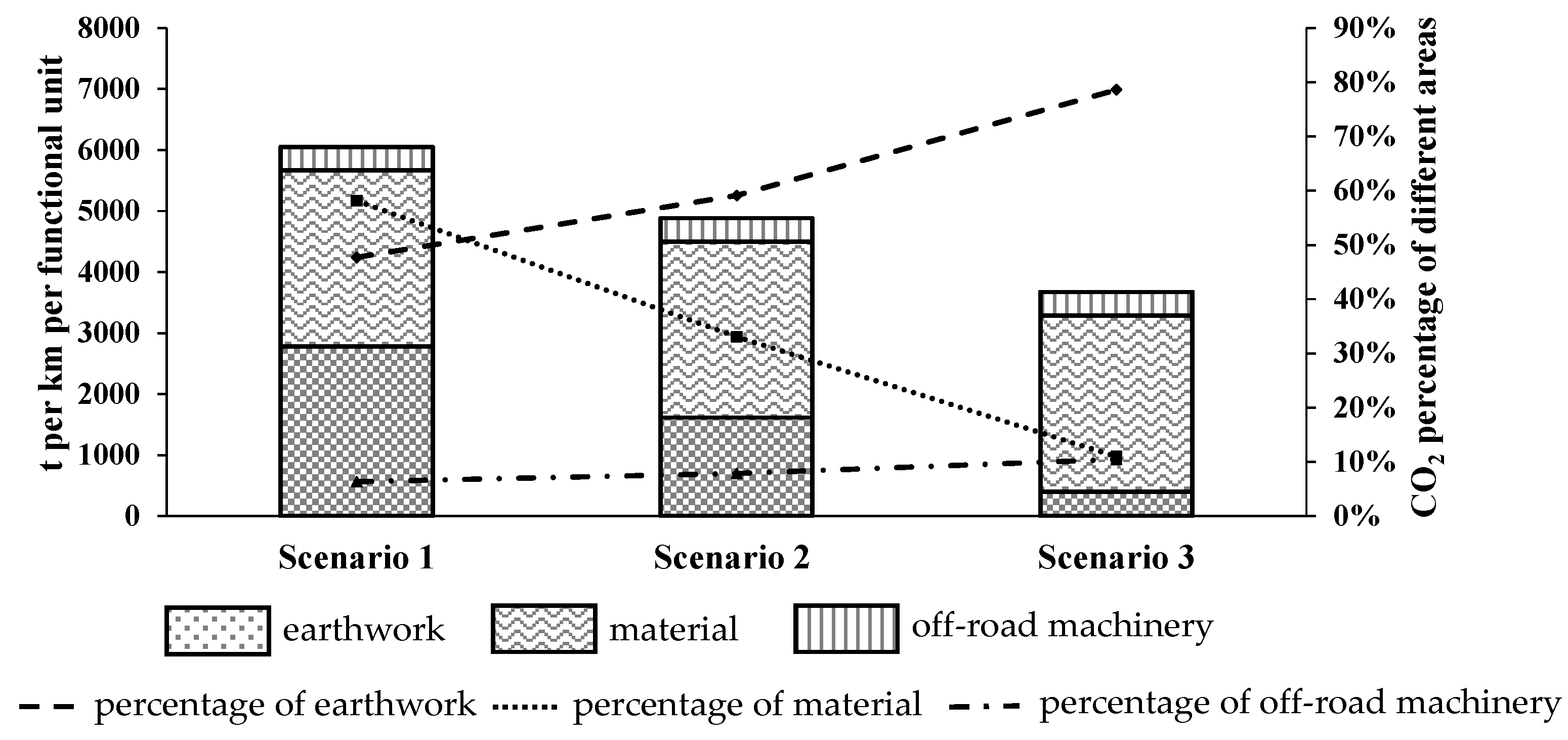
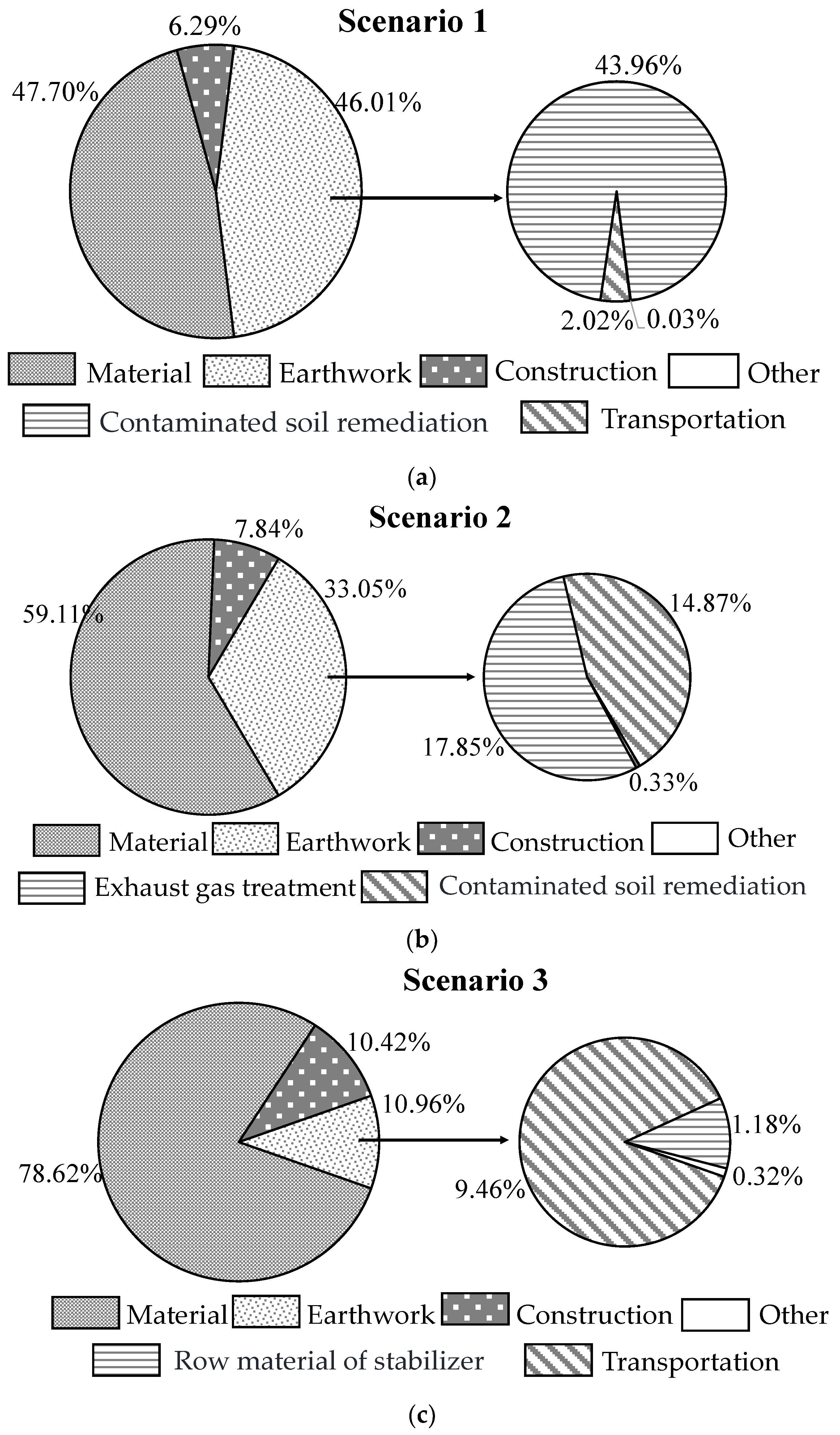
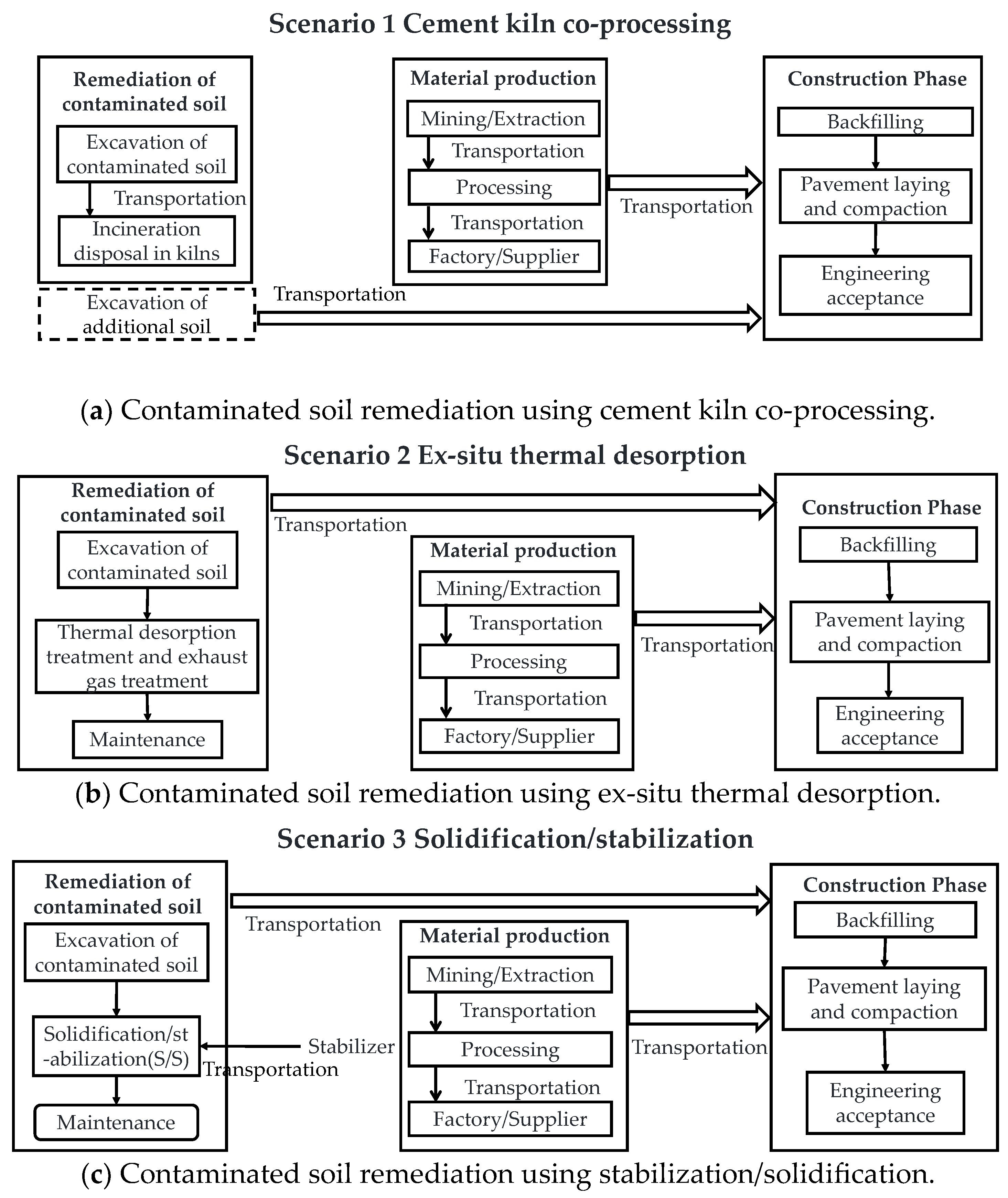
Greenhouse gas emissions induced by climate change have garnered global attention. Minimizing climate change can be achieved through the reduction of carbon emissions in transportation infrastructure construction and in the production of construction materials. This study aims to calculate carbon emissions in three hypothetical construction scenarios based on the life cycle assessment (LCA) method when a roadway passes across polluted soil at contaminated sites. Three methods are employed to remediate contaminated soil: off-site cement kiln co-processing, on-site ex-situ thermal desorption, and on-site ex-situ solidification/stabilization. Carbon emissions are calculated using the LCA method for each scenario. The baseline carbon emission is estimated for the scenario in which contaminated soil is remediated using the off-site cement kiln co-processing method, and the roadway subgrade is constructed using transported clean soil. In the other two scenarios, contaminated soils are remediated using the on-site ex-situ thermal desorption and solidification/stabilization methods, respectively, and then they are reused as roadway subgrade materials. The LCA analyses demonstrate that the total carbon emission reductions range from 1168.48 to 2379.62 tons per basic unit, corresponding to decreased of 19.31% to 39.33%, respectively, compared to baseline. The reuse of solid waste to replace sand and ordinary Portland cement (OPC) as raw materials in roadway construction reduces carbon emissions by 498.98 tons. Finally, a comparison of carbon emissions between the three scenarios indicates that reducing carbon emissions in the remediation of contaminated soil and reusing solid waste as construction materials are two important methods for achieving overall carbon emission reductions in roadway construction projects.
Keywords: life cycle assessment; soil remediation; solid waste; roadway; carbon emission life cycle assessment; soil remediation; solid waste; roadway; carbon emission