Article

How Person–Organization Fit Impacts Work Performance: Evidence from Researchers in Ten Countries during the COVID-19


1
Institute of Education, Nanjing University, No. 163 Xianlin Rd., Qixia District, Nanjing 210023, China
2
Huiyan International College, Faculty of Education, Beijing Normal University, Beijing 100091, China
*
Author to whom correspondence should be addressed.
Sustainability 2023, 15(13), 9866; https://doi.org/10.3390/su15139866
Submission received: 6 June 2023 / Revised: 15 June 2023 / Accepted: 15 June 2023 / Published: 21 June 2023

Abstract

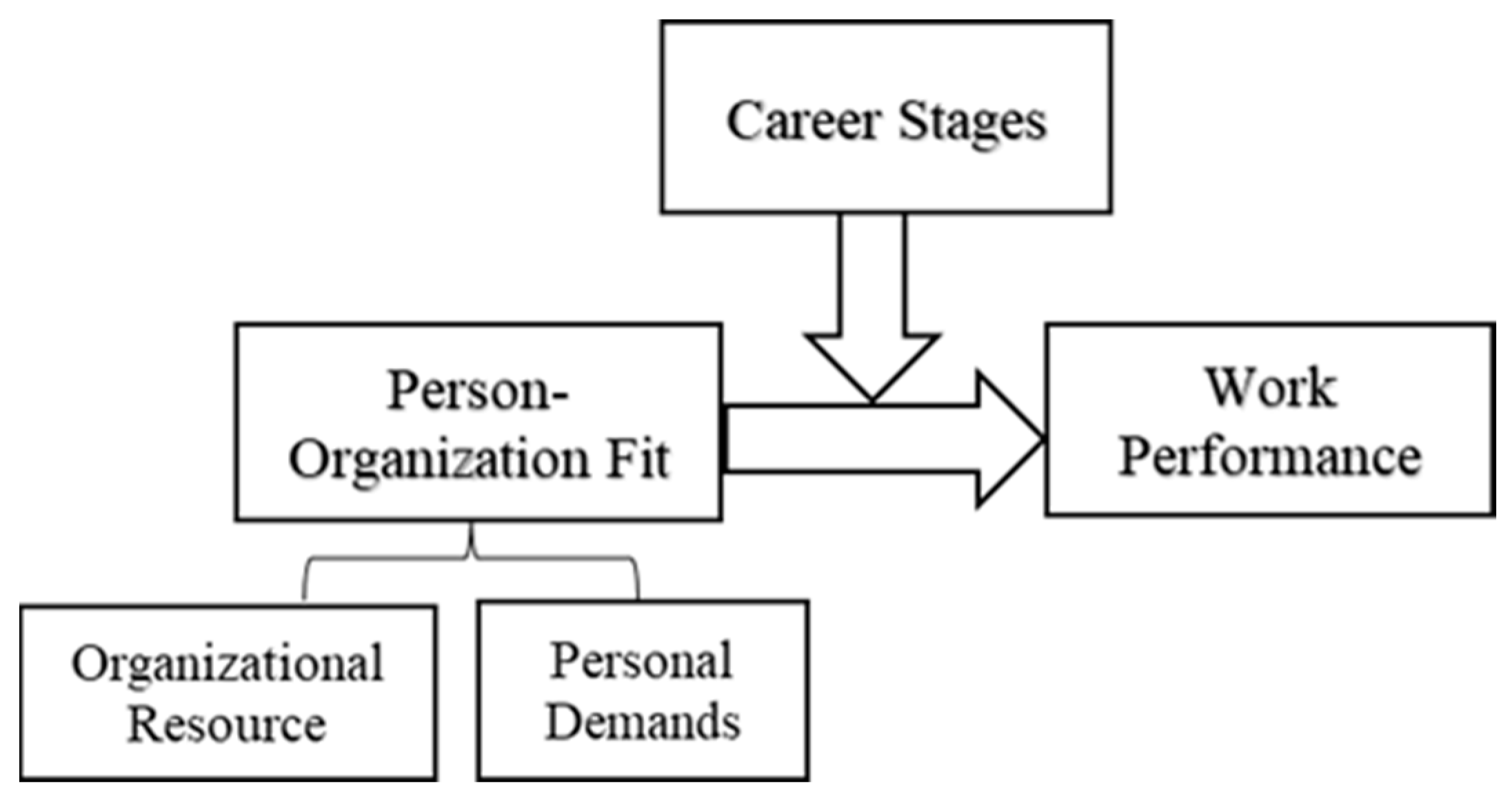
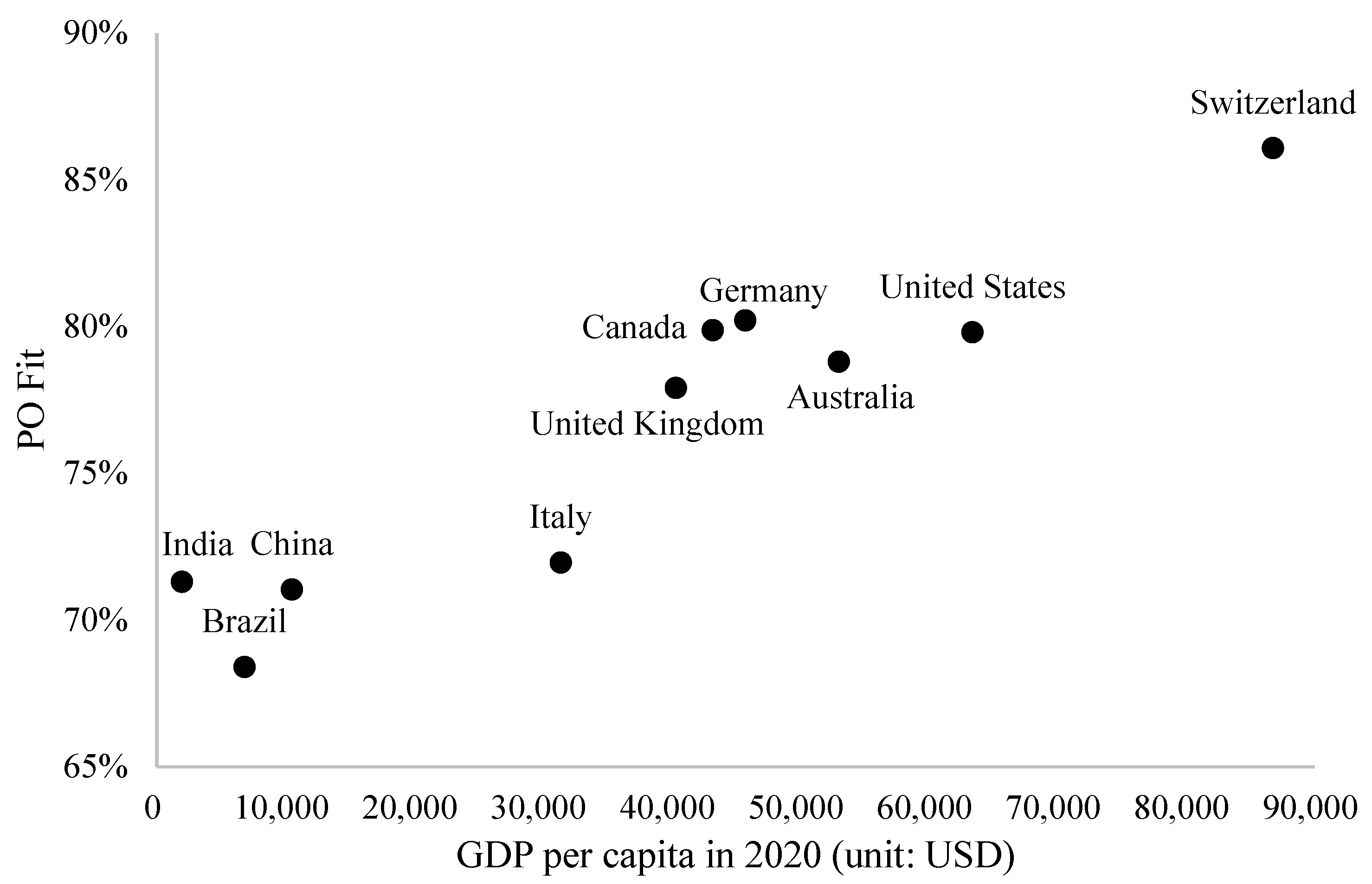
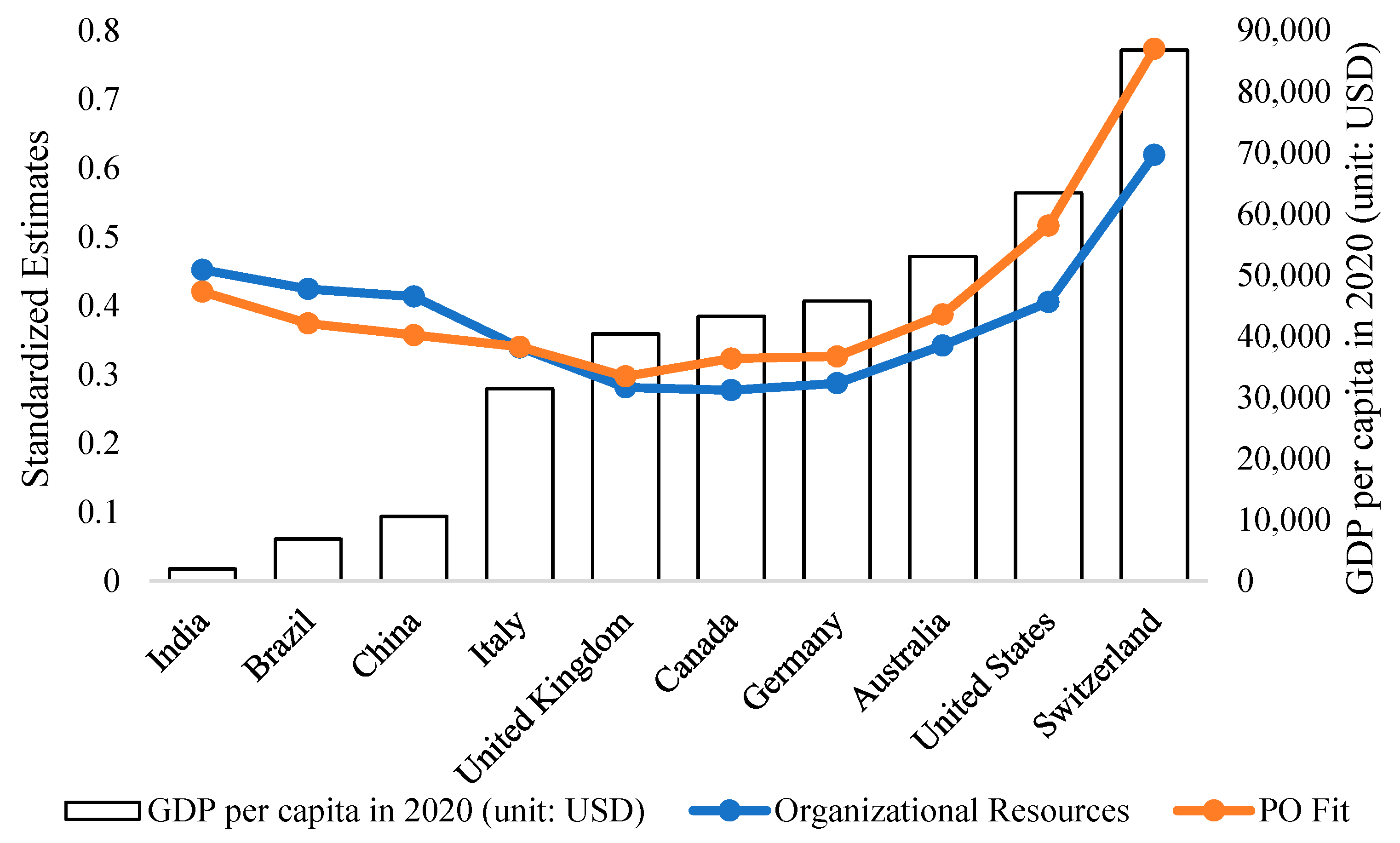
It is important to provide researchers with the support they need to improve the Person–Organization (PO) fit in order to manage the negative impact of COVID-19 on work performance. Underpinned by the PO fit theory, drawing upon the survey data of 2321 researchers from ten countries initiated by Nature in 2021, this paper discusses how the independent variables of person–organization fit and organizational resources impact work performance, a dependent variable, moderated by career stages via a factor and path analysis. The results show that organizational resources and PO fit have significantly assisted researchers in managing the negative impacts of COVID-19 on work performance. In terms of national heterogeneity, for developing countries, it is more important to provide more organizational support to researchers than PO fit. However, for developed countries, personal demands would be focused on improving PO fit, which would be helpful for researchers’ work performance more effectively than providing organizational support blindly. Therefore, in order to improve the efficiency of organizational support, those that fit less but had more helpful aspects should be increased appropriately, while those that fit more but were less helpful should be reduced accordingly. It implies that it would be significant to emphasize differentiated and career-stage-sensitive support to researchers in different countries to improve researchers’ wellbeing and organizational performance.
Keywords: researcher; COVID-19; person–organization fit; work performance; human resource management; higher education researcher; COVID-19; person–organization fit; work performance; human resource management; higher education