Abstract
An accurate calculation of sol-air temperature (Tsol) is very important for urban environments and building energy consumption. There are various methods that can be used to calculate Tsol by considering sky radiation effects. Climate conditions are vital factors affecting sky temperature (Tsky). In this paper, in order to select an appropriate calculation method to determine long-wave radiation, a theoretical analysis was carried out based on the effect of Tsky on the thermal gain of building envelopes due to long-wave radiation. Typical annual meteorological data were selected to calculate Tsol for 10 meteorological stations covering five building thermal zones in China. The application of the Tsol model was studied using MBE as the measurement standard, and a linear regression equation for the calorific value of the envelope obtained via the Tsky estimation method and the Tsky dynamic calculation method was established. The results show that relative humidity is the key meteorological factor that affects the application of the Tsol model and that the Tsky dynamic calculation should be used to calculate long-wave radiation in regions with low relative humidity. A thermal correction equation for buildings was obtained for use in areas lacking meteorological data and to provide a basis for sustainable building design.
1. Introduction
As buildings serve as living and working spaces in various climates, studying the physical laws of the interaction between buildings and natural climates provides a basis for the sustainable development of urban environments [1]. First of all, an evaluation of the cooling energy of buildings needs to consider the heat transport through the building envelope in the transient state, based on the periodic cooling load temperature difference of the walls and roofs. However, the outdoor temperature near a building surface varies significantly throughout the day, depending on various environmental factors and the thermal properties of the surface materials.
To take these parameters into account in the calculation of the environmental temperature and cooling load, the sol-air temperature (Tsol) equation or Stewart’s tabulated total equivalent temperature difference/time averaging (TETD/TA) value was proposed in 1944, and it was later adapted into the ASHRAE Guide and Data Book in 1961 (ASHRAE 1961) [2]. Many existing standards, such as the CIBSE guidelines, define Tsol as a hypothetical external surface temperature index that combines four related variables, namely, short-wave radiation, long-wave radiation exchange, air temperature, and wind speed on the surface of the envelope [3].
Two objects with different temperatures and in close proximity to each other tend to exchange energy via LW radiation (infrared) in order to reach equilibrium. These exchanges happen inside and outside of buildings. It is difficult to study these exchanges, as all surrounding factors must be taken into account, including the sky. These exchanges must be calculated between each and every surface of a building, the temperature and emissivity of which must be known. Moreover, these calculations are complicated by the surface temperature having an exponent of 4. Infrared calculations thus require the thermal calculation of a larger system and the introduction of non-linear terms; therefore, a simplified solution has been proposed [4].
Based on the building location, it is possible to define the climatic area and, consequently, identify a suitable correlation. ASHRAE proposed a simple correlation, assuming a difference between sky and ambient temperatures equal to 6 °C [2]. Considering the heat transfer between a building and the environment, ISO 13790 allows for the calculation of the temperature of the sky. If the sky temperature calculation is not available, the equations listed in Table 1 can be used. ISO 13790 provides a simplified computation for determining the annual energy requirements for heating in residential and non-residential buildings.
Table 1.
Direct models according to ISO 13790 [5].
To provide guidance for the thermal design of civil buildings, the thermal design code for civil buildings (GB 50176-2016) proposed calculations and specified values [6] Due to the lack of sky radiation data in most parts of China, it is difficult for most architects to master the complex calculation of long-wave radiation. It takes the minimum limit index of thermal design as the calculation target and proposes a model, as shown in Equation (1), which considers the total solar radiation and the outdoor dry ball temperature, ignoring long-wave radiation and ground short-wave radiation.
Many scholars have studied the influence of meteorological factors on building load. Lauzet’s [7] research shows that, without considering the urban context and climate, 15–89% of heating energy consumption is ignored, and 131–200% of cooling energy consumption is ignored. Jian Hang [8] used scale experiments to compare surface temperature, air temperature, albedo, and SEB components in deep and shallow valleys under clear, partially cloudy, and cloudy sky conditions in a humid subtropical climate. Sky conditions had a significant effect on diurnal variations in the surface temperatures of street canyons. The temperatures of different canyon surfaces peaked at similar times under partially cloudy sky conditions, while they peaked at different times under clear sky conditions. Luca [9] assessed the impact of sky temperature under different climatic conditions on energy demand for building years. It was found that the annual energy demand for heating and cooling was affected significantly, ranging from −10% to + 19% in a tropical climate, from −10% to + 13% in a dry climate, from −19% to + 28% in a mild climate, and finally from −43% to + 83% in snow conditions.
The sensitivity of the sky temperature to building energy requirements and climatic factors suggests that there are large differences between clear sky and cloudy conditions. The clearness index can be regarded as an indicator of cloud cover. Due to the influence of geographical latitude, altitude, the terrain barrier, and other factors in western Inner Mongolia, eastern Xinjiang, the western Qinghai–Tibet Plateau, and other inland areas, the annual amount of water vapor available is very small, and precipitation is scarce, so the total monthly clear sky index remains high throughout the year [10]. Liu studied the sky temperature related to long-wave radiation heat transfer [11]. According to the monthly average data of 82 stations in China from 1960 to 1970, the sky temperature at each station and its differences from the air temperature were calculated. The results of Tsol model calculations that ignore the effect of sky radiation will be biased in areas with strong sky radiation [12].
Parameters such as the reflected radiation intensity and the ground blackness coefficient in the above model need to be accurately measured after the building is completed; therefore, the model is not conducive to thermal design. Many researchers have determined the external surface temperature of the envelope under the influence of long-wave radiation by means of actual measurements and thermal analyses [13,14]. Simulation tools adapted to long-wave radiation calculations have been proposed. Conductive heat gains and losses through building envelopes are transient in nature because of the dynamism associated with hygro-thermal boundary conditions. Simulation analyses have become the main research method used in this field, as well as multi-software comparative analyses of the sensitivity of climate parameters and outdoor environmental differences to long-wave radiation impacting building load [15,16,17].
It can be seen that this link between sky radiation and Tsol is only examined in a few research projects, and there are even fewer dynamic comparisons of Tsol in different climate regions in China.
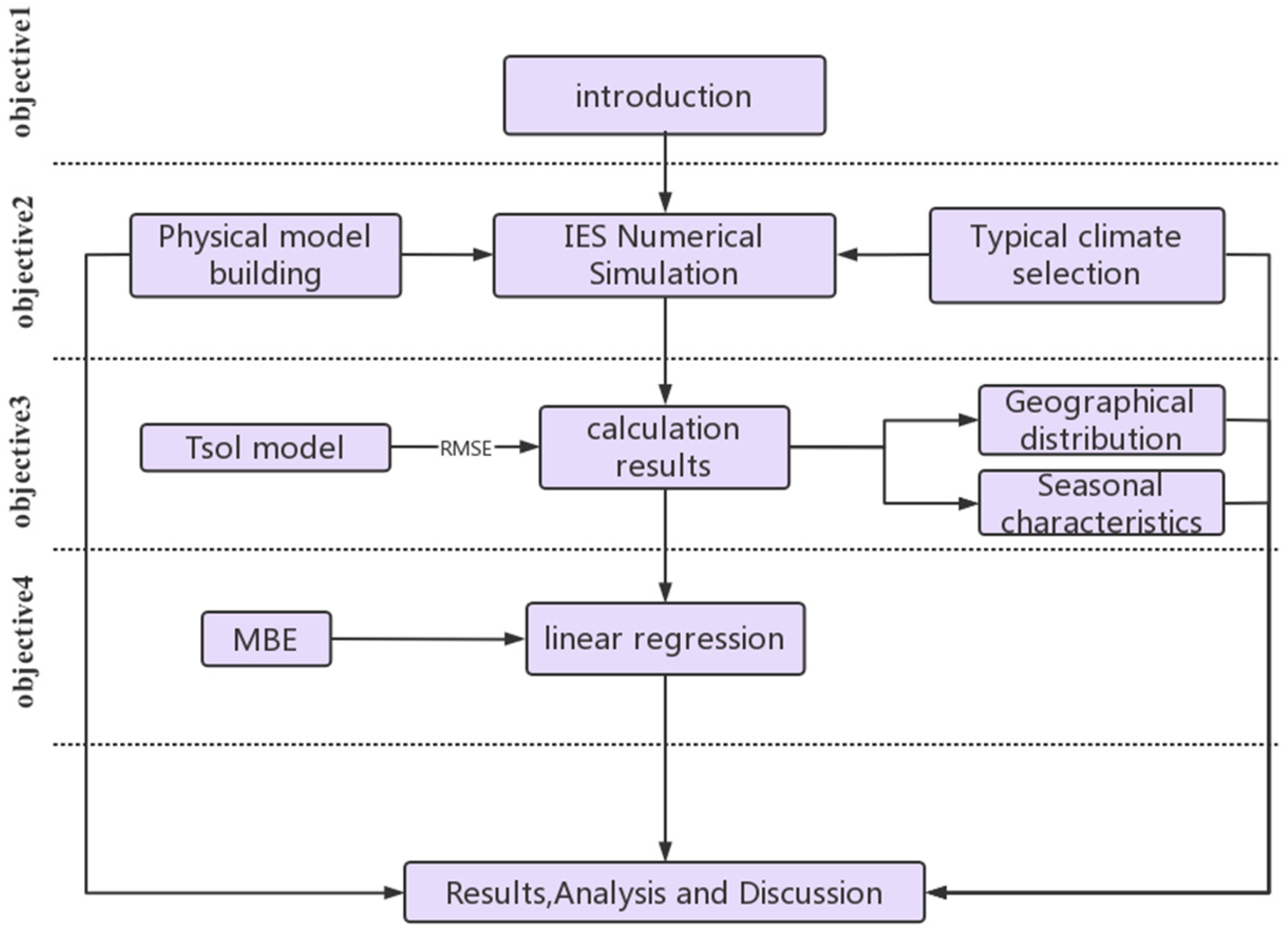
In this paper, a dynamic calculation method for the sky temperature is introduced by examining the heat gain of a building in a simulation in order to evaluate the impact of long-wave radiation on building heat gain in different climatic regions, and a regression model for long-wave radiation estimation is established to provide a reference for the thermal design of the envelope and a calculation for the energy saving of a building under different climatic conditions, as shown in Figure 1.
Figure 1.
Technical roadmap of this study.
To this end, this paper is organized as follows: Section 2 presents the methodology used in this study and illustrates the model used for the simulations. Section 3 compares the calculation results of long-wave radiation in different climatic regions. Section 4 adjusts the numerical solution model. Finally, Tsol is calculated and evaluated in different scenarios.
2. Long-Wave Radiation Calculation and Data Analysis Methods
The Tsol models are divided into two categories according to the influence of model accuracy on actual load and the calculation parameters: is the simplified Tsol model adopted by the current code for the purpose of convenient in actual engineering, other is a long-wave radiation Tsol model with a higher accuracy considering long-wave radiation heat transfer.
2.1. The Simplified Tsol Model
design code for civil buildings (GB 50176-2016) [6] proposes an equivalent temperature value that increases the solar radiation the outdoor air temperature for the convenience of calculation. The calculation formula ignores the ground-reflected radiation and the atmospheric long-wave radiation heat transfer, is shown Equation (1):
where Tsol is -air temperature, °C; is the outside air temperature, °C; is the solar irradiance projected on the external surface of the building envelope, ; is the solar radiation absorption coefficient of the external surface; is the external surface heat transfer coefficient, .
2.2. The Simplified Sky Temperature Calculation
A simplified calculation method for estimating the sky temperature is derived from the radiation and heat balance relationship between the air near the ground and the atmosphere, is defined as Equations (2) and (3):
where is the air temperature at 1.5~2.0 m from the ground, K; is the emissivity of the air near the ground, which can be calculated with ; is the air dew point temperature near ground, °C.
2.3. The Dynamic Sky Temperature Calculation
For short- or metered long-wave radiant heat, the surface temperature should be used as the calculation parameter. According to the observation data of the ground radiation balance of a meteorological station, the value of Tsky can be calculated. Various formulas have been proposed to estimate the long-wave radiation emitted downward by the atmosphere and upward by the ground.
Some researchers have carried out statistical on the long-term observation data of 82 meteorological stations in China and Equation (4) the temperature, fits well with the measured data [14]:
where is the surface temperature, K; is the air temperature at 1.5~2.0 m from the ground, K; is the partial pressure of the water vapor in the air near the ground, mbar; and is the sunshine rate, that is, the ratio of actual sunshine hours to possible sunshine hours for the whole day.
Considering the diurnal difference caused by the influence of cloud cover on the insolation rate, the long-wave irradiance of the atmosphere on the horizontal plane during the day [18] is written as Equation (5):
where is the daytime sky radiation on a horizontal surface, W/m2; is the Stefan–Boltzmann constant, 5.67 × W/(m2K4); is the air temperature, K; is the water vapor partial pressure, hPa; and is the hourly sunshine rate. is replaced by at night, where is the hourly cloud cover. Since the value is not stable during the first and last hours of the day, these two hours are considered nighttime periods.
2.4. Methods for Statistical Data
between the calculation results of the simplified model and the long-wave radiation model , and Root Mean Square Error (RMSE) and Mean Bias Error (MBE) to determine applicability. The influence of meteorological factors on the ’ adaptability was analyzed using the correlation coefficient (Pearsons r). A linear regression equation long-wave radiation estimation and the calculation results of dynamic method established based on the results of the dynamic calculation of the temperature. coefficient of determination () and the standard error of the regression line (STE) were used to evaluate the calibration equation.
2.5. Overview of the Study Area
In order to adapt the thermal engineering design of a building to the regional climate and to ensure the basic indoor thermal environment requirements, the building energy-saving design standards put forward the limit requirements of the prescribed indicators according to different climatic regions. The model mainly involves the insulation characteristics of winter and summer. This paper selects 10 typical cities for the analyses, namely, Harbin, Xining, Turpan, Lhasa, Shanghai, Chongqing, Guangzhou, Yuanjiang, Guiyang, and Kunming, as shown in Table 2. The selection principle is mainly to select typical cities that cover all five thermal zones in China and that are located in different climate zones with different degrees of dryness and humidity.
Table 2.
Outdoor climatic parameters of each region [19].
3. Long-Wave Radiation Impact Analysis
3.1. Typical Daily Calculation
According to the simplified model (Equation (1)) and the long-wave radiation model (Equation (2)), the air temperature estimation method is used to determine the long-wave radiation in order to calculate the hourly values of in winter and summer, and the meteorological parameter data are typical meteorological year data in Chinese Standard Weather Date (CSWD) format [20]. The external surface heat transfer coefficient is 23 in winter and 19 in summer, and the solar radiation absorption coefficient of the external surface is 0.74.
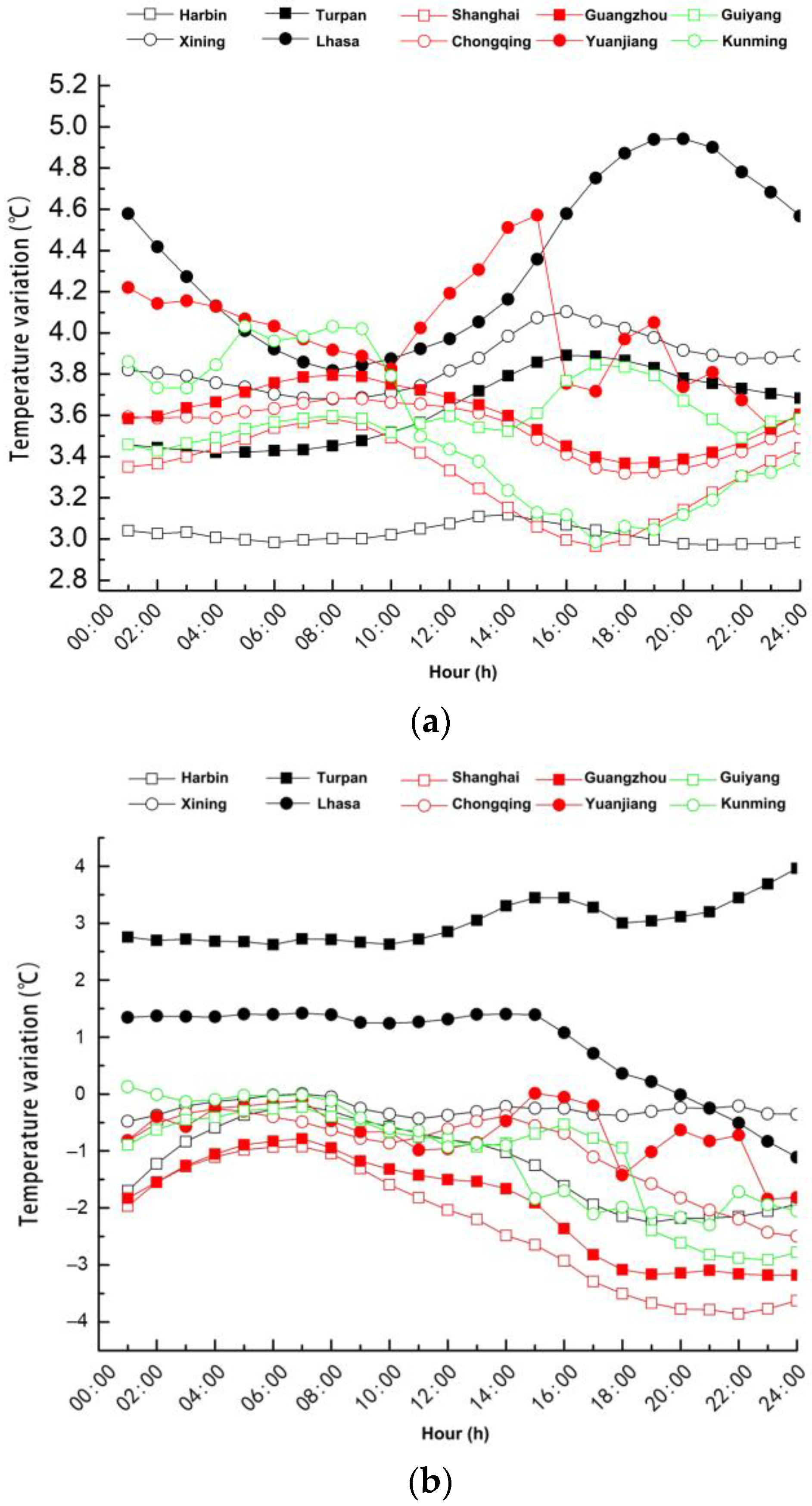
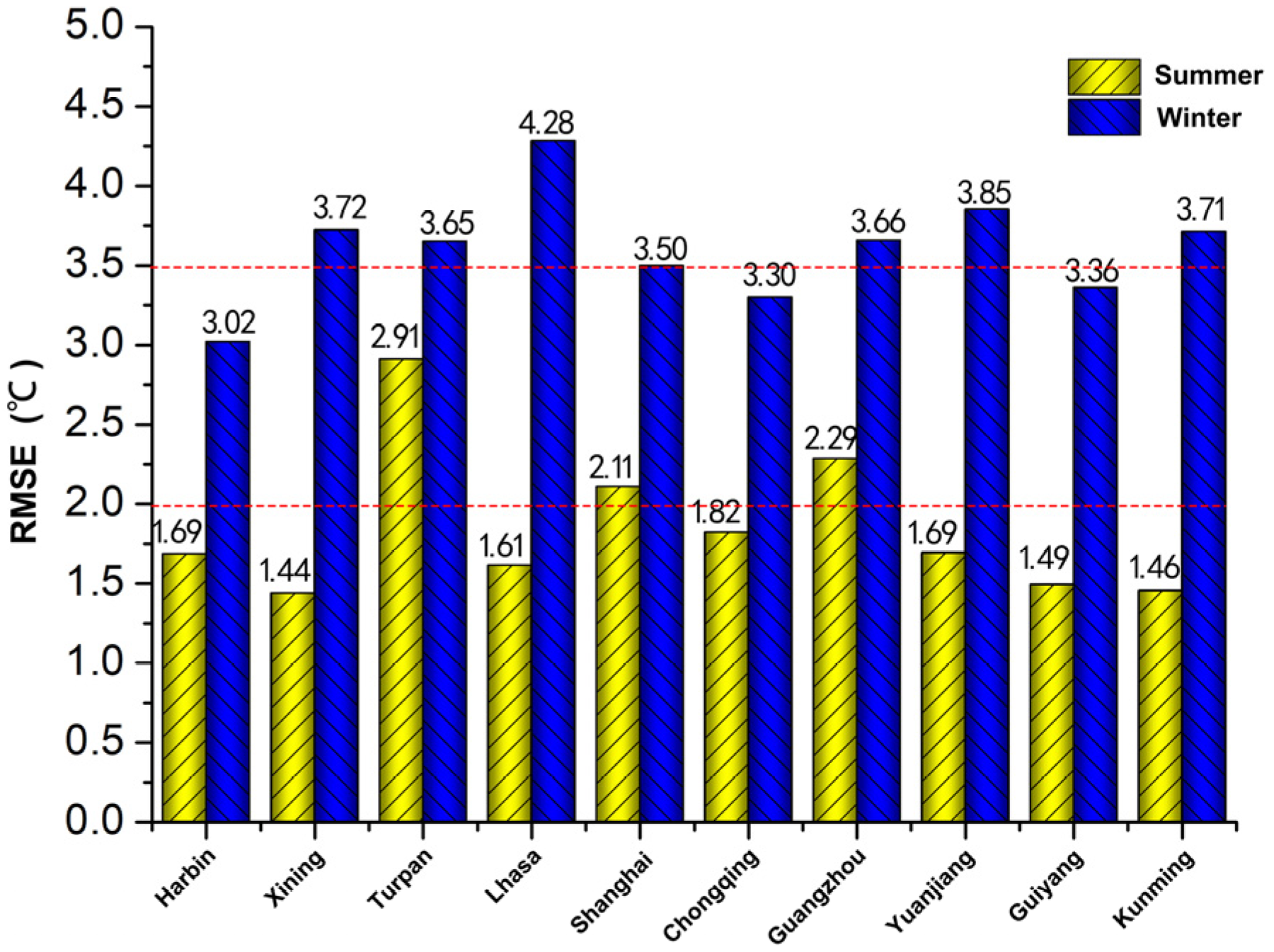
The calculated value of the long-wave radiation model is set to the base value, and the Mean Bias Error (MBE) of the simplified model for each city is calculated, as shown in Table 3. A typical day in summer (July 22) and a typical day in winter (January 22) are selected to analyze differences hour by hour, as shown in Figure 2. The Root Mean Square Error (RMSE) is used as the evaluation index to analyze the applicability of the simplified model under various climatic conditions, as shown in Figure 3.
Table 3.
The MBE of model in each station (°C).
Figure 2.
(a) Temperature variation values of sol-air temperature model on a typical day in winter. (b) Temperature variation values of sol-air temperature model on a typical day in summer.
Figure 3.
RMSE of sol-air temperature model.
It can be seen in Table 3 that, compared with the long-wave radiation model, the simplified model overestimates the winter value overall (3.01 °C ≤ MBE ≤ 4.26 °C), because the formula does not take into account long-wave radiation cooling, so the calculated value is generally high. However, in summer, the simplified model generally underestimates (−1.58 °C ≤ MBE ≤ 2.73 °C) at all stations, except for the Xining, Turpan, and Lhasa stations. This is because the long-wave radiation model uses the air temperature estimation method to calculate the long-wave radiation. Affected by the relative humidity, the long-wave radiation value of the building envelope is lower than the calculated value of the sky long-wave radiation. In summer, the long-wave radiation cooling effect of the building envelope coupled with the low relative humidity is significant.
In Figure 2a, it can be seen that the simplified model overestimates all of the values of a typical day in winter. The temperature difference ranges from 2.96 to 4.94 °C, the daily fluctuation of the temperature difference is small (0.14 to 1.12 °C), and the mean value of the difference at each station is relatively similar (3.02 to 4.34 °C). The temperature differences of the models in Lhasa, Xining, Turpan, and Harbin are relatively high from 12:00 to 22:00. Among them, the temperature difference of the model is the largest in Lhasa at night, while in the other areas, the temperature difference shows a decreasing trend from 12:00 to 22:00. This is because a clear sky at night is more similar to a theoretical black body than a cloudy sky, so a clear sky at night can act as a good absorber of radiant heat and cause the temperature of the structure to drop significantly. It is worth noting that the temperature difference of the model in Harbin is smaller than that in areas with high outdoor temperatures; that is, the temperature difference of the model is not consistent with the thermal zone in winter.
In Figure 2b, it can be seen that, in summer, the simplified model underestimates the (−3.86~3.96 °C) of all regions, except for Turpan and Lhasa. The daily fluctuation of the temperature difference is larger in summer than in winter (0.48~2.93 °C). The temperature differences of the models show the same overall downward trend from 8:00 to 24:00. Among them, the nocturnal temperature differences in Shanghai and Guangzhou are the highest at −3.86 and −3.18 °C, respectively, and the average temperature difference in the other regions is around −1 °C. The average temperature differences in Turpan and Lhasa are 3.02 and 0.83 °C, respectively, among which, the temperature difference in Turpan reaches a maximum of 3.96 °C at night; this means that long-wave radiation has an obvious cooling effect at night in Turpan.
Overall, in areas with high humidity, the calculated via the simplified model is overestimated in winter and underestimated in summer. In winter, the calculated value of the simplified model is 3.01~4.26 °C higher. Therefore, when calculating the heating load of buildings in winter, there will be adverse effects, especially in Lhasa, Xining, and Turpan, and the nighttime value will be quite different from the actual value. Considering the small differences in the MBE of the winter models at different stations, it is recommended to correct the value by 3∓4 °C when using the simplified model to calculate the heating load. The MBE of the summer models at most stations is about −1 °C, which has little impact on the calculation of the cooling energy consumption of air conditioners. The calculated values of the simplified model at night in Shanghai and Guangzhou are relatively low, but the thermal insulation design of the envelope is limited by the maximum outdoor temperature. Therefore, the temperature differences of the nighttime model have relatively little effect on thermal insulation design, and it is safe for thermal insulation design that the calculated value of the simplified model in summer is relatively large. The MBE in the Turpan area reaches 2.73 °C in summer, so the influence of long-wave radiation should be fully considered in thermal insulation design.
3.2. Model Applicability Analysis in Winter and Summer
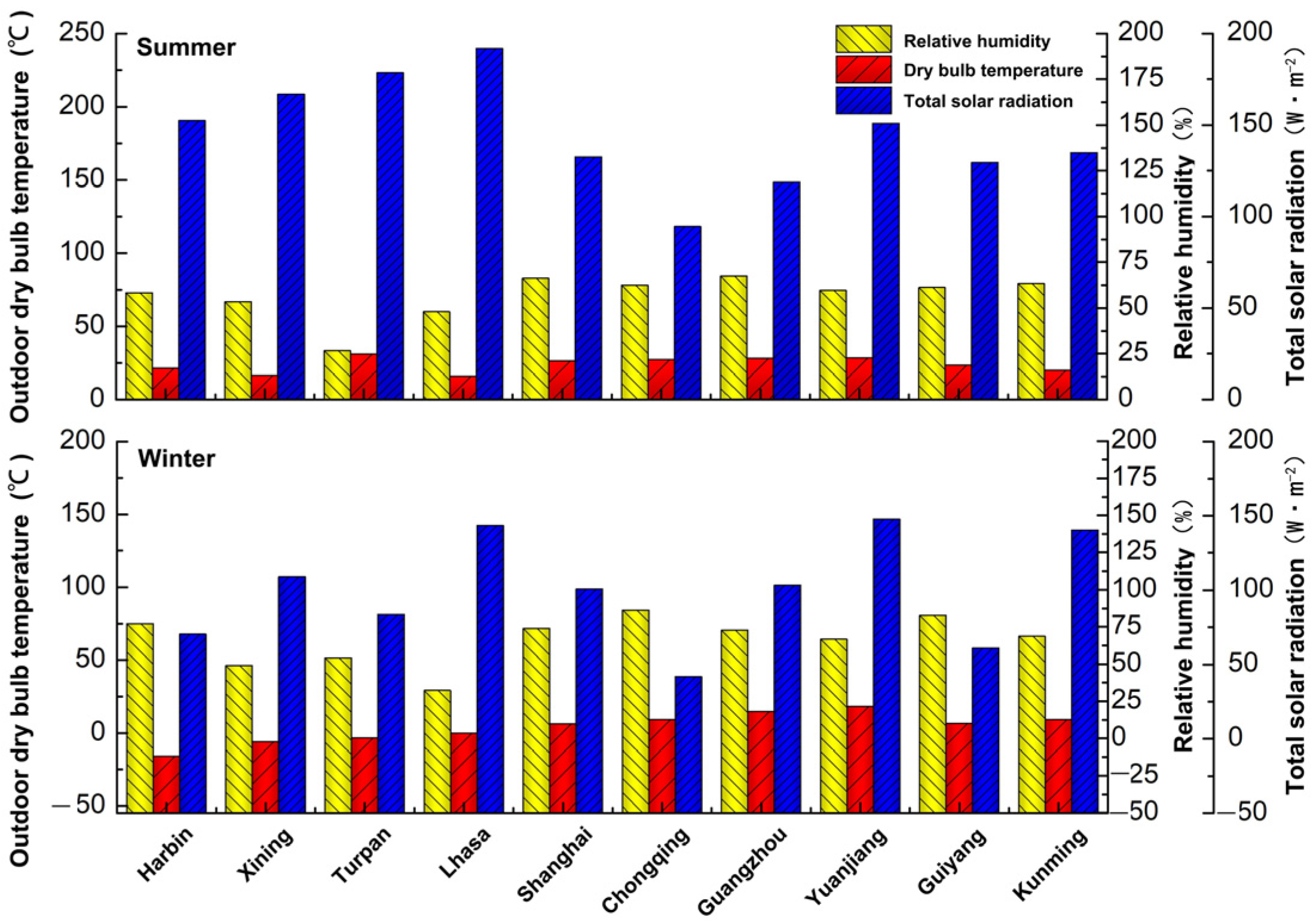
Taking the Root Mean Square Error (RMSE) as the evaluation index, the models of ten stations are selected for an applicability analysis, as shown in Figure 3. Based on a comparison of the total solar radiation, relative humidity, and the average outdoor dry-bulb temperature in winter and summer at each station, Pearson coefficients of climatic factors are shown in Table 4, Table 5 and Table 6, the key climatic factors affecting the model selection are analyzed, as shown in Figure 4.
Table 4.
Annual Pearson calculation.
Table 5.
Results of the Pearson calculation in summer.
Table 6.
Results of the Pearson calculation in winter.
Figure 4.
The mean values of meteorological parameters in winter and summer.
The calculation results of the simplified model and the long-wave radiation model are relatively similar in summer. Among them, Turpan, Shanghai, and Guangzhou have higher RMSE values than the other regions (1.44 °C ≤ RMSE ≤ 2.91 °C). The simplified model in Harbin, Shanghai, Chongqing, and Guiyang has a high calculation accuracy in winter, and the RMSE is less than 3.5 °C. Overall, all of the regions, except for Harbin and Guiyang, should use the long-wave radiation model for calculation, especially Turpan and Lhasa, as the simplified model will produce values that largely differ from those of the actual situation.
The reason for the difference in the RMSE values at each station is related to the calculation of long-wave radiation for each meteorological parameter. Figure 4 shows the outdoor dry-bulb temperature, total solar radiation, and outdoor relative humidity of the 10 typical cities in winter and summer. The correlation coefficients for the winter RMSE are 0.30, 0.80, and −0.82, respectively, and the correlation coefficients for the summer RMSE are 0.74, 0.07, and −0.52, respectively.
The F value of the dry-bulb temperature is much greater than 1 in winter, so the null hypothesis can be rejected. The ability of the independent variable to explain the dependent variable is 73.3%. The summer relative humidity values have the highest F values, so the null hypothesis can be rejected. Small residuals between the heat exchange, good fitting, and high interpretation can allow for the prediction of the building radiation heat exchange using statistical methods.
4. Analysis of the Influence of Climate on Building Heat Gain
The long-wave radiation calculation values discussed above are obtained using the air temperature estimation method, which does not consider the influence of the insolation rate or cloud cover on the heat gain of a building. In order to propose a simplified calculation method of long-wave radiation suitable for different climatic regions, the F test is carried out on the annual heat gain of the buildings, which is calculated using the estimation method at each station based on the results of the dynamic calculation. A regression equation for sky temperature estimation and the calculation results of the dynamic method are established, and the applicability of the simplified long-wave radiation calculation method is analyzed using STE as the judgment index.
4.1. Model Settings
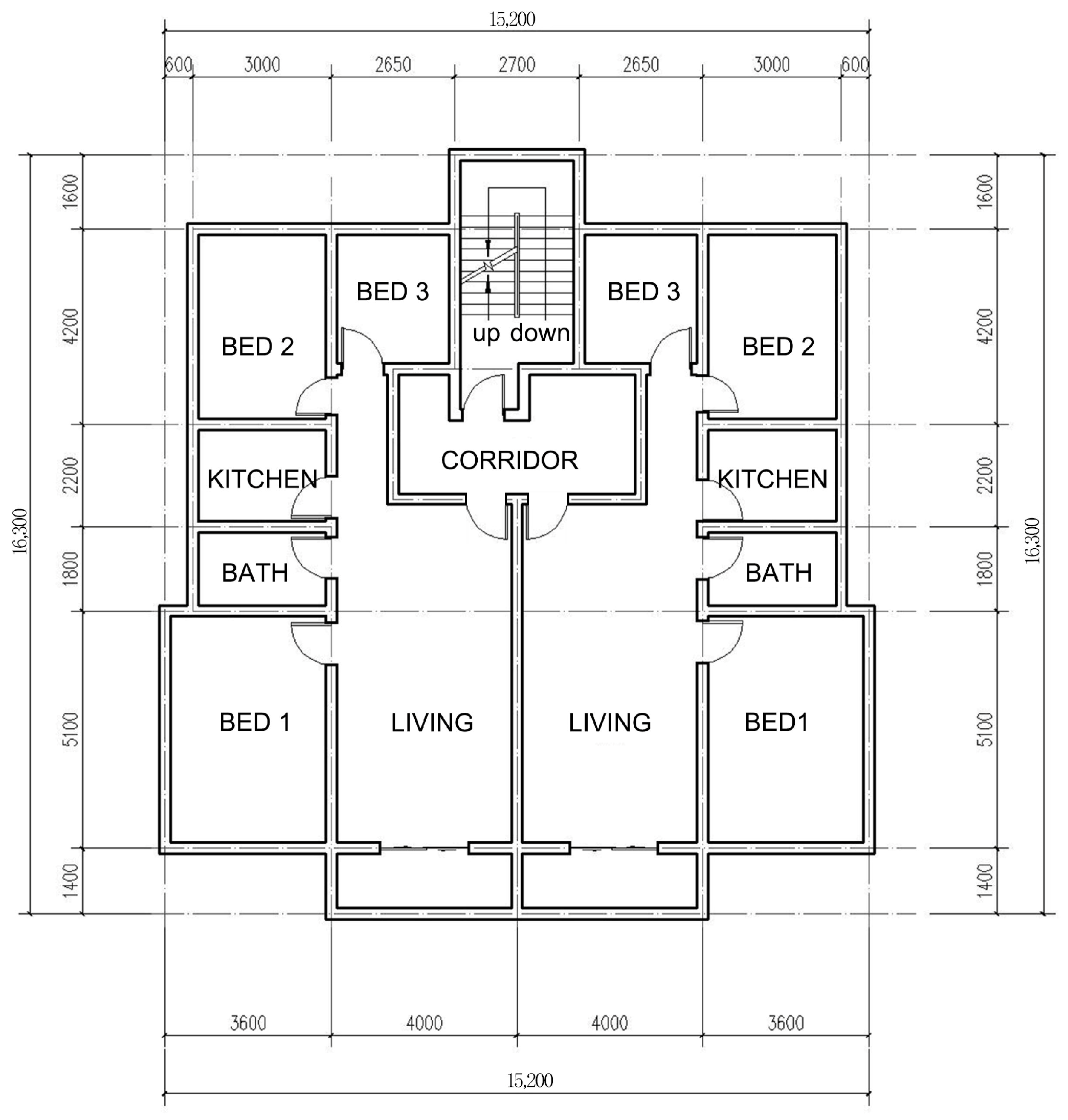
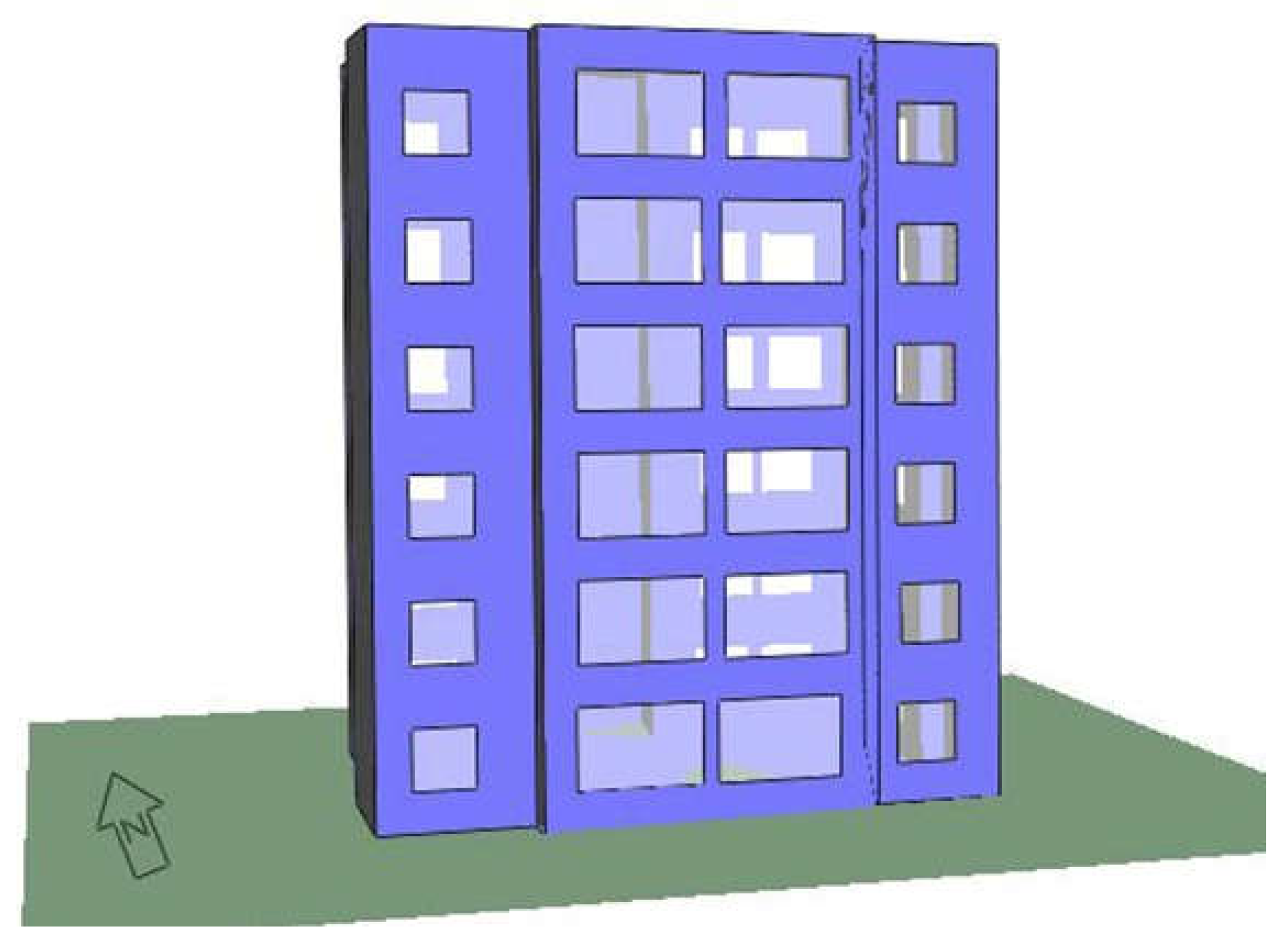
The Apache Sim anisotropic solar radiation model is selected, and the temperature of the building is determined before the simulation. There are 10 preprocessing days, direct shading and internal sun tracking are calculated using Sun Cast, the number of time steps is set to 10 min, and the average output time interval of the results is 60 min [2]. A typical multi-story residential building is used as a geometric model to analyze and calculate the heat gain of the envelope. A standard floor plan of such a building is shown in Figure 5. The total height of the building is 18.8 m, and the shape coefficient is 0.28. The long-wave radiation rate of the roof is 0.9, and the solar radiation absorption coefficient is 0.7. The long-wave radiation rate of the exterior wall is 0.9, and the solar radiation absorption coefficient is 0.5. The geometric model used for calculation is shown in Figure 6.
Figure 5.
Typical floor plan of simulated building.
Figure 6.
Simplified building mode.
4.2. Heat Gain Analysis of the Envelope
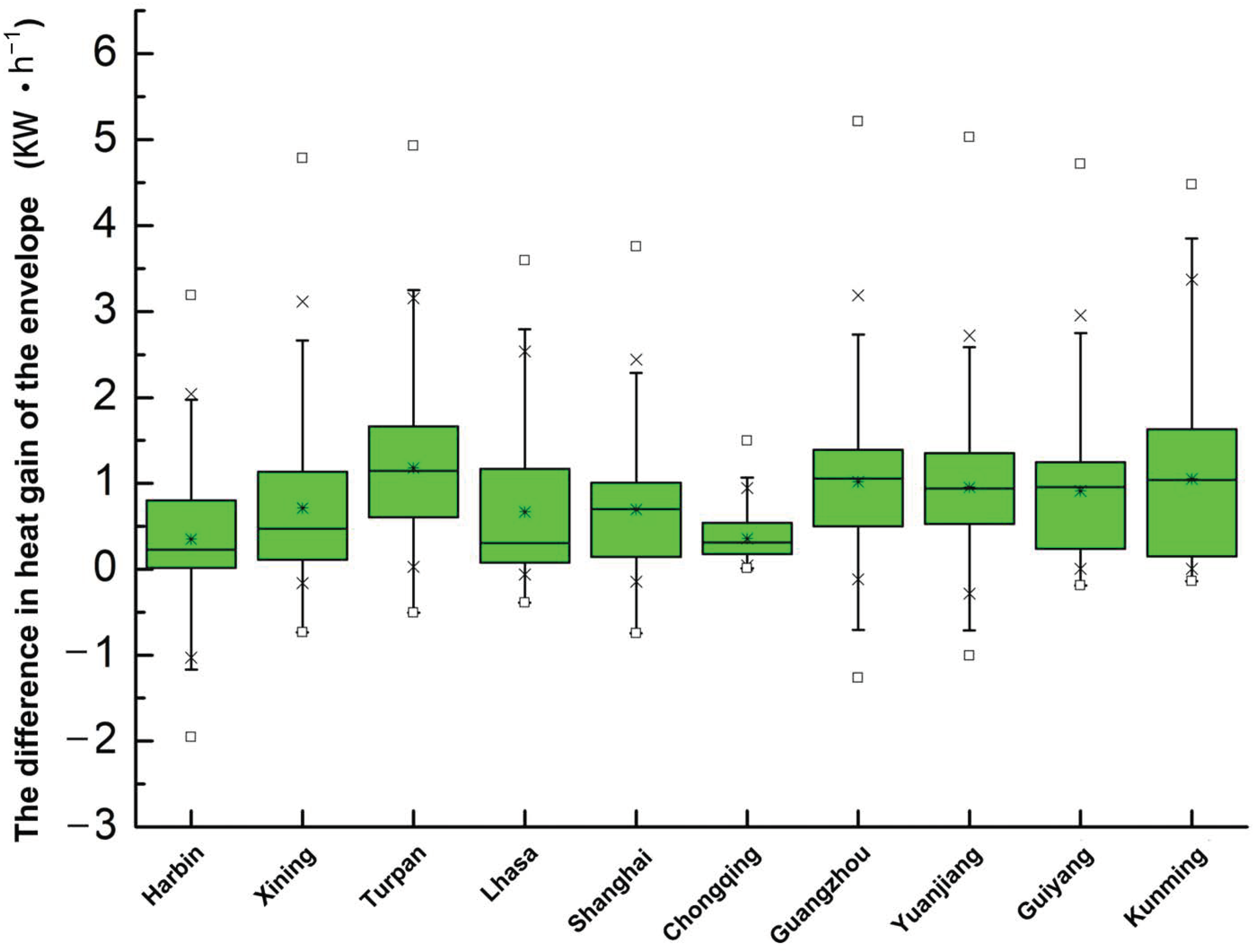
The heat gain of the envelope determined using the dynamic method is set to calculate the long-wave radiation as the base value, and the hour-by-hour difference is analyzed for the whole year for each station using the estimation method, as shown in Figure 7.
Figure 7.
The difference in the heat gain of the envelope.
The F test is carried out on the heat gain determined using the estimation method and the dynamic calculation. The results show that the p values are less than 0.05, except for at the Harbin station; that is, there is a significant difference between the estimation method and the dynamic calculation. When the building heat gains need to be calculated accurately, the estimation method cannot be used to calculate the sky temperature. It can be seen in Figure 7 that the medians of the differences in Harbin, Xining, Lhasa, and Chongqing are relatively low, 0.23, 0.47, 0.30, and 0.31 kW/h, respectively. The medians of the differences in Turpan, Guangzhou, and Kunming are all higher than 1 KW/h. The annual difference in the Chongqing area has the smallest change (Q3 − Q1 = 0.36 kW/h), while the annual difference is relatively high in Kunming (Q3 − Q1 = 1.48 kW/h).
4.3. Correction Equation for Building Heat Gain Calculation
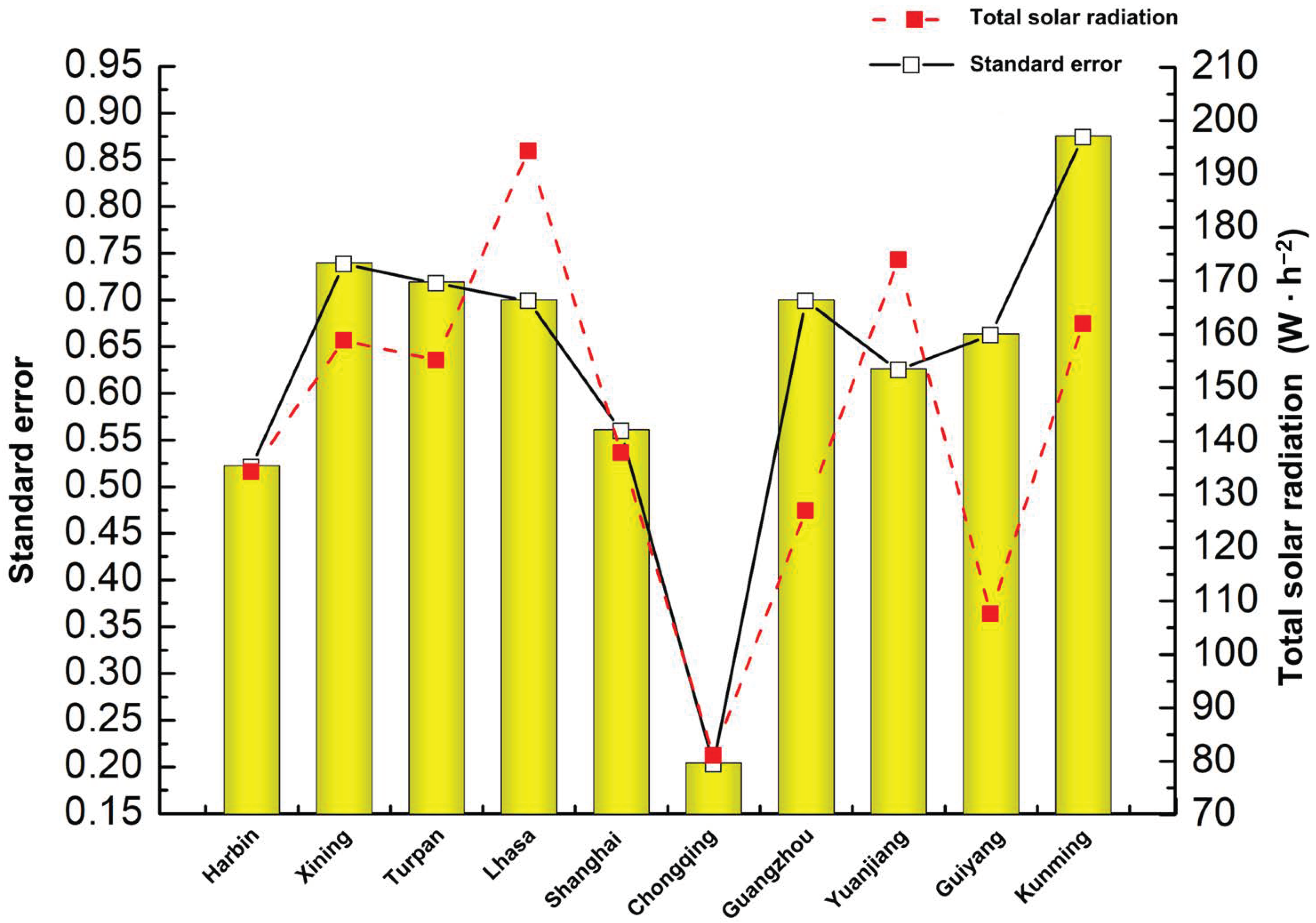
The calculation results of the long-wave radiation estimation method and the dynamic method at each station are fitted, as shown in Table 7. The fitted equations are evaluated using R2 and STE, as shown in Figure 8.
Table 7.
The regression equation of long-wave radiation heat transfer at each station.
Figure 8.
Standard error of regression line.
As shown in Figure 8, the R2 of the linear regression equations of the long-wave radiation estimation method and the dynamic method are above 0.99 for all areas, except for Guangzhou and Kunming. The statistical test results of the fitting equation are all p ≤ 0.01, and the fitting results are good (0.2 ≤ STE ≤ 0.88). The lower the total solar radiation, the smaller the STE. When the long-wave radiative heat gain needs to be accurately calculated in areas where outdoor meteorological parameter data are lacking, the appropriate equation of the air temperature estimation method should be used.
5. Conclusions
The long-wave (LW) radiation exchange with the sky and surrounding surfaces depends on the form factors, temperature, and emissivity of a building’s surfaces, as well as those of the surrounding buildings. Most of the current studies are based on thermal equilibrium studies with ideal conditions, ignoring the urban environment and building surfaces with the same temperatures. When considering the local microclimate and heat exchange flux between a building and its surrounding environment, it should be noted that the geometric features are more complex in urban environments. First, surrounding buildings create a shadow effect that reduces the surface temperature from solar radiation during the day. Second, the reduction in the sky perspective factor caused by building density limits the radiation cooling of the sky. There are also secondary reflections of long-wave radiation that interact with each other depending on the layout of adjacent buildings. Third, the local air flow transformation of buildings caused by urban forms has an impact on long-wave radiation heat transfer. That is, the building layout is one of the reasons for the gap between the building performance and the measured performance.
Aysan [13] considers the long-wave radiation heat transfer between the external surface of the envelope and the surrounding environment and the long-wave radiation heat transfer between the external surface of the envelope and the sky atmosphere separately, and they also consider the reflected radiation in the total solar radiation intensity. The calculation results show that the exchange process of urban surfaces under different microclimates is strongly influenced by the characteristics of the surface and the urban configuration. In this pattern, experimental and computational results are presented demonstrating the impact of the geometry of the inner courtyard and the covering materials on the thermal condition near the building envelopes and, consequently, on .
Therefore, when simulating the heat and mass flow in and around a building caused by long-wave radiation in different climate regions, the influences of the local microclimate and adjacent buildings should be considered to accurately predict the energy performance of the building using the model. The conclusions obtained should be limited to the author’s example and should not be extended.
Through a comparative analysis of the models and their long-wave radiation calculation methods under different climatic conditions, the following conclusions are drawn:
- In areas with high relative humidity, the simplified model has higher values in winter and lower values in summer. When calculating the heating load in winter, each station should be corrected by 3~4 °C. In the summer in Turpan, the calculated value is conservative, and the long-wave radiation effect at night should be fully utilized for thermal insulation design.
- Except for in Harbin and Guiyang, the long-wave radiation model should be used in all areas, especially in Lhasa and Turpan; there will be large errors in calculating when using the simplified model.
- The relative humidity is a key meteorological factor affecting the applicability of the model in summer; in areas with higher relative humidity, the simplified model is more suitable. When the air temperature is used to estimate the long-wave radiation in winter, the emissivity of the air near the ground should be corrected for application in different climatic regions and seasons.
- When calculating the long-wave radiation, the air temperature estimation method can be used in Harbin and Chongqing, but the dynamic calculation of the sky temperature should be adopted in the other areas. When the long-wave radiation heat transfer needs to be accurately calculated in areas where the outdoor meteorological parameter data are lacking, the appropriate equation of the air temperature estimation method should be used.
In this study, the long-wave radiation heat transfer is determined by using the calculation parameters and the sky temperature with higher precision to conduct calculations and simulations, and the correct equation for the air temperature estimation is obtained. A correction method and a theoretical basis are provided for the regions where the accuracy of the long-wave radiation heat transfer calculation needs to be high. In future research, we will focus on areas where the standard error of the regression equation is large, and we will determine appropriate correction coefficients using actual measurements combined with dynamic simulation methods so as to provide a simpler and more accurate calculation method for practical engineering applications.
Author Contributions
Conceptualization, J.C.; methodology, J.C.; software, J.C.; validation, J.C.; formal analysis, M.W.; investigation, J.C.; resources, J.C.; data curation, J.C.; writing—original draft preparation, J.C.; writing—review and editing, J.C. and Y.F.; visualization, J.C.; supervision, J.C.; project administration, J.C.; funding acquisition, Y.F. All authors have read and agreed to the published version of the manuscript.
Funding
This research was funded by the National Natural Science Foundation of China, grant number no. 52178020.
Institutional Review Board Statement
Not applicable.
Informed Consent Statement
Not applicable.
Data Availability Statement
Data will be made available on request.
Conflicts of Interest
The authors declare that they have no known competing financial interests or personal relationships that could have appeared to influence the work reported in this paper.
References
- O’Callaghan, P.W.; Probert, S.D. Sol-air temperature. Appl. Energy 1977, 3, 307–311. [Google Scholar] [CrossRef]
- ASHRAE. ASHRAE Guide and Data Book: Fundamentals and Equipment; American Society of Heating and Air-Conditioning Engineers: Atlanta, GA, USA, 1961. [Google Scholar]
- Elangovan, R.; Kumar, A.; Alur, R. Thermal Performance of Building Envelops. Energy Build. 2017, 8, 169–188. [Google Scholar]
- CIBSE. Chartered Institution of Building Services. In Environmental Design: CIBSE Guide A; CIBSE: London, UK, 2006. [Google Scholar]
- Thomas, O.; Ohlsson, K.E.A.; Ronny, Ö. Measurement of the environmental temperature using the sol-air thermometer. Energy Procedia 2017, 132, 357–362. [Google Scholar]
- GB 50176-2016; Code for Thermal Design of Civil Building. Ministry of Housing and Urban-Rural Development of the People’s Republic of China: Beijing, China, 2016.
- Nicolas, L.; Auline, R.; Marjorie, M. How Building Energy Models Take the Local Climate into Account in an Urban Context—A Review; Elsevier: Amsterdam, The Netherlands, 2019; Volume 116. [Google Scholar]
- Zhang, K.; Chang, Q. Modeling of downward longwave radiation and radiative cooling potential in China. J. Renew. Sustain. Energy 2019, 11, 66501. [Google Scholar]
- Evangelisti, L.; Guattari, C.; Asdrubali, F. On the sky temperature models and their influence on buildings energy performance: A critical review. Energy Build. 2019, 183, 607–625. [Google Scholar] [CrossRef]
- Mehdi, Z.; Yogi, G.D.; Elias, S. A review of clear sky radiative cooling developments and applications in renewable power systems and passive building cooling. Sol. Energy Mater. Sol. Cells Int. J. Devoted Photovolt. Photothermal Photochem. Sol. Energy Convers. 2018, 178, 115–128. [Google Scholar]
- Lu, X.; Xu, P.; Wang, H.; Yang, T.; Hou, J. Cooling potential and applications prospects of passive radiative cooling in buildings: The current state-of-the-art. Renew. Sustain. Energy Rev. 2016, 65, 1079–1097. [Google Scholar] [CrossRef]
- Hang, J.; Wang, D.; Zeng, L.; Ren, L.; Shi, Y.; Zhang, X. Scaled outdoor experimental investigation of thermal environment and surface energy balance in deep and shallow street canyons under various sky conditions. Build. Environ. 2022, 225, 109618. [Google Scholar] [CrossRef]
- Aysan, F. Comparative analysis of sol-air temperature in typical open and semi-closed courtyard spaces. Build. Simul. 2022, 15, 957–973. [Google Scholar]
- Liu, S.Y.; Huang, Y.F. Discussion on Effective Sky Temperature. Acta Energ. Sol. Sin. 1983, 1, 6. [Google Scholar]
- Naveros, I.; Bacher, P.; Ruiz, D.P. Setting up and validating a complex model for a simple homogeneous wall. Energy Build. 2014, 70, 303–317. [Google Scholar] [CrossRef]
- Li, D.H.; Yang, L.; Lam, J.C. Impact of climate change on energy use in the built environment in different climate zones—A review. Energy 2012, 42, 103–112. [Google Scholar] [CrossRef]
- Liu, D.L.; Jia, X.W.; Yang, J.L.; Dong, G.M. Analysis of Urban Radiative Field Simulations. J. Tsinghua Univ. Sci. Technol. 2019, 3, 6. [Google Scholar]
- Al-janabi, A.; Kavgic, M.; Mohammadzadeh, A.; Azzouz, A. Comparison of EnergyPlus and IES to model a complex university building using three scenarios: Free-floating, ideal air load system, and detailed. J. Build. Eng. 2019, 22, 262–280. [Google Scholar] [CrossRef]
- GBT 17297-1998; Names and Codes for Climate Regionalization in China-Climate Zones and Climatic Regions. State Administration for Market Regulation: Beijing, China, 1998.
- EnergyPlus Weather Data. Available online: https://energyplus.net/weather (accessed on 15 March 2022).
Disclaimer/Publisher’s Note: The statements, opinions and data contained in all publications are solely those of the individual author(s) and contributor(s) and not of MDPI and/or the editor(s). MDPI and/or the editor(s) disclaim responsibility for any injury to people or property resulting from any ideas, methods, instructions or products referred to in the content. |
© 2023 by the authors. Licensee MDPI, Basel, Switzerland. This article is an open access article distributed under the terms and conditions of the Creative Commons Attribution (CC BY) license (https://creativecommons.org/licenses/by/4.0/).