Article

Risk Identification and Conflict Prediction from Videos Based on TTC-ML of a Multi-Lane Weaving Area
1
School of Traffic Engineering, Kunming University of Science and Technology, Kunming 650500, China
2
Center for Urban Transportation Research (CUTR), 3808 USF Alumni Drive, Tampa, FL 33620, USA
*
Author to whom correspondence should be addressed.
Sustainability 2022, 14(8), 4620; https://doi.org/10.3390/su14084620
Submission received: 22 February 2022 / Revised: 30 March 2022 / Accepted: 7 April 2022 / Published: 12 April 2022

Abstract

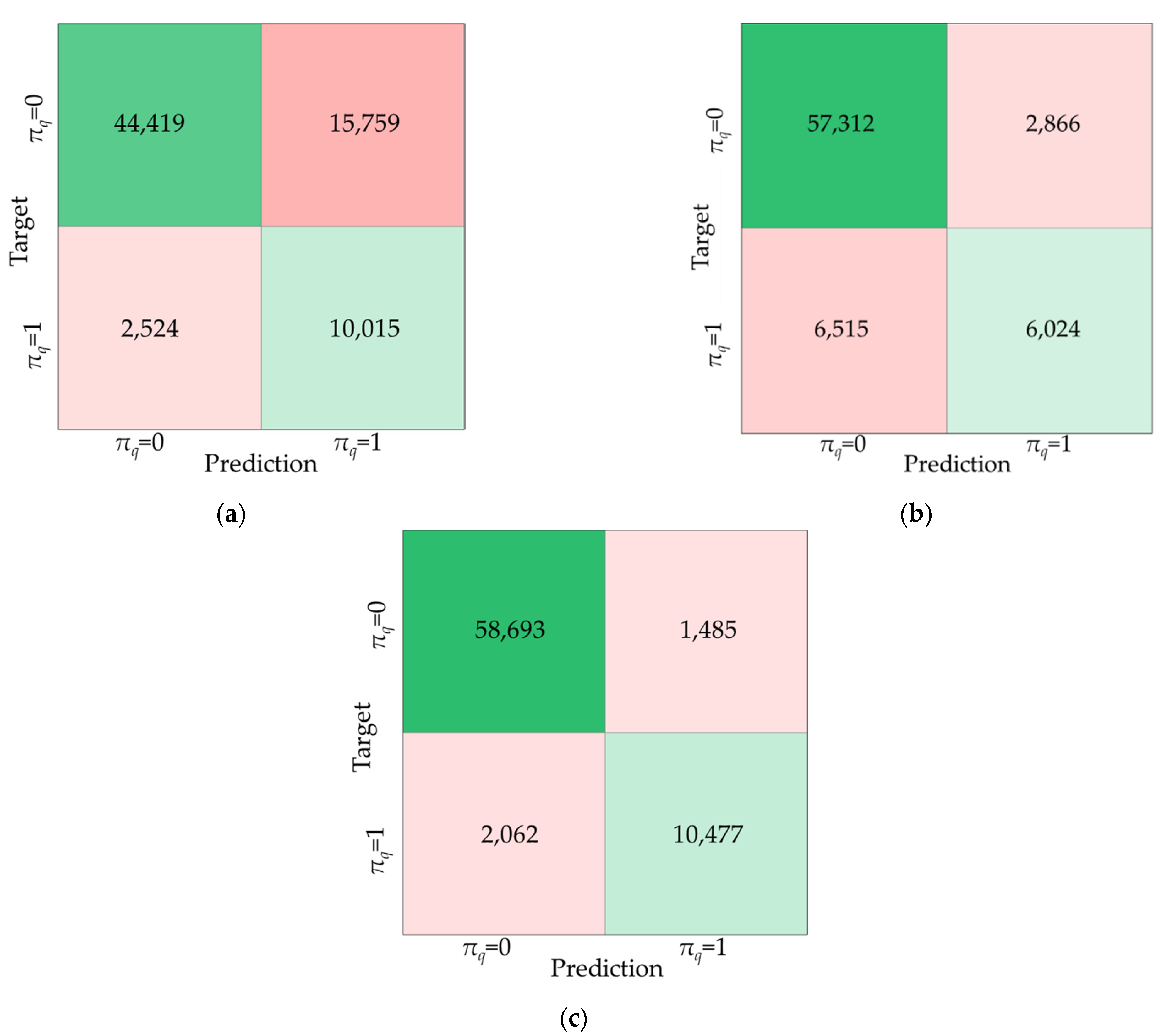
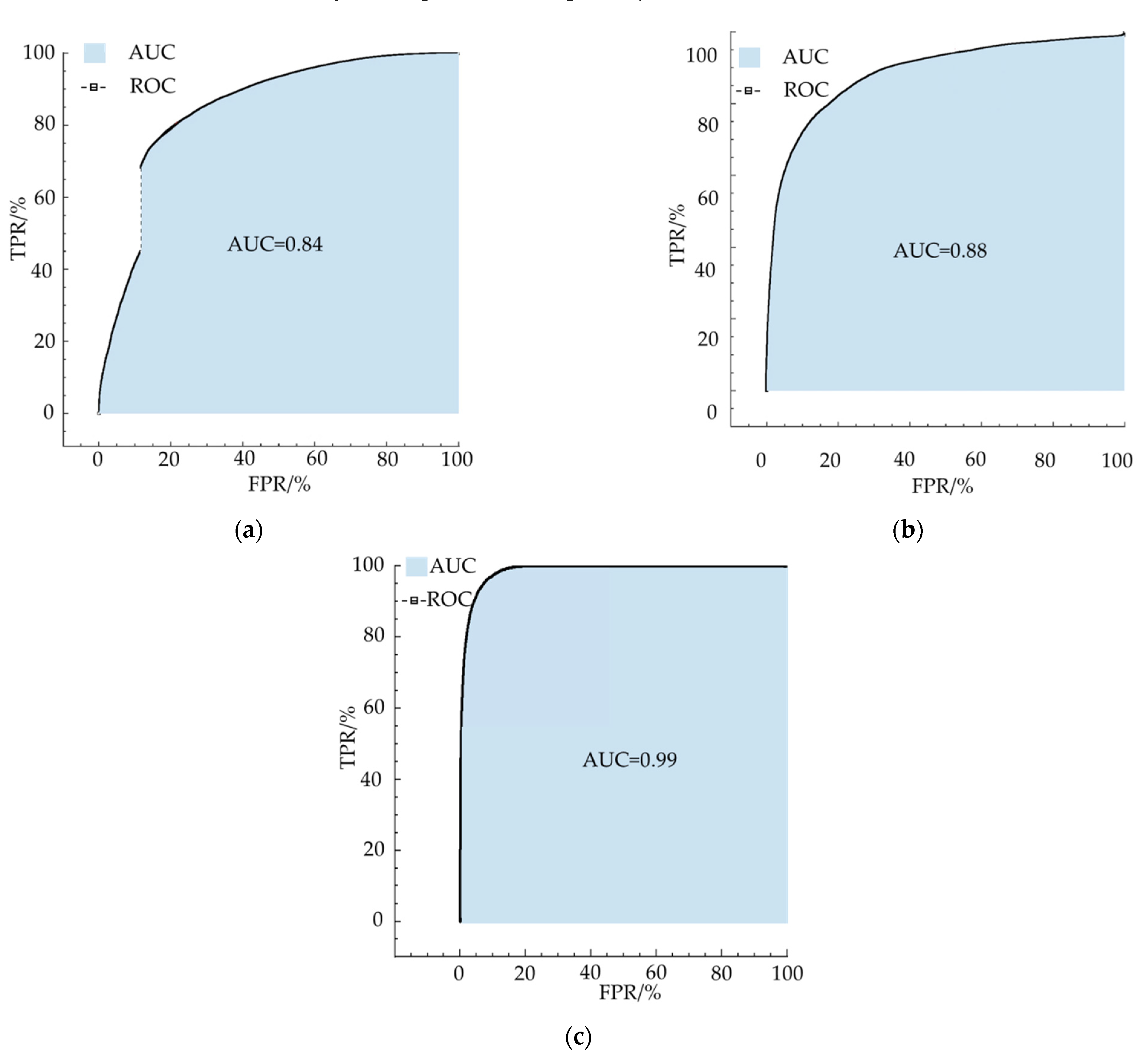
Crash risk identification and prediction are expected to play an important role in traffic accident prevention. However, most of the existing studies focus only on highways, not on multi-lane weaving areas. In this paper, a potential collision risk identification and conflict prediction model based on extending Time-to-Collision-Machine Learning (TTC-ML) for multi-lane weaving zone was proposed. The model can accurately learn various features, such as vehicle operation characteristics, risk and conflict distributions, and physical zoning characteristics in the weaving area. Specifically, TTC was used to capture the collision risk severity, and ML extracted vehicle trajectory features. After normalizing and dimensionality reduction of the vehicle trajectory dataset, Naive Bayes, Logistic Regression, and Gradient Boosting Decision Tree (GBDT) models were selected for traffic conflict prediction, and the experiments showed that the GBDT model outperforms two remaining models in terms of prediction accuracy, precision, false-positive rate (FPR) and Area Under Curve (AUC). The research findings of this paper help traffic management departments develop and optimize traffic control schemes, which can be applied to Intelligent Vehicle Infrastructure Cooperative Systems (IVICS) dynamic warning.
Keywords: intelligent transportation; conflict prediction; extended time to collision; multi-lane weaving area; risk identification; micro-trajectory data intelligent transportation; conflict prediction; extended time to collision; multi-lane weaving area; risk identification; micro-trajectory data