Asphaltene or Polyvinylchloride Waste Blended with Cement to Produce a Sustainable Material Used in Nuclear Safety

 ,
, 
 ,
,
Abstract
1. Introduction
2. Methodology of Research
2.1. Materials
2.1.1. Portland Cement
2.1.2. Polyvinylchloride (PVC)
2.1.3. Asphaltene
2.2. Preparation of Cementitious Samples
2.3. Assessment of Mechanical Properties
2.4. Determination of Gamma-Ray Shielding by Theoretical Aspects
3. Results and Discussion
3.1. Investigation of Mechanical Integrity and Porosity
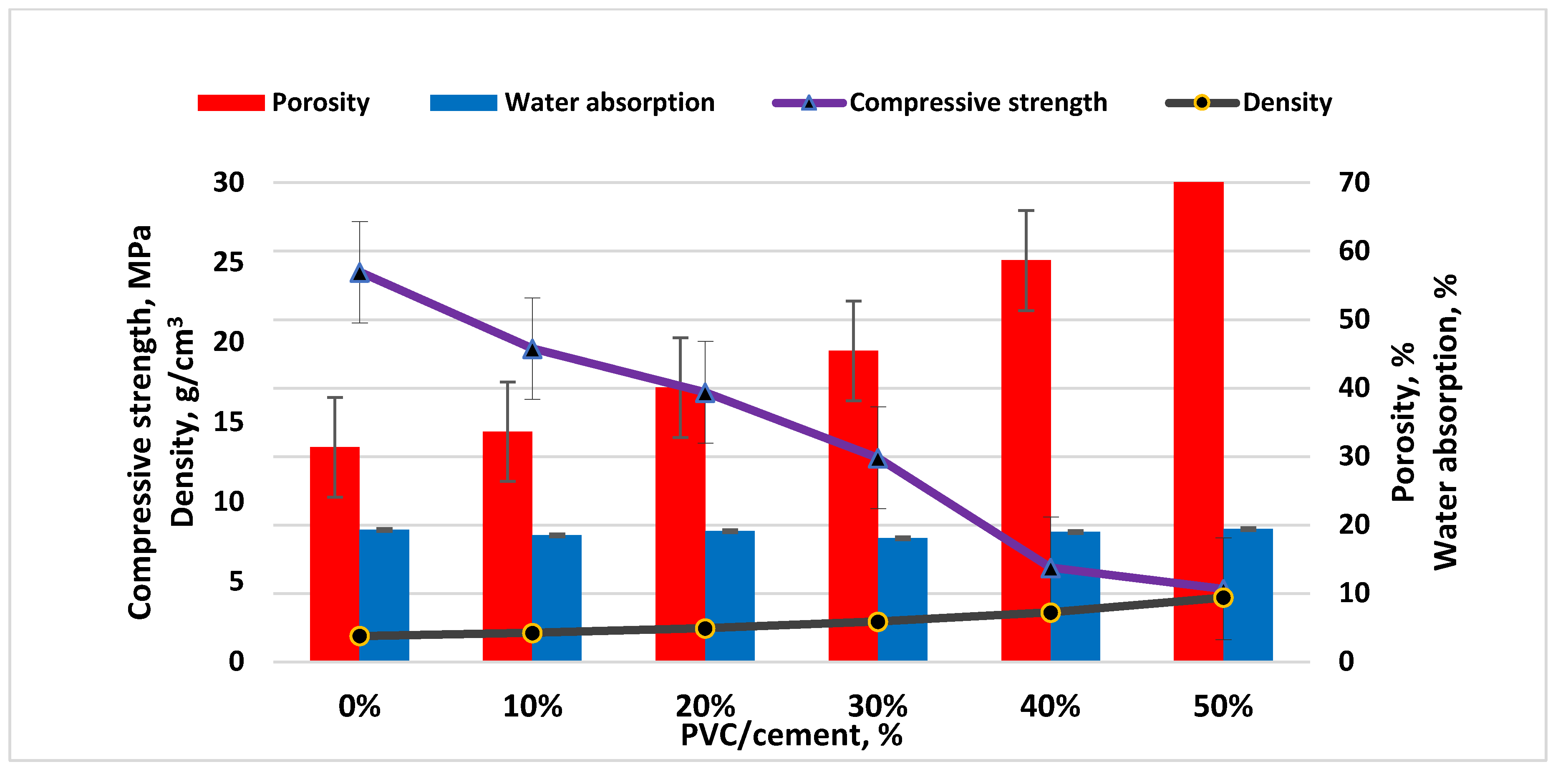
3.1.1. Cement-Based PVC
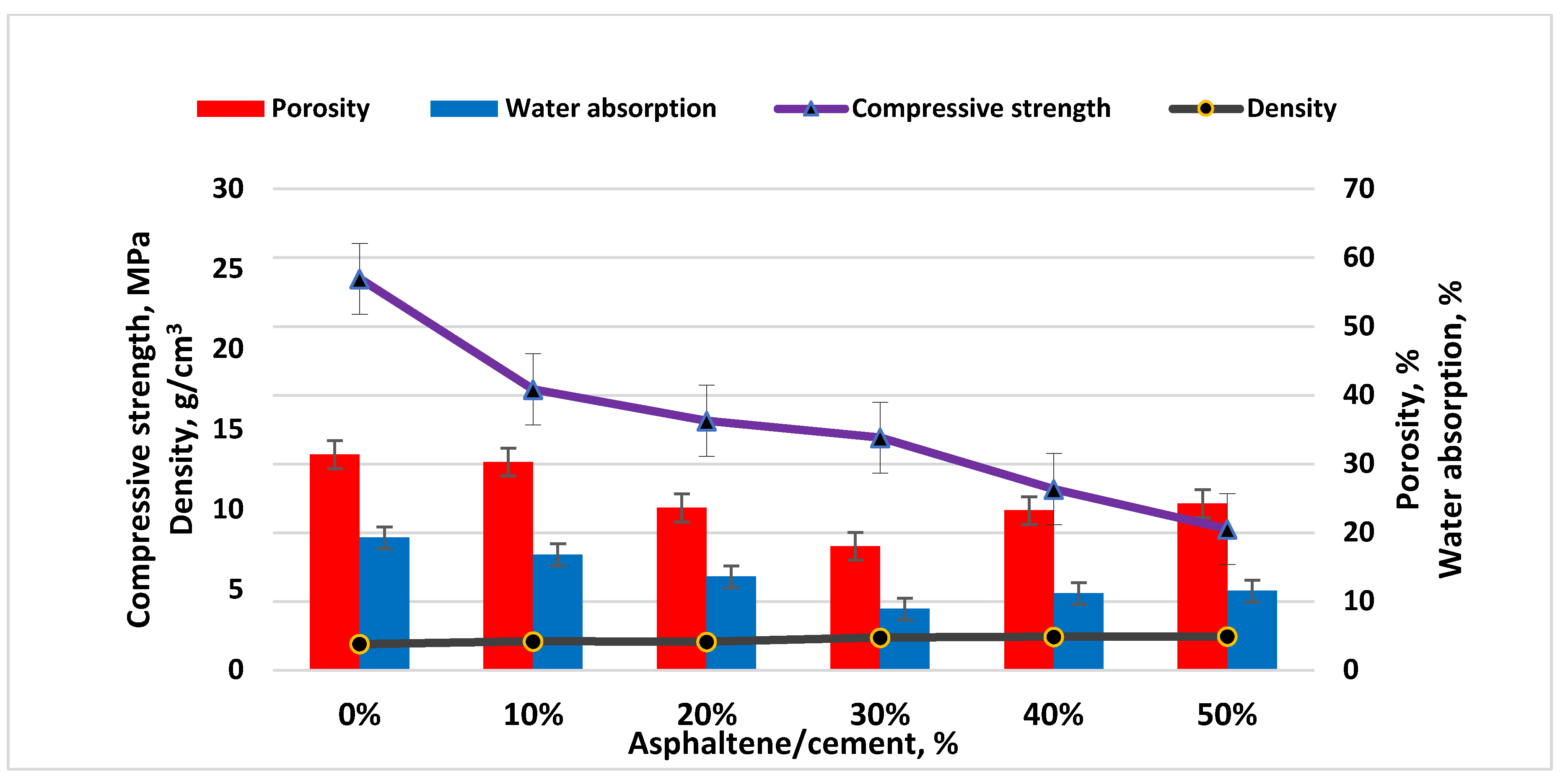
3.1.2. Cement-Based Asphaltene
3.2. Radiation Shielding Performance
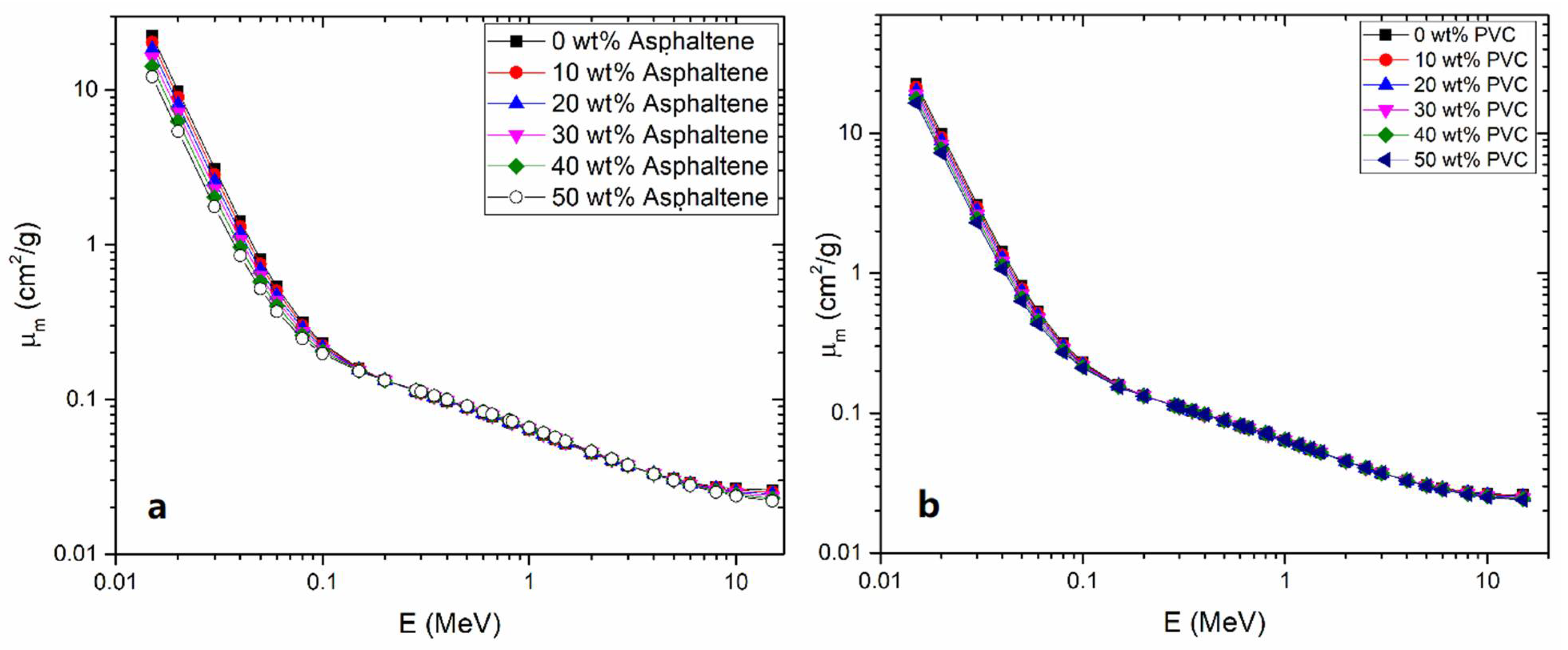
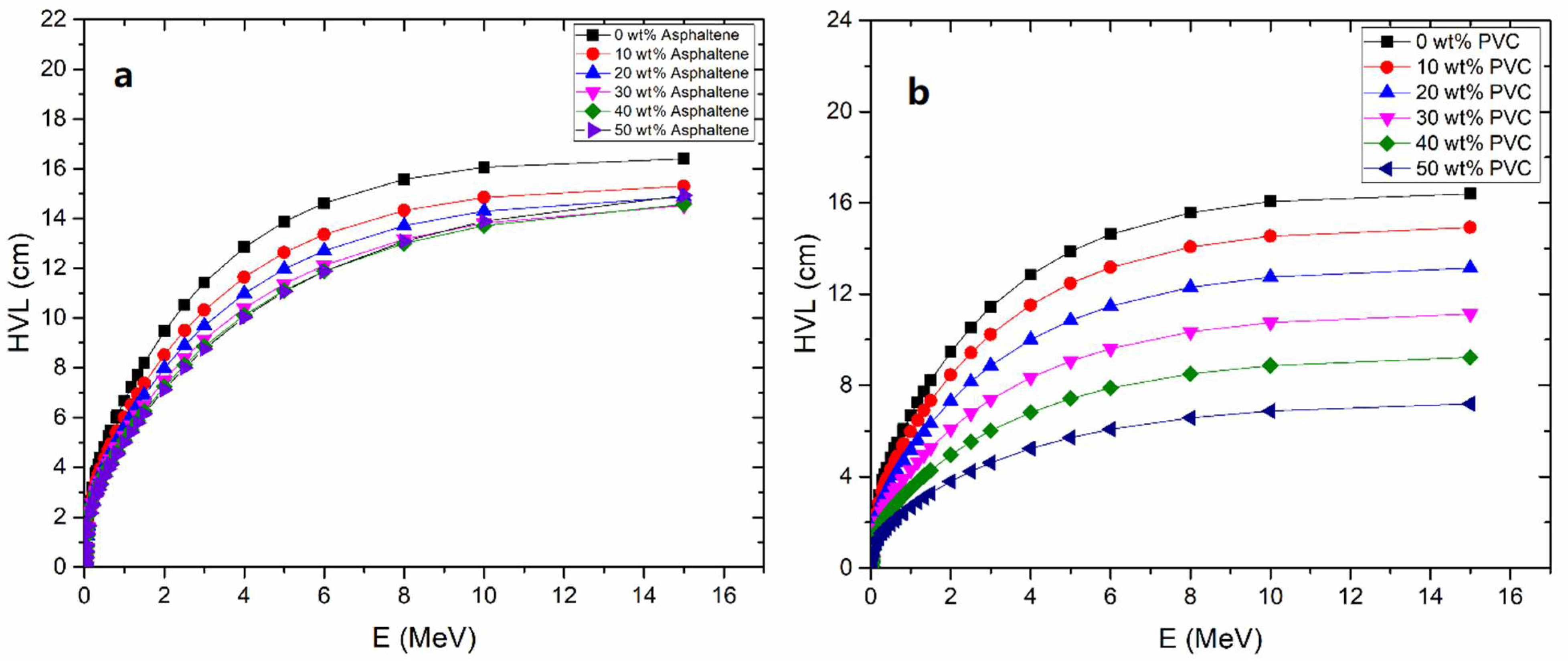
3.2.1. Gamma-Rays Shielding Properties
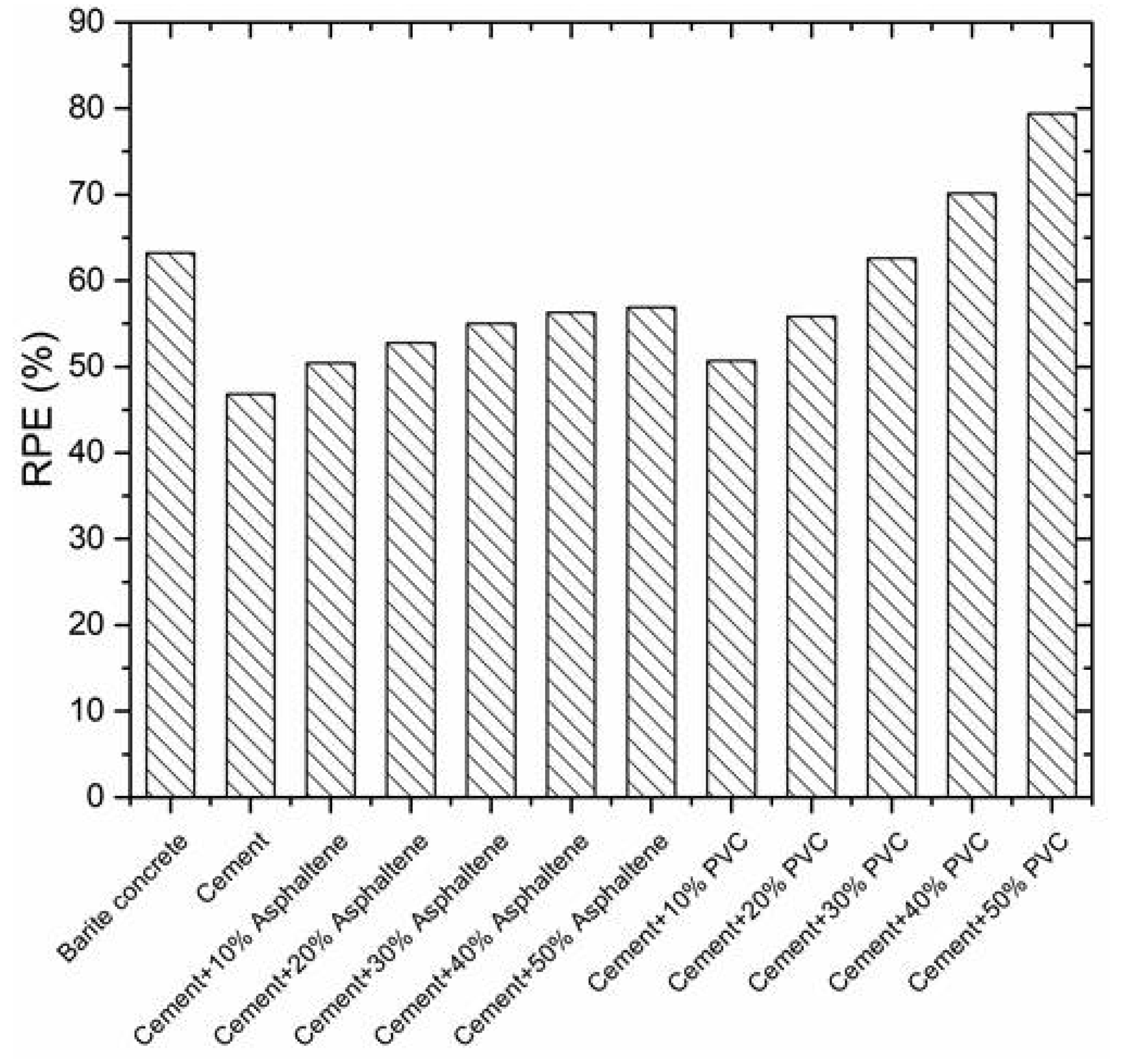
3.2.2. Radiation Protection Efficiency (RPE)
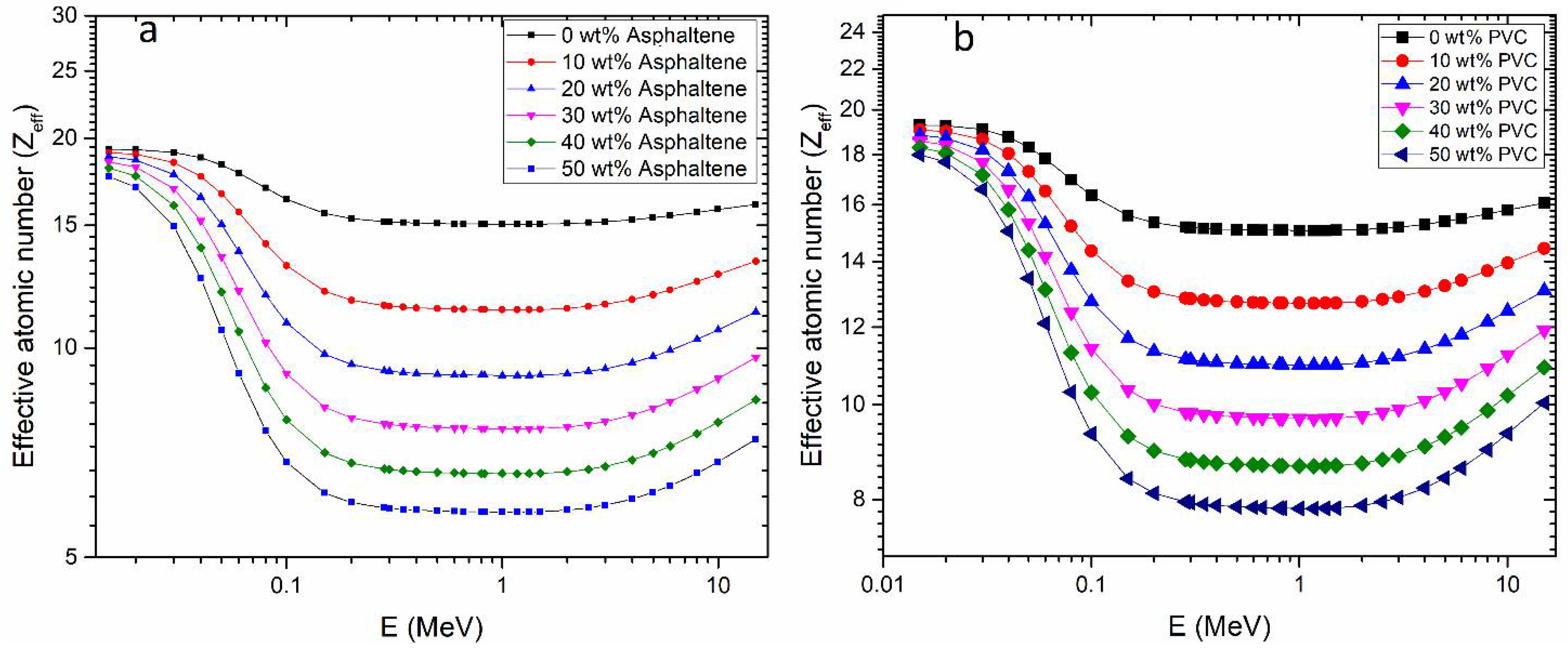
3.2.3. Effective Atomic Number (Zeff)
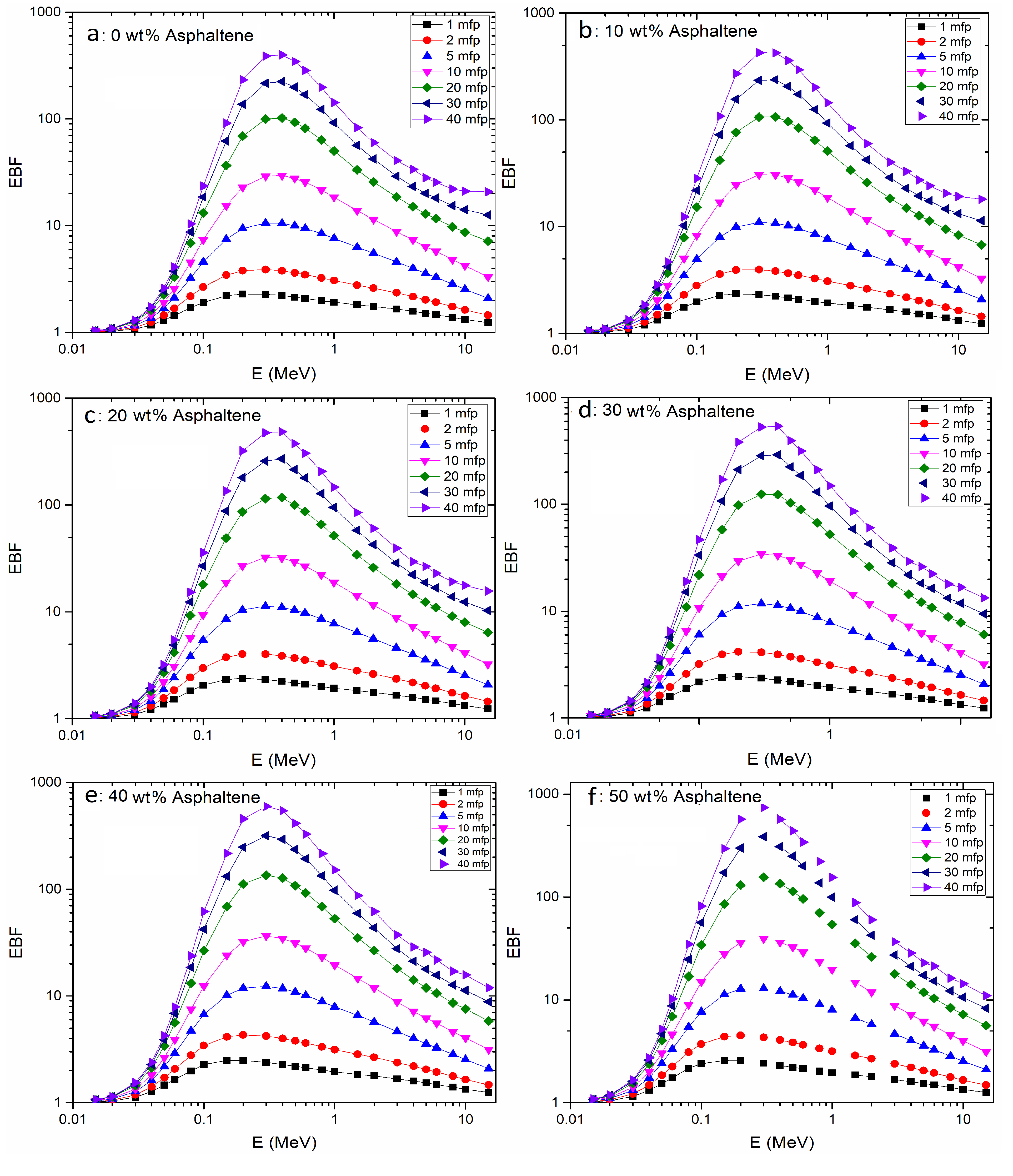
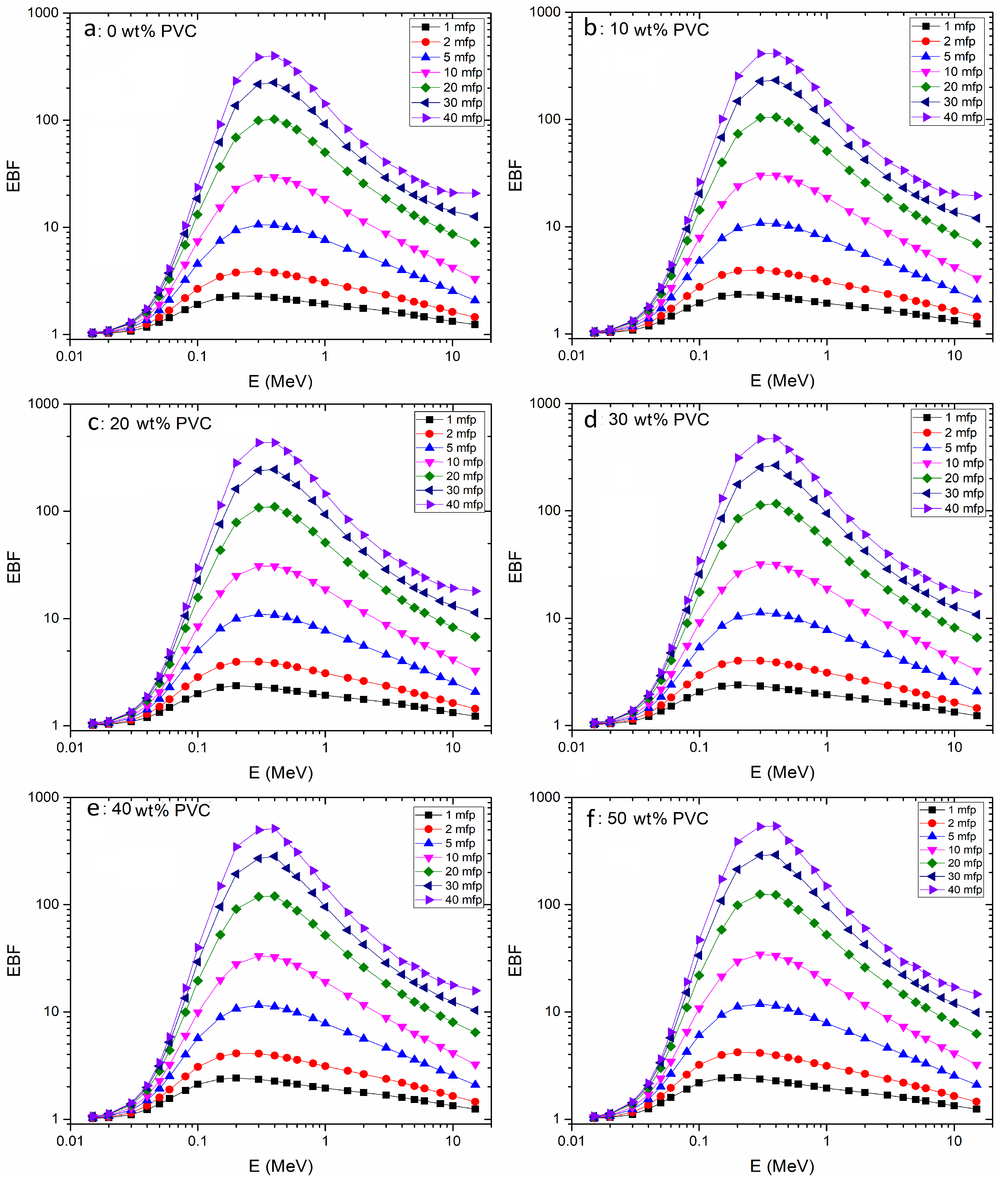
3.2.4. Exposure Build-Up Factors (EBF)
3.2.5. Fast Neutron Removal Cross-Section
4. Conclusions
Author Contributions
Funding
Institutional Review Board Statement
Informed Consent Statement
Data Availability Statement
Conflicts of Interest
References
- Do, K.-H. General Principles of Radiation Protection in Fields of Diagnostic Medical Exposure. J. Korean Med. Sci. 2016, 31, S6–S9. [Google Scholar] [CrossRef] [Scilit] [PubMed]
- Bayoumi, T.A.; Reda, S.M.; Saleh, H.M. Assessment Study for Multi-Barrier System Used in Radioactive Borate Waste Isolation Based on Monte Carlo Simulations. Appl. Radiat. Isot. 2012, 70, 99–102. [Google Scholar] [CrossRef] [Scilit] [PubMed]
- Saleh, H.M.; Eskander, S.B. Long-Term Effect on the Solidified Degraded Cellulose-Based Waste Slurry in Cement Matrix. Acta Montan. Slovaca 2009, 14, 291–297. [Google Scholar]
- Saleh, H.M.; Mahmoud, H.H.; Aglan, R.F.; Bayoumi, T.A. Biological Treatment of Wastewater Contaminated with Cu(Ii), Fe(Ii) and Mn(Ii) Using Ludwigia Stolonifera Aquatic Plant. Environ. Eng. Manag. J. 2019, 18, 1327–1336. [Google Scholar] [CrossRef] [Scilit]
- Saleh, H.M.; Moussa, H.R.; El-Saied, F.A.; Dawoud, M.; Nouh, E.S.A.; Abdel Wahed, R.S. Adsorption of Cesium and Cobalt onto Dried Myriophyllum spicatum L. from Radio-Contaminated Water: Experimental and Theoretical Study. Prog. Nucl. Energy 2020, 125, 103393. [Google Scholar] [CrossRef] [Scilit]
- Saleh, H.M.; Eskander, S.B.; Fahmy, H.M. Mortar Composite Based on Wet Oxidative Degraded Cellulosic Spinney Waste Fibers. Int. J. Environ. Sci. Technol. 2014, 11, 1297–1304. [Google Scholar] [CrossRef] [Scilit]
- Dawoud, M.M.A.; Hegazy, M.M.; Helew, W.K.; Saleh, H.M. Overview of Environmental Pollution and Clean Management of Heavy Metals and Radionuclides by Using Microcrystalline Cellulose. J. Nucl. Energy Sci. Power Gener. Technol. 2021, 10, 100201. [Google Scholar]
- Saleh, H.M.; Bondouk, I.I.; Salama, E.; Esawii, H.A. Consistency and Shielding Efficiency of Cement-Bitumen Composite for Use as Gamma-Radiation Shielding Material. Prog. Nucl. Energy 2021, 137, 103764. [Google Scholar] [CrossRef] [Scilit]
- Reda, S.M.; Saleh, H.M. Calculation of the Gamma Radiation Shielding Efficiency of Cement-Bitumen Portable Container Using MCNPX Code. Prog. Nucl. Energy 2021, 142, 104012. [Google Scholar] [CrossRef] [Scilit]
- Eid, M.S.; Bondouk, I.I.; Saleh, H.M.; Omar, K.M.; Sayyed, M.I.; El-Khatib, A.M.; Elsafi, M. Implementation of Waste Silicate Glass into Composition of Ordinary Cement for Radiation Shielding Applications. Nucl. Eng. Technol. 2021. [Google Scholar] [CrossRef] [Scilit]
- Eskander, S.B.; Saleh, H.M.; Tawfik, M.E.; Bayoumi, T.A. Towards Potential Applications of Cement-Polymer Composites Based on Recycled Polystyrene Foam Wastes on Construction Fields: Impact of Exposure to Water Ecologies. Case Stud. Constr. Mater. 2021, 15, e00664. [Google Scholar] [CrossRef] [Scilit]
- Saleh, H.; Salman, A.; Faheim, A.; El-Sayed, A. Polymer and Polymer Waste Composites in Nuclear and Industrial Applications. J. Nucl. Energy Sci. Power Gener. Technol. 2020, 9, 1000199. [Google Scholar]
- Saleh, H.M.; Eskander, S.B. Impact of Water Flooding on Hard Cement-Recycled Polystyrene Composite Immobilizing Radioactive Sulfate Waste Simulate. Constr. Build. Mater. 2019, 222, 522–530. [Google Scholar] [CrossRef] [Scilit]
- Smirnova, O.M.; Menéndez Pidal de Navascués, I.; Mikhailevskii, V.R.; Kolosov, O.I.; Skolota, N.S. Sound-Absorbing Composites with Rubber Crumb from Used Tires. Appl. Sci. 2021, 11, 7347. [Google Scholar] [CrossRef] [Scilit]
- Saleh, H.M.; El-Saied, F.A.; Salaheldin, T.A.; Hezo, A.A. Influence of Severe Climatic Variability on the Structural, Mechanical and Chemical Stability of Cement Kiln Dust-Slag-Nanosilica Composite Used for Radwaste Solidification. Constr. Build. Mater. 2019, 218, 556–567. [Google Scholar] [CrossRef] [Scilit]
- Saleh, H.M.; El-Sheikh, S.M.; Elshereafy, E.E.; Essa, A.K. Performance of Cement-Slag-Titanate Nanofibers Composite Immobilized Radioactive Waste Solution through Frost and Flooding Events. Constr. Build. Mater. 2019, 223, 221–232. [Google Scholar] [CrossRef] [Scilit]
- Saleh, H.M.; Salman, A.A.; Faheim, A.A.; El-Sayed, A.M. Sustainable Composite of Improved Lightweight Concrete from Cement Kiln Dust with Grated Poly (Styrene). J. Clean. Prod. 2020, 277, 123491. [Google Scholar] [CrossRef] [Scilit]
- Saleh, H.M.; Salman, A.A.; Faheim, A.A.; El-Sayed, A.M. Influence of Aggressive Environmental Impacts on Clean, Lightweight Bricks Made from Cement Kiln Dust and Grated Polystyrene. Case Stud. Constr. Mater. 2021, 15, e00759. [Google Scholar] [CrossRef] [Scilit]
- Ragab, A.A.; Mohammedy, M.M.; El-Shafie, M. Using Waste Flexible Polyvinyl Chloride Treated with DOP/Calcium Hydroxide for Enriching the Performance of Oxidizing Bitumen. J. Therm. Anal. Calorim. 2019, 136, 1079–1091. [Google Scholar] [CrossRef] [Scilit]
- Kou, S.C.; Lee, G.; Poon, C.S.; Lai, W.L. Properties of Lightweight Aggregate Concrete Prepared with PVC Granules Derived from Scraped PVC Pipes. Waste Manag. 2009, 29, 621–628. [Google Scholar] [CrossRef] [Scilit] [PubMed]
- Glova, A.D.; Nazarychev, V.M.; Larin, S.V.; Lyulin, A.V.; Lyulin, S.V.; Gurtovenko, A.A. Asphaltenes as Novel Thermal Conductivity Enhancers for Liquid Paraffin: Insight from in Silico Modeling. J. Mol. Liq. 2021, 346, 117112. [Google Scholar] [CrossRef] [Scilit]
- Uddin, M.M.; Kamran, F.; Hashemian, L. Performance Comparison of Asphalt Emulsion Stabilized Granular Base Modified with Cement or Asphaltenes. Can. J. Civ. Eng. 2021. [Google Scholar] [CrossRef] [Scilit]
- ESS-4756-1/2005; Ordinary Portland Cement (OPC) CEM1 (42.5 N). Egyptian Standard Specifications: Cairo, Egypt, 2005.
- BSI-197-1/2011; Cement, Composition, Specifications and Conformity Criteria for Common Cements. British Standards Institution: London, UK, 2011; Volume 1.
- Wang, J.; Wang, H.; Yue, D. Separation of Waste Polymethyl Methacrylate and Polyvinyl Chloride Mixtures by Flotation after Fenton Oxidation. J. Clean. Prod. 2019, 228, 1218–1228. [Google Scholar] [CrossRef] [Scilit]
- Speight, J.G.; Moschopedis, S.E. On the Molecular Nature of Petroleum Asphaltenes. In Chemistry of Asphaltenes; ACS Publications: Washington, DC, USA, 1981. [Google Scholar]
- ASTM C109/C109M-16a; ASTM Standard Test Method for Compressive Strength of Hydraulic Cement Mortars (Using 2-in. or [50-Mm] Cube Specimens). ASTM International: West Conshohocken, PA, USA, 2016.
- ASTM C20-00; ASTM Standard Test Methods for Apparent Porosity, Water Absorption, Apparent Specific Gravity, and Bulk Density of Burned Refractory Brick and Shapes by Boiling Water. ASTM International: West Conshohocken, PA, USA, 2015.
- Singh, V.P.; Badiger, N.M.; Kaewkhao, J. Radiation Shielding Competence of Silicate and Borate Heavy Metal Oxide Glasses: Comparative Study. J. Non-Cryst. Solids 2014, 404, 167–173. [Google Scholar] [CrossRef] [Scilit]
- Berger, M.J. Photon Cross-Sections Database. NIST Standard Reference Database 8 (XGAM). 1998. Available online: http://physics.nist.gov/PhysRefData/Xcom/Text/XCOM.html (accessed on 1 February 2022).
- Tijani, S.A.; Kamal, S.M.; Al-Hadeethi, Y.; Arib, M.; Hussein, M.A.; Wageh, S.; Dim, L.A. Radiation Shielding Properties of Transparent Erbium Zinc Tellurite Glass System Determined at Medical Diagnostic Energies. J. Alloys Compd. 2018, 741, 293–299. [Google Scholar] [CrossRef] [Scilit]
- Taylor, M.L.; Smith, R.L.; Dossing, F.; Franich, R.D. Robust Calculation of Effective Atomic Numbers: The Auto-Zeff Software. Med. Phys. 2012, 39, 1769–1778. [Google Scholar] [CrossRef] [Scilit]
- Sathiyaraj, P.; Samuel, E.J.J.; Valeriano, C.C.S.; Kurudirek, M. Effective Atomic Number and Buildup Factor Calculations for Metal Nano Particle Doped Polymer Gel. Vacuum 2017, 143, 138–149. [Google Scholar] [CrossRef] [Scilit]
- Harima, Y. An Historical Review and Current Status of Buildup Factor Calculations and Applications. Radiat. Phys. Chem. 1993, 41, 631–672. [Google Scholar] [CrossRef] [Scilit]
- Kavaz, E.; Yorgun, N.Y. Gamma Ray Buildup Factors of Lithium Borate Glasses Doped with Minerals. J. Alloys Compd. 2018, 752, 61–67. [Google Scholar] [CrossRef] [Scilit]
- Kaplan, M.F. Concrete Radiation Shielding: Nuclear Physics, Concrete Properties, Design and Construction; Longman Scientific & Technical: Harlow, UK, 1989; ISBN 0470213388. [Google Scholar]
- Singh, V.P.; Badiger, N.M. Gamma Ray and Neutron Shielding Properties of Some Alloy Materials. Ann. Nucl. Energy 2014, 64, 301–310. [Google Scholar] [CrossRef] [Scilit]
- ANSI/ANS-6.4.3; Gamma-Ray Attenuation Coefficients and Buildup Factors for Engineering Materials. American Nuclear Society: La Grange Park, IL, USA, 1991.
- Babu, K.G.; Babu, D.S. Behaviour of Lightweight Expanded Polystyrene Concrete Containing Silica Fume. Cem. Concr. Res. 2003, 33, 755–762. [Google Scholar] [CrossRef] [Scilit]
- NRC. Waste Form Technical Position, Revision 1; US Nuclear Regulatory Commission: Washington, DC, USA, 1991.
- Zingg, L.; Briffaut, M.; Baroth, J.; Malecot, Y. Influence of Cement Matrix Porosity on the Triaxial Behaviour of Concrete. Cem. Concr. Res. 2016, 80, 52–59. [Google Scholar] [CrossRef] [Scilit]
- Prêt, D.; Sardini, P.; Beaufort, D.; Zellagui, R.; Sammartino, S. Porosity Distribution in a Clay Gouge by Image Processing of 14C-PolyMethylMethAcrylate (14C-PMMA) Autoradiographs: Case Study of the Fault of St. Julien (Basin of Lodève, France). Appl. Clay Sci. 2004, 27, 107–118. [Google Scholar] [CrossRef] [Scilit]
- Saleh, H.M.; Aglan, R.F.; Mahmoud, H.H. Qualification of Corroborated Real Phytoremediated Radioactive Wastes under Leaching and Other Weathering Parameters. Prog. Nucl. Energy 2020, 119, 103178. [Google Scholar] [CrossRef] [Scilit]
- Saleh, H.M.; Moussa, H.R.; El-Saied, F.A.; Dawod, M.; Bayoumi, T.A.; Abdel Wahed, R.S. Mechanical and Physicochemical Evaluation of Solidifed Dried Submerged Plants Subjected to Extreme Climatic Conditions to Achieve an Optimum Waste Containment. Prog. Nucl. Energy 2020, 122, 103285. [Google Scholar] [CrossRef] [Scilit]
- Salama, E.; Maher, A.; Youssef, G.M. Gamma Radiation and Neutron Shielding Properties of Transparent Alkali Borosilicate Glass Containing Lead. J. Phys. Chem. Solids 2019, 131, 139–147. [Google Scholar] [CrossRef] [Scilit]
- El-Khayatt, A.M. Calculation of Fast Neutron Removal Cross-Sections for Some Compounds and Materials. Ann. Nucl. Energy 2010, 37, 218–222. [Google Scholar] [CrossRef] [Scilit]
- Picha, R.; Channuie, J.; Khaweerat, S.; Liamsuwan, T.; Promping, J.; Ratanatongchai, W.; Silva, K.; Wonglee, S. Gamma and Neutron Attenuation Properties of Barite-Cement Mixture. J. Phys. Conf. Ser. 2015, 611, 012002. [Google Scholar] [CrossRef] [Scilit]
- Akkurt, I.; Akyildirim, H.; Karipçin, F.; Mavi, B. Chemical Corrosion on Gamma-Ray Attenuation Properties of Barite Concrete. J. Saudi Chem. Soc. 2012, 16, 199–202. [Google Scholar] [CrossRef] [Scilit]



| System | Compressive Strength, MPa | Porosity, % | Reference |
|---|---|---|---|
| Standard value | 3.4 | - | [40] |
| Cement without additives | 32.0–36.5 | 27.5–30.0 | [43,44] |
| Cement mixed with bitumen (30 wt.%) | 7.62 | 60.14 | [8] |
| Cement mixed with PVC (50 wt.%) | 4.5 | 78.3 | Present study |
| Cement mixed with asphaltene (50 wt.%) | 8.8 | 24.24 | Present study |
| System | Rang of μm (cm2/g) × 10−2 (at 0.662 MeV) | Fast Neutron Mass Removal Cross-Sections, ΣR/ρ (cm2 g−1) | Reference |
|---|---|---|---|
| Barite concrete | 6.7–7.8 | 0.041–0.027 | [47,48] |
| Portland cement | 7.76 | 0.031 | [30] |
| Cement mixed with bitumen (10–50 wt.%) | 9.94–14.11 | - | [8] |
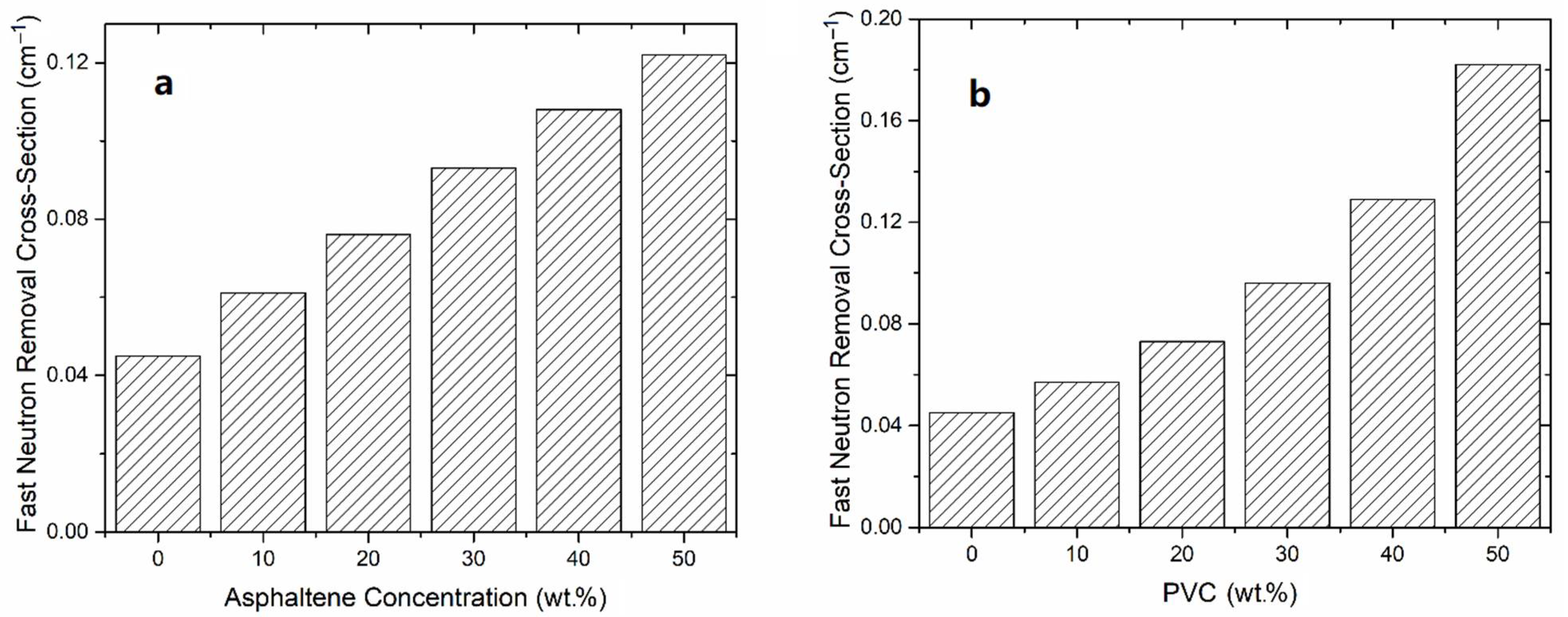
| Cement mixed with PVC (10–50 wt.%) | 7.78–7.84 | 0.045–0.182 | Present study |
| Cement mixed with asphaltene (10–50 wt.%) | 7.80–8.01 | 0.045–0.122 | Present study |
Publisher’s Note: MDPI stays neutral with regard to jurisdictional claims in published maps and institutional affiliations. |
© 2022 by the authors. Licensee MDPI, Basel, Switzerland. This article is an open access article distributed under the terms and conditions of the Creative Commons Attribution (CC BY) license (https://creativecommons.org/licenses/by/4.0/).
Share and Cite
Saleh, H.M.; Bondouk, I.I.; Salama, E.; Mahmoud, H.H.; Omar, K.; Esawii, H.A. Asphaltene or Polyvinylchloride Waste Blended with Cement to Produce a Sustainable Material Used in Nuclear Safety. Sustainability 2022, 14, 3525. https://doi.org/10.3390/su14063525
Saleh HM, Bondouk II, Salama E, Mahmoud HH, Omar K, Esawii HA. Asphaltene or Polyvinylchloride Waste Blended with Cement to Produce a Sustainable Material Used in Nuclear Safety. Sustainability. 2022; 14(6):3525. https://doi.org/10.3390/su14063525
Chicago/Turabian StyleSaleh, Hosam M., Ibrahim I. Bondouk, Elsayed Salama, Hazem H. Mahmoud, Khalid Omar, and Heba A. Esawii. 2022. "Asphaltene or Polyvinylchloride Waste Blended with Cement to Produce a Sustainable Material Used in Nuclear Safety" Sustainability 14, no. 6: 3525. https://doi.org/10.3390/su14063525
APA StyleSaleh, H. M., Bondouk, I. I., Salama, E., Mahmoud, H. H., Omar, K., & Esawii, H. A. (2022). Asphaltene or Polyvinylchloride Waste Blended with Cement to Produce a Sustainable Material Used in Nuclear Safety. Sustainability, 14(6), 3525. https://doi.org/10.3390/su14063525