Article

Entrepreneurial Traits, Relational Capital, and Social Enterprise Performance: Regulatory Effects of Cognitive Legitimacy
1
School of Management, Shanghai University of Engineering Science, Shanghai 201620, China
2
School of Business Administration, Zhejiang Gongshang University, Hangzhou 310018, China
*
Author to whom correspondence should be addressed.
Sustainability 2022, 14(6), 3336; https://doi.org/10.3390/su14063336
Submission received: 15 February 2022 / Revised: 9 March 2022 / Accepted: 10 March 2022 / Published: 12 March 2022
(This article belongs to the Topic Open Innovation and Entrepreneurship)

Abstract

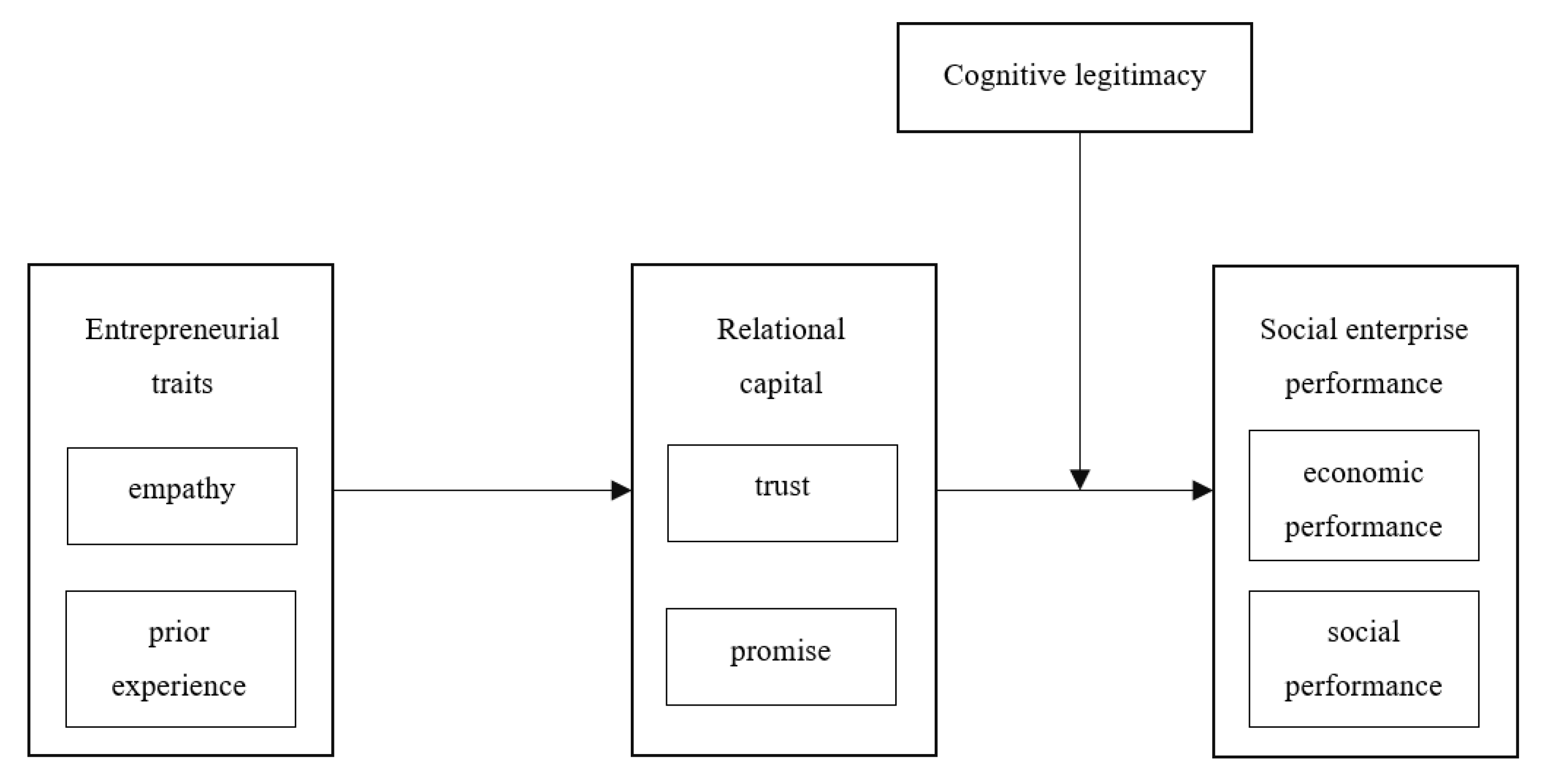
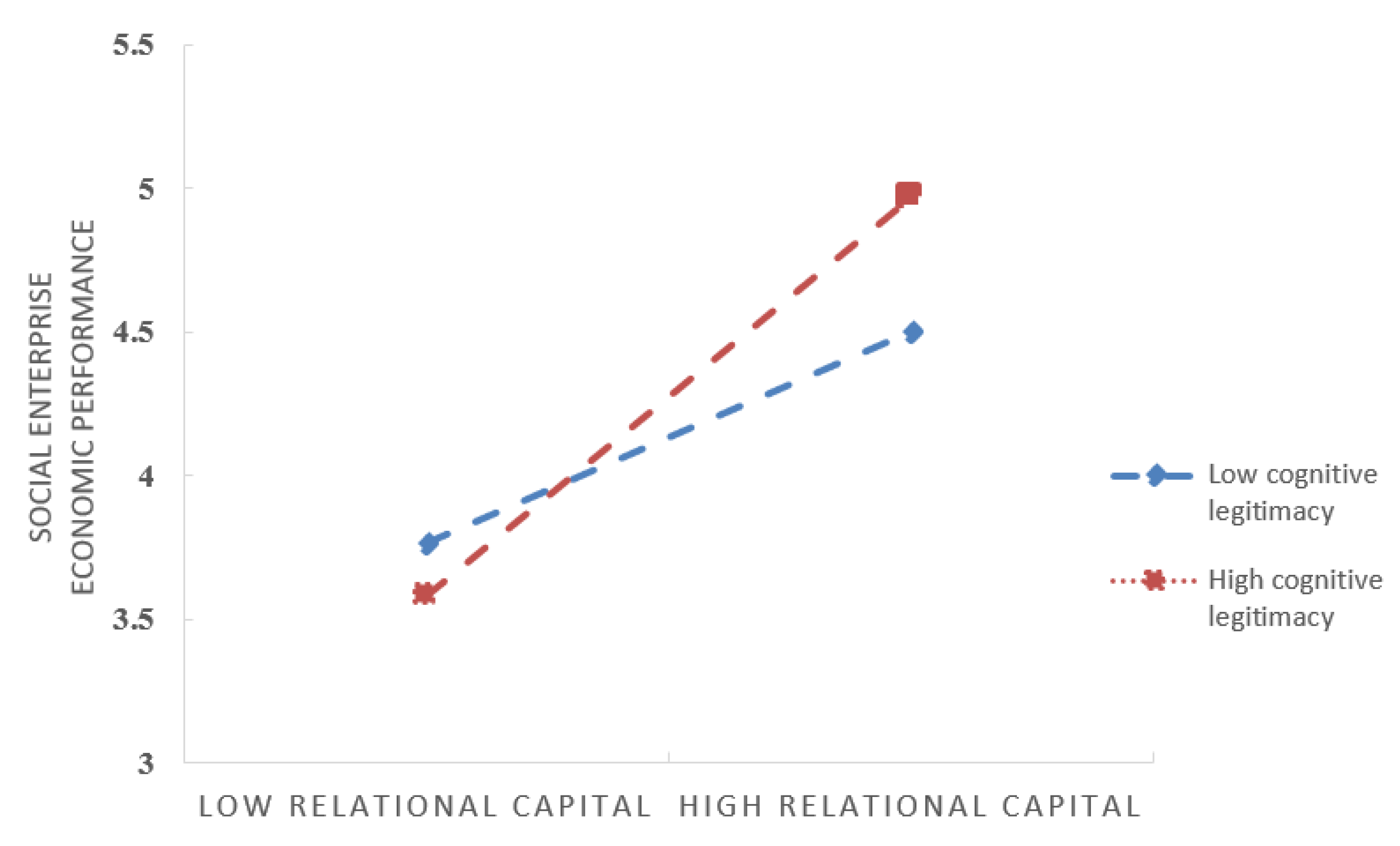
Social enterprises, as a new form of organization where public welfare and business coexist, are gradually becoming an important power in innovating social governance. However, the development of social enterprises in China is still in its infancy. Social entrepreneurs have a profound impact on the growth of social enterprises and may bring advantages to the development of enterprises, while barriers to legitimacy commonly faced by social enterprises hinder the development of the enterprise to some extent. Social enterprise performance has always been a research focus in social entrepreneurship, on which many studies have been reported, while it is seldom investigated from the perspective of entrepreneurial traits. The research aims to clarify how entrepreneurial traits influence the growth of social enterprises in an institutional scenario. Taking 208 social enterprises in China as samples, the relationship among entrepreneurial traits, relational capital, cognitive legitimacy, and social enterprise performance was verified using SPSS 22.0 and methods including correlation analysis and regression analysis based on trait theory and relational capital theory. The results indicate that: (1) entrepreneurial traits exert a significant positive effect on both the economic and social performance of social enterprises; (2) relational capital plays a mediating effect between entrepreneurial traits and social enterprise performance; (3) cognitive legitimacy only positively regulates the relationship between relational capital and economic performance. The conclusions may enrich the theory of traits and provide new ideas allowing social enterprises to overcome the dilemma of resource constraints and improve their performance. Social entrepreneurs need to pay close attention to cultivating their entrepreneurial traits and actively establishing relational capital; governments should create an institutional environment conducive to social entrepreneurship, to promote improvement in social enterprise performance.
Keywords: entrepreneur traits; social entrepreneurship; relational capital; cognitive legitimacy; social enterprise performance entrepreneur traits; social entrepreneurship; relational capital; cognitive legitimacy; social enterprise performance