Article

Crack Propagation Assessment of Time-Dependent Concrete Degradation of Prestressed Concrete Sleepers
1
Department of Civil Engineering, School of Engineering, University of Birmingham, Birmingham B15 2TT, UK
2
TOFU Lab (Track Engineering and Operations for Future Uncertainties), School of Engineering, University of Birmingham, Birmingham B15 2TT, UK
3
Railway Engineering Institute, China Academy of Railway Sciences, Beijing 100081, China
*
Author to whom correspondence should be addressed.
Sustainability 2022, 14(6), 3217; https://doi.org/10.3390/su14063217
Submission received: 26 January 2022 / Revised: 24 February 2022 / Accepted: 3 March 2022 / Published: 9 March 2022
(This article belongs to the Special Issue Sustainable Organic Materials Used in the Construction Sector)

Abstract

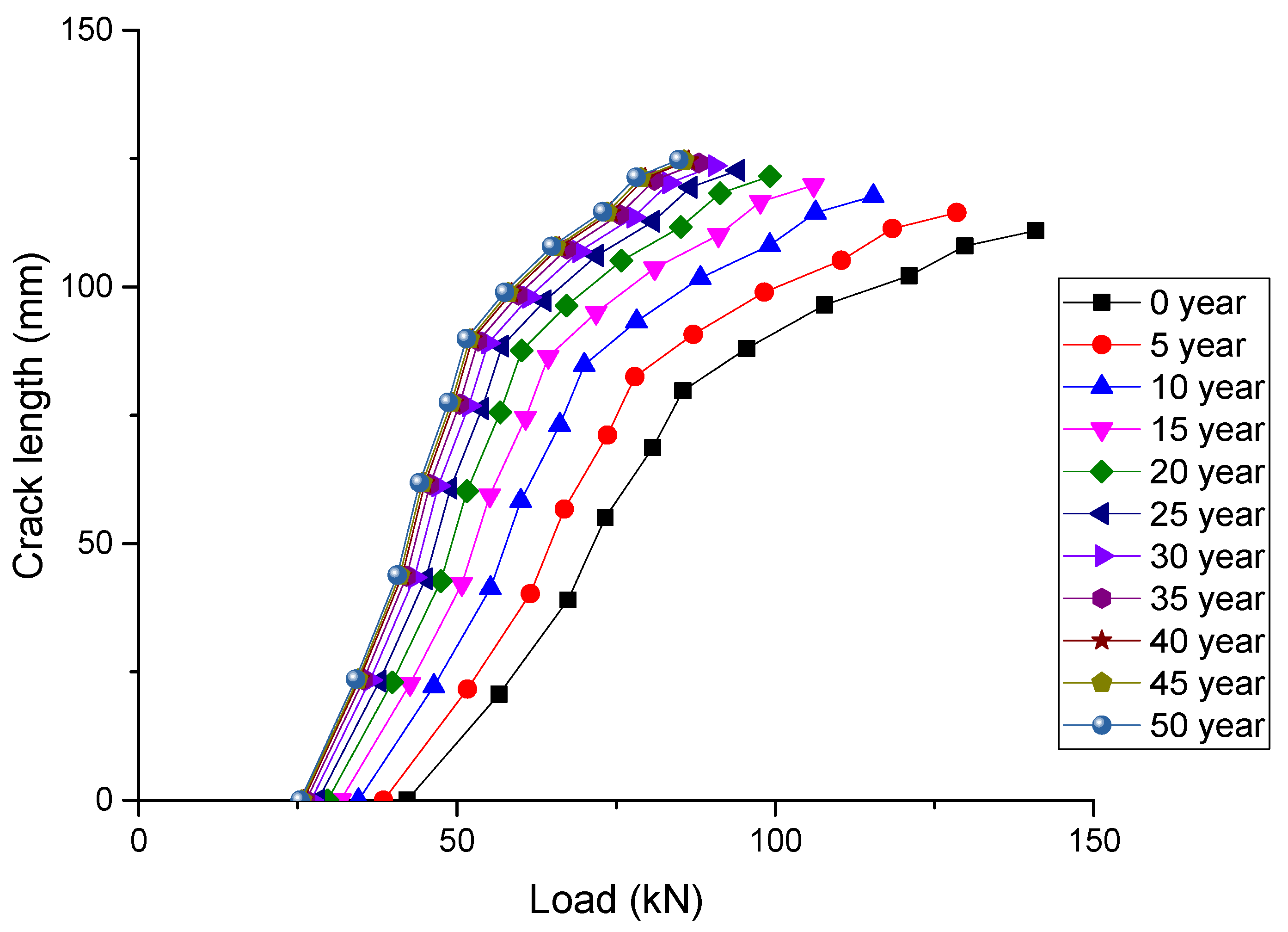
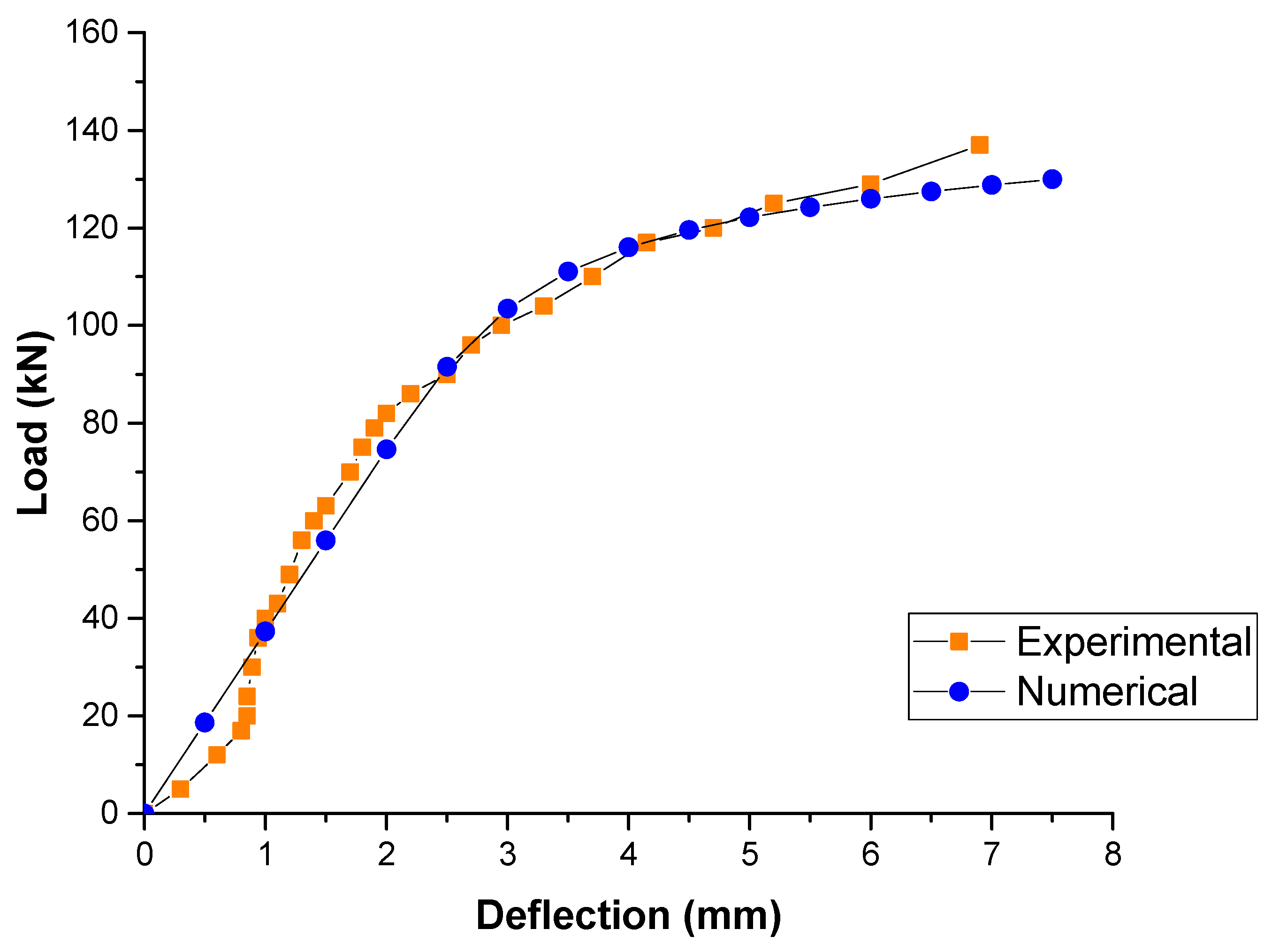
As prestressed concrete sleepers are continuously exposed to various environmental and loading conditions, it is increasingly crucial to analyse their current and future serviceability performance. In practice, the main cause of cracking in prestressed concrete sleepers is usually induced by impact loads. The most heavily influenced sections are the midspan and rail-seat area of sleepers. This paper investigates the effects of time-dependent concrete strength degradation on the capacity of prestressed concrete sleepers. The factors affecting concrete strength degradation are analysed in order to evaluate the crack behaviour of prestressed concrete sleepers. A finite element modelling approach is developed for prestressed concrete sleepers, which is used to assess the effects of structural behaviour in railway sleepers. The sleeper model has been calibrated and validated. This research firstly discusses time-dependent behaviour using load–crack length responses. It is shown that various cracking modes cause an overall increase in the maximum cracking length as prestressed concrete sleepers age. This paper demonstrates that initial cracking loads and ultimate crack lengths have significant change in first 20 years. After 40 years of service life, the crack resistance of prestressed concrete sleepers becomes very weak which is only 61.32% of the new sleeper. In long term, the initial cracking load keeps reducing, and the crack propagation rate becomes sharp. The presented methodology and results can greatly assist in decision-making for the repair or replacement of prestressed concrete sleepers and aid in the design of new prestressed concrete sleepers considering their future performance.
Keywords: prestressed concrete sleeper; crack propagation; concrete degradation; time-dependent behaviour; finite element method prestressed concrete sleeper; crack propagation; concrete degradation; time-dependent behaviour; finite element method