1. Introduction
In the 21st century, China has undergone rapid development in the terms of urbanization. However, at the same time there has been a sharp rise in PM
2.5 concentrations [
1,
2,
3]. In particular, extensive economic growth has led to the aggravation of this situation, affecting the sustainable development of cities [
4,
5]. In the meantime, PM
2.5 pollution-induced issues wreak great damage to natural ecosystems and have a deleterious effect on the physical and mental health of people [
6,
7,
8]. In addition, PM
2.5 pollution can cause other negative outcomes such as crises of government trust and social instability [
9,
10,
11,
12]. Therefore, it is of great significance to PM
2.5 pollution mitigation that we determine the distribution of PM
2.5 concentrations and distinguish the determinants of PM
2.5 pollution in China.
The relationship between urban form and air quality (especially PM
2.5) has been given more and more attention by urban planners and environmentalists [
13]. Different social and economic conditions and different geographical characteristics affect the development and characteristics of cities in different regions. In some developed countries, some evidence suggests that cities with fairly low levels of urban fragmentation and spread have less PM
2.5 pollution than fragmented, dispersed, and complex cities [
14,
15]. The higher the degree of urban fragmentation, the denser the urban population, and the worse the urban air quality [
16]. It seems that compact, low sprawling, and highly contiguous urban forms provide better air quality in developed countries. Some research results also point to the negative effects of a scattered population and inconvenient transportation on air quality [
17,
18].
China’s environmental and socioeconomic conditions are different from those of developed countries. Different socioeconomic factors and geographical and climatic conditions cause great differences in PM
2.5 concentrations between China and developed countries [
19]. Some researchers have studied the relationship between urban form and PM
2.5 concentration in China. For instance, based on 288 prefecture-level cities, Li [
20] pointed out that small-scale, decentralized, and polycentric urban forms improve air quality in China. She et al. [
21], through the study of the Yangtze River Delta, discovered that urban expansion accelerates energy consumption, resulting in a positive correlation with PM
2.5 concentration. Moreover, Zhang and Zhang [
22] revealed that high population densities and numbers of cars might contribute to air pollution in urban agglomerations in China. Du et al. [
12] came to a similar conclusion in the Pearl River Delta. However, most of these studies focus on the relationship between individual cities or urban agglomerations. In reality, each regional or spatial scale has a specific socioeconomic background and geographical and climatic conditions, which may lead to different research results. A discovery in one region cannot be used for another. The regional difference standpoint has been proven valid in several positive research studies [
23,
24,
25]. In China, a few regions (such as the BTH region, Yangtze River Delta, and Pearl River Delta) have relatively concentrated populations and economies. Correspondingly, the PM
2.5 pollution level in these regions is higher than that in other regions. Consequently, it is necessary to study the influence of urban form on PM
2.5 concentration from both national and regional perspectives.
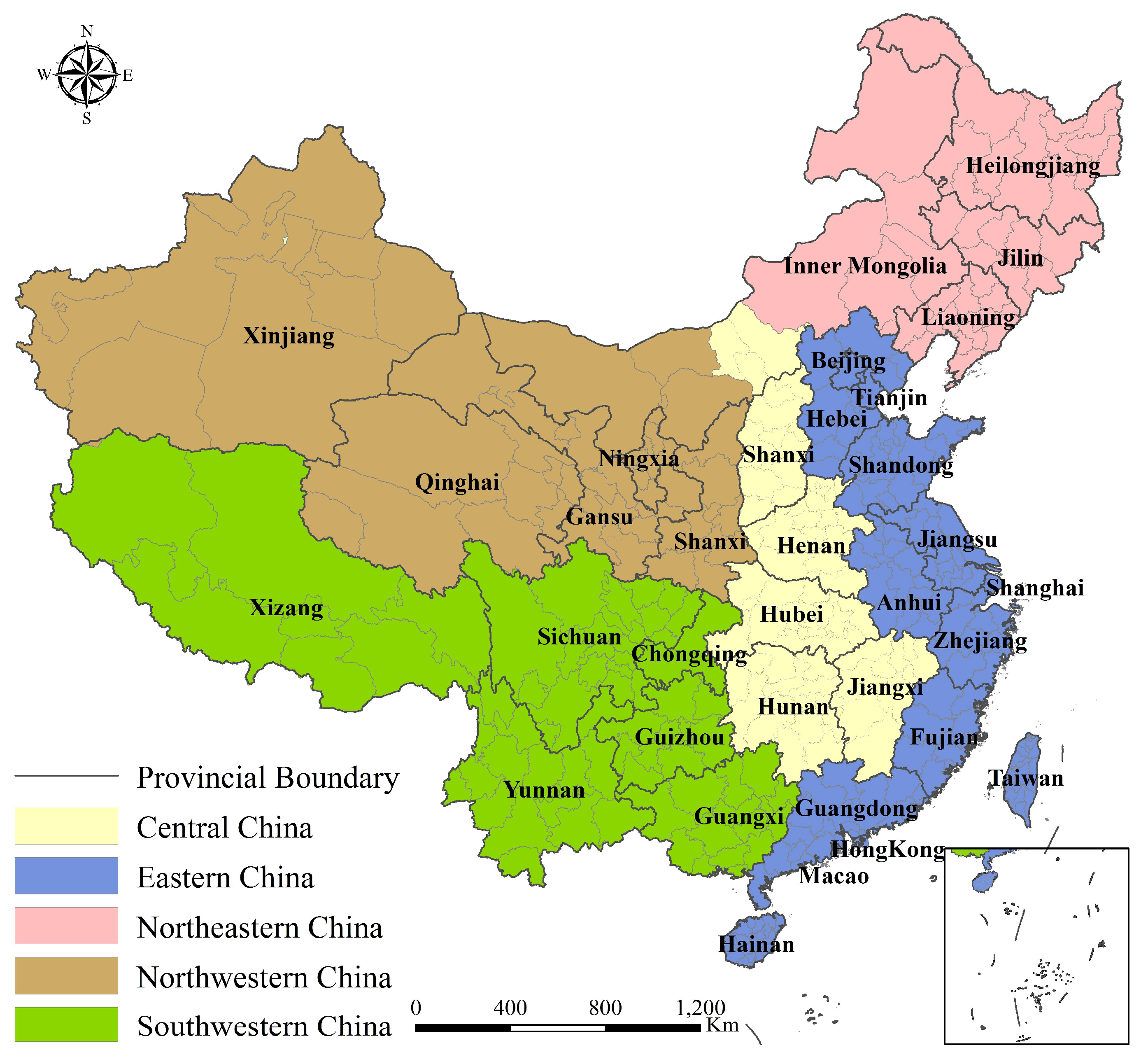
To correct the deviation in space, a spatial econometric model was used to analyze the impact of urban form on air quality in 286 cities in China. Moreover, spatial autocorrelation and spatial regression were conducted to distinguish the correlations between urban form and air quality in different regions of China. The index of urban form can be divided into two categories: a socioeconomic index and an urban landscape index. The urban landscape index was based on land-use data derived from satellites and calculated by FRAGSTATS software. According to their economic situations, the 286 prefecture level cities are divided into five regions, namely the eastern region, the central region, the northeastern region, the northwestern region, and the southwestern region. Then, the cities are divided into large cities, medium-sized cities, and small cities according to their populations. Considering China’s national conditions and the distribution of data samples, cities with a population of 3 million or below are defined as small cities. Cities with a population of 3 million to 5 million are defined as medium-sized cities. Cities with a population of more than 5 million are defined as large cities.
This study differs from existing studies in the following aspects: (1) it conducted long-term spatiotemporal analyses of PM
2.5 concentrations annually in 286 prefecture-level cities in China. (2) The urban landscape index and urban socioeconomic index were used to characterize urban form. (3) On the one hand, when the road density low, the development of road traffic is conducive to reducing PM
2.5 concentration. On the other hand, when road traffic develops to a very high level, increasingly crowded roads will increase PM
2.5 concentration. (4) Excluding the effects of meteorological and geographic conditions, most of the more-developed cities or areas, which have a higher degree of urban development (except for fragmentation, other urban-form indicators have less of an impact on PM
2.5), should exhibit moderately decentralized and polycentric urban development. (5) For less-developed cities and shrinking cities, the single-center development model can better mitigate PM
2.5 pollution than the multicenter development model. The above points define the specificity of this study. The research results will further analyze the relationship between urban morphology and PM
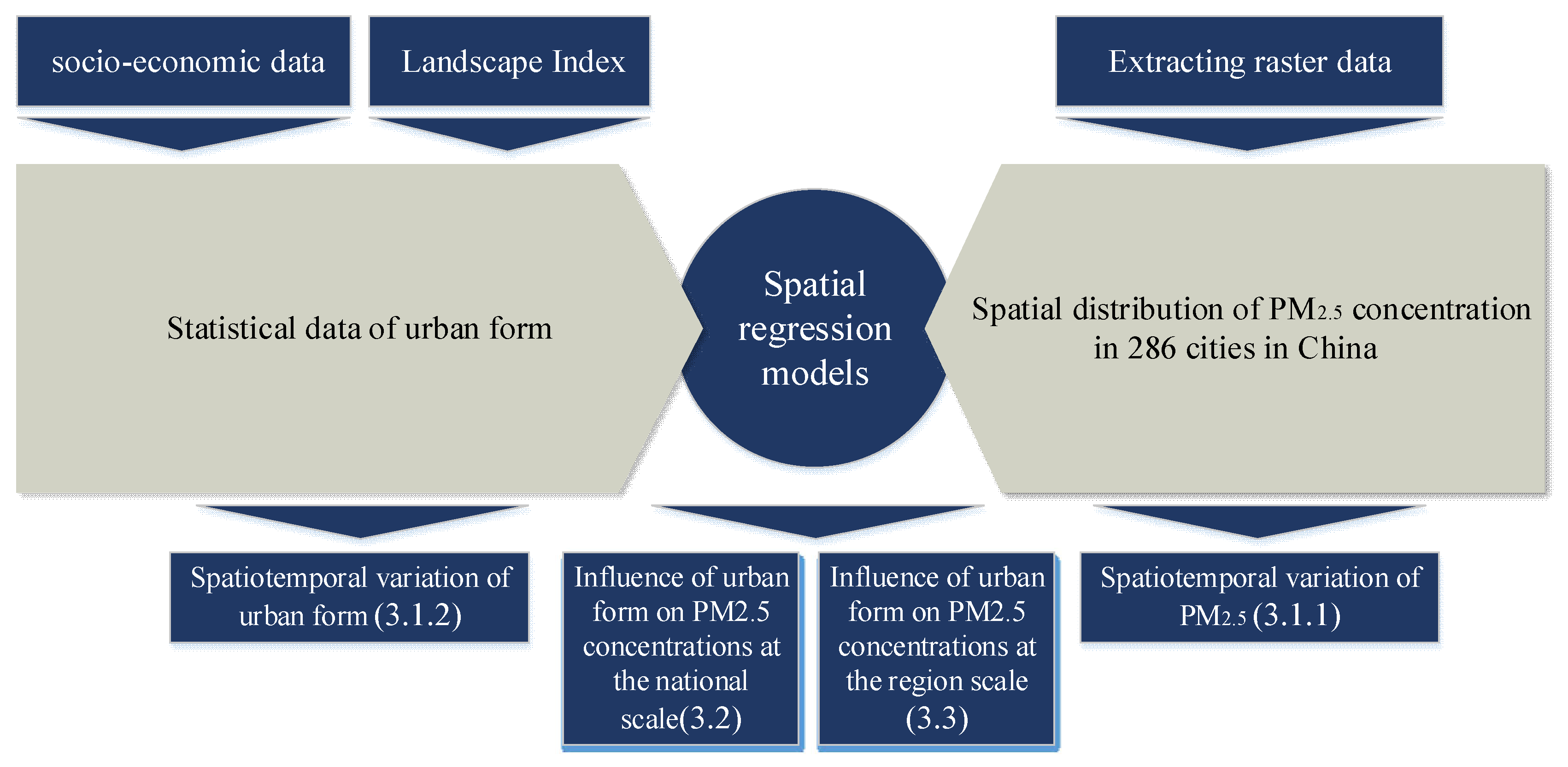
2.5 concentration in combination with existing relevant research so as to provide a reliable reference for urban planning and urban air quality improvement. This paper is separated into five parts: the first part contains the introduction and research objectives; the second part contains the research methods and data sources; the third part contains the data sources and variable calculations; the fourth part contains the analysis and discussion; and the fifth part contains the conclusions and research prospects with a detailed discussion of the study’s limitations. The flow chart of the article is shown in
Figure 1.
4. Discussion
4.1. The Relationship between PM2.5 and Urban Areafrom a National Perspective
According to the estimated results in
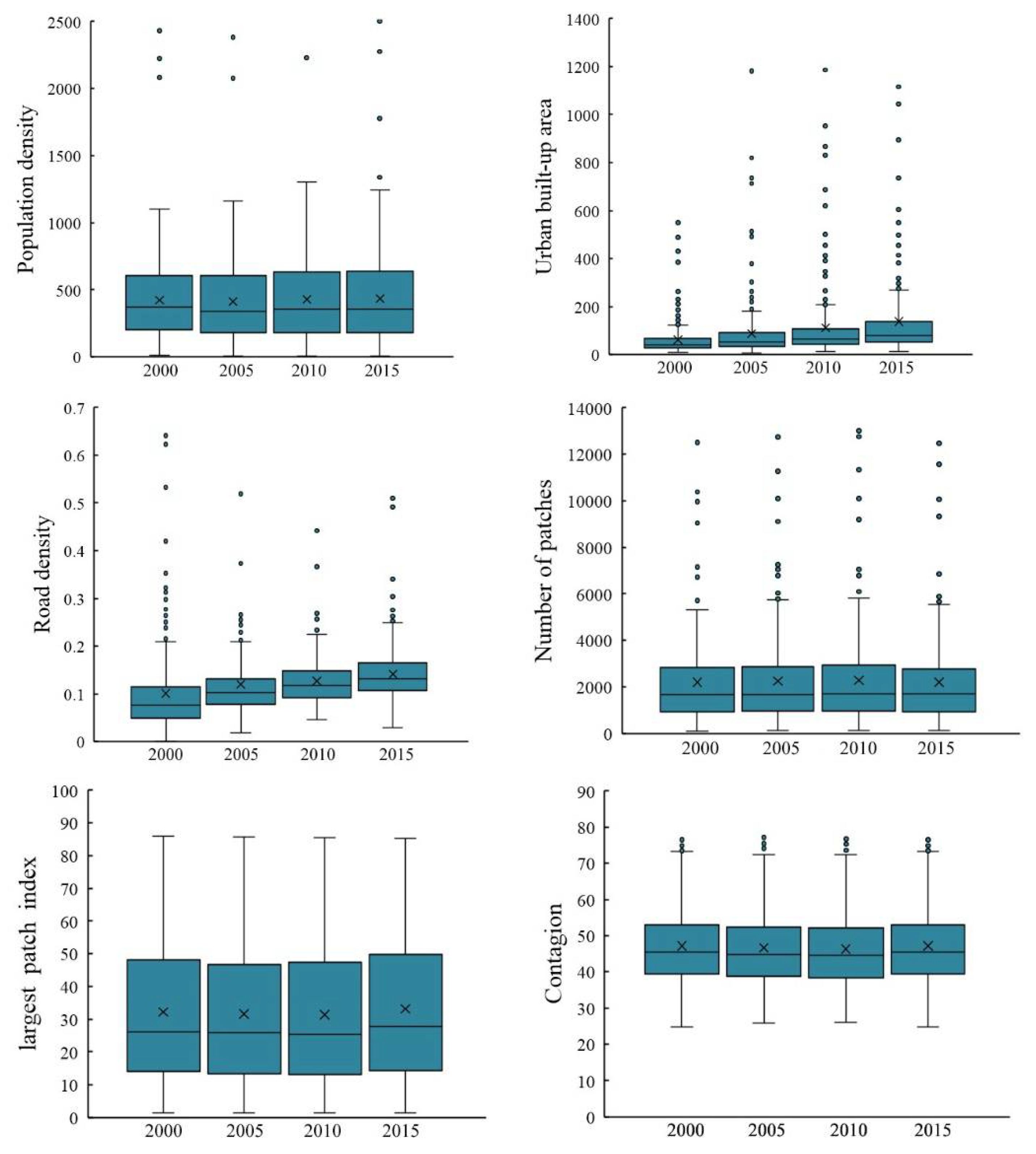
Table 2, several important conclusions can be drawn at the national scale. First, the correlation coefficients of urban areas (built-up areas) were significantly positive in 286 prefecture-level cities, implying that the expansion of urban areas aggravates the pollution of PM
2.5 at the national scale and especially in large cities. Liu [
46] and She [
21] also found a positive relationship between the urban area and urban air pollution. The emergence of this situation may be due to the expansion of the urban area, which leads to population growth and increased road traffic. These factors aggravate energy consumption and increase PM
2.5 pollution.
Second, the correlation coefficients of population density were significantly positive in 2000, 2005, and 2010 but not significant in 2015, implying that increased population density leads to more PM
2.5 pollution. An increase in population density not only increases the demand for consumption and work resources but also aggravates housing congestion and traffic jams [
15].
Third, the correlation coefficients of road density were significantly negative in 2000 but positive in 2015. It is possible that the road density has a positive correlation with PM2.5 when the road density reaches a certain limit, and the correlation increases gradually. It was found that some emerging cities that are developing show opposite results in terms of road density compared to some other large cities. For example, in Yangquan, a city located in the northwestern region of China, the road density increased from 0.095 to 0.1429 between 2005 and 2015, but the annual average concentration of PM2.5 decreased from 63.6 μg/m3 to 57.2 μg/m3. However, further research is needed by the authors to ascertain exactly what this limit is and whether it is more relevant to industrial development or to urban planning.
Fourth, the correlation coefficient of NP in small- and medium-sized cities is significantly and negative, but not for large cities. This shows that the impact of urban fragmentation on PM
2.5 concentration is only reflected in cities on a general scale. The correlation coefficients of the large patches index were significant and positive in 2005 and 2010. This indicates that small, dispersed, and polycentric cities exhibited less PM
2.5 pollution than compact and larger cities. A similar finding was observed by Wu et al. [
32] and She et al. [
21], who both concluded that a more uniform distribution of urban patches might be better for mitigating particulate matter in large urban agglomerations (for example, the YRD region). The more complex the urban form is, the greater the average distance between urban patches and the smaller the concentration of PM
2.5. This shows that the multicenter urban form can improve air quality.
Lastly, unlike previous studies, we found that urban compactness (CONTAG) does not promote PM2.5 concentrations at the national scale. Urban connectivity, or connectivity between centers, had little effect on PM2.5 concentrations. With an increase in the population and a change in policy, cities, especially larger cities, begin to change from a single center to a double- or multicenter model.
4.2. The Relationship between PM2.5 and Urban Form from the Sub-Regional Perspective
From the overall situation of each region, the impact of the urban area on PM
2.5 concentration varies with city size. Compared with small- and medium-sized cities, the change in PM
2.5 concentration in big cities is more easily affected by the urban area. An increased urban built-up area corresponds to greater traffic demand and energy consumption, causing comparatively worse air quality [
14,
47]. The impact of the urban built-up area on PM
2.5 concentration in northwestern China is more significant. The reason for this situation may be that the cities in northwestern China are in the initial stage of development, and the rapid increase in the urban area makes PM
2.5 pollution more serious.
Additionally, the population density of the cities in the northeast and northwest has a great influence on the concentration of PM
2.5, but the population density in the east has little influence. This kind of regional difference may be caused by differences in the speed of land urbanization and population urbanization. On the one hand, the reason is that the population density of the cities in the northeast and northwest is smaller than that in the east; on the other hand, in recent years, some cities in northeastern China have been facing resource depletion contraction, which makes population density more sensitive to PM
2.5 concentration. The differences between northwestern China and northeastern China are as follows: first of all, most cities in northwestern China are in a period of rapid development; the built-up area is increasing and population growth is stagnant. The speed of land urbanization and population urbanization in northwestern cities was in a serious decoupling state: the urban land expansion speed was faster than that of the population expansion [
48]. Secondly, the urban contraction in northeastern China is more serious than that in northwestern China, which has resulted in northeastern China becoming a single-core area, increasing the influence of population and road density on PM
2.5. Lastly, the northwestern region is at a high altitude and has more mountains than the northeastern region; the less compact urban form helps disperse pollutants over the mountainous terrain, which results in less urban air pollution [
21,
49].
The influence of patch number and maximum patch index on PM
2.5 concentration was significant in northeastern China. It is worth noting that the results of large cities are the opposite of those of small cities. The results of large cities are similar to those of other developed regions. When cities tend to be polycentric, PM
2.5 pollution is reduced. However, the results obtained by small cities are just the opposite. When cities develop intensively and reduce the degree of urban fragmentation, it is easier to reduce the concentration of PM
2.5. This result is not consistent with those obtained by other researchers. For instance, Namdeo et al. [
50] found that a more compact urban layout helps to reduce urban traffic and improve industrial efficiency, thereby improving air quality. Lu and Liu indicated a negative correlation between compact urban form and air pollution in most cities of China. Bechle et al. [
47] demonstrated that urban compactness was not a significant predictor of air pollution in 83 global cities. Fan et al. [
39] found that a more compact urban form leads to less PM
2.5 pollution in China, especially in the northern region.
In southwestern China, the influence of urban form on PM
2.5 concentration was not significant. This may be caused by topography, weather, or industrial conditions. Most of the cities in southwestern China are concentrated in intermountain basins, river valleys, and alluvial fans, and the annual rainfall is substantial [
26]. These conditions result in lower levels of air pollution in these places than in other places [
42]. In addition, in southwestern China, the lack of coal industry was also an important reason for this result.
4.3. Limitations and Future Directions
There are three limitations to this study. The first is that the concentration of PM2.5 is affected by many factors, and while it is certain that urban form is one of the key factors, other factors may play a more important role in influencing PM2.5 concentration in some areas. For example, many of the southwestern cities are located in the mountainous valley zones, and their terrains are narrow. At the same time, rainfall is more concentrated in these areas. The terrain and meteorological factors are two of the main reasons for the changes in PM2.5 concentration. Not all PM2.5 pollution can be attributed to urban form. The second point is that the mechanism of influence of urban form on PM2.5 concentration is not completely distinct, and it needs to be further studied in the future. The main reason for this is that the resolution of land-use data is low, and it is difficult to accurately determine the spatial distribution of roads, commercial areas, and residential areas through land-use data with a 1 km resolution. The calculation results of urban forms, such as the road density and patch number, may be biased. The last point is that based on data availability, our study focuses on the average annual variation in PM2.5 concentration from 2000 to 2015. Future studies should analyze the relationship between urban forms, PM2.5 concentrations, and seasonal variations on a spatiotemporal scale.
5. Conclusions
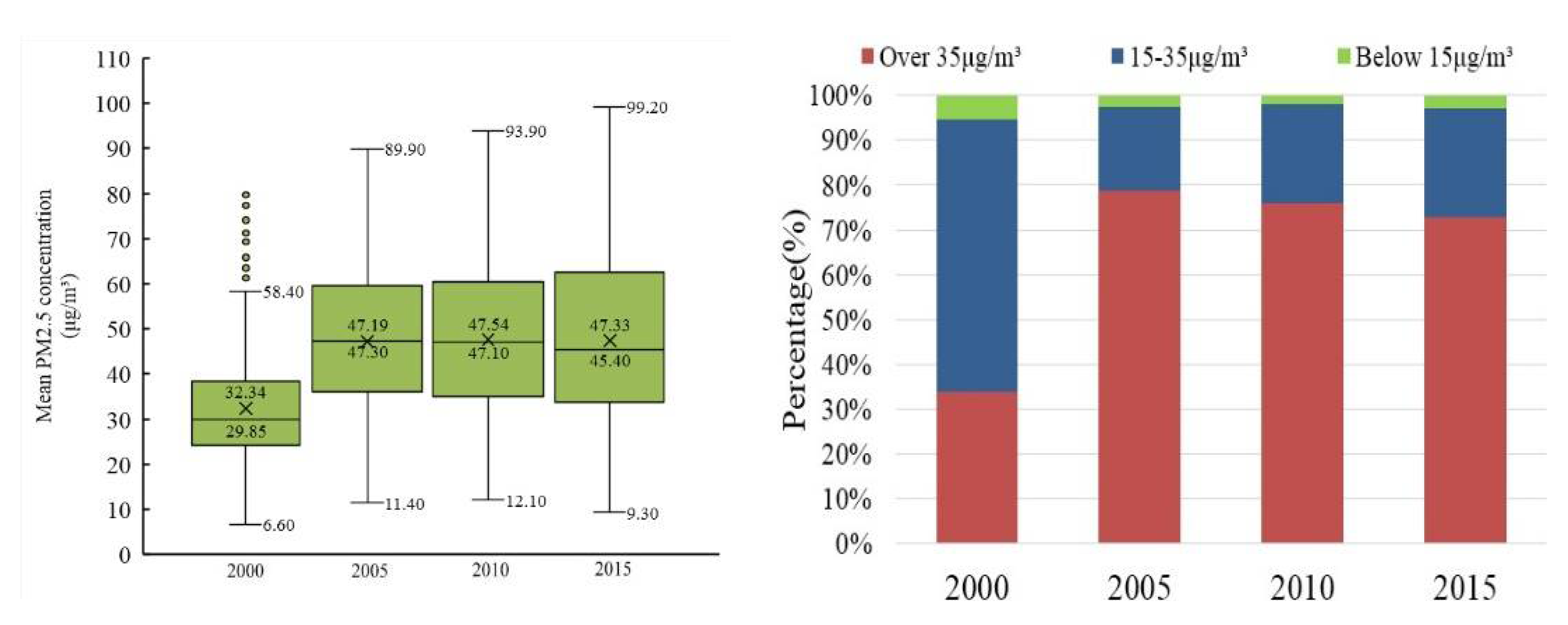
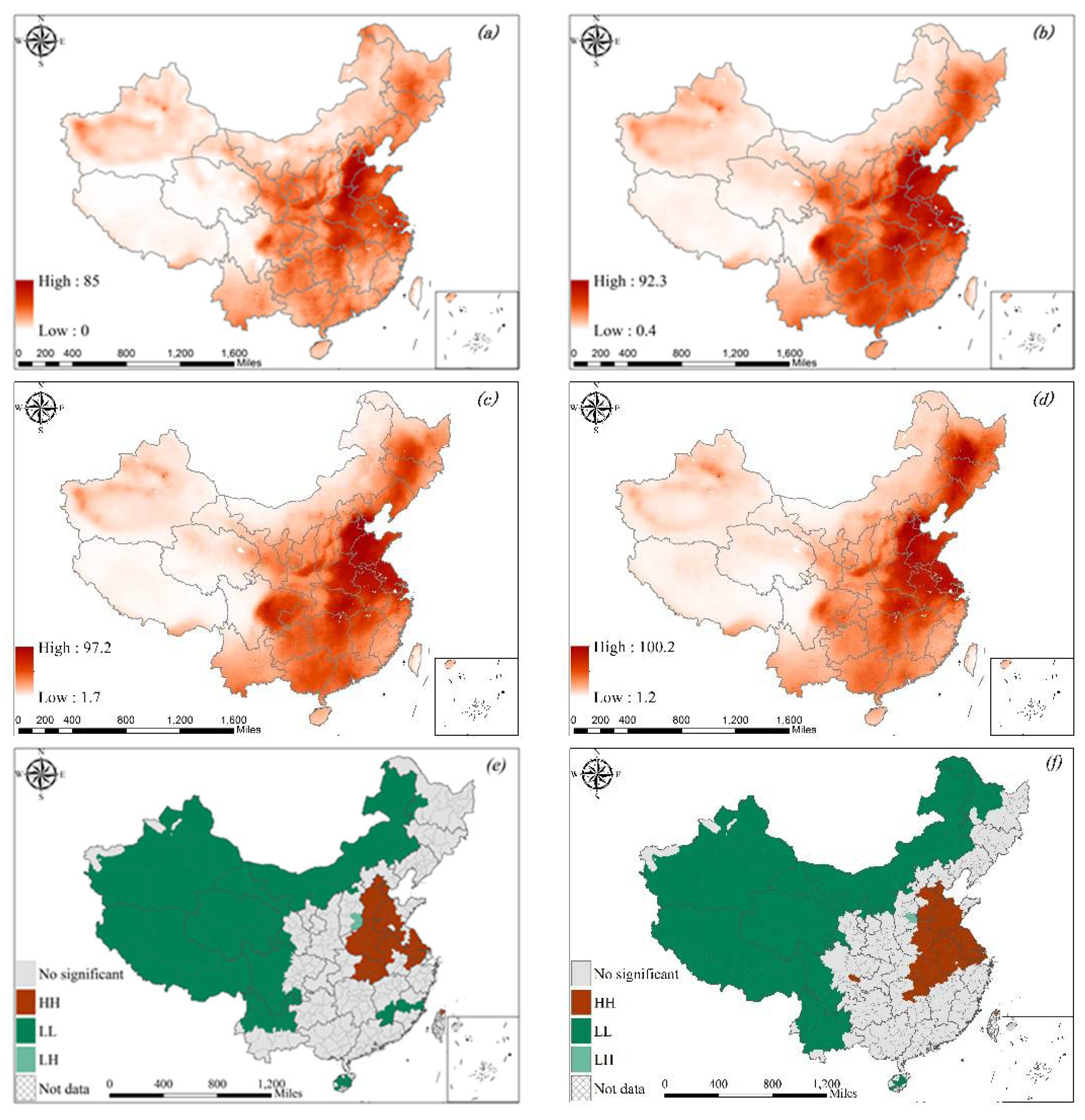
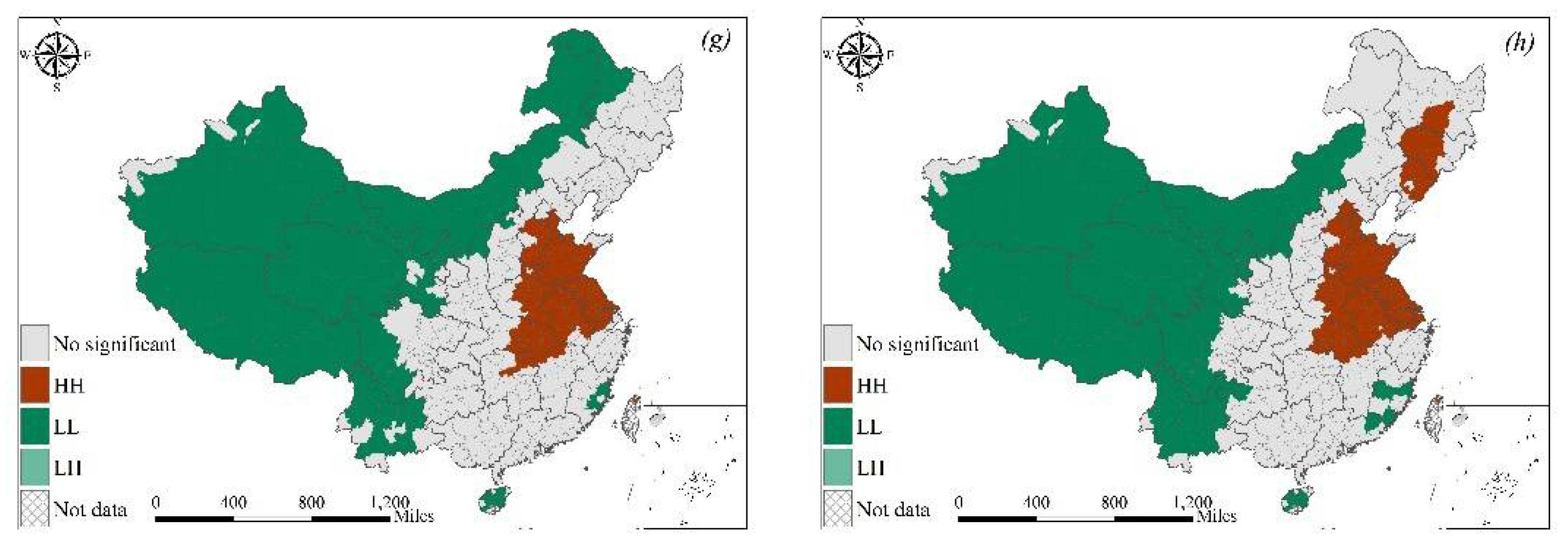
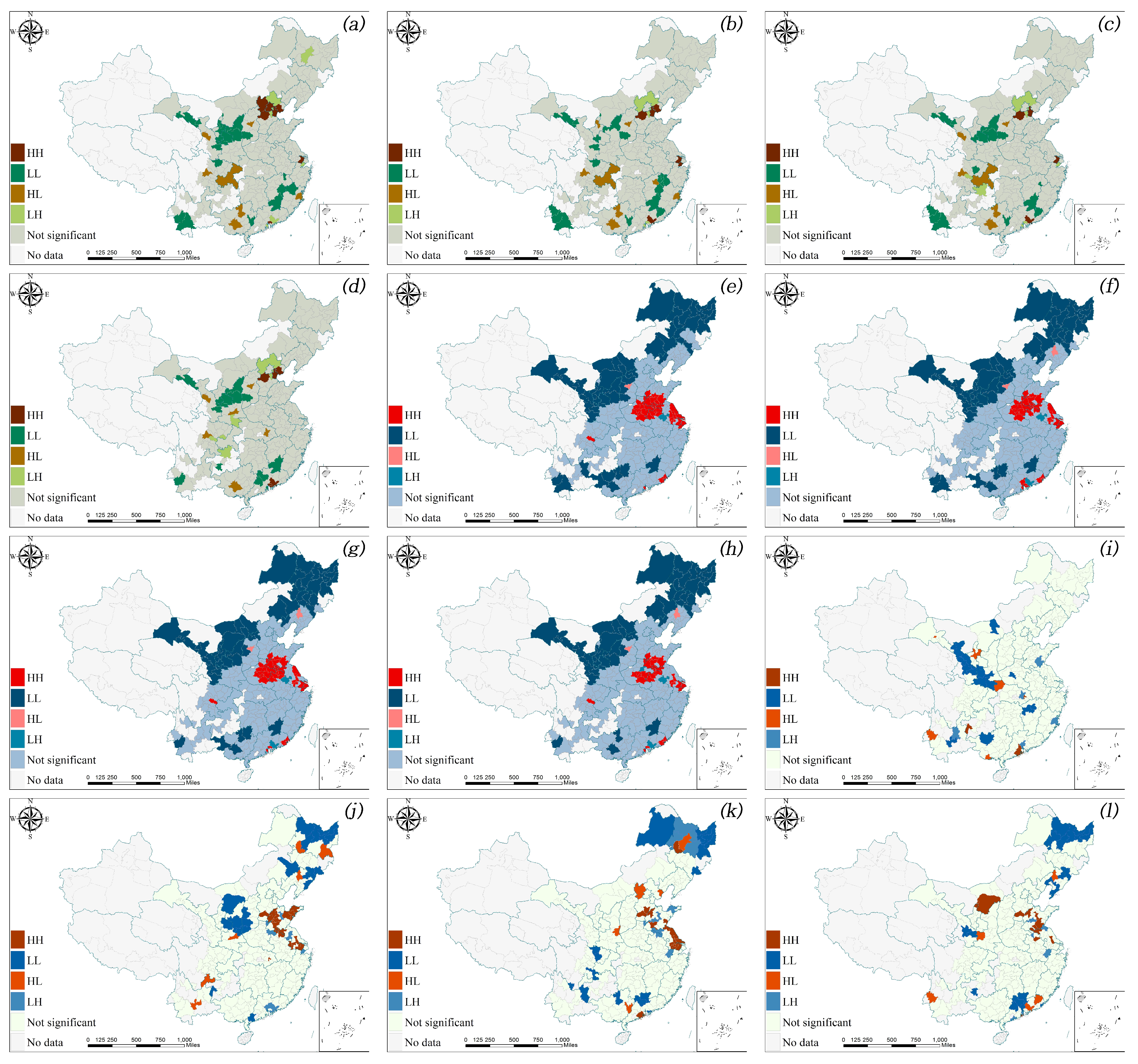
This study, using 286 prefecture-level Chinese cities as its sample data, examined the spatial patterns and temporal trends of PM2.5 concentration from 2000 to 2015 and further explored the influence of urban form on PM2.5 concentration. The results show that the PM2.5 concentration significantly increased during the period from 2000 to 2005. The cities with heavy PM2.5 pollution were mainly concentrated in the eastern and central regions of China, especially in the large cities and their surrounding areas. The cities with large changes in PM2.5 concentration were mainly distributed in northeastern China. Specifically, many cities in the BTH and Yangtze River Delta regions, as well as central Liaoning and Shandong provinces, had more serious PM2.5 pollution. Moreover, cities with high PM2.5 concentrations be located close to one another, which indicates that PM2.5 concentration is regional. From the national point of view, urban area and road density are related to higher PM2.5 concentrations. On the other hand, there is little correlation between urban fragmentation and PM2.5 concentration.
In the Northeast and Northwest China, the urban form and population density have more influence on PM2.5 concentration. The reason for this is that the speed of land urbanization and population urbanization in the northeastern and northwestern regions of China was in a seriously decoupled state, and there was a serious phenomenon of urban contraction. Therefore, moderately compact and single-center urban development is conducive to the air quality of small- and medium-sized cities in northeastern and northwestern China. For the cities in the eastern and central regions, and most large-scale cities in China, it is more important to control unplanned urban and road expansion to encourage cities to develop in a decentralized and multicenter manner.