Review

Teachers’ Satisfaction, Role, and Digital Literacy during the COVID-19 Pandemic
Faculty of Foreign Studies, Beijing Language and Culture University, Beijing 100083, China
*
Author to whom correspondence should be addressed.
Sustainability 2022, 14(3), 1121; https://doi.org/10.3390/su14031121
Submission received: 20 December 2021 / Revised: 7 January 2022 / Accepted: 13 January 2022 / Published: 19 January 2022

Abstract

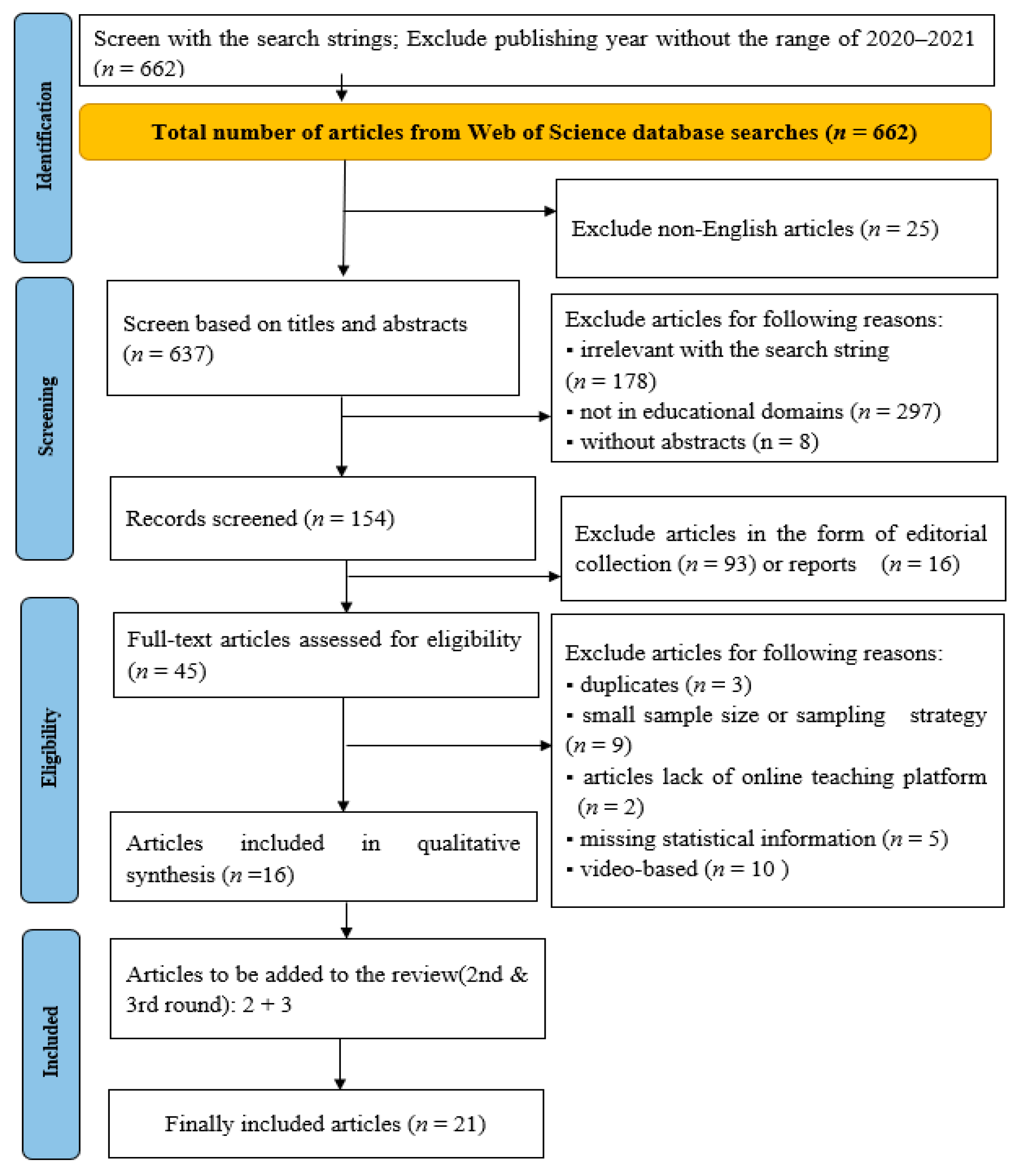
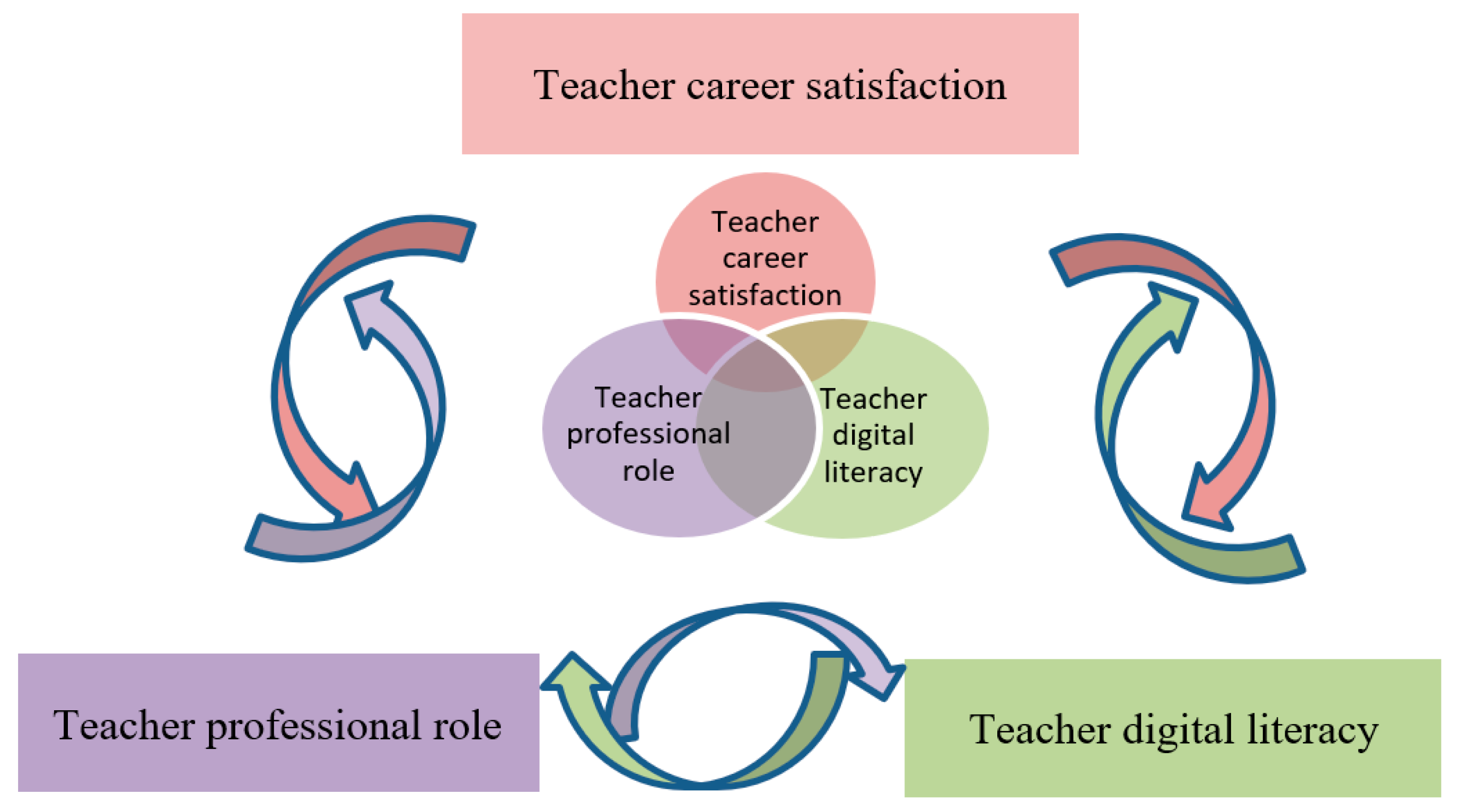
The COVID-19 pandemic has unexpectedly affected the educational process worldwide, forcing teachers and students to transfer to an online teaching and learning format. Compared with the traditional face-to-face teaching methods, teachers’ professional role, career satisfaction level, and digital literacy have been challenged in the COVID-19 health crisis. To conduct a systematic review, we use critical appraisal tools from the University of the West of England Framework We removed the irrelevant and lower-quality results to refine the results and scored each selected paper to get high-quality studies with STARLITE. The number of finally included studies is 21. We used the PICO mnemonic to structure the four components of a clinical question, i.e., the relevant patients or population groups, the intervention (exposure or diagnostic procedure) of interest, as well as against whom the intervention is being compared and considered appropriate (outcomes). We formulated five research questions regarding teachers’ professional role, satisfaction, digital literacy, higher educational practice, and sustainable education. The study found that teachers’ professional roles changed complicatedly. Moreover, they were assigned more tasks during the online teaching process, which also implicated a decline in teachers’ satisfaction. After the COVID-19 pandemic, it is necessary to conduct a blended teaching model in educational institutes. Teachers should have adequate digital literacy to meet the new needs of the currently innovative educational model in the future. In addition, the study reveals that teachers’ digital literacy level, career satisfaction, and professional role are significantly correlated. We measured to what degree the three factors affected the online teaching and learning process. Ultimately, the study may provide some suggestions for methodological and educational strategies.
Keywords: COVID-19; teacher professional role; teacher career satisfaction; teacher digital literacy COVID-19; teacher professional role; teacher career satisfaction; teacher digital literacy